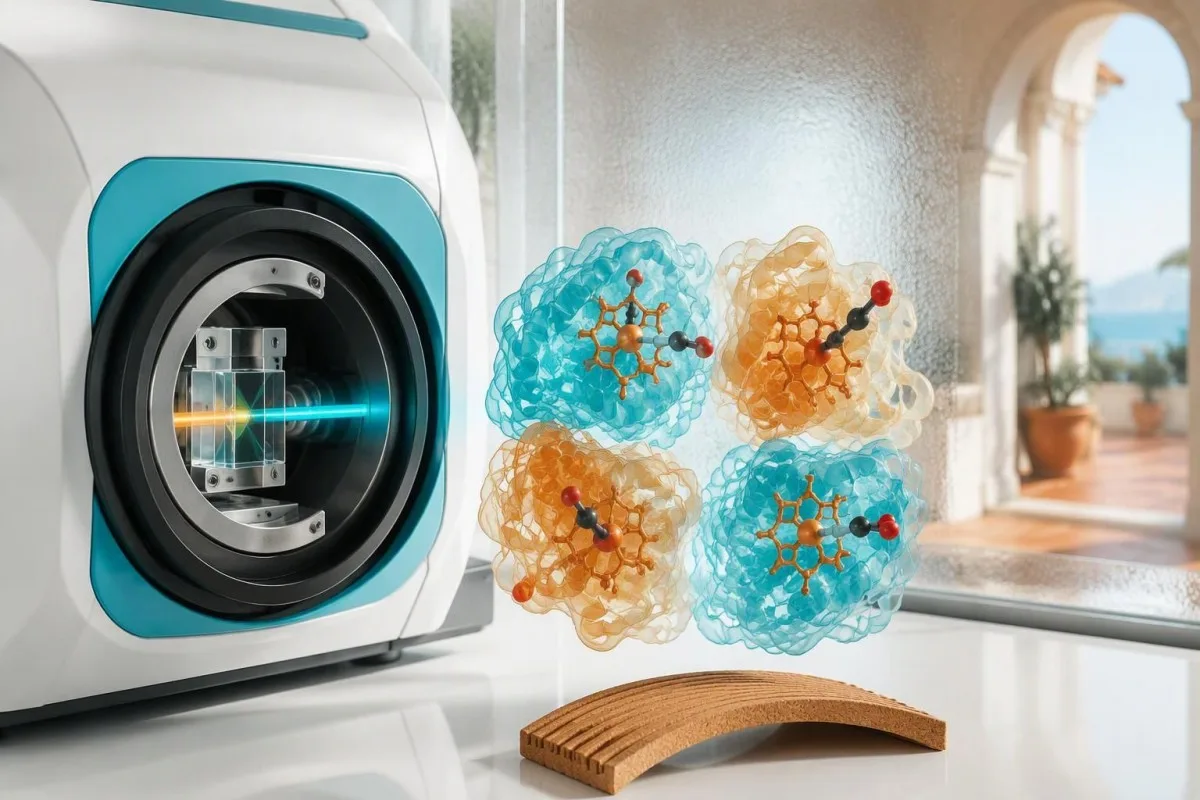
Karboksihemoglobīna tests nosaka hemoglobīnam piesaistīto oglekļa monoksīdu. Smēķēšana var paaugstināt rezultātu, savukārt novēlota parauga ņemšana vai skābekļa terapija var to pazemināt; normāls rādījums vai normāls pulsa oksimetra rādījums neļauj izslēgt saindēšanos.


- Neatliekama izvērtēšana ir svarīgāks par procentuālo rādītāju: ja ir aizdomas par iedarbību un rodas galvassāpes, reibonis, vemšana, apjukums, sāpes krūtīs vai samaņas zudums, nekavējoties jāmeklē medicīniskā palīdzība.
- Karboksihemoglobīna tests rezultātos norāda to hemoglobīna procentuālo daļu, kas pārnes oglekļa monoksīdu; tests tieši nenosaka smadzeņu vai sirds bojājumu.
- Rezultāti nesmēķētājiem parasti ir zem 2%; CDC uzskata, ka rezultāts 2% vai augstāks liecina par iedarbību nesmēķētājam, ja anamnēzes dati to apstiprina.
- Ar smēķēšanu saistīts paaugstinājums bieži ir aptuveni 3–8%, lai gan vērtības atšķiras; smēķētājam rādījums virs 9% ir spēcīgs pamats papildu bažām par oglekļa monoksīda iedarbību.
- Novēlota parauga ņemšana var neuzrādīt agrāko maksimumu, jo pēc iedarbības pārtraukšanas karboksihemoglobīna līmenis, atrodoties telpā ar parastu gaisu, parasti samazinās ar aptuveni 4–6 stundu pussabrukšanas periodu.
- Skābekļa terapija ar augstas koncentrācijas skābekli saīsina pusperiodu līdz aptuveni 60–90 minūtēm, tāpēc pēc ievērojamas iedarbības slimnīcā iegūtais rezultāts var būt zems.
- Pulsa oksimetrija saindēšanās ar oglekļa monoksīdu gadījumā var uzrādīt 98–100%, jo standarta ierīces ar 2 viļņu garumiem nevar droši atšķirt karboksihemoglobīnu no oksihemoglobīna.
- Konsultācija par hiperbarisko oksigenāciju var būt piemērota, ja rādītājs pārsniedz aptuveni 25–30%, taču neiroloģiskās pazīmes, sirds bojājums, samaņas zudums un grūtniecība var būt svarīgāki par šo skaitli.
Ko īsti nosaka karboksihemoglobīna tests?
A karboksihemoglobīna tests nosaka to hemoglobīna procentuālo daļu, kas saistīta ar oglekļa monoksīdu, parasti izmantojot laboratorisku ko-oksimetriju. Augsti rezultāti liecina par iedarbību, taču smēķēšana paaugstina sākotnējo līmeni, bet skābekļa lietošana vai novēlota parauga paņemšana pazemina rādījumu; ja ir aizdomas par saindēšanos, nepieciešama steidzama izvērtēšana, balstoties uz simptomiem, pat ja rezultāts ir zemāks par 2% vai pulsa oksimetra rādījums ir normāls.
Karboksihemoglobīns, saīsinājumā COHb, nav tas pats rādītājs, kas hemoglobīna koncentrācija pilnā asins ainā: rezultāts 12% nozīmē, ka aptuveni 12% no izmērītā hemoglobīna ir COHb, nevis to, ka hemoglobīna koncentrācija ir samazinājusies par 12%. Mūsu hemoglobīna un hematokrīta salīdzinājumā izskaidro šo atšķirību.
Oglekļa monoksīds saistās ar hemoglobīnu aptuveni 200–250 reižu spēcīgāk nekā skābeklis, kā arī apgrūtina atlikušā skābekļa atbrīvošanu audos. Rose un līdzautori apraksta papildu ietekmi uz mitohondriju darbību un iekaisuma ceļiem, kas palīdz izskaidrot, kāpēc procentuālā rādītāja pazemināšanās ne vienmēr nozīmē, ka smadzenes un sirds ir atlabušas (Rose et al., 2017).
Kantesti ir AI asins analīžu analizators kas var palīdzēt izskaidrot uzrādīto COHb procentuālo rādītāju salīdzinājumā ar laboratorijas references intervālu; mūsu biomarķieru terminoloģijas ceļvedis sniedz plašāku kontekstu. Es esmu Thomas Klein, MD, Kantesti galvenais medicīnas darbinieks, un savu pieeju sāku ar 3 jautājumiem: kur notikusi iedarbība, kādi simptomi attīstījās un kad tika sākta skābekļa terapija, nevis ar jautājumu, vai rezultāts atzīmēts sarkanā krāsā.
Kuru simptomu gadījumā nepieciešama neatliekamā medicīniskā palīdzība, pirms saņemts rezultāts?
Ja ir iespējama oglekļa monoksīda iedarbība un ir simptomi, nepieciešama steidzama izvērtēšana, neatkarīgi no COHb rezultāta. Bažas rada galvassāpes, reibonis, slikta dūša, vemšana, neparasts nespēks, apjukums, elpas trūkums, sāpes krūtīs vai ģībonis; pat pulsa oksimetra rādījums 99% nevar padarīt šādu simptomu kopumu nekaitīgu.
Dodieties prom no vietas, kur pastāv aizdomas par iedarbību, un zvaniet neatliekamās palīdzības dienestam svaigā gaisā — Apvienotajā Karalistē zvaniet 999 vai 112, ASV — 911, citur — uz vietējo numuru. Neatgriezieties, lai pārbaudītu ierīci, apklusinātu signalizāciju vai paņemtu mantas, un nebrauciet paši, ja ir reibonis vai apjukums; glābēji var pārbaudīt ēku, neradot vēl vienu cietušo.
Ja diviem cilvēkiem vienā telpā sākas galvassāpes vai slikta dūša, kopīgs vides cēlonis ir daudz ticamāks nekā divas savstarpēji nesaistītas migrēnas. Vēl viena norāde ir simptomu mazināšanās ārā un atkārtošanās telpās, taču pašsajūtas uzlabošanās nav pārbaude, kas apliecina drošību mājās: oglekļa monoksīda iedarbība var turpināties pat tad, ja cilvēks uz laiku jūtas labāk.
Sāpēm krūtīs pēc iedarbības nepieciešama sirds izmeklēšana, nevis tikai atkārtota COHb noteikšana; mūsu neatliekamās palīdzības ceļvedis par sāpju izmeklēšanu krūtīs izskaidro, kāpēc EKG un troponīna analīze atbild uz dažādiem jautājumiem. Iedomāsimies 52 gadus vecu cilvēku, kuram pēc ģeneratora lietošanas ir spiedoša sajūta krūtīs: pēc skābekļa terapijas iegūts COHb rādījums 4% neatceļ nepieciešamību pārbaudīt, vai nav miokarda bojājuma.
Kāds karboksihemoglobīna līmenis liecina par CO iedarbību?
Nesmēķētājiem karboksihemoglobīna līmenis parasti ir zemāks par 2%, savukārt smēķēšana var paaugstināt sākotnējo līmeni. CDC norāda, ka 2% nesmēķētājam vai rādītājs virs 9% smēķētājam, ja iedarbības apstākļi atbilst, ir spēcīgs pierādījums saindēšanai ar oglekļa monoksīdu; tie ir diagnostiski orientieri, nevis smaguma pakāpes (CDC, 2024).
A laboratory reference interval and an emergency decision threshold serve different purposes: some laboratories list a nonsmoker upper limit near 1.5%, while others allow approximately 2–3%. A printed normal flag therefore cannot substitute for the clinical history; our out-of-range results explanation describes why reference intervals are not universal safety boundaries.
High carboxyhemoglobin levels establish that more hemoglobin is carrying carbon monoxide, but a result of 18% does not predict a particular symptom set or guarantee a better outcome than 28%. Exposure duration, age, anemia, underlying cardiac disease, and oxygen given before sampling all weaken a simple percentage-to-severity relationship.
The approximately 25–30% range is commonly used as one reason to discuss hyperbaric treatment, not as a line below which emergency care is unnecessary. A symptomatic nonsmoker at 6% may need substantial investigation, whereas an otherwise stable smoker at 6% needs careful source and timing assessment rather than an automatic poisoning label.
Kā interpretēt karboksihemoglobīna līmeni smēķētājiem?
Carboxyhemoglobin levels in smokers are often around 3–8%, but smoking intensity, inhalation depth, and time since the last cigarette create substantial variation. Values approaching or exceeding 10% can occur with smoking, yet a symptomatic smoker must still be assessed for an additional environmental exposure.
Combustion produces carbon monoxide; nicotine itself is not the cause of an elevated COHb percentage. Cigarettes, cigars, combustible cannabis, and charcoal-heated waterpipes can contribute, whereas nicotine replacement without combustion does not create the same exposure mechanism—so asking only whether someone uses nicotine can misclassify a result of 7%.
A single cigarette count cannot reliably predict COHb because 10 cigarettes smoked across a day are not equivalent to intensive smoking immediately before collection. This is a timing problem, similar in principle—but not in detection window—to our PEth sampling and exposure guide; COHb usually changes over hours, not weeks.
Persistent smoking-related carbon monoxide exposure can also contribute to a higher hemoglobin concentration over time, but that CBC finding does not quantify today's COHb; see our mildly elevated hemoglobin discussion. If a smoker has a COHb result of 8% and their nonsmoking partner has 5% with similar headaches, the household pattern should outweigh the temptation to blame tobacco alone.
Kāpēc novēlota parauga ņemšana var novērtēt iedarbību par zemu?
Carboxyhemoglobin falls after exposure stops, so a sample collected several hours later can underestimate the earlier level. Its room-air elimination half-life is commonly about 4–6 hours, although ventilation, continued exposure, and individual physiology alter that estimate (Rose et al., 2017).
A half-life means that the excess burden falls by roughly half over that interval under the assumed conditions; it is not the time required for complete clearance. In a simplified example starting at 20%, a 5-hour half-life would leave about 10% after 5 hours and 5% after 10 hours, ignoring baseline production and any new exposure.
The useful timestamp is when the person actually left the exposure, not just when they arrived at hospital: a 3-hour journey, an ambulance wait, and time receiving oxygen can all shift the reading. Our asins analīžu laika plāna ceļvedis explains why chronology can carry more information than the difference between two flagged values.
Back-calculating a precise peak from one late sample is usually unreliable because the earlier concentration, oxygen delivery, breathing pattern, and ongoing source are unknown. A result of 1.8% measured the following morning cannot prove that exposure was trivial the previous evening, and it should never overrule a convincing history of collapse or confusion.
Kā skābekļa terapija maina testa rezultātu?
High-concentration oxygen accelerates carbon monoxide elimination, often shortening the COHb half-life to approximately 60–90 minutes. Oxygen should not be delayed to obtain an untreated sample; clinicians document treatment timing and interpret the later percentage in that context.
An ambulance sample and a hospital sample taken 90 minutes apart may differ sharply even if both laboratories are accurate. Using a deliberately simplified 90-minute half-life, 20% would become approximately 10% after 90 minutes and 5% after 3 hours of effective high-concentration oxygen; that illustration is not a method for reconstructing an individual patient's peak.
The CDC recommends 100% oxygen until symptoms resolve, commonly for about 4–5 hours, with repeated neurological assessment rather than a percentage-only stopping rule (CDC, 2024). Oxygen delivery must be supervised because a prescribed concentration, mask fit, reservoir inflation, and the patient's ventilation are not interchangeable; an ordinary low-flow nasal cannula does not reproduce every high-concentration treatment assumption.
Kantesti ir AI asins analīžu rezultātu platforma that can help explain why a post-treatment value differs from an earlier report, but our approximately 60-second interpretation is not emergency assessment. Our post-hospital result changes guide also separates biochemical improvement from clinical recovery—a distinction that matters when headache improves but memory or balance remains abnormal.
Kāpēc pulsa oksimetrijas rādījums CO saindēšanās gadījumā var būt normāls?
Normal pulse oximetry cannot exclude carbon monoxide poisoning because standard 2-wavelength pulse oximeters cannot reliably separate carboxyhemoglobin from oxyhemoglobin. A display of 98–100% can therefore look reassuring while oxygen delivery to tissues is impaired.
Arterial oxygen pressure, or PaO2, may also remain normal because it measures dissolved oxygen rather than the proportion of hemoglobin blocked by carbon monoxide. A hypothetical PaO2 of 95 mmHg does not show that hemoglobin is carrying and releasing oxygen normally; our arterial blood gas interpretation guide explains the separate measurements.
A blood gas report may show an oxygen saturation calculated from PaO2 rather than one directly measured by co-oximetry, and the calculated number can miss abnormal hemoglobin species. Some analyzers also report functional saturation separately from fractional oxyhemoglobin, so a number near 99% must be read with the measurement method—not merely the label 'saturation.'
Specialized pulse CO-oximeters use additional wavelengths, but their readings are not reliable enough to rule out poisoning when symptoms and exposure suggest it. Another hemoglobin disorder produces a different pulse-oximetry pattern, described in our methemoglobin testing explanation; neither disorder should be diagnosed or dismissed from 1 fingertip reading.
Vai pietiek ar venozo paraugu, un vai ir nepieciešama badošanās?
Venous blood is usually suitable for measuring carboxyhemoglobin by co-oximetry, and fasting is not required. An arterial sample may still be needed to answer other respiratory or acid–base questions, but a 12-hour fast or an arterial puncture is not a prerequisite for exposure testing.
The request must specifically include COHb or co-oximetry: a complete blood count, routine chemistry panel, or ordinary blood gas without that capability does not automatically test for carbon monoxide. A report with 20 routine markers can therefore contain no useful exposure measurement, even when hemoglobin, glucose, and electrolytes are all normal.
Collection containers and handling requirements depend on the laboratory's validated analyzer, commonly using heparinized whole blood kept sealed and processed promptly. Our sample quality and hemolysis guide explains why a specimen warning requires laboratory input; clinicians should not invent a numerical correction for a COHb result of 6% from a compromised sample.
The request should carry 4 pieces of context: exposure-stop time, collection time, oxygen-start time, and recent combustible smoking history. If a report merely says 'COHb 3.2%' without those details, the percentage can be analytically correct while its clinical meaning remains uncertain—especially after pre-hospital treatment.
Kas vēl jāņem vērā, diagnosticējot saindēšanos ar oglekļa monoksīdu?
Carbon monoxide poisoning diagnosis combines exposure history, symptoms, examination, and COHb, rather than relying on one result. ECG, troponin, blood gas measurements, glucose, and lactate may identify complications or alternative explanations; their selection depends on the presentation, not a fixed 1-size-fits-all panel.
An elevated lactate can reflect impaired oxygen use, seizures, shock, or other illness, so a lactate of 5 mmol/L does not prove carbon monoxide exposure. Our lactate timing and handling guide explains an additional problem: specimen delays can distort a marker that clinicians are already interpreting in a complex emergency.
Troponin measures myocardial injury, not carbon monoxide binding, and a normal initial value does not settle every chest-pain evaluation. Our troponin interpretation and limits guide discusses that distinction; when COHb has fallen from 24% to 4%, an abnormal ECG or rising troponin still deserves attention rather than being dismissed as yesterday's exposure.
Fire exposure can involve several hazards at once, including airway injury and cyanide, while severe anemia or low glucose may worsen symptoms without producing high COHb. Carbon monoxide is odorless and colorless, so identifying 1 competing explanation—such as a viral illness—does not rule out a faulty heater when several occupants become unwell together.
Kāpēc grūtniecība, bērna vecums un sirds slimība maina steidzamības pakāpi?
Pregnancy, childhood, anemia, and underlying cardiac disease can increase concern at a given COHb percentage. A maternal result of 5% after oxygen cannot establish fetal safety, and a child or adult with limited oxygen-delivery reserve may need urgent assessment despite a comparatively modest measured elevation.
Fetal hemoglobin binds carbon monoxide avidly, and fetal clearance can lag behind maternal clearance, so maternal improvement and a lower maternal COHb do not guarantee recovery in both patients. The CDC strongly favors hyperbaric oxygen during pregnancy, including less severe poisoning, although the treating team must obtain specialist advice rather than apply a universal 10% maternal cutoff (CDC, 2024).
Children may present with nonspecific vomiting, sleepiness, irritability, or poor feeding rather than describing a headache; 2 affected siblings should prompt a shared-exposure assessment. Our children's result interpretation limits explain why an adult reference interval and a reassuring automated comment are not substitutes for pediatric assessment.
Anemia reduces total oxygen-carrying capacity before any carbon monoxide is added, while coronary disease limits the heart's ability to compensate for reduced delivery. For example, COHb of 8% in someone with hemoglobin of 8 g/dL is not physiologically equivalent to 8% in someone with hemoglobin of 15 g/dL; the percentage alone hides that difference.
Kad apsver hiperbarisko skābekļa terapiju, un cik droši zināms, ka tā palīdz?
Hyperbaric oxygen is considered for selected serious carbon monoxide exposures, including neurological impairment, loss of consciousness, cardiac involvement, severe acidosis, pregnancy, or COHb above approximately 25–30%. No single threshold decides treatment, and evidence about preventing delayed neurological problems remains mixed.
Hyperbaric oxygen can shorten COHb elimination to roughly 20–30 minutes under treatment conditions, but faster clearance is not automatically proof of better long-term outcomes. Clinicians must consider safe transfer, chamber availability, potential pressure-related complications, and whether another urgent problem requires treatment where the patient already is.
Weaver et al.'s randomized trial enrolled 152 patients and reported cognitive sequelae at 6 weeks in 25.0% of the hyperbaric group versus 46.1% of the comparison group (Weaver et al., 2002). That approximately 21-percentage-point difference came from a specific treatment protocol and study population; it should not be presented as a guaranteed benefit for every mild exposure.
Different trials and treatment protocols have produced inconsistent findings, as discussed by Rose et al. (2017), which is why honest counseling includes uncertainty rather than promising that a chamber prevents all later problems. Our medicīnas konsultatīvā padome provides information about clinical oversight, but an urgent toxicology or hyperbaric consultation—not a website review—must guide an individual patient with 1 episode of collapse or persistent confusion.
Kas jādara pēc simptomu mazināšanās un COHb līmeņa pazemināšanās?
Follow-up is needed because delayed neurological symptoms can appear after apparent recovery, even when COHb has returned to baseline. The CDC recommends warning discharged patients about these problems and repeating medical and neurological assessment at approximately 2 weeks; new confusion, weakness, seizures, or chest pain needs earlier urgent care.
Delayed problems may include memory difficulty, reduced attention, personality change, altered walking, or new problems managing ordinary tasks, emerging over days to weeks. A COHb of 1% during that later period does not exclude an exposure-related complication because the test measures current carbon monoxide binding, not persistent injury from an earlier event.
Persistent breathlessness also needs reassessment rather than being assumed to be anxiety; our elpas trūkuma testēšanas rokasgrāmata describes why cardiac, pulmonary, and hematologic causes require different investigations. A practical discharge record should preserve at least 3 details: the earliest COHb, treatment received, and the planned follow-up date.
The source must be made safe before anyone returns: do not run a generator indoors, in a garage, or near openings, even with doors open. CDC prevention advice places portable generators at least 20 feet—about 6 metres—from doors, windows, and vents; working carbon monoxide alarms add protection but cannot replace appliance servicing or professional building clearance.
Kā AI var palīdzēt interpretēt COHb analīzes rezultātu pēc neatliekamās palīdzības saņemšanas?
AI can help explain a documented COHb result after emergency assessment, but it cannot establish that a home is safe, examine neurological function, or rule out poisoning. A report showing 1.5% after 3 hours of oxygen needs a different explanation from the same percentage collected before treatment.
Kantesti ir ar AI balstīts asins analīzes rīks that accepts laboratory PDFs or photos and helps explain reported values alongside their reference intervals. Before sharing a document, check identifiers and permissions using our result upload privacy checklist; for this test, supplying 4 timing and exposure details is more useful than uploading only a cropped percentage.
Kantesti's role is education and follow-up support, not a carbon monoxide emergency service; our company and clinical mission describes the organization behind that work. If symptoms remain after a result falls from 16% to 2%, the useful next step is clinician reassessment—not repeated uploads until an interpretation sounds reassuring.
For readers checking how interpretation works, our AI interpretācijas tehnoloģiju ceļvedis explains the broader approach without making a COHb-specific emergency validation claim. My editorial rule as Thomas Klein, MD, is simple: 1 laboratory percentage should never overrule a convincing exposure history, ongoing symptoms, or a clinician's concern about brain or heart injury.
Kādi pētījumi pamato šos ieteikumus, un kas aplūkots saistītajos ceļvežos?
The carbon monoxide advice here is supported by CDC clinical guidance, Rose et al.'s 2017 review, and Weaver et al.'s 2002 trial, listed separately below. As of October 20, 2026, the 2 additional Zenodo guides listed here are related educational publications—not carbon monoxide studies or evidence validating emergency AI triage.
Clinical guidance, randomized trials, reviews, and educational repositories answer different questions; a DOI identifies a publication but does not itself establish peer review or clinical effectiveness. Our technical and clinical validation overview should be read within its stated scope, and neither of the 2 Zenodo publications below establishes sensitivity for excluding carbon monoxide poisoning.
Kantesti. (n.d.). C3 C4 komplementa asins analīzes un ANA titra ceļvedis. Zenodo. This publication concerns complement and autoimmune testing, not COHb; ResearchGate nosaukuma meklēšana un Academia.edu nosaukuma meklēšana are discovery links, not claims of verified repository copies, and the DOI is supplied in the publication list below.
Kantesti. (n.d.). Nipah vīrusa asins analīze: agrīnas noteikšanas un diagnostikas ceļvedis 2026. gadam. Zenodo. This publication concerns viral testing rather than carbon monoxide; ResearchGate publikāciju meklēšana un Academia.edu publikāciju meklēšana provide title-based discovery, while its DOI appears below and should not be interpreted as evidence for COHb treatment thresholds.
Bieži uzdotie jautājumi
Kāds ir normāls karboksihemoglobīna līmenis?
Karboksihemoglobīna līmenis nesmēķētājiem parasti ir zem 2%, lai gan laboratoriju references intervāli atšķiras. Smēķētājiem tas bieži ir aptuveni 3–8%, un līmenis mainās atkarībā no nesenās tabakas smēķēšanas. CDC uzskata, ka 2% nesmēķētājam vai vairāk nekā 9% smēķētājam ir pārliecinošs pierādījums ekspozīcijai, ja anamnēze tam atbilst. Normāls rezultāts pēc novēlotas parauga ņemšanas vai skābekļa terapijas neizslēdz agrāku nozīmīgu ekspozīciju.
Vai smēķēšana var izraisīt augstu karboksihemoglobīna līmeni?
Degoša tabakas smēķēšana var paaugstināt karboksihemoglobīna līmeni, bieži līdz aptuveni 3–8% un dažkārt vēl vairāk. Cigaretes, cigāri, degoši kaņepju produkti un ar oglēm karsējamas ūdenspīpes var veicināt oglekļa monoksīda veidošanos. Nikotīna aizstājterapija bez degšanas nerada tādu pašu mehānismu. Smēķētājam ar simptomiem un 8% rādītāju joprojām nepieciešama pārbaude, lai noskaidrotu, vai nav vēl kāda iedarbības avota, jo īpaši tad, ja citi cilvēki tajā pašā ēkā jūtas slikti.
Vai normāls pulsa oksimetra rādījums var izslēgt saindēšanos ar oglekļa monoksīdu?
Normāls pulsa oksimetra rādījums neizslēdz saindēšanos ar oglekļa monoksīdu. Standarta 2 viļņu garumu ierīces nespēj droši atšķirt karboksihemoglobīnu no oksihemoglobīna, tāpēc tās var rādīt 98–100%, lai gan skābekļa piegāde ir traucēta. Normāls skābekļa parciālais spiediens arteriālajās asinīs arī neizslēdz saindēšanos, jo tas mēra izšķīdušo skābekli, nevis ar oglekļa monoksīdu saistīto hemoglobīnu. Ja ir aizdomas par iedarbību un ir simptomi, nepieciešama steidzama izvērtēšana un atbilstoša laboratoriska ko-oksimetrija.
Cik ātri skābeklis samazina karboksihemoglobīna līmeni?
Augstas koncentrācijas skābeklis parasti saīsina karboksihemoglobīna eliminācijas pusperiodu līdz aptuveni 60–90 minūtēm, salīdzinot ar aptuveni 4–6 stundām, elpojot istabas gaisu pēc iedarbības beigām. Tās ir aptuvenas vērtības, nevis individuāls aprēķins par vielas izvadīšanos. Paraugs, kas paņemts pēc vairākām skābekļa terapijas stundām, var uzrādīt daudz zemāku līmeni nekā iepriekšējā maksimuma laikā. Skābekļa terapiju nedrīkst atlikt, lai saglabātu neārstētu testa rezultātu.
Kāds karboksihemoglobīna līmenis prasa hiperbarisko skābekļa terapiju?
Karboksihemoglobīna līmenis virs aptuveni 25–30% ir biežs iemesls konsultācijai par hiperbarisko skābekļa terapiju, taču tas nav vienīgais kritērijs. Samaņas zudums, neiroloģiski traucējumi, sirds bojājums, smaga acidoze vai grūtniecība var būt iemesls speciālistam apsvērt terapiju arī pie zemākiem līmeņiem. Pierādījumi par ārstēšanas efektivitāti ir pretrunīgi, un lēmumi ir atkarīgi arī no laika, transportēšanas drošības un kameras pieejamības. Rādītājs zem 25% nenozīmē, ka simptomātiska iedarbība ir nekaitīga.
Vai ar novēlotu asins analīzi var nepamanīt saindēšanos ar oglekļa monoksīdu?
Novēlota karboksihemoglobīna analīze var neuzrādīt agrāko maksimālo līmeni, jo pēc iedarbības pārtraukšanas tā līmenis krītas. Telpas gaisā pusperiods parasti ir aptuveni 4–6 stundas, bet augstas koncentrācijas skābeklis to samazina ātrāk. Rezultāts 1–2% nākamajā rītā neizslēdz ievērojamu iepriekšējā vakara iedarbību. Tāpēc ārsti paļaujas uz informāciju par iedarbību, simptomiem, ārstēšanas laika grafiku un apskati, nevis uz vienu novēlotu rezultātu.
Iegūstiet AI vadītu asins analīžu analīzi jau šodien
Pievienojieties vairāk nekā 2 miljoniem lietotāju visā pasaulē, kuri uzticas Kantesti tūlītējai, precīzai laboratorijas analīžu interpretācijai. Augšupielādējiet savas asins analīzes rezultātus un dažu sekunžu laikā saņemiet visaptverošu 15,000+ biomarķieru interpretāciju.
📚 Atsauces pētniecības publikācijas
Kleins, T., Mičels, S., un Vēbers, H. (2026). C3 C4 komplementa asins analīzes un ANA titra ceļvedis. Kantesti AI Medicīnas pētījumi.
Kleins, T., Mičels, S., un Vēbers, H. (2026). Nipah vīrusa asins analīze: agrīnas noteikšanas un diagnostikas ceļvedis 2026. gadam. Kantesti AI Medicīnas pētījumi.
📖 Ārējās medicīniskās atsauces
Slimību kontroles un profilakses centri (2024). Clinical Guidance for Carbon Monoxide Poisoning Following Disasters and Severe Weather. CDC Carbon Monoxide Poisoning Clinical Guidance.
⚕️ Medicīniskā atruna
Šis raksts ir paredzēts tikai izglītojošiem nolūkiem un nav medicīnisks padoms. Vienmēr konsultējieties ar kvalificētu veselības aprūpes speciālistu, lai pieņemtu lēmumus par diagnostiku un ārstēšanu.
E-E-A-T uzticēšanās signāli
Pieredze
Ārstu vadīta klīniskā laboratorijas interpretācijas darbplūsmu pārskatīšana.
Ekspertīze
Laboratorijas medicīnas fokuss uz to, kā biomarķieri uzvedas klīniskā kontekstā.
Autoritāte
Sagatavojis Dr. Thomas Klein, pārskatījusi Dr. Sarah Mitchell un prof. Dr. Hans Weber.
Uzticamība
Uz pierādījumiem balstīta interpretācija ar skaidriem turpmākās rīcības ceļiem, lai mazinātu trauksmi.