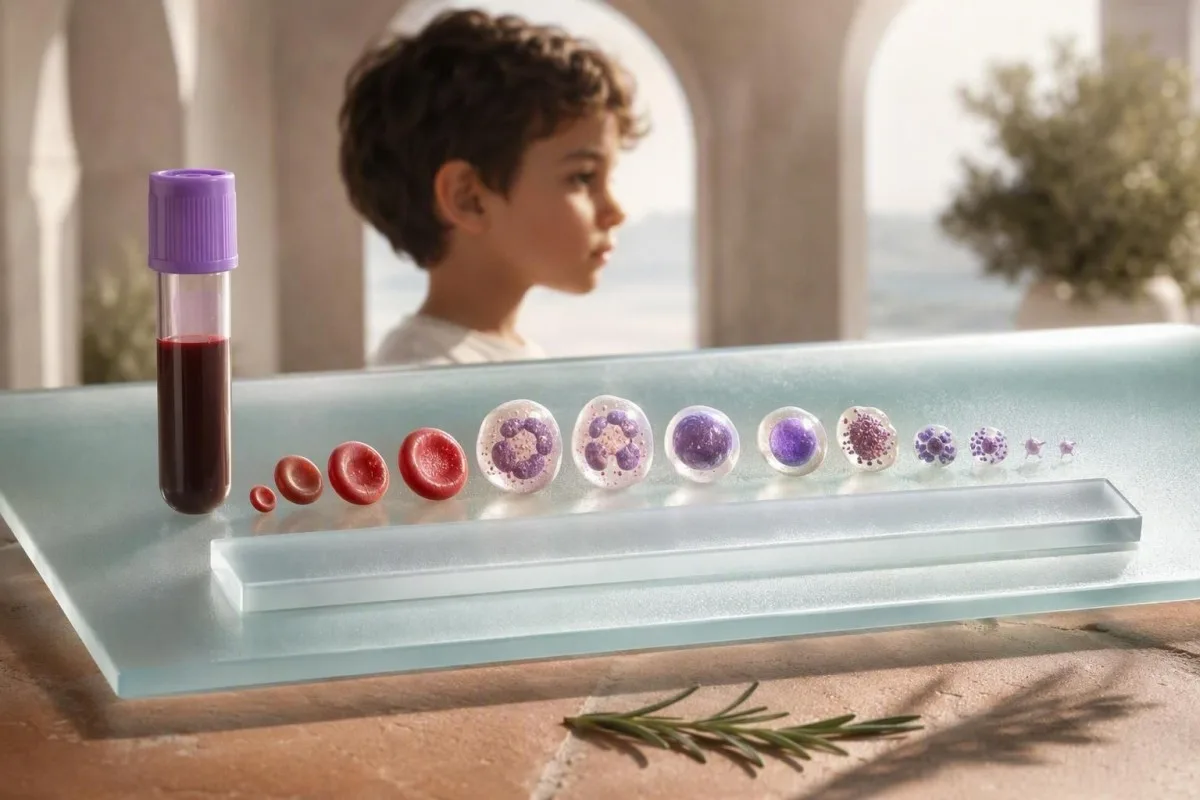
Mākslīgais intelekts var sakārtot bērna laboratorijas rezultātus un izskaidrot nezināmus terminus, taču tas nevar aizstāt pediatru, kurš zina bērna vecumu, augšanas modeli, izmeklēšanu un simptomus.


- Tiešā atbilde: Mākslīgais intelekts var interpretēt asins analīžu modeļus bērniem kā izglītojošu papildinājumu, taču diagnostikas un ārstēšanas lēmumus jāpieņem pediatram.
- Vecumam specifiski diapazoni: Limfocītu skaits, kas ir normāls 2 gadu vecumā, var tikt atzīmēts kā paaugstināts, izmantojot pieaugušo atsauces intervālu.
- Pubertāte ir svarīga: Alkas fosfatāze var paaugstināties virs 300 IU/L kaulu augšanas laikā bez aknu slimības.
- Steidzami simptomi: Elpošanas grūtības, apmulsums, krampji, zilas lūpas, smaga dehidratācija vai ļoti nevesels bērns prasa steidzamu klīnisko aprūpi neatkarīgi no AI ziņojuma.
- Parauga kvalitāte: Hemolīze, aizkavēta apstrāde un EDTA trombocītu salipšana var radīt maldinošus kālija, LDH vai trombocītu rezultātus.
- Trend value: Izturīgu rezultātu salīdzināšana no vienas laboratorijas vairāku nedēļu vai mēnešu garumā bieži vien ir noderīgāka nekā reaģēšana uz vienu robežvērtību.
- Nav pašārstēšanās: Vecāki nedrīkst sākt dzelzs, D vitamīna, vairogdziedzera ārstēšanu vai elektrolītu piedevas tikai, balstoties uz tiešsaistes laboratorijas rezultātu interpretāciju.
- Privātums: Bērna atskaiti drīkst augšupielādēt tikai ar vecāku vai likumīgā aizbildņa piekrišanu un rūpīgi noņemot nevajadzīgus identifikatorus.
Ko mākslīgais intelekts var un ko nevar darīt ar bērna asins analīzēm
Mākslīgais intelekts (MI) var interpretēt asins analīzes rezultātus bērniem tikai kā strukturētu skaidrojumu, nevis kā diagnozi vai pediatra apskates aizstājēju. Tas var identificēt atzīmētu vērtību, konvertēt vienības, aprakstīt izplatītākos cēloņus un uzdot jautājumus klīniskajam speciālistam; tas nevar novērtēt hidratāciju, attīstības stadiju, izmeklēšanas atradumus vai to, cik slims izskatās bērns. Sākot ar 2026. gada 6. septembri, šī atšķirība joprojām ir drošības robeža, par kuru es visbiežāk runāju ar vecākiem.
Esmu Dr. Tomass Kleins, un klīniskajā apskatē esmu redzējis, kā normāls mazuļa CBC izraisa nevajadzīgu trauksmi, ja tiek piemēroti pieaugušo diapazoni. Rezultāts ārpus drukātā diapazona nav automātiski nenormāls bērnam, jo daudzas atskaites pēc noklusējuma izmanto plašus vai no pieaugušajiem atvasinātus atskaites punktus. Sapratnīgai MI veselības atskaitei vajadzētu norādīt, kādu atsauces intervālu tā izmantoja, un nosūtīt ģimenes atpakaļ pie ārstējošā ārsta.
Kantesti ir AI asins analīžu analizators izstrādāts, lai organizētu laboratorijas datus un izskaidrotu modeļus vienkāršā valodā; attiecībā uz pediatriskajām atskaitēm mūsu rezultātam vajadzētu būt kā sarunas sākumam ar pediatru, nevis kā zaļajai gaismas signālam rīkoties neatkarīgi. Febrilam 18 mēnešus vecam bērnam ar nomierinošu atskaiti joprojām var būt nepieciešama tāda paša dienas izmeklēšana, ja viņš ir letarģisks, grūti elpo vai slikti dzer.
Tiešsaistes laboratorijas rezultātu interpretācija ir visnoderīgākā, ja tā pārvērš haotisku PDF par praktiskiem jautājumiem: Vai bērns bija neēdis? Vai nesen bija vīrusu slimība? Vai augums vai svars šķērso percentiles? Vecāki var arī pārskatīt mūsu MI medicīniskās atskaites drošības pārbaudes pirms paļaušanās uz jebkuru automatizētu skaidrojumu.
Kāpēc bērniem ir nepieciešami vecumam specifiski laboratorijas atsauces intervāli
Bērniem ir nepieciešamas atsauces intervāli, kas atbilst vecumam, dzimumam, pubertātes stadijai, analīzei un dažreiz arī gestācijas vecumam. Skaitlis var ievērojami mainīties starp zīdaiņa vecumu, skolas vecumu un pusaudža vecumu, kamēr bērns joprojām ir vesels.
Jaundzimušā hemoglobīns parasti ir apmēram 14–22 g/dL, savukārt tipisks 1–5 gadus vecu bērnu diapazons ir aptuveni 11,0–13,5 g/dL; laboratorijas nosaka savus apstiprinātos intervālus. Fizioloģiskais kritums pēc dzimšanas ir gaidāms, taču tas pats hemoglobīna līmenis 9 g/dL prasa atšķirīgu steidzamības novērtēšanu veselīgam 2 mēnešus vecam zīdainim nekā bālam, tahikardiskam 8 gadus vecam bērnam.
Absolūtais limfocītu skaits ir arī atkarīgs no vecuma. Skaits apmēram 4,0 × 10⁹/L varētu būt parasta pirmsskolas vecuma bērnam, tomēr augstāka par daudzām pieaugušo vērtībām, tāpēc diferenciālais rādītājs jālasa atbilstoši vecumam, nevis tikai procentiem; mūsu ceļvedis limfocītu skaitam pa vecumu izskaidro atšķirību.
Soldin un kolēģi aprakstīja, kā attīstības fizioloģija padara bērnu intervālus materiāli atšķirīgus no pieaugušo vērtībām daudziem analizētajiem rādītājiem (Soldin et al., 2005). Praksē man vispirms vajadzīga laboratorijas pašas intervāls, pēc tam bērna precīzs vecums paņemšanas brīdī — nevis vispārīgs interneta diapazons.
Kā augšana un pubertāte maina laboratorijas rezultātus
Izaugsme un pubertāte var mainīt sārmaino fosfatāzi, hemoglobīnu, feritīnu, lipīdus un dzimumhormonus pietiekami, lai pieaugušo ziņojumā tie izskatītos kā slimība. Bērna augšanas spurta laiks bieži vien izskaidro vairāk nekā viens vienīgs atzīmēts skaitlis.
Ātras skeleta augšanas laikā, sārmainā fosfatāze (ALP) var pārsniegt 300 IU/L un palikt normāla vecumam, jo ir augsta osteoblastu aktivitāte. Paaugstināts ALP ar normālu bilirubīnu, GGT, kalciju, fosfātu, simptomiem un augšanas vēsturi ir ļoti atšķirīgs modelis nekā holestātiska aknu slimība; skatiet mūsu skaidrojumu par ALP pēc kaulu augšanas.
Pubertāte pievieno vēl vienu slāni. Zēniem hemoglobīna līmenis bieži paaugstinās, jo testosterons palielina sarkanās asins šūnu veidošanos, savukārt pusaudzes, kurām ir menstruācijas, var attīstīties dzelzs deficīts ar feritīnu zemāku par 15 ng/mL pat pirms hemoglobīna līmeņa pazemināšanās. 2011. gada NHLBI bērnu sirds un asinsvadu vadlīnijās arī tiek atzīts, ka lipīdu vērtības atšķiras atkarībā no brieduma un tās jānovērtē, izmantojot bērniem noteiktus robežpunktus (Ekspertu panelis, 2011).
Kantesti ir AI asins analīžu rezultātu platforma kas var parādīt šīs attīstības problēmas, bet nevar droši noteikt Tanera stadiju no laboratorijas PDF. Klīnicists var pamatoti jautāt par menstruācijām, augšanas ātrumu, diētu, sporta treniņiem, medikamentiem un pubertātes laiku ģimenē pirms hormonu vai dzelzs paneļa interpretācijas.
Kāpēc jaundzimušo un priekšlaicīgi dzimušo zīdaiņu rezultātiem nepieciešama speciālista apskate
Jaunu un priekšlaicīgi dzimušu zīdaiņu laboratorijas rezultāti nav jāinterpretē tikai ar vispārīgu mākslīgā intelekta izvadi, jo normālā fizioloģija mainās dažas stundas un dienas pēc dzimšanas. Bilirubīna, glikozes, kalcija, hematokrīta un vairogdziedzera skrīningam nepieciešams laika ziņā sensitīvs jaundzimušā konteksts.
Kopējais bilirubīna koncentrācija 12 mg/dL (205 µmol/L) var tikt uzraudzīta vai var būt nepieciešama neatliekama ārstēšana atkarībā no pēcdzemdību vecuma stundās, grūtniecības ilguma, barošanas, hemolīzes riska un paaugstināšanās ātruma. Tāpēc jaundzimušā dzeltenās pazīmju noteikšanai izmanto stundai specifiskus nomogrammas un klīnisko novērtējumu, nevis vienu universālu robežu.
Plazmas glikozes līmenis zem 47 mg/dL (2,6 mmol/L) bieži tiek izmantots kā operatīvā robeža riska zīdaiņu protokolos, bet ārstēšana ir atkarīga no simptomiem, barošanas, atkārtota mērījuma un vietējām jaundzimušā vadlīnijām. Papēža dūriena rezultāts var atšķirties arī no nekavējoties apstrādāta laboratorijas plazmas vērtības.
Vecākiem jāizturas pret neparastu jaundzimušā skrīninga ziņojumu kā pret ātru kontaktu ceļu, nevis tiešsaistes pētījumu problēmu. Mūsu apskats par jaundzimušā skrīninga karodziņiem izskaidro, kāpēc daži rezultāti prasa vienas dienas kontaktu, bet citiem nepieciešama plānota atkārtota pārbaude.
Kā lasīt bērna CBC bez pārmērīgas reakcijas
Bērna pilna asins aina ir noderīga, ja to aplūko kā modeli: hemoglobīns, MCV, retikulocīti, balto asinsķermenīšu diferenciālais skaits, trombocīti, simptomi un trajektorija pieder kopā. Atsevišķs augsts vai zems karodziņš reti dod diagnozi.
Hemoglobīns zem 11,0 g/dL mazam bērnam bieži liek novērtēt dzelzs deficītu, diētu, svina iedarbības risku, hronisku iekaisumu, hemoglobinopātiju un asins zudumu; MCV un feritīns palīdz sašaurināt jautājumu. Feritīns var izskatīties nepatiesi nomierinošs infekcijas laikā, jo tas paaugstinās kā akūtās fāzes reaģents.
Absolūtais neutrofilu skaits zem 1,5 × 10⁹/L daudzos gadījumos tiek dēvēta par neitropēniju, taču steidzamība strauji mainās atkarībā no vecuma, izcelsmes, ilguma, drudža un samazinājuma dziļuma. Vesels bērns ar ANC 1,2 × 10⁹/L pēc vīrusa nav tāda pati klīniska situācija kā bērns ar drudzi un ANC zem 0,5 × 10⁹/L; lasiet mūsu neitrofīlu diapazona ceļvedi.
Kad es pārskatu pilnu asins ainu pēc gastroenterīta, es pārbaudu, vai hemokoncentrācija izskaidro nedaudz paaugstinātu hemoglobīna vai trombocītu skaitu pirms kaulu smadzeņu problēmas pieņemšanas. Atkārtota pārbaude pēc atveseļošanās bieži ir drošāka nekā plaša testēšana, ja vien sasitumi, pastāvīgs drudzis, kaulu sāpes, svara zudums vai ievērojams bālums nemaina risku.
Kāpēc paraugu apstrāde var maldināt gan mākslīgo intelektu, gan klīnicistus
Slikta savākšana vai aizkavēta apstrāde var padarīt bērna asins rezultātu nepareizu pirms jebkura cilvēka vai algoritma to redz. Hemolīze, sarežģīta savākšana, ilgs tourniquet laiks un nepareizā mēģene var mainīt rezultātus pietiekami, lai izraisītu viltus trauksmi.
Hemolīze izdala intracelulāro kāliju un LDH paraugā, tāpēc augsts kālija rezultāts ar hemolīzes karodziņu var prasīt steidzamu atkārtotu pārbaudi, nevis tūlītēju ārstēšanu. Tomēr bērnam ar vājumu, sirdsklauvēm, nieru slimību vai EKG bažām joprojām ir nepieciešama ātra klīniska novērtēšana; parauga brīdinājums neliecina, ka kālijs ir nekaitīgs.
EDTA izraisīta trombocītu aglutinācija var radīt mākslīgi zemu trombocītu skaitu, dažreiz zem 100 × 10⁹/L, neskatoties uz normāliem trombocītiem bērnam. Laboratorijas asins smērējuma apskate vai atkārtojums citrāta mēģenē var noskaidrot šo izplatīto pirmsanalītisko slazdu; mūsu raksts par EDTA izraisīta trombocītu salipšana parāda, kāpēc tikai viens skaitlis var maldināt.
Kantesti’s ar AI balstīts asins analīzes rīks var atzīmēt iekšējas neatbilstības un redzamus laboratorijas komentārus, taču tā nevar pārbaudīt mēģeni vai novērot sarežģītu paraugu savākšanu. Vecākiem vajadzētu nofotografēt visu pārskatu, ieskaitot komentārus par parauga kvalitāti, savākšanas laiku un atsauces diapazonus — ne tikai atzīmēto lapu.
Kā drudzis, dehidratācija un vīrusi īslaicīgi maina testus
Akūta slimība bērniem var īslaicīgi mainīt glikozes, nātrija, kreatinīna, leikocītu, CRP, feritīna un aknu enzīmu līmeni. Rezultāts drudža laikā bieži vien jāsalīdzina ar atkārtotu analīzi pēc atveseļošanās, nevis jāuzskata par bērna pamata līmeni.
Vemšana un samazināta uzņemšana var koncentrēt hemoglobīnu un urīnvielu, savukārt smaga caureja var pazemināt bikarbonātu un traucēt nātrija vai kālija līmeni. Nātrijs zem 130 mmol/L, īpaši ar apjukumu, stiprām galvassāpēm, krampjiem vai atkārtotu vemšanu, prasa steidzamu medicīnisko novērtēšanu, nevis tiešsaistes skaidrojumu.
CRP paaugstinās un pazeminās ātrāk nekā ESR, taču neviena analīze pati par sevi nenosaka konkrētu cēloni. CRP līmenis 40 mg/L var būt gan vīrusu, gan bakteriālu slimību, audu bojājumu un iekaisuma slimību gadījumā; bērna izskats, drudža ilgums, izmeklēšana un dažreiz kultūras ir svarīgākas nekā viens rādītājs.
Dr. Tomass Kleins praktiskais noteikums ir vienkāršs: blakus rezultātam pierakstiet slimības dienu, zāles, šķidruma uzņemšanu un temperatūru. Tas nelielais ieraksts padara laboratorijas izmaiņas starp vizītēm daudz vieglākas pediatram interpretācijai.
Simptomi, kas atceļ jebkuru iepriecinošu AI ziņojumu
Steidzami simptomi ir svarīgāki par normāli izskatīgu AI pārskatu, jo laboratorijas paneļi nenosaka daudzas bērnu ārkārtas situācijas. Bērnam, kuram ir apgrūtināta elpošana, grūti pamodināt, zilganas lūpas, krampji vai smagas dehidratācijas pazīmes, ir nepieciešama tūlītēja palīdzība.
Steidzami meklējiet palīdzību bērnam ar neizbalējošu izsitumu kopā ar drudzi, stīvu kaklu, nepārejošām stiprām galvassāpēm, mainītu uzvedību vai sliktu perfūziju, piemēram, aukstām, raibām rokām un ievērojami samazinātu urīna daudzumu. CBC vai CRP nevar droši izslēgt agrīnu sepšu, meningīta, apendicīta, diabētiskās ketoacidozes vai alerģiskas krīzes.
Diabēta riska gadījumā vemšana ar dziļu vai ātru elpošanu, vēdersāpes, miegainība vai vidēji lieli ketoni prasa steidzamu novērtēšanu. Glikozes līmenis asinīs 200 mg/dL (11,1 mmol/L) ar klasiskiem simptomiem atbalsta diabēta izmeklēšanu, taču ketoacidozes novērtēšanai nepieciešama glikoze, ketoni, elektrolīti, skābju-bāzes līdzsvars un klīniskā izmeklēšana.
Rezultāts nevar novērtēt elpošanas darbu vai kapilāro aizpildīšanos. Vecāki, kas uztraucas par krūškurvja simptomiem, var izmantot mūsu steidzamu analīžu simptomu ceļvedi kontekstam, taču viņiem nevajadzētu gaidīt automātisko analīzi, ja bērns šķiet nopietni slims.
Zāles, vitamīni un piedevas, kas maina bērnu laboratorijas rezultātus
Izplatītas zāles un uztura bagātinātāji var mainīt vai ietekmēt bērnu laboratorijas analīzes, tāpēc AI ir nepieciešams pilnīgs medikamentu saraksts, lai izvairītos no maldinoša skaidrojuma. Biotīns, kortikosteroīdi, pretkrampju līdzekļi, dzelzs, D vitamīns un nesenās IV infūzijas ir bieži sastopami piemēri.
Liela deva biotīna var traucēt dažu imunoanalīžu rezultātus un radīt maldinošus vairogdziedzera vai hormonu rezultātus; ģimenēm jāinformē ārsts par matu, nagu vai multivitamīnu produktiem. Doza ir svarīga: parasta uztura uzņemšana atšķiras no piedevām, kas satur 5000 līdz 10000 mikrogramus dienā.
Dzelzs nedrīkst sākt lietot tikai tāpēc, ka bērns izskatās noguris vai viņam ir zems feritīna līmenis. Pārāk daudz dzelzs var būt kaitīgi, un diagnostiskā izmeklēšana atšķiras dzelzs deficīta, talasēmijas pazīmju, hroniskas iekaisuma un svina iedarbības gadījumā; mūsu dzelzs izmeklēšanas ceļvedis parāda, kāpēc kopā tiek interpretēta transferīna piesātinājuma un feritīna analīze.
D vitamīna terapija ir vēl viena joma, kurā svarīgs ir konteksts. 25-hidroksivitamīna D koncentrācija zem 20 ng/mL (50 nmol/L) bieži tiek uzskatīta par deficītu, taču pediatriskā dozēšana ir atkarīga no vecuma, ķermeņa masas, uztura, malabsorbcijas riska, kalcija un vietējām vadlīnijām, nevis no vispārīga AI uztura plāna.
Kāpēc tendences parasti ir drošākas nekā viens bērna rezultāts
Atkārtoti rezultāti no vienas laboratorijas bieži ir informatīvāki nekā viens robežvērtības pediatriskais rādītājs. Tendences var atklāt atveseļošanos, ar augšanu saistītas izmaiņas, medikamentu ietekmi vai noturīgu modeli, kas prasa speciālista apskati.
Feritīna maiņa no 8 līdz 28 ng/mL pēc ārsta vadītas ārstēšanas sniedz skaidrāku stāstu nekā viens rādītājs 18 ng/mL, īpaši, ja tajā pašā laikā samazinājās CRP. Vairogdziedzera testēšanai TSH maiņa ir nozīmīga tikai tad, ja tiek ņemts vērā paraugu savākšanas laiks, analīzes metode, slimība un medikamentu lietošanas atbilstība.
Kantesti ir AI laboratorijas testa interpretācijas pakalpojumā , kas var salīdzināt vēsturiskos ziņojumus blakus un norādīt uz ievērojamām izmaiņām, taču sistēma nekad nedrīkst apgalvot, ka tendence pierāda diagnozi. Laboratorijas analītiskā variācija un normāla bioloģiskā svārstība var izskaidrot nelielas izmaiņas, īpaši tuvu lēmuma slieksnim.
Saglabājiet sākotnējos PDF failus un atzīmējiet, vai bērnam bija drudzis, intensīvs sporta pasākums, badošanās, augšanas izrāviens vai medikamentu maiņa. Mūsu rezultātu laika gaitā ceļvedis izklāsta detaļas, kas padara atkārtotu testēšanu klīniski lietojamu.
Ko vecākiem vajadzētu iekļaut pirms tiešsaistes laboratorijas interpretācijas izmantošanas
Vecākiem jāaugšupielādē pilns ziņojums, precīzs vecums, dzimums, kur tas ir svarīgi, parauga savākšanas datums un laiks, kā arī laboratorijas atsauces intervāli. Apgriezti ekrānuzņēmumi bez vienībām vai parauga komentāriem ir biežs bīstamas medicīnas ziņojumu analīzes iemesls.
Noderīga iesniegumā ietilpst bērna vecums gados un mēnešos, auguma un svara tendence, ja tā ir attiecīga, nesena slimība, badošanās statuss, pašreizējie medikamenti, piedevas un klīniskais jautājums, kas izraisīja testēšanu. Neiekļaujiet bērna pilnu adresi, skolas datus vai nevajadzīgus identifikatorus.
Kantesti AI atbalsta ziņojumu augšupielādi vairākās valodās un var sniegt skaidrojumu aptuveni 60 sekundēs, taču ātrums nav klīniska atļauja. Mūsu PDF augšupielādes kontrolsaraksts ir īpaši noderīgs decimāldaļu komatiem, blāvām fotogrāfijām, dublētām paneļiem un vienību neatbilstībām.
Ja ziņojumā norādīts ‘kritiski’, ‘telefona rezultāts’, ‘steidzama pārskatīšana’ vai ir laboratorijas pieprasījums nekavējoties atkārtot analīzes, vispirms sazinieties ar pakalpojumu sniedzēju. Tiešsaistes interpretācija nedrīkst aizkavēt laboratorijas pašu eskalācijas ceļu.
Jautājumi, kas jāņem no AI ziņojuma bērnu klīnicistam
Visdrošākais mākslīgā intelekta ziņojuma lietojums ir radīt fokusētus jautājumus klīnicistam, nevis radīt ārstēšanas plānu. Pajautājiet, vai diapazons ir pediatrisks, vai raksts atbilst nesenai slimībai vai augšanai, un vai ir nepieciešama atkārtota analīze.
Labi jautājumi ietver: ‘Kura vērtība ir vissvarīgākā?’ ‘Vai šī laboratorija izmanto vecumam atbilstošu intervālu?’ ‘Vai mums vajadzētu atkārtot, kad mans bērns būs vesels?’ un ‘Kādi simptomi liktu jums vēlēties mūs redzēt ātrāk?’ Šie jautājumi ir noderīgāki nekā jautājums, vai katrs signāls nozīmē slimību.
Zema hemoglobīna līmeņa gadījumā jautājiet, vai retikulocīti, MCV, feritīns, transferīna piesātinājums, diēta un ģimenes izcelsme maina diferenciāldiagnozi. Augsta ALT gadījumā jautājiet par nesenām vīrusu slimībām, medikamentiem, svara trajektoriju, muskuļu traumām un vai ir nepieciešamas atkārtotas ALT un AST analīzes; mūsu ALT skaidrojums sniedz vecākiem vārdu krājumu, neaizstājot novērtējumu.
Ja mākslīgā intelekta atbilde un pediatriskais klīnicists nespēj vienoties, klīnicista interpretācijai ir jābūt prioritātei, jo viņam ir bērns priekšā. Otrs pediatrisks viedoklis ir lietderīgs, ja novirzes saglabājas, skaidrojums joprojām ir neskaidrs vai simptomi neatbilst ierosinātajam plānam.
Bērnu laboratorijas ziņojumu konfidencialitātes un piekrišanas noteikumi
Bērna laboratorijas analīžu rezultāti ir sensitīva veselības informācija, un tos drīkst kopīgot tikai vecāks vai likumīgais aizbildnis, izmantojot privātumu saudzējošu pakalpojumu. Ģimenēm jāsaprot, kam ir pieejami rezultāti, cik ilgi tie tiek glabāti un kā darbojas dzēšanas pieprasījumi.
Pirms ziņojuma augšupielādes noņemiet skolas identifikatorus, mājas adreses un nesaistītu ģimenes informāciju. Saglabājiet savākšanas datumu, laboratorijas nosaukumu, atsauces intervālus un klīnicista komentārus, jo šo detaļu noņemšana var padarīt pediatrisko interpretāciju mazāk drošu.
Kantesti AI izmanto GDPR prasībām atbilstošu, uz privātumu orientētu datu apstrādi, taču aizbildņiem joprojām rūpīgi jāizlemj, vai tiešsaistes analīze ir piemērota bērna situācijai. Kopīgotā ģimenes piekļuvei jābūt apzinātai un ierobežotai; mūsu ceļvedis ģimenes rezultātu kopīgošanai aptver praktiskus piekrišanas lēmumus.
Pusaudžiem ir tiesības paust savu viedokli par to, kā tiek kopīgota viņu veselības informācija, īpaši attiecībā uz sensitīvu testēšanu. Vietējie noteikumi atšķiras attiecībā uz konfidencialitāti un piekrišanu, tāpēc ģimenēm vajadzētu jautāt ārstējošajam dienestam, kā rezultāti tiks paziņoti vecākiem un jaunietim.
Kādam vajadzētu būt drošam bērnu AI uzraudzības modelim
Drošai pediatriskai mākslīgā intelekta interpretācijai jāatklāj tās ierobežojumi, jāsaglabā oriģinālie laboratorijas dati, jāidentificē steidzami sarkanie signāli un jānorāda lietotāji uz cilvēka klīnisko pārskatīšanu. Tā nekad nedrīkst diagnosticēt bērnu pēc viena paneļa, izrakstīt medikamentus vai mierināt ģimenes prom no neatliekamās palīdzības.
Precizitātei ir vairāki slāņi: PDF pareiza nolasīšana, analītu un vienību saskaņošana, atbilstoša intervāla izvēle un raksta interpretēšana klīniskajā kontekstā. Pat šķietami precīza transkripcija var radīt nedrošu secinājumu, ja trūkst 14 gadus veca jaunieša pubertātes stadijas, drudža vai medikamentu vēstures.
Uzņēmumā Kantesti mūsu medicīnas komanda pārskata drošības robežas un eskalācijas valodu; lasītāji var iepazīties ar mūsu pieeju klīniskā validācija un klīnicistiem Medicīnas konsultatīvā padome. Kantesti ir an AI biomarķieru interpretācijas platforma kas padarīs nākamo klīnisko sarunu skaidrāku, nekad neaizstās to.
Mana galvenā atziņa pēc 15 gadu prakses ir vienkārša: izmantojiet mākslīgo intelektu, lai izprastu pārskatu, saglabātu tendenci un sagatavotu jautājumus. Izmantojiet bērnu ārstu, lai noteiktu, ko rezultāts nozīmē šim konkrētajam bērnam šodien.
Bieži uzdotie jautājumi
Vai mākslīgais intelekts var interpretēt bērnu asins analīžu rezultātus?
AI var interpretēt bērnu asins analīžu rezultātus izglītojošā nolūkā, taču bez pediatra veiktas klīniskās izvērtēšanas tas nevar droši diagnosticēt vai ārstēt bērnu. Bērnu analīžu rezultātu interpretācijai nepieciešami vecumam atbilstoši references intervāli, pubertātes konteksts, simptomi, izmeklēšanas rezultāti un informācija par parauga kvalitāti. Piemēram, ALP vērtība virs 300 SV/l augšanas lēciena laikā var būt sagaidāma, savukārt pieaugušajam tādam pašam rezultātam var būt nepieciešams citāds izvērtējums. Vecākiem AI skaidrojums jāizmanto, lai sagatavotu jautājumus ārstam, kurš nozīmējis analīzes.
Kāpēc pieaugušo asins analīžu normas bērniem nav drošas?
Pieaugušo laboratorisko rādītāju references intervāli bērniem nav droši lietojami, jo hemoglobīna, limfocītu, sārmainās fosfatāzes, kreatinīna, hormonu un daudzu citu analītu rādītāji mainās līdz ar attīstību. Pirmsskolas vecuma bērnam absolūtais limfocītu skaits 4,0 × 10⁹/L var būt normāls, lai gan pieaugušo laboratorijas pārskatā tas var tikt atzīmēts kā paaugstināts. Jaundzimušā bilirubīna līmenis arī jāinterpretē atbilstoši vecumam stundās, nevis pēc viena universāla skaitļa. Kad vien iespējams, jāizmanto konkrētās laboratorijas pediatriskā references intervāla dati un precīzs bērna vecums.
Kad man jāmeklē neatliekamā medicīniskā palīdzība, nevis jāgaida mākslīgā intelekta laboratorisko analīžu rezultāti?
Nekavējoties meklējiet neatliekamo medicīnisko palīdzību, ja bērnam ir apgrūtināta elpošana, zilas lūpas, krampji, apjukums, bērnu ir grūti pamodināt, ir smaga dehidratācija vai viņš izskatās nopietni slims. Arī nātrija koncentrācijai zem 130 mmol/L kopā ar neiroloģiskiem simptomiem vai vemšanai ar dziļu elpošanu un ketoniem nepieciešama steidzama medicīniska izvērtēšana. Normāls CBC, CRP vai AI veselības ziņojums nevar izslēgt daudzas neatliekamas situācijas. Simptomiem un bērna izskatam ir augstāka prioritāte nekā tiešsaistē veiktai laboratorisko rezultātu interpretācijai.
Vai sarežģīta asins paraugu ņemšana var izraisīt nepatiesus patoloģiskus rezultātus bērniem?
Jā, sarežģīta parauga ievākšana var izraisīt nepareizus patoloģiskus rezultātus bērniem. Hemolīze var nepareizi paaugstināt kālija un LDH līmeni, savukārt EDTA trombocītu aglutinācija var radīt nepareizi zemu trombocītu skaitu, dažreiz zem 100 × 10⁹/L. Laboratorija var pievienot komentāru par hemolīzi vai aglutināciju, un atkārtots paraugs vai asins smērvielas apskate var noskaidrot rezultātu. Vecāki nekad nedrīkst uzskatīt, ka atzīmētā vērtība ir reāla vai kļūdaina, bez klīniskas konsultācijas.
Vai vecākiem pēc AI laboratorijas analīzes būtu jāiedod dzelzs vai D vitamīns?
Vecākiem nevajadzētu sākt dzelzs vai augstas devas D vitamīna lietošanu tikai mākslīgā intelekta laboratorijas ziņojuma pamata. Feritīns zem 15 ng/mL var liecināt par dzelzs deficītu, taču infekcija var paaugstināt feritīna līmeni, un anēmijai ir vairāki citi cēloņi, kuriem nepieciešama atšķirīga ārstēšana. 25-hidroksivitamīna D līmenis zem 20 ng/mL bieži vien prasa klīnisko ārstu vadītu terapiju, kur devas tiek noteiktas, pamatojoties uz vecumu, ķermeņa izmēru, kalcija līmeni, diētu un medicīnisko vēsturi. Gan lieks dzelzs, gan D vitamīns var radīt kaitējumu.
Iegūstiet AI vadītu asins analīžu analīzi jau šodien
Pievienojieties vairāk nekā 2 miljoniem lietotāju visā pasaulē, kuri uzticas Kantesti tūlītējai, precīzai laboratorijas analīžu interpretācijai. Augšupielādējiet savas asins analīzes rezultātus un dažu sekunžu laikā saņemiet visaptverošu 15,000+ biomarķieru interpretāciju.
📚 Atsauces pētniecības publikācijas
Kleins, T., Mičels, S., un Vēbers, H. (2026). Seruma olbaltumvielu ceļvedis: globulīnu, albumīna un A/G attiecības asins analīze. Kantesti AI Medicīnas pētījumi.
Kleins, T., Mičels, S., un Vēbers, H. (2026). C3 C4 komplementa asins analīzes un ANA titra ceļvedis. Kantesti AI Medicīnas pētījumi.
📖 Ārējās medicīniskās atsauces
⚕️ Medicīniskā atruna
Šis raksts ir paredzēts tikai izglītojošiem nolūkiem un nav medicīnisks padoms. Vienmēr konsultējieties ar kvalificētu veselības aprūpes speciālistu, lai pieņemtu lēmumus par diagnostiku un ārstēšanu.
E-E-A-T uzticēšanās signāli
Pieredze
Ārstu vadīta klīniskā laboratorijas interpretācijas darbplūsmu pārskatīšana.
Ekspertīze
Laboratorijas medicīnas fokuss uz to, kā biomarķieri uzvedas klīniskā kontekstā.
Autoritāte
Sagatavojis Dr. Thomas Klein, pārskatījusi Dr. Sarah Mitchell un prof. Dr. Hans Weber.
Uzticamība
Uz pierādījumiem balstīta interpretācija ar skaidriem turpmākās rīcības ceļiem, lai mazinātu trauksmi.