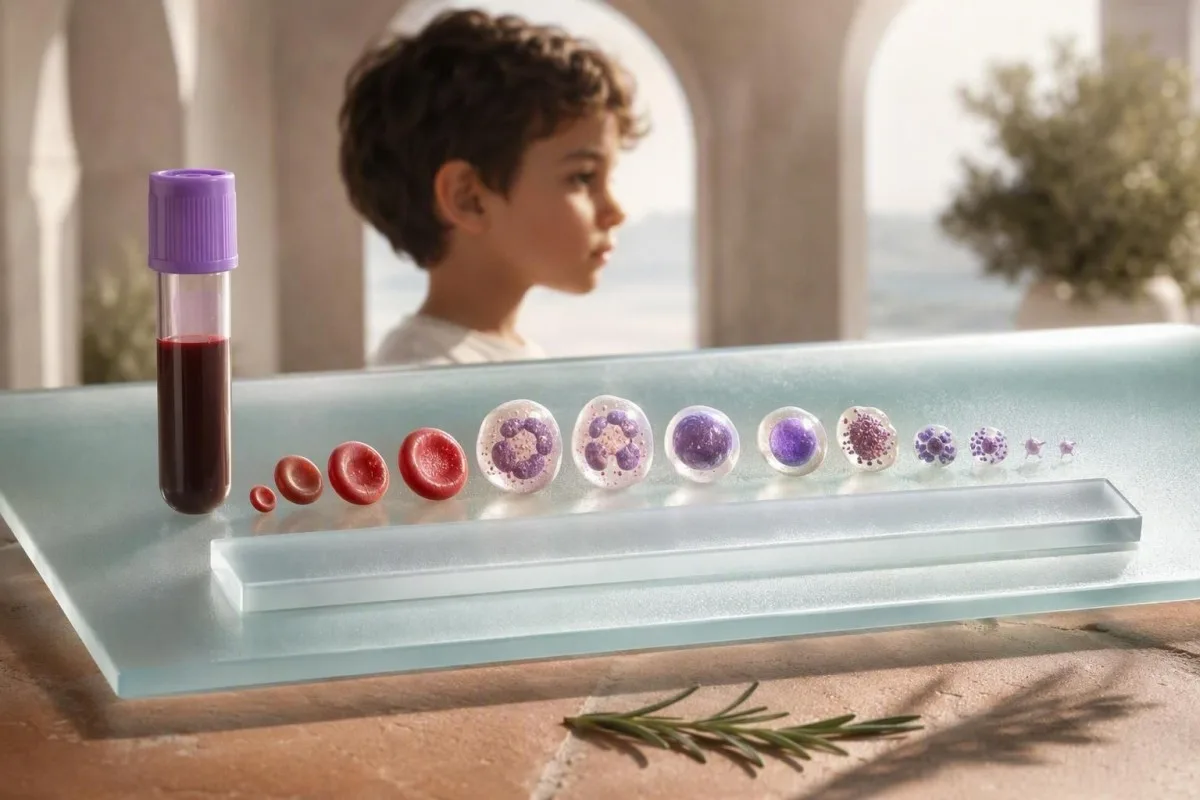
سۈنئىي ئىدراك بالىنىڭ تەجرىبىخانىدىكى نەتىجىلىرىنى تەشكىللىيەلەيدۇ ۋە تونۇشسىز terms نى چۈشەندۈرەلەيدۇ، ئەمما بالىنىڭ يېشى، ئۆسۈش ئەندىزىسى، تەكشۈرۈشى ۋە سىملىقلىرىنى بىلگەن بالىلار دوختۇرنى ئالماشتۇرالمايدۇ.


- بىۋاسىتە جاۋاب: سۈنئىي ئىدراك بالىلارنىڭ قان تەكشۈرۈش ئەندىزىسىنى مائارىپ قوشۇمچە قىلىپ چۈشەندۈرەلەيدۇ، ئەمما بالىلار دوختۇر دىئاگنوز ۋە داۋالاش قارارىنى چىقىرىشى كېرەك.
- يېشىغا ماس كېلىدىغان دائىرىلەر: 2 ياشتىكى لىمفاخۇجايىمنىڭ سانى چوڭلارنىڭ پايدىلىنىش دائىرىسى تەرىپىدىن يۇقىرى دەپ بەلگە قويۇلۇشى مۇمكىن.
- جىنسىي يېتىلىش مۇھىم: جىگەر كېسىلى بولمىغان سۆڭەك ئۆسۈشى جەريانىدا ئىچكى ماي بىرلىكى (alkaline phosphatase) 300 IU/L دىن ئېشىپ كېتىشى مۇمكىن.
- جىددىي ئالامەتلەر: نەپەس ئېلىش قىيىنچىلىقى، چۈشەنمەسلىك، تۇتقاق، كۆك لەۋ، قاتتىق سۇسىزلىنىش ياكى ناھايىتى كېسەل بالىلار سۈنئىي ئىدراك دوكلاتىدىن قەتئىي نەزەر، جىددىي داۋالاشقا موھتاج.
- ئەۋرىشكە سۈپىتى: گېمۇلمۇلىز، كەينىكىنى بىر تەرەپ قىلىش، EDTA پلازمىما توپلىنىشى potassium، LDH، ياكى پلازمىما نەتىجىلىرىنى خاتا چىقارالايدۇ.
- يۈزلىنىش قىممىتى: بىرلا قېتىملىق چېگرىدىكى نەتىجىگە تاقىلىشتىن كۆرە، ھەپتىلىك ياكى ئايلىق قېلىپتىكى ئوخشاش تەجرىبىخانىنىڭ نەتىجىلىرىنى سېلىشتۇرۇش كۆپرەك پايدىلىق.
- ئۆزى داۋالىماڭ: ئاتا-ئانىلار پەقەت تور بېتىدىكى تەجرىبىخانا نەتىجىسى چۈشەندۈرۈشىگە ئاساسەن تۆمۈر، D ھارمۇنى، ق devons ئىچكى ئاجراتما بېزى دورىسى ياكى ئېلېكترولىت تولۇقلىما دورىسى قاتارلىقلارنى باشلىمايىدۇ.
- مەخپىيەتلىك: بالىنىڭ دوكلاتى پەقەت ئاتا-ئانىسى ياكى قانۇنىي ۋەسىيلىكىنىڭ قوشۇلۇشى ۋە زۆرۈر بولمىغان بىكىتىلگەن ئالامەتلەرنى دىققەت بىلەن ئۆچۈرگەندىن كېيىنلا ساقلىنىشى كېرەك.
سۈنئىي ئىدراك بالىنىڭ قان تەكشۈرۈشى بىلەن نېمە قىلالايدۇ ۋە نېمە قىلالمايدۇ
سۈنئىي ئىدراك بالىلارنىڭ قان تەكشۈرۈش نەتىجىسىنى پەقەت قۇرۇلمىلىق چۈشەندۈرۈش سۈپىتىدە، دىئاگنوز قويۇش ياكى بالىلار كېسەللىكلىرىنى تەكشۈرۈشنىڭ ئورنىغا چىقىدىغان نەرسە قىلىپ چۈشەندۈرەلەيدۇ. ئۇ بىر بەلگىلەنگەن قىممەتنى تېپىپ، بىرلىككە ئايلاندۇرالايدۇ، ئورتاق سەۋەبلەرنى تەسۋىرلەيدۇ، ۋە دوختۇر ئۈچۈن سوئاللارنى پەيدا قىلالايدۇ؛ ئۇ سۇيۇقلۇق، تەرەققىيات باسقۇچى، تەكشۈرۈش نەتىجىلىرىنى ياكى بالىنىڭ قانچىلىك كېسەل كۆرۈنگەنلىكىنى باھالىيالمايدۇ. 2026-يىلى 9-ئاينىڭ 6-كۈنىگىچە، بۇ پەرقى مەن ئاتا-ئانىلار بىلەن دائىم سۆزلەشكەن بىخەتەرلىك چېگرىسى بولۇپ قالماقتا.
مەن دوكتور توماس كلايىن، ۋە كلىنىك تەكشۈرۈشتە، بالىلار دائىرىسىنى قوللانغاندا نورمالدىن يىراق تاشمىغان بالا مىقدارىنىڭ ھاجەتسىز ئەندىشىنى پەيدا قىلغانلىقىنى كۆرگەن. بېسىلغان دائىرىدىن سىرتقى نەتىجە بالىلار ئۈچۈن ئاپتوماتىك نورمالسىز بولمايدۇ, ، چۈنكى نۇرغۇن دوكلاتلاردا ياۋايى ياكى چوڭلاردا بارلىققا كەلگەن بايراقلار ئارخىپقا كىرىدۇ. ئەقىللىق سۈنئىي ئىدراك ساقلىق دوكلاتى قانداق ئىشلىتىلگەنلىكىنى ۋە ئاتا-ئانىلارنى يېتەكلىگەن دوختۇرغا قايتىشقا يېتەكلىشى كېرەك.
كانتېستى بىر AI قان تەكشۈرۈش ئانالىزچىسى تەجرىبىخانا سانلىق مەلۇماتلىرىنى تەرتىپلىمەك ۋە چۈشەنچىلىك تىل بىلەن چۈشەندۈرمەك ئۈچۈن لايىھەلەنگەن؛ بالىلار دوكلاتى ئۈچۈن، بىزنىڭ نەتىجىمىز بالىلار دوختۇرى ئۈچۈن پاراڭ باشلاش ئىشلىتىشى كېرەك، مۇستەقىل ھەرىكەت قىلىشقا رۇخسەت قىلىش ئۈچۈن ئەمەس. يېنىكلىگى بار، نەپەس ئېلىش قىيىن ياكى ئىچىش ناچار بولسا، دوكلاتى راھەت كۆرۈنگەن 18 ئايلىق بالىغا ھېلىمۇ شۇ كۈنى تەكشۈرۈش تەلپ قىلىنىشى مۇمكىن.
تور تەجرىبىخانا نەتىجىسىنى چۈشەندۈرۈش، قالايمىقان PDF نى ئەمەلىي سوئاللاردىن پايدىلىنىشقا ئۆزگەرتكەندە ئەڭ پايدىلىق: بالا روزا تۇتقانمۇ؟ يېقىنقى ۋىرۇسلۇق كېسەل بارمۇ؟ بوينى ياكى ئېغىرلىقى% نى بۇزۇپ كەتتىمۇ؟ ئاتا-ئانىلارمۇ بىزنى تەكشۈرەلەيدۇ سۈنئىي ئىدراك دورا دوكلاتى بىخەتەرلىك تەكشۈرۈشى ھەر قانداق ئاپتوماتىك چۈشەندۈرۈشنى ئىشەنمەي تۇرۇپ.
بالىلار نېمە ئۈچۈن يېشىغا ماس كېلىدىغان تەجرىبىخانىدىكى پايدىلىنىش ئارىلىقىنى تەلەپ قىلىدۇ
بالىلار ياش، جىنسىي، جىنسىي تەرەققىيات باسقۇچى، سىناق، ۋە بەزىدە ھامىلدارلىق يېشىغا ماس كېلىدىغان پايدىلىنىش دائىرىلىرىنى تەلپ قىلىدۇ. بىر سان بالىلار ساغلام بولسىمۇ، بوۋاقلىق، مەكتەپ يېشى ۋە ئۆسمۈرلۈك يېشى ئارىسىدا زور دەرىجىدە ئۆزگىرىشى مۇمكىن.
يېڭى تۇغۇلغان بوۋاقتىكى ھېم করিزىي ئادەتتە تەخمىنەن 14 دىن 22 گ/دىن, ، گەرچە 1-5 ياشتىكى بالىلارنىڭ ئادەتتىكى دائىرىسى تەخمىنەن 11.0 دىن 13.5 گ/دىن; ؛ تەجرىبىخانىلار ئۆزلىرىنىڭ دەلىللەنگەن دائىرىلىرىنى بەلگىلەيدۇ. تۇغۇلۇشتىن كېيىنكى فىزىئولوگىيىلىك چۈشۈش مۆلچەرلەنگەن، ئەمما 9 گ/دىن ھېم করিزىي 2 ئايلىق ساغلام بوۋاقتا 8 ياشلىق ئاق، تېز يۈرەك ناۋايىدا ياكى تېز يۈرەك ناۋايىدا تېز يۈرەك ناۋايىغا قارىغاندا باشقا خىل جىددىيلىكنى تەلەپ قىلىدۇ.
مۇتلەق لىمفا ھۈجەيرىسى سانى يەنە ياشقا باغلىق. سانى تەخمىنەن 4.0 × 10⁹/L نورمال بالياسنى بالىلاردا پەقەت يۇقىرىدا بولسا، ئەمما نۇرغۇن چوڭلارنىڭ دائىرىسىدىن يۇقىرى بولسا، شۇڭا نىسبەتكە قارىماي، ياشقا قاراپ تۈرلۈك ھۈجەيرىلەرنى تەكشۈرۈش كېرەك. ياشتىكى لىمفا ھۈجەيرىسى سانىغا ھەيدەكچىلىك پەرقنى چۈشەندۈرىدۇ.
Soldin ۋە خىزمەتداشلىرى تەرەققىياتتىكى فىزىئولوگىيەنىڭ بالىلار دائىرىسىنى نۇرغۇن ئانالىزلاردا چوڭلارنىڭ قىممىتىدىن زور كۆپ پەرقلىق قىلىدىغانلىقىنى تەسۋىرلىگەن (Soldin et al., 2005). ئەمەلىيەتتە، مەن ئالدى بىلەن ئىشخانا ئۆز دائىرىسىنى، ئاندىن بالىنىڭ يىغىش ۋاقتىدىكى توغرا ياشنى - ئۆلچەملىك تور دائىرىسى ئەمەس، بەلكى ئويلايمەن.
ئۆسۈش ۋە جىنسىي يېتىلىش تەجرىبىخانىدىكى نەتىجىلەرنى قانداق ئۆزگەرتىدۇ
ئۆسۈش ۋە جىنسىي پىشىش ئىسپىرتىغا قارشى فوسفاتاز، ھېم Siamo، فېررېن ، لىپىدلار ۋە جىنسىي ھورمونلارنى چوڭلار دوكلاتىدا كېسەللىكنى دورىدىغان دەرىجىدە ئۆزگەرتەلەيدۇ. بالىنىڭ ئۆسۈش تېزلىكىنىڭ ۋاقتى بىر يەككە باھالانغان سانغا قارىغاندا كۆپنى ئېنىقلايدۇ.
تېز سۆڭەك ئۆسۈشى جەريانىدا،, ئىسپىرتىغا قارشى فوسفاتاز (ALP) 300 IU/L دىن ئېشىپ كېتىشى مۇمكىن ۋە ئۆسۈش ئۆسۈشى يۇقىرى بولغاچقا، ياشقا نورمال بولىدۇ. نورمال بىئولوگىيىلىك، GGT، كالتىي، فوسفور، يوشتۇرمىلىق ۋە ئۆسۈش تارىخى بىلەن يۇقىرى ALP بولسا، بىر خىل ئۆت يولىنى توسۇش كېسىلىنىڭ نۇرغۇن پەرقلىق ئەندىزىسى بولۇپ، بىزنىڭ چۈشەندۈرۈشىمىزنى كۆرۈڭ سۆڭەك ئۆسۈشىدىن كېيىن ALP.
جىنسىي پىشىش يەنە بىر قەۋەت قوشىدۇ. تېستوستېرون قىزىل قان ھۈجەيرە ئىشلەپچىقىرىشنى ئاشۇرغاندا ھېم Siamo ئەرلەردە ئۆسىدۇ، ھەمدە ھەيز كېلىدىغان ياشلار فېررېننىڭ تۆۋەندىكىدە تۆمۈر كەمچىل بولىدۇ. 15 ng/mL ھەتتا ھېم Siamo تۆۋەنلەشتىن بۇرۇن. 2011 NHLBI بالىلار يۈرەك-قېنى قوللانمىسى يەنە لىپىد قىممىتىنىڭ پىشىش بىلەن ئوخشىمايدىغانلىقىنى ۋە بالىلارنىڭ كېسىش نۇقتىلىرىنى ئىشلىتىپ باھالىنىشى كېرەكلىكىنى قوبۇل قىلىدۇ (Expert Panel, 2011).
كانتېستى بىر AI قان تەكشۈرۈش نەتىجىسىنى چۈشەندۈرۈش سۇپىسى بۇ خىل تەرەققىياتتىكى ئىگىز-پەسللىكلەرنى كۆرسىتەلەيدۇ، لېكىن ھورمون ياكى تۆمۈر تاختىسىنى چۈشەندۈرۈشتىن بۇرۇن، دوختۇرغا ھەيز، ئۆسۈش سۈرئىتى، يېمەك-ئىچمەك، تەنھەرىكەت مەشىقى، دورا ئىستېمالى ۋە ئائىلىدە جىنسىي يېتىلىش ۋاقتى قاتارلىقلارنى سوراش كېرەك.
يېڭى تۇغۇلغان بوۋايلار ۋە بالدۇر تۇغۇلغان بوۋايلارنىڭ نەتىجىلىرى نېمە ئۈچۈن مۇتەخەسسىسلەر تەرىپىدىن تەكشۈرۈشنى تەلەپ قىلىدۇ
يېڭى تۇغۇلغان بوۋاق ۋە مۆھلەتتىن بۇرۇن تۇغۇلغان بوۋاقلارنىڭ تەجرىبىخانا نەتىجىلىرىنى پەقەت ئاددىي سۈنئىي ئىدراك نەتىجىسى بىلەنلا چۈشەندۈرۈشكە بولمايدۇ، چۈنكى نورمال فىزىئولوگىيە تۇغۇلغاندىن كېيىنكى سائەتلەر ۋە كۈنلەر بىلەن ئۆزگىرىدۇ. سۇس، گلۇكوزا، كالتسىي، ھېماتوكرىت ۋە قარისىق تەكشۈرۈش ھەممىسى ۋاقىتتىن قېتىشلىق يېڭى تۇغۇلغان بوۋاقلارنىڭ قىسقىچە چۈشەندۈرۈشىنى تەلەپ قىلىدۇ.
ئومۇمىي سۇس مەزمۇنى 12 مىللىيگىرام/دىسىلىتىر (205 µmol/L) بوغماقنىڭ يېشى، ھامىلىدارلىقنىڭ دەۋرى، يېمەك-ئىچمەك، قان تومۇر يېنىش خەۋپى ۋە كۆپىيىش سۈرئىتىگە باغلىق ھالدا كۆزىتىلىشى ياكى جىددىي داۋالاشنى تەلەپ قىلىشى مۇمكىن. شۇڭا، يېڭى تۇغۇلغان بوۋاقلاردىكى سارغۇچنىڭ قارارى ئورتاق بىر چەكتىن كۆپرەك، سائىتى بويىچە رەقەملىك جەدۋەل ۋە كلينىكىلىق باھالاشنى ئىشلىتىدۇ.
تۆۋەنلەنگەن سۇزۇلكا گلۇكوزىسى 47 مىللىيگىرام/دىسىلىتىر (2.6 mmol/L) خەتەردىكى يېڭى تۇغۇلغان بوۋاقلارنىڭ پروگراممىسىدا دائىم ئىشلىتىلىدىغان بىر قەدەر ئېنىق چەك، ئەمما باشقۇرۇش كېسەللىك ئالامەتلىرى، يېمەك-ئىچمەك، قايتا ئۆلچەش ۋە يەرلىك يېڭى تۇغۇلغان بوۋاقلار قوللانمىسىغا باغلىق. قۇيرۇق چېكىش نەتىجىسىمۇ تېز بىر تەرەپ قىلىنغان تەجرىبىخانا سۇزۇلكا قىممىتىدىن پەرقلىنىدۇ.
ئاتا-ئانىلار يېڭى تۇغۇلغان بوۋاقلارنى تەكشۈرۈشتىكى نورمالسىز ئۇچۇرنى ئۆز-ئارا ئالاقىلىشىش يولى سۈپىتىدە چۈشىنىشى كېرەك، توردا تەتقىق قىلىدىغان مەسىلە سۈپىتىدە ئەمەس. بىزنىڭ يېڭى تۇغۇلغان بوۋاقلارنى تەكشۈرۈشتىكى بايراقلىرى نى چۈشەندۈرۈشىمىز، بەزى نەتىجىلەرنىڭ نېمە ئۈچۈن شۇ كۈنىلا ئالاقىلىشىشنى تەلەپ قىلىدىغانلىقىنى، بەزىلىرىنىڭ بولسا پىلانلانغان قايتا تەكشۈرۈشنى تەلەپ قىلىدىغانلىقىنى چۈشەندۈرىدۇ.
بالىنىڭ CBC سىنى ھەددىدىن زىيادە كۆپ مۇئامىلە قىلماي قانداق ئوقۇش كېرەك
بالىنىڭ تولۇق قان تەكشۈرۈشىنى بىر رەسىم سۈپىتىدە ئوقۇش پايدىلىق: ھېمໄປىي، MCV، رېتىكۇلوسىت، ئاق قان ھۈجەيرىسىنىڭ پەرقى، تромبوسىت، كېسەللىك ئالامەتلىرى ۋە يولى بىرگە يېتىشىدۇ. بىرلا يۇقىرى ياكى تۆۋەن بايراق دىئاگنوزنى ئاز كۆرسىتىدۇ.
قان تەركىبىدىكى گېموگلوبىن تۆۋەن بولسا 11.0 g/dL كىچىك بالىدا كۆپىنچە تۆمۈر كەمچىللىكى، يېمەك-ئىچمەك، قوغۇشۇن ئىستېمالى خەۋپى، سوزۇلما ياللۇغى، ھېمໄປىي، قان كېتىش قاتارلىقلارنى تەكشۈرۈشنى كەلتۈرۈپ چىقىرىدۇ؛ MCV ۋە فېررىتىن سوئالنى تارايتىشقا ياردەم بېرىدۇ. ياللۇغ بولغاندا فېررىتىن يالقىنلىنىش بىلەن بىللە يۇقىرى كۆتۈرۈلگەنلىكتىن، ئۆزىنى يالتىراپ تۇرغانغا ئوخشاش قىلىپ كۆرسىتەلەيدۇ.
ئىخچام نېيتروپىل ھۈجەيرىنىڭ سانى تۆۋەنلەيدۇ 1.5 × 10⁹/L نۇرغۇن ئەھۋاللاردا نېيتروپېنىيە دەپ ئاتىلىدۇ، ئەمما جىددىيەت يېشى، پۇشتى، داۋاملىشىش ۋاقتى، قىزىتما ۋە تۆۋەنلەشنىڭ چوڭقۇرلۇقى بىلەن شىددەت بىلەن ئۆزگىرىدۇ. ۋىرۇستىن كېيىن ANC 1.2 × 10⁹/L بولغان ساغلام بالىنىڭ ئارقا پەردىسىدە ANC تۆۋەن بولغان بالىنىڭ كلىنىكىلىق ئەھۋالىغا ئوخشىمايدۇ 0.5 × 10⁹/L; ؛ بىزنىڭ نېيتروپىل دائىرىسى قوللانمىسى.
نى ئوقۇڭ. گاستىروئېنتېرىتتىن كېيىن CBC نى تەكشۈرگەندە، مەن قان پومپىسىنىڭ مېڭە كېسىلىنى پەرەز قىلىشتىن بۇرۇن، قاندىكى ھېمoglobin ياكى تромبوسىتنىڭ سەل كۆپىيىشىنى چۈشەندۈرەلەمدىغانلىقىنى تەكشۈرىمەن. ئەگەر قېنىم كېتىش، داۋاملىشىش قىزىتما، سۆڭەك ئاغرىش، ئورۇقلاش ياكى روشەن سۇسلىشىش قاتارلىق ئەھۋاللار بولمىسا، ئەسلىگە كەلگەندىن كېيىن قايتا تەكشۈرۈش پايدىلىق، يۈزلەنگەن تەكشۈرۈشتىن كۆپ پايدىلىق.
نېمە ئۈچۈن ئەۋرىشكە بىر تەرەپ قىلىش سۈنئىي ئىدراك ۋە دوختۇرلارنى خاتا يولغا باشلىيالايدۇ
ناچار توپلاش ياكى كېچىكىپ بىر تەرەپ قىلىش، ھەتتا ئىنسان ياكى ئالگورىتم كۆرۈشتىن بۇرۇن بالىنىڭ قان نەتىجىسىنى خاتالاشتۇرالايدۇ. قان تومۇرنىڭ چېكىنىشى، قىيىن توپلاش، ئۇزۇن ۋاقىت ئىشلىتىلگەن تۇرۇبا، ۋە خاتا تۇرۇبىنىڭ نەتىجىلەرنى يالغان ئاگاھلاندۇرۇش سۈپىتىدە ئۆزگەرتىشى مۇمكىن.
قانل توكۇلۇش ئىچكى كالىيمنى ۋە LDH نى ئەۋرەشكە قويۇپ بېرىدۇ، شۇڭا قان ئۆسۈش بايراقچىسى بىلەن كالىيمنىڭ يۇقىرى نەتىجىسىنى داۋالاشتىن بۇرۇن جىددىي تەكرارلاشنى تەلەپ قىلىشى مۇمكىن. بالىنىڭ ئاجىزلىقى، يۈرەك سوقۇشى، بۆرەك كېسەللىكى ياكى ECG دىن ئەندىشە قىلىش قاتارلىق ئەھۋاللاردا يەنىلا تېز كلىنىك باھالاش كېرەك؛ ئەۋرەشكە يېزىلغان ئاگاھلاندۇرۇش كالىيمنىڭ زىيانسىز ئىكەنلىكىنى ئىسپاتلىمايدۇ.
EDTA بىلەن مۇناسىۋەتلىك قان تومۇرنى قويۇقلاشتۇرۇش سۈنئىي ھالدا تۆۋەن قان تومۇر سانىنى ھاسىل قىلالايدۇ، بەزىدە 100 × 10⁹/L, ، گەرچە بالىدىكى قان تومۇر نورمال بولسىمۇ. قان تومۇرنى سىستېمىلىق تەكشۈرۈش ياكى سىترات تۇرۇبكىسىدا تەكرارلاش بۇ دائىملىق ئانالىزدىن بۇرۇنقى قاپقاقنى ئېنىقلاپ بېرەلەيدۇ؛ بىزنىڭ ماقالىمىز EDTA نىڭ PLT توپلىشىشى نېمە ئۈچۈن پەقەت بىرلا رەقەم سەل قاراشنى كەلتۈرۈپ چىقىرىدىغانلىقىنى كۆرسىتىپ بېرىدۇ.
Kantesti نىڭ AI ئارقىلىق قوزغىتىلغان قان تەكشۈرۈش تەھلىل قورالى ئىچكى خۇلاسىلەرنى ۋە كۆرۈنەرلىك لაბوراتورىيەدىكى شەرھلەرنى بايراق قىلالايدۇ، ئەمما ئۇ تۇرۇبكىنى تەكشۈرەلمەيدۇ ياكى قىيىن بولغان توپلاشنى كۆزىتەلمەيدۇ. ئاتا-ئانىلار پۈتۈن دوكلاتنى، دەرىجىدىن تاشقىرى باھالارنى، توپلاشنى جەملەش ۋاقتى ۋە سېلىشتۇرما دائىرىلەرنى - پەقەت بايراق قىلىنغان بەتنىلا ئەمەس - رەسىمگە ئېلىشى كېرەك.
قىزىتما، سۇسىزلىنىش ۋە ۋىرۇسلار تېستىقلارنى ۋاقىتلىق قانداق ئۆزگەرتىدۇ
ئۆتكۈر كېسەللىك بالىلاردا قۇراما, تۇز, كرىيىتىن, ئاق قان ھۈجەيرىسى, CRP, فېرىتىن ۋە جىگەر زىيانكەشلىكىنى ۋاقىتلىق ئۆزگەرتەلەيدۇ. ئىسسىقلىق جەريانىدىكى نەتىجىنى دائىم داۋالاشتىن بۇرۇن بالىنىڭ دەسلەپكى ھالىتى سۈپىتىدە قايتا تەكشۈرۈش كېرەك.
قۇسۇش ۋە كەم تاماق يېيىش قانىيىنى ۋە سۈيدۈك ئىشلەپچىقىرىشنى قويۇقلاشتۇرالايدۇ، قاتتىق ئىچ سۈرۈش بىلەن بىرگە ب كاربوناتنى تۆۋەنلەتسە ۋە تۇز ياكى كالىيمنى بۇزسا بولىدۇ. تۇز تۆۋەن 130 mmol/L, ، بولۇپمۇ چۈشەندۈرۈش, قاتتىق باش ئاغرىش, تۇتقاق, ياكى قۇسۇش قاتارلىق ئەھۋاللاردا, توردا چۈشەندۈرۈشتىن بۇرۇن جىددىي داۋالاش باھالاشنى تەلەپ قىلىدۇ.
CRP ESR دىن تېز ئۆسىدۇ ۋە چۈشىدۇ، ئەمما بۇ ئىككى خىل تەكشۈرۈش ئۆزلىكىدىن ئۆزگىچە سەۋەبنى تېپىپ چىقمايدۇ. CRP 40 mg/L ۋىرۇسلۇق ياكى باكتېرىيەلىك كېسەللىك, توقۇلما يارىلىنىش ۋە ياللۇغ كېسەللىكى بىلەن يۈز بېرىشى مۇمكىن. بالىنىڭ كۆرۈنۈشى, ئىسسىقلىقنىڭ داۋاملىشىشى, تەكشۈرۈش ۋە بەزىدە تۈرلەر بىرلا خىل ماركىدىن مۇھىم.
دوكتور توماس كلېيننىڭ ئەمەلىي قائىدىسى ئاددىي: كېسەللىكنىڭ كۈنى, دورا, سۇيۇقلۇق قوبۇل قىلىش ۋە تېمپېراتۇرىنى نەتىجىنىڭ يېنىغا خاتىرىلەڭ. بۇ كىچىك خاتىرە زىيارەت ئارىسىدىكى لაბوراتورىيە ئۆزگىرىشلىرى بالىلار كىلىنىستىغا چۈشەندۈرۈشنى ئاسانلاشتۇرىدۇ.
ھەر قانداق خۇشاللىنارلىق سۈنئىي ئىدراك دوكلاتىنى بىكار قىلىدىغان سىملىقلار
لაბوراتورىيە تىزىملىكى نۇرغۇن بالىلارنىڭ جىددىي ئەھۋالىنى چەكلەپ چىقارمايدىغانلىقتىن، جىددىي ئەھۋاللار نورمال كۆرۈنگەن AI دوكلاتىدىن ئۈستۈن تۇرىدۇ. نەپەس ئېلىشتا قىينىلىۋاتقان, ئويغىنىش قىيىن بولغان, لەۋلىرى كۆك بولغان, تۇتقاق تۇتقاق بولغان, ياكى قاتتىق سۇسلاشقانلىق ئەلامەتلىرىنى كۆرسەتكەن بالىلار جىددىي باھالاشنى تەلەپ قىلىدۇ.
يۇقىرى ئىسسىقلىق, بويۇننى قاتتىق قىلىش, داۋاملىشىۋاتقان قاتتىق باش ئاغرىش, خۇلتۇز ئۆزگىرىشى ياكى سوغۇق تاغ تېغى قولى ۋە بەك تۆۋەن سۈيدۈك چىقىرىش قاتارلىق بېسىم كېمەيتىش بىلەن بىرگە يۇقىرى ئىسسىقلىق, بويۇننى قاتتىق قىلىش, داۋاملىشىۋاتقان قاتتىق باش ئاغرىش, خۇلتۇز ئۆزگىرىشى ياكى بېسىم كېمەيتىش قاتارلىق تاشقى كېسەللىك بىلەن جىددىي پەرۋىش ئىزدەڭ. CBC ياكى CRP ياشنى بىخەتەر يوشۇرۇش, مېنىڭىت, ئاپپېندىكىت, دىئابېت كېتوئاسى, ياكى ئالېرگىيە جىددىي ئەھۋالىنى بىخەتەر چىقىرىپ تاشلىمايدۇ.
دىئابېت خەۋىپى ئۈچۈن, قۇسۇش بىلەن چوڭقۇر ياكى تېز نەپەس ئېلىش, قورساق ئاغرىش, ھارغىنلىق, ياكى ئوتتۇراھال-چوڭ كېتونلار جىددىي باھالاشنى تەلەپ قىلىدۇ. قان قەنتى 200 mg/dL (11.1 mmol/L) كلاسسىك ئالامەتلەر بىلەن بىرلىكتە دىئابېتنى باھالاشنى قوللايدۇ, لېكىن كېتوئاسىنى باھالاش ئۈچۈن قەند, كېتون, ئېلېكترولىت, كىسلاتا-تەشكىل, ۋە كىلىنىستىغا تەلەپ قىلىدۇ.
نەتىجە نەپەس ئېلىش ياكى چاپان تولۇقلىنىشىنى باھالاپ بېرەلمەيدۇ. كۆكرەك ئەلامەتلىرىدىن ئەنسىرەيدىغان ئاتا-ئانىلار بىزنىڭ جىددىي قان تەكشۈرۈش ئەلامەتلىرى قوللانمىسىنى ئىشلىتەلەيدۇ گەر بالىغا ئېغىر كېسەل بولۇپ قالسا، ئاپتوماتىك تەھلىلنى ساقلىماسلىقى كېرەك.
بالىلار تەجرىبىخانىسىنى ئۆزگەرتىدىغان دورا، ۋىتامىن ۋە قوشۇمچە
ئادەتتىكى دورىلار ۋە تولۇقلىما بېرىش پروگراممىلىرى بالىلارنى تەكشۈرۈشنىڭ نەتىجىلىرىنى ئۆزگەرتىدۇ ياكى توسىدۇ، شۇڭا سۈنئىي ئەقىل خاتا چۈشەندۈرۈشتىن ساقلىنىش ئۈچۈن تولۇق دورا تىزىملىكىگە ئېرىشىشى كېرەك. بىئوتىن، كورتىكوزول، قىشلاشقا قارشى تۇرغۇچىلار، تۆمۈر، ۋىتامىن D، ۋە يېقىنقى IV سۇيۇقلۇقلىرى دائىملىق مىسال.
بىئوتىننىڭ يۇقىرى مىقدارى بەزى ئىممۇنىتېتنى ئازايتىشقا تەسىر قىلىشى مۇمكىن ۋە تىروئىد ياكى ھورمون نەتىجىلىرىنى خاتا قىلىشى مۇمكىن؛ ئائىلىلەرنىڭ چاچ، تىرناق ياكى كۆپ ۋىتامىن مەھسۇلاتلىرى ھەققىدە كلىنىكقا دېيىشى كېرەك. مىقدارى مۇھىم: ئادەتتىكى يېمەك-ئىچمەك تەمىنى تولۇقلىغۇچىلاردىن پەرقلىق. 5,000 دىن 10,000 مىكروگراممغىچە ھەر كۈنى.
بالىنىڭ ھارغىن كۆرۈنگەنلىكى ياكى فېررېتىننىڭ تۆۋەن-نورمال بولغانلىقى ئۈچۈنلا تۆمۈر بېرىشنى باشلىماسلىقى كېرەك. زىيادە كۆپ تۆمۈر زىيانلىق بولىدۇ، ۋە تۆمۈر كەمچىللىكى، تالاسېمىيە ئالاھىدىلىكى، سوزۇلما ياللۇغ، ۋە قوغۇشۇنغا دۇچار بولۇش قاتارلىق كېسەللىكلەرنى ئېنىقلاش جەريانى ئوخشىمايدۇ؛ بىزنىڭ تۆمۈر ستۇدىيەسى قوللانمىسى فېررېتىن بىلەن بىرلىكتە يۆتكىلىش saturation نى نېمىشقا قىياس قىلىدىغانلىقىنى كۆرسىتىدۇ.
ۋىتامىن D داۋالاش يەنە بىر قىسمى. 25-hydroxivitam D نىڭ كونىراپ كېتىشى 20 ng/mL (50 nmol/L) دائىم كەمچىل ھېسابلىنىدۇ، ئەمما بالىلارغا دورا بېرىش يېشى، بەدەن چوڭلۇقى، يېمەك-ئىچمەك، ماي مىقدارى، كالىتسىي، ۋە يەرلىك يېتەكچىلىككە باغلىق - سۈنئىي ئەقىلنىڭ ئوزۇقلۇق پىلانىغا ئەمەس.
نېمە ئۈچۈن يۈزلىنىش بىر بالىنىڭ نەتىجىسىدىن تېخىمۇ بىخەتەر
ئوخشاش بىر كلىنىكىدىن كەلگەن قايتا-قايتا نەتىجىلەر دائىم بىر چېگرالىق بالىلار قىممىتىدىن كۆپرەك ئۇچۇر بېرىدۇ. ئۆزگىرىش داۋالاش، ئۆسۈش بىلەن مۇناسىۋەتلىك ئۆزگىرىش، دورا تەسىرى، ياكى مۇتەخەسسىسلەرنىڭ كۆزىتىشىگە ئەرزىيدىغان داۋاملىق ئەندىزەنى ئاشكارىلايدۇ.
فېررېتىننىڭ ئۆزگىرىشى 8 دىن 28 ng/mL غىچە كلىنىك يېتەكچىلىكىدىكى داۋالاشتىن كېيىن يەككە 18 ng/mL نەتىجىسىدىن ياخشىراق پايدىلىنىش ھېكايىسىنى سۆزلەيدۇ، بولۇپمۇ CRP نىڭ شۇ ۋاقىتتا تۆۋەنلىگەنلىكىنى ھېسابقا ئالغاندا. تىروئىد تەكشۈرۈش ئۈچۈن، TSH ئۆزگىرىشى پەقەت توپلاش ۋاقتى، ئانالىز، كېسەللىك، ۋە دورا ئىستېمال قىلىش قاتارلىقلارنى ھېسابقا ئالغاندىلا ئەھمىيەتلىك بولىدۇ.
كانتېستى بىر AI لابراتورىيە سىنىقىنى چۈشەندۈرۈش مۇلازىمىتىدە ئېلان قىلىنىدۇ بۇ تارىخىي ھېساباتلارنى يېنىمە-يېنىدا قويۇپ، چوڭ ئۆزگىرىشلەرنى كۆرسىتىپ بېرەلەيدۇ، ئەمما سىستېما ھەرگىزمۇ بىر ئەندىزىنىڭ كېسەللىكنى ئىسپاتلايدىغانلىقىنى ئېيتماسلىقى كېرەك. كلىنىكىنىڭ تەھلىلىي ئۆزگىرىشى ۋە نورمال بىئولوگىيىلىك تەۋرىنىشى كىچىك ئۆزگىرىشلەرنى، بولۇپمۇ بىر قارار چېگرىسىغا يېقىن بولسا، چۈشەندۈرۈپ بېرەلەيدۇ.
ئەسلى PDF ھۆججەتلىرىنى ساقلاپ، بالىنىڭ ھەرىتى، قىيىن تەنھەرىكەت، روزا تۇتۇش، ئۆسۈش، ياكى دورا ئۆزگىرىشى بارمۇ يوق، شۇنى ئەسكەرتىڭ. بىزنىڭ ئۇزۇن مۇددەتلىك نەتىجىلەر يېتەكچىمىز قايتا تەكشۈرۈشنى كلىنىك ئىشلىتىشكە بولىدىغان تەپسىلاتلارنى چۈشەندۈرىدۇ.
ئاتا-ئانىلار سېزىمچان گېئومېتىرىيەنى قوللىنىشتىن بۇرۇن نېمىلەرنى ئۆز ئىچىگە ئېلىشى كېرەك
ئاتا-ئانىلار تولۇق دوكلاتنى، يېشىنى، جىنسىنى، توپلاش ۋاقتىنى، ۋە كلىنىكىنىڭ ئۆزىنىڭ ئىشلىتىش ئارىلىقىنى چۈشۈرۈشى كېرەك. بىر قىسمى كېسىلگەن سۈرەتلەر، بىرلىكلەر ياكى ئەۋرىشكە بايانلىرى بولمىسا، كلىنىك دوكلاتىنى خاتا چۈشەندۈرۈشنىڭ ئورتاق مەنبەسى.
پايدىلىق تاپشۇرۇق بالىنىڭ يېشى (يىل ۋە ئاي)، بوينى ۋە ئېغىرلىقى (ئەگەر مۇناسىۋەتلىك بولسا)، يېقىنقى كېسەللىك، روزا تۇتۇش ھالىتى، نۆۋەتتىكى دورىلار، تولۇقلىما، ۋە تەكشۈرۈشكە سەۋەب بولغان كلىنىك سوئالنى ئۆز ئىچىگە ئالىدۇ. بالىنىڭ تولۇق ئادرېسى، مەكتەپ تەپسىلاتلىرى، ياكى زۆرۈر بولمىغان ئىسپاتلارنى كىرگۈزمەڭ.
Kantesti AI نۇرغۇن تىللاردا دوكلات قۇيۇشقا ياردەم بېرىدۇ ۋە تەخمىنەن شۇنداق ھالەتتە چۈشەندۈرۈشنى قايتۇرىدۇ 60 سېكۇنتتا, ، ئەمما سۈرئىتى كىلىنىكىلىق جەزملەشتۈرۈش ئەمەس. بىزنىڭ PDF يۈكلەش تەكشۈرۈش تىزىملىكى بولۇپمۇ ئونلۇق كومما، سۇس سۈرەتلەر، قوش كۆپەيتىلگەن تاختاي، ۋە بىرلىك ماسلاشمىغانلىقى ئۈچۈن پايدىلىق.
ئەگەر دوكلاتتا ‘ئىنتايىن مۇھىم’، ‘تىلفون نەتىجىسى’، ‘ئالدى بىلەن كۆزدىن كەچۈرۈش’ دېگەن سۆزلەر يېزىلغان بولسا ياكى جىددىي قايتا تەكشۈرۈشنى تەلەپ قىلسا، ئالدى بىلەن زاكاز قىلغان مۇلازىمەت بىلەن ئالاقىلىشىڭ. ئونlayن چۈشەندۈرۈش، لاۋراتورىيەنىڭ ئۆزىنىڭ كۆتۈرۈلۈش يولىنى كېچىكتۈرمەسلىكى كېرەك.
سۈنئىي ئىدراك دوكلاتىدىن بالىلار دوختۇرىغا ئېلىپ بارىدىغان سوئئاللار
AI دوكلاتىنى ئەڭ بىخەتەر ئىشلىتىش، داۋالاش پىلانىنى ھاسىل قىلىش ئەمەس، بەلكى داۋالاش خادىملىرى ئۈچۈن مەركەزلىك سوئاللارنى ھاسىل قىلىش. ئارىلىق بالىلار ئۈچۈن بولغانمۇ، بۇ ئەندىزىنىڭ يېقىنقى كېسەللىك ياكى ئۆسۈشكىمۇ ماس كېلىدىغانمۇ، ۋە قايتا تەكشۈرۈش كېرەكلىكىنى سوراپ بېقىڭ.
ياخشى سوئاللار: ‘قايسى قىممەت ئەڭ مۇھىم؟’ ‘بۇ لاۋراتورىيە يېشىغا ماس كېلىدىغان ئارىلىق ئىشلىتىدىغانمۇ؟’ ‘ئەگەر بالام ساغلام بولسا، قايتا تەكشۈرۈشىمىز كېرەك?’ ۋە ‘قانداق جىسمانىي سىماپ بىزنى تېخىمۇ تېز كۆرۈشىڭىزنى خالايدۇ؟’ بۇ سوئاللار ھەر بىر بايراقنىڭ كېسەللىكنى بىلدۈرىدىغانلىقىنى سوراشتىن پايدىلىق.
تۆۋەن ھېمېمېمېملوگىيە ئۈچۈن، رېتىكولوزىت، MCV، فېررېتتىن، تىرانىسفېرryn saturation، ئوزۇقلۇق، ۋە ئائىلىدىكىلەرنىڭ نەسلىنىڭ پەرقلىق پەرقىنى ئۆزگەرتىدىغانمۇ، دەپ سوراپ بېقىڭ. يۇقىرى ALT ئۈچۈن، يېقىنقى ۋىرۇسلۇق كېسەللىك، دورىلار، ئېغىرلىق تەرەققىياتى، مۇسكۇل زەخملىنىشى، ۋە قايتا ALT ۋە AST كېرەكلىكىنى سوراپ بېقىڭ؛ بىزنىڭ ALT چۈشەندۈرۈشى ئاتا-ئانىلارغا تەكشۈرۈشنى ئالماشتۇرماي تۇرۇپ، تىل بايلىقىنى بېرىدۇ.
ئەگەر AI جاۋابى ۋە بالىلار كىلىنىكىسى بىراۋغا كېلىشمىسە، كىلىنىكىنىڭ چۈشەندۈرۈشى رەھبەرلىك قىلىشى كېرەك، چۈنكى ئۇلار بالىنى ئالدىدا تۇتىدۇ. بالىلارنىڭ كىلىنىكىلىق پىكىرلىرى، چۈشەندۈرۈشى ئېنىق بولمىسا، ياكى سىماپ بىلەن تەكلىپ قىلىنغان پىلان ماس كەلمىسە، ئىككىنچى بالىلار كىلىنىكىلىق پىكىرلىرىنى ساقلاش ئەقىللىق.
بالىلارنىڭ تەجرىبىخانىدىكى دوكلاتلىرىغا ساقلاش ۋە رازىلىق قائىدىسى
بالىنىڭ لاۋراتورىيە دوكلاتى ساغلاملىق ئۇچۇرىغا نىسبەتەن ناھايىتى مۇھىم بولۇپ، پەقەت ئاتا-ئانىلار ياكى قانۇنىي ساقچىلار تەرىپىدىن ئاممىۋىي مۇلازىمەتنى ئىشلىتىپلا تارقىتىلىشى كېرەك. ئائىلىلەر كىمنىڭ دوكلاتىغا ئېرىشەلەيدىغانلىقىنى، ئۇلارنىڭ قانچىلىك ساقلىنىدىغانلىقىنى، ۋە ئۆچۈرۈش تەلىپلىرىنىڭ قانداق ئىشلەيدىغانلىقىنى چۈشىنىشى كېرەك.
دوكلاتنى قۇيۇشتىن بۇرۇن مەكتەپنى ئايرىش، ئۆي ئادرېسى، ۋە ئائىلىدىكى مۇناسىۋەتسىز ئۇچۇرلارنى ئۆچۈرۈڭ. بۇ تەپسىلاتلارنى ئۆچۈرۈش بالىلارنىڭ تەكشۈرۈشىنى تېخىمۇ بىخەتەر قىلالايدۇ، شۇڭا توپلاش كۈنى، لاۋراتورىيە ئىسمى، ئارىلىق، ۋە كىلىنىكىلىق بايانلارنى ساقلاڭ.
Kantesti AI GDPR غا ماس كېلىدىغان، ئاممىۋىي ئەھمىيەتنى ساقلايدىغان سانلىق مەلۇماتلارنى بىر تەرەپ قىلىدۇ، ئەمما قوغدىغۇچىلار يەنىلا بالىنىڭ ئەھۋالى ئۈچۈن ئونlayن تەھلىلنىڭ ماس كېلىدىغان-كەلمەيدىغانلىقىنى ئېھتىيات بىلەن قارار قىلىشى كېرەك. ئورتاق ئائىلە ئېرىشىش ئويلىنىپ ۋە چەكلىك بولۇشى كېرەك؛ بىزنىڭ ئائىلە نەتىجىسىنى تارقىتىش توغرىسىدىكى قوللانمىلار ئەمەلىي قوشۇلۇش قارارىنى ئۆز ئىچىگە ئالىدۇ.
ئۆسمۈرلەر ئۇلارنىڭ ساغلاملىق ئۇچۇرىنىڭ قانداق تارقىتىلىدىغانلىقى توغرىسىدا سۆز قىلىش ھوقۇقىغا ئىگە بولۇشقا ئەرزىيدۇ، بولۇپمۇ ئىنتايىن مۇھىم تەكشۈرۈشلەر ئۈچۈن. يەرلىك قائىدىلەر مەخپىيەتلىك ۋە قوشۇلۇش توغرىسىدا پەرقلىنىدۇ، شۇڭا ئائىلىلەرنىڭ ئاتا-ئانىلارغا ۋە ياشلارغا قانداق ئۇچۇر بېرىدىغانلىقىنى سورايدىغان كىلىنىكىلىق مۇلازىمەت بىلەن ئالاقىلىشىشى كېرەك.
بالىلارنىڭ سۈنئىي ئىدراك ساقلاش نازارەتچىلىكى قانداق بولۇشى كېرەك
بىخەتەر بالىلار AI تەھلىلى ئۆزىنىڭ چېكىنى ئاشكارىلىشى، ئەسلى لاۋراتورىيە سانلىق مەلۇماتلىرىنى ساقلىشى، جىددىي قىزىل بايراقنى ئېنىقلىشى، ۋە ئىشلەتكۈچىلەرنى ئىنسان كىلىنىكىلىق تەكشۈرۈشكە يېتەكلىشى كېرەك. ئۇ ھەرگىزمۇ بىر تاختايدىن بالىنى دىئاگنوز قويمmalı، دورا يېزmalı، ياكى ئامبۇلاتورىيە خىزمىتىدىن جىددىي قۇتقۇزۇشى كېرەك.
توغرىلىق بىر قانچە قاتلام بار: PDF نى توغرا ئوقۇش، ئانالىتىك ۋە بىرلىكلەرنى ماسلاشتۇرۇش، ماس كېلىدىغان ئارىلىقنى تاللاش، ۋە ئەندىزىنى كىلىنىكىلىق مېخانىزمغا چۈشەندۈرۈش. 14 ياشلىق بالىنىڭ جىنسىي پىشىش مەزگىلى، ئىسسىق ياكى دورا تارىخى يوق بولسا، تاشقى كۆرۈنۈشى توغرا تەرجىمىسىمۇ بىخەتەر بولمىغان خۇلاسە چىقىرىشى مۇمكىن.
Kantesti دا، بىزنىڭ تىببىي ئەترىتىمىز بىخەتەرلىك چېكىنى ۋە كۆتۈرۈلۈش تىلىنى تەكشۈرىدۇ؛ ئوقۇرمەنلەر بىزنىڭ تاشقى كۆرۈنۈشىمىزنى كۆرەلەيدۇ كلىنىكىلىق دەلىللەش ۋە كىلىنىكلارغا داۋالاش مەسلىھەتچىلەر كومىتېتى. Kantesti بولسا AI بىئوماركر ئىزاھلاش سۇپىسى كېيىنكى كىلىنىكىلىق سۆھبەتنى تېخىمۇ ئېنىق قىلىدىغان، ئەسلا ئالماشتۇرمايدىغان.
15 يىللىق خىزمىتىمدىن كېيىنكى مېنىڭ ئاساسلىق تۈز يەكۈنىم ئىنتايىن ئاددىي: دوكلاتنى چۈشىنىش، يۈزلىنىشنى ساقلاش ۋە سوئاللارنى تەييارلاش ئۈچۈن AI نى ئىشلىتىڭ. بۇ نەتىجىنىڭ بۇ بالىغا، بۈگۈنكى كۈندە قانداق مەنىگە ئىگە بولىدىغانلىقىنى قارار قىلىش ئۈچۈن بالىلار كىلىنىكىسىدىن پايدىلىنىڭ.
دائىم سورايدىغان سوئاللار
سۈنئىي ئەقىل بالىلارنىڭ قان تەكشۈرۈش نەتىجىلىرىنى ئىزاھلىيالامدۇ؟
سۈنئىي ئىدراك بالىلارنىڭ قان تەكشۈرۈش نەتىجىلىرىنى مائارىپىي ياردەم سۈپىتىدە ئىزاھلىيالايدۇ، ئەمما بالىلار كېسەللىكلىرى بويىچە كلىنىكىلىق باھالاش ئېلىپ بېرىلماي تۇرۇپ، بالىغا بىخەتەر ھالدا دىياگنوز قويالمايدۇ ياكى داۋالىيالمايدۇ. بالىلارنىڭ تەكشۈرۈش نەتىجىلىرىنى باھالاشتا ياشقا خاس پايدىلىنىش ئارىلىقى، بالىغەت يېتىش مەزگىلىنىڭ ئەھۋالى، كېسەللىك ئالامەتلىرى، تەكشۈرۈش نەتىجىلىرى ۋە ئەۋرىشكىنىڭ سۈپىتىگە ئائىت بىلىم تەلەپ قىلىنىدۇ. مەسىلەن، ئۆسۈش تېزلىشىش مەزگىلىدە ALP قىممىتىنىڭ 300 IU/L دىن يۇقىرى بولۇشى كۈتۈلىدىغان ئەھۋال بولۇشى مۇمكىن، ئەمما ئوخشاش نەتىجە چوڭلاردا باشقىچە باھالاشنى تەلەپ قىلىشى مۇمكىن. ئاتا-ئانىلار سۈنئىي ئىدراكنىڭ ئىزاھاتىدىن پايدىلىنىپ، تەكشۈرۈشنى بۇيرۇغان دوختۇرغا سورايدىغان سوئاللىرىنى تەييارلىشى كېرەك.
چوڭلارنىڭ قان تەكشۈرۈش دائىرىلىرى بالىلار ئۈچۈن نېمە ئۈچۈن بىخەتەر ئەمەس؟
قۇرامىغا يەتكەنلەرگە ئىشلىتىلىدىغان تەجرىبىخانا نورمىلىرى بالىلار ئۈچۈن بىخەتەر ئەمەس، چۈنكى گېموگلوبىن، لىمفا ئاق قان ھۈجەيرىلىرى، ئىشقارلىق فوسفاتازا، كرېئاتىنىن، ھورمونلار ۋە باشقا نۇرغۇن ئانالىت مىقدارلىرى يېتىلىش جەريانىغا ئەگىشىپ ئۆزگىرىدۇ. مەكتەپ يېشىغا يەتمىگەن بالىدا مۇتلەق لىمفا ئاق قان ھۈجەيرىلىرى سانىنىڭ تەخمىنەن 4.0 × 10⁹/L بولۇشى نورمال بولۇشى مۇمكىن، ئەمما قۇرامىغا يەتكەنلەرنىڭ دوكلاتىدا بۇ قىممەت يۇقىرى دەپ كۆرسىتىلىشى مۇمكىن. يېڭى تۇغۇلغان بوۋاقنىڭ بىلىرۇبىنىنىمۇ ھەممەيلەنگە ئورتاق بىرلا سان بويىچە ئەمەس، بەلكى تۇغۇلغاندىن كېيىنكى سائەت سانىغا قاراپ ئىزاھلاش كېرەك. مۇمكىن بولغان ھەر ۋاقىتتا تەجرىبىخانىنىڭ ئۆزىگە خاس بالىلارغا арналған نورما ئارىلىقى ۋە بالىنىڭ ئېنىق يېشىدىن پايدىلىنىش كېرەك.
AI تەجرىبىخانا نەتىجىلىرىنى كۈتۈشنىڭ ئورنىغا قاچان جىددىي قۇتقۇزۇش مۇلازىمىتىگە مۇراجىئەت قىلىشىم كېرەك؟
بالا-ئالدىراپ دەرھال جىددىي قۇتقۇزۇشقا مۇراجىئەت قىلىڭ، ئەگەر بالا نەپەس ئېلىشتا قىيىنچىلىق تارتسا، كۆكەرىپ كەتسە، تۇتقاقلىق تۇتسا، گاڭگىراپ قالسا، ئويغىتىش قىيىن بولسا، ئېغىر دەرىجىدە سۇسىزلىنىش بولسا ياكى بەكلا ئېغىر كېسەلگە ئوخشاپ كۆرۈنسە. نېرۋا ئالامەتلىرى بىلەن 130 mmol/L دىن تۆۋەن بولغان ناترىي قويۇقلۇقى، ياكى چوڭقۇر نەپەس ئېلىش بىلەن قۇسۇش ۋە كېتونلارمۇ دەرھال داۋالاش باھالاشىنى تەلەپ قىلىدۇ. نورمال CBC، CRP ياكى AI ساغلاملىق دوكلاتى نۇرغۇن جىددىي ئەھۋاللارنى رەت قىلىپ بېرەلمەيدۇ. ئالامەتلەر ۋە بالىنىڭ تاشقى كۆرۈنۈشى توردا تەجرىبىخانا نەتىجىسىنى چۈشەندۈرۈشتىن ئۈستۈن تۇرىدۇ.
قىيىن قان ئالغاندىن كېيىن بالىلاردا خاتا نورمالسىز نەتىجىلەر چىقىپ قالامدۇ؟
شۇنداق، قىيىن توپلاش بالىلاردىكى خاتا نورمالسىز نەتىجىلەرنى كەلتۈرۈپ چىقىرىشى مۇمكىن. قاننى يېنىش potassium ۋە LDH نى يالتىلىتىشى مۇمكىن، EDTA تەكشىلىكىدىكى يىغىلىش يالتىلىتىپ تۆۋەن تەكشىلىك سانىنى، بەزىدە 100 × 10⁹/L دىن تۆۋەن بولىدۇ. لაბوراتورىيە قاننى يېنىش ياكى يىغىلىش ئىزاھىنى قوشىدۇ، ۋە تەكرار ئەۋرىشكە ياكى قان-فىلىم تەكشۈرۈش نەتىجىنى ئېنىقلاپ بېرىدۇ. ئائىلىلەر ھەرگىز ئاگاھلاندۇرۇلغان قىممەتنى ھەقىقىي ياكى يالتىلىتىپ پەرەز قىلماسلىقى كېرەك، كلىنىك مەسلىھەتسىز.
ата-энелер сунъий интеллект лабороторияси ҳисоботидин кегин темиртир яки витамин D бериши керәкми؟
ата-аналар پەقەتلا سۈنئىي ئەقىل (AI) تەجرىبىخانا ئانالىزى نەتىجىسىگە ئاساسەن تۆمۈر ياكى يۇقىرى مىقداردا ۋىتامىن D نى باشلىماسلىقى كېرەك. 15 ng/mL دىن تۆۋەن فىررېتىن تۆمۈر كەملىكنى قوللىيالايدۇ، ئەمما يۇقۇم كېسەللىكى فىررېتىننى ئۆستۈرەلەيدۇ، ئانېمىيەنىڭ باشقا نۇرغۇن سەۋەبلىرى بار، بۇلار ئوخشىمىغان داۋالاشنى تەلەپ قىلىدۇ. 20 ng/mL دىن تۆۋەن 25-Hydroksy-vitamin D سەۋىيىسى دائىم كلىنىك رەھبەرلىكىدىكى باشقۇرۇشنى تەلەپ قىلىدۇ، مىقدارى ياش، بەدەن چوڭلۇقى، كالتىي ھالىتى، يېمەك-ئىچمەك ۋە داۋالاش تارىخىغا ئاساسلىنىدۇ. زىيادە كۆپ تۆمۈر ۋە ۋىتامىن D ئىككىسىمۇ زىيانغا ئۇچرىشى مۇمكىن.
بۈگۈنلا AI بىلەن قان تەكشۈرۈش تەھلىلى ئېلىڭ
دۇنيادىكى 2 مىليوندىن ئارتۇق ئىشلەتكۈچى Kantesti نى دەرھال، توغرا تەجرىبىخانا تەھلىلى ئۈچۈن ئىشەنچ قىلىدۇ. قان تەكشۈرۈش نەتىجىڭىزنى يوللاپ، 15,000+ بىئوماركىرلىرىنىڭ تولۇق چۈشەندۈرۈشىنى بىر نەچچە سېكۇنتتا ئېلىڭ.
📚 پايدىلىنىلغان تەتقىقات ئېلانلىرى
Klein, T., Mitchell, S., & Weber, H. (2026). قان زەردابى ئاقسىلى قوللانمىسى: گلوبۇلىن، ئالبۇمىن ۋە A/G نىسبىتى قان تەكشۈرۈشى. Kantesti AI Medical Research.
Klein, T., Mitchell, S., & Weber, H. (2026). C3 C4 تولۇقلىما قان تەكشۈرۈش & ANA Titer قوللانمىسى. Kantesti AI Medical Research.
📖 تاشقى داۋالاش پايدىلىنىش ماتېرىياللىرى
⚕️ تېببىي ئەسكەرتىش
بۇ ماقالە پەقەت تەربىيە-ئوقۇتۇش مەقسىتى ئۈچۈن بولۇپ، داۋالاش مەسلىھەتىنى تەشكىل قىلمايدۇ. دىئاگنوز قويۇش ۋە داۋالاش قارارلىرى ئۈچۈن ھەمىشە لاياقەتلىك ساغلاملىق مۇلازىمىتى تەمىنلىگۈچى بىلەن مەسلىھەتلىشىڭ.
E-E-A-T ئىشەنچ سىگناللىرى
تەجرىبە
دوختۇر رەھبەرلىكىدىكى لابوراتورىيە تەبىرىنى چۈشەندۈرۈش خىزمەت ئېقىملىرىنى بالىياتقۇچلۇق تەكشۈرۈش.
مۇتەخەسسىسلىك
بىئوماركىرلارنىڭ كىلىنىكىلىق مۇھىتتا قانداق ھەرىكەت قىلىدىغانلىقىغا مەركەزلەشكەن لابوراتورىيە تېبابىتى.
ھوقۇقدارلىق
دوكتور توماس كلېين تەرىپىدىن يېزىلغان، دوكتور سارا ميتچېل ۋە پروف. دوكتور ھانس ۋېبېر تەرىپىدىن تەكشۈرۈلگەن.
ئىشەنچلىكلىك
ئاگاھلاندۇرۇشنى ئازايتىش ئۈچۈن ئېنىق كېيىنكى قەدەملەر بىلەن ئىسپات-ئاساسلىق تەبىر.