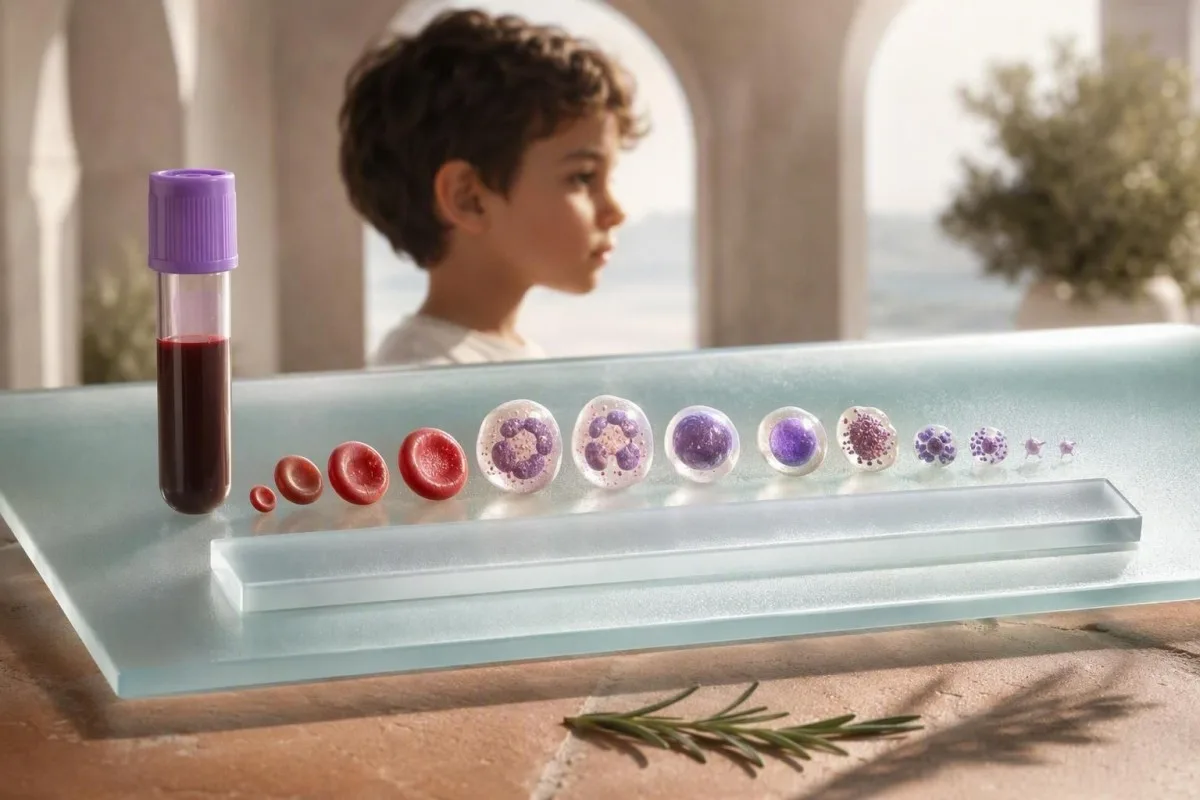
ШІ можа арганізаваць лабараторныя вынікі дзіцяці і растлумачыць незнаёмыя тэрміны, але ён не можа замяніць дзіцячага ўрача, які ведае ўзрост дзіцяці, схему росту, агляд і сімптомы.


- Прамое адказванне: ШІ можа інтэрпрэтаваць вынікі аналізаў крыві дзяцей у якасці дадатковага адукацыйнага матэрыялу, але педыятрычны лекар павінен прымаць рашэнні аб дыягностыцы і лячэнні.
- Узроставыя дыяпазоны: Лімфацытарны лік, які чакаецца ў 2-гадовага дзіцяці, можа быць пазначаны як высокі паводле эталоннага інтэрвалу для дарослых.
- Значэнне палавога паспявання: Шчолачная фасфатаза можа павышацца вышэй за 300 МЕ/л падчас росту костак без захворвання печані.
- Срочные симптомы: Затрудненае дыханне, спутанность свядомасці, курчы, сінія вусны, моцнае абязводжванне або вельмі хворае дзіця патрабуюць неадкладнай клінічнай дапамогі незалежна ад справаздачы ШІ.
- Якасць узору: Гемоліз, затрымка апрацоўкі і зліпанне трамбацытаў EDTA могуць прывесці да памылковага вызначэння калія, ЛДГ або трамбацытаў.
- Тэндавальнае значэнне: Параўнанне вынікаў з адной лабараторыі за тыдні ці месяцы часта больш карысна, чым рэагаванне на адзін неадназначны вынік.
- Самалячэнне забаронена: Бацькі не павінны пачынаць лячэнне жалезам, вітамінам D, шчытападобнай залозай або дадаткамі з электралітамі, грунтуючыся толькі на інтэрпрэтацыі лабараторных вынікаў з інтэрнэту.
- Канфідэнцыяльнасць: Даклад дзіцяці павінен быць загружаны толькі са згоды бацькоў або законных апекуноў і з асцярожным выдаленнем непатрэбных ідэнтыфікатараў.
Што ШІ можа і не можа рабіць з аналізам крыві дзіцяці
ШІ можа інтэрпрэтаваць вынікі аналізу крыві ў дзяцей толькі як структураванае тлумачэнне, а не як дыягназ або замену педыятрычнага агляду. Ён можа вызначыць пазначанае значэнне, пераўтварыць адзінкі, апісаць распаўсюджаныя прычыны і вылучыць пытанні для лекара; ён не можа ацаніць гідратацыю, стадыю развіцця, вынікі абследавання або тое, наколькі дрэнна выглядае дзіця. Па стане на 6 верасня 2026 года гэта адрозненне застаецца мяжой бяспекі, якую я найбольш часта абмяркоўваю з бацькамі.
Я доктар Томас Кляйн, і падчас клінічнага агляду я бачыў, як нармальны малюнак CBC выклікаў лішнюю трывогу, калі прымяняліся дарослыя нормы. Вынік па-за надрукаваным дыяпазонам не абавязкова з'яўляецца анамальным для дзіцяці, бо многія справаздачы па змаўчанні выкарыстоўваюць шырокія ці дарослыя прамежкі. Разумны справаздачу аб здароўі ШІ павінен паказваць, які эталонны прамежак ён выкарыстаў, і накіроўваць сем'і да лекара, які прызначыў аналіз.
Кантэсці — гэта Аналізатар крыві са штучным інтэлектам прызначаны для арганізацыі лабараторных даных і тлумачэння заканамернасцей простымі словамі; для педыятрычных справаздач наш вынік павінен разглядацца як пачатак размовы з педыятрам, а не як дазвол дзейнічаць самастойна. Ліхаманкавы 18-месячны дзіця з супакойлівай справаздачай усё яшчэ можа мець патрэбу ў аглядзе ў той жа дзень, калі ён летаргічны, цяжка дыхае або дрэнна п'е.
Інтэрпрэтацыя лабараторных вынікаў з інтэрнэту найбольш карысная, калі яна ператварае хаатычны PDF у практычныя пытанні: ці галадала дзіця? Ці была нядаўняя вірусная інфекцыя? Ці перасякаюць рост або вага працэнтылі? Бацькі таксама могуць праглядаць нашы праверкі бяспекі медыцынскіх справаздач ШІ перад тым, як спадзявацца на якое-небудзь аўтаматызаванае тлумачэнне.
Чаму дзецям патрэбны ўзроставыя лабараторныя эталонныя інтэрвалы
Дзецям патрэбныя эталонныя прамежкі, адпаведныя ўзросту, полу, стадыі пубертата, аналізу і часам гестацыйнаму ўзросту. Лічба можа істотна змяняцца паміж немаўляткам, школьным узростам і юнацтвам, пакуль дзіця адчувае сябе добра.
Гемаглабін нованароджаных звычайна складае прыкладна ад 14 да 22 г/дл, у той час як тыповы дыяпазон для дзяцей ад 1 да 5 гадоў складае прыкладна ад 11,0 да 13,5 г/дл; лабараторыі ўсталёўваюць свае ўласныя правераныя прамежкі. Фізіялагічнае падзенне пасля нараджэння чакаецца, але той жа гемаглабін 9 г/дл патрабуе рознай ацэнкі тэрміновасці ў здаровага 2-месячнага дзіцяці, чым у бледнага, тахікардычнага 8-гадовага дзіцяці.
Абсалютная колькасць лімфацытаў таксама залежыць ад узросту. Лік каля 4,0 × 10⁹/л можа быць звычайным для дзіцяці дашкольнага ўзросту, але вышэй за многія дарослыя дыяпазоны, таму дыферэнцыяльны аналіз трэба чытаць па ўзросце, а не толькі па працэнце; наша кіраўніцтва па колькасці лімфацытаў па ўзросце тлумачыць адрозненні.
Солдын і калегі апісалі, як фізіялогія развіцця робіць педыятрычныя інтэрвалы матэрыяльна адрознымі ад дарослых значэнняў па многіх аналітах (Soldin et al., 2005). На практыцы мне патрэбен уласны інтэрвал лабараторыі, а затым дакладны ўзрост дзіцяці на момант збору - а не агульнанацыянальны дыяпазон.
Як рост і палавое паспяванне змяняюць лабараторныя вынікі
Рост і пубертат могуць змяніць шчолачную фасфатазу, гемаглабін, ферыцін, ліпіды і палавыя гармоны настолькі, што на дарослым справаздачы яны будуць нагадваць захворванне. Час скачка росту дзіцяці часта тлумачыць больш, чым адзіны пазначаны нумар.
Падчас хуткага росту шкілета, шчолачная фасфатаза (ALP) можа перавышаць 300 МЕ/л і заставацца нармальнай для ўзросту, бо актыўнасць астэабластаў высокая. Павышэнне ALP пры нармальным білірубіне, GGT, кальцыі, фосфатах, сімптомах і анамнезе росту - гэта зусім іншая карціна, чым пры халестатычных захворваннях печані; гл. наша тлумачэнне ALP пасля росту костак.
Пубертат дадае яшчэ адзін пласт. Гемаглабін часта павышаецца ў хлопчыкаў па меры павышэння тэстастэрону вытворчасці эрытрацытаў, у той час як у падлеткаў, якія менструююць, можа развіцца дэфіцыт жалеза з ферыцінам ніжэй 15 нг/мл яшчэ да таго, як гемаглабін знізіцца. Педыятрычныя кардыялагічныя рэкамендацыі NHLBI 2011 года таксама прызнаюць, што ўзровень ліпідаў вагаецца ў залежнасці ад паспявання і павінен ацэньвацца з выкарыстаннем педыятрычных кропкавых значэнняў (Expert Panel, 2011).
Кантэсці — гэта Платформа AI для расшыфроўкі аналізу крыві што можа паказаць гэтыя праблемы развіцця, але не можа надзейна вызначыць стадыю Таннера па лабараторным PDF. Клініцыст можа разумна спытаць аб менструацыях, хуткасці росту, харчаванні, спартыўнай падрыхтоўцы, леках і сямейнай гісторыі палавога паспявання перад інтэрпрэтацыяй гармонаў або панэлі жалеза.
Чаму вынікі нованароджаных і неданошаных немаўлят патрабуюць спецыяльнага разгляду
Лабараторныя вынікі нованароджаных і неданошаных немаўлят не павінны інтэрпрэтавацца толькі агульным вывадам ІІ, таму што нармальная фізіялогія змяняецца з гадзіны і дні пасля нараджэння. Билирубин, глюкоза, кальцый, гематокрыт і тэсціраванне шчытападобнай залозы патрабуюць часава-залежнага неанатальнага кантэксту.
Агульная канцэнтрацыя билирубина 12 мг/дл (205 мкмоль/л) можа кантралявацца або можа спатрэбіцца тэрміновае лячэнне ў залежнасці ад узросту пасля нараджэння ў гадзінах, гестацыйнага ўзросту, харчавання, рызыкі гемолізу і хуткасці павышэння. Вось чаму рашэнні па джандзісу нованароджаных выкарыстоўваюць нармаграмы, спецыфічныя для гадзін, і клінічную ацэнку, а не адзін універсальны парог.
Плазменная глюкоза ніжэй 47 мг/дл (2,6 ммоль/л) часта выкарыстоўваецца як аператыўны парог у пратаколах для нованароджаных групы рызыкі, але кіраванне залежыць ад сімптомаў, харчавання, паўторнага вымярэння і мясцовых неанатальных рэкамендацый. Вынік аналізу з пальца таксама можа адрознівацца ад плазменнага паказчыка, апрацаванага ў лабараторыі.
Бацькі павінны ставіцца да анамальнага паведамлення аб скрынінгу нованароджаных як да шляху хуткай сувязі, а не як да праблемы для онлайн-даследаванняў. Наш агляд сігналаў скрынінга нованароджаных тлумачыць, чаму некаторыя вынікі патрабуюць звароту ў той жа дзень, а іншыя — запланаванага паўтарэння.
Як чытаць CBC дзіцяці без перабольшвання
Агульны аналіз крыві дзіцяці карысны, калі разглядаць яго як сукупнасць: гемаглабін, MCV, ретыкулацыты, лейкацытарная формула, трамбацыты, сімптомы і траекторыя павінны разглядацца разам. Ізаляваны высокі ці нізкі сігнал рэдка дае дыягназ.
Гемаглабін ніжэй за 11,0 г/дл у маленькага дзіцяці часта патрабуе ацэнкі дэфіцыту жалеза, харчавання, рызыкі ўздзеяння свінцу, хранічнага запалення, гемаглабінапатыі і страты крыві; MCV і ферритин дапамагаюць звузіць пытанне. Ферритин можа выглядаць фальшыва супакойваючым падчас інфекцыі, таму што ён павышаецца як рэагент вострай фазы.
Абсалютны лічыльнік нейтрафілаў ніжэй 1,5 × 10⁹/L у многіх сітуацыях называецца нейтропеніяй, але тэрміновасць рэзка змяняецца ў залежнасці ад узросту, паходжання, працягласці, ліхаманкі і ступені зніжэння. Здаровае дзіця з ANC 1,2 × 10⁹/л пасля віруса — гэта не тая ж клінічная сітуацыя, што і дзіця з ліхаманкай і ANC ніжэй 0,5 × 10⁹/л; прачытайце наша кіраўніцтва па нейтропенальным дыяпазоне.
Калі я праглядаю CBC пасля гастраэнтэрыту, я правяраю, ці тлумачыць гемаканцэнтрацыя некалькі высокі гемаглабін або колькасць трамбацытаў, перш чым меркаваць праблему касцявога мозгу. Паўтор пасля аднаўлення часта бяспечнейшы, чым шырокае тэсціраванне, калі сінякі, працяглая ліхаманка, боль у костках, страта вагі або значная бледнасць не змяняюць рызыку.
Чаму апрацоўка ўзору можа ўвесці ў зман ШІ і клініцыстаў
дрэнны збор або затрымка апрацоўкі могуць зрабіць вынік аналізу крыві дзіцяці няправільным, перш чым яго ўбачыць чалавек або алгарытм. Гемоліз, цяжкі збор, працяглае сціск вены і няправільная прабірка могуць змяніць вынікі настолькі, што выклічуць памылковыя трывогі.
Гемоліз вызваляе ўнутрыклетачны калій і LDH у пробу, таму высокі вынік калію з сігналам гемолізу можа запатрабаваць тэрміновага паўтарэння, а не неадкладнага лячэння. Тым не менш, дзіця са слабасцю, пачашчаным сэрцабіццем, хваробай нырак або праблемай на ЭКГ усё роўна мае патрэбу ў хуткай клінічнай ацэнцы; папярэджанне ўзору не даказвае, што калій не шкодны.
Агрэгацыя трамбацытаў, звязаная з ЭДТА, можа прывесці да штучна нізкага ліку трамбацытаў, часам ніжэй 100 × 10⁹/л, нягледзячы на нармальныя трамбацыты ў дзіцяці. Лабараторны агляд мазка крыві або паўторнае даследаванне ў цытратным шпрыцы могуць растлумачыць гэтую распаўсюджаную дааналітычную пастку; наша артыкул пра склейванне трамбацытаў EDTA паказвае, чаму адзін толькі лік можа ўвесці ў зман.
Kantesti’s Інструмент аналізу вынікаў аналізу крыві з падтрымкай AI можа пазначыць унутраныя неадпаведнасці і бачныя каментарыі лабараторыі, але ён не можа агледзець шпрыц або назіраць за складаным зборам. Бацькі павінны сфатаграфаваць увесь справаздачу, уключаючы каментарыі да якасці ўзору, час збору і дыяпазоны адліку — а не толькі пазначаную старонку.
Як ліхаманка, абязводжванне і вірусы часова змяняюць аналізы
Вострае захворванне можа часова змяніць узровень глюкозы, натрыю, крэатыніну, колькасць лейкацытаў, CRP, фератэну і печанечных ферментаў у дзяцей. Вынік падчас ліхаманкі часта варта параўноўваць з паўторным даследаваннем пасля выздараўлення, а не разглядаць як базавы ўзровень дзіцяці.
Ваніты і зніжанае спажыванне могуць прывесці да канцэнтрацыі гемаглабіну і мачавіны, у той час як цяжкая дыярэя можа знізіць бікарбанат і парушыць узровень натрыю або калію. Натрый ніжэй 130 ммоль/л, асабліва пры разгубленасці, моцным галаўным болі, курчах або паўторнай ванітах, патрабуе неадкладнай медыцынскай ацэнкі, а не анлайн-тлумачэння.
CRP узрастае і падае хутчэй, чым ESR, але ні адзін з гэтых тэстаў сам па сабе не вызначае канкрэтную прычыну. CRP 40 мг/л можа ўзнікаць пры вірусных або бактэрыяльных захворваннях, пашкоджанні тканін і запаленчых захворваннях; знешні выгляд дзіцяці, працягласць ліхаманкі, агляд і часам культуры больш важныя, чым адзін маркер.
Практычнае правіла доктара Томаса Кляйна простае: зафіксуйце дзень хваробы, лекі, спажыванне вадкасці і тэмпературу побач з вынікам. Гэты невялікі запіс робіць лабараторныя змены паміж візітамі значна прасцейшымі для інтэрпрэтацыі дзіцячым клініцыстам.
Сімптомы, якія перавышаюць любы супакойваючы справаздачу ШІ
Неадкладныя сімптомы пераважаюць над справаздачай AI, якая выглядае нармальна, таму што лабараторныя панэлі не выключаюць многія дзіцячыя надзвычайныя сітуацыі. Дзіця, якое дыхае з цяжкасцю, цяжка разбудзіць, мае сіні колер вакол губ, курчы або прыкметы моцнага абязводжвання, патрабуе неадкладнай дапамогі цяпер.
Звярніцеся за неадкладнай дапамогай для дзіцяці з незнікаючым сыпам плюс ліхаманка, рыгіднасць патылічных цягліц, моцны пастаянны галаўны боль, змены паводзін або дрэнную перфузию, такую як халодныя плямістыя рукі і значна зніжанае мачавыпусканне. CBC або CRP не могуць бяспечна выключыць ранні сэпсіс, менінгіт, апендыцыт, дыябетычны кетоацыдоз або алергічную надзвычайную сітуацыю.
Пры рызыцы дыябету ваніты з глыбокім або хуткім дыханнем, боль у жываце, дрымотнасць або ўмераныя-буйныя кетоны патрабуюць неадкладнай ацэнкі. Глюкоза ў крыві 200 mg/dL (11,1 mmol/L) з класічнымі сімптомамі падтрымлівае ацэнку дыябету, але ацэнка кетоацыдозу патрабуе глюкозы, кетонаў, электралітаў, кіслотна-шчолачнага стану і клініцыста.
Вынік не можа ацаніць працу дыхання або капілярнае напаўненне. Бацькі, занепакоеныя сімптомамі ў грудзях, могуць выкарыстоўваць наша кіраўніцтва па неадкладных аналізах крыві для кантэксту, але ім не варта чакаць аўтаматычнага аналізу, калі дзіця выглядае сур'ёзна хворым.
Лекі, вітаміны і харчовыя дабаўкі, якія змяняюць педыятрычныя лабараторныя даследаванні
Агульныя лекі і дабаўкі могуць змяніць або паўплываць на педыятрычныя лабараторныя аналізы, таму AI патрабуе поўнага спісу лекаў, каб пазбегнуць памылковага тлумачэння. Біятын, кортікостэроіды, процісутаргавыя сродкі, жалеза, вітамін D і нядаўняе нутравеннае ўвядзенне вадкасці з'яўляюцца частымі прыкладамі.
Высокія дозы біятыну могуць уплываць на некаторыя імунааналізы і даваць зманлівыя вынікі аналізу шчытападобнай залозы або гармонаў; сем'і павінны паведаміць лекара пра прадукты для валасоў, пазногцяў або мультівітаміны. Важныя дозы: звычайнае харчаванне адрозніваецца ад дабавак, якія ўтрымліваюць 5000 да 10000 мікраграм штодня.
Жалеза не варта пачынаць прымаць толькі таму, што дзіця выглядае стомленым або мае нізкі-нармальны ферайтын. Залішняе жалеза можа быць шкодным, а дыягнастычнае абследаванне адрозніваецца для дэфіцыту жалеза, асаблівасці таласеміі, хранічнага запалення і ўздзеяння свінцу; наш кіраўніцтва па даследаванні жалеза паказвае, чаму насычэнне трансферыну і ферайтын інтэрпрэтуюцца разам.
Лячэнне вітамінам D - гэта яшчэ адна вобласць, дзе важны кантэкст. Канцэнтрацыя 25-гідраксівітаміну D ніжэй 20 нг/мл (50 нмоль/л) часта лічыцца дэфіцытам, але педыятрычнае дазаванне залежыць ад узросту, памеру цела, дыеты, рызыкі парушэння ўсмоктвання, кальцыя і мясцовых рэкамендацый — а не ад агульнага плана харчавання ШІ.
Чаму тэндэнцыі звычайна больш бяспечныя, чым адзін педыятрычны вынік
Паўторныя вынікі з той жа лабараторыі часта больш інфарматыўныя, чым адно мяжовае педыятрычнае значэнне. Трэнды могуць выявіць аднаўленне, змены, звязаныя з ростам, эфекты лекаў або ўстойлівую карціну, якая патрабуе агляду спецыяліста.
Змена фератыну з 8 да 28 нг/мл пасля лячэння пад кіраўніцтвам лекара дае больш ясную карціну, чым адзін вынік 18 нг/мл, асабліва калі CRP адпадна знізіўся. Для аналізу шчытападобнай залозы змена TSH мае сэнс толькі пры ўліку часу збору, аналізу, хваробы і прыхільнасці да лекаў.
Кантэсці — гэта сервісі інтерпретації тестів ШІ што можа размясціць гістарычныя справаздачы побач і вылучыць значныя змены, але сістэма ніколі не павінна сцвярджаць, што тэндэнцыя пацвярджае дыягназ. Аналітычная варыяцыя лабараторыі і нармальныя біялагічныя ваганні могуць тлумачыць невялікія змены, асабліва каля парога прыняцця рашэння.
Захавайце арыгінальныя PDF-файлы і адзначце, ці былі ў дзіцяці ліхаманка, інтэнсіўныя заняткі спортам, галаданне, хуткі рост або змена лекаў. Наш кіраўніцтва па працяглых выніках апісвае дэталі, якія робяць паўторнае тэсціраванне клінічна прыдатным.
Што бацькі павінны ўключыць перад выкарыстаннем Інтэрнэт-інтэрпрэтацыі лабараторных даследаванняў
Бацькі павінны загрузіць поўны справаздачу, дакладны ўзрост, прызначаны пол пры нараджэнні, калі гэта дарэчы, дату і час збору, а таксама ўласныя эталонныя інтэрвалы лабараторыі. Абрэзаныя скрыншоты без адзінак вымярэння або каментароў да ўзору з'яўляюцца частай прычынай небяспечнага аналізу медыцынскіх справаздач ШІ.
Карысная справаздача ўключае ўзрост дзіцяці ў гадах і месяцах, тэндэнцыю росту і вагі, калі гэта дарэчы, нядаўнюю хваробу, стан галадання, бягучыя лекі, дабаўкі і клінічнае пытанне, якое прывяло да тэсціравання. Не ўключайце поўны адрас дзіцяці, звесткі пра школу або непатрэбныя ідэнтыфікатары.
Kantesti AI падтрымлівае загрузку справаздач на некалькіх мовах і можа вярнуць тлумачэнне прыкладна за 60 секунд, але хуткасць не з'яўляецца клінічнай ачысткай. Наша чэк-ліст загрузкі PDF асабліва карысны для дзясятковых коскі, невыразных фотаздымкаў, дублікатаў панэляў і неадпаведнасцей адзінак.
Калі ў справаздачы пазначана ‘крытычна’, ‘тэлефонны вынік’, ‘тэрміновы агляд’ або ўтрымліваецца лабараторны запыт на неадкладнае паўторнае ўзяцце, спачатку звярніцеся ў службу, якая робіць запыт. Інтэрпрэтацыя ў інтэрнэце не павінна зацягваць уласны шлях эскалацыі лабараторыі.
Пытанні, якія трэба задаць клініцысту пасля атрымання справаздачы ШІ
Самае бяспечнае выкарыстанне справаздачы ШІ - гэта стварэнне мэтавых пытанняў для клініцыста, а не стварэнне плана лячэння. Спытайце, ці адпавядае дыяпазон педыятрычным нормам, ці адпавядае карціна нядаўняй хваробе або росту, і ці патрэбна паўторная праверка.
Добрыя пытанні ўключаюць: ‘Якая велічыня найбольш важная?’ ‘Ці выкарыстоўвае гэтая лабараторыя ўзроставыя інтэрвалы?’ ‘Ці варта паўтарыць, калі мой дзіця будзе здаровы?’ і ‘Які сімптом прымусіць вас захацець нас бачыць раней?’ Гэтыя пытанні больш карысныя, чым пытанне, ці азначае кожны сцяжок хваробу.
Пры нізкім гемаглабіне спытайце, ці мяняюць дыферэнцыяльны аналіз рэтыкулацыты, MCV, фе Пры высокім ALT спытайце аб нядаўняй віруснай інфекцыі, леках, траекторыі вагі, пашкоджанні цягліц і ці патрэбныя паўторныя ALT і AST; наш тлумачэнне ALT дае бацькам слоўнікавы запас, не замяняючы ацэнку.
Калі адказ ШІ і педыятрычны клініцыст не згодныя, інтэрпрэтацыя клініцыста павінна мець прыярытэт, бо ён бачыць дзіця перад сабой. Другое педыятрычнае меркаванне разумна, калі анамаліі захоўваюцца, тлумачэнне застаецца незразумелым або сімптомы не адпавядаюць прапанаванаму плану.
Правілы прыватнасці і згоды для лабараторных справаздач дзяцей
Лабараторны справаздачу дзіцяці з'яўляецца адчувальнай інфармацыяй пра здароўе і павінна перадавацца толькі бацькам або законным апекуном з выкарыстаннем сэрвісу, арыентаванага на канфідэнцыяльнасць. Сем'і павінны разумець, хто мае доступ да справаздачы, як доўга ён захоўваецца і як працуюць запыты на выдаленне.
Выдаліце ідэнтыфікатары школы, хатнія адрасы і незвязаную сямейную інфармацыю перад загрузкай справаздачы. Захавайце дату збору, назву лабараторыі, эталонныя інтэрвалы і каментарыі клініцыста, бо выдаленне гэтых дэталяў можа зрабіць педыятрычную інтэрпрэтацыю менш бяспечнай.
Kantesti AI выкарыстоўвае GDPR-сумяшчальную, арыентаваную на прыватнасць апрацоўку даных, але апекуны павінны ўважліва вырашаць, ці падыходзіць анлайн-аналіз для сітуацыі дзіцяці. Агульны сямейны доступ павінен быць мэтанакіраваным і абмежаваным; наш дапаможнік па сямейным абмене вынікамі ахоплівае практычныя рашэнні па згодзе.
Падлеткі заслугоўваюць голасу ў тым, як іх інфармацыя пра здароўе распаўсюджваецца, асабліва для адчувальных тэстаў. Мясцовыя правілы адрозніваюцца ў пытаннях канфідэнцыяльнасці і згоды, таму сем'і павінны спытаць у лекара, як вынікі будуць паведамлены бацькам і маладому чалавеку.
Як павінна выглядаць бяспечны педыятрычны кантроль ШІ
Бяспечная педыятрычная інтэрпрэтацыя ШІ павінна раскрываць свае межы, захоўваць арыгінальныя лабараторныя даныя, выяўляць тэрміновыя чырвоныя сцягі і накіроўваць карыстальнікаў на чалавечы клінічны агляд. Ён ніколі не павінен ставіць дыягназ дзіцяці па адной панэлі, прызначаць лекі або супакойваць сем'і, адгаворваючы іх ад неадкладнай дапамогі.
Дакладнасць мае некалькі слаёў: правільнае чытанне PDF, супастаўленне аналітаў і адзінак, выбар адпаведнага інтэрвалу і інтэрпрэтацыя карціны ў клінічным кантэксце. Нават дакладнае перапісванне можа прывесці да небяспечнага высновы, калі адсутнічае стадыя пубертата 14-гадовага падлетка, ліхаманка або гісторыя лекаў.
У Kantesti наша медыцынская каманда разглядае межы бяспекі і мову эскалацыі; чытачы могуць бачыць наш падыход да клінічная праверка і клініцыстаў на Медыцынская кансультатыўная рада. Kantesti — гэта платформа інтэрпрэтацыі біямаркераў AI што павінна зрабіць наступную клінічную размову больш зразумелай, але ніколі не замяняць яе.
Мой галоўны вынік пасля 15 гадоў практыкі просты: выкарыстоўвайце ШІ, каб зразумець справаздачу, захаваць тэндэнцыю і падрыхтаваць пытанні. Выкарыстоўвайце дзіцячага клініцыста, каб вызначыць, што азначае вынік для гэтага канкрэтнага дзіцяці сёння.
Часта задаваныя пытанні
Ці можа ШІ інтэрпрэтаваць аналізы крыві ў дзяцей?
ШІ можа інтэрпрэтаваць аналізы крыві дзяцей у якасці адукацыйнай дапамогі, але не можа бяспечна дыягнаставаць або лячыць дзіця без клінічнай ацэнкі педыятрам. Для вынікаў у дзяцей неабходныя ўзроставыя рэферэнтныя інтэрвалы, улік пубертатнага перыяду, сімптомаў, вынікаў агляду і ведаў пра якасць узору. Напрыклад, значэнне ШФ вышэй за 300 МЕ/л можа быць чаканым падчас скачка росту, тады як такі ж вынік у дарослага можа патрабаваць іншай ацэнкі. Бацькам варта выкарыстоўваць тлумачэнне ШІ, каб падрыхтаваць пытанні для ўрача, які прызначыў аналіз.
Чаму дыяпазоны паказчыкаў аналізаў крыві для дарослых небяспечныя для дзяцей?
Дарослыя лабараторныя рэферэнтныя дыяпазоны небяспечна выкарыстоўваць для дзяцей, паколькі ўзроўні гемаглабіну, лімфацытаў, шчолачнай фасфатазы, крэатыніну, гармонаў і многіх іншых аналізаваных паказчыкаў змяняюцца ў працэсе развіцця. У дзіцяці дашкольнага ўзросту абсалютная колькасць лімфацытаў у норме можа быць каля 4,0 × 10⁹/л, што ў дарослым бланку вынікаў можа быць пазначана як павышанае значэнне. Узровень білірубіну ў нованароджаных таксама неабходна інтэрпрэтаваць з улікам узросту ў гадзінах, а не паводле аднаго ўніверсальнага значэння. Па магчымасці варта выкарыстоўваць уласны педыятрычны рэферэнтны інтэрвал лабараторыі і дакладны ўзрост дзіцяці.
Калі мне варта звярнуцца па неадкладную медыцынскую дапамогу, а не чакаць вынікаў лабараторных аналізаў, апрацаваных ШІ?
Неадкладна звярніцеся па медыцынскую дапамогу, калі ў дзіцяці ўзнікаюць цяжкасці з дыханнем, сінеюць вусны, адбываецца сутаргавы прыступ, назіраецца спутанасць свядомасці, дзіця цяжка абудзіць, мае цяжкую дэгідратацыю або выглядае сур’ёзна хворым. Канцэнтрацыя натрыю ніжэй за 130 ммоль/л пры неўралагічных сімптомах або ваніты з глыбокім дыханнем і кетонамі таксама патрабуюць неадкладнай медыцынскай ацэнкі. Нармальныя CBC, CRP або справаздача AI аб стане здароўя не могуць выключыць многія неадкладныя станы. Сімптомы і знешні выгляд дзіцяці маюць прыярытэт перад інтэрпрэтацыяй вынікаў лабараторных аналізаў у інтэрнэце.
Ці можа складанае ўзяцце крыві прывесці да ілжыва анамальных вынікаў у дзяцей?
Так, складаны забор матэрыялу можа прывесці да ілжывых анамальных вынікаў у дзяцей. Гемоліз можа ілжыва павысіць узровень калію і ЛДГ, а аглютынацыя трамбацытаў пад дзеяннем ЭДТА можа прывесці да ілжыва нізкай колькасці трамбацытаў, часам ніжэй за 100 × 10⁹/л. Лабараторыя можа дадаць заўвагу пра гемоліз або аглютынацыю, а паўторны аналіз узору ці даследаванне мазка крыві дапаможа ўдакладніць вынік. Сем'і ніколі не павінны самастойна лічыць, што вынік, пазначаны як адхіленне, з'яўляецца сапраўдным або ілжывым, без кансультацыі з медыцынскім спецыялістам.
Ці варта бацькам даваць жалеза або вітамін D пасля атрымання лабараторнага заключэння, створанага ШІ?
Бацькам не варта пачынаць прыём прэпаратаў жалеза або высокіх доз вітаміну D толькі на падставе лабараторнага заключэння, створанага ШІ. Узровень ферытыну ніжэй за 15 нг/мл можа сведчыць пра дэфіцыт жалеза, але інфекцыя можа павышаць узровень ферытыну, а анемія мае некалькі іншых прычын, якія патрабуюць рознага лячэння. Узровень 25-гідраксівітаміну D ніжэй за 20 нг/мл часта патрабуе вядзення пад наглядам медыцынскага спецыяліста; дазоўка залежыць ад узросту, масы цела, узроўню кальцыю, харчавання і анамнезу. Лішак жалеза і вітаміну D можа быць шкодным.
Атрымаць аналіз крыві з AI сёння
Далучайцеся больш чым да 2 мільёнаў карыстальнікаў па ўсім свеце, якія давяраюць Kantesti для імгненнага, дакладнага аналізу лабараторных тэстаў. Загрузіце вынікі аналізу крыві і атрымайце поўную інтэрпрэтацыю біямаркераў 15,000+ за лічаныя секунды.
📚 Публікацыі даследаванняў са спасылкамі
Кляйн, Т., Мітчэл, С., і Вебер, Г. (2026). Кіраўніцтва па сыроватачных бялках: аналіз крыві на глабуліны, альбумін і суадносіны A/G. Kantesti AI Medical Research.
Кляйн, Т., Мітчэл, С., і Вебер, Г. (2026). Кіраўніцтва па аналізе на камплемент C3 і C4 і тытр ANA. Kantesti AI Medical Research.
📖 Знешнія медыцынскія спасылкі
Экспертная група па інтэграваных рэкамендацыях для здароўя сардэчна-сасудзістай сістэмы і зніжэння рызыкі ў дзяцей і падлеткаў (2011). Экспертная група па інтэграваных рэкамендацыях па здароўі сардэчна-сасудзістай сістэмы і зніжэнні рызыкі ў дзяцей і падлеткаў: рэзюмэ справаздачы. Pediatrics.
⚕️ Медыцынская адмова ад адказнасці
Гэты артыкул прызначаны толькі для адукацыйных мэт і не з’яўляецца медычнай парадай. Заўсёды кансультуйцеся з кваліфікаваным спецыялістам аховы здароўя для прыняцця рашэнняў па дыягностыцы і лячэнні.
Сігналы даверу E-E-A-T
Вопыт
Клінічны агляд, які вядзе лекар, працэсаў інтэрпрэтацыі лабараторных паказчыкаў.
Экспертыза
Фокус лабараторнай медыцыны на тым, як біямаркеры паводзяць сябе ў клінічным кантэксце.
Аўтарытэтнасць
Напісана доктарам Томасам Кляйнам, з аглядам доктара Сара Мітчэл і праф. доктара Ганса Вебера.
Надзейнасць
Інтэрпрэтацыя на аснове доказаў з выразнымі шляхамі далейшых дзеянняў, каб паменшыць трывогу.