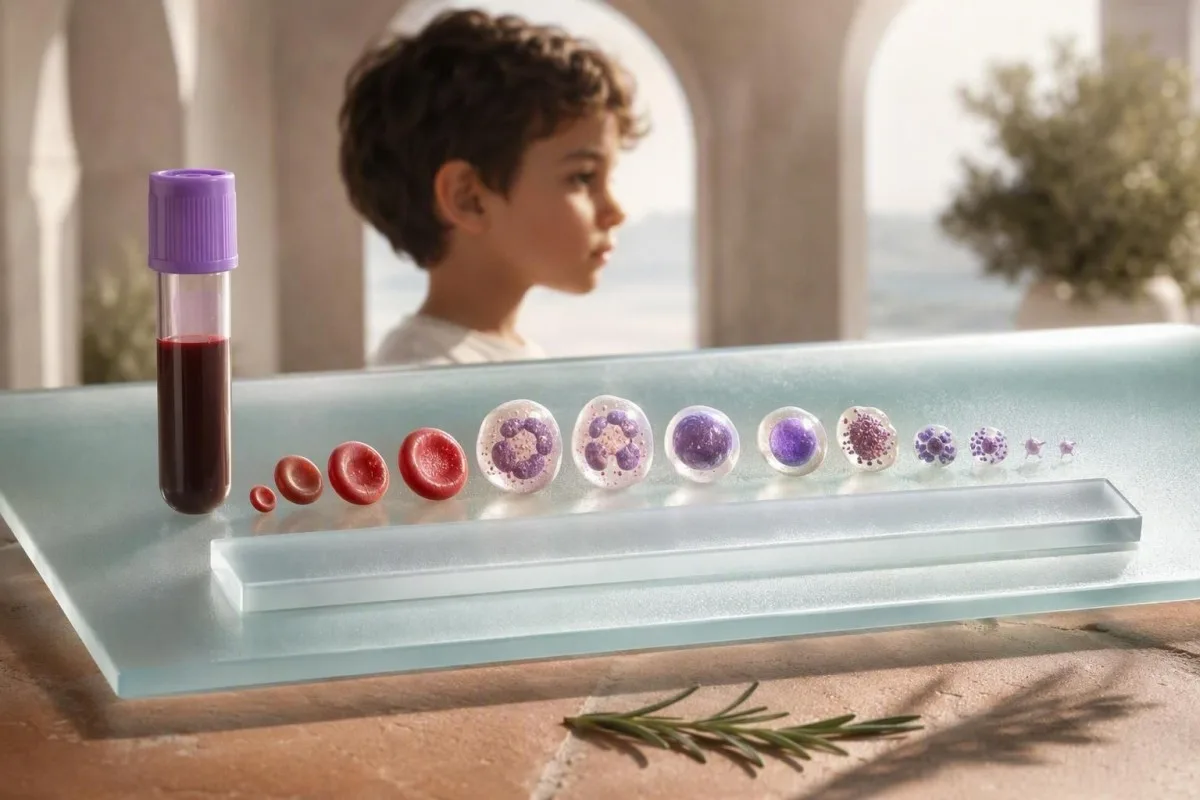
Faodaidh AI toraidhean obair-lann pàiste a chuir air dòigh agus mìneachadh a thoirt air teirmean neo-aithnichte, ach chan urrainn dha lighiche-cloinne a tha eòlach air aois an leanaibh, pàtran fàis, sgrùdadh agus comharraidhean a chuir an àite.


- Freagairt dhìreach: Faodaidh AI pàtrain deuchainn fala a mhìneachadh airson clann mar chur-ris foghlaim, ach feumaidh neach-leigheis chloinne co-dhùnaidhean breithneachaidh is leigheis a dhèanamh.
- Raointean sònraichte a rèir aois: Faodaidh àireamhachadh de lymphoichean a tha dùil aig aois 2 a bhith air a chomharrachadh mar àrd le raon iomraidh inbheach.
- Tha òigeachd cudromach: Faodaidh phosphatase alcaileach a dhol thairis air 300 IU/L rè fàs cnàimh gun ghalar grùthan.
- Comharraidhean èiginneach: Tha duilgheadas anail, troimh-chèile, grèim, bilean gorm, dìth uisge mòr, no leanabh gu math tinn a’ feumachdainn cùram clionaigeach èiginneach ge bith dè an aithisg AI.
- Càileachd sampall: Faodaidh briseadh, pròiseasadh fadalach, agus cruinneachadh truinnsear EDTA a bhith a’ cruthachadh potasium, LDH, no toraidhean truinnsear a tha meallta.
- Luach treand: Tha coimeas a dhèanamh air toraidhean bhon aon obair-lann thar seachdainean no mìosan gu tric nas fheumail na bhith a’ freagairt air aon toradh iomaill.
- Gun fèin-leigheas: Cha bu chòir do phàrantan tòiseachadh air iarann, vitimín D, leigheas thyroid, no stuthan electrolyte bho mhìneachadh toraidhean obair-lann air-loidhne a-mhàin.
- Prìobhaideachd: Bu chòir aithisg pàiste a luchdachadh suas a-mhàin le cead pàrant no neach-gleidhidh laghail agus toirt air falbh gu faiceallach de dh’aithnichearan neo-riatanach.
Na as urrainn agus nach urrainn do AI a dhèanamh le deuchainn fala pàiste
Faodaidh AI toraidhean deuchainn fala ann an clann a mhìneachadh a-mhàin mar mhìneachadh structarail, chan ann mar dhearbhadh no mar chur an àite ath-sgrùdadh péidiatraiceach. Faodaidh e luach air a chomharrachadh aithneachadh, aonadan atharrachadh, adhbharan cumanta a mhìneachadh, agus ceistean a thoirt gu luchd-obrachaidh; chan urrainn dha uisgeachadh, ìre leasachaidh, toraidhean sgrùdaidh, no dè cho tinn sa tha leanabh a mheasadh. Mar an 6mh Sultain 2026, tha an sgaradh sin fhathast mar an crìoch sàbhailteachd as motha a bhios mi a’ bruidhinn ri pàrantan.
Is mise an Dotair Thomas Klein, agus ann an ath-sgrùdadh clionaigeach chunnaic mi gur e CBC àbhaisteach pàisde a ghineadh gu robh eagal neo-riatanach nuair a chaidh raointean inbheach a chleachdadh. chan eil toradh taobh a-muigh raon clò-bhuailte gu fèin-ghluasadach neo-àbhaisteach do phàiste, oir bidh mòran aithisgean a’ cleachdadh bratach farsaing no an fheadhainn a fhuaradh bho inbhich. Bu chòir do aithisg slàinte AI ciallach a ràdh dè an raon iomraidh a chleachd i agus treòrachadh air ais gu neach-òrdachaidh an luchd-òrdachaidh.
Tha Kantesti na Anailisiche deuchainn fala AI air a dhealbhadh gus dàta obair-lann a chuir air dòigh agus mìneachadh a dhèanamh air pàtranan ann an cànan sìmplidh; airson aithisgean péidiatraiceach, bu chòir ar toradh a bhith air a làimhseachadh mar neach-tòiseachaidh còmhradh airson péidatraiche, chan ann mar fhreagairt uaine airson gnìomh gu neo-eisimeileach. Faodaidh leanabh 18 mìosan a dh'aois le fiabhras le aithisg a tha a’ coimhead comhfhurtail fhathast a bhith feumach air measadh an aon latha ma tha iad lethargic, a’ anail chruaidh, no ag òl gu dona.
Tha mìneachadh toraidhean obair-lann air-loidhne as cuideachail nuair a thionndaidheas e PDF kaotach gu ceistean practaigeach: An robh an leanabh a’ fastadh? An robh tinneas viral o chionn ghoirid ann? A bheil àirde no cuideam a’ dol thairis air na cuibhreannan? Faodaidh pàrantan cuideachd ath-sgrùdadh a dhèanamh air ar sgrùdaidhean sàbhailteachd aithisg meidigeach AI mus earbsa iad ri mìneachadh fèin-ghluasadach sam bith.
Carson a tha feum aig clann air raointean iomraidh obair-lann sònraichte a rèir aois
Feumaidh clann raointean iomraidh a tha air an maidseadh ri aois, gnè, ìre gnèitheach, assay, agus uaireannan aois geal. Faodaidh àireamh gluasad gu mòr eadar leanabachd, aois sgoile, agus òigeachd fhad ‘s a tha an leanabh fhathast gu math.
Tha haemoglòbin ùr-bhreith gu tric timcheall air 14 gu 22 g/dL, ach tha raon àbhaisteach 1-gu-5-bliadhna timcheall air 11.0 gu 13.5 g/dL; bidh obair-lannan a’ suidheachadh an cuid raointean dearbhte fhèin. Tha an crìonadh fiseòlach às dèidh breith ris a bheil dùil, ach tha an aon haemoglòbin de 9 g/dL a’ feumachdainn measadh ùrraidh eadar-dhealaichte ann an 2-mìosan a dh'aois a tha a’ soirbheachadh na ann an 8-bliadhna a dh'aois a tha bàn, tachycardic.
Tha cunntasan lymphocyte iomlan cuideachd an urra ri aois. Cunntas timcheall air 4.0 × 10⁹/L dh’fhaodadh a bhith àbhaisteach ann an leanabh ro-sgoile ach fhathast os cionn raointean mòran de dh'inbhich, is e sin as coireach gum feumar tuairmse a leughadh a rèir aois seach a-mhàin sa cheud; ar stiùireadh air cunntasan cealla lymphagach a rèir aois a’ mìneachadh an eadar-dhealachaidh.
Mhìnich Soldin agus a cho-obraichean mar a tha slàinteachas leasachaidh a’ dèanamh raointean clionaigeach cloinne gu math eadar-dhealaichte bho luachan inbheach thairis air mòran anailiteach (Soldin et al., 2005). Ann an cleachdadh, tha mi ag iarraidh raon an obair-lann fhèin an toiseach, an uairsin aois cheart an leanaibh aig cruinneachadh—gun raon coitcheann air an lìon.
Mar a dh’atharraicheas fàs agus òigeachd toraidhean obair-lann
Faodaidh fàs agus òige atharrachadh a dhèanamh air phosphatase alcaileach, hemoglobin, ferritin, lipids, agus hormonaichean gnè gu leòr gus galair a shamhlachadh air aithris inbheach. Bidh an ùine de sprout fàis an leanaibh gu tric a’ mìneachadh barrachd na aon àireamh air a chomharrachadh.
Rè fàs luath cnàimh, faodaidh phosphatase alcaileach (ALP) barrachd air 300 IU/L a ruighinn agus fuireach àbhaisteach airson aois leis gu bheil gnìomhachd osteoblast àrd. Tha ALP àrdach le bilirubin, GGT, calcium, fosfair àbhaisteach, comharran, agus eachdraidh fàis na phàtran gu math eadar-dhealaichte bho thinneas grùthan cholestatic; faic ar mìneachadh air ALP às deidh fàs cnàimh.
Bidh òige a’ cur sreath eile ris. Bidh hemoglobin gu tric ag èirigh ann am balaich mar a bhios testosterone a’ meudachadh cinneasachadh cheallan dearga, agus faodaidh deugairean a tha a’ faighinn mìosachan fulang le dìth iarainn le ferritin fo 15 ng/mL eadhon mus tuit hemoglobin. Tha an stiùireadh clionaigeach cridhe clionaigeach 2011 NHLBI cuideachd ag aideachadh gu bheil luachan lipid ag atharrachadh le maturation agus bu chòir an measadh a’ cleachdadh puingean gearraidh clionaigeach (Expert Panel, 2011).
Tha Kantesti na àrd-ùrlar mìneachaidh deuchainn fala AI a dh’fhaodadh na dìth-inntinn leasachaidh seo a nochdadh, ach cha gann gun urrainn dha ìre Tanner a mhìneachadh bho PDF deuchainn-lann. Faodaidh neach-clionaigeach ceistean reusanta a dhèanamh mu amannan, astar fàis, daithead, trèanadh lùth-chleasachd, cungaidh-leigheis, agus ùine teaghlaich den òigeachd mus dèanar mion-sgrùdadh air pannal hormona no iarainn.
Carson a dh’ fheumas toraidhean ùr-bhreith agus naoidheanan ro-luath ath-sgrùdadh eòlaiche
Cha bu chòir toraidhean deuchainn-lann ùr-bhreith agus pàisdean ro-luath a mhìneachadh le toradh AI coitcheann a-mhàin leis gu bheil fiseòlasachd àbhaisteach ag atharrachadh a rèir uairean is làithean às deidh breith. Tha bilirubin, glucose, calcium, hematocrit, agus sgrìonadh thyroid uile ag iarraidh co-theacsa ùr-bhreith a tha mothachail do ùine.
dùmhlachd bilirubin iomlan de 12 mg/dL (205 µmol/L) dh’fhaodadh a bhith air a sgrùdadh no dh’fhaodadh gum feumar làimhseachadh èiginneach a rèir aois às-bhreith ann an uairean, giorrachadh, biadhadh, cunnart hemolysis, agus ìre an àrdachaidh. Sin as coireach gu bheil co-dhùnaidhean bhuidheach ùr-bhreith a’ cleachdadh nomograms sònraichte air an uair agus measadh clionaigeach an àite aon stairsneach uile-choitcheann.
Glùcos plasma fo 47 mg/dL (2.6 mmol/L) thathas gu tric air a chleachdadh mar stairsneach obrachaidh ann am pròtacolaidhean ùr-bhreith ann an cunnart, ach tha riaghladh an urra ri comharran, biadhadh, tomhas a-rithist, agus stiùireadh ùr-bhreith ionadail. Faodaidh toradh prick heel cuideachd a bhith eadar-dhealaichte bho luach plasma deuchainn-lann air a phròiseasadh gu sgiobalta.
Bu chòir do phàrantan teachdaireachd sgrìonaidh neònach a làimhseachadh mar shlighe conaltraidh luath, chan ann mar dhuilgheadas rannsachaidh air-loidhne. An ro-shealladh againn air brataichean sgrìonaidh ùr-bhreith a’ mìneachadh carson a dh’fheumas cuid de thoraidhean conaltradh air an aon latha fhad ‘s a dh’ fheumas cuid eile ath-thilleadh clàraichte.
Mar a leughas tu CBC pàiste gun cus ath-bheachdan a dhèanamh
Tha cunntas fala slàn aig pàiste feumail nuair a thèid a leughadh mar phàtran: tha hemoglobin, MCV, reticulocytes, eadar-dhealachadh ceallan geala, truaillean, comharran, agus slighe còmhla. Is gann gun toir brataich àrd no ìosal air leth breithneachadh.
Hemoglobin fo 11.0 g/dL ann an leanabh beag gu tric a’ brosnachadh measadh airson dìth iarainn, daithead, cunnart nochdaidhean luaidhe, sèid leantainneach, hemoglobinopathy, agus call fala; tha MCV agus ferritin a’ cuideachadh le bhith a’ caolachadh na ceiste. Faodaidh Ferritin a bhith a’ coimhead gu brèagha ath-thagraidh rè galar leis gu bheil e ag èirigh mar reactant ìre gheur.
Cunntas neutrophil iomlan fo 1.5 × 10⁹/L air a bheil neutropenia ann an iomadh suidheachadh, ach tha èiginn ag atharrachadh gu mòr a rèir aois, sinnsearachd, fad, fiabhras, agus doimhneachd lùghdachadh. Chan eil leanabh fallain le ANC de 1.2 × 10⁹/L às deidh bhìoras mar an aon suidheachadh clionaigeach ri leanabh le fiabhras agus ANC fo 0.5 × 10⁹/L; leugh ar stiùireadh raon neutrophil.
Nuair a nì mi sgrùdadh air CBC às deidh gastroenteritis, bidh mi a’ sgrùdadh a bheil hemoconcentration a’ mìneachadh cunntas hemoglobin no platelet beagan àrd mus gabh mi ris gu bheil duilgheadas smior ann. Tha ath-thilleadh às deidh faighinn seachad gu tric nas sàbhailte na deuchainn farsaing, mura h-eil bruis, fiabhras leantainneach, pian cnàimh, call cuideam, no palor mòr ag atharrachadh na cunnart.
Carson a dh’ fhaodadh làimhseachadh sampall clann an dà chuid AI agus lighichean a mhealladh
Faodaidh cruinneachadh dona no pròiseasadh fadalach toradh fala pàiste a dhèanamh ceàrr mus fhaic duine no algairim e. Faodaidh hemolysis, cruinneachadh duilich, ùine tourniquet fada, agus an tiùb ceàrr atharrachadh a dhèanamh air toraidhean gu leòr gus rabhaidhean meallta a bhrosnachadh.
Bidh hemolisis a' leigeil potassium a-staigh agus LDH a-steach don sampall, mar sin is dòcha gum feum toradh àrd de potassium le comharra hemolysis ath-aithris èiginneach an àite a bhith air a làimhseachadh sa bhad. Ach, feumaidh pàiste le laigse, palpitations, tinneas dubhaig, no dragh ECG measadh clionaigeach luath; chan eil rabhadh an sampall a' dearbhadh gu bheil am potassium gun chron.
Faodaidh cruinneachadh platelet co-cheangailte ri EDTA àireamh platelet gu fuadhnach ìosal a thoirt gu buil, uaireannan nas ìsle na 100 × 10⁹/L, a dh'aindeoin platelet àbhaisteach anns an leanabh. Faodaidh sgrùdadh film fala san obair-lann no ath-aithris ann an tiùb citrate soilleireachadh a dhèanamh air an seo mar chleas ro-anaileach cumanta; an artaigil againn air cruinneachadh pleitean EDTA a' sealltainn carson a dh'fhaodas àireamh a-mhàin a bhith a' mealladh.
Kantesti’s Inneal mion-sgrùdaidh deuchainn fala le cumhachd AI Faodaidh e neo-chunbhalachd a-staigh agus beachdan faicsinneach san obair-lann a chomharrachadh, ach chan urrainn dha an tiùb a sgrùdadh no cruinneachadh dùbhlanach fhaicinn. Bu chòir do phàrantan an aithisg gu lèir a dhealbh, a' gabhail a-steach beachdan mu chàileachd sampall, ùine cruinneachaidh, agus raointean iomraidh—chan e dìreach an duilleag a chaidh a chomharrachadh.
Mar a dh’ atharraicheas fiabhras, dìth uisge, agus bhìorasan deuchainnean gu sealach
Faodaidh tinneas acute atharrachadh sealach air glùcois, sodium, creatinine, cunntasan ceallan geala, CRP, ferritin, agus enzymes ae ann an clann. Bu chòir toradh rè fiabhras gu tric a bhith air a choimeas ri ath-aithris às deidh faighinn seachad air an àite a bhith air a làimhseachadh mar bhun-loidhne an leanaibh.
Faodaidh cuir a-mach agus lùghdachadh solar a bhith a' dùmhlachadh hemoglobin agus urea, fhad's a dh'fhaodas a' bhuineach mhòr a bhith a' lughdachadh bicarbonate agus a' cur dragh air sodium no potassium. Sodium fo 130 mmol/L, gu sònraichte le troimh-chèile, ceann goirt trom, glacaidhean, no cuir a-mach ath-aithris, feumaidh measadh meidigeach èiginneach an àite mìneachadh air-loidhne.
Bidh CRP a' dol suas agus sìos nas luaithe na ESR, ach chan eil an dà dheuchainn a' comharrachadh adhbhar sònraichte leotha fhèin. Faodaidh CRP de 40 mg/L tachairt le tinneas bhìorasach no bacterial, leòn clò, agus tinneas sèid; tha coltas an leanaibh, fad an fhiabhras, sgrùdadh, agus uaireannan cultaran nas cudromaiche na aon chomharra.
Tha riaghailt phraigeantach an Dr. Thomas Klein sìmplidh: clàraich latha an tinneis, cungaidhean-leigheis, solar fluid, agus teòthachd ri taobh an toraidh. Tha an clàr beag sin a' dèanamh atharrachaidhean obair-lann eadar tadhalan fada nas fhasa do lighiche-cloinne mìneachadh.
Comharraidhean a chuiridh às do aithisg AI sam bith a tha a’ gealltainn
Bidh comharran èiginneach a' faighinn buaidh air aithisg AI a tha a' coimhead àbhaisteach oir chan eil pannalan obair-lann a' dùnadh a-mach mòran èiginn cloinne. Feumaidh pàiste a tha a' strì ri anail, duilich a dhùsgadh, gorm timcheall nam bilean, a' faighinn glacaidhean, no a' nochdadh comharran dìth uisge trom measadh èiginn a-nis.
Iarr cùram èiginneach do phàiste le broth nach bi a' falbh plus fiabhras, amhach stiff, ceann goirt trom leantainneach, giùlan atharrachail, no droch lìonadh mar làmhan fuar marbh agus fual gu math air a lùghdachadh. Chan urrainn do CBC no CRP sepsis tràth, meningitis, appendicitis, ketoacidosis diabetic, no èiginn aileartach a dùnadh a-mach gu sàbhailte.
Airson cunnart tinneas an t-siùcair, cuir a-mach le anail domhainn no luath, pian bhoilg, codalachd, no ketones meadhanach gu mòr feumaidh measadh èiginneach. Glùcois fala de 200 mg/dL (11.1 mmol/L) le comharran clasaigeach a' toirt taic do mheasadh tinneas an t-siùcair, ach feumaidh measadh ketoacidosis glùcois, ketones, electrolytes, staid searbhag-banais, agus lighiche.
Chan urrainn do thoradh obair anail no ath-nuadhachadh cailear a mheasadh. Faodaidh pàrantan a tha fo dragh mu chomharran broilleach an stiùireadh comharran deuchainn fala èiginneach againn a chleachdadh airson co-theacsa, ach cha bu chòir dhaibh feitheamh ri mion-sgrùdadh fèin-ghluasadach nuair a tha leanabh a' coimhead gu dona tinn.
Leigheasan, vitamain, agus stuthan cur-ris a dh’ atharraicheas obair-lann cloinne
Faodaidh cungaidhean-leigheis agus stuthan cumanta atharrachadh no bacadh a chur air deuchainnean obair-lann cloinne, mar sin feumaidh AI liosta iomlan de chungaidhean-leigheis gus mìneachadh meallta a sheachnadh. Faodaidh biotin, corticosteroids, anticonvulsants, iarann, bhiotamin D, agus lionnaichean IV o chionn ghoirid a bhith nan eisimpleirean cumanta.
Faodaidh biotin àrd-dòigh a bhith a' cur dragh air cuid de immunoassays agus toraidhean tìoroid no hormona meallta a thoirt gu buil; bu chòir do theaghlaichean innse don dotair mu stuthan falt, ìnean, no multivitamin. Tha an dòs cudromach: tha gabhail a-steach daithead àbhaisteach eadar-dhealaichte bho stuthan a tha anns 5,000 gu 10,000 micrograman gach latha.
Cha bu chòir iarann a bhith air a thòiseachadh dìreach air sgàth gu bheil leanabh a' coimhead sgìth no gu bheil ferritin ìosal-àbhaisteach aige. Faodaidh cus iarainn a bhith cronail, agus tha sgrùdadh breithneachaidh eadar-dhealaichte airson dìth iarainn, comharra thalassemia, sèid leantainneach, agus nochdadh luaidhe; ar stiùireadh sgrùdadh iarainn a' sealltainn carson a tha saturation transferrin agus ferritin air am mìneachadh còmhla.
Tha làimhseachadh bhiotaimin D na raon eile far a bheil co-theacsa cudromach. Tha dùmhlachd 25-hydroxyvitamin D gu h-ìosal 20 ng/mL (50 nmol/L) gu tric air a mheas mar dìth, ach tha dòsan cloinne an urra ri aois, meud bodhaig, daithead, cunnart bho mhì-ghabhail, calcium, agus stiùireadh ionadail—gun a bhith na phlana beathachaidh AI coitcheann.
Carson a tha gluasadan mar as trice nas sàbhailte na aon toradh cloinne
Tha toraidhean ath-aithris bhon aon obair-lann gu tric nas fhiosaiche na aon luach cloinne air a bheil crìoch. Faodaidh gluasadan a bhith a' nochdadh slànachadh, atharrachadh co-cheangailte ri fàs, buaidhean cungaidh-leigheis, no pàtran leantainneach a tha airidh air ath-sgrùdadh speisealaiche.
Gluasad ferritin bho 8 gu 28 ng/mL às deidh làimhseachadh air a stiùireadh leis an dotair a' cur sgeul nas soilleire na aon toradh de 18 ng/mL, gu sònraichte ma thuit CRP aig an aon àm. Airson deuchainn thyroid, tha atharrachadh TSH dìreach ciallach nuair a thèid ùine cruinneachaidh, sgrùdadh, tinneas, agus gèilleadh cungaidh-leigheis a thoirt fa-near.
Tha Kantesti na seirbheis eadar-mhìneachaidh deuchainn-lann AI a dh'fhaodas aithisgean eachdraidheil a chuir taobh ri taobh agus atharrachaidhean mòra a chomharrachadh, ach cha bu chòir don t-siostam a bhith ag ràdh a-riamh gu bheil gluasad a' dearbhadh breithneachadh. Faodaidh atharrachadh anailitigeach obair-lann agus flùr bith-eòlasach àbhaisteach mìneachadh a thoirt air atharrachaidhean beaga, gu sònraichte faisg air stairsneach co-dhùnaidh.
Sàbhail na PDFan tùsail agus thoir fa-near an robh fiabhras air an leanabh, spòrs dian, fastadh, spurt fàis, no atharrachadh cungaidh-leigheis. Ar toraidhean fad-ùine a' toirt mion-fhiosrachadh a nì ath-dheuchainn cleachdadh clionaigeach.
Dè bu chòir do phàrantan a thoirt a-steach mus cleachd iad mìneachadh obair-lann air-loidhne
Bu chòir do phàrantan an aithisg iomlan, aois cheart, gnè a chaidh a shònrachadh aig breith far a bheil e buntainneach, ceann-latha agus àm cruinneachaidh, agus na h-ùinean iomraidh aig an obair-lann fhèin a luchdachadh suas. Is e sgàileanan air an croppadh às aonais aonadan no beachdan sampaill prìomh adhbhar airson mìneachadh aithisg meidigeach AI neo-shàbhailte.
Tha cur a-steach feumail a' gabhail a-steach aois an leanaibh ann am bliadhnaichean is mìosan, gluasad àirde is cuideam ma tha e buntainneach, tinneas o chionn ghoirid, staid fastaidh, cungaidhean-leigheis gnàthach, stuthan cur-ris, agus a' cheist chlinigeach a dh'adhbhraich an deuchainn. Na cuir a-steach seòladh làn an leanaibh, mion-fhiosrachadh sgoile, no comharran neo-riatanach.
Tha AI Kantesti a' toirt taic do luchdachadh a-nuas aithisgean ann an iomadh cànan agus is urrainn dha mìneachadh fhaighinn air ais ann an timcheall air 60 diog, ach chan e fuasgladh clionaigeach a th' ann an astar. Ar liosta-sgrùdaidh luchdachadh suas PDF tha seo gu sònraichte feumail airson commas deicheach, dealbhan bàn, pannalan dùblaichte, agus mì-fhreagraidhean aonad.
Ma tha an aithisg ag ràdh ‘èiginneach,’ ‘toraidhean fòn,’ ‘ath-sgrùdadh èiginneach,’ no ma tha i a’ toirt a-steach iarrtas obair-lann airson tarraing a-rithist sa bhad, cuir fios chun t-seirbhis òrdachaidh an toiseach. Cha bu chòir mìneachadh air-loidhne dàil a chuir air slighe dianadh an obair-lann fhèin.
Ceistean ri thoirt bho aithisg AI gu neach-leigheis chloinne
Is e am cleachdadh as sàbhailte de aithisg AI ceistean fòcasach a ghineadh airson an dotair, chan ann gus plana leigheis a ghineadh. Faighnich a bheil an raon a’ buntainn ri clann, a bheil am pàtran a’ freagairt air tinneas no fàs o chionn ghoirid, agus a bheil feum air deuchainn ath-aithris.
Am measg nam prìomh cheistean tha: ‘Dè an luach as cudromaiche?’ ‘A bheil an obair-lann seo a’ cleachdadh ùine a tha a rèir aois?‘ ’Am bu chòir dhuinn ath-aithris nuair a tha mo phàiste fallain?‘ agus ’Dè an comharra a bheireadh ort iarraidh oirnn coinneachadh nas tràithe?’ Tha na ceistean sin nas feumail na bhith a’ faighneachd an eil a h-uile bratach a’ ciallachadh tinneas.
Airson hemoglobin ìosal, faighnich a bheil reticulocytes, MCV, ferritin, glasadh transferrin, daithead, agus sinnsearachd teaghlaich ag atharrachadh na diofar. Airson ALT àrd, faighnich mu thinneas viral o chionn ghoirid, cungaidhean, gluasad cuideam, leòn fèithe, agus a bheil feum air ath-aithris ALT agus AST; ar mìneachadh ALT a’ toirt faclan do phàrantan gun a bhith a’ cur an àite measadh.
Ma tha freagairt AI agus an dotair cloinne air an robh dìth cothrom agus nach eil an dotair cloinne ag aontachadh, bu chòir mìneachadh an dotair a bhith a’ stiùireadh oir tha an leanabh air am beulaibh. Tha dàrna beachd cloinne ciallach nuair a mhaireas mì-rian, tha am mìneachadh fhathast neo-shoilleir, no chan eil comharran a’ maidseadh a’ phlana a chaidh a mholadh.
Riaghailtean prìobhaideachd agus cead airson toraidhean obair-lann chloinne
Tha aithisg obair-lann pàiste mar fhiosrachadh slàinte mothachail agus cha bu chòir a roinn ach le pàrant no neach-gleidhidh laghail a’ cleachdadh seirbheis a tha mothachail air prìobhaideachd. Bu chòir do theaghlaichean a thuigsinn cò as urrainn faighinn chun aithisg, dè cho fada ‘s a tha i air a cumail, agus ciamar a tha iarrtasan sguabaidh ag obair.
Thoir air falbh comharran sgoile, seòlaidhean dachaigh, agus fiosrachadh teaghlaich neo-cheangailte mus luchdaich thu a-nuas aithisg. Cùm a’ cheann-latha cruinneachaidh, ainm na h-obair-lann, raointean iomraidh, agus beachdan an dotair oir faodaidh toirt air falbh nan mion-fhiosrachadh sin mìneachadh cloinne a dhèanamh nas lugha na sàbhailte.
Tha Kantesti AI a’ cleachdadh làimhseachadh dàta a tha a’ cumail ri GDPR agus a tha ag amas air prìobhaideachd, ach bu chòir do luchd-gleidhidh fhathast co-dhùnadh gu faiceallach a bheil mion-sgrùdadh air-loidhne iomchaidh airson suidheachadh pàiste. Bu chòir ruigsinneachd teaghlaich co-roinnte a bhith ro-ghnìomhach agus cuingealaichte; ar stiùireadh gu roinneadh toraidhean teaghlaich a’ còmhdach co-dhùnaidhean ceadachaidh practaigeach.
Tha airidheachd air òigearan a bhith nam pàirt de mar a thèid am fiosrachadh slàinte aca a roinn, gu sònraichte airson deuchainn mothachail. Tha riaghailtean ionadail eadar-dhealaichte a thaobh dìomhaireachd agus cead, mar sin bu chòir do theaghlaichean faighneachd don t-seirbheis leigheis mar a thèid toraidhean a chuir gu pàrantan agus ris an duine òg.
Ciamar a bu chòir stiùireadh sàbhailte AI cloinne a bhith coltach
Bu chòir do mhìneachadh AI cloinne sàbhailte a bhith a’ nochdadh a chuingealachaidhean, a’ gleidheadh dàta obair-lann tùsail, a’ comharrachadh bratagan dearga èiginneach, agus a’ stiùireadh luchd-cleachdaidh gu ath-sgrùdadh clionaigeach daonna. Cha bu chòir dha a-riamh leanabh a dhearbhadh bho aon phannal, cungaidh-leigheis òrdachadh, no teaghlaichean a shocair air falbh bho chùram èiginn.
Tha grunn ìrean aig cruinneas: a’ leughadh an PDF gu ceart, a’ maidseadh analytes agus aonadan, a’ taghadh ùine iomchaidh, agus a’ mìneachadh a’ phàtrain ann an co-theacsa clionaigeach. Faodaidh eadhon tar-sgrìobhadh a tha coltach gu ceart toradh mì-shàbhailte a thoirt gu buil ma tha ìre òige aig deugaire 14-bliadhna, fiabhras, no eachdraidh cungaidh-leigheis air chall.
Aig Kantesti, bidh an sgioba meidigeach againn a’ sgrùdadh nan crìochan sàbhailteachd agus cànan dianadh; chì luchd-leughaidh an dòigh againn air dearbhadh clionaigeach agus na dotairean air an Bòrd Comhairleachaidh Meidigeach. Tha Kantesti na àrd-ùrlar mìneachaidh biomarcadairean AI is urrainn sin a dhèanamh nas soilleire an ath chòmhradh clionaigeach, na cuir às dha.
Is e mo loidhne bunait às dèidh 15 bliadhna ann an cleachdadh sìmplidh: cleachd AI gus an aithisg a thuigsinn, gleidh an gluasad, agus ullaich ceistean. Cleachd clionaigear péidiatraiceach gus co-dhùnadh dè tha an toradh a 'ciallachadh airson an leanaibh seo, an-diugh.
Ceistean Bitheanta
An urrainn do AI deuchainnean fala airson clann a mhìneachadh?
Faodaidh AI deuchainnean fala chloinne a mhìneachadh mar thaic foghlaim, ach chan urrainn dha leanabh a dhearbhadh no a làimhseachadh gu sàbhailte gun sgrùdadh clionaigeach péidiatraiceach. Feumaidh toraidhean péidiatraiceach raointean iomraidh a tha sònraichte do dh’aois, co-theacsa na h-òigeachd, comharraidhean, toraidhean an sgrùdaidh chorporra, agus eòlas air càileachd an t-sampall. Mar eisimpleir, faodar luach ALP os cionn 300 IU/L a bhith an dùil aig àm fàs luath, agus dh’fhaodadh gum feumadh an aon toradh measadh eadar-dhealaichte ann an inbheach. Bu chòir do phàrantan mìneachadh AI a chleachdadh gus ceistean ullachadh don neach-clionaigeach a dh’iarr an deuchainn.
Carson nach eil raointean deuchainnean fala airson inbhich sàbhailte do chloinn?
Tha raointean obair-lann airson inbhich neo-shàbhailte do chloinn, leis gu bheil haemaglobin, lymphocytes, fosfatase alcaileach, creatinine, hormonaichean agus mòran anailitichean eile ag atharrachadh rè leasachaidh. Faodaidh pàiste aois ro-sgoile gu h-àbhaisteach cunntas iomlan de lymphocytes faisg air 4.0 × 10⁹/L a bhith aige, rud a dh’fhaodadh aithisg inbheach a chomharrachadh mar àrd. Feumar bilirubin ann an ùr-bhreith a mhìneachadh cuideachd a rèir aois ann an uairean, seach a rèir aon àireamh choitcheann. Bu chòir raon péidiatraiceach an obair-lann fhèin agus dearbh aois a’ phàiste a chleachdadh nuair as urrainn.
Cuin a bu chòir dhomh cùram èiginneach iarraidh an àite feitheamh ri toraidhean obair-lann an AI?
Faigh cùram èiginneach sa bhad ma tha duilgheadas aig pàiste le anail, ma tha bilean gorma air, ma tha glacaidhean no troimh-chèile aige, ma tha e doirbh a dhùsgadh, ma tha dìth uisgeachadh mòr air, no ma tha e a’ coimhead gu dona tinn. Feumar measadh meidigeach gun dàil cuideachd ma tha dùmhlachd sodium nas ìsle na 130 mmol/L an cois chomharran nearbhach, no ma tha cuir a-mach ann còmhla ri anail domhainn agus cetonan. Chan urrainn do CBC, CRP no aithisg slàinte àbhaisteach bho AI mòran èiginn a chur às. Tha na comharran agus coltas a’ phàiste nas cudromaiche na mìneachadh air toraidhean obair-lann air-loidhne.
An urrainn do bhith a’ tarraing fala duilich toraidhean meallta mì-àbhaisteach a thoirt gu clann?
Tha, faodaidh cruinneachadh duilich toraidhean neo-àbhaisteach ceàrr a thoirt seachad ann an clann. Faodaidholysis meudachadh ceàrr air potasium agus LDH, fhad ‘s a dh’ fhaodadh cruinneachadh truinnsear EDTA àireamh truinnsear gu ceàrr, uaireannan fo 100 × 10⁹/L. Faodaidh an obair-lann beachd a thoirt air hemolysis no cruinneachadh, agus faodaidh sampall ath-aithris no ath-sgrùdadh film fala soilleireachadh an toradh. Cha bu chòir do theaghlaichean a-riamh gabhail ris gu bheil luach comharraichte fìor no meallta às aonais comhairle clionaigeach.
Am bu chòir do phàrantan iarann no bhiotaimin D a thoirt seachad às dèidh aithisg obair-lann AI?
Cha bu chòir do phàrantan iarann no dòsan àrda de bhiotamain D a thòiseachadh dìreach bho aithisg obair-lann AI. Faodaidh ferritin fo 15 ng/mL easbhaidh iarainn a bhith ann, ach faodaidh galar ferritin a thogail agus tha grunn adhbharan eile aig anemia a dh'fheumas cùram eadar-dhealaichte. Tricead gu bheil ìre 25-hydroxyvitamin D fo 20 ng/mL a' cur feum air riaghladh air a stiùireadh leis an dotair, le dòs stèidhichte air aois, meud bodhaig, staid calcium, daithead, agus eachdraidh mheidigeach. Faodaidh cus iarainn agus bhiotamain D cron a dhèanamh.
Faigh Mion-sgrùdadh Deuchainn Fala le Cumhachd AI an-diugh
Thig còmhla ri còrr is 2 mhillean neach air feadh an t-saoghail a tha a’ earbsa Kantesti airson mion-sgrùdadh sa bhad, ceart air deuchainnean obair-lann. Luchdaich suas na toraidhean deuchainn fala agad agus faigh mìneachadh coileanta air biomarcair 15,000+ ann an diogan.
📚 Foillseachaidhean Rannsachaidh le Iomraidhean
Klein, T., Mitchell, S., & Weber, H. (2026). Stiùireadh Pròtainean Serum: Deuchainn Fuil Globulins, Albumin & Co-mheas A/G. Rannsachadh Leigheis AI Kantesti.
Klein, T., Mitchell, S., & Weber, H. (2026). Stiùireadh Deuchainn Fuil Co-fhreagairt C3 C4 & Tìtear ANA. Rannsachadh Leigheis AI Kantesti.
📖 Iomraidhean Meidigeach Taobh a-muigh
Bòrd Eòlaichean air Stiùiridhean Amalaichte airson Slàinte Cardiovascular agus Lùghdachadh Cunnairt ann an Clann is Deugairean (2011). Buidheann eòlaichean air stiùiridhean co-theasachaidh airson slàinte cridhe-soithichean agus lughdachadh cunnairt ann an clann agus òigearan: geàrr-chunntas aithisg. Pàdraig.
⚕️ Àicheadh Meidigeach
Tha an artaigil seo dìreach airson adhbharan foghlaim agus chan eil e a’ dèanamh comhairle mheidigeach. Cuir fios an-còmhnaidh gu solaraiche cùram slàinte teisteanasach airson co-dhùnaidhean breithneachaidh is leigheis.
Comharran earbsa E-E-A-T
Eòlas
Lèirmheas clionaigeach air a stiùireadh le lighiche air sruthan-obrach mìneachaidh obair-lann.
Eòlas
Fòcas air leigheas obair-lann air mar a bhios bith-chomharraidhean (biomarkers) a’ giùlan ann an co-theacsa clionaigeach.
Ùghdarrasachd
Air a sgrìobhadh le Dr. Thomas Klein le ath-sgrùdadh le Dr. Sarah Mitchell agus Prof. Dr. Hans Weber.
Earbsachd
Mìneachadh stèidhichte air fianais le slighean leanmhainn soilleir gus dragh a lughdachadh.