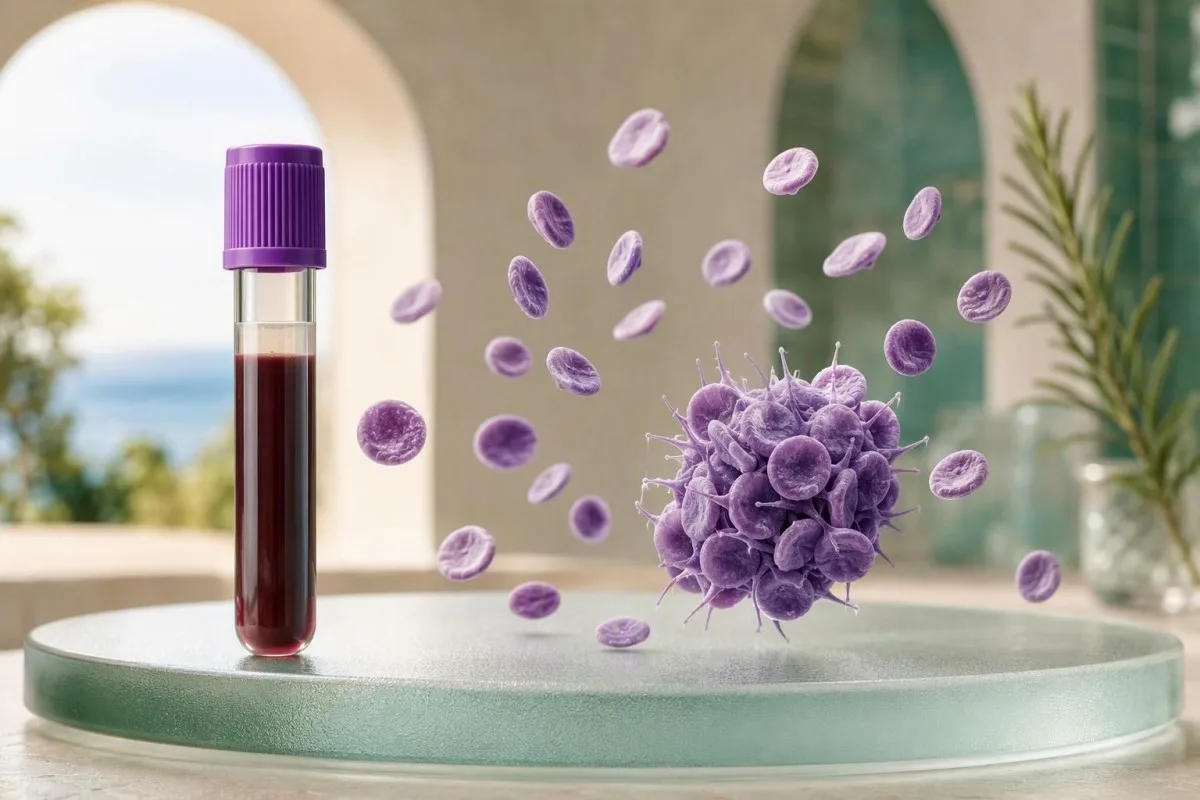
Faodaidh cunntas truinnsear ìosal a bhith na mhearachd tomhais co-cheangailte ri tiùb bho àm gu àm seach duilgheadas taobh a-staigh do bhodhaig. Seo mar a thèid pseudothrombocytopenia co-cheangailte ri EDTA a chomharrachadh mus cuir duine sam bith gad chomharrachadh le thrombocytopenia.


- Pseudothrombocytopenia is e cunntas truinnsear ìosal ceàrr air adhbhrachadh le cruinneachadh truinnsear às deidh cruinneachadh, gu tric ann an tiùb EDTA.
- Raon àbhaisteach truinnsearan airson a’ mhòr-chuid de dh’inbhich neo-thaghte tha timcheall air 150-450 × 10⁹/L, ged a tha na h-ionadan-ama aca fhèin aig na feadhainn-lann.
- Cruinneachaidhean truinnsear air sgreab faodaidh e toirt air neach-anailis fèin-ghluasadach cunntas a thoirt air truinnsearan gu neo-iomchaidh leis nach eil cruinneachadh air a thomhas mar cheallan fa leth.
- Tarraing citrate air ais bidh gu tric a’ fuasgladh cruinneachadh truinnsear EDTA; bidh na h-ionadan-lann gu tric a’ cur ris a’ chunntas truinnsear citrate ceartachadh dìlseachd 1.1.
- Gun chomharran sèididh a bharrachd air cunntas truinnsear ìosal air leth neo-àbhaisteach bu chòir dha ath-sgrùdadh sgreab a bhrosnachadh mus tèid co-dhùnaidhean làimhseachaidh no tar-chuir èiginneach a dhèanamh.
- Faodaidh fìor thrombocytosis a bhith ann an co-òrdanachadh le cruinneachadh truinnsear EDTA, mar sin tha toradh citrate àbhaisteach a’ toirt misneach ach feumaidh e freagairt ris an dealbh clionaigeach.
- Measadh èiginneach tha feum fhathast air airson bleeding gun smachd, petechiae ùr farsaing, ceann goirt mòr, troimh-chèile, no cunntas truinnsear fo 10 × 10⁹/L.
Dè tha cruinneachadh truinnsear EDTA a’ ciallachadh dha-rìribh
tha cruinneachadh truinnsear EDTA na artifact obair-lann in-vitro anns a bheil truinnsearan a’ cumail ri chèile anns an tiùb cruinneachaidh, ag adhbhrachadh cunntas truinnsear fèin-ghluasadach a tha gu math ìosal. Chan eil e leis fhèin a’ ciallachadh gu bheil truinnsearan air am milleadh anns a’ bhodhaig, agus mar as trice cha bhith e a’ cruthachadh cunnart sèididh.
Tha EDTA na chur-ris tiùb lavender a thathas a’ cleachdadh airson a’ mhòr-chuid de chunntasan fala iomlan oir tha e a’ ceangal calcium agus a’ cur casg air dòrtadh fala. Ann an ìre bheag de dhaoine, bidh toirt air falbh calcium a’ nochdadh làraich uachdar truinnsear a leigeas le antibodies a tha ann gu nàdarra a bhith a’ ceangal truinnsearan ri chèile. Faodaidh an anailisiche cunntas a thoirt air buidheann truinnsear mar aon phàirt mhòr, tachartas meud cealla geal, no gun dad idir; faic an sealladh farsaing againn de dè tha CBC a’ gabhail a-steach.
Nam obair clionaigeach, is e an aithisg chlasaigeach cunntas truinnsear de 48 × 10⁹/L ann an cuideigin a tha a’ faireachdainn gu tur fallain, aig nach eil dòrtadh fala, agus aig a bheil cunntas hemoglobin agus cealla geal àbhaisteach. Chan eil an eas-aontachd sin na dhearbhadh, ach is e sin an t-àm airson stad a chuir air. Tha Kantesti na Anailisiche deuchainn fala AI a tha a’ comharrachadh cunntas truinnsear ìosal iomlan còmhla ri beachdan obair-lann mar cruinneachaidhean truinnsear, an àite a bhith a’ làimhseachadh an àireamh mar dhearbhadh.
Thathas a’ meas gu bheil pseudothrombocytopenia a tha an urra ri EDTA a’ tachairt ann an timcheall air 0.03-0.27% de shampallan clionaigeach cunbhalach, le ìrean nas àirde am measg shampallan a chaidh a chuir air ais mu thràth airson cunntasan truinnsear ìosal. Tha Lippi agus co-obraichean ga mhìneachadh mar iongantas ro-anailis a tha neo-chronail ach a dh’ fhaodadh a bhith a’ leantainn air adhart oir faodaidh e brosnachadh a thoirt do dh’ àiteachan-fuirich neo-riatanach, tar-chuiridhean truinnsear, no làimhseachadh steroid (Lippi et al., 2012).
Mar a dh’ fhaodas luchd-anailis truinnsear cunntas a thoirt air sampallan cruinnichte gu neo-iomchaidh
Tha cunntasan truinnsear fèin-ghluasadach earbsach airson truinnsearan sgapte, ach tha buidhnean taobh a-muigh nan pàtranan meud agus comharran a tha an anailisiche an dùil. Faodaidh cunntas mar sin tuiteam bho fhìor 220 × 10⁹/L gu coltas 40 × 10⁹/L gun chall truinnsear bith-eòlasach sam bith.
Bidh anailisichean impedance a“ seòrsachadh phàirtean a rèir meud, fhad ”s a bhios siostaman optigeach a“ cur fiosrachadh sgapadh solais ris. Mar as trice bidh truinnsear timcheall air 2-3 micrometres ann an trast-thomhas, ach faodaidh buidheann a bhith a” dol thairis air an sgàil ceallan dearga no roinn leukocytes. Is e seo as coireach gu bheil histogram truinnsear neo-àbhaisteach agus gum faod obair-lann “clumps truinnsear an làthair” no “cunntas neo-earbsach” a chuir ris.”
Is e bratach truinnsear an anailisiche brosnachadh airson ath-sgrùdadh daonna, chan e dearbhadh deireannach. Faodaidh measadh làimhe bho smear iomaill a tha air a dhèanamh gu math a bhith nas fheumail na bhith ag ath-aithris an aon tiùb EDTA, gu sònraichte ma bha an sampall na shuidhe airson 2 uair mus deach a sgrùdadh. Airson crìochan practaigeach timcheall air modhan, tha an stiùireadh againn airson cunntasan truinnsear ro thoirt a-mach fhiaclan a’ mìneachadh carson a tha toradh dearbhte cudromach.
Bidh truinnsearan mòra a’ cruthachadh trioblaid eadar-dhealaichte, uaireannan a’ dol thairis. Faodar truinnsearan fa leth mòra a bhith air an ionndrainn le modhan impedance eadhon às aonais buidhnean faicsneach, a’ togail an tomhas truinnsear cuibheasach (MPV) gu tric. Chan eil MPV àrd co-ionann ri pseudothrombocytopenia; ar n-ath-sgrùdadh de adhbharan truinnsear mòr a’ sgaradh an dà lorg sin.
Ciamar a tha cruinneachaidhean truinnsear air sgreab a’ coimhead
Tha buidhnean truinnsear air smear a’ nochdadh mar bhuidhnean neo-riaghailteach de ghormagan beaga de phàirtean granular purpaidh, gu tric air an cruinneachadh aig oir fheadanach an t-sleamhnag. Tha an suidheachadh aca cudromach oir faodaidh cunntadh dìreach air raon ionad an smear a bhith ag ionndrainn an rud a mhìneachadh an toradh ìosal.
Bidh morphologist trèanaichte a’ sgrùdadh a’ chuirp agus an earball den fhilm fo chumhachd àrd, chan e dìreach aon raon riochdachail. Tha Platelet satellitism na phàtran nas teirce co-cheangailte ri EDTA anns a bheil truinnsearan a’ fàinneachadh neutrophils mar rosette; faodaidh e cuideachd an cunntas truinnsear a chaidh aithris a lughdachadh. Tha an dà chuid nan iongantasan sampall, ged a dh’ fhaodadh satellitism agus cruinneachaidhean farsaing tachairt còmhla bho àm gu àm.
Is e aon fhiosrachadh feumail gu bheil cruinneachadh EDTA gu tric a’ fàs le ùine. Dh’ fhaodadh sampall a thomhas 10 mionaidean às deidh cruinneachadh sealltainn 118 × 10⁹/L, an uairsin 42 × 10⁹/L aig 90 mionaidean mar a bhios barrachd cruinneachaidhean a’ cruthachadh. Bidh obair-lann ag atharrachadh nam pròiseas obrach aca, mar sin chan eil cunntas tòiseachaidh àbhaisteach a’ cur às gu tur don artifact seo ma nochdas bratach anailisiche nas fhaide air adhart.
Nuair a chì mi fhèin, Thomas Klein, MD, cunntas ìosal còmhla ri beachd air smear ach gun dòrtadh fala clionaigeach, bidh mi ag iarraidh mìneachadh air an fhìor smear mus bruidhinn mi mu dheidhinn thrombocytopenia dìonach. Tha reusanachadh coltach ris a' chiad mhicrosgop feumail nuair a tha aithisg a' toirt iomradh air schistocytes air film fala, ged a tha feum aig schistocytes air suidheachadh clionaigeach fada nas èiginn.
Carson a tha EDTA ag adhbhrachadh cruinneachaidhean truinnsear ann an cuid de dhaoine
Faodaidh EDTA bruthadh clàr-plàta a bhrosnachadh le bhith a' ceangal calcium agus ag atharrachadh cumadh glycoproteins air uachdar a' chlàr-plàta, a' leigeil le antibodies ceangal agus a' ceangal clàr-plàta faisg air làimh. Tha an ath-bheothachadh seo a' tachairt an dèidh cruinneachadh, chan ann air sgàth 's gun do rinn EDTA cron air clàr-plàtaan a tha a' cuairteachadh taobh a-staigh a' chuirp.
Tha a' mhodh-obrach as fheàrr a' toirt a-steach antibodies, gu tric IgG, IgM, neo IgA, a' comharrachadh làraichean falaichte air iom-fhillte GPIIb/IIIa a' chlàr-plàta an dèidh atharrachadh structarail a tha an crochadh air calcium. Tha an ath-bheothachadh an crochadh air teòthachd agus ùine ann an cuid de dh'euslaintich, a mhìnicheas carson a dh'fhaodadh sampall blàth uaireannan cunntas a leasachadh ach chan e fuasgladh uile-choitcheann a th' ann. Tha e na dhuilgheadas co-fhreagarrachd obair-lann, chan e aileardsaidh ri EDTA.
Faodaidh pseudothrombocytopenia tachairt ann an daoine fallain agus chaidh aithris a thoirt air còmhla ri suidheachaidhean fèin-ghluasadach, galairean, tinneas, agus torrachas, ach chan eil na ceanglaichean sin a’ stèidheachadh adhbhar ann an neach fa-leth. Cha bu chòir ANA adhartach no galar viral o chionn ghoirid a chleachdadh gus an cunntas a mhìneachadh gus an tèid an artifact a-mach. Tha Kantesti na àrd-ùrlar mìneachaidh deuchainn fala AI a leughas toradh plàta còmhla ris an t-seòrsa tiùb aige, brataichean an anailisiche, agus a' chòrr den CBC an àite a bhith air leth.
Faodaidh an iongantas a bhith a' mairsinn bhliadhnaichean ach atharrachadh eadar tarraingean. Faodaidh euslainteach cunntas plàta de 35 × 10⁹/L ann an EDTA air Diluain agus 230 × 10⁹/L ann an citrate air an aon mhadainn, agus an uairsin bruthadh pàirt a nochdadh a-rithist mìosan às dèidh sin. Faodaidh clàradh an tiùb as fheàrr leotha ann an clàr an obair-lann casg a chur air rabhaidhean ath-aithris.
Mar a nì tarraing citrate air ais dearbhadh air pseudothrombocytopenia
Tha cunntas plàta a tha a' tilleadh gu àbhaisteach ann an tiùb citrate sodium fhad 's a tha tiùb EDTA a' cumail cruinneachaidhean a' toirt taic làidir do pseudothrombocytopenia a tha an crochadh air EDTA. Feumaidh cunntas citrate atharrachadh diluthaidh oir tha riochdaire fuil-fhuil anns an tiùb.
Mar as trice bidh tiùban citrate sodium gorm air an lìonadh aig co-mheas 9:1 fala ri anticoagulant. Bidh mòran obair-lann a' iomadachadh a' chunntais plàta citrate thomhaichte le 1.1 gus atharrachadh airson diluthaidh, ged a tha modh dearbhte an obair-lann ionadail a' faighinn làmh an uachdair. Mar eisimpleir, bidh toradh amh citrate de 182 × 10⁹/L a' fàs mu 200 × 10⁹/L an dèidh atharrachaidh.
Feumaidh an tarraing a-rithist a bhith air a lìonadh gu ceart agus air a mheasgachadh gu socair. Bidh tiùb citrate nach eil air a lìonadh gu leòr ag atharrachadh an co-mheas anticoagulant agus faodaidh e toradh meallta eadar-dhealaichte a chruthachadh, a tha mar aon adhbhar gum faod neach-saidheans obair-lann ath-aithris a tha coltach gu sìmplidh a dhiùltadh. Tha ar mìneachadh air dathan tiùban deuchainn fala a' cuideachadh euslaintich aithneachadh carson a tha taghadh an tiùb mar phàirt den dòigh deuchainn.
Faodaidh tiùban magnesium sulfate no acid-citrate-dextrose a bhith feumail nuair a tha bruthadh a' leantainn ann an citrate, ach mar as trice is e seo co-dhùnadh a tha air a stiùireadh leis an obair-lann. Chuir Nagler agus co-obraichean sìos cùis anns an robh aithne air pseudothrombocytopenia a tha an crochadh air EDTA a' seachnadh obair-rannsachaidh neo-riatanach an dèidh dha deuchainn citrate cunntas iomchaidh a nochdadh (Nagler et al., 2014).
Cuin nach socraich cunntas truinnsear citrate an ceist
Chan eil tarraing citrate a-rithist a' dùnadh a-mach fìor thrombocytopenia nuair a tha an cunntas atharraichte fhathast ìosal, a' bruthadh a' tachairt ann am barrachd air aon anticoagulant, no nuair a tha comharraidhean a' moladh dòrtadh fala. Tha cruinneachadh plàta multi-anticoagulant aig cuid de dh'euslaintich, agus tha fìor chunntas ìosal aig cuid còmhla ri artifact.
Ma tha an cunntas plàta citrate atharraichte 82 × 10⁹/L agus tha an smear saor bho chluim, is e sin thrombocytopenia fìor gus an tèid a chaochladh a dhearbhadh. Ma tha EDTA 25 × 10⁹/L agus citrate 86 × 10⁹/L le cruinneachaidhean fuigheall, faodaidh artifact agus fìor lughdachadh a bhith an làthair. Bu chòir don sgioba clionaigeach an tuairmse as fheàrr a chaidh a dhearbhadh a chleachdadh, gun a bhith dìreach a' taghadh an àireamh as misneachaile.
Faodaidh dòrtadh fala san sampall cuideachd dearbhadh a dhèanamh air CBC neo-dhligheach oir thathas a' caitheamh clàr-plàta taobh a-staigh a' mhicroclot. Eu-coltach ri pseudothrombocytopenia EDTA, faodaidh sampall a chaidh a bhruthadh gu ìre buaidh a thoirt air ceallan geala agus clàran-amhairc cheallan dearga cuideachd. Leugh ar iùl tarraing a-rithist às dèidh duilgheadasan sampall airson na diofar chruinneachaidh eadar artifacts cruinneachaidh.
Chan guth air a thiormachadh le snàthadan chan eil e gu fèin-obrachail nas sàbhailte. Faodaidh cruinneachadh slaodach, brùthadh, no measgachadh fadalach cruinneachadh ionadail a bhrosnachadh agus cunntas truinnsear a thoirt air falbh, gu sònraichte nuair a tha an luach a chaidh aithris fo 100 × 10⁹/L. Mar as trice is e ath-chruinneachadh venous le giollachd sgiobalta an t-slighe dearbhaidh as glaine.
Raointean cunntais truinnsear, cunnart sèididh, agus a’ chlais artifact
Bidh a’ mhòr-chuid de naobhan inbheach a’ cleachdadh raon iomraidh cunntais truinnsear faisg air 150-450 × 10⁹/L, ach tha cunnart sèididh an urra ris a’ chunntas dearbhte, an adhbhar aige, gnìomh truinnsear, agus cungaidhean-leigheis. Cha bu chòir toradh EDTA a tha gu mearachdach ìosal a bhith air a chleachdadh leis fhèin gus modh-obrach a dhiùltadh no làimhseachadh òrdachadh.
Bidh sèid mhòr spontaneous nas dualtaich mar a thuiteas cunntas truinnsear fìor fo timcheall air 10 × 10⁹/L, fhad ‘s a tha mòran dhaoine le cunntasan seasmhach os cionn 50 × 10⁹/L air glè bheag de shèididh spontaneous. Is e stiùiridhean clionaigeach farsaing a tha seo, chan e cead a thoirt air comharraidhean a leigeil seachad. Faodaidh luchd-dìon, aspirin, tinneas grùthan, fàilligeadh dubhaig, agus mì-ghnìomh truinnsear an cunnart atharrachadh aig àireamh sam bith.
Tha cunntas truinnsear de 90 × 10⁹/L airidh air làimhseachadh eadar-dhealaichte ann an neach fallain le toradh citrate àbhaisteach na ann an cuideigin le melena ùr agus INR àrdaichte. Sin as coireach gu bheil mìneachadh cunntais truinnsear a’ fuireach còmhla ri deuchainnean dòrtadh fala; ar bidh aPTT agus deuchainn dòrtadh fala a’ stiùireadh a’ mìneachadh dè as urrainn agus nach urrainn dha sgrìonadh dòrtadh fala àbhaisteach a thoirt air falbh.
Dh’fhaodadh gum bi naobhan a’ cleachdadh 140 × 10⁹/L an àite 150 × 10⁹/L mar an ìre iomraidh as ìsle, gu sònraichte le raointean a fhuaireadh gu h-ionadail. Tha raon iomraidh a’ toirt cunntas air 95% de shluagh coimeasach; chan eil e a’ mìneachadh stairsneach làimhseachaidh uile-choitcheann. Bidh an eadar-dhealachadh seo a’ sàbhaladh tomhas iongantach de dhragh neo-riatanach.
Pàtranan CBC a nì artifact nas dualtaiche
Is e cunntas truinnsear gu h-iongantach ìosal air leth le hemoglobin àbhaisteach, ceallan geal, agus beachd cruinneachaidh am pàtran CBC as coltaiche de pseudothrombocytopenia. Tha am pàtran seo a’ nochdadh nas motha na tha e a’ dearbhadh leis gum faod trombocytopenia tràth a dh’ adhbhraich dìonachd no cungaidhean-leigheis cuideachd a bhith air leth.
Mar as trice bidh fìor dhuilgheadasan smior a’ toirt buaidh air barrachd air aon loidhne cheallan fala, ged a tha eisgeachdan ann. Bidh truinnsearan ìosal còmhla ri hemoglobin a’ tuiteam, ceallan geal neo-àbhaisteach, blàths, no comharraidhean bun-reachdail leantainneach ag iarraidh ath-bhreithneachadh sgiobalta air an dotair agus gu tric sgrùdadh fìor fhilm. An artaigil againn air an slighe CBC airson galaibh fala a’ toirt cunntas air carson a dh’atharraicheas na cruinneachaidhean sin an èiginn.
Faodaidh an co-mheas truinnsear-gu-lymphocyte a bhith gun bhrìgh nuair a tha an neach-dòirtidh dligheach ach gu bheil an àireamhair truinnsear air a lughdachadh gu fuadain. Cha bu chòir PLR de 60 a chaidh a thomhas bho chunntas cruinnichte EDTA a bhith air a mhìneachadh mar chomharra sèididh no caird-ghluasadach. Is e seo mearachd àrd-sgoile, sàmhach ach cumanta, ann an aithisgean slàinte fèin-ghluasadach; faic ar mìneachadh air toraidhean PLR àrd.
Tha Kantesti AI a’ comharrachadh neo-chunbhalachd eadar cunntas truinnsear ìosal agus tomhais CBC nàbaireach àbhaisteach, an uairsin a’ stiùireadh an leughadair gus beachdan sampall a dhearbhadh. A Inneal mion-sgrùdaidh deuchainn fala le cumhachd AI cha bu chòir a-riamh aon luach truinnsear gun dearbhadh a thionndadh gu tiotal galair. Tha an smachd clionaigeach sin nas cudromaiche na astar.
Torrachas, cùram ospadail, agus suidheachaidhean eile le cunnart àrd
Faodaidh cruinneachadh truinnsear EDTA tachairt rè torrachas agus cùram ospadail, ach cha bu chòir a ghabhail ris gu bràth nuair a dh’ fhaodadh thrombocytopenia fìor atharrachadh riaghladh èiginneach. Feumaidh adhbharan a tha sònraichte do torrachas leithid thrombocytopenia torrach, pre-eclampsia, sionndrom HELLP, agus thrombocytopenia dìonachd cunntas dearbhte.
Mar as trice bidh cunntasan truinnsear a 'gluasad sìos ann an torrachas gun duilgheadasan, agus tha cuid de naobhan-obrach a' gabhail ri crìochan iomraidh nas ìsle a tha sònraichte do thrimester. Tha cunntas fo 100 × 10⁹/L nas dualtaiche airson thrombocytopenia torrach gun duilgheadasan agus tha e a 'moladh measadh clionaigeach faiceallach, eadhon ged a chithear cruinneachaidhean EDTA. An ar stiùireadh iomraidh truinnsear ann an torrachas a 'toirt seachad co-theacsa gun a bhith a' cur an àite ath-sgrùdadh obstetric.
San ospadal, dh'fhaodadh tuiteam obann de chòrr air 50% bhon bhun-loidhne a bhith a 'togail cheistean mu sepsis, nochdadh dhrogaichean, thrombocytopenia air a stiùireadh le heparin, dìth-fheòil, no caitheamh co-cheangailte ri innealan. Faodaidh artifact EDTA a bhith coltach ri tuiteam drùidhteach, gu h-àraid nuair a thàinig toradh roimhe bho dhòigh obair-lann eadar-dhealaichte. Tha coimeas a dhèanamh eadar toradh citrate dearbhte agus bun-loidhne an euslaintich nas feumail na bhith a' dèanamh ath-aithris air gnàthach EDTA CBC.
Mus tèid epidural, obair-lann, cearcall chemotherapy, no tar-chur truinnsear a dhèanamh, faighnich a bheil an obair-lann air dearbhadh a dhèanamh air a 'bheachd air sgreab no inneal-falaichte eile. Tha mi air dàil ann an cùram fhaicinn air an t-seachnadh leis an aon ghairm fòn sin. Air an làimh eile, bu chòir comharran gnìomhach no euslainteach neo-sheasmhach a bhith air am measadh fhad 'sa tha dearbhadh ga dhèanamh.
Leigheasan agus breithneachaidhean nach bu chòir a bhith air am buaireadh ro luath
Bu chòir cruinneachadh truinnsear EDTA a bhith air a thoirmeasg mus tèid cunntas ìosal truinnsear a thoirt air sgàth cungaidh-leigheis, tinneas fèin-dìon, no thrombocytopenia dìonachd. Faodaidh stad a chuir air cungaidh-leigheis luachmhor stèidhichte air cunntas neo-dhearbhte cron a dhèanamh a dh'fhaodar a sheachnadh.
Faodaidh heparin, stuthan anns a bheil quinine, trimethoprim-sulfamethoxazole, valproate, linezolid, chemotherapy, agus cuid de chungaidhean-leigheis dìonachd adhbhrachadh gu fìor thrombocytopenia. Tha an dàimh ùine a 'cunntadh: tha tuiteam fìor co-cheangailte ri drogaichean mar as trice a' cumail a-mach ann an sampall citrate a chaidh a chruinneachadh gu ceart agus chan eil e a 'falbh nuair a thèid EDTA a chur na àite. Bu chòir eachdraidh cungaidh-leigheis a bhith a 'gabhail a-steach steallaidhean, stuthan thairis air a' chunntair, agus ullachaidhean luibheil.
Tha thrombocytopenia dìonachd na breithneachadh air dùnadh, chan ann na chomharradh obair-lann. Faodaidh e nochdadh le truinnsearan air leth fo 100 × 10⁹/L, ach tha sgreab EDTA cruinnichte a 'dèanamh a' chunntais tùsail neo-thuigsinn. Lippi et al. (2012) gu sònraichte a 'toirt rabhadh gu bheil aithneachadh pseudothrombocytopenia a' cur stad air cungaidhean-leigheis neo-iomchaidh leithid corticosteroids agus splenectomy.
Ma tha aithisg a 'nochdadh gu bheil e a' dol an aghaidh nan toraidhean agad roimhe, gleidhidh tu an PDF tùsail agus bheir thu fa-near ceann-latha a 'chruinneachaidh, beachd an tiùb, tinneas geur, agus cungaidhean-leigheis ùra. Ar stiùireadh gu atharrachaidhean brìoghmhor eadar deuchainnean fala a 'mìneachadh carson nach eil delta àireamhach gu fèin-obrachail na atharrachadh bith-eòlasach.
Dè a dh’ fhaighneachd do fhilm-lann no neach-leigheis agad a-nise
Airson cunntas truinnsear ìosal ris nach robh dùil, faighnich a bheil cruinneachaidhean truinnsear air am faicinn, a bheil sgreab iomaill air ath-sgrùdadh, agus a bheil cunntas air inneal-falaichte eile a 'gabhail ri obrachadh. Mar as trice bidh na trì ceistean sin a 'soilleireachadh an ath cheum nas luaithe na bhith a' lorg comharran air-loidhne.
Is e iarrtas practaigeach: “An urrainn don obair-lann ath-sgrùdadh a dhèanamh air film fala airson cruinneachaidhean truinnsear agus, ma tha feum air, ath-aithris a dhèanamh air cunntas truinnsear ann an citrate?” Chan eil seo a 'toirt a-steach breithneachadh sònraichte; tha e ag iarraidh gun tèid an tomhas a dhearbhadh. Ma chaidh an sampall a chruinneachadh ann an àite eile, is dòcha gum feum an neach-clionaigeach tarraing ùr òrdachadh an àite deuchainn a chur ris an t-seann tiùb.
Iarr an ceartachadh toradh citrate agus a bheil cruinneachaidhean a 'cumail a-mach san tiùb sin. Faodaidh toradh amh de 145 × 10⁹/L a bhith a 'coimhead air crìochan gus an toir dìth-fheòil timcheall air 160 × 10⁹/L. Faighnich cuideachd a bheil an obair-lann a 'cleachdadh cunntas truinnsear optigeach no fluorescence, oir tha na dòighean sin uaireannan a' leasachadh àireamhachadh ann an sampallan iom-fhillte.
Tha obair-sruth mìneachaidh Kantesti a 'brosnachadh luchd-cleachdaidh gus an toradh àireamhach a choimeas leis an aithris obair-lann agus raointean bratach mus dèan iad gnìomh air rabhadh. Airson frèam sàbhailteachd nas fharsainge, tha ar liosta-sgrùdaidh cruinneas aithisg AI a 'còmhdach eadar-theangachadh, aonadan, raointean iomraidh, agus dearbhadh toraidh.
Dè nach dèan thu fhad ‘s a tha thu a’ feitheamh ri dearbhadh
Na tòisich stuthan cur-ris, na stad cungaidhean-leigheis òrdaichte, no na gabh ris gu bheil eas-òrdugh sèididh agad dìreach air sgàth gu bheil aon chunntas truinnsear EDTA ìosal. Aig an aon àm, na leig às sèididh gnìomhach dìreach air sgàth gu bheil cruinneachadh air a bhith fo amharas.
Chan eil daithead, vitamain, no cungaidhean dachaigh a bheir air falbh pseudothrombocytopenia a tha an urra ri EDTA oir tha na truinnsearan a 'cruinneachadh san tiùb, chan ann a' fàiligeadh taobh a-staigh a 'chuirp. Faodaidh dìth folate, bhiotaimin B12, agus iarainn buaidh a thoirt air cruthachadh fala ann an suidheachaidhean eile, ach chan urrainn do stuthan cur-ris cunntas a tha fo amharas a dhearbhadh. Tha a bhith a 'làimhseachadh an artifact mu dheidhinn cruinneachadh agus mion-sgrùdadh.
Seach aspirin, ibuprofen, naproxen nach-riachtanach, agus deoch làidir trom gus am bi neach-clionaigeach air cunntas glè ìosal a chaidh aithris a shoilleireachadh, gu sònraichte ma bhios tu a’ cnagadh gu furasta. Na cuir stad air cungaidhean anticiagulant, cungaidhean antiplatelet, cungaidhean an-aghaidh glacaidhean, no leigheasan aillse gun chomhairle bho neach-òrdugh; faodaidh an comharra airson na cungaidhean sin a bhith na chunnart nas motha sa bhad na an toradh gun dearbhadh.
Faodaidh gleidheadh clàr-ama toraidh pongail an dreuchd atharrachadh. Ar Leabhar-iùil lorg toraidhean obair-lann a’ moladh ùine tarraing, tinneas o chionn ghoirid, cungaidhean, beachdan sampall, agus co-dhiù an tàinig an toradh bho EDTA no citrate a chlàradh.
Soidhnichean dearga a dh’ fheumas measadh meidigeach èiginneach
Iarr measadh meidigeach èiginneach airson bleeding gun smachd, stòl dubh, fuil a’ cur a-mach, ceann-cinn ùr dona, troimh-chèile, fainting, no rash mòr pinpoint, eadhon ged a thathas a’ cumail a-mach gu bheil cruinneachadh EDTA ann. Faodaidh artifact obair-lann agus èiginn fhìorach a bhith ann còmhla.
Mar as trice thathas a’ làimhseachadh fìor chunntas platelet fo 10 × 10⁹/L mar thoradh èiginneach leis gu bheil an cunnart bho sèididh mucosal agus a-staigh gu spontanach ag èirigh gu mòr. Cunntas fo 20 × 10⁹/L le sèididh ùr, fiabhras, mòr-bhruthadh fala, duilgheadasan trom, no nochdadh heparin o chionn ghoirid cuideachd airidh air input neach-clionaigeach an aon latha. Bu chòir do chomhairle èiginn ionadail a bhith nas cudromaiche na mìneachadh sam bith air-loidhne.
Tha comharran neurological ùra gu sònraichte cudromach leis gu bheil sèididh intracranial tearc ach dona. Na dràibh thu fhèin ma tha ceann-cinn dona agad le laigse, atharrachadh cainnte, tuiteam, no troimh-chèile. Ann an clann, feumaidh rash nach bi a’ fàgail comharra le fiabhras measadh èiginneach ge bith dè an toradh platelet.
Tha Thomas Klein, MD, a“ comhairleachadh euslaintich an ceist ”A bheil an cunntas seo fìor?“ a sgaradh bho ”A bheil an neach seo sàbhailte an-diugh?” Mar as trice feumaidh a’ chiad fhear smear agus ath-tharraing citrate; tha an tè mu dheireadh an crochadh air comharran, toraidhean sgrùdaidh, agus an dealbh clionaigeach gu lèir. Ar stiùireadh dàrna beachd deuchainn fala faodaidh cuideachadh le bhith ag ullachadh còmhraidh stèidhichte às deigh na cùisean èiginneach.
Mar a nì Kantesti cunntas truinnsear comharraichte gu sàbhailte
Tha Kantesti AI a’ làimhseachadh cunntas platelet ìosal le beachdan cruinneachaidh EDTA mar chomharra dearbhaidh, chan ann mar dhearbhadh air thrombocytopenia. Tha ar mìneachadh a’ cur bratach an anailisiche, na loidhnichean CBC eile, luachan roimhe, agus na comharran a chaidh aithris ron bhrat-ghorm sìmplidh dearg no uaine.
Tha Kantesti na seirbheis eadar-mhìneachaidh deuchainn-lann AI air a dhealbhadh gus dàta obair-lann a mhìneachadh ann an cànan sìmplidh fhad “s a ghlèidheas e crìochan naithisge na stòr. Ma tha PDF a chaidh a luchdachadh suas ag ràdh ”cruinneachaidhean platelet,” bu chòir don t-siostam againn innse don neach-cleachdaidh gum faodadh an àireamh a bhith gu faoin ìosal agus gun urrainn don obair-lann no an neach-clionaigeach sin a dhearbhadh le ath-sgrùdadh film no sampall citrate.
Faodaidh aithneachadh charactaran didseatach puing deicheach, aonad, no nota-cas air an obair-lann a leughadh gu ceàrr. Sin as coireach gum bu chòir do dh’euslaintich sgrùdadh a dhèanamh air ro-shealladh na h-ìomhaigh mus earb thu air mìneachadh didseatach sam bith, gu sònraichte timcheall air luachan mar 18 an taca ri 180 × 10⁹/L. Ar liosta-sgrùdaidh càileachd airson luchdachadh suas PDF a’ mìneachadh na beagan sgrùdaidhean a chuireas casg air a’ mhòr-chuid de mhearachdan a ghabhas seachnadh.
Tha sgrùdadh clionaigeach fhathast na obair daonna. Thathas a’ sgrùdadh modh-obrach Kantesti an aghaidh sruthan obrach le fòcas air sàbhailteachd; faodaidh luchd-leughaidh a tha airson ar dòigh-obrach a thuigsinn ar dearbhadh teicnigeach agus stiùireadh clionaigeach. a sgrùdadh. Faodaidh AI ceistean a chuir air dòigh gu h-èifeachdach, ach chan urrainn dha an fhìor smear a sgrùdadh no bleeding gnìomhach a mheasadh.
Plana leanmhainn practaigeach às deidh cruinneachadh truinnsear EDTA
Is e an plana leantainn àbhaisteach a bhith a’ clàradh artifact EDTA, a’ faighinn cunntas platelet eile air a dhearbhadh, agus a’ cleachdadh an toraidh sin airson co-dhùnaidhean clionaigeach san àm ri teachd. Cha bhith a’ mhòr-chuid de dhaoine feumach air làimhseachadh airson an artifact fhèin aon uair ‘s gu bheil an obair-lann air a’ phàtran a stèidheachadh.
Iarr air clàr na h-obair-lann a bhith a“ toirt fa-near ”cruinneachadh platelet an urra ri EDTA” no cànan co-ionann ma tha dearbhadh soilleir. Air tarraingean san àm ri teachd, faodaidh an sgioba phlebotomy tube citrate a chruinneachadh còmhla ris an EDTA CBC àbhaisteach, a’ sàbhaladh dàrna dreuchd. Tha seo gu sònraichte feumail ron obair-lann, rè torrachas, no nuair a tha stairsnean platelet aig pròtacal leigheis.
Tha bun-loidhne dearbhte nas luachmhoire na luachan ìosal gun dearbhadh air ath-aithris. Ma tha an cunntas citrate ceartichte agad seasmhach aig 205 × 10⁹/L thairis air 12 mìosan, tha 55 × 10⁹/L san àm ri teachd le cruinneachaidhean EDTA fada nas lugha de dh’ eagal na an aon àireamh ann an cuideigin às aonais clàradh roimhe. Chan eil gluasadan feumail ach nuair a tha an dòigh deuchainn co-ionann.
Tha Kantesti air taic a thoirt do chòrr air 2 mhillean neach-cleachdaidh ann an dùthchannan 127+ le mìneachaidhean obair-lann ioma-chànanach, ach tha toraidhean fhathast mar phàirt den dàimh cùraim leis an neach-clionaigeach agad. Tha na luchd-sgrùdaidh meidigeach againn agus Bòrd Comhairleachaidh Meidigeach a’ cur cuideam air an aon riaghailt mu dheireadh: dearbhaich an cunntas platelet an toiseach, an uairsin co-dhùin dè - ma tha dad - a dh’ fheumas làimhseachadh.
Foillseachaidhean rannsachaidh
A-mach air 29 Lùnastal, 2026, tha an dà fhoillseachadh rannsachaidh gu h-ìosal nan stòrasan foghlaim a bharrachd. Chan eil iad a' stèidheachadh breithneachadh air pseudothrombocytopenia a tha an urra ri EDTA; tha sgrìob an obair-lann agus cunntas platelet neo-dhrogaigeach fhathast nan innealan dearbhaidh buntainneach.
Ceistean Bitheanta
An urrainn do chruinneachadh truinnsear EDTA a bhith ag adhbhrachadh cunntas truinnsear gu math ìseal?
Seadh. Faodaidh cruinneachadh truinnsear EDTA toradh a thoirt air cunntas truinnsear a tha gu math ceàrr ìosal, uaireannan fo 50 × 10⁹/L, nuair a tha àireamh truinnsearach falaichte an neach àbhaisteach. Tha an anailisiche a’ cunntadh gu neo-cheart cruinneachaidhean truinnsear oir chan urrainn dha gach truinnsear taobh a-staigh cruinneachadh aithneachadh gu earbsach. Tha smear iomaill a’ sealltainn cruinneachaidhean agus cunntas citrate ceartachaidh àbhaisteach a’ toirt taic làidir do pseudothrombocytopenia. Bu chòir an toradh fhathast ath-sgrùdadh gu èiginneach ma tha fuil a’ sruthadh gu gnìomhach no ma tha an cunntas citrate fhathast ìosal.
Ciamar a thèid pseudothrombocytopenia a dhearbhadh?
Mar as trice, thèid pseudothrombocytopenia a dhearbhadh le bhith a' sgrùdadh smeur iomaill airson cruinneachaidhean platelet agus ag ath-aithris an àireamh platelet ann an tiùb searbhagach citrach. Tha tiùban citrach a' gabhail a-steach anticoagulant leaghaid, mar sin bidh mòran deuchainn-lannan ag iomadachadh an àireamh platelet a chaidh a thomhas le 1.1 gus cunntas a thoirt air lagachadh. Mar eisimpleir, bidh àireamh citrach amh de 180 × 10⁹/L mar as trice air aithris mar timcheall air 198 × 10⁹/L às deidh ceartachadh. Bu chòir ceartachadh dligheach agus mìneachadh smeur an deuchainn-lann ionadail a bhith a' stiùireadh a' chrìoch dheireannach.
A bheil dùmhlachadh platelet EDTA a' ciallachadh gu bheil duilgheadas sèidh orm?
Chan eil cruinneachadh truinnsear EDTA leis fhèin na artefact sampall in-vitro agus chan eil e a’ ciallachadh gu bheil eas-òrdugh sèididh ort no gu bheil do truinnsearan a’ cruinneachadh nad chuairteachadh. Chan eil comharran sèididh aig a’ mhòr-chuid den fheadhainn a tha fo bhuaidh agus tha cunntas truinnsear dearbhte aca taobh a-staigh an ìre inbheach àbhaisteach de mu 150-450 × 10⁹/L. Bu chòir do neach-clionaigeach fhathast sgrùdadh a dhèanamh air comharran sèididh, deuchainnean coagulation neo-àbhaisteach, no cunntas truinnsear citrate gu leantainneach ìosal. Chan eil an artefact a’ dìon neach bho chunnartan sèididh neo-cheangailte air an adhbhrachadh le cungaidhean-leigheis no suidheachaidhean meidigeach.
Am faod clumping truinnsearan tachairt ann an citrate cuideachd?
Seadh, ged a chuireas sodium citrate casg air cruinneachadh co-cheangailte ri EDTA gu tric, faodaidh cruinneachadh platelet a bhith a’ leantainn bho àm gu àm ann an citrate no tachairt le iomadh anticoagulant. Anns an t-suidheachadh sin, faodaidh an obair-lann cunntas platelet optigeach no fluorescence, pròiseasadh luath blàth, magnesium sulfate, no searbhag-citrate-dextrose a chleachdadh a rèir a phròtacalan dearbhte. Bu chòir cunntas citrate ceartachaidh fo 150 × 10⁹/L às aonais cruinneachaidhean a bhith air an làimhseachadh mar fhìor thrombocytopenia a dh’fhaodadh a bhith ann. Tha cruinneachadh ioma-anticoagulant neo-àbhaisteach agus feumaidh e dearbhadh air a stiùireadh leis an obair-lann.
Am bu chòir dhomh mo chunntas platelet ath-aithris ma tha an aithisg ag ràdh clumpaichean platelet?
Seadh. Tha aithisg a tha ag ràdh gu bheil cruinneachaidhean platelet, cruinneachaidhean platelet, no cunntas platelet neo-earbsach sa chumantas a' gealltainn dearbhadh seach gabhail ris an toradh àireamhach. Is e an ath-aithris a th' ann mar as trice sampall sodium citrate a chaidh a chruinneachadh às ùr le sgrùdadh smear, air a phròiseasadh gu sgiobalta. Mas e an cunntas tùsail fo 10 × 10⁹/L no ma tha bleeding neo-riaghlaidh agad, stòl dubh, ceann goirt mòr, no troimh-chèile, faigh cùram meidigeach èiginneach fhad 's a tha an dearbhadh air a chuir air dòigh. Na atharraich cungaidh-leigheis òrdaichte gun chomhairle bhon neach-clionaigeach a tha fios carson a chaidh òrdachadh.
An urrainn do psuedothrombocytopenia EDTA tighinn agus falbh?
'Seadh. Faodaidh pseudothrombocytopenia EDTA mairsinn airson bhliadhnaichean no nochdadh caochlaideach leis gu bheil ìre an cruinneachaidh an crochadh air ùine às deidh cruinneachadh, teòthachd na sampall, agus dòigh an anailisiche. Faodaidh aon sampall EDTA aithris 70 × 10⁹/L fhad ‘s a dh’aithris sampall eile a chaidh a chruinneachadh air latha eile 145 × 10⁹/L, a dh’aindeoin cunntas platelet fìor chobhair. Bidh cunntas citraid a tha air a chlàradh gu h-àbhaisteach a’ toirt bunait fheumail airson coimeas san àm ri teachd. Le bhith ag iarraidh air an obair-lann an anticoagulant as fheàrr a chlàradh faodaidh e casg a chuir air rabhaidhean meallta a-rithist.
Faigh Mion-sgrùdadh Deuchainn Fala le Cumhachd AI an-diugh
Thig còmhla ri còrr is 2 mhillean neach air feadh an t-saoghail a tha a’ earbsa Kantesti airson mion-sgrùdadh sa bhad, ceart air deuchainnean obair-lann. Luchdaich suas na toraidhean deuchainn fala agad agus faigh mìneachadh coileanta air biomarcair 15,000+ ann an diogan.
📚 Foillseachaidhean Rannsachaidh le Iomraidhean
Klein, T., Mitchell, S., & Weber, H. (2026). Kantesti AI. (2026). Stiùireadh C3 C4 Complement Test Fala & ANA Titer. Zenodo. https://doi.org/10.5281/zenodo.18353989. Rannsachadh Leigheis AI Kantesti.
Klein, T., Mitchell, S., & Weber, H. (2026). Kantesti AI. (2026). Nipah Bhìoras Fala: Ro-làimh-shealladh & Stiùireadh airson Breithneachadh 2026. Zenodo. https://doi.org/10.5281/zenodo.18487418. Rannsachadh Leigheis AI Kantesti.
📖 Iomraidhean Meidigeach Taobh a-muigh
⚕️ Àicheadh Meidigeach
Tha an artaigil seo dìreach airson adhbharan foghlaim agus chan eil e a’ dèanamh comhairle mheidigeach. Cuir fios an-còmhnaidh gu solaraiche cùram slàinte teisteanasach airson co-dhùnaidhean breithneachaidh is leigheis.
Comharran earbsa E-E-A-T
Eòlas
Lèirmheas clionaigeach air a stiùireadh le lighiche air sruthan-obrach mìneachaidh obair-lann.
Eòlas
Fòcas air leigheas obair-lann air mar a bhios bith-chomharraidhean (biomarkers) a’ giùlan ann an co-theacsa clionaigeach.
Ùghdarrasachd
Air a sgrìobhadh le Dr. Thomas Klein le ath-sgrùdadh le Dr. Sarah Mitchell agus Prof. Dr. Hans Weber.
Earbsachd
Mìneachadh stèidhichte air fianais le slighean leanmhainn soilleir gus dragh a lughdachadh.