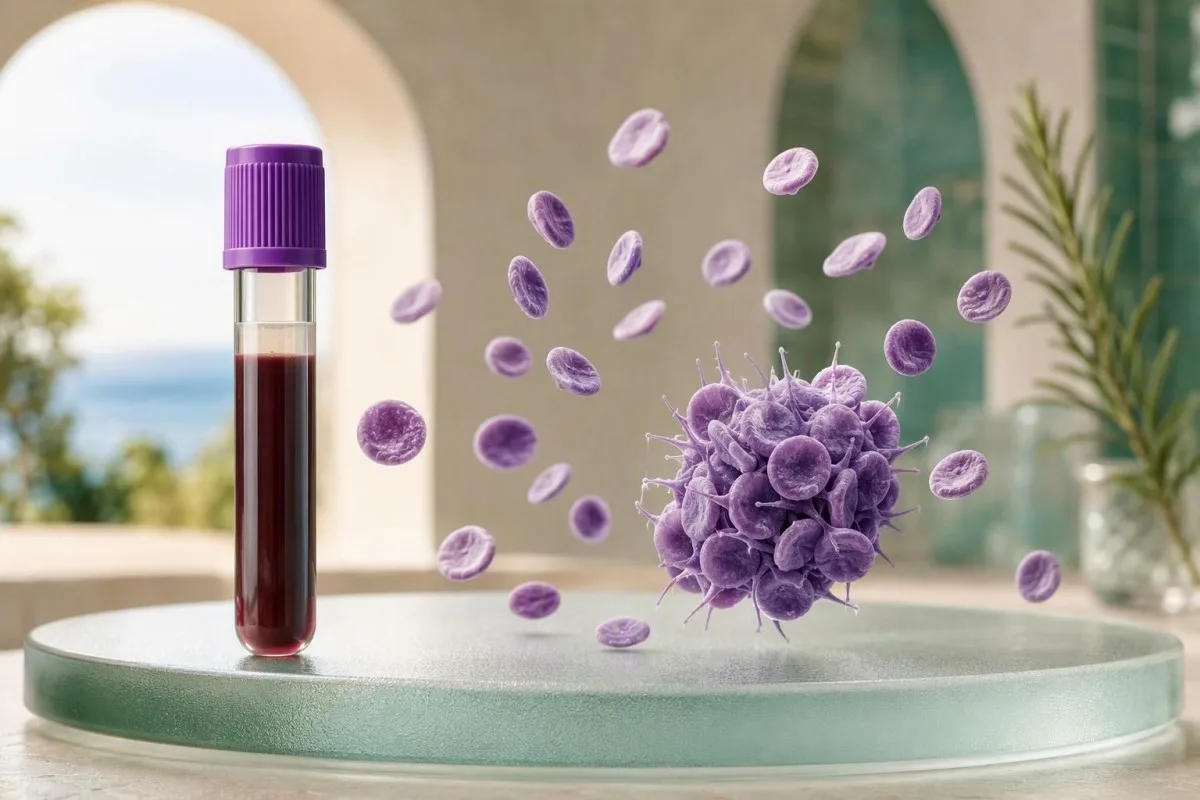
Hətta qan nümunəsi ilə bağlı ölçmə səhvi, bədəninizdəki bir problemdən daha çox ola bilər. Trombositopeniya diaqnozu qoyulmamışdan əvvəl EDTA ilə əlaqəli psevdotrombositopeniya necə müəyyən edilir.


- Psevdotrombositopeniya toplandıqdan sonra, ən çox EDTA tüpündə trombositlərin yığılması nəticəsində yaranan səhvən aşağı trombosit sayı.
- Tipik trombosit aralığı əksər hamilə olmayan böyüklər üçün təxminən 150-450 × 10⁹/L təşkil edir, baxmayaraq ki, laboratoriyalar öz intervallarını təyin edir.
- Ləkədə trombosit yığmaları avtomatik analizatorun trombositləri az saymasına səbəb ola bilər, çünki bir yığın ayrı hüceyrələr kimi ölçülmür.
- Sitrat yenidən götürmə tez-tez EDTA trombosit yığılmasını həll edir; laboratoriyalar adətən sitrat trombosit sayına 1.1 dilüsyon düzəlişi tətbiq edir.
- Qanaxma əlamətləri yoxdur gözlənilmədən təcrid olunmuş aşağı trombosit sayı, müalicə və ya təcili istiqamətləndirmə qərarlarından əvvəl ləkənin nəzərdən keçirilməsini tələb etməlidir.
- Həqiqi trombositopeniya ilə eyni vaxtda ola bilər EDTA trombositlərinin yığılması, buna görə də normal sitrat nəticəsi təsəllivericidir, lakin kliniki mənzərəyə uyğun olmalıdır.
- Təcili qiymətləndirmə idarəolunmaz qanaxma, yeni geniş yayılmış petexiya, şiddətli baş ağrısı, çaşqınlıq və ya 10 × 10⁹/L-dən aşağı trombosit sayı üçün hələ də lazımdır.
EDTA trombosit yığılması əslində nə deməkdir
EDTA trombositlərinin yığılması, trombositlərin toplama borusunda bir-birinə yapışdığı vitro laboratoriya artefaktıdır və bu da səhvən aşağı avtomatlaşdırılmış trombosit sayına səbəb olur. Bu, özlüyündə trombositlərin bədəndə məhv edildiyi mənasına gəlmir və adətən qanaxma riski yaratmır.
EDTA, əksər tam qan sayımları üçün istifadə olunan bənövşəyi üstü olan prob şüşəsidir, çünki o, kalsiumu bağlayır və laxtalanmanı mane olur. İnsanların kiçik bir alt qrupunda kalsiumun çıxarılması, təbii olaraq mövcud olan antikorların trombositləri bir-birinə bağlamasına imkan verən trombosit səth hədəflərini açır. Analizator bir trombosit qrupunu bir böyük hissəcik, ağ qan hüceyrəsi ölçüsündə bir hadisə və ya heç bir şey kimi saya bilər; bizim icmalımıza baxın CBC-nin nələri əhatə etdiyini.
Mənim kliniki işimdə klassik hesabat, heç bir əsnəmə əlaməti olmayan, normal hemoglobin və ağ qan hüceyrəsi sayı olan, özünü tamamilə yaxşı hiss edən bir insanda 48 × 10⁹/L trombosit sayıdır. Bu uyğunsuzluq sübut deyil, lakin dayanmaq vaxtıdır. Kantesti bir AI qan testi analizatoru diaqnoz kimi rəqəmi deyil, trombosit yığınları kimi laboratoriya şərhləri ilə yanaşı təcrid olunmuş aşağı trombosit sayını qeyd edən.
EDTA-ya bağlı psevdotrombositopeniya, rutin ambulator nümunələrin təxminən 0.03-0.27%-də qiymətləndirilir, aşağı trombosit sayları üçün artıq göndərilən nümunələr arasında daha yüksək dərəcələrlə. Lippi və həmkarları bunu klinik cəhətdən zərərsiz, lakin potensial olaraq nəticəsi olan bir pre-analitik hadisə kimi təsvir edirlər, çünki bu, lazımsız qəbullara, trombosit köçürmələrinə və ya steroid müalicəsinə (Lippi et al., 2012) səbəb ola bilər.
Trombosit analizatorları necə yığılmış nümunələri az sayar
Avtomatlaşdırılmış trombosit sayımları yayılmış trombositlər üçün etibarlıdır, lakin yığınlar analizatorun gözlədiyi ölçü və siqnal nümunələrinin xaricində qalır. Buna görə də, heç bir bioloji trombosit itkisi olmadan sayım həqiqi 220 × 10⁹/L-dən görünən 40 × 10⁹/L-ə düşə bilər.
Empedans analizatorları hissəcikləri əsasən həcmə görə təsnif edir, optik sistemlər isə işıq səpilməsi məlumatını əlavə edir. Trombosit adətən təxminən 2-3 mikrometr enində olur, lakin bir yığın qırmızı qan hüceyrəsi parçası və ya leykosit bölgəsi ilə üst-üstə düşə bilər. Buna görə də trombosit histogramı anormal ola bilər və laboratoriya “trombosit yığınları mövcuddur” və ya “sayım etibarsızdır” deyə bilər.”
Analizatorun trombosit bayrağı insan baxışı üçün bir tələbdir, yekun diaqnoz deyil. Yaxşı hazırlanmış periferik yaxmanın əl ilə təxmini, xüsusən də nümunə analizdən əvvəl 2 saat qaldıqda, eyni EDTA probunun təkrarlanmasından daha faydalı ola bilər. Prosedurlar ətrafında praktik hədlər üçün, bizim bələdçimiz diş çıxarılmasından əvvəl trombosit sayı təsdiqlənmiş nəticənin niyə vacib olduğunu izah edir.
Böyük trombositlər fərqli, bəzən üst-üstə düşən bir problem yaradır. Çox böyük fərdi trombositlər, görünən yığınlar olmadan belə empedans metodları tərəfindən qaçırıla bilər, bu da tez-tez orta trombosit həcmini (MPV) artırır. Yüksək MPV psevdotrombositopeniya ilə dəyişdirilə bilməz; bizim icmalımız böyük trombosit səbəbləri bu iki tapıntını ayırır.
Ləkədə trombosit yığmaları necə görünür
Yaxmada trombosit yığınları, adətən slaydın lələk kənarında cəmləşmiş, kiçik bənövşəyi dənəvər elementlərin qeyri-bərabər üzüm kimi qrupları kimi görünür. Onların yeri vacibdir, çünki yalnız mərkəzi yaxma sahəsini saymaq, aşağı nəticəni izah edən xüsusiyyəti qaçıra bilər.
Təlimli bir morfoloq yalnız bir təmsilçi sahəyə deyil, yüksək güc altında filmin bədənini və quyruğunu yoxlayır. Trombosit satelitizmi, trombositlərin neytrofilləri rozet kimi əhatə etdiyi daha nadir bir EDTA ilə əlaqəli naxışdır; bu da bildirilən trombosit sayını azalda bilər. Hər iki tapıntı nümunə hadisələridir, baxmayaraq ki, satelitizm və geniş yığınlar bəzən birlikdə baş verə bilər.
Bir faydalı detal ondan ibarətdir ki, EDTA yığılması tez-tez vaxtla davam edir. Nümunə toplandıqdan 10 dəqiqə sonra 118 × 10⁹/L göstərə bilər, sonra 90 dəqiqədə daha çox yığınlar əmələ gəldikcə 42 × 10⁹/L olur. Laboratoriyalar öz iş axınlarında fərqlənir, buna görə də daha sonra analizator bayrağı göründükdə normal başlanğıc sayı bu artefaktı tamamilə istisna etmir.
Mən, Thomas Klein, MD, qan analizində trombositlərin sayı az olduqda və qan nümunəsində yığılma müşahidə edildikdə, lakin klinik qanaxma olmadıqda, immun qanaxma səbəbi olan trombositopeniya (ITP) haqqında danışmazdan əvvəl qan nümunəsinin mikroskopik müayinəsinin nəticəsini tələb edirəm. Eyni mikroskopik təhlil metodu, hesabatda qeyd edildikdə də faydalıdır: qan nümunəsində şistositlərin olması, baxmayaraq ki, şistositlər daha təcili klinik şərait tələb edir.
Niyə EDTA bəzi insanlarda trombosit yığmalarına səbəb olur
EDTA kalsiumu kimyəvi birləşdirərək və trombosit membranının qlikoproteinlərinin formasını dəyişdirərək trombositlərin yığılmasına səbəb ola bilər, bu da antikorların bitişik trombositləri birləşdirməsinə və büzməsinə imkan verir. Bu reaksiya qan götürüldükdən sonra baş verir, çünki EDTA orqanizmdə dövr edən trombositlərə zərər vermiş deyil.
Ən yaxşı dəstəklənən mexanizm, adətən IgG, IgM və ya IgA olan antikorların, kalsiumdan asılı struktur dəyişikliyindən sonra trombosit GPIIb/IIIa kompleksindəki gizli sahələri tanımasıdır. Reaksiya bəzi xəstələrdə temperaturdan və vaxtdan asılıdır, bu da qızdırılmış nümunənin bəzən sayımı yaxşılaşdıra biləcəyini izah edir, lakin bu, hər kəs üçün tətbiq olunan bir həll deyil. Bu, EDTA-ya qarşı allergik reaksiyadan deyil, laboratoriya uyğunsuzluğu məsələsidir.
Yalançı trombositopeniya sağlam insanlarda baş verə bilər və autoimmun xəstəliklər, infeksiyalar, xərçəng və hamiləliklərlə əlaqəli olaraq bildirilmişdir, lakin bu əlaqələr fərddə səbəbiyyəti müəyyən etmir. Pozitiv ANA və ya son viral xəstəlik, qüsur aradan qaldırılana qədər sayın izahı üçün istifadə edilməməlidir. Kantesti, AI qan analizi nəticələrinin şərhi platforması qan nümunəsinin tipini, analizatorun bayraqlarını və qalan CBC-ni nəzərə alaraq trombosit nəticəsini təhlil edən bir vasitədir.
Fenomen illərlə davam edə bilər, lakin nümunə götürmələr arasında dəyişə bilər. Bir xəstə bir gün EDTA-da 35 × 10⁹/L trombosit sayına, eyni səhər sitratda isə 230 × 10⁹/L trombosit sayına sahib ola bilər, sonra isə aylar sonra yenidən qismən yığılma göstərə bilər. Laboratoriya qeydində üstünlük verilən qabın qeyd edilməsi təkrarlanan xəbərdarlıqların qarşısını ala bilər.
Sitratın yenidən götürülməsi psevdotrombositopeniyanı necə təsdiqləyir
EDTA qabında yığılmalar olduqda natrium sitrat qabında normalaşdırılan trombosit sayı, EDTA-dan asılı yalançı trombositopeniyanı güclü şəkildə dəstəkləyir. Sitrat sayımı qabda maye antikoaqulyant olduğu üçün seyreltmə düzəlişinə ehtiyac duyur.
Mavi başlıq natrium sitrat qabları ümumiyyətlə 9:1 qan-antikoaqulyant nisbətində doldurulur. Bir çox laboratoriya, seyreltməni düzəltmək üçün ölçülmüş sitrat trombosit sayını 1.1 ilə vurur, lakin yerli laboratoriyanın təsdiq edilmiş üsulu üstünlük təşkil edir. Məsələn, 182 × 10⁹/L xammal sitrat nəticəsi düzəldildikdən sonra təxminən 200 × 10⁹/L olur.
Yenidən götürülmə düzgün doldurulmalı və yavaşca qarışdırılmalıdır. Az doldurulmuş sitrat qabı antikoaqulyant nisbətini dəyişdirir və fərqli yanlış nəticə yarada bilər, bu da bir laboratoriya aliminin sadə görünən təkrarlanan nümunəni rədd etməsinin bir səbəbidir. Bizim izahımız qan nümunəsi qablarının rəngləri pasiyentlərə niyə qab seçiminin test üsulunun bir hissəsi olduğunu anlamağa kömək edir.
Yığılma sitratda davam etdikdə maqnezium sulfat və ya turşu-sitrat-dekstroz qabları faydalı ola bilər, lakin bu, adətən laboratoriya tərəfindən verilən qərardır. Nagler və həmkarları, sitrat testindən sonra (Nagler et al., 2014) adekvat say göstərən EDTA-dan asılı yalançı trombositopeniyanın tanınmasının lazımsız diaqnostik araşdırmanın qarşısını aldığı bir halı qeyd etdilər.
Sitrat trombosit sayı sualı həll etmədikdə
Düzəldilmiş say aşağı qaldıqda, birdən çox antikoaqulyantda yığılma baş verdikdə və ya simptomlar qanaxmanı göstərdikdə, sitratın yenidən götürülməsi həqiqi trombositopeniyanı istisna etmir. Bəzi xəstələrdə çoxlu antikoaqulyant trombosit aqreqasiyası olur və bəzilərində isə həqiqi az sayla birlikdə artefakt olur.
Düzəldilmiş sitrat trombosit saydı 82 × 10⁹/L və yaxma yığılmadan azad olarsa, əks hal təsdiqlənənə qədər bu, həqiqi trombositopeniyadır. EDTA 25 × 10⁹/L və sitrat 86 × 10⁹/L olub, qalıq yığılmalar varsa, həm artefakt, həm də həqiqi azalma mövcud ola bilər. Klinik komanda sadəcə daha inandırıcı rəqəmi seçməməli, ən yaxşı təsdiqlənmiş qiymətləndirmədən istifadə etməlidir.
Nümunədə qan laxtalanması da CBC-ni etibarsızlaşdıra bilər, çünki trombositlər mikrolaxta içində istehlak olunur. EDTA yalançı trombositopeniyasından fərqli olaraq, qismən laxtalanmış nümunə ağ qan hüceyrələrinə və qırmızı qan hüceyrəsi göstəricilərinə də təsir göstərə bilər. Nümunə problemlərindən sonra yenidən götürmə təlimatımızı oxuyun toplama artefaktları arasındakı praktik fərqlər üçün.
Barmaqdan alınan nümunələr avtomatik olaraq daha təhlükəli deyil. Yavaş toplama, sıxma və ya gecikmiş qarışdırma yerli yığılmanı təşviq edə və trombosit sayını, xüsusən də bildirilən dəyər 100 × 10⁹/L-dən aşağı olduqda, poza bilər. Tez emalla venoz yenidən toplama adətən daha təmiz təsdiq yoludur.
Trombosit sayı diapazonları, qanaxma riski və artefakt tələsi
Əksər böyüklər üçün laboratoriyalar 150-450 × 10⁹/L yaxınlığında trombosit sayı referans intervalları istifadə edirlər, lakin qanaxma riski təsdiqlənmiş say, onun səbəbi, trombosit funksiyası və dərmanlardan asılıdır. Yanlış aşağı EDTA nəticəsi prosedurdan imtina etmək və ya müalicə təyin etmək üçün tək başına istifadə edilməməlidir.
Əsl trombosit sayı təxminən 10 × 10⁹/L-dən aşağı düşdükdə spontan ciddi qanaxma ehtimalı artır, lakin 50 × 10⁹/L-dən yuxarı stabil sayları olan bir çox insan az spontan qanaxma yaşayır. Bunlar geniş klinik göstəricilərdir, simptomları görməməzlikdən gəlməyə icazə deyil. Antikoaqulyantlar, aspirin, qaraciyər xəstəliyi, böyrək çatışmazlığı və trombosit disfunksiyası istənilən sayda riski dəyişə bilər.
90 × 10⁹/L trombosit sayı normal sitrat nəticəsi olan sağlam insanda yeni melena və yüksəlmiş INR olan bir şəxsdəkindən fərqli şəkildə idarə olunmağa layiqdir. Buna görə də trombosit sayının yozulması koaqulyasiya testləri ilə yanaşı aparılır; bizim aPTT və qan laxtalanma testi bələdçisi normal qan laxtalanma skrininqinin nəyi istisna edə biləcəyini və edə bilməyəcəyini izah edir.
Laboratoriyalar yerli olaraq əldə edilmiş intervallarla, xüsusən də 150 × 10⁹/L əvəzinə 140 × 10⁹/L-i aşağı referans həddi kimi istifadə edə bilərlər. Referans intervalı müqayisə olunan populyasiyanın 95%-ni təsvir edir; universal müalicə həddini müəyyən etmir. Bu fərq təəccüblü miqdarda lazımsız narahatlığı aradan qaldırır.
Artefaktın daha çox ehtimal olunan CBC nümunələri
Normal hemoglobin, ağ qan hüceyrələri və topaqlaşma şərhi ilə izolyasiya edilmiş gözlənilməz aşağı trombosit sayı, psevdotrombositopeniyaya ən çox işarə edən CBC nümunəsidir. Bu nümunə diaqnostik deyil, çünki erkən immun və ya dərmanla əlaqəli trombositopeniya da izolyasiya edilmiş ola bilər.
Həqiqi sümük iliyi pozğunluqları adətən birdən çox qan hüceyrəsi xəttini dəyişir, baxmayaraq ki, istisnalar mövcuddur. Trombositlərin az olması, düşən hemoglobin, anormal ağ qan hüceyrələri, blastlar və ya davamlı konstitusiyalı simptomlarla birlikdə təcili klinisyenin baxışını və çox vaxt rəsmi film müayinəsini tələb edir. Bizim məqaləmizdə qan xəstəlikləri üçün CBC yolu bu qrupların təciliyyəti niyə dəyişdiyini izah edir.
Trombosit-limfosit nisbəti, məxrəc etibarlı olduqda, lakin trombosit surəti süni şəkildə azaldıqda mənasız ola bilər. EDTA-topa düşmüş saydan hesablanmış 60 nisbəti iltihabi və ya ürək-damar siqnalı kimi yozulmamalıdır. Bu, avtomatlaşdırılmış sağlamlıq hesabatlarında səssiz, lakin ümumi ikincil səhvdir; bizim izahatımıza baxın yüksək PLR nəticələri.
Kantesti AI, aşağı trombosit sayı ilə normal qonşu CBC tədbirləri arasındakı uyğunsuzluğu müəyyən edir, sonra oxucunu nümunə şərhlərini yoxlamağa yönəldir. Bir Süni intellektlə işləyən qan testi analizi aləti heç vaxt tək təsdiqlənməmiş trombosit dəyərini xəstəlik etiketinə çevirməməlidir. Bu klinik məhdudiyyət sürətdən daha vacibdir.
Hamiləlik, xəstəxana baxımı və digər yüksək riskli vəziyyətlər
EDTA trombosit topağı hamiləlik və xəcəyə baxım zamanı baş verə bilər, lakin həqiqi trombositopeniya təcili idarəetməni dəyişə biləcəyi zaman heç vaxt qəbul edilməməlidir. Hamiləliyə xas səbəblər, o cümlədən gestasiya zamanı trombositopeniya, preeklampsiya, HELLP sindromu və immun trombositopeniya təsdiqlənmiş sayım tələb edir.
Qeyri-komplikasiya olunmuş hamiləlik zamanı trombositlərin sayı ümumiyyətlə aşağı düşür və bəzi laboratoriyalar aşağı üç aylıq müəyyən edilmiş istinad hədlərini qəbul edir. 100 × 10⁹/L-dən aşağı olan sayım, qeyri-komplikasiya olunmuş gestasiya zamanı trombositopeniya üçün daha az tipikdir və EDTA aqreqatları görünsə belə, diqqətli klinik qiymətləndirməni tələb edir. Bizim üç aylıq müəyyən edilmiş hamiləlikdə trombositlərin istinad təlimatımız obstetrik baxışı əvəz etmədən kontekst verir.
Xəstəxanada ilkin göstəricidən 50%-dən çox ani düşüş sepsis, dərman qəbulu, heparinlə bağlı trombositopeniya, durulaşma və ya cihazla əlaqəli istehlak haqqında suallar yarada bilər. EDTA artefaktı dramatik düşüşü təqlid edə bilər, xüsusən də əvvəlki nəticə fərqli laboratoriya metodundan gəldikdə. Təsdiqlənmiş sitrat nəticəsini xəstənin ilkin göstəricisi ilə müqayisə etmək, adi EDTA CBC-ni təkrarlamaqdan daha faydalıdır.
Epidural, cərrahiyyə, kimyaterapiya dövrü və ya trombosit köçürülməsindən əvvəl, laboratoriyanın smear və ya alternativ antikoaqulyantda dəyəri təsdiqlədiyini soruşun. Bir telefon zəngi ilə qaçınılmaz baxım gecikmələrinin qarşısını aldım. Əksinə, təsdiqləmə aparılarkən aktiv simptomlar və ya qeyri-sabit xəstə qiymətləndirilməlidir.
Dərhal günahlandırılmamalı dərmanlar və diaqnozlar
İpuçlu EDTA trombositlərinin tək bir aşağı trombosit sayını dərmana, autoimmun xəstəliyə və ya immun trombositopeniyaya aid etməzdən əvvəl istisna edilməlidir. Təsdiqlənməmiş sayıma əsaslanaraq dəyərli bir dərmanı dayandırmaq, qaçınılmaz zərərə səbəb ola bilər.
Heparin, kinin tərkibli məhsullar, trimetoprim-sulfametoksazol, valproat, linezolid, kimyaterapiya və bəzi immun müalicələri həqiqi trombositopeniyaya səbəb ola bilər. Vaxt əlaqəsi əhəmiyyətlidir: həqiqi dərmanla əlaqəli düşüş, düzgün toplanmış sitrat nümunəsində ümumiyyətlə davam edir və EDTA əvəz edildikdə yox olmur. Dərman tarixi inyeksiyalar, reseptsiz məhsullar və bitki mənşəli hazırlıqları əhatə etməlidir.
İmmun trombositopeniya, istisna olmaqla bir diaqnozdur, laboratoriya bayrağı deyil. Tək trombositləri 100 × 10⁹/L-dən aşağı ilə təqdim edə bilər, lakin qıvrılmış EDTA smear ilkin sayımı yozulmaz edir. Lippi və həmkəndləri (2012) xüsusi olaraq, pseudotrombositopeniyanın tanınmasının kortikosteroidlər və splenektomiya kimi yersiz müalicələri maneə törətdiyini xəbərdar edirlər.
Hesabat əvvəlki nəticələrinizlə ziddiyyət təşkil edirsə, orijinal PDF-ni saxlayın və toplama tarixini, tüp şərhini, kəskin xəstəliyi və yeni dərmanları qeyd edin. Bizim təlimatımız qan analizləri arasında rəqəmsal fərqin avtomatik olaraq bioloji bir dəyişiklik olmadığını izah edir.
Laboratoriyanızdan və ya həkiminizdən növbəti nəyi soruşmaq lazımdır
Gözlənilməyən aşağı trombosit sayı üçün, trombosit qəlpələri görüldüyünü, periferik smearin nəzərdən keçirildiyini və alternativ antikoaqulyant sayımının aparılıb-aparılmadığını soruşun. Bu üç sual, onlayn simptomları axtarmaqdan daha sürətli bir şəkildə növbəti addımı aydınlaşdırır.
Praktik bir tələb: “Laboratoriya trombosit aqreqatları üçün qan filmini nəzərdən keçirə bilər və lazım gələrsə, sitratda trombosit sayını təkrarlaya bilərmi?” Bu, xüsusi bir diaqnoz tələb etmir; ölçmənin təsdiqlənməsini tələb edir. Nümunə başqa yerdə toplanıbsa, klinisyenin köhnə tüpə test əlavə etmək əvəzinə yeni çəkmə sifariş etməsi lazım gələ bilər.
Sorğu et düzəldilmiş sitrat nəticəsi və bu tüpdə qəlpələrin davam edib-etmədiyi. 145 × 10⁹/L-lik xam nəticə, durulaşma düzəlişi təxminən 160 × 10⁹/L verdikdə hətta sərhəddə görünə bilər. Həmçinin, bu üsullar bəzən mürəkkəb nümunələrdə sayımı yaxşılaşdırdığı üçün laboratoriyanın optik və ya flüoresan trombosit sayımından istifadə edib-etmədiyini soruşun.
Kantesti-nin 2026-cı il təfsir iş axını, istifadəçiləri bir həyəcan siqnalına əsaslanaraq hərəkət etməzdən əvvəl rəqəmsal nəticəni laboratoriya hekayəsi və bayraq sahələri ilə müqayisə etməyə təşviq edir. Daha geniş təhlükəsizlik çərçivəsi üçün bizim AI hesabatının dəqiqlik yoxlama siyahısına baxın. köçürmə, vahidlər, istinad diapazonları və nəticə təsdiqlənməsini əhatə edir.
Təsdiqlənməni gözləyərkən nə etməməlisiniz
Yalnız bir EDTA trombosit sayının aşağı olması səbəbindən əlavələrə başlamayın, təyin edilmiş dərmanları dayandırmayın və ya qanaxma pozğunluğunuz olduğunu düşünməyin. Eyni zamanda, qıvrılma şübhə altına alındığı üçün aktiv qanaxmanı laqeyd etməyin.
EDTA-ya bağlı pseudotrombositopeniyanı düzəldən heç bir pəhriz, vitamin və ya ev müalicəsi yoxdur, çünki trombositlər bədəndə uğursuz olmaq əvəzinə tüpdə qıvrılır. Folat, B12 vitamini və dəmir çatışmazlığı digər şəraitlərdə qan formalaşmasına təsir edə bilər, lakin əlavələr şübhəli sayımı təsdiqləyə bilməz. Artefaktı müalicə etmək toplama və təhlil haqqındadır.
Çox az bildirilən say (xüsusilə asanlı sıyrıqlar əmələ gələrsə) bir klinisist tərəfindən aydınlaşdırılana qədər vacib olmayan aspirin, ibuprofen, naproksen və çoxlu spirtli içki qəbulundan çəkinin. Təyin olunmuş məsləhəti olmadan antikoaqulyantları, antiplatelet dərmanları, antiepileptik dərmanları və ya xərçəng müalicələrini dayandırmayın; bu dərmanların göstərişi təsdiqlənməmiş nəticədən daha böyük təcili risk daşıya bilər.
Qısa nəticə vaxt qrafikini saxlamaq görüşü dəyişə bilər. Bizim laboratoriya nəticələrini izləmə bələdçimiz nümunə götürmə vaxtını, son xəstəlikləri, dərmanları, nümunə haqqında qeydləri və nəticənin EDTA və ya sitratdan olub-olmadığını qeyd etməyi təklif edir.
Təcili tibbi yardım tələb edən qırmızı bayraqlar
EDTA qruplaşması şübhəli olsa belə, nəzarətsiz qanaxma, qara nəcis, qan qusma, şiddətli yeni baş ağrısı, çaşqınlıq, huşunu itirmə və ya hər yerdə nöqtəli səpgi üçün təcili tibbi müayinə axtarın. Laboratoriya artefaktı və həqiqi fövqəladə vəziyyət bir arada mövcud ola bilər.
Həqiqi trombosit sayı 10 × 10⁹/L-dən aşağı olduqda ümumiyyətlə təcili nəticə kimi qəbul edilir, çünki selikli qişaların və daxili qanaxmanın spontan riski əhəmiyyətli dərəcədə artır. Yeni qanaxma, hərarət, şiddətli hipertenziya, hamiləliklə əlaqədar fəsadlar və ya son heparinə məruz qalma ilə birlikdə 20 × 10⁹/L-dən aşağı olan say eyni gün klinisist məsləhətinə layiqdir. Yerli təcili yardım məsləhəti hər hansı onlayn yozumdan üstün olmalıdır.
Yeni nevroloji simptomlar xüsusilə əhəmiyyətlidir, çünki kəllədaxili qanaxma nadir, lakin ciddidir. Zəiflik, nitq dəyişikliyi, yıxılma və ya çaşqınlıqla müşayiət olunan şiddətli baş ağrınız varsa, özünüzü idarə etməyin. Uşaqlarda qızdırma ilə müşayiət olunan yox olmayan səpgi, trombosit nəticəsindən asılı olmayaraq təcili müayinə tələb edir.
Thomas Klein, MD, xəstələrə “Bu say həqiqidirmi?” sualını “Bu insan bu gün təhlükəsizdirmi?” sualından ayırmağı məsləhət görür. Birincisi adətən bir yaxma və sitratla yenidən götürülmə tələb edir; ikincisi simptomlar, müayinə nəticələri və bütün kliniki mənzərəyə əsaslanır. Bizim qan testi ikinci rəy bələdçisi təcili məsələlər həll olunduqdan sonra fokuslanmış bir müzakirəyə hazırlaşmağa kömək edə bilər.
Kantesti qeyd olunan trombosit sayını təhlükəsiz şəkildə necə yozur
Kantesti AI, EDTA qruplaşması qeydləri olan aşağı trombosit sayını deyil, trombositopeniyanın sübutu kimi qəbul edir. Bizim yozumumuz sadə qırmızı və ya yaşıl etiketdən üstün olaraq analizator bayraqlarını, digər CBC xətlərini, əvvəlki dəyərləri və bildirilən simptomları yerləşdirir.
Kantesti bir AI laboratoriya testi şərh xidməti laboratoriya məlumatlarını sadə dildə izah etmək, eyni zamanda mənbə hesabatının məhdudiyyətlərini qorumaq üçün hazırlanmışdır. Yüklənmiş PDF fayl “trombosit yığınları” göstərirsə, sistemimiz istifadəçiyə rəqəmin yanlış aşağı ola biləcəyini və laboratoriyanın və ya klinisistin film baxışı və ya sitrat nümunəsi ilə bunu təsdiqləyə biləcəyini bildirməlidir.
Optik xarakter tanıma, onluq vergülü, vahid və ya laboratoriya qeydini səhv oxuya bilər. Buna görə də, xüsusilə 18-ə qarşı 180 × 10⁹/L kimi dəyərlər ətrafında, hər hansı rəqəmsal yozuma etibar etməzdən əvvəl istifadəçilər şəkilə baxışını yoxlamalıdırlar. Bizim PDF yükləmə keyfiyyət yoxlama siyahısı ən çox yayındırılan səhvlərin qarşısını alan az sayda yoxlamaları izah edir.
Kliniki nəzarət insan işi olaraq qalır. Kantesti-nin metodologiyası təhlükəsizliyə yönəlmiş iş axınlarına qarşı yoxlanılır; bizim yanaşmamızı anlamaq istəyən oxucular bizim texniki validasiya və klinik nəzarət. Baxa bilərlər. AI sualları səmərəli təşkil edə bilər, lakin əsl yaxmanı yoxlaya və ya aktiv qanaxmanı qiymətləndirə bilməz.
EDTA trombosit yığılmasından sonra praktik bir əlavə plan
Adi əlavə təqib planı EDTA artefaktını sənədləşdirmək, təsdiqlənmiş alternativ test tüpündən trombosit sayını əldə etmək və gələcək kliniki qərarlar üçün bu nəticədən istifadə etməkdir. Əksər insanlar laboratoriya nümunənin bu artefaktını müəyyən etdikdən sonra artefaktın özü üçün müalicəyə ehtiyac duymurlar.
Təsdiq aydın olduqda, “EDTA-ya bağlı trombosit qruplaşması” və ya ekvivalent ifadə qeyd etmək üçün laboratoriya qeydinizi tələb edin. Gələcək nümunələr üçün, fırıldaqçı ikinci bir görüşü qənaət edərək, adi EDTA CBC ilə birlikdə sitrat tüpü toplaya bilər. Bu, xüsusilə əməliyyatdan əvvəl, hamiləlik dövründə və ya müalicə protokolunda trombosit hədləri olduqda faydalıdır.
Təsdiqlənmiş baza xətti, təkrarlanan təsdiqlənməmiş aşağı dəyərlərdən daha dəyərlidir. Düzəldilmiş sitrat sayınız 12 ay ərzində 205 × 10⁹/L-də sabit qalırsa, aqreqatlar ilə 55 × 10⁹/L-lik gələcək EDTA dəyəri, əvvəlki sənədləri olmayan bir insandakı eyni rəqəmdən xeyli az narahatlıq doğurur. Trendlər yalnız test üsulu müqayisə edilə bilən olduqda faydalıdır.
Kantesti, çoxdilli laboratoriya izahatları ilə 127+ ölkələrdə 2 milyondan çox istifadəçini dəstəkləyib, lakin nəticələr hələ də klinisistinizlə olan baxım münasibətindədir. Bizim tibbi ekspertlərimiz və Tibbi Məsləhət Şurası eyni son qaydanı vurğulayır: əvvəlcə trombosit sayını təsdiqləyin, sonra nəyin - əgər varsa - müalicə tələb etdiyinə qərar verin.
Elmi nəşrlər
29 avqust 2026-cı il tarixindən etibarən, aşağıda göstərilən iki Kantesti tədqiqat nəşri əlavə təhsil resurslarıdır. Onlar EDTA-dependent pseudothrombocytopenia diaqnozunu təsdiq etmirlər; laboratoriya yaxması və alternativ-antikoaqulyant trombosit sayı hələ də müvafiq təsdiq vasitələridir.
Tez-tez verilən suallar
EDTA trombosit topalarının yığılması çox aşağı trombosit sayına səbəb ola bilərmi?
Bəli. EDTA trombosit yığışması, şəxsin əsl dövr edən trombosit sayı normal olduqda, bəzən 50 × 10⁹/L-dən aşağı, əhəmiyyətli dərəcədə səhv aşağı trombosit sayına səbəb ola bilər. Analizator yığışma içərisindəki hər bir trombositə etibarlı şəkildə tanıya bilmədiyi üçün trombosit aqreqatlarını az hesablayır. Aqreqatları göstərən periferik yaxma və normal düzəldilmiş sitrat sayı psevdotrombositopeniyanı güclü şəkildə dəstəkləyir. Aktiv qanaxma varsa və ya sitrat sayı aşağı qalırsa, nəticə yenə də təcili olaraq nəzərdən keçirilməlidir.
Psödotrombositopeniya necə təsdiqlənir?
Pseudotrombositopeniya adətən trombosit yığınlarını yoxlamaq üçün periferik qan yaxmasının incələnməsi və natrium sitrat tüpündə trombosit sayının təkrar edilməsi ilə təsdiqlənir. Sitrat tüpləri maye antikoaqulyant ehtiva etdiyindən, bir çox laboratoriya durulmaya görə ölçülən trombosit sayını 1.1-ə vurur. Məsələn, xam sitrat sayımı 180 × 10⁹/L, düzəlişdən sonra adətən təxminən 198 × 10⁹/L olaraq bildirilir. Yerli laboratoriyanın təsdiqlənmiş düzəlişi və yaxma şərhi son nəticəyə rəhbərlik etməlidir.
EDTA-lı trombosit topalarının yığılması qanaxma pozğunluğum olduğu anlamına gəlirmi?
Xeyr. EDTA trombositlərinin yığılması özü-özlüyündə in vitro nümunə artefaktıdır və bu, sizin qanaxma pozğunluğunuz olduğu və ya trombositlərinizin qan dövranınızda yığıldığı mənasını vermir. Əksər təsirlənmiş şəxslərdə qanaxma əlamətləri olmur və onların trombosit sayı təsdiqlənmişdir, bu da adətən yetkinlik yaşına çatmış şəxslər üçün normal interval olan təxminən 150-450 × 10⁹/L diapazonundadır. Həkim hələ də qanaxma əlamətlərini, laxtalanma testlərinin anormal nəticələrini və ya sitrat trombositlərinin davamlı olaraq aşağı olmasını araşdırmalıdır. Artefakt heç kimi dərmanlar və ya tibbi vəziyyətlər səbəbindən yaranan əlaqəsiz qanaxma risklərindən qorumur.
Sitratda da trombositlərin yığılması baş verə bilər?
Bəli, natrium sitratı çox vaxt EDTA ilə əlaqəli yığılmanın qarşısını alsa da, trombosit aqreqasiyası bəzən sitratda davam edə bilər və ya çoxsaylı antikoaqulyantlarla baş verə bilər. Bu vəziyyətdə, laboratoriya öz təsdiq edilmiş protokollarına uyğun olaraq optik və ya flüoresan trombosit sayımından, sürətli istilik emalından, maqnezium sulfatdan və ya turşu-sitrat-dekstrozdan istifadə edə bilər. Yığılmalar olmadan 150 × 10⁹/L-dən aşağı düzəldilmiş sitrat sayı həqiqi trombositopeniya ehtimalı kimi qəbul edilməlidir. Çoxlu antikoaqulyant yığılması nadirdir və laboratoriya tərəfindən təsdiq tələb edir.
Plitka yığılmaları haqqında hesabatda qeyd olunubsa, trombositlərimin sayını yenidən təyin etdirməliyəm?
Bəli. Trombositlərin yığılmasını, trombosit toplanmalarını və ya etibarsız trombosit sayını göstərən hesabat, rəqəmsal nəticənin qəbul edilməsindən çox yoxlanılmasını tələb edir. Adətən təzə toplanmış natrium sitrat nümunəsi və smear analizi ilə təkrarlanır, ideal olaraq dərhal emal olunur. Orijinal say 10 × 10⁹/L-dən aşağıdırsa və ya sizin nəzarətsiz qanamanız, qara nəcis, şiddətli baş ağrısı və ya çaşqınlığınız varsa, təsdiq təşkil edilərkən təcili tibbi yardım alın. Onu təyin edən klinisyenin məsləhəti olmadan təyin edilmiş dərmanı dəyişdirməyin.
EDTA-ya bağlı psevdotrombositopeniya yox olur və yenidən əmələ gələ bilər?
Bəli. EDTA-ya bağlı psevdotrombositopeniya illərlə davam edə bilər və ya dəyişkən görünə bilər, çünki yığılmanın dərəcəsi toplama vaxtından, nümunənin temperaturundan və analizatorun üsulundan asılıdır. Biri 70 × 10⁹/L, digəri isə fərqli bir gündə toplanmış nümunə 145 × 10⁹/L nəticə verə bilər, baxmayaraq ki, əsl trombosit sayı sabitdir. Sənədləşdirilmiş normal sitrat sayı gələcək müqayisə üçün faydalı əsas xətt təmin edir. Laboratoriyadan üstünlük verilən antikoaqulyantı qeyd etməsini xahiş etmək təkrarlanan səhv həyəcanların qarşısını ala bilər.
Bu gün AI ilə gücləndirilmiş qan analizi nəticələrinin şərhini əldə edin
Ani və dəqiq laborator analiz şərhinə güvənən dünya üzrə 2 milyondan çox istifadəçiyə qoşulun. Qan analizinin nəticələrini yükləyin və bir neçə saniyəyə 15,000+ biomarkerlərinin hərtərəfli şərhini alın.
📚 İstinad edilən tədqiqat nəşrləri
Klein, T., Mitchell, S., & Weber, H. (2026). Kantesti AI. (2026). C3 C4 Tamamlayıcı Qan Testi & ANA Titer Bələdçisi. Zenodo. https://doi.org/10.5281/zenodo.18353989. Kantesti AI Tibbi Tədqiqatlar.
Klein, T., Mitchell, S., & Weber, H. (2026). Kantesti AI. (2026). Nipah Virus Qan Testi: Erkən Aşkar Edilmə & Diaqnoz Bələdçisi 2026. Zenodo. https://doi.org/10.5281/zenodo.18487418. Kantesti AI Tibbi Tədqiqatlar.
📖 Xarici Tibbi İstinadlar
⚕️ Tibbi Məsuliyyətdən İmtina
Bu məqalə yalnız təhsil məqsədlidir və tibbi məsləhət təşkil etmir. Diaqnoz və müalicə qərarları üçün həmişə ixtisaslı səhiyyə işçisi ilə məsləhətləşin.
E-E-A-T Etibar Siqnalları
Təcrübə
Həkim rəhbərliyi ilə laborator şərh iş axınlarının klinik icmalı.
Ekspertiza
Biomarkerlərin klinik kontekstdə necə davrandığına dair laboratoriya təbabəti diqqəti.
Səlahiyyətlilik
Dr. Thomas Klein tərəfindən yazılıb; Dr. Sarah Mitchell və Prof. Dr. Hans Weber tərəfindən nəzərdən keçirilib.
Etibarlılıq
Aydın izləmə yolları ilə həyəcanı azaltmağa yönəlmiş sübuta əsaslanan şərh.