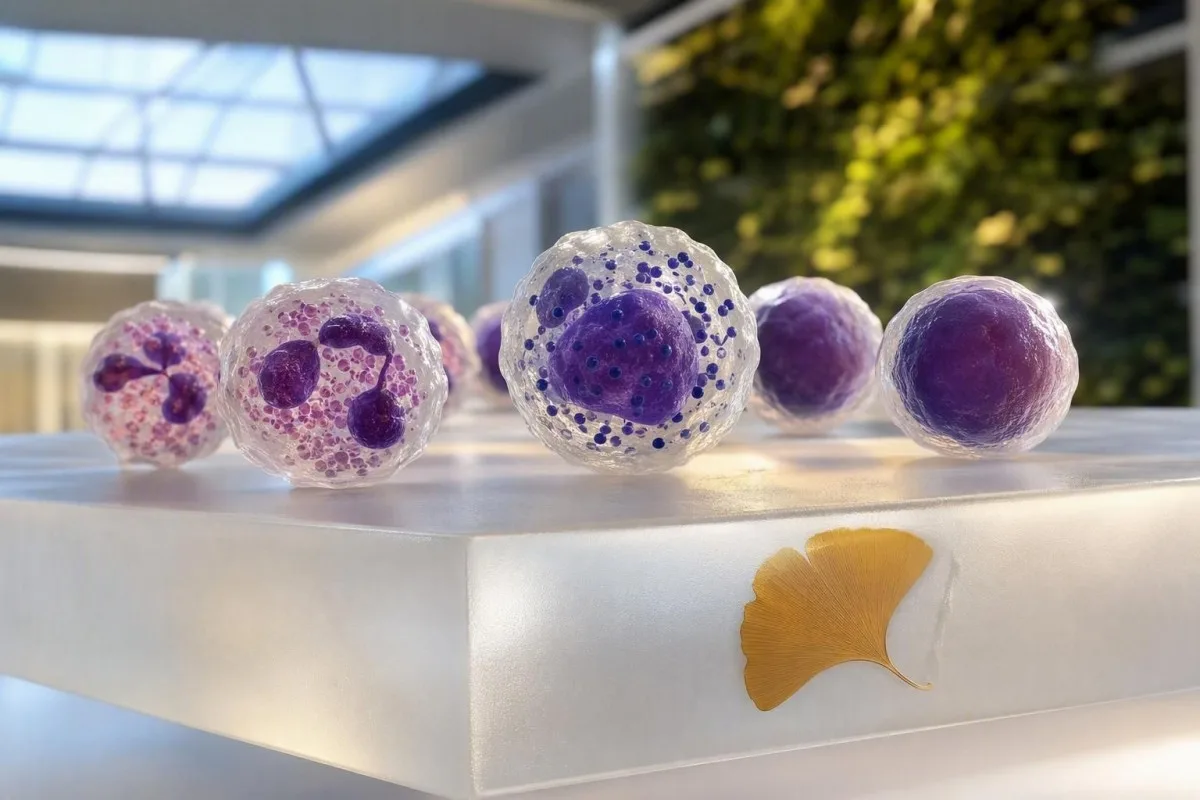
Əksər yetkinlərdə mütləq bazofillər 0,00–0,10 × 10⁹/l (0–100/µl) təşkil edir, faiz nisbəti isə adətən 0–1% olur. Bir qədər qeyri-adi faiz nisbəti tez-tez digər ağ qan hüceyrələrindəki dəyişiklikləri əks etdirir; mütləq bazofil sayı, adətən sonrakı müayinələri istiqamətləndirən nəticədir.


- Mütləq bazofillər yetkinlərdə adətən 0,00–0,10 × 10⁹/l (0–100/µl) olur və tək faiz nisbəti ilə müqayisədə klinik cəhətdən daha faydalıdır.
- Bazofil faizi adətən ağ qan hüceyrələrinin 0–1% hissəsini təşkil edir, lakin mütləq miqdarı normal qalarkən neytrofillər və ya limfositlər azaldıqda arta bilər.
- Uşaqlar körpəlikdən sonra tez-tez 0,10 × 10⁹/l praktik yuxarı həddindən istifadə edirlər, lakin laboratoriyanın yaşa uyğun normativi daha önəmlidir.
- Təkrar CBC 2-8 həftə ərzində allergiya, infeksiya və ya dərman dəyişikliyindən sonra izolyasiya olunmuş, yüngül bazofiliya üçün məqsədəuyğundur.
- Davamlı bazofiliya 0,20 × 10⁹/l-dən yuxarı, xüsusilə yüksək ağ qan hüceyrələri, anemiya, dalaq böyüməsi və ya konstitusional simptomlar olduqda həkim nəzarətini tələb edir.
- Təcili yoxlama Əhəmiyyətli leykositoz, açıqlanmayan kilo itkisi, şiddətli gecə tərləməsi, hərarət və ya sol qabırğaların altında erkən doluluq hissi üçün tələb olunur.
- Sıfır bazofil avtomatlaşdırılmış diferansialda təsadüf edilir və adətən heç bir klinik əhəmiyyəti yoxdur.
- Kantesti AI diaqnoz kimi bir bayrağa deyil, bazofilləri ümumi ağ qan hüceyrələri, eozinofillər, trombosit miqdarı, hemoqlobin və əvvəlki nəticələrlə yanaşı oxuyur.
Mütləq bazofillər və bazofil faiz nisbəti
0.00–0.10 × 10⁹/L mütləq bazofil miqdarı adətən böyüklərdə normaldır, halbuki bazofil faizi 0–1% yalnız ümumi ağ qan hüceyrələrinin sayının bir hissəsidir. İkisi razılaşmadıqda, klinisyenlər adətən mütləq nəticəyə daha çox əhəmiyyət verirlər.
Başqa bir ağ qan hüceyrəsi növü az olduğu üçün faiz yüksək görünə bilər. Məsələn, 1.5% bazofil miqdarı 3.0 × 10⁹/L ağ qan hüceyrəsi sayı ilə yalnız 0.045 × 10⁹/L mütləq miqdarı verir — bu, bir çox böyüklərin intervalları daxilindədir. Buna görə də, yalnız faiz bayrağı nadir hallarda bütün hekayəni izah edir.
Hesablama sadədir: ümumi ağ qan hüceyrələri × bazofil faizi ÷ 100. 12.0 × 10⁹/L ağ qan hüceyrəsi sayı və 2% bazofil miqdarı 0.24 × 10⁹/L verir, bu da həqiqi bir yüksəlmədir. Daha geniş kontekst üçün, fərqli bir hesabatın diferensial verdiyi hallarda faizləri klinik olaraq müqayisə oluna bilən mütləq miqdarlara çevirən CBC-nin nələri əhatə etdiyini.
Kantesti bir AI qan testi analizatoru təlimatımıza baxın. Mənim təcrübəmə görə, bu bir çevrilmə rutin tibbi müayinədən sonra bir çox lazımsız narahatlığı aradan qaldırır.
Niyə mütləq say daha sabitdir
Avtomatlaşdırılmış analizatorlar minlərlə hüceyrə hadisəsini sayır, lakin bazofillər adətən nadirdir — tez-tez 100 ağ qan hüceyrəsindən 1-dən azdır. Buna görə də, kiçik analitik və bioloji dəyişikliklər faizi mütləq miqdardan daha nəzərə çarpan şəkildə dəyişdirə bilər.
Yaşa görə praktiki bazofil normativ intervalları
Əksər laboratoriyalar uşaqlıqdan böyüklüyə qədər 0.00–0.10 × 10⁹/L mütləq bazofil istinad aralığından istifadə edirlər, lakin yeni doğulmuşların diapazonları daha geniş ola bilər. Öz nəticənizin yanında çap olunmuş intervaldan istifadə edin, çünki istinad hədləri analizator metodundan və laboratoriyanın yerli sağlam əhalisindən asılıdır.
Həyatın ilk həftələrində olan körpələr üçün bəzi uşaq laboratoriyaları təxminən 0.20–0.40 × 10⁹/L-ə qədər mütləq bazofilləri qəbul edir. Neonatal immun sistemi sürətlə uyğunlaşır, buna görə də uşaq şöbəsi rəyi olmadan böyüklərin kəsilmələri yeni doğulmuşun nəticəsinə tətbiq edilməməlidir.
Təxminən 1 yaşdan etibarən, bir çox xidmətlər 0.10 × 10⁹/L və ya 100/µL yaxınında praktik yuxarı hədd tətbiq edir. Normal ümumi ağ qan hüceyrəsi sayı olan sağlam uşaqda 0.11 × 10⁹/L nəticə adətən fövqəladə deyil, təkrar-və-kontekst sualıdır.
CLSI EP28-A3c laboratoriyaların universal diapazonu borc götürmək əvəzinə öz istinad intervallarını necə təyin etdiyini və ya yoxladığını izah edir (CLSI, 2010). Bizim neytrofil yaş diapazonu təlimatımız başqa bir diferensial sayım üçün eyni prinsipi göstərir.
Böyük Britaniya, ABŞ və beynəlxalq hesabatlardakı bazofil vahidlərinin anlaşılması
0.10 × 10⁹/l bazofil sayı 100/mkl-ə bərabərdir, buna görə də müxtəlif vahidlərdən istifadə edən hesabatlar eyni nəticəni təsvir edə bilər. Böyük Britaniya tam qan sayımları tez-tez ×10⁹/l olaraq bildirilir, ABŞ laboratoriyaları isə ümumiyyətlə hücre/mkl və ya K/mkl istifadə edir.
×10⁹/l-i hücre/mkl-ə çevirmək üçün 1000-ə vurğulayın. Beləliklə, 0.05 × 10⁹/l 50/mkl-ə bərabərdir; 0.25 × 10⁹/l 250/mkl-ə bərabərdir. 0.0 olaraq göstərilən bir hesabat, həqiqətən də heç bir bazofil olmadığını sübut etmək əvəzinə, onluq kəsrlə yuvarlaqlaşdırılmış ola bilər.
0.2 K/mkl olaraq göstərilən bir dəyər 0.20 × 10⁹/l-ə bərabərdir. Bu fərq vacibdir, çünki 0.2% və 0.2 K/mkl tamamilə fərqli ölçülərdir. Xəstələr iki ölkədən olan hesabatları müqayisə edərkən bunu mütəmadi olaraq qarışdırırlar.
Hesabatınız CBC əvəzinə FBC deyirsə, komponentlər böyük ölçüdə eynidir; bizim Böyük Britaniya tam qan sayı izahı ümumi terminologiyanı tərcümə edir.
Bazofil sayı niyə artır və ya azalır
Yüngül bazofiliya ən çox allergiya, xroniki iltihab, infeksiyadan sağalma və ya dərmanla əlaqəli immun dəyişikliyi ilə müşayiət olunur. Az sayda və ya sıfır bazofil adətən mənasızdır, çünki bu hüceyrələr çox kiçik miqdarda dövr edir.
Bazofillər IgE üçün reseptorlar daşıyır və allergenə məruz qaldıqdan sonra histamin və digər mediatorları sərbəst buraxa bilər. Mövsümi allergik rinit, xroniki ürtiker, astma və bəzi dəri xəstəlikləri kiçik bir artımla müşayiət oluna bilər, baxmayaraq ki, normal sayım heç birini təsdiqləmir və ya inkar etmir.
Hipotireoz, iltihablı bağırsaq xəstəliyi, revmatoid pozğunluqlar və bəzi xroniki infeksiyalar da bazofiliya ilə əlaqələndirilə bilər. Faydalı sual “bu xəstəliyə səbəb olur?” deyil, “başqa hansı siqnallar mövcuddur?”- CRP, eozinofillər, simptomlar, dərman tarixi və trayektoriya hamısı əhəmiyyətlidir.
Yüksəlmiş IgE və eozinofil sayı allergik patterni dəstəkləyə bilər, tək qaşınma isə daha geniş bir tədqiqat tələb edə bilər; bizim məqaləmiz qaşınan dəri üçün qan testləri CBC testinin praktiki limitlərini izah edir.
Bazofillər üçün CBC-ni nə vaxt təkrarlamalı?
Müvəqqəti tətikdən sonra yüngül, tək bazofil yüksəlməsindən sonra, siz özünüzü yaxşı hiss edirsinizsə və sayımın qalan hissəsi təsəllivericidirsə, 2–8 həftə ərzində CBC-ni təkrarlayın. Ümumi ağ qan hüceyrələri artırsa və ya bir neçə anormal hüceyrə xətti varsa, daha tez, adətən günlərlə, 2 həftə ərzində təkrarlayın.
Soyuqdəymə, saman burun axması, peyvənd və ya qısa steroid kursundan sonra 0.11–0.20 × 10⁹/l mütləq bazofil sayı üçün, mən çox vaxt bir dəfə sakit təkrarlamağı bir sıra testlər aparmaqdan üstün tuturam. Eyni laboratoriyadan istifadə etməyə çalışın və son xəstəlik, yeni dərmanlar, siqaret dəyişiklikləri və steroidə məruz qalma barədə qeyd edin.
Yenidən testdən əvvəl sayımı “yaxşılaşdırmağa” cəhd etməyin. Maye qəbulu məqsədəuyğundur, lakin əlavələr, antihistaminiklər, kortikosteroidlər və intensiv davamlı məşqlər daha geniş fərqi dəyişə bilər. Bizim qan testi vaxt cədvəli ümumi vaxt təsirlərini təsvir edir.
Kantesti bir AI qan analizi nəticələrinin şərhi platforması mövcud fərqi əvvəlki CBC-lərlə müqayisə edir və təkrar qeydiyyatdan fərqli olaraq davamlı bir artımı qeyd edir. 3-6 ay ərzində bir tendensiya, bir onluq nöqtədən daha çox məlumat verici ola bilər.
Etibarlı bazofil təkrar analizi üçün necə hazırlaşmaq olar
Bazaofil testi adətən ac qalmağı tələb etmir, lakin təkrar CBC, kəskin xəstə olmadıqda və toplama şəraiti oxşar olduqda ən çox yozulur. Adi mayelər, adi yeməklər və adi bir gün üçün çalışın, ifrat dəyişikliklərdən uzaq durun.
Əgər əsas səviyyəni müəyyən etmək məqsədi güdürsə, qeyri-təcili yenidən test aparmaq üçün qızdırma, əhəmiyyətli allergik kəskinləşmə və ya qeyri-adi dərəcədə çətin davamlı tədbirdən sonrakı günü təyin etməkdən çəkinin. Kəskin stress hormonları və maye dəyişiklikləri bir neçə ağ qan hüceyrəsi alt dəstini saatlarla günlərlə hərəkət etdirə bilər.
Həkimə və ya flebotomistə sistemli kortikosteroidlər, litium, epinefrin ehtiva edən müalicələr, son bioloji müalicə və hər hansı yeni əlavə haqqında məlumat verin. Steroidlər daha çox sirkulyasiya edən bazaofilləri və eozinofilləri aşağı salır, buna görə də onları qəbul edərkən “normal” nəticə sizin müalicə olunmamış əsas səviyyənizi təmsil etməyə bilər.
Nümunənin keyfiyyəti hələ də vacibdir. Laxtalanmış EDTA nümunələri və gecikmiş təhlil avtomatlaşdırılmış fərqləri daha az etibarlı edə bilər; əgər bir neçə CBC dəyəri birlikdə qəribə görünürsə, nəzərdən keçirin yenidən nümunə götürmək lazım olduqda.
Yüksəlmiş bazofilləri daha əhəmiyyətli edən CBC nümunələri
Bazaofiliya, mütləq bazaofillər 0.20 × 10⁹/L-dən çox olduqda və 11.0 × 10⁹/L-dən yuxarı davamlı ağ qan hüceyrələri, anemiya, trombosit dəyişiklikləri və ya yetişməmiş hüceyrələrlə birlikdə baş verdikdə daha narahatdır. Tək bazaofillər deyil, bu kombinasiya həkimlərin nə qədər tez araşdırdığını müəyyən edir.
Mən baxdığım 44 yaşlı bir pasiyentin bazaofilləri 0.28 × 10⁹/L, ağ qan hüceyrələri 16.4 × 10⁹/L, trombositləri 610 × 10⁹/L idi və tez toxunma şikayəti vardı. Bu diaqnoz həftəiçi hematologiya ilə bağlı tədbirləri tələb edirdi; tək bazaofil nəticəsi diaqnoz qoymurdu, lakin bu, vacib bir ipucu idi.
Yüksək neytrofillər və dalaq simptomları ilə yanaşı bazaofiliya, mieloproliferativ neoplazmalarda, o cümlədən xroniki miyeloid leykozda baş verə bilər. European LeukemiaNet, klinik və qan sayımı modeli bu ehtimalı gücləndirdikdə molekulyar test və mütəxəssis qiymətləndirməsini tövsiyə edir (Hochhaus et al., 2020).
Periferik yaxma, analizator qeyri-müəyyənliyindən əsl fərq dəyişikliklərini ayırd edə bilər və "sol sürüşmə" və ya qeyri-adi hüceyrələri göstərə bilər. Haqqında daha çox oxuyun qan xərçəngi CBC yolları abnormal sayımın xərçəng demək olduğunu güman etmədən.
Təcili tibbi yardım tələb edən simptomlar və nəticələr
Qızdırma, şiddətli gecə tərləmələri, izah olunmamış kilo itkisi, yeni sıyrıqlar, nəfəs darlığı, şiddətli yorğunluq və ya sol-yuxarı qarın dolğunluğu ilə müşayiət olunan bazaofiliya üçün təcili tibbi yardım alın. Bu simptomlar yüngül dərəcədə yüksəlmiş bazaofil nəticəsinin özündən qaynaqlanmır; onlar geniş klinik mənzərənin qiymətləndirilməsini tələb etdiyini siqnal edir.
30 × 10⁹/L-dən yuxarı ümumi ağ qan sayımı, sürətlə artan dəyərlər və ya hesabatda görünən yetişməmiş qranulositlər sifariş verən həkimlə təcili müzakirə olunmalıdır. Şiddətli baş ağrısı, görmə dəyişikliyi, sinə ağrısı və ya nevroloji simptomlar, bazaofil sayından asılı olmayaraq təcili qiymətləndirmə tələb edir.
0.11–0.20 × 10⁹/L bazaofilləri olan və simptomları olmayan insanların əksəriyyəti təcili yardım almırlar. Hələ də, bu, kontekstin nömrədən daha çox əhəmiyyət kəsb etdiyi sahələrdən biridir, xüsusən də əvvəlki nəticələr 0.02 × 10⁹/L idisə və yeni sayım artırsa.
Əgər sizdə nəfəs darlığı və ya solğunluq da varsa, müşayiət olunan hemoglobin və trombosit dəyərləri daha dərhal əhəmiyyət kəsb edə bilər; bizim təngnəfəslik qan-testi bələdçimiz.
Az bazofil və ya sıfır nəticəsi nə deməkdir
0.00 × 10⁹/L bazaofil nəticəsi adətən normaldır və nadir hallarda öz-özünə təkrarlanma tələb edir. Bazofillər dövriyyədə təbii olaraq az olduğu üçün analizatorun hesabat həddindən aşağı ola bilər.
Kəskin stress, infeksiya, hamiləlik, hiperterioz və kortikosteroid müalicəsi dövriyyədəki bazofilləri müvəqqəti azalda bilər. Lakin, klinik əhəmiyyətli neytropeniyadan fərqli olaraq, təcrid olunmuş aşağı bazofillərin səbəb olduğu tanınmış simptom sindromu yoxdur.
Analitik məsələni qaçırmaq asandır: əgər yalnız bir neçə bazofil sayılarsa, adi nümunə dəyişkənliyi növbəti nümunə götürmədə 0.01 × 10⁹/L-i 0.00 × 10⁹/L-ə çevirə bilər. Bu mütləq bioloji dəyişiklik deyil.
Dr. Tomas Kleyndən praktiki məsləhət: CBC-nin qalan hissəsi yaxşıdırsa və müvafiq simptomlar yoxdursa, aşağı bazofil bayrağını (flag) görməzdən gəlin. Bizim xüsusi bələdçimiz izah edir sıfırda bazofillər.
Hamiləlikdə və sonrakı həyatda bazofillər
Hamiləlik və yaşlanmanın vahid xüsusi bazofil kəsilmə nöqtəsi yoxdur; hesabat verən laboratoriyanın intervalı və ağ qan hüceyrələrinin tam nümunəsi ən yaxşı istinad olaraq qalır. Hamiləlik adətən neytrofillər vasitəsilə ümumi ağ qan hüceyrələrini artırır, bu da həqiqi bazofil azalması olmadan bazofil faizinin aşağı görünməsinə səbəb ola bilər.
Hamiləlik dövründə 12–15 × 10⁹/L ümumi ağ qan hüceyrələrinin sayı fizioloji ola bilər, xüsusən də hamiləliyin sonrakı dövründə, buna görə də faizə əsaslanan yozum daha da etibarsız olur. Mütləq bazofil sayı üstünlük təşkil etməyə davam edir, lakin narahatlıq doğuran simptomlar hələ də istinad intervalını üstələyir.
Yaşlı yetkinlərdə 0.20 × 10⁹/L-dən yuxarı yeni davamlı bazofil sayı diqqətəlayiqdir, çünki dərman yükü və ilik pozğunluqları yaşla birlikdə daha çox yayılır. Bu diaqnostik etmir; bu sadəcə CBC trendinə və yaxma tədqiqinə baxmaq üçün həddi aşağı salır.
Hamiləliyə xas digər yozum tələləri üçün nəzərdən keçirin qan testi üçün qırmızı bayraqlarımız.
Dərmanlar, allergiyalar və bazofil dalğalanmaları
Allergik simptomlar yüngül yüksəlmiş bazofillərlə üst-üstə düşə bilər, sistemli kortikosteroidlər isə adətən bir neçə gün ərzində onları azaldır. Heç bir nümunə allergiyanın diaqnozunu təsdiqləmir və ya dərmanın məsuliyyət daşıdığını sübut etmir.
Antihistaminlər əsasən histamin reseptorlarını bloklayır; onlar bazofil sayını etibarlı şəkildə normallaşdırmır. Oral prednizolon və digər sistemli qlükokortikoidlər ağ qan hüceyrələrini yenidən paylaya bilər, tez-tez eozinofilləri və bazofilləri azaldaraq dövriyyədəki neytrofilləri artırır.
Litium daha az yaygın, lakin faydalı dərman ipucudur, çünki bu ağ qan hüceyrələrinin istehsalını artıra bilər. Biologiya dərmanları, kimyaterapiya və immunomodulyator müalicələr heç vaxt bir CBC nəticəsinə görə dayandırılmamalıdır—təyin edən komandadan nəticənin onların monitorinq planına necə uyğun gəldiyini soruşun.
Uçuq, qızartı, üz şişkinliyi və ya zəifliklə yanaşı yüksəlmiş bazofil sayı simptom problemi kimi idarə olunmalıdır, laboratoriya tapmacası kimi deyil. Bizim yüksək IgE bələdçisi allergik markerlərin harada kömək etdiyini və harada yanıldığını izah edir.
Davamlı bazofiliya hallarında həkimlər nə yoxlayırlar
Davamlı mütləq bazofiliya adətən təkrar CBC, manual yaxma tədqiqi, dərman və simptomların tədqiqi, sonra isə ümumi ağ qan hüceyrəsi sayı və ya digər hüceyrə xətləri anormaldırsa, hədəfli test aparılmasını tələb edir. Yüngül təcrid olunmuş artım üçün geniş xərçəng panelləri adi ilk addım deyil.
İlk qol qərar nöqtəsi nəticənin təcrid olunmuş olub-olmamasıdır. Sabit hemoglobin, trombositlər, ağ qan hüceyrələrinin sayı və normal yaxma mühafizəkar planı güclü şəkildə dəstəkləyir; anemiya, trombositoz, leykositoz və ya splenomeqaliya qiymətləndirməni başqa istiqamətə aparır.
Miyeloproliferativ pozğunluq mümkünsə, klinisistlər BCR::ABL1 testi, JAK2 testi, süd turşusu dehidrogenazı, urat və mütəxəssis rəyi istəyə bilərlər. Valent və həmkarları davamlı bazofiliyanı bazofil və mieloid neoplazmaların təsnifatında mənalı tapıntı kimi təsvir edirlər (Valent et al., 2022).
Kantesti-nin neyron şəbəkəsi nəzərdən keçirilməli olan kombinasiyaları müəyyən edir, lakin CBC-dən leykemiyanı diaqnoz etmir. Bizim tibbi validasiya yanaşmamız laboratoriya interpretasiyasının niyə kliniki nəzarəti qorumalı olduğunu izah edir.
Həddindən artıq reaksiya vermədən bazofilləri necə izləmək olar
Mənalı bazofil trendi, 0.04-dən 0.08 × 10⁹/L-ə qədər olan tək bir hərəkət deyil, müqayisə olunan CBC-lərdə davamlı istiqamətli dəyişiklikdir. Yetkinlər üçün 0.10 × 10⁹/L olan istinad həddi ilə, hər iki dəyər, rəqəmsal olaraq fərqli olmalarına baxmayaraq, diapazon daxilində qalır.
Mütləq saya, faizə, ümumi ağ qan hüceyrələrinə, neytrofillərə, eozinofillərə, hemoqlobine, trombositlere, tarixə, son xəstəliklere və hər bir nümunə götürülməsindən sonra dərmanlara qənaət edin. Bu kiçik qeyd sizin klinisistinə təcrid olunmuş qırmızı bayraqların ekran görüntülərindən daha çox istifadə olunan məlumat verir.
Kantesti bir Süni intellektlə işləyən qan testi analizi aləti 127+ ölkələrində CBC nəticələrini uzunmüddətli müqayisə etmək və eyni zamanda mənbə laboratoriyasının təyin etdiyi intervalı qorumaq üçün istifadə edilmişdir. Doktor Tomas Kleynd, sərhəddə olan differensial dəyişikliyə məna verməzdən əvvəl ən azı iki müqayisə olunan nəticəni nəzərdən keçirməyi tövsiyə edir.
Faydalı qayda: mütləq say 0.10 × 10⁹/L-dən aşağı qalırsa, ümumi ağ qan hüceyrələrinin sayı sabitdirsə və siz özünüzü yaxşı hiss edirsinizsə, növbəti planlaşdırılmış qan testinizdə adi təqib adətən kifayətdir. Bizim qan analizi fərqi bələdçimiz istifadə edin həqiqi bir dəyişikliyi mühakimə etmək üçün.
Təkrar müayinə görüşündə veriləcək suallar
Ən yaxşı təqib sualı “Mənim mütləq bazofil sayım nədir və CBC-də başqa nə dəyişdi?” Bu ifadə söhbəti əslində klinik riski dəyişdirən dəyişkənlərə yönəldir.
Sayın yeni, davamlı, artan və ya reaktiv olub olmadığını; yaxma nəzərdən keçirməsinin lazım olub-olmadığını və növbəti CBC-nin nə vaxt götürülməli olduğunu soruşun. Son infeksiyalar, allergiya simptomları, dərmanlar, əlavələr, səyahətlər və qan xəstəlikləri ailə tarixinin siyahısını gətirin.
Ümumi ağ qan hüceyrələrinin yüksək olması ilə birlikdə mütləq sayınız 0.20 × 10⁹/L-dən yuxarıdırsa, hematologiya inputunun uyğun olub-olmadığını soruşun. Say yalnız diapazondan biraz yuxarı və təcrid olunmuşsa, ən pis halı güman etmək əvəzinə daha erkən test aparmağı tetikleyecek nə dəyişikliyi soruşun.
Kantesti-nin həkim tərəfindən nəzərdən keçirilmiş təhsil standartları bizim tərəfimizdən Tibbi Məsləhət Şurası. tərəfindən idarə olunur. 30 Avqust 2026-cı il tarixinə qədər ən təhlükəsiz yanaşma sadə qalır: mütləq sayı şərh etmək, davamlılığı təsdiqləmək və yalnız daha geniş naxış tələb etdikdə daha sürətli hərəkət etmək.
Tez-tez verilən suallar
Böyüklərdə normal bazofil sayı nə qədərdir?
Mütləq bazofillər üçün ümumi yetkin istinad intervalı 0,00–0,10 × 10⁹/L-dir, bu da 0–100 hüceyrə/µL-ə bərabərdir. Əksər laboratoriyalar 0–11% bazofil faizi hesabat verir, baxmayaraq ki, ümumi ağ qan hüceyrələrinin sayı dəyişdikdə faiz yanıldıcı ola bilər. Öz laboratoriyanızın çap etdiyi istinad intervalı üstünlük təşkil edir, çünki üsullar və yerli istinad populyasiyaları fərqlənir. 0,11 × 10⁹/L-lik təcrid olunmuş bir nəticə, təcili tibbi yardım əvəzinə, adətən kontekst və ya planlaşdırılmış təkrara layiqdir.
2% bazofilləri yüksəkdirmi?
Leykositlərin ümumi sayı nəzərə alınmadan, 2%-lik bazofil faizi bir çox laboratoriya intervalından yuxarıdır, lakin bu, riskin qiymətləndirilməsi üçün kifayət deyil. Leykositlərin sayı 4.0 × 10⁹/L olduqda, 2% 0.08 × 10⁹/L mütləq bazofil sayına bərabərdir ki, bu da adətən normaldır. Leykositlərin sayı 15.0 × 10⁹/L olduqda, eyni 2% 0.30 × 10⁹/L-ə bərabərdir və klinik baxış tələb edir. Faizi yozmazdan əvvəl həmişə mütləq bazofil sayını müəyyən edin.
Yüksək bazofillər üçün CBC-ni nə vaxt təkrarlamalıyam?
Xəstəlik, allergiya güclənməsi və ya dərman dəyişikliyindən sonra 0.11–0.20 × 10⁹/L civarında olan yüngül, təcrid olunmuş bazofiliya üçün 2–8 həftə ərzində CBC-nin təkrar edilməsi məqbuldur. Tam ağ qan hüceyrələrinin sayı artdıqda, bazofillərin sayı 0.20 × 10⁹/L-dən yuxarı olduqda və ya hemoglobin və trombositlər də qeyri-normal olduqda daha tez təkrarlayın. Analizator üsulları və istinad intervalları fərqləndiyi üçün mümkün olduqda eyni laboratoriyadan istifadə edin. Qızdırma, arıqlama, gecə təri, sıyrıqlar və ya sol qarın yuxarı hissəsində doluluq, rutin təkrar testi gözləmək əvəzinə təcili tibbi müayinə tələb edir.
Bazofillər təhlükəlidirmı?
0,00 × 10⁹/L bazofill sayının olması adətən təhlükəli deyil və CBC-nin qalan hissəsi normalse ümumiyyətlə heç bir əlavə müayinə tələb etmir. Bazofilllər nadir hüceyrələrdir, buna görə də adi avtomatlaşdırılmış diferensial analizdə sıfır göstərilə bilər, çünki aşkar edilmiş say yuvarlaqlaşdırma və ya hesabat dəqiqliyinin altında düşür. Kortikosteroidlər, kəskin stress, hamiləlik və infeksiyalar dövran edən bazofilləri müvəqqəti olaraq azalda bilər. Klinisyenlər təcrid olunmuş aşağı bazofillərdən immun çatışmazlığını diaqnoz etmirlər.
Aşıqlar yüksək bazofillərə səbəb ola bilərmi?
Allergiya ilə əlaqəli vəziyyətlər yüngül dərəcədə yüksəlmiş bazofillərlə üst-üstə düşə bilər, çünki bazofillər IgE ilə əlaqəli immun cavablarda iştirak edir və histamin kimi mediatorlar buraxırlar. Yüksək bazofil sayı allergiyanın səbəb olduğunu sübut etmir və əhəmiyyətli allergiya simptomları olan bir çox insanda normal bazofil sayı olur. Allergiya simptomları sakitləşdikdən sonra davam edən 0,20 × 10⁹/L-dən yuxarı sayımlar bütün CBC ilə birlikdə nəzərdən keçirilməlidir. Eozinofillər, ümumi IgE, dəri simptomları və dərman qəbulu daha faydalı məlumat verə bilər.
Lökemiya üçün basofil sayı nə qədərdir?
Leykemiya diaqnozunu yalnız bir bazofil sayı ilə qoymaq olmaz, lakin 0,20 × 10⁹/L-dən yuxarı davamlı mütləq bazofiliya, leykositoz, anemiya, trombosit anormallıqları, qranulositoz və ya dalaq simptomları ilə birlikdə tibbi müayinə tələb etməlidir. Bazofiliya xroniki miyeloid leykemiya və digər mieloproliferativ neoplazmalarda baş verə bilər, lakin yüngül, təcrid olunmuş yüksəlmələr üçün reaktiv səbəblər daha yaygındır. Həkimlər yalnız daha geniş bir nümunə bunu dəstəkləyərsə, smear və BCR::ABL1 kimi hədəfli molekulyar testlər sifariş edə bilərlər. Normal ümumi ağ qan hüceyrəsi sayı və stabil CBC narahatlıq səviyyəsini əhəmiyyətli dərəcədə dəyişdirir.
Bu gün AI ilə gücləndirilmiş qan analizi nəticələrinin şərhini əldə edin
Ani və dəqiq laborator analiz şərhinə güvənən dünya üzrə 2 milyondan çox istifadəçiyə qoşulun. Qan analizinin nəticələrini yükləyin və bir neçə saniyəyə 15,000+ biomarkerlərinin hərtərəfli şərhini alın.
📚 İstinad edilən tədqiqat nəşrləri
Klein, T., Mitchell, S., & Weber, H. (2026). B mənfi qan qrupu, LDH qan testi və retikulosit sayımı bələdçisi. Kantesti AI Tibbi Tədqiqatlar.
Klein, T., Mitchell, S., & Weber, H. (2026). Orucdan Sonra İshal, Nəcisdə Qara Ləkələr və Mədə-bağırsaq Təlimatı 2026. Kantesti AI Tibbi Tədqiqatlar.
📖 Xarici Tibbi İstinadlar
Klinik və Laborator Standartlar İnstitutu (2010). Klinik Laboratoriyada İstinad İntervallerinin Təyin Edilməsi, Qurulması və Təsdiqlənməsi. CLSI EP28-A3c.
⚕️ Tibbi Məsuliyyətdən İmtina
Bu məqalə yalnız təhsil məqsədlidir və tibbi məsləhət təşkil etmir. Diaqnoz və müalicə qərarları üçün həmişə ixtisaslı səhiyyə işçisi ilə məsləhətləşin.
E-E-A-T Etibar Siqnalları
Təcrübə
Həkim rəhbərliyi ilə laborator şərh iş axınlarının klinik icmalı.
Ekspertiza
Biomarkerlərin klinik kontekstdə necə davrandığına dair laboratoriya təbabəti diqqəti.
Səlahiyyətlilik
Dr. Thomas Klein tərəfindən yazılıb; Dr. Sarah Mitchell və Prof. Dr. Hans Weber tərəfindən nəzərdən keçirilib.
Etibarlılıq
Aydın izləmə yolları ilə həyəcanı azaltmağa yönəlmiş sübuta əsaslanan şərh.