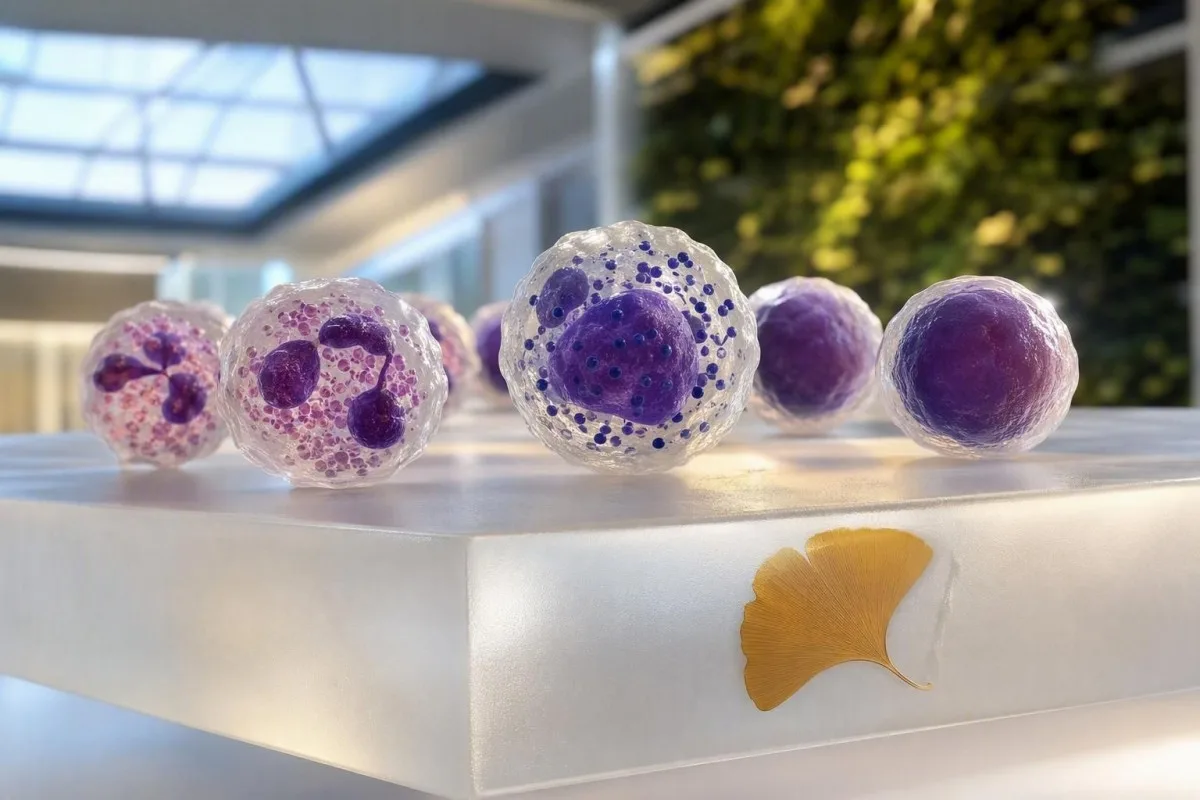
Kadaghanan sa mga hamtong adunay absolute basophils nga 0.00–0.10 × 10⁹/L (0–100/µL), samtang ang porsyento kasagaran 0–1%. Ang gamay nga dili kasagaran nga porsyento sagad nagpakita og mga kausaban sa ubang mga white cells; ang absolute basophil count mao ang resulta nga kasagarang naggiya sa follow-up.


- Absolute basophils kasagaran 0.00–0.10 × 10⁹/L (0–100/µL) sa mga hamtong ug mas klinikal nga mapuslanon kaysa sa usa ka porsyento lamang.
- Porsiyento sa basophil kasagaran 0–1% sa mga white cells, apan kini mahimong motaas kung ang neutrophils o lymphocytes momenos bisan kung normal ang absolute count.
- Mga bata kasagaran naggamit sa parehas nga praktikal nga taas nga limitasyon nga 0.10 × 10⁹/L pagkahuman sa pagkabata, apan ang interval sa laboratoryo nga piho sa edad maoy prayoridad.
- Usa ka balik-balik nga CBC sa 2–8 ka semana makatarunganon alang sa nahilit, malumo nga basophilia human sa alerdyi, impeksyon, o pagbag-o sa tambal.
- Padayon nga basophilia labaw sa 0.20 × 10⁹/L nagkinahanglan og pagsusi sa clinician, labi na sa taas nga mga white cells, anemia, splenomegaly, o mga sintomas sa konstitusyon.
- dali nga pagrepaso gikinahanglan alang sa dakong leukocytosis, wala'y katin-awan nga pagkawala sa timbang, pagpasingot sa gabii, hilanat, o sayo nga pagkapuno sa ilawom sa wala nga mga gusok.
- Zero basophils sa usa ka automated differential kay kasagaran ug kasagaran walay klinikal nga kahulogan.
- Kantesti AI nagbasa og basophils kauban ang kinatibuk-ang puti nga mga selula, eosinophils, ihap sa platelet, haemoglobin, ug kaniadto nga mga resulta kaysa pagtratar sa usa ka bandila ingon usa ka pagdayagnos.
Absolute basophils kumpara sa basophil percentage
Ang absoluto nga basophils nga 0.00–0.10 × 10⁹/L kasagaran normal sa mga hamtong, samtang ang porsyento sa basophil nga 0–1% usa lamang ka bahin sa kinatibuk-ang ihop sa puti nga selula. Kung ang duha dili magkauyon, ang mga clinician kasagaran maghatag ug dugang gibug-aton sa absolutong resulta.
Ang usa ka porsyento mahimong tan-awon nga taas tungod kay ang lain nga matang sa puti nga selula ubos. Pananglitan, 1.5% basophils nga adunay ihop sa puti nga dugo nga 3.0 × 10⁹/L naghatag ug absolutong ihop nga 0.045 × 10⁹/L lamang—naa sa sulod sa daghang mga agwat sa hamtong. Mao kini ang hinungdan nga ang usa ka porsyento nga bandila mag-inusara panagsa ra magsulti sa tibuuk nga istorya.
Ang kalkulasyon direkta: kinatibuk-ang puti nga selula × porsyento sa basophil ÷ 100. Ang ihop sa puti nga 12.0 × 10⁹/L ug basophils nga 2% naghatag ug 0.24 × 10⁹/L, nga usa ka tinuod nga pagsaka. Alang sa mas lapad nga konteksto, tan-awa ang among giya sa unsay naa sa CBC.
Si Kantesti usa ka AI blood test analyzer nga nag-convert sa mga porsyento ngadto sa mga absolutong ihop nga comparable sa klinikal kung ang tinubdan nga report naghatag ug differential. Sa akong kasinatian, kana nga usa ka pagkakabig makapugong sa daghang dili kinahanglan nga alarma human sa usa ka routine health check.
Ngano nga ang absolutong numero mas lig-on
Ang mga automated analyzer nag-ihop ug liboan ka mga panghitabo sa selula, apan ang mga basophil kasagaran talagsa ra—kasagaran ubos sa 1 sa 100 ka puti nga selula. Ang gagmay nga mga pagbag-o sa analitikal ug biyolohikal, busa, mahimong makalihok sa porsyento nga mas mamatikdan kaysa sa absolutong ihop.
Praktikal nga basophil reference intervals sumala sa edad
Kadaghanan sa mga laboratoryo naggamit ug absolutong basophil reference interval nga 0.00–0.10 × 10⁹/L gikan sa pagkabata hangtod sa pagkahamtong, apan ang mga sakup sa bag-ong natawo mahimong mas lapad. Gamita ang agwat nga gipatik tapad sa imong kaugalingon nga resulta, tungod kay ang mga limitasyon sa reperensiya nagdepende sa pamaagi sa analyser ug sa lokal nga himsog nga populasyon sa laboratoryo.
Alang sa mga masuso sa unang mga semana sa kinabuhi, ang pipila ka mga laboratoryo sa pediatric modawat ug absolutong basophils hangtod sa mga 0.20–0.40 × 10⁹/L. Ang immune system sa neonate paspas nga nagpahiangay, mao nga ang mga adult cutoffs dili angay ipahamtang sa resulta sa bag-ong natawo nga walay input sa pediatric.
Gikan sa mga 1 tuig pataas, daghang mga serbisyo ang naggamit ug praktikal nga taas nga limitasyon duol sa 0.10 × 10⁹/L, o 100/µL. Ang resulta nga 0.11 × 10⁹/L sa usa ka himsog nga bata nga adunay normal nga kinatibuk-ang ihop sa puti nga selula kasagaran usa ka pangutana bahin sa pag-usab ug konteksto, dili usa ka emerhensya.
Ang CLSI EP28-A3c nagpatin-aw ngano nga ang mga laboratoryo nagtukod o nagpamatuod sa ilang kaugalingong mga sakup sa reperensiya kaysa paghulam ug unibersal nga sakup (CLSI, 2010). Ang among giya sa sakup sa edad sa neutrophil nagpakita sa samang prinsipyo alang sa laing differential count.
Pagsabot sa basophil units sa UK, US ug internasyonal nga mga report
Ang gidaghanon sa basophil nga 0.10 × 10⁹/L katumbas sa 100/µL, busa ang mga taho nga naggamit og lain-laing mga yunit mahimong maghulagway sa samang resulta. Ang UK full blood counts sagad magreport og ×10⁹/L, samtang ang mga laboratoryo sa US sagad mogamit og cells/µL o K/µL.
Aron ma-convert ang ×10⁹/L ngadto sa cells/µL, i-multiply og 1,000. Busa ang 0.05 × 10⁹/L katumbas sa 50/µL; ang 0.25 × 10⁹/L katumbas sa 250/µL. Ang taho nga nagpakita og 0.0 mahimong i-round sa usa ka decimal nga dapit kaysa nagpamatuod nga literal nga walay mga basophil.
Ang kantidad nga nalista isip 0.2 K/µL katumbas sa 0.20 × 10⁹/L. Kana nga kalainan importante kay ang 0.2% ug 0.2 K/µL managlahi gayud nga mga pagsukod. Ang mga pasyente sagad maglibog niini kon magtandi og mga taho gikan sa duha ka nasod.
Kon ang imong taho nag-ingon og FBC imbes nga CBC, ang mga sangkap halos pareho ra; ang among UK bug-os nga pag-ihap sa dugo nga tigpatin-aw naghubad sa sagad nga terminolohiya.
Ngano nga motaas o momenos ang basophil counts
Ang mild basophilia kasagaran nag-uban sa allergy, chronic inflammation, pagkaayo gikan sa impeksyon, o usa ka pagbalhin sa immune nga may kalabotan sa tambal. Ang ubos nga gidaghanon o walay basophils kasagaran dili makahuluganon kay kining mga selula naglibot sa gamay kaayong gidaghanon.
Ang mga basophil adunay mga receptor alang sa IgE ug makapagawas ug histamine ug uban pang mga tigpataliwala human sa pagkaladlad sa allergen. Ang seasonal allergic rhinitis, chronic urticaria, hika, ug pipila ka mga sakit sa panit mahimong mag-uban sa gamayng pagsaka, bisan pa kon ang normal nga gidaghanon dili makapamatuod o makapanghimakak niini.
Ang hypothyroidism, inflammatory bowel disease, rheumatoid disorders, ug pipila ka chronic infections mahimo usab nga may kalabotan sa basophilia. Ang mapuslanong pangutana dili “unsa nga sakit ang hinungdan niini?” kondili “unsa ang ubang mga signal nga anaa?”—ang CRP, eosinophils, mga sintomas, kasaysayan sa tambal, ug ang dagan tanan importante.
Ang taas nga IgE ug eosinophil count makasuporta sa usa ka allergic pattern, samtang ang isolated nga kati mahimong magkinahanglan og mas lapad nga pagrepaso; ang among artikulo sa mga pagsulay sa dugo alang sa makati nga panit nagpasabot sa praktikal nga mga limitasyon sa CBC testing.
Kanus-a nimo kinahanglan nga sublion ang CBC alang sa mga basophils?
Balikon ang CBC sa 2–8 ka semana alang sa mild, isolated nga pagsaka sa basophil human sa temporaryong hinungdan, basta maayo ang imong gibati ug ang nahabilin sa gidaghanon makapadasig. Balikon dayon, kasagaran sulod sa mga adlaw hangtod sa 2 ka semana, kung ang kinatibuk-ang puti nga mga selula nagkataas o adunay daghang abnormal nga mga linya sa selula.
Alang sa usa ka absolute basophil count nga 0.11–0.20 × 10⁹/L human sa sipon, pag-ulbo sa hilanat, pagbakuna, o mubo nga kurso sa steroid, ako kasagarang gusto og usa ka kalmado nga pag-usab kaysa usa ka sunod-sunod nga pagsulay. Sulayi nga gamiton ang samang laboratoryo, ug itala ang bag-o nga sakit, bag-ong mga tambal, kausaban sa pagpanigarilyo, ug pagkaladlad sa steroid.
Ayaw pagsulay sa “pagpauswag” sa gidaghanon sa dili pa ang pag-usab. Ang hydration makatarunganon, apan ang mga suplemento, antihistamines, corticosteroids, ug grabe nga endurance exercise mahimong mag-usab sa mas lapad nga differential. Ang among giya sa timeline sa pagsusi sa dugo mga detalye sa sagad nga epekto sa oras.
Si Kantesti usa ka AI pagsabot sa resulta sa blood test platform nga nagtandi sa karon nga kalainan sa nangaging CBCs ug nag-flag sa makanunayon nga pagsaka nga lahi sa usa ka higayon nga bandera. Ang usa ka uso sa 3–6 ka bulan kasagaran mas naghatag og impormasyon kaysa usa ka punto sa desimal.
Unsaon pag-andam alang sa usa ka kasaligang basophil retest
Ang pagsulay sa basophil kasagaran dili magkinahanglan og pagpuasa, apan ang usa ka balik nga CBC labing masabtan kung ikaw dili masakiton ug ang mga kondisyon sa pagkolekta parehas. Tumong alang sa normal nga mga likido, ordinaryo nga mga pagkaon, ug usa ka naandan nga adlaw kaysa sa grabe nga mga pagbag-o.
Likayi ang pag-iskedyul sa usa ka dili dinalian nga pag-usab sa panahon sa hilanat, grabe nga allergic flare, o sa adlaw human sa usa ka dili kasagaran nga lisud nga endurance event kung ang tumong mao ang pagtukod sa baseline. Ang mga hormone sa acute stress ug fluid shifts mahimong makalihok sa daghang white-cell subsets sulod sa mga oras hangtod sa mga adlaw.
Sultihi ang clinician o phlebotomist bahin sa systemic corticosteroids, lithium, mga pagtambal nga adunay epinephrine, bag-o nga biologic therapy, ug bisan unsang bag-ong supplement. Ang mga steroid mas sagad makapamenos sa naglibot nga basophils ug eosinophils, busa ang usa ka “normal” nga resulta samtang kini ginainom mahimong dili magrepresentar sa imong wala matambalan nga baseline.
Ang kalidad sa sample importante pa. Ang mga clotted EDTA sample ug naantala nga pagtuki mahimong maghimo sa automated differentials nga dili kaayo kasaligan; kung daghang CBC values ang tan-awon nga katingad-an nga magkauban, repasoha kung kanus-a gikinahanglan ang pag-redraw.
Mga pattern sa CBC nga naghimo sa taas nga mga basophils nga mas importante
Ang basophilia mas makahasol kung ang absolute basophils molapas sa 0.20 × 10⁹/L ug mahitabo uban ang makanunayon nga white blood cells nga labaw sa 11.0 × 10⁹/L, anemia, mga pagbag-o sa platelet, o mga immatur nga selula. Ang kombinasyon—dili lamang ang basophils—ang magdeterminar kung unsa ka paspas ang pagsusi sa mga clinician.
Usa ka 44-anyos nga akong gi-review adunay basophils nga 0.28 × 10⁹/L, white cells nga 16.4 × 10⁹/L, platelets nga 610 × 10⁹/L, ug sayo nga pagkabusog. Kana nga pattern nagkinahanglan og same-week haematology pathway; ang indibidwal nga basophil result wala maghimo sa diagnosis, apan kini usa ka importante nga clue.
Ang basophilia kauban ang taas nga neutrophils ug splenic symptoms mahimong mahitabo sa myeloproliferative neoplasms, lakip ang chronic myeloid leukaemia. Ang European LeukemiaNet nagtambag sa molecular testing ug specialist assessment kung ang clinical ug blood-count pattern nagpataas sa posibilidad (Hochhaus et al., 2020).
Ang usa ka peripheral smear makahimo sa pag-ila sa tinuod nga differential changes gikan sa analyser uncertainty ug mahimong magpakita sa left shift o atypical cells. Basaha ang dugang mahitungod sa mga agianan sa CBC sa kanser sa dugo sa walay pag-ingon nga ang dili normal nga ihap nagpasabot ug kanser.
Mga sintomas ug resulta nga nanginahanglan og dinalian nga medikal nga atensyon
Mangayo ug dinalian nga medikal nga assessment alang sa basophilia nga adunay hilanat, nagbasa-basa nga singot sa gabii, wala mabati nga pagkawala sa timbang, bag-o nga pagpabago, kakulang sa gininhawa, grabe nga kakapoy, o kasakit sa wala nga bahin sa tiyan. Kining mga sintomas dili resulta sa gamay nga taas nga basophil result mismo; nagpaila kini nga ang mas lapad nga klinikal nga hulagway nagkinahanglan og assessment.
Ang total white count nga labaw sa 30 × 10⁹/L, paspas nga pagtaas sa mga balor, o makita nga immature granulocytes sa usa ka report kinahanglan nga hisgutan dayon sa nag-order nga clinician. Ang grabeng sakit sa ulo, pagbag-o sa panan-aw, kasakit sa dughan, o neurological symptoms nagkinahanglan og emergency evaluation bisan unsa ang basophil count.
Kadaghanan sa mga tawo nga adunay 0.11–0.20 × 10⁹/L basophils ug walay sintomas dili magkinahanglan og emergency care. Bisan pa, kini usa sa mga lugar diin ang konteksto mas importante kaysa numero, ilabi na kung ang nangaging mga resulta mao ang 0.02 × 10⁹/L ug ang bag-ong ihap nagtaas.
Kung ikaw usab adunay kakulang sa gininhawa o kaputla, ang kaubang haemoglobin ug platelet values mahimong mas importante dayon; tan-awa ang among giya sa blood-test alang sa kalisod sa pagginhawa.
Unsay gipasabot sa ubos nga basophils o resulta nga zero
Ang basophil result nga 0.00 × 10⁹/L kasagaran normal ug panagsa ra magkinahanglan og pag-usab sa kaugalingon niini. Ang mga basophils mahimong ubos sa reporting threshold sa analyser tungod kay sila natural nga talagsaon sa sirkulasyon.
Ang mahait nga stress, impeksyon, pagmabdos, hyperthyroidism, ug pagtambal sa corticosteroid makapakunhod sa circulating basophils sa makadiyot. Apan walay nailang simtomas nga sindrom nga gipahinabo sa nag-inusara nga mubu nga basophils, dili sama sa clinically significant neutropenia.
Sayon ra palabyon ang isyu sa analitikal: kung pila ra ka basophils ang maihap, ang kasagaran nga kausaban sa sample mahimong ibalhin ang 0.01 × 10⁹/L ngadto sa 0.00 × 10⁹/L sa sunod nga pagkuha. Dili kana kinahanglan nga usa ka biolohikal nga pagbag-o.
Ang praktikal nga tambag ni Dr. Thomas Klein mao ang pagbalewala sa usa ka low-basophil flag kung ang nahabilin sa CBC maayo ug walay mga may kalabutan nga sintomas. Ang among dedikado nga giya nagpatin-aw basophils sa zero.
Mga basophils sa pagmabdos ug sa ulahi nga kinabuhi
Ang pagmabdos ug pagkatigulang walay usa ka espesyal nga basophil cutoff; ang pag-report sa laboratoryo interval ug ang tibuok white-cell pattern nagpabilin nga labing maayo nga reperensya. Ang pagmabdos kasagaran makapataas sa kinatibuk-ang white cells pinaagi sa neutrophils, nga mahimong maghimo sa basophil percentage nga morag mas ubos nga walay tinuod nga pagkunhod sa basophil.
Panahon sa pagmabdos, ang usa ka kinatibuk-ang puti nga gidaghanon nga 12–15 × 10⁹/L mahimong physiological, labi na sa ulahi nga bahin sa pagmabdos, mao nga ang interpretasyon nga gibase sa porsyento nahimong dili kaayo kasaligan. Ang usa ka absolute basophil count nagpabilin nga mas gusto, apan ang mga sintomas nga nakapabalaka nag-override pa sa usa ka reference interval.
Sa mas tigulang nga mga hamtong, ang usa ka bag-ong padayon nga basophil count nga labaw sa 0.20 × 10⁹/L nagkinahanglan og pagtagad tungod kay ang gidaghanon sa tambal ug mga sakit sa marrow nahimong mas komon sa edad. Dili kana makahimo niini nga diagnostic; kini nagpaubos lang sa threshold alang sa pagtan-aw sa CBC trend ug smear.
Alang sa uban pang mga sayop sa interpretasyon nga piho sa pagmabdos, ribyuha mga red flag sa blood test sa panahon sa pagbuntis.
Mga tambal, alerdyi ug mga pagbag-o sa basophil
Ang mga simtomas sa alerdyi mahimong magdungan sa gamay nga pagtaas sa basophils, samtang ang mga systemic corticosteroids kasagaran magpaubos niini sulod sa mga adlaw. Walay pattern nga nagpamatuod sa usa ka alerdyi nga diagnosis o nagpamatuod nga ang usa ka tambal ang responsable.
Ang mga antihistamine panguna nga nagbabag sa mga receptor sa histamine; dili sila kasaligan nga nagpalig-on sa basophil count. Ang oral prednisolone ug uban pang systemic glucocorticoids mahimong mag-apod-apod pag-usab sa white cells, kasagaran magpaubos sa eosinophils ug basophils samtang magpataas sa circulating neutrophils.
Ang Lithium usa ka dili kaayo komon apan mapuslanon nga timailhan sa tambal tungod kay kini makadugang sa produksyon sa white-cell. Ang mga biologic nga tambal, chemotherapy, ug mga pagtambal sa immune-modulating dili gyud kinahanglan ihunong tungod sa usa ka resulta sa CBC—pangutan-a ang team nga nagreseta kung giunsa ang resulta mohaum sa ilang plano sa pagmonitor.
Ang usa ka taas nga basophil count kauban ang wheeze, hives, paghubas sa nawong, o kahuyang kinahanglan nga dumalahon isip usa ka problema sa simtomas, dili usa ka problema sa laboratoryo. Ang among giya sa taas nga IgE nagpatin-aw kung diin makatabang ang mga marka sa alerdyi ug diin kini makapahisalaag.
Unsay susihon sa mga clinician human sa padayon nga basophilia
Ang padayon nga absolute basophilia kasagaran nag-aghat sa usa ka balik-balik nga CBC, manual smear review, tambal ug simtomas review, unya gipunting ang pagsulay kung ang kinatibuk-ang gidaghanon sa puti nga mga selula o uban pang mga linya sa selula dili normal. Ang mga lapad nga cancer panel dili ang kasagaran nga unang lakang alang sa gamay nga nag-inusara nga pagtaas.
Ang unang sanga nga punto mao kung ang resulta ba nag-inusara. Ang usa ka lig-on nga hemoglobin, platelets, gidaghanon sa puti nga selula, ug normal nga smear lig-ong nagsuporta sa usa ka konserbatibo nga plano; anemia, thrombocytosis, leukocytosis, o splenomegaly nagduso sa assessment sa laing direksyon.
Sa diha nga ang usa ka myeloproliferative disorder mahimong posible, ang mga clinician mahimong mangayo og BCR::ABL1 testing, JAK2 testing, lactate dehydrogenase, urate, ug specialist review. Si Valent et al. naghulagway sa padayon nga basophilia ingon usa ka makahuluganon nga nadiskobrehan sa klasipikasyon sa basophilic ug myeloid neoplasms (Valent et al., 2022).
Ang neural network sa Kantesti makaila sa mga kombinasyon nga angay ribyuhon apan dili mag-diagnose og leukemia gikan sa usa ka CBC. Ang among pamaagi sa balidasyon sa medisina nagpatin-aw nganong ang interpretasyon sa laboratoryo kinahanglan magpabilin sa pagdumala sa klinikal.
Unsaon pagsubay sa mga basophils nga dili mag-overreact
Ang usa ka makahuluganon nga trend sa basophil mao ang makanunayon nga direksyonal nga pagbag-o sa taliwala sa mga comparable CBC, dili usa ka bugtong paglihok gikan sa 0.04 ngadto sa 0.08 × 10⁹/L. Uban sa adult reference limit nga 0.10 × 10⁹/L, ang duha ka mga bili nagpabilin sa sulod sa sakup bisan pa sa numerikal nga kalainan.
I-save ang absolute count, porsyento, kinatibuk-ang puti nga mga selula, neutrophils, eosinophils, haemoglobin, platelets, petsa, bag-o nga sakit, ug mga tambal human sa matag pagkuha. Kining gamay nga rekord naghatag sa imong clinician og mas magamit nga impormasyon kaysa mga screenshot sa nahilit nga mga pula nga bandila.
Si Kantesti usa ka AI-powered blood test analysis tool gigamit sa 127+ nga mga nasud sa pagtandi sa mga resulta sa CBC sa pagtuon samtang gipreserbar ang gipahayag nga interval sa laboratoryo sa gigikanan. Si Dr. Thomas Klein nagrekomendar sa pagrepaso sa labing menos duha ka comparable nga mga resulta sa dili pa maghatag og kahulugan sa usa ka borderline differential change.
Usa ka mapuslanon nga lagda: kung ang absolute count magpabilin ubos sa 0.10 × 10⁹/L, ang kinatibuk-ang gidaghanon sa puti nga mga selula lig-on, ug maayo ang imong pamati, ang rutina nga follow-up sa imong sunod nga giplano nga pagsulay sa dugo kasagaran igo na. Gamita ang among giya sa kalainan sa pagsulay sa dugo sa paghukom kung ang usa ka pagbag-o lagmit tinuod.
Mga pangutana nga ipangutana sa follow-up appointment
Ang labing maayo nga follow-up nga pangutana mao ang “Unsa ang akong absolute basophil count, ug unsa pa ang nabag-o sa CBC?” Kana nga pagkasulti nagdirekta sa panag-istoryahanay ngadto sa mga variable nga aktuwal nga nag-usab sa klinikal nga peligro.
Pangutan-a kung ang ihap bag-o, makanunayon, nagtaas, o lagmit reaktibo; kung gikinahanglan ang smear review; ug kanus-a ang sunod nga CBC kinahanglan kuhaon. Pagdala ug listahan sa bag-o nga mga impeksyon, mga sintomas sa alerdyi, mga tambal, mga suplemento, pagbiyahe, ug kasaysayan sa pamilya sa mga sakit sa dugo.
Kung ikaw adunay absolute count nga labaw sa 0.20 × 10⁹/L dugang sa taas nga kinatibuk-ang puti nga mga selula, pangutan-a kung ang input sa hematology angay. Kung ang ihap gamay ra nga labaw sa sakup ug nahilit, pangutan-a kung unsa nga pagbag-o ang makapahinabog mas sayo nga pagsulay kaysa paghunahuna sa pinakagrabe.
Ang mga sumbanan sa edukasyon nga gi-review sa doktor sa Kantesti giatiman pinaagi sa among Lupon sa Medikal nga Magtatambag. Sukad sa Agosto 30, 2026, ang labing luwas nga pamaagi nagpabilin nga yano: interpretaha ang absolute count, kumpirmahon ang pagkamakanunayon, ug mas paspas nga molihok lamang kung ang mas lapad nga sumbanan naghatag niini og katarungan.
Kanunay nga Gipangutana nga mga Pangutana
Unsa ang normal nga gidaghanon sa basophil sa mga hamtong?
Ang kasagarang gitas-on sa reperensya sa mga hamtong alang sa absolute basophils mao ang 0.00–0.10 × 10⁹/L, nga katumbas sa 0–100 cells/µL. Kadaghanan sa mga laboratoryo nagtaho ug porsyento sa basophil nga 0–1%, bisan pa ang porsyento mahimong makalibog kung mausab ang kinatibuk-ang ihap sa white-cell. Ang gitas-on sa reperensya nga gi-imprinta sa imong kaugalingon nga laboratoryo maoy mopatigbabaw tungod kay magkalainlain ang mga pamaagi ug lokal nga mga populasyon sa reperensya. Ang usa ka resulta nga 0.11 × 10⁹/L kasagaran nagkinahanglan ug konteksto o giplano nga balikbalik imbes nga emergency care.
Hataas ba ang 2% basophils?
Ang porsyento sa basophil nga 2% kay taas kay sa mga agwat sa porsyento sa daghang laboratoryo, apan dili kini igo aron mahukman ang peligro kung walay kinatibuk-ang ihap sa puti nga mga selula sa dugo. Uban sa puti nga mga selula sa dugo nga 4.0 × 10⁹/L, ang 2% katumbas sa absolutong ihap sa basophil nga 0.08 × 10⁹/L, nga kasagaran normal. Uban sa puti nga mga selula sa dugo nga 15.0 × 10⁹/L, ang samang 2% katumbas sa 0.30 × 10⁹/L ug nagkinahanglan ug klinikal nga pagsusi. Kanunay pangitaa ang absolutong ihap sa basophil sa dili pa ipasabut ang porsyento.
Kanus-a nako balikon ang CBC alang sa taas nga basophils?
Ang balik-balik nga CBC sulod sa 2–8 ka semana kasagaran makatarunganon alang sa malumo nga isolated basophilia nga mga 0.11–0.20 × 10⁹/L human sa sakit, pagdilaab sa alerdyi, o pagbag-o sa tambal. Balik-balik dayon kung ang kinatibuk-ang ihap sa puting selula sa dugo nagkadaghan, ang ihap sa basophil labaw sa 0.20 × 10⁹/L, o ang hemoglobin ug platelets dili usab normal. Gamita ang samang laboratoryo kung posible tungod kay ang mga pamaagi sa analyser ug ang mga saklaw sa reperensya managlahi. Ang hilanat, pagkawala sa timbang, singot sa gabii, pagpamula, o kauga sa ibabaw nga bahin sa tiyan (left-upper abdominal fullness) nagkinahanglan og dinalian nga medikal nga pagsusi imbes nga maghulat sa naandan nga pag-usab nga pagsulay.
Makuyaw ba ang zero basophils?
Ang basophil count nga 0.00 × 10⁹/L kasagaran dili delikado ug sa kinatibuk-an wala magkinahanglan og dugang pag-monitor kon normal ang uban sa CBC. Ang mga basophil kay talagsaon nga mga selula, busa ang routine automated differential mahimong magreport og zero tungod kay ang gidaghanon nga nadiskobrehan ubos sa rounding o reporting precision. Ang corticosteroids, acute stress, pagmabdos, ug mga impeksyon mahimong temporaryong makapaus-os sa circulating basophils. Ang mga clinicians dili mag-diagnose og immune deficiency gikan sa tagsa-tagsa nga ubos nga basophils.
Ang mga alerdyi mahimo bang hinungdan sa taas nga basophils?
Ang mga kondisyon sa alerdyi mahimong dungan nga adunay gamay nga pagtaas sa mga basophils tungod kay ang mga basophils moapil sa mga tubag sa imyunidad nga may kalabutan sa IgE ug nagpagawas sa mga tigpataliwala sama sa histamine. Ang taas nga ihap sa basophil dili pamatuod nga alerdyi ang hinungdan, ug daghang tawo nga adunay daghang mga simtomas sa alerdyi ang adunay normal nga ihap sa basophil. Ang mga ihap nga labaw sa 0.20 × 10⁹/L nga magpabilin human ang mga simtomas sa alerdyi mohupas kinahanglan repasohon uban ang tibuok CBC. Ang mga eosinophils, kinatibuk-ang IgE, mga simtomas sa panit, ug pagkaladlad sa tambal mahimong maghatag ug dugang mapuslanong konteksto.
Unsa nga gidaghanon sa basophil ang nagpaila sa leukemia?
Walay usa ka ihap sa basophil ang makadugok og leukemia, apan ang padayon nga absolute basophilia nga labaw sa 0.20 × 10⁹/L nga adunay leukocytosis, anemia, mga abnormalidad sa platelet, mga immaturity nga granulocytes, o mga simtomas sa spleen kinahanglan nga mag-aghat sa pagsusi sa medisina. Ang basophilia mahimong mahitabo sa chronic myeloid leukemia ug uban pang myeloproliferative neoplasms, apan ang reactive causes nagpabilin nga mas komon alang sa gamay nga nakahiwalay nga mga pagtaas. Ang mga clinician mahimong mag-order og smear ug gipunting nga molecular testing sama sa BCR::ABL1 kung ang mas lapad nga sumbanan mosuporta niini. Ang normal nga kinatibuk-ang ihap sa puti nga selula ug ang makanunayon nga CBC makabenepisyo pag-ayo sa lebel sa kabalaka.
Karon na ang AI-Powered Blood Test Analysis
Apil sa kapin sa 2 milyon nga mga user sa tibuok kalibutan nga nagsalig sa Kantesti para sa dayon ug tukma nga pag-analisa sa lab test. I-upload ang imong resulta sa blood test ug makadawat og komprehensibong pagsabot sa 15,000+ nga mga biomarker sulod sa mga segundo.
📚 Mga Napangalan nga Research Publications
Klein, T., Mitchell, S., & Weber, H. (2026). Giya sa B Negative Blood Type, LDH Blood Test ug Reticulocyte Count. Kantesti AI Medical Research.
Klein, T., Mitchell, S., & Weber, H. (2026). Kalibanga Human sa Pagpuasa, Itom nga mga Puntik sa Tae ug Giya sa GI 2026. Kantesti AI Medical Research.
📖 Mga Panlabas nga Sanggunian sa Medisina
Clinical and Laboratory Standards Institute (2010). Pagtakda, Pagtukod, ug Pag-verify sa mga Saklaw sa Pakisayran sa Clinical Laboratory. CLSI EP28-A3c.
⚕️ Pagpasabot sa Medikal
Kini nga artikulo para sa katuyoan sa edukasyon ra ug dili kini mosangpot sa medikal nga tambag. Kanunay mokonsulta sa usa ka kwalipikado nga healthcare provider alang sa mga desisyon sa diagnosis ug pagtambal.
Mga E-E-A-T Trust Signals
Kasinatian
Pagsusi sa klinika nga gipangulohan sa doktor sa mga workflow sa interpretasyon sa lab.
Kahanas
Pokus sa medisina sa laboratoryo kung giunsa paglihok ang mga biomarker sa konteksto sa klinika.
Pagka-awtorisado
Gisulat ni Dr. Thomas Klein ug gisusi ni Dr. Sarah Mitchell ug Prof. Dr. Hans Weber.
Kasaligan
Interpretasyon nga base sa ebidensya, nga adunay klaro nga mga agianan sa sunod nga buhat aron makunhuran ang kabalaka.