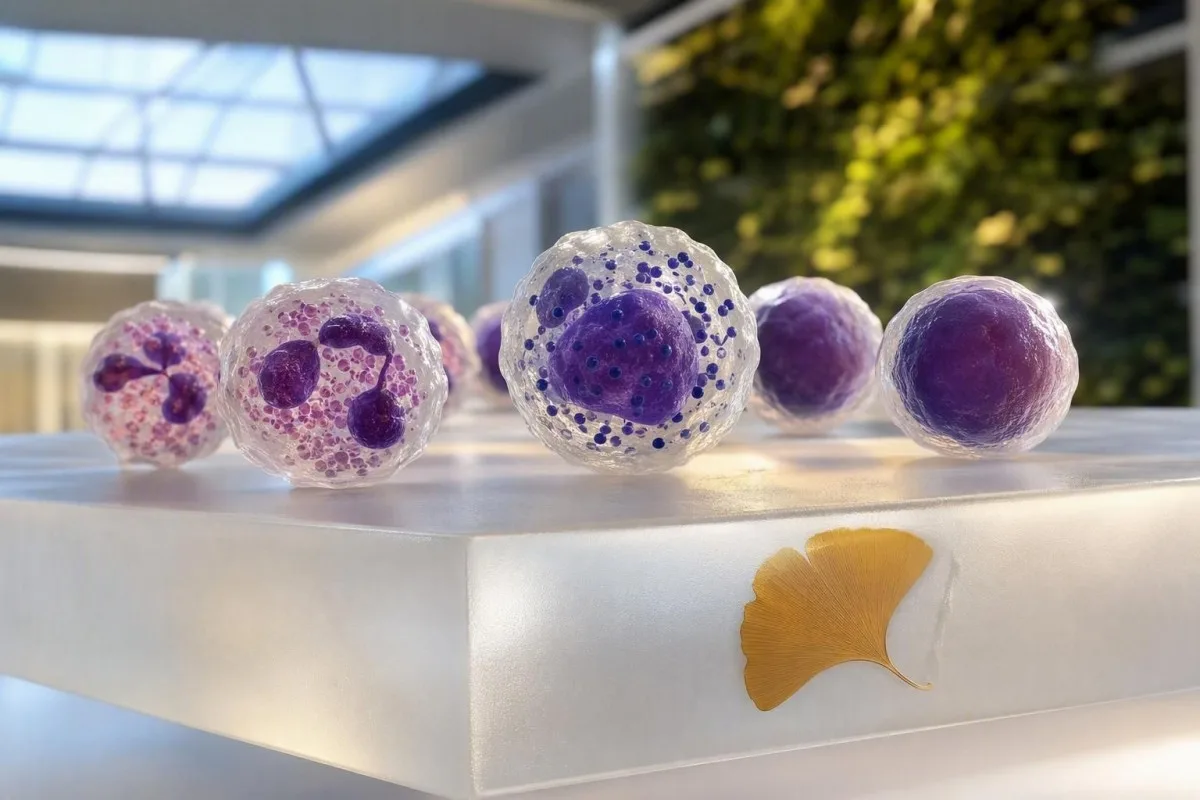
La plej multaj plenkreskuloj havas absolutajn bazofilojn de 0,00–0,10 × 10⁹/L (0–100/µL), dum la procento estas kutime 0–11%. Mild milda nekutima procento ofte reflektas ŝanĝojn en aliaj blankaj ĉeloj; la absoluta bazofila nombro estas la rezulto, kiu kutime gvidas pluan kontrolon.


- Absolutaj bazofiloj kutime estas 0,00–0,10 × 10⁹/L (0–100/µL) ĉe plenkreskuloj kaj estas pli klinike utilaj ol procento sole.
- Procento de bazofiloj estas kutime 0–11% de blankaj ĉeloj, sed ĝi povas kreski kiam neutrofiloj aŭ limfocitoj malpliiĝas eĉ se la absoluta nombro estas normala.
- Infanoj ofte uzas la saman praktikan supran limon de 0,10 × 10⁹/L post infanaĝo, sed la laŭ-specifa intervalo de la laboratorio havas prioritaton.
- Ripeta CBC post 2–8 semajnoj estas racia por izolita, milda bazofilio post alergio, infekto aŭ medikamenta ŝanĝo.
- Persista bazofilio super 0,20 × 10⁹/L meritas kuracistan revizion, precipe kun altaj blankaj ĉeloj, anemio, splenomegalio aŭ konstituciaj simptomoj.
- Urĝa revizio estas pravigita por markita leŭkocitozo, neklarigita malplipeziĝo, trempsorcaj noktaj ŝvitoj, febro aŭ frua pleneco sub la maldekstraj ripoj.
- Nul bazofiloj en aŭtomata diferencialo estas ofta kaj kutime ne havas klinikan signifon.
- Kantesti AI legas bazofilojn kune kun totalaj blankaj ĉeloj, eozinofiloj, plateta nombro, hemoglobino, kaj antaŭaj rezultoj anstataŭ trakti unu flagon kiel diagnozon.
Absolutaj bazofiloj kompare kun bazofila procento
Absolutaj bazofiloj de 0,00–0,10 × 10⁹/L estas ĝenerale normalaj ĉe plenkreskuloj, dum bazofila procento de 0–1% estas nur proporcio de la totala nombro da blankaj ĉeloj. Kiam la du malkonsentas, kuracistoj kutime donas pli da pezo al la absoluta rezulto.
Procento povas ŝajni alta simple ĉar alia blanka ĉelspeco estas malalta. Ekzemple, 1,5% bazofiloj kun blanka sangokalkulo de 3,0 × 10⁹/L produktas absolutan kalkulon de nur 0,045 × 10⁹/L — bone ene de multaj plenkreskaj intervaloj. Tial procenta flago sola apenaŭ rakontas la tutan historion.
La kalkulo estas simpla: totalaj blankaj ĉeloj × bazofila procento ÷ 100. Blanka kalkulo de 12,0 × 10⁹/L kaj bazofiloj de 2% donas 0,24 × 10⁹/L, kio estas vera plialtiĝo. Por la pli larĝa kunteksto, vidu nian gvidilon pri kion inkluzivas CBC.
Kantesti estas AI-sangotesta analizilo kiu konvertas procentojn en klinike kompareblajn absolutajn nombrojn kiam la fontraporto provizas diferencialon. Laŭ mia sperto, tiu unu konverto malhelpas sufiĉe da nenecesa alarmo post rutina saninspektado.
Kial la absoluta nombro estas pli stabila
Aŭtomataj analiziloj kalkulas milojn da ĉelaj eventoj, sed bazofiloj estas kutime maloftaj — ofte malpli ol 1 el 100 blankaj ĉeloj. Malgrandaj analizaj kaj biologiaj ŝanĝoj povas tial movi la procenton pli rimarkeble ol la absoluta nombro.
Praktikaj bazofilaj referencaj intervaloj laŭ aĝo
Plej multaj laboratorioj uzas absolutan bazofilan referencan intervalon de 0,00–0,10 × 10⁹/L de infanaĝo ĝis plenaĝeco, sed novnaskitaj gamoj povas esti pli larĝaj. Uzu la intervalon presitan apud via propra rezulto, ĉar referencaj limoj dependas de analizila metodo kaj de la loka sana populacio de la laboratorio.
Por beboj en la unuaj semajnoj de vivo, kelkaj pediatriaj laboratorioj akceptas absolutajn bazofilojn ĝis ĉirkaŭ 0,20–0,40 × 10⁹/L. La neonata imunsistemo rapide adaptiĝas, do plenkreskaj limoj ne devus esti truditaj al novnaskita rezulto sen pediatria konsilo.
De ĉirkaŭ 1 jaro pluen, multaj servoj aplikas praktikan supran limon proksime de 0,10 × 10⁹/L, aŭ 100/µL. Rezulto de 0,11 × 10⁹/L ĉe prospera infano kun normala totala blanka kalkulo estas kutime demando pri ripeto kaj kunteksto, ne urĝaĵo.
CLSI EP28-A3c klarigas kial laboratorioj establas aŭ kontrolas siajn proprajn referencajn intervalojn anstataŭ prunti universalan gamon (CLSI, 2010). Nia neŭtrofila aĝ-gama gvidilo montras la saman principon por alia diferenca nombro.
Komprenante bazofilajn unuojn en UK, Usono kaj internaciaj raportoj
Bazofila nombro de 0.10 × 10⁹/L egalas 100/µL, do raportoj uzantaj malsamajn unuojn povas priskribi la saman rezulton. UK plenaj sangokalkuloj ofte raportas ×10⁹/L, dum usonaj laboratorioj ofte uzas ĉelojn/µL aŭ K/µL.
Por konverti ×10⁹/L al ĉeloj/µL, multipliku per 1,000. Tiel 0.05 × 10⁹/L egalas 50/µL; 0.25 × 10⁹/L egalas 250/µL. Raporto montranta 0.0 povas esti rondigita al unu decimalo prefere ol pruvi, ke ekzistas laŭvorte neniuj bazofiloj.
Valoro listigita kiel 0.2 K/µL egalas 0.20 × 10⁹/L. Tiu distingo gravas ĉar 0.2% kaj 0.2 K/µL estas tute malsamaj mezuroj. Pacientoj regule miksas ilin komparante raportojn el du landoj.
Se via raporto diras FBC prefere ol CBC, la komponentoj estas plejparte samaj; nia UK plen-sanga kalkula klarigilo tradukas la komunan terminologion.
Kial bazofilaj nombroj kreskas aŭ malpliiĝas
Mildaj bazofilio plej ofte akompanas alergion, kronikan inflamon, resaniĝon de infekto, aŭ medikament-rilatan imunan ŝanĝon. Malalta nombro aŭ nul bazofiloj kutime ne estas signifaj ĉar tiuj ĉeloj cirkulas en tre malgrandaj nombroj.
Bazofiloj portas ricevantojn por IgE kaj povas liberigi histaminon kaj aliajn mediatojn post alergia ekspozicio. Laŭsezona alergia rinito, kronika urtikario, astmo, kaj kelkaj haŭtaj malsanoj povas koincidi kun eta pliiĝo, kvankam normala nombro ne ekskludas nek inkluzivas iun ajn el ili.
Hipotiroidismo, inflama intesta malsano, reŭmatismaj malsanoj, kaj kelkaj kronikaj infektoj ankaŭ povas esti asociitaj kun bazofilio. La utila demando ne estas “kiu malsano kaŭzas tion?” sed “kiuj aliaj signaloj ĉeestas?”—CRP, eozinofiloj, simptomoj, medikamenta historio, kaj la trajektorio gravas.
Leva IgE kaj eozinofila nombro povas subteni alergian ŝablonon, dum izolita jukado povas postuli pli larĝan revizion; nia artikolo pri sangokontroloj por jukanta haŭto klarigas la praktikajn limojn de CBC-testado.
Kiam vi devas ripeti CBC por bazofiloj?
Ripetu CBC en 2–8 semajnoj por milda, izolita bazofila plialtiĝo post provizora ellasilo, kondiĉe ke vi sentas vin bone kaj la resto de la kalkulo estas certiga. Ripetu pli frue, kutime ene de tagoj ĝis 2 semajnoj, kiam totalaj blankaj ĉeloj pliiĝas aŭ ekzistas multoblaj nenormalaj ĉellinioj.
Por absoluta bazofila nombro de 0.11–0.20 × 10⁹/L post malvarmumo, eksacerbiĝo de pollinosis, vakcinado, aŭ mallonga steroida kurso, mi ofte preferas unu trankvilan ripeton super kaskado de testado. Provu uzi la saman laboratorion, kaj registru lastatempan malsanon, novajn medikamentojn, fumadajn ŝanĝojn, kaj steroidan ekspozicion.
Ne provu “plibonigi” la nombron antaŭ retestado. Hidratiĝo estas racia, sed suplementoj, antihistaminoj, kortikosteroidoj, kaj intensa eltenuleca ekzercado povas ŝanĝi la pli larĝan diferencialon. Nia sang-testa templim-gvidilo detaloj pri komunaj tempaj efikoj.
Kantesti estas AI sangotesta interpretada platformo kiu komparas la nunan diferencialon kun antaŭaj CBC kaj markas koheran kreskon diference de unufoja marko. Tendenco dum 3–6 monatoj ofte estas pli informa ol unuopa decimala punkto.
Kiel prepariĝi por fidinda bazofila re-testo
Bazofila testado kutime ne postulas faston, sed ripeto de CBC estas plej interpretebla kiam vi ne akute malsanas kaj la kolekto-kondiĉoj estas similaj. Celu normalajn fluidojn, ordinarajn manĝojn, kaj rutinajn tagojn prefere ol ekstremaj ŝanĝoj.
Evitu plani ne-urgentean reteston dum febro, signifa alergia ekflamo, aŭ la tagon post nekutime malfacila elteniva evento, se la celo estas establi bazlinion. Akutaj stresaj hormonoj kaj fluidaj ŝanĝoj povas movi plurajn blank-ĉelajn subarojn dum horoj ĝis tagoj.
Informu la kuraciston aŭ flebotomiston pri sistemaj kortikosteroidoj, litio, traktadoj enhavantaj adrenalinon, lastatempan biologian terapion, kaj ajnan novan suplementon. Steroidoj pli ofte malaltigas cirkulantajn bazofilojn kaj eozinofilojn, do “normala” rezulto dum ilia prenado eble ne reprezentas vian netraktitan bazlinion.
La kvalito de la specimeno ankoraŭ gravas. Koaguliĝintaj EDTA-specimenoj kaj prokrastita analizo povas fari aŭtomatigitajn diferencialojn malpli fidindajn; se pluraj CBC-valoroj aspektas strangaj kune, revizuu kiam redesegni necesas.
CBC-padronoj, kiuj igas altigitajn bazofilojn pli signifaj
Bazofiloj estas pli zorgaj kiam absolutaj bazofiloj superas 0.20 × 10⁹/L kaj okazas kun persistaj blankaj globuloj super 11.0 × 10⁹/L, anemio, platelet-ŝanĝoj, aŭ nematuraj ĉeloj. La kombinaĵo—ne nur bazofiloj—determinas kiom rapide kuracistoj esploras.
Mi reviziis 44-jaraĝan personon kiu havis 0.28 × 10⁹/L bazofilojn, 16.4 × 10⁹/L blankajn ĉelojn, 610 × 10⁹/L platetojn, kaj fruan satecon. Tiu ŝablono pravigis hematologian vojon en la sama semajno; la individua bazofila rezulto ne faris la diagnozon, sed ĝi estis grava indico.
Bazofiloj kune kun altaj neutrofiloj kaj spleniaj simptomoj povas okazi en mieloproliferaj neoplasmoj, inkluzive de kronika mieloida leŭkemio. European LeukemiaNet konsilas molekulan testadon kaj specialistan taksadon kiam la klinika kaj sang-kalkula ŝablono sugestas tiun eblecon (Hochhaus et al., 2020).
Periferia ŝmirado povas distingi verajn diferencialajn ŝanĝojn de analizila necerteco kaj povas montri maldekstran ŝanĝon aŭ neordinarajn ĉelojn. Legu pli pri sangkanceraj CBC-vojoj sen supozi, ke nenormala kalkulo signifas kanceron.
Simptomoj kaj rezultoj, kiuj bezonas rapidan medicinan atenton
Serĉu urĝan medicinan taksadon por bazofilio kun febro, tremantaj noktaj ŝvitadoj, neklarigita peza perdo, nova kontuziĝo, spirmanko, severa laceco, aŭ pleneco en la supra maldekstra abdomeno. Tiuj simptomoj ne estas kaŭzitaj de nur milda levita bazofila rezulto; ili signalas, ke la pli larĝa klinika bildo bezonas taksadon.
Totala blanka kalkulo super 30 × 10⁹/L, rapide kreskantaj valoroj, aŭ videblaj nematuraj granulocitoj en raporto devas esti urĝe diskutitaj kun la mendanta kuracisto. Severa kapdoloro, vidaj ŝanĝoj, brustodoloro, aŭ neŭrologiaj simptomoj bezonas krizan taksadon sendepende de la bazofila kalkulo.
La plej multaj homoj kun 0.11–0.20 × 10⁹/L bazofiloj kaj sen simptomoj ne bezonas krizan zorgon. Tamen, ĉi tio estas unu el tiuj areoj kie kunteksto gravas pli ol la nombro, precipe se antaŭaj rezultoj estis 0.02 × 10⁹/L kaj la nova kalkulo kreskas.
Se vi ankaŭ havas spirmankon aŭ palorecon, la akompana hemoglobino kaj platelaj valoroj povas esti pli tuj gravaj; vidu nian spirmallaborema sangotesta gvidilo.
Kion signifas malaltaj bazofiloj aŭ rezulto de nulo
Bazofila rezulto de 0.00 × 10⁹/L estas kutime normala kaj apenaŭ bezonas ripeton memstare. Bazofiloj povas esti sub la raporta sojlo de la analizilo ĉar ili estas nature malabundaj en cirkulado.
Akra streso, infekto, gravedeco, hipertiroidismo kaj kortikosteroida traktado povas provizore redukti cirkulantajn bazofilojn. Tamen ne ekzistas rekonita simptoma sindromo kaŭzita de izolitaj malaltaj bazofiloj, male al klinike signifa neutropenio.
La analiza problemo estas facile maltrovebla: se nur kelkaj bazofiloj estas kalkulitaj, rutina specimeniga variablo povas ŝanĝi 0.01 × 10⁹/L al 0.00 × 10⁹/L ĉe posta analizo. Tio ne nepre estas biologia ŝanĝo.
La praktika konsilo de D-ro Thomas Klein estas ignori malaltan bazofilan flagon kiam la resto de la CBC estas sana kaj ne ekzistas signifaj simptomoj. Nia dediĉita gvidilo klarigas bazofiloj ĉe nulo.
Bazofiloj dum gravedeco kaj posta vivo
Gravedeco kaj maljuniĝo ne havas ununuran specialan bazofilan limakson; la raporta intervalo de la laboratorio kaj la plena blanka ĉela padrono restas la plej bona referenco. Gravedeco ofte levas totalajn blankajn ĉelojn per neutrofiloj, kio povas fari la procenton de bazofiloj ŝajni pli malalta sen vera redukto de bazofiloj.
Dum gravedeco, totala blanka nombro de 12–15 × 10⁹/L povas esti fiziologia, precipe poste en gravedeco, do procent-bazita interpretado fariĝas eĉ malpli fidinda. Absoluta nombro de bazofiloj restas preferinda, sed maltrankviligaj simptomoj ankoraŭ superregas referencan intervalon.
Ĉe pli maljunaj plenkreskuloj, nova persista bazofila nombro super 0.20 × 10⁹/L meritas atenton ĉar medikamenta ŝarĝo kaj medolaj malordoj fariĝas pli oftaj kun aĝo. Tio ne faras ĝin diagnoza; ĝi simple malaltigas la sojlon por rigardi la CBC-tendancon kaj ŝmiron.
Por aliaj gravedec-specifaj interpretaj defioj, reviziu gravedecaj sangotestaj alarmosignoj.
Medikamentoj, alergioj kaj bazofilaj fluktuoj
Alergiaj simptomoj povas koincidi kun modere altigitaj bazofiloj, dum sistemaj kortikosteroidoj ofte malaltigas ilin ene de tagoj. Nek padrono konfirmas alergian diagnozon aŭ pruvas, ke medikamento estas respondeca.
Antihistaminoj ĉefe blokas histaminajn receptojn; ili ne fidinde normaligas bazofilan nombron. Buŝaj prednizolonoj kaj aliaj sistemaj glukokortikoidoj povas redistribui blankajn ĉelojn, ofte malpliigante eozinofilojn kaj bazofilojn dum pliigante cirkulantajn neutrofilojn.
Litio estas malpli ofta sed utila medikamenta indico ĉar ĝi povas pliigi blankan ĉelan produktadon. Biologiaj medikamentoj, kemioterapio kaj imunomodulaj traktadoj neniam devus esti ĉesigitaj pro unu CBC-rezulto — demandu al la preskribanta teamo kiel la rezulto konformas al ilia monitorada plano.
Leva bazofila nombro kune kun sibilo, haŭtvezikoj, vizaĝa ŝvelo aŭ kapturneco devas esti traktata kiel simptoma problemo, ne kiel laboratoria mistero. Nia alt-IgE gvidilo klarigas kie alergiaj markiloj helpas kaj kie ili misgvidas.
Kion kuracistoj kontrolas post persista bazofilio
Persista absoluta bazofilio kutime instigas ripetan CBC, manan ŝmiran revizion, medikamentan kaj simptoman revizion, poste celitan testadon se la totala blanka nombro aŭ aliaj ĉellinioj estas nenormalaj. Larĝaj kanceraj paneloj ne estas la kutima unua paŝo por milda izolita kresko.
La unua branĉpunkto estas ĉu la rezulto estas izolita. Stabila hemoglobino, trombocitoj, blanka ĉela nombro, kaj normala ŝmiraĵo forte subtenas konservativan planon; anemio, trombocitozo, leŭkocitozo aŭ splenomegalio puŝas la taksadon en malsaman direkton.
Kiam mieloproliferativa malordo estas plauzibla, kuracistoj povas peti BCR::ABL1-testadon, JAK2-testadon, laktan hidrogenazon, uraton kaj specialistan revizion. Valent et al. priskribas persistan bazofilion kiel signifan trovon en la klasifikado de bazofilaj kaj mieloidaj neoplasmoj (Valent et al., 2022).
Kantesti's neŭrala reto identigas kombinaĵojn kiuj meritas revizion sed ne diagnozas leŭkemion el CBC. Nia aliro al medicina validigo klarigas kial laboratorio-interpreto devas konservi klinikan kontrolon.
Kiel spuri bazofilojn sen troreagi
Signifa bazofila tendenco estas persista direktoŝanĝo trans kompareblaj CBC, ne ununura movo de 0.04 ĝis 0.08 × 10⁹/L. Kun plenkreska referenca limo de 0.10 × 10⁹/L, ambaŭ valoroj restas ene de la intervalo malgraŭ esti numerike malsamaj.
Konservu la absolutan nombron, procenton, totalajn blankajn ĉelojn, neutrofilojn, eozinofilojn, hemoglobinon, trombocitojn, daton, lastatempan malsanon kaj medikamentojn post ĉiu sangosumo. Tiu malgranda registro donas al via kuracisto pli utilan informon ol ekrankopioj de izolitaj ruĝaj flagoj.
Kantesti estas AI-movita ilo por analizo de sangotestoj uzata tra 127+ landoj por kompari CBC-rezultojn longitudinale konservante la deklaritan intervalon de la fonta laboratorio. D-ro Thomas Klein rekomendas revizii almenaŭ du kompareblajn rezultojn antaŭ ol atribui signifon al limŝanĝo en diferencialo.
Utila regulo: se la absoluta nombro restas sub 0.10 × 10⁹/L, la totala nombro de blankaj ĉeloj estas stabila, kaj vi sentas vin bone, rutinan kontrolon ĉe via sekva planita sangotesto kutime sufiĉas. Uzu nian gvidilo pri diferencoj en sangotestoj por juĝi ĉu ŝanĝo verŝajne estas reala.
Demandoj por demandi ĉe kontrola rendevuo
La plej bona kontrola demando estas “Kio estas mia absoluta bazofila nombro, kaj kio alia ŝanĝiĝis en la CBC?” Tiu vortumo direktas la konversacion al la variabloj, kiuj efektive ŝanĝas la klinikan riskon.
Demandu ĉu la nombro estas nova, persista, altiĝanta, aŭ verŝajne reaktiva; ĉu smear-revizio necesas; kaj kiam la sekva CBC devus esti prenita. Alportu liston de lastatempaj infektoj, alergiaj simptomoj, medikamentoj, suplementoj, vojaĝoj kaj familia historio de sangaj malordoj.
Se vi havas absolutan nombron super 0.20 × 10⁹/L plus levitaj totalaj blankaj ĉeloj, demandu ĉu hematologia kontribuo taŭgas. Se la nombro estas nur iomete super la limintervalo kaj izolita, demandu, kio ŝanĝo ekigus pli fruan testadon prefere ol supozi la plej malbonan.
La kuracist-reviziitaj edukaj normoj de Kantesti estas kontrolitaj per nia Medicina Konsila Komisiono. Ekde la 30-a de aŭgusto 2026, la plej sekura aliro restas simpla: interpreti la absolutan nombron, konfirmi persistadon, kaj agi pli rapide nur kiam la pli vasta padrono pravigas ĝin.
Oftaj Demandoj
Kio estas la normala bazofila nombro ĉe plenkreskuloj?
La komuna plenkreska referenca intervalo por absolutaj bazofiloj estas 0.00–0.10 × 10⁹/L, kio egalas al 0–100 ĉeloj/µL. La plej multaj laboratorioj raportas bazofil-procenton de 0–11 TP54T, kvankam la procento povas esti misgvida kiam la totala blankacela nombro ŝanĝiĝas. La referenca intervalo presita de via propra laboratorio havas prioritaton ĉar metodoj kaj lokaj referencaj populacioj diferencas. Izolita rezulto de 0.11 × 10⁹/L kutime meritas kuntekston aŭ planitan ripeton prefere ol kriz-zorgo.
Ĉu 2% bazofiloj estas altaj?
Procento da bazofiloj de 2% estas super multaj laboratoriaj intervaloj de procentoj, sed ne sufiĉas por juĝi riskon sen la totala nombro da blankaj globuloj. Kun blankaj globuloj de 4.0 × 10⁹/L, 2% egalas absolutajn bazofilojn de 0.08 × 10⁹/L, kio ofte estas normala. Kun blankaj globuloj de 15.0 × 10⁹/L, la sama 2% egalas 0.30 × 10⁹/L kaj postulas klinikan revizion. Ĉiam lokalizu la absolutajn bazofilojn antaŭ interpretado de la procento.
Kiam mi devus ripeti CBC por altaj bazofiloj?
Ripeta CBC post 2–8 semajnoj estas komune racia por milda izolita bazofilio de ĉirkaŭ 0.11–0.20 × 10⁹/L post malsano, alergia ekflamo, aŭ medikamenta ŝanĝo. Ripetu pli baldaŭ kiam la totala blanka globulkalkulo kreskas, la bazofila kalkulo estas super 0.20 × 10⁹/L, aŭ hemoglobino kaj trombocitoj ankaŭ estas nenormalaj. Uzu la saman laboratorion kiam eble, ĉar analizilmetodoj kaj referencaj intervaloj varias. Febrero, malplipeziĝo, noktaj ŝvitadoj, kontuziĝoj, aŭ pleneco en la supra-maldekstra abdomeno postulas rapidan medicinan revizion prefere ol atendi rutinan reteston.
Ĉu bazofiloj nul estas danĝeraj?
Malalta nombro da bazofiloj (0,00 × 10⁹/L) kutime ne estas danĝera kaj ĝenerale ne postulas plian kontrolon, se la resto de la CBC estas normala. Bazofiloj estas maloftaj ĉeloj, do rutina aŭtomata diferencigo povas raporti nulon, ĉar la detektita nombro falas sub la rondigo aŭ raporta precizeco. Kortikosteroidoj, akra streso, gravedeco kaj infektoj povas provizore malaltigi la cirkulantajn bazofilojn. Klinikistoj ne diagnozas imunodifekton pro izolitaj malaltaj bazofiloj.
Ĉu alergioj povas kaŭzi altajn bazofilojn?
Alergiaj kondiĉoj povas koincidi kun milde altigitaj bazofiloj ĉar bazofiloj partoprenas en Imunaj respondoj rilataj al IgE kaj liberigas mediistojn kiel histamino. Alta nombro da bazofiloj ne pruvas, ke alergio estas la kaŭzo, kaj multaj homoj kun signifaj alergiaj simptomoj havas normalajn nombrojn de bazofiloj. Nombroj super 0.20 × 10⁹/L, kiuj persistas post kiam alergiaj simptomoj trankviliĝas, devus esti reviziitaj kun la tuta CBC. Eozinofiloj, totala IgE, haŭtaj simptomoj kaj medikamenta ekspozicio povas provizi pli utilan kuntekston.
Kiu bazofila nombrado sugestas leŭkemion?
Neniu ununura bazofilokalkulo diagnozas leŭkemion, sed persista absoluta bazofilio super 0,20 × 10⁹/L kun leŭkocitozo, anemio, trombocitaj anomalioj, nematuraj granulocitoj, aŭ splenaj simptomoj devus instigi medicinan taksadon. Bazofilio povas okazi en kronika mieloida leŭkemio kaj aliaj mieloproliferativaj neoplasmoj, tamen reakciaj kaŭzoj restas pli oftaj por mildaj izolitaj altigoj. Klinikistoj povas peti smiron kaj celitan molekulan testadon kiel BCR::ABL1 nur kiam la pli vasta ŝablono subtenas ĝin. Normala totala blanka nombro kaj stabila CBC konsiderinde ŝanĝas la nivelon de zorgo.
Akiru hodiaŭ AI-movitan analizon de sangoanalizo
Aliĝu al pli ol 2 milionoj da uzantoj tutmonde, kiuj fidas je Kantesti por tuja, preciza analizo de laboratoriaj testoj. Alŝutu viajn rezultojn de sangoanalizo kaj ricevu ampleksan interpretadon de 15,000+-biomarkiloj en sekundoj.
📚 Referencitaj esplorpublikaĵoj
Klein, T., Mitchell, S., & Weber, H. (2026). G Negativa sangotipo, gvidilo pri LDH-sangotesto kaj retikulocita kalkulo. Kantesti AI Medicina Esploro.
Klein, T., Mitchell, S., & Weber, H. (2026). Diareo Post Fastado, Nigraj Makuloj en Fekaĵo & Gista Sistemo Gvidilo 2026. Kantesti AI Medicina Esploro.
📖 Eksteraj medicinaj referencoj
Clinical and Laboratory Standards Institute (2010). Difini, Establi kaj Kontroli Referencajn Intervalojn en la Klinika Laboratorio. CLSI EP28-A3c.
⚕️ Medicina Deklaro
Ĉi tiu artikolo estas nur por edukaj celoj kaj ne konsistigas medicinan konsilon. Ĉiam konsultu kvalifikitan sanprovizanton por diagnozaj kaj traktadaj decidoj.
Signaloj de fido E-E-A-T
Sperto
Kuracista gvidata klinika revizio de laboratoriaj interpretaj laborfluoj.
Kompetenteco
Laboratoria medicino fokusiĝas pri kiel biomarkiloj kondutas en klinika kunteksto.
Aŭtoritateco
Skribita de d-ro Thomas Klein kun revizio de d-ro Sarah Mitchell kaj prof. d-ro Hans Weber.
Fidindeco
Evident-bazita interpretado kun klaraj sekvaj vojoj por redukti alarmon.