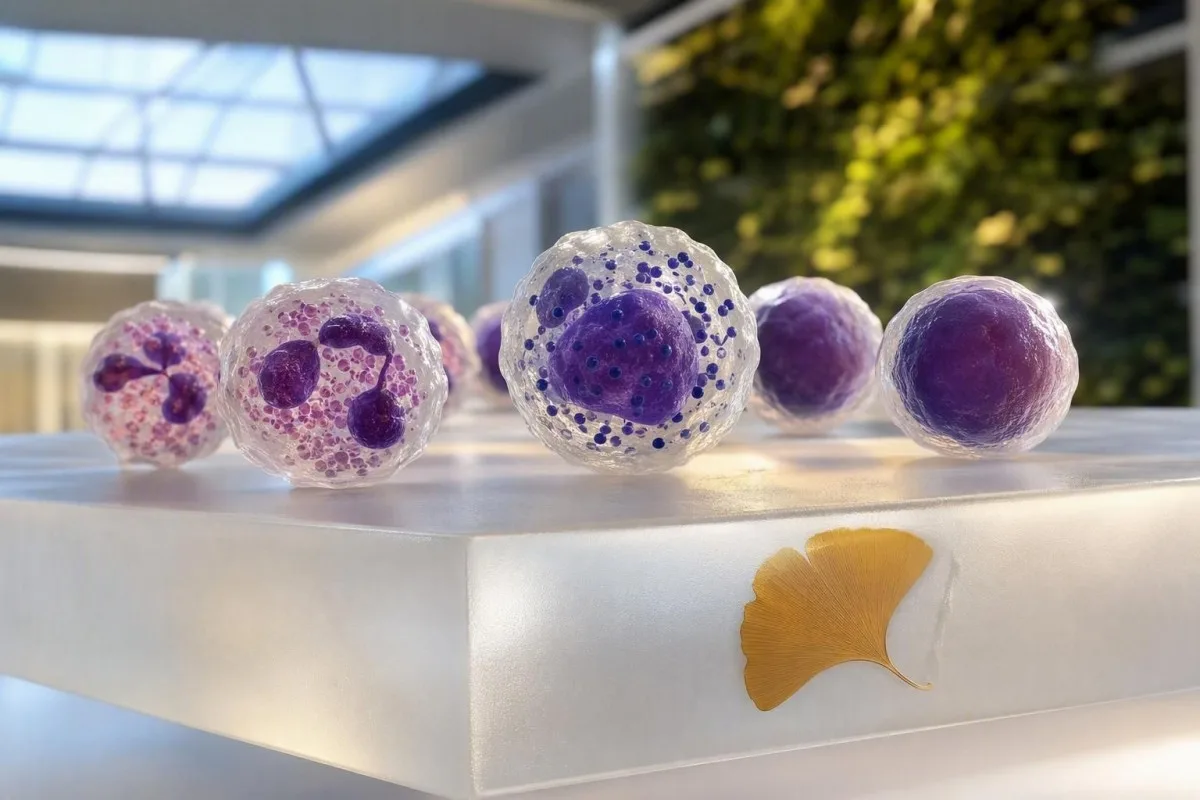
Enamik täiskasvanuid on absoluutsete basofiilide arvuga 0,00–0,10 × 10⁹/L (0–100/µL), samas kui protsentuaalne osakaal on tavaliselt 0–1%. Mõõdukalt ebatavaline protsentuaalne osakaal peegeldab sageli teiste valgete vereliblede nihkeid; absoluutne basofiilide arv on tulemus, mis tavaliselt juhib edasist jälgimist.


- Absoluutsed basofiilid on täiskasvanutel tavaliselt 0,00–0,10 × 10⁹/L (0–100/µL) ja on kliiniliselt kasulikumad kui protsentuaalne osakaal üksi.
- Basofiilide protsent on tavaliselt 0–1% valgetest verelibledest, kuid see võib tõusta, kui neutrofiilid või lümfotsüüdid langevad, isegi kui absoluutne arv on normaalne.
- Lapsed kasutavad tavaliselt sama praktilist ülempiiri 0,10 × 10⁹/L pärast imikuea, kuid labori vanusespetsiifiline vahemik on prioriteetne.
- Korduv CBC 2–8 nädala jooksul on mõttekas üksikjuhtumil, kerge basofiilia korral pärast allergia, infektsiooni või ravimimuutust.
- Püsiv basofiilia üle 0,20 × 10⁹/L väärib arsti läbivaatust, eriti koos kõrge valgete vereliblede arvu, aneemia, splenomegaalia või konstitutsiooniliste sümptomitega.
- Kiire ülevaatus on näidustatud märkimisväärse leukotsütoosi, seletamatu kaalulanguse, öiste higistamishoogude, palaviku või varajase täiskõhutunde korral vasaku roiete all.
- Null basofiili automaatsel diferentsiaalil on tavaline ja sellel pole tavaliselt kliinilist tähendust.
- Kantesti tehisintellekt loeb basofiile koos kogu valgevereliblede arvu, eosinofiilide, trombotsüütide arvu, hemoglobiini ja varasemate tulemustega, mitte ei ravi ühte lipikut diagnoosina.
Absoluutsed basofiilid versus basofiilide protsentuaalne osakaal
Absoluutsed basofiilid vahemikus 0,00–0,10 × 10⁹/L on täiskasvanutel tavaliselt normaalsed, samas kui basofiilide protsent 0–1% on vaid osa kogu valgevereliblede arvust. Kui need kaks erinevad, omistavad arstid tavaliselt suuremat kaalu absoluutsele tulemusele.
Protsent võib tunduda kõrge lihtsalt seetõttu, et mõni teine valgevereliblede tüüp on madal. Näiteks 1,5% basofiilid koos valgevereliblede arvuga 3,0 × 10⁹/L annavad absoluutseks arvuks vaid 0,045 × 10⁹/L – mis jääb paljude täiskasvanute vahemikesse. Sellepärast räägib protsendilippik üksi harva tervet lugu.
Arvutus on lihtne: kogu valgevereliblede arv × basofiilide protsent ÷ 100. Valgevereliblede arv 12,0 × 10⁹/L ja basofiilid 2% annavad tulemuseks 0,24 × 10⁹/L, mis on tõeline tõus. Laiema konteksti saamiseks vaadake meie juhendit mida CBC sisaldab.
Kantesti on AI vereanalüüsi analüsaator , mis teisendab protsendid kliiniliselt võrreldavateks absoluutseteks arvudeks, kui algne aruanne sisaldab diferentsiaali. Minu kogemuse kohaselt hoiab see üks teisendus ära üsna palju tarbetut muret pärast rutiinset tervisekontrolli.
Miks absoluutarv on stabiilsem
Automaatsed analüsaatorid loevad tuhandeid rakusündmusi, kuid basofiilid on tavaliselt harvad – sageli vähem kui 1 100 valgevereliblest. Seetõttu võivad väikesed analüütilised ja bioloogilised nihked muuta protsenti märgatavamalt kui absoluutarvu.
Praktilised basofiilide referentsvahemikud vanuse järgi
Enamik laboreid kasutab absoluutsete basofiilide referentsvahemikku 0,00–0,10 × 10⁹/L alates lapsepõlvest kuni täiskasvanueani, kuid vastsündinute vahemikud võivad olla laiemad. Kasutage oma tulemuse kõrval trükitud vahemikku, sest referentspiirid sõltuvad analüsaatori meetodist ja labori kohalikust tervisest populatsioonist.
Vastsete puhul esimestel elunädalatel aktsepteerivad mõned pediaatrilaborid absoluutseid basofiile kuni umbes 0,20–0,40 × 10⁹/L. Vastse immuunsüsteem kohaneb kiiresti, seega täiskasvanute piire ei tohiks vastsündinu tulemusele rakendada ilma pediaatrilise sisendita.
Alates umbes 1. eluaastast rakendavad paljud teenused praktilist ülempiiri lähedal 0,10 × 10⁹/L või 100/µL. Tulemus 0,11 × 10⁹/L normaalse koguvalgevereliblede arvuga kasvaval lapsel on tavaliselt kordus-ja-konteksti küsimus, mitte eriolukord.
CLSI EP28-A3c selgitab, miks laborid kehtestavad või kontrollivad oma referentsvahemikke, mitte ei kasuta universaalset vahemikku (CLSI, 2010). Meie neutrofiilide vanusevahemiku juhend näitab sama põhimõtet teise diferentsiaallugemise puhul.
Basofiilide ühikute mõistmine Ühendkuningriigi, USA ja rahvusvahelistes aruannetes
Basofiilide hulk 0.10 × 10⁹/L võrdub 100/µL, seega võivad erinevaid ühikuid kasutavad aruanded kirjeldada sama tulemust. Ühendkuningriigi täielikud vereanalüüsid esitavad sageli ×10⁹/L, samas kui USA laborid kasutavad tavaliselt rakud/µL või K/µL.
×10⁹/L teisendamiseks rakkudeks/µL korrutage 1000-ga. Seega 0.05 × 10⁹/L võrdub 50/µL; 0.25 × 10⁹/L võrdub 250/µL. Üksus 0.0 võib olla ümardatud ühe kümnendkohani, mitte tõestada, et basofiile pole.
Väärtus 0.2 K/µL võrdub 0.20 × 10⁹/L. See erinevus on oluline, kuna 0.2% ja 0.2 K/µL on täiesti erinevad mõõtmised. Patsiendid segavad neid sageli kahe riigi aruandeid võrreldes.
Kui teie aruanne nimetab FBC asemel CBC, on komponendid suuresti samad; meie Ühendkuningriigi täieliku vereanalüüsi selgitus tõlgib levinud terminoloogiat.
Miks basofiilide arv tõuseb või langeb
Kerge basofiilia kaasneb enamasti allergiaga, kroonilise põletiku, infektsioonist taastumisega või ravimiga seotud immuunse nihkega. Madal hulk või null basofiiliat pole tavaliselt oluline, kuna need rakud ringlevad väga väikestes kogustes.
Basofiilid kannavad IgE retseptoreid ja võivad allergeeniga kokkupuute järel vabastada histamiini ja teisi vahendajaid. Hooajaline allergiline riniit, krooniline urtikaaria, astma ja mõned nahahaigused võivad kokku langeda väikese tõusuga, kuigi normaalne hulk ei välista ühtegi neist.
Hüpotüreoidism, põletikuline soolehaigus, reumaatilised häired ja mõned kroonilised infektsioonid võivad samuti olla seotud basofiiliaga. Kasulik küsimus pole mitte “mis haigus seda põhjustab?”, vaid “mis teisi signaale on olemas?” - CRP, eosinofiilid, sümptomid, ravimite ajalugu ja kulg on kõik olulised.
Kõrgenenud IgE ja eosinofiilide hulk võib toetada allergilist mustrit, samas kui isoleeritud sügelus võib vajada laiema ülevaadet; meie artikkel naha sügeluse vereanalüüside kohta selgitab CBC testimise praktilisi piire.
Millal korrata CBC-d basofiilide osas?
Korrake CBC-d 2–8 nädala pärast kerge, isoleeritud basofiilide tõusu korral pärast ajutist põhjustajat, eeldusel, et tunnete end hästi ja ülejäänud verepilt on rahustav. Korrake varem, tavaliselt päevade kuni 2 nädala jooksul, kui valgete vereliblede koguhulk suureneb või on mitu ebanormaalset rakuliini.
Absoluutse basofiilide hulga 0.11–0.20 × 10⁹/L korral pärast külmetust, heinapalaviku ägenemist, vaktsineerimist või lühikest steroidikuuri, eelistan sageli ühte rahulikku kordustestistimise asemel. Proovige kasutada sama laborit ja kirja panna hiljutised haigused, uued ravimid, suitsetamise muutused ja steroidide kokkupuude.
Ärge proovige enne kordustesti hulka “parandada”. Hüdratsioon on mõistlik, kuid toidulisandid, antihistamiinikumid, kortikosteroidid ja intensiivne vastupidavustreening võivad muuta laiemat diferentsiaalvärki. Meie vereanalüüsi ajastusjuhend detailib tavalisi ajastusest tulenevaid mõjusid.
Kantesti on AI vereanalüüsi tulemuste tõlgendamise platvorm mis võrdleb praegust diferentsiaali varasemate CBC-dega ja tähistab püsivat tõusu teisiti kui ühekordset kõrvalekallet. 3–6 kuu trend on sageli informatiivsem kui üks kümnendkoht.
Kuidas valmistuda usaldusväärseks basofiilide kordustestiks
Basofiilide testimine tavaliselt ei nõua paastumist, kuid korduv CBC on kõige paremini tõlgendatav, kui te ei ole ägedalt haige ja proovivõtmistingimused on sarnased. Püüdke normaalse vedeliku, tavaliste söögikordade ja rutiinse päeva poole, mitte äärmuslike muutuste poole.
Vältige mitte-kiireloomulise uuesti testimise ajastamist palaviku, märkimisväärse allergilise ägenemise ajal või päev pärast ebatavaliselt rasket vastupidavusüritust, kui eesmärk on luua lähtejoon. Ägedad stressihormoonid ja vedelikunihe võivad mõjutada mitmeid valgeliblede alagruppe tundideks kuni päevadeks.
Teatage arstile või verevõtjaile süsteemsetest kortikosteroididest, liitiumist, epinefriini sisaldavatest ravimeetoditest, hiljutisest bioloogilisest ravist ja mis tahes uuest lisandist. Steroidid alandavad tavalisemalt ringlevaid basofiile ja eosinofiile, nii et nende võtmise ajal saadud “normaalne” tulemus ei pruugi kajastada teie ravimata lähtejoonet.
Proovi kvaliteet on endiselt oluline. Klombitud EDTA proovid ja hilinenud analüüs võivad muuta automaatse diferentsiaali vähem usaldusväärseks; kui mitmed CBC väärtused koos tunduvad kummalised, vaadake üle millal uuesti verevõtt on vajalik.
CBC-mustrid, mis muudavad kõrgenenud basofiilide arvu olulisemaks
Basofiilia on murettekitavam, kui absoluutsed basofiilid ületavad 0,20 × 10⁹/l ja esinevad koos püsivalt kõrgenenud valgeliblede arvuga üle 11,0 × 10⁹/l, aneemia, muutustega trombotsüütides või immuunrakkudes. Kombinatsioon – mitte ainult basofiilid – määrab, kui kiiresti arstid uurivad.
44-aastane patsient, keda ma uuesti läbi vaatasin, tal oli basofiile 0,28 × 10⁹/l, valgeliblesid 16,4 × 10⁹/l, trombotsüüte 610 × 10⁹/l ja varajane täiskõhutunne. See muster õigustas samal nädalal hematoloogilist uurimist; üksik basofiili tulemus ei teinud diagnoosi, kuid see oli oluline vihje.
Basofiilia koos kõrgete neutrofiilide ja põrna sümptomitega võib esineda müeloproliferatiivsete neoplaasiate korral, sealhulgas kroonilise müeloidse leukeemia korral. European LeukemiaNet soovitab molekulaarset testimist ja spetsialisti hinnangut, kui kliiniline ja verepildi muster viitab sellele võimalusele (Hochhaus et al., 2020).
Perifeerne määrimine võib eristada tõelisi diferentsiaalseid muutusi analüsaatori ebakindlusest ja võib näidata vasakpoolset nihet või atüüpilisi rakke. Lugege lisateavet leukeemia CBC protseduuride kohta ilma, et eeldada, et kõrvalekallete arv tähendab vähki.
Sümptomid ja tulemused, mis vajavad kiiret meditsiinilist abi
Otsige kiiresti meditsiinilist abi basofiilia korral koos palaviku, öiste higistamishoogude, seletamatu kaalukaotuse, uue verevalumi, hingeldus, tugeva väsimuse või vasaku ülemise kõhu täiskõhutunde korral. Neid sümptomeid ei põhjusta ise kerge tõusnud basofiilide tulemus; need viitavad sellele, et laiemat kliinilist pilti tuleb hinnata.
Valgeliblede koguarv üle 30 × 10⁹/l, kiiresti kasvavad väärtused või aruandel nähtavad immuunsed granulotsüüdid tuleks kiiresti läbi arutada telliva arstiga. Tugev peavalu, nägemiskahjustus, valu rinnus või neuroloogilised sümptomid vajavad erakorralist hindamist, sõltumata basofiilide arvust.
Enamik inimesi, kellel on 0,11–0,20 × 10⁹/l basofiile ja kellel ei ole sümptomeid, ei vaja erakorralist abi. Siiski on see üks neist valdkondadest, kus kontekst on olulisem kui number, eriti kui varasemad tulemused olid 0,02 × 10⁹/l ja uus arv kasvab.
Kui teil on ka hingeldus või kahvatus, võivad kaasnevad hemoglobiini ja trombotsüütide väärtused olla kohemaid olulisemad; vaadake meie õhupuuduse vereanalüüsi juhend.
Mida tähendavad madal basofiilide arv või nulli tulemus
Basofiilide tulemus 0,00 × 10⁹/l on tavaliselt normaalne ja harva vajab üksi kordamist. Basofiilid võivad olla analüsaatori aruandluskünnisest madalamad, kuna need on vereringes loomulikult haruldased.
Äge stress, infektsioon, rasedus, hüpertüroidism ja kortikosteroidravi võivad kõik ajutiselt vähendada ringlevate basofiilide hulka. Siiski ei ole tuvastatud sündroomi, mida põhjustaksid üksikud madalad basofiilid, erinevalt kliiniliselt olulisest neutropeeniast.
Analüütiline probleem on kergesti märkamata: kui loendatakse vaid mõned basofiilid, võib rutiinne proovivõtu varieeruvus muuta järgmisel korral 0,01 × 10⁹/L 0,00 × 10⁹/L-ks. See ei ole tingimata bioloogiline muutus.
Dr. Thomas Kleini praktiline nõuanne on ignoreerida madala basofiili taseme lippu, kui ülejäänud CBC on korras ja vastavaid sümptomeid ei esine. Meie spetsiaalne juhend selgitab basofiilid nullis.
Basofiilid raseduse ajal ja hilisemas elus
Rasedusel ja vananemisel ei ole ühte spetsiifilist basofiilide piirnormi; aruandva labori intervall ja kogu valgevereliblede muster jäävad parimaks võrdlusaluseks. Rasedus suurendab tavaliselt valgevereliblede koguarvu neutrofiilide kaudu, mis võib muuta basofiilide protsendi näiliselt madalamaks ilma tegeliku basofiilide vähenemiseta.
Raseduse ajal võib valgevereliblede koguarv 12–15 × 10⁹/L olla füsioloogiline, eriti hiljem raseduse ajal, seega muutub protsentidel põhinev tõlgendus veelgi vähem usaldusväärseks. Absoluutne basofiilide arv jääb eelistatuks, kuid muret tekitavad sümptomid ületavad siiski võrdlusvahemiku.
Eakatel inimestel väärib tähelepanu uus püsiv basofiilide arv üle 0,20 × 10⁹/L, kuna ravimikoormus ja luuüdi häired muutuvad vanusega sagedasemaks. See ei tee seda diagnostiliseks; see lihtsalt alandab läve CBC trendi ja määri vaatamiseks.
Teiste rasedusega seotud tõlgenduslike vigade kohta vaadake raseduse vereanalüüsi punased lipud.
Ravimid, allergia ja basofiilide kõikumised
Allergia sümptomid võivad kokku langeda kergete basofiilide tõusuga, samas kui süsteemsed kortikosteroidid alandavad neid sageli päevade jooksul. Kumbki muster ei kinnita allergiadiagnoosi ega tõesta, et ravim on vastutav.
Antihistamiinid blokeerivad peamiselt histamiini retseptoreid; nad ei normaliseeri usaldusväärselt basofiilide arvu. Suukaudne prednisoloon ja teised süsteemsed glükokortikoidid võivad jaotada valgevereliblesid ümber, sageli vähendades eosinofiile ja basofiile, samal ajal suurendades ringlevaid neutrofiile.
Liitium on harvem, kuid kasulik ravimivihje, kuna see võib suurendada valgevereliblede tootmist. Bioloogilisi ravimeid, keemiaravi ja immuunmoduleerivaid ravimeid ei tohiks kunagi ühe CBC tulemuse tõttu katkestada – küsige retsepti väljakirjutavalt meeskonnalt, kuidas tulemus sobib nende jälgimisplaaniga.
Tõusnud basofiilide arv koos viliseva hingamise, nõgestõve, näoturse või minestustundega tuleks käsitleda sümptomiprobleemina, mitte laboratoorse probleemina. Meie kõrge IgE tase juhend selgitab, kus allergiamarkerid aitavad ja kus nad eksiteele viivad.
Mida arstid kontrollivad pärast püsivat basofiiliat
Püsiv absoluutne basofiilia põhjustab tavaliselt CBC korduskontrolli, manuaalse määri ülevaatuse, ravimite ja sümptomite ülevaatuse ning seejärel sihipärase testimise, kui valgevereliblede koguarv või muud rakuliinid on ebanormaalsed. Laiad vähimärgisüsteemid ei ole tavaline esimene samm kerge üksikjuhtumiga tõusu korral.
Esimene harupunkt on see, kas tulemus on üksikjuhtum. Stabiilne hemoglobiin, trombotsüüdid, valgevereliblede arv ja normaalne määr tugevalt toetavad konservatiivset plaani; aneemia, trombotsütoos, leukotsütoos või splenomegaalia suunavad hinnangut teises suunas.
Kui müeloproliferatiivne häire on tõenäoline, võivad arstid taotleda BCR::ABL1 testi, JAK2 testi, laktaatdehydrogenaasi, uraati ja spetsialisti ülevaatust. Valent et al. kirjeldavad püsivat basofiiliat kui tähendusrikast leid basofiilsete ja müeloidsete neoplaasiate klassifikatsioonis (Valent et al., 2022).
Kantesti närvivõrk tuvastab kombinatsioone, mis vajavad ülevaatust, kuid ei diagnoosi leukeemiat CBC-st. Meie meditsiinilise valideerimise lähenemine selgitab, miks laborianalüüside tõlgendamine nõuab kliinilist järelevalvet.
Kuidas jälgida basofiile üle reageerimata
Tähenduslik basofiilide trend on püsiv suunamuutus võrreldavate CBC-de vahel, mitte üksik muutus 0,04-lt 0,08 × 10⁹/l. Täiskasvanu referentsväärtusega 0,10 × 10⁹/l jäävad mõlemad väärtused numbrilisest erinevusest hoolimata normi piiresse.
Salvestage absoluutne hulk, protsent, kogu valgete vereliblede hulk, neutrofiilid, eosinofiilid, hemoglobiin, trombotsüüdid, kuupäev, hiljutine haigus ja ravimid pärast iga verevõtmist. See väike kirje annab teie arstile rohkem kasutatavat teavet kui üksikute punaste lippude kuvatõmmised.
Kantesti on AI-põhine vereanalüüsi analüüsitööriist kasutatakse 127+ riigis CBC tulemuste võrdlemiseks pikaajaliselt, säilitades samal ajal lähtelabori määratud intervalli. Dr. Thomas Klein soovitab enne piiripealse erinevuse tähenduse omistamist vaadata üle vähemalt kaks võrreldavat tulemust.
Kasulik reegel: kui absoluutne hulk jääb alla 0,10 × 10⁹/l, kogu valgete vereliblede hulk on stabiilne ja tunnete end hästi, piisab tavaliselt tavapärasest jälgimisest järgmisel planeeritud vereanalüüsil. Kasutage meie vereanalüüsi erinevuste juhend et hinnata, kas muutus on tõenäoliselt reaalne.
Küsimused, mida esitada järelkohtumisel
Parim järeluuringu küsimus on “Mis on minu absoluutne basofiilide hulk ja mis veel CBC-s muutus?” See sõnastus suunab vestluse muutujate poole, mis tegelikult muudavad kliinilist riski.
Küsige, kas hulk on uus, püsiv, tõusev või tõenäoliselt reaktiivne; kas on vaja verevärvi ülevaatust; ja millal tuleks võtta järgmine CBC. Tooge kaasa hiljutiste nakkuste, allergia sümptomite, ravimite, toidulisandite, reisimise ja verhaiguste perekonna ajaloo loetelu.
Kui teil on absoluutne hulk üle 0,20 × 10⁹/l koos suurenenud kogu valgete vereliblede hulgaga, küsige, kas hematoloogi abi on asjakohane. Kui hulk on vaid veidi normist väljas ja üksik, küsige, milline muutus vallandaks varem testimise, mitte halvema eeldamise.
Kantesti arstide poolt ülevaadatud haridusstandardeid jälgitakse meie Meditsiininõukogu. 30. augusti 2026 seisuga on kõige turvalisem lähenemisviis endiselt lihtne: tõlgendada absoluutset hulka, kinnitada püsivust ja tegutseda kiiremini ainult siis, kui laiem muster seda õigustab.
Korduma kippuvad küsimused
Mis on normaalne basofiilide arv täiskasvanutel?
Täiskasvanute absoluutsete basofiilide referentsvahemik on 0,00–0,10 × 10⁹/L, mis võrdub 0–100 rakk/µL. Enamik laboreid teatab basofiilide protsendiks 0–11%, kuigi protsent võib olla eksitav, kui valgete vereliblede koguarv muutub. Teie enda labori poolt väljastatud referentsvahemik on ülimuslik, kuna meetodid ja kohalikud referentspopulatsioonid erinevad. Tulemus 0,11 × 10⁹/L tavaliselt vajab konteksti või planeeritud kordustesti, mitte erakorralist ravi.
Kas 2% basofiilid on kõrgenenud?
2% basofiilide protsent on paljude laborite protsentuaalsetest vahemikest kõrgem, kuid valgete vereliblede koguarvuta ei piisa riski hindamiseks. Kui valgete vereliblede hulk on 4,0 × 10⁹/L, võrdub 2% absoluutse basofiilide arvuga 0,08 × 10⁹/L, mis on sageli normaalne. Kui valgete vereliblede hulk on 15,0 × 10⁹/L, võrdub sama 2% 0,30 × 10⁹/L ja vajab kliinilist ülevaatamist. Leidke alati absoluutne basofiilide arv enne protsendi tõlgendamist.
Millal peaksin kordama CBC-d kõrgete basofiilide korral?
Korduv verepilt (CBC) 2–8 nädala pärast on tavaliselt mõistlik kerge, isoleeritud basofiilia korral, mis on umbes 0,11–0,20 × 10⁹/L pärast haigust, allergia ägenemist või ravimite muutmist. Korrake varem, kui valgete vereliblede üldarv suureneb, basofiilide arv on üle 0,20 × 10⁹/L või hemoglobiin ja trombotsüüdid on samuti ebanormaalsed. Kasutage võimalusel sama laborit, kuna analüsaatorite meetodid ja referentsvahemikud erinevad. Palavik, kaalulangus, öised higistamised, verevalumid või täiskõhutunne vasakus ülakõhus vajavad kiiret meditsiinilist läbivaatust, mitte rutiinse uuesti testimise ootamist.
Kas nulli basofiilid on ohtlikud?
0,00 × 10⁹/L basofiilide hulk ei ole tavaliselt ohtlik ja ei vaja üldjuhul jälgimist, kui ülejäänud CBC on normaalne. Basofiilid on haruldased rakud, seega rutiinne automatiseeritud diferentsiaalanalüüs võib näidata nulli, kuna tuvastatud arv jääb allapoole ümardamis- või aruandlustäpsust. Kortikosteroidid, äge stress, rasedus ja infektsioonid võivad vereringes basofiilide hulka ajutiselt vähendada. Kliinikud ei diagnoosi immuunpuudulikkust isoleeritud madalate basofiilide põhjal.
Kas allergia võib põhjustada kõrget basofiilide arvu?
Allergilised seisundid võivad esineda koos kerge basofiilide arvu tõusuga, kuna basofiilid osalevad IgE-ga seotud immuunvastustes ja vabastavad vahendajaid, nagu histamiin. Basofiilide arvu suurenemine ei tõesta, et allergia on põhjus, ja paljudel inimestel, kellel on märkimisväärsed allergiasümptomid, on normaalne basofiilide arv. Arvud, mis ületavad 0,20 × 10⁹/L ja püsivad pärast allergiasümptomite taandumist, tuleks üle vaadata koos kogu CBC-ga. Eosinofiilid, IgE kogusisaldus, nahasümptomid ja ravimite kasutamine võivad anda kasulikumat konteksti.
Milline basofiilide hulk viitab leukeemiale?
Ükski üksik basofiili arv ei diagnoosi leukeemiat, kuid püsiv absoluutne basofiilia üle 0,20 × 10⁹/L koos leukotsütoosi, aneemia, trombotsüütide kõrvalekallete, ebaküpsete granulotsüütide või põrnaga seotud sümptomitega peaks viima meditsiinilise hindamiseni. Basofiilia võib esineda kroonilise müeloidse leukeemia ja teiste müeloproliferatiivsete neoplaasiate korral, kuid kergete üksikute tõusude korral on reaktiivsed põhjused siiski tavalisemad. Arstid võivad määrata verejaotuse ja sihipäraseid molekulaarseid teste, nagu BCR::ABL1, ainult siis, kui laiem pilt seda toetab. Tavalise valgete vereliblede koguarvu ja stabiilne CBC vähendavad oluliselt mure taset.
Hangi AI-toega vereanalüüsi analüüs juba täna
Liitu enam kui 2 miljoni kasutajaga üle maailma, kes usaldavad Kantesti-d kohese ja täpse laborianalüüsi jaoks. Laadi üles oma vereanalüüsi tulemused ja saad põhjaliku tõlgenduse 15,000+ biomarkerite kohta sekunditega.
📚 Viidatud teaduspublikatsioonid
Klein, T., Mitchell, S., & Weber, H. (2026). B-negatiivne veregrupp, LDH vereanalüüsi ja retikulotsüütide arvu juhend. Kantesti AI Medical Research.
Klein, T., Mitchell, S., & Weber, H. (2026). Kõhulahtisus pärast paastumist, mustad täpid väljaheites ja seedetrakti juhend 2026. Kantesti AI Medical Research.
📖 Välised meditsiinilised viited
Clinical and Laboratory Standards Institute (2010). Referentsvahemike määratlemine, kehtestamine ja kontrollimine kliinilises laboris. CLSI EP28-A3c.
⚕️ Meditsiiniline lahtiütlus
Käesolev artikkel on mõeldud üksnes hariduslikel eesmärkidel ega kujuta endast meditsiinilist nõuannet. Diagnoosi ja ravivalikute otsuste tegemiseks konsulteeri alati kvalifitseeritud tervishoiutöötajaga.
E-E-A-T usaldussignaalid
Kogemus
Arsti juhitud kliiniline ülevaade labori tõlgendamise töövoogudest.
Ekspertiis
Laborimeditsiin keskendub sellele, kuidas biomarkerid käituvad kliinilises kontekstis.
Autoriteetsus
Kirjutanud dr Thomas Klein, ülevaade: dr Sarah Mitchell ja prof dr Hans Weber.
Usaldusväärsus
Tõenduspõhine tõlgendus selgete edasiste sammudega, et vähendada ärevust.