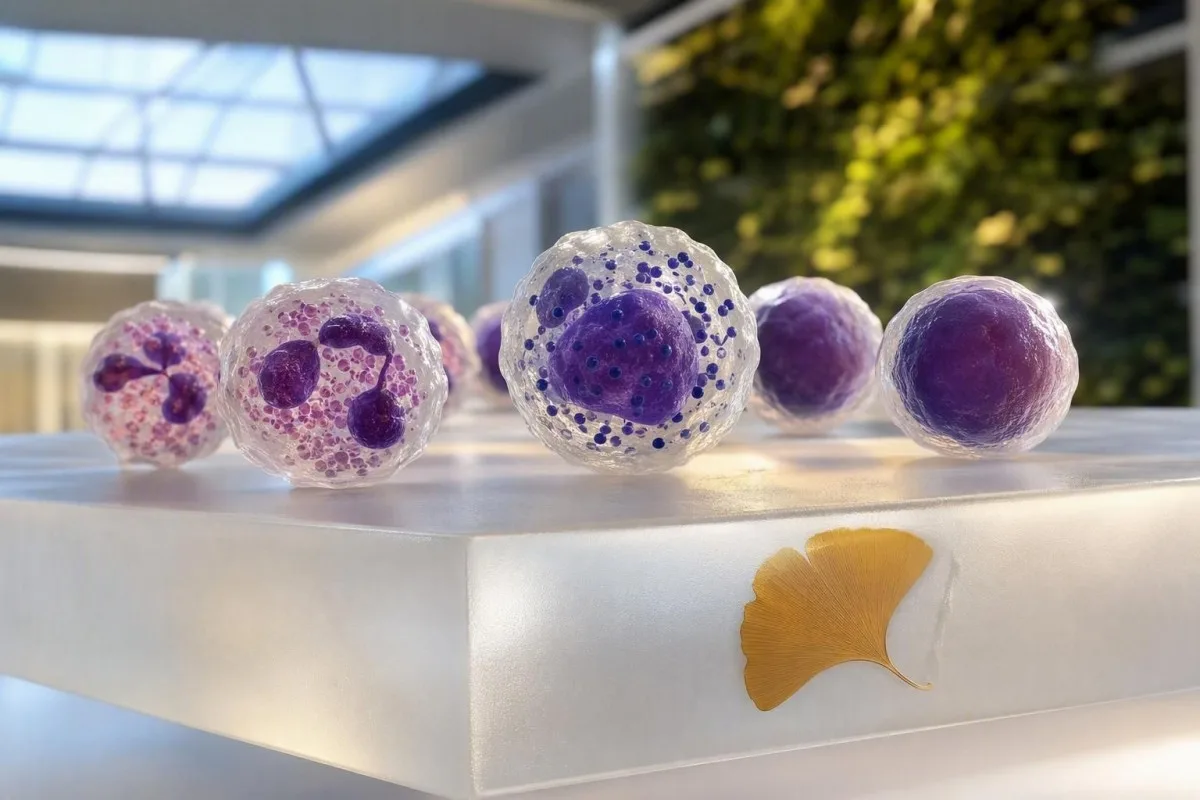
De measte folwoeksenen hawwe absolute basofilen fan 0,00–0,10 × 10⁹/L (0–100/µL), wylst it persintaazje meastentiids 0–1% is. In myld ûngewoan persintaazje wjerspegelt faak skiften yn oare wite sellen; de absolute basofilkentelling is it resultaat dat meastentiids it opfolgjende paad begeliedt.


- Absolute basofilen binne meastentiids 0,00–0,10 × 10⁹/L (0–100/µL) by folwoeksenen en binne klinysk nuttiger as allinich in persintaazje.
- Basofilenpersintaazje is faak 0–1% fan wite sellen, mar it kin stige as neutrofilen of lymfocyten falle, sels as de absolute telling normaal is.
- Bern brûke faak deselde praktyske boppegrins fan 0,10 × 10⁹/L nei de bernejierren, mar it leeftyd-spesifike ynterval fan it laboratoarium hat foarrang.
- In werhelling fan CBC oer 2–8 wiken is ridlik foar allinichsteande, mylde basofilie nei in allergie, ynfeksje of medisynferoaring.
- Oanhâldende basofilie boppe 0,20 × 10⁹/L fertsjinnet de beoardieling fan in dokter, benammen mei hege wite sellen, anemia, splenomegaly of konstitúsjonele symptomen.
- Dringende oersjoch is rjochtfeardige foar dúdlike leukocytosis, ûnferklearber gewichtsverlies, nachtswitjes, koarts of betide folheid ûnder de lofterribben.
- Nul basofilen op in automatyske differinsjaal is gewoan en hat meastentiids gjin klinyske betsjutting.
- Kantesti AI lêst basofilen tegearre mei totale wite sellen, eosinofilen, bloedplaatjestelling, hemoglobine, en eardere resultaten ynstee fan ien flagge as in diagnoaze te behanneljen.
Absolute basofilen tsjin basofilpersintaazje
Absolute basofilen fan 0,00–0,10 × 10⁹/L binne yn 't algemien normaal by folwoeksenen, wylst in basofilpersintaazje fan 0-11% mar in diel is fan it totale tal wite sellen. As de twa net oerienkomme, jouwe dokters meastentiids mear gewicht oan it absolute resultaat.
In persintaazje kin heech lykje gewoan om't in oar type wite sel leech is. Bygelyks, 1,5% basofilen mei in wite bloedsellen oantal fan 3,0 × 10⁹/L leveret in absolút oantal fan mar 0,045 × 10⁹/L op – fier binnen in protte folwoeksen yntervallen. Dêrom fertelt in flagge op persintaazje allinnich selden it hiele ferhaal.
De berekkening is rjochtút: totale wite sellen × basofilpersintaazje ÷ 100. In wite telling fan 12,0 × 10⁹/L en basofilen fan 2% jout 0,24 × 10⁹/L, wat in wirklike ferheging is. Foar de bredere kontekst, sjoch ús hantlieding foar wat in CBC omfettet.
Kantesti is in AI bloedtestanalysator dat persintaazjes omset yn klinysk fergelykbere absolute oantallen as it boarneferslach in differinsjaalbedrach jout. Nei myn miening foarkomt dy iene omset in aardich part fan ûnnedige alarm nei in routine sûnenskontrôle.
Wêrom it absolute oantal stabiler is
Automatisearre analysers telle tûzenen sellulêre barren, mar basofilen binne normaal seldsum – faak minder as 1 op 100 wite sellen. Lytse analytyske en biologyske skiften kinne dêrom it persintaazje mear opfallend ferpleatse as it absolute oantal.
Praktyske basofil referinsje-intervallen neffens leeftiid
De measte laboratoaren brûke in absolút basofil referinsjeinterval fan 0,00–0,10 × 10⁹/L fan bernejierren oant folwoeksenheid, mar nijberne berikken kinne breder wêze. Brûk it ynterval dat neist jo eigen resultaat printe is, om't referinsjelimiten ôfhingje fan de analysator metoade en it pleatslike sûne befolking fan it laboratoarium.
Foar poppen yn de earste wiken fan it libben akseptearje guon pediatryske laboratoaren absolute basofilen oant rûchwei 0,20–0,40 × 10⁹/L. It neonatale ymmúnsysteem past him rap oan, dus folwoeksen grinzen moatte net oplein wurde op in nijberne resultaat sûnder pediatryske ynput.
Fan sawat 1 jier âld ôf tapasse in protte tsjinsten in praktyske boppegrins tichtby 0,10 × 10⁹/L, of 100/µL. In resultaat fan 0,11 × 10⁹/L by in goed bloeiend bern mei in normaal totaal wite sellen oantal is meastentiids in fraach nei werhelling en kontekst, gjin needgefallen.
CLSI EP28-A3c leit út wêrom't laboratoaren har eigen referinsjeintervallen fêststelle of ferifiearje ynstee fan in universeel berik te liene (CLSI, 2010). Us neutrophil leeftiid-berik gids lit itselde prinsipe sjen foar in oar differinsjaalbedrach.
Begripen fan basofil-ienheden op UK, US en ynternasjonale rapporten
In basofilen-telling fan 0,10 × 10⁹/L stiet gelyk oan 100/µL, dus rapporten dy't ferskillende ienheden brûke kinne itselde resultaat beskriuwe. Ferklearre Ingelske folsleine bloedtellingen rapportearje faak ×10⁹/L, wylst Amerikaanske laboratoaria faak sellen/µL of K/µL brûke.
Om ×10⁹/L nei sellen/µL om te setten, fermannichfâldigje mei 1.000. Dus 0,05 × 10⁹/L stiet gelyk oan 50/µL; 0,25 × 10⁹/L stiet gelyk oan 250/µL. In rapport dat 0,0 toant kin ôfrûn wurde nei ien desimaal plak ynstee fan te bewizen dat der letterlik gjin basofilen binne.
In wearde neamd as 0,2 K/µL stiet gelyk oan 0,20 × 10⁹/L. Dat ûnderskied is fan belang, om't 0,2% en 0,2 K/µL folslein ferskillende mjittingen binne. Pasjinten brûke se regelmjittich trochinoar by it fergelykjen fan rapporten út twa lannen.
As jo rapport FBC seit ynstee fan CBC, binne de ûnderdielen grutdiels itselde; ús Ferklearring fan Ingelske folsleine bloedtelling oerset de mienskiplike terminology.
Wêrom basofil-tellingen stige of falle
Lichte basofily giet meastentiids begelieding troch allergy, chronike ûntstekking, herstel fan in ynfeksje, of in medisyn-relatearre ymmúnshift. In lege telling of nul basofilen is meastentiids net sinfol, om't dizze sellen yn tige lytse oantallen sirkulearje.
Basofilen drage reseptors foar IgE en kinne histamine en oare mediators frijlitte nei blootstelling oan allergenen. Seizoensgebonden allergyske rhinitis, chronike urticaria, astma, en guon hûddoarren kinne gearfalle mei in lytse stiging, hoewol't in normale telling gjin fan dizze útslút noch befêstiget.
Hypothyroïdy, inflammatoire darm sykte, reumatyske steurnissen, en guon chronike ynfeksjes kinne ek assosjearre wêze mei basofily. De brûkbere fraach is net “hokker sykte feroarsaket dit?” mar “hokker oare sinjalen binne oanwêzich?”—CRP, eosinofilen, symptomen, medisyneskiednis, en it trajekt binne allegear fan belang.
In ferhege IgE en eosinofilen-telling kin in allergysk patroan stypje, wylst isolearre jeuk miskien in bredere beoardieling nedich hat; ús artikel oer bloedtests foar jeukende hûd ferklearret de praktyske grinzen fan CBC-tests.
Wannear moatte jo in CBC foar basofilen werhelje?
Werhelje in CBC yn 2-8 wiken foar in lichte, isolearre basofilen-ferheging nei in tydlike trigger, salang't jo jo goed fiele en de rest fan de telling geruststellend is. Werhelje earder, meastentiids binnen dagen oant 2 wiken, as de totale wite sellen tanimme of der binne meardere anormale selrigels.
Foar in absolute basofilen-telling fan 0,11-0,20 × 10⁹/L nei in ferkâldheid, opfljochting fan heakoarts, faksinaasje, of in koarte steroïde kursus, jou ik faak de foarkar oan ien kalme werhelling boppe in kaskade fan tests. Besykje deselde laboratoarium te brûken, en notearje resinte sykte, nije medisinen, feroarings yn smoken, en steroïde-eksposysje.
Besykje de telling net te “ferbetterjen” foar in werhellingstest. Hydrataasje is ferstannich, mar oanfollingen, antihistaminika, kortikosteroïden, en yntinse duorsume oefening kinne de bredere differinsjaal feroarje. Us bloedtest tiidline gids details gewoane timingseffekten.
Kantesti is in AI bloedtest-útslachplatfoarm dy't it hjoeddeistige ferskil fergeliket mei eardere CBC's en in konstante stiging oars markearret as in ienmalige flagge. In trend oer 3-6 moannen is faak ynformatyf dan in inkeld desimaal punt.
Hoe tariede op in betroubere basofil-retest
Basofyltesten fereasket meastentiids gjin fêsten, mar in werhelling CBC is it meast ynterpretearber as jo net akút siik binne en de samlingomstannichheden ferlykber binne. Stribje nei normale floeistoffen, gewoane mielingen, en in routine dei ynstee fan ekstreme feroarings.
Foarkom it plannen fan in net-urginte opnij testen tidens koarts, signifikante allergyske útbraak, of de dei nei in ûngewoan swiere úthâldingsaktiviteit as it doel is om de basisline te fêstigjen. Akute stresshormonen en floeistofskiften kinne ferskate wite-sellen-subsets foar oeren oant dagen ferpleatse.
Fertel de klinikus of flebotomist oer systemyske kortikosteroïden, lithium, epinefrine-befetsjende behannelingen, resinte biologyske terapy, en elk nij oanfolling. Steroiden ferleegje meastentiids sirkulearjende basofylen en eosinofylen, dus in “normaal” resultaat by it nimmen dêrfan fertsjintwurdiget jo ûnbehandele basisline miskien net.
Samplekwaliteit is noch altyd wichtich. Klotsige EDTA-samples en fertrage analyze kinne automatyske differinsjaaltsjes minder betrouber meitsje; as ferskate CBC-wearden tegearre nuver lykje, kontrolearje dan wannear't in opnij tekening nedich is.
CBC-patroanen dy't ferhege basofilen signifikant meitsje
Basofily is mear soarchlik as absolute basofylen 0.20 × 10⁹/L grutter binne en foarkomme mei oanhâldende wite bloedseltsjes boppe 11.0 × 10⁹/L, anemia, bloedplaatjesferoarings, of ûnripe sellen. De kombinaasje - net allinich basofylen - bepaalt hoe fluch klinisy ûndersykje.
In 44-jierrige dy't ik besjoen hie basofylen fan 0.28 × 10⁹/L, wite sellen fan 16.4 × 10⁹/L, bloedplaatjes fan 610 × 10⁹/L, en iere sêding. Dat patroan rjochtfeardige in hematology-paad fan deselde wike; it yndividuele basofylresultaat joech de diagnoaze net, mar it wie in wichtige oanwizing.
Basofily neist hege neutrofilen en splenyske symptomen kin foarkomme by myeloproliferative neoplasmen, ynklusyf chronike myeloïde leukemy. European LeukemiaNet advisearret molekulêre testen en spesjalistyske beoardieling as it klinyske en bloedtelling-patroan dy mooglikheid opropt (Hochhaus et al., 2020).
In perifeare smear kin echte differinsjaalferoarings ûnderskiede fan analyserûnwissichheid en kin in loftskeift of atypyske sellen sjen litte. Lês mear oer bloedkanker CBC-paden sûnder derfan út te gean dat in abnormale telling kanker betsjut.
Symptomen en resultaten dy't driuwende medyske oandacht nedich binne
Sykje driuwend medysk ûndersyk foar basofily mei koarts, drenchende nachtswitten, ûnferklearbere gewichtsverlies, nije blauwe plakken, sykheljen, slimme wurgens, of folte yn 'e linker boppeste abdij. Dizze symptomen wurde net feroarsake troch in myld ferhege basofylresultaat sels; se sinjalearje dat it bredere klinyske byld beoardieling nedich hat.
In totale wite telling boppe 30 × 10⁹/L, rap tanimmende wearden, of sichtbere ûnripe granulocyten op in rapport moatte driuwend besprutsen wurde mei de bestellende klinikus. Slimme hoofdpijn, fisuele feroaring, boarstpine, of neurologyske symptomen fereaskje needhûsbeoardieling, nettsjinsteande de basofyltelling.
De measte minsken mei 0.11–0.20 × 10⁹/L basofylen en gjin symptomen hoege gjin needsoarch. Dochs is dit ien fan dy gebieten wêr't kontekst mear is dan it nûmer, foaral as eardere resultaten 0.02 × 10⁹/L wiene en de nije telling klimt.
As jo ek koartheid fan sykheljen of bleekheid hawwe, kinne de begeliedende hemoglobine- en bloedplatjeswearden wichtiger wêze; sjoch ús koartheid-fan- sykheljen bloed-test gids.
Wat lege basofilen of in resultaat fan nul betsjut
In basofylresultaat fan 0.00 × 10⁹/L is meastentiids normaal en wurdt selden op himsels werhelle. Basofylen kinne ûnder de rapportearjende drompel fan de analyser wêze, om't se natuerlik sparse binne yn sirkulaasje.
Akute stress, ynfeksje, swangerskip, hyperthyroïdy, en kortikosteroïde behanneling kinne allegear sirkulearjende basofilen tydlik ferminderje. Doch is der gjin erkend symptoomsyndroom feroarsake troch isolearre lege basofilen, yn tsjinstelling ta klinysk signifikante neutropeny.
It analytyske probleem is maklik te missen: as der mar in pear basofilen teld wurde, kin routine-foarbyldnimmen fan fariaasje 0.01 × 10⁹/L yn 0.00 × 10⁹/L meitsje op in folgjende lûking. Dat is net needsaaklik in biologyske feroaring.
Dr. Thomas Klein's praktyske advys is om in lege-basofilenflag te negearjen as de rest fan 'e CBC sûn is en der gjin relevante symptomen binne. Us tawijde gids leit út basofilen op nul.
Basofilen yn swangerskip en letter libben
Swangerskip en ferâldering hawwe net ien spesjale basofilen-ôfsnijding; it ynterval fan it rapportearjende laboratoarium en it folsleine patroan fan wite sellen bliuwe de bêste referinsje. Swangerskip ferheget faak totale wite sellen troch neutrofilen, wat it basofilenpersintaazje leger likje kin meitsje sûnder in echte basofilenreduksje.
Under swangerskip kin in totaal wite telling fan 12–15 × 10⁹/L fysiologysk wêze, benammen letter yn 'e gestasje, dus de ynterpretaasje op basis fan persintaazjes wurdt noch minder betrouber. In absolute basofilentelling bliuwt foarkar, mar soargen symptomen oerhearskje noch altyd in referinsje-ynterval.
By âldere folwoeksenen fertsjinnet in nije oanhâldende basofilentelling boppe 0.20 × 10⁹/L oandacht, om't medisynbelasting en mar-oandwanings faker wurde mei de leeftiid. Dat makket it net diagnostysk; it ferleget gewoan de drompel foar it sjen nei de CBC-trend en smear.
Foar oare swangerskip-spesifike ynterpretaasje falen, besjoch swangerskip-bloedtest reade flaggen.
Medisinen, allergieën en basofil-fluktuaasjes
Allergysymptomen kinne gearfalle mei mild ferhege basofilen, wylst systemyske kortikosteroïden se faak binnen dagen ferleegje. Gjin fan beide patroanen befêstiget in allergydiagnose of bewize dat in medisyn ferantwurdlik is.
Antihistaminika blokkearje primêr histamine-receptors; se normalisearje in basofilentelling net betrouber. Orale prednison en oare systemyske glukokortikoïden kinne wite sellen redistribuearje, faak eosinofilen en basofilen ferminderje, wylst sirkulearjende neutrofilen ferheegje.
Lithium is in minder foarkommende, mar nuttige medisyn-oanwizing, om't it wite-selproduksje ferheegje kin. Biologyske medisinen, gemoterapy, en immune-modulatoare behannelingen moatte nea stoppe wurde fanwegen ien CBC-resultaat - freegje it foarskriuwende team hoe't it resultaat past yn harren monitoringsplan.
In ferhege basofilentelling neist fluitjen, hûfkes, swelling fan it gesicht, of flauwheid moat behannele wurde as in symptomeprobleem, net as in laboratoariumpuzel. Us hege IgE-gids leit út wêr't allergy-markers helpe en wêr't se misliede.
Wat dokters kontrolearje nei oanhâldende basofilie
Oanhâldende absolute basofilie feroarsaket meastentiids in werhelling fan de CBC, manuele smear-oersjoch, medisyn- en symptoom-oersjoch, dan rjochte testen as de totale wite telling of oare sel-linen abnormal binne. Brede kankerpanielen binne net de gewoane earste stap foar in lichte isolearre ferheging.
It earste punt fan takomst is oft it resultaat isolearre is. In stabile hemoglobine, bloedplaatjes, wite-seltelling, en normale smear stypje sterk in konservatyf plan; bloedearmoed, trombocytose, leukocytose, of splenomegaly driuwe de beoardieling yn in oare rjochting.
Wannear't in myeloproliferative steuring plausibel is, kinne dokters BCR::ABL1-testing, JAK2-testing, laktate dehydrogenase, urate, en spesjalistyske resinsje oanfreegje. Valent et al. beskriuwe oanhâldende basofilie as in betsjuttingsfolle fynst yn 'e klassifikaasje fan basofilyke en myeloïde neoplasmen (Valent et al., 2022).
Kantesti's neurale netwurk identifisearret kombinaasjes dy't resinsje fertsjinje, mar diagnostisearret gjin leukemy fan in CBC. Us medyske validaasje-oanpak leit út wêzen wêrom't laboratoariumynterpretaasje klinyske begelieding nedich hat.
Hoe basofilen te folgjen sûnder oer te reagearjen
In betsjuttingsfolle basofilen-trend is in oanhâldende rjochtingsferoaring oer ferlykbere CBC's, net ien inkele beweging fan 0,04 oant 0,08 × 10⁹/L. Mei in referinsjeinterval foar folwoeksenen fan 0,10 × 10⁹/L bliuwe beide wearden binnen it berik, nettsjinsteande dat se numerike oars oars binne.
Bewarje it absolute oantal, it persintaazje, de totale wite sellen, neutrofielen, eosinofielen, hemoglobine, bloedplaatjes, datum, resinte sykte, en medisinen nei elke bloedôfnimming. Dizze lytse notysje jout jo klinikus mear brûkbere ynformaasje dan skermôfbyldings fan isolearre reade flaggen.
Kantesti is in AI-oandreaune ark foar analyse fan bloedtests brûkt yn [127+] lannen om CBC-resultaten langolithysk te fergelykjen, wylst it opjûne ynterval fan it boarne-laboratoarium behâldt. Dr. Thomas Klein riedt oan om op syn minst twa ferlykbere resultaten te besjen foardat betekenis jûn wurdt oan in begrinzge differinsjaalferoaring.
In nuttige regel: as it absolute oantal ûnder 0,10 × 10⁹/L bliuwt, it totale wite oantal stabyl is, en jo jo goed fiele, is routine opfolging by jo folgjende plande bloedtest meastal genôch. Brûk ús gids foar ferskil yn bloedtests om te beoardieljen oft in ferskowing wierskynlik echt is.
Fragen om te stellen by in opfolgjend ôfspraak
De bêste opfolchfraach is “Wat is myn absolute basofilen-oantal, en wat oars is feroare op de CBC?” Dy formulering rjochtet it petear op de fariabelen dy't de klinyske risiko's eins feroarje.
Freegje oft it oantal nij is, oanhâldend, tanimmend, of wierskynlik reäaktyf; oft in smearûndersyk nedich is; en wannear't de folgjende CBC nommen wurde moat. Nim in list mei resinte ynfeksjes, allergyske symptomen, medisinen, oanfollingen, reizen, en famyljeskiednis fan bloedsteurnissen mei.
As jo in absolút oantal hawwe boppe 0,20 × 10⁹/L plus ferhege totale wite sellen, freegje dan oft hematology-ynput passend is. As it oantal mar in bytsje boppe it berik is en isolearre, freegje dan hokker feroaring earder testen soe útlokje ynstee fan it slimste te oannimmen.
De troch dokters beoardiele ûnderwiisstanderts fan Kantesti wurde begelaat troch ús Medyske Advysried. Fanôf 30 augustus 2026 bliuwt de feilichste oanpak ienfâldich: ynterpretearje it absolute oantal, befêstigje it bliuwen, en hannelje rapper allinich as it bredere patroan it rjochtfeardiget.
Faak stelde fragen
Wat is de normale basofilentelling by folwoeksenen?
De gewoane referinsje-ynterval foar absolute basofilen by folwoeksenen is 0.00–0.10 × 10⁹/L, wat lyk is oan 0–100 sellen/µL. De measte laboratoaria rapportearje in basofilpercentage fan 0–1%, hoewol't it persintaazje misliedend wêze kin as it totale oantal wite bloedsellen feroaret. De referinsje-ynterval fan jo eigen laboratoarium hat foarrang, om't metoaden en pleatslike referinsjepopulaasjes ferskille. In isolearre resultaat fan 0.11 × 10⁹/L rjochtfeardiget meastal kontekst of in plande werhelling ynstee fan needsoarch.
Is 2% basofilen heech?
In basofil pourcentage fan 2% leit boppe in protte laboratoariumperinte-intervallen, mar it is net genôch om it risiko te beoardieljen sûnder de totale wite bloedsellen. Mei wite bloedsellen fan 4.0 × 10⁹/L, lykweardich oan in absolút basofilgetal fan 0.08 × 10⁹/L, wat faak normaal is. Mei wite bloedsellen fan 15.0 × 10⁹/L, lykweardich oan deselde 2% 0.30 × 10⁹/L en fertsjinnet klinyske beoardieling. Sykje altyd it absolute basofilgetal foardat jo it persintaazje ynterpretearje.
Wannear moat ik in CBC werhelje foar hege basofilen?
In werhelleke CBC yn 2-8 wiken is meastentiids ridlik foar mylde, allinnich basofily fan sawat 0,11-0,20 × 10⁹/L nei in sykte, allergy-opflakkering of medikaasje feroaring. Werhelje earder as de totale wite bloedtelling tanimt, de basofyltelling boppe de 0,20 × 10⁹/L is, of hemoglobine en bloedplaatjes ek abnormal binne. Brûk safolle mooglik deselde laboratoarium om't analyseringsmetoaden en referinsje-intervallen ferskille. Koarts, gewichtsverlies, nacht sweats, kneuzingen, of folheid yn it linkerboppeste abdominale gebiet rjochtfeardigje prompt medysk ûndersyk ynstee fan te wachtsjen op in routine retest.
Binne basofilen fan nul gefaarlik?
In basofyltelling fan 0,00 × 10⁹/L is meastentiids net gefaarlik en fereasket yn ’t algemien gjin fierdere opfolging as de rest fan de CBC normaal is. Basofilen binne seldsume sellen, sadat in routine automatisearre differinsjaaltsje nul melde kin om't it oantal ûntdutsen sellen ûnder de rûning of rapportearpresyzje falt. Kortikosteroïden, akute stress, swangerskip en ynfeksjes kinne sirkulearjende basofilen tydlik ferleegje. Klinisy diagnostisearje gjin ymmúndefisjinsje fan isolearre lege basofilen.
Kinne allergyen hege basofilen feroarsaakje?
Allergyske tastannen kinne gearfalle mei mild ferhege basofilen om't basofilen meidogge oan IgE-relatearre ymmúnsystemen en mediators frijlitte lykas histamine. In heech basofilantal bewûnt net dat allergy de oarsaak is, en in protte minsken mei wichtige allergy-symptomen hawwe normale basofilantallen. Antallen boppe 0,20 × 10⁹/L dy't bliuwe nei't de allergy-symptomen delteare, moatte beoardiele wurde mei de hiele CBC. Eosinofilen, totale IgE, hûdsymptomen en medisyngebrûk kinne mear nuttige kontekst leverje.
Hokker basofylen tal suggerearret leukemy?
Gjin inkele basofyltelling stelt leukemy fêst, mar oanhâldende absolute basofily boppe 0,20 × 10⁹/L mei leukozytoaze, bloedearmoed, trombosytoare fersteurings, ûnryp granulocytes, of splenykse symptomen moatte medyske beoardieling oproppe. Basofily kin foarkomme yn chronike myeloiske leukemy en oare myeloproliferative neoplasmen, mar reaktive oarsaken bliuwe faker foar lichte isolearre ferhegingen. Klinisy kinne in smear en rjochte molekulêre tests lykas BCR::ABL1 bestelle allinich as it bredere patroan it stipet. In normale totale wite bloedtelling en in stabile CBC feroarje it soarchnivo signifikant.
Krij hjoed noch AI-oandreaune bloedtest-analyse
Doch mei oan mear as 2 miljoen brûkers wrâldwiid dy’t Kantesti fertrouwe foar direkte, krekte analyse fan laboratoariumtests. Upload jo bloedtest resultaten en ûntfange wiidweidige ynterpretaasje fan 15,000+-biomarkers yn sekonden.
📚 Ferwiisde ûndersykspublikaasjes
Klein, T., Mitchell, S., & Weber, H. (2026). B Negative bloedtype, LDH-bloedtest en hantlieding foar retikulocyten-telling. Kantesti AI Medysk Undersyk.
Klein, T., Mitchell, S., & Weber, H. (2026). Diarree nei fêstjen, swarte stippen yn 'e kruk en GI-hantlieding 2026. Kantesti AI Medysk Undersyk.
📖 Eksterne medyske referinsjes
Clinical and Laboratory Standards Institute (2010). Definiearjen, Fêststellen en Verifiearen fan Referinsjeintervallen yn it Klinysk Laboratoarium. CLSI EP28-A3c.
⚕️ Medyske disclaimer
Dit artikel is allinnich foar ûnderwiisdoelen en foarmet gjin medysk advys. Rieplachtsje altyd in kwalifisearre soarchferliener foar besluten oer diagnoaze en behanneling.
E-E-A-T fertrouwensignalen
Ûnderfining
Dokter-oandreaune klinyske resinsje fan lab-ynterpretaasje-wurkprosessen.
Ekspertize
Fokus fan laboratoariummedisyne op hoe’t biomarkers har gedrage yn in klinyske kontekst.
Autoriteit
Skreaun troch dr. Thomas Klein mei resinsje troch dr. Sarah Mitchell en prof. dr. Hans Weber.
Betrouberens
Bewiis-basearre ynterpretaasje mei dúdlike ferfolchpaadkes om alarm te ferminderjen.