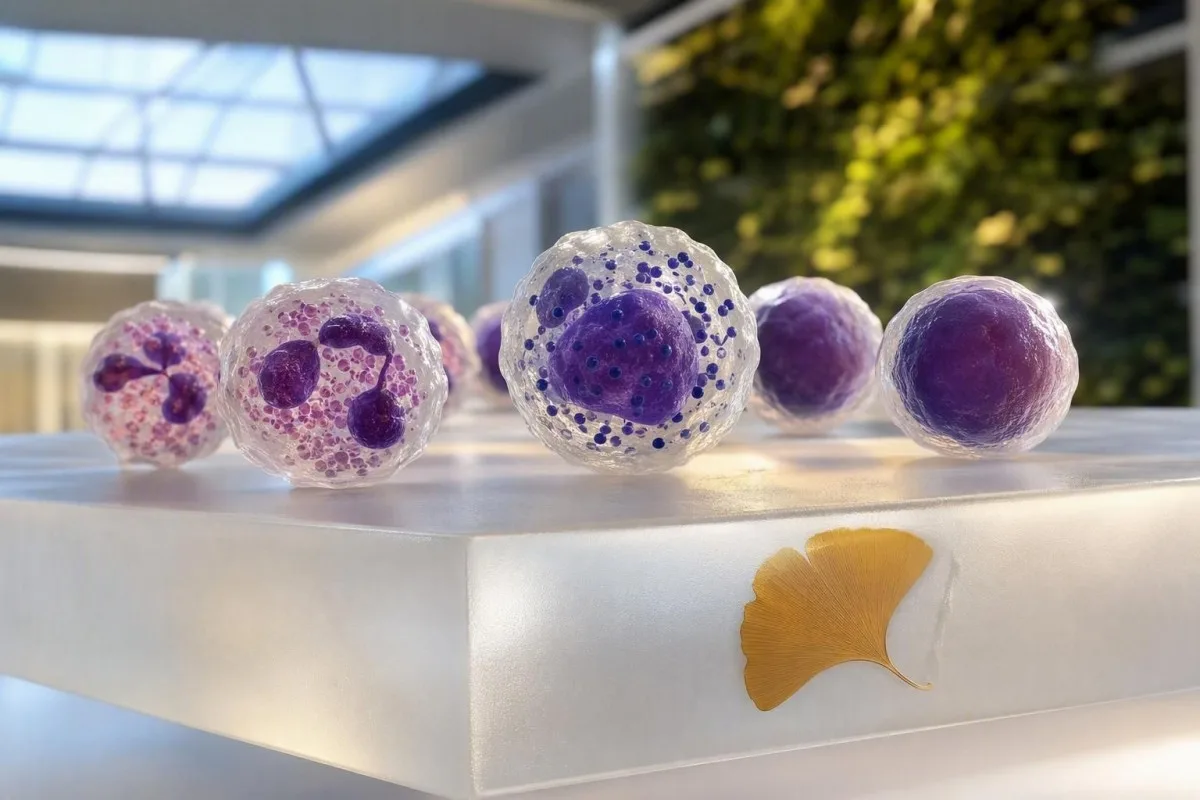
Watu wengi wazima wana vipimo kamili vya basophils vya 0.00–0.10 × 10⁹/L (0–100/µL), wakati asilimia kwa kawaida ni 0–1%. Asilimia isiyo ya kawaida kidogo mara nyingi huakisi mabadiliko katika seli nyingine nyeupe; hesabu kamili ya basophils ndiyo matokeo ambayo kwa kawaida huongoza ufuatiliaji.


- Basofili za jumla (Absolute basophils) kwa kawaida ni 0.00–0.10 × 10⁹/L (0–100/µL) kwa watu wazima na ni muhimu zaidi kitabibu kuliko asilimia pekee.
- Asilimia ya basofili kwa kawaida ni 0–1% ya seli nyeupe, lakini inaweza kuongezeka wakati neutrophils au lymphocytes hupungua hata ikiwa hesabu kamili ni ya kawaida.
- Watoto mara nyingi hutumia kiwango cha juu cha vitendo cha 0.10 × 10⁹/L baada ya utoto, lakini kiwango maalum cha umri cha maabara kinatangulia.
- CBC ya kurudia ndani ya wiki 2–8 ni busara kwa basophilia iliyotengwa, ya wastani baada ya mzio, maambukizi, au mabadiliko ya dawa.
- Basophilia inayoendelea zaidi ya 0.20 × 10⁹/L inastahili uchunguzi wa daktari, hasa ikiwa na seli nyeupe nyingi, upungufu wa damu, splenomegaly, au dalili za kikatiba.
- mapitio ya haraka inahitajika kwa leukocytosis iliyo dhahiri, kupoteza uzito bila kueleweka, jasho la usiku sana, homa, au kujaa kwa mapema chini ya mbavu za kushoto.
- Basophils sifuri kwenye uchambuzi wa kiotomatiki ni jambo la kawaida na kwa kawaida halina umuhimu wa kimatibabu.
- Kantesti AI husoma basophils pamoja na seli nyeupe za damu jumla, eosinophils, hesabu ya chembechembe, haemoglobin, na matokeo ya awali badala ya kutibu bendera moja kama utambuzi.
Vipimo kamili vya basophils dhidi ya asilimia ya basophil
Basophils kamili za 0.00–0.10 × 10⁹/L kwa ujumla ni za kawaida kwa watu wazima, wakati asilimia ya basophils ya 0–1% ni sehemu tu ya jumla ya hesabu ya seli nyeupe za damu. Wakati hizi mbili zinapotofautiana, waganga kwa kawaida huipa uzito zaidi matokeo kamili.
Asilimia inaweza kuonekana kuwa ya juu kwa sababu tu aina nyingine ya seli nyeupe za damu ni ya chini. Kwa mfano, basophils 1.5% na hesabu ya seli nyeupe za damu ya 3.0 × 10⁹/L hutoa hesabu kamili ya 0.045 × 10⁹/L tu—ambayo iko ndani ya vipindi vingi vya watu wazima. Ndiyo maana bendera ya asilimia pekee mara chache hueleza hadithi nzima.
Hesabu ni rahisi: jumla ya seli nyeupe za damu × asilimia ya basophils ÷ 100. Hesabu ya seli nyeupe za damu ya 12.0 × 10⁹/L na basophils za 2% hutoa 0.24 × 10⁹/L, ambayo ni ongezeko la kweli. Kwa muktadha mpana zaidi, angalia mwongozo wetu wa kile CBC inachojumuisha.
Kantesti ni Mchambuzi wa mtihani wa damu wa AI unaobadilisha asilimia kuwa vipimo kamili vinavyolinganishwa kimatibabu wakati ripoti chanzo inatoa uchambuzi. Kwa uzoefu wangu, ubadilishaji huo mmoja huzuia kiasi kikubwa cha hofu isiyo ya lazima baada ya uchunguzi wa kawaida wa afya.
Kwa nini nambari kamili ni thabiti zaidi
Vipima vya kiotomatiki huhesabu maelfu ya matukio ya seli, lakini basophils kwa kawaida ni adimu—mara nyingi chini ya 1 kati ya seli 100 nyeupe za damu. Kwa hiyo, mabadiliko madogo ya uchambuzi na ya kibiolojia yanaweza kusababisha asilimia kuonekana zaidi kuliko hesabu kamili.
Vipimo vya vitendo vya basophil kwa umri
Maabara nyingi hutumia kiwango cha marejeleo cha basophils kamili cha 0.00–0.10 × 10⁹/L kutoka utoto hadi utu uzima, lakini vipimo vya watoto wachanga vinaweza kuwa pana zaidi. Tumia kipindi kilichoandikwa karibu na matokeo yako mwenyewe, kwa sababu mipaka ya marejeleo inategemea mbinu ya kipima na idadi ya watu wenye afya ya eneo husika ya maabara.
Kwa watoto wachanga katika wiki za kwanza za maisha, baadhi ya maabara za watoto huafiki basophils kamili hadi takriban 0.20–0.40 × 10⁹/L. mfumo wa kinga wa watoto wachanga unabadilika haraka, kwa hivyo mipaka ya watu wazima haipaswi kutumika kwa matokeo ya mtoto mchanga bila ushauri wa watoto.
Kuanzia takriban mwaka 1 kuendelea, huduma nyingi hutumia kikomo cha juu cha vitendo karibu na 0.10 × 10⁹/L, au 100/µL. Matokeo ya 0.11 × 10⁹/L kwa mtoto anayekua vizuri na hesabu ya kawaida ya seli nyeupe za damu kwa kawaida ni swali la kurudiwa na muktadha, sio dharura.
CLSI EP28-A3c inaeleza kwa nini maabara huweka au kuthibitisha vipimo vyao vya marejeleo badala ya kukopa kiwango cha ulimwengu wote (CLSI, 2010). Mwongozo wetu wa wa vipimo vya neutrophils kulingana na umri unaonyesha kanuni hiyo hiyo kwa uchambuzi mwingine tofauti.
Kuelewa vitengo vya basophil kwenye ripoti za Uingereza, Marekani na kimataifa
Hesabu ya basophil ya 0.10 × 10⁹/L ni sawa na 100/µL, kwa hivyo ripoti zinazotumia vitengo tofauti zinaweza kuelezea matokeo sawa. Vipimo kamili vya damu nchini Uingereza mara nyingi huripoti ×10⁹/L, wakati maabara za Marekani kwa kawaida hutumia seli/µL au K/µL.
Kubadilisha ×10⁹/L hadi seli/µL, zidisha kwa 1,000. Hivyo 0.05 × 10⁹/L ni sawa na 50/µL; 0.25 × 10⁹/L ni sawa na 250/µL. Ripoti inayoonyesha 0.0 inaweza kuwa imezungukwa hadi tarakimu moja ya decimal badala ya kuthibitisha kuwa hakuna basophils hata kidogo.
Thamani iliyoorodheshwa kama 0.2 K/µL ni sawa na 0.20 × 10⁹/L. Tofauti hiyo ni muhimu kwa sababu 0.2 TP54T na 0.2 K/µL ni vipimo tofauti kabisa. Wagonjwa mara nyingi huzichanganya wanapolinganisha ripoti kutoka nchi mbili.
Ikiwa ripoti yako inasema FBC badala ya CBC, vipengele vyake kwa kiasi kikubwa ni sawa; yetu maelezo ya vipimo kamili vya damu nchini Uingereza hutafsiri istilahi za kawaida.
Kwa nini hesabu za basophil huongezeka au hupungua
Basophilia kidogo zaidi mara nyingi huambatana na mzio, kuvimba kwa muda mrefu, kupona kutokana na maambukizi, au mabadiliko ya kinga yanayosababishwa na dawa. Hesabu ya chini au basophils sifuri kwa kawaida haimaanishi chochote kwa sababu seli hizi huzunguka kwa idadi ndogo sana.
Basophils hubeba vipokezi kwa ajili ya IgE na vinaweza kutoa histamine na vichocheo vingine baada ya kukabiliwa na allergener. Rhinitis ya mzio wa msimu, urticaria sugu, pumu, na baadhi ya matatizo ya ngozi vinaweza kuambatana na ongezeko dogo, ingawa hesabu ya kawaida haiondoi uwezekano wa yoyote kati ya hizo.
Hypothyroidism, ugonjwa wa uchochezi wa utumbo, matatizo ya rheumatoid, na baadhi ya maambukizi sugu pia yanaweza kuhusishwa na basophilia. Swali la maana si “ugonjwa gani unasababisha hili?” bali “ni ishara nyingine gani zipo?”—CRP, eosinophils, dalili, historia ya dawa, na mwelekeo wote ni muhimu.
Kuongezeka kwa IgE na hesabu ya eosinophil kunaweza kuunga mkono muundo wa mzio, wakati kuwashwa pekee kunaweza kuhitaji uchunguzi mpana zaidi; makala yetu kuhusu vipimo vya damu kwa ngozi inayowasha yanaelezea mipaka ya vitendo ya upimaji wa CBC.
Unapaswa kurudia CBC lini kwa basophils?
Rudia CBC baada ya wiki 2–8 kwa ongezeko kidogo, la pekee la basophil baada ya kichocheo cha muda mfupi, mradi unajisikia vizuri na sehemu nyingine za hesabu zimehakikishiwa. Rudia mapema zaidi, kwa kawaida ndani ya siku hadi wiki 2, wakati seli nyeupe jumla zinapoongezeka au kuna mistari mingi ya seli isiyo ya kawaida.
Kwa hesabu kamili ya basophil ya 0.11–0.20 × 10⁹/L baada ya mafua, kuongezeka kwa homa ya nyasi, chanjo, au kozi fupi ya steroidi, mara nyingi hupendelea kurudia mara moja bila shughuli nyingi badala ya mfululizo wa vipimo. Jaribu kutumia maabara sawa, na rekodi ugonjwa wa hivi karibuni, dawa mpya, mabadiliko ya uvutaji sigara, na kukabiliwa na steroidi.
Usijaribu kuboresha hesabu kabla ya kufanya kipimo tena. Kunywa maji kunasaidia, lakini virutubisho, dawa za mzio, dawa za steroidi, na mazoezi makali ya uvumilivu vinaweza kubadilisha tofauti pana zaidi. Zetu mwongozo wa ratiba ya vipimo vya damu zinaelezea athari za kawaida za muda.
Kantesti ni jukwaa la tafsiri ya vipimo vya damu la AI zinazolinganisha tofauti ya sasa na CBC za awali na kuashiria ongezeko linaloendelea kwa njia tofauti na kuashiria kwa mara moja tu. Mfumo wa miezi 3-6 mara nyingi huwa wa maana zaidi kuliko nukta moja ya decimal.
Jinsi ya kujiandaa kwa jaribio la vitendo la basophil linaloaminika
Upimaji wa Basophils kwa kawaida hauhitaji kufunga, lakini CBC rudufu huwa na maana zaidi wakati hauko mgonjwa mahututi na hali ya ukusanyaji huwa sawa. Lenga kuwa na maji ya kawaida, milo ya kawaida, na siku ya kawaida badala ya mabadiliko makubwa.
Epuka kupanga kipimo rudufu kisicho cha dharura wakati una homa, mzio mkali, au siku baada ya tukio la uvumilivu ambalo halikuwa la kawaida ikiwa lengo ni kutambua kiwango cha kawaida. Homoni za mfadhaiko na mabadiliko ya maji yanaweza kusonga sehemu kadhaa za seli nyeupe za damu kwa masaa hadi siku.
Mweleze mhudumu wa afya au mtu anayechukua damu kuhusu dawa za steroidi za mfumo, lithiamu, matibabu yenye epinephrine, tiba ya hivi karibuni ya kibiolojia, na virutubisho vyovyote vipya. Steroidi mara nyingi hupunguza basophils na eosinophils zinazozunguka, kwa hivyo matokeo ya “kawaida” wakati unazitumia huenda hayawakilishi kiwango chako cha awali bila matibabu.
Ubora wa sampuli bado ni muhimu. Sampuli za EDTA zilizoganda na uchanganuzi uliocheleweshwa vinaweza kufanya tofauti za kiotomatiki ziwe za kutegemewa kidogo; ikiwa maadili kadhaa ya CBC yanaonekana ya ajabu pamoja, kagua wakati kuchorwa upya kunahitajika.
Miundo ya CBC ambayo hufanya basophils zilizo juu kuwa muhimu zaidi
Basophilia huwa ya kutisha zaidi wakati basophils kamili zinazidi 0.20 × 10⁹/L na hutokea pamoja na seli nyeupe za damu zinazoendelea juu ya 11.0 × 10⁹/L, upungufu wa damu, mabadiliko ya chembechembe, au seli ambazo hazijakomaa. Mchanganyiko—si basophils pekee—huamua jinsi wataalamu wa afya wanavyofanya uchunguzi haraka.
Mtu wa miaka 44 niliyemkagua alikuwa na basophils za 0.28 × 10⁹/L, seli nyeupe za damu 16.4 × 10⁹/L, chembechembe 610 × 10⁹/L, na kukosa hamu ya kula haraka. Muundo huo ulihitaji njia ya wataalamu wa magonjwa ya damu wiki hiyo hiyo; matokeo ya basophil ya kibinafsi hayakufanya utambuzi, lakini ilikuwa kidokezo muhimu.
Basophilia pamoja na neutrophils nyingi na dalili za wengu inaweza kutokea katika magonjwa ya mfumo wa uzalishaji wa damu, ikiwa ni pamoja na leukemia ya myeloid sugu. European LeukemiaNet inashauri upimaji wa molekuli na tathmini ya kitaalamu wakati muundo wa kimatibabu na hesabu ya damu unapoibua uwezekano huo (Hochhaus et al., 2020).
Kupulizwa kwa pembeni kunaweza kutofautisha mabadiliko halisi ya tofauti kutoka kwa uhakika wa uchanganuzi na kunaweza kuonyesha mabadiliko ya kushoto au seli za atypical. Soma zaidi kuhusu njia za CBC za saratani ya damu bila kudhani kuwa hesabu isiyo ya kawaida inamaanisha saratani.
Dalili na matokeo yanayohitaji uangalizi wa dharura wa kimatibabu
Tafuta tathmini ya haraka ya kimatibabu kwa basophilia yenye homa, jasho la usiku jingi, kupoteza uzito bila kueleweka, michubuko mipya, ugumu wa kupumua, uchovu mkali, au uvimbe wa juu wa kushoto wa tumbo. Dalili hizi hazisababishwi na matokeo kidogo tu ya basophil yaliyoinuka; zinaashiria kuwa picha pana ya kimatibabu inahitaji kutathminiwa.
Hesabu kamili ya seli nyeupe za damu juu ya 30 × 10⁹/L, maadili yanayoongezeka kwa kasi, au granulocytes ambazo hazijakomaa zinazoonekana kwenye ripoti zinapaswa kujadiliwa haraka na mhudumu wa afya aliyeagiza. Maumivu makali ya kichwa, mabadiliko ya kuona, maumivu ya kifua, au dalili za neva zinahitaji tathmini ya dharura bila kujali hesabu ya basophil.
Watu wengi wenye basophils 0.11–0.20 × 10⁹/L na bila dalili hawahitaji huduma ya dharura. Hata hivyo, huu ni mmoja wa maeneo ambapo muktadha ni muhimu zaidi kuliko nambari, hasa ikiwa matokeo ya awali yalikuwa 0.02 × 10⁹/L na hesabu mpya inapaa.
Ikiwa pia una ugumu wa kupumua au rangi ya rangi, maadili yanayoambatana ya hemoglobin na chembechembe yanaweza kuwa muhimu zaidi mara moja; ona yetu mwongozo wa vipimo vya damu vya kukosa pumzi.
Basophils za chini au matokeo ya sifuri yanamaanisha nini
Matokeo ya basophil ya 0.00 × 10⁹/L kwa kawaida huwa ya kawaida na mara chache huhitaji kurudiwa peke yake. Basophils zinaweza kuwa chini ya kiwango cha kuripoti cha kiuchanganuzi kwa sababu kwa asili ni adimu katika mzunguko wa damu.
Msongo mkali wa mawazo, maambukizi, ujauzito, hyperthyroidism, na matibabu ya corticosteroid zote zinaweza kupunguza kwa muda basophils zinazozunguka. Hata hivyo, hakuna dalili zinazotambulika zinazosababishwa na basophils za pekee zilizo chini, tofauti na neutropenia yenye athari ya kimatibabu.
Tatizo la uchanganuzi ni rahisi kukosa: ikiwa ni basophils chache tu zimehesabiwa, utofauti wa kawaida wa sampuli unaweza kubadilisha 0.01 × 10⁹/L kuwa 0.00 × 10⁹/L kwenye uchunguzi unaofuata. Hiyo sio lazima iwe mabadiliko ya kibiolojia.
Ushauri wa vitendo wa Dk. Thomas Klein ni kupuuza ishara ya basophil ya chini wakati mabaki ya CBC yakiwa sawa na hakuna dalili zinazofaa. Mwongozo wetu wa kujitolea unaeleza basophils kwa sifuri.
Basophils wakati wa ujauzito na baadaye maishani
Ujauzito na kuzeeka havina kiwango maalum cha basophil; kiwango cha maabara ya kuripoti na muundo kamili wa seli nyeupe unabaki kuwa marejeleo bora. Ujauzito kwa kawaida huongeza seli nyeupe za damu kupitia neutrophils, ambazo zinaweza kufanya asilimia ya basophil ionekane kuwa ya chini bila kupungua halisi kwa basophil.
Wakati wa ujauzito, hesabu kamili ya seli nyeupe ya 12–15 × 10⁹/L inaweza kuwa ya kisaikolojia, hasa baadaye katika ujauzito, hivyo tafsiri ya msingi wa asilimia inakuwa hata haiaminiki zaidi. Hesabu kamili ya basophil inabaki kuwa bora zaidi, lakini dalili zinazosumbua bado zinabatilisha kiwango cha marejeleo.
Kwa wazee, hesabu ya basophil mpya na ya kudumu zaidi ya 0.20 × 10⁹/L inahitaji umakini kwa sababu mzigo wa dawa na matatizo ya uti wa mgongo huwa kawaida zaidi kwa umri. Hiyo haifanyi iwe ya utambuzi; inafanya tu kiwango cha chini cha kutazama mwelekeo wa CBC na uchunguzi wa smear.
Kwa mitego mingine maalum ya kutafsiri ujauzito, kagua vipimo vya damu vya ujauzito.
Dawa, mizio na mabadiliko ya basophil
Dalili za mzio zinaweza kuambatana na basophils zilizo juu kidogo, wakati dawa za kimfumo za kimfumo mara nyingi huwapunguza ndani ya siku chache. Hakuna ruwaza inayothibitisha utambuzi wa mzio au inathibitisha kuwa dawa inahusika.
Antihistamines huzuia vichocheo vya histamine; hazirejeshi kwa uhakika hesabu ya basophil. Prednisolone ya mdomo na glucocorticoids nyingine za kimfumo zinaweza kusambaza tena seli nyeupe za damu, mara nyingi hupunguza eosinophils na basophils huku zikiongeza neutrophils zinazozunguka.
Lithium ni kidokezo cha dawa ambacho si cha kawaida lakini ni muhimu kwa sababu kinaweza kuongeza uzalishaji wa seli nyeupe za damu. Madawa ya kibiolojia, chemotherapy, na matibabu ya kuathiri kinga kamwe hayapaswi kusimamishwa kwa sababu ya matokeo moja ya CBC—uliza timu inayoagiza jinsi matokeo yanavyolingana na mpango wao wa ufuatiliaji.
Hesabu ya basophil iliyo juu pamoja na mlio, vipele, uvimbe wa uso, au kuzirai inapaswa kushughulikiwa kama tatizo la dalili, si tatizo la maabara. mwongozo wa IgE ya juu unaeleza wapi alama za mzio husaidia na wapi zinadanganya.
Madaktari huangalia nini baada ya basophilia inayoendelea
Basophilia kamili ya kudumu mara nyingi huchochea kurudiwa kwa CBC, ukaguzi wa smear wa mwongozo, mapitio ya dawa na dalili, kisha upimaji unaolengwa ikiwa hesabu kamili ya seli nyeupe au mistari mingine ya seli haziko kawaida. Paneli pana za saratani si hatua ya kwanza ya kawaida kwa ongezeko dogo lililotengwa.
Sehemu ya kwanza ya tawi ni kama matokeo yametengwa. Haemoglobin thabiti, sahani, hesabu ya seli nyeupe, na smear ya kawaida vinasaidia sana mpango wa kihafidhina; upungufu wa damu, thrombocytosis, leukocytosis, au splenomegaly hupeleka tathmini katika mwelekeo tofauti.
Wakati ugonjwa wa myeloproliferative unawezekana, wataalamu wa afya wanaweza kuomba upimaji wa BCR::ABL1, upimaji wa JAK2, lactate dehydrogenase, urate, na ukaguzi wa kitaalamu. Valent et al. wanaelezea basophilia inayoendelea kama matokeo yenye maana katika uainishaji wa neoplasms za basophilic na myeloid (Valent et al., 2022).
Kantesti mtindo wa neural hutambua mchanganyiko unaostahili kukaguliwa lakini haugundui leukemia kutoka kwa CBC. Yetu mbinu ya uthibitisho wa kimatibabu inaeleza kwa nini tafsiri ya maabara lazima ihifadhi usimamizi wa kimatibabu.
Jinsi ya kufuatilia basophils bila kutenda kupita kiasi
Mwenendo wa maana wa basophil ni mabadiliko ya kudumu ya mwelekeo katika CBC zinazoweza kulinganishwa, sio harakati moja kutoka 0.04 hadi 0.08 × 10⁹/L. Kwa kiwango cha marejeleo cha watu wazima cha 0.10 × 10⁹/L, maadili yote yanabaki ndani ya kiwango licha ya kuwa tofauti kwa nambari.
Hifadhi hesabu kamili, asilimia, seli nyeupe za damu jumla, neutrophils, eosinophils, hemoglobin, platelets, tarehe, ugonjwa wa hivi karibuni, na dawa baada ya kila uchimbaji. Rekodi hii ndogo humpa daktari wako habari zaidi inayoweza kutumika kuliko picha za skrini za maonyo yaliyotengwa.
Kantesti ni Zana ya uchambuzi wa vipimo vya damu inayotumia AI hutumiwa katika nchi za 127+ kulinganisha matokeo ya CBC kwa muda mrefu huku ikihifadhi muda uliowekwa na maabara chanzo. Dk. Thomas Klein anapendekeza kukagua angalau matokeo mawili yanayoweza kulinganishwa kabla ya kuupa maana mabadiliko ya mpaka kwenye uchanganuzi.
Sheria muhimu: ikiwa hesabu kamili inabaki chini ya 0.10 × 10⁹/L, hesabu jumla ya seli nyeupe za damu ni thabiti, na unajisikia vizuri, ufuatiliaji wa kawaida wakati wa kipimo chako kijacho cha damu kawaida huwa wa kutosha. Tumia yetu tofauti za kipimo cha damu kuhukumu kama mabadiliko yanaweza kuwa halisi.
Maswali ya kuuliza wakati wa miadi ya ufuatiliaji
Swali bora la ufuatiliaji ni “Je, hesabu yangu kamili ya basophil ni ipi, na ni nini kingine kilichobadilika kwenye CBC?” Maandishi hayo huelekeza mazungumzo kuelekea vigezo ambavyo kwa kweli hubadilisha hatari ya kimatibabu.
Uliza ikiwa hesabu ni mpya, ya kudumu, inayoongezeka, au inawezekana inarejesha; ikiwa uhakiki wa smear unahitajika; na lini CBC inayofuata inapaswa kuchukuliwa. Leta orodha ya maambukizo ya hivi karibuni, dalili za mzio, dawa, virutubisho, safari, na historia ya familia ya magonjwa ya damu.
Ikiwa una hesabu kamili zaidi ya 0.20 × 10⁹/L pamoja na seli nyeupe za damu zilizoongezeka, uliza ikiwa mchango wa magonjwa ya damu unafaa. Ikiwa hesabu ni kidogo tu juu ya kiwango na imetengwa, uliza ni mabadiliko gani yangechochea upimaji wa mapema badala ya kudhani mbaya zaidi.
Viwango vya elimu vilivyokaguliwa na daktari wa Kantesti vinasimamiwa kupitia yetu Bodi ya Ushauri wa Matibabu. Kuanzia Agosti 30, 2026, njia salama zaidi inabaki rahisi: tafsiri hesabu kamili, thibitisha kudumu, na uchukue hatua haraka tu wakati muundo mpana unapoamuru.
Maswali Yanayoulizwa Mara Kwa Mara
Je, ni kiwango gani cha kawaida cha basophils kwa watu wazima?
Kima cha kawaida cha marejeleo kwa watu wazima kwa vipimo vya basophils ni 0.00–0.10 × 10⁹/L, ambacho huendana na seli 0–100/µL. Maabara nyingi huonyesha asilimia ya basophils ya 0–1%, ingawa asilimia inaweza kupotosha wakati hesabu kamili ya chembechembe nyeupe za damu inapobadilika. Kima cha marejeleo kilichochapishwa na maabara yako kinatangulizwa kwa sababu mbinu na idadi za wakazi wa eneo hilo hutofautiana. Matokeo ya pekee ya 0.11 × 10⁹/L kwa kawaida huhitaji muktadha au kurudiwa kilichopangwa badala ya huduma ya dharura.
Je, 2% basophils ni nyingi?
Asilimia 2% ya basophils iko juu ya vipindi vingi vya asilimia vya maabara, lakini haitoshi kuhukumu hatari bila hesabu kamili ya seli nyeupe za damu. Kwa seli nyeupe za damu 4.0 × 10⁹/L, 2% inalingana na hesabu kamili ya basophils ya 0.08 × 10⁹/L, ambayo mara nyingi ni ya kawaida. Kwa seli nyeupe za damu 15.0 × 10⁹/L, 2% sawa inalingana na 0.30 × 10⁹/L na inahitaji uchunguzi wa kimatibabu. Daima tafuta hesabu kamili ya basophils kabla ya kutafsiri asilimia.
Nikifanyaje uchunguzi wa CBC tena kwa ajili ya basophils nyingi?
CBC inapofanywa tena baada ya wiki 2–8 kwa kawaida huonekana kuwa sawa kwa hali ya juu ya basophilia iliyotengwa ya takriban 0.11–0.20 × 10⁹/L baada ya ugonjwa, kuzidisha kwa mzio, au mabadiliko ya dawa. Rudia mapema wakati jumla ya hesabu ya seli nyeupe za damu inapoongezeka, hesabu ya basophil iko juu ya 0.20 × 10⁹/L, au haemoglobin na platelets pia haziko kawaida. Tumia maabara sawa inapowezekana kwa sababu mbinu za kipima na vipindi vya marejeleo hutofautiana. Homa, kupunguza uzito, jasho la usiku, michubuko, au kujaa kwa tumbo la juu kushoto kunahitaji uchunguzi wa haraka wa kimatibabu badala ya kusubiri uchunguzi wa kawaida wa kurudiwa.
Je, basophils sifuri ni hatari?
Hesabu ya basophils ya 0.00 × 10⁹/L kwa kawaida si hatari na kwa ujumla haihitaji ufuatiliaji ikiwa sehemu nyingine ya CBC ni ya kawaida. Basophils ni chembe adimu, kwa hivyo uchunguzi wa kawaida wa kiotomatiki unaweza kuripoti sifuri kwa sababu idadi iliyogunduliwa iko chini ya usahihi wa kuzungusha au kuripoti. Corticosteroids, mfadhaiko mkali, ujauzito, na maambukizo vinaweza kupunguza kwa muda basophils zinazozunguka. Madaktari hawatambui upungufu wa kinga kutokana na basophils za chini pekee.
Je, mzio unaweza kusababisha basophils nyingi?
Magonjwa ya mzio yanaweza kutokea pamoja na ongezeko dogo la basophils kwa sababu basophils hushiriki katika michakato ya kinga inayohusiana na IgE na kutolewa kwa vimedhi kama vile histamine. Idadi kubwa ya basophils si uthibitisho kwamba mzio ndio chanzo, na watu wengi wenye dalili kali za mzio huwa na idadi ya kawaida ya basophils. Hesabu zinazozidi 0.20 × 10⁹/L zinazoendelea baada ya dalili za mzio kutulia zinapaswa kuchunguzwa pamoja na uchunguzi kamili wa damu (CBC). Eosinophils, IgE jumla, dalili za ngozi, na matumizi ya dawa huweza kutoa muktadha muhimu zaidi.
Je, idadi ya basophils inayonasa inaonyesha uti wa mgongo?
Hakuna hesabu moja ya basophil inayoweza kugundua leukemia, lakini kuendelea kwa basophilia kabisa zaidi ya 0.20 × 10⁹/L pamoja na leukocytosis, upungufu wa damu, upungufu wa platelet, granulocytes zisizoiva, au dalili za splenic kunapaswa kuchochea tathmini ya kimatibabu. Basophilia inaweza kutokea katika leukemia sugu ya myeloid na neoplasia nyingine za myeloproliferative, hata hivyo sababu tendaji zinabaki kuwa za kawaida zaidi kwa mwinuko kidogo wa pekee. Waganga wanaweza kuagiza smear na upimaji wa molekuli unaolengwa kama vile BCR::ABL1 tu wakati ruwaza pana inapounga mkono. Hesabu kamili nyeupe ya kawaida na CBC thabiti hubadilisha kwa kiasi kikubwa kiwango cha wasiwasi.
Pata Uchambuzi wa Vipimo vya Damu kwa AI Leo
Jiunge na zaidi ya watumiaji 2 milioni duniani kote wanaoamini Kantesti kwa uchambuzi wa papo hapo na sahihi wa vipimo vya maabara. Pakia matokeo yako ya vipimo vya damu na upate tafsiri ya kina ya viashiria vya 15,000+ ndani ya sekunde.
📚 Machapisho ya Utafiti Yanayorejelewa
Klein, T., Mitchell, S., & Weber, H. (2026). Mwili wa damu Aina ya B Negativu, Mwongozo wa Kipimo cha Damu cha LDH na Hesabu ya Reticulocyte. Kantesti uchambuzi wa damu kwa AI ya utafiti wa matibabu.
Klein, T., Mitchell, S., & Weber, H. (2026). Kuhara Baada ya Kufunga, Madoa Meusi kwenye Kinyesi na Mwongozo wa GI 2026. Kantesti uchambuzi wa damu kwa AI ya utafiti wa matibabu.
📖 Marejeo ya Nje ya Tiba
Taasisi ya Viwango vya Kimatibabu na Maabara (2010). Kufafanua, Kuweka, na Kuthibitisha Vipindi vya Marejeleo katika Maabara ya Kimatibabu. CLSI EP28-A3c.
⚕️ Kanusho la Kimatibabu
Makala haya ni kwa madhumuni ya elimu tu na si ushauri wa kimatibabu. Wasiliana na mtoa huduma aliyehitimu kila wakati kwa maamuzi ya utambuzi na matibabu.
E-E-A-T Trust Signals
Uzoefu
Mapitio ya kimatibabu inayoongozwa na daktari ya mifumo ya tafsiri ya maabara.
Utaalamu
Kuzingatia dawa za maabara kuhusu jinsi viashiria (biomarkers) vinavyobadilika katika muktadha wa kliniki.
Mamlaka
Imeandikwa na Dk. Thomas Klein kwa mapitio ya Dk. Sarah Mitchell na Prof. Dk. Hans Weber.
Uaminifu
Tafsiri inayotegemea ushahidi yenye njia zilizo wazi za ufuatiliaji ili kupunguza tahadhari za hofu.