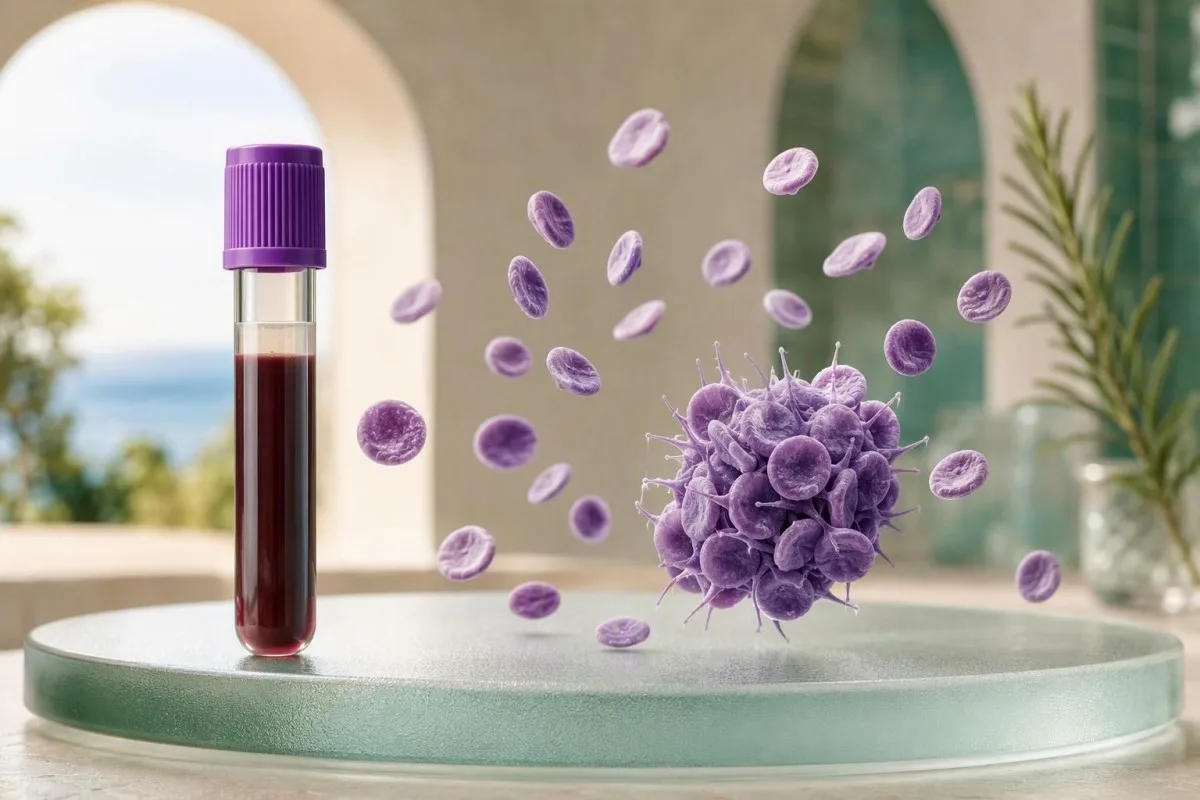
Hesabu ndogo ya chembechembe za damu wakati mwingine inaweza kuwa kosa la kipimo linalohusiana na utupu badala ya tatizo ndani ya mwili wako. Hivi ndivyo uwongo wa chini wa chembechembe wa EDTA unavyotambuliwa kabla ya mtu yeyote kukupa jina la thrombocytopenia.


- Uwongo wa chembechembe za damu ni hesabu ya chini ya chembechembe za damu iliyo bandia inayosababishwa na chembechembe za damu kuganda baada ya ukusanyaji, mara nyingi katika utupu wa EDTA.
- Kiwango cha kawaida cha chembe sahani kwa watu wazima wengi wasio wajawazito ni takriban 150-450 × 10⁹/L, ingawa maabara huweka vipindi vyao wenyewe.
- Chembechembe za damu zilizoganda kwenye smear zinaweza kusababisha kipimajumla kuhesabu chembechembe za damu vibaya kwa sababu kundi halipimwi kama seli tofauti.
- Kuchorwa upya kwa citrate mara nyingi hutatua kuganda kwa chembechembe za damu za EDTA; maabara kwa kawaida hutumia marekebisho ya mchanganyiko wa 1.1 kwa hesabu ya chembechembe za damu ya citrate.
- Hakuna dalili za kuvuja damu pamoja na hesabu ya chini ya chembechembe za damu isiyotarajiwa inapaswa kusababisha uhakiki wa smear kabla ya matibabu au maamuzi ya rufaa ya haraka.
- Thrombocytopenia halisi inaweza kuambatana na kuganda kwa chembe za damu kwenye EDTA, kwa hivyo matokeo ya kawaida ya citrate yanatia moyo lakini lazima yalingane na picha ya kimatibabu.
- Tathmini ya haraka bado inahitajika kwa ajili ya kutokwa damu bila kudhibitiwa, petechiae mpya zilizoenea, maumivu makali ya kichwa, kuchanganyikiwa, au hesabu ya chembe za damu chini ya 10 × 10⁹/L.
Maana halisi ya kuganda kwa chembechembe za damu za EDTA
Kuganda kwa chembe za damu kwenye EDTA ni kosa la maabara ya in-vitro ambalo chembe za damu hujishikamanisha kwenye kifaa cha kukusanyia, na kusababisha hesabu ya chembe za damu zinazozalishwa na mashine kuwa ya chini sana. Kwa yenyewe haimaanishi kuwa chembe za damu zinaharibiwa mwilini, na kwa kawaida haitoi hatari ya kutokwa damu.
EDTA ni nyongeza ya kifaa chenye sehemu ya juu ya rangi ya zambarau kinachotumiwa kwa vipimo vingi vya damu kamili kwa sababu hufunga kalsiamu na kuzuia kuganda. Kwa kundi dogo la watu, kuondolewa kwa kalsiamu huweka wazi sehemu za uso wa chembe za damu ambazo huruhusu kingamwili zinazotokea kiasili kuunganisha chembe za damu pamoja. Kifaa cha kuchambua kinaweza kuhesabu kundi la chembe za damu kama chembe moja kubwa, tukio lenye ukubwa wa seli nyeupe, au kutokuwepo kabisa; angalia muhtasari wetu wa kile CBC inachojumuisha.
Katika kazi yangu ya kimatibabu, ripoti ya kawaida ni hesabu ya chembe za damu ya 48 × 10⁹/L kwa mtu anayejisikia vizuri kabisa, hana michubuko, na ana hemoglobin na hesabu ya seli nyeupe za damu kawaida. Tofauti hiyo si ushahidi, lakini ni wakati wa kusita. TP6T ni Mchambuzi wa mtihani wa damu wa AI inayoweka alama ya hesabu ya chini ya chembe za damu pamoja na maoni ya maabara kama vile miungano ya chembe za damu, badala ya kuchukulia nambari kama utambuzi.
Uongo wa thrombocytopenia unaotegemea EDTA unakadiriwa kuwa takriban 0.03-0.27% ya sampuli za kawaida za wagonjwa wa nje, na viwango vya juu zaidi miongoni mwa sampuli zilizorejelewa kwa ajili ya hesabu ya chini ya chembe za damu. Lippi na wenzake wanaielezea kama jambo la kabla ya uchambuzi ambalo halina madhara kwa kimatibabu lakini linaweza kuwa na matokeo kwa sababu linaweza kusababisha kulazwa hospitalini bila ya lazima, kuhamishwa chembe za damu, au matibabu ya steroidi (Lippi et al., 2012).
Jinsi vipima chembechembe vya damu vinavyoweza kuhesabu vibaya sampuli zilizoganda
Hesabu za chembe za damu zinazozalishwa na mashine ni za kuaminika kwa chembe za damu zilizotawanyika, lakini makundi yanazidi vipimo na mifumo ya mawimbi ambayo kifaa cha kuchambua kinatarajia. Hesabu inaweza kwa hiyo kushuka kutoka 220 × 10⁹/L halisi hadi 40 × 10⁹/L inayoonekana bila upotevu wowote wa chembe za damu wa kibiologia.
Vichambuzi vya kizuizi huainisha chembe hasa kwa ujazo, wakati mifumo ya macho huongeza taarifa za kutawanya mwanga. Chembe ya damu kwa kawaida huwa na upana wa takriban 2-3 mikromita, lakini kundi linaweza kuingiliana na sehemu ya kipande cha seli nyekundu au leukocytes. Hii ndiyo sababu historia ya chembe za damu inaweza kuwa ya kawaida na kwa nini maabara inaweza kuongeza “makundi ya chembe za damu yapo” au “hesabu haiaminiki.”
Alama ya chembe za damu ya kifaa cha kuchambua ni kidokezo cha uhakiki wa kibinadamu, si utambuzi wa mwisho. Tathmini ya mikono kutoka kwa smear ya pembeni iliyotengenezwa vizuri inaweza kuwa muhimu zaidi kuliko kurudia kifaa sawa cha EDTA, hasa ikiwa sampuli ilikaa kwa saa 2 kabla ya uchambuzi. Kwa vizingiti vya vitendo karibu na taratibu, mwongozo wetu wa hesabu za chembe za damu kabla ya uchimbaji wa meno unaeleza kwa nini matokeo yaliyothibitishwa ni muhimu.
Chembe za damu kubwa huleta tatizo tofauti, wakati mwingine linaloingiliana. Chembe za damu za kibinafsi zenye ukubwa sana zinaweza kukosa kuhesabiwa na njia za kizuizi hata bila makundi yanayoonekana, mara nyingi huongeza ujazo wa wastani wa chembe za damu (MPV). MPV ya juu si sawa na pseudothrombocytopenia; uhakiki wetu wa sababu za chembe za damu kubwa hutenganisha matokeo haya mawili.
Jinsi chembechembe za damu zilizoganda zinavyoonekana kwenye smear
Makundi ya chembe za damu kwenye smear huonekana kama vikundi visivyo kawaida vya vipengele vidogo vya granular vya rangi ya zambarau, mara nyingi huzingatiwa kwenye ukingo wenye manyoya wa kioo. Mahali pake huathiri kwa sababu kuhesabu tu sehemu ya kati ya smear kunaweza kukosa kipengele ambacho kinaelezea matokeo ya chini.
Mtaalamu wa morpholojia aliyefunzwa hukagua mwili na mkia wa filamu chini ya nguvu kubwa, si sehemu moja tu inayowakilisha. Satellitism ya chembe za damu ni muundo adimu unaohusiana na EDTA ambapo chembe za damu huunda duara kuzunguka neutrophils kama rozeti; inaweza pia kupunguza hesabu ya chembe za damu iliyoripotiwa. Matokeo yote mawili ni matukio ya sampuli, ingawa satellitism na miungano mikubwa inaweza kutokea pamoja mara kwa mara.
Jambo moja muhimu ni kwamba kuganda kwa EDTA mara nyingi huendelea kwa wakati. Sampuli iliyopimwa dakika 10 baada ya kukusanywa inaweza kuonyesha 118 × 10⁹/L, kisha 42 × 10⁹/L saa 90 baada ya kuunda makundi zaidi. Maabara hutofautiana katika mtiririko wao wa kazi, kwa hivyo hesabu ya awali ya kawaida haiondoi kabisa kosa hili ikiwa alama ya baadaye ya kifaa cha kuchambua itaonekana.
Ninapoona, mimi Thomas Klein, MD, idadi ya chini ikilinganishwa na maoni ya smear lakini hakuna kutokwa na damu kwa kliniki, ninaomba tafsiri halisi ya smear kabla ya kujadili thrombocytopenia ya kinga. Kufikiri sawa kwa microscopy-kwanza kunasaidia wakati ripoti inataja schistocytes kwenye filamu ya damu, ingawa schistocytes zinahitaji muktadha wa kliniki wa haraka zaidi.
Kwa nini EDTA husababisha chembechembe za damu kuganda kwa baadhi ya watu
EDTA inaweza kusababisha kuganda kwa chembechembe kwa kuchochea kalsiamu na kubadilisha umbo la glycoproteins za utando wa chembechembe, kuruhusu kingamwili kushikamana na kuunganisha chembechembe jirani. Mmenyuko huu hutokea baada ya kukusanywa, sio kwa sababu EDTA imeharibu chembechembe zinazozunguka ndani ya mwili.
Utaratibu unaoungwa mkono zaidi unahusisha kingamwili, mara nyingi IgG, IgM, au IgA, zinazotambua maeneo yaliyofichwa kwenye tata ya GPIIb/IIIa ya chembechembe baada ya mabadiliko ya muundo yanayotegemea kalsiamu. Mmenyuko hutegemea joto na wakati kwa wagonjwa wengine, ambayo inaelezea kwa nini sampuli iliyotiwa joto inaweza kuboresha kuhesabu mara kwa mara lakini si suluhisho la ulimwengu wote. Ni suala la utangamano wa maabara, sio mzio kwa EDTA.
Pseudothrombocytopenia inaweza kutokea kwa watu wenye afya na imeripotiwa pamoja na hali za kiotomatiki, maambukizo, uvimbe, na ujauzito, lakini ushirika huo hautoi sababu kwa mtu binafsi. ANA chanya au ugonjwa wa virusi wa hivi karibuni haupaswi kutumiwa kuelezea hesabu hadi uharibifu utolewe. Kantesti ni jukwaa la tafsiri ya vipimo vya damu la AI ambayo inasoma matokeo ya chembechembe na aina yake ya mirija, bendera za kichanganuzi, na sehemu nyingine ya CBC badala ya peke yake.
Jambo hili linaweza kuendelea kwa miaka lakini kutofautiana kati ya michoro. Mgonjwa anaweza kuwa na hesabu ya chembechembe ya 35 × 10⁹/L katika EDTA siku ya Jumatatu na 230 × 10⁹/L katika citrate asubuhi moja, kisha kuonyesha kuganda kwa sehemu tena miezi baadaye. Kuhifadhi mirija inayopendelewa katika rekodi ya maabara kunaweza kuzuia kengele zinazorudiwa.
Jinsi kuchorwa upya kwa citrate kunavyothibitisha uwongo wa chembechembe za damu
Hesabu ya chembechembe ambayo inarudi katika hali ya kawaida katika mirija ya sodium citrate huku mirija ya EDTA ikiwa na chembechembe zinazoganda sana inathibitisha pseudothrombocytopenia inayotegemea EDTA. Hesabu ya citrate inahitaji marekebisho ya upunguzaji kwa sababu mirija ina kiowevu cha kuzuia kuganda.
Mirija ya sodium citrate yenye sehemu ya juu ya bluu kwa ujumla hujazwa kwa uwiano wa damu hadi kiowevu cha kuzuia kuganda wa 9:1. Maabara nyingi huongeza hesabu ya chembechembe ya citrate iliyopimwa kwa 1.1 ili kurekebisha upunguzaji, ingawa njia iliyothibitishwa ya maabara ya ndani inapewa kipaumbele. Kwa mfano, matokeo mabichi ya citrate ya 182 × 10⁹/L huwa kama 200 × 10⁹/L baada ya kusahihishwa.
Kuchora upya lazima kujazwe vizuri na kuchanganywa kwa upole. Mirija ya citrate iliyojaa chini hubadilisha uwiano wa kiowevu cha kuzuia kuganda na inaweza kutoa matokeo tofauti ya kupotosha, ambayo ni moja ya sababu mwanasayansi wa maabara anaweza kukataa kurudiwa kwa urahisi. Maelezo yetu ya rangi za mirija ya kupima damu huwasaidia wagonjwa kutambua kwa nini uchaguzi wa mirija ni sehemu ya njia ya kipimo.
Magnesium sulfate au mirija ya asidi-citrate-dextrose inaweza kuwa na manufaa wakati kuganda kunaendelea katika citrate, lakini hii kwa kawaida ni uamuzi unaoongozwa na maabara. Nagler na wenzake walirekodi kesi ambayo utambuzi wa pseudothrombocytopenia inayotegemea EDTA uliwazuia uchunguzi wa lazima baada ya kupima citrate kuonyesha hesabu ya kutosha (Nagler et al., 2014).
Wakati hesabu ya chembechembe za damu ya citrate isipoweza kutatua swali
Kuchora upya kwa citrate hakutengui thrombocytopenia halisi wakati hesabu iliyorekebishwa inabaki chini, kuganda hutokea katika zaidi ya kiowevu kimoja cha kuzuia kuganda, au dalili zinapendekeza kutokwa na damu. Baadhi ya wagonjwa wana kuganda kwa chembechembe nyingi za kiowevu cha kuzuia kuganda, na wengine wana hesabu halisi ya chini pamoja na uharibifu.
Ikiwa hesabu ya chembechembe ya citrate iliyorekebishwa ni 82 × 10⁹/L na smear haina chembechembe zinazoganda, hiyo ni thrombocytopenia halisi hadi itakapothibitishwa vinginevyo. Ikiwa EDTA ni 25 × 10⁹/L na citrate ni 86 × 10⁹/L na chembechembe zilizobaki zinagandana, uharibifu na kupungua halisi kunaweza kuwepo. Timu ya kliniki inapaswa kutumia makadirio bora zaidi yaliyothibitishwa, sio tu kuchagua nambari inayotuliza zaidi.
Kuganda kwa sampuli kunaweza pia kufanya CBC kuwa batili kwa sababu chembechembe huliwa ndani ya microclot. Tofauti na pseudothrombocytopenia ya EDTA, sampuli iliyo na sehemu ya kuganda inaweza kuathiri seli nyeupe na viashirio vya seli nyekundu pia. Soma yetu mwongozo wa kuchora upya baada ya matatizo ya sampuli kwa tofauti za vitendo kati ya uharibifu wa mkusanyiko.
Sampuli za kuchomwa kwa kidole hazina usalama moja kwa moja. Ukusanyaji polepole, kufinya, au kuchanganya kwa kucheleweshwa kunaweza kukuza mkusanyiko wa ndani na kuathiri hesabu ya chembechembe za damu, hasa wakati thamani iliyoripotiwa iko chini ya 100 × 10⁹/L. Kukusanywa tena kwa mishipa na usindikaji wa haraka kwa kawaida ndio njia safi ya uthibitisho.
Masafa ya hesabu ya chembechembe za damu, hatari ya kuvuja damu, na mtego wa uwongo
Maabara nyingi za watu wazima hutumia kiwango cha kumbukumbu cha hesabu ya chembechembe za damu karibu na 150-450 × 10⁹/L, lakini hatari ya kuvuja damu inategemea hesabu iliyothibitishwa, sababu yake, utendaji wa chembechembe za damu, na dawa. Matokeo ya EDTA ya chini vibaya hayapaswi kutumiwa pekee kukataa utaratibu au kuagiza matibabu.
Kuvuja damu sana kwa hiari kunazidi kuwa na uwezekano kadri hesabu halisi ya chembechembe za damu inavyoshuka chini ya karibu 10 × 10⁹/L, wakati watu wengi wenye hesabu thabiti zilizo juu ya 50 × 10⁹/L wana kuvuja damu kidogo kwa hiari. Hizi ni mwongozo mpana wa kimatibabu, sio ruhusa ya kupuuza dalili. Anticoagulants, aspirini, ugonjwa wa ini, kushindwa kwa figo, na utendaji mbaya wa chembechembe za damu vinaweza kubadilisha hatari kwa nambari yoyote.
Hesabu ya chembechembe za damu ya 90 × 10⁹/L inahitaji kushughulikiwa tofauti kwa mtu mwenye afya njema na matokeo ya kawaida ya citrate kuliko kwa mtu mwenye melena mpya na INR iliyoinuliwa. Hii ndio sababu tafsiri ya hesabu ya chembechembe za damu inakaa kando ya vipimo vya kuganda kwa damu; yetu aPTT na mwongozo wa kipimo cha kuganda inaeleza kile ambacho uchunguzi wa kawaida wa kuganda unaweza na hauwezi kuondoa.
Maabara zinaweza kutumia 140 × 10⁹/L badala ya 150 × 10⁹/L kama kikomo cha chini cha kumbukumbu, hasa kwa vipindi vilivyotokana na ndani. Kiwango cha kumbukumbu kinaelezea 95% ya idadi ya watu wanaolinganishwa; haifafanui kizingiti cha matibabu cha ulimwengu wote. Tofauti hii huokoa kiasi cha kushangaza cha wasiwasi usio wa lazima.
Mitindo ya CBC ambayo hufanya uwongo kuwa na uwezekano zaidi
Hesabu ya chembechembe za damu ya chini isiyotarajiwa iliyo pekee ikiwa na hemoglobin ya kawaida, seli nyeupe za damu, na maoni ya kuungana ni muundo wa CBC unaopendekeza zaidi pseudothrombocytopenia. Muundo huu unapendekeza badala ya kugundua kwa sababu thrombocytopenia ya mapema ya kinga au inayohusiana na dawa inaweza pia kuwa ya pekee.
Matatizo halisi ya marongo mara nyingi huathiri zaidi ya mstari mmoja wa seli za damu, ingawa kuna vigha. Chembechembe za damu za chini pamoja na hemoglobin inayoshuka, seli nyeupe za damu zisizo za kawaida, blasti, au dalili za kudumu za kikatiba zinahitaji uhakiki wa haraka wa daktari na mara nyingi uchunguzi rasmi wa filamu. Makala yetu kuhusu Njia ya CBC ya magonjwa ya damu inaelezea kwa nini makundi haya yanabadilisha uharaka.
Uwiano wa chembechembe za damu hadi lymphocyte unaweza kuwa haina maana wakati mteule ana thamani lakini nambari ya chembechembe za damu imepunguzwa bandia. PLR ya 60 iliyohesabiwa kutoka kwa hesabu iliyojaa EDTA haipaswi kutafsiriwa kama ishara ya kuvimba au ya moyo na mishipa. Hili ni kosa la pili la utulivu lakini la kawaida katika ripoti za afya za kiotomatiki; ona maelezo yetu ya matokeo ya juu ya PLR.
Kantesti AI hutambua kutokubaliana kati ya hesabu ya chini ya chembechembe za damu na vipimo vya karibu vya kawaida vya CBC, kisha huongoza msomaji kuthibitisha maoni ya sampuli. Zana ya uchambuzi wa vipimo vya damu inayotumia AI haipaswi kamwe kubadilisha thamani moja ya chembechembe za damu isiyothibitishwa kuwa lebo ya ugonjwa. Uzuiaji huo wa kimatibabu una umuhimu zaidi kuliko kasi.
Mimba, huduma hospitalini, na mazingira mengine yenye hatari kubwa
Kuungana kwa chembechembe za damu za EDTA kunaweza kutokea wakati wa ujauzito na utunzaji wa hospitalini, lakini haupaswi kudhaniwa kamwe wakati thrombocytopenia halisi inaweza kubadilisha usimamizi wa haraka. Visababisha vinavyohusiana na ujauzito kama vile thrombocytopenia ya ujauzito, pre-eclampsia, HELLP syndrome, na immune thrombocytopenia huhitaji hesabu iliyothibitishwa.
Hesabu za chembechembe za damu mara nyingi hushuka chini katika ujauzito usio na matatizo, na maabara zingine hukubali mipaka ya chini ya marejeleo maalum kwa kila trimester. Hesabu chini ya 100 × 10⁹/L haiko kawaida kwa thrombocytopenia ya ujauzito isiyo na matatizo na inahitaji tathmini makini ya kimatibabu, hata kama miungano ya EDTA ioneanapo. Mwongozo wetu wa marejeleo ya chembechembe za damu maalum kwa trimester wakati wa ujauzito unatoa muktadha bila kuchukua nafasi ya ukaguzi wa uzazi. inatoa muktadha bila kuchukua nafasi ya ukaguzi wa uzazi.
Hospitalini, kushuka kwa ghafla kwa zaidi ya 50% kutoka kwa kiwango cha msingi kunaweza kuibua maswali kuhusu sepsis, kukabiliwa na dawa, thrombocytopenia inayosababishwa na heparin, uchochezi, au matumizi yanayohusiana na kifaa. Kosa la EDTA linaweza kuiga kushuka kwa kasi, hasa wakati matokeo ya awali yalipokuwa kutoka kwa njia tofauti ya maabara. Kulinganisha matokeo yaliyothibitishwa ya citrate na kiwango cha msingi cha mgonjwa mara nyingi huwa na manufaa zaidi kuliko kurudia CBC ya kawaida ya EDTA.
Kabla ya kupata epidural, upasuaji, mzunguko wa chemotherapy, au kuongezewa damu kwa chembechembe, uliza ikiwa maabara imethibitisha thamani hiyo kwenye smear au dawa mbadala. Nimeona ucheleweshaji wa huduma ukiepuukwa kwa simu hiyo moja. Kinyume chake, dalili zinazoendelea au mgonjwa asiye imara anapaswa kutathminiwa wakati uhakiki unaendelea.
Dawa na utambuzi ambao haupaswi kulaumiwa haraka sana
Uundaji wa chembechembe za damu za EDTA unapaswa kutengwa kabla ya kuweka hesabu ya chini ya chembechembe za damu kwa dawa, ugonjwa wa autoimmune, au thrombocytopenia ya kinga. Kusimamisha dawa muhimu kwa msingi wa hesabu isiyothibitishwa inaweza kusababisha madhara yanayoweza kuepukwa.
Heparin, bidhaa zenye quinine, trimethoprim-sulfamethoxazole, valproate, linezolid, chemotherapy, na baadhi ya tiba za kinga zinaweza kusababisha thrombocytopenia halisi. Uhusiano wa muda ni muhimu: kushuka kwa kweli kunakohusishwa na dawa kawaida huendelea katika sampuli ya citrate iliyokusanywa vizuri na haipotei wakati EDTA inabadilishwa. Historia ya dawa inapaswa kujumuisha sindano, bidhaa za kuuza bila dawa, na maandalizi ya mitishamba.
Immune thrombocytopenia ni utambuzi wa kutengwa, sio ishara ya maabara. Inaweza kuonekana na chembechembe za damu za pekee chini ya 100 × 10⁹/L, lakini smear ya EDTA iliyoungana hufanya hesabu ya awali kutoweza kutafsiriwa. Lippi et al. (2012) wanatahadharisha hasa kwamba kutambua pseudothrombocytopenia huzuia tiba zisizofaa kama vile corticosteroids na splenectomy.
Ikiwa ripoti inaonekana kukanusha matokeo yako ya awali, hifadhi PDF halisi na uandike tarehe ya ukusanyaji, maoni ya chupa, ugonjwa mkali, na dawa mpya. Mwongozo wetu wa mabadiliko yenye maana kati ya vipimo vya damu unaeleza kwa nini mabadiliko ya nambari sio moja kwa moja mabadiliko ya kibaolojia.
Nini cha kuuliza maabara au daktari wako baadaye
Kwa hesabu ya chini ya chembechembe za damu isiyotarajiwa, uliza ikiwa chembechembe za damu zilionekana, ikiwa smear ya pembeni ilikaguliwa, na ikiwa hesabu ya dawa mbadala inaweza kufanywa. Maswali hayo matatu kawaida huweka wazi hatua inayofuata haraka kuliko kutafuta dalili mtandaoni.
Ombi la vitendo ni: “Je, maabara inaweza kukagua filamu ya damu kwa chembechembe za damu na, ikiwa ni lazima, kurudia hesabu ya chembechembe za damu katika citrate?” Hii sio kudai utambuzi maalum; ni kuomba kwamba kipimo kithibitishwe. Ikiwa sampuli ilikusanywa mahali pengine, daktari anaweza kuhitaji kuagiza uchukuaji mpya badala ya kuongeza vipimo kwenye chupa ya zamani.
Uliza iliyorekebishwa matokeo ya citrate na ikiwa miungano inaendelea kwenye chupa hiyo. Matokeo mabichi ya 145 × 10⁹/L yanaweza kuonekana kuwa ya mpaka hadi marekebisho ya uchochezi yapewe takriban 160 × 10⁹/L. Pia uliza ikiwa maabara ilitumia hesabu ya chembechembe za damu ya macho au ya kung'aa, kwani njia hizi wakati mwingine huboresha hesabu katika sampuli changamano.
Mtiririko wa kazi wa tafsiri wa Kantesti wa 2026 unahimiza watumiaji kulinganisha matokeo ya nambari na maelezo ya maabara na sehemu za bendera kabla ya kuchukua hatua kuhusu tahadhari. Kwa mfumo mpana wa usalama, yetu orodha ya ukaguzi ya usahihi ya ripoti ya AI inashughulikia uandishi, vitengo, safu za marejeleo, na uthibitishaji wa matokeo.
Usifanye nini wakati unasubiri uthibitisho
Usianze virutubisho, usisimamishe dawa zilizowekwa, au kudhani una shida ya damu kwa sababu tu hesabu moja ya chembechembe za damu ya EDTA ni ya chini. Wakati huo huo, usipuuze kutokwa na damu kwa sababu tu miungano inashukiwa.
Hakuna lishe, vitamini, au tiba ya nyumbani inayorekebisha pseudothrombocytopenia inayotegemea EDTA kwa sababu chembechembe za damu huungana kwenye chupa, sio kushindwa ndani ya mwili. Upungufu wa Folate, vitamini B12, na chuma unaweza kuathiri utengenezaji wa damu katika mazingira mengine, lakini virutubisho haviwezi kuthibitisha hesabu yenye shaka. Kutibu kosa kunahusu ukusanyaji na uchambuzi.
Epuka matumizi yasiyo ya lazima ya aspirin, ibuprofen, naproxen, na unywaji mwingi wa pombe hadi daktari atakapoeleza idadi ndogo sana iliyoripotiwa, hasa ikiwa unashikwa na michubuko kwa urahisi. Usisimamishe dawa za kuzuia kuganda kwa damu, dawa za kuzuia kuganda kwa damu, dawa za kuzuia kifafa, au matibabu ya saratani bila ushauri wa daktari; sababu ya dawa hizo inaweza kuleta hatari kubwa zaidi ya sasa kuliko matokeo yasiyothibitishwa.
Kuweka muda mfupi wa matokeo kunaweza kubadilisha miadi. Yetu mwongozo wa ufuatiliaji wa matokeo ya maabara inapendekeza kurekodi muda wa kuchukua sampuli, ugonjwa wa hivi karibuni, dawa, maoni ya sampuli, na ikiwa matokeo yalikuja kutoka EDTA au citrate.
Ishara nyekundu zinazohitaji tathmini ya haraka ya kimatibabu
Tafuta tathmini ya haraka ya kimatibabu kwa ajili ya kutokwa na damu bila kudhibitiwa, kinyesi cheusi, kutapika damu, maumivu makali ya kichwa mapya, kuchanganyikiwa, kuzirai, au upele mdogo wa uhakika unaoenea, hata kama kuna shaka ya kuganda kwa EDTA. Kosa la maabara na dharura ya kweli vinaweza kuwepo pamoja.
Idadi halisi ya chembe za damu chini ya 10 × 10⁹/L kwa ujumla huchukuliwa kama matokeo ya haraka kwa sababu hatari ya kutokwa na damu kwa utando na ndani huongezeka sana. Idadi ya chini ya 20 × 10⁹/L yenye kutokwa na damu mpya, homa, shinikizo la damu kali, matatizo ya ujauzito, au uwezekano wa hivi karibuni wa heparin pia unahitaji maingiliano ya daktari siku hiyo hiyo. Ushauri wa dharura wa eneo unapaswa kuchukua kipaumbele kuliko tafsiri yoyote ya mtandaoni.
Dalili mpya za neva ni muhimu sana kwa sababu kutokwa na damu ndani ya fuvu ni nadra lakini mbaya. Usijiongoze ikiwa una maumivu makali ya kichwa yenye udhaifu, mabadiliko ya usemi, kuanguka, au kuchanganyikiwa. Kwa watoto, upele usioweza kufifia wenye homa unahitaji tathmini ya haraka bila kujali matokeo ya chembe za damu.
Thomas Klein, MD, anashauri wagonjwa kutenganisha swali “Je, idadi hii ni halisi?” kutoka kwa “Je, mtu huyu yuko salama leo?” Ya kwanza kwa kawaida inahitaji smear na kuchukua tena sampuli ya citrate; ya pili inategemea dalili, matokeo ya uchunguzi, na picha nzima ya kimatibabu. mwongozo wa maoni ya pili ya kipimo cha damu inaweza kusaidia kuandaa mjadala unaolenga baada ya masuala ya haraka kutatuliwa.
Kantesti inatafsiri vipi hesabu ya chembechembe za damu iliyoandikwa kwa usalama
Kantesti AI huchukulia idadi ndogo ya chembe za damu yenye maoni ya kuganda kwa EDTA kama ishara ya uthibitisho, si kama ushahidi wa thrombocytopenia. Tafsiri yetu huweka bendera za kipima, mistari mingine ya CBC, maadili ya awali, na dalili zilizoripotiwa mbele ya lebo rahisi ya nyekundu au kijani.
Kantesti ni huduma ya kutafsiri vipimo vya maabara ya AI imeundwa kueleza data ya maabara kwa lugha rahisi huku ikihifadhi mipaka ya ripoti chanzo. Ikiwa PDF iliyopakiwa inasema “chembe za damu zimeganda,” mfumo wetu unapaswa kumwambia mtumiaji kwamba nambari inaweza kuwa ya chini kimakosa na kwamba maabara au daktari wanaweza kithibitisha kwa uchunguzi wa filamu au sampuli ya citrate.
Utambuzi wa tabia ya macho unaweza kusoma vibaya nukta ya desimali, kitengo, au kidokezo cha maabara. Ndio maana wagonjwa wanapaswa kukagua hakikisho la picha kabla ya kutegemea tafsiri yoyote ya kidijitali, hasa karibu na maadili kama 18 dhidi ya 180 × 10⁹/L. Yetu orodha ya ukaguzi ya ubora wa upakiaji wa PDF inaelezea hundi chache ambazo huzuia makosa mengi ambayo yanaweza kuepukwa.
Usimamizi wa kimatibabu unabaki kuwa kazi ya kibinadamu. Mbinu ya Kantesti inakaguliwa dhidi ya mtiririko wa kazi unaozingatia usalama; wasomaji wanaotaka kuelewa mbinu yetu wanaweza kukagua yetu uthibitisho wa kiufundi na usimamizi wa kliniki. AI inaweza kuandaa maswali kwa ufanisi, lakini haiwezi kukagua sampuli halisi au kutathmini kutokwa na damu kwa nguvu.
Mpango wa kufuatilia vitendo baada ya kuganda kwa chembechembe za damu za EDTA
Mpango wa kawaida wa ufuatiliaji ni kuandika kosa la EDTA, kupata idadi ya chembe za damu iliyothibitishwa kwa kutumia bomba mbadala, na kutumia matokeo hayo kwa maamuzi ya kimatibabu ya baadaye. Watu wengi hawahitaji matibabu yoyote kwa kosa lenyewe mara tu maabara itakapobaini ruwaza.
Ombi la kumbukumbu ya maabara kuandika “uganda wa chembe za damu unaotegemea EDTA” au maneno sawa ikiwa uthibitisho uko wazi. Kwa michoro ya baadaye, timu ya phlebotomy inaweza kukusanya bomba la citrate pamoja na CBC ya kawaida ya EDTA, kuokoa miadi ya pili. Hii ni muhimu sana kabla ya upasuaji, wakati wa ujauzito, au wakati itifaki ya matibabu ina vizingiti vya chembe za damu.
Msingi uliothibitishwa ni wa thamani zaidi kuliko maadili ya chini yasiyothibitishwa yaliyorudiwa. Ikiwa idadi yako ya citrate iliyorekebishwa ni thabiti saa 205 × 10⁹/L kwa miezi 12, thamani ya baadaye ya EDTA ya 55 × 10⁹/L yenye makusanyiko ni ya kutisha zaidi kuliko nambari sawa kwa mtu bila hati ya awali. Mitindo ni muhimu tu wakati njia ya upimaji inalinganishwa.
Kantesti imesaidia zaidi ya watumiaji milioni 2 katika nchi 127+ na maelezo ya maabara ya lugha nyingi, lakini matokeo bado ni sehemu ya uhusiano wa utunzaji na daktari wako. Wakaguzi wetu wa kimatibabu na Bodi ya Ushauri wa Matibabu wanatilia mkazo sheria sawa ya mwisho: thibitisha hesabu ya chembechembe za damu kwanza, kisha amua nini—ikiwa kuna kitu—kinachohitaji matibabu.
Machapisho ya utafiti
Kufikia Agosti 29, 2026, machapisho mawili ya utafiti ya Kantesti yaliyoorodheshwa hapa chini ni raslimali za ziada za elimu. Hayathibitishi utambuzi wa pseudothrombocytopenia inayotegemea EDTA; uchunguzi wa smear wa maabara na hesabu ya chembechembe za damu kwa kutumia kiashirio mbadala bado ni zana muhimu za uthibitisho.
Maswali Yanayoulizwa Mara Kwa Mara
Je, kuganda kwa chembechembe za damu kwa sababu ya EDTA kunaweza kusababisha kuhesabiwa kwa chembechembe za damu kuwa chini sana?
Ndiyo. Kufungamana kwa chembechembe za damu kwa kutumia EDTA kunaweza kusababisha hesabu ya chembechembe za damu kuwa ya chini sana, wakati mwingine chini ya 50 × 10⁹/L, wakati idadi halisi ya chembechembe za damu zinazozunguka mwilini ni ya kawaida. Kifaa cha uchunguzi hupunguza hesabu ya chembechembe za damu zilizoungana kwa sababu hakiwezi kutambua kwa uhakika kila chembechembe ndani ya kundi. Kipimo cha damu cha pembeni kinachoonyesha chembechembe zilizoungana na hesabu ya kawaida iliyorekebishwa ya citrate huunga mkono sana pseudothrombocytopenia. Matokeo yanapaswa kuchunguzwa kwa haraka ikiwa kuna kutokwa damu kwa kasi au ikiwa hesabu ya citrate inabaki chini.
Pseudothrombocytopenia inathibitishwa vipi?
Pseudothrombocytopenia kwa kawaida huthibitishwa kwa kukagua smear ya pembeni kwa mabonge ya chembechembe na kurudia hesabu ya chembechembe kwenye mirija ya sodiamu citrate. Mirija ya Citrate ina kiowevu cha kuzuia kuganda, kwa hivyo maabara nyingi huongeza hesabu ya chembechembe iliyopimwa kwa 1.1 ili kuzingatia upungufu. Kwa mfano, hesabu mbichi ya citrate ya 180 × 10⁹/L kwa kawaida huripotiwa kama takriban 198 × 10⁹/L baada ya kusahihishwa. Uthibitishaji wa kusahihisha na tafsiri ya smear ya maabara ya ndani unapaswa kuongoza matokeo ya mwisho.
Je, kuganda kwa vipande vya chembechembe katika EDTA kuna maana kuwa nina tatizo la kutoka damu?
Hakuna. Kuitana kwa vipande vya damu vya EDTA pekee ni kosa la sampuli ya nje ya mwili na haimaanishi kuwa una shida ya kutoka damu au kwamba vipande vyako vya damu vinaungana katika mzunguko wako wa damu. Watu wengi walioathirika hawana dalili za kutoka damu na wana idadi ya vipande vya damu iliyothibitishwa ndani ya kiwango cha kawaida cha watu wazima cha takriban 150-450 × 10⁹/L. Mtaalamu wa matibabu bado anapaswa kuchunguza dalili za kutoka damu, vipimo vya ugandishaji damu visivyo vya kawaida, au idadi ya vipande vya damu vya citrate ambayo iko chini kwa muda mrefu. Kosa hili la sampuli haliwezi kumlinda mtu dhidi ya hatari za kutoka damu ambazo hazihusiani na dawa au hali za kimatibabu.
Je, kuganda kwa chembe za damu kunaweza kutokea kwenye citrate pia?
Ndiyo, ingawa sodium citrate mara nyingi huzuia kuganda kwa EDTA, mkusanyiko wa chembe za damu unaweza kuendelea mara kwa mara katika citrate au kutokea na viini vingi. Katika hali hiyo, maabara inaweza kutumia hesabu ya chembe za damu kwa macho au kung'aa, uchakataji wa haraka wa joto, magnesium sulfate, au asidi-citrate-dextrose kulingana na itifaki zake zilizothibitishwa. Hesabu iliyosahihishwa ya citrate chini ya 150 × 10⁹/L bila makundi inapaswa kuchukuliwa kama uwezekano wa kweli wa thrombocytopenia. Kuganda kwa viini vingi haipatikani mara kwa mara na huhitaji uthibitisho unaoongozwa na maabara.
Je, ni sahihi kurudia kipimo cha chembechembe za damu ikiwa ripoti inasema kuna makundi ya chembechembe?
Ndiyo. Ripoti inayodai kuwa chembechembe za damu zimegongana, chembechembe za damu zimekaa pamoja, au hesabu isiyoaminika ya chembechembe za damu kwa ujumla huhitaji kuthibitishwa badala ya kukubali matokeo ya nambari. Kawaida ya kurudia ni sampuli iliyokusanywa hivi karibuni ya sodium citrate pamoja na uchunguzi wa smear, ambayo inapendelea ichakatwe mara moja. Ikiwa hesabu ya awali iko chini ya 10 × 10⁹/L au una damu inayodhibitiwa, kinyesi cheusi, maumivu makali ya kichwa, au kuchanganyikiwa, tafuta huduma ya dharura ya kimatibabu wakati uthibitisho unapopangwa. Usibadilishe dawa iliyoagizwa bila ushauri kutoka kwa daktari anayejua kwa nini iliagizwa.
Je, upungufu bandia wa chembechembe za damu unaosababishwa na EDTA unaweza kutokea na kutoweka?
Ndiyo. Pseudothrombocytopenia ya EDTA inaweza kuwa ya kudumu kwa miaka mingi au kuonekana tofauti kwa sababu kiwango cha kuganda kwa damu hutegemea muda baada ya kukusanywa, joto la sampuli, na njia ya uchunguzi. Sampuli moja ya EDTA inaweza kuripoti 70 × 10⁹/L wakati nyingine iliyokusanywa siku tofauti inaripoti 145 × 10⁹/L, licha ya hesabu ya chembechembe halisi kuwa thabiti. Hesabu ya kawaida ya citrate iliyorekodiwa hutoa msingi muhimu kwa ulinganifu wa baadaye. Kuomba maabara kurekodi kiowevu kinachopendekezwa cha kuganda kunaweza kuzuia taarifa za uongo zinazorudiwa.
Pata Uchambuzi wa Vipimo vya Damu kwa AI Leo
Jiunge na zaidi ya watumiaji 2 milioni duniani kote wanaoamini Kantesti kwa uchambuzi wa papo hapo na sahihi wa vipimo vya maabara. Pakia matokeo yako ya vipimo vya damu na upate tafsiri ya kina ya viashiria vya 15,000+ ndani ya sekunde.
📚 Machapisho ya Utafiti Yanayorejelewa
Klein, T., Mitchell, S., & Weber, H. (2026). Kantesti AI. (2026). Mwongozo wa Kipimo cha C3 C4 cha Komplimenti cha Damu na Kipimo cha ANA Titer. Zenodo. https://doi.org/10.5281/zenodo.18353989. Kantesti uchambuzi wa damu kwa AI ya utafiti wa matibabu.
Klein, T., Mitchell, S., & Weber, H. (2026). Kantesti AI. (2026). Mwongozo wa Ugunduzi na Utambuzi wa Awali wa Kipimo cha Virusi vya Nipah Mnamo 2026. Zenodo. https://doi.org/10.5281/zenodo.18487418. Kantesti uchambuzi wa damu kwa AI ya utafiti wa matibabu.
📖 Marejeo ya Nje ya Tiba
⚕️ Kanusho la Kimatibabu
Makala haya ni kwa madhumuni ya elimu tu na si ushauri wa kimatibabu. Wasiliana na mtoa huduma aliyehitimu kila wakati kwa maamuzi ya utambuzi na matibabu.
E-E-A-T Trust Signals
Uzoefu
Mapitio ya kimatibabu inayoongozwa na daktari ya mifumo ya tafsiri ya maabara.
Utaalamu
Kuzingatia dawa za maabara kuhusu jinsi viashiria (biomarkers) vinavyobadilika katika muktadha wa kliniki.
Mamlaka
Imeandikwa na Dk. Thomas Klein kwa mapitio ya Dk. Sarah Mitchell na Prof. Dk. Hans Weber.
Uaminifu
Tafsiri inayotegemea ushahidi yenye njia zilizo wazi za ufuatiliaji ili kupunguza tahadhari za hofu.