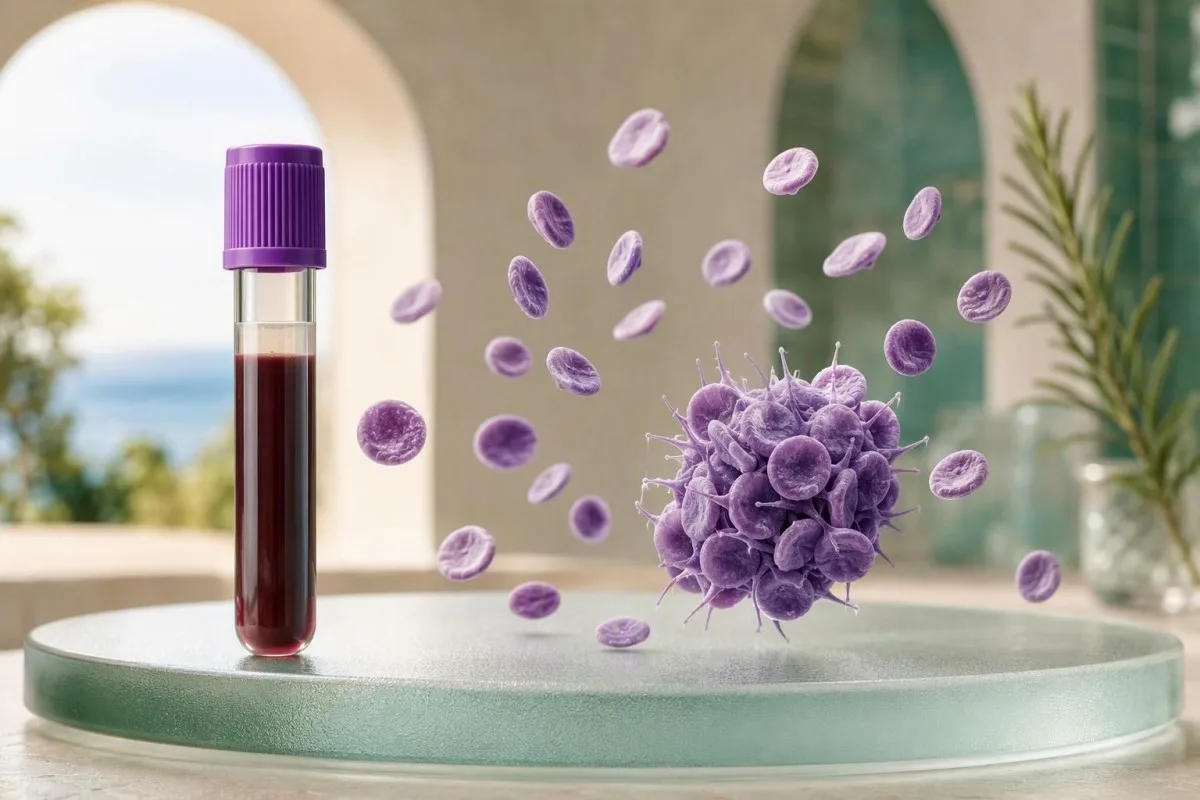
Nízky počet trombocytov môže byť občas výsledkom chyby merania v skúmavke, a nie problémom vo vašom tele. Tu je návod, ako sa identifikuje pseudotrombocytopénia vyvolaná EDTA predtým, ako vám diagnostikujú trombocytopéniu.


- Pseudotrombocytopénia je falošne nízky počet trombocytov spôsobený zhlukovaním trombocytov po odbere, najčastejšie v skúmavke s EDTA.
- Typické rozmedzie doštičiek pre väčšinu netehotných dospelých je približne 150 – 450 × 10⁹/l, hoci laboratóriá si stanovujú vlastné intervaly.
- Zhluky trombocytov na roztere môžu spôsobiť, že automatizovaný analyzátor podhodnotí trombocyty, pretože zhluk sa nemeria ako samostatné bunky.
- Prepichnutie citrátom často vyrieši zhlukovanie trombocytov v EDTA; laboratóriá bežne aplikujú korekciu riedenia 1,1 na počet trombocytov v citráte.
- Žiadne príznaky krvácania a neočakávane izolovaný nízky počet trombocytov by mali pred liečbou alebo rozhodnutiami o urgentnom odporúčaní viesť k preskúmaniu rozteru.
- Skutočná trombocytopénia sa môže vyskytnúť súčasne s aglutináciou trombocytov v EDTA, takže normálny výsledok z citrátu je upokojujúci, ale musí zodpovedať klinickému obrazu.
- Urgentné vyšetrenie je stále potrebná pri nekontrolovanom krvácaní, nových rozsiahlych petechia, silnej bolesti hlavy, zmätenosti alebo pri počte trombocytov pod 10 × 10⁹/l.
Čo v skutočnosti znamená zhlukovanie trombocytov v EDTA
Aglutinácia trombocytov v EDTA je in vitro laboratórny artefakt, pri ktorom sa trombocyty zlepia v odberovej skúmavke, čo spôsobuje falošne nízky automatizovaný počet trombocytov. Samotná skutočnosť, že sa trombocyty v tele deštruujú, nemusí nevyhnutne znamenať, že sa trombocyty v tele ničia, a zvyčajne nespôsobuje riziko krvácania.
EDTA je prísada v skúmavke s fialovým uzáverom používaná pre väčšinu kompletných krvných obrazov, pretože viaže vápnik a bráni koagulácii. U malej časti ľudí odstránenie vápnika odhalí povrchové ciele trombocytov, ktoré umožňujú prirodzene sa vyskytujúcim protilátkam spájať trombocyty. Analyzátor môže počítať zhluky trombocytov ako jednu veľkú časticu, udalosť veľkosti bielych krviniek, alebo vôbec nič; pozrite si náš prehľad čo obsahuje CBC.
Pri mojej klinickej práci je klasická správa počet trombocytov 48 × 10⁹/l u niekoho, kto sa cíti úplne dobre, nemá žiadne modriny a má normálny počet hemoglobínu a bielych krviniek. Táto nezrovnalosť nie je dôkazom, ale je to moment na pozastavenie. Kantesti je Analyzátor krvných testov s umelou inteligenciou ktorý signalizuje izolovaný nízky počet trombocytov spolu s laboratórnymi komentármi, ako sú agregáty trombocytov, namiesto toho, aby sa číslo považovalo za diagnózu.
Pseudotrombocytopénia závislá od EDTA sa odhaduje približne na 0,03-0,27% bežných ambulantných vzoriek, pričom vyššia miera je u vzoriek už zaslaných na vyšetrenie nízkeho počtu trombocytov. Lippi a kolegovia ju opisujú ako klinicky neškodný, ale potenciálne následný pre-analytický jav, pretože môže vyvolať zbytočné hospitalizácie, transfúzie trombocytov alebo liečbu steroidmi (Lippi et al., 2012).
Ako analyzátory trombocytov môžu podhodnotiť zrazené vzorky
Automatizované počty trombocytov sú spoľahlivé pre dispergované trombocyty, ale zhluky spadajú mimo rozsahy veľkostí a signálových vzorov, ktoré analyzátor očakáva. Počet sa preto môže znížiť z pravdivých 220 × 10⁹/l na zdanlivých 40 × 10⁹/l bez akéhokoľvek biologického úbytku trombocytov.
Impedančné analyzátory klasifikujú častice hlavne podľa objemu, zatiaľ čo optické systémy pridávajú informácie o rozptyle svetla. Trombocyt má zvyčajne priemer asi 2-3 mikrometre, ale zhluk môže prekrývať fragment červených krviniek alebo oblasť bielych krviniek. Preto môže byť histogram trombocytov abnormálny a preto môže laboratórium priložiť “prítomné zhluky trombocytov” alebo “počet nespoľahlivý.”
Vlajka trombocytov analyzátora je podnetom na ľudskú kontrolu, nie konečná diagnóza. Manuálny odhad z dobre pripraveného periférneho náteru môže byť užitočnejší ako opakovanie tej istej EDTA skúmavky, najmä ak vzorka pred analýzou čakala 2 hodiny. Pre praktické prahy okolo procedúr, náš sprievodca počty trombocytov pred extrakciou zubov vysvetľuje, prečo overený výsledok je dôležitý.
Veľké trombocyty spôsobujú iný, niekedy sa prekrývajúci problém. Veľmi veľké jednotlivé trombocyty môžu byť prehliadnuté impedančnými metódami aj bez viditeľných zhlukov, často zvyšujúc stredný objem trombocytov (MPV). Vysoký MPV nie je zameniteľný s pseudotrombocytopéniou; naša revízia príčin veľkých trombocytov oddeľuje tieto dva nálezy.
Ako vyzerajú zhluky trombocytov na roztere
Zhluky trombocytov v nátere vyzerajú ako nepravidelné, hroznovité skupiny malých purpurových granulárnych elementov, často koncentrované na perovom okraji sklíčka. Ich umiestnenie je dôležité, pretože počítanie iba centrálnej oblasti náteru môže prehliadnuť presne tú vlastnosť, ktorá vysvetľuje nízky výsledok.
Školený morfológ kontroluje telo a chvost filmu pod veľkým zväčšením, nie len jedno reprezentatívne pole. Trombocytový satelitizmus je zriedkavejší jav spojený s EDTA, pri ktorom trombocyty obklopujú neutrofily ako ružica; môže tiež znížiť hlásený počet trombocytov. Oba nálezy sú javy vzorky, aj keď satelitizmus a široké agregáty sa môžu občas vyskytovať spolu.
Jedným užitočným detailom je, že aglutinácia v EDTA sa často časom zhoršuje. Vzorka odmeraná 10 minút po odbere môže vykazovať 118 × 10⁹/l, potom 42 × 10⁹/l o 90 minút, ako sa tvorí viac agregátov. Laboratóriá sa líšia v pracovnom postupe, takže normálny počiatočný počet úplne nevylučuje tento artefakt, ak sa neskôr objaví varovanie analyzátora.
Keď ja, Thomas Klein, MD, vidím nízky počet spojený s komentárom k náteru, ale bez klinického krvácania, požiadam o skutočnú interpretáciu náteru pred diskusiou o imúnnej trombocytopénii. Podobné uvažovanie založené na mikroskopii je užitočné, keď správa uvádza schizócyty na nátere krvi, hoci schizócyty vyžadujú oveľa urgentnejší klinický kontext.
Prečo EDTA spôsobuje zhlukovanie trombocytov u niektorých ľudí
EDTA môže spôsobiť zhlukovaniu krvných doštičiek chelatovaním vápnika a zmenou tvaru glykoproteínov membrány krvných doštičiek, čo umožňuje väzbu protilátok a premostenie susedných krvných doštičiek. Táto reakcia nastáva po odbere, nie preto, že by EDTA poškodila cirkulujúce krvné doštičky vo vnútri tela.
Najlepšie podložený mechanizmus zahŕňa protilátky, často IgG, IgM alebo IgA, ktoré rozpoznávajú kryptické miesta na komplexe krvných doštičiek GPIIb/IIIa po štrukturálnej zmene závislej od vápnika. Reakcia je u niektorých pacientov závislá od teploty a času, čo vysvetľuje, prečo zohriaty vzorka môže občas zlepšiť počítanie, ale nie je to univerzálne riešenie. Ide o problém laboratórnej kompatibility, nie o alergiu na EDTA.
Pseudotrombocytopénia sa môže vyskytnúť u zdravých ľudí a bola hlásená spolu s autoimunitnými stavmi, infekciami, malignitami a tehotenstvom, ale tieto asociácie nestanovujú kauzalitu u jednotlivca. Pozitívna ANA alebo nedávna vírusová choroba by sa nemali používať na vysvetlenie počtu, kým sa nevylúči artefakt. CBC platforma na interpretáciu krvného testu AI je.
Týmto javom môže pretrvávať roky, ale líšiť sa medzi odbermi. Pacient môže mať v pondelok počet krvných doštičiek 35 × 10⁹/l v EDTA a v ten istý deň ráno 230 × 10⁹/l v citráte, a potom o niekoľko mesiacov neskôr vykazovať čiastočné zhlukovanie. Zaznamenanie preferovanej skúmavky v laboratórnom zázname môže zabrániť opakovaným alarmom.
Ako prepichnutie citrátom potvrdzuje pseudotrombocytopéniu
Počet krvných doštičiek, ktorý sa normalizuje v skúmavke so sodným citrátom, zatiaľ čo skúmavka s EDTA obsahuje agregáty, silne podporuje EDTA-dependentnú pseudotrombocytopéniu. Počet v citrátovej skúmavke potrebuje úpravu riedenia, pretože skúmavka obsahuje tekuté antikoagulancium.
Modré skúmavky so sodným citrátom sa zvyčajne plnia v pomere krvi k antikoagulanciu 9:1. Mnoho laboratórií vynásobí nameraný počet krvných doštičiek v citrátovej skúmavke číslom 1.1, aby sa korigovalo riedenie, hoci miestna validovaná metóda laboratória má prednosť. Napríklad surový výsledok v citrátovej skúmavke 182 × 10⁹/l sa po korekcii stane približne 200 × 10⁹/l.
Opakovaný odber musí byť správne naplnený a jemne premiešaný. Nedostatočne naplnená citrátová skúmavka mení pomer antikoagulancia a môže vytvoriť iný zavádzajúci výsledok, čo je jeden z dôvodov, prečo laboratórny vedec môže odmietnuť zdanlivo jednoduché opakovanie. Naše vysvetlenie farieb skúmaviek na odber krvi pomáha pacientom pochopiť, prečo je výber skúmavky súčasťou testovacej metódy.
Skúmavky s síranom horečnatým alebo kyselinovo-citrátovo-dextrózou môžu byť užitočné, keď zhlukovanie pretrváva v citráte, ale toto je zvyčajne rozhodnutie laboratória. Nagler a kolegovia zdokumentovali prípad, v ktorom rozpoznanie EDTA-dependentnej pseudotrombocytopénie zabránilo zbytočnému diagnostickému vyšetreniu po tom, ako testovanie v citráte ukázalo primeraný počet (Nagler et al., 2014).
Kedy prepichnutie citrátom nevyrieši otázku počtu trombocytov
Opakovaný odber v citrátovej skúmavke nevylučuje skutočnú trombocytopéniu, keď korigovaný počet zostáva nízky, zhlukovanie sa vyskytuje vo viac ako jednom antikoagulanciu, alebo príznaky naznačujú krvácanie. Niektorí pacienti majú agregáciu krvných doštičiek v rôznych antikoagulanciách a niektorí majú skutočne nízky počet spolu s artefaktom.
Ak je korigovaný počet krvných doštičiek v citrátovej skúmavke 82 × 10⁹/l a náter neobsahuje zhluky, ide o skutočnú trombocytopéniu, kým sa nedokáže opak. Ak je v EDTA 25 × 10⁹/l a v citráte 86 × 10⁹/l so zvyškovými agregátmi, môžu byť prítomné artefakt aj skutočné zníženie. Klinický tím by mal použiť najlepšie overený odhad, nie sa jednoducho rozhodnúť pre upokojujúcejšie číslo.
Zrážanie vo vzorke môže tiež zneplatniť CBC, pretože krvné doštičky sú spotrebované v mikro zrazenine. Na rozdiel od EDTA pseudotrombocytopénie môže čiastočne zrazená vzorka ovplyvniť aj biele krvinky a indexy červených krviniek. Prečítajte si náš sprievodca opakovaným odberom po problémoch so vzorkou pre praktické rozdiely medzi zbernými artefaktami.
Odber z prsta nie je automaticky bezpečnejší. Pomalý odber, stláčanie alebo oneskorené premiešanie môže podporiť lokálnu agregáciu a skompromitovať počet krvných doštičiek, najmä ak je hlásená hodnota pod 100 × 10⁹/l. Venózny odber s urýchleným spracovaním je zvyčajne čistejšou potvrdzujúcou cestou.
Rozsahy počtu trombocytov, riziko krvácania a pasca artefaktov
Väčšina laboratórií pre dospelých používa referenčný interval počtu krvných doštičiek blízko 150-450 × 10⁹/l, ale riziko krvácania závisí od overeného počtu, jeho príčiny, funkcie krvných doštičiek a liekov. Falošne nízky výsledok odberu EDTA sa nesmie použiť samostatne na odmietnutie zákroku alebo predpísanie liečby.
Spontánne závažné krvácanie sa stáva pravdepodobnejším, keď skutočný počet krvných doštičiek klesne pod približne 10 × 10⁹/l, zatiaľ čo mnohí ľudia so stabilným počtom nad 50 × 10⁹/l majú malé spontánne krvácanie. Toto sú široké klinické vodítka, nie povolenie ignorovať príznaky. Antikoagulanciá, aspirín, ochorenie pečene, zlyhanie obličiek a dysfunkcia krvných doštičiek môžu zmeniť riziko pri akomkoľvek počte.
Počet krvných doštičiek 90 × 10⁹/l si zaslúži iné zaobchádzanie u zdravého človeka s normálnym výsledkom odberu citrátom ako u niekoho s novou melénou a zvýšeným INR. Preto interpretácia počtu krvných doštičiek patrí k testom koagulácie; náš aPTT a sprievodca koagulačným testom vysvetľuje, čo normálny koagulačný panel môže a nemôže vylúčiť.
Laboratóriá môžu namiesto 150 × 10⁹/l použiť 140 × 10⁹/l ako dolnú referenčnú hranicu, najmä pri lokálne odvodených intervaloch. Referenčný interval popisuje 95% porovnávanej populácie; nedefinuje univerzálny prah liečby. Tento rozdiel šetrí prekvapivé množstvo zbytočných obáv.
Vzorce CBC, pri ktorých je artefakt pravdepodobnejší
Izolovaný neočakávane nízky počet krvných doštičiek s normálnym hemoglobínom, bielymi krvinkami a komentárom o zhlukovaní je vzor CBC najviac naznačujúci pseudotrombocytopéniu. Tento vzor je sugestívny skôr ako diagnostický, pretože skorá imunitná alebo liekmi vyvolaná trombocytopénia sa môže tiež vyskytovať izolovane.
Skutočné poruchy kostnej drene často ovplyvňujú viac ako jednu líniu krviniek, hoci výnimky existujú. Nízky počet krvných doštičiek v kombinácii s klesajúcim hemoglobínom, abnormálnymi bielymi krvinkami, blastami alebo pretrvávajúcimi ústavnými príznakmi si vyžaduje okamžité posúdenie lekárom a často formálne vyšetrenie náteru. Náš článok o dráhe CBC pri krvných poruchách načrtáva, prečo tieto zhluky menia naliehavosť.
Pomer krvných doštičiek k lymfocytom sa môže stať bezvýznamným, keď je menovateľ platný, ale čitateľ krvných doštičiek je umelo znížený. PLR 60 vypočítaný z EDTA-zhluknutého počtu by sa nemal interpretovať ako zápalový alebo kardiovaskulárny signál. Toto je tichá, ale častá sekundárna chyba v automatizovaných zdravotných správach; pozri naše vysvetlenie vysokých výsledkov PLR.
Kantesti AI identifikuje nesúlad medzi nízkym počtom krvných doštičiek a normálnymi susednými meraniami CBC, potom nasmeruje čitateľa na overenie komentárov k vzorke. Nástroj na analýzu krvných testov poháňaný AI by sa nikdy nemal previesť jednorazová neoverená hodnota krvných doštičiek na diagnózu choroby. Táto klinická zdržanlivosť je dôležitejšia ako rýchlosť.
Tehotenstvo, nemocničná starostlivosť a iné situácie s vysokou mierou rizika
Zhlukovanie krvných doštičiek v EDTA môže nastať počas tehotenstva a nemocničnej starostlivosti, ale nikdy sa nesmie predpokladať, keď skutočná trombocytopénia môže zmeniť naliehavé riadenie. Tehotenstvom špecifické príčiny, ako je tehotenská trombocytopénia, preeklampsia, HELLP syndróm a imunitná trombocytopénia, vyžadujú overený počet.
Počty krvných doštičiek sa v nekomplikovanom tehotenstve bežne znižujú a niektoré laboratóriá akceptujú nižšie trimester-špecifické referenčné limity. Počet pod 100 × 10⁹/L je pre nekomplikovanú gestačnú trombocytopéniu menej typický a vyžaduje si starostlivé klinické posúdenie, aj keď sú viditeľné agregáty EDTA. Naša trimester-špecifická príručka referenčných hodnôt krvných doštičiek v tehotenstve poskytuje kontext bez toho, aby nahradila pôrodnícke hodnotenie.
V nemocnici môže náhly pokles o viac ako 50 % oproti východiskovej hodnote vyvolať otázky týkajúce sa sepsy, expozície liekom, heparínom indukovanej trombocytopénie, riedenia alebo spotreby spojenej so zariadením. Artefakt EDTA môže napodobniť dramatický pokles, najmä ak predchádzajúci výsledok pochádzal z inej laboratórnej metódy. Porovnanie overeného výsledku v citráte s východiskovou hodnotou pacienta je často užitočnejšie ako opakované rutinné vyšetrenie CBC v EDTA.
Pred epidurálnou anestéziou, operáciou, cyklom chemoterapie alebo transfúziou krvných doštičiek sa opýtajte, či laboratórium potvrdilo hodnotu na nástreku alebo v alternatívnom antikoagulante. Videla som oddialenia starostlivosti, ktorým sa dalo predísť jedným telefonátom. Naopak, aktívne príznaky alebo nestabilný pacient by mali byť vyhodnotení, kým prebieha potvrdenie.
Lieky a diagnózy, ktoré by sa nemali rýchlo obviňovať
Zhlukovanie krvných doštičiek v EDTA by sa malo vylúčiť pred pripísaním izolovaného nízkeho počtu krvných doštičiek lieku, autoimunitnému ochoreniu alebo imunitnej trombocytopénii. Vysadenie cenného lieku na základe neovereného počtu môže spôsobiť zbytočné poškodenie.
Heparín, produkty obsahujúce chinín, trimetoprim-sulfametoxazol, valproát, linezolid, chemoterapeutiká a niektoré imunitné terapie môžu spôsobiť skutočnú trombocytopéniu. Časový vzťah je dôležitý: skutočný pokles spojený s liekom zvyčajne pretrváva v správne odobratom citrátovom vzorku a nezmizne po výmene EDTA. Anamnéza liekov by mala zahŕňať injekcie, voľnopredajné produkty a bylinné prípravky.
Imunitná trombocytopénia je diagnóza per exclusionem, nie laboratórny flag. Môže sa prejaviť izolovanými trombocytmi pod 100 × 10⁹/L, ale zhluknutý nástrek v EDTA robí počiatočný počet neinterpretovateľným. Lippi a kol. (2012) konkrétne varujú, že rozpoznanie pseudotrombocytopénie zabraňuje neprimeraným terapiám, ako sú kortikosteroidy a splenektómia.
Ak sa zdá, že správa odporuje vašim predchádzajúcim výsledkom, uchovajte si pôvodný PDF súbor a poznačte si dátum odberu, komentár k odberovej skúmavke, akútne ochorenie a nové lieky. Naša príručka k významných zmenách medzi krvnými testami vysvetľuje, prečo číselný rozdiel nie je automaticky biologickou zmenou.
Čo sa opýtať vo vašom laboratóriu alebo lekára nabudúce
V prípade neočakávaného nízkeho počtu krvných doštičiek sa opýtajte, či boli viditeľné zhluky krvných doštičiek, či bol prehliadnutý periférny nástrek a či je možné vykonať počet v alternatívnom antikoagulante. Tieto tri otázky zvyčajne objasnia ďalší postup rýchlejšie ako hľadanie príznakov online.
Praktická požiadavka znie: “Mohlo by laboratórium skontrolovať krvný nástrek na agregáty krvných doštičiek a v prípade potreby zopakovať počet krvných doštičiek v citráte?” To nevyžaduje konkrétnu diagnózu; je to žiadosť o overenie merania. Ak bol vzorka odobratá inde, lekár si možno bude musieť objednať nový odber namiesto pridania testovania do starej skúmavky.
Pýtajte sa na opravená výsledok v citráte a či zhluky pretrvávajú v danej skúmavke. Surový výsledok 145 × 10⁹/L môže vyzerať hraničný, kým korekcia riedenia nedá približne 160 × 10⁹/L. Opýtajte sa tiež, či laboratórium použilo optický alebo fluorescenčný počítací prístroj na krvné doštičky, pretože tieto metódy niekedy zlepšujú počet v komplexných vzorkách.
pracovný postup interpretácie Kantesti podporuje používateľov v porovnávaní číselného výsledku s laboratórnym naratívom a poľami s príznakmi pred konaním na základe upozornenia. Pre širší bezpečnostný rámec náš kontrolný zoznam presnosti AI reportu pokrýva prepis, jednotky, referenčné rozsahy a overenie výsledkov.
Čo nerobiť počas čakania na potvrdenie
Nezačínajte s doplnkami, nevysadzujte predpísané lieky ani si nenamýšľajte, že máte poruchu krvácania len preto, že jeden počet krvných doštičiek v EDTA je nízky. Zároveň neodmietajte aktívne krvácanie len preto, že sa podozrieva zhlukovanie.
Neexistuje žiadna diéta, vitamín ani domáca liečba, ktorá by napravila EDTA-dependentnú pseudotrombocytopéniu, pretože krvné doštičky sa zhlukujú v skúmavke, nie zlyhávajú v tele. Nedostatok folátu, vitamínu B12 a železa môže v iných situáciách ovplyvniť tvorbu krvi, ale doplnky nemôžu overiť pochybný počet. Liečba artefaktu spočíva v odbere a analýze.
Vyhnite sa neesenciálnym liekom aspirín, ibuprofén, naproxén a nadmernému požívaniu alkoholu, kým lekár neobjasní veľmi nízky udávaný počet krvných doštičiek, najmä ak sa ľahko tvoríte modriny. Nezastavujte lieky na riedenie krvi, antiagregačné lieky, antiepileptiká alebo liečbu rakoviny bez poradenstva lekára; indikácia týchto liekov môže predstavovať väčšie bezprostredné riziko ako neoverený výsledok.
Udržiavanie stručného časového prehľadu výsledkov môže zmeniť termín návštevy. Náš sprievodca sledovaním laboratórnych výsledkov navrhuje zaznamenávať čas odberu, nedávne ochorenie, lieky, komentáre k vzorke a či výsledok pochádza z EDTA alebo citrátu.
Výstražné signály, ktoré si vyžadujú urgentné lekárske vyšetrenie
Vyhľadajte urgentné lekárske vyšetrenie pri nekontrolovanom krvácaní, čiernej stolici, zvracaní krvi, silnej novej bolesti hlavy, zmätenosti, mdlobách alebo rozsiahlej bodkovitej vyrážke, aj keď existuje podozrenie na zhlukovanie EDTA. Laboratórny artefakt a skutočná núdzová situácia sa môžu vyskytnúť súčasne.
Skutočný počet krvných doštičiek pod 10 × 10⁹/l sa všeobecne považuje za urgentný výsledok, pretože riziko spontánneho slizničného a vnútorného krvácania podstatne stúpa. Počet pod 20 × 10⁹/l s novým krvácaním, horúčkou, závažnou hypertenziou, komplikáciami v tehotenstve alebo nedávnou expozíciou heparínu si tiež vyžaduje lekársky vstup v ten istý deň. Miestne núdzové pokyny by mali mať prednosť pred akoukoľvek online interpretáciou.
Nové neurologické príznaky sú obzvlášť významné, pretože intrakraniálne krvácanie je zriedkavé, ale závažné. Nešoférujte sami, ak máte silnú bolesť hlavy so slabosťou, zmenou reči, kolapsom alebo zmätenosťou. U detí si vyrážka, ktorá po stlačení nemizne, spolu s horúčkou vyžaduje urgentné vyšetrenie bez ohľadu na výsledok počtu krvných doštičiek.
Thomas Klein, MD, radí pacientom oddeliť otázku “Je tento počet reálny?” od otázky “Je tento človek dnes v bezpečí?” Prvá zvyčajne potrebuje náter a opakovaný odber do citrátu; druhá závisí od príznakov, výsledkov vyšetrenia a celkového klinického obrazu. Náš sprievodca druhým názorom k výsledkom krvného testu môže pomôcť pripraviť zameranú diskusiu po vyriešení urgentných problémov.
Ako Kantesti bezpečne interpretuje označený počet trombocytov
Kantesti AI považuje nízky počet krvných doštičiek s komentármi o zhlukovaní EDTA za signál overenia, nie za dôkaz trombocytopénie. Naša interpretácia kladie prednosť pred jednoduchým označením červená alebo zelená na značky analyzátora, ostatné línie CBC, predchádzajúce hodnoty a hlásené príznaky.
Kantesti je službe na interpretáciu výsledkov AI laboratórnych testov navrhnutý na vysvetlenie laboratórnych údajov jednoduchým jazykom pri zachovaní limitov pôvodnej správy. Ak nahrané PDF uvádza “zhluky krvných doštičiek”, náš systém by mal používateľovi oznámiť, že počet môže byť falošne nízky a že to môže laboratórium alebo lekár potvrdiť prehľadom náteru alebo odberom do citrátu.
Rozpoznávanie optických znakov môže nesprávne prečítať desatinnú čiarku, jednotku alebo laboratórnu poznámku pod čiarou. Preto by mali pacienti skontrolovať ukážku obrázka pred tým, ako sa budú spoliehať na akúkoľvek digitálnu interpretáciu, najmä okolo hodnôt ako 18 verzus 180 × 10⁹/l. Náš kontrolnom zozname kvality nahrávania PDF vysvetľuje niekoľko kontrolných mechanizmov, ktoré zabraňujú väčšine zbytočným chybám.
Klinický dohľad zostáva ľudskou prácou. Metodika Kantesti je prehodnocovaná oproti pracovným postupom zameraným na bezpečnosť; čitatelia, ktorí chcú pochopiť náš prístup, si môžu pozrieť náš technická validácia a klinický dohľad. AI dokáže efektívne organizovať otázky, ale nedokáže skontrolovať skutočný náter ani posúdiť aktívne krvácanie.
Praktický plán sledovania po zhlukovaní trombocytov v EDTA
Obvyklý plán sledovania je zdokumentovať artefakt EDTA, získať overený počet krvných doštičiek z alternatívnej skúmavky a použiť tento výsledok na budúce klinické rozhodnutia. Väčšina ľudí nepotrebuje žiadnu liečbu samotného artefaktu, akonáhle laboratórium stanoví vzor.
Požiadajte o zaznamenanie do laboratórneho záznamu “EDTA-dependentné zhlukovanie krvných doštičiek” alebo ekvivalentné formulácie, ak je potvrdenie jasné. Pri budúcich odberoch môže tím odberu krvi spolu s bežným odberom EDTA CBC odobrať aj citrátovú skúmavku, čím sa ušetrí ďalšia návšteva. To je obzvlášť užitočné pred operáciou, počas tehotenstva alebo keď liečebný protokol má prahové hodnoty pre krvné doštičky.
Overený baseline je cennejší ako opakované neoverené nízke hodnoty. Ak je váš upravený citrátový počet stabilný na úrovni 205 × 10⁹/l počas 12 mesiacov, budúci výsledok EDTA 55 × 10⁹/l s agregátmi je oveľa menej alarmujúci ako rovnaké číslo u niekoho bez predchádzajúcej dokumentácie. Trendy sú užitočné iba vtedy, keď je testovacia metóda porovnateľná.
Kantesti podporil viac ako 2 milióny používateľov v 127+ krajinách s viacjazyčnými vysvetleniami laboratórnych výsledkov, ale výsledky zostávajú v rámci vzťahu k starostlivosti s vaším lekárom. Naši lekárski recenzenti a Lekárska poradná rada zdôrazňujú rovnaké konečné pravidlo: najprv overte počet krvných doštičiek, potom rozhodnite, čo – ak vôbec niečo – potrebuje liečbu.
Výskumné publikácie
K 29. augustu 2026 sú nižšie uvedené dve výskumné publikácie Kantesti doplnkovými vzdelávacími zdrojmi. Nestanovujú diagnózu pseudotrombocytopénie závislej od EDTA; relevantnými potvrdzovacími nástrojmi zostávajú laboratórny náter a počítanie krviniek pri alternatívnych antikoagulanciách.
Často kladené otázky
Môže zhlukovanie trombocytov pomocou EDTA spôsobiť veľmi nízky počet trombocytov?
Áno. Aglutinácia trombocytov v EDTA môže spôsobiť výrazne falošne nízky počet trombocytov, niekedy pod 50 × 10⁹/l, keď je skutočný počet cirkulujúcich trombocytov v norme. Analyzátor podhodnotí agregáty trombocytov, pretože nedokáže spoľahlivo rozpoznať každý trombocyt v zhluku. Periférny náter ukazujúci agregáty a normálny upravený citrátový počet silno podporujú pseudotrombocytopéniu. Výsledok by mal byť napriek tomu urgentne skontrolovaný, ak dôjde k aktívnemu krvácaniu alebo ak citrátový počet zostáva nízky.
Ako sa potvrdí pseudotrombocytopénia?
Pseudotrombocytopénia sa zvyčajne potvrdzuje prehliadkou náteru periférnej krvi na zhluky krvných doštičiek a opakovaním počtu krvných doštičiek v skúmavke s citrátom sodným. Citrátové skúmavky obsahujú tekuté antikoagulantum, preto mnohé laboratóriá vynásobia nameraný počet krvných doštičiek 1,1, aby zohľadnili zriedenie. Napríklad surový citrátový počet 180 × 10⁹/L sa po korekcii bežne udáva ako približne 198 × 10⁹/L. Lokalizovaná validovaná korekcia a interpretácia náteru laboratória by mali viesť k finálnemu výsledku.
Znamená zhlukovanie krvných doštičiek v EDTA, že mám poruchu zrážanlivosti krvi?
Nie. Zhlukovaniu krviniek v EDTA nie je samo o sebe dôkazom poruchy zrážanlivosti alebo zhlukovaniu krviniek v krvnom obehu, ide o artefakt odobratého vzorky. Väčšina postihnutých osôb nemá žiadne prejavy krvácania a majú overený počet krviniek v bežnom dospelom rozmedzí približne 150-450 × 10⁹/L. Lekár by mal stále vyšetriť príznaky krvácania, abnormálne koagulačné testy alebo pretrvávajúco nízky počet krviniek v citrátových odberoch. Tento artefakt nechráni pred nesúvisiacimi rizikami krvácania spôsobenými liekmi alebo zdravotnými stavmi.
Môže k zhlukovaniu krvných doštičiek dôjsť aj v citráte?
Áno, hoci citrát sodný často zabraňuje zhlukovaniu súvisiacemu s EDTA, agregácia trombocytov sa môže občas vyskytnúť v citráte alebo pri viacerých antikoagulanciách. V takejto situácii môže laboratórium použiť optické alebo fluorescenčné počítanie trombocytov, rýchle zahrievanie, síran horečnatý alebo kyslý citrát-dextrózu v závislosti od svojich validovaných protokolov. Korigovaný citrátový počet pod 150 × 10⁹/L bez agregátov by sa mal považovať za možnú skutočnú trombocytopéniu. Zhlukovanie pri viacerých antikoagulanciách je nezvyčajné a vyžaduje potvrdenie pod vedením laboratória.
Mám si zopakovať počet krvných doštičiek, ak správa uvádza zhluky krvných doštičiek?
Áno. Správa, ktorá uvádza zhluky krvných doštičiek, agregáty krvných doštičiek alebo nespoľahlivý počet krvných doštičiek, vo všeobecnosti oprávňuje na overenie namiesto prijatia číselného výsledku. Zvyčajné opakovanie je čerstvo odobratý vzorka s citrátom sodným s prehľadom náteru, ideálne spracovaná promptne. Ak je pôvodný počet pod 10 × 10⁹/l alebo máte nekontrolované krvácanie, čierne stolice, silnú bolesť hlavy alebo zmätenosť, vyhľadajte neodkladnú lekársku pomoc, kým sa overenie zariadi. Nemodifikujte predpísané lieky bez rady lekára, ktorý vie, prečo boli predpísané.
Môže EDTA pseudotrombocytopénia prichádzať a odchádzať?
Áno. EDTA pseudotrombocytopénia môže byť perzistentná roky alebo sa javiť ako variabilná, pretože stupeň aglutinácie závisí od času od odberu, teploty vzorky a metódy analyzátora. Jedna EDTA vzorka môže vykazať 70 × 10⁹/L, zatiaľ čo iná odobratá v iný deň vykáže 145 × 10⁹/L, napriek stabilnému skutočnému počtu trombocytov. Zdokumentovaný normálny citrátový počet poskytuje užitočnú základnú líniu pre budúce porovnanie. Požiadanie laboratória o zaznamenanie preferovaného antikoagulancia môže zabrániť opakovaným falošným poplachom.
Získajte analýzu krvných testov s podporou AI už dnes
Pridajte sa k viac než 2 miliónom používateľov na celom svete, ktorí dôverujú Kantesti pri okamžitej a presnej analýze laboratórnych testov. Nahrajte svoje výsledky krvných testov a získajte komplexnú interpretáciu biomarkerov 15,000+ v priebehu sekúnd.
📚 Citované publikácie výskumu
Klein, T., Mitchell, S., & Weber, H. (2026). Kantesti AI. (2026). C3 C4 Komplementový krvný test a sprievodca titrom ANA. Zenodo. https://doi.org/10.5281/zenodo.18353989. Kantesti AI Medical Research.
Klein, T., Mitchell, S., & Weber, H. (2026). Kantesti AI. (2026). Krvný test na vírus Nipah: Sprievodca včasnou detekciou a diagnostikou 2026. Zenodo. https://doi.org/10.5281/zenodo.18487418. Kantesti AI Medical Research.
📖 Externé lekárske referencie
⚕️ Vyhlásenie o lekárskej starostlivosti
Tento článok je určený len na vzdelávacie účely a nepredstavuje lekárske poradenstvo. Pri rozhodnutiach o diagnostike a liečbe sa vždy poraďte s kvalifikovaným poskytovateľom zdravotnej starostlivosti.
Signály dôvery E-E-A-T Trust Signals
Skúsenosti
Klinické hodnotenie vedené lekárom pracovných postupov interpretácie laboratórnych výsledkov.
Odbornosť
Laboratórna medicína so zameraním na to, ako sa biomarkery správajú v klinickom kontexte.
Autoritatívnosť
Napísané Dr. Thomasom Kleinom, recenzia Dr. Sarah Mitchell a prof. Dr. Hans Weber.
Dôveryhodnosť
Interpretácia založená na dôkazoch s jasnými následnými krokmi na zníženie poplachu.