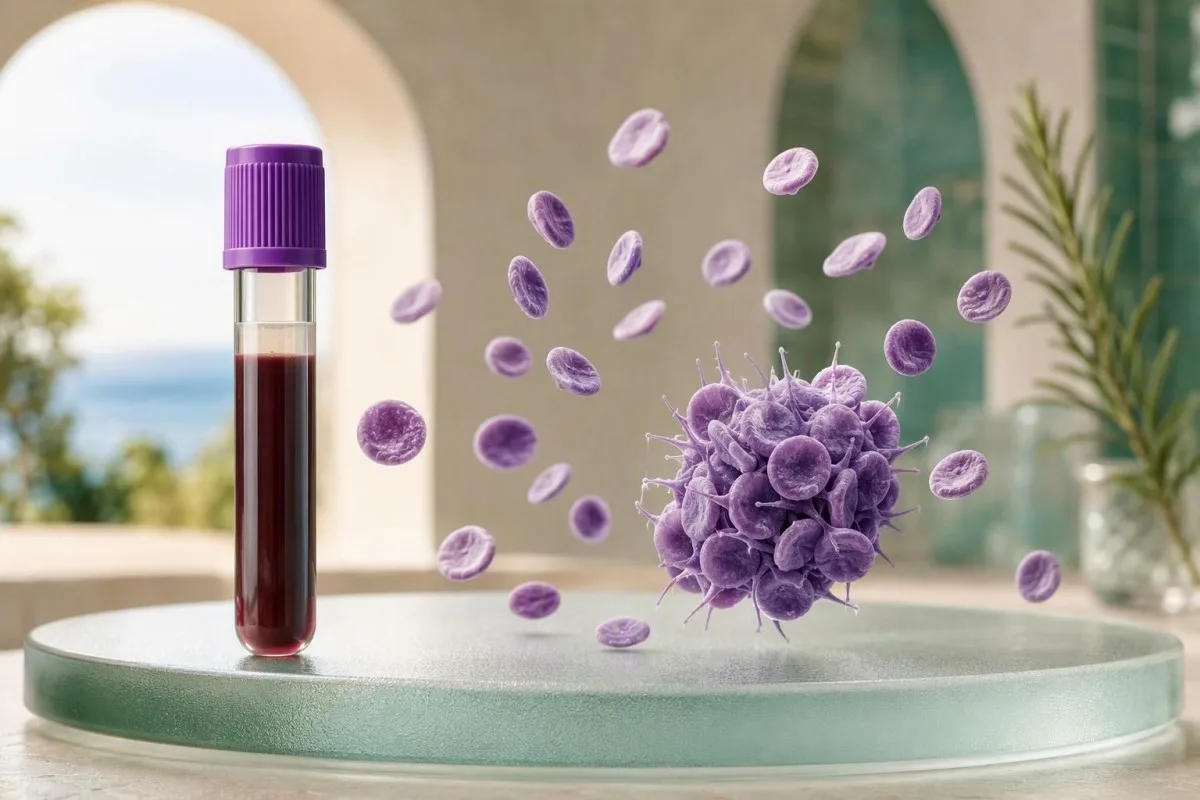
Ниският брой на тромбоцитите понякога може да е грешка при измерване, свързана с епруветката, а не проблем във вашето тяло. Ето как се идентифицира псевдотромбоцитопения, свързана с EDTA, преди някой да ви диагностицира с тромбоцитопения.


- Псевдотромбоцитопения е фалшиво нисък брой тромбоцити, причинен от агрегиране на тромбоцити след вземане, най-често в EDTA епруветка.
- Типичен диапазон на тромбоцитите за повечето небременни възрастни е приблизително 150-450 × 10⁹/L, въпреки че лабораториите определят собствени интервали.
- Агрегати от тромбоцити в намазка могат да накарат автоматизиран анализатор да отчете погрешно тромбоцитите, тъй като клъстерът не се измерва като отделни клетки.
- Повторно вземане на кръв с цитрат често решава проблема с агрегирането на тромбоцити в EDTA; лабораториите обикновено прилагат корекция от 1.1 към броя на тромбоцитите с цитрат.
- Липса на симптоми на кървене плюс неочаквано изолиран нисък брой тромбоцити трябва да налагат преглед на намазка преди лечение или вземане на решения за спешно насочване.
- Истинската тромбоцитопения може да съществува с образуване на тромбоцитни агрегати в EDTA, така че нормален резултат в цитрат е успокояващ, но трябва да съответства на клиничната картина.
- Спешна оценка все още е необходима при неконтролирано кървене, нови широко разпространени петехии, силно главоболие, объркване или брой тромбоцити под 10 × 10⁹/L.
Какво всъщност означава агрегирането на тромбоцити в EDTA
Образуването на тромбоцитни агрегати в EDTA е ин-витро лабораторен артефакт, при който тромбоцитите се слепват в тръбичката за вземане на кръв, което води до привидно нисък автоматизиран брой на тромбоцитите. Само по себе си това не означава, че тромбоцитите се разрушават в тялото, и обикновено не създава риск от кървене.
EDTA е добавката в тръбичката с лавандулов край, използвана за повечето пълни кръвни картини, тъй като свързва калция и предотвратява коагулацията. При малка част от хората отстраняването на калция разкрива повърхностни антигенни места на тромбоцитите, които позволяват на естествено срещаните антитела да свързват тромбоцитите помежду си. Анализаторът може да отчете тромбоцитен клъстър като една голяма частица, събитие с размер на левкоцит или изобщо нищо; вижте нашия преглед на какво включва CBC.
В моята клинична практика класическият резултат е брой на тромбоцитите от 48 × 10⁹/L при човек, който се чувства напълно добре, няма кръвонасядания и има нормален хемоглобин и брой левкоцити. Това несъответствие не е доказателство, но е моментът, в който трябва да се замислим. Kantesti е AI кръвен анализатор което сигнализира изолиран нисък брой тромбоцити заедно с лабораторни коментари като тромбоцитни агрегати, вместо да се третира числото като диагноза.
EDTA-зависимата псевдотромбоцитопения се среща при приблизително 0,03-0,27% от рутинните амбулаторни проби, с по-високи нива при проби, вече изпратени за нисък брой тромбоцити. Lippi и колеги я описват като клинично безобиден, но потенциално значим преаналитичен феномен, тъй като може да предизвика ненужни хоспитализации, трансфузии на тромбоцити или стероидно лечение (Lippi et al., 2012).
Как анализаторите на тромбоцити могат да отчетат погрешно агрегирани проби
Автоматизираните бройки на тромбоцитите са надеждни за диспергирани тромбоцити, но клъстърите попадат извън очакваните от анализатора размери и сигнални модели. Броячът може следователно да падне от действителен 220 × 10⁹/L до привидно 40 × 10⁹/L без никаква биологична загуба на тромбоцити.
Импедансните анализатори класифицират частиците предимно по обем, докато оптичните системи добавят информация за разсейване на светлината. Тромбоцитът обикновено е с диаметър около 2-3 микрометра, но един клъстър може да се припокрие с региона на фрагменти на еритроцити или левкоцити. Ето защо тромбоцитната хистограма може да бъде анормална и защо лабораторията може да добави “налице тромбоцитни клъстъри” или “броячът е ненадежден”.”
Сигналът за тромбоцити на анализатора е подкана за човешка проверка, а не окончателна диагноза. Ръчна оценка от добре направена периферна находка може да бъде по-полезна от повторно вземане на същата EDTA тръбичка, особено ако пробата е стояла 2 часа преди анализ. За практически прагове около процедури, нашето ръководство за брой на тромбоцитите преди екстракция на зъб обяснява защо провереният резултат има значение.
Големите тромбоцити създават различен, понякога припокриващ се проблем. Много големи индивидуални тромбоцити могат да бъдат пропуснати от импедансните методи дори без видими клъстъри, често повишавайки средния обем на тромбоцитите (MPV). Висок MPV не е взаимозаменяем с псевдотромбоцитопения; нашият преглед на причини за големи тромбоцити разделя тези две находки.
Как изглеждат агрегати от тромбоцити в намазка
Тромбоцитни клъстъри в препарата изглеждат като неправилни гроздовидни групи от малки лилави гранулирани елементи, често концентрирани в затлъстелия край на предметното стъкло. Тяхното местоположение има значение, тъй като броенето само на централното поле на препарата може да пропусне самата характеристика, която обяснява ниския резултат.
Обучен морфолог проверява тялото и опашката на натривката при голямо увеличение, а не само едно представително поле. Тромбоцитният сателитизъм е по-рядък EDTA-свързан модел, при който тромбоцитите обграждат неутрофилите като розета; той също може да намали докладвания брой на тромбоцитите. И двете находки са прояви на пробата, въпреки че сателитизмът и широките агрегати могат понякога да се появят заедно.
Една полезна подробност е, че EDTA клъстеризацията често прогресира с времето. Проба, измерена 10 минути след вземане, може да покаже 118 × 10⁹/L, след това 42 × 10⁹/L след 90 минути, тъй като се образуват повече агрегати. Лабораториите варират в своя работен процес, така че нормален начален брой не изключва напълно този артефакт, ако се появи по-късен сигнал от анализатора.
Когато аз, Томас Клайн, MD, видя нисък брой, придружен от коментар за намазка, но без клинично кървене, изисквам действителната интерпретация на намазката, преди да обсъдя имунната тромбоцитопения. Подобен първоначален микроскопски анализ е полезен, когато в отчет се споменават шистоцити в кръвен филм, въпреки че шистоцитите изискват много по-спешен клиничен контекст.
Защо EDTA причинява агрегиране на тромбоцити при някои хора
EDTA може да предизвика агрегация на тромбоцитите чрез хелиране на калций и промяна на формата на тромбоцитните мембранни гликопротеини, позволявайки на антителата да се свързват и да свързват съседни тромбоцити. Тази реакция настъпва след вземането на пробата, а не защото EDTA е увредил циркулиращите тромбоцити в тялото.
Най-добре подкрепеният механизъм включва антитела, често IgG, IgM или IgA, които разпознават криптични места на тромбоцитния GPIIb/IIIa комплекс след калций-зависима структурна промяна. Реакцията е зависима от температурата и времето при някои пациенти, което обяснява защо затоплена проба може понякога да подобри броя, но не е универсално решение. Това е проблем за съвместимост в лабораторията, а не алергия към EDTA.
Псевдотромбоцитопения може да се появи при здрави хора и е докладвана заедно с автоимунни състояния, инфекции, злокачествени заболявания и бременност, но тези асоциации не установяват причинно-следствена връзка при даден индивид. Положителен ANA или скорошна вирусна инфекция не трябва да се използват за обяснение на броя, докато не се изключи артефактът. Kantesti е Платформа за кръвни изследвания тълкуване с AI , която разглежда резултата за тромбоцити заедно с типа на епруветката, сигналите на анализатора и останалата част от CBC, а не изолирано.
Феноменът може да продължи години, но да варира между вземанията на проби. Пациент може да има брой тромбоцити от 35 × 10⁹/L в EDTA в понеделник и 230 × 10⁹/L в цитрат в същата сутрин, след което да покаже частично слепване месеци по-късно. Записването на предпочитаната епруветка в лабораторния запис може да предотврати повтарящи се аларми.
Как повторно вземане на кръв с цитрат потвърждава псевдотромбоцитопения
Броят на тромбоцитите, който се нормализира в епруветка със натриев цитрат, докато епруветката с EDTA съдържа агрегати, силно подкрепя EDTA-зависима псевдотромбоцитопения. Броят в цитрат изисква корекция на разреждането, тъй като епруветката съдържа течен антикоагулант.
Епруветките със син капак, съдържащи натриев цитрат, обикновено се пълнят при съотношение кръв към антикоагулант 9:1. Много лаборатории умножават измерените цитратни тромбоцитни броя по 1.1, за да коригират за разреждане, въпреки че валидираният метод на местната лаборатория има предимство. Например, суров цитратен резултат от 182 × 10⁹/L става около 200 × 10⁹/L след корекция.
Повторното вземане трябва да бъде правилно напълнено и леко разбъркано. Недопълнена цитратна епруветка променя съотношението на антикоагуланта и може да създаде различен подвеждащ резултат, което е една от причините лабораторният специалист да отхвърли привидно лесно повторение. Нашето обяснение за цветовете на епруветките за кръвни изследвания помага на пациентите да разберат защо изборът на епруветка е част от метода на изследване.
Епруветки с магнезиев сулфат или киселинно-цитратно-декстроза могат да бъдат полезни, когато слепването продължава в цитрат, но това обикновено е решение, взето от лабораторията. Наглер и колеги документират случай, в който разпознаването на EDTA-зависима псевдотромбоцитопения е избегнало ненужно диагностично изследване след като цитратното тестване е показало адекватен брой (Nagler et al., 2014).
Кога броят на тромбоцитите с цитрат не решава въпроса
Повторно вземане с цитрат не изключва истинска тромбоцитопения, когато коригираният брой остава нисък, слепване се случва в повече от един антикоагулант или симптомите предполагат кървене. Някои пациенти имат агрегация на тромбоцитите в множество антикоагуланти, а други имат истински нисък брой наред с артефакт.
Ако коригираният цитратен брой на тромбоцитите е 82 × 10⁹/L и намазката е без агрегати, това е истинска тромбоцитопения, докато не се докаже обратното. Ако EDTA е 25 × 10⁹/L, а цитрат е 86 × 10⁹/L с остатъчни агрегати, може да присъстват както артефакт, така и реално намаление. Клиничният екип трябва да използва най-добре проверената оценка, а не просто да избира по-успокояващото число.
Коагулация в пробата също може да направи CBC невалиден, тъй като тромбоцитите се консумират в микросъсирека. За разлика от EDTA псевдотромбоцитопения, частично коагулирала проба може да засегне и белите кръвни клетки и индексите на червените кръвни клетки. Прочетете нашето ръководство за повторно вземане след проблеми с пробите за практическите разлики между артефакти при вземане.
Пробите от пръст не са автоматично по-безопасни. Бавното събиране, стискането или забавеното смесване могат да насърчат локалната агрегация и да компрометират броя на тромбоцитите, особено когато докладваната стойност е под 100 × 10⁹/L. Венозното преизследване с навременна обработка обикновено е по-чистият потвърждаващ път.
Диапазони на броя на тромбоцитите, риск от кървене и капанът на артефакта
Повечето възрастни лаборатории използват референтен интервал за брой на тромбоцитите около 150-450 × 10⁹/L, но рискът от кървене зависи от потвърдения брой, неговата причина, функцията на тромбоцитите и медикаментите. Фалшиво нисък EDTA резултат не трябва да се използва самостоятелно за отказ от процедура или предписване на лечение.
Спонтанното тежко кървене става по-вероятно, когато истинският брой на тромбоцитите падне под около 10 × 10⁹/L, докато много хора със стабилни стойности над 50 × 10⁹/L имат малко спонтанно кървене. Това са широки клинични насоки, а не разрешение за игнориране на симптомите. Антикоагулантите, аспиринът, чернодробните заболявания, бъбречната недостатъчност и тромбоцитната дисфункция могат да променят риска при всяка стойност.
Брой на тромбоцитите от 90 × 10⁹/L изисква различно отношение при здраво лице с нормален цитратен резултат, отколкото при някой с нова мелена и повишен INR. Ето защо интерпретацията на броя на тромбоцитите принадлежи до коагулационните тестове; нашата aPTT и тест за съсирване ръководство обяснява какво може и какво не може да изключи нормален екран за съсирване.
Лабораториите могат да използват 140 × 10⁹/L вместо 150 × 10⁹/L като долна референтна граница, особено с локално получени интервали. Референтният интервал описва 95% от сравнителна популация; той не дефинира универсален праг за лечение. Това разграничение спестява изненадващо много ненужни притеснения.
Модели на CBC, които правят артефакта по-вероятен
Изолиран неочаквано нисък брой тромбоцити с нормален хемоглобин, бели кръвни клетки и коментар за слепване е моделът на CBC, най-силно предполагащ псевдотромбоцитопения. Този модел е предполагащ, а не диагностичен, тъй като ранната имунна или медикаментозно-свързана тромбоцитопения също може да бъде изолирана.
Истинските нарушения на костния мозък често засягат повече от една клетъчна линия, въпреки че има изключения. Ниските тромбоцити, комбинирани с падащ хемоглобин, абнормални бели кръвни клетки, бластни клетки или постоянни конституционални симптоми, изискват бърз преглед от клиницист и често официален преглед на препарата. Нашата статия за CBC пътека за кръвни заболявания очертава защо тези клъстери променят спешността.
Съотношението тромбоцити към лимфоцити може да стане безсмислено, когато знаменателят е валиден, но тромбоцитният числител е изкуствено понижен. PLR от 60, изчислен от EDTA-слепнал брой, не трябва да се интерпретира като възпалителен или сърдечно-съдов сигнал. Това е тиха, но честа вторична грешка в автоматизираните здравни доклади; вижте нашето обяснение за високи PLR резултати.
Kantesti AI идентифицира несъответствие между нисък брой тромбоцити и нормални съседни CBC измервания, след което насочва читателя към проверка на коментарите на пробата. An Инструмент за анализ на кръвни изследвания с AI никога не трябва да превръща единична непроверена стойност на тромбоцитите в етикет на заболяване. Това клинично въздържание е по-важно от скоростта.
Бременност, болнични грижи и други ситуации с висок залог
EDTA тромбоцитно слепване може да възникне по време на бременност и болнични грижи, но никога не трябва да се приема, когато истинската тромбоцитопения може да промени спешното лечение. Специфични за бременността причини като гестационна тромбоцитопения, прееклампсия, HELLP синдром и имунна тромбоцитопения изискват потвърден брой.
Броят на тромбоцитите обикновено намалява при неусложнена бременност, а някои лаборатории приемат по-ниски референтни граници, специфични за триместъра. Брой под 100 × 10⁹/L е по-нетипичен за неусложнена гестационна тромбоцитопения и изисква внимателна клинична оценка, дори ако се наблюдават EDTA агрегати. Нашият справочник за референтните граници на тромбоцитите, специфични за триместъра, при бременност предоставя контекст, без да замества акушерския преглед. В болница внезапно намаляване с повече от 50% от изходното ниво може да повдигне въпроси относно сепсис, експозиция на лекарства, индуцирана от хепарин тромбоцитопения, разреждане или консумация, свързана с устройства. EDTA артефакт може да имитира драматичен спад, особено когато предишен резултат е получен чрез различен лабораторен метод. Сравняването на потвърден цитратен резултат с изходното ниво на пациента често е по-полезно, отколкото повторното изследване на рутинна EDTA CBC.
Преди епидурална упойка, операция, цикъл на химиотерапия или трансфузия на тромбоцити, попитайте дали лабораторията е потвърдила стойността на препарат или алтернативен антикоагулант. Виждал съм забавяния в лечението, избегнати чрез това едно телефонно обаждане. Обратно, активни симптоми или нестабилен пациент трябва да бъдат оценени, докато потвърждението е в ход.
EDTA тромбоцитното слепване трябва да бъде изключено, преди изолираният нисък брой тромбоцити да бъде приписан на лекарство, автоимунно заболяване или имунна тромбоцитопения.
Лекарства и диагнози, които не трябва да бъдат обвинявани твърде бързо
Прекратяването на ценно лекарство въз основа на непотвърден брой може да причини ненужна вреда. Решенията относно медикаментите трябва да последват потвърждението за истинско намаляване на тромбоцитите.
Имунната тромбоцитопения е диагноза на изключване, а не лабораторен сигнал. Тя може да се прояви с изолирани тромбоцити под 100 × 10⁹/L, но слепен EDTA препарат прави първоначалния брой неинтерпретируем. Lippi et al. (2012) конкретно предупреждават, че разпознаването на псевдотромбоцитопения предотвратява неправилни терапии като кортикостероиди и спленектомия.
Ако един доклад изглежда противоречи на предишните ви резултати, запазете оригиналния PDF файл и отбележете датата на вземане, коментара за епруветката, острото заболяване и новите лекарства. Нашето ръководство за.
обяснява защо числената разлика не е автоматично биологична промяна. съществени промени между кръвни изследвания При неочакван нисък брой тромбоцити, попитайте дали са видени тромбоцитни агрегати, дали е прегледан периферен препарат и дали може да бъде извършен брой с алтернативен антикоагулант.
Какво да попитате вашата лаборатория или клиницист след това
Тези три въпроса обикновено изясняват следващата стъпка по-бързо, отколкото търсенето на симптоми онлайн. Фокусираните въпроси помагат на лабораторията да потвърди неочаквано нисък резултат от тромбоцитите.
цитратен резултат и дали агрегатите продължават в тази епруветка. Суров резултат от 145 × 10⁹/L може да изглежда граничен, докато корекцията за разреждане даде приблизително 160 × 10⁹/L. Попитайте също дали лабораторията е използвала оптичен или флуоресцентен брояч на тромбоцитите, тъй като тези методи понякога подобряват броя при сложни образци.
Поискайте коригиран работният процес за интерпретация на Kantesti насърчава потребителите да сравняват числения резултат с лабораторното описание и полетата за флаг, преди да действат при сигнал за тревога. За по-широка рамка за безопасност, нашият.
обхваща транскрипция, единици, референтни диапазони и проверка на резултатите. чеклист за точност на AI отчета Не започвайте добавки, не спирайте предписани лекарства и не предполагайте, че имате нарушение на кръвосъсирването само защото един EDTA брой на тромбоцитите е нисък.
Какво да не правите, докато чакате потвърждение
Същевременно не пренебрегвайте активно кървене само защото се подозира слепване. Потвърждението предпазва пациентите както от паника, така и от несигурно успокоение.
Няма диета, витамин или домашно средство, което да коригира EDTA-зависима псевдотромбоцитопения, тъй като тромбоцитите се слепват в епруветката, а не отказват вътре в тялото. Дефицит на фолиева киселина, витамин B12 и желязо може да засегне образуването на кръв при други обстоялености, но добавките не могат да валидират съмнителен брой. Третирането на артефакта е свързано със събирането и анализа.
Избягвайте ненужен аспирин, ибупрофен, напроксен и тежък прием на алкохол, докато клиницист не изясни много нисък докладван брой, особено ако лесно се наранявате. Не спирайте антикоагуланти, антитромбоцитни лекарства, лекарства против епилепсия или лечение на рак без съвет от предписващия лекар; показанието за тези лекарства може да носи по-голям непосредствен риск от непроверената находка.
Поддържането на кратка времева линия на резултатите може да промени часа на прегледа. Нашият наръчник за проследяване на лабораторни резултати предлага записване на часа на вземане на кръв, скорошно заболяване, лекарства, коментари към пробата и дали резултатът е от EDTA или цитрат.
Червени знамена, които изискват спешна медицинска оценка
Потърсете спешна медицинска помощ при неконтролирано кървене, черни изпражнения, повръщане на кръв, силно главоболие, объркване, припадък или широко разпространен точков обрив, дори ако се подозира EDTA агрегация. Лабораторен артефакт и истинска спешност могат да съществуват едновременно.
Истински брой тромбоцити под 10 × 10⁹/L обикновено се третира като спешен резултат, тъй като рискът от спонтанно кървене от лигавиците и вътрешно кървене се увеличава значително. Брой под 20 × 10⁹/L с ново кървене, треска, тежка хипертония, усложнения на бременността или скорошна експозиция на хепарин също изисква еднодневен клиничен преглед. Местните спешни указания трябва да имат предимство пред всяка онлайн интерпретация.
Новите неврологични симптоми са особено значими, тъй като интракраниалното кървене е рядко, но сериозно. Не шофирайте сами, ако имате силно главоболие със слабост, промяна в речта, колапс или объркване. При деца обрив, който не избледнява при натиск, със треска, изисква спешна оценка, независимо от резултата за тромбоцитите.
Thomas Klein, MD, съветва пациентите да разделят въпроса “Реален ли е този брой?” от “Безопасен ли е този човек днес?”. Първият обикновено изисква размазка и презасяване с цитрат; вторият зависи от симптомите, находките от прегледа и цялостната клинична картина. Нашата ръководство за второ мнение за кръвен тест може да помогне за фокусирана дискусия след справяне с спешните въпроси.
Как Kantesti тълкува безопасно маркиран брой тромбоцити
Kantesti AI третира нисък брой тромбоцити с коментари за EDTA агрегация като сигнал за потвърждение, а не като доказателство за тромбоцитопения. Нашата интерпретация поставя анализаторни флагове, другите линии на CBC, предишни стойности и докладвани симптоми пред опростен червено-зелен етикет.
Кантести е един услугата за интерпретация на AI лабораторни тестове проектиран да обяснява лабораторни данни на прост език, като същевременно запазва ограниченията на изходния доклад. Ако прикачен PDF документ посочва “тромбоцитни агрегати”, нашата система трябва да каже на потребителя, че числото може да е невярно ниско и че лабораторията или клиницистът могат да го потвърдят с преглед на препарата или цитратна проба.
Разпознаването на оптични символи може да погрешно прочете десетична запетая, мерна единица или лабораторна бележка под линия. Ето защо пациентите трябва да проверяват визуализацията на изображението, преди да разчитат на каквато и да е цифрова интерпретация, особено около стойности като 18 спрямо 180 × 10⁹/L. Нашата чеклист за качеството при качване на PDF обяснява няколко проверки, които предотвратяват повечето избежни грешки.
Клиническият надзор остава човешка работа. Методологията на Kantesti се преглежда спрямо работни процеси, фокусирани върху безопасността; читатели, които искат да разберат нашия подход, могат да прегледат нашия техническа валидация и клиничен надзор. AI може да организира въпроси ефективно, но не може да инспектира действителната размазка или да оцени активно кървене.
Практически план за последващи действия след агрегиране на тромбоцити в EDTA
Обичайният план за последващи действия е да се документира EDTA артефактът, да се получи потвърден брой тромбоцити от алтернативна пробирка и да се използва този резултат за бъдещи клинични решения. Повечето хора не се нуждаят от лечение за самия артефакт, след като лабораторията е установила модела.
Поискайте лабораторният запис да отбележи “EDTA-зависими тромбоцитни агрегати” или еквивалентна формулировка, ако потвърждението е ясно. При бъдещи вземания на кръв, екипът по вземане на кръв може да вземе цитратна пробирка заедно с рутинното EDTA CBC, спестявайки втори час. Това е особено полезно преди операция, по време на бременност или когато протокол за лечение има прагове за тромбоцити.
Потвърден базов показател е по-ценен от повтарящи се непроверени ниски стойности. Ако коригираният ви цитратен брой е стабилен на 205 × 10⁹/L в продължение на 12 месеца, бъдеща EDTA стойност от 55 × 10⁹/L с агрегати е далеч по-малко тревожна, отколкото същият брой при някой без предишна документация. Тенденциите са полезни само когато методът на тестване е сравним.
Kantesti е подкрепил повече от 2 милиона потребители в 127+ страни с многоезични лабораторни обяснения, но резултатите все още принадлежат към връзката за грижа с вашия клиницист. Нашите медицински прегледачи и Медицински консултативен съвет подчертават едно и също крайно правило: първо проверете броя на тромбоцитите, след това решете какво — ако нещо — се нуждае от лечение.
Научни публикации
Към 29 август 2026 г. двете изследователски публикации, посочени по-долу, са допълнителни образователни ресурси. Те не установяват диагноза EDTA-зависима псевдотромбоцитопения; лабораторният препарат и броят на тромбоцитите с алтернативен антикоагулант остават релевантните инструменти за потвърждение.
Често задавани въпроси
Може ли EDTA-индуцираната агрегация на тромбоцити да причини много нисък брой на тромбоцитите?
Да. Агрегирането на тромбоцити в EDTA може да доведе до значително фалшиво нисък брой на тромбоцитите, понякога под 50 × 10⁹/L, когато истинският брой на циркулиращите тромбоцити на лицето е нормален. Анализаторът подчита агрегатите на тромбоцитите, защото не може надеждно да разпознае всеки тромбоцит в клъстер. Периферна находка, показваща агрегати, и нормален коригиран цитратен брой силно подкрепят псевдотромбоцитопенията. Резултатът все пак трябва да бъде прегледан спешно, ако има активно кървене или цитратният брой остава нисък.
Как се потвърждава псевдотромбоцитопения?
Псевдотромбоцитопенията обикновено се потвърждава чрез преглед на периферна проба под микроскоп за агрегати на тромбоцитите и чрез повторно определяне на броя на тромбоцитите в епруветка със натриев цитрат. Цитратните епруветки съдържат течен антикоагулант, така че много лаборатории умножават измерената тромбоцитна стойност по 1.1, за да отчетат разреждането. Например, сурова цитратна стойност от 180 × 10⁹/L обикновено се докладва като приблизително 198 × 10⁹/L след корекция. Валидираната корекция и интерпретация на пробата на местната лаборатория трябва да ръководят крайния резултат.
Означава ли агрегацията на тромбоцити с EDTA, че имам нарушение в кръвосъсирването?
Не. Агрегацията на тромбоцитите в EDTA проба е само артефакт in vitro и не означава, че имате нарушение в кръвосъсирването или че тромбоцитите Ви се агрегират в кръвообращението. Повечето засегнати хора нямат симптоми на кървене и имат потвърден брой тромбоцити в рамките на обичайния интервал за възрастни от около 150-450 × 10⁹/L. Клиницист трябва все пак да изследва симптоми на кървене, абнормални коагулационни тестове или постоянно нисък брой тромбоцити в цитратна проба. Артефактът не предпазва някого от несвързани рискове от кървене, причинени от лекарства или медицински състояния.
Може ли да се получи слепване на тромбоцити и в цитрат?
Да, въпреки че натриевият цитрат често предотвратява слепването, свързано с EDTA, агрегацията на тромбоцитите понякога може да продължи при цитрат или да се появи при множество антикоагуланти. В такава ситуация лабораторията може да използва оптично или флуоресцентно броене на тромбоцити, бърза загряваща обработка, магнезиев сулфат или киселинно-цитратно-декстроза в зависимост от валидираните си протоколи. Коригиран цитратен брой под 150 × 10⁹/L без агрегати трябва да се третира като възможна истинска тромбоцитопения. Слепването при множество антикоагуланти е рядко и изисква потвърждение, ръководено от лабораторията.
Трябва ли да повторя изследването на тромбоцитите си, ако в резултата пише, че има тромбоцитни агрегати?
Да. Доклад, който посочва наличие на тромбоцитни агломерати, тромбоцитни агрегати или ненадеждно отчитане на тромбоцити, обикновено налага проверка, а не приемане на числения резултат. Обичайното повторение включва прясно взета проба със натриев цитрат и преглед на намазка, за предпочитане обработена незабавно. Ако първоначалният брой е под 10 × 10⁹/L или имате неконтролируемо кървене, черни изпражнения, силно главоболие или объркване, потърсете спешна медицинска помощ, докато се организира потвърждението. Не променяйте предписаното лекарство без съвет от лекуващия лекар, който знае защо е предписано.
Може ли EDTA псевдотромбоцитопения да се появява и изчезва?
Да. EDTA псевдотромбоцитопенията може да бъде постоянна в продължение на години или да се появява променливо, тъй като степента на агрегация зависи от времето след вземане на пробата, температурата на пробата и метода на анализатора. Една EDTA проба може да покаже 70 × 10⁹/L, докато друга, взета в различен ден, показва 145 × 10⁹/L, въпреки стабилния реален брой тромбоцити. Документиран нормален брой с цитрат осигурява полезна отправна точка за бъдещо сравнение. Искането лабораторията да запише предпочитаното антикоагулантно средство може да предотврати повтарящи се фалшиви тревоги.
Вземете анализ на кръвен тест с ИИ още днес
Присъединете се към над 2M+ потребители по целия свят, които се доверяват на Kantesti за моментален и точен анализ на лабораторни тестове. Качете резултатите от вашия кръвен тест и получете цялостно тълкуване на биомаркерите 15,000+ за секунди.
📚 Публикации от изследвания с препратки
Klein, T., Mitchell, S., & Weber, H. (2026). Kantesti AI. (2026). C3 C4 Комплемент Тест на кръвта и ANA титър ръководство. Zenodo. https://doi.org/10.5281/zenodo.18353989. Kantesti AI Medical Research.
Klein, T., Mitchell, S., & Weber, H. (2026). Kantesti AI. (2026). Тест на кръвта за вируса Нипах: Ръководство за ранно откриване и диагностика 2026. Zenodo. https://doi.org/10.5281/zenodo.18487418. Kantesti AI Medical Research.
📖 Външни медицински източници
⚕️ Медицинска декларация
Тази статия е само с образователна цел и не представлява медицински съвет. Винаги се консултирайте с квалифициран медицински специалист за решения относно диагностика и лечение.
Сигнали за доверие E-E-A-T
Опит
Медицински преглед, воден от лекар, на работните процеси за интерпретация на лабораторни резултати.
Експертиза
Фокус в лабораторната медицина върху това как се държат биомаркерите в клиничен контекст.
Авторитетност
Написано от д-р Томас Клайн, с преглед от д-р Сара Мичъл и проф. д-р Ханс Вебер.
Надеждност
Интерпретация, основана на доказателства, с ясни последващи стъпки за намаляване на тревогата.