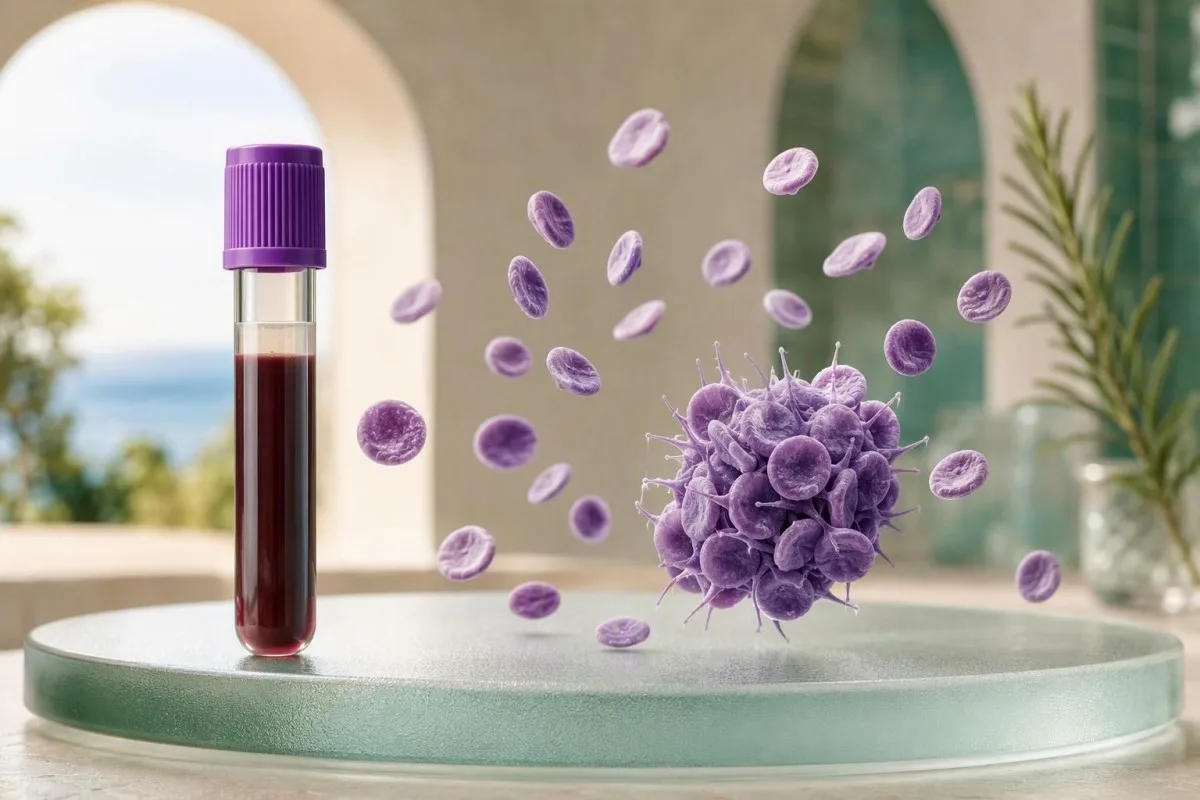
l-leqella dyal l-platelets nqissa memken tkoun chi khata2 fi l-qyas dyal l-tube bdal ma tkoun chi mochkil fi jissmek. hada wach mch7al kayt3rf had l-pseudothrombocytopenia lli kaytsebbo EDTA qbel ma ysemmewk thrombocytopenia.


- pseudothrombocytopenia hiya chi leqella nqissa dyal l-platelets kaytsebboha platele ts mkhalta ba3d ma ytkollektohom, aktar f chi tube dyal EDTA.
- النطاق المعتاد للصفائح 3nd aktar nass kbar makayninch 7aml howa ta9riban 150-450 × 10⁹/L, wakha l-laboratories kaykhadmo b chi intervals dyalhom.
- l-platelets mkhalta f l-smear memken tkhell chi analyzer automatique i7seb qall l-platelets fach chi groupe makan7sebch b7al cells mtfara9a.
- citrate redraw aktar l-marrat kay7ell l-platelets mkhalta dyal EDTA; l-laboratories kaydiron chi correction dial 1.1 dilution 3la chi leqella dyal l-platelets dial citrate.
- makaynch chi symptoms dyal نزيف zado chi leqella nqissa dyal l-platelets lli mabnsh tkon, khas tkon chi review dyal l-smear qbel ma tchof chi traitement wlla chi قرارات dyal referral urgent.
- قلة الصفيحات الحقيقية يمكن أن تتواجد مع تكتل الصفائح الدموية في أنبوب EDTA، لذلك فإن نتيجة السيترات العادية مطمئنة ولكن يجب أن تتناسب مع الحالة السريرية.
- تقييم عاجل لا تزال مطلوبة للنزيف غير المنضبط، أو ظهور نمشات واسعة الانتشار جديدة، أو صداع شديد، أو ارتباك، أو انخفاض عدد الصفائح الدموية عن 10 × 10⁹/لتر.
ach kaym3ni b l-m3ni l-9tiret lli kayn l-platelets dyal EDTA
تكتل الصفائح الدموية في أنبوب EDTA هو ظاهرة مخبرية مخبرية زائفة حيث تلتصق الصفائح الدموية ببعضها البعض في أنبوب الجمع، مما يؤدي إلى انخفاض خاطئ في عدد الصفائح الدموية الآلي. لا يعني بحد ذاته أن الصفائح الدموية يتم تدميرها في الجسم، وعادة لا يسبب خطر النزيف.
EDTA هو المادة المضافة الموجودة في الأنبوب ذي الغطاء البنفسجي المستخدمة في معظم فحوصات الدم الكاملة لأنه يرتبط بالكالسيوم ويمنع التخثر. في مجموعة فرعية صغيرة من الأشخاص، يكشف استبعاد الكالسيوم عن أهداف سطح الصفائح الدموية التي تسمح للأجسام المضادة الطبيعية بالربط بين الصفائح الدموية. قد يقوم المحلل بعد تكتل الصفيحات كجسيم كبير واحد، أو حدث بحجم خلية بيضاء، أو لا شيء على الإطلاق؛ راجع نظرتنا العامة لـ شنو كيشمل الـ CBC.
في عملي السريري، التقرير الكلاسيكي هو عدد صفائح دموية يبلغ 48 × 10⁹/لتر لشخص يشعر بصحة جيدة تمامًا، ولا يعاني من كدمات، ولديه نسبة هيموغلوبين وعدد خلايا دم بيضاء طبيعية. هذا التناقض ليس دليلًا، ولكنه اللحظة المناسبة للتوقف. Kantesti هو محلل اختبار الدم بالذكاء الاصطناعي الذي يشير إلى انخفاض معزول في عدد الصفائح الدموية إلى جانب تعليقات المختبر مثل تكتلات الصفائح الدموية، بدلاً من التعامل مع الرقم كتشخيص.
يُقدر أن نقص الصفيحات الكاذب المعتمد على EDTA يحدث في حوالي 0.03-0.27% من عينات المرضى الخارجيين الروتينية، مع ارتفاع المعدلات بين العينات المحالة بالفعل لانخفاض عدد الصفائح الدموية. يصف ليبي وزملاؤه بأنه ظاهرة ما قبل تحليلية غير ضارة سريريًا ولكنها قد تكون ذات عواقب وخيمة لأنها يمكن أن تؤدي إلى دخول المستشفى غير الضروري، أو نقل الصفائح الدموية، أو العلاج بالستيرويدات (Lippi et al., 2012).
kf7al kayn l-analyzer lli kay9edd qall l-platelets f l-3aynat lli mkhalta
تعد أعداد الصفائح الدموية الآلية موثوقة للصفائح الدموية المشتتة، ولكن التكتلات تقع خارج نطاق الحجم وأنماط الإشارة التي يتوقعها المحلل. لذلك يمكن أن ينخفض العدد من 220 × 10⁹/لتر حقيقي إلى 40 × 10⁹/لتر ظاهر دون أي فقدان بيولوجي للصفائح الدموية.
تصنف أجهزة التحليل بالمعاوقة الجسيمات بشكل أساسي حسب الحجم، بينما تضيف الأنظمة البصرية معلومات تشتت الضوء. عادة ما تكون الصفيحة الدموية حوالي 2-3 ميكرومتر، ولكن الكتلة يمكن أن تتداخل مع جزء خلية الدم الحمراء أو منطقة الكريات البيضاء. هذا هو السبب في أن مخطط الصفائح الدموية قد يكون غير طبيعي ولماذا قد يضيف المختبر “وجود كتل صفائح دموية” أو “العدد غير موثوق به”.”
علامة الصفائح الدموية للمحلل هي إشارة للمراجعة البشرية، وليست تشخيصًا نهائيًا. يمكن أن يكون التقدير اليدوي من لطاخة طرفية جيدة الصنع أكثر فائدة من تكرار نفس أنبوب EDTA، خاصة إذا ظلت العينة لمدة ساعتين قبل التحليل. للعتبات العملية حول الإجراءات، دليلنا لـ تعداد الصفائح الدموية قبل استخراج الأسنان يشرح سبب أهمية النتيجة المؤكدة.
تسبب الصفائح الدموية الكبيرة مشكلة مختلفة، وأحيانًا متداخلة. قد يتم تفويت الصفائح الدموية الفردية الكبيرة جدًا بواسطة طرق المعاوقة حتى بدون كتل مرئية، مما يؤدي غالبًا إلى ارتفاع متوسط حجم الصفائح الدموية (MPV). لا يمكن استبدال ارتفاع MPV بنقص الصفيحات الكاذب؛ مراجعتنا لـ أسباب كبر حجم الصفائح الدموية تفصل هذين الاكتشافين.
kif kaybanou l-platelets mkhalta f l-smear
تظهر كتل الصفائح الدموية في اللطاخة كمجموعات غير منتظمة تشبه العنب لعناصر حبيبية صغيرة بنفسجية، غالبًا ما تتركز عند الحافة الريشية للشريحة. موقعها مهم لأن عد مجال اللطاخة المركزي فقط يمكن أن يفوت الميزة التي تفسر النتيجة المنخفضة.
يفحص خبير التشكيل المدرب جسم وذيل الفيلم تحت قوة عالية، وليس مجرد مجال تمثيلي واحد. تلألؤ الصفائح الدموية هو نمط نادر مرتبط بـ EDTA حيث تحيط الصفائح الدموية بالخلايا المتعادلة مثل طوق؛ يمكن أن يخفض أيضًا عدد الصفائح الدموية المبلغ عنه. كلا الاكتشافين ظاهرتان للعينة، على الرغم من أن التلألؤ والتكتلات الواسعة قد تحدث أحيانًا معًا.
أحد التفاصيل المفيدة هو أن تكتل EDTA غالبًا ما يتفاقم بمرور الوقت. قد تظهر عينة تم قياسها بعد 10 دقائق من الجمع 118 × 10⁹/لتر، ثم 42 × 10⁹/لتر عند 90 دقيقة مع تشكل المزيد من التكتلات. تختلف المختبرات في سير عملها، لذا فإن العد الأولي العادي لا يستبعد تمامًا هذه الظاهرة إذا ظهرت علامة محلل لاحقة.
ملي كنشوف عدد قليل ديال الصفائح الدموية مع تعليق على المسحة ولكن بدون نزيف سريري، كنطلب تفسير المسحة الفعلي قبل ما نناقش نقص الصفائح الدموية المناعي. طريقة التفكير اللي كتبدأ بالمجهر مفيدة حتى ملي كيكون التقرير كيقول وجود خلايا متفتتة (schistocytes) في مسحة الدم, ، رغم أن هاد الخلايا كتطلب سياق سريري أكثر استعجالاً.
wach mn l-m7al kaysebbo EDTA f l-platelets mkhalta 3nd b3d nass
EDTA يمكن ليه يسبب تكتل الصفائح الدموية عن طريق تشليبو الكالسيوم وتغيير شكل البروتينات السكرية (glycoproteins) لغشاء الصفائح الدموية، مما يسمح للأجسام المضادة بالارتباط وربط الصفائح المجاورة. هاد التفاعل كيوقع بعد أخذ العينة، ماشي لأن EDTA ضار بالصفائح الدموية اللي في الدورة الدموية داخل الجسم.
الآلية الأكثر دعمًا كتشمل الأجسام المضادة، غالبًا IgG، IgM، أو IgA، اللي كتعرف على مواقع مخفية في مركب GPIIb/IIIa للصفائح الدموية بعد تغيير هيكلي متعلق بالكالسيوم. التفاعل كيعتمد على درجة الحرارة والوقت عند بعض المرضى، وهادشي كيشرح لماذا عينة دافئة يمكن أن تحسن العد في بعض الأحيان ولكنها ليست حلاً شاملاً. إنها مشكلة توافق في المختبر، وليست حساسية تجاه EDTA.
نقص الصفائح الدموية الزائف (Pseudothrombocytopenia) يمكن أن يحدث عند الأشخاص الأصحاء وتم الإبلاغ عنه مع حالات المناعة الذاتية، والالتهابات، والأورام، والحمل، ولكن هاد الارتباطات لا تثبت السببية لدى فرد معين. لا ينبغي استخدام ANA إيجابي أو مرض فيروسي حديث لتفسير العد حتى يتم استبعاد العيب (artifact). منصة تفسير تحليل الدم ديال AI اللي كيقرأ نتيجة الصفائح الدموية مع نوع الأنبوب ديالها، العلامات ديال الجهاز، وباقي فحوصات CBC بدلاً من التعامل معها بمعزل.
الظاهرة يمكن أن تستمر لسنوات لكنها تختلف بين العينات. يمكن للمريض أن يكون لديه عدد صفائح دموية 35 × 10⁹/L في أنبوب EDTA يوم الاثنين و 230 × 10⁹/L في أنبوب السترات (citrate) في نفس الصباح، ثم يظهر تكتل جزئي مرة أخرى بعد أشهر. تسجيل الأنبوب المفضل في سجل المختبر يمكن أن يمنع الإنذارات المتكررة.
kif m7al chi redraw b citrate kaykonferm l-pseudothrombocytopenia
عدد الصفائح الدموية اللي كيولي طبيعي في أنبوب سترات الصوديوم بينما يحتوي أنبوب EDTA على تكتلات يدعم بقوة نقص الصفائح الدموية الزائف المرتبط بـ EDTA. عدد الصفائح في أنبوب السترات يحتاج لتعديل للتركيز لأن الأنبوب يحتوي على مضاد تخثر سائل.
أنابيب سترات الصوديوم ذات الغطاء الأزرق عادة ما يتم ملؤها بنسبة 9:1 دم إلى مضاد تخثر. العديد من المختبرات تضرب عدد الصفائح الدموية المقاس في السترات في 1.1 لتصحيح التركيز، على الرغم من أن الطريقة المعتمدة للمختبر المحلي لها الأسبقية. على سبيل المثال، نتيجة خام في السترات تبلغ 182 × 10⁹/L تصبح حوالي 200 × 10⁹/L بعد التصحيح.
إعادة السحب يجب أن تكون مملوءة بشكل صحيح ومخلوطة بلطف. أنبوب سترات غير مملوء بشكل كاف يغير نسبة مضاد التخثر ويمكن أن يخلق نتيجة مضللة مختلفة، وهي أحد الأسباب التي قد تجعل عالم المختبر يرفض تكراراً يبدو بسيطاً. شرحنا لـ ألوان أنابيب اختبار الدم يساعد المرضى على فهم لماذا اختيار الأنبوب هو جزء من طريقة الاختبار.
أنابيب كبريتات المغنيسيوم أو حمض الستريك-الدكستروز يمكن أن تكون مفيدة عندما يستمر التكتل في السترات، ولكن هذا عادة ما يكون قرارًا يتخذه المختبر. وثق ناغلر وزملاؤه حالة تم فيها التعرف على نقص الصفائح الدموية الزائف المرتبط بـ EDTA وتجنب فحص تشخيصي غير ضروري بعد أن أظهر اختبار السترات عدداً كافياً (Nagler et al., 2014).
wakha chi redraw b citrate kay9add i7ell l-mochkil
إعادة السحب بالسترات لا تستبعد نقص الصفائح الدموية الحقيقي عندما يظل العدد المصحح منخفضًا، أو يحدث التكتل في أكثر من مضاد تخثر واحد، أو تكون الأعراض تشير إلى نزيف. بعض المرضى لديهم تكتل صفائح دموية متعدد مضادات التخثر، وبعضهم لديهم عدد حقيقي منخفض بجانب عيب (artifact).
إذا كان عدد الصفائح الدموية المصحح في السترات 82 × 10⁹/L والمسحة خالية من التكتلات، فهذا نقص حقيقي في الصفائح الدموية حتى يثبت العكس. إذا كان EDTA 25 × 10⁹/L والسترات 86 × 10⁹/L مع وجود تكتلات متبقية، فقد يكون هناك كل من عيب (artifact) وانخفاض حقيقي. يجب على الفريق السريري استخدام أفضل تقدير تم التحقق منه، وليس مجرد اختيار الرقم الأكثر طمأنة.
التخثر في العينة يمكن أن يبطل أيضًا CBC لأن الصفائح الدموية تُستهلك داخل الجلطة المجهرية (microclot). على عكس نقص الصفائح الدموية الزائف بـ EDTA، فإن العينة المتخثرة جزئيًا قد تؤثر أيضًا على خلايا الدم البيضاء ومؤشرات خلايا الدم الحمراء. اقرأ دليل إعادة السحب بعد مشاكل العينة لمعرفة الاختلافات العملية بين عيوب أخذ العينات.
عينات وخز الإصبع ليست آمنة تلقائيًا. يمكن أن يؤدي الجمع البطيء أو الضغط أو الخلط المتأخر إلى تعزيز التكتل الموضعي والإضرار بعدد الصفائح الدموية، خاصة عندما تكون القيمة المبلغ عنها أقل من 100 × 10⁹/لتر. عادةً ما يكون إعادة الجمع الوريدي مع المعالجة الفورية هو المسار الأوضح للتأكيد.
l-leqella dyal l-platelets, khoter l-نزيف, w l-trap dyal l-artifact
تستخدم معظم مختبرات البالغين نطاقًا مرجعيًا لعدد الصفائح الدموية قريبًا من 150-450 × 10⁹/لتر، ولكن يعتمد خطر النزيف على العدد المؤكد، وسببه، ووظيفة الصفائح الدموية، والأدوية. لا يجب استخدام نتيجة EDTA المنخفضة بشكل خاطئ بمفردها لرفض إجراء أو وصف علاج.
يصبح النزيف الكبير التلقائي أكثر احتمالًا مع انخفاض عدد الصفائح الدموية الحقيقي إلى حوالي 10 × 10⁹/لتر، بينما يعاني العديد من الأشخاص الذين لديهم أعداد مستقرة فوق 50 × 10⁹/لتر من نزيف تلقائي قليل. هذه إرشادات سريرية واسعة، وليست إذنًا لتجاهل الأعراض. يمكن أن تؤثر مضادات التخثر والأسبرين وأمراض الكبد وفشل الكلى واختلال وظائف الصفائح الدموية على الخطر عند أي رقم.
يستدعي عدد الصفائح الدموية البالغ 90 × 10⁹/لتر تعاملًا مختلفًا في شخص سليم لديه نتيجة سيترات طبيعية مقارنة بشخص يعاني من نزيف جديد في الأمعاء وارتفاع في INR. لهذا السبب، فإن تفسير عدد الصفائح الدموية ينتمي إلى جانب اختبارات التخثر؛ aPTT واختبار التخثر هو الدليل يوضح ما يمكن لشاشة التخثر الطبيعية استبعاده وما لا يمكن.
قد تستخدم المختبرات 140 × 10⁹/لتر بدلاً من 150 × 10⁹/لتر كحد أدنى للمرجع، خاصة مع فترات مستمدة محليًا. تصف الفترة المرجعية جزءًا من مجموعة مقارنة؛ ولا تحدد عتبة علاج عالمية. هذا التمييز يوفر قدرًا مفاجئًا من القلق غير الضروري.
l-patterns dyal CBC lli kaykhellou l-artifact ikon aktar mokan
العدد المنخفض بشكل غير متوقع للصفائح الدموية مع الهيموغلوبين الطبيعي وخلايا الدم البيضاء وتعليق التكتل هو نمط CBC الأكثر دلالة على نقص الصفائح الدموية الكاذب. هذا النمط دلالي وليس تشخيصيًا لأن نقص الصفائح الدموية المناعي المبكر أو المرتبط بالأدوية قد يكون معزولًا أيضًا.
غالبًا ما تؤثر اضطرابات نخاع العظام الحقيقية على أكثر من خط واحد من خلايا الدم، على الرغم من وجود استثناءات. انخفاض الصفائح الدموية مع انخفاض الهيموغلوبين أو خلايا الدم البيضاء غير الطبيعية أو الأرومات أو الأعراض الجهازية المستمرة يستدعي مراجعة سريعة من قبل الطبيب وغالبًا فحصًا رسميًا للشريط. مقالتنا حول مسار CBC لاضطرابات الدم توضح لماذا تغير هذه المجموعات من الإلحاح.
يمكن أن تصبح نسبة الصفائح الدموية إلى الخلايا الليمفاوية بلا معنى عندما يكون المقام صحيحًا ولكن البسط للصفائح الدموية منخفض بشكل مصطنع. لا ينبغي تفسير نسبة PLR تبلغ 60 محسوبة من عدد EDTA المتكتل كإشارة التهابية أو قلبية وعائية. هذا خطأ ثانوي هادئ ولكنه شائع في التقارير الصحية الآلية؛ انظر شرحنا لـ نتائج PLR المرتفعة.
Kantesti AI تحدد التباين بين انخفاض عدد الصفائح الدموية وإجراءات CBC الطبيعية المجاورة، ثم توجه القارئ للتحقق من تعليقات العينة. أداة تحليل ديال تحاليل الدم مدعومة بالذكاء الاصطناعي لا يجب أبدًا تحويل قيمة صفائح دموية واحدة غير مؤكدة إلى تسمية مرض. هذه القيود السريرية أهم من السرعة.
l-7amal, l-r3aya f l-hospital, w l-mahalat lli khass tkon fikra dyalha
يمكن أن يحدث تكتل الصفائح الدموية في EDTA أثناء الحمل والرعاية الصحية، ولكن لا ينبغي افتراضه أبدًا عندما يمكن أن يغير نقص الصفائح الدموية الحقيقي الإدارة العاجلة. الأسباب المتعلقة بالحمل مثل نقص الصفيحات الدموية الحملي، تسمم الحمل، متلازمة HELLP، ونقص الصفيحات المناعي تتطلب عدّاً مؤكداً.
غالباً ما تنخفض أعداد الصفيحات الدموية في الحمل غير المعقد، وتقبل بعض المختبرات حدوداً مرجعية أقل خاصة بالفصل. العدد الأقل من 100 × 10⁹/لتر أقل شيوعاً لنقص الصفيحات الدموية الحملي غير المعقد ويتطلب تقييماً سريرياً دقيقاً، حتى لو شوهدت تكتلات EDTA. دليلنا المرجعي للصفيحات الدموية الخاص بالفصل في الحمل يوفر السياق دون أن يحل محل المراجعة النسائية.
في المستشفى، قد يثير الانخفاض المفاجئ بأكثر من 50% عن خط الأساس أسئلة حول الإنتان، التعرض للأدوية، نقص الصفيحات الناتج عن الهيبارين، التخفيف، أو الاستهلاك المرتبط بالجهاز. يمكن أن تشبه قطعة أثرية من EDTA انخفاضاً دراماتيكياً، خاصة عندما تكون نتيجة سابقة من طريقة مختبر مختلفة. غالباً ما يكون مقارنة نتيجة سترات مؤكدة مع خط أساس المريض أكثر فائدة من تكرار CBC عادي بـ EDTA.
قبل التخدير فوق الجافية، الجراحة، دورة العلاج الكيميائي، أو نقل الصفيحات الدموية، اسأل عما إذا كان المختبر قد أكد القيمة على شريحة أو بمضاد تخثر بديل. لقد رأيت تأخيرات في الرعاية تم تجنبها بتلك المكالمة الهاتفية الواحدة. وعلى العكس، يجب تقييم الأعراض النشطة أو المريض غير المستقر أثناء سير التأكيد.
l-adwiya w l-tashkhisat lli makanash ytkhemouhom b sor3a
يجب استبعاد تكتل الصفيحات الدموية بـ EDTA قبل عزو انخفاض الصفيحات الدموية المعزول إلى دواء، مرض مناعي ذاتي، أو نقص الصفيحات المناعي. قد يتسبب إيقاف دواء قيّم بناءً على عدّ غير مؤكد في ضرر يمكن تجنبه.
يمكن أن يسبب الهيبارين، المنتجات المحتوية على الكينين، تريميثوبريم-سلفاميثوكسازول، فالبروات، لينيزوليد، العلاج الكيميائي، وبعض العلاجات المناعية نقص الصفيحات الحقيقي. العلاقة الزمنية مهمة: الانخفاض الحقيقي المرتبط بالدواء عادة ما يستمر في عينة سترات تم جمعها بشكل صحيح ولا يختفي عند استبدال EDTA. يجب أن يشمل تاريخ الأدوية الحقن، المنتجات التي لا تستلزم وصفة طبية، والمستحضرات العشبية.
نقص الصفيحات المناعي هو تشخيص استبعادي، وليس علامة مختبرية. يمكن أن يظهر مع صفيحات معزولة أقل من 100 × 10⁹/لتر، ولكن شريحة EDTA المتكتلة تجعل العد الأولي غير قابل للتفسير. يحذر Lippi وآخرون (2012) تحديداً من أن التعرف على نقص الصفيحات الكاذب يمنع العلاجات غير المناسبة مثل الكورتيكوستيرويدات واستئصال الطحال.
إذا بدا أن التقرير يتعارض مع نتائجك السابقة، احتفظ بملف PDF الأصلي وسجل تاريخ الجمع، تعليق الأنبوب، المرض الحاد، والأدوية الجديدة. دليلنا لـ تغيّرات ذات معنى بين تحاليل الدم يوضح سبب عدم كون الفارق الرقمي تغييراً بيولوجياً تلقائياً.
ach tkseb l-laboratory wlla l-clinician dyalek mn ba3d
بالنسبة لعدد غير متوقع من الصفيحات الدموية المنخفض، اسأل عما إذا كان قد تم رؤية تكتلات الصفيحات الدموية، وما إذا كانت شريحة محيطية قد تمت مراجعتها، وما إذا كان يمكن إجراء عدّ بمضاد تخثر بديل. عادة ما توضح هذه الأسئلة الثلاثة الخطوة التالية بشكل أسرع من البحث عن أعراض عبر الإنترنت.
طلب عملي هو: “هل يمكن للمختبر مراجعة فيلم الدم لتكتلات الصفيحات الدموية، وإذا لزم الأمر، تكرار عدّ الصفيحات الدموية في السترات؟” هذا لا يفرض تشخيصاً معيناً؛ بل هو طلب للتحقق من القياس. إذا تم جمع العينة في مكان آخر، قد يحتاج الطبيب إلى طلب سحب جديد بدلاً من إضافة اختبار إلى أنبوب قديم.
اطلب مُصحَّح نتيجة السترات وما إذا كانت التكتلات مستمرة في ذلك الأنبوب. قد تبدو النتيجة الخام 145 × 10⁹/لتر هامشية حتى يعطي تصحيح التخفيف حوالي 160 × 10⁹/لتر. اسأل أيضاً عما إذا كان المختبر قد استخدم عدّ الصفيحات الدموية البصري أو الفلوري، حيث أن هذه الطرق تحسن أحياناً التعداد في العينات المعقدة.
يشجع سير عمل تفسير Kantesti لعام 2026 المستخدمين على مقارنة النتيجة الرقمية بسرد المختبر وحقول التنبيه قبل اتخاذ إجراء بشأن تنبيه. من أجل إطار عمل سلامة أوسع، فإن قائمة التحقق من دقة تقرير AI لدينا يغطي النسخ، الوحدات، النطاقات المرجعية، وتأكيد النتائج.
ach makanash tkseb wnta katntd l-confirmation
لا تبدأ المكملات، ولا توقف الأدوية الموصوفة، ولا تفترض أن لديك اضطراب نزيف لمجرد أن عدد الصفيحات الدموية بـ EDTA واحد منخفض. في الوقت نفسه، لا تتجاهل النزيف النشط لمجرد الشك في التكتل.
لا يوجد نظام غذائي، فيتامين، أو علاج منزلي يصلح نقص الصفيحات الكاذب المعتمد على EDTA لأن الصفيحات الدموية تتكتل في الأنبوب، وليس تفشل داخل الجسم. يمكن أن يؤثر نقص حمض الفوليك، فيتامين ب12، والحديد على تكوين الدم في سياقات أخرى، ولكن المكملات لا يمكنها التحقق من عدّ مشكوك فيه. علاج القطعة الأثرية يتعلق بالجمع والتحليل.
تجنب الأسبرين غير الضروري، والإيبوبروفين، والنابروكسين، واستهلاك الكحول المفرط حتى يوضح الطبيب نتيجة منخفضة جداً، خاصة إذا كنت تعاني من سهولة الكدمات. لا توقف أدوية منع تخثر الدم، أو الأدوية المضادة للصفيحات، أو أدوية الصرع، أو علاجات السرطان دون استشارة الطبيب؛ فقد يكون سبب هذه الأدوية أكبر خطراً فورياً من النتيجة غير المؤكدة.
يمكن أن يؤدي الاحتفاظ بجدول زمني موجز للنتائج إلى تغيير الموعد. دليل تتبع نتائج المختبر يقترح تسجيل وقت السحب، والمرض الأخير، والأدوية، وملاحظات العينة، وما إذا كانت النتيجة من أنبوب EDTA أم السيترات.
l-red flags lli kaytlbou chi assessment طبي urgent
اطلب تقييماً طبياً عاجلاً للنزيف غير المنضبط، أو البراز الأسود، أو القيء الدموي، أو صداع جديد شديد، أو ارتباك، أو إغماء، أو طفح جلدي نقطي منتشر، حتى لو كان هناك اشتباه في تكتل EDTA. يمكن أن يتواجد خلل في المختبر وحالة طوارئ حقيقية في نفس الوقت.
تعتبر قراءة عدد الصفائح الدموية أقل من 10 × 10⁹/لتر بشكل عام نتيجة عاجلة لأن خطر النزيف العفوي في الأغشية المخاطية والداخلي يزداد بشكل كبير. كما أن القراءة أقل من 20 × 10⁹/لتر مع نزيف جديد، أو حمى، أو ارتفاع شديد في ضغط الدم، أو مضاعفات الحمل، أو التعرض الأخير للهيبارين تستدعي استشارة الطبيب في نفس اليوم. يجب أن تكون المشورة الطارئة المحلية لها الأولوية على أي تفسير عبر الإنترنت.
الأعراض العصبية الجديدة مهمة بشكل خاص لأن النزيف داخل الجمجمة نادر ولكنه خطير. لا تقد سيارتك إذا كنت تعاني من صداع شديد مع ضعف، أو تغير في الكلام، أو انهيار، أو ارتباك. عند الأطفال، الطفح الجلدي الذي لا يبهت مع الحمى يتطلب تقييماً عاجلاً بغض النظر عن نتيجة الصفائح الدموية.
ينصح توماس كلاين، MD، المرضى بفصل السؤال “هل هذه القراءة صحيحة؟” عن “هل هذا الشخص آمن اليوم؟” الأولى تتطلب عادةً فحص شريحة وإعادة سحب عينة سيترات؛ أما الثانية فتعتمد على الأعراض، ونتائج الفحص، والصورة السريرية الكاملة. دليل رأي ثانٍ لتحليل الدم يمكن أن يساعد في إعداد مناقشة مركزة بعد معالجة القضايا العاجلة.
kif Kantesti kayfser l-leqella lli mdabza b aman
Kantesti AI يعامل قلة عدد الصفائح الدموية مع ملاحظات تكتل EDTA كإشارة تحقق، وليس كدليل على قلة الصفيحات. يضع تفسيرنا علامات المحلل، وخطوط CBC الأخرى، والقيم السابقة، والأعراض المبلغ عنها قبل تسمية حمراء أو خضراء مبسطة.
كانتيستي هو خدمة تفسير تحاليل مختبر الذكاء الاصطناعي مصمم لشرح بيانات المختبر بلغة بسيطة مع الحفاظ على حدود التقرير المصدر. إذا ذكر ملف PDF تم تحميله “تكتلات الصفائح الدموية”، فيجب أن يخبر نظامنا المستخدم أن الرقم قد يكون منخفضًا بشكل خاطئ وأن المختبر أو الطبيب يمكنه تأكيده بمراجعة فيلم أو عينة سيترات.
يمكن للتعرف البصري على الحروف أن يخطئ في قراءة نقطة عشرية، أو وحدة، أو هامش سفلي للمختبر. لهذا السبب يجب على المرضى فحص معاينة الصورة قبل الاعتماد على أي تفسير رقمي، خاصة حول قيم مثل 18 مقابل 180 × 10⁹/لتر. قائمة تدقيق جودة رفع PDF يشرح عمليات التحقق القليلة التي تمنع معظم الأخطاء التي يمكن تجنبها.
تظل المراقبة السريرية عملاً بشرياً. تتم مراجعة منهجية Kantesti مقابل سير العمل الذي يركز على السلامة؛ يمكن للقراء الذين يرغبون في فهم نهجنا مراجعة التحقق التقني والإشراف السريري. يمكن للذكاء الاصطناعي تنظيم الأسئلة بكفاءة، ولكنه لا يستطيع فحص الشريحة الفعلية أو تقييم النزيف النشط.
chi plan dyal follow-up practique ba3d ma ykon l-platelets dyal EDTA mkhalta
الخطة المعتادة للمتابعة هي توثيق خلل EDTA، والحصول على عدد صفائح دم مؤكد من أنبوب بديل، واستخدام تلك النتيجة لاتخاذ قرارات سريرية مستقبلية. معظم الناس لا يحتاجون إلى علاج للخلل نفسه بمجرد أن يحدد المختبر النمط.
اطلب من سجل المختبر أن يشير إلى “تكتل الصفائح الدموية المعتمد على EDTA” أو صياغة مكافئة إذا كان التأكيد واضحًا. في السحوبات المستقبلية، قد يقوم فريق سحب الدم بجمع أنبوب سيترات بجانب CBC الروتيني لـ EDTA، مما يوفر موعدًا ثانيًا. هذا مفيد بشكل خاص قبل الجراحة، أو أثناء الحمل، أو عندما يكون لبروتوكول العلاج عتبات للصفائح الدموية.
خط الأساس المؤكد أكثر قيمة من تكرار القيم المنخفضة غير المؤكدة. إذا كان عدد السيترات المصحح لديك مستقرًا عند 205 × 10⁹/لتر على مدار 12 شهرًا، فإن قيمة EDTA المستقبلية البالغة 55 × 10⁹/لتر مع التكتلات تكون أقل إثارة للقلق بكثير مما لو كانت نفس القيمة لدى شخص بدون توثيق سابق. الاتجاهات مفيدة فقط عندما تكون طريقة الاختبار قابلة للمقارنة.
دعمت Kantesti أكثر من 2 مليون مستخدم في 127+ دولة بتفسيرات مخبرية متعددة اللغات، ولكن النتائج لا تزال تنتمي إلى علاقة الرعاية مع طبيبك. يؤكد مراجعونا الطبيون و المجلس الاستشاري الطبي على نفس القاعدة النهائية: تحقق من عدد الصفائح الدموية أولاً، ثم قرر ما الذي يحتاج إلى علاج - إن وجد.
منشورات بحثية
ابتداءً من 29 غشت 2026، فإن منشوري البحث المذكورين أدناه هما موارد تعليمية تكميلية. لا يقيمان تشخيص نقص الصفائح الدموية المعتمد على EDTA؛ فلطخة المختبر وعدد الصفائح الدموية بمضاد تخثر بديل يظلان أدوات التأكيد ذات الصلة.
الأسئلة الشائعة
واش تكتل الصفائح الدموية بالـ EDTA ممكن يسبب نقص حاد في عدد الصفائح؟
نعم. تجمع الصفائح الدموية باستخدام EDTA يمكن أن ينتج عنه انخفاض كاذب ملحوظ في عدد الصفائح الدموية، أحيانًا أقل من 50 × 10⁹/L، عندما يكون العدد الحقيقي للصفائح الدموية المتداولة للشخص طبيعيًا. الجهاز يقوم بعد الصفائح الدموية المجمعة بشكل أقل لأنه لا يستطيع التعرف بشكل موثوق على كل صفيحة دموية داخل الكتلة. لطخة محيطية تظهر تجمعات وعدد طبيعي مصحح بالسيترات يدعم بقوة انخفاض كاذب لعدد الصفائح الدموية. لا يزال يجب مراجعة النتيجة على وجه السرعة إذا كان هناك نزيف نشط أو ظل عدد السيترات منخفضًا.
كيف يتم تأكيد نقص الصفائح الدموية الكاذب؟
تُؤكَّدُ كُدُوبَةُ الصُّفَيحاتِ عادةً بِفحصِ طَبَقةٍ طَرَفِيَّةٍ لِتَجَمُّعاتِ الصُّفَيحاتِ وإعادةِ عَدِّ الصُّفَيحاتِ في أُنْبوبَةِ سُتُراتِ الصَّوْدِيوم. تحتوي أُنْبوباتُ السُّتْراتِ على مُضادٍّ للتَّخَثُّرِ سائِلٍ، لِذَلِكَ تُضاعِفُ العديدُ مِنَ المَختَبَراتِ عَدَّ الصُّفَيحاتِ المُقاسَ بِـ 1.1 لِلأَخْذِ في الاعتبارِ التَّخْفيف. على سَبيلِ المِثال، يُبلَّغُ عَدٌّ خامٌّ بِالسُّتْراتِ قَدْرُهُ 180 × 10⁹/لتر عادةً بِحَوالَيْ 198 × 10⁹/لتر بَعْدَ التَّصْحيح. يَجِبُ أَنْ يُوَجِّهَ التَّصْحيحُ المُعْتَمَدُ وتَفْسيرُ الطَّبَقةِ في المَختَبَرِ المَحَلِّيِّ النَّتيجَةَ النِّهائِيَّة.
.واش تكتل الصفائح الدموية بواسطة EDTA كيعني عندي اضطراب في النزيف؟
لا، تكتل الصفائح الدموية في أنبوب EDTA وحده هو مجرد خلل في العينة أثناء التحليل المخبري ولا يعني أن لديك اضطرابًا في النزيف أو أن صفائحك الدموية تتكتل في الدورة الدموية. معظم الأشخاص المصابين لا يعانون من أعراض نزيف ولديهم عدد صفائح دموية مؤكد ضمن المعدل الطبيعي للبالغين، حوالي 150-450 × 10⁹/لتر. يجب على الطبيب التحقيق في أعراض النزيف، أو نتائج اختبارات التخثر غير الطبيعية، أو انخفاض عدد الصفائح الدموية باستمرار في عينات سترات. هذا الخلل لا يحمي الشخص من مخاطر النزيف غير المتعلقة به والناتجة عن الأدوية أو الحالات الطبية.
واش التكتل ديال لي بلاكيت ممكن يوقع حتى فالسيترات؟
وي، واخا سيتيرات الصوديوم كيمنع تجمع الدم بزاف، التكتل ديال لي بلاكيت مرة مرة يقدر يبقى فالسيتيرات ولا يوقع مع بزاف ديال لي اونتي كواكولون. فهديك الحالة، لاوار ديال لابسيبال تقدر تستعمل كونط ديال لي بلاكيت اوبتييك ولا فلوغيسون، التبريد دغيا، سلفات المغنيزيوم، ولا لاسيد-سيتيرات-ديكستروز على حساب لي بروتوكول لي مصادقين عليها. كونط ديال السيتيرات لي مصحح و قل من 150 × 10⁹/L بلا ما يكونو لي بلاكيت مجموعين خص يتعتابر بحال فقر الدم ديال لي بلاكيت الحقيقي. التجمع ديال بزاف ديال لي اونتي كواكولون ماشي شي حاجة شايعة و خاص تتاكد من طرف لابسيبال.
واش نعاود التحليلة ديال البلاكيتات إذا قالوا لي في التقرير كاينين تجمع ديال البلاكيتات؟
نعم. التقرير الذي يذكر وجود تكتلات للصفائح الدموية، أو تجمعات للصفائح الدموية، أو عدد غير موثوق به للصفائح الدموية يتطلب عادةً التحقق بدلاً من قبول النتيجة الرقمية. عادةً ما يكون الإعادة عبارة عن عينة جديدة تم جمعها في سترات الصوديوم مع مراجعة شريحة، ويفضل معالجتها فورًا. إذا كان العد الأصلي أقل من 10 × 10⁹/لتر أو كان لديك نزيف غير منضبط، أو براز أسود، أو صداع شديد، أو تشوش، فاطلب العناية الطبية العاجلة أثناء ترتيب التأكيد. لا تغير الدواء الموصوف دون استشارة الطبيب الذي يعرف سبب وصفه.
واش الفاكتور ديال EDTA يقدر يجي و يمشي؟
أيوة. كاذب كثرة الصفيحات بسبب EDTA ممكن يكون مستمر لسنوات أو يبان متغير لأن درجة التكتل كتعتمد على الوقت من بعد السحب، درجة حرارة العينة، وطريقة التحليل. عينة EDTA وحدة ممكن تعطي نتيجة 70 × 10⁹/L بينما عينة أخرى جمعت في يوم مختلف تعطي نتيجة 145 × 10⁹/L، رغم أن عدد الصفيحات الحقيقي ثابت. عدد طبيعي موثق بالسترات يقدم خط أساس مفيد للمقارنة المستقبلية. طلب المختبر لتسجيل المانع للتجلط المفضل ممكن يمنع الإنذارات الكاذبة المتكررة.
احصل على تحليل الدم بالذكاء الاصطناعي اليوم
انضم إلى أكثر من 2 مليون مستخدم عالمي يثقون في Kantesti لتحليل فوري ودقيق لنتائج التحاليل المخبرية. ارفع نتائج تحليل الدم الخاصة بك واحصل على تفسير شامل لـ 15,000+ للـ biomarkers في ثوانٍ.
📚 أبحاث منشورة مُشار إليها
Klein, T., Mitchell, S., & Weber, H. (2026). Kantesti AI. (2026). دليل تحليل الدم للمتممة C3 وC4 وعيار الأجسام المضادة للنواة ANA. Zenodo. https://doi.org/10.5281/zenodo.18353989. Kantesti بحث طبي بالذكاء الاصطناعي.
Klein, T., Mitchell, S., & Weber, H. (2026). Kantesti AI. (2026). دليل تحليل الدم لفيروس نيباه: الكشف المبكر والتشخيص 2026. Zenodo. https://doi.org/10.5281/zenodo.18487418. Kantesti بحث طبي بالذكاء الاصطناعي.
📖 مراجع طبية خارجية
⚕️ إخلاء مسؤولية طبية
هذه المقالة لأغراض تعليمية فقط ولا تشكل نصيحة طبية. استشر دائمًا مقدم رعاية صحية مؤهلًا لاتخاذ قرارات التشخيص والعلاج.
إشارات الثقة E-E-A-T
خبرة
مراجعة سريرية يقودها الأطباء لسير عمل تفسير التحاليل.
خبرة
تركيز طب المختبر على كيفية سلوك الـ biomarkers في السياق السريري.
السلطة
مكتوب من طرف الدكتور Thomas Klein مع مراجعة من طرف الدكتورة Sarah Mitchell والأستاذ الدكتور Hans Weber.
الجدارة بالثقة
تفسير قائم على الأدلة مع مسارات متابعة واضحة لتقليل الإنذار.