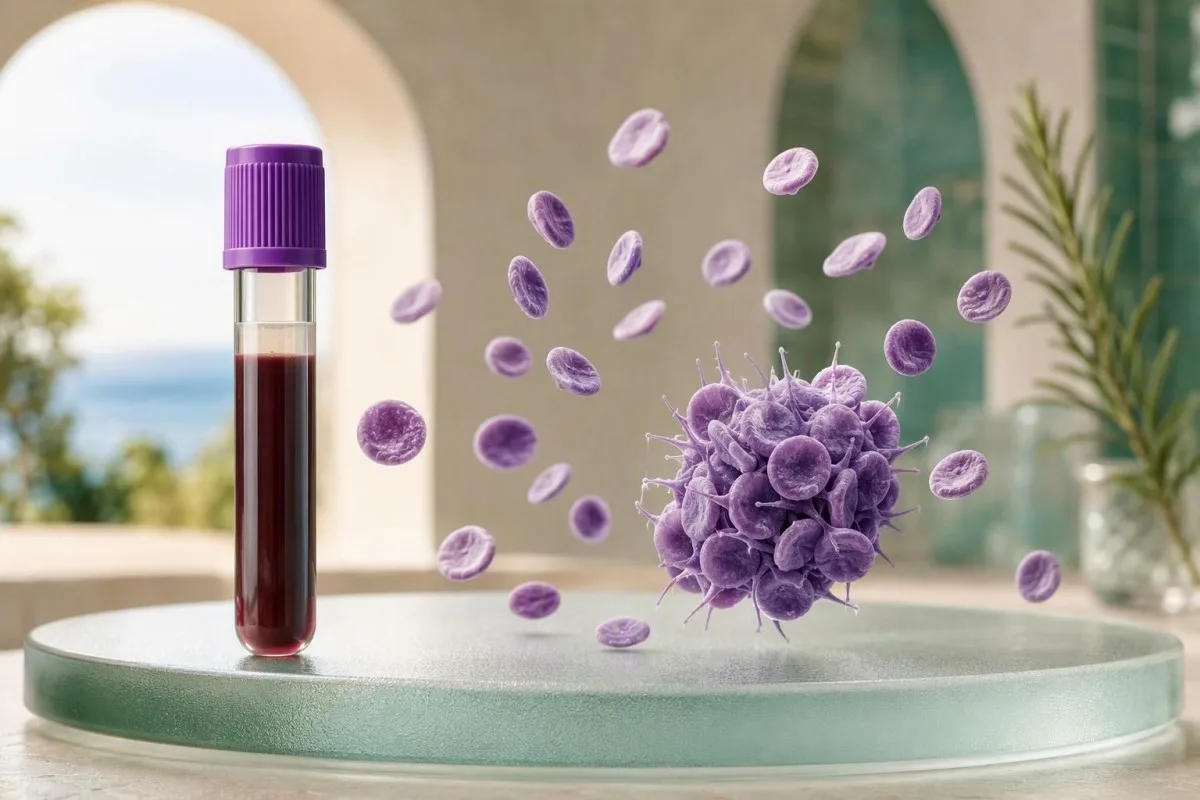
Matala verihiutaletaso voi joskus olla koeputkeen liittyvä mittausvirhe eikä kehonsisäinen ongelma. Näin EDTA:han liittyvä pseudotrombosytopenia tunnistetaan ennen kuin sinut leimataan trombosytopeniaksi.


- Pseudotrombosytopenia on virheellisesti matala verihiutaletaso, joka johtuu verihiutaleiden paakkuuntumisesta näytteenoton jälkeen, useimmiten EDTA-putkessa.
- Tyypillinen verihiutaleiden vaihteluväli useimmille raskaana oleville aikuisille on noin 150-450 × 10⁹/L, vaikka laboratoriot asettavat omat viiteväliksensä.
- Verihiutalepaakut sivelyvalmisteessa voivat saada automaattisen analysaattorin aliarvioimaan verihiutaleiden määrää, koska klusteria ei mitata erillisinä soluina.
- Sitraattiuusintanäyte ratkaisee usein EDTA-verihiutaleiden paakkuuntumisen; laboratoriot yleensä soveltavat 1,1 laimennuskorjausta sitraattiverihiutaletason määritykseen.
- Ei verenvuotokomplikaatioita ja odottamaton, eristetty matala verihiutaletaso tulisi käynnistää sivelytutkimus ennen hoitoa tai kiireellisiä lähetteitä koskevien päätösten tekemistä.
- Todellinen trombosytopenia voi esiintyä samanaikaisesti EDTA-kasaantuneiden verihiutaleiden kanssa, joten normaali sitraattitulos on rauhoittava, mutta sen on sovittava kliiniseen kuvaan.
- Kiireellinen arvio tarvitaan edelleen hallitsemattomaan verenvuotoon, uusiin laajalle levinneisiin petekioihin, vaikeaan päänsärkyyn, sekavuuteen tai verihiutaleiden määrään alle 10 × 10⁹/L.
Mitä EDTA-verihiutaleiden paakkuuntuminen todella tarkoittaa
EDTA-kasaantuminen on in vitro -laboratorioartefakti, jossa verihiutaleet tarttuvat toisiinsa näyteputkessa, aiheuttaen harhaanjohtavan matalan automaattisen verihiutaleiden laskennan. Se ei itsessään tarkoita, että verihiutaleita tuhoutuu elimistössä, eikä se yleensä aiheuta verenvuotoriskiä.
EDTA on laventelinvärinen putkilisäaine, jota käytetään useimmissa täydellisissä verenkuvissa, koska se sitoo kalsiumia ja estää hyytymistä. Pienessä osassa ihmisiä kalsiumin poistuminen paljastaa verihiutaleiden pinnalla olevia kohteita, jotka sallivat luonnollisesti esiintyvien vasta-aineiden muodostaa siltoja verihiutaleiden välille. Analysaattori voi laskea verihiutaleklusterin yhtenä suurena partikkelina, valkosolun kokoisena tapahtumana tai ei ollenkaan; katso yleiskatsaus siitä, mitä CBC sisältää.
Kliinisessä työssäni klassinen raportti on verihiutalemäärä 48 × 10⁹/L henkilöllä, joka voi täysin hyvin, ei ole mustelmia ja jolla on normaali hemoglobiini- ja valkosolumäärä. Tämä ero ei ole todiste, mutta se on hetki pysähtyä. Kantesti on Tekoälyinen verikoeanalysaattori joka merkitsee eristetyn matalan verihiutalemäärän yhdessä laboratorion kommenttien, kuten verihiutaleaggregaattien, kanssa sen sijaan, että numeroa käsiteltäisiin diagnoosina.
EDTA-riippuvaista pseudotrombosytopeniaa arvioidaan noin 0,03–0,27% rutiininomaisista avohoidon näytteistä, ja korkeampia esiintyvyyksiä on näytteissä, jotka on jo lähetetty matalan verihiutalemäärän vuoksi. Lippi ja kollegat kuvaavat sitä kliinisesti vaarattomaksi, mutta mahdollisesti merkitykselliseksi pre-analyyttiseksi ilmiöksi, koska se voi laukaista tarpeettomia sairaalahoitoja, verihiutalesiirtoja tai steroidihoitoa (Lippi et al., 2012).
Miten verihiutaleanalysaattorit voivat aliarvioida paakkuuntuneiden näytteiden määrää
Automaattiset verihiutaleiden laskennat ovat luotettavia hajautuneille verihiutaleille, mutta klusterit jäävät analysoijan odottamien koko- ja signaalimallien ulkopuolelle. Laskenta voi siten laskea aidosta 220 × 10⁹/L:sta näennäiseen 40 × 10⁹/L:iin ilman todellista verihiutalekatoa.
Impedanssianalysaattorit luokittelevat partikkeleita pääasiassa tilavuuden perusteella, kun taas optiset järjestelmät lisäävät valon sirontaan liittyvää tietoa. Verihiutale on yleensä noin 2–3 mikrometriä leveä, mutta klusteri voi olla päällekkäinen punasolun fragmentin tai leukosyytin alueen kanssa. Siksi verihiutalehistogrammi voi olla epänormaali ja siksi laboratorio voi lisätä kommentin “verihiutale klustereita läsnä” tai “laskenta epäluotettava”.”
Analysaattorin verihiutalelippu on kehotus ihmisen tarkistukseen, ei lopullinen diagnoosi. Manuaalinen arvio hyvin tehdystä ääreisverenvuotosta voi olla hyödyllisempi kuin saman EDTA-putken uusiminen, varsinkin jos näyte on ollut 2 tuntia ennen analyysiä. Käytännön kynnyksistä toimenpiteiden yhteydessä, opas aiheesta verihiutalemäärät ennen hammaspoistoa selittää, miksi vahvistettu tulos on merkityksellinen.
Suuret verihiutaleet aiheuttavat erilaisen, joskus päällekkäisen ongelman. Impedanssimenetelmät voivat jättää huomiotta erittäin suuret yksittäiset verihiutaleet, jopa ilman näkyviä klustereita, mikä usein nostaa keskimääräistä verihiutalevolyymia (MPV). Korkea MPV ei ole vaihdettavissa pseudotrombosytopenian kanssa; yleiskatsauksemme aiheesta suuret verihiutaleiden syyt erottaa nämä kaksi löydöstä.
Miltä sivelyvalmisteen verihiutalepaakut näyttävät
Verihiutale klusterit tahranäytteessä näyttävät epäsäännöllisiltä, rypälemäisiltä pieniltä purppuranvärisiltä rakeisilta elementeiltä, jotka ovat usein keskittyneet liukukalvon höyryävään reunaan. Niiden sijainnilla on merkitystä, koska vain keskeisen tahra-alueen laskeminen voi jättää huomiotta itse piirteen, joka selittää matalan tuloksen.
Koulutettu morfologi tarkistaa kalvon rungon ja hännän suurella teholla, ei vain yhtä edustavaa kenttää. Verihiutale-satelliitti on harvinaisempi EDTA-liittyyvä kuvio, jossa verihiutaleet rengastavat neutrofiileja kuin ruusuke; se voi myös alentaa raportoitua verihiutalemäärää. Molemmat löydökset ovat näytteen ilmiöitä, vaikka satelliitti ja laajat aggregaatit voivat satunnaisesti esiintyä yhdessä.
Yksi hyödyllinen yksityiskohta on, että EDTA-klumppautuminen etenee usein ajan myötä. Näyte, joka mitattiin 10 minuuttia näytteenoton jälkeen, voi näyttää 118 × 10⁹/L, sitten 42 × 10⁹/L 90 minuutin kuluttua, kun aggregaatteja muodostuu lisää. Laboratorioiden työnkulku vaihtelee, joten normaali alkuperäinen laskenta ei täysin sulje pois tätä artefaktia, jos myöhemmin ilmestyy analysaattorin lippu.
Kun minä, Thomas Klein, MD, näen matalan trombosyyttiarvon yhdistettynä veren sivelykommenttiin, mutta ilman kliinistä verenvuotoa, pyydän sivelytulkinannan ennen immuunitrombosytopenian käsittelyä. Samankaltainen mikroskopiapainotteinen päättely on hyödyllistä, kun raportti mainitsee skitotyyppejä verikalvolla, vaikka skitotyyppien kliininen konteksti vaatiikin paljon kiireellisempää arviointia.
Miksi EDTA aiheuttaa verihiutaleiden paakkuuntumista joillakin ihmisillä
EDTA voi laukaista trombosyyttien kasaantumisen kelatoimalla kalsiumia ja muuttamalla trombosyyttien kalvon glykoproteiinien muotoa, mikä sallii vasta-aineiden sitoutumisen ja vierekkäisten trombosyyttien yhdistämisen. Tämä reaktio tapahtuu näytteenoton jälkeen, ei siksi, että EDTA olisi vahingoittanut verenkierrossa olevia trombosyyttejä elimistön sisällä.
Parhaiten tuettu mekanismi sisältää vasta-aineita, usein IgG, IgM tai IgA, jotka tunnistavat piileviä kohteita trombosyyttien GPIIb/IIIa-kompleksissa kalsiumista riippuvan rakenteellisen muutoksen jälkeen. Reaktio on joissakin potilailla lämpötila- ja aikaherkkä, mikä selittää, miksi lämmitetty näyte voi toisinaan parantaa laskentatulosta, mutta se ei ole yleinen ratkaisu. Se on laboratorioyhteensopivuuskysymys, ei EDTA-allergiaa.
Pseudotrombosytopeniaa voi esiintyä terveillä ihmisillä ja sitä on raportoitu yhdessä autoimmuunisairauksien, infektioiden, syövän ja raskauden kanssa, mutta nämä yhteydet eivät osoita syy-yhteyttä yksilöllisesti. Positiivista ANAa tai äskettäistä virusinfektiota ei pidä käyttää laskentatuloksen selittämiseen ennen artefaktin poissulkemista. Kantesti on AI verikoe-tulkinta-alusta joka tarkastelee trombosyyttitulosta yhdessä putkityypin, analysaattorin lippujen ja muun CBC:n kanssa sen sijaan, että tarkastelisi sitä erikseen.
Ilmiö voi kestää vuosia, mutta vaihdella eri näytteenotoissa. Potilaan trombosyyttimäärä voi olla 35 × 10⁹/L EDTA:ssa maanantaina ja 230 × 10⁹/L sitraatissa samana aamuna, ja sitten osittaista kasaantumista voi esiintyä taas kuukausia myöhemmin. Suositellun putken kirjaaminen laboratoriotietueeseen voi estää toistuvia hälytyksiä.
Miten sitraattiuusintanäyte vahvistaa pseudotrombosytopenian
Trombosyyttimäärä, joka normalisoituu natriumsitraattiputkessa, kun taas EDTA-putkessa on aggregaatteja, tukee vahvasti EDTA-riippuvaista pseudotrombosytopeniaa. Sitraattilaskenta vaatii laimennuskorjauksen, koska putki sisältää nestemäistä antikoagulanttia.
Sinikorkkiset natriumsitraattiputket täytetään yleensä 9:1 veren ja antikoagulantin suhteella. Monet laboratoriot kertovat mitatun sitraattitrombosyyttiarvon 1,1:llä korjatakseen laimennusta, vaikka paikallisen laboratorion validoitu menetelmä on ensisijainen. Esimerkiksi raaka sitraattitulos 182 × 10⁹/L muuttuu noin 200 × 10⁹/L korjauksen jälkeen.
Uusi näyte on otettava asianmukaisesti täytettyyn ja varovasti sekoitettuun putkeen. Alitäytetty sitraattiputki muuttaa antikoagulanttisuhdetta ja voi tuottaa erilaisen harhaanjohtavan tuloksen, mikä on yksi syy siihen, miksi laboratoriotieteilijä voi hylätä ilmeisen yksinkertaisen uusinnan. Selityksemme verikokeiden putkien väreistä auttaa potilaita ymmärtämään, miksi putken valinta on osa testausmenetelmää.
Magnesiumsulfaatti- tai happo-sitruuna-dekstroosiputket voivat olla hyödyllisiä, kun kasaantuminen jatkuu sitraatissa, mutta tämä on yleensä laboratorion päättämä asia. Nagler ja kollegat dokumentoivat tapauksen, jossa EDTA-riippuvaisen pseudotrombosytopenian tunnistaminen vältti tarpeettoman diagnostisen selvitystyön sen jälkeen, kun sitraattitestaus oli osoittanut riittävän arvon (Nagler et al., 2014).
Milloin sitraattiverihiutaletason määritys ei ratkaise kysymystä
Sitraattiuusinta ei sulje pois todellista trombosytopeniaa, kun korjattu arvo pysyy matalana, kasaantumista esiintyy useammassa kuin yhdessä antikoagulantissa tai oireet viittaavat verenvuotoon. Joillakin potilailla on usean antikoagulantin aiheuttamaa trombosyyttien aggregaatiota, ja joillakin on todellinen matala arvo yhdessä artefaktin kanssa.
Jos korjattu sitraattitrombosyyttimäärä on 82 × 10⁹/L ja sively on ilman kasaantumia, se on aito trombosytopenia, kunnes toisin todistetaan. Jos EDTA on 25 × 10⁹/L ja sitraatti 86 × 10⁹/L jäännöksellisillä aggregaateilla, voi esiintyä sekä artefakti että todellinen väheneminen. Kliinisen tiimin tulee käyttää parasta vahvistettua arviota, ei vain valita rauhoittavampaa lukua.
Näytteen hyytyminen voi myös mitätöidä CBC:n, koska trombosyytit kuluvat mikrokekon sisällä. Toisin kuin EDTA-pseudotrombosytopenia, osittain hyytynyt näyte voi vaikuttaa myös valkosoluihin ja punasolujen indekseihin. Lue meidän uusintaoppaamme näyteongelmien jälkeen käytännön eroista kokoelma-artefaktien välillä.
Sormiverinäytteet eivät ole automaattisesti turvallisempia. Hidas keräys, puristaminen tai viivästynyt sekoitus voi edistää paikallista aggregaatiota ja heikentää trombosyyttilaskentaa, erityisesti kun raportoitu arvo on alle 100 × 10⁹/L. Laskimonsisäinen uudelleennäyte, jolla on nopea käsittely, on yleensä selkeämpi vahvistusreitti.
Verihiutaletasoarvojen vaihteluvälit, verenvuotoriski ja artefaktin ansa
Useimmat aikuisten laboratoriot käyttävät trombosyyttilaskennan viiteväliä lähellä 150–450 × 10⁹/L, mutta verenvuotoriski riippuu vahvistetusta laskennasta, sen syystä, trombosyyttien toiminnasta ja lääkityksistä. Virheellisesti matalaa EDTA-tulosta ei saa käyttää yksinään menettelyn estämiseen tai hoidon määräämiseen.
Spontaani vakava verenvuoto tulee todennäköisemmäksi, kun todellinen trombosyyttilaskenta laskee alle noin 10 × 10⁹/L, kun taas monilla ihmisillä, joiden laskenta on vakaa yli 50 × 10⁹/L, on vähän spontaania verenvuotoa. Nämä ovat laajoja kliinisiä suuntaviivoja, eivätkä lupaa jättää oireita huomiotta. Antikoagulantit, aspiriini, maksasairaus, munuaisten vajaatoiminta ja trombosyyttien toimintahäiriöt voivat muuttaa riskiä missä tahansa numerossa.
Trombosyyttilaskenta 90 × 10⁹/L vaatii erilaista käsittelyä terveellä henkilöllä normaalilla sitraattituloksella kuin henkilöllä, jolla on uusi melena ja kohonnut INR. Siksi trombosyyttilaskennan tulkinta kuuluu hyytymistestauksen rinnalle; meidän aPTT ja hyytymistesti ohjaavat selittävät, mitä normaali hyytymisseula voi ja ei voi poissulkea.
Laboratoriot voivat käyttää 140 × 10⁹/L:aa 150 × 10⁹/L:n sijaan alempana viiterajana, erityisesti paikallisesti johdettujen välien kanssa. Viiteväli kuvaa 95%:ta vertailuväestöstä; se ei määrittele universaalia hoitokynnystä. Tämä ero säästää yllättävän paljon tarpeetonta huolta.
CBC-mallit, jotka tekevät artefaktista todennäköisemmän
Eristynyt odottamattoman matala trombosyyttilaskenta normaalilla hemoglobiinilla, valkosoluilla ja paakkuuntumiskommentilla on CBC-kuvio, joka viittaa eniten pseudotrombosytopeniaan. Tämä kuvio on viitteellinen eikä diagnostinen, koska varhainen immuuni- tai lääkeriippuvainen trombosytopenia voi olla myös eristetty.
Todelliset luuytimen häiriöt vaikuttavat usein useampaan kuin yhteen verisolulinjaan, vaikka poikkeuksia on. Matala trombosyyttimäärä yhdistettynä laskevaan hemoglobiiniin, poikkeaviin valkosoluihin, blastteihin tai pysyviin yleisoireisiin vaatii nopeaa lääkärin arviota ja usein virallista kalvontutkimusta. Artikkelimme aiheesta CBC-polku verisairauksiin hahmottelee, miksi nämä ryhmittymät muuttavat kiireellisyyttä.
Trombosyytti-lymfosyytti-suhde voi menettää merkityksensä, kun nimittäjä on kelvollinen, mutta trombosyytti-osoittaja on keinotekoisesti laskenut. 60:n PLR, joka on laskettu EDTA-paakkuuntuneesta laskennasta, ei pidä tulkita tulehdus- tai sydän- ja verisuonimerkinä. Tämä on hiljainen, mutta yleinen toissijainen virhe automatisoiduissa terveysraporteissa; katso selityksemme korkeista PLR-tuloksista.
Kantesti AI tunnistaa ristiriidan matalan trombosyyttilaskennan ja normaalien viereisten CBC-mittausten välillä ja ohjaa lukijan tarkistamaan näytteen kommentit. AI-pohjainen verikokeiden analyysityökalu ei saa koskaan muuttaa yhtä vahvistamatonta trombosyyttiarvoa sairauden nimitykseksi. Se kliininen pidättyvyys on tärkeämpää kuin nopeus.
Raskaus, sairaalahoito ja muut suuren riskin tilanteet
EDTA-trombosyyttien paakkuuntumista voi esiintyä raskauden ja sairaalahoidon aikana, mutta sitä ei saa koskaan olettaa, kun todellinen trombosytopenia voi muuttaa kiireellistä hoitoa. Raskauseen liittyvät syyt, kuten raskausajan trombosytopenia, pre-eklampsia, HELLP-oireyhtymä ja immuunitrombosytopenia, edellyttävät varmennettua määritystä.
Verihiutalemäärät tyypillisesti laskevat komplisoitumattomassa raskaudessa, ja jotkin laboratoriot hyväksyvät alempia raskauskolmanneksikohtaisia viiterajoja. Määrä alle 100 × 10⁹/L on harvinaisempi komplisoitumattomalle raskausajan trombosytopenialle ja edellyttää huolellista kliinistä arviointia, vaikka EDTA-aggregaatteja nähtäisiinkin. Raskauskolmanneksikohtainen verihiutaleiden viiteopas raskauden aikana tarjoaa kontekstia korvaamatta obstetrikkista arviota.
Sairaalassa äkillinen lasku yli 50 % perustasosta voi herättää kysymyksiä sepsiksestä, lääkealtistuksesta, hepariinin aiheuttamasta trombosytopeniasta, laimennuksesta tai laitteisiin liittyvästä kulutuksesta. EDTA-artefakti voi jäljitellä dramaattista laskua, erityisesti kun edellinen tulos on peräisin eri laboratoriotestausmenetelmästä. Varmennetun sitraattituloksen vertaaminen potilaan perustasoon on usein hyödyllisempää kuin rutiininomaisen EDTA CBC -testin toistaminen.
Ennen epiduraalipuudutusta, leikkausta, kemoterapjaksoa tai verihiutalesiirtoa kysy, onko laboratorio vahvistanut arvon sivelyvalmisteella tai vaihtoehtoisella antikoagulantilla. Olen nähnyt yhden puhelun välttävän hoidon viivästyksiä. Päinvastoin, aktiivisia oireita tai epävakaata potilasta tulee arvioida vahvistuksen ollessa käynnissä.
Lääkkeitä ja diagnooseja, joita ei pidä syyttää liian nopeasti
EDTA-verihiutaleiden paakkuuntuminen on suljettava pois ennen eristetyn matalan verihiutalemäärän liittämistä lääkkeeseen, autoimmuunisairauteen tai immuunitrombosytopeniaan. Arvokkaan lääkkeen lopettaminen varmistamattoman määrityksen perusteella voi aiheuttaa vältettävissä olevaa haittaa.
Hepariini, kiniinipitoiset valmisteet, trimetopriimi-sulfametoksatsoli, valproaatti, linezolidi, kemoterapia ja jotkin immunoterapiat voivat aiheuttaa todellista trombosytopeniaa. Aikasuhde on tärkeä: todellinen lääkkeeseen liittyvä lasku kestää tyypillisesti asianmukaisesti kerätyssä sitraattinäytteessä eikä katoa EDTA:n korvaamisen yhteydessä. Lääkeanamneesin tulee sisältää pistokset, itsehoitovalmisteet ja kasviperäiset valmisteet.
Immuunitrombosytopenia on poissulkemisen diagnoosi, ei laboratorion lippu. Se voi ilmetä eristettyinä verihiutaleina alle 100 × 10⁹/L, mutta paakkuuntunut EDTA-sively tekee alkuperäisestä määrityksestä tulkittamattoman. Lippi et al. (2012) varoittavat erityisesti, että pseudotrombosytopenian tunnistaminen estää sopimattomia hoitoja, kuten kortikosteroideja ja pernan poistoa.
Jos raportti näyttää olevan ristiriidassa aiempien tulostesi kanssa, säilytä alkuperäinen PDF ja kirjaa ylös näytteenottopäivä, putken kommentti, akuutti sairaus ja uudet lääkkeet. Oppaamme merkityksellisistä muutoksista verikokeissa selittää, miksi numeerinen ero ei automaattisesti ole biologinen muutos.
Mitä kysyä laboratoriostasi tai lääkäriäsi seuraavaksi
Odottamattoman matalan verihiutalemäärän kohdalla kysy, nähtiinkö verihiutaleiden paakkuja, tarkastettiinko perifeerinen sively ja voidaanko suorittaa vaihtoehtoisella antikoagulantilla määritetty määritys. Nämä kolme kysymystä selventävät yleensä seuraavan vaiheen nopeammin kuin oireiden etsiminen verkosta.
Käytännöllinen pyyntö on: “Voisiko laboratorio tarkistaa veren sivelyvalmisteen verihiutaleaggregaattien varalta ja tarvittaessa toistaa verihiutalemäärityksen sitraatissa?” Tämä ei vaadi tiettyä diagnoosia; se on pyyntö mittauksen validoimiseksi. Jos näyte on kerätty muualla, kliinikko saattaa joutua tilaamaan uuden näytteenoton vanhan putken testaamisen sijaan.
Kysy korjatuksi sitraattituloksen ja sen, jatkuvatko paakut siinä putkessa. Raakatulos 145 × 10⁹/L voi näyttää rajatapaukselta, kunnes laimennuskorjaus antaa noin 160 × 10⁹/L. Kysy myös, käyttikö laboratorio optista vai fluoresenssipohjaista verihiutalemääritystä, sillä nämä menetelmät parantavat joskus laskentaa monimutkaisissa näytteissä.
Kantesti:n vuoden 2026 tulkintatyönkulku kannustaa käyttäjiä vertaamaan numeerista tulosta laboratorion tekstiin ja lippukenttiin ennen hälytykseen reagoimista. Laajempaa turvallisuuskehystä varten AI-raportin tarkkuustarkistuslistaa kattaa transkription, yksiköt, viitealueet ja tulosten varmennuksen.
Mitä ei pidä tehdä odottaessa vahvistusta
Älä aloita lisäravinteita, lopeta määrättyjä lääkkeitä tai oleta sinulla olevan verenvuotohäiriö pelkästään sen perusteella, että yksi EDTA-verihiutalemääritys on matala. Samaan aikaan älä ohita aktiivista verenvuotoa vain siksi, että paakkuuntumista epäillään.
Ei ole olemassa ruokavaliota, vitamiinia tai kotikonstia, joka korjaisi EDTA-riippuvaista pseudotrombosytopeniaa, koska verihiutaleet paakkuuntuvat putkessa, eivätkä petä elimistön sisällä. Folaatin, B12-vitamiinin ja raudan puute voivat vaikuttaa verenmuodostukseen muissa tilanteissa, mutta lisäravinteet eivät voi varmistaa kyseenalaista määritystä. Artefaktin hoito liittyy näytteenottoon ja analyysiin.
Vältä tarpeettomia asetyylisalisyylihappoa, ibuprofeenia, naprokseenia ja runsasta alkoholin käyttöä, kunnes lääkäri on selvittänyt hyvin matalan raportoidun määrän, erityisesti jos mustelmoit helposti. Älä lopeta antikoagulanttien, verihiutaleiden estolääkkeiden, kouristuslääkkeiden tai syöpähoitojen käyttöä ilman lääkärin neuvoa; näiden lääkkeiden indikaatio voi aiheuttaa suuremman välittömän riskin kuin todentamaton tulos.
Tiiviin tuloshistorian ylläpitäminen voi muuttaa tapaamisaikaa. Meidän laboratoriotulosten seurantaopas ehdottaa piirtoajan, viimeaikaisen sairauden, lääkitysten, näytekommenttien ja sen kirjaamista, tuliko näyte EDTA:sta vai sitraatista.
Punaiset liput, jotka vaativat kiireellistä lääketieteellistä arviointia
Hae välitöntä lääketieteellistä arviota hallitsemattomaan verenvuotoon, mustiin ulosteisiin, verioksennukseen, vakavaan uuteen päänsärkyyn, sekavuuteen, pyörtymiseen tai laajalle levinneeseen pistemäiseen ihottumaan, vaikka epäiltäisiin EDTA-kokkareita. Laboratorion artefakti ja todellinen hätätilanne voivat esiintyä samanaikaisesti.
Todellinen verihiutalemäärä alle 10 × 10⁹/L käsitellään yleensä kiireellisenä tuloksena, koska spontaanin limakalvo- ja sisäisen verenvuodon riski kasvaa merkittävästi. Alle 20 × 10⁹/L määrä uudella verenvuodolla, kuumeella, vaikealla verenpainetaudilla, raskauskomplikaatioilla tai hiljattain tapahtuneella hepariinialtistuksella vaatii myös samana päivänä lääkärin arviota. Paikallisen hätäkeskuksen neuvon tulisi olla etusijalla minkään verkkotulkinnan edelle.
Uudet neurologiset oireet ovat erityisen merkittäviä, koska aivoverenvuoto on harvinainen mutta vakava. Älä aja itseäsi, jos sinulla on vaikea päänsärky ja heikkoutta, puheen muutoksia, lyyhistymistä tai sekavuutta. Lapsilla syyhyämätön ihottuma ja kuume vaativat kiireellistä arviota verihiutaleresultaatista riippumatta.
Thomas Klein, MD, neuvoo potilaita erottamaan kysymyksen “Onko tämä määrä todellinen?” kysymyksestä “Onko tämä henkilö turvassa tänään?” Ensimmäinen vaatii yleensä sivelyvalmisteen ja sitraattiuusintanoston; jälkimmäinen riippuu oireista, tutkimustuloksista ja koko kliinisestä kuvasta. Meidän verikoe toisen mielipiteen opas voi auttaa keskustelun kohdistamisessa kiireellisten asioiden käsittelyn jälkeen.
Miten Kantesti tulkitsee merkityn verihiutaletason turvallisesti
Kantesti AI kohtelee matalaa verihiutalemäärää EDTA-kokkarekommenteilla verifiointisignaalina, ei trombosytopenian todisteena. Meidän tulkintamme asettaa analysaattorin liput, muut CBC-rivistöt, aiemmat arvot ja raportoidut oireet yksinkertaista punaista tai vihreää merkintää edelle.
Kantesti on AI-laboratoriotestien tulkintapalvelu suunniteltu selittämään laboratoriodataa selkeällä kielellä säilyttäen samalla lähderaportin rajat. Jos ladattu PDF ilmoittaa “verihiutalekokkareita”, järjestelmämme pitäisi kertoa käyttäjälle, että määrä voi olla virheellisesti alhainen ja että laboratorio tai lääkäri voi vahvistaa sen kalvokatselmuksella tai sitraattinäytteellä.
Optinen tekstintunnistus voi lukea väärin desimaalipisteen, yksikön tai laboratorion alatunnisteen. Siksi potilaiden tulee tarkastaa kuvan esikatselu ennen luottamista mihinkään digitaaliseen tulkintaan, erityisesti arvojen, kuten 18 vs 180 × 10⁹/L, suhteen. Meidän PDF-latauksen laadun tarkistuslistassa selittää muutaman tarkistuksen, jotka estävät useimmat vältettävissä olevat virheet.
Kliininen valvonta pysyy ihmistyönä. Kantesti:n menetelmiä tarkastellaan turvallisuuskeskeisten työnkulkujen perusteella; lukijat, jotka haluavat ymmärtää lähestymistapaamme, voivat tarkastella meidän tekninen validointi ja kliininen valvonta. AI voi organisoida kysymyksiä tehokkaasti, mutta se ei voi tarkastaa varsinaista sivelyvalmistetta tai arvioida aktiivista verenvuotoa.
Käytännön seurantasuunnitelma EDTA-verihiutaleiden paakkuuntumisen jälkeen
Tavallinen jatkosuunnitelma on kirjata EDTA-artefakti, hankkia todennettu vaihtoehtoisen putken verihiutalelaskenta ja käyttää tätä tulosta tulevissa kliinisissä päätöksissä. Useimmat ihmiset eivät tarvitse hoitoa itse artefaktille, kun laboratorio on todennut sen kuvion.
Pyydä laboratorion merkintää “EDTA-riippuvainen verihiutaleiden kokkaroituminen” tai vastaava sanamuoto, jos vahvistus on selkeä. Tulevissa näytteenotoissa verikokeenottaja voi ottaa sitraattiputken rinnakkain rutiininomaisen EDTA CBC:n kanssa, mikä säästää toisen tapaamisen. Tämä on erityisen hyödyllistä ennen leikkausta, raskauden aikana tai kun hoitoprotokollassa on verihiutalerajoja.
Vahvistettu perustaso on arvokkaampi kuin toistuvat todentamattomat alhaiset arvot. Jos korjattu sitraattimääräsi on vakaa 205 × 10⁹/L 12 kuukauden aikana, tuleva 55 × 10⁹/L EDTA-arvo aggregaattien kanssa on paljon vähemmän hälyttävä kuin sama luku henkilöllä ilman aiempaa dokumentaatiota. Trendit ovat hyödyllisiä vain silloin, kun testausmenetelmä on vertailukelpoinen.
Kantesti on tukenut yli 2 miljoonaa käyttäjää 127+ maassa monikielisillä laboratoriotulosten selityksillä, mutta tulokset kuuluvat edelleen hoitosuhteeseen lääkärisi kanssa. Lääketieteelliset tarkastajamme ja Lääketieteellinen neuvoa-antava toimikunta korostavat samaa loppusääntöä: varmista ensin verihiutalemäärä, päätä sitten, mitä – jos mitään – tarvitsee hoitoa.
Tutkimusjulkaisut
Elokuun 29. päivään 2026 mennessä alla luetellut kaksi Kantesti-tutkimusjulkaisua ovat täydentäviä koulutusresursseja. Ne eivät vahvista EDTA-riippuvaisen pseudotrombosytopenian diagnoosia; laboratoriosively ja vaihtoehtoisella antikoagulantilla tehty trombosyyttilaskenta ovat edelleen asiaankuuluvia varmistustyökaluja.
Usein kysytyt kysymykset
Voiko EDTA-plasman verihiutaleiden aggregaatio aiheuttaa hyvin alhaisen verihiutaleiden määrän?
Kyllä. EDTA-kasaumien vuoksi verihiutaleiden määrä voi näyttää huomattavasti pienemmältä kuin se todellisuudessa on, joskus alle 50 × 10⁹/L, vaikka potilaan todellinen verihiutalemäärä verenkierrossa olisi normaali. Analysointilaite aliarvioi verihiutaleiden kokkareita, koska se ei pysty luotettavasti tunnistamaan jokaista yksittäistä verihiutaletta kokkareessa. Perifeerinen sivelyvalmiste, joka osoittaa kokkareita, ja normaali korjattu sitraattilaskenta tukevat vahvasti pseudotrombosytopeniaa. Tulosta on kuitenkin syytä tutkia kiireellisesti, jos on aktiivista verenvuotoa tai sitraattilaskenta pysyy alhaisena.
Miten pseudotrombosytopenia varmistetaan?
Vääristyneen verihiutaleiden vähäisyyden toteaminen varmistetaan yleensä tarkastelemalla veren sivelyvalmistetta verihiutaleiden kasaumien varalta ja uusimalla verihiutaleiden määritys natriumsitraattiputkessa. Sitraattiputket sisältävät nestemäistä antikoagulanttia, joten monet laboratoriot kertovat mitatun verihiutalemäärän 1,1:llä laimennoksen huomioimiseksi. Esimerkiksi raaka sitraattilaskelma 180 × 10⁹/L ilmoitetaan yleisesti noin 198 × 10⁹/L korjauksen jälkeen. Paikallisen laboratorion validoitu korjaus ja sivelyvalmisteen tulkinta tulee ohjata lopullisessa tuloksessa.
Tarkoittaako EDTA-verihiutaletukkeuma verenvuotohäiriötä?
Ei. EDTA-verisuonitukosten kasaantuminen itsessään on in vitro -näytteen artefakti, eikä se tarkoita, että sinulla olisi verenvuotohäiriö tai että verihiukkasesi kasaantuisivat verenkierrossasi. Useimmilla henkilöillä, joihin tämä vaikuttaa, ei ole verenvuotamisoireita, ja heidän varmistettu verihiutaletasonsa on tavanomaisella aikuisten viitealueella, joka on noin 150-450 × 10⁹/L. Kliinikon tulisi silti tutkia verenvuotamisoireita, epänormaaleja hyytymiskokeita tai jatkuvasti matalaa sitraattiverihiutalelaskentaa. Artefakti ei suojaa henkilöä lääkkeiden tai sairauksien aiheuttamilta epäsuorilta verenvuotoriskeiltä.
Voiko trombosyyttien kasautumista tapahtua myös sitraatissa?
Kyllä, vaikka natriumsitraatti estääkin usein EDTA:han liittyvää paakkuuntumista, verihiutaleiden aggregaatio voi ajoittain jatkua sitraatissa tai esiintyä useiden antikoagulanttien kanssa. Tässä tilanteessa laboratorio voi käyttää optista tai fluoresenssiin perustuvaa verihiutaleiden laskentaa, nopeaa lämpökäsittelyä, magnesiumsulfaattia tai happo-sitraatti-dekstroosia validoitujen protokolliensa mukaisesti. Korjattu sitraattilaskenta alle 150 × 10⁹/L ilman aggregaatteja on pidettävä mahdollisena todellisena trombosytopeniana. Useiden antikoagulanttien aiheuttama paakkuuntuminen on harvinaista ja vaatii laboratorion ohjaaman varmistuksen.
Pitäisikö minun toistaa trombosyyttimäärä, jos raportissa sanotaan trombosyyttikasautumia?
Kyllä. Raportti, jossa mainitaan verihiutaleiden kasaumia, verihiutaleaggregaatteja tai epäluotettava verihiutaleiden määrä, edellyttää yleensä tarkistamista sen sijaan, että numeerinen tulos hyväksyttäisiin. Tavallinen uusintatutkimus on äskettäin otettu natriumsitraattinäyte, johon liittyy veren sivelyvalmisteen tarkastus, ja se olisi ihanteellista käsitellä nopeasti. Jos alkuperäinen määrä on alle 10 × 10⁹/L tai sinulla on hallitsematonta verenvuotoa, mustia ulosteita, kovaa päänsärkyä tai sekavuutta, hakeudu kiireellisesti lääkäriin samalla kun vahvistusta järjestetään. Älä muuta määrättyä lääkitystä ilman neuvoa kliinikolta, joka tietää, miksi se on määrätty.
Voiko EDTA-pseudotrombosytopenia tulla ja mennä?
Kyllä. EDTA-pseudotrombosytopenia voi kestää vuosia tai olla vaihtelevaa, koska aggregaation aste riippuu näytteenoton jälkeisestä ajasta, näytteen lämpötilasta ja analyysimenetelmästä. Yhdestä EDTA-näytteestä voidaan saada tulos 70 × 10⁹/L, kun taas toisesta eri päivänä otetusta näytteestä saadaan tulos 145 × 10⁹/L, vaikka todellinen trombosyyttimäärä olisi vakaa. Dokumentoitu normaali sitraattinäyte tarjoaa hyödyllisen vertailukohdan tulevaisuutta varten. Laboratoriota pyytämällä suositellun antikoagulantin kirjaamista voidaan välttää toistuvat vääriä hälytykset.
Hanki tekoälypohjainen verikoeanalyysi tänään
Liity yli 2 miljoonan käyttäjän joukkoon maailmanlaajuisesti, jotka luottavat Kantesti:hen saadakseen välittömän ja tarkan laboratoriotestianalyysin. Lataa verikoetuloksesi ja saat kattavan tulkinnan 15,000+-biomarkkereista sekunneissa.
📚 Viitatut tutkimusjulkaisut
Klein, T., Mitchell, S., & Weber, H. (2026). Kantesti AI. (2026). C3 C4 Komplementtiveritesti & ANA-titeriopas. Zenodo. https://doi.org/10.5281/zenodo.18353989. Kantesti AI Medical Research.
Klein, T., Mitchell, S., & Weber, H. (2026). Kantesti AI. (2026). Nipah-viruksen veritesti: Varhainen havaitseminen ja diagnoosiopas 2026. Zenodo. https://doi.org/10.5281/zenodo.18487418. Kantesti AI Medical Research.
📖 Ulkoiset lääketieteelliset lähteet
⚕️ Lääketieteellinen vastuuvapauslauseke
Tämä artikkeli on tarkoitettu vain koulutustarkoituksiin eikä se muodosta lääketieteellistä neuvontaa. Ota aina yhteyttä pätevään terveydenhuollon ammattilaiseen diagnoosi- ja hoitopäätöksiä varten.
E-E-A-T-luottamussignaalit
Kokea
Lääkärin johtama kliininen arviointi laboratoriotulkinnan työnkuluista.
Asiantuntemus
Laboratoriolääketiede keskittyy siihen, miten biomarkkerit käyttäytyvät kliinisessä kontekstissa.
Auktoriteetti
Kirjoittanut tohtori Thomas Klein, tarkistanut tohtori Sarah Mitchell ja professori tohtori Hans Weber.
Luotettavuus
Näyttöön perustuva tulkinta selkeillä jatkopoluilla, jotka vähentävät hälytystä.