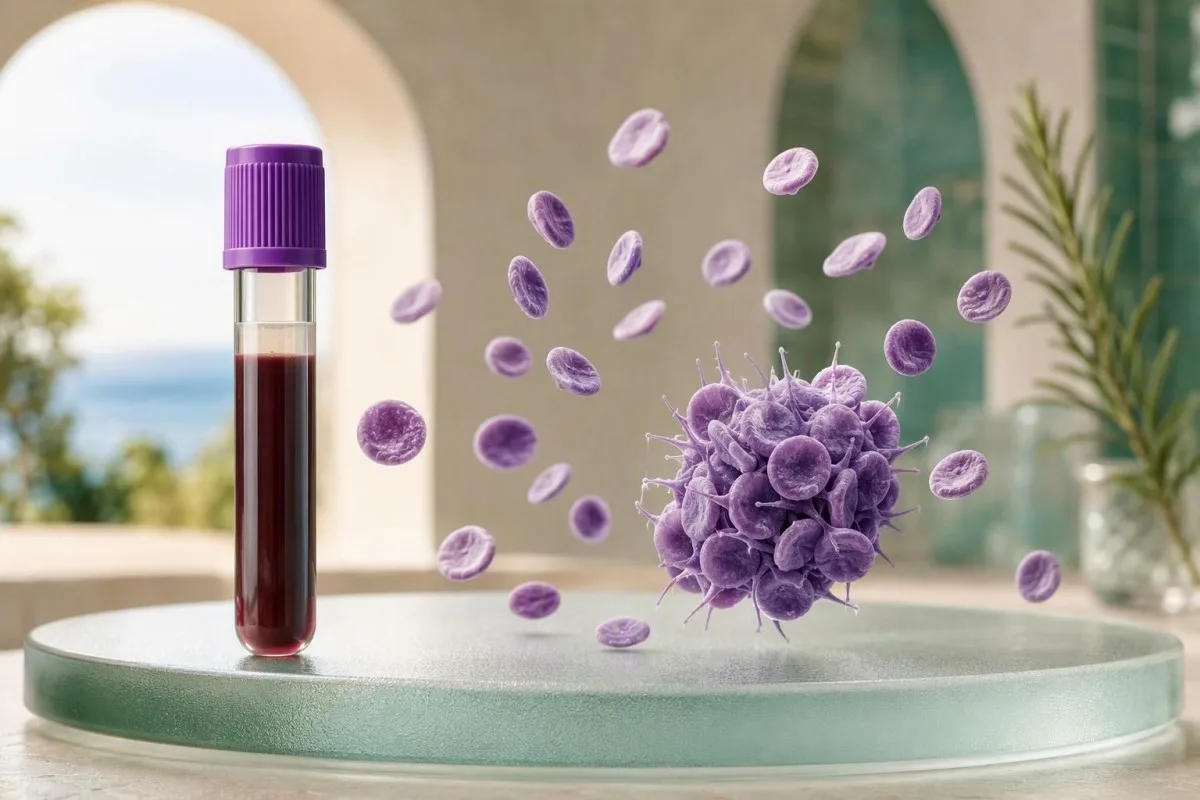
Низький рівень тромбоцитів іноді може бути пов'язаний з помилкою вимірювання в пробірці, а не з проблемою всередині вашого організму. Ось як виявляють ЕДТА-залежну псевдотромбоцитопенію, перш ніж вам поставлять діагноз тромбоцитопенії.


- Псевдотромбоцитопенія це помилково низький рівень тромбоцитів, спричинений агрегацією тромбоцитів після забору, найчастіше в пробірці з ЕДТА.
- Типовий діапазон тромбоцитів для більшості невагітних дорослих становить приблизно 150-450 × 10⁹/л, хоча лабораторії встановлюють власні інтервали.
- Агрегати тромбоцитів на мазку можуть призвести до недорахунку тромбоцитів автоматизованим аналізатором, оскільки скупчення не вимірюються як окремі клітини.
- Повторний забір крові з цитратом часто усуває агрегацію тромбоцитів в ЕДТА; лабораторії зазвичай застосовують корекцію розведення 1,1 до кількості тромбоцитів у цитраті.
- Відсутність симптомів кровотечі у поєднанні з несподівано ізольованою низькою кількістю тромбоцитів повинна спонукати до перегляду мазка перед прийняттям рішень щодо лікування або термінового направлення.
- Справжня тромбоцитопенія може співіснувати з агрегацією тромбоцитів у пробірці з ЕДТА, тому нормальний результат у цитратній крові є обнадійливим, але повинен відповідати клінічній картині.
- Невідкладна оцінка все ще потрібна при неконтрольованій кровотечі, появі нових поширених петехій, сильному головному болю, сплутаності свідомості або кількості тромбоцитів нижче 10 × 10⁹/л.
Що насправді означає агрегація тромбоцитів в ЕДТА
Агрегація тромбоцитів у пробірці з ЕДТА є ін-вітро лабораторним артефактом, при якому тромбоцити злипаються в пробірці для взяття крові, що призводить до помилково низького автоматичного підрахунку тромбоцитів. Це саме по собі не означає, що тромбоцити руйнуються в організмі, і зазвичай не створює ризику кровотечі.
ЕДТА — це добавка в пробірці з бузковою кришкою, яка використовується для більшості загальних аналізів крові, оскільки вона зв'язує кальцій і запобігає коагуляції. У невеликої підгрупи людей видалення кальцію відкриває поверхневі мішені тромбоцитів, що дозволяє природним антитілам з'єднувати тромбоцити. Аналізатор може розрахувати скупчення тромбоцитів як одну велику частинку, подію розміром з лейкоцит або взагалі нічого; див. наш огляд довідник про те, що включає CBC.
У своїй клінічній практиці класичний випадок – це кількість тромбоцитів 48 × 10⁹/л у людини, яка почувається абсолютно добре, не має синців, і має нормальний рівень гемоглобіну та лейкоцитів. Ця невідповідність не є доказом, але це момент, коли варто зупинитися. Kantesti є Аналізатор крові зі штучним інтелектом що сигналізує про ізольовану низьку кількість тромбоцитів разом із лабораторними коментарями, такими як агрегати тромбоцитів, замість того, щоб розглядати число як діагноз.
Частота ЕДТА-залежного псевдотромбоцитопенії оцінюється приблизно в 0,03–0,27% рутинних амбулаторних зразків, з вищими показниками серед зразків, вже направлених для визначення низької кількості тромбоцитів. Ліппі та колеги описують це як клінічно нешкідливий, але потенційно наслідковий переаналітичний феномен, оскільки він може спричинити непотрібні госпіталізації, трансфузії тромбоцитів або стероїдне лікування (Lippi et al., 2012).
Як аналізатори тромбоцитів можуть недораховувати згруповані зразки
Автоматизований підрахунок тромбоцитів є надійним для розсіяних тромбоцитів, але агрегати виходять за межі розмірів та сигнальних патернів, які очікує аналізатор. Тому кількість може впасти з реальних 220 × 10⁹/л до явних 40 × 10⁹/л без будь-якої біологічної втрати тромбоцитів.
Імпедансні аналізатори класифікують частинки в основному за об'ємом, тоді як оптичні системи додають інформацію про розсіювання світла. Тромбоцит зазвичай має діаметр близько 2–3 мікрометрів, але згусток може перекриватися з фрагментом еритроцита або лейкоцитною областю. Ось чому гістограма тромбоцитів може бути аномальною і чому лабораторія може додати примітку “присутні згустки тромбоцитів” або “кількість ненадійна”.”
Сигнал тромбоцитів аналізатора є підказкою для людського перегляду, а не остаточним діагнозом. Ручна оцінка добре виготовленого мазка периферичної крові може бути більш корисною, ніж повторне використання тієї ж пробірки з ЕДТА, особливо якщо зразок зберігався 2 години до аналізу. Для практичних порогових значень перед процедурами, наш посібник з кількість тромбоцитів перед екстракцією зуба пояснює, чому перевірений результат має значення.
Великі тромбоцити створюють іншу, іноді перекриваючуся проблему. Дуже великі окремі тромбоцити можуть бути пропущені імпедансними методами навіть без видимих згустків, часто підвищуючи середній об'єм тромбоцитів (MPV). Високий MPV не є взаємозамінним з псевдотромбоцитопенією; наш огляд причин появи великих тромбоцитів розділяє ці два висновки.
Як виглядають агрегати тромбоцитів на мазку
Агрегати тромбоцитів на мазку виглядають як неправильні гроноподібні скупчення дрібних пурпурних гранульованих елементів, часто сконцентрованих на шліфованому краю скельця. Їхнє розташування має значення, оскільки підрахунок лише в центральному полі мазка може пропустити саме ту ознаку, яка пояснює низький результат.
Навчений морфолог перевіряє тіло та хвіст мазка під великим збільшенням, а не лише одне репрезентативне поле. Сателітоз тромбоцитів — це рідкісніший патерн, пов'язаний з ЕДТА, при якому тромбоцити оточують нейтрофіли, як розетка; це також може знизити кількість тромбоцитів. Обидва явища є артефактами зразка, хоча сателітоз і широкі агрегати можуть іноді зустрічатися разом.
Однією корисною деталлю є те, що агрегація ЕДТА часто прогресує з часом. У зразку, виміряному через 10 хвилин після взяття, може бути 118 × 10⁹/л, а потім 42 × 10⁹/л через 90 хвилин, оскільки утворюється більше агрегатів. Лабораторії відрізняються своїм робочим процесом, тому нормальний початковий підрахунок не повністю виключає цей артефакт, якщо пізніше з'являється сигнал аналізатора.
Коли я, Томас Кляйн, MD, бачу низький показник у поєднанні з коментарем до мазка, але без клінічної кровотечі, я прошу фактичну інтерпретацію мазка перед обговоренням імунної тромбоцитопенії. Подібне мікроскопічне міркування корисне, коли у звіті згадуються шизоцити на мазку крові, хоча шизоцити вимагають набагато більш термінового клінічного контексту.
Чому ЕДТА викликає агрегацію тромбоцитів у деяких людей
ЕДТА може викликати агрегацію тромбоцитів шляхом хелатування кальцію та зміни форми глікопротеїнів мембрани тромбоцитів, дозволяючи антитілам зв’язуватися та з’єднувати сусідні тромбоцити. Ця реакція відбувається після забору, а не тому, що ЕДТА пошкодила циркулюючі тромбоцити всередині тіла.
Найбільш підтверджений механізм включає антитіла, часто IgG, IgM або IgA, що розпізнають криптичні ділянки комплексу GPIIb/IIIa тромбоцитів після структурної зміни, залежної від кальцію. Реакція залежить від температури та часу у деяких пацієнтів, що пояснює, чому нагріта проба може іноді покращити підрахунок, але не є універсальним рішенням. Це проблема лабораторної сумісності, а не алергія на ЕДТА.
Псевдотромбоцитопенія може виникати у здорових людей і була зареєстрована поряд з аутоімунними захворюваннями, інфекціями, злоякісними новоутвореннями та вагітністю, але ці асоціації не встановлюють причинно-наслідковий зв’язок у конкретної особи. Позитивний ANA або нещодавнє вірусне захворювання не слід використовувати для пояснення кількості, доки артефакт не буде виключено. Kantesti – це Платформа для розшифровки аналізу крові AI , яка інтерпретує результат кількості тромбоцитів разом з типом пробірки, прапорцями аналізатора та рештою CBC, а не ізольовано.
Феномен може зберігатися роками, але варіюватися між взяттями. Пацієнт може мати кількість тромбоцитів 35 × 10⁹/л в ЕДТА в понеділок та 230 × 10⁹/л у цитраті того ж ранку, а потім знову проявляти часткове злипання через кілька місяців. Запис переважної пробірки в лабораторному журналі може запобігти повторним тривогам.
Як повторний забір крові з цитратом підтверджує псевдотромбоцитопенію
Кількість тромбоцитів, яка нормалізується в пробірці з цитратом натрію, тоді як пробірка з ЕДТА містить агрегати, сильно підтверджує залежну від ЕДТА псевдотромбоцитопенію. Кількість цитрату потребує корекції розведення, оскільки пробірка містить рідкий антикоагулянт.
Сині пробірки з цитратом натрію, як правило, заповнюються зі співвідношенням крові до антикоагулянту 9:1. Багато лабораторій множать виміряну кількість тромбоцитів у цитраті на 1.1 для корекції розведення, хоча затверджений метод місцевої лабораторії має пріоритет. Наприклад, необроблений результат цитрату 182 × 10⁹/л стає приблизно 200 × 10⁹/л після корекції.
Повторний забір слід проводити правильно заповненим і обережно перемішаним. Недоповнена цитратна пробірка змінює співвідношення антикоагулянту і може дати інший оманливий результат, що є однією з причин, чому лабораторний спеціаліст може відхилити, здавалося б, просте повторне взяття. Наше пояснення кольорів пробірок для аналізів крові допомагає пацієнтам зрозуміти, чому вибір пробірки є частиною методу тестування.
Пробірки з сульфатом магнію або кислотно-цитратно-декстрозним розчином можуть бути корисними, коли агрегація триває в цитраті, але це, як правило, рішення, прийняте лабораторією. Наглер та колеги задокументували випадок, коли розпізнавання залежної від ЕДТА псевдотромбоцитопенії дозволило уникнути непотрібного діагностичного обстеження після того, як цитратне тестування показало адекватну кількість (Nagler et al., 2014).
Коли кількість тромбоцитів у цитраті не вирішує питання
Повторний забір цитрату не виключає справжньої тромбоцитопенії, коли скоригована кількість залишається низькою, агрегація виникає в більш ніж одному антикоагулянті, або симптоми вказують на кровотечу. У деяких пацієнтів спостерігається агрегація тромбоцитів у множинних антикоагулянтах, а у деяких – справді низька кількість поряд з артефактом.
Якщо скоригована кількість тромбоцитів у цитраті становить 82 × 10⁹/л, а мазок не містить грудок, це справжня тромбоцитопенія, доки не доведено протилежне. Якщо в ЕДТА 25 × 10⁹/л, а в цитраті 86 × 10⁹/л із залишками агрегатів, можуть бути присутніми як артефакт, так і справжнє зниження. Клінічна команда повинна використовувати найкращу перевірену оцінку, а не просто вибрати більш обнадійливе число.
Згортання зразка також може зробити CBC недійсним, оскільки тромбоцити споживаються в мікрозгустку. На відміну від псевдотромбоцитопенії, викликаної ЕДТА, частково згорнутий зразок може також вплинути на лейкоцити та еритроцитарні індекси. Прочитайте наш посібник з повторного взяття після проблем зі зразками для практичних відмінностей між артефактами забору.
Проколи пальця не є автоматично безпечнішими. Повільний збір, стискання або затримка змішування можуть сприяти локальній агрегації та спотворити кількість тромбоцитів, особливо коли повідомлене значення нижче 100 × 10⁹/л. Венозне повторне взяття з оперативною обробкою, як правило, є більш надійним шляхом підтвердження.
Діапазони кількості тромбоцитів, ризик кровотечі та пастка артефакту
Більшість дорослих лабораторій використовують референтний інтервал кількості тромбоцитів близько 150-450 × 10⁹/л, але ризик кровотечі залежить від підтвердженої кількості, її причини, функції тромбоцитів та прийому ліків. Хибно низький результат ЕДТА не повинен використовуватися окремо для відмови у проведенні процедури або призначення лікування.
Спонтанні серйозні кровотечі стають більш імовірними, коли справжня кількість тромбоцитів падає нижче приблизно 10 × 10⁹/л, тоді як багато людей зі стабільною кількістю вище 50 × 10⁹/л мають незначні спонтанні кровотечі. Це широкі клінічні орієнтири, а не дозвіл ігнорувати симптоми. Антикоагулянти, аспірин, захворювання печінки, ниркова недостатність та порушення функції тромбоцитів можуть змінювати ризик при будь-якій кількості.
Кількість тромбоцитів 90 × 10⁹/л вимагає іншого підходу у здорової людини з нормальним результатом цитрату, ніж у особи з новою меленою та підвищеним INR. Ось чому інтерпретація кількості тромбоцитів належить до коагуляційних тестів; наше aPTT та тест на згортання крові пояснює, що нормальний скринінг згортання крові може виключити, а що ні.
Лабораторії можуть використовувати 140 × 10⁹/л замість 150 × 10⁹/л як нижню межу референсного інтервалу, особливо з локально визначеними інтервалами. Референсний інтервал описує 95% порівняльної популяції; він не визначає універсальний пороговий рівень для лікування. Це розмежування дозволяє уникнути на диво великої кількості непотрібних хвилювань.
Патерни CBC, які роблять артефакт більш імовірним
Ізольована несподівано низька кількість тромбоцитів з нормальною гемоглобіном, лейкоцитами та коментарем про агрегацію є патерном CBC, що найбільше свідчить про псевдотромбоцитопенію. Цей патерн є підозрюваним, а не діагностичним, оскільки ранні імунні або пов'язані з ліками тромбоцитопенії також можуть бути ізольованими.
Справжні розлади кісткового мозку часто впливають на більше однієї лінії кров'яних клітин, хоча бувають винятки. Низька кількість тромбоцитів у поєднанні зі зниженням гемоглобіну, аномальними лейкоцитами, бластами або стійкими конституційними симптомами вимагає термінового огляду лікарем та часто формального дослідження мазка. Наша стаття про шлях CBC при захворюваннях крові окреслює, чому ці кластери змінюють терміновість.
Співвідношення тромбоцитів до лімфоцитів може стати безглуздим, коли знаменник є дійсним, але чисельник тромбоцитів штучно знижений. PLR 60, розрахований з агрегованого зразка EDTA, не слід інтерпретувати як запальний або серцево-судинний сигнал. Це тиха, але поширена вторинна помилка в автоматизованих медичних звітах; дивіться наше пояснення результатів високого PLR.
Kantesti AI визначає невідповідність між низькою кількістю тромбоцитів та нормальними суміжними показниками CBC, а потім направляє читача перевірити коментарі до зразка. Інструмент для аналізу результатів аналізу крові на основі AI ніколи не повинно перетворювати одне неперевірене значення тромбоцитів на діагноз захворювання. Така клінічна стриманість важливіша за швидкість.
Вагітність, госпіталізація та інші ситуації з високим ризиком
Агрегація тромбоцитів EDTA може виникати під час вагітності та перебування в стаціонарі, але ніколи не слід припускати її, коли справжня тромбоцитопенія може змінити термінове лікування. Причин, пов'язаних із вагітністю, таких як тромбоцитопенія вагітних, прееклампсія, HELLP-синдром та імунна тромбоцитопенія, вимагають верифікованого підрахунку.
Кількість тромбоцитів зазвичай знижується при неускладненій вагітності, і деякі лабораторії приймають нижчі триместрово-специфічні референтні межі. Підрахунок нижче 100 × 10⁹/л є менш типовим для неускладненої тромбоцитопенії вагітних і вимагає ретельної клінічної оцінки, навіть якщо спостерігаються агрегати EDTA. Наш триместрово-специфічний посібник з референтних значень тромбоцитів при вагітності надає контекст, але не замінює акушерський огляд.
У лікарні раптове падіння більш ніж на 50% від базового рівня може викликати питання щодо сепсису, впливу препаратів, гепарин-індукованої тромбоцитопенії, розведення або споживання через пристрої. Артефакт EDTA може імітувати різке зниження, особливо коли попередній результат був отриманий за допомогою іншого лабораторного методу. Порівняння верифікованого цитратного результату з базовим рівнем пацієнта часто більш корисно, ніж повторне проведення рутинного EDTA CBC.
Перед епідуральною анестезією, операцією, циклом хіміотерапії або трансфузією тромбоцитів запитайте, чи підтвердила лабораторія значення на мазку або з альтернативним антикоагулянтом. Я бачив, як затримки в лікуванні вдалося уникнути завдяки одному телефонному дзвінку. Навпаки, активні симптоми або нестабільний пацієнт повинні бути оцінені під час проведення підтвердження.
Ліки та діагнози, в яких не слід звинувачувати занадто швидко
Скупчення тромбоцитів EDTA слід виключити, перш ніж приписувати ізольований низький підрахунок тромбоцитів лікам, аутоімунному захворюванню або імунній тромбоцитопенії. Припинення прийому цінного медикаменту на основі непідтвердженого підрахунку може спричинити запобіжну шкоду.
Гепарин, продукти, що містять хінін, триметоприм-сульфаметоксазол, вальпроат, лінезолід, хіміотерапія та деякі імунні терапії можуть спричинити справжню тромбоцитопенію. Важливе часове співвідношення: справжнє падіння, пов'язане з препаратами, зазвичай зберігається у правильно зібраному цитратному зразку і не зникає при заміні EDTA. Історія прийому медикаментів повинна включати ін'єкції, безрецептурні препарати та рослинні засоби.
Імунна тромбоцитопенія є діагнозом виключення, а не лабораторним маркером. Вона може проявлятися ізольованими тромбоцитами нижче 100 × 10⁹/л, але згрупований EDTA-мазок робить початковий підрахунок неінтерпретованим. Ліппі та співавт. (2012) конкретно застерігають, що розпізнавання псевдотромбоцитопенії запобігає невідповідним методам лікування, таким як кортикостероїди та спленектомія.
Якщо звіт суперечить вашим попереднім результатам, збережіть вихідний PDF-файл та зазначте дату збору, коментар до пробірки, гостре захворювання та нові ліки. Наш посібник з значущі зміни між аналізами крові пояснює, чому числовий дельта не є автоматично біологічною зміною.
Що запитати у вашої лабораторії або лікаря далі
У разі неочікуваного низького підрахунку тромбоцитів запитайте, чи спостерігалися скупчення тромбоцитів, чи був переглянутий мазок периферичної крові, і чи можна провести підрахунок з альтернативним антикоагулянтом. Ці три питання зазвичай швидше прояснюють наступний крок, ніж пошук симптомів в Інтернеті.
Практичне прохання: “Чи може лабораторія переглянути мазок крові на наявність агрегатів тромбоцитів і, за необхідності, повторити підрахунок тромбоцитів у цитраті?” Це не вимагає конкретного діагнозу; це прохання про валідацію вимірювання. Якщо зразок був зібраний в іншому місці, клініцисту може знадобитися замовити новий забір, а не додавати тестування до старої пробірки.
Попросіть виправлений цитратний результат та чи зберігаються скупчення в цій пробірці. Сирий результат 145 × 10⁹/л може виглядати граничним, доки корекція розведення не дасть приблизно 160 × 10⁹/л. Також запитайте, чи використовувала лабораторія оптичний або флуоресцентний підрахунок тромбоцитів, оскільки ці методи іноді покращують підрахунок у складних зразках.
Робочий процес інтерпретації Kantesti за 2026 рік заохочує користувачів порівнювати числове значення з лабораторними коментарями та полями позначок перед тим, як діяти на сповіщення. Для ширшої системи безпеки, наша чекліст точності AI-звіту охоплює транскрипцію, одиниці вимірювання, референтні діапазони та верифікацію результатів.
Чого не слід робити під час очікування підтвердження
Не починайте приймати добавки, припиняйте прийом призначених ліків або не припускайте, що у вас порушення згортання крові лише тому, що один EDTA-підрахунок тромбоцитів низький. Водночас не ігноруйте активну кровотечу лише тому, що підозрюється згрупування.
Не існує дієти, вітамінів або домашніх засобів, які б коригували EDTA-залежну псевдотромбоцитопенію, оскільки тромбоцити згрупувалися в пробірці, а не вийшли з ладу в організмі. Дефіцит фолієвої кислоти, вітаміну B12 та заліза може впливати на кровотворення в інших умовах, але добавки не можуть підтвердити сумнівний підрахунок. Лікування артефакту пов'язане зі збором та аналізом.
Уникайте прийому необов'язкового аспірину, ібупрофену, напроксену та вживання великої кількості алкоголю, доки лікар не роз'яснить дуже низький показник, особливо якщо у вас легко з'являються синці. Не припиняйте прийом антикоагулянтів, антитромбоцитарних препаратів, протиепілептичних засобів або протипухлинної терапії без консультації з лікарем; показання до застосування цих препаратів можуть нести більший безпосередній ризик, ніж непідтверджений результат.
Ведення стислої хронології результатів може змінити призначення. Наш посібник з відстеження лабораторних результатів пропонує записувати час забору крові, нещодавнє захворювання, прийом ліків, коментарі до зразка та чи був результат отриманий з ЕДТА або цитрату.
Тривожні сигнали, що потребують термінової медичної допомоги
Негайно зверніться за медичною допомогою у разі неконтрольованої кровотечі, чорного калу, блювоти кров'ю, сильного нового головного болю, сплутаності свідомості, втрати свідомості або поширеного точкового висипу, навіть якщо є підозра на агрегацію тромбоцитів в ЕДТА. Лабораторний артефакт і справжня невідкладна допомога можуть існувати одночасно.
Справжня кількість тромбоцитів нижче 10 × 10⁹/л зазвичай розглядається як невідкладний результат, оскільки ризик спонтанної слизової оболонки та внутрішньої кровотечі суттєво зростає. Кількість нижче 20 × 10⁹/л з новою кровотечею, лихоманкою, тяжкою гіпертензією, ускладненнями вагітності або нещодавнім впливом гепарину також потребує консультації лікаря в той же день. Місцева невідкладна допомога повинна мати пріоритет над будь-якою онлайн-інтерпретацією.
Нові неврологічні симптоми є особливо значущими, оскільки внутрішньочерепна кровотеча є рідкісною, але серйозною. Не керуйте автомобілем самостійно, якщо у вас сильний головний біль зі слабкістю, зміною мови, колапсом або сплутаністю свідомості. У дітей висип, що не зникає при натисканні, з лихоманкою потребує термінової оцінки незалежно від результату тромбоцитів.
Томас Кляйн, MD, радить пацієнтам розділяти питання “Чи реальний цей показник?” і “Чи безпечний цей пацієнт сьогодні?”. Перше зазвичай потребує мазка та повторного забору крові в цитратну пробірку; друге залежить від симптомів, результатів обстеження та всієї клінічної картини. Наш довідник для другого висновку щодо аналізу крові може допомогти підготувати сфокусовану дискусію після вирішення нагальних питань.
Як Kantesti безпечно інтерпретує бракований підрахунок тромбоцитів
Kantesti AI розглядає низький показник тромбоцитів з коментарями про агрегацію в ЕДТА як сигнал для перевірки, а не як доказ тромбоцитопенії. Наша інтерпретація ставить прапорці аналізатора, інші лінії CBC, попередні значення та повідомлені симптоми вище спрощеної червоної чи зеленої мітки.
Кантесті – це сервісі інтерпретації тестів AI розроблений для пояснення лабораторних даних простою мовою, зберігаючи при цьому межі вихідного звіту. Якщо завантажений PDF-файл містить “агрегати тромбоцитів”, наша система повинна повідомити користувачеві, що кількість може бути помилково низькою, і що лабораторія або лікар можуть підтвердити це за допомогою перегляду мазка або цитратної пробірки.
Розпізнавання оптичного символів може неправильно прочитати десятковий роздільник, одиницю виміру або лабораторну примітку. Ось чому пацієнти повинні переглядати попередній перегляд зображення перед тим, як покладатися на будь-яку цифрову інтерпретацію, особливо навколо таких значень, як 18 проти 180 × 10⁹/л. Наш контрольному списку якості завантаження PDF пояснює кілька перевірок, які запобігають більшості необоротних помилок.
Клінічний нагляд залишається людською роботою. Методологія Kantesti перевіряється щодо безпечних робочих процесів; читачі, які хочуть зрозуміти наш підхід, можуть переглянути наш технічна валідація та клінічний нагляд. ШІ може ефективно організувати запитання, але він не може переглянути фактичний мазок або оцінити активну кровотечу.
Практичний план подальших дій після агрегації тромбоцитів в ЕДТА
Звичайний план подальших дій — задокументувати артефакт ЕДТА, отримати підтверджену кількість тромбоцитів у пробірці з альтернативним антикоагулянтом і використовувати цей результат для майбутніх клінічних рішень. Більшості людей не потрібне лікування самого артефакту після того, як лабораторія встановила закономірність.
Попросіть лабораторію внести до запису “Агрегація тромбоцитів, залежна від ЕДТА” або еквівалентне формулювання, якщо підтвердження чітке. Під час майбутніх заборів крові команда флеботомістів може зібрати цитратну пробірку разом зі звичайною CBC в ЕДТА, заощадивши другий прийом. Це особливо корисно перед операцією, під час вагітності або коли протокол лікування має порогові значення для тромбоцитів.
Підтверджена базова лінія є більш цінною, ніж повторні непідтверджені низькі показники. Якщо ваша скоригована цитратна кількість стабільно становить 205 × 10⁹/л протягом 12 місяців, майбутня кількість ЕДТА 55 × 10⁹/л з агрегатами набагато менш тривожна, ніж така ж кількість у людини без попередньої документації. Тенденції корисні лише тоді, коли метод тестування порівнянний.
Kantesti підтримав понад 2 мільйони користувачів у 127+ країнах, надаючи багатомовні пояснення лабораторних даних, але результати все ще належать до стосунків з вашим лікарем. Наші медичні оглядачі та Медична консультативна рада наголошують на одному й тому ж остаточному правилі: спочатку перевірте кількість тромбоцитів, потім вирішуйте, що — якщо щось — потребує лікування.
Наукові публікації
Станом на 29 серпня 2026 року дві дослідницькі публікації, наведені нижче, є додатковими освітніми ресурсами. Вони не встановлюють діагнозу ЕДТА-залежної псевдотромбоцитопенії; лабораторний мазок та підрахунок тромбоцитів за альтернативним антикоагулянтом залишаються релевантними інструментами підтвердження.
Часті запитання
Чи може агрегація тромбоцитів, спричинена ЕДТА, викликати дуже низький рівень тромбоцитів?
Так. Агрегація тромбоцитів у пробірках з ЕДТА може призвести до значно хибно низького підрахунку тромбоцитів, іноді нижче 50 × 10⁹/л, коли справжнє число циркулюючих тромбоцитів у людини є нормальним. Аналізатор недораховує агрегати тромбоцитів, оскільки він не може надійно розпізнати кожен тромбоцит у кластері. Дослідження мазка периферичної крові, що показує агрегати, та нормальний скоригований цитратний підрахунок переконливо свідчать про псевдотромбоцитопенію. Результат все одно слід терміново переглянути, якщо є активна кровотеча або цитратний підрахунок залишається низьким.
Як підтвердити псевдотромбоцитопенію?
Псевдотромбоцитопенію зазвичай підтверджують шляхом перегляду мазка периферичної крові на наявність агрегатів тромбоцитів та повторного визначення кількості тромбоцитів у пробірці з цитратом натрію. Цитратні пробірки містять рідкий антикоагулянт, тому багато лабораторій множать виміряну кількість тромбоцитів на 1,1, щоб врахувати розведення. Наприклад, вихідна кількість тромбоцитів у цитратній пробірці 180 × 10⁹/л зазвичай повідомляється як приблизно 198 × 10⁹/л після корекції. Валідована корекція та інтерпретація мазка місцевою лабораторією повинні керувати остаточним результатом.
Чи означає агрегація тромбоцитів у пробірці з ЕДТА наявність у мене порушення згортання крові?
Ні. Агрегація тромбоцитів у пробірках з ЕДТА сама по собі є артефактом in-vitro і не означає, що у вас є розлад згортання крові або що ваші тромбоцити агрегують у кровообігу. Більшість уражених осіб не мають симптомів кровотечі та мають підтверджену кількість тромбоцитів у межах звичайного дорослого інтервалу приблизно 150-450 × 10⁹/л. Лікар повинен все ж розслідувати симптоми кровотечі, аномальні коагуляційні тести або стійко низьку кількість тромбоцитів у цитратних пробірках. Артефакт не захищає людину від непов'язаних ризиків кровотечі, спричинених ліками або медичними станами.
Чи може агрегація тромбоцитів відбуватися і в цитраті?
Так, хоча цитрат натрію часто запобігає злипанню, пов'язаному з EDTA, агрегація тромбоцитів може іноді зберігатися в цитраті або виникати при використанні кількох антикоагулянтів. У такій ситуації лабораторія може використовувати оптичний або флуоресцентний підрахунок тромбоцитів, швидку теплу обробку, сульфат магнію або ацитрат-декстрозу залежно від своїх валідованих протоколів. Скоригований цитратний показник нижче 150 × 10⁹/л без агрегатів слід розглядати як можливу справжню тромбоцитопенію. Злипання при використанні кількох антикоагулянтів є рідкісним явищем і потребує підтвердження під керівництвом лабораторії.
Чи варто повторювати кількість тромбоцитів, якщо в результаті вказано, що тромбоцити злиплися?
Так. Звіт, у якому зазначено скупчення тромбоцитів, агрегати тромбоцитів або ненадійний підрахунок тромбоцитів, як правило, вимагає перевірки, а не прийняття чисельного результату. Звичайною повторною процедурою є забір зразка свіжої натрієво-цитратної крові з переглядом мазка, який бажано обробити негайно. Якщо початковий підрахунок нижче 10 × 10⁹/л або у вас неконтрольована кровотеча, чорний кал, сильний головний біль або сплутаність свідомості, зверніться за невідкладною медичною допомогою під час організації підтвердження. Не змінюйте призначені ліки без консультації з лікарем, який знає причину їх призначення.
Чи може ЕДТА-індукована псевдотромбоцитопенія з'являтися та зникати?
Так. Псевдотромбоцитопенія, індукована ЕДТА, може бути стійкою протягом років або проявлятися мінливо, оскільки ступінь агрегації залежить від часу після забору, температури зразка та методу аналізатора. Один зразок з ЕДТА може показати 70 × 10⁹/л, тоді як інший, зібраний в інший день, покаже 145 × 10⁹/л, незважаючи на стабільну справжню кількість тромбоцитів. Задокументована нормальна кількість цитратного антикоагулянта надає корисну базову лінію для майбутніх порівнянь. Прохання до лабораторії записати переважний антикоагулянт може запобігти повторним хибним тривогам.
Отримайте аналіз крові з підтримкою ШІ вже сьогодні
Приєднуйтесь до понад 2 мільйонів користувачів у всьому світі, які довіряють Kantesti для миттєвого та точного аналізу лабораторних тестів. Завантажте результати аналізу крові та отримайте комплексну інтерпретацію біомаркерів 15,000+ за секунди.
📚 Дослідження з посиланнями на публікації
Klein, T., Mitchell, S., & Weber, H. (2026). Kantesti AI. (2026). C3 C4 Комплемент Аналіз крові та титр АНА. Zenodo. https://doi.org/10.5281/zenodo.18353989. Медичні дослідження ШІ Kantesti.
Klein, T., Mitchell, S., & Weber, H. (2026). Kantesti AI. (2026). Тест на вірус Ніпах у крові: посібник з раннього виявлення та діагностики 2026. Zenodo. https://doi.org/10.5281/zenodo.18487418. Медичні дослідження ШІ Kantesti.
📖 Зовнішні медичні посилання
⚕️ Медична відмова від відповідальності
Ця стаття призначена лише для освітніх цілей і не становить медичної поради. Завжди консультуйтеся з кваліфікованим медичним працівником щодо рішень про діагностику та лікування.
Сигнали довіри E-E-A-T
Досвід
Лікарський клінічний огляд робочих процесів інтерпретації лабораторних показників.
Експертиза
Лабораторна медицина з акцентом на те, як біомаркери поводяться в клінічному контексті.
Авторитетність
Написано доктором Томасом Кляйном за редакційного перегляду докторки Сари Мітчелл і професора доктора Ганса Вебера.
Довірливість
Інтерпретація на основі доказів із чіткими шляхами подальших дій, щоб зменшити тривогу.