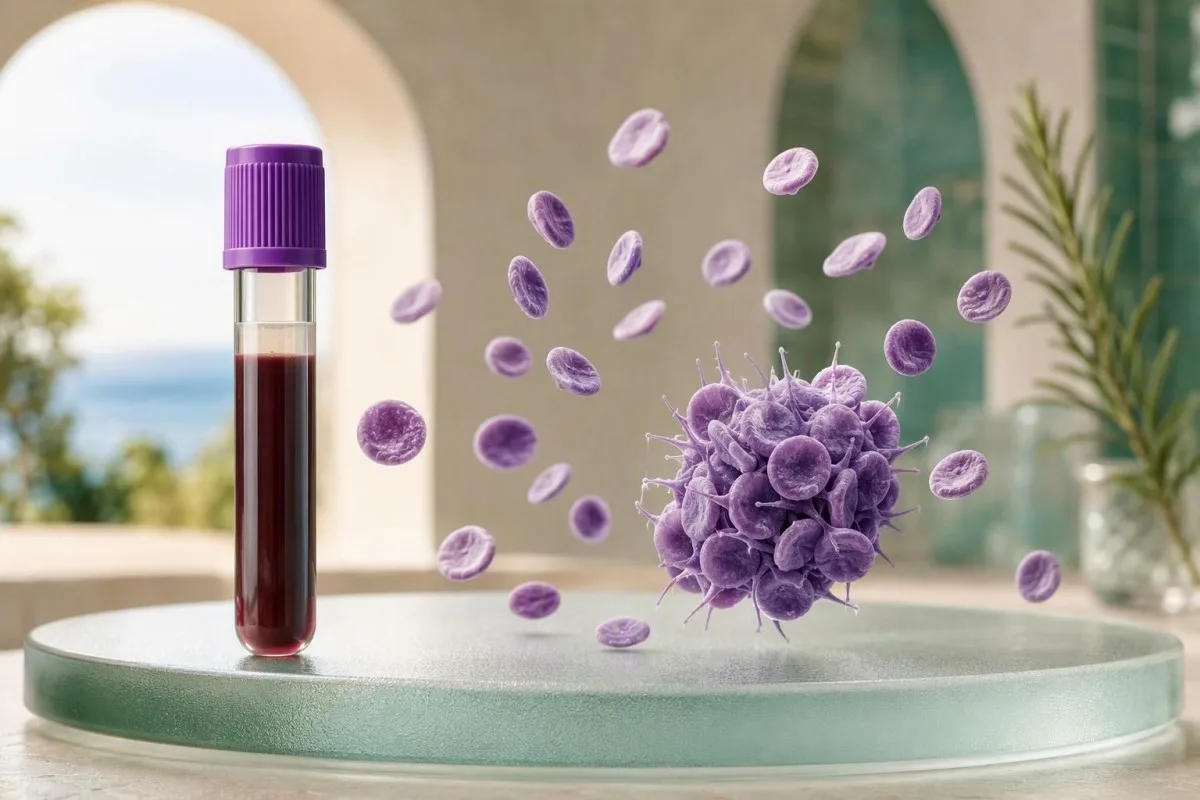
Madal trombotsüütide hulk võib mõnikord olla toruga seotud mõõtmisviga, mitte probleem teie kehas. Siit saate teada, kuidas EDTA-ga seotud pseudotrombotsütopeeniat tuvastatakse, enne kui teid trombotsütopeeniaga diagnoositakse.


- Pseudotrombotsütopeenia on valesti madal trombotsüütide hulk, mis on põhjustatud trombotsüütide aglutinatsioonist pärast kogumist, enamasti EDTA torus.
- Tüüpiline trombotsüütide vahemik enamiku mitte-rasedate täiskasvanute jaoks on umbes 150-450 × 10⁹/L, kuigi laborid määravad oma vahemikud.
- Trombotsüütide aglutinatsioon verevalumil võib põhjustada automaatse analysaatori trombotsüütide alahindamist, kuna klastrit ei mõõdeta eraldi rakkudena.
- Tsitraatümbervõtmine lahendab sageli EDTA trombotsüütide aglutinatsiooni; laborid rakendavad tavaliselt tsitraadi trombotsüütide hulga kohta 1,1 lahjenduse parandust.
- Verejooksusümptomid puuduvad ja ootamatult isoleeritud madal trombotsüütide hulk peaks enne ravi või kiireloomuliste saateotsuste tegemist põhjustama verevalumi ülevaatust.
- Tõeline trombotsütopeenia võib kaasneda EDTA trombotsüütide kleepumisega, seega on normaalne tsitraatide tulemus rahustav, kuid peab sobima kliinilise pildiga.
- Kiireloomuline hindamine on endiselt vajalik kontrollimatu verejooksu, uute ulatuslike petehhiate, tugeva peavalu, segasuse või trombotsüütide arvu korral alla 10 × 10⁹/L.
Mida EDTA trombotsüütide aglutinatsioon tegelikult tähendab
EDTA trombotsüütide kleepumine on in vitro laboratoorne artefakt, mille korral trombotsüüdid kleepuvad kokku kogumistorus, põhjustades kunstlikult madalat automatiseeritud trombotsüütide arvu. See ei tähenda iseenesest, et trombotsüüdid kehas hävivad, ja tavaliselt ei tekita see verejooksu riski.
EDTA on lilla korgiga toru lisand, mida kasutatakse enamiku täisvereanalüüside jaoks, kuna see seob kaltsiumi ja takistab koagulatsiooni. Väikesel osal inimestest paljastab kaltsiumi eemaldamine trombotsüütide pinnal olevad sihtmärgid, mis võimaldavad looduslikel antikehadel trombotsüüte omavahel ühendada. Analüsaator võib trombotsüütide klastrit lugeda ühe suure osakesena, valgevereliste rakkude suuruse sündmusena või mitte millegi üldse; vt meie ülevaadet mida CBC sisaldab.
Minu kliinilises töös on klassikaline aruanne trombotsüütide arv 220 × 10⁹/L inimesel, kes tunneb end täiesti hästi, tal pole verevalumeid ning tal on normaalne hemoglobiini ja valgevereliste rakkude arv. See lahknevus ei ole tõend, kuid see on hetk, mil peatuda. Kantesti on AI vereanalüüsi analüsaator mis märgistab isoleeritud madalat trombotsüütide arvu koos laboratoorsete kommentaaridega nagu trombotsüütide agregatsioonid, mitte ei käsitle numbrit diagnoosina.
EDTA-st sõltuvat pseudotrombotsütopeeniat hinnatakse ligikaudu 0,03–0,27% rutiinsetest ambulatoorsetest proovidest, kõrgemad määrad esinevad proovides, mis on juba suunatud madala trombotsüütide arvu tõttu. Lippi ja kolleegid kirjeldavad seda kui kliiniliselt kahjutut, kuid potentsiaalselt tõsiste tagajärgedega preanalüütilist nähtust, kuna see võib vallandada tarbetuid haiglaravi, trombotsüütide transfusioone või steroidravi (Lippi jt, 2012).
Kuidas trombotsüütide analysaatorid aglutineerunud proove alahindavad
Automaatsed trombotsüütide loendused on usaldusväärsed hajutatud trombotsüütide puhul, kuid klastrid jäävad analüsaatori oodatavate suuruste ja signaalimustrite väljapoole. Seega võib loend langeda tegelikust 220 × 10⁹/L näiliselt 40 × 10⁹/L ilma bioloogilise trombotsüütide kadumiseta.
Takistusanalüsaatorid klassifitseerivad osakesi peamiselt mahu järgi, optilised süsteemid aga lisavad valguskoostise teavet. Trombotsüüt on tavaliselt umbes 2–3 mikromeetrit lai, kuid klastri suurus võib kattuda punaste vererakkude fragmentide või leukotsüütide piirkonnaga. Seetõttu võib trombotsüütide histogramm olla ebanormaalne ja labor võib lisada “trombotsüütide klastrid kohal” või “loendus ebausaldusväärne”.”
Analüsaatori trombotsüütide lipp on inimlikuks kontrolliks, mitte lõplik diagnoos. Hästi valmistatud perifeerse määrde käsitsi hinnang võib olla kasulikum kui sama EDTA toru kordamine, eriti kui proov seisis enne analüüsi 2 tundi. Praktiliste piiride osas enne protseduure, meie juhend trombotsüütide loendused enne hamba ekstraheerimist selgitab, miks kontrollitud tulemus on oluline.
Suured trombotsüüdid tekitavad erineva, mõnikord kattuvama probleemi. Väga suuri üksikuid trombotsüüte võivad impedantsmeetodid isegi ilma nähtavate klastriteta ignoreerida, tõstes sageli keskmist trombotsüütide mahtu (MPV). Kõrge MPV ei ole sama mis pseudotrombotsütopeenia; meie ülevaade suurte trombotsüütide põhjustest eristab neid kahte leidut.
Kuidas aglutineerunud proovid verevalumil välja näevad
Trombotsüütide klastrid määrdel näevad välja nagu ebakorrapärased, viinamarjataolised väikesed lillad graanulid, mis on sageli kontsentreeritud slaidi sulgserval. Nende asukoht on oluline, kuna ainult keskmise määrde välja loendamine võib jätta kahe silma vahele just selle tunnuse, mis selgitab madalat tulemust.
Treenitud morfoloog kontrollib filmi keha ja saba suure suurendusega, mitte ainult ühte esinduslikku välja. Trombotsüütide satelliitsus on haruldasem EDTA-ga seotud muster, kus trombotsüüdid ümbritsevad neutrofiile nagu rosett; see võib samuti vähendada teatatud trombotsüütide arvu. Mõlemad leiud on prooviga seotud nähtused, kuigi satelliitsus ja laiad agregatsioonid võivad aeg-ajalt esineda koos.
Üks kasulik detail on see, et EDTA kleepumine sageneb aja jooksul. Proov, mida mõõdetakse 10 minutit pärast kogumist, võib näidata 118 × 10⁹/L, seejärel 42 × 10⁹/L 90 minuti pärast, kuna tekib rohkem agregatsioone. Laborite töökorraldus erineb, seega normaalne esialgne loendus ei välista täielikult seda artefakti, kui hiljem ilmub analüsaatori lipp.
Kui mina, Thomas Klein, MD, näen madalat näitu koos verejaotuse kommentaariga, kuid ilma kliinilise veritsuseta, palun enne immuunse trombotsütopeenia arutamist tegelikku verejaotuse tõlgendust. Sarnane mikroskoopia-eeskõne on kasulik, kui aruanne mainib šistotsüüte verelohul, kuigi šistotsüüdid nõuavad palju kiiremat kliinilist konteksti.
Miks EDTA põhjustab mõnel inimesel trombotsüütide aglutinatsiooni
EDTA võib põhjustada trombotsüütide kogunemist kaltsiumi ära võttes ja trombotsüütide membraani glükoproteiinide kuju muutes, võimaldades antikehadel siduda ja naabertrombotsüüte ühendada. See reaktsioon toimub pärast kogumist, mitte sellepärast, et EDTA on kahjustanud vereringes olevaid trombotsüüte keha sees.
Kõige paremini toetatud mehhanism hõlmab antikehi, sageli IgG, IgM või IgA, mis tuvastavad trombotsüüdi GPIIb/IIIa kompleksi krüptilised piirkonnad pärast kaltsiumist sõltuvat struktuurimuutust. Reaktsioon on mõnel patsiendil temperatuuri- ja ajast sõltuv, mis selgitab, miks soojendatud proov võib mõnikord loendust parandada, kuid see ei ole universaalne lahendus. See on labori sobivuse küsimus, mitte allergia EDTA suhtes.
Pseudotrombotsütopeenia võib esineda tervetel inimestel ja seda on esinenud koos autoimmuunhaiguste, infektsioonide, pahaloomuliste kasvajate ja rasedusega, kuid need seosed ei kinnita individuaalset põhjuslikkust. Positiivset ANA-d või hiljutist viiruslikku haigust ei tohiks kasutada loenduse selgitamiseks enne, kui artefakt on välistatud. Trombotsüütide tulemust koos selle torutüübi, analysaatori lipukeste ja ülejäänud CBC-ga vaadatakse AI vereanalüüsi tulemuste tõlgendamise platvorm mitte isoleeritult.
Fenomen võib püsida aastaid, kuid varieeruda erinevate verevõtmiste vahel. Patsiendil võib esmaspäeval olla EDTA torus trombotsüütide arv 35 × 10⁹/L ja samal hommikul tsitraadis 230 × 10⁹/L, seejärel mõne kuu pärast ilmneb osaline kogunemine uuesti. Eelistatud toru salvestamine laboriandmetes võib vältida korduvaid hoiatusi.
Kuidas tsitraatümbervõtmine pseudotrombotsütopeeniat kinnitab
Trombotsüütide arv, mis normaliseerub naatriumtsitraadi torus, samal ajal kui EDTA torus on kogumeid, tugevalt toetab EDTA-st sõltuvat pseudotrombotsütopeeniat. Tsitraadi loenduse puhul on vaja lahjenduse korrigeerimist, kuna toru sisaldab vedelat antikoagulanti.
Siniseotsalised naatriumtsitraadi torud täidetakse tavaliselt vere ja antikoagulandi 9:1 suhtega. Paljud laborid korrutavad mõõdetud tsitraadi trombotsüütide arvu 1,1-ga, et korrigeerida lahjendust, kuigi kohaliku labori valideeritud meetod on ülimuslik. Näiteks toores tsitraadi tulemus 182 × 10⁹/L muutub pärast korrigeerimist umbes 200 × 10⁹/L.
Uus verevõtt peab olema korralikult täidetud ja õrnalt segatud. Alitäidetud tsitraadi toru muudab antikoagulandi suhet ja võib anda erineva eksitava tulemuse, mis on üks põhjus, miks laboriteadlane võib keelduda ilmselt lihtsast kordusest. Meie selgitus vereproovide torude värvide kohta aitab patsientidel mõista, miks toru valik on osa testimismeetodist.
Magneesiumsulfaadi või happe-tsitraadi-dekstroosi torud võivad olla kasulikud, kui kogunemine jätkub ka tsitraadis, kuid see on tavaliselt labori otsus. Nagler ja kolleegid dokumenteerisid juhtumi, milles EDTA-st sõltuva pseudotrombotsütopeenia tuvastamine vältis tarbetut diagnostilist otsingut pärast seda, kui tsitraadi testimine näitas piisavat arvu (Nagler jt, 2014).
Millal tsitraadi trombotsüütide hulk küsimust ei lahenda
Tsitraadi uuesti võtmine ei välista tõelist trombotsütopeeniat, kui korrigeeritud arv jääb madalaks, kogunemine toimub rohkem kui ühes antikoagulandis või sümptomid viitavad veritsusele. Mõnedel patsientidel esineb mitme antikoagulandi puhul trombotsüütide agregatsioon ja mõnedel on artefakti kõrval tõeline madal arv.
Kui korrigeeritud tsitraadi trombotsüütide arv on 82 × 10⁹/L ja verejaotus on kogumitest vaba, on see kuni vastupidise tõestamiseni tõeline trombotsütopeenia. Kui EDTA on 25 × 10⁹/L ja tsitraat on 86 × 10⁹/L jääkainetega, võivad esineda nii artefakt kui ka tõeline vähenemine. Kliiniline meeskond peaks kasutama parimat kontrollitud hinnangut, mitte lihtsalt valima rahustavama numbri.
Proovi hüübimine võib samuti muuta CBC kehtetuks, kuna trombotsüüdid tarbitakse mikrohüübimisel. Erinevalt EDTA pseudotrombotsütopeeniast võib osaliselt hüübinud proov mõjutada ka valgeid vereliblesid ja erütrotsüütide indekseid. Lugege meie uuesti võtmise juhendit pärast prooviprobleeme kogumis artefaktide praktiliste erinevuste kohta.
Sõrmest võetud vereproovid ei ole automaatselt ohutumad. Aeglane võtmine, pigistamine või viivitatud segamine võib soodustada lokaalset agregatsiooni ja mõjutada trombotsüütide arvu, eriti kui teatatud väärtus on alla 100 × 10⁹/L. Veresoontest võetud uuesti analüüsitav proov koos kiire töötlemisega on tavaliselt puhtam kinnitamise viis.
Trombotsüütide hulga vahemikud, verejooksu risk ja artefakti lõks
Enamik täiskasvanute laboratooriumidest kasutab trombotsüütide arvu referentsvahemikku, mis on ligikaudu 150-450 × 10⁹/L, kuid verejooksu risk sõltub kinnitatud arvust, selle põhjusest, trombotsüütide funktsioonist ja ravimitest. Vale madalat EDTA tulemust ei tohi kasutada üksi protseduurist keeldumiseks või ravi määramiseks.
Spontaanne raske verejooks muutub tõenäolisemaks, kui tegelik trombotsüütide arv langeb alla umbes 10 × 10⁹/L, samas kui paljudel inimestel, kellel on stabiilne arv üle 50 × 10⁹/L, esineb vähe spontaanseid verejookse. Need on laiad kliinilised juhtnöörid, mitte luba sümptomite eiramiseks. Antikoagulandid, aspiriin, maksahaigus, neerupuudulikkus ja trombotsüütide düsfunktsioon võivad riski igal tasemel muuta.
Trombotsüütide arv 90 × 10⁹/L väärib erinevat käsitlust tervel inimesel normaalse tsitraattulemusega võrreldes kellegi uue melena ja kõrgenenud INR-iga. Sellepärast kuulub trombotsüütide arvu tõlgendamine hüübimisuuringute kõrvale; meie aPTT ja hüübimiskatse juhend selgitab, mida normaalne hüübimissüsteem võib ja mida mitte välistada.
Laborid võivad kasutada 140 × 10⁹/L asemel 150 × 10⁹/L madalamat referentspiiri, eriti kohapeal tuletatud vahemike korral. Referentsvahemik kirjeldab 95% võrdluspopulatsiooni; see ei määra universaalset raviläve. See erinevus säästab üllatavalt palju tarbetut muret.
CBC mustrid, mis muudavad artefakti tõenäolisemaks
Isoleeritud ootamatult madal trombotsüütide arv koos normaalse hemoglobiini, valgete vereliblede ja klombitumise kommentaariga on CBC muster, mis kõige enam viitab pseudotrombotsütopeeniale. See muster on pigem viitav kui diagnostiline, sest varajane immuun- või ravimiga seotud trombotsütopeenia võib samuti olla isoleeritud.
Tõelised luuüdi häired mõjutavad sageli rohkem kui ühte vererakkude liini, kuigi erandid esinevad. Madalad trombotsüüdid koos langeva hemoglobiini, ebanormaalsete valgete vereliblede, blastide või püsivate konstitutsiooniliste sümptomitega nõuavad kiiret arsti ülevaatust ja sageli formaalset plaadiuuringut. Meie artikkel teemal CBC tee verehaiguste korral kirjeldab, miks need klastrid muudavad kiireloomulisust.
Trombotsüütide ja lümfotsüütide suhe võib muutuda mõttetuks, kui nimetaja on kehtiv, kuid trombotsüütide lugeja on kunstlikult depressiivne. 60 PLR-i, mis on arvutatud EDTA-ga klombitud arvust, ei tohiks tõlgendada kui põletikku või kardiovaskulaarset signaali. See on vaikne, kuid tavaline sekundaarne viga automatiseeritud tervisearuannetes; vt meie selgitust kõrge PLR tulemuste kohta.
Kantesti AI tuvastab lahknevuse madala trombotsüütide arvu ja normaalse läheduses olevate CBC mõõtmiste vahel, seejärel suunab lugeja kontrollima proovikommentaare. An AI-põhine vereanalüüsi analüüsitööriist ei tohiks kunagi teisendada ühte kontrollimata trombotsüütide väärtust haiguse sildiks. See kliiniline piirang on kiirusest olulisem.
Rasedus, haiglaravi ja muud kõrge riskiga olukorrad
EDTA trombotsüütide klompimine võib esineda raseduse ja haiglaravi ajal, kuid seda ei tohi kunagi eeldada, kui tõeline trombotsütopeenia võib muuta kiireloomulist ravi. Rasedusega seotud põhjused, nagu rasedusaegne trombotsütopeenia, preeklampsia, HELLP sündroom ja immuunne trombotsütopeenia, nõuavad kinnitatud arvu.
Trombotsüütide arv langeb tavaliselt tüsistusteta raseduse ajal ja mõned laborid aktsepteerivad madalamaid trimestrite spetsiifilisi referentspiire. Arv alla 100 × 10⁹/L on tüsistusteta rasedusaegse trombotsütopeenia korral vähem tüüpiline ja nõuab hoolikat kliinilist hindamist, isegi kui EDTA agregaadid on nähtavad. Meie trimestrite spetsiifiline trombotsüütide referentsjuhend raseduse ajal annab konteksti, kuid ei asenda sünnitusabi läbivaatust.
Haiglas võib järsk üle 50% langus võrreldes algväärtusega tekitada küsimusi sepsise, ravimite kokkupuute, hepariinist põhjustatud trombotsütopeenia, lahjenemise või seadme seotud tarbimise kohta. EDTA artefakt võib jäljendada dramaatilist langust, eriti kui eelmine tulemus pärineb erinevast laborimeetodist. Kinnitatud tsitraatlahuse tulemuse võrdlemine patsiendi algväärtusega on sageli kasulikum kui rutiinse EDTA CBC kordamine.
Enne epiduraalanesteesiat, operatsiooni, keemiaravi tsüklit või trombotsüütide transfusiooni küsige, kas labor on väärtuse kinnitanud määrde või alternatiivse antikoagulandi abil. Olen näinud hooldusteenuse viivituste vältimist ühe telefonikõnega. Vastupidiselt sellele tuleks aktiivsete sümptomite või ebastabiilse patsiendi puhul hinnata olukorda, samal ajal kui kinnitus on pooleli.
Ravimid ja diagnoosid, mida ei tohiks liiga kiiresti süüdistada
EDTA trombotsüütide kleepumist tuleks välistada enne isoleeritud madala trombotsüütide arvu omistamist ravimile, autoimmuunhaigusele või immuunsele trombotsütopeeniale. Väärtusliku ravimi peatamine kinnitamata arvu alusel võib põhjustada vältimatut kahju.
Hepariin, kvinniini sisaldavad tooted, trimetoprim-sulfametoksasool, valproaat, linezoliid, keemiaravi ja mõned immuunterapiad võivad põhjustada tõelist trombotsütopeeniat. Ajaline seos on oluline: tõeline ravimiga seotud langus püsib tavaliselt korralikult kogutud tsitraatlahuse proovis ja ei kao EDTA asendamisel. Ravimite ajalugu peaks hõlmama süste, käsimüügiravimeid ja taimseid preparaate.
Immuunne trombotsütopeenia on välistamisdiagnoos, mitte labori tunnus. See võib avalduda isoleeritud trombotsüütidega alla 100 × 10⁹/L, kuid kleepunud EDTA määrdeplaat muudab esialgse arvu tõlgendamatuks. Lippi jt. (2012) hoiatavad konkreetselt, et pseudotrombotsütopeenia tuvastamine hoiab ära sobimatud ravimeetodid, nagu kortikosteroidid ja splenektoomia.
Kui aruanne näib olevat vastuolus teie varasemate tulemustega, säilitage algne PDF ja märkige kogumise kuupäev, tuubi kommentaar, äge haigus ja uued ravimid. Meie juhend vereanalüüside vaheliste tähenduslike muutuste kohta selgitab, miks arvuline erinevus ei ole automaatselt bioloogiline muutus.
Mida küsida oma laborilt või arstilt järgmisena
Ootamatu madala trombotsüütide arvu korral küsige, kas trombotsüütide kleepumist märgati, kas perifeerset määret vaadati ja kas alternatiivse antikoagulandi arvuga saab teha. Need kolm küsimust selgitavad tavaliselt järgmise sammu kiiremini kui sümptomite otsimine veebist.
Praktiline taotlus on: “Kas labor saaks verefilmi trombotsüütide agregaatide suhtes üle vaadata ja vajadusel korrata trombotsüütide arvu tsitraadis?” See ei nõua konkreetset diagnoosi; see on palve mõõtmise valideerimiseks. Kui proov koguti mujal, võib arst tellida uue verevõtu, mitte lisada testimist vanale tuubile.
Küsi parandatuks tsitraatlahuse tulemust ja kas kleepumist esineb selles tuubis. Toores tulemus 145 × 10⁹/L võib tunduda piiripealne, kuni lahjenemise korrigeerimine annab ligikaudu 160 × 10⁹/L. Küsige ka, kas labor kasutas optilist või fluorestsentsi trombotsüütide loendust, kuna need meetodid parandavad mõnikord loendamist keerulistes proovides.
Kantesti 2026. aasta tõlgendus töövoog julgustab kasutajaid võrdlema arvulist tulemust labori narratiivi ja lipuväljadega, enne kui tegutsema hakkavad hoiatuse peale. Laiema ohutuse raamistiku jaoks meie AI aruande täpsuse kontrollnimekirja hõlmab transkriptsiooni, ühikuid, referentspiire ja tulemuste kinnitamist.
Mida mitte teha oodates kinnitust
Ärge alustage toidulisandeid, ärge lõpetage väljakirjutatud ravimeid ega eeldage, et teil on verejooksuhäire ainult seetõttu, et üks EDTA trombotsüütide arv on madal. Samal ajal ärge ignoreerige aktiivset veritsust ainult seetõttu, et kahtlustatakse kleepumist.
Ei ole olemas dieeti, vitamiini ega kodust ravimit, mis parandaks EDTA-st sõltuvat pseudotrombotsütopeeniat, kuna trombotsüüdid kleepuvad tuubis, mitte ei tööta kehas. Folaadi, B12-vitamiini ja rauapuudus võivad teistes olukordades mõjutada vere moodustumist, kuid toidulisandid ei saa küsitavat arvu valideerida. Artefakti ravimine on seotud kogumise ja analüüsiga.
Vältige mitmetähenduslikku aspiriini, ibuprofeeni, naprokseeni ja suurt alkoholitarbimist, kuni arst on selgitanud väga madala teatatud arvu, eriti kui teil tekib kergesti verevalumeid. Ärge lõpetage antikoagulantide, trombotsüütide agregatsiooni inhibiitorite, epilepsiavastaste ravimite või vähiravi kasutamist ilma arsti soovituseta; nende ravimite näidustus võib kanda suuremat kohest riski kui kinnitamata tulemus.
Lühikese tulemuste ajaskaala säilitamine võib muuta kohtumist. Meie laboritulemuste jälgimise juhend soovitab salvestada proovivõtmise aeg, hiljutine haigus, ravimid, proovi kommentaarid ja see, kas tulemus pärines EDTA või sidrunhappega.
Hoiatusmärgid, mis vajavad kiireloomulist meditsiinilist hindamist
Otsige kiireloomulist meditsiinilist abi kontrollimatu verejooksu, mustade väljaheidete, vere oksendamise, tugeva uue peavalu, segasuse, minestamise või laialt levinud täpplaadne lööbe korral, isegi kui kahtlustatakse EDTA kleepumist. Labori artefakt ja tõeline hädaolukord võivad esineda samaaegselt.
Tõeline trombotsüütide arv alla 10 × 10⁹/L loetakse üldiselt kiireloomuliseks tulemuseks, kuna spontaanse limaskesta ja sisemise verejooksu risk suureneb märkimisväärselt. Alla 20 × 10⁹/L arv koos uue verejooksu, palaviku, raske hüpertensiooni, raseduse tüsistuste või hiljutise hepariini kokkupuutega nõuab samuti sama päeva arsti sekkumist. Kohalikud hädaabijuhised peaksid olema prioriteediks mis tahes veebipõhisele tõlgendusele.
Uued neuroloogilised sümptomid on eriti olulised, kuna kraniaalsisene verejooks on haruldane, kuid tõsine. Ärge juhtige ise autot, kui teil on tugev peavalu koos nõrkuse, kõnehäirete, kokkuvarisemise või segasusega. Lastel vajab mittepleegitav lööve koos palavikuga kiiret hindamist sõltumata trombotsüütide tulemusest.
Thomas Klein, MD, soovitab patsientidel eristada küsimust “Kas see arv on reaalne?” ja “Kas see inimene on täna ohutu?”. Esimene vajab tavaliselt määrimist ja sidrunhappega uuesti proovi võtmist; teine sõltub sümptomitest, läbivaatuse leidudest ja kogu kliinilisest pildist. Meie vereanalüüsi teise arvamuse juhend aitab valmistada ette fookustatud arutelu pärast seda, kui kiireloomulised probleemid on lahendatud.
Kuidas Kantesti tõlgendab märgistatud trombotsüütide hulka ohutult
Kantesti AI käsitleb madalat trombotsüütide arvu koos EDTA kleepumise kommentaaridega kui kinnitussignaali, mitte kui trombotsütopeenia tõendit. Meie tõlgendus asetab analüsaatori lipud, teised CBC read, varasemad väärtused ja teatatud sümptomid lihtsa punase või rohelise märgise ette.
Kantesti on AI laboratoorse testi tõlgendamise teenuses loodud selgitama laboriandmeid arusaadavas keeles, säilitades samal ajal algse aruande piirangud. Kui üles laaditud PDF sisaldab teksti “trombotsüütide klastrid”, peaks meie süsteem teavitama kasutajat, et arv võib olla valesti madal ja et labor või arst saab seda filmi ülevaatuse või sidrunhappega proovi abil kinnitada.
Optilise tähemärgituvastuse abil võib koma, ühikut või labori jaluse valesti lugeda. Seetõttu peaksid patsiendid enne digitaalsele tõlgendusele tuginemist kontrollima pildieelvaadet, eriti selliste väärtuste puhul nagu 18 versus 180 × 10⁹/L. Meie PDF-i üleslaadimise kvaliteedikontrolli loendis selgitab mõningaid kontrolle, mis takistavad enamikku välditavaid vigu.
Kliiniline järelevalve jääb inimtööks. Kantesti metoodikat vaadatakse üle ohutusele keskendunud töövoogude suhtes; lugejad, kes soovivad meie lähenemisviisi mõista, saavad vaadata meie tehniline valideerimine ja kliiniline järelevalve. AI saab küsimusi tõhusalt korraldada, kuid see ei saa tegelikku määrimist kontrollida ega aktiivset verejooksu hinnata.
Praktiline jälgimisplaan pärast EDTA trombotsüütide aglutinatsiooni
Tavaline järelkontrolli plaan on dokumenteerida EDTA artefakt, saada kinnitatud alternatiivse tuubi trombotsüütide arv ja kasutada seda tulemust tulevasteks kliinilisteks otsusteks. Enamik inimesi ei vaja artefakti enda jaoks ravi, kui labor on mustri välja selgitanud.
Paluge labori kirjes märkida “EDTA-sõltuv trombotsüütide kleepumine” või samaväärne sõnastus, kui kinnitus on selge. Tulevastel proovivõtmistel võib verevõtja võtta koos rutiinse EDTA CBC-ga ka sidrunhappega tuubi, säästes teist kohtumist. See on eriti kasulik enne operatsiooni, raseduse ajal või kui raviskeemil on trombotsüütide lävendid.
Kinnitatud lähtejoon on väärtuslikum kui korduvad kinnitamata madalad väärtused. Kui teie parandatud sidrunhappega arv on 12 kuu jooksul stabiilne 205 × 10⁹/L, on tulevane EDTA väärtus 55 × 10⁹/L koos klastritega palju vähem murettekitav kui sama arv ilma varasema dokumentatsioonita. Trendid on kasulikud ainult siis, kui testimismeetod on võrreldav.
Kantesti on toetanud enam kui 2 miljonit kasutajat 127+ riigis mitmekeelsete laboritulemuste selgitustega, kuid tulemused kuuluvad endiselt teie arstiga suhtlusse. Meie meditsiinilised ülevaatajad ja Meditsiininõukogu rõhutavad sama lõppreeglit: kinnitage esmalt trombotsüütide arv, seejärel otsustage, mida – kui üldse midagi – vajab ravi.
Teaduspublikatsioonid
Alates 29. augustist 2026 on allpool loetletud kaks Kantesti uurimistööd täiendavad haridusressursid. Need ei kinnita EDTA-st sõltuvat pseudotrombotsütopeeniat; labori määrimine ja alternatiivse antikoagulandi trombotsüütide loend jäävad asjakohasteks kinnitusvahenditeks.
Korduma kippuvad küsimused
Kas EDTA põhjustatud trombotsüütide klombistumine võib põhjustada väga madalat trombotsüütide arvu?
Jah. EDTA trombotsüütide kleepumine võib anda märkimisväärselt vale madala trombotsüütide arvu, mõnikord alla 50 × 10⁹/L, kui inimese tegelik ringlev trombotsüütide arv on normaalne. Analüsaator alaloeb trombotsüütide agregaate, kuna see ei suuda usaldusväärselt tuvastada igat trombotsüüti kobarast. Perifeerne määrimine, mis näitab agregaate ja normaalset korrigeeritud tsitraadi arvu, toetab tugevalt pseudotrombotsütopeeniat. Tulemust tuleks siiski kiiresti üle vaadata, kui esineb aktiivne verejooks või tsitraadi arv jääb madalaks.
Kuidas pseudotrombotsütopeeniat kinnitatakse?
Pseudotrombotsütopeeniat kinnitatakse tavaliselt perifeerse vere määrde läbivaatamisel trombotsüütide kobarate leidmiseks ja trombotsüütide arvu kordamisel naatriumtsitraaditorus. Tsitraaditorud sisaldavad vedelat antikoagulanti, seetõttu korrutavad paljud laborid mõõdetud trombotsüütide arvu 1,1-ga, et arvestada lahjendusega. Näiteks tsitraaditoruga saadud algarvu 180 × 10⁹/L teatatakse pärast korrigeerimist tavaliselt ligikaudu 198 × 10⁹/L. Kohaliku labori valideeritud korrektsioon ja määrde tõlgendus peaksid juhendama lõplikku tulemust.
Kas EDTA-plaatide klompimine tähendab, et mul on verejooksuhäire?
Ei. EDTA-vereliistakute aglutinatsioon üksi on in vitro proovi artefakt ja see ei tähenda, et teil on verejooksuhäire või et teie vereliistakud aglutineeruvad vereringes. Enamikul mõjutatud inimestest ei esine verejooksude sümptomeid ja nende vereliistakute arv on tavalises täiskasvanu vahemikus umbes 150-450 × 10⁹/L. Kliinik peaks siiski uurima verejooksude sümptomeid, ebanormaalseid koagulatsiooniteste või püsivalt madalat tsitraatvereliistakute arvu. Artefakt ei kaitse inimest ravimite või meditsiiniliste seisundite põhjustatud seosteta verejooksude riskide eest.
Kas sidrunhappega toimus ka trombotsüütide aglutinatsioon?
Jah, kuigi naatriumtsitraat hoiab sageli ära EDTA-ga seotud aglutinatsiooni, võib trombotsüütide agregatsioon tsitraadi korral aeg-ajalt siiski esineda või tekkida mitmete antikoagulantidega. Sel juhul võib labor kasutada optilist või fluorescentset trombotsüütide loendust, kiiret soojatöötlust, magneesiumsulfaati või happe-tsitraadi-dekstroosi, sõltuvalt selle valideeritud protokollist. Korrigeeritud tsitraadi näit alla 150 × 10⁹/L ilma agregaatideta tuleks käsitleda võimaliku tõsise trombotsütopeeniana. Mitme antikoagulandi põhjustatud aglutinatsioon on haruldane ja vajab labori juhitud kinnitust.
Kas ma peaksin oma trombotsüütide arvu kordama, kui aruandes on mainitud trombotsüütide aglutinatsiooni?
Jah. Tulemus, milles on märgitud trombotsüütide kogumid, trombotsüütide agregatsioonid või ebausaldusväärne trombotsüütide arv, õigustab tavaliselt numbri kontrollimist, mitte selle numbrilise tulemuse aktsepteerimist. Tavaline kordusanalüüs tehakse värskelt võetud naatriumtsitraadist proovist koos mustri ülevaatusega, ideaalis töödeldes seda kiiresti. Kui algne arv on alla 10 × 10⁹/L või teil on kontrollimatu verejooks, mustad väljaheited, tugev peavalu või segasus, pöörduge kiiresti meditsiinilise abi poole, samal ajal kui kinnitusanalüüsi korraldamine toimub. Ärge muutke väljakirjutatud ravimeid ilma selle arsti nõuandeta, kes teab, miks see välja kirjutati.
Kas EDTA pseudotrombotsütopeenia võib tekkida ja kaduda?
Jah. EDTA pseudutrombotsütopeenia võib olla püsiv aastaid või ilmuda vahelduvana, kuna aglutinatsiooni aste sõltub aja möödumisest pärast proovi võtmist, proovi temperatuurist ja analüsaatori meetodist. Ühest EDTA proovist võib saada aruande 70 × 10⁹/L, samas kui teisest proovist, mis on võetud erineval päeval, saab aruande 145 × 10⁹/L, hoolimata stabiilsest tegelikust trombotsüütide arvust. Dokumenteeritud normaalne tsitraatproovi tulemus annab kasuliku võrdlusaluse tulevasteks võrdlusteks. Laboratooriumi palumine salvestada eelistatud antikoagulant võib ära hoida korduvaid valehäireid.
Hangi AI-toega vereanalüüsi analüüs juba täna
Liitu enam kui 2 miljoni kasutajaga üle maailma, kes usaldavad Kantesti-d kohese ja täpse laborianalüüsi jaoks. Laadi üles oma vereanalüüsi tulemused ja saad põhjaliku tõlgenduse 15,000+ biomarkerite kohta sekunditega.
📚 Viidatud teaduspublikatsioonid
Klein, T., Mitchell, S., & Weber, H. (2026). Kantesti AI. (2026). C3 C4 komplementi vereanalüüs ja ANA tiitri juhend. Zenodo. https://doi.org/10.5281/zenodo.18353989. Kantesti AI Medical Research.
Klein, T., Mitchell, S., & Weber, H. (2026). Kantesti AI. (2026). Nipah viiruse vereanalüüs: varajase avastamise ja diagnoosimise juhend 2026. Zenodo. https://doi.org/10.5281/zenodo.18487418. Kantesti AI Medical Research.
📖 Välised meditsiinilised viited
⚕️ Meditsiiniline lahtiütlus
Käesolev artikkel on mõeldud üksnes hariduslikel eesmärkidel ega kujuta endast meditsiinilist nõuannet. Diagnoosi ja ravivalikute otsuste tegemiseks konsulteeri alati kvalifitseeritud tervishoiutöötajaga.
E-E-A-T usaldussignaalid
Kogemus
Arsti juhitud kliiniline ülevaade labori tõlgendamise töövoogudest.
Ekspertiis
Laborimeditsiin keskendub sellele, kuidas biomarkerid käituvad kliinilises kontekstis.
Autoriteetsus
Kirjutanud dr Thomas Klein, ülevaade: dr Sarah Mitchell ja prof dr Hans Weber.
Usaldusväärsus
Tõenduspõhine tõlgendus selgete edasiste sammudega, et vähendada ärevust.