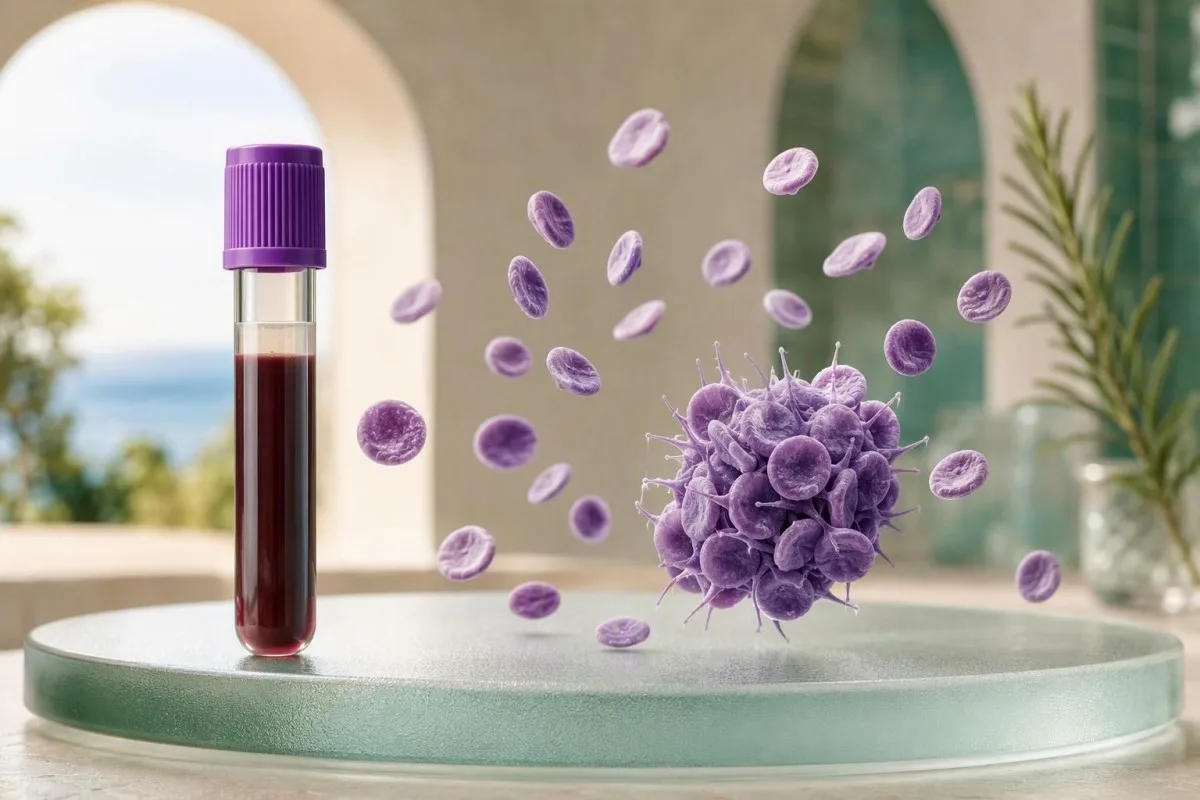
Թրոմբոցիտների ցածր քանակը երբեմն կարող է լինել խողովակի հետ կապված չափման սխալ, այլ ոչ թե ձեր օրգանիզմի ներսում առկա խնդիր։ Ահա թե ինչպես է EDTA-ի հետ կապված կեղծ թրոմբոցիտոպենիան հայտնաբերվում, նախքան ձեզ թրոմբոցիտոպենիայով ախտորոշելը։.


- Կեղծ թրոմբոցիտոպենիա դա թրոմբոցիտների կեղծ ցածր քանակն է, որն առաջանում է արյան հավաքումից հետո թրոմբոցիտների կուտակման պատճառով, առավել հաճախ EDTA-ի խողովակում։.
- Թրոմբոցիտների բնորոշ միջակայք ոչ հղի մեծահասակների մեծ մասի համար մոտավորապես 150-450 × 10⁹/լ է, թեև լաբորատորիաները սահմանում են իրենց սեփական միջակայքերը։.
- Թրոմբոցիտների կուտակումներ քսվածքում կարող են պատճառ դառնալ, որ ավտոմատացված վերլուծիչը սխալ հաշվի թրոմբոցիտները, քանի որ կլաստերը չի չափվում որպես առանձին բջիջներ։.
- Ցիտրատի վերաարյան վերցում հաճախ լուծում է EDTA-ի թրոմբոցիտների կուտակումը. լաբորատորիաները սովորաբար կիրառում են 1.1 նոսրացման ուղղում ցիտրատի թրոմբոցիտների հաշվարկին։.
- Արյունահոսության ախտանշաններ չկան գումարած անսպասելիորեն մեկուսացված թրոմբոցիտների ցածր քանակը պետք է հանգեցնի քսվածքի վերանայման՝ նախքան բուժումը կամ շտապ ուղեփորձի որոշումները։.
- Իրական թրոմբոցիտոպենիան կարող է զուգակցվել ԷԴԹԱ-ով պայմանավորված թրոմբոցիտների կուտակման հետ, ուստի ցիտրատային թեստի նորմալ արդյունքը հուսադրող է, սակայն պետք է համապատասխանի կլինիկական պատկերին։.
- Անհապաղ գնահատում դեռևս անհրաժեշտ է անվերահսկելի արյունահոսության, նոր լայնածավալ պետեխիաների, ուժեղ գլխացավի, շփոթվածության կամ թիթեղիկների քանակի < 10 × 10⁹/լ-ի դեպքում։.
Ի՞նչ է իրականում նշանակում EDTA-ի թրոմբոցիտների կուտակումը։
ԷԴԹԱ-ով պայմանավորված թրոմբոցիտների կուտակումը in-vitro լաբորատոր ակտիֆակտ է, որի դեպքում թիթեղիկները կպչում են հավաքման խողովակում, ինչը հանգեցնում է կեղծ ցածր ավտոմատացված թիթեղիկների հաշվարկի։. Դա ինքնին չի նշանակում, որ թիթեղիկները ոչնչանում են օրգանիզմում, և սովորաբար արյունահոսության ռիսկ չի ստեղծում։.
ԷԴԹԱ-ն լավանդայի գույնի խողովակի հավելումն է, որն օգտագործվում է արյան բոլոր բջիջների հաշվարկի մեծ մասի համար, քանի որ այն կապում է կալցիումը և կանխում է մակարդումը։ Մարդկանց մի փոքր ենթաբազմությունում կալցիումի հեռացումը բացահայտում է թրոմբոցիտների մակերեսային թիրախները, որոնք թույլ են տալիս բնականաբար առաջացող հակամարմիններին կապել թիթեղիկները միմյանց հետ։ Վերլուծիչը կարող է թրոմբոցիտների կլաստերը հաշվել որպես մեկ մեծ մասնիկ, սպիտակ արյան բջիջների չափի իրադարձություն կամ ընդհանրապես ոչինչ; տես մեր ակնարկը թե ինչ է ներառում CBC-ն.
Իմ կլինիկական պրակտիկայում դասական հաշվետվությունը թիթեղիկների 48 × 10⁹/լ քանակն է մի անձի մոտ, ով իրեն ամբողջովին լավ է զգում, չունի մաշկային արյունազեղումներ, և ունի նորմալ հեմոգլոբին և սպիտակ արյան բջիջների քանակ։ Այդ անհամապատասխանությունը ապացույց չէ, բայց դա այն պահն է, երբ պետք է կանգ առնել։ Kantesti-ը AI արյան անալիզատոր որը ազդանշում է մեկուսացված ցածր թիթեղիկների քանակը լաբորատոր մեկնաբանությունների, ինչպիսիք են թրոմբոցիտների ագրեգատները, կողքին, այլ ոչ թե թվի վերաբերյալ որպես ախտորոշում։.
ԷԴԹԱ-ից կախված կեղծ թրոմբոցիտոպենիան գնահատվում է մոտավորապես 0.03-0.27% սովորական ամբուլատոր նմուշների մոտ, ավելի բարձր մակարդակներով նմուշների շրջանում, որոնք արդեն ուղարկվել են թիթեղիկների ցածր քանակի պատճառով։ Lippi-ն և նրա գործընկերները այն նկարագրում են որպես կլինիկապես անվնաս, բայց պոտենցիալ հետևանքային նախավերլուծական երևույթ, քանի որ այն կարող է հանգեցնել անհարկի հոսպիտալացումների, թրոմբոցիտների տրանսֆուզիաների կամ ստերոիդային բուժման (Lippi et al., 2012):.
Ինչպե՞ս են թրոմբոցիտների վերլուծիչները կարող են սխալ հաշվել կուտակված նմուշները։
Ավտոմատացված թիթեղիկների հաշվարկները հուսալի են ցրված թիթեղիկների համար, սակայն կլաստերները ընկնում են չափերի և ազդանշանային պարամետրերից դուրս, որոնք սպասում է վերլուծիչը։. Հետևաբար, հաշվարկը կարող է ընկնել իրական 220 × 10⁹/լ-ից մինչև apparent 40 × 10⁹/լ, առանց թիթեղիկների որևէ կենսաբանական կորստի։.
Դիմադրության վերլուծիչները մասնիկները դասակարգում են հիմնականում ըստ ծավալի, մինչդեռ օպտիկական համակարգերը ավելացնում են լույսի ցրման տեղեկատվություն։ Թրոմբոցիտը սովորաբար մոտ 2-3 միկրոմետր է, բայց կլաստերը կարող է համընկնել արյան կարմիր բջիջների բեկորի կամ լեյկոցիտների շրջանի հետ։ Ահա թե ինչու թրոմբոցիտների հիստոգրամը կարող է լինել ոչ նորմալ, և ինչու լաբորատորիան կարող է ավելացնել “թրոմբոցիտների կլաստերներ առկա” կամ “հաշիվը անհուսալի է”։”
Վերլուծիչի թրոմբոցիտային դրոշակը մարդկային վերանայման հուշում է, ոչ թե վերջնական ախտորոշում։ Լավ պատրաստված ծայրամասային քսուքի ձեռքով գնահատումը կարող է ավելի օգտակար լինել, քան նույն ԷԴԹԱ խողովակի կրկնությունը, հատկապես, եթե նմուշը մնացել է 2 ժամ վերլուծությունից առաջ։ Պրոցեդուրաների շուրջ գործնական շեմերի համար մեր ուղեցույցը թիթեղիկների հաշվարկը մինչև ատամի հեռացում բացատրում է, թե ինչու է հաստատված արդյունքը կարևոր։.
Մեծ թիթեղիկները ստեղծում են տարբեր, երբեմն համընկնող խնդիր։ Անհատական չափազանց մեծ թիթեղիկները կարող են բաց թողնվել դիմադրության մեթոդներով, նույնիսկ առանց տեսանելի կլաստերների, հաճախ բարձրացնելով միջին թրոմբոցիտային ծավալը (MPV): Բարձր MPV-ն փոխարինելի չէ կեղծ թրոմբոցիտոպենիայի հետ. մեր ակնարկը մեծ թրոմբոցիտների պատճառները առանձնացնում է այս երկու արդյունքները։.
Ինչպե՞ս են երևում քսվածքում թրոմբոցիտների կուտակումները։
Քսուքի վրա թրոմբոցիտների կլաստերները հայտնվում են որպես փոքր մանուշակագույն հատիկավոր տարրերի անկանոն խաղողանման խմբեր, որոնք հաճախ կենտրոնացած են սլայդի փետրավոր եզրին։. Նրանց գտնվելու վայրը կարևոր է, քանի որ միայն կենտրոնական քսուքի դաշտը հաշվելով կարող է բաց թողնվել այն հատուկ առանձնահատկությունը, որը բացատրում է ցածր արդյունքը։.
Մարֆոլոգը ստուգում է ֆիլմի մարմինը և պոչը բարձր ուժով, ոչ միայն մեկ ներկայացուցչական դաշտ։ Թրոմբոցիտային Սաթելիտիզմը ավելի հազվադարձ ԷԴԹԱ-ից կախված նախշ է, որում թիթեղիկները օղակում են նեյտրոֆիլները, ինչպես վարդակ, այն կարող է նաև իջեցնել զեկուցվող թիթեղիկների քանակը։ Երկու արդյունքներն էլ նմուշային երևույթներ են, թեև Սաթելիտիզմը և լայն ագրեգատները կարող են երբեմն հանդիպել միասին։.
Մեկ օգտակար մանրուք այն է, որ ԷԴԹԱ-ով պայմանավորված կլամփինգը հաճախ առաջադիմում է ժամանակի ընթացքում։ Նմուշը, որը չափվել է հավաքումից 10 րոպե հետո, կարող է ցույց տալ 118 × 10⁹/լ, այնուհետև 42 × 10⁹/լ 90 րոպե անց, քանի որ ավելի շատ ագրեգատներ են ձևավորվում։ Լաբորատորիաները տարբերվում են իրենց աշխատանքային հոսքով, ուստի նորմալ սկզբնական հաշվարկը ամբողջովին չի բացառում այս ակտիվակտը, եթե ավելի ուշ վերլուծիչի դրոշակ հայտնվի։.
Երբ ես՝ Թոմաս Կլայնը, MD, տեսնում եմ ցածր հաշվարկ՝ զուգակցված քսուքի մեկնաբանության հետ, բայց առանց կլինիկական արյունահոսության, ես խնդրում եմ քսուքի իրական մեկնաբանությունը՝ նախքան իմունային թրոմբոցիտոպենիայի մասին քննարկելը։ Նմանատիպ մանրադիտակային առաջին մտորումները օգտակար են, երբ հաշվետվությունը նշում է արյան ֆիլմի վրա շիստոցիտներ, թեև շիստոցիտները պահանջում են շատ ավելի հրատապ կլինիկական համատեքստ։.
Ինչո՞ւ է EDTA-ն որոշ մարդկանց մոտ առաջացնում թրոմբոցիտների կուտակումներ։
EDTA-ն կարող է առաջացնել թիթեղիկների կուտակում՝ չելատավորելով կալցիումը և փոխելով թիթեղիկների թաղանթի գլիկոպրոտեինների ձևը, ինչը թույլ է տալիս հակամարմիններին կապվել և կապել հարևան թիթեղիկները։. Այս ռեակցիան տեղի է ունենում հավաքումից հետո, այլ ոչ թե այն պատճառով, որ EDTA-ն վնասել է օրգանիզմի ներսում շրջանառող թիթեղիկները։.
Ամենալավ ապացուցված մեխանիզմը ներառում է հակամարմիններ, հաճախ IgG, IgM կամ IgA, որոնք ճանաչում են թիթեղիկների GPIIb/IIIa կոմպլեքսի գաղտնի տեղերը՝ կալցիումից կախված կառուցվածքային փոփոխությունից հետո։ Ռեակցիան որոշ հիվանդների մոտ կախված է ջերմաստիճանից և ժամանակից, ինչը բացատրում է, թե ինչու տաքացված նմուշը երբեմն կարող է բարելավել հաշվարկը, բայց դա համընդհանուր լուծում չէ։ Սա լաբորատոր համատեղելիության խնդիր է, ոչ թե ալերգիա EDTA-ի նկատմամբ։.
Կեղծ թրոմբոցիտոպենիան կարող է առաջանալ առողջ մարդկանց մոտ և զեկուցվել է աուտոիմունային հիվանդությունների, վարակների, չարորակ նորագոյացությունների և հղիության հետ մեկտեղ, սակայն այդ ասոցիացիաները չեն հաստատում պատճառականությունը առանձին անձի մոտ։ Դրական ANA-ն կամ վերջին վիրուսային հիվանդությունը չպետք է օգտագործվեն հաշվարկը բացատրելու համար, մինչև արտեֆակտը չբացառվի։ Kantesti-ն AI արյան անալիզի մեկնաբանություն հարթակ որը կարդում է թիթեղիկների արդյունքը՝ իր խողովակի տեսակով, վերլուծիչի դրոշակներով և CBC-ի մնացած մասով, այլ ոչ թե մեկուսացված։.
Ֆենոմենը կարող է տևել տարիներ, սակայն տատանվելու է նմուշառումների միջև։ Հիվանդը կարող է ունենալ 35 × 10⁹/լ թիթեղիկների հաշիվ EDTA-ում երկուշաբթի օրը և 230 × 10⁹/լ ցիտրատում նույն առավոտյան, այնուհետև մի քանի ամիս անց նորից ցուցադրել մասնակի կուտակում։ Լաբորատորիայի գրանցամատյանում նախընտրելի խողովակի գրանցումը կարող է կանխել կրկնվող ահազանգերը։.
Ինչպե՞ս է ցիտրատի նոր արյան վերցումը հաստատում կեղծ թրոմբոցիտոպենիան։
Թիթեղիկների հաշիվը, որը նորմալանում է նատրիումի ցիտրատ խողովակում, մինչդեռ EDTA խողովակը պարունակում է ագրեգատներ, ուժեղ աջակցում է EDTA-ից կախված կեղծ թրոմբոցիտոպենիային։. Ցիտրատի հաշիվը պահանջում է նոսրացման ճշգրտում, քանի որ խողովակը պարունակում է հեղուկ հակաերկնային։.
Կապույտ գագաթով նատրիումի ցիտրատ խողովակները սովորաբար լցվում են 9:1 արյուն-հակաերկնային հարաբերակցությամբ։ Շատ լաբորատորիաներ բազմապատկում են չափված ցիտրատի թիթեղիկների հաշիվը 1.1-ով՝ ճշգրտելու համար նոսրացումը, թեև տեղական լաբորատորիայի հաստատված մեթոդը առաջնահերթություն ունի։ Օրինակ, 182 × 10⁹/լ հում ցիտրատային արդյունքը ուղղումից հետո դառնում է մոտ 200 × 10⁹/լ։.
Վերանմուշառումը պետք է պատշաճ կերպով լցվի և մեղմորեն խառնվի։ Անբավարար լցված ցիտրատ խողովակը փոխում է հակաերկնային հարաբերակցությունը և կարող է ստեղծել տարբեր մոլորեցնող արդյունք, որը լաբորատորիայի գիտնականի կողմից պարզ թվացող կրկնության մերժման պատճառներից մեկն է։ Մեր բացատրությունը արյան թեստի խողովակների գույների օգնում է հիվանդներին հասկանալ, թե ինչու է խողովակի ընտրությունը փորձի մեթոդի մասը։.
Մագնիումի սուլֆատ կամ թթվային ցիտրատ-դեքստրոզ խողովակները կարող են օգտակար լինել, երբ կուտակումը շարունակվում է ցիտրատում, բայց սա սովորաբար լաբորատորիայի կողմից ընդունված որոշում է։ Նագլերը և գործընկերները փաստագրել են դեպք, որում EDTA-ից կախված կեղծ թրոմբոցիտոպենիայի ճանաչումը խուսափել է անհարկի ախտորոշիչ հետազոտությունից այն բանից հետո, երբ ցիտրատային թեստավորումը ցույց է տվել պատշաճ հաշիվ (Nagler et al., 2014):.
Ե՞րբ է ցիտրատի թրոմբոցիտների հաշվառումը չի լուծում հարցը։
Ցիտրատային վերանմուշառումը չի բացառում իրական թրոմբոցիտոպենիան, երբ ուղղված հաշիվը մնում է ցածր, կուտակումը տեղի է ունենում ավելի քան մեկ հակաերկնային միջոցում, կամ ախտանշանները ենթադրում են արյունահոսություն։. Որոշ հիվանդներ ունեն բազմահակաերկնային թիթեղիկների ագրեգացիա, իսկ ոմանք ունեն իրական ցածր հաշիվ՝ արտեֆակտի հետ մեկտեղ։.
Եթե ուղղված ցիտրատային թիթեղիկների հաշիվը 82 × 10⁹/լ է, և քսուքը առանց կուտակումների է, դա իրական թրոմբոցիտոպենիա է, մինչև հակառակը ապացուցվի։ Եթե EDTA-ն 25 × 10⁹/լ է, իսկ ցիտրատը 86 × 10⁹/լ՝ մնացորդային ագրեգատներով, կարող են լինել ինչպես արտեֆակտ, այնպես էլ իրական նվազում։ Կլինիկական թիմը պետք է օգտագործի լավագույն հաստատված գնահատականը, այլ ոչ թե պարզապես ընտրի ավելի հուսադրող թիվը։.
Նմուշի մեջ մակարդուկը նույնպես կարող է անվավեր դարձնել CBC-ն, քանի որ թիթեղիկները սպառվում են միկրոմակարդուկի մեջ։ Ի տարբերություն EDTA կեղծ թրոմբոցիտոպենիայի, մասամբ մակարդված նմուշը կարող է ազդել նաև սպիտակ գնդիկների և կարմիր գնդիկների ցուցիչների վրա։ Կարդացեք մեր վերանմուշառման ուղեցույցը՝ նմուշառման խնդիրներից հետո հավաքման արտեֆակտների միջև եղած գործնական տարբերությունների համար։.
Մատի ծակման նմուշները ավտոմատ կերպով ավելի անվտանգ չեն։ Դանդաղ հավաքումը, սեղմելը կամ ուշացած խառնումը կարող են նպաստել տեղային ագրեգացիային և վնասել թիթեղիկների քանակը, հատկապես երբ հաղորդվող արժեքը 100 × 10⁹/լ-ից ցածր է։ Արյան անոթային վերահավաքումը՝ արագ մշակմամբ, սովորաբար ավելի մաքուր հաստատման ուղի է։.
Թրոմբոցիտների քանակի միջակայքերը, արյունահոսության ռիսկը և արտեֆակտային թակարդը։
Մեծահասակների մեծ մասի լաբորատորիաները օգտագործում են թիթեղիկների քանակի հղման միջակայք մոտ 150-450 × 10⁹/լ, բայց արյունահոսության ռիսկը կախված է ստուգված քանակից, դրա պատճառից, թիթեղիկների գործառույթից և դեղորայքից։. Կեղծիքով ցածր EDTA արդյունքը չպետք է օգտագործվի միայնակ՝ ընթացակարգը մերժելու կամ բուժում նշանակելու համար։.
Սպոնտան խոշոր արյունահոսությունը դառնում է ավելի հավանական, երբ իրական թիթեղիկների քանակը նվազում է մոտ 10 × 10⁹/լ-ից, մինչդեռ շատ մարդիկ, ում կայուն քանակը 50 × 10⁹/լ-ից բարձր է, քիչ սպոնտան արյունահոսություն ունեն։ Սրանք լայն կլինիկական ուղեցույցներ են, ոչ թե թույլտվություն՝ ախտանիշները անտեսելու։ Հակաocoagulantներ, ասպիրին, լյարդի հիվանդություն, երիկամային անբավարարություն և թիթեղիկների դիսֆունկցիա կարող են փոխել ռիսկը ցանկացած թվի դեպքում։.
90 × 10⁹/լ թիթեղիկների քանակը արժանի է տարբեր մոտեցման առողջ մարդու մոտ՝ նորմալ ցիտրատային արդյունքով, քան նոր մելենայով և բարձրացած INR ունեցող մեկի մոտ։ Ահա թե ինչու թիթեղիկների քանակի մեկնաբանությունը պատկանում է արյան մակարդման թեստավորմանը. մեր aPTT և մակարդման թեստի ուղեցույցը բացատրում է, թե ինչ կարող և չի կարող բացառել նորմալ մակարդման էկրանը։.
Լաբորատորիաները կարող են օգտագործել 140 × 10⁹/լ՝ 150 × 10⁹/լ-ի փոխարեն, որպես ստորին հղման սահման, հատկապես տեղականորեն ստացված միջակայքերով։ Հղման միջակայքը նկարագրում է համեմատական բնակչության 95%-ը; այն չի սահմանում համընդհանուր բուժման շեմ։ Այս տարբերակումը զգալի քանակությամբ ավելորդ անհանգստություն է խնայում։.
CBC-ի նախշեր, որոնք ավելի հավանական են դարձնում արտեֆակտը։
Մեկուսացված անսպասելիորեն ցածր թիթեղիկների քանակ՝ նորմալ հեմոգլոբինով, սպիտակ արյան բջիջներով և մակարդման մեկնաբանությամբ, CBC-ի ամենից շատ հուշող նախադրյալը պսևդոթրոմբոցիտոպենիայի համար։. Այս նախադրյալը ախտորոշիչի փոխարեն հուշող է, քանի որ վաղ իմունային կամ դեղորայքով պայմանավորված թրոմբոցիտոպենիան կարող է նաև մեկուսացված լինել։.
Իրական ոսկրածուծային խանգարումները հաճախ ազդում են մեկից ավելի արյան բջիջների գծի վրա, թեև բացառություններ կան։ Ցածր թիթեղիկները, որոնք զուգորդվում են նվազող հեմոգլոբինով, անոմալ սպիտակ արյան բջիջներով, բլաստներով կամ մշտական կոնստիտուցիոն ախտանիշներով, պահանջում են շտապ կլինիցիստի վերանայում և հաճախ՝ պաշտոնական ֆիլմի քննություն։ Մեր հոդվածը՝ Արյան հիվանդությունների CBC ուղին մանրամասնում է, թե ինչու են այս կլաստերները փոխում հրատապությունը։.
Թիթեղիկների-լիմֆոցիտների հարաբերակցությունը կարող է անիմաստ դառնալ, երբ հայտարարը վավեր է, բայց թիթեղիկների համարիչը արհեստականորեն ճնշված է։ 60 PLR-ը, որը հաշվարկվել է EDTA-մակարդված քանակից, չպետք է մեկնաբանվի որպես բորբոքային կամ սրտանոթային ազդանշան։ Սա ավտոմատացված առողջության հաշվետվությունների մեջ խաղաղ, բայց տարածված երկրորդական սխալ է. տեսեք մեր բացատրությունը՝ բարձր PLR արդյունքներ.
Kantesti AI-ն հայտնաբերում է անհամապատասխանություն ցածր թիթեղիկների քանակի և նորմալ հարևան CBC չափումների միջև, այնուհետև ուղղորդում է ընթերցողին ստուգել նմուշի մեկնաբանությունները։ Ա AI-ով աշխատող արյան թեստի վերլուծության գործիք երբեք չպետք է մեկ չստուգված թիթեղիկների արժեքը վերածի հիվանդության պիտակի։ Այդ կլինիկական զսպվածությունը ավելի կարևոր է, քան արագությունը։.
Հղիությունը, հիվանդանոցային խնամքը և այլ բարձր ռիսկային իրավիճակներ։
EDTA թիթեղիկների մակարդումը կարող է տեղի ունենալ հղիության և հիվանդանոցային խնամքի ընթացքում, բայց այն երբեք չպետք է ենթադրվի, երբ իրական թրոմբոցիտոպենիան կարող է փոխել շտապ կառավարումը։. Հղիության-սպեցիֆիկ պատճառները, ինչպիսիք են հղիության թրոմբոցիտոպենիան, պրեէկլամպսիան, HELLP սինդրոմը և իմունային թրոմբոցիտոպենիան, պահանջում են հաստատված հաշվարկ։.
Թրոմբոցիտների քանակը սովորաբար նվազում է անբարդյուն հղիության ընթացքում, և որոշ լաբորատորիաներ ընդունում են ավելի ցածր եռամսյակի-սպեցիֆիկ հղման սահմաններ։ 100 × 10⁹/լ-ից ցածր քանակը ավելի քիչ է բնորոշ անբարդյուն հղիության թրոմբոցիտոպենիայի համար և արժանի է մանրակրկիտ կլինիկական գնահատման, նույնիսկ եթե տեսանելի են EDTA ագրեգատներ։ Մեր եռամսյակի-սպեցիֆիկ թրոմբոցիտների հղման ուղեցույցը հղիության ընթացքում տալիս է համատեքստ՝ չփոխարինելով մանկաբարձական հետազոտությունը։.
Հիվանդանոցում, ելակետային մակարդակից ավելի քան 50%-ով հանկարծակի անկումը կարող է հարցեր առաջացնել սեպսիսի, դեղորայքի ազդեցության, հեպարին-தூண்டப்பட்ட թրոմբոցիտոպենիայի, նոսրացման կամ սարքի հետ կապված սպառման վերաբերյալ։ EDTA արտեֆակտը կարող է նմանակել դրամատիկ անկում, հատկապես, երբ նախորդ արդյունքը ստացվել է տարբեր լաբորատոր մեթոդով։ Հաստատված ցիտրատային արդյունքը հիվանդի ելակետային մակարդակի հետ համեմատելը հաճախ ավելի օգտակար է, քան սովորական EDTA CBC-ի կրկնությունը։.
Մինչև էպիդուրալ ներարկումը, վիրահատությունը, քիմիոթերապիայի ցիկլը կամ թրոմբոցիտների տրանսֆուզիան, հարցրեք, թե արդյոք լաբորատորիան հաստատել է արժեքը ցանցաթաղանթի կամ այլընտրանքային հակամակարդիչի վրա։ Ես տեսել եմ խնամքի ուշացումներ, որոնք խուսափվել են այդ մեկ հեռախոսազանգով։ Ընդհակառակը, ակտիվ ախտանիշները կամ ոչ կայուն հիվանդը պետք է գնահատվեն հաստատման ընթացքում։.
Դեղամիջոցներ և ախտորոշումներ, որոնց չպետք է շտապ մեղադրել։
EDTA թրոմբոցիտների կուտակումը պետք է բացառվի՝ մինչև մեկուսացված ցածր թրոմբոցիտների քանակը վերագրելը դեղորայքին, աուտոիմունային հիվանդությանը կամ իմունային թրոմբոցիտոպենիային։. Արժեքավոր դեղորայքը դադարեցնելը չհաստատված հաշվարկի հիման վրա կարող է առաջացնել անհարկի վնաս։.
Հեպարինը, քինին պարունակող մթերքները, տրիմետոպրիմ-սուլֆամետոքսազոլը, վալպրոատը, լինեզոլիդը, քիմիոթերապիան և որոշ իմունային թերապիաներ կարող են առաջացնել իրական թրոմբոցիտոպենիա։ Ժամանակային կապը կարևոր է. իրական դեղորայքի հետ կապված անկումը սովորաբար պահպանվում է պատշաճ կերպով հավաքված ցիտրատային նմուշում և չի անհետանում EDTA-ի փոխարինման ժամանակ։ Դեղորայքի պատմությունը պետք է ներառի ներարկումները, դեղատոմսով չպահանջվող մթերքները և բուսական պատրաստուկները։.
Իմունային թրոմբոցիտոպենիան բացառման ախտորոշում է, ոչ թե լաբորատոր դրոշմանիշ։ Այն կարող է ներկայանալ 100 × 10⁹/լ-ից ցածր մեկուսացված թրոմբոցիտներով, բայց կուտակված EDTA ցանցաթաղանթը դարձնում է սկզբնական հաշվարկը անընթեռնելի։ Լիպպին և համահեղինակները (2012) հատուկ զգուշացնում են, որ պսևդոթրոմբոցիտոպենիայի ճանաչումը կանխում է անպատշաճ թերապիաները, ինչպիսիք են կորտիկոստերոիդները և սպլենէկտոմիան։.
Եթե հաշվետվությունը հակասում է ձեր նախորդ արդյունքներին, պահպանեք բնօրինակ PDF-ը և նշեք հավաքման ամսաթիվը, խողովակի մեկնաբանությունը, սուր հիվանդությունը և նոր դեղորայքը։ Մեր ուղեցույցը արյան քննությունների միջև բացատրում է, թե ինչու թվային դելտան ինքնաբերաբար կենսաբանական փոփոխություն չէ։.
Ի՞նչ հարցեր տալ ձեր լաբորատորիային կամ բժշկին հաջորդը։
Անսպասելի ցածր թրոմբոցիտների քանակի դեպքում, հարցրեք, թե արդյոք տեսանելի են թրոմբոցիտների կուտակումներ, արդյոք վերանայվել է ծայրամասային ցանցաթաղանթը, և արդյոք կարող է կատարվել այլընտրանքային հակամակարդիչի հաշվարկ։. Այս երեք հարցերը սովորաբար ավելի արագ պարզաբանում են հաջորդ քայլը, քան համացանցում ախտանիշների որոնումը։.
Գործնական խնդրանքը հետևյալն է. “Կարո՞ղ է լաբորատորիան վերանայել արյան ֆիլմը թրոմբոցիտների ագրեգատների համար և, անհրաժեշտության դեպքում, կրկնել թրոմբոցիտների հաշվարկը ցիտրատով”: Սա չի պահանջում որոշակի ախտորոշում; դա խնդրանք է, որ չափումը հաստատվի։ Եթե նմուշը հավաքվել է այլուր, բժիշկը կարող է ստիպված լինի պատվիրել նոր նմուշառում, քան փորձարկում ավելացնել հին խողովակին։.
Պահանջեք ուղղված ցիտրատային արդյունքը և արդյոք կուտակումները պահպանվում են այդ խողովակում։ 145 × 10⁹/լ-ի հում արդյունքը կարող է սահմանային թվալ, մինչև նոսրացման ուղղումը կտա մոտավորապես 160 × 10⁹/լ։ Նաև հարցրեք, թե արդյոք լաբորատորիան օգտագործել է օպտիկական կամ ֆլուորեսցենտ թրոմբոցիտների հաշվարկ, քանի որ այս մեթոդները երբեմն բարելավում են բարդ նմուշների թվաքանակը։.
Kantesti-ի 2026 թվականի մեկնաբանման աշխատանքային հոսքը խրախուսում է օգտատերերին համեմատել թվային արդյունքը լաբորատորիայի նկարագրության և դրոշմանիշների դաշտերի հետ՝ մինչև ազդանշանին արձագանքելը։ Ավելի լայն անվտանգության շրջանակի համար մեր AI հաշվետվության ճշգրտության ստուգաթերթիկը ընդգրկում է տառադարձումը, միավորները, հղման միջակայքերը և արդյունքների հաստատումը։.
Ի՞նչ չանել հաստատման սպասելիս։
Մի սկսեք հավելումներ, մի դադարեցրեք նշանակված դեղորայքը կամ մի ենթադրեք, որ ունեք արյունահոսության խանգարում միայն այն պատճառով, որ մեկ EDTA թրոմբոցիտների հաշվարկը ցածր է։. Միևնույն ժամանակ, մի անտեսեք ակտիվ արյունահոսությունը միայն այն պատճառով, որ կասկածվում է կուտակում։.
Չկա դիետա, վիտամին կամ տնային միջոց, որը շտկում է EDTA-կախյալ պսևդոթրոմբոցիտոպենիան, քանի որ թրոմբոցիտները կուտակվում են խողովակում, այլ ոչ թե ձախողվում են մարմնի ներսում։ Ֆոլաթը, վիտամին B12-ը և երկաթի անբավարարությունը կարող են ազդել արյան ձևավորման վրա այլ պայմաններում, բայց հավելումները չեն կարող հաստատել կասկածելի հաշվարկը։ Արտեֆակտի բուժումը վերաբերում է հավաքմանը և վերլուծությանը։.
Խուսափեք ոչ էական ասպիրինի, իբուպրոֆենի, նապրոքսենի և ալկոհոլի մեծ քանակությամբ օգտագործումից, մինչև որ բժիշկը չպարզի շատ ցածր հաղորդված թվաքանակը, հատկապես եթե դուք հեշտությամբ կապտուկներ եք ստանում։ Մի դադարեցրեք հակակոագուլյանտներ, հակաթրոմբոցիտային դեղամիջոցներ, հակաէպիլեպտիկ դեղամիջոցներ կամ քաղցկեղի բուժումներ՝ առանց բժշկի խորհրդատվության; այդ դեղամիջոցների ցուցումները կարող են ավելի մեծ անմիջական ռիսկ պարունակել, քան չհաստատված արդյունքը։.
Արդյունքների հակիրճ ժամանակագրության պահպանումը կարող է փոխել հանդիպումը։ Մեր լաբորատոր արդյունքների հետևման ուղեցույցը առաջարկում է գրանցել արյան նմուշառման ժամանակը, վերջին հիվանդությունը, դեղամիջոցները, նմուշի վերաբերյալ մեկնաբանությունները և արդյոք արդյունքը ստացվել է EDTA-ից, թե ցիտրատից։.
Կարմիր դրոշակներ, որոնք պահանջում են շտապ բժշկական գնահատում։
Անհապաղ բժշկական գնահատման դիմեք, եթե ունեք չվերահսկվող արյունահոսություն, սև աթոռ, արյունով փսխում, ուժեղ նոր գլխացավ, շփոթվածություն, կոլապս կամ լայն տարածված կետանման ցան, նույնիսկ եթե կասկածվում է EDTA կուտակում։. Լաբորատոր արտեֆակտը և իրական շտապ իրավիճակը կարող են համընկնել։.
10 × 10⁹/լ-ից ցածր իրական թրոմբոցիտների քանակը սովորաբար համարվում է շտապ արդյունք, քանի որ լորձաթաղանթների և ներքին արյունահոսության ինքնաբուխ ռիսկը զգալիորեն աճում է։ 20 × 10⁹/լ-ից ցածր քանակը՝ նոր արյունահոսության, տենդի, ուժեղ հիպերտոնիայի, հղիության բարդությունների կամ հեպարինի վերջին ազդեցության դեպքում, նույնպես արժանի է նույն օրը բժշկի ներգրավմանը։ Տեղական շտապ օգնության խորհուրդը պետք է առաջնահերթություն ունենա ցանկացած առցանց մեկնաբանությունից։.
Նոր նյարդաբանական ախտանիշները հատկապես կարևոր են, քանի որ ինտրանքրանիալ արյունահոսությունը հազվադեպ է, բայց լուրջ։ Մի վարեք ձեր մեքենան, եթե ունեք ուժեղ գլխացավ թուլության, խոսքի փոփոխության, կոլապսի կամ շփոթվածության հետ մեկտեղ։ Երեխաների մոտ, ոչ-փչացող ցանը տենդով անհապաղ գնահատման կարիք ունի՝ անկախ թրոմբոցիտների արդյունքից։.
Thomas Klein, MD, խորհուրդ է տալիս հիվանդներին առանձնացնել “Արդյոք այս թվաքանակն իրական է՞” հարցը “Արդյոք այս մարդն այսօր ապահով է՞” հարցից։ Առաջինը սովորաբար պահանջում է ծայրամասային քսուք և ցիտրատային նոր նմուշ; երկրորդը կախված է ախտանիշներից, քննության տվյալներից և ամբողջ կլինիկական պատկերից։ Մեր οδηγός δεύτερης γνώμης για εξέταση αίματος կարող է օգնել կենտրոնացված քննարկում կազմակերպել շտապ հարցերի լուծումից հետո։.
Ինչպե՞ս Kantesti-ն անվտանգ մեկնաբանում է դրոշակված թրոմբոցիտների հաշվառումը։
Kantesti AI-ն մշակում է EDTA կուտակումների վերաբերյալ մեկնաբանություններով ցածր թրոմբոցիտների քանակը որպես հաստատման ազդանշան, այլ ոչ թե որպես թրոմբոցիտոպենիայի ապացույց։. Մեր մեկնաբանությունը վերադասավորում է վերլուծիչի դրոշները, CBC-ի մյուս տողերը, նախորդ արժեքները և հաղորդված ախտանիշները՝ պարզ կարմիր կամ կանաչ պիտակից առաջ։.
Կանտեստին մի է ԱԻ լաբորատոր թեստի մեկնաբանման ծառայությունում նախատեսված է լաբորատոր տվյալները պարզ լեզվով բացատրելու համար՝ միաժամանակ պահպանելով սկզբնական հաշվետվության սահմանափակումները։ Եթե վերբեռնված PDF-ում նշված է “թրոմբոցիտների կուտակումներ”, մեր համակարգը պետք է օգտատիրոջը տեղեկացնի, որ թվաքանակը կարող է կեղծ-ցածր լինել, և որ լաբորատորիան կամ բժիշկը կարող են հաստատել այն ֆիլմի վերանայման կամ ցիտրատային նմուշի միջոցով։.
Օպտիկական տառաճանաչումը կարող է սխալ կարդալ տասնորդական կետը, միավորը կամ լաբորատոր ծանոթագրությունը։ Ահա թե ինչու պետք է հիվանդները ստուգեն պատկերի նախադիտումը՝ նախքան որևէ թվային մեկնաբանության վրա հույս դնելը, հատկապես այնպիսի արժեքների շուրջ, ինչպիսիք են 18-ը 180 × 10⁹/լ-ի դիմաց։ Մեր PDF-ի վերբեռնման որակի ստուգաթերթ բացատրում է այն մի քանի ստուգումները, որոնք կանխում են շատ խուսափելի սխալներ։.
Կլինիկական վերահսկողությունը մնում է մարդու աշխատանքը։ Kantesti-ի մեթոդաբանությունը վերանայվում է անվտանգությանը միտված աշխատանքային հոսքերի համեմատ; ընթերցողները, ովքեր ցանկանում են հասկանալ մեր մոտեցումը, կարող են վերանայել մեր տեխնիկական վալիդացում և կլինիկական վերահսկողություն. -ը։ AI-ն կարող է արդյունավետ կազմակերպել հարցերը, բայց այն չի կարող ստուգել իրական քսուքը կամ գնահատել ակտիվ արյունահոսությունը։.
Պրակտիկ հետևողական պլան EDTA-ի թրոմբոցիտների կուտակումից հետո։
Սովորական հետագա հետևման պլանը ներառում է EDTA արտեֆակտի փաստաթղթավորումը, ալտերնատիվ խողովակից թրոմբոցիտների հաստատված քանակի ստացումը և այդ արդյունքի օգտագործումը ապագա կլինիկական որոշումների համար։. Մեծ մասամբ մարդկանց չի պահանջվում բուժում հենց արտեֆակտի համար, երբ լաբորատորիան հաստատել է օրինակը։.
Պահանջեք, որ լաբորատորիայի գրանցումը նշի “EDTA-կախյալ թրոմբոցիտների կուտակում” կամ համարժեք ձևակերպում, եթե հաստատումը պարզ է։ Ապագա արյան նմուշառումների ժամանակ, ֆլեբոտոմիայի թիմը կարող է հավաքել ցիտրատային խողովակ՝ սովորական EDTA CBC-ի հետ մեկտեղ, խնայելով երկրորդ հանդիպում։ Սա հատկապես օգտակար է վիրահատությունից առաջ, հղիության ընթացքում կամ երբ բուժման արձանագրությունը ունի թրոմբոցիտների շեմեր։.
Հաստատված բազային գիծն ավելի արժեքավոր է, քան կրկնվող չհաստատված ցածր արժեքները։ Եթե ձեր շտկված ցիտրատային քանակը կայուն է 205 × 10⁹/լ 12 ամսվա ընթացքում, ապա ապագա EDTA արժեքը 55 × 10⁹/լ ագրեգատներով շատ ավելի քիչ է անհանգստացնում, քան նույն թիվը մեկի մոտ, ով չունի նախորդ փաստաթղթեր։ Անկումները օգտակար են միայն այն դեպքում, երբ փորձարկման մեթոդը համեմատելի է։.
Kantesti-ն աջակցել է ավելի քան 2 միլիոն օգտատերերի 127+ երկրներում բազմալեզու լաբորատոր բացատրություններով, սակայն արդյունքները դեռևս պատկանում են ձեր բժշկի հետ փոխհարաբերություններին։ Մեր բժշկական վերլուծաբանները և Բժշկական խորհրդատվական խորհուրդ -ը շեշտում են նույն վերջնական կանոնը. նախ հաստատեք թրոմբոցիտների քանակը, այնուհետև որոշեք, թե ինչ-ինչ, եթե որևէ բան, պետք է բուժվի։.
Հետազոտական հրապարակումներ
2026 թվականի օգոստոսի 29-ի դրությամբ, ստորև թվարկված երկու Kantesti հետազոտական հրապարակումները հանդիսանում են լրացուցիչ կրթական ռեսուրսներ։ Դրանք չեն հաստատում EDTA-կախյալ կեղծ թրոմբոցիտոպենիայի ախտորոշումը; լաբորատոր քսուքը և այլ հակամակարդիչով թրոմբոցիտների հաշվառումը մնում են համապատասխան հաստատման գործիքներ։.
Հաճախակի տրվող հարցեր
Կարո՞ղ է EDTA-ով պայմանավորված թրոմբոցիտային ագրեգացիան առաջացնել թիթեղիկների շատ ցածր քանակություն։
Այո։ EDTA պլատելետների կուտակումը կարող է հանգեցնել պլատելետների թվի զգալի կեղծ ցածր ցուցանիշի, երբեմն 50 × 10⁹/լ-ից ցածր, մինչդեռ անձի իրական պտտվող պլատելետների թիվը նորմալ է։ Անալիզատորը հաշվում է պլատելետների ագրեգատները, քանի որ այն հուսալիորեն չի կարողանում ճանաչել յուրաքանչյուր պլատելետ կլաստերի ներսում։ Պերիֆերիկ քսուքը, որը ցույց է տալիս ագրեգատներ և նորմալ շտկված ցիտրատային հաշիվ, ուժեղորեն աջակցում է պսևդոթրոմբոցիտոպենիային։ Արդյունքը դեռ պետք է անհապաղ վերանայվի, եթե կա ակտիվ արյունահոսություն կամ ցիտրատային հաշիվը մնում է ցածր։.
Ինչպե՞ս է հաստատվում պսևդոթրոմբոցիտոպենիան։
Պսևդոթրոմբոցիտոպենիան սովորաբար հաստատվում է ծայրամասային քսուկի հետազոտմամբ՝ թիթեղիկների կուտակումների առկայության համար և թիթեղիկների հաշվարկը կրկնելով նատրիումի ցիտրատի խողովակում։ Ցիտրատային խողովակները պարունակում են հեղուկ հակամակարդիչ, ուստի շատ լաբորատորիաներ բազմապատկում են չափված թիթեղիկների հաշվարկը 1.1-ով՝ նոսրացումը հաշվի առնելու համար։ Օրինակ, ցիտրատային հաշվարկը 180 × 10⁹/լ-ով սովորաբար հաղորդվում է մոտավորապես 198 × 10⁹/լ-ով՝ ուղղումից հետո։ Տեղական լաբորատորիայի հաստատված ուղղումը և քսուկի մեկնաբանությունը պետք է առաջնորդեն վերջնական արդյունքը։.
EDTA թիթեղիկների կուտակումը նշանո՞ւմ է արյունահոսության խանգարում։
Ոչ։ ԷԴԹԱ-ով թրոմբոցիտների կուտակումը ին վիտրո եղանակով նմուշի արտեֆակտ է, և չի նշանակում, որ ունեք արյունահոսության խանգարում կամ որ ձեր թրոմբոցիտները կուտակվում են ձեր արյան շրջանառության մեջ։ Ամենաշատը տուժած մարդիկ չունեն արյունահոսության ախտանիշներ և ունեն հաստատված թրոմբոցիտների քանակ, որը գտնվում է սովորական մեծահասակների 150-450 × 10⁹/լ սահմաններում։ Բժիշկը դեռ պետք է հետաքննի արյունահոսության ախտանիշները, մակարդման թեստերի աննորմալ արդյունքները կամ ցիտրատով թրոմբոցիտների մշտապես ցածր քանակը։ Արտեֆակտը չի պաշտպանում մարդուն դեղորայքի կամ բժշկական վիճակների հետևանքով առաջացած անկապ արյունահոսության ռիսկերից։.
Կարող են արյան թիթեղիկները կուտակվել նաև ցիտրատում։
Այո, թեև նատրիումի ցիտրատը հաճախ կանխում է EDTA-ի հետ կապված փաթաթումը, թրոմբոցիտների ագրեգացիան կարող է երբեմն շարունակվել ցիտրատի մեջ կամ առաջանալ բազմակի հակամակարդիչների դեպքում: Այս իրավիճակում լաբորատորիան կարող է օգտագործել օպտիկական կամ ֆլուորեսցենտային թրոմբոցիտների հաշվառում, արագ տաքացման մշակում, մագնեզիումի սուլֆատ կամ թթու-ցիտրատ-դեքստրոզ՝ կախված իր վավերացված արձանագրություններից: 150 × 10⁹/լ-ից ցածր շտկված ցիտրատային հաշվարկը առանց ագրեգատների պետք է դիտարկվի որպես հնարավոր իսկական թրոմբոցիտոպենիա: Բազմա-հակամակարդիչների փաթաթումը հազվադեպ է և պահանջում է լաբորատորիայի կողմից ուղղորդվող հաստատում:.
Եթե արձանագրության մեջ նշված է «թրոմբոցիտների կուտակում», պետք է կրկնվի թրոմբոցիտների քանակի հետազոտությունը։
Այո։ Հաշվետվություն, որը նշում է թիթեղների կուտակումներ, թիթեղների ագրեգատներ կամ անհուսալի թիթեղների հաշվարկ, սովորաբար արժանի է ստուգման, այլ ոչ թե թվային արդյունքի ընդունման։ Սովորական կրկնությունը նոր հավաքված նատրիումի ցիտրատի նմուշ է՝ քսուքի զննումով, որը իդեալական է, եթե մշակվում է շուտ։ Եթե նախնական հաշվարկը 10 × 10⁹/լ-ից ցածր է, կամ ունեք չվերահսկվող արյունահոսություն, սև աթոռ, ուժեղ գլխացավ կամ շփոթություն, անհապաղ բժշկական օգնություն ստացեք հաստատման կազմակերպման ընթացքում։ Մի փոխեք նշանակված դեղորայքը առանց այն բժշկի խորհրդի, ով գիտի, թե ինչու է այն նշանակվել։.
EDTA-ով պայմանավորված պսևդոթրոմբոցիտոպենիան կարող է ի հայտ գալ և անհետանալ:
Դա է։ ԷԴԹԱ-ով պսևդոթրոմբոցիտոպենիան կարող է լինել կայուն տարիներ շարունակ կամ ունենալ փոփոխական բնույթ, քանի որ ագրեգացիայի աստիճանը կախված է նմուշի վերցումից հետո անցած ժամանակից, նմուշի ջերմաստիճանից և վերլուծիչի մեթոդից։ Մեկ ԷԴԹԱ նմուշ կարող է ցույց տալ 70 × 10⁹/լ, մինչդեռ մեկ այլ՝ տարբեր օրերին վերցված նմուշ կարող է ցույց տալ 145 × 10⁹/լ, չնայած իրական թիթեղիկների հաշվի կայունությանը։ Փաստագրված նորմալ ցիտրատային հաշիվը ծառայում է որպես օգտակար հիմք հետագա համեմատությունների համար։ Լաբորատորիային նախընտրելի հակաօքսիդանտը գրանցելու խնդրանքը կարող է կանխել կեղծ ահազանգերի կրկնությունը։.
Ստացեք AI-ով աշխատող արյան անալիզի վերլուծություն այսօր
Միացեք ավելի քան 2 միլիոն օգտատերերի ամբողջ աշխարհում, ովքեր վստահում են Kantesti-ին՝ լաբորատոր թեստերի ակնթարթային, ճշգրիտ վերլուծության համար։ Վերբեռնեք ձեր արյան անալիզի արդյունքները և ստացեք 15,000+ բիոմարկերների համապարփակ մեկնաբանություն վայրկյանների ընթացքում։.
📚 Հղված հետազոտական հրապարակումներ
Klein, T., Mitchell, S., & Weber, H. (2026). Kantesti AI. (2026). C3 C4 Կոմպլեմենտի Արյան Փորձարկում և ANA Տիտրի Ուղեցույց։ Zenodo։ https://doi.org/10.5281/zenodo.18353989.։ Kantesti AI Medical Research.
Klein, T., Mitchell, S., & Weber, H. (2026). Kantesti AI. (2026). Նիպահ Վիրուսի Արյան Փորձարկում. Վաղ Հայտնաբերման և Ախտորոշման Ուղեցույց 2026։ Zenodo։ https://doi.org/10.5281/zenodo.18487418.։ Kantesti AI Medical Research.
📖 Արտաքին բժշկական հղումներ
⚕️ Բժշկական հրաժարում
Այս հոդվածը միայն կրթական նպատակների համար է և չի հանդիսանում բժշկական խորհրդատվություն։ Ախտորոշման և բուժման որոշումների համար միշտ խորհրդակցեք որակավորված բուժաշխատողի հետ։.
E-E-A-T վստահության ազդանշաններ
Փորձառություն
Բժշկի կողմից ղեկավարվող կլինիկական վերանայում՝ լաբորատոր մեկնաբանության աշխատանքային հոսքերի համար։.
Մասնագիտություն
Լաբորատոր բժշկության կենտրոնացում՝ այն բանի վրա, թե ինչպես են բիոմարկերները դրսևորվում կլինիկական համատեքստում։.
Հեղինակություն
Գրված է դոկտոր Թոմաս Քլայնի կողմից՝ դոկտոր Սառա Միթչելի և պրոֆեսոր դոկտոր Հանս Վեբերի կողմից վերանայմամբ։.
Հուսալիություն
Ապացույցների վրա հիմնված մեկնաբանություն՝ հստակ հետագա քայլերի ուղիներով՝ ահազանգերը նվազեցնելու համար։.