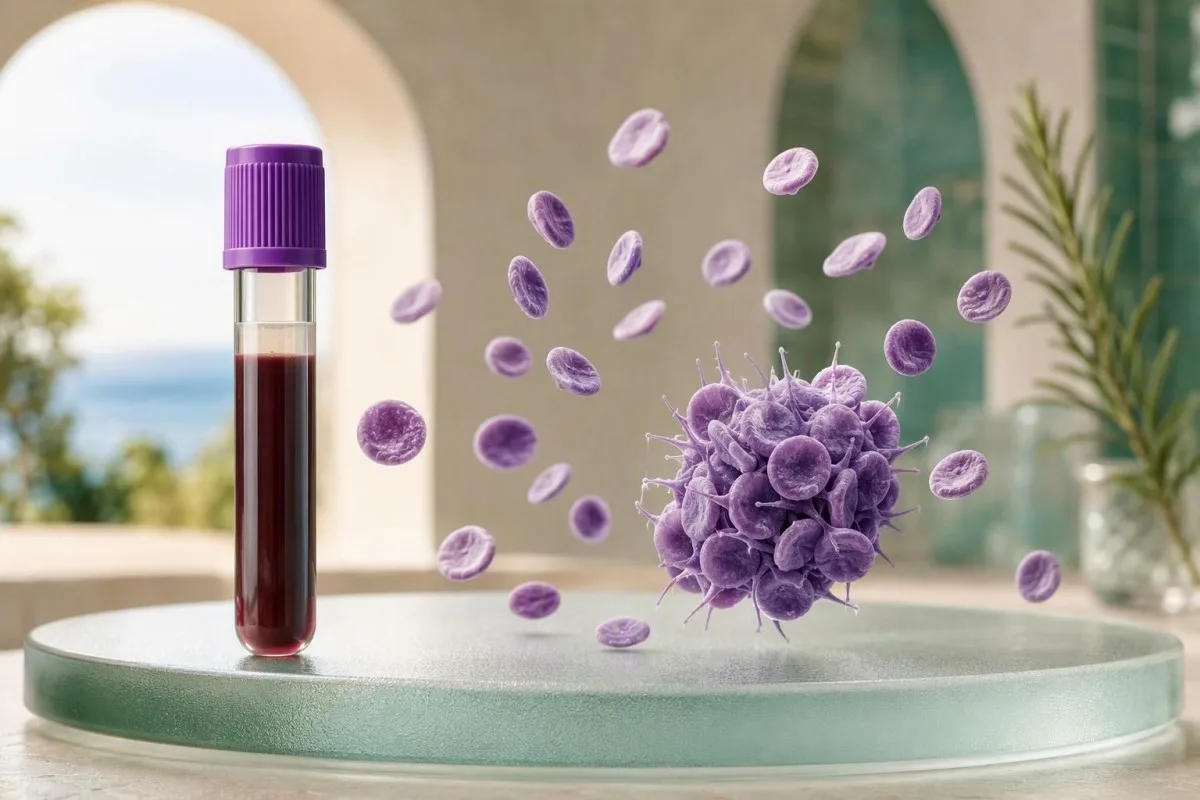
Një numër i ulët i trombociteve ndonjëherë mund të jetë një gabim matës i lidhur me tubin, sesa një problem brenda trupit tuaj. Këtu është se si pseudotromocitopenia e lidhur me EDTA identifikohet përpara se dikush t'ju etiketojë me trombocitopeni.


- Pseudotromocitopenia është një numër i ulët i rremë i trombociteve i shkaktuar nga grumbullimi i trombociteve pas mbledhjes, më shpesh në një tub EDTA.
- Vargu tipik i trombociteve për shumicën e të rriturve jo-shtatzënë është afërsisht 150-450 × 10⁹/L, megjithëse laboratorët vendosin intervalet e tyre.
- Grumbujt e trombociteve në shtupë mund të bëjnë që një analizator automatik të numërojë nën trombocitet sepse një grup nuk matet si qeliza të veçanta.
- Ridrejtimi me citrat shpesh zgjidh grumbullimin e trombociteve nga EDTA; laboratorët zakonisht aplikojnë një korrigjim 1.1 të hollimit në një numërim të trombociteve me citrat.
- Pa simptoma gjakderdhjeje plus një numër i ulët i trombociteve i izoluar në mënyrë të papritur duhet të nxisë një rishikim të shtupës para vendimeve për trajtim ose referim urgjent.
- Trombocitopenia e vërtetë mund të bashkë-ekzistojë me grumbullim të trombociteve me EDTA, kështu që një rezultat normal me citrat është qetësues, por duhet të përshtatet me pamjen klinike.
- Vlerësim urgjent ende nevojitet për gjakderdhje të pakontrolluar, petekie të reja të përhapura, dhimbje të forta koke, konfuzion, ose numër trombocitesh nën 10 × 10⁹/L.
Çfarë nënkupton në të vërtetë grumbullimi i trombociteve nga EDTA
Grumbullimi i trombociteve me EDTA është një artifakt laboratorik in-vitro në të cilin trombocitet ngjiten së bashku në tubin e grumbullimit, duke shkaktuar një numër të ulët automatik të trombociteve. Vetë për vete nuk do të thotë se trombocitet po shkatërrohen në trup dhe zakonisht nuk krijon rrezik gjakderdhjeje.
EDTA është shtesa e tubit me majë të purpurt të përdorur për shumicën e numërimit të plotë të gjakut, sepse lidh kalciumin dhe parandalon koagulimin. Tek një nëngrup i vogël njerëzish, heqja e kalciumit ekspozon objektiva në sipërfaqen e trombociteve që lejojnë antitrupat natyralë të lidhin trombocitet së bashku. Analizatori mund të numërojë një grup trombocitesh si një grimcë të madhe, një ngjarje me madhësinë e një qelize të bardhë, ose asgjë fare; shih përmbledhjen tonë të çfarë përfshin një CBC.
Në punën time klinike, raporti klasik është një numër trombocitesh prej 48 × 10⁹/L tek dikush që ndihet plotësisht mirë, nuk ka mavijosje dhe ka hemoglobinë dhe numër qelizash të bardha normale. Kjo mospërputhje nuk është dëshmi, por është momenti për të pushuar. Kantesti është një Analizues i testeve të gjakut AI që sinjalizon një numër të ulët të izoluara të trombociteve së bashku me komente laboratorike si agregate trombocitesh, në vend që të trajtojë numrin si një diagnozë.
Pseudotrombocitopenia e varur nga EDTA vlerësohet në rreth 0.03-0.27% të mostrave rutinë ambulatoriale, me shkallë më të larta në mesin e mostrave tashmë të dërguara për numra të ulët të trombociteve. Lippi dhe kolegët e përshkruajnë atë si një fenomen paranalitik që është klinikisht i padëmshëm, por potencialisht pasojë, sepse mund të shkaktojë shtrime të panevojshme, transfuzione trombocitesh ose trajtim me steroide (Lippi et al., 2012).
Si analizatorët e trombociteve mund të numërojnë nën rezultate kampione të grumbulluara
Numërimet automatike të trombociteve janë të besueshme për trombocitet e shpërndara, por grupet bien jashtë modeleve të madhësisë dhe sinjalit që analizon pritet. Një numër mund të bjerë prandaj nga një 220 × 10⁹/L i vërtetë në një 40 × 10⁹/L dukshëm pa ndonjë humbje biologjike të trombociteve.
Analizatorët e impedancës klasifikojnë grimcat kryesisht sipas vëllimit, ndërsa sistemet optike shtojnë informacion mbi shpërndarjen e dritës. Një trombocit zakonisht është rreth 2-3 mikrometra në diametër, por një grumbull mund të mbivendoset me fragmentin e qelizave të kuqe të gjakut ose rajonin e leukociteve. Kjo është arsyeja pse një histogramë e trombociteve mund të jetë jonormale dhe pse një laborator mund të shtojë “grupe trombocitesh të pranishme” ose “numërim jo i besueshëm”.”
Sinjali i trombociteve të analizatorit është një nxitje për rishikim njerëzor, jo një diagnozë përfundimtare. Një vlerësim manual nga një shtupë periferike e bërë mirë mund të jetë më i dobishëm sesa përsëritja e të njëjtit tub EDTA, veçanërisht nëse mostra qëndroi për 2 orë para analizës. Për pragjet praktike rreth procedurave, udhëzuesi ynë për numri i trombociteve para nxjerrjes së dhëmbit shpjegon pse një rezultat i verifikuar ka rëndësi.
Trombocitet e mëdha krijojnë një problem të ndryshëm, ndonjëherë mbivendosës. Trombocitet individuale shumë të mëdha mund të mungojnë nga metodat e impedancës edhe pa grumbullime të dukshme, duke rritur shpesh vëllimin mesatar të trombociteve (MPV). Një MPV i lartë nuk është i ndërrueshëm me pseudotrombocitopeninë; rishikimi ynë i shkaqeve të trombociteve të mëdha i ndan këto dy gjetje.
Si duken grumbujt e trombociteve në një shtupë
Grumbullimet e trombociteve në shtupë shfaqen si grupe të çrregullta si rruaza të elementeve të imëta granuloze vjollcë, shpesh të përqendruara në skajin e pendës së rrëshqitëses. Vendndodhja e tyre ka rëndësi sepse numërimi vetëm i fushës qendrore të shtupës mund të humbasë vetë tiparin që shpjegon rezultatin e ulët.
Një morfolog i trajnuar kontrollon trupin dhe bishtin e filmit në fuqi të lartë, jo thjesht një fushë përfaqësuese të vetme. Sateliteti i trombociteve është një model më i rrallë i lidhur me EDTA ku trombocitet rrethojnë neutrofile si një rozetë; gjithashtu mund të ulë numrin e raportuar të trombociteve. Të dyja gjetjet janë fenomene të mostrës, megjithëse sateliteti dhe agregate të gjera mund të ndodhin ndonjëherë së bashku.
Një detaj i dobishëm është se grumbullimi me EDTA shpesh përparon me kalimin e kohës. Një mostër e matur 10 minuta pas mbledhjes mund të tregojë 118 × 10⁹/L, pastaj 42 × 10⁹/L në 90 minuta ndërsa formohen më shumë agregate. Laboratorët ndryshojnë në rrjedhën e tyre të punës, kështu që një numër fillestar normal nuk e përjashton plotësisht këtë artifakt nëse shfaqet një sinjal i mëvonshëm i analizatorit.
Kur unë, Thomas Klein, MD, shoh një numër të ulët të shoqëruar me një koment të shtupave të gjakut, por pa gjakderdhje klinike, kërkoj interpretimin aktual të shtupave para se të diskutoj trombocitopeninë imune. Arsyetimi i ngjashëm me parësinë e mikroskopisë është i dobishëm kur një raport përmend shistocitet në një shtupë gjaku, megjithëse shistocitet kërkojnë një kontekst më urgjent klinikisht.
Pse EDTA shkakton grumbuj trombocitesh te disa njerëz
EDTA mund të shkaktojë grumbullimin e trombociteve duke i çelatuar kalciumin dhe duke ndryshuar formën e glikoproteineve të membranës së trombociteve, duke lejuar që antitrupat të lidhen dhe të lidhin trombocitet fqinje. Ky reagim ndodh pas mbledhjes, jo sepse EDTA ka dëmtuar trombocitet e qarkullimit brenda trupit.
Mekanizmi më i mbështetur përfshin antitrupat, shpesh IgG, IgM ose IgA, duke njohur faqet kriptike në kompleksin GPIIb/IIIa të trombociteve pas ndryshimit strukturor të varur nga kalciumi. Reagimi është i varur nga temperatura dhe koha te disa pacientë, gjë që shpjegon pse një mostër e ngrohur mund të përmirësojë ndonjëherë numërimin, por nuk është një zgjidhje universale. Është një problem i përputhshmërisë së laboratorit, jo një alergji ndaj EDTA.
Pseudotrombocitopenia mund të ndodhë te njerëz të shëndetshëm dhe është raportuar së bashku me kushte autoimune, infeksione, malignitet dhe shtatzëni, por këto lidhje nuk vendosin shkakësinë te një individ. Një ANA pozitiv ose një sëmundje virale e kohëve të fundit nuk duhet të përdoren për të shpjeguar numërimin derisa të përjashtohet artefakti. Kantesti është një platformë e interpretimit të analizave të gjakut AI që lexon një rezultat të trombociteve me llojin e tubit të tij, flamujt e analizatorit dhe pjesën tjetër të CBC-së, në vend që të jetë në izolim.
Fenomeni mund të vazhdojë për vite por të ndryshojë midis marrjeve. Një pacient mund të ketë një numër trombocitesh prej 35 × 10⁹/L në EDTA të hënën dhe 230 × 10⁹/L në citrat të njëjtën mëngjes, pastaj të tregojë grumbullim të pjeshëm përsëri muaj më vonë. Regjistrimi i tubit të preferuar në regjistrin e laboratorit mund të parandalojë alarme të përsëritura.
Si një ridrejtim me citrat konfirmon pseudotromocitopeninë
Një numër trombocitesh që normalizohet në një tub citrat natriumi ndërsa tubi EDTA përmban agregate mbështet fuqishëm pseudotrombocitopeninë e varur nga EDTA. Numërimi i citratit kërkon një rregullim të hollimit sepse tubi përmban antikoagulant likuid.
Tubat e citratit natriumi me majë blu zakonisht mbushen me një raport gjaku-antikoagulant 9:1. Shumë laboratorë shumëzojnë numërimin e trombociteve të citratit të matur me 1.1 për të korrigjuar hollimin, megjithëse metoda e vërtetuar e laboratorit lokal ka përparësi. Për shembull, një rezultat i papërpunuar citrat prej 182 × 10⁹/L bëhet rreth 200 × 10⁹/L pas korrigjimit.
Rimbledhja duhet të jetë e mbushur siç duhet dhe e përzier butësisht. Një tub citrati i nën-mbushur ndryshon raportin antikoagulant dhe mund të krijojë një rezultat tjetër mashtrues, i cili është një nga arsyet pse një shkencëtar laboratorik mund të refuzojë një përsëritje që duket e thjeshtë. Shpjegimi ynë i ngjyrave të tubave të analizës së gjakut ndihmon pacientët të kuptojnë pse zgjedhja e tubit është pjesë e metodës së analizës.
Tubat e magnezium sulfatit ose acid-citrat-dekstrozës mund të jenë të dobishëm kur grumbullimi vazhdon në citrat, por ky është zakonisht një vendim i drejtuar nga laboratori. Nagler dhe kolegët dokumentuan një rast në të cilin njohja e pseudotrombocitopenisë së varur nga EDTA shmangu një punë diagnostike të panevojshme pas testit me citrat tregoi një numër adekuat (Nagler et al., 2014).
Kur një numërim i trombociteve me citrat nuk e zgjidh pyetjen
Një rimbledhje me citrat nuk përjashton trombocitopeninë e vërtetë kur numri i korrigjuar mbetet i ulët, grumbullimi ndodh në më shumë se një antikoagulant, ose simptomat sugjerojnë gjakderdhje. Disa pacientë kanë grumbullim të trombociteve me shumë antikoagulantë, dhe disa kanë një numër të vërtetë të ulët së bashku me një artefakt.
Nëse numri i korrigjuar i trombociteve në citrat është 82 × 10⁹/L dhe shtupa është pa grumbullime, kjo është trombocitopeni e vërtetë derisa të provohet e kundërta. Nëse EDTA është 25 × 10⁹/L dhe citrati është 86 × 10⁹/L me agregate të mbetura, mund të jenë të pranishme si një artefakt ashtu edhe një ulje e vërtetë. Ekipi klinik duhet të përdorë vlerësimin më të mirë të verifikuar, jo thjesht të zgjedhë numrin më qetësues.
Koagulimi në mostër gjithashtu mund të bëjë të pavlefshëm një CBC sepse trombocitet konsumohen brenda mikrokoagulimit. Ndryshe nga pseudotrombocitopenia EDTA, një mostër e koaguluar pjesërisht mund të ndikojë gjithashtu në qelizat e bardha dhe në indeksat e qelizave të kuqe. Lexoni tonë udhëzuesin e rimbledhjes pas problemeve me mostrat për dallimet praktike midis artefakteve të mbledhjes.
Mostrat me shpim me gisht nuk janë automatikisht më të sigurta. Mbledhja e ngadaltë, shtrydhja ose përzierja e vonuar mund të nxisë grumbullimin lokal dhe të komprometojë numrin e trombociteve, veçanërisht kur vlera e raportuar është nën 100 × 10⁹/L. Mbledhja venoze me përpunim të shpejtë është zakonisht rruga më e pastër e konfirmimit.
Intervalet e numërimit të trombociteve, rreziku i gjakderdhjes dhe gracka e artefakteve
Shumica e laboratorëve për të rritur përdorin një interval referimi për numrin e trombociteve pranë 150-450 × 10⁹/L, por rreziku i gjakderdhjes varet nga numri i verifikuar, shkaku i tij, funksioni i trombociteve dhe medikamentet. Një rezultat i rremë i ulët i EDTA-së nuk duhet të përdoret vetëm për të refuzuar një procedurë ose për të përshkruar trajtim.
Gjakderdhja e madhe spontane bëhet më e mundshme ndërsa numri i vërtetë i trombociteve bie nën rreth 10 × 10⁹/L, ndërsa shumë njerëz me numra të qëndrueshëm mbi 50 × 10⁹/L kanë pak gjakderdhje spontane. Këto janë udhërrëfyes të gjerë klinikë, jo leje për të injoruar simptomat. Antikoagulantët, aspirina, sëmundjet e mëlçisë, pamjaftueshmëria renale dhe disfunksioni i trombociteve mund të ndryshojnë rrezikun në çdo numër.
Një numër trombocitesh prej 90 × 10⁹/L meriton trajtim të ndryshëm te një person i shëndetshëm me një rezultat normal të citratit sesa te dikush me melena të re dhe INR të rritur. Kjo është arsyeja pse interpretimi i numrit të trombociteve i përket testit të koagulimit; udhëzuesi ynë për testin e koagulimit aPTT dhe testin e mpiksjes shpjegon se çfarë mund dhe nuk mund të përjashtojë një test normal i mpiksjes.
Laboratorët mund të përdorin 140 × 10⁹/L në vend të 150 × 10⁹/L si kufirin e ulët të referencës, veçanërisht me intervale të derivuara nga vendi. Një interval referimi përshkruan 95% e një popullate krahasuese; nuk përcakton një prag universal të trajtimit. Ky dallim kursen një sasi të habitshme shqetësimi të panevojshëm.
Modelet e CBC që e bëjnë një artefakt më të mundshëm
Një numër i ulët i papritur i trombociteve me hemoglobinë, qeliza të bardha normale dhe një koment për mpiksim është modeli CBC më sugjerues i pseudotrombocitopenisë. Ky model është sugjerues më tepër se diagnostikues, sepse trombocitopenia e hershme imune ose e lidhur me ilaçe mund të jetë gjithashtu e izoluar.
Çrregullimet e vërteta të palcës kockore shpesh ndikojnë në më shumë se një linjë qelizash të gjakut, megjithëse ka përjashtime. Trombocitet e ulëta të kombinuara me hemoglobinë në rënie, qeliza të bardha jonormale, blastë, ose simptoma konstante kushtetuese kërkojnë rishikim të shpejtë nga mjeku dhe shpesh një ekzaminim formal të shtupave. Artikulli ynë mbi Udha e CBC-së për çrregullimet e gjakut përshkruan pse këto grupe ndryshojnë urgjencën.
Raporti trombocite-limfocite mund të bëhet pa kuptim kur emëruesi është valid, por numëruesi i trombociteve është artificialisht i ulur. Një PLR prej 60 i llogaritur nga një numër i mpiksur EDTA nuk duhet të interpretohet si një sinjal inflamator ose kardiovaskular. Ky është një gabim dytësor i heshtur por i zakonshëm në raportet automatike shëndetësore; shihni shpjegimin tonë për rezultatet e larta të PLR-së.
Kantesti AI identifikon mospërputhjen midis një numri të ulët të trombociteve dhe masave fqinje normale të CBC, pastaj drejton lexuesin të verifikojë komentet e mostrave. Një Mjet për analizën e testeve të gjakut me AI nuk duhet kurrë të konvertojë një vlerë të vetme të palindur të trombociteve në një etiketë sëmundjeje. Ajo përmbajtje klinike ka më shumë rëndësi se shpejtësia.
Shtatzënia, kujdesi spitalor dhe situata të tjera me rrezik të lartë
Mpiksimi i trombociteve EDTA mund të ndodhë gjatë shtatzënisë dhe kujdesit spitalor, por nuk duhet të supozohet kurrë kur trombocitopenia e vërtetë mund të ndryshojë menaxhimin urgjent. Shkaqe specifike të shtatzënisë si trombocitopenia gestacionale, pre-eklampsia, sindroma HELLP dhe trombocitopenia imune kërkojnë një numërim të verifikuar.
Numri i trombociteve zakonisht bie poshtë në shtatzëninë pa komplikime, dhe disa laboratorë pranojnë kufij më të ulët referues specifikë për trimestrin. Një numërim nën 100 × 10⁹/L është më pak tipik për trombocitopeninë gestacionale pa komplikime dhe kërkon një vlerësim të kujdesshëm klinik, edhe nëse shihen grumbullime EDTA. Udhëzuesi ynë specifik për trimestrin për referencën e trombociteve në shtatzëni ofron kontekst pa zëvendësuar rishikimin obstetrik.
Në spital, një rënie e papritur prej më shumë se 50% nga vlera bazë mund të ngrejë pyetje rreth sepsës, ekspozimit ndaj barnave, trombocitopenisë së induktuar nga heparina, hollimit ose konsumimit të lidhur me pajisjen. Një artefakt EDTA mund të imitojë një rënie dramatike, veçanërisht kur një rezultat i mëparshëm vinte nga një metodë laboratorike e ndryshme. Krahasimi i një rezultati të verifikuar me citrat me bazën e pacientit është shpesh më i dobishëm sesa përsëritja e një CBC rutinë me EDTA.
Para një epidurali, operacioni, ciklit të kimioterapisë ose transfuzionit të trombociteve, pyesni nëse laboratori ka konfirmuar vlerën në një shtupë ose antikoagulant alternativ. Kam parë vonesa në kujdes të shmangura nga ai një telefonatë. Në të kundërt, simptomat aktive ose një pacient jo i qëndrueshëm duhet të vlerësohen ndërsa konfirmimi është duke u zhvilluar.
Barnat dhe diagnozat që nuk duhet të fajësohen shumë shpejt
Grumbullimi i trombociteve me EDTA duhet të përjashtohet para se të i atribuohet një numërim i izoluar i ulët i trombociteve një medikament, sëmundje autoimune ose trombocitopeni imune. Ndalimi i një medikamenti të vlefshëm bazuar në një numërim të paverifikuar mund të shkaktojë dëm të shmangshëm.
Heparina, produktet që përmbajnë kininë, trimethoprim-sulfamethoxazole, valproate, linezolid, kimioterapia dhe disa terapi imune mund të shkaktojnë trombocitopeni reale. Marrëdhënia kohore ka rëndësi: një rënie e vërtetë e lidhur me ilaçet zakonisht vazhdon në një kampion citrati të mbledhur siç duhet dhe nuk zhduket kur EDTA zëvendësohet. Një histori medikamentesh duhet të përfshijë injeksione, produkte pa recetë dhe preparate bimore.
Trombocitopenia imune është një diagnozë e përjashtimit, jo një sinjalizues laboratorik. Ajo mund të paraqitet me trombocite të izoluara nën 100 × 10⁹/L, por një shtupë EDTA e grumbulluar e bën numërimin fillestar të pashpjegueshëm. Lippi et al. (2012) paralajmërojnë në mënyrë specifike se njohja e pseudotrombocitopenisë parandalon terapi të papërshtatshme si kortikosteroidet dhe splenektomia.
Nëse një raport duket se bie ndesh me rezultatet tuaja të mëparshme, ruani PDF-in origjinal dhe shënoni datën e mbledhjes, komentin e tubit, sëmundjen akute dhe medikamentet e reja. Udhëzuesi ynë për ndryshime domethënëse midis analizave të gjakut shpjegon pse një ndryshim numerik nuk është automatikisht një ndryshim biologjik.
Çfarë t'i pyesni laboratorin ose klinicistin tuaj më pas
Për një numërim të papritur të ulët të trombociteve, pyesni nëse janë parë grumbullime trombocitesh, nëse është rishikuar një shtupë periferike dhe nëse mund të kryhet një numërim me antikoagulant alternativ. Këto tre pyetje zakonisht sqarojnë hapin tjetër më shpejt sesa kërkimi për simptoma në internet.
Një kërkesë praktike është: “A mundet laboratori të rishikojë filmin e gjakut për grumbullime trombocitesh dhe, nëse është e nevojshme, të përsërisë numërimin e trombociteve në citrat?” Kjo nuk kërkon një diagnozë të caktuar; është duke kërkuar që matja të validohet. Nëse kampioni u mblodh diku tjetër, klinicisti mund të ketë nevojë të urdhërojë një tërheqje të re në vend që të shtojë testime në një tub të vjetër.
Kërko i korrigjuar rezultati i citratit dhe nëse grumbullimet vazhdojnë në atë tub. Një rezultat i papunuar prej 145 × 10⁹/L mund të duket kufitar derisa korrigjimi i hollimit të japë rreth 160 × 10⁹/L. Gjithashtu pyesni nëse laboratori përdori një numërim trombocitesh optik ose fluoreshent, pasi këto metoda ndonjëherë përmirësojnë numërimin në mostra komplekse.
Mefon 2026 udhëzuesi i interpretimit inkurajon përdoruesit të krahasojnë rezultatin numerik me narrativën e laboratorit dhe fushat e sinjalizimit përpara se të veprojnë sipas një alarmi. Për një kornizë më të gjerë sigurie, kontrollistin e saktësisë së raportit AI jonë mbulon transkriptimin, njësitë, gamën e referencave dhe verifikimin e rezultateve.
Çfarë të mos bëni ndërsa prisni për konfirmim
Mos filloni shtesa, mos ndaloni medikamente të përshkruara, ose mos supozoni se keni një çrregullim të gjakderdhjes vetëm sepse një numërim i trombociteve EDTA është i ulët. Në të njëjtën kohë, mos neglizhoni gjakderdhjen aktive vetëm sepse dyshohet grumbullimi.
Nuk ka dietë, vitaminë ose ilaç shtëpiak që korrigjon pseudotrombocitopeninë e varur nga EDTA, sepse trombocitet grumbullohen në tub, jo dështojnë brenda trupit. Mungesa e folateve, vitaminës B12 dhe hekurit mund të ndikojë në formimin e gjakut në rrethana të tjera, por shtesat nuk mund të validojnë një numërim të dyshimtë. Trajtimi i artefaktit ka të bëjë me mbledhjen dhe analizën.
Shmangni aspirin, ibuprofen, naproksenin dhe konsumin e rëndë të alkoolit që nuk janë thelbësore derisa një mjek të sqarojë një numër të raportuar shumë të ulët, veçanërisht nëse ju maviset lehtë. Mos i ndërprisni antikoagulantët, medikamentet antiplatelet, ilaçet kundër konfiskimit, ose trajtimet e kancerit pa këshillën e mjekut; treguesi për ato medikamente mund të ketë rrezik më të madh të menjëhershëm sesa rezultati i verifikuar.
Mbajtja e një kronologjie koncize të rezultateve mund të ndryshojë termin. udhëzuesi ynë për gjurmimin e rezultateve të laboratorit sugjeron regjistrimin e kohës së marrjes së gjakut, sëmundjes së fundit, medikamenteve, komenteve të mostrës dhe nëse rezultati erdhi nga EDTA apo citrati.
Shenja paralajmëruese që kërkojnë vlerësim mjekësor urgjent
Kërkoni vlerësim mjekësor urgjent për gjakderdhje të pakontrolluar, jashtëqitje të zeza, të vjella gjaku, dhimbje të reja të forta koke, konfuzion, të fikët, ose skuqje të përhapur me pika të vogla, edhe nëse dyshohet grumbullim i EDTA. Një artifakt laboratorik dhe një emergjencë e vërtetë mund të bashkë-ekzistojnë.
Një numër i vërtetë trombocitesh nën 10 × 10⁹/L zakonisht trajtohet si një rezultat urgjent sepse rreziku i gjakderdhjes mukozale dhe të brendshme spontane rritet ndjeshëm. Një numër nën 20 × 10⁹/L me gjakderdhje të re, ethe, hipertension të rëndë, komplikime të shtatzënisë, ose ekspozim i fundit ndaj heparinës gjithashtu meriton input nga mjeku brenda ditës. Këshilla e urgjencës lokale duhet të ketë përparësi ndaj çdo interpretimi online.
Simptomat e reja neurologjike janë veçanërisht të rëndësishme sepse gjakderdhja intrakraniale është e rrallë por serioze. Mos e drejtoni vetë automjetin nëse keni dhimbje të fortë koke me dobësi, ndryshim të të folurit, rrënim, ose konfuzion. Tek fëmijët, një skuqje që nuk zbehet me ethe kërkon vlerësim urgjent pavarësisht nga rezultati i trombociteve.
Thomas Klein, MD, këshillon pacientët të ndajnë pyetjen “A është ky numër real?” nga “A është ky person i sigurt sot?” E para zakonisht kërkon një shtupë dhe një ri-marrje me citrat; e dyta varet nga simptomat, gjetjet e ekzaminimit, dhe i gjithë imazhi klinik. udhëzuesi për mendim të dytë për analizën e gjakut mund të ndihmojë në përgatitjen e një diskutimi të fokusuar pasi të jenë adresuar çështjet urgjente.
Si Kantesti interpreton një numërim të trombociteve të shënuar në mënyrë të sigurt
Kantesti AI trajton një numër të ulët trombocitesh me komente të grumbullimit të EDTA si një sinjal verifikimi, jo si provë të trombocitopenisë. Interpretimi ynë i vendos flamujt e analizatorit, linjat e tjera të CBC, vlerat e mëparshme dhe simptomat e raportuara përpara një etikete sipërfaqësore të kuqe ose jeshile.
Kantesti është një shërbimin e interpretimit të analizave të AI krijuar për të shpjeguar të dhënat e laboratorit në gjuhë të thjeshtë duke ruajtur kufijtë e raportit burimor. Nëse një PDF i ngarkuar thotë “grumbuj trombocitesh”, sistemi ynë duhet t'i thotë përdoruesit se numri mund të jetë në mënyrë të rremë i ulët dhe se laboratori ose mjeku mund ta konfirmojë atë me një rishikim filmi ose një mostër citrati.
Njohja optike e karaktereve mund të lexojë gabimisht një pikë dhjetore, një njësi, ose një fusnotë laboratorike. Kjo është arsyeja pse pacientët duhet të inspektojnë pamjen paraprake të imazhit para se të mbështeten në ndonjë interpretim dixhital, veçanërisht rreth vlerave si 18 kundrejt 180 × 10⁹/L. kontroll-listë e cilësisë për ngarkimin e PDF-ve shpjegon disa kontrolle që parandalojnë shumicën e gabimeve të shmangshme.
Mbikëqyrja klinike mbetet punë njerëzore. Metodologjia e Kantesti rishikohet kundrejt rrjedhave të punës të fokusuar në siguri; lexuesit që duan të kuptojnë qasjen tonë mund të rishikojnë validim teknik dhe mbikëqyrje klinike. tonë. AI mund të organizojë pyetje në mënyrë efikase, por nuk mund të inspektojë shtupën aktuale ose të vlerësojë gjakderdhjen aktive.
Një plan praktik i ndjekjes pas grumbullimit të trombociteve nga EDTA
Plani i zakonshëm i ndjekjes është dokumentimi i artifaktit të EDTA, marrja e një numri të verifikuar të trombociteve nga një tub alternativ, dhe përdorimi i atij rezultati për vendime klinike të ardhshme. Shumica e njerëzve nuk kanë nevojë për trajtim për vetë artifaktin pasi laboratori të ketë vendosur modelin.
Kërkoni që rekordi i laboratorit të shënojë “grumbullim trombocitesh të varur nga EDTA” ose fjalë ekuivalente nëse konfirmimi është i qartë. Në marrjet e ardhshme, ekipi i flebotomisë mund të mbledhë një tub citrati së bashku me CBC rutinë të EDTA, duke kursyer një takim të dytë. Kjo është veçanërisht e dobishme para operacionit, gjatë shtatzënisë, ose kur një protokoll trajtimi ka pragje trombocitare.
Një bazë e verifikuar është më e vlefshme se vlerat e ulëta të përsëritura të paverifikuara. Nëse numri juaj i citratit i korrigjuar është stabil në 205 × 10⁹/L gjatë 12 muajve, një vlerë e ardhshme e EDTA prej 55 × 10⁹/L me agregate është shumë më pak alarmante sesa i njëjti numër te dikush pa dokumentacion të mëparshëm. Trendet janë të dobishme vetëm kur metoda e testit është e krahasueshme.
Kantesti ka mbështetur më shumë se 2 milionë përdorues në 127+ vende me shpjegime multilinguale të laboratorit, por rezultatet ende i përkasin marrëdhënies së kujdesit me mjekun tuaj. Rishikuesit tanë mjekësorë dhe Bordi Këshillimor Mjekësor theksojnë të njëjtin rregull përfundimtar: verifikoni së pari numrin e trombociteve, pastaj vendosni se çfarë – nëse ka diçka – kërkon trajtim.
Publikime kërkimore
Që nga 29 gushti 2026, dy botimet kërkimore Kantesti të renditura më poshtë janë burime arsimore plotësuese. Ato nuk vendosin diagnozën e pseudotrombocitopenisë të varur nga EDTA; llahra laboratorike dhe numërimi alternativ i trombociteve me antikoagulant mbeten mjetet relevante të konfirmimit.
Pyetje të Shpeshta
A mund të shkaktojë grumbullimi i trombociteve me EDTA një numër shumë të ulët të trombociteve?
Po. Grumbullimi i trombociteve me EDTA mund të prodhojë një numër të rremë të ulët të trombociteve, ndonjëherë nën 50 × 10⁹/L, kur numri i vërtetë qarkullues i trombociteve të personit është normal. Analizuesi nënvlerëson agregatet e trombociteve sepse nuk mund t'i njohë në mënyrë të besueshme çdo trombocit brenda një grumbulli. Një shtupë periferike që tregon grumbuj dhe një numër i normalizuar citrati mbështet fuqishëm pseudotrompcitopeninë. Rezultati duhet ende të shqyrtohet urgjentisht nëse ka gjakderdhje aktive ose numri i citratit mbetet i ulët.
Si konfirmohet pseudotrombocitopenia?
Pseudotrombocitopenia zakonisht konfirmohet duke rishikuar një shtupë periferike për grumbujt e trombociteve dhe duke përsëritur numërimin e trombociteve në një provëz me citrat natriumi. Provëzat me citrat përmbajnë antikoagulant të lëngshëm, kështu që shumë laboratorë shumëzojnë numërimin e trombociteve të matur me 1.1 për të marrë parasysh hollimin. Për shembull, një numër i papunuar citrati prej 180 × 10⁹/L zakonisht raportohet si rreth 198 × 10⁹/L pas korrigjimit. Korrigjimi i vërtetuar i laboratorit lokal dhe interpretimi i shtupës duhet të udhëzojnë rezultatin përfundimtar.
A grumbullimi i trombociteve me EDTA nënkupton se kam një çrregullim të gjakderdhjes?
Jo. Grumbullimi i pllakëzave në EDTA vetëm si një artefakt mostre in-vitro nuk do të thotë se keni një çrregullim të gjakderdhjes ose se pllakëzat tuaja grumbullohen në qarkullimin tuaj. Shumica e njerëzve të prekur nuk kanë simptoma të gjakderdhjes dhe kanë një numër të vërtetuar të pllakëzave brenda intervalit të zakonshëm për të rritur prej rreth 150-450 × 10⁹/L. Një mjek duhet ende të hetojë simptomat e gjakderdhjes, testet anormale të koagulimit ose një numër të vazhdueshëm të ulët të pllakëzave në citrat. Artefakti nuk mbron dikë nga rreziqet e pashqetësuara të gjakderdhjes të shkaktuara nga medikamentet ose kushtet mjekësore.
A mund të ndodhë grumbullimi i trombociteve edhe në citrat?
Po, megjithëse citrati i natriumit shpesh parandalon grumbullimin e lidhur me EDTA-në, agregimi i trombociteve mund të vazhdojë ndonjëherë në citrat ose të ndodhë me antikoagulantë të shumtë. Në atë situacion, laboratori mund të përdorë një numërim optik ose fluoreshent të trombociteve, përpunim të shpejtë me ngrohje, sulfat magnezi, ose acid-citrat-dekstrozë në varësi të protokolleve të tij të vlefshme. Një numërim i korrigjuar i citratit nën 150 × 10⁹/L pa agregate duhet të trajtohet si trompcitopeni e vërtetë e mundshme. Grumbullimi me shumë antikoagulantë është i pazakontë dhe kërkon konfirmim të udhëhequr nga laboratori.
Duhet të përsëris numërimin e trombociteve të mia nëse raporti thotë kokrriza të trombociteve?
Po. Një raport që tregon grumbuj të trombociteve, agregate të trombociteve, ose një numër të paqëndrueshëm të trombociteve, zakonisht kërkon verifikim në vend të pranimit të rezultatet numerik. Përsëritja e zakonshme është një mostër e mbledhur së fundmi me citrat natriumi me një rishikim të shtupës, idealisht e përpunuar shpejt. Nëse numri origjinal është nën 10 × 10⁹/L ose keni gjakderdhje të pakontrolluar, jashtëqitje të zezë, dhimbje të forta koke, ose konfuzion, kërkoni ndihmë mjekësore urgjente ndërsa rregullohet konfirmimi. Mos ndryshoni medikamentet e përshkruara pa këshillën e mjekut që di arsyen pse janë përshkruar.
A mund të vijë dhe të ikë pseudotromocitopenia e shkaktuar nga EDTA?
Po. Pseudotrombocitopenia e induktuar nga EDTA mund të jetë e vazhdueshme për vite ose të shfaqet e ndryshueshme, sepse shkalla e grumbullimit varet nga koha pas marrjes, temperatura e mostrës dhe metoda e analizatorit. Një mostër EDTA mund të raportojë 70 × 10⁹/L ndërsa një tjetër e marrë në një ditë të ndryshme raporton 145 × 10⁹/L, pavarësisht nga një numërim i qëndrueshëm i vërtetë i trombociteve. Një numërim i dokumentuar normal me citrat ofron një referencë të dobishme për krahasime të ardhshme. Kërkesa në laborator për të regjistruar antikoagulantin e preferuar mund të parandalojë alarmet e rreme të përsëritura.
Merrni sot analizë të analizave të gjakut me AI
Bashkohuni me mbi 2 milionë përdorues në mbarë botën që i besojnë Kantesti për analizë të menjëhershme dhe të saktë të analizave laboratorike. Ngarkoni rezultatet e analizave të gjakut dhe merrni interpretim gjithëpërfshirës të biomarkerëve të 15,000+ brenda sekondash.
📚 Publikime kërkimore të cituara
Klein, T., Mitchell, S., & Weber, H. (2026). Kantesti AI. (2026). Test gjaku për komplement C3 C4 & Udhëzues për titrin ANA. Zenodo. https://doi.org/10.5281/zenodo.18353989. Kantesti Kërkim Mjekësor me AI.
Klein, T., Mitchell, S., & Weber, H. (2026). Kantesti AI. (2026). Test gjaku për virusin Nipah: Udhëzues për zbulimin dhe diagnozën e hershme 2026. Zenodo. https://doi.org/10.5281/zenodo.18487418. Kantesti Kërkim Mjekësor me AI.
📖 Referenca të jashtme mjekësore
⚕️ Mohim përgjegjësie mjekësore
Ky artikull është vetëm për qëllime edukative dhe nuk përbën këshilla mjekësore. Gjithmonë konsultohuni me një ofrues të kualifikuar të kujdesit shëndetësor për vendimet e diagnozës dhe trajtimit.
Sinjalet e Besimit E-E-A-T
Përvoja
Rishikim klinik i udhëhequr nga mjeku i flukseve të punës për interpretimin e analizave.
Ekspertizë
Fokus i mjekësisë laboratorike mbi mënyrën se si sillen biomarkerët në kontekstin klinik.
Autoritariteti
Shkruar nga Dr. Thomas Klein me rishikim nga Dr. Sarah Mitchell dhe Prof. Dr. Hans Weber.
Besueshmëria
Interpretim i bazuar në prova, me rrugë të qarta për ndjekje për të reduktuar alarmin.