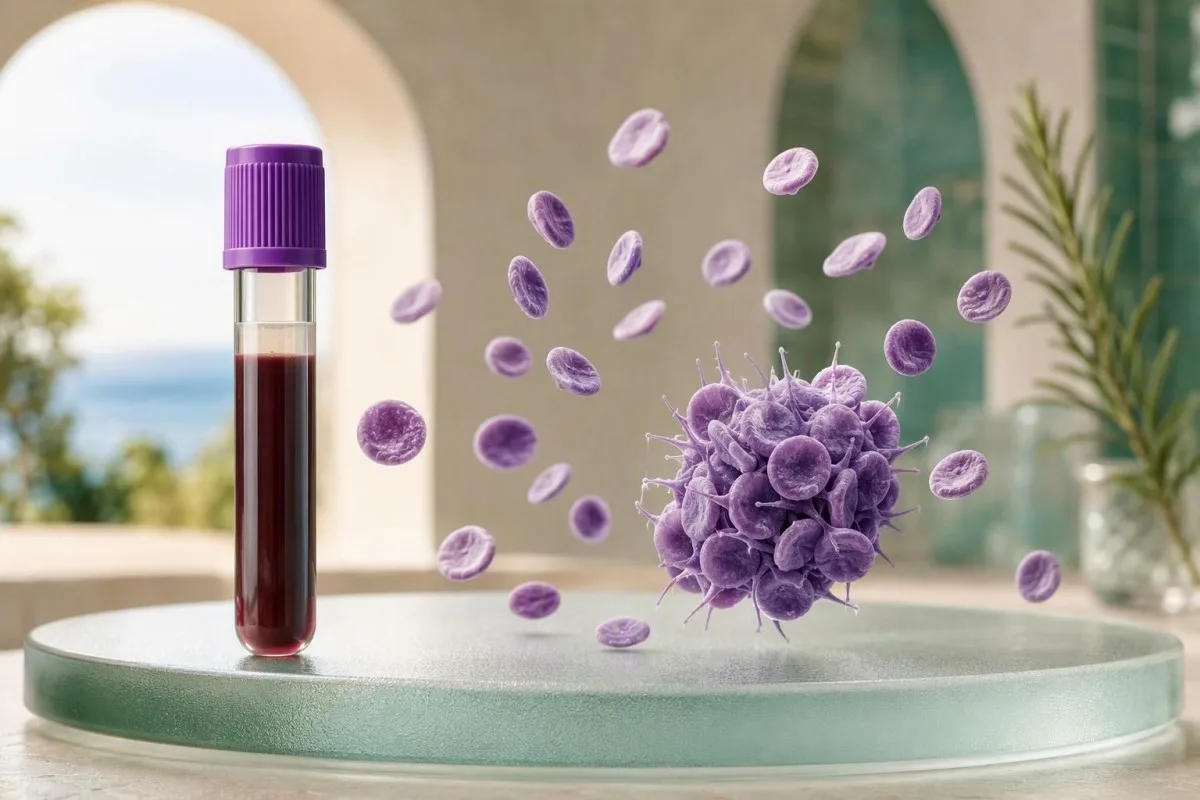
თრომბოციტების დაბალი რაოდენობა ზოგჯერ შეიძლება იყოს მილთან დაკავშირებული გაზომვის შეცდომა და არა ორგანიზმში არსებული პრობლემა. ასე დგინდება EDTA-სთან დაკავშირებული ფსევდოთრომბოციტოპენია, სანამ ვინმე თრომბოციტოპენიის დიაგნოზს დაგისვამთ.


- ფსევდოთრომბოციტოპენია არის თრომბოციტების ცრუ დაბალი რაოდენობა, გამოწვეული თრომბოციტების აგლუტინაციით სინჯის აღების შემდეგ, ყველაზე ხშირად EDTA-ს სინჯში.
- თრომბოციტების ტიპური დიაპაზონი უმეტეს არამსუბუქი ორსულობის მქონე მოზრდილთათვის არის დაახლოებით 150-450 × 10⁹/ლ, თუმცა ლაბორატორიები ადგენენ საკუთარ ინტერვალებს.
- თრომბოციტების აგლუტინაცია ნაცხზე შეიძლება გამოიწვიოს ავტომატური ანალიზატორის მიერ თრომბოციტების არასწორი დათვლა, რადგან ჯგუფი არ იზომება როგორც ცალკეული უჯრედები.
- ციტრატზე ხელახალი სინჯის აღება ხშირად აგვარებს EDTA-ს თრომბოციტების აგლუტინაციას; ლაბორატორიები ჩვეულებრივ იყენებენ 1.1 განზავების კორექციას ციტრატზე თრომბოციტების რაოდენობაზე.
- სისხლდენის სიმპტომების არარსებობა პლუს მოულოდნელად იზოლირებული თრომბოციტების დაბალი რაოდენობა უნდა მოითხოვდეს ნაცხის მიმოხილვას მკურნალობამდე ან სასწრაფო მიმართვის გადაწყვეტამდე.
- ჭეშმარიტი თრომბოციტოპენია შეიძლება თანაარსებობდეს EDTA-ზე თრომბოციტების აგლუტინაციასთან, ამიტომ ციტრატის ნორმალური შედეგი დამაიმედებელია, მაგრამ უნდა შეესაბამებოდეს კლინიკურ სურათს.
- სასწრაფო შეფასება კვლავ საჭიროა უკონტროლო სისხლდენის, ახალი ფართოდ გავრცელებული პეტექიების, ძლიერი თავის ტკივილის, დაბნეულობის ან თრომბოციტების რაოდენობის 10 × 10⁹/ლ-ზე ნაკლები მაჩვენებლის შემთხვევაში.
რას ნიშნავს EDTA-ს თრომბოციტების აგლუტინაცია
EDTA-ზე თრომბოციტების აგლუტინაცია არის ინ-ვიტრო ლაბორატორიული არტეფაქტი, რომლის დროსაც თრომბოციტები ერთმანეთს ეწებება სინჯარაში, რაც იწვევს ავტომატური თრომბოციტების რაოდენობის ცრუ დაბალ მაჩვენებელს. ეს თავისთავად არ ნიშნავს, რომ თრომბოციტები ორგანიზმში ნადგურდება და ჩვეულებრივ არ ქმნის სისხლდენის რისკს.
EDTA არის ლავანდისფერი თავსახურიანი სინჯარის დანამატი, რომელიც გამოიყენება სისხლის სრული ანალიზის უმეტესობისთვის, რადგან ის აკავშირებს კალციუმს და ხელს უშლის შედედებას. ადამიანების მცირე ნაწილში კალციუმის მოცილება ამჟღავნებს თრომბოციტების ზედაპირზე არსებულ სამიზნეებს, რომლებიც ბუნებრივად არსებულ ანტისხეულებს აძლევს საშუალებას, დააკავშირონ თრომბოციტები ერთმანეთს. ანალიზატორმა შეიძლება თრომბოციტების კლასტერი ჩათვალოს ერთ დიდ ნაწილაკად, თეთრი უჯრედის ზომის მოვლენად ან საერთოდ არაფრად; იხილეთ ჩვენი მიმოხილვა რა შედის CBC-ში.
ჩემს კლინიკურ პრაქტიკაში კლასიკური შემთხვევაა თრომბოციტების რაოდენობა 48 × 10⁹/ლ პაციენტში, რომელიც თავს სრულიად კარგად გრძნობს, არ აქვს სისხლჩაქცევები და აქვს ნორმალური ჰემოგლობინი და ლეიკოციტების რაოდენობა. ეს შეუსაბამობა მტკიცებულება არ არის, მაგრამ ეს არის მომენტი, როდესაც უნდა დაფიქრდეთ. Kantesti არის AI სისხლის ტესტის ანალიზატორი რომელიც აფიქსირებს თრომბოციტების იზოლირებულ დაბალ რაოდენობას ლაბორატორიული კომენტარებთან, როგორიცაა თრომბოციტების აგრეგატები, ერთად, ნომრის დიაგნოზად განხილვის ნაცვლად.
EDTA-დამოკიდებული ფსევდოთრომბოციტოპენია ფასდება რუტინული ამბულატორიული ნიმუშების დაახლოებით 0.03-0.27% შემთხვევაში, უფრო მაღალი მაჩვენებლებით იმ ნიმუშებს შორის, რომლებიც უკვე მოწოდებულია თრომბოციტების დაბალი რაოდენობის გამო. ლიპი და კოლეგები მას აღწერენ, როგორც კლინიკურად უვნებელ, მაგრამ პოტენციურად შედეგების მომტან პრე-ანალიტიკურ ფენომენს, რადგან მას შეუძლია გამოიწვიოს არასაჭირო ჰოსპიტალიზაციები, თრომბოციტების ტრანსფუზიები ან სტეროიდული მკურნალობა (Lippi et al., 2012).
როგორ შეუძლიათ თრომბოციტების ანალიზატორებს აგლუტინირებული ნიმუშების არასწორად დათვლა
ავტომატური თრომბოციტების რაოდენობა სანდოა დისპერსიული თრომბოციტებისთვის, მაგრამ კლასტერები სცილდება იმ ზომისა და სიგნალის ნიმუშებს, რომლებსაც ანალიზატორი მოელის. ამრიგად, რაოდენობა შეიძლება შემცირდეს ნამდვილი 220 × 10⁹/ლ-დან აშკარა 40 × 10⁹/ლ-მდე, თრომბოციტების რაიმე ბიოლოგიური დანაკარგის გარეშე.
წინაღობის ანალიზატორები ნაწილაკებს ძირითადად მოცულობის მიხედვით კლასიფიცირებენ, ხოლო ოპტიკური სისტემები ამატებენ სინათლის გაფანტვის ინფორმაციას. თრომბოციტი ჩვეულებრივ დაახლოებით 2-3 მიკრომეტრის სიგანისაა, მაგრამ კლასტერი შეიძლება გადაფაროს ერითროციტების ფრაგმენტთან ან ლეიკოციტების რეგიონთან. სწორედ ამიტომ თრომბოციტების ჰისტოგრამა შეიძლება იყოს არანორმალური და ამიტომ ლაბორატორიამ შეიძლება დაამატოს “წარმოდგენილია თრომბოციტების კლასტერები” ან “დათვლა არასანდო”.”
ანალიზატორის თრომბოციტების ფლაგერი არის ადამიანის გადამოწმების სიგნალი, არა საბოლოო დიაგნოზი. კარგად მომზადებული პერიფერიული ნაცხის ხელით შეფასება შეიძლება უფრო სასარგებლო იყოს, ვიდრე იგივე EDTA სინჯის გამეორება, განსაკუთრებით თუ ნიმუში ანალიზამდე 2 საათით იდგა. პრაქტიკული ზღურბლებისთვის პროცედურების გარშემო, ჩვენი სახელმძღვანელო თრომბოციტების რაოდენობა კბილის ამოღებამდე განმარტავს, თუ რატომ არის მნიშვნელოვანი დადასტურებული შედეგი.
დიდი თრომბოციტები ქმნის განსხვავებულ, ზოგჯერ გადამფარველ პრობლემას. ძალიან დიდი ინდივიდუალური თრომბოციტები შეიძლება გამოტოვდეს წინაღობის მეთოდებით ხილული კლასტერების არარსებობის შემთხვევაშიც კი, ხშირად ზრდის თრომბოციტების საშუალო მოცულობას (MPV). მაღალი MPV არ არის იგივე, რაც ფსევდოთრომბოციტოპენია; ჩვენი მიმოხილვა დიდი თრომბოციტების მიზეზები განასხვავებს ამ ორ დასკვნას.
როგორ გამოიყურება ნაცხზე თრომბოციტების აგლუტინაცია
სმერზე თრომბოციტების კლასტერები გამოიყურება როგორც მცირე მეწამული მარცვლოვანი ელემენტების არარეგულარული ყურძნის მსგავსი ჯგუფები, ხშირად კონცენტრირებული სლაიდის მოპირკეთებულ კიდეზე. მათი მდებარეობა მნიშვნელოვანია, რადგან ნაცხის მხოლოდ ცენტრალური ველის დათვლამ შეიძლება გამოტოვოს ის თვისება, რომელიც ხსნის დაბალ შედეგს.
გაწვრთნილი მორფოლოგი ამოწმებს ფილმის სხეულს და კუდს მაღალი გადიდებით, არა მხოლოდ ერთ წარმომადგენლობით ველს. თრომბოციტების სატელიტიზმი უფრო იშვიათი EDTA-ასოცირებული ნიმუშია, რომლის დროსაც თრომბოციტები აკრავს ნეიტროფილებს ვარდის მსგავსად; მას ასევე შეუძლია შეამციროს თრომბოციტების ანგარიშგებული რაოდენობა. ორივე დასკვნა არის ნიმუშის ფენომენი, თუმცა სატელიტიზმი და ფართო აგრეგატები შეიძლება შემთხვევით ერთად მოხდეს.
ერთი სასარგებლო დეტალი ის არის, რომ EDTA-ზე აგლუტინაცია ხშირად პროგრესირებს დროთა განმავლობაში. ნიმუშის გაზომვისას შეგროვებიდან 10 წუთის შემდეგ შეიძლება გამოჩნდეს 118 × 10⁹/ლ, შემდეგ 42 × 10⁹/ლ 90 წუთის შემდეგ, რადგან მეტი აგრეგატი წარმოიქმნება. ლაბორატორიები განსხვავდება თავიანთი სამუშაო პროცესებით, ამიტომ ნორმალური საწყისი დათვლა არ გამორიცხავს ამ არტეფაქტს სრულად, თუ მოგვიანებით გამოჩნდება ანალიზატორის ფლაგერი.
როდესაც მე, თომას კლაინი, MD, ვხედავ დაბალ რიცხვს, რომელიც დაკავშირებულია ნაცხის კომენტართან, მაგრამ არ არის კლინიკური სისხლდენა, ვითხოვ ნაცხის რეალურ ინტერპრეტაციას იმუნური თრომბოციტოპენიის განხილვამდე. მსგავსი მიკროსკოპზე დაფუძნებული მსჯელობა სასარგებლოა, როდესაც ანგარიში აღნიშნავს შისტოციტებს სისხლის ნაცხზე, თუმცა შისტოციტები მოითხოვს ბევრად უფრო გადაუდებელ კლინიკურ კონტექსტს.
რატომ იწვევს EDTA ზოგიერთ ადამიანში თრომბოციტების აგლუტინაციას
EDTA-მ შეიძლება გამოიწვიოს თრომბოციტების აგრეგაცია კალციუმის ქელაციით და თრომბოციტების მემბრანის გლიკოპროტეინების ფორმის შეცვლით, რაც საშუალებას აძლევს ანტისხეულებს დაუკავშირდნენ და დააკავშირონ მეზობელი თრომბოციტები. ეს რეაქცია ხდება სინჯის აღების შემდეგ, და არა იმიტომ, რომ EDTA-მ დააზიანა ცირკულირებადი თრომბოციტები სხეულის შიგნით.
ყველაზე კარგად დასაბუთებული მექანიზმი მოიცავს ანტისხეულებს, ხშირად IgG, IgM ან IgA, რომლებიც აღიარებენ კრიპტიკურ ადგილებს თრომბოციტების GPIIb/IIIa კომპლექსზე კალციუმზე დამოკიდებული სტრუქტურული ცვლილების შემდეგ. რეაქცია ზოგიერთ პაციენტში დამოკიდებულია ტემპერატურასა და დროზე, რაც ხსნის, თუ რატომ შეიძლება თბილმა სინჯმა ზოგჯერ გააუმჯობესოს დათვლა, მაგრამ ეს არ არის უნივერსალური გამოსავალი. ეს არის ლაბორატორიული თავსებადობის საკითხი, არა ალერგია EDTA-ზე.
ფსევდოთრომბოციტოპენია შეიძლება მოხდეს ჯანმრთელ ადამიანებში და აღწერილია აუტოიმუნურ დაავადებებთან, ინფექციებთან, ავთვისებიან სიმსივნეებთან და ორსულობასთან ერთად, მაგრამ ეს ასოციაციები არ ამყარებს მიზეზ-შედეგობრივ კავშირს ინდივიდში. დადებითი ANA ან ბოლო ვირუსული დაავადება არ უნდა იქნას გამოყენებული რიცხვის ასახსნელად, სანამ არტეფაქტი არ გამოირიცხება. Kantesti არის AI სისხლის ანალიზის განმარტების პლატფორმა რომელიც აანალიზებს თრომბოციტების შედეგს მისი სინჯის ტიპთან, ანალიზატორის დროშებთან და CBC-ის დანარჩენ ნაწილთან ერთად, იზოლირებულად კი არა.
ფენომენი შეიძლება გაგრძელდეს წლების განმავლობაში, მაგრამ განსხვავდებოდეს სინჯების მიხედვით. პაციენტს შეიძლება ჰქონდეს თრომბოციტების რაოდენობა 35 × 10⁹/ლ EDTA-ში ორშაბათს და 230 × 10⁹/ლ ციტრატში იმავე დილით, შემდეგ კი აჩვენოს ნაწილობრივი აგრეგაცია რამდენიმე თვის შემდეგ. ლაბორატორიულ ჩანაწერში სასურველი სინჯის აღრიცხვა ხელს შეუშლის განმეორებით განგაშებს.
როგორ ადასტურებს ციტრატზე ხელახალი სინჯის აღება ფსევდოთრომბოციტოპენიას
თრომბოციტების რაოდენობა, რომელიც ნორმალიზდება ნატრიუმის ციტრატის სინჯში, ხოლო EDTA სინჯში შეიცავს აგრეგატებს, ძლიერ უჭერს მხარს EDTA-ზე დამოკიდებულ ფსევდოთრომბოციტოპენიას. ციტრატის რაოდენობას სჭირდება განზავების კორექტირება, რადგან სინჯი შეიცავს თხევად ანტიკოაგულანტს.
ლურჯი თავსახურიანი ნატრიუმის ციტრატის სინჯები ზოგადად ივსება 9:1 სისხლისა და ანტიკოაგულანტის თანაფარდობით. ბევრი ლაბორატორია ამრავლებს გაზომილ ციტრატის თრომბოციტების რაოდენობას 1.1-ზე, რათა მოხდეს განზავების კორექცია, თუმცა ადგილობრივი ლაბორატორიის დადასტურებული მეთოდი პრიორიტეტულია. მაგალითად, ნედლი ციტრატის შედეგი 182 × 10⁹/ლ ხდება დაახლოებით 200 × 10⁹/ლ კორექციის შემდეგ.
ახალი სინჯი უნდა იყოს სათანადოდ შევსებული და ნაზად შერეული. არასაკმარისად შევსებულმა ციტრატის სინჯმა შეიძლება შეცვალოს ანტიკოაგულანტის თანაფარდობა და შექმნას განსხვავებული მატყუარა შედეგი, რაც არის მიზეზი, რის გამოც ლაბორატორიის მეცნიერს შეუძლია უარყოს აშკარად მარტივი განმეორებითი სინჯი. ჩვენი ახსნა სისხლის ანალიზის სინჯის ფერების შესახებ ეხმარება პაციენტებს გააცნობიერონ, რატომ არის სინჯის არჩევა ტესტის მეთოდის ნაწილი.
მაგნიუმის სულფატის ან მჟავა-ციტრატ-დექსტროზის სინჯები შეიძლება სასარგებლო იყოს, როდესაც აგრეგაცია გრძელდება ციტრატში, მაგრამ ეს, როგორც წესი, ლაბორატორიის გადაწყვეტილებაა. ნაგლერმა და კოლეგებმა დოკუმენტირებულად აღწერეს შემთხვევა, როდესაც EDTA-ზე დამოკიდებული ფსევდოთრომბოციტოპენიის ამოცნობამ თავიდან ააცილა ზედმეტი დიაგნოსტიკური კვლევა ციტრატის ტესტირების შემდეგ, რომელიც აჩვენებდა სათანადო რაოდენობას (Nagler et al., 2014).
როდის არ წყვეტს ციტრატზე თრომბოციტების რაოდენობა კითხვას
ციტრატის ახალი სინჯი არ გამორიცხავს ნამდვილ თრომბოციტოპენიას, როდესაც კორექტირებული რაოდენობა რჩება დაბალი, აგრეგაცია ხდება ერთზე მეტ ანტიკოაგულანტში, ან სიმპტომები მიუთითებს სისხლდენაზე. ზოგიერთ პაციენტს აქვს მრავალ-ანტიკოაგულანტური თრომბოციტების აგრეგაცია, ზოგი კი ნამდვილად დაბალი რაოდენობით აქვს არტეფაქტის პარალელურად.
თუ კორექტირებული ციტრატის თრომბოციტების რაოდენობა არის 82 × 10⁹/ლ და ნაცხი თავისუფალია აგრეგატებისგან, ეს არის ნამდვილი თრომბოციტოპენია, სანამ საპირისპირო არ დამტკიცდება. თუ EDTA არის 25 × 10⁹/ლ და ციტრატი არის 86 × 10⁹/ლ დარჩენილი აგრეგატებით, შესაძლოა არსებობდეს როგორც არტეფაქტი, ასევე რეალური შემცირება. კლინიკურმა ჯგუფმა უნდა გამოიყენოს საუკეთესო დადასტურებული შეფასება, და არა უბრალოდ აირჩიოს უფრო დამამშვიდებელი რიცხვი.
სინჯში შედედებამ ასევე შეიძლება გააუქმოს CBC, რადგან თრომბოციტები მოიხმარება მიკრო შედედებაში. EDTA-ს ფსევდოთრომბოციტოპენიისგან განსხვავებით, ნაწილობრივ შედედებულმა სინჯმა შეიძლება ასევე იმოქმედოს თეთრ უჯრედებსა და ერითროციტების ინდექსებზე. წაიკითხეთ ჩვენი ახალი სინჯის აღების სახელმძღვანელო ნიმუშის პრობლემების შემდეგ კოლექციის არტეფაქტებს შორის პრაქტიკული განსხვავებების შესახებ.
თითის ნემსით აღებული სინჯები არ არის ავტომატურად უფრო უსაფრთხო. ნელი აღება, დაწოლა ან დაგვიანებული შერევა შეიძლება ხელს უწყობდეს ადგილობრივ აგრეგაციას და დააზიანოს თრომბოციტების რაოდენობა, განსაკუთრებით მაშინ, როდესაც მოხსენებული მნიშვნელობა 100 × 10⁹/ლ-ზე ნაკლებია. ვენური ხელახალი აღება სწრაფი დამუშავებით, როგორც წესი, უფრო სუფთა დადასტურების გზაა.
თრომბოციტების რაოდენობის დიაპაზონი, სისხლდენის რისკი და არტეფაქტის ხაფანგი
ზრდასრულთა უმეტეს ლაბორატორიებში თრომბოციტების რაოდენობის ნორმის დიაპაზონი 150-450 × 10⁹/ლ-ის ფარგლებშია, მაგრამ სისხლდენის რისკი დამოკიდებულია დადასტურებულ რაოდენობაზე, მის მიზეზზე, თრომბოციტების ფუნქციაზე და მედიკამენტებზე. ყალბად დაბალი EDTA შედეგი არ უნდა იქნას გამოყენებული ერთპიროვნულად პროცედურის აკრძალვის ან მკურნალობის დანიშვნის მიზნით.
სპონტანური ძლიერი სისხლდენა უფრო სავარაუდო ხდება, როდესაც თრომბოციტების რეალური რაოდენობა ეცემა დაახლოებით 10 × 10⁹/ლ-ზე დაბლა, მაშინ როდესაც ბევრ ადამიანს სტაბილური რაოდენობით 50 × 10⁹/ლ-ზე მეტი, აქვს მცირე სპონტანური სისხლდენა. ეს არის ფართო კლინიკური მითითებები, არა სიმპტომების უგულებელყოფის ნებართვა. ანტიკოაგულანტები, ასპირინი, ღვიძლის დაავადება, თირკმლის უკმარისობა და თრომბოციტების დისფუნქცია შეიძლება შეიცვალოს რისკი ნებისმიერ რიცხვში.
თრომბოციტების რაოდენობა 90 × 10⁹/ლ-ს განსხვავებული მოპყრობა სჭირდება ჯანმრთელ ადამიანში ნორმალური ციტრატის შედეგით, ვიდრე ვინმესთან ახალი მელენით და მომატებული INR-ით. ამიტომ თრომბოციტების რაოდენობის ინტერპრეტაცია კოაგულაციის ტესტირებასთან ერთად ხდება; ჩვენი aPTT და შედედების ტესტის სახელმძღვანელო ხსნის, თუ რა ნორმალური შედედების სკრინინგი შეიძლება და არ შეიძლება გამოირიცხოს.
ლაბორატორიებმა შეიძლება გამოიყენონ 140 × 10⁹/L ნაცვლად 150 × 10⁹/L, როგორც ქვედა საცნობარო ლიმიტი, განსაკუთრებით ადგილობრივად მიღებული ინტერვალებით. საცნობარო ინტერვალი აღწერს 95%-ს შედარებით პოპულაციის; ის არ განსაზღვრავს უნივერსალურ სამკურნალო ზღვარს. ეს განსხვავება ზოგავს გაოცებულ რაოდენობას ზედმეტი შეშფოთებისას.
CBC-ის მახასიათებლები, რომლებიც არტეფაქტს უფრო სავარაუდოს ხდის
იზოლირებული მოულოდნელად დაბალი თრომბოციტების რაოდენობა ნორმალური ჰემოგლობინით, ლეიკოციტებით და აგლუტინაციის კომენტარით არის CBC-ის ნიმუში, რომელიც ყველაზე მეტად მიუთითებს ფსევდოთრომბოციტოპენიაზე. ეს ნიმუში უფრო მიმანიშნებელია, ვიდრე დიაგნოსტიკური, რადგან ადრეული იმუნური ან წამლისმიერი თრომბოციტოპენია ასევე შეიძლება იყოს იზოლირებული.
ჭეშმარიტი ძვლის ტვინის დარღვევები ხშირად ცვლის ერთზე მეტ სისხლის უჯრედის ხაზს, თუმცა გამონაკლისები არსებობს. დაბალი თრომბოციტები, დაცემულ ჰემოგლობინთან, ანომალურ ლეიკოციტებთან, ბლასტებთან ან მუდმივ კონსტიტუციურ სიმპტომებთან ერთად, მოითხოვს ექიმის გადაუდებელ მიმოხილვას და ხშირად ოფიციალურ ნაცხის გამოკვლევას. ჩვენი სტატია CBC გზა სისხლის დაავადებებისათვის ასახავს, თუ რატომ იცვლის ეს მტევნები გადაუდებლობის ხარისხს.
თრომბოციტებისა და ლიმფოციტების თანაფარდობა შეიძლება გახდეს უაზრო, როდესაც მნიშვნელი მოქმედია, მაგრამ თრომბოციტების მრიცხველი ხელოვნურად არის დაქვეითებული. 60-იანი PLR, რომელიც გამოითვლება EDTA-გაჯაჭვული რაოდენობისგან, არ უნდა იქნას განმარტებული, როგორც ანთებითი ან გულ-სისხლძარღვთა სიგნალი. ეს არის ჩუმი, მაგრამ გავრცელებული მეორადი შეცდომა ავტომატიზირებულ ჯანმრთელობის ანგარიშებში; იხილეთ ჩვენი ახსნა მაღალი PLR შედეგები.
Kantesti AI ამოიცნობს შეუსაბამობას დაბალ თრომბოციტებსა და ნორმალურ მიმდებარე CBC ზომებს შორის, შემდეგ კი მკითხველს მიუთითებს ნიმუშის კომენტარების დასადასტურებლად. AI-ზე დაფუძნებული სისხლის ანალიზის (blood test analysis) ხელსაწყო არასოდეს არ უნდა გადააქციოს ერთი დაუდასტურებელი თრომბოციტების მნიშვნელობა დაავადების იარლიყად. ეს კლინიკური თავშეკავება უფრო მნიშვნელოვანია, ვიდრე სიჩქარე.
ორსულობა, საავადმყოფოში მკურნალობა და სხვა მაღალი რისკის სიტუაციები
EDTA თრომბოციტების აგლუტინაცია შეიძლება მოხდეს ორსულობისა და საავადმყოფოს მკურნალობის დროს, მაგრამ ის არასოდეს უნდა იყოს დაშვებული, როდესაც ჭეშმარიტ თრომბოციტოპენიას შეუძლია გადაუდებელი მართვის შეცვლა. ორსულობასთან დაკავშირებული მიზეზები, როგორიცაა გესტაციური თრომბოციტოპენია, პრეეკლამფსია, HELLP სინდრომი და იმუნური თრომბოციტოპენია, საჭიროებს დადასტურებულ რაოდენობას.
არ გართულებულ ორსულობაში თრომბოციტების რაოდენობა ხშირად მცირდება და ზოგიერთი ლაბორატორია იღებს ქვედა ტრიმესტრ-სპეციფიკურ საცნობარო ლიმიტებს. 100 × 10⁹/ლ-ზე ნაკლები რაოდენობა ნაკლებად ტიპიურია არაგართულებული გესტაციური თრომბოციტოპენიისათვის და საჭიროებს ფრთხილად კლინიკურ შეფასებას, მაშინაც კი, თუ EDTA აგრეგატები ჩანს. ჩვენი ტრიმესტრ-სპეციფიკური თრომბოციტების საცნობარო სახელმძღვანელო ორსულობისას უზრუნველყოფს კონტექსტს მეანე-გინეკოლოგის მიმოხილვის ჩანაცვლების გარეშე.
საავადმყოფოში, საწყისი მაჩვენებლიდან 50%-ზე მეტი უეცარი ვარდნა შეიძლება ეჭვს იწვევდეს სეფსისზე, წამლის ზემოქმედებაზე, ჰეპარინ-ინდუცირებულ თრომბოციტოპენიაზე, განზავებაზე ან მოწყობილობასთან დაკავშირებულ მოხმარებაზე. EDTA არტეფაქტმა შეიძლება მიბაძოს დრამატულ ვარდნას, განსაკუთრებით მაშინ, როდესაც წინა შედეგი მიღებული იყო განსხვავებული ლაბორატორიული მეთოდით. დადასტურებული ციტრატის შედეგის პაციენტის საწყის მაჩვენებელთან შედარება ხშირად უფრო სასარგებლოა, ვიდრე ჩვეულებრივი EDTA CBC-ის გამეორება.
ეპიდურული ანესთეზიის, ქირურგიული ოპერაციის, ქიმიოთერაპიის ციკლის ან თრომბოციტების ტრანსფუზიის წინ, იკითხეთ, დაუდასტურებია თუ არა ლაბორატორიას მნიშვნელობა ნაცხზე ან ალტერნატიულ ანტიკოაგულანტზე. მე მინახავს მკურნალობის შეფერხებები, რომლებიც თავიდან აცილებული იყო ამ ერთი სატელეფონო ზარის წყალობით. პირიქით, აქტიური სიმპტომების ან არასტაბილური პაციენტის შეფასება უნდა მოხდეს დადასტურების მიმდინარეობისას.
მედიკამენტები და დიაგნოზები, რომლებსაც სწრაფად არ უნდა დასდებდეს ბრალი
EDTA თრომბოციტების აგრეგაცია უნდა გამოირიცხოს, სანამ იზოლირებული დაბალი თრომბოციტების რაოდენობა მიეწერება მედიკამენტს, აუტოიმუნურ დაავადებას ან იმუნურ თრომბოციტოპენიას. მნიშვნელოვანი მედიკამენტის შეწყვეტა დაუდასტურებელ რაოდენობაზე დაყრდნობით შეიძლება გამოიწვიოს თავიდან აცილებადი ზიანი.
ჰეპარინმა, კვინინის შემცველმა პროდუქტებმა, ტრიმეტოპრიმ-სულფამეტოქსაზოლმა, ვალპროატმა, ლინეზოლიდმა, ქიმიოთერაპიამ და ზოგიერთმა იმუნოთერაპიამ შეიძლება გამოიწვიოს რეალური თრომბოციტოპენია. დროითი კავშირი მნიშვნელოვანია: ნამდვილი წამლთან დაკავშირებული ვარდნა ტიპიურად შენარჩუნებულია სათანადოდ შეგროვებულ ციტრატის ნიმუშში და არ ქრება, როდესაც EDTA იცვლება. მედიკამენტების ისტორია უნდა მოიცავდეს ინექციებს, ურეცეპტოდ გასაცემ პროდუქტებს და მცენარეულ პრეპარატებს.
იმუნური თრომბოციტოპენია არის დიაგნოზი გამორიცხვის გზით, არა ლაბორატორიული დროშა. ის შეიძლება გამოვლინდეს იზოლირებული თრომბოციტებით 100 × 10⁹/ლ-ზე ნაკლები, მაგრამ დაჯახებული EDTA ნაცხი ხდის საწყის რაოდენობას გაუგებარს. Lippi et al. (2012) კერძოდ აფრთხილებენ, რომ ფსევდოთრომბოციტოპენიის ამოცნობა ხელს უშლის არასათანადო თერაპიებს, როგორიცაა კორტიკოსტეროიდები და სპლენექტომია.
თუ ანგარიში ეწინააღმდეგება თქვენს წინა შედეგებს, შეინახეთ ორიგინალი PDF და აღნიშნეთ შეგროვების თარიღი, სინჯის კომენტარი, მწვავე დაავადება და ახალი მედიკამენტები. ჩვენი სახელმძღვანელო სისხლის ანალიზებს შორის არსებით ცვლილებებზე ხსნის, რატომ არ არის რიცხვითი განსხვავება ავტომატურად ბიოლოგიური ცვლილება.
რა უნდა ჰკითხოთ თქვენს ლაბორატორიას ან ექიმს შემდეგ
მოულოდნელად დაბალი თრომბოციტების რაოდენობის შემთხვევაში, იკითხეთ, ჩანდა თუ არა თრომბოციტების აგრეგატები, იყო თუ არა შემოწმებული პერიფერიული ნაცხი და თუ შეიძლება ჩატარდეს ალტერნატიული-ანტიკოაგულანტური რაოდენობა. ეს სამი კითხვა ჩვეულებრივ უფრო სწრაფად განმარტავს შემდეგ ნაბიჯს, ვიდრე სიმპტომების ონლაინ ძიება.
პრაქტიკული თხოვნაა: “შეიძლება თუ არა ლაბორატორიამ გადაამოწმოს სისხლის ნაცხი თრომბოციტების აგრეგატებისთვის და, საჭიროების შემთხვევაში, გაიმეოროს თრომბოციტების რაოდენობა ციტრატში?” ეს არ მოითხოვს კონკრეტულ დიაგნოზს; ეს არის თხოვნა გაზომვის ვალიდაციის შესახებ. თუ ნიმუში შეგროვდა სხვაგან, კლინიცისტს შეიძლება დასჭირდეს ახალი სინჯის აღება, ვიდრე ძველ სინჯს დაემატოს ტესტირება.
მოითხოვეთ შესწორებული ციტრატის შედეგი და აგრეგატების არსებობა ამ სინჯში. 145 × 10⁹/ლ-ის ნედლი შედეგი შეიძლება გამოიყურებოდეს სასაზღვრო, სანამ განზავების კორექცია არ მოგვცემს დაახლოებით 160 × 10⁹/ლ-ს. ასევე იკითხეთ, იყენებდა თუ არა ლაბორატორია ოპტიკურ ან ფლუორესცენტურ თრომბოციტების რაოდენობას, რადგან ეს მეთოდები ზოგჯერ აუმჯობესებს დათვლას კომპლექსურ ნიმუშებში.
Kantesti-ის 2026 წლის ინტერპრეტაციის სამუშაო პროცესი მოუწოდებს მომხმარებლებს შეადარონ რიცხვითი შედეგი ლაბორატორიულ ტექსტს და დროშის ველებს, სანამ იმოქმედებენ გაფრთხილებაზე. უფრო ფართო უსაფრთხოების ჩარჩოსთვის, ჩვენი AI ანგარიშის სიზუსტის ჩეკლისტი მოიცავს ტრანსკრიფციას, ერთეულებს, საცნობარო დიაპაზონებს და შედეგების გადამოწმებას.
რა არ უნდა გააკეთოთ დადასტურების მოლოდინში
ნუ დაიწყებთ დანამატებს, ნუ შეწყვეტთ დანიშნულ მედიკამენტებს და ნუ იფიქრებთ, რომ გაქვთ სისხლდენის დარღვევა მხოლოდ იმიტომ, რომ ერთი EDTA თრომბოციტების რაოდენობა დაბალია. ამავე დროს, ნუ უგულებელყოფთ აქტიურ სისხლდენას მხოლოდ იმიტომ, რომ ეჭვმიტანილია აგრეგაცია.
არ არსებობს დიეტა, ვიტამინი ან სახლის საშუალება, რომელიც ასწორებს EDTA-დამოკიდებულ ფსევდოთრომბოციტოპენიას, რადგან თრომბოციტები გროვდება სინჯში და არა ორგანიზმში. ფოლიუმის მჟავის, ვიტამინი B12-ის და რკინის დეფიციტმა შეიძლება გავლენა მოახდინოს სისხლის ფორმირებაზე სხვა სიტუაციებში, მაგრამ დანამატები ვერ დაადასტურებს საეჭვო რაოდენობას. არტეფაქტის მკურნალობა დაკავშირებულია სინჯის აღებასთან და ანალიზთან.
მოერიდეთ არჩევით ასპირინის, იბუპროფენის, ნაპროქსენის და ალკოჰოლის ჭარბ მიღებას, სანამ ექიმი არ დაადგენს ძალიან დაბალი რაოდენობის მიზეზს, განსაკუთრებით თუ ადვილად გისერავთ. არ შეწყვიტოთ ანტიკოაგულანტები, ანტითრომბოციტული მედიკამენტები, კრუნჩხვების საწინააღმდეგო პრეპარატები ან კიბოს მკურნალობა ექიმის დანიშნულების გარეშე; ამ მედიკამენტების დანიშვნის მიზეზი შეიძლება უფრო მეტ უშუალო რისკს ატარებდეს, ვიდრე დაუდასტურებელი შედეგი.
შედეგების მოკლე ქრონოლოგიის შენარჩუნებამ შეიძლება შეცვალოს დანიშვნა. ჩვენი ლაბორატორიული შედეგების თვალყურის დევნების სახელმძღვანელო გთავაზობთ ჩაწეროთ სინჯის აღების დრო, ბოლოდროინდელი ავადმყოფობა, მედიკამენტები, სინჯის კომენტარები და არის თუ არა შედეგი EDTA-დან ან ციტრატიდან.
წითელი დროშები, რომლებიც საჭიროებენ სასწრაფო სამედიცინო შეფასებას
სასწრაფოდ მიმართეთ სამედიცინო დახმარებას უკონტროლო სისხლდენის, შავი განავლის, სისხლიანი ღებინების, ძლიერი ახალი თავის ტკივილის, დაბნეულობის, გულის წასვლის ან ფართოდ გავრცელებული წვრილი გამონაყარის შემთხვევაში, მაშინაც კი, თუ EDTA-ს კოლტებია ეჭვმიტანილი. ლაბორატორიულმა არტეფაქტმა და რეალურმა გადაუდებელმა შემთხვევამ შეიძლება თანაიარსებოს.
ნამდვილი თრომბოციტების რაოდენობა 10 × 10⁹/ლ-ზე ნაკლები ზოგადად განიხილება როგორც გადაუდებელი შედეგი, რადგან სპონტანური ლორწოვანი გარსის და შინაგანი სისხლდენის რისკი მნიშვნელოვნად იზრდება. 20 × 10⁹/ლ-ზე ნაკლები რაოდენობა ახალი სისხლდენით, ცხელებით, მძიმე ჰიპერტენზიით, ორსულობის გართულებებით ან ჰეპარინით ბოლო ექსპოზიციის შემთხვევაში ასევე საჭიროებს იმავე დღეს ექიმის ჩარევას. ადგილობრივმა სასწრაფო დახმარებამ უნდა გაითვალისწინოს ნებისმიერი ონლაინ ინტერპრეტაცია.
ახალი ნევროლოგიური სიმპტომები განსაკუთრებით მნიშვნელოვანია, რადგან ინტრაკრანიალური სისხლდენა იშვიათია, მაგრამ სერიოზულია. არ მართოთ მანქანა, თუ გაქვთ ძლიერი თავის ტკივილი სისუსტით, მეტყველების ცვლილებით, კოლაფსით ან დაბნეულობით. ბავშვებში, არამარტივი გამონაყარი ცხელებით საჭიროებს სასწრაფო შეფასებას თრომბოციტების შედეგის მიუხედავად.
Thomas Klein, MD, ურჩევს პაციენტებს, განაცალკევონ კითხვები “რეალურია ეს რაოდენობა?” და “უსაფრთხოა თუ არა ეს ადამიანი დღეს?” პირველი, როგორც წესი, საჭიროებს ნაცხის და ციტრატით ხელახალი სინჯის აღებას; მეორე დამოკიდებულია სიმპტომებზე, გასინჯვის შედეგებზე და კლინიკურ სურათზე. ჩვენი სისხლის ანალიზის მეორე მოსაზრების სახელმძღვანელო დაგეხმარებათ ფოკუსირებული დისკუსიის მომზადებაში სასწრაფო საკითხების მოგვარების შემდეგ.
როგორ განმარტავს Kantesti უსაფრთხოდ დროშასთან აღნიშნულ თრომბოციტების რაოდენობას
Kantesti AI განიხილავს დაბალ თრომბოციტების რაოდენობას EDTA-ს კოლტების კომენტარებით, როგორც გადამოწმების სიგნალს, და არა თრომბოციტოპენიის მტკიცებულებას. ჩვენი ინტერპრეტაცია ათავსებს ანალიზატორის დროშებს, CBC-ის სხვა ხაზებს, წინა მნიშვნელობებს და მოხსენებულ სიმპტომებს მარტივი წითელი ან მწვანე ეტიკეტის წინ.
კანტესტი არის AI ლაბორატორიული ტესტის ინტერპრეტაციის სერვისზე შექმნილია ლაბორატორიული მონაცემების ასახსნელად მარტივი ენით, ხოლო ინარჩუნებს წყაროს ანგარიშის შეზღუდვებს. თუ ატვირთულ PDF-ში ნათქვამია “თრომბოციტების კოლტები”, ჩვენმა სისტემამ უნდა უთხრას მომხმარებელს, რომ რიცხვი შეიძლება მცდარად დაბალი იყოს და რომ ლაბორატორიას ან ექიმს შეუძლია დაადასტუროს ეს ნაცხის ან ციტრატის სინჯით.
ოპტიკურ-ხელოვნური ამოცნობა შეიძლება შეცდეს ათობითი წერტილის, ერთეულის ან ლაბორატორიული სქოლიოს წაკითხვაში. ამიტომ პაციენტებმა უნდა შეამოწმონ სურათის გადახედვა, სანამ დაეყრდნობიან ნებისმიერ ციფრულ ინტერპრეტაციას, განსაკუთრებით ისეთი მნიშვნელობების გარშემო, როგორიცაა 18 ან 180 × 10⁹/ლ. ჩვენი PDF ატვირთვის ხარისხის საკონტროლო სიაში ხსნის რამდენიმე შემოწმებას, რომლებიც ხელს უშლის უმეტეს თავიდან აცილებად შეცდომებს.
კლინიკური ზედამხედველობა რჩება ადამიანის შრომად. Kantesti-ის მეთოდოლოგია განიხილება უსაფრთხოებაზე ორიენტირებულ სამუშაო ნაკადებთან ერთად; მკითხველებს, რომელთაც სურთ გაიგონ ჩვენი მიდგომა, შეუძლიათ გაეცნონ ჩვენს ტექნიკურ ვალიდაციასა და კლინიკურ ზედამხედველობას. AI-ს შეუძლია ეფექტურად მოაწყოს კითხვები, მაგრამ მას არ შეუძლია ნაცხის შემოწმება ან აქტიური სისხლდენის შეფასება.
EDTA-ს თრომბოციტების აგლუტინაციის შემდეგ პრაქტიკული შემდგომი გეგმა
ჩვეულებრივი შემდგომი გეგმაა EDTA-ს არტეფაქტის დოკუმენტირება, გადამოწმებული ალტერნატიული სინჯის თრომბოციტების რაოდენობის მიღება და ამ შედეგის გამოყენება მომავალი კლინიკური გადაწყვეტილებებისთვის. უმეტეს ადამიანებს არ სჭირდებათ მკურნალობა თავად არტეფაქტისთვის, მას შემდეგ რაც ლაბორატორია დაადგენს ნიმუშს.
მოითხოვეთ ლაბორატორიული ჩანაწერის გაკეთება “EDTA-ზე დამოკიდებული თრომბოციტების კოლტები” ან ექვივალენტური ფორმულირება, თუ დადასტურება ნათელია. მომავალში, ფლებოტომისტთა გუნდმა შეიძლება აიღოს ციტრატის სინჯი რუტინულ EDTA CBC-თან ერთად, მეორე დანიშვნის დაზოგვით. ეს განსაკუთრებით სასარგებლოა ოპერაციამდე, ორსულობის დროს ან როდესაც მკურნალობის პროტოკოლს აქვს თრომბოციტების ზღვრები.
გადამოწმებული საწყისი მნიშვნელობა უფრო ღირებულია, ვიდრე განმეორებითი დაუდასტურებელი დაბალი მნიშვნელობები. თუ თქვენი გამოსწორებული ციტრატის რაოდენობა სტაბილურია 205 × 10⁹/ლ-ზე 12 თვის განმავლობაში, მომავალი EDTA მნიშვნელობა 55 × 10⁹/ლ აგრეგატებით ბევრად ნაკლებად საგანგაშოა, ვიდრე იგივე რიცხვი ვინმესთვის, რომელსაც არ აქვს წინა დოკუმენტაცია. ტენდენციები სასარგებლოა მხოლოდ მაშინ, როდესაც ტესტირების მეთოდი შედარებადია.
Kantesti-მა მხარი დაუჭირა 2 მილიონზე მეტ მომხმარებელს 127+ ქვეყანაში მულტილინგვური ლაბორატორიული განმარტებებით, მაგრამ შედეგები მაინც ეკუთვნის თქვენს ექიმთან არსებულ სასიყვარულო ურთიერთობას. ჩვენი სამედიცინო მიმოხილველები და სამედიცინო საკონსულტაციო საბჭო ხაზს უსვამენ ერთსა და იმავე საბოლოო წესს: ჯერ გადაამოწმეთ თრომბოციტების რაოდენობა, შემდეგ გადაწყვიტეთ, რა - თუ რამე - საჭიროებს მკურნალობას.
კვლევითი პუბლიკაციები
2026 წლის 29 აგვისტოს მდგომარეობით, ქვემოთ ჩამოთვლილი ორი Kantesti კვლევითი პუბლიკაცია წარმოადგენს დამატებით საგანმანათლებლო რესურსებს. ისინი არ ადგენენ EDTA-დამოკიდებული ფსევდოთრომბოციტოპენიის დიაგნოზს; ლაბორატორიული ნაცხი და ალტერნატიული ანტიკოაგულანტული თრომბოციტების რაოდენობა რჩება შესაბამის დამადასტურებელ ინსტრუმენტებად.
ხშირად დასმული კითხვები
შეიძლება თუ არა EDTA-ს მიერ თრომბოციტების აგრეგაციამ (დაჯგუფებამ) გამოიწვიოს თრომბოციტების ძალიან დაბალი რაოდენობა?
დიახ. EDTA თრომბოციტების აგლუტინაციამ შეიძლება გამოიწვიოს თრომბოციტების მნიშვნელოვნად დაბალი ცრუ რაოდენობა, ზოგჯერ 50 × 10⁹/ლ-ზე ნაკლები, როდესაც პირის ნამდვილი ცირკულირებადი თრომბოციტების რიცხვი ნორმალურია. ანალიზატორი არასწორად ითვლის თრომბოციტების აგრეგატებს, რადგან მას არ შეუძლია საიმედოდ ამოიცნოს თითოეული თრომბოციტი კლასტერში. პერიფერიული ნაცხი, რომელიც აჩვენებს აგრეგატებს და ნორმალურ კორექტირებულ ციტრატის რაოდენობას, ძლიერ უჭერს მხარს ფსევდოთრომბოციტოპენიას. შედეგი კვლავ სასწრაფოდ უნდა განიხილებოდეს, თუ არის აქტიური სისხლდენა ან ციტრატის რაოდენობა კვლავ დაბალია.
როგორ დასტურდება ფსევდოთრომბოციტოპენია?
ფსევდოთრომბოციტოპენია, როგორც წესი, დასტურდება პერიფერიული სისხლის ნაცხის გამოკვლევით თრომბოციტების აგრეგატების (aggregates) არსებობისთვის და თრომბოციტების რაოდენობის განმეორებითი განსაზღვრით ნატრიუმის ციტრატის შემცველ სინჯარაში. ციტრატის შემცველი სინჯარები შეიცავს თხევად ანტიკოაგულანტს, ამიტომ ბევრი ლაბორატორია ამრავლებს გაზომილ თრომბოციტების რაოდენობას 1.1-ზე, რათა გაითვალისწინოს განზავება. მაგალითად, ციტრატის სინჯარაში მიღებული 180 × 10⁹/ლ-ის ნედლი მაჩვენებელი, კორექციის შემდეგ, ხშირად შეადგენს დაახლოებით 198 × 10⁹/ლ-ს. ადგილობრივი ლაბორატორიის მიერ დადასტურებული კორექცია და ნაცხის ინტერპრეტაცია უნდა იძლეოდეს საბოლოო შედეგის მითითებას.
ნიშნავს თუ არა EDTA თრომბოციტების აგრეგაცია, რომ მაქვს სისხლდენის დარღვევა?
არა. EDTA თრომბოციტების აგლუტინაცია თავისთავად არის ინ ვიტრო ნიმუშის არტეფაქტი და არ ნიშნავს, რომ გაქვთ სისხლდენის დარღვევა ან რომ თქვენი თრომბოციტები ცირკულაციაში ილექება. დაავადებით დაავადებულთა უმეტესობას არ აქვს სისხლდენის სიმპტომები და აქვს დადასტურებული თრომბოციტების რაოდენობა ჩვეულებრივ ზრდასრულთა ინტერვალში დაახლოებით 150-450 × 10⁹/ლ. კლინიცისტმა მაინც უნდა გამოიკვლიოს სისხლდენის სიმპტომები, კოაგულაციის ტესტების პათოლოგია ან ციტრატის თრომბოციტების მუდმივად დაბალი რაოდენობა. არტეფაქტი არ იცავს ადამიანს მედიკამენტებით ან სამედიცინო მდგომარეობებით გამოწვეული დამოუკიდებელი სისხლდენის რისკებისგან.
ციტრატშიც შეიძლება თრომბოციტების დაგროვება?
დიახ, მიუხედავად იმისა, რომ ნატრიუმის ციტრატი ხშირად ხელს უშლის EDTA-სთან დაკავშირებულ აგრეგაციას, თრომბოციტების აგრეგაცია შეიძლება ზოგჯერ შენარჩუნდეს ციტრატში ან მოხდეს მრავალი ანტიკოაგულანტის გამოყენებისას. ამ სიტუაციაში, ლაბორატორიამ შესაძლოა გამოიყენოს ოპტიკური ან ფლუორესცენტური თრომბოციტების მრიცხველი, სწრაფი გაცხელებით დამუშავება, მაგნიუმის სულფატი ან მჟავა-ციტრატ-დექსტროზა, მისი დადასტურებული პროტოკოლების მიხედვით. გამოსწორებული ციტრატის რაოდენობა 150 × 10⁹/L-ზე ქვემოთ აგრეგატების გარეშე უნდა განიხილებოდეს, როგორც შესაძლო ნამდვილი თრომბოციტოპენია. მრავალ-ანტიკოაგულანტული აგრეგაცია იშვიათია და საჭიროებს ლაბორატორიული ხელმძღვანელობით დადასტურებას.
უნდა გავიმეორო თრომბოციტების რაოდენობის განსაზღვრა, თუ ანგარიშში ნათქვამია, რომ თრომბოციტები აგლუტინაციას განიცდის?
დიახ. ანგარიში, რომელიც მიუთითებს თრომბოციტების კოლტებზე, თრომბოციტების აგრეგატებზე ან არასანდო თრომბოციტების რაოდენობაზე, ზოგადად მოითხოვს გადამოწმებას და არა რიცხვითი შედეგის მიღებას. ჩვეულებრივ, განმეორებითი ანალიზი კეთდება ახლად აღებული ნატრიუმის ციტრატის ნიმუშით, ნაცხის გამოკვლევით, იდეალურად სწრაფად დამუშავებული. თუ ორიგინალური რაოდენობა არის 10 × 10⁹/L-ზე ნაკლები ან გაქვთ უკონტროლო სისხლდენა, შავი განავალი, ძლიერი თავის ტკივილი ან დაბნეულობა, მიმართეთ სასწრაფო სამედიცინო დახმარებას დადასტურების მოწყობისას. არ შეცვალოთ დანიშნული მედიკამენტი კლინიცისტის რჩევის გარეშე, რომელმაც იცის, რატომ დაინიშნა იგი.
შეიძლება თუ არა EDTA-ით გამოწვეული ფსევდოთრომბოციტოპენია ჩნდეს და ქრებოდეს?
დიახ. EDTA-ს გამოწვეული ფსევდოთრომბოციტოპენია შეიძლება წლების განმავლობაში გაგრძელდეს ან ცვალებადი იყოს, რადგან აგლუტინაციის ხარისხი დამოკიდებულია სინჯის აღების დროზე, ტემპერატურაზე და ანალიზატორის მეთოდზე. ერთი EDTA სინჯი შეიძლება აჩვენებდეს 70 × 10⁹/L, ხოლო მეორე, სხვა დღეს აღებული, აჩვენებდეს 145 × 10⁹/L-ს, მიუხედავად თრომბოციტების სტაბილური რაოდენობისა. დაფიქსირებული ნორმალური ციტრატის რაოდენობა უზრუნველყოფს სასარგებლო საწყის მონაცემებს მომავალი შედარებისთვის. ლაბორატორიის თხოვნით სასურველი ანტიკოაგულანტის აღრიცხვამ შეიძლება თავიდან აგაცილოთ განმეორებითი ცრუ განგაშები.
მიიღეთ AI-ით გაძლიერებული სისხლის ანალიზის განმარტება დღეს
შეუერთდით 2 მილიონზე მეტ მომხმარებელს მთელ მსოფლიოში, რომლებიც ენდობიან Kantesti-ს ლაბორატორიული ანალიზების მყისიერ და ზუსტ განმარტებაში. ატვირთეთ თქვენი სისხლის ანალიზის შედეგები და მიიღეთ 15,000+ ბიომარკერების ყოვლისმომცველი ინტერპრეტაცია წამებში.
📚 მითითებული კვლევითი პუბლიკაციები
კლაინი, ტ., მიტჩელი, ს., და ვებერი, ჰ. (2026). Kantesti AI. (2026). C3 C4 კომპლემენტის სისხლის ანალიზი და ANA ტიტრის სახელმძღვანელო. Zenodo. https://doi.org/10.5281/zenodo.18353989. Kantesti AI სამედიცინო კვლევა.
კლაინი, ტ., მიტჩელი, ს., და ვებერი, ჰ. (2026). Kantesti AI. (2026). ნიპაჰის ვირუსის სისხლის ანალიზი: ადრეული გამოვლენისა და დიაგნოსტიკის სახელმძღვანელო 2026. Zenodo. https://doi.org/10.5281/zenodo.18487418. Kantesti AI სამედიცინო კვლევა.
📖 გარე სამედიცინო წყაროები
⚕️ სამედიცინო პასუხისმგებლობის შეზღუდვა
ეს სტატია მხოლოდ საგანმანათლებლო მიზნებისთვისაა და არ წარმოადგენს სამედიცინო რჩევას. დიაგნოზისა და მკურნალობის გადაწყვეტილებებისთვის ყოველთვის მიმართეთ კვალიფიციურ ჯანდაცვის სპეციალისტს.
E-E-A-T სანდოობის სიგნალები
გამოცდილება
ექიმის ხელმძღვანელობით კლინიკური მიმოხილვა ლაბორატორიული ინტერპრეტაციის სამუშაო პროცესებზე.
ექსპერტიზა
ლაბორატორიული მედიცინის აქცენტი იმაზე, როგორ იქცევიან ბიომარკერები კლინიკურ კონტექსტში.
ავტორიტეტულობა
დაწერილია დოქტორ თომას კლაინის მიერ, მიმოხილვა: დოქტორ სარა მიტჩელისა და პროფესორ დოქტორ ჰანს ვებერის მიერ.
სანდოობა
მტკიცებულებებზე დაფუძნებული ინტერპრეტაცია, მკაფიო შემდგომი ნაბიჯებით, რათა შემცირდეს განგაშის დონე.