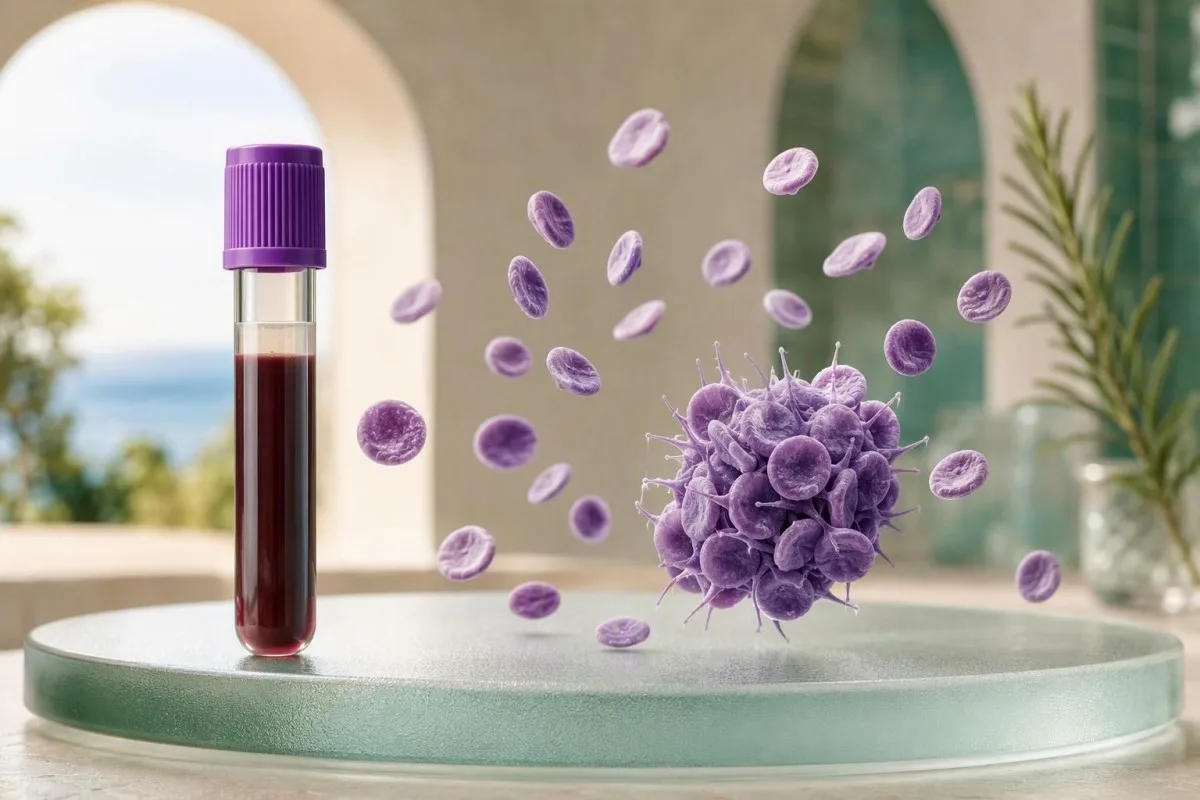
Nizak broj trombocita može povremeno biti pogreška mjerenja povezana s epruvetom, a ne problem unutar vašeg tijela. Evo kako se pseudotrombocitopenija povezana s EDTA-om identificira prije nego što vam se dijagnosticira trombocitopenija.


- Pseudotrombocitopenija je lažno nizak broj trombocita uzrokovan zgrudnjavanjem trombocita nakon uzimanja, najčešće u EDTA epruveti.
- Tipični raspon trombocita za većinu odraslih osoba koje nisu trudne iznosi približno 150-450 × 10⁹/L, iako laboratoriji postavljaju vlastite intervale.
- Nakupine trombocita na razmazu mogu uzrokovati da automatski analizator podcijeni broj trombocita jer se skupina ne mjeri kao odvojene stanice.
- Ponovno uzimanje krvi s citratom često rješava zgrudnjavanje trombocita u EDTA-i; laboratoriji obično primjenjuju korekciju razrjeđenja od 1,1 na broj trombocita s citratom.
- Nema simptoma krvarenja plus neočekivano izolirani niski broj trombocita treba potaknuti pregled razmaza prije liječenja ili odluka o hitnom upućivanju.
- Prava trombocitopenija se može javiti istodobno s aglutinacijom trombocita u EDTA-i, stoga je normalan rezultat iz citrata umirujući, ali mora odgovarati kliničkoj slici.
- Potrebna je hitna procjena je još uvijek potrebna kod nekontroliranog krvarenja, novih raširenih petehija, jake glavobolje, konfuzije ili broja trombocita ispod 10 × 10⁹/L.
Što zapravo znači zgrudnjavanje trombocita u EDTA-i
Aglutinacija trombocita u EDTA-i je in-vitro laboratorijski artefakt pri kojem se trombociti lijepe zajedno u epruveti za uzorkovanje, uzrokujući lažno nizak automatski broj trombocita. Sama po sebi ne znači da se trombociti uništavaju u tijelu i obično ne stvara rizik od krvarenja.
EDTA je dodatak u epruveti s ljubičastim čepom koji se koristi za većinu kompletne krvne slike jer veže kalcij i sprječava koagulaciju. U malom podskupu ljudi, uklanjanje kalcija otkriva površinske ciljeve trombocita koji omogućuju prirodno prisutnim protutijelima da povežu trombocite. Analizator može brojati klaster trombocita kao jednu veliku česticu, događaj veličine bijele krvne stanice ili ništa; pogledajte naš pregled što uključuje CBC.
U svom kliničkom radu, klasičan nalaz je broj trombocita od 48 × 10⁹/L kod osobe koja se osjeća potpuno dobro, nema modrica i ima normalan broj hemoglobina i bijelih krvnih stanica. Ta nesrazmjernost nije dokaz, ali je trenutak za zastoj. Kantesti je Analizator krvnih testova s umjetnom inteligencijom koji označava izolirani nizak broj trombocita uz laboratorijske komentare poput agregata trombocita, umjesto da se broj smatra dijagnozom.
Pseudotrombocitopenija ovisna o EDTA-i procjenjuje se na otprilike 0,03-0,27% rutinskih uzoraka ambulantnih pacijenata, s višim stopama među uzorcima koji su već upućeni zbog niskog broja trombocita. Lippi i kolege opisuju je kao klinički neopasnu, ali potencijalno konzekventnu preanalitičku pojavu jer može pokrenuti nepotrebne hospitalizacije, transfuzije trombocita ili terapiju steroidima (Lippi et al., 2012).
Kako analizatori trombocita mogu podcijeniti zgrudnute uzorke
Automatski brojači trombocita pouzdani su za raspršene trombocite, ali klasteri padaju izvan očekivanih veličina i obrazaca signala analizatora. Broj se stoga može smanjiti s istinskih 220 × 10⁹/L na prividnih 40 × 10⁹/L bez ikakvog biološkog gubitka trombocita.
Impedancijski analizatori klasificiraju čestice uglavnom prema volumenu, dok optički sustavi dodaju informacije o raspršenju svjetlosti. Trombocit je obično širok oko 2-3 mikrometra, ali klaster može preklapati s fragmentom crvenih krvnih stanica ili područjem leukocita. Zato histogram trombocita može biti abnormalan i zašto laboratorij može dodati “prisutni klasteri trombocita” ili “broj nepouzdan.”
Zastavica (flag) analizatora za trombocite je poticaj za ljudsku reviziju, a ne konačna dijagnoza. Ručna procjena iz dobro napravljenog razmaza periferne krvi može biti korisnija od ponavljanja iste EDTA epruvete, posebno ako je uzorak stajao 2 sata prije analize. Za praktične pragove oko postupaka, naš vodič za brojeve trombocita prije vađenja zuba objašnjava zašto provjereni rezultat ima važnost.
Veliki trombociti stvaraju drugačiji, ponekad preklapajući problem. Vrlo veliki pojedinačni trombociti mogu se promašiti impedancijskim metodama čak i bez vidljivih klastera, često povećavajući srednji volumen trombocita (MPV). Visoki MPV nije zamjenjiv s pseudotrombocitopenijom; naš pregled uzroka velikih trombocita razdvaja ova dva nalaza.
Kako izgledaju nakupine trombocita na razmazu
Klasteri trombocita na razmazu izgledaju kao nepravilne grozdaste nakupine malih ljubičastih zrnastih elemenata, često koncentriranih na zašiljenom rubu stakalca. Njihovo mjesto je važno jer brojanje samo srednjeg polja razmaza može promašiti upravo značajku koja objašnjava niski rezultat.
Obučeni morfolog provjerava tijelo i rep razmaza pod velikim povećanjem, a ne samo jedno reprezentativno polje. Trombocitni satelitizam je rjeđi obrazac povezan s EDTA-om pri kojem trombociti okružuju neutrofile poput rozete; također može smanjiti prijavljeni broj trombocita. Oba nalaza su pojave uzorka, iako se satelitizam i široki agregati mogu povremeno javiti zajedno.
Jedan koristan detalj je da se aglutinacija u EDTA-i često pojačava s vremenom. Uzorak mjeren 10 minuta nakon uzimanja može pokazati 118 × 10⁹/L, zatim 42 × 10⁹/L nakon 90 minuta kako nastaju novi agregati. Laboratoriji se razlikuju u svom radnom tijeku, stoga normalan početni broj ne isključuje u potpunosti ovaj artefakt ako se kasnije pojavi zastavica analizatora.
Kada ja, Thomas Klein, MD, vidim nizak broj trombocita popraćen komentarom razmaza, ali bez kliničkog krvarenja, tražim stvarnu interpretaciju razmaza prije raspravljanja o imunoj trombocitopeniji. Slično razmišljanje "prvo mikroskopija" korisno je kada izvješće spominje Shistocite na krvnom razmazu
, iako shistociti zahtijevaju mnogo hitniji klinički kontekst.
.Zašto EDTA uzrokuje zgrudnjavanje trombocita kod nekih ljudi
EDTA može potaknuti aglutinaciju trombocita keliranjem kalcija i promjenom oblika glikoproteina membrane trombocita, dopuštajući antitijelima da se vežu i premoste susjedne trombocite. Ova reakcija nastaje nakon uzimanja uzorka, a ne zato što je EDTA oštetio cirkulirajuće trombocite unutar tijela.
Najbolje potkrijepljeni mehanizam uključuje antitijela, često IgG, IgM ili IgA, koja prepoznaju skrivena mjesta na kompleksu GPIIb/IIIa trombocita nakon strukturne promjene ovisne o kalciju. Reakcija je kod nekih bolesnika ovisna o temperaturi i vremenu, što objašnjava zašto zagrijani uzorak povremeno može poboljšati brojanje, ali nije univerzalni lijek. To je problem laboratorijske kompatibilnosti, a ne alergija na EDTA.
Pseudotrombocitopenija se može pojaviti kod zdravih osoba i prijavljena je uz autoimune bolesti, infekcije, malignitet i trudnoću, ali te povezanosti ne utvrđuju uzročnost kod pojedinca. Pozitivan ANA ili nedavna virusna bolest ne bi se smjeli koristiti za objašnjenje broja dok se artefakt ne isključi. Kantesti je Platforma za tumačenje krvnih nalaza pomoću AI-a
koji čita rezultat trombocita zajedno s vrstom epruvete, signalima analizatora i ostatkom CBC-a, a ne izolirano.
.Fenomen može trajati godinama, ali varirati između uzimanja uzoraka. Pacijent može imati broj trombocita od 35 × 10⁹/L u EDTA u ponedjeljak i 230 × 10⁹/L u citratu istog jutra, a zatim pokazati djelomičnu aglutinaciju ponovno mjesecima kasnije. Zapisivanje preferirane epruvete u laboratorijski zapisnik može spriječiti ponovljene alarme.
Kako ponovno uzimanje krvi s citratom potvrđuje pseudotrombocitopeniju
Broj trombocita koji se normalizira u epruveti sa natrijevim citratom, dok epruveta s EDTA sadrži agregate, snažno podupire pseudotrombocitopeniju ovisnu o EDTA. Broj trombocita u citratu zahtijeva korekciju razrjeđenja jer epruveta sadrži tekući antikoagulans.
Epruvete s plavim čepom od natrijevog citrata općenito se pune omjerom krvi i antikoagulansa 9:1. Mnogi laboratoriji množe izmjereni broj trombocita u citratu s 1,1 kako bi korigirali razrjeđenje, iako prednost ima validirana metoda lokalnog laboratorija. Na primjer, sirovi rezultat u citratu od 182 × 10⁹/L postaje oko 200 × 10⁹/L nakon korekcije.
Ponovno uzimanje uzorka mora biti pravilno napunjeno i nježno izmiješano. Nedovoljno napunjena epruveta s citratom mijenja omjer antikoagulansa i može stvoriti drugačiji pogrešan rezultat, što je jedan od razloga zašto laboratorijski tehničar može odbiti očito jednostavan ponovni uzorak. Naše objašnjenje boja epruveta za vađenje krvi
pomaže pacijentima razumjeti zašto je odabir epruvete dio metode ispitivanja.
.Epruvete s magnezijevim sulfatom ili epruvete s otopinom acid-citrat-dekstroze mogu biti korisne kada aglutinacija perzistira u citratu, ali to je obično odluka laboratorija. Nagler i suradnici dokumentirali su slučaj u kojem je prepoznavanje pseudotrombocitopenije ovisne o EDTA izbjeglo nepotrebnu dijagnostičku obradu nakon što je testiranje citratom pokazalo adekvatan broj (Nagler et al., 2014).
Kada ponovno uzimanje krvi s citratom ne razjašnjava pitanje
Ponovno uzimanje uzorka citratom ne isključuje pravu trombocitopeniju kada korigirani broj ostane nizak, aglutinacija se pojavi u više od jednog antikoagulansa ili simptomi ukazuju na krvarenje. Neki pacijenti imaju agregaciju trombocita u više antikoagulanasa, a neki imaju stvarni nizak broj uz artefakt.
Ako je korigirani broj trombocita u citratu 82 × 10⁹/L, a razmaz bez aglutinata, to je prava trombocitopenija dok se ne dokaže suprotno. Ako je EDTA 25 × 10⁹/L, a citrat 86 × 10⁹/L s rezidualnim agregatima, mogu biti prisutni i artefakt i pravo smanjenje. Klinički tim trebao bi koristiti najbolju provjerenu procjenu, a ne jednostavno odabrati umirujući broj.
Zgrušavanje u uzorku također može poništiti CBC jer se trombociti troše unutar mikrougruška. Za razliku od pseudotrombocitopenije uzrokovane EDTA, djelomično zgrušani uzorak može utjecati i na bijele krvne stanice i na eritrocitne indekse. Pročitajte naš vodič za ponovno uzimanje uzoraka nakon problema s uzorkom
za praktične razlike između artefakata uzimanja uzorka.
.Uzorci iz uboda prsta nisu automatski sigurniji. Sporo prikupljanje, cijeđenje ili odgođeno miješanje mogu potaknuti lokalnu agregaciju i ugroziti broj trombocita, osobito kada je prijavljena vrijednost ispod 100 × 10⁹/L. Vensko ponovno prikupljanje s promptnom obradom obično je čišći put za potvrdu.
Rasponi broja trombocita, rizik od krvarenja i zamka artefakta
Većina laboratorija za odrasle koristi referentni interval broja trombocita blizu 150-450 × 10⁹/L, ali rizik od krvarenja ovisi o potvrđenom broju, njegovom uzroku, funkciji trombocita i lijekovima. Lažno nizak rezultat iz EDTA ne smije se koristiti samostalno za odbijanje postupka ili propisivanje liječenja.
Spontano jako krvarenje postaje vjerojatnije kako se stvarni broj trombocita smanjuje ispod oko 10 × 10⁹/L, dok mnogi ljudi sa stabilnim brojem iznad 50 × 10⁹/L imaju malo spontanog krvarenja. Ovo su široki klinički pokazatelji, a ne dopuštenje za ignoriranje simptoma. Antikoagulansi, aspirin, bolest jetre, zatajenje bubrega i disfunkcija trombocita mogu promijeniti rizik pri bilo kojem broju.
Broj trombocita od 90 × 10⁹/L zaslužuje drugačiji pristup kod zdrave osobe s normalnim rezultatom citrata nego kod nekoga s novom melenom i povišenim INR. Zato interpretacija broja trombocita pripada pored testiranja koagulacije; naš aPTT i test zgrušavanja vode objašnjava što normalni probir zgrušavanja može, a što ne može isključiti.
Laboratoriji mogu koristiti 140 × 10⁹/L umjesto 150 × 10⁹/L kao donju referentnu granicu, osobito s lokalno izvedenim intervalima. Referentni interval opisuje 95% usporedne populacije; ne definira univerzalni prag liječenja. Ova razlika štedi iznenađujuću količinu nepotrebne brige.
CBC uzorci koji čine artefakt vjerojatnijim
Izolirani neočekivano nizak broj trombocita s normalnim hemoglobinom, bijelim krvnim stanicama i napomenom o aglutinaciji je obrazac CBC-a koji najviše sugerira pseudotrombocitopeniju. Ovaj obrazac je sugestivan, a ne dijagnostički, jer rana imuna ili lijekom izazvana trombocitopenija također može biti izolirana.
Prave bolesti koštane srži često utječu na više od jedne krvne loze, iako postoje iznimke. Nizak broj trombocita u kombinaciji s padom hemoglobina, abnormalnim bijelim krvnim stanicama, blasticima ili upornim općim simptomima zahtijeva promptni klinički pregled i često formalni pregled razmaza. Naš članak o CBC putu za bolesti krvi opisuje zašto ti klasteri mijenjaju hitnost.
Omjer trombocita i limfocita može postati besmislen kada je nazivnik valjan, ali je brojnik trombocita umjetno snižen. PLR od 60 izračunat iz EDTA-aglutininiranog broja ne treba tumačiti kao upalni ili kardiovaskularni signal. Ovo je tiha, ali česta sekundarna pogreška u automatiziranim zdravstvenim izvješćima; pogledajte naše objašnjenje povišenih PLR rezultata.
Kantesti AI identificira nesklad između niskog broja trombocita i normalnih susjednih CBC mjera, a zatim upućuje čitatelja da provjeri komentare uzorka. Alat za analizu krvnih nalaza uz pomoć AI-a nikada ne smije pretvoriti jednu nepotvrđenu vrijednost trombocita u dijagnozu bolesti. Ta klinička suzdržanost važnija je od brzine.
Trudnoća, bolnička njega i drugi visokorizični scenariji
EDTA aglutinacija trombocita može se pojaviti tijekom trudnoće i bolničke skrbi, ali se nikada ne smije pretpostaviti kada bi prava trombocitopenija mogla promijeniti hitno zbrinjavanje. Uzroci specifični za trudnoću poput gestacijske trombocitopenije, preeklampsije, HELLP sindroma i imunske trombocitopenije zahtijevaju provjereni broj trombocita.
Broj trombocita u nekompliciranoj trudnoći obično pada, a neke laboratorije prihvaćaju niže referentne granice specifične za trimestar. Broj ispod 100 × 10⁹/L manje je tipičan za nekompliciranu gestacijsku trombocitopeniju i zahtijeva pažljivu kliničku procjenu, čak i ako se vide agregati u EDTA uzorku. Naš vodič za referentne vrijednosti trombocita specifične za trimestar u trudnoći pruža kontekst bez zamjene akušerskog pregleda. referentni vodič za trombocite u trudnoći pruža kontekst bez zamjene akušerskog pregleda.
U bolnici, nagli pad veći od 50% od početne vrijednosti može postaviti pitanja o sepsi, izloženosti lijekovima, heparinom induciranoj trombocitopeniji, razrjeđenju ili potrošnji povezane s uređajem. EDTA artefakt može oponašati dramatičan pad, posebno kada je prethodni rezultat dobiven drugom laboratorijskom metodom. Uspoređivanje provjerenog citratnog rezultata s početnim vrijednostima pacijenta često je korisnije nego ponavljanje rutinskog CBC-a u EDTA uzorku.
Prije epiduralne anestezije, operacije, ciklusa kemoterapije ili transfuzije trombocita, pitajte je li laboratorij potvrdio vrijednost na razmazu ili s alternativnim antikoagulansom. Vidio sam kašnjenja u skrbi koja su izbjegnuta tim jednim telefonskim pozivom. Suprotno tome, aktivne simptome ili nestabilnog pacijenta treba procijeniti dok je potvrda u tijeku.
Lijekove i dijagnoze koje ne treba prebrzo kriviti
Aglutinaciju trombocita u EDTA uzorku treba isključiti prije pripisivanja izoliranog niskog broja trombocita lijeku, autoimunoj bolesti ili imunoj trombocitopeniji. Prekid vrijednog lijeka na temelju nepotvrđenog broja može uzrokovati štetu koja se može izbjeći.
Heparin, proizvodi koji sadrže kinin, trimetoprim-sulfametoksazol, valproat, linezolid, kemoterapija i neke imuno terapije mogu uzrokovati pravu trombocitopeniju. Vremenska veza je važna: stvarni pad povezan s lijekom obično perzistira u pravilno prikupljenom citratnom uzorku i ne nestaje kada se EDTA zamijeni. Povijest lijekova trebala bi uključivati injekcije, lijekove bez recepta i biljne pripravke.
Imuna trombocitopenija je dijagnoza isključenja, a ne laboratorijski pokazatelj. Može se prezentirati s izoliranim trombocitima ispod 100 × 10⁹/L, ali aglutiniran razmaz u EDTA uzorku čini početni broj neinterpretiranim. Lippi i suradnici (2012.) posebno upozoravaju da prepoznavanje pseudotrombocitopenije sprječava neprimjerene terapije poput kortikosteroida i splenektomije.
Ako se izvješće čini u suprotnosti s vašim prethodnim rezultatima, sačuvajte izvorni PDF i zabilježite datum prikupljanja, napomenu o epruveti, akutnu bolest i nove lijekove. Naš vodič za značajnim promjenama između krvnih pretraga objašnjava zašto brojčana razlika nije automatski biološka promjena.
Što pitati svoju laboratoriju ili kliničara sljedeće
Za neočekivano nizak broj trombocita, pitajte jesu li viđene aglutinacije trombocita, je li pregledan razmaz periferne krvi i može li se provesti broj trombocita s alternativnim antikoagulansom. Ta tri pitanja obično brže razjasne sljedeći korak nego pretraživanje simptoma na internetu.
Praktičan zahtjev je: “Može li laboratorij pregledati krvni razmaz na agregate trombocita i, ako je potrebno, ponoviti broj trombocita u citratu?” Ovo ne zahtijeva određenu dijagnozu; to je molba da se mjerenje validira. Ako je uzorak prikupljen drugdje, liječnik će možda morati naručiti novo vađenje krvi umjesto dodavanja testiranja u staru epruvetu.
Zatražite ispravljen citratni rezultat i jesu li aglutinacije prisutne u toj epruveti. Sirovi rezultat od 145 × 10⁹/L može izgledati granično dok korekcija razrjeđenja ne da približno 160 × 10⁹/L. Također pitajte je li laboratorij koristio optički ili fluorescencijski brojač trombocita, jer te metode ponekad poboljšavaju brojanje u složenim uzorcima.
radni tijek tumačenja Kantesti iz 2026. potiče korisnike na usporedbu brojčanog rezultata s laboratorijskim narativom i poljima s oznakama prije poduzimanja radnji na temelju upozorenja. Za širi sigurnosni okvir, naš kontrolni popis točnosti AI izvještaja pokriva transkripciju, jedinice, referentne raspona i provjeru rezultata.
Što ne raditi dok čekate potvrdu
Nemojte započinjati s dodacima, prestati uzimati propisane lijekove ili pretpostaviti da imate poremećaj krvarenja samo zato što je jedan EDTA brojač trombocita nizak. Istodobno, nemojte zanemariti aktivno krvarenje samo zato što se sumnja na aglutinaciju.
Ne postoji dijeta, vitamin ili kućni lijek koji ispravlja EDTA-ovisnu pseudotrombocitopeniju jer se trombociti aglutiniraju u epruveti, a ne propadaju unutar tijela. Nedostatak folata, vitamina B12 i željeza može utjecati na stvaranje krvi u drugim situacijama, ali dodaci prehrani ne mogu potvrditi upitan broj. Liječenje artefakta odnosi se na prikupljanje i analizu.
Izbjegavajte neesencijalni aspirin, ibuprofen, naproksen i teški unos alkohola dok kliničar ne razjasni vrlo nizak prijavljeni broj trombocita, posebno ako se lako modricate. Nemojte prestati uzimati antikoagulanse, antiplateletne lijekove, lijekove protiv napadaja ili kemoterapiju bez savjeta liječnika; indikacija za te lijekove može nositi veći neposredni rizik od neprovjerenog rezultata.
Vođenje sažetog vremenskog okvira rezultata može promijeniti termin. Naš vodič za praćenje laboratorijskih rezultata predlaže bilježenje vremena uzimanja uzorka, nedavne bolesti, lijekova, komentara uzorka i je li rezultat dobiven iz EDTA ili citrata.
Crvene zastavice koje zahtijevaju hitnu medicinsku procjenu
Potražite hitnu medicinsku procjenu za nekontrolirano krvarenje, crnu stolicu, povraćanje krvi, jaku novu glavobolju, zbunjenost, nesvjesticu ili rašireni točkasti osip, čak i ako se sumnja na aglutinaciju EDTA. Laboratorijski artefakt i istinska hitna situacija mogu postojati istovremeno.
Pravi broj trombocita ispod 10 × 10⁹/L općenito se smatra hitnim rezultatom jer se rizik od spontanog krvarenja iz sluznice i unutarnjeg krvarenja znatno povećava. Broj ispod 20 × 10⁹/L s novim krvarenjem, vrućicom, teškom hipertenzijom, komplikacijama trudnoće ili nedavnom izloženošću heparinu također zaslužuje unos kliničara isti dan. Lokalni savjeti za hitne slučajeve trebaju imati prednost nad bilo kakvom online interpretacijom.
Novi neurološki simptomi su posebno značajni jer je intrakranijalno krvarenje rijetko, ali ozbiljno. Nemojte sami voziti ako imate jaku glavobolju s slabošću, promjenom govora, kolapsom ili zbunjenošću. Kod djece, nebljedljivi osip s vrućicom zahtijeva hitnu procjenu bez obzira na rezultat trombocita.
Thomas Klein, MD, savjetuje pacijente da odvoje pitanje “Je li ovaj broj točan?” od “Je li ova osoba danas sigurna?” Prvo obično zahtijeva razmaz i ponovno uzimanje uzorka u citratu; drugo ovisi o simptomima, nalazima pregleda i cjelokupnoj kliničkoj slici. Naš vodič za drugo mišljenje za krvne pretrage može pomoći u pripremi fokusirane rasprave nakon rješavanja hitnih pitanja.
Kako Kantesti sigurno tumači označen broj trombocita
Kantesti AI tretira nizak broj trombocita s komentarima o aglutinaciji EDTA kao signal za provjeru, a ne kao dokaz trombocitopenije. Naša interpretacija stavlja zastavice analizatora, ostale CBC linije, prethodne vrijednosti i prijavljene simptome ispred pojednostavljene crveno-zelene oznake.
Kantesti je usluzi za tumačenje laboratorijskih testova AI dizajniran za objašnjavanje laboratorijskih podataka jednostavnim jezikom, zadržavajući pritom ograničenja izvornog izvješća. Ako učitani PDF navodi “aglutinacija trombocita”, naš sustav bi trebao obavijestiti korisnika da broj može biti lažno nizak i da ga laboratorij ili kliničar mogu potvrditi pregledom razmaza ili uzorkom u citratu.
Optičko prepoznavanje znakova može pogrešno pročitati decimalnu točku, jedinicu ili laboratorijsku fusnotu. Zato bi pacijenti trebali pregledati pretpregled slike prije nego se oslone na bilo koju digitalnu interpretaciju, posebno oko vrijednosti poput 18 u odnosu na 180 × 10⁹/L. Naš kontrolnom popisu kvalitete za prijenos PDF-a objašnjava nekoliko provjera koje sprječavaju većinu izbježnih pogrešaka.
Klinički nadzor ostaje ljudski posao. Metodologija Kantesti-a pregledava se u odnosu na radne procese usmjerene na sigurnost; čitatelji koji žele razumjeti naš pristup mogu pregledati naš tehnička validacija i klinički nadzor. AI može učinkovito organizirati pitanja, ali ne može pregledati stvarni razmaz niti procijeniti aktivno krvarenje.
Praktični plan praćenja nakon zgrudnjavanja trombocita u EDTA-i
Uobičajeni plan praćenja je dokumentirati EDTA artefakt, dobiti provjereni alternativni broj trombocita iz tube i koristiti taj rezultat za buduće kliničke odluke. Većina ljudi ne treba liječenje samog artefakta nakon što laboratorij utvrdi obrazac.
Zatražite od laboratorija da zabilježi “aglutinacija trombocita ovisna o EDTA-i” ili ekvivalentni tekst ako je potvrda jasna. Kod budućih uzimanja uzoraka, tim za flebotomiju može prikupiti citratnu epruvetu uz rutinski EDTA CBC, čime se štedi drugi termin. Ovo je posebno korisno prije operacije, tijekom trudnoće ili kada protokol liječenja ima pragove za trombocite.
Provjerena osnovna vrijednost vrjednija je od ponovljenih neprovjerenih niskih vrijednosti. Ako je vaš korigirani citratni broj stabilan na 205 × 10⁹/L tijekom 12 mjeseci, buduća EDTA vrijednost od 55 × 10⁹/L s agregatima puno je manje alarmantna nego isti broj kod nekoga bez prethodne dokumentacije. Trendovi su korisni samo kada je metoda ispitivanja usporediva.
Kantesti je podržao više od 2 milijuna korisnika u 127+ zemalja s višejezičnim laboratorijskim objašnjenjima, ali rezultati i dalje pripadaju odnosu skrbi s vašim kliničarem. Naši medicinski recenzenti i Medicinski savjetodavni odbor naglašavaju isto konačno pravilo: prvo provjerite broj trombocita, a zatim odlučite što - ako išta - treba liječenje.
Istraživačke publikacije
Od 29. kolovoza 2026. dva istraživačka rada Kantesti navedena u nastavku služe kao dopunska obrazovna sredstva. Oni ne uspostavljaju dijagnozu EDTA-ovisne pseudotrombocitopenije; laboratorijski razmaz i brojanje trombocita alternativnim antikoagulansom ostaju relevantni alati za potvrdu.
Često postavljana pitanja
Može li agregacija trombocita izazvana EDTA uzrokovati vrlo nizak broj trombocita?
Da. Aglutinacija trombocita u EDTA-i može uzrokovati značajno lažno nisku vrijednost broja trombocita, ponekad ispod 50 × 10⁹/L, kada je stvarni broj cirkulirajućih trombocita osobe normalan. Analizator podcjenjuje agregate trombocita jer ne može pouzdano prepoznati svaki trombocit unutar nakupine. Periferna krvna razmaz pokazujući agregate i normalan korigirani citratni broj snažno podupiru pseudotrombocitopeniju. Rezultat bi se i dalje trebao hitno pregledati ako postoji aktivno krvarenje ili ako citratni broj ostaje nizak.
Kako se potvrđuje pseudotrombocitopenija?
Pseudotrombocitopenija se obično potvrđuje pregledom razmaza periferne krvi na nakupine trombocita i ponavljanjem broja trombocita u epruveti sa natrijevim citratom. Epruvete s citratom sadrže tekući antikoagulans, pa mnogi laboratoriji množe izmjereni broj trombocita s 1,1 kako bi uzeli u obzir razrjeđivanje. Na primjer, sirovi citratni broj od 180 × 10⁹/L uobičajeno se prijavljuje kao približno 198 × 10⁹/L nakon korekcije. Validirana korekcija i interpretacija razmaza lokalnog laboratorija trebaju voditi konačni rezultat.
Znači li aglutinacija trombocita u EDTA da imam poremećaj krvarenja?
Ne. Sljepljivanje trombocita u EDTA epruveti samo je artefakt in vitro uzorka i ne znači da imate poremećaj krvarenja ili da vam se trombociti sljepljuju u cirkulaciji. Većina zahvaćenih osoba nema simptome krvarenja i ima provjeren broj trombocita unutar uobičajenog odraslog intervala od oko 150-450 × 10⁹/L. Kliničar bi i dalje trebao istražiti simptome krvarenja, abnormalne testove koagulacije ili uporno nizak broj trombocita u citratu. Artefakt ne štiti osobu od nepovezanih rizika krvarenja uzrokovanih lijekovima ili medicinskim stanjima.
Može li do zgrudnjavanja trombocita doći i u citratu?
Da, iako natrijev citrat često sprječava zgrudnjavanje povezano s EDTA-om, agregacija trombocita se povremeno može zadržati u citratu ili se javiti s više antikoagulansa. U toj situaciji, laboratorij može koristiti optički ili fluorescencijski broj trombocita, brzu toplinsku obradu, magnezijev sulfat ili acid-citrat-dekstrozu ovisno o svojim validiranim protokolima. Ispravljeni broj trombocita u citratu ispod 150 × 10⁹/L bez agregata treba smatrati mogućom pravom trombocitopenijom. Zgrudnjavanje s više antikoagulansa je rijetko i zahtijeva potvrdu vođenu laboratorijem.
Trebam li ponoviti broj trombocita ako u nalazu piše da postoje aglomerati trombocita?
Da. Izvješće koje navodi da su trombocitni aglomerati, agregati trombocita ili nepouzdani broj trombocita općenito opravdavaju provjeru, a ne prihvaćanje brojčanog rezultata. Uobičajeno ponovno testiranje je svježe prikupljeni uzorak natrijevog citrata s pregledom razmaza, po mogućnosti obrađen odmah. Ako je izvorni broj ispod 10 × 10⁹/L ili imate nekontrolirano krvarenje, crnu stolicu, jaku glavobolju ili zbunjenost, potražite hitnu medicinsku pomoć dok se organizira potvrda. Nemojte mijenjati propisane lijekove bez savjeta liječnika koji zna zašto su propisani.
Može li EDTA pseudotrombocitopenija nestajati i pojavljivati se?
Da. EDTA pseudotrombocitopenija može biti dugotrajna godinama ili se pojavljivati povremeno jer stupanj aglutinacije ovisi o vremenu nakon uzimanja uzorka, temperaturi uzorka i metodi analizatora. Jedan EDTA uzorak može pokazati 70 × 10⁹/L, dok drugi uzet drugog dana pokazuje 145 × 10⁹/L, unatoč stabilnom stvarnom broju trombocita. Dokumentirani normalni citratni broj pruža korisnu referentnu vrijednost za buduću usporedbu. Traženje od laboratorija da zabilježi preferirani antikoagulant može spriječiti ponovljene lažne uzbune.
Isprobajte analizu krvne slike uz AI već danas
Pridružite se više od 2 milijuna korisnika diljem svijeta koji vjeruju Kantesti-u za trenutačnu i točnu analizu laboratorijskih nalaza. Prenesite svoje rezultate krvne slike i dobijte sveobuhvatno tumačenje 15,000+ biomarkera u sekundama.
📚 Referirane znanstvene publikacije
Klein, T., Mitchell, S., & Weber, H. (2026). Kantesti AI. (2026). Vodič za C3 C4 komplement u krvi i ANA titar. Zenodo. https://doi.org/10.5281/zenodo.18353989. Kantesti AI Medical Research.
Klein, T., Mitchell, S., & Weber, H. (2026). Kantesti AI. (2026). Vodič za testiranje krvi na virus Nipah: rano otkrivanje i dijagnoza 2026. Zenodo. https://doi.org/10.5281/zenodo.18487418. Kantesti AI Medical Research.
📖 Vanjske medicinske reference
⚕️ Medicinska izjava o odricanju odgovornosti
Ovaj je članak samo u obrazovne svrhe i ne predstavlja medicinski savjet. Za odluke o dijagnozi i liječenju uvijek se posavjetujte s kvalificiranim pružateljem zdravstvenih usluga.
E-E-A-T signal(i) povjerenja
Iskustvo
Liječnički vođena klinička revizija radnih tokova tumačenja laboratorijskih nalaza.
Stručnost
Fokus laboratorijske medicine na to kako se biomarkeri ponašaju u kliničkom kontekstu.
Autoritativnost
Napisao dr. Thomas Klein, uz recenziju dr. Sarah Mitchell i prof. dr. Hans Weber.
Pouzdanost
Tumačenje utemeljeno na dokazima, s jasnim putovima praćenja kako bi se smanjila uzbuna.