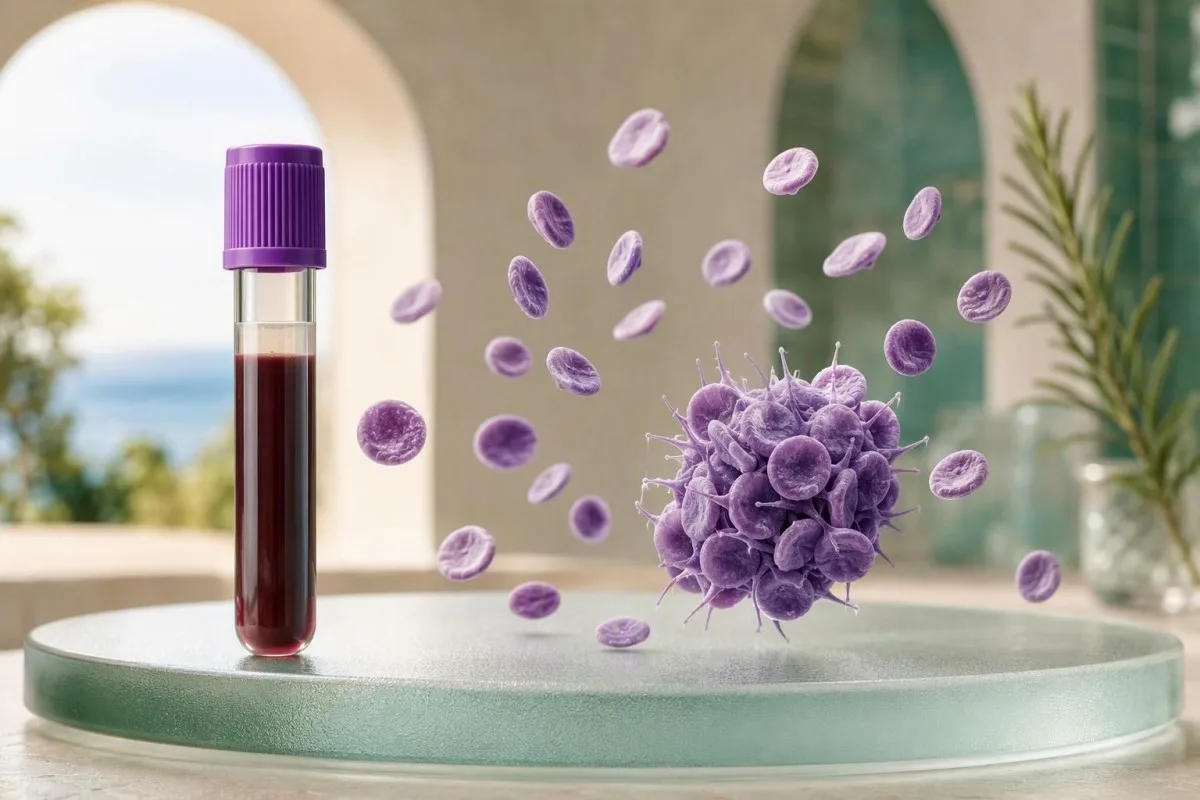
Nizak broj trombocita ponekad može biti greška u merenju u epruveti, a ne problem unutar vašeg tela. Evo kako se pseudotrombocitopenija povezana sa EDTA otkriva pre nego što vam se dijagnostikuje trombocitopenija.


- Pseudotrombocitopenija je lažno nizak broj trombocita uzrokovan aglutinacijom trombocita nakon uzimanja uzorka, najčešće u EDTA epruveti.
- Типичан опсег тромбоцита za većinu odraslih osoba koje nisu trudne je približno 150-450 × 10⁹/L, iako laboratorije postavljaju svoje intervale.
- Aglutinacije trombocita na razmazu mogu dovesti do toga da automatski analizator pogrešno izmeri smanjeni broj trombocita jer se nakupina ne meri kao zasebne ćelije.
- Ponovljeno uzimanje krvi sa citratom često rešava problem aglutinacije trombocita izazvane EDTA; laboratorije obično primenjuju korekciju razblaženja od 1,1 na broj trombocita dobijen sa citratom.
- Nema simptoma krvarenja uz neočekivano izolovan nizak broj trombocita treba da podstakne pregled razmaza pre donošenja odluka o lečenju ili hitnom upućivanju.
- Prava trombocitopenija se može javiti istovremeno sa aglutinacijom trombocita u EDTA-i, tako da je normalan rezultat dobijen citratom umirujuć, ali mora odgovarati kliničkoj slici.
- Потребна је хитна процена je još uvek potreban kod nekontrolisanog krvarenja, novih, raširenih petehija, jakih glavobolja, konfuzije ili broja trombocita ispod 10 × 10⁹/L.
Šta zapravo znači aglutinacija trombocita izazvana EDTA
Aglutinacija trombocita u EDTA-i je in vitro laboratorijski artefakt pri kojem se trombociti slepe u epruveti za uzorkovanje, što uzrokuje lažno nizak automatski broj trombocita. Sama po sebi ne znači da se trombociti uništavaju u telu i obično ne stvara rizik od krvarenja.
EDTA je aditiv u epruveti sa ljubičastim čepom koji se koristi za većinu kompletne krvne slike jer vezuje kalcijum i sprečava koagulaciju. Kod malog broja ljudi, uklanjanje kalcijuma izlaže površinske ciljeve na trombocitima koji omogućavaju prirodno prisutnim antitijelima da povežu trombocite. Analizator može brojati klaster trombocita kao jednu veliku česticu, događaj veličine bele krvne ćelije, ili uopšte ništa; pogledajte naš pregled šta obuhvata CBC.
U svom kliničkom radu, klasičan nalaz je broj trombocita od 48 × 10⁹/L kod nekoga ko se oseća potpuno dobro, nema modrice i ima normalan hemoglobin i broj belih krvnih zrnaca. Ta nesaglasnost nije dokaz, ali je trenutak za zastoj. MPV je АИ анализатор крви koji signalizira izolovan nizak broj trombocita uz laboratorijske komentare kao što su agregati trombocita, umesto da se broj tretira kao dijagnoza.
Procenjuje se da EDTA-zavisna pseudotrombocitopenija javlja u otprilike 0,03-0,27% rutinskih uzoraka ambulantnih pacijenata, sa višim stopama među uzorcima već upućenim zbog niskog broja trombocita. Lippi i kolege to opisuju kao klinički bezopasan, ali potencijalno konsekventan pre-analitički fenomen jer može dovesti do nepotrebnih prijema u bolnicu, transfuzija trombocita ili steroidne terapije (Lippi et al., 2012).
Kako analizatori trombocita mogu pogrešno izmeriti smanjeni broj aglutiniranih uzoraka
Automatski brojači trombocita su pouzdani za raspršene trombocite, ali klasteri padaju izvan očekivanih veličina i obrazaca signala analizatora. Broj se stoga može smanjiti sa stvarnih 220 × 10⁹/L na prividnih 40 × 10⁹/L bez ikakvog biološkog gubitka trombocita.
Impedancioni analizatori klasifikuju čestice uglavnom po zapremini, dok optički sistemi dodaju informacije o rasejavanju svetlosti. Trombocit je obično prečnika oko 2-3 mikrometra, ali klaster može da se preklopi sa fragmentom eritrocita ili leukocita. Zato histogram trombocita može biti abnormalan i zašto laboratorija može dodati “prisutni klasteri trombocita” ili “broj nepouzdan”.”
Signal za trombocite analizatora je podsticaj za ljudsku proveru, a ne konačna dijagnoza. Ručna procena iz dobro napravljenog razmaza periferne krvi može biti korisnija od ponavljanja iste EDTA epruvete, posebno ako je uzorak stajao 2 sata pre analize. Za praktične pragove oko procedura, naš vodič za brojeve trombocita pre vađenja zuba objašnjava zašto je verifikovan rezultat važan.
Veliki trombociti stvaraju drugačiji, ponekad preklapajući problem. Veoma veliki pojedinačni trombociti mogu biti promašeni impedancionim metodama čak i bez vidljivih klastera, često povećavajući prosečnu zapreminu trombocita (MPV). Visok MPV nije zamenljiv sa pseudotrombocitopenijom; naš pregled uzroka velikih trombocita razdvaja ove dve pojave.
Kako izgledaju aglutinacije trombocita na razmazu
Klasteri trombocita u razmazu izgledaju kao nepravilne, grozdaste grupe malih ljubičastih granuliranih elemenata, često koncentrisane na zaobljenoj ivici stakalca. Njihova lokacija je bitna jer brojanje samo centralnog polja razmaza može promašiti upravo ono što objašnjava nizak rezultat.
Obučeni morfolog proverava telo i rep filma pod velikim uvećanjem, a ne samo jedno reprezentativno polje. Satelitizam trombocita je ređi EDTA-povezani obrazac pri kojem trombociti okružuju neutrofile poput rozete; takođe može sniziti prijavljeni broj trombocita. Obe pojave su artefakti uzorka, mada se satelitizam i široki agregati povremeno mogu javiti zajedno.
Jedan koristan detalj je da aglutinacija u EDTA-i često napreduje tokom vremena. Uzorak izmeren 10 minuta nakon sakupljanja može pokazati 118 × 10⁹/L, a zatim 42 × 10⁹/L nakon 90 minuta kako se formira više agregata. Laboratorije se razlikuju po svom radnom procesu, tako da normalan početni broj ne isključuje u potpunosti ovaj artefakt ako se kasnije pojavi signal analizatora.
Kada ja, Thomas Klein, MD, vidim nizak broj uz komentar na razmaz, ali bez kliničkog krvarenja, tražim stvarnu interpretaciju razmaza pre nego što razgovaram o imunoj trombocitopeniji. Slično rezonovanje zasnovano na mikroskopiji je korisno kada izveštaj pominje šizocite na razmazu krvi, iako šizociti zahtevaju mnogo hitniji klinički kontekst.
Zašto EDTA izaziva aglutinaciju trombocita kod nekih ljudi
EDTA može izazvati agregaciju trombocita keliranjem kalcijuma i promenom oblika glikoproteina membrane trombocita, omogućavajući antitela da se vežu i povežu susedne trombocite. Ova reakcija se javlja nakon uzorkovanja, a ne zato što je EDTA naškodio cirkulišućim trombocitima unutar tela.
Najbolje potkrepljeni mehanizam uključuje antitela, često IgG, IgM ili IgA, koja prepoznaju kriptična mesta na kompleksu GPIIb/IIIa trombocita nakon strukturne promene zavisne od kalcijuma. Reakcija je u nekim pacijentima zavisna od temperature i vremena, što objašnjava zašto zagrejani uzorak povremeno može poboljšati brojanje, ali nije univerzalno rešenje. To je laboratorijski problem kompatibilnosti, a ne alergija na EDTA.
Pseudotrombocitopenija se može javiti kod zdravih osoba i prijavljena je uz autoimune bolesti, infekcije, malignitet i trudnoću, ali te povezanosti ne uspostavljaju uzročnost kod pojedinca. POZITIVAN ANA ili nedavna virusna bolest ne bi trebalo da se koriste za objašnjenje broja dok se artefakt ne isključi. Kantesti je AI платформа за тумачење крвне слике koji čita rezultat trombocita sa svojom vrstom epruvete, analizatorskim zastavicama i ostatkom CBC-a, a ne izolovano.
Fenomen može trajati godinama, ali varirati između uzorkovanja. Pacijent može imati broj trombocita od 35 × 10⁹/L u EDTA u ponedeljak i 230 × 10⁹/L u citratu istog jutra, a zatim pokazati delimičnu agregaciju nekoliko meseci kasnije. Snimanje preferirane epruvete u laboratorijskom zapisu može sprečiti ponovljene alarme.
Kako ponovljeno uzimanje krvi sa citratom potvrđuje pseudotrombocitopeniju
Broj trombocita koji se normalizuje u epruveti sa natrijum citratom, dok epruveta sa EDTA sadrži agregate, snažno podržava EDTA-zavisnu pseudotrombocitopeniju. Broj trombocita u citratu zahteva korekciju razblaženja jer epruveta sadrži tečni antikoagulant.
Epruvete sa natrijum citratom sa plavim čepom se generalno pune u odnosu krv-antikoagulant 9:1. Mnoge laboratorije množe izmereni broj trombocita u citratu sa 1.1 da bi korigovale razblaženje, iako lokalna validirana metoda laboratorije ima prednost. Na primer, sirovi rezultat u citratu od 182 × 10⁹/L postaje oko 200 × 10⁹/L nakon korekcije.
Ponovno uzorkovanje mora biti pravilno napunjeno i nežno izmešano. Nedovoljno napunjena epruveta sa citratom menja odnos antikoagulansa i može stvoriti drugačiji pogrešan rezultat, što je jedan od razloga zašto laboratorijski tehničar može odbaciti naizgled jednostavno ponavljanje. Naše objašnjenje boja epruveta za vađenje krvi pomaže pacijentima da prepoznaju zašto je izbor epruvete deo metode testiranja.
Epruvete sa magnezijum sulfatom ili acid-citrat-dekstrozom mogu biti korisne kada agregacija traje u citratu, ali ovo je obično odluka laboratorije. Nagler i saradnici dokumentovali su slučaj u kojem je prepoznavanje EDTA-zavisne pseudotrombocitopenije izbeglo nepotrebno dijagnostičko ispitivanje nakon što je citratno testiranje pokazalo adekvatan broj (Nagler et al., 2014).
Kada ponovljeno uzimanje krvi sa citratom ne rešava problem
Ponovno uzorkovanje u citratu ne isključuje pravu trombocitopeniju kada korigovani broj ostaje nizak, agregacija se javlja u više od jednog antikoagulansa, ili simptomi ukazuju na krvarenje. Neki pacijenti imaju agregaciju trombocita u više antikoagulanasa, a neki imaju pravi nizak broj uz artefakt.
Ako je korigovani broj trombocita u citratu 82 × 10⁹/L, a razmaz je bez agregata, to je prava trombocitopenija dok se ne dokaže suprotno. Ako je EDTA 25 × 10⁹/L, a citrat 86 × 10⁹/L sa zaostalim agregatima, mogu prisustvovati i artefakt i prava redukcija. Klinički tim treba da koristi najbolju proverenu procenu, a ne da jednostavno bira umirujući broj.
Koagulacija u uzorku takođe može učiniti CBC nevažećim jer se trombociti troše unutar mikrougruška. Za razliku od EDTA pseudotrombocitopenije, delimično koagulisan uzorak može uticati i na bele krvne ćelije i na indekse crvenih krvnih zrnaca. Pročitajte naš vodič za ponovno uzorkovanje nakon problema sa uzorkom za praktične razlike između artefakata prikupljanja.
Убоди прстом нису аутоматски сигурнији. Споро прикупљање, стискање или одложено мешање могу подстаћи локалну агрегацију и компромитовати број тромбоцита, посебно када је пријављена вредност испод 100 × 10⁹/Л. Поновно прикупљање вenske крви са брзом обрадом је обично чистији пут за потврду.
Opseg broja trombocita, rizik od krvarenja i zamka artefakta
Већина лабораторија за одрасле користи референтни интервал броја тромбоцита близу 150-450 × 10⁹/Л, али ризик од крварења зависи од потврђеног броја, његовог узрока, функције тромбоцита и лекова. Лажно низак EDTA резултат се не сме користити сам за одбијање процедуре или прописивање терапије.
Спонтанa велика крварења постају вероватнијa како се прави број тромбоцита спушта испод око 10 × 10⁹/Л, док многи људи са стабилним бројевима изнад 50 × 10⁹/Л имају мало спонтаних крварења. Ово су широки клинички водичи, а не дозвола за игнорисање симптома. Антикоагуланси, аспирин, обољења јетре, бубрежна инсуфицијенција и дисфункција тромбоцита могу променити ризик при било ком броју.
Број тромбоцита од 90 × 10⁹/Л заслужује другачији третман код здраве особе са нормалним цитратним резултатом него код некога са новом меленом и повишеним INR. Зато тумачење броја тромбоцита припада коагулационом тестирању; наш aPTT и тест коагулације водич објашњава шта нормалан скрининг коагулације може, а шта не може искључити.
Лабораторије могу користити 140 × 10⁹/Л уместо 150 × 10⁹/Л као доњу референтну границу, посебно са локално изведеним интервалима. Референтни интервал описује 95% компаративне популације; он не дефинише универзални праг лечења. Ова разлика штеди изненађујућу количину непотребног бриге.
CBC obrasci koji povećavaju verovatnoću artefakta
Изоловани неочекивано низак број тромбоцита са нормалним хемоглобином, белим крвним зрнцима и коментаром о груписању је образац CBC-а који највише указује на псеудотромбоцитопенију. Овај образац је сугестиван, а не дијагностички, јер рана имуна или тромбоцитопенија повезана са лековима такође може бити изолована.
Права обољења коштане сржи често утичу на више од једне лозе крвних ћелија, иако постоје изузеци. Ниски тромбоцити у комбинацији са опадајућим хемоглобином, абнормалним белим крвним зрнцима, бластома или упорним конституционалним симптомима захтевају хитну клиничку процену и често формални преглед бриса. Наш чланак о CBC путањи за поремећаје крви објашњава зашто ови кластери мењају хитности.
Однос тромбоцита и лимфоцита може постати бесмислен када је именилац важећи, али је бројилац тромбоцита вештачки умањен. PLR од 60 израчунат из EDTA-груписаног броја не треба тумачити као инфламаторни или кардиоваскуларни сигнал. Ово је тиха, али уобичајена секундарна грешка у аутоматизованим здравственим извештајима; погледајте наше објашњење повишеног PLR резултата.
Kantesti AI идентификује неусклађеност између ниског броја тромбоцита и нормалних суседних CBC мера, а затим усмерава читаоца на проверу коментара узорка. Ан Алат за анализу крвних тестова уз помоћ AI никада не сме претворити једно не потврђено тромбоцитно вредност у дијагнозу болести. Та клиничка уздржаност је важнија од брзине.
Trudnoća, bolnička nega i drugi visoko rizični scenariji
EDTA тромбоцитно груписање се може јавити током трудноће и болничког лечења, али се никада не сме претпоставити када права тромбоцитопенија може променити хитни третман. Trudnoće-specifične dijagnoze kao što su gestacijska trombocitopenija, preeklampsija, HELLP sindrom i imuna trombocitopenija zahtevaju proveren broj trombocita.
Broj trombocita se obično smanjuje tokom nekomplikovane trudnoće, a neke laboratorije prihvataju niže referentne vrednosti specifične za trimestar. Broj trombocita ispod 100 × 10⁹/L je manje tipičan za nekomplikovanu gestacijsku trombocitopeniju i zahteva pažljivu kliničku procenu, čak i ako se vide agregati u EDTA uzorku. Naš vodič za referentne vrednosti trombocita po trimestrima u trudnoći daje kontekst bez zamene za akušerski pregled. Daje kontekst bez zamene za akušerski pregled.
U bolnici, nagli pad veći od 50% u odnosu na početni nivo može postaviti pitanja o sepsi, izloženosti lekovima, heparinom izazvanoj trombocitopeniji, razređenju ili potrošnji povezanim sa uređajem. EDTA artefakt može imitirati dramatičan pad, posebno kada je prethodni rezultat dobijen drugom laboratorijskom metodom. Poređenje potvrđenog citratnog rezultata sa početnim vrednostima pacijenta je često korisnije nego ponavljanje rutinske EDTA CBC analize.
Pre epiduralne anestezije, operacije, ciklusa hemioterapije ili transfuzije trombocita, pitajte da li je laboratorija potvrdila vrednost na razmazu ili u alternativnom antikoagulansu. Video sam odlaganja u lečenju izbegnuta tim jednim telefonskim pozivom. Nasuprot tome, aktivni simptomi ili nestabilni pacijent treba da se procene dok je potvrda u toku.
Lekovi i dijagnoze koje ne treba prerano kriviti
Agregacija trombocita u EDTA uzorku treba da se isključi pre pripisivanja izolovano niskog broja trombocita leku, autoimunskoj bolesti ili imuno trombocitopeniji. Prekid vrednog leka na osnovu nepotvrđenog broja trombocita može prouzrokovati štetu koja se može izbeći.
Heparin, proizvodi koji sadrže kinin, trimetoprim-sulfametoksazol, valproat, linezolid, hemioterapija i neke imuno terapije mogu izazvati pravu trombocitopeniju. Vremenska veza je važna: stvarni pad povezan sa lekom obično se zadržava u pravilno prikupljenom citratnom uzorku i ne nestaje kada se EDTA zameni. Istorija lekova treba da uključi injekcije, proizvode bez recepta i biljne preparate.
Imuna trombocitopenija je dijagnoza isključenja, a ne laboratorijska oznaka. Može se manifestovati sa izolovanom vrednošću trombocita ispod 100 × 10⁹/L, ali aglutinirani EDTA razmaz čini početni broj neutvrdivim. Lippi i saradnici (2012) posebno upozoravaju da prepoznavanje pseudotrombocitopenije sprečava neadekvatne terapije kao što su kortikosteroidi i splenektomija.
Ako se izveštaj čini u suprotnosti sa vašim prethodnim rezultatima, sačuvajte originalni PDF i zabeležite datum prikupljanja, komentar na epruvetu, akutnu bolest i nove lekove. Naš vodič za značajnim promenama između krvnih testova objašnjava zašto numerička razlika nije automatski biološka promena.
Šta pitati vašu laboratoriju ili kliničara sledeće
Za neočekivano nizak broj trombocita, pitajte da li su viđene agregacije trombocita, da li je pregledan periferni razmaz i da li se može uraditi broj trombocita u alternativnom antikoagulansu. Ova tri pitanja obično brže razjašnjavaju sledeći korak nego pretraživanje simptoma na internetu.
Praktičan zahtev je: “Da li laboratorija može da pregleda krvni razmaz na agregaciju trombocita i, ako je potrebno, ponovi broj trombocita u citratu?” Ovo ne zahteva određenu dijagnozu; to je zahtev da se merenje validira. Ako je uzorak prikupljen negde drugde, lekar će možda morati da naruči novo prikupljanje uzorka umesto dodavanja testiranja na staru epruvetu.
Питајте за коригован rezultat citrata i da li agregati perzistiraju u toj epruveti. Sirovi rezultat od 145 × 10⁹/L može izgledati granično dok korekcija razblaženja ne da približno 160 × 10⁹/L. Pitajte takođe da li je laboratorija koristila optički ili fluorescencijski brojač trombocita, jer ove metode ponekad poboljšavaju brojanje u složenim uzorcima.
Radni tok za interpretaciju Kantesti iz 2026. godine podstiče korisnike da uporede numerički rezultat sa laboratorijskim narativom i poljima za zastavice pre nego što reaguju na upozorenje. Za širi bezbednosni okvir, naš kontrolni spisak tačnosti AI izveštaja pokriva transkripciju, jedinice, referentne opsege i verifikaciju rezultata.
Šta ne treba raditi dok čekate potvrdu
Nemojte počinjati sa suplementima, prestajati sa propisanim lekovima ili pretpostavljati da imate poremećaj krvarenja samo zato što je jedan EDTA broj trombocita nizak. Istovremeno, nemojte zanemariti aktivno krvarenje samo zato što se sumnja na agregaciju.
Ne postoji dijeta, vitamin ili kućni lek koji ispravlja EDTA-zavisnu pseudotrombocitopeniju jer se trombociti agregiraju u epruveti, a ne otkazuju unutar tela. Nedostatak folata, vitamina B12 i gvožđa može uticati na stvaranje krvi u drugim situacijama, ali suplementi ne mogu potvrditi sumnjiv broj trombocita. Lečenje artefakta se tiče prikupljanja i analize.
Izbegavajte neesencijalni aspirin, ibuprofen, naproxen i jak unos alkohola dok lekar ne razjasni veoma nizak prijavljeni broj, posebno ako se lako modrice. Nemojte prestati sa antikoagulantima, antiplatelet lekovima, antiepilepticima ili terapijom raka bez saveta lekara; indikacija za te lekove može nositi veći neposredni rizik od neproverenog rezultata.
Vođenje sažetog vremenskog okvira rezultata može promeniti termin. Naš vodič za praćenje laboratorijskih rezultata predlaže beleženje vremena uzorkovanja, nedavne bolesti, lekova, komentara uzorka i da li je rezultat dobijen iz EDTA ili citrata.
Upozoravajući znaci koji zahtevaju hitnu medicinsku procenu
Potražite hitnu medicinsku procenu za nekontrolisano krvarenje, crnu stolicu, povraćanje krvi, jaku novu glavobolju, konfuziju, nesvesticu ili široko rasprostranjenu tačkastu osipu, čak i ako se sumnja na EDTA aglutinaciju. Laboratorijski artefakt i prava hitna situacija mogu postojati istovremeno.
Pravi broj trombocita ispod 10 × 10⁹/L generalno se tretira kao hitan rezultat jer se rizik od spontanog krvarenja sluzokože i unutrašnjeg krvarenja značajno povećava. Broj ispod 20 × 10⁹/L sa novim krvarenjem, povišenom temperaturom, teškom hipertenzijom, komplikacijama u trudnoći ili nedavnom izlaganju heparinu takođe zaslužuje unos lekara istog dana. Lokalni saveti za hitne slučajeve treba da imaju prioritet nad bilo kakvom online interpretacijom.
Novi neurološki simptomi su posebno značajni jer je intrakranijalno krvarenje retko, ali ozbiljno. Nemojte sami voziti ako imate jaku glavobolju sa slabošću, promenom govora, kolapsom ili konfuzijom. Kod dece, nebledljivi osip sa povišenom temperaturom zahteva hitnu procenu bez obzira na rezultat trombocita.
Thomas Klein, MD, savetuje pacijente da odvoje pitanje “Da li je ovaj broj stvaran?” od “Da li je ova osoba danas bezbedna?” Prvo obično zahteva razmaz i ponovno uzorkovanje citratom; drugo zavisi od simptoma, nalaza pregleda i celokupne kliničke slike. Naš vodič za drugo mišljenje za krvne testove može pomoći u pripremi fokusirane diskusije nakon što se hitna pitanja reše.
Kako Kantesti bezbedno tumači obeležen broj trombocita
Kantesti AI tretira nizak broj trombocita sa komentarima o EDTA aglutinaciji kao signal za verifikaciju, a ne kao dokaz trombocitopenije. Naša interpretacija stavlja analitičke zastavice, ostale linije CBC-a, prethodne vrednosti i prijavljene simptome ispred pojednostavljene crveno-zelene oznake.
Кантести је услузи за тумачење лабораторијских тестова заснованој на AI-у dizajniran da objasni laboratorijske podatke jednostavnim jezikom, čuvajući ograničenja izvornog izveštaja. Ako učitani PDF navodi “aglutinacija trombocita”, naš sistem treba da kaže korisniku da broj može biti lažno nizak i da ga laboratorija ili lekar mogu potvrditi pregledom razmaza ili uzorkom citrata.
Optičko prepoznavanje znakova može pogrešno pročitati decimalnu tačku, jedinicu ili laboratorijsku fusnotu. Zato pacijenti treba da pregledaju pretpregled slike pre nego što se oslone na bilo koju digitalnu interpretaciju, posebno oko vrednosti kao što su 18 prema 180 × 10⁹/L. Naš чеклисту за квалитет PDF upload-а objašnjava nekoliko provera koje sprečavaju većinu grešaka koje se mogu izbeći.
Klinički nadzor ostaje ljudski posao. Metodologija Kantesti se pregleda u odnosu na bezbednosno fokusirane radne tokove; čitaoci koji žele da razumeju naš pristup mogu pregledati naš tehnička validacija i klinički nadzor. AI može efikasno organizovati pitanja, ali ne može pregledati stvarni razmaz niti proceniti aktivno krvarenje.
Praktičan plan praćenja nakon aglutinacije trombocita izazvane EDTA
Uobičajeni plan praćenja je dokumentovanje EDTA artefakta, dobijanje potvrđenog broja trombocita iz alternativne epruvete i korišćenje tog rezultata za buduće kliničke odluke. Većini ljudi nije potrebno lečenje samog artefakta nakon što laboratorija utvrdi obrazac.
Zatražite da laboratorijski zapis navede “EDTA-zavisna aglutinacija trombocita” ili ekvivalentnu formulaciju ako je potvrda jasna. Pri budućem uzorkovanju, tim za flebotomiju može uzeti epruvetu sa citratom uz rutinski EDTA CBC, čime se štedi drugi termin. Ovo je posebno korisno pre operacije, tokom trudnoće ili kada protokol lečenja ima pragove za trombocite.
Potvrđena osnovna linija je vrednija od ponovljenih neproverenih niskih vrednosti. Ako je vaš korigovani broj trombocita iz citrata stabilan na 205 × 10⁹/L tokom 12 meseci, buduća EDTA vrednost od 55 × 10⁹/L sa agregatima je daleko manje alarmantna nego isti broj kod nekoga bez prethodne dokumentacije. Trendovi su korisni samo kada je metoda testiranja uporediva.
Kantesti je podržao više od 2 miliona korisnika u 127+ zemalja sa višejezičnim laboratorijskim objašnjenjima, ali rezultati i dalje pripadaju odnosu nege sa vašim lekarom. Naši medicinski recenzenti i Медицински саветодавни одбор naglašavaju isto konačno pravilo: prvo proverite broj trombocita, a zatim odlučite šta – ako bilo šta – zahteva lečenje.
Научне публикације
Od 29. avgusta 2026. godine, dve istraživačke publikacije navedene u nastavku su dodatni obrazovni resursi. One ne utvrđuju dijagnozu EDTA-zavisne pseudotrombocitopenije; laboratorijski razmaz i brojanje trombocita alternativnim antikoagulansom ostaju relevantni alati za potvrdu.
Често постављана питања
Da li aglutinacija trombocita izazvana EDTA može da uzrokuje vrlo nizak broj trombocita?
Da. Aglutinacija trombocita u EDTA može proizvesti znatno lažno nizak broj trombocita, ponekad ispod 50 × 10⁹/L, kada je stvarni broj cirkulirajućih trombocita osobe normalan. Analizator podbrojava agregate trombocita jer ne može pouzdano prepoznati svaki trombocit unutar klastera. Periferni razmaz koji pokazuje agregate i normalan korigovani citratni broj snažno podržavaju pseudotrombocitopeniju. Rezultat bi i dalje trebalo hitno pregledati ako postoji aktivno krvarenje ili ako citratni broj ostaje nizak.
Како се потврђује псеудотромбоцитопенија?
Pseudotrombocitopenija se obično potvrđuje pregledom razmaza periferne krvi na agregate trombocita i ponovnim određivanjem broja trombocita u epruveti sa natrijum-citratom. Epruvete sa citratom sadrže tečni antikoagulans, tako da mnoge laboratorije množe izmereni broj trombocita sa 1,1 da bi uzeli u obzir razređenje. Na primer, sirovi citratni broj od 180 × 10⁹/L se često prijavljuje kao približno 198 × 10⁹/L nakon korekcije. Validna korekcija i interpretacija razmaza lokalne laboratorije treba da vode konačni rezultat.
Da li zgrudnjavanje trombocita u EDTA epruveti znači da imam poremećaj krvarenja?
Ne. Agregacija trombocita u EDTA epruveti je samo in vitro artefakt uzorka i ne znači da imate poremećaj krvarenja ili da se vaši trombociti agregiraju u vašoj cirkulaciji. Većina pogođenih osoba nema simptome krvarenja i ima potvrđen broj trombocita unutar uobičajenog odraslog intervala od oko 150-450 × 10⁹/L. Kliničar bi i dalje trebalo da istraži simptome krvarenja, abnormalne testove koagulacije ili trajno nizak broj trombocita u citratnoj epruveti. Artefakt ne štiti osobu od nepovezanih rizika od krvarenja uzrokovanih lekovima ili medicinskim stanjima.
Da li trombozciti mogu da se slepe i u citratu?
Да, иако натријум-цитрат често спречава згрушавање повезано са EDTA, агрегација тромбоцита се понекад може задржати у цитрату или се јавити са више антикоагуланса. У тој ситуацији, лабораторија може користити оптички или флуоресцентни број тромбоцита, брзу топлу обраду, магнезијум-сулфат или киселину-цитрат-декстрозу у зависности од својих валидованих протокола. Коригован цитратни број испод 150 × 10⁹/L без агрегата треба третирати као могућу праву тромбоцитопенију. Згрушавање вишеструких антикоагуланса је неуобичајено и захтева потврду вођену од стране лабораторије.
Da li treba da ponovim broj trombocita ako u izveštaju piše da postoje aglomerati trombocita?
Da. Nalaz koji ukazuje na agregate trombocita, nakupine trombocita ili nepouzdan broj trombocita generalno zahteva proveru, a ne prihvatanje numeričkog rezultata. Uobičajeno ponavljanje testa je uzorak prikupljen sveže, sa natrijum citratom, uz pregled razmaza, idealno obrađen odmah. Ako je prvobitni broj trombocita ispod 10 × 10⁹/L ili imate nekontrolisano krvarenje, crnu stolicu, jaku glavobolju ili konfuziju, potražite hitnu medicinsku pomoć dok se organizuje potvrda. Nemojte menjati propisanu terapiju bez saveta lekara koji zna zašto je ona propisana.
Da li EDTA pseudotrombocitopenija može da se javlja i nestaje?
Да. Псеудотромбоцитопенија изазвана ЕДТА може бити упорна годинама или се може јављати променљиво јер степен агрегације зависи од времена након узимања узорка, температуре узорка и методе анализе. Један ЕДТА узорак може пријавити 70 × 10⁹/L док други узорак узет другог дана пријављује 145 × 10⁹/L, упркос стабилном правом броју тромбоцита. Документовани нормални цитратни број пружа корисну референтну вредност за будућа поређења. Ако се од лабораторије затражи да забележи жељени антикоагулант, то може спречити понављане лажне узбуне.
Укључите AI анализу крвне слике данас
Придружите се више од 2 милиона корисника широм света који верују Kantesti-у за тренутну и прецизну анализу лабораторијских тестова. Отпремите своје резултате крвне слике и добијте свеобухватно тумачење 15,000+ биомаркера за неколико секунди.
📚 Референциране научне публикације
Klajn, T., Mičel, S., i Veber, H. (2026). Kantesti AI. (2026). C3 C4 Komplement Test Krvi & ANA Titer Vodič. Zenodo. https://doi.org/10.5281/zenodo.18353989. Kantesti AI Medical Research.
Klajn, T., Mičel, S., i Veber, H. (2026). Kantesti AI. (2026). Nipah Virus Test Krvi: Vodič za Ranano Otkrivanje & Dijagnozu 2026. Zenodo. https://doi.org/10.5281/zenodo.18487418. Kantesti AI Medical Research.
📖 Спољне медицинске референце
⚕️ Медицинска одрицање одговорности
Овај чланак је само у образовне сврхе и не представља медицински савет. За одлуке о дијагнози и лечењу увек се консултујте са квалификованим здравственим радником.
Е-Е-А-Т сигнали поверења
Искуство
Клиничка ревизија процеса тумачења лабораторијских налаза коју води лекар.
Експертиза
Фокус на лабораторијску медицину: како се биомаркери понашају у клиничком контексту.
Ауторитативност
Написао др Томас Клајн, уз рецензију др Саре Мичел и проф. др Ханса Вебера.
Поузданост
Тумачење засновано на доказима, са јасним путевима праћења како би се смањила узнемиреност.