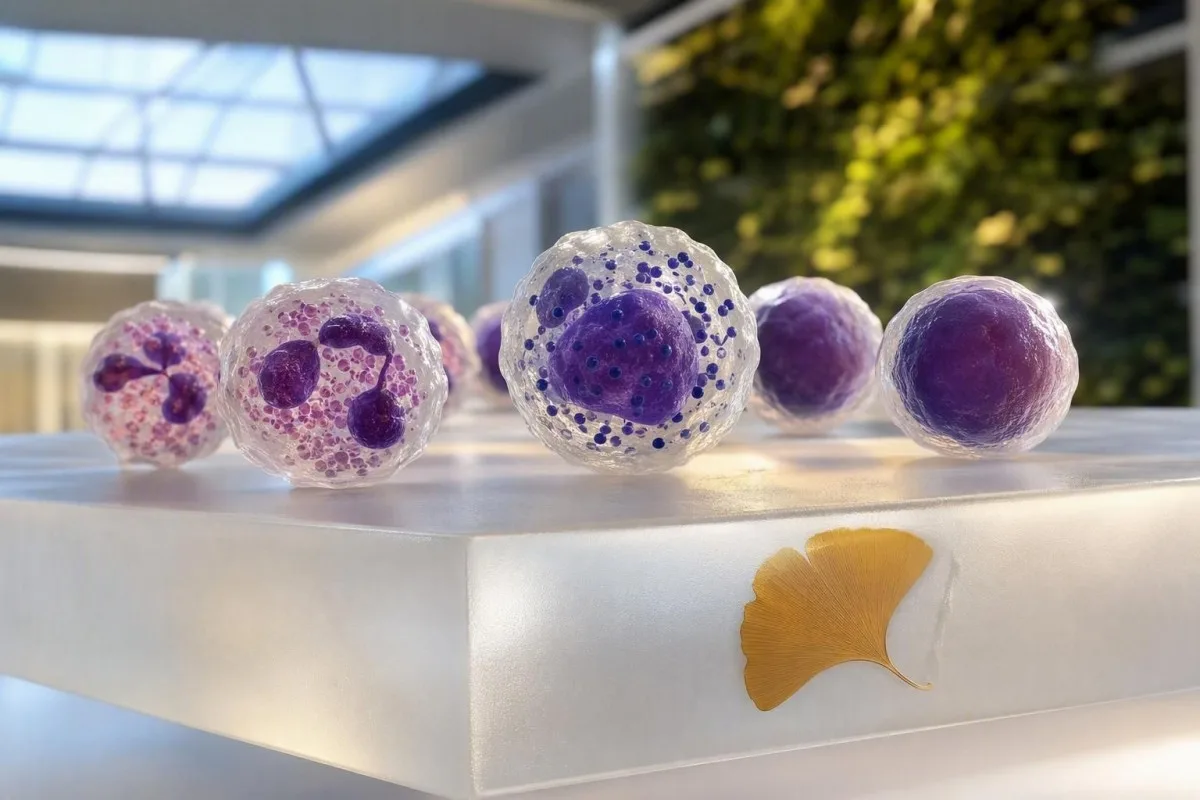
Flestir fullorðnir eru með algilda basófíla frá 0,00–0,10 × 10⁹/L (0–100/µL), en hlutfallið er að jafnaði 0–1%. Mild óvenjuleg prósenta endurspeglar oft breytingar í öðrum hvítum blóðkornum; algildur basófílitalning er niðurstaðan sem venjulega leiðir eftirfylgni.


- Algildir basófílar eru að jafnaði 0,00–0,10 × 10⁹/L (0–100/µL) hjá fullorðnum og eru klínískt gagnlegri en prósenta ein og sér.
- Basófílahlutfall er algengt 0–1% af hvítum blóðkornum, en það getur hækkað þegar hvítfrumurnar eða einkjarnafrumurnar lækka jafnvel þótt algilda talan sé eðlileg.
- Börn nota oft sama hagnýta efri mörk 0,10 × 10⁹/L eftir unglingsárin, en aldursbundin viðmiðunarlota rannsóknarstofunnar hefur forgang.
- Endurtekin CBC eftir 2–8 vikur er sanngjarnt fyrir einangraða, væga basófíluhækkun eftir ofnæmi, sýkingu eða breytingu á lyfjum.
- Viðvarandi basófíluhækkun yfir 0,20 × 10⁹/L verðskuldar athugun læknis, sérstaklega með háum hvítum blóðkornum, blóðleysi, milta stækkun eða almennum einkennum.
- Bráð yfirferð er réttlætanlegt vegna marktæks hvítblæðis, óútskýrðs þyngdartaps, svitakófs á nóttunni, hita eða snemma fyllingar undir vinstri rifbeinum.
- Núll basófílar á sjálfvirkum blóðkornamæli er algengt og hefur venjulega enga klíníska þýðingu.
- Kantesti AI les basófilu ásamt heildar hvítum blóðkornum, eosinófílum, blóðflögum, blóðrauða og fyrri niðurstöðum frekar en að meðhöndla eitt merki sem greiningu.
Algildir basófílar á móti basófílahlutfalli
Algjör basófilíur frá 0,00–0,10 × 10⁹/L eru almennt eðlilegar hjá fullorðnum, en prósentubasófilur frá 0–1% eru aðeins hluti af heildarfjölda hvítra blóðkorna. Þegar þessir tveir eru ósammála, gefa læknar venjulega meiri vigt á algjörri niðurstöðu.
Hlutfall getur litið hátt út einfaldlega vegna þess að annar hvítfrumuflokkur er lágur. Til dæmis, 1,5% basófilíur með hvítfrumufjölda upp á 3,0 × 10⁹/L gefa algjöra tölu aðeins 0,045 × 10⁹/L - vel innan margra fullorðinsbils. Þess vegna segir prósentumerki eitt sjaldan alla söguna.
Útreikningurinn er einfaldur: heildarfjöldi hvítra blóðkorna × prósenta basófila ÷ 100. Hvítfrumufjöldi 12,0 × 10⁹/L og basófilíur 2% gefur 0,24 × 10⁹/L, sem er raunveruleg hækkun. Fyrir víðara samhengi, sjá leiðbeiningar okkar um hvað CBC inniheldur.
Kantesti er AI blóðprufugreiningartæki sem breytir prósentum í klínískt sambærilega algjöra fjölda þegar upphafsskýrsla veitir skilgreiningu. Að minni reynslu kemur sú eina umbreyting í veg fyrir talsverða óþarfa kvíða eftir venjubundna heilbrigðisskoðun.
Af hverju algjör fjöldi er stöðugri
Sjálfvirkir greiningartæki telja þúsundir frumulgra atburða, en basófilíur eru venjulega sjaldgæfar - oft færri en 1 af 100 hvítum frumum. Lítil greiningar- og líffræðileg frávik geta því fært hlutfallið meira áberandi en algjöra fjöldann.
Hagnýt viðmiðunarmörk basófíla eftir aldri
Flestir rannsóknarstofur nota algjöra basófilu viðmiðunarbilið 0,00–0,10 × 10⁹/L frá æsku til fullorðinsára, en nýburar geta verið víðari. Notaðu bilið prentað við hlið eigin niðurstöðu, þar sem viðmiðunarmörk eru háð greiningaraðferð og staðbundnu heilbrigðu íbúalögum rannsóknarstofunnar.
Fyrir ungabörn á fyrstu vikum lífsins, samþykkja sum barnalækningastofur algjöra basófilu upp að um það bil 0,20–0,40 × 10⁹/L. Nýburatímabilið ónæmiskerfið aðlagast hratt, svo fullorðins skurðpunktar ætti ekki að leggja á nýburaniðurstöðu án barnalækningaáhrifa.
Frá um það bil 1 árs aldri, margir þjónustuaðilar nota hagnýta efri mörk nálægt 0,10 × 10⁹/L, eða 100/µL. Niðurstaða 0,11 × 10⁹/L hjá dafnandi barni með eðlilegan heildarfjölda hvítra blóðkorna er venjulega spurning um endurtekningu og samhengi, ekki neyðarástand.
CLSI EP28-A3c útskýrir hvers vegna rannsóknarstofur setja upp eða sannreyna eigin viðmiðunarbili frekar en að lána alheimsbil (CLSI, 2010). Okkar leiðbeiningar um aldursbil fyrir daufkyrninga sýna sama meginreglu fyrir aðra skilgreiningu.
Skilningur á basófílaeiningum á breskum, bandarískum og alþjóðlegum skýrslum
Basófílafjöldi 0.10 × 10⁹/L jafngildir 100/µL, svo skýrslur sem nota mismunandi einingar geta lýst sama niðurstöðu. Bretlands fullblóðsblóðtalningar skýra oft ×10⁹/L, á meðan bandarísk rannsóknarstofur nota almennt frumur/µL eða K/µL.
Til að breyta ×10⁹/L í frumur/µL, margfaldaðu með 1.000. Þannig jafngildir 0.05 × 10⁹/L 50/µL; 0.25 × 10⁹/L jafngildir 250/µL. Skýrsla sem sýnir 0.0 gæti verið námunduð að einu aukastaf fremur en að sanna að það séu bókstaflega engir basófílar.
Gildi sem skráð er sem 0.2 K/µL jafngildir 0.20 × 10⁹/L. Sá munur skiptir máli vegna þess að 0.2% og 0.2 K/µL eru alveg mismunandi mælingar. Sjúklingar rugla þeim reglulega saman þegar þeir bera saman skýrslur frá tveimur löndum.
Ef skýrsla þín segir FBC fremur en CBC, eru íhlutirnir að mestu leyti þeir sömu; okkar Útskýring á breskum blóðtölum túlkar algengt orðalag.
Af hverju basófílatölur hækka eða lækka
Mild basophilia fylgir oft ofnæmi, langvarandi bólgu, bata eftir sýkingu eða lyfjatengdum ónæmisskiftum. Lágur fjöldi eða núll basófílar eru yfirleitt ekki merkilegir þar sem þessar frumur dreifast í mjög litlu magni.
Basófílar bera viðtaka fyrir IgE og geta losað histamín og önnur efnavaka eftir útsetningu fyrir ofnæmisvaka. Árstíðabundinn ofnæmiskvef, langvinna netvörtu, astma og sum húðsjúkdómar geta komið samhliða lítilli hækkun, þó að eðlilegur fjöldi útiloki engann þeirra.
Skjaldkirtilsvandamál, bólgusjúkdómar í meltingarvegi, liðagigt og sumar langvarandi sýkingar geta einnig tengst basophilia. Gagnleg spurning er ekki “hvaða sjúkdómur veldur þessu?” heldur “hver önnur merki eru til staðar?”—CRP, eosinófílar, einkenni, lyfjasaga og þróun skipta öllu máli.
Hækkað IgE og eosinófílafjöldi geta stutt ofnæmismynstur, en einangraður kláði gæti þarfnast víðtækari skoðunar; grein okkar um blóðrannsóknir fyrir kláða í húð útskýrir hagnýtar takmarkanir CBC prófunar.
Hvenær á að endurtaka CBC fyrir basófíla?
Endurtakið CBC eftir 2–8 vikur fyrir væga, einangraða hækkun basófíla eftir tímabundinn hvata, að því gefnu að þér líði vel og restin af blóðtölunum séu fullnægjandi. Endurtakið fyrr, yfirleitt innan daga til 2 vikna, þegar heildarhvítfrumur hækka eða það eru margar óeðlilegar frumulínur.
Fyrir algjöran basófílafjölda 0.11–0.20 × 10⁹/L eftir kvef, ofnæmiskast, bólusetningu eða stutta sterakúr, kýs ég oft eina rólega endurtekningu fram yfir keðju prófana. Reyndu að nota sama rannsóknarstofu og skrá nýleg veikindi, ný lyf, reykingabreytingar og útsetningu fyrir sterum.
Ekki reyna að “bæta” fjöldann fyrir endurtekið próf. Vökvun er skynsamleg, en fæðubótarefni, andhistamín, barksteroidal og mikil þolþjálfun geta breytt víðari mismunagreiningu. Okkar tímasetningu blóðprófa útskýrir algeng tíðnaaráhrif.
Kantesti er AI blóðrannsóknartúlkunarvettvangur sem ber saman núverandi mismunagreiningu við fyrri CBCs og merkir samfellda hækkun öðruvísi en merki um eitt skipti. Þróun yfir 3–6 mánuði er oft upplýsandi en einn aukastafur.
Hvernig á að undirbúa sig fyrir áreiðanlega endurtekningu á basófílatali
Basófilpróf krefst venjulega ekki föstu, en endurtekin CBC er mest túlkandi þegar þú ert ekki bráðveikur og sýnasöfnunarskilyrði eru svipuð. Styddu við eðlilega vökvaneyslu, venjulegar máltíðir og venjulegan dag fremur en miklar breytingar.
Forðastu að skipuleggja ekki bráða endurtekið próf meðan á hita, verulegri ofnæmisköstum eða degi eftir óvenju erfiða þolviðburði ef markmiðið er að staðfesta viðmiðunargildi. Bráð streituhormón og vökvaskipti geta haft áhrif á nokkur hvítfrumuundirflokka í nokkrar klukkustundir til daga.
Segðu lækninum eða blóðtökumanninum frá kerfisbundnum barksteroidal, litíum, meðferðum sem innihalda epinefrín, nýlegri líftækni meðferð og hvaða nýju fæðubótarefni sem er. Sterar lækka oftast basófila og eosinófíla í blóðrásinni, svo “eðlilegt” niðurstaða meðan þú tekur þau gæti ekki endurspeglað ómeðhöndluð viðmiðunargildi þín.
Gæði sýnis skipta enn máli. Klæddar EDTA sýni og seinkað greining geta gert sjálfvirkar mismunagreiningar óáreiðanlegri; ef nokkur CBC gildi líta undarlega út saman, skoðaðu þegar þörf er á nýrri sýnatöku.
CBC mynstur sem gera háa basófíla merkilegri
Basophilia er meira áhyggjuefni þegar algjörir basófilar fara yfir 0,20 × 10⁹/L og koma fram með viðvarandi hvít blóðkorn yfir 11,0 × 10⁹/L, blóðleysi, blóðflagnabreytingar eða óþroskaðar frumur. Samsetningin — ekki bara basófilar — ákvarðar hversu fljótt læknar rannsaka.
44 ára gamall maður sem ég rannsakaði hafði basófíla 0,28 × 10⁹/L, hvítkorn 16,4 × 10⁹/L, blóðflögur 610 × 10⁹/L og snemmbæran mettun. Það mynstur réttlætti blóðfræðilega leið sömu viku; einstök basófillaniðurstaða greindi ekki sjúkdóminn, en hún var mikilvægt vísbending.
Basophilia ásamt háum neutrófilum og miltaeinkennum getur komið fram í myeloproliferative sjúkdómum, þar á meðal langvinnri myelógenhvítblæði. European LeukemiaNet mælir með sameindaprófum og sérfræðimats þegar klíníska og blóðtalningar mynstrið vekur þann möguleika (Hochhaus o.fl., 2020).
Útlits smurður sýni getur greint raunverulegar mismunagreiningar frá óvissu greiningartækis og getur sýnt vinstri hliðar eða óeðlilegar frumur. Lesa meira um blóðkrabbamein CBC leiðir án þess að gera ráð fyrir að óeðlilegur fjöldi þýði krabbamein.
Einkenni og niðurstöður sem þarfnast skjótrar læknisaðstoðar
Leitaðu tafarlaust eftir læknisfræðilegu mati fyrir basophilia með hita, næturhita, óútskýrðan þyngdartap, nýleg marbletti, mæði, alvarlega þreytu eða fyllingu í efra vinstra hluta kviðar. Þessi einkenni eru ekki af völdum vægrar hækkaðrar basófillaniðurstöðu sjálfrar; þau gefa til kynna að þörf sé á mati á víðari klínískri mynd.
Heildarfjöldi hvítfrumna yfir 30 × 10⁹/L, hratt hækkandi gildi, eða sýnilegar óþroskaðar kornfrumur á skýrslu skal ræddar tafarlaust við pantaðan lækni. Alvarlegur höfuðverkur, sjóntruflanir, brjóstverkur eða taugasjúkdómaeinkenni þurfa neyðarmats óháð basófillatali.
Flestir með 0,11–0,20 × 10⁹/L basófíla og engin einkenni þurfa ekki neyðarútskrift. Samt sem áður er þetta eitt af þeim svæðum þar sem samhengi skiptir meira máli en talan, sérstaklega ef fyrri niðurstöður voru 0,02 × 10⁹/L og nýi fjöldinn er að hækka.
Ef þú ert einnig með mæði eða fölleika, geta meðfylgjandi blóðrauða- og blóðflagmagildi skipt meira máli strax; sjá okkar leiðarvísir að blóðprófum við mæði.
Hvað þýða lágir basófílar eða niðurstaða núll
Basófillaniðurstaða upp á 0,00 × 10⁹/L er venjulega eðlileg og sjaldan þarf að endurtaka hana eina og sér. Basófílar geta verið undir greiningartækjum vegna þess að þeir eru fáir í blóðrásinni.
Bráð streita, sýkingar, meðganga, skjaldvakabrestur og kortikosteróíðameðferð geta tímabundið dregið úr basófílum í blóðrásinni. Samt sem áður er enginn viðurkenndur einkennaflokkur af völdum einangraðra lágra basófíla, ólíkt klínískt marktækri daufkyrningafæð.
Greiningarvandamál er auðvelt að missa af: ef aðeins fáar basófílur eru taldar, getur venjuleg sýnatökufrávik breytt 0,01 × 10⁹/L í 0,00 × 10⁹/L við næstu mælingu. Þetta er ekki endilega líffræðileg breyting.
Hagnýt ráð Dr. Thomas Klein eru að hunsa lága basófílagreiningu þegar restin af CBC er í lagi og engin viðeigandi einkenni eru til staðar. Sérstakur leiðarvísir okkar útskýrir basófílar í núlli.
Basófílar í meðgöngu og síðari lífsárum
Meðganga og öldrun hafa ekki eina sérstaka skorið fyrir basófíla; viðmiðunarmörk rannsóknastofunnar og heildarmynd hvítra blóðkorna eru enn besta viðmiðið. Meðganga eykur oft heildarfjölda hvítra blóðkorna vegna daufkyrninga, sem getur gert hlutfallslegan fjölda basófíla lægri án raunverulegrar fækkunar basófíla.
Meðan á meðgöngu stendur getur heildarfjöldi hvítra blóðkorna á bilinu 12–15 × 10⁹/L verið lífeðlisfræðilegur, sérstaklega síðar á meðgöngu, svo hlutfallsleg túlkun verður enn óáreiðanlegri. Algildur fjöldi basófíla er enn æskilegri, en kvíðvænleg einkenni vega þyngra en viðmiðunarmörk.
Hjá eldra fólki er nýr, viðvarandi fjöldi basófíla yfir 0,20 × 10⁹/L verðugur athygli vegna þess að lyfjabúnaður og beinmergsröskun verða algengari með aldrinum. Það gerir það ekki greinandi; það lækkar einfaldlega viðmiðunarmörk til að skoða CBC þróun og smur.
Fyrir önnur sérstök túlkunargreiningarvandamál á meðgöngu, skoðið meðgöngublóðprófa rauðu flaggarnir okkar.
Lyf, ofnæmi og sveiflur í basófílum
Ofnæmiseinkenni geta komið samhliða örlítið hækkuðum basófílum, en kerfisbundin sterakortikosteróíð lækka þau oft innan nokkurra daga. Ekkert þessara mynsturs staðfestir ofnæmisgreiningu eða sannar að lyf séu ábyrg.
Antihistamín hindra fyrst og fremst histamínviðtaka; þau eðlileggja ekki áreiðanlega fjölda basófíla. Prednisólón til inntöku og önnur kerfisbundin glúkókortíköíð geta dreift hvítum blóðkornum, oft minnkað eósínófíla og basófíla á meðan daufkyrningafjöldi í blóðrás eykst.
Lítíum er sjaldgæfari en gagnleg lyfjaleiðbeining því það getur aukið framleiðslu hvítra blóðkorna. Líffræðileg lyf, efnafræðilegar meðferðir og ónæmisbælandi meðferðir ætti aldrei að hætta vegna eins CBC niðurstöðu – spyrjið ávísandi teymi hvernig niðurstaðan passi inn í eftirlitsáætlun þeirra.
Hækkaður fjöldi basófíla ásamt hvæsandi öndun, ofsakláða, andlitsbólgu eða svima ætti að meðhöndla sem einkennavandamál, ekki rannsóknarvandamál. Okkar leiðarvísir um hátt IgE útskýrir hvar ofnækismerki hjálpa og hvar þau leiða á mis.
Hvað læknar athuga eftir viðvarandi basófíluhækkun
Viðvarandi algildur basófílahækkun veldur venjulega endurteknum CBC, handvirkri smurathugun, lyfja- og einkennaathugun, síðan markvissri prófun ef heildarfjöldi hvítra blóðkorna eða aðrar frumulínur eru óeðlilegar. Almenn krabbameinspróf eru ekki venjuleg fyrsta skref fyrir lítilsháttar einangraða aukningu.
Fyrsti greinapunktur er hvort niðurstaðan sé einangruð. Stöðugt blóðrauði, blóðflögur, fjöldi hvítra blóðkorna og eðlilegt smur styðja sterkt við íhaldssama áætlun; blóðleysi, blóðflagnafjölgun, hvítblæði eða milta stækkun ýta mati í aðra átt.
Þegar millifrumusjúkdómur er líklegur geta læknar beðið um BCR::ABL1 próf, JAK2 próf, mjólkursýru-dehydrogenasa, þvagsýru og sérfræðilega athugun. Valent o.fl. lýsa viðvarandi basófílahækkun sem marktækri niðurstöðu við flokkun basófílla og mergþrepsæxla (Valent o.fl., 2022).
Grunur Netkerfi Kantesti greinir samsetningar sem þarfnast athugunar en greinir ekki hvítblæði frá CBC. Okkar læknisfræðilega staðfestingarleið okkar útskýrir hvers vegna skilaverkun rannsóknarstofu verður að halda klínísku eftirliti.
Hvernig á að fylgjast með basófílum án þess að ofviðbragð
Merkingarbreyting í basófílum er viðvarandi stefnubreyting yfir samanburðarhæfum CBC, ekki einstök hreyfing frá 0,04 til 0,08 × 10⁹/L. Með viðmiðunarmörk fullorðinna upp á 0,10 × 10⁹/L eru báðir gildin innan sviðs þrátt fyrir að vera tölfræðilega ólík.
Vistaðu algildan fjölda, prósentuhlutfall, heild hvítfrumna, daufkyrninga, eósínófíla, blóðrauða, blóðflögur, dagsetningu, nýlega veikindi og lyf eftir hverja blóðtöku. Þessi litla skrá gefur lækni þínum meiri gagnlegar upplýsingar en skjáskot af einangruðum rauðum viðvörunum.
Kantesti er AI-knúið blóðprófunargreiningartól notað í 127+ löndum til að bera saman CBC niðurstöður langtíma á meðan viðmiðunarbil frá upprunalegu rannsóknarstofunni er varðveitt. Dr. Thomas Klein mælir með því að athuga að minnsta kosti tvær samanburðarhæfar niðurstöður áður en merkingu er gefin til mörkum skilgreindri breytingu.
Gott ráð: ef algilda fjöldinn er undir 0,10 × 10⁹/L, heildarfjöldi hvítfrumna er stöðugur og þú líður vel, er venjulega nægilegt að fara í venjulegt eftirlit við næstu skipulögðu blóðprufu. Notaðu okkar um mun á blóðprófum til að meta hvort breyting sé líklega raunveruleg.
Spurningar sem ber að spyrja á eftirfylgdarviðtal
Besta spurningin í eftirfylgni er “Hver er algildi fjöldi basófíla minna og hvað annað breyttist á CBC?” Þessi orðalag beinir samtalinu að þeim breytum sem í raun breyta klínískri áhættu.
Spyrðu hvort fjöldinn sé nýr, viðvarandi, hækkandi eða líklega viðbragðssækinn; hvort smásjárathugun sé nauðsynleg; og hvenær næsta CBC ætti að vera tekin. Komdu með lista yfir nýlegar sýkingar, ofnæmiseinkenni, lyf, fæðubótarefni, ferðalög og fjölskyldusögu blóðsjúkdóma.
Ef þú ert með algilda fjölda yfir 0,20 × 10⁹/L auk hækkaðs heildarfjölda hvítfrumna, spurðu hvort blóðfræðileg aðstoð sé viðeigandi. Ef fjöldinn er aðeins lítillega yfir sviðinu og einangraður, spurðu hvaða breyting myndi kalla fram fyrr greiningu frekar en að gera ráð fyrir því versta.
Læknisfræðilegir menntunarstaðlar Kantesti eru undir eftirliti okkar Læknisfræðileg ráðgjafarnefnd. Frá og með 30. ágúst 2026, er öruggasta nálgunin enn einföld: túlka algilda fjölda, staðfesta viðvarandi og aðeins bregðast hraðar við þegar víðtækara mynstur réttlætir það.
Algengar spurningar
Hver er eðlileg basólíðatala hjá fullorðnum?
Viðmiðunarbil fyrir fjölda basófilra frumna hjá fullorðnum er 0,00–0,10 × 10⁹/L, sem jafngildir 0–100 frumum/µL. Flestar rannsóknastofur tilgreina hlutfall basófilra frumna sem 0–11%, þótt hlutfallið geti verið villandi þegar heildarfjöldi hvítfrumna breytist. Viðmiðunarbil sem þín eigin rannsóknastofa gefur út hefur forgang þar sem aðferðir og staðbundnar viðmiðunarhópar eru mismunandi. Einstakur mæling á 0,11 × 10⁹/L réttlætir venjulega viðbótarupplýsingar eða áætlaða endurtekningu frekar en bráðaþjónustu.
Eru 2% basófillar háir?
Basófílhlutfall upp á 2% er hærra en í mörgum viðmiðunarbilum rannsóknastofa, en það dugar ekki til að meta áhættu án heildarfjölda hvítra blóðkorna. Með 4,0 × 10⁹/L hvítum blóðkornum samsvarar 2% algildum fjölda basófíla sem er 0,08 × 10⁹/L, sem er oft innan eðlilegra marka. Með 15,0 × 10⁹/L hvítum blóðkornum samsvarar sama 2% 0,30 × 10⁹/L og réttlætir klíníska athugun. Finndu alltaf algildan fjölda basófíla áður en þú túlkar hlutfallið.
Hvenær ætti ég að endurtaka blóðfrumupróf vegna hátt basófilmagns?
Endurtekin CBC eftir 2–8 vikur er oft skynsamleg við vægri einangraðri basophilia sem nemur um 0,11–0,20 × 10⁹/L eftir veikindi, ofnæmisköst eða breytingu á lyfjum. Endurtakið fyrr þegar heildarfjöldi hvítblóðkorna eykst, basophilafjöldinn er yfir 0,20 × 10⁹/L, eða blóðrauði og blóðflögur eru einnig óeðlilegar. Notið sama rannsóknarstofu þegar mögulegt er vegna þess að greiningartækniaðferðir og viðmiðunarbil eru mismunandi. Hiti, þyngdartap, nætursviti, marblettir eða fylling í efra vinstra hluta kviðar réttlæta skjóta læknisrannsókn frekar en að bíða eftir venjubundinni endurprófun.
Eru núll basófilfrumur hættulegar?
Lágur fjöldi basófíla (0,00 × 10⁹/L) er venjulega ekki hættulegur og krefst almennt engra frekari aðgerða ef restin af blóðfrumuprófi (CBC) er eðlileg. Basófílar eru sjaldgæfar frumur, svo venjubundinn sjálfvirkur mismunagreining getur skilað núlli vegna þess að fjöldinn sem greinist er undir viðmiðunartölum eða nákvæmni upplýsinga. Kortikosteróíðar, bráð streita, meðganga og sýkingar geta tímabundið lækkað magn basófíla í blóðrás. Læknar greina ekki ónæmisskort frá einangruðum lágum fjölda basófíla.
Getur ofnæmi valdið háum fjölda basófíla?
Ofnælisaðstæður geta samhliða vægt hækkuðum basófílum vegna þess að basófílar taka þátt í IgE-tengdum ónæmissvörum og losa miðla eins og histamín. Hár fjöldi basófíla sönar ekki að ofnæmi sé orsökin, og margir með marktæk ofnæmiseinkenni hafa eðlilegan fjölda basófíla. Fjöldi yfir 0,20 × 10⁹/L sem helst eftir að ofnæmiseinkenni hafa lagst ætti að skoða ásamt heildar CBC. Sérfrumubasófílar, heildar IgE, húðeinkenni og lyfjaskömm geta veitt gagnlegra samhengi.
Hvaða magn basófíla bendir til hvítblæðis?
Enginn einstakur daufkyrningatalning greinir dreyfisbólgu, en viðvarandi algild daufkyrningahækkun yfir 0,20 × 10⁹/L með hvítblóðhækkun, blóðleysi, blóðflagatruflunum, ósþroskuðum kyrningum eða milta-einkennum ætti að kalla til læknisfræðilegrar mats. Daufkyrningahækkun getur komið fram í kornóttum hvítblæði og öðrum mergbólguæxlum, en hvataviðbragðsorsakir eru enn algengari fyrir lítil einangruð hækkun. Læknar geta pantað smur og markvissa sameindarannsóknir eins og BCR::ABL1 aðeins þegar breiðari mynstrið styður það. Eðlileg heild hvítblóðkornatalning og stöðug CBC breyta verulega áhyggjustigi.
Fáðu AI-knúna greiningu á blóðprufum í dag
Vertu með yfir 2 milljónir notenda um allan heim sem treysta Kantesti fyrir tafarlausa og nákvæma greiningu á blóðprufum. Hladdu upp niðurstöðum blóðrannsókna þinna og fáðu yfirgripsmikla túlkun á 15,000+ lífmerkjum á sekúndum.
📚 Tilvísuð rannsóknarútgáfa
Klein, T., Mitchell, S., & Weber, H. (2026). Leiðarvísir fyrir blóðflokk B neikvætt, LDH blóðpróf og fjölda retíkúlócýta. Kantesti AI Medical Research.
Klein, T., Mitchell, S., & Weber, H. (2026). Niðurgangur eftir föstu, svartir blettir í hægðum og meltingarfæraleiðbeiningar 2026. Kantesti AI Medical Research.
📖 Ytri læknisfræðilegar heimildir
Clinical and Laboratory Standards Institute (2010). Skilgreining, stofnun og staðfesting viðmiðunarbils á klínískri rannsóknarstofu. CLSI EP28-A3c.
⚕️ Fyrirvari vegna læknisfræðilegra mála
Þessi grein er eingöngu til fræðslu og felur ekki í sér læknisráðgjöf. Leitaðu alltaf til hæfs heilbrigðisstarfsmanns vegna ákvarðana um greiningu og meðferð.
E-E-A-T traustmerki
Reynsla
Læknastýrð klínísk yfirferð á vinnuferlum við túlkun rannsóknarniðurstaðna.
Sérþekking
Áhersla á rannsóknarstofulækningar: hvernig lífmarkarar hegða sér í klínísku samhengi.
Yfirvald
Skrifað af Dr. Thomas Klein með yfirferð Dr. Sarah Mitchell og próf. Dr. Hans Weber.
Traustleiki
Rökstudd túlkun byggð á gögnum með skýrum eftirfylgnileiðum til að draga úr ávörun.