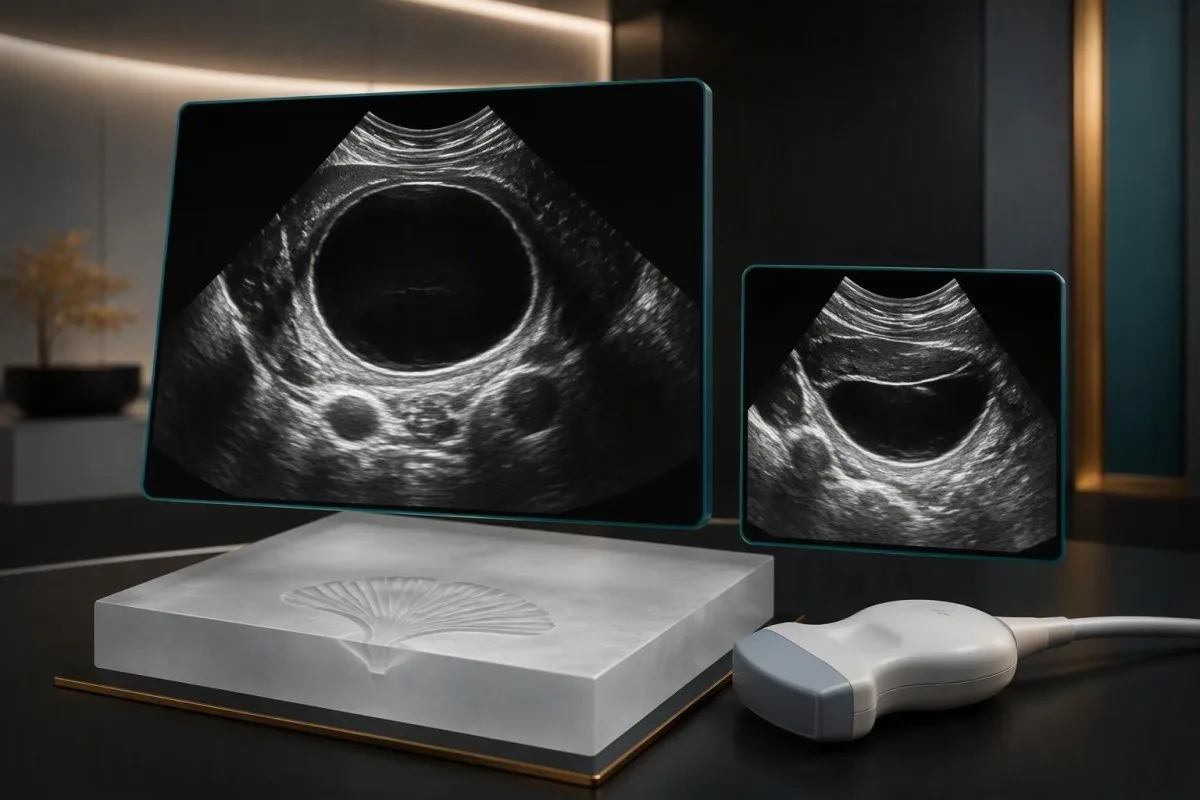
Ang pagkaliki mahimong makapagawas og pluwido o makapahinabo og pagdugo sa sulod; ang torsion motuis sa obaryo ug mohulga sa suplay sa dugo niini. Mahimong hinungdan ang duha og kalit nga kasakit sa pelvis, busa dili luwas nga mailhan ang kalainan pinaagi lamang sa mga sintomas.


- Mga sintomas sa ovarian cyst mahimong maglakip sa kasakit sa usa ka kilid sa pelvis, pagkapresyur, kabuhi sa tiyan, o kasakit panahon sa pakighilawas, apan daghang cyst ang walay sintomas.
- Mga sintomas sa pagkabuka sa ovarian cyst mahimong maglakip sa kalit nga kasakit nga gamay ra ang pagdugo sa puwerta; ang dakong pagdugo mahimong magpabilin sa sulod gyod sa tiyan.
- Mga sintomas sa ovarian torsion kasagarang maglakip sa kalit nga kasakit sa usa ka kilid ug kasukaon o pagsuka, apan mahimong moabot ug mawala ang kasakit kon panagsa-sagol ang pagtuis.
- Emergency assessment gikinahanglan alang sa kalit ug grabeng kasakit sa pelvis, ilabina kon adunay pagsuka, pagkaluya o hapit makuyapan, kasakit sa tumoy sa abaga, hilanat, o posibilidad sa pagmabdos.
- Gidak-on sa cyst nga labaw sa mga 5 cm makadugang sa risgo sa torsion, apan ang mas gamay nga cyst—o ang walay makita nga cyst—dili makasalikway sa torsion.
- Pagsulay sa pagbuntis kabahin sa pagsusi sa grabeng kasakit sa pelvis kon posible sa biyolohiya ang pagmabdos, bisan pa kon gigamit ang kontrasepsiyon.
- Ultrasound nga adunay Doppler makatabang sa pagsusi sa cyst, pluwido sa pelvis, ug sirkulasyon, apan ang napreserbar nga dagan sa dugo sa Doppler dili makapawala sa posibilidad sa torsion.
- Sunod-sunod nga testing mahimong maglakip sa pagsubli sa hemoglobin kon gisuspetsahan ang pagdugo ug pagsubli sa serum hCG nga gilay-on og mga 48 ka oras kon klinikal nga lig-on ang pagmabdos nga wala mahibaloi ang lokasyon.
Unsa ang kalainan sa pagkabuka sa cyst ug ovarian torsion?
Pagkabuak sa cyst mopagawas sa sulod sa cyst ug usahay dugo ngadto sa pelvis; torsion sa obaryo mopilipit sa mga tisyu nga nagsuporta sa obaryo ug mahimong makaputol sa suplay sa dugo niini. Pareho silang mahimong hinungdan sa kalit nga kasakit sa pelvis nga anaa sa usa ka kilid, ug dili kasaligan nga mailhan sila pinaagi sa tipo sa kasakit o sa pagkawala sa pagdugo sa vagina.
Ang kalit ug grabeng kasakit sa pelvis nagkinahanglan og emerhensiyang pagsusi imbes mosulay sa pag-ila sa hinungdan sa balay. Kasagarang ipares sa mga klinisyan ang mga vital sign, eksaminasyon, pagsulay sa pagmabdos, ug ultrasound sa pelvis; ang gidudahang torsion mahimong magkinahanglan og dinaliang operasyon bisan dili matino ang resulta sa unang scan.
Ang ovarian cyst usa ka estrukturang adunay pluwido, dili awtomatikong sakit nga nagkinahanglan og pagtambal. Daghang functional cyst ang mawala sulod sa 2–3 ka siklo sa regla, samtang lahi ang pamatasan sa mga endometrioma, dermoid cyst, ug uban pang nagpadayon nga mga masa; ang among giya sa panglawas sa kababayen-an nagpatin-aw sa konteksto nga may kalabotan sa siklo.
Ang akong prayoridad sa klinikal nga aspeto, nga nagsulat isip si Dr. Thomas Klein, mao ang paglain sa emerhensiya nga sensitibo sa oras gikan sa cyst nga angay bantayan sa follow-up—dili ang pagbutang og ngalan sa kasakit base lamang sa paghulagway niini. Ang kasaysayan sa organisasyon sa Kantesti nagpatin-aw sa among tahas: ang Kantesti usa ka tigtuki sa mga pagsulay sa dugo nga AI nga makapatin-aw sa mga resulta sa laboratoryo, apan dili makadiagnosis sa pagkabuak sa cyst o makapawala sa posibilidad sa torsion sa obaryo.
Unsang mga sintomas ang mahimong ipahinabo sa ovarian cyst nga walay komplikasyon?
Mga sintomas sa ovarian cyst mahimong maglakip sa hinay nga kirot sa pelvis, presyur sa usa ka kilid, kabuhi sa tiyan, pagkadili-komportable panahon sa pakighilawas, o kanunay nga pag-ihi tungod sa presyur sa duol nga mga estruktura. Daghang cyst walay mga simtoma, ug ang pagkadiskobre og cyst pinaagi sa ultrasound dili magpamatuod nga mao kini ang hinungdan sa tanang simtoma.
Dili hingpit nga nagpakita ang nahimutangan sa kasakit kon unsa ang nagpahinungdan sa problema. Ang cyst sa tuo mahimong hinungdan sa pagkadili-komportable sa tunga, samtang ang paghubag sa tinai, kasakit sa kaunoran sa salog sa pelvis, o kondisyon sa agianan sa ihi mahimong mopatunghag susamang mga pagbati; ang mapuslanong pangutana mao kon motakdo ba ang mga simtoma sa eksaminasyon ug mga hulagway, dili lang sa kilid.
Ang panahon sa siklo naghatag og konteksto, dili kumpirmasyon. Ang mubo nga pagkadili-komportable sa tungatunga sa siklo mahimong kauban sa obulasyon, samtang ang kasakit nga motungha pag-usab inig regla mahimong magpasabot og endometriosis; ang talaan sa mga simtoma nga naglangkob sa 2–3 ka siklo makatabang sa pag-ila sa mga sumbanan kon mahuman na ang pagsalikway sa mga dinaliang hinungdan.
Dili pareho ang polycystic ovary syndrome ug ang pagbaton og usa ka dako nga ovarian cyst. Lahi ang gagmayng follicle nga nalangkit sa PCOS sa kalit nga masakitong cyst, ug ang kasakit sa pelvis lamang dili makapamatuod sa PCOS; ang among pamantayan sa pagdayagnos sa PCOS nagpatin-aw kon nganong importante ang mga sumbanan sa hormone, kasaysayan sa regla, ug uban pang mga nakaplagan.
Unsa ang pamati sa mga sintomas sa pagkabuka sa ovarian cyst?
Mga sintomas sa pagkabuka sa ovarian cyst kasagarang magsugod isip kalit nga kasakit sa pelvis, usahay panahon sa ehersisyo o pakighilawas ug usahay walay hinungdan nga nakapukaw niini. Mahimong magpabilin ang kasakit sa usa ka dapit o mokaylap samtang makairita sa sapaw sa tiyan ang pluwido o dugo; mahimong walay pagdugo sa vagina.
Ang gamayng gidaghanon sa nigawas nga pluwido mahimong hinungdan sa grabeng kasakit nga walay delikadong pagkawala sa dugo. Importante usab ang kabaliktaran: ang nagpadayon nga pagdugo sa sulod mahimong maghatag una og kasarangang pagkadili-komportable lamang, busa dili kasaligan nga sukdanan sa kabug-at sa pagdugo ang kakusog sa kasakit.
Ang kasakit sa tumoy sa abaga, pagkalipong, pagkuyapan, o talagsaong kaluya mahimong kauban sa dakong pagdugo sa tiyan. Nagkinahanglan kini og emerhensiyang pag-atiman, ilabina kon posible ang pagmabdos; dili masukod sa gidaghanon sa mga napkin ang pagdugo sa sulod, bisan pa og ang among heavy menstrual bleeding guidance can help distinguish separate concerns about vaginal blood loss.
After a clinician confirms an uncomplicated rupture and establishes stability, pain often begins improving over the next 24–48 hours, although tenderness can last longer. That timeframe is not permission to wait out an unassessed first episode: a presumed rupture can actually be torsion, ectopic pregnancy, or another abdominal emergency.
Unsang mga sintomas sa ovarian torsion ang angay kabalak-an?
Mga sintomas sa ovarian torsion commonly include sudden one-sided pelvic or lower abdominal pain with nausea or vomiting. Pain can come and go when the adnexa twist and partially untwist, so temporary improvement does not make torsion safe to dismiss.
An enlarged ovary or adnexal mass increases mobility and creates a mechanical opportunity for twisting. Masses around 5 cm or larger are a recognized risk factor, but size is not a diagnostic cutoff; torsion also occurs with smaller masses and without a mass.
ACOG's Committee Opinion No. 783 reports that torsion occurs without an associated mass or cyst in as many as 46% of pediatric and adolescent cases (ACOG, 2019). That adolescent finding should not be applied as an adult prevalence estimate, but it explains why a normal-looking or cyst-free scan cannot end the assessment automatically.
Fertility treatment can enlarge the ovaries and increase torsion risk, including during early pregnancy. Anyone receiving ovarian stimulation should mention the treatment and the date of their last monitoring scan during emergency assessment; our IVF monitoring explanation describes why laboratory results and ultrasound measurements are interpreted together.
Nganong dili mailhan ang kalainan sa pagkabuka ug torsion pinaagi lamang sa mga sintomas?
Rupture and torsion share too many symptoms for a reliable home diagnosis: abrupt pain, tenderness, nausea, and sometimes fluctuating discomfort. Appendicitis, ectopic pregnancy, kidney stones, and pelvic infection can overlap with both, making examination and testing necessary.
Consider a hypothetical 29-year-old with 30 minutes of right-sided pelvic pain and vomiting. A known cyst makes torsion or rupture plausible, but it does not eliminate appendicitis or ectopic pregnancy; anchoring on an old ultrasound report can delay recognition of the actual emergency.
Nausea makes torsion more concerning, but rupture can also provoke nausea through pain and abdominal irritation. Fever is similarly unhelpful as a gatekeeper: early torsion may occur without fever, and fever with pelvic pain broadens the differential rather than identifying one cause.
Normal inflammatory markers do not reliably exclude an early abdominal emergency. Our appendicitis testing limits explain the same principle: a reassuring white cell count is one piece of evidence, not a substitute for a repeat examination when pain persists or changes.
Kanus-a nagkinahanglan og emerhensiyang pag-atiman ang kalit nga kasakit sa pelvis?
Sudden severe pelvic pain requires emergency assessment, even without fever or vaginal bleeding. Seek urgent help immediately for pain with fainting, marked dizziness, repeated vomiting, shoulder-tip pain, a rigid or increasingly swollen abdomen, or possible pregnancy.
Call your local emergency number if you collapse, feel close to fainting, or cannot travel safely; do not drive yourself while dizzy or impaired by pain. There is no dependable pain-score threshold or minimum duration that makes waiting safe when torsion or internal bleeding is possible.
Anticoagulants and bleeding disorders lower the threshold for urgent assessment because a ruptured cyst may bleed more extensively. Bring the medication name and last dose, and do not stop prescribed anticoagulation without clinician advice; our coagulation test limitations explain why apparently normal clotting results may not capture every medication effect.
New persistent pelvic pain that is not severe still deserves prompt clinical advice, particularly with a known cyst, pregnancy possibility, or recent fertility treatment. Tell the service if pain has improved after a sudden episode: intermittent torsion can produce a misleadingly comfortable interval, and pain relief does not establish the diagnosis.
Nganong kinahanglan ang pagsulay sa pagmabdos kon adunay kasakit tungod sa ovarian cyst?
Pregnancy testing helps identify ectopic pregnancy, a potentially life-threatening cause of pelvic pain that can resemble cyst rupture or torsion. Testing is appropriate whenever pregnancy is biologically possible, regardless of contraception use or whether the pain feels familiar.
A negative home urine test can be misleading very early in pregnancy or when urine is dilute. Many urine assays detect hCG at approximately 20–25 IU/L, but sensitivity varies; our urine pregnancy test guidance explains why the test date and menstrual history matter.
NICE guideline NG126 recommends considering pregnancy testing in reproductive-age patients even when symptoms are nonspecific and emphasizes that ectopic pregnancy can present atypically (NICE, 2019; updated 2023). Pelvic pain with a positive pregnancy test needs prompt assessment, and severe pain or circulatory symptoms require emergency care.
A pregnancy test does not determine where a pregnancy is located. A corpus luteum cyst may be a normal early-pregnancy finding, while an ectopic pregnancy can coexist with an ovarian cyst; clinicians therefore interpret the test alongside ultrasound rather than treating either finding as a complete explanation.
Sa unsang paagi makatabang ang mga resulta sa serum hCG sa pagtino sa sunod nga mga lakang?
Serum hCG helps establish pregnancy status and guide follow-up, but a single concentration cannot diagnose ectopic pregnancy or distinguish cyst rupture from torsion. If pregnancy is confirmed but its location is not visible, clinicians may arrange repeat hCG measurements and ultrasound.
Many laboratories report serum hCG below 5 IU/L as negative and 5–25 IU/L as indeterminate, although the assay's own interpretation takes precedence. An indeterminate result may reflect very early pregnancy, a resolving pregnancy, or another explanation; severe symptoms require assessment rather than waiting for the number to cross a threshold.
For a clinically stable pregnancy of unknown location, NICE recommends 2 serum hCG measurements as close as possible to 48 hours apart, but not earlier. Symptoms take priority over the trend, and even a falling concentration does not immediately remove ectopic risk; our hCG decline explanation discusses why follow-up continues until the clinical situation is resolved.
Kantesti is an AI blood test interpretation platform that can explain hCG units and serial laboratory changes, but an algorithm cannot locate a pregnancy. The practical limitation is substantial: the same hCG concentration can accompany different ultrasound findings, so an apparently reassuring result must never overrule new pain, faintness, or a clinician's concern.
Unsa ang makita sa ultrasound—ug unsa ang dili niini makita?
Pelvic ultrasound can characterize a cyst, assess ovarian size, identify free fluid, and evaluate circulation with Doppler. Transvaginal imaging often provides more detail when appropriate and consented to; transabdominal imaging is an alternative or a complementary examination.
Free pelvic fluid supports several possibilities rather than one diagnosis. A small amount can be physiological, while complex or extensive fluid can raise concern for bleeding; clinicians assess its appearance and amount alongside pregnancy status, vital signs, and hemoglobin rather than calling every fluid collection a rupture.
Preserved Doppler flow does not rule out torsion because the ovary has more than one source of arterial supply and twisting can be intermittent. ACOG states that Doppler findings alone should not guide decision-making and that no clinical or imaging criteria reliably confirm torsion before surgery (ACOG, 2019).
Cyst appearance also helps distinguish a simple functional cyst from a hemorrhagic cyst, endometrioma, or another mass. Our endometriosis diagnostic explanation discusses why imaging carries more diagnostic weight than an isolated biomarker; persistent severe pain after an inconclusive scan still warrants gynecologic reassessment.
Unsang mga pagsulay sa dugo ang makatabang sa pagtimbang-timbang sa pagkabuka o torsion?
Blood tests assess consequences and alternative diagnoses, not torsion itself. A complete blood count can help monitor suspected bleeding, pregnancy testing addresses ectopic risk, and additional tests depend on hydration, medications, infection concerns, and whether an operation may be needed.
Hemoglobin can initially remain normal during acute blood loss because plasma and red cells are lost together. A later fall may reflect ongoing bleeding, fluid redistribution, intravenous fluids, or several factors; our hemoglobin and hematocrit comparison explains why the trend needs clinical context.
An illustrative fall from 12.8 to 10.4 g/dL over 4 hours would prompt careful reassessment, but it is not a universal operation threshold. Clinicians also consider pulse, blood pressure, increasing abdominal tenderness, fluid on imaging, and ongoing symptoms; a stable number cannot make an unstable patient safe.
White cell count and CRP may be normal early or elevated for nonspecific reasons, including physiological stress. Our WBC and CRP interpretation explains these disagreements; the examination still matters, particularly guarding, focal tenderness, and a change between the first assessment and a repeat assessment.
Unsaon pagtambal sa kumpirmadong pagkabuka sa ovarian cyst?
A stable patient with a confirmed uncomplicated cyst rupture may be treated with observation and pain relief, while ongoing bleeding or clinical instability may require hospital care or surgery. The decision depends on the whole assessment, not simply whether ultrasound shows free fluid.
Kim and colleagues reported conservative management in 80.8% of 78 healthy reproductive-age women with ruptured cysts and hemoperitoneum; 19.2% underwent surgery (Kim et al., 2014). This retrospective cohort excluded important higher-risk situations and is not a guarantee that any individual patient can safely be managed at home.
Observation may involve repeat vital signs, abdominal examinations, hemoglobin measurements, and sometimes repeat imaging. Increasing pain, worsening circulatory signs, or evidence of continuing blood loss can change the plan quickly; receiving fluids or pain medicine is supportive care, not proof that the underlying problem has resolved.
After discharge, instructions should specify whom to contact, which symptoms require immediate return, and whether another scan is needed. Iron testing is useful later if blood loss or heavy periods have depleted stores—not as the first test for sudden internal bleeding; our pagsabot sa resulta sa iron studies explains that follow-up distinction.
Nganong nagkinahanglan og dinaliang pagsusi sa gynecologist ang gidudahang torsion?
Suspected ovarian torsion needs urgent gynecologic assessment because delayed treatment can compromise ovarian function. Definitive diagnosis usually occurs during laparoscopy, and treatment generally aims to untwist the adnexa and preserve the ovary whenever clinically appropriate.
There is no validated 6-hour or 12-hour deadline that guarantees whether an ovary will recover. Earlier treatment is preferred, but a longer symptom history is not a reason to abandon assessment or assume preservation is impossible; ACOG's adolescent guidance favors detorsion and preservation regardless of the ovary's appearance when feasible.
Fertility concerns should inform follow-up without delaying emergency treatment. AMH does not diagnose torsion and cannot predict the outcome of an acute episode; our AMH after ovarian surgery discussion explains why age, procedure type, and test timing affect later interpretation.
Persistent or complex cysts, particularly after menopause, require a different risk assessment from a transient functional cyst. CA-125 is often interpreted around a laboratory cutoff of 35 U/mL but is not a rupture or torsion test; our CA-125 limits and warnings explains benign elevations, while our HE4 interpretation guidance explains why kidney function can complicate another tumor-marker result.
Unsa ang angay hisgotan sa follow-up human sa kasakit tungod sa ovarian cyst?
Follow-up should confirm symptom improvement, clarify the cyst type, and provide a specific return plan. A repeat ultrasound is sometimes arranged in approximately 6–12 weeks for selected presumed functional or hemorrhagic cysts, but timing depends on the scan, age, symptoms, and local guidance.
A planned scan weeks away does not cover a new emergency today. Return for reassessment if pain becomes sudden or severe, vomiting develops, or dizziness and weakness appear; improving discomfort is reassuring only within the context of an established diagnosis and an appropriate discharge plan.
Kantesti is an AI-powered blood test analysis tool that can help explain a CBC or iron panel after clinician-directed follow-up, not provide real-time pelvic triage. Before sharing laboratory reports, review our privacy and data handling; ultrasound access, an examination, and symptom reassessment remain outside a blood-report interpretation workflow.
My advice as Dr. Thomas Klein is to keep 3 items together: the ultrasound report, the relevant laboratory results, and the discharge instructions. Kantesti's giya sa teknolohiya sa AI describes our interpretation approach, but neither an AI explanation nor a normal-looking panel should persuade someone to ignore recurrent symptoms suggestive of torsion or internal bleeding.
Mga publikasyon sa panukiduki ug ebidensiyang klinikal: unsa ang magamit?
Clinical guidance on torsion and ectopic pregnancy—not AI performance reports—supports the emergency recommendations in this article. As of October 13, 2026, the cited evidence includes ACOG's 2019 torsion opinion, NICE guideline NG126, and Kim and colleagues' 2014 observational rupture-management study.
The 3 external references have different scopes: ACOG addresses adolescents, NICE addresses early-pregnancy complications, and Kim et al. studied selected healthy patients with confirmed rupture. Applying them responsibly means preserving those boundaries; an adolescent recommendation or a small retrospective cohort should not be presented as a universal diagnostic rule.
The 2 Kantesti publications listed below describe a clinical validation framework and a global blood-test report, respectively. They are platform publications hosted on Zenodo, not trials validating AI diagnosis of ovarian torsion, cyst rupture, or ectopic pregnancy; the ResearchGate and Academia.edu links are discovery searches rather than verified copies of those records.
Readers assessing our methodology can consult Kantesti's impormasyon sa pagpanghimatuod sa klinikal alongside the independently published medical references. This article provides education rather than an individual diagnosis: sudden severe pelvic pain warrants emergency assessment, and an online explanation should never delay ultrasound, pregnancy testing, or urgent gynecologic review.
Kanunay nga Gipangutana nga mga Pangutana
Unsa ang labing kasagarang mga sintomas sa ovarian cyst?
Mahimong maglakip ang mga sintomas sa cyst sa obaryo og kasakit sa usa ka kilid sa pelvis, pagbati og pressure, kabuhi sa tiyan, kasakit panahon sa pakighilawas, o kanunay nga pag-ihi, apan daghang cyst ang walay sintomas. Kasagarang mawala ang mga functional cyst sulod sa 2–3 ka siklo sa regla, bisan pa nga mahimong magpadayon ang ubang matang sa cyst. Dili pamatuod ang mga sintomas nga cyst ang hinungdan, bisan pa kon nakit-an kini sa miaging scan. Ang kalit nga grabeng kasakit nagkinahanglan og emerhensiyang pagsusi imbes nga naandan nga pag-follow-up sa cyst.
Unsaon nako pag-ila sa nabuslot nga cyst sa obaryo ug sa torsiyon sa obaryo?
Dili nimo kasaligan nga mailhan ang nabuak nga ovarian cyst ug ang ovarian torsion pinaagi lamang sa mga sintomas. Ang duha mahimong hinungdan sa kalit nga kasakit sa usa ka kilid ug kasukaon, samtang ang torsion mahimong magpahinabo og tagagsa nga mga yugto kon medyo mabalik ang pagtuyok. Ang masa nga mga 5 cm o mas dako makadugang sa risgo sa torsion, apan mahimo usab nga matuyok ang mas gagmayng masa ug mga obaryo nga walay cyst. Ang pagsulay sa pagmabdos, eksaminasyon, ug ultrasound makatabang sa pagtimbang-timbang, ug ang gidudahang torsion mahimong magkinahanglan og operasyon bisan dili makahatag og tino nga resulta ang imaging.
Mahimong mobuto ang ovarian cyst nga walay pagdugo sa puwerta?
Ang ovarian cyst mahimong mabuak nga walay bisan unsang pagdugo sa puwerta kay ang mogawas nga pluwido o dugo mahimong magpabilin sulod sa lungag sa tiyan. Busa, dili sukdanan sa kabug-at sa pagkabuak ang gidaghanon sa pagdugo sa puwerta. Human makumpirma sa usa ka klinisyan nga walay komplikasyon ang pagkabuak, kasagarang magsugod pag-ayo ang kasakit sulod sa 24–48 ka oras, apan dili kini luwas nga hulaton kon wala pa masusi ang maong panghitabo. Ang pagkuyapan, grabeng pagkalipong, kasakit sa tumoy sa abaga, o nagkagrabeng kasakit nagkinahanglan og emerhensiyang pag-atiman.
Makapawala ba sa posibilidad sa ovarian torsion ang normal nga pag-agos sa dugo nga makita sa Doppler?
Ang normal nga Doppler blood flow dili makapawala sa posibilidad nga adunay ovarian torsion. Ang obaryo adunay 2 ka pangunang tinubdan sa suplay sa arterial nga dugo, ug ang panagsang o dili hingpit nga pagtuyok mahimong magpabilin nga makita ang agos sa dugo. Ang giya sa ACOG niadtong 2019 nagtambag nga dili maghimo og mga desisyon base lamang sa mga resulta sa Doppler. Ang padayon nga kabalaka sa klinika nagkinahanglan og dinaliang pagsusi sa gynecology bisan pa og daw makapahupay ang report sa ultrasound.
Nganong magsusi ang mga doktor kon mabdos ba ang pasyente kon nagduda sila nga adunay cyst sa obaryo?
0 Mga doktor mosusi sa pagmabdos kay ang ectopic pregnancy mahimong mahisama sa pagbuak sa cyst o torsion ug mahimong hinungdan sa delikadong pagdugo sa sulod sa lawas. Daghang urine pregnancy assay makamatikod sa hCG sa gibana-bana nga 20–25 IU/L, busa ang sayo o lasaw nga sample sa ihi mahimong moresulta og sayop nga negatibong resulta. Ang positibong test wala magtino sa nahimutangan sa pagmabdos; gikinahanglan ang ultrasound ug usahay sunod-sunod nga pagsukod sa serum hCG. Ang grabeng kasakit sa pelvic nga posibleng may kalabotan sa pagmabdos nagkinahanglan og emerhensiyang pagsusi bisan human sa negatibong home test.
Makapawala ba sa posibilidad sa nagisi nga cyst o torsion ang normal nga mga pagsusi sa dugo?
0 Normal nga mga eksaminasyon sa dugo dili makasalikway sa ovarian torsion o sa sayong pagkapikas sa cyst nga nagdugo. Mahimong magpabiling normal sa sinugdanan ang hemoglobin panahon sa grabeng pagkawala sa dugo, ug mahimong normal sa sayong bahin ang ihap sa puting selula sa dugo o CRP o mosaka tungod sa mga hinungdan nga dili espesipiko. Sa usa ka pagmabdos nga klinikal nga lig-on apan wala mahibaloi ang lokasyon, kasagarang usbon ang serum hCG paglabay sa mga 48 ka oras, apan ang nagkagrabeng mga sintomas nagkinahanglan og mas sayong pagtimbang-timbang pag-usab. Kinahanglang sabay nga hubaron ang eksaminasyon, imaging, mga vital sign, ug mga kausaban sa resulta sa laboratoryo.
Unsa kadugay ko makahulat kon nagduda ko nga adunay torsiyon sa obaryo?
Ang gidudahang ovarian torsion nagkinahanglan og emerhensiyang ebalwasyon imbes nga maghulat ug mag-obserbar sa balay. Walay napamatud-ang 6-hour o 12-hour nga yugto nga makagarantiya sa pagbalik sa normal nga kahimtang sa obaryo o makapamatuod nga luwas ang paghulat. Ang kalit ug grabeng kasakit sa usa ka kilid, ilabi na kon duyogan og kasukaon o pagsuka, makapabalaka bisan moarang-arang pa ang kasakit sa ulahi. Ang dali nga ebalwasyon sa gynecologist maoy labing maayong kahigayonan aron mailhan ang torsion ug mapreserbar ang lihok sa obaryo kon mahimo.
Karon na ang AI-Powered Blood Test Analysis
Apil sa kapin sa 2 milyon nga mga user sa tibuok kalibutan nga nagsalig sa Kantesti para sa dayon ug tukma nga pag-analisa sa lab test. I-upload ang imong resulta sa blood test ug makadawat og komprehensibong pagsabot sa 15,000+ nga mga biomarker sulod sa mga segundo.
📚 Mga Napangalan nga Research Publications
Kantesti (2026). Clinical Validation Framework v2.0 (Panid sa Balidasyon sa Medikal). Kantesti AI Medical Research.
Kantesti (2026). AI Blood Test Analyzer: 2.5M nga mga Pagsulay ang Gisusi | Global Health Report 2026. Kantesti AI Medical Research.
📖 Mga Panlabas nga Sanggunian sa Medisina
American College of Obstetricians and Gynecologists (2019). Adnexal Torsion in Adolescents: ACOG Committee Opinion No. 783. Obstetrics & Gynecology, 134(2), e56–e63.
National Institute for Health and Care Excellence (2019). Ectopic pregnancy ug miscarriage: pagdayagnos ug unang pagdumala. NICE guideline NG126; updated 2023.
Kim JH et al. (2014). Successful Conservative Management of Ruptured Ovarian Cysts with Hemoperitoneum in Healthy Women. PLOS ONE, 9(3), e91171.
⚕️ Pagpasabot sa Medikal
Kini nga artikulo para sa katuyoan sa edukasyon ra ug dili kini mosangpot sa medikal nga tambag. Kanunay mokonsulta sa usa ka kwalipikado nga healthcare provider alang sa mga desisyon sa diagnosis ug pagtambal.
Mga E-E-A-T Trust Signals
Kasinatian
Pagsusi sa klinika nga gipangulohan sa doktor sa mga workflow sa interpretasyon sa lab.
Kahanas
Pokus sa medisina sa laboratoryo kung giunsa paglihok ang mga biomarker sa konteksto sa klinika.
Pagka-awtorisado
Gisulat ni Dr. Thomas Klein ug gisusi ni Dr. Sarah Mitchell ug Prof. Dr. Hans Weber.
Kasaligan
Interpretasyon nga base sa ebidensya, nga adunay klaro nga mga agianan sa sunod nga buhat aron makunhuran ang kabalaka.