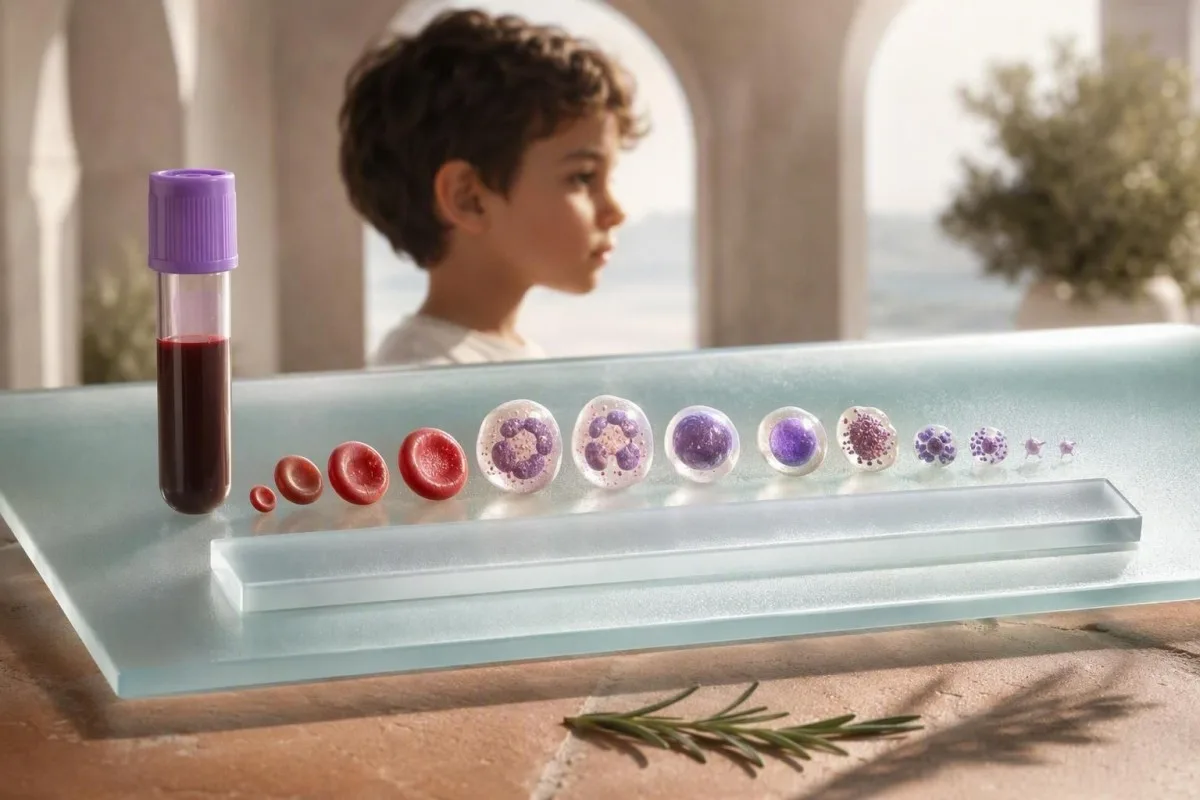
DI gali tvarkyti vaiko laboratorinius rezultatus ir paaiškinti nepažįstamas sąvokas, tačiau negali pakeisti vaikų gydytojo, kuris žino vaiko amžių, augimo eigą, apžiūrą ir simptomus.


- Trumpas atsakymas: DI gali aiškinti vaikų kraujo tyrimų modelius kaip papildomą ugdymo priemonę, tačiau diagnostikos ir gydymo sprendimus turi priimti vaikų gydytojas.
- Amžiaus specifiniai intervalai: Limfocitų skaičius, kuris yra tikėtinas 2 metų amžiaus, gali būti pažymėtas kaip aukštas pagal suaugusiųjų atskaitos intervalą.
- Brendimo svarba: Šarminė fosfatazė gali pakilti virš 300 IU/L kaulų augimo metu be kepenų ligos.
- Skubūs simptomai: Kvėpavimo sutrikimai, sumišimas, traukuliai, mėlynos lūpos, sunki dehidratacija ar labai blogai besijaučiantis vaikas reikalauja skubios medicininės pagalbos, nepaisant DI ataskaitos.
- Mėginio kokybė: Hemolizė, vėluojantis apdorojimas ir EDTA trombocitų krešulių susidarymas gali sukelti klaidingus kalio, LDH ar trombocitų rezultatus.
- Tendencijos vertė: Rezultatų palyginimas toje pačioje laboratorijoje per kelias savaites ar mėnesius dažnai yra naudingesnis nei reagavimas į vieną ribinį rezultatą.
- Savarankiško gydymo netaikyti: Tėvai neturėtų pradėti geležies, vitamino D, skydliaukės gydymo ar elektrolitų papildų vien tik remdamiesi internetinėmis laboratorinių tyrimų rezultatų interpretacijomis.
- Privatumas: Vaikų ataskaita turėtų būti įkelta tik gavus tėvų ar teisėto globėjo sutikimą ir atidžiai pašalinus nereikalingus identifikatorius.
Ką DI gali ir ko negali padaryti su vaiko kraujo tyrimu
Dirbtinis intelektas gali interpretuoti kraujo tyrimo rezultatus vaikams tik kaip struktūrizuotą paaiškinimą, o ne kaip diagnozę ar pediatrinės apžvalgos pakaitalą. Jis gali nustatyti pažymėtą reikšmę, konvertuoti vienetus, apibūdinti dažniausias priežastis ir pateikti klausimus gydytojui; jis negali įvertinti hidratacijos, vystymosi stadijos, apžiūros duomenų ar to, kaip sunkiai atrodo vaikas. Nuo 2026 m. rugsėjo 6 d. šis skirtumas išlieka saugos riba, kurią dažniausiai aptariu su tėvais.
Aš esu daktaras Thomas Klein, ir atlikdamas klinikinę apžvalgą mačiau, kaip normalus kūdikio CBC sukėlė nereikalingą nerimą, kai buvo taikomi suaugusiųjų diapazonai. Rezultatas, viršijantis spausdintą diapazoną, automatiškai nereiškia, kad vaikui jis yra nenormalus, nes daugelyje ataskaitų pagal numatytuosius nustatymus naudojami platūs arba suaugusiųjų diapazonai. Protinga dirbtinio intelekto sveikatos ataskaita turėtų nurodyti, kokį referencinį intervalą ji naudojo, ir nukreipti šeimas atgal pas paskyrusį gydytoją.
Kantesti yra AI kraujo tyrimo analizatorius sukurta organizuoti laboratorinius duomenis ir paaiškinti tendencijas paprasta kalba; pediatrinėms ataskaitoms mūsų rezultatai turėtų būti laikomi pokalbio pradžia su pediatru, o ne leidimu veikti savarankiškai. Karščiuojančiam 18 mėnesių vaikui, kurio ataskaita atrodo raminanti, vis tiek gali prireikti tos pačios dienos apžiūros, jei jis apatiškas, sunkiai kvėpuoja ar mažai geria.
Internetinė laboratorinių tyrimų rezultatų interpretacija yra naudingiausia, kai ji chaotišką PDF paverčia praktiniais klausimais: Ar vaikas buvo nevalgęs? Ar neseniai sirgo virusine liga? Ar ūgis ar svoris kerta procentilę? Tėvai taip pat gali peržiūrėti mūsų AI medicininės ataskaitos saugos patikrinimus prieš pasitikėdami bet kokiu automatizuotu paaiškinimu.
Kodėl vaikams reikia amžiaus specifinių laboratorinių atskaitos intervalų
Vaikams reikalingi referenciniai intervalai, atitinkantys amžių, lytį, brendimo stadiją, tyrimą ir kartais nėštumo amžių. Skaičius gali žymiai pasikeisti tarp kūdikystės, mokyklinio amžiaus ir paauglystės, kol vaikas jaučiasi gerai.
Naujagimio hemoglobino kiekis paprastai yra apie 14–22 g/dL, o tipinis 1–5 metų vaikų diapazonas yra maždaug 11,0–13,5 g/dL; laboratorijos nustato savo patvirtintus intervalus. Fiziologinis kritimas po gimimo yra tikėtinas, tačiau tas pats hemoglobino kiekis 9 g/dL reikalauja skirtingo skubumo vertinimo, ar jam yra gerai besivystantis 2 mėnesių kūdikis, ar liesas, tachikardinis 8 metų vaikas.
Absoliutus limfocitų skaičius taip pat priklauso nuo amžiaus. Skaičius apie 4,0 × 10⁹/L gali būti įprastas ikimokyklinio amžiaus vaikui, tačiau viršyti daugelį suaugusiųjų rodiklių, todėl diferencinė analizė turėtų būti atliekama pagal amžių, o ne tik pagal procentus; mūsų limfocitų skaičiaus pagal amžių vadovas paaiškina skirtumą.
Soldin ir kolegos apibūdino, kaip vystymosi fiziologija daro pediatrines intervalus reikšmingai skirtingus nuo suaugusiųjų verčių daugeliui analizių (Soldin ir kt., 2005). Praktiškai, pirmiausia noriu laboratorijos nustatyto intervalo, tada tikslaus vaiko amžiaus paėmimo metu – ne bendro internetinio diapazono.
Kaip augimas ir brendimas keičia laboratorinius rezultatus
Augimas ir brendimas gali pakeisti šarminę fosfatazę, hemoglobiną, feritiną, lipidus ir lytinius hormonus tiek, kad suaugusiojo ataskaitoje atrodytų kaip liga. Vaiko augimo šuolio laikas dažnai paaiškina daugiau nei vienas pažymėtas skaičius.
Greito kaulų augimo metu, šarminė fosfatazė (ALP) gali viršyti 300 TV/L ir likti normali amžiui, nes osteoblastų aktyvumas yra didelis. Padidėjusi ALP su normaliu bilirubinu, GGT, kalciu, fosfatu, simptomais ir augimo istorija yra labai skirtingas modelis nei cholestazinis kepenų sutrikimas; žr. mūsų paaiškinimą apie ALP po kaulų augimo.
Brendimas prideda dar vieną sluoksnį. Berniukams hemoglobino kiekis dažnai padidėja, kai testosteronas didina raudonųjų kraujo kūnelių gamybą, o paauglėms, kurios menstruuoja, gali išsivystyti geležies trūkumas, feritino kiekis yra mažesnis nei 15 ng/mL net prieš nukrintant hemoglobinui. 2011 m. NHLBI pediatrinė kardiovaskulinė rekomendacija taip pat pripažįsta, kad lipidų kiekis skiriasi priklausomai nuo brendimo ir turėtų būti vertinamas naudojant pediatrines ribines vertes (Ekspertų grupė, 2011).
Kantesti yra AI kraujo tyrimo rezultatų interpretavimo platforma tai gali parodyti šiuos raidos trūkumus, bet negali patikimai nustatyti Tanner stadijos pagal laboratorinį PDF. Gydytojas gali pagrįstai paklausti apie menstruacijas, augimo greitį, mitybą, sportinę treniruotę, vaistus ir šeimos brendimo laiką prieš interpretuodamas hormonų ar geležies tyrimų rezultatus.
Kodėl naujagimių ir neišnešiotų kūdikių rezultatus turi peržiūrėti specialistai
Naujagimio ir neišnešioto naujagimio laboratorinių tyrimų rezultatai neturėtų būti interpretuojami tik pagal bendrąjį DI išvestį, nes normali fiziologija keičiasi valandomis ir dienomis po gimimo. Bilirubinas, gliukozė, kalcis, hematokritas ir skydliaukės patikrinimas reikalauja laiku atlikto neonatologinio konteksto.
Bendras bilirubino koncentracijos kiekis 12 mg/dL (205 µmol/L) gali būti stebimas arba gali prireikti skubaus gydymo, priklausomai nuo amžiaus po gimimo valandomis, nėštumo trukmės, maitinimo, hemolizės rizikos ir padidėjimo spartos. Štai kodėl naujagimio geltai vertinti naudojamos valandomis specifinės nomogramos ir klinikiniai vertinimai, o ne vienas universalus slenkstis.
Gliukozės kiekis plazmoje žemiau 47 mg/dL (2.6 mmol/L) dažnai naudojamas kaip darbinis slenkstis rizikos grupei priklausančių naujagimių protokolose, tačiau gydymas priklauso nuo simptomų, maitinimo, pakartotinio matavimo ir vietinių neonatologinių rekomendacijų. Kulno dūrio rezultatas taip pat gali skirtis nuo greitai apdoroto laboratorinio plazmos kiekio.
Tėvai turėtų vertinti nenormalų naujagimio patikrinimo pranešimą kaip greito kontakto kanalą, o ne internetinio tyrimo problemą. Mūsų apžvalgoje apie naujagimio patikrinimo vėliavėles paaiškinama, kodėl kai kuriems rezultatams reikia tą pačią dieną susisiekti, o kitiems reikia planuojamo pakartotinio tyrimo.
Kaip skaityti vaiko CBC nepergyvenant
Vaikų bendras kraujo tyrimas yra naudingas, kai jis vertinamas kaip visuma: hemoglobinas, MCV, retikulocitai, leukocitų diferencinė analizė, trombocitai, simptomai ir trajektorija priklauso kartu. Atskirai aukšta ar žema vėliavėlė retai suteikia diagnozę.
Hemoglobinas mažesnis nei 11,0 g/dL jaunam vaikui dažnai skatina įvertinti geležies trūkumą, mitybą, apsinuodijimo švinu riziką, lėtinį uždegimą, hemoglobinopatiją ir kraujavimą; MCV ir feritinas padeda susiaurinti klausimą. Feritinas gali atrodyti klaidingai raminantis infekcijos metu, nes jis didėja kaip ūminės fazės reaktantas.
Absoliutus neutrofilų skaičius, mažesnis nei 1,5 × 10⁹/L daugeliu atvejų vadinama neutropenija, tačiau skubumas labai skiriasi priklausomai nuo amžiaus, kilmės, trukmės, karščiavimo ir sumažėjimo gylio. Sveikas vaikas, kurio ANC yra 1,2 × 10⁹/L po viruso, nėra tas pats klinicinis atvejis kaip vaikas, turintis karščiavimą ir ANC žemiau 0,5 × 10⁹/L; skaitykite mūsų neutrofilų diapazono vadovą.
Kai peržiūriu bendrą kraujo tyrimą po gastroenterito, aš patikrinu, ar hemokoncentracija paaiškina šiek tiek padidėjusį hemoglobino ar trombocitų kiekį, prieš darydamas prielaidą apie kaulų čiulpų problemą. Pakartotinis tyrimas po pasveikimo dažnai yra saugesnis nei platus tyrimas, nebent mėlynės, nuolatinis karščiavimas, kaulų skausmas, svorio kritimas ar reikšmingas blyškumo pokytis keičia riziką.
Kodėl mėginio tvarkymas gali klaidinti DI ir gydytojus
Prasta mėginio paėmimas arba vėlavimas jį apdorojant gali padaryti vaiko kraujo tyrimo rezultatą neteisingu dar prieš tai, kai jį pamatytų žmogus ar algoritmas. Hemolizė, sudėtingas mėginio paėmimas, ilgas turniketo laikas ir netinkamas mėgintuvėlis gali pakeisti rezultatus pakankamai, kad sukeltų klaidingus pavojaus signalus.
Hemolizė išlaisvina intraselulinį kalį ir LDH į mėginį, todėl aukštas kalio kiekis su hemolizės vėliavėle gali reikalauti skubaus pakartotinio tyrimo, o ne neatidėliotino gydymo. Tačiau vaikui, turinčiam silpnumą, palpitacijas, inkstų ligą ar EKG susirūpinimą, vis tiek reikia greito klinikinio vertinimo; mėginio perspėjimas neįrodo, kad kalis yra nekenksmingas.
gali sukelti dirbtinai mažą trombocitų skaičių, kartais mažesnį nei 100 × 10⁹/L, nors vaiko trombocitai yra normalūs. Laboratorinis kraujo tepinėlio tyrimas arba pakartojimas citrate vamzdelyje gali paaiškinti šią dažną ikianalitinę klaidą; mūsų straipsnis apie EDTA trombocitų sulipimas parodo, kodėl vienas skaičius gali suklaidinti.
Kantesti’s AI pagrindu veikiantis kraujo tyrimų analizės įrankis gali pažymėti vidinius neatitikimus ir matomus laboratorinius komentarus, bet negali patikrinti vamzdelio ar pastebėti sudėtingo paėmimo. Tėvai turėtų nufotografuoti visą ataskaitą, įskaitant informaciją apie mėginio kokybę, paėmimo laiką ir referencinius intervalus – ne tik pažymėtą puslapį.
Kaip karščiavimas, dehidratacija ir virusai laikinai keičia tyrimus
Ūmios ligos gali laikinai pakeisti gliukozės, natrio, kreatinino, baltųjų kraujo kūnelių skaičių, CRP, feritino ir kepenų fermentų kiekius vaikams. Rezultatas karščiavimo metu dažnai turėtų būti lyginamas su pakartotiniu tyrimu po pasveikimo, o ne laikomas vaiko bazine linija.
Vėmimas ir sumažėjęs maisto priėmimas gali sutankinti hemoglobiną ir šlapalo kiekį, o sunki viduriavimas gali sumažinti bikarbonatų ir sutrikdyti natrio ar kalio kiekį. Natrio kiekis žemiau 130 mmol/L, ypač kartu su sumišimu, stipriu galvos skausmu, traukuliais ar nuolatiniu vėmimu, reikalauja skubios medicininės apžiūros, o ne paaiškinimo internete.
CRP didėja ir mažėja greičiau nei ESR, tačiau nė vienas tyrimas savaime neidentifikuoja konkrečios priežasties. CRP lygis 40 mg/l gali pasireikšti sergant virusinėmis ar bakterinėmis ligomis, audinių pažeidimu ir uždegiminėmis ligomis; vaiko išvaizda, karščiavimo trukmė, apžiūra ir kartais pasėliai yra svarbesni nei vienas rodiklis.
Dr. Thomaso Kleino praktinė taisyklė yra paprasta: užrašykite ligos dieną, vaistus, skysčių vartojimą ir temperatūrą šalia rezultato. Tas mažas įrašas padaro laboratorinius pokyčius tarp vizitų daug lengviau suprantamus pediatrui.
Simptomai, kurie panaikina bet kokią raminamąją DI ataskaitą
Skubūs simptomai viršija įprastą dirbtinio intelekto ataskaitą, nes laboratoriniai tyrimai neleidžia atmesti daugelio pediatrijos atvejų. Vaikas, kuriam sunku kvėpuoti, sunku pažadinti, mėlynos lūpos, traukuliai ar sunkios dehidracijos požymiai, reikalauja skubios pagalbos dabar.
Skubiai kreipkitės pagalbos į vaiką, turintį neišblunkančių bėrimų kartu su karščiavimu, sustingusiu kaklu, nuolatiniu stipriu galvos skausmu, pakitusiu elgesiu ar prasta perfuzija, pvz., šaltomis dėmėtomis rankomis ir žymiai sumažėjusiu šlapinimusi. CBC ar CRP negali saugiai atmesti ankstyvos sepsio, meningito, apendicito, diabetinės ketoacidozės ar alerginės avarijos.
Dėl diabeto rizikos vėmimas su giliu ar greitu kvėpavimu, pilvo skausmas, mieguistumas ar vidutinis-dideli ketonai reikalauja skubios apžiūros. Gliukozės kiekis kraujyje 200 mg/dL (11,1 mmol/L) su klasikine simptomatika palaiko diabeto vertinimą, tačiau ketoacidozės vertinimui reikia gliukozės, ketonų, elektrolitų, rūgščių-šarmų balanso ir gydytojo.
Rezultatas negali įvertinti kvėpavimo darbo ar kapiliarų prisipildymo. Tėvai, susirūpinę dėl krūtinės simptomų, gali naudoti mūsų skubių kraujo tyrimų simptomų vadovą kontekstui, tačiau neturėtų laukti automatinės analizės, kai vaikas atrodo sunkiai sergantis.
Vaistai, vitaminai ir papildai, kurie keičia vaikiškus laboratorinius tyrimus
Įprasti vaistai ir maisto papildai gali pakeisti ar sutrikdyti pediatrijos laboratorinius tyrimus, todėl dirbtiniam intelektui reikia visiško vaistų sąrašo, kad būtų išvengta klaidinančio paaiškinimo. Biotinas, kortikosteroidai, antikonvulsantai, geležis, vitaminas D ir neseniai duotos skystosios terpės yra dažni pavyzdžiai.
Didelė biotino dozė gali sutrikdyti kai kuriuos imunoanalizės tyrimus ir lemti klaidingus skydliaukės ar hormonų rezultatus; šeimos turėtų informuoti gydytoją apie plaukų, nagų ar multivitaminų preparatus. Dozė svarbi: įprastas maistinis vartojimas skiriasi nuo papildų, kuriuose yra 5 000–10 000 mikrogramų per dieną.
Geležies negalima pradėti vartoti vien todėl, kad vaikas atrodo pavargęs arba turi žemą normalų feritino kiekį. Per didelis geležies kiekis gali būti kenksmingas, o diagnostinis ištyrimas skiriasi, jei yra geležies trūkumas, talasemijos bruožai, lėtinis uždegimas ir apsinuodijimas švinu; mūsų geležies tyrimų vadovas parodo, kodėl transferino sotumas ir feritinas vertinami kartu.
Vitamino D gydymas yra kita sritis, kurioje svarbus kontekstas. 25-hidroksivitamino D koncentracija žemiau 20 ng/mL (50 nmol/L) dažnai laikoma nepakankama, tačiau pediatrinis dozavimas priklauso nuo amžiaus, kūno dydžio, dietos, malabsorbcijos rizikos, kalcio ir vietinių rekomendacijų, o ne nuo bendro dirbtinio intelekto mitybos plano.
Kodėl tendencijos dažniausiai yra saugesnės nei vienas vaiko rezultatas
Pakartotiniai rezultatai iš tos pačios laboratorijos dažnai yra informatyvesni nei vienas ribinis pediatrinis rodmuo. Tendencijos gali atskleisti sveikimo eigą, augimo sąlygotus pokyčius, vaistų poveikį ar nuolatinį modelį, kurį reikėtų peržiūrėti specialistui.
Feritino pokytis nuo 8 iki 28 ng/mL po gydytojo paskirto gydymo pasako aiškesnę istoriją nei vienas 18 ng/mL rodmuo, ypač jei tuo pačiu metu sumažėjo CRP. Skydliaukės tyrimui TSH pokytis yra reikšmingas tik atsižvelgiant į surinkimo laiką, tyrimą, ligą ir vaistų laikymosi reikalavimus.
Kantesti yra AI laboratorinio tyrimo interpretavimo paslaugoje kuri gali parodyti istorinius ataskaitų palyginimus ir nurodyti didelius pokyčius, tačiau sistema niekada neturėtų teigti, kad tendencija įrodo diagnozę. Laboratorijos analitiniai svyravimai ir normalūs biologiniai svyravimai gali paaiškinti nedidelius pokyčius, ypač prie sprendimo ribos.
Išsaugokite originalius PDF failus ir pažymėkite, ar vaikas karščiavo, intensyviai sportavo, badavo, ar turėjo augimo šuolį, ar buvo pakeisti vaistai. Mūsų išilginių rezultatų gidas apžvelgia detales, kurios daro pakartotinius tyrimus kliniškai naudingus.
Ką tėvai turėtų įtraukti prieš naudodami internetinį laboratorinių tyrimų aiškinimą
Tėvai turėtų įkelti pilną ataskaitą, tikslų amžių, gimties metu nustatytą lytį, jei ji svarbi, surinkimo datą ir laiką bei pačios laboratorijos referencinius intervalus. Nupjauti ekrano kopijas be vienetų ar mėginio komentarų dažnai lemia nesaugią dirbtinio intelekto medicininių ataskaitų analizę.
Naudingas pateikimas apima vaiko amžių metais ir mėnesiais, ūgio ir svorio tendenciją, jei ji svarbi, neseną ligą, badavimo būklę, dabartinius vaistus, papildus ir klinikinį klausimą, dėl kurio buvo atliktas tyrimas. Neįtraukite vaiko pilno adreso, mokyklos duomenų ar nereikalingų identifikatorių.
Kantesti AI palaiko ataskaitų įkėlimą keliomis kalbomis ir gali grąžinti paaiškinimą maždaug 60 sekundžių, bet greitis nėra klinikinė analizė. Mūsų PDF įkėlimo kontrolinis sąrašas ypač naudinga, kai reikia suprasti dešimtaines kablelius, neryškias nuotraukas, pasikartojančius tyrimus ir neteisingus matavimo vienetus.
Jei ataskaitoje nurodyta ‘kritinis’, ‘skambinti dėl rezultato’, ‘skubus peržiūrėjimas’ arba prašoma nedelsiant pakartoti tyrimą, pirmiausia susisiekite su užsakymo tarnyba. Internetinis aiškinimas neturėtų vėlinti laboratorijos pačios eskalavimo procedūros.
Klausimai, kuriuos iš DI ataskaitos reikia užduoti vaikų gydytojui
Saugiausias AI ataskaitos naudojimas yra formuluoti tikslius klausimus gydytojui, o ne sudaryti gydymo planą. Paklauskite, ar intervalas yra pediatrinis, ar modelis atitinka neseniai sirgtą ligą ar augimą, ir ar reikia pakartoti tyrimą.
Geri klausimai apima: ‘Kuri vertė yra svarbiausia?’ ‘Ar šioje laboratorijoje naudojamas amžiui pritaikytas intervalas?’ ‘Ar turėtume pakartoti tyrimą, kai mano vaikas pasveiks?’ ir ‘Kokie simptomai paskatintų jus norėti mus aplankyti anksčiau?’ Tie klausimai yra naudingesni nei klausti, ar kiekvienas rodiklis reiškia ligą.
Dėl mažo hemoglobino paklauskite, ar retikulocitai, MCV, feritinas, transferino prisotinimas, mityba ir šeimos kilmė keičia diferencialą. Dėl padidėjusio ALT paklauskite apie neseniai sirgtą virusinę ligą, vaistus, svorio kitimą, raumenų pažeidimus ir ar reikia pakartoti ALT ir AST; mūsų ALT paaiškinimas suteikia tėvams žodyną, nepakeičiant vertinimo.
Jei AI atsakymas ir pediatras nesutaria, gydytojo interpretacija turėtų būti pirmenybė, nes jis mato vaiką. Antroji pediatrinė nuomonė yra pagrįsta, kai nenormalumai išlieka, paaiškinimas lieka neaiškus arba simptomai neatitinka siūlomo plano.
Privatumo ir sutikimo taisyklės, taikomos vaikų laboratoriniams tyrimams
Vaiko laboratorinių tyrimų ataskaita yra jautri sveikatos informacija, kurią turėtų dalintis tik tėvas ar teisėtas globėjas, naudodamas privatumą atitinkančią paslaugą. Šeimos turėtų suprasti, kas gali pasiekti ataskaitą, kiek laiko ji saugoma ir kaip veikia prašymai ją ištrinti.
Prieš įkeldami ataskaitą, pašalinkite mokyklos identifikatorius, namų adresus ir nesusijusią šeimos informaciją. Išsaugokite surinkimo datą, laboratorijos pavadinimą, referencinius intervalus ir gydytojo komentarus, nes pašalinus šiuos duomenis, pediatrinis aiškinimas gali tapti mažiau saugus.
Kantesti AI naudoja GDPR reikalavimus atitinkantį, į privatumą orientuotą duomenų tvarkymą, tačiau globėjai vis tiek turėtų atidžiai apsvarstyti, ar internetinė analizė yra tinkama vaiko situacijai. Bendras šeimos prieigos naudojimas turėtų būti apgalvotas ir apribotas; mūsų vadovas dėl šeimos rezultatų dalijimosi apima praktinius sutikimo sprendimus.
Paaugliai nusipelno būti išklausyti, kaip dalijamasi jų sveikatos informacija, ypač atliekant jautrius tyrimus. Vietiniai taisyklių dėl konfidencialumo ir sutikimo skiriasi, todėl šeimos turėtų paklausti gydymo tarnybos, kaip rezultatai bus perduodami tėvams ir jaunuoliui.
Kaip turėtų atrodyti saugus vaikų DI priežiūra
Saugus pediatrinis AI aiškinimas turėtų atskleisti savo ribas, išsaugoti originalius laboratorinius duomenis, nurodyti skubius pavojingus ženklus ir nukreipti vartotojus į žmonių klinikinę peržiūrą. Jis niekada neturėtų diagnozuoti vaiko pagal vieną tyrimų rinkinį, skirti vaistų ar raminti šeimas, atkalbinant jas nuo skubios pagalbos.
Tikslumas turi kelis sluoksnius: teisingai perskaityti PDF, suderinti analitus ir vienetus, pasirinkti tinkamą intervalą ir interpretuoti modelį kliniškai. Akivaizdžiai tiksli transkripcija vis tiek gali lemti nesaugų išvadą, jei trūksta 14-mečio brendimo stadijos, karščiavimo ar medikamentų istorijos informacijos.
„Kantesti“ mūsų medicinos komanda peržiūri saugos ribas ir eskalavimo kalbą; skaitytojai gali matyti mūsų požiūrį į klinikinis patvirtinimas ir gydytojus, dirbančius Medicinos patariamoji taryba. Kantesti yra AI biomarkerių interpretavimo platforma kad kitas klinicinis pokalbis būtų aiškesnis, niekada jo nekeiskite.
Mano pagrindinė išvada po 15 metų praktikos yra paprasta: naudokite DI, kad suprastumėte ataskaitą, išsaugotumėte tendenciją ir paruoštumėte klausimus. Naudokite pediatrą, kad nuspręstumėte, ką rezultatas reiškia konkrečiam vaikui, šiandien.
Dažnai užduodami klausimai
Ar dirbtinis intelektas gali interpretuoti vaikų kraujo tyrimus?
DI gali interpretuoti vaikų kraujo tyrimus kaip mokomąją priemonę, tačiau be pediatrinės klinikinės apžiūros ji negali saugiai diagnozuoti vaiko ligos ar jo gydyti. Vertinant vaikų tyrimų rezultatus būtina atsižvelgti į amžiui būdingus atskaitos intervalus, lytinio brendimo kontekstą, simptomus, apžiūros duomenis ir žinias apie mėginio kokybę. Pavyzdžiui, augimo šuolio metu ALP rodmuo, viršijantis 300 IU/L, gali būti tikėtinas, o suaugusiojo toks pats rezultatas gali būti vertinamas kitaip. Tėvai turėtų naudoti DI paaiškinimą, kad pasirengtų klausimams gydytojui, paskyrusiam tyrimą.
Kodėl suaugusiųjų kraujo tyrimų normos ribos yra nesaugios vaikams?
Suaugusiųjų laboratorinių tyrimų intervalai vaikams yra nesaugūs, nes hemoglobino, limfocitų, šarminės fosfatazės, kreatinino, hormonų ir daugelio kitų analitų rodikliai kinta vaikui vystantis. Ikimokyklinio amžiaus vaiko absoliutus limfocitų skaičius paprastai gali būti apie 4,0 × 10⁹/l, tačiau suaugusiųjų tyrimo ataskaitoje toks rodiklis gali būti pažymėtas kaip padidėjęs. Naujagimių bilirubino rodiklis taip pat turi būti vertinamas pagal amžių valandomis, o ne pagal vieną universalų skaičių. Kai tik įmanoma, reikėtų remtis konkrečios laboratorijos vaikams skirtu referenciniu intervalu ir tiksliu vaiko amžiumi.
Kada turėčiau kreiptis skubiosios medicinos pagalbos, užuot laukęs dirbtinio intelekto laboratorinių tyrimų rezultatų?
Nedelsdami kreipkitės į skubią medicinos pagalbą, jei vaikas sunkiai kvėpuoja, pamėlsta lūpos, ištinka traukuliai, yra sutrikusi sąmonė, sunku pažadinti, yra ryški dehidratacija arba atrodo labai blogai. Natrio koncentracija, mažesnė nei 130 mmol/l, kartu su neurologiniais simptomais, arba vėmimas su giliu kvėpavimu ir ketonais, taip pat reikalauja skubaus medicininio įvertinimo. Normalus CBC, CRP ar AI sveikatos ataskaitos rezultatas negali atmesti daugelio skubių būklių. Simptomai ir vaiko išvaizda turi būti svarbesni už interpretavimą pagal internetinių tyrimų rezultatus.
Ar sunkus kraujo paėmimas gali sukelti klaidingus nenormalius rezultatus vaikams?
Taip, sudėtingas mėginys gali sukelti klaidingus nenormalius rezultatus vaikams. Hemolizė gali klaidingai padidinti kalio ir LDH koncentraciją, o EDTA trombocitų agliutinacija gali lemti klaidingai mažą trombocitų skaičių, kartais mažesnį nei 100 × 10⁹/l. Laboratorija gali pridėti hemolizės arba agliutinacijos komentarą, o pakartotinis mėginys arba kraujo tepinėlio peržiūra gali padėti patikslinti rezultatą. Šeimos niekada neturėtų manyti, kad pažymėta reikšmė yra tikra ar klaidinga, nepasitarus su gydytoju.
Ar tėvai turėtų duoti geležies ar vitamino D po AI laboratorijos ataskaitos?
Tėvai neturėtų pradėti vartoti geležies ar didelės vitamino D dozės vien remdamiesi dirbtinio intelekto laboratorinio tyrimo rezultatu. Feritino kiekis mažesnis nei 15 ng/mL gali rodyti geležies trūkumą, tačiau infekcija gali padidinti feritino kiekį, o anemija turi keletą kitų priežasčių, kurios reikalauja skirtingo gydymo. 25-hidroksivitamino D kiekis mažesnis nei 20 ng/mL dažnai reikalauja gydytojo paskirto gydymo, kurio dozavimas priklauso nuo amžiaus, kūno dydžio, kalcio kiekio, mitybos ir medicininės istorijos. Per didelis geležies ir vitamino D kiekis gali pakenkti.
Gaukite AI pagrįstą kraujo tyrimo analizę jau šiandien
Prisijunkite prie daugiau nei 2 milijonų naudotojų visame pasaulyje, kurie pasitiki Kantesti dėl momentinės, tikslios laboratorinių tyrimų analizės. Įkelkite savo kraujo tyrimo rezultatus ir per kelias sekundes gaukite išsamią 15,000+ biomarkerių interpretaciją.
📚 Nuorodomis pagrįsti moksliniai leidiniai
Klein, T., Mitchell, S., & Weber, H. (2026). Serumo baltymų vadovas: globulinų, albumino ir A/G santykio kraujo tyrimas. Kantesti AI Medical Research.
Klein, T., Mitchell, S., & Weber, H. (2026). C3 C4 komplemento kraujo tyrimas ir ANA titro vadovas. Kantesti AI Medical Research.
📖 Išorinės medicininės nuorodos
⚕️ Medicininis atsakomybės apribojimas
Šis straipsnis skirtas tik mokymo tikslais ir nesudaro medicininės konsultacijos. Visada kreipkitės į kvalifikuotą sveikatos priežiūros specialistą dėl diagnozės ir gydymo sprendimų.
E-E-A-T patikimumo signalai
Patirtis
Gydytojo vadovaujama klinikinė laboratorinių tyrimų interpretavimo darbo eigų peržiūra.
Ekspertizė
Laboratorinės medicinos dėmesys tam, kaip biomarkeriai elgiasi klinikiniame kontekste.
Autoritetas
Parašyta dr. Thomas Klein, peržiūrėjo dr. Sarah Mitchell ir prof. dr. Hans Weber.
Patikimumas
Įrodymais pagrįsta interpretacija su aiškiais tolesnių veiksmų keliais, siekiant sumažinti nerimą.