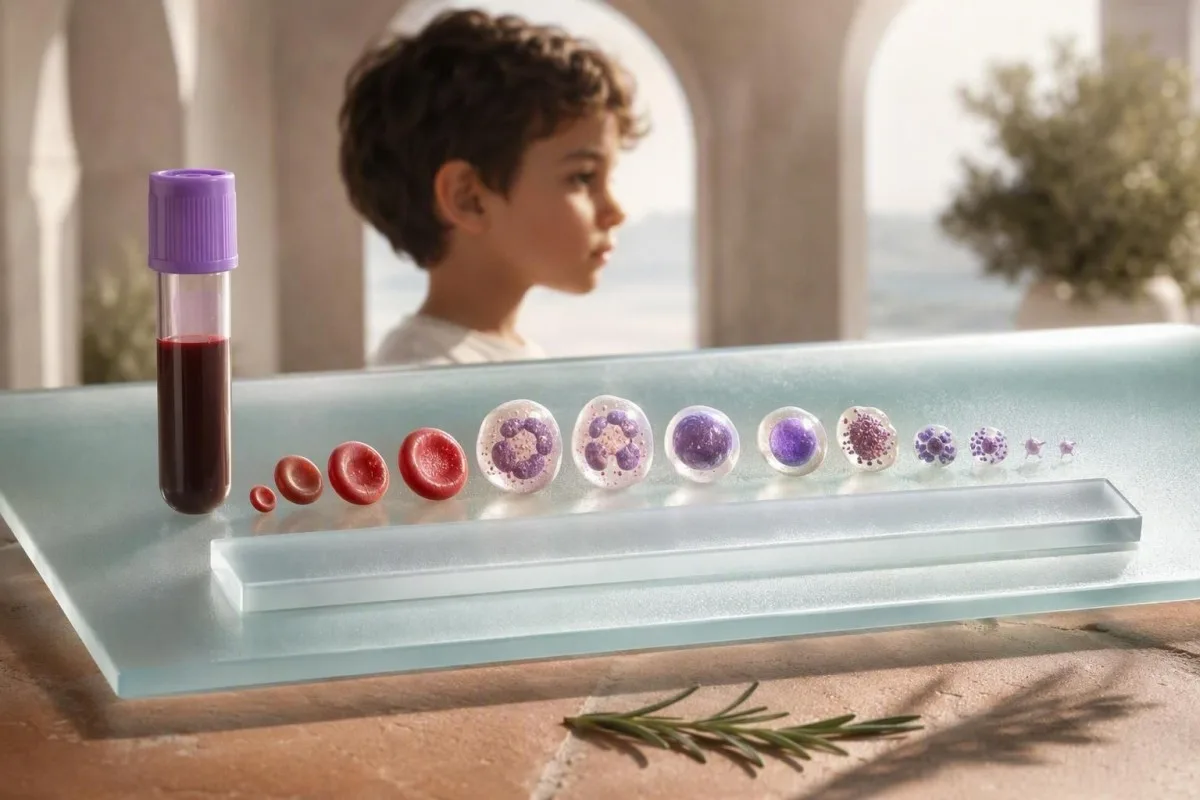
Արհեստական բանականությունը կարող է կազմակերպել երեխայի լաբորատոր արդյունքները և բացատրել անծանոթ տերմինները, սակայն այն չի կարող փոխարինել մանկաբույժին, ով ճանաչում է երեխայի տարիքը, աճի միտումը, զննումը և ախտանիշները։.


- Ուղիղ պատասխան․ Արհեստական բանականությունը կարող է մեկնաբանել արյան անալիզի օրինակները երեխաների համար որպես կրթական հավելում, սակայն ախտորոշման և բուժման որոշումները պետք է կայացնի մանկաբույժը։.
- Տարիքային միջակայքեր. 2 տարեկանում ակնկալվող լիմֆոցիտների քանակը կարող է որպես բարձր նշվել մեծահասակների հղման միջակայքի կողմից։.
- Հասունացումը կարևոր է. Ալկալային ֆոսֆատազան կարող է բարձրանալ 300 IU/L-ից վեր ոսկրային աճի ժամանակ՝ առանց լյարդի հիվանդության։.
- Արտակարգ ախտանիշներ․ Շնչառության դժվարություն, շփոթություն, ցնցում, շուրթերի կապույտացում, ծանր ջրազրկում կամ շատ վատ երեխա պահանջում են անհապաղ կլինիկական օգնություն՝ անկախ Արհեստական բանականության զեկույցից։.
- Նմուշի որակ. Հեմոլիզը, ուշացած մշակումը և EDTA-ի թրոմբոցիտների կուտակումը կարող են ստեղծել մոլորության մեջ գցող կալիումի, LDH-ի կամ թրոմբոցիտների արդյունքներ։.
- Թրենդային արժեք. Նույն լաբորատորիայից շաբաթների կամ ամիսների ընթացքում ստացված արդյունքների համեմատությունը հաճախ ավելի օգտակար է, քան սահմանային մեկ արդյունքին արձագանքելը։.
- Ոչ ինքնաբուժում. Ծնողները չպետք է սկսեն երկաթ, վիտամին D, վահանաձև գեղձի բուժում կամ էլեկտրոլիտային հավելումներ միայն առցանց լաբորատոր արդյունքների մեկնաբանությունից։.
- Գաղտնիություն. Երեխայի հաշվետվությունը պետք է վերբեռնվի միայն ծնողի կամ օրինական խնամակալի համաձայնությամբ և անհարկի նույնականացնողների մանրակրկիտ հեռացմամբ։.
Ինչ կարող է և ինչ չի կարող անել արհեստական բանականությունը երեխայի արյան անալիզի հետ
Արհեստական բանականությունը կարող է մեկնաբանել արյան անալիզի արդյունքներ երեխաների մոտ միայն որպես կառուցված մեկնաբանություն, ոչ թե որպես ախտորոշում կամ մանկաբարձական հետազոտության փոխարինում։. Այն կարող է նույնացնել դրոշակված արժեքը, փոխարկել միավորները, նկարագրել ընդհանուր պատճառները և հարցեր բարձրացնել կլինիցիստի համար. այն չի կարող գնահատել հիդրատացիան, զարգացման փուլը, հետազոտության արդյունքները կամ այն, թե որքան հիվանդ է երեխան։ Սեպտեմբերի 6, 2026-ի դրությամբ այդ տարբերակումը մնում է անվտանգության սահմանը, որը ես ամենից հաճախ քննարկում եմ ծնողների հետ։.
Ես դոկտոր Թոմաս Կլայնն եմ, և կլինիկական վերանայման ժամանակ ես տեսել եմ, որ նորմալ ունեցած երեխայի CBC-ն անհարկի մտահոգություն է առաջացրել, երբ կիրառվել են մեծահասակների տիրույթները։. Արտահայտված տիրույթից դուրս գտնվող արդյունքը երեխայի համար ավտոմատաբար ոչ նորմալ չէ, քանի որ շատ հաշվետվություններ լռելյայն օգտագործում են լայն կամ մեծահասակներից ստացված դրոշակներ։ Խելամիտ AI առողջության հաշվետվությունը պետք է նշի, թե որ հղման ընդմիջումն է օգտագործել և ընտանիքներին ուղղորդի հետ ուղարկող կլինիցիստի մոտ։.
Կանտեստին մի է AI արյան անալիզատոր նախագծված լաբորատոր տվյալները կազմակերպելու և օրինաչափությունները պարզ լեզվով բացատրելու համար; մանկական հաշվետվությունների համար մեր արդյունքը պետք է դիտարկվի որպես զրույցի սկիզբ մանկաբարձի համար, այլ ոչ թե որպես անկախ գործելու թույլտվություն։ Տենդ ունեցող 18-ամսյա երեխան, ում հաշվետվությունը հանգստացնող տեսք ունի, կարող է դեռևս անհրաժեշտ լինել նույն օրը գնահատել, եթե նա լethargic է, դժվարությամբ է շնչում կամ քիչ է խմում։.
Առցանց լաբորատոր արդյունքների մեկնաբանությունը առավել օգտակար է, երբ այն խառնաշփոթ PDF-ը վերածում է գործնական հարցերի. երեխան ծոմ էր պահում? Կար վերջերս վիրուսային հիվանդություն? Արդյոք հասակը կամ քաշը հատում է տոկոսայինները? Ծնողները նույնպես կարող են վերանայել մեր AI բժշկական հաշվետվության անվտանգության ստուգումները նախքան որևէ ավտոմատացված մեկնաբանության վրա հենվելը։.
Ինչու են երեխաներին անհրաժեշտ տարիքին համապատասխան լաբորատոր հղման միջակայքեր
Երեխաներին անհրաժեշտ են հղման ընդմիջումներ, որոնք համապատասխանում են տարիքին, սեռին, սեռական հասունության փուլին, անալիզին և երբեմն ծնված ժամանակի տարիքին։. Տարիքային հղման գոտիները կանխում են մեծահասակների լաբորատոր դրոշակների՝ ընտանիքները մոլորեցնելը։.
Նորածնի հեմոգլոբինը սովորաբար կազմում է մոտ 14-ից 22 գ/դլ, մինչդեռ 1-ից 5 տարեկան երեխայի համար տիպիկ տիրույթը մոտավորապես 11.0-ից 13.5 գ/դլ է; լաբորատորիաները սահմանում են իրենց սեփական վավերացված միջակայքերը։ Ֆիզիոլոգիական անկումը ծնունդից հետո սպասելի է, բայց 9 գ/դլ նույն հեմոգլոբինը տարբեր հրատապության գնահատման կարիք ունի ծաղկող 2- ամսական երեխայի մոտ, քան փայտացած, դախառած 8-ամյա երեխայի մոտ։.
Լիմֆոցիտների բացարձակ քանակները նույնպես կախված են տարիքից։ Մոտավորապես քանակը 4.0 × 10⁹/լ նախադպրոցական տարիքի երեխայի մոտ կարող է նորմալ լինել, սակայն գերազանցել մեծահասակների շատ տիրույթները, այդ իսկ պատճառով լիմֆոցիտների քանակը պետք է գնահատվի ըստ տարիքի, այլ ոչ միայն տոկոսադրույքով. մեր ուղեցույցը լիմֆոցիտների քանակի վերաբերյալ ըստ տարիքի բացատրում է տարբերությունը։.
Սոլդինը և գործընկերները նկարագրել են, թե ինչպես է զարգացող ֆիզիոլոգիան երեխաների համար նշանակալիորեն տարբերվող միջակայքեր ստեղծում մեծահասակների արժեքներից շատ վերլուծությունների դեպքում (Soldin et al., 2005): Պրակտիկայում ես առաջին հերթին ցանկանում եմ իմանալ լաբորատորիայի սեփական միջակայքը, այնուհետև երեխայի ճշգրիտ տարիքը հավաքման պահին, այլ ոչ թե առցանց ընդհանուր միջակայքը:.
Ինչպես են աճը և հասունացումը փոխում լաբորատոր արդյունքները
Աճը և սեռական հասունացումը կարող են փոփոխել հորմոնալ ֆոսֆատազը, հեմոգլոբինը, ֆերրիտինը, լիպիդները և սեռական հորմոնները այնքանով, որքանով որ մեծահասակների զեկույցում հիվանդության նմանակում կլինի:. Երեխայի աճի կտրուկ շրջանի ժամկետը հաճախ ավելի շատ բացատրություն ունի, քան մեկ առանձին նշված թիվը:.
Արագ ոսկրային աճի ընթացքում, ալկալային ֆոսֆատազը (ALP) կարող է գերազանցել 300 ՄՄ/լ և մնալ նորմալ տարիքի համար, քանի որ օստեոբլաստի ակտիվությունը բարձր է: Բարձրացած ALP-ն նորմալ բիլիռուբինի, GGT-ի, կալցիումի, ֆոսֆատի, ախտանշանների և աճի պատմության հետ միասին շատ տարբերվում է խոլեստատիկ լյարդի հիվանդությունից; տես մեր բացատրությունը ALP ոսկրային աճից հետո.
Սեռական հասունացումը ավելացնում է ևս մեկ շերտ: Հեմոգլոբինը հաճախ բարձրանում է տղաների մոտ, քանի որ տեստոստերոնը մեծացնում է էրիթրոցիտների արտադրությունը, մինչդեռ դաշտան ունեցող դեռահասները կարող են զարգացնել երկաթի դեֆիցիտ՝ ֆերրիտինի մակարդակով ցածր 15 նգ/մլ նույնիսկ մինչև հեմոգլոբինի անկումը: 2011 թ. NHLBI մանկական սրտանոթային ուղեցույցը նույնպես ճանաչում է, որ լիպիդների արժեքները տարբերվում են հասունացմանը զուգընթաց և պետք է գնահատվեն մանկական կտրվածքներով (Expert Panel, 2011):.
Կանտեստին մի է AI արյան անալիզի մեկնաբանություն հարթակ որը կարող է ցույց տալ զարգացման այս թերությունները, բայց այն չի կարող հուսալիորեն եզրակացնել Tanner աստիճանը լաբորատոր PDF-ից։ Կլինիցիստը կարող է ողջամտորեն հարցնել դաշտանների, աճի արագության, սննդակարգի, մարզական մարզումների, դեղորայքի, վաղ հասունացման ընտանեկան ժամկետների մասին՝ նախքան հորմոնի կամ երկաթի վահանակի մեկնաբանությունը։.
Ինչու են նորածինների և վաղաժամ ծնված նորածինների արդյունքները պահանջում մասնագետի վերանայում
Նորածինների և վաղաժամ ծնված նորածինների լաբորատոր արդյունքները չպետք է մեկնաբանվեն միայն ընդհանուր AI ելքի միջոցով, քանի որ ֆիզիոլոգիան նորմալ է փոխվում ծնունդից հետո ժամերի և օրերի ընթացքում։. Բիլիրուբին, գլյուկոզա, կալցիում, հեմատոկրիտ և վահանագեղձի սկրինինգը պահանջում են ժամանակից կախված նորածնային կոնտեքստ։.
Total bilirubin concentration of 12 մգ/դլ (205 մկմոլ/լ) կարող է մոնիտորինգ իրականացվել կամ անհրաժեշտ լինի շտապ բուժում՝ կախված հետծննդյան տարիքից ժամերով, հղիությունից, սնուցումից, հեմոլիզի ռիսկից և աճի արագությունից։ Ահա թե ինչու նորածնային դեղնախտի որոշումները օգտագործում են ժամ-հատուկ նոմոգրամներ և կլինիկական գնահատում, այլ ոչ թե մեկ համընդհանուր շեմ։.
Plasma glucose below 47 մգ/դլ (2.6 մմոլ/լ) ընդհանուր առմամբ օգտագործվում է որպես գործառնական շեմ ռիսկային նորածինների արձանագրություններում, սակայն կառավարումը կախված է ախտանիշներից, սնուցումից, կրկնակի չափումից և տեղական նորածնային ուղեցույցներից։ Կարող է նաև տարբերվել կրունկի ծակոցի արդյունքը լաբորատոր պլազմայի արագ մշակված արժեքից։.
Ծնողները պետք է վերաբերվեն նորածինների սկրինինգի ոչ պատշաճ հաղորդագրությանը որպես արագ կապի ուղի, այլ ոչ թե առցանց հետազոտության խնդիր։ Մեր ակնարկը newborn screening flags բացատրում է, թե ինչու որոշ արդյունքներ պահանջում են նույն օրվա կոնտակտ, մինչդեռ մյուսները պահանջում են պլանավորված կրկնություն։.
Ինչպես կարդալ երեխայի CBC-ն՝ առանց չափից դուրս արձագանքելու
The child’s complete blood count is useful when read as a pattern: hemoglobin, MCV, reticulocytes, white-cell differential, platelets, symptoms, and trajectory belong together. Մեկուսացված բարձր կամ ցածր դրոշակը հազվադեպ է ախտորոշում տալիս։.
Հեմոգլոբինը, եթե ցածր է 11.0 գ/դլ երիտասարդ երեխայի մոտ հաճախ հանգեցնում է երկաթի անբավարարության, սննդակարգի, կապարի ազդեցության ռիսկի, քրոնիկական բորբոքման, հեմոգլոբինոպաթիայի և արյունահոսության գնահատման; MCV-ն և ֆերրիտինը օգնում են նեղացնել հարցը։ Ֆերրիտինը կարող է կեղծորեն հանգստացնող թվալ վարակի ժամանակ, քանի որ այն բարձրանում է որպես սուր փուլի ռեակտիվ։.
Աբсолютային նեյտրոֆիլների հաշվարկը ցածր 1.5 × 10⁹/լ neutropenia in many settings, but urgency changes sharply with age, ancestry, duration, fever, and depth of reduction. A well child with an ANC of 1.2 × 10⁹/L after a virus is not the same clinical situation as a child with fever and ANC below 0,5 × 10⁹/л; read our neutrophil range guide.
Երբ ես վերանայում եմ CBC-ն գաստրոէնտերիտից հետո, ես ստուգում եմ, արդյոք հեմոկոնցենտրացիան բացատրում է մի փոքր բարձր հեմոգլոբինը կամ թիթեղային հաշիվը՝ նախքան ոսկրածուծի խնդիրը ենթադրելը։ Վերականգնումից հետո կրկնությունը հաճախ ավելի անվտանգ է, քան լայնածավալ թեստավորումը, եթե միայն մաշկային արյունահոսությունը, մշտական ջերմությունը, ոսկրային ցավը, քաշի կորուստը կամ ուժեղ գունատությունը չեն փոխում ռիսկը։.
Ինչու է նմուշի մշակումը կարող է մոլորության մեջ գցել Արհեստական բանականությունը և բժիշկներին
Վատ հավաքումը կամ ուշ մշակումը կարող են երեխայի արյան արդյունքը սխալ դարձնել, նախքան որևէ մարդ կամ ալգորիթմ այն կտեսներ։. Հեմոլիզը, դժվար հավաքումը, երկարատև մնացորդային ժամանակը և սխալ խողովակը կարող են արդյունքները այնքան փոխել, որ կեղծ ահազանգեր առաջացնեն։.
Հեմոլիզը բջջային կալիումը և LDH-ը արտանետում է նմուշի մեջ, ուստի կալիումի բարձր արդյունքը հեմոլիզի դրոշակով կարող է պահանջել շտապ կրկնություն, այլ ոչ թե անհապաղ բուժում։ Սակայն թուլություն, պալպիտացիա, երիկամային հիվանդություն կամ ԷՔԳ մտահոգություն ունեցող երեխան դեռևս պահանջում է արագ կլինիկական գնահատում; նմուշի նախազգուշացումը չի ապացուցում, որ կալիումը անվնաս է։.
EDTA-related թրոմբոցիտների կուտակումը կարող է հանգեցնել արհեստականորեն ցածր թրոմբոցիտների հաշվի, երբեմն ցածր, քան 100 × 10⁹/լ, չնայած երեխայի մոտ նորմալ թրոմբոցիտներին։ Լաբորատոր արյան ֆիլմի վերանայումը կամ կիտրատային խողովակում կրկնությունը կարող է պարզաբանել այս տարածված նախավերլուծական թակարդը; մեր հոդվածը, որը վերաբերում է EDTA-ով թրոմբոցիտների կուտակումն է , ցույց է տալիս, թե ինչու միայն թիվը կարող է մոլորեցնել։.
Kantesti-ի AI-ով աշխատող արյան թեստի վերլուծության գործիք կարող է ազդանշել ներքին անհամապատասխանությունները և լաբորատոր տեսանելի մեկնաբանությունները, բայց այն չի կարող ստուգել խողովակը կամ դիտարկել դժվար հավաքագրում։ Ծնողները պետք է լուսանկարեն ամբողջ հաշվետվությունը, ներառյալ նմուշի որակի վերաբերյալ մեկնաբանությունները, հավաքագրման ժամանակը և հղման միջակայքերը, ոչ միայն ազդանշված էջը։.
Ինչպես են տենդը, ջրազրկումը և վիրուսները ժամանակավորապես փոխում թեստերը
Ուղիղ հիվանդությունը կարող է ժամանակավորապես փոխել գլյուկոզը, նատրիումը, կրեատինինը, սպիտակ արյան բջիջների հաշիվը, CRP-ն, ֆերրիտինը և լյարդի ֆերմենտները երեխաների մոտ։. Տենդի ժամանակ արդյունքը հաճախ պետք է համեմատվի վերականգնումից հետո կրկնության հետ, այլ ոչ թե դիտարկվի որպես երեխայի բազային մակարդակ։.
Մանկական փսխումը և նվազած ընդունումը կարող են խտացնել հեմոգլոբինը և ուրետանը, մինչդեռ ծանր լուծը կարող է նվազեցնել բիկարբոնատը և խանգարել նատրիումի կամ կալիումի մակարդակը։ Նատրիումը ցածր է 130 մմոլ/լ, հատկապես շփոթվածության, ուժեղ գլխացավի, ցնցումների կամ կրկնվող փսխումների դեպքում, անհապաղ բժշկական գնահատում է պահանջում, այլ ոչ թե առցանց բացատրություն։.
CRP-ն ավելի արագ է բարձրանում և իջնում, քան ESR-ը, բայց ոչ մի թեստ ինքնուրույն չի հայտնաբերում որոշակի պատճառ։ CRP-ն 40 մգ/լ կարող է հայտնվել վիրուսային կամ բակտերիալ հիվանդության, հյուսվածքային վնասվածքի և բորբոքային հիվանդության դեպքում; երեխայի տեսքը, տենդի տևողությունը, զննումը և երբեմն կուլտուրաները ավելի կարևոր են, քան մեկ մարկերը։.
Թոմաս Քլայնի պրակտիկ կանոնը պարզ է. փաստագրեք հիվանդության օրը, դեղորայքը, հեղուկի ընդունումը և ջերմաստիճանը արդյունքի կողքին։ Այդ փոքրիկ գրանցումը դարձնում է լաբորատոր փոփոխությունները այցելությունների միջև շատ ավելի հեշտ մանկական կլինիցիստի համար մեկնաբանելու համար։.
Ախտանիշներ, որոնք ավելի կարևոր են, քան ցանկացած մխիթարական Արհեստական բանականության զեկույց
Շտապ ախտանիշները գերադասում են նորմալ տեսք ունեցող AI հաշվետվությունը, քանի որ լաբորատոր պանելները չեն բացառում շատ մանկական շտապ օգնության դեպքեր։. Երեխան, ով դժվարանում է շնչել, դժվար է արթնացնել, շուրթերի շուրջ կապույտ է, ցնցումներ ունի կամ ունի ծանր ջրազրկման նշաններ, անհապաղ շտապ օգնություն է պահանջում հիմա։.
Շտապ օգնություն դիմեք երեխայի մոտ, ով ունի չմարող ցանավորում տենդի, պարանոցի կարկամության, մշտական ուժեղ գլխացավի, վարքի փոփոխության կամ թույլ պերֆուզիայի, ինչպիսին են սառը մարմարակերպ ձեռքերը և զգալիորեն նվազած մեզի արտադրությունը։ CBC-ը կամ CRP-ն չեն կարող անվտանգ բացառել վաղ սեպսիսը, մենինգիտը, ապենդիցիտը, դիաբետիկ կետոացիդոզը կամ ալերգիկ շտապ օգնության դեպքը։.
Շաքարային դիաբետի ռիսկի դեպքում, փսխումը խորը կամ արագ շնչառությամբ, որովայնի ցավը, քնկոտությունը կամ միջինից մեծ կետոնները պահանջում են շտապ գնահատում։ Արյան գլյուկոզան 200 մգ/դլ (11.1 մմոլ/լ) դասական ախտանիշներով աջակցում է դիաբետի գնահատմանը, բայց կետոացիդոզի գնահատումը պահանջում է գլյուկոզա, կետոններ, էլեկտրոլիտներ, թթվա-հիմնային կարգավիճակ և կլինիցիստ։.
Արդյունքը չի կարող գնահատել շնչառական աշխատանքը կամ մազանոթային լցումը։ Կրծքավանդակի ախտանիշներով մտահոգված ծնողները կարող են օգտագործել մեր շտապ արյան թեստի ախտանիշների ուղեցույցը համատեքստի համար, բայց նրանք չպետք է սպասեն ավտոմատ վերլուծությանը, երբ երեխան լրջորեն հիվանդ է երևում։.
Դեղորայք, վիտամիններ և հավելումներ, որոնք փոխում են մանկաբուժական լաբորատորիաները
Ընդհանուր դեղորայքներն ու հավելումները կարող են փոխել կամ խանգարել մանկական լաբորատոր թեստերին, ուստի AI-ին անհրաժեշտ է ամբողջական դեղորայքի ցուցակ՝ մոլորեցնող բացատրությունից խուսափելու համար։. Բիոտինը, կորտիկոստերոիդները, հակաէպիլեպտիկ դեղամիջոցները, երկաթը, վիտամին D-ն և վերջին IV հեղուկները հաճախակի օրինակներ են։.
Բարձր դոզայով բիոտինը կարող է խանգարել որոշ իմունոֆերմենտային հետազոտությունների և հանգեցնել վահանագեղձի կամ հորմոնների սխալ արդյունքների. ընտանիքները պետք է բժշկին տեղեկացնեն մազերի, եղունգների կամ բազմավիտամինային արտադրանքների մասին։ Դոզան կարևոր է. սովորական սննդակարգային ընդունումը տարբերվում է հավելումներից, որոնք պարունակում են 5,000-ից 10,000 միլիգրամ օրական։.
Երկաթը չպետք է սկսվի միայն այն պատճառով, որ երեխան հոգնած է կամ ունի ցածր-նորմալ ֆերրիտին։ Չափից շատ երկաթը կարող է վնասակար լինել, և ախտորոշիչ հետազոտությունը տարբերվում է երկաթի անբավարարության, թալասեմիայի կրիչի, քրոնիկ բորբոքման և կապարի ազդեցության համար; մեր երկաթի ուսումնասիրության ուղեցույցը ցույց է տալիս, թե ինչու են տրանսֆերրինի հագեցվածությունը և ֆերրիտինը մեկնաբանվում միասին։.
Վիտամին D-ի բուժումը մեկ այլ ոլորտ է, որտեղ կարևոր է համատեքստը։ 25-հիդրօքսիվիտամին D-ի կոնցենտրացիան ցածր է 20 նգ/մլ (50 նմոլ/լ) հաճախ համարվում է անբավարար, բայց մանկական դեղաչափը կախված է տարիքից, մարմնի չափից, սննդակարգից, մարսողության ռիսկից, կալցիումից և տեղական ուղեցույցներից, այլ ոչ թե ընդհանուր AI սնուցման պլանից։.
Ինչու են միտումները սովորաբար ավելի անվտանգ, քան մեկ մանկաբուժական արդյունք
Նույն լաբորատորիայից ստացված կրկնվող արդյունքները հաճախ ավելի շատ տեղեկատվություն են տալիս, քան մեկ սահմանային մանկական արժեքը։. Միտումները կարող են բացահայտել վերականգնումը, աճի հետ կապված փոփոխությունները, դեղորայքի ազդեցությունները կամ կայուն ձևը, որը պահանջում է մասնագիտական վերանայում։.
Ֆերրիտինի փոփոխություն 8-ից 28 ng/mL բժշկի կողմից ղեկավարվող բուժումից հետո ավելի պարզ պատմություն է պատմում, քան 18 ng/mL-ի մեկ արդյունքը, հատկապես, եթե CRP-ն նվազել է միաժամանակ։ Վահանագեղձի հետազոտության համար TSH-ի փոփոխությունը իմաստալի է միայն այն դեպքում, երբ հաշվի են առնվում հավաքագրման ժամանակը, հետազոտությունը, հիվանդությունը և դեղորայքի պահպանումը։.
Կանտեստին մի է ԱԻ լաբորատոր թեստի մեկնաբանման ծառայությունում որը կարող է տեղադրել պատմական զեկույցները կողք կողքի և նշել զգալի փոփոխություններ, բայց համակարգը երբեք չպետք է պնդի, որ միտումը ապացուցում է ախտորոշում։ Լաբորատորիայի վերլուծական փոփոխականությունը և նորմալ կենսաբանական տատանումները կարող են բացատրել փոքր փոփոխություններ, հատկապես որոշման շեմի մոտ։.
Պահպանեք բնօրինակ PDF-ները և նշեք, թե երեխան ունեցել է ջերմություն, ինտենսիվ սպորտ, պահք, աճի սպուրտ կամ դեղորայքի փոփոխություն։ Մեր երկայնական արդյունքների ուղեցույցը մանրամասնում է մանրամասները, որոնք կրկնակի թեստավորումը դարձնում են կլինիկորեն օգտագործելի։.
Ինչ պետք է ծնողները ներառեն առցանց լաբորատոր մեկնաբանությունից օգտվելուց առաջ
Ծնողները պետք է վերբեռնեն ամբողջական զեկույցը, ճշգրիտ տարիքը, ըստ անհրաժեշտության սեռը, հավաքագրման ամսաթիվը և ժամանակը, և լաբորատորիայի սեփական հղման միջակայքերը։. Կտրված սքրինշոթերը՝ առանց միավորների կամ նմուշի մեկնաբանությունների, անվտանգ AI բժշկական զեկույցի վերլուծության հաճախակի աղբյուր են։.
Օգտակար ներկայացումը ներառում է երեխայի տարիքը տարիներով և ամիսներով, հասակը և քաշի միտումը, եթե դա էական է, վերջին հիվանդությունը, պահքի կարգավիճակը, ընթացիկ դեղորայքը, հավելումները և այն կլինիկական հարցը, որը հանգեցրեց թեստավորմանը։ Մի ներառեք երեխայի ամբողջական հասցեն, դպրոցի մանրամասները կամ անհարկի նույնականացման տվյալները։.
Kantesti AI-ն աջակցում է զեկույցների վերբեռնումը բազմաթիվ լեզուներով և կարող է վերադարձնել բացատրություն մոտավորապես 60 վայրկյանում, բայց արագությունը կլինիկական հստակություն չէ։ Մեր PDF վերբեռնման ստուգաթերթ особено полезно для десятичных запятых, бледных фотографий, дублирующих панелей и несоответствия единиц измерения.
Если в отчете указано ‘критически’, ‘звонить по результату’, ‘срочная консультация’ или имеется лабораторный запрос на немедленное повторное взятие образца, сначала свяжитесь со службой, направившей запрос. Онлайн-интерпретация не должна задерживать собственный путь эскалации лаборатории.
Հարցեր, որոնք պետք է Արհեստական բանականության զեկույցից տանել մանկաբույժին
Наиболее безопасное использование отчета ИИ — это формулирование целенаправленных вопросов для клинициста, а не составление плана лечения. Спросите, предназначен ли диапазон для детей, соответствует ли картина недавнему заболеванию или росту, и нужна ли повторная проверка.
Хорошие вопросы включают: ‘Какое значение имеет наибольшее значение?’ ‘Использует ли эта лаборатория интервал, соответствующий возрасту?’ ‘Следует ли повторить, когда мой ребенок будет здоров?’ и ‘Какой симптом заставит вас захотеть увидеть нас раньше?’ Эти вопросы более полезны, чем спрашивать, означает ли каждый флаг болезнь.
При низком гемоглобине спросите, меняют ли ретикулоциты, MCV, ферритин, насыщение трансферрина, диету и семейную историю дифференциальный диагноз. При повышенном АЛТ спросите о недавних вирусных заболеваниях, лекарствах, траектории веса, травмах мышц и о том, нужны ли повторные АЛТ и АСТ; наши объяснение АЛТ предоставляет родителям словарный запас, не заменяя оценку.
Если ответ ИИ и детский клиницист расходятся во мнениях, интерпретация клинициста должна иметь преимущество, поскольку он видит ребенка перед собой. Второе детское мнение целесообразно, когда аномалии сохраняются, объяснение остается неясным или симптомы не соответствуют предлагаемому плану.
Գաղտնիության և համաձայնության կանոնները երեխաների լաբորատոր զեկույցների համար
Лабораторный отчет ребенка является конфиденциальной медицинской информацией и должен передаваться только родителем или законным опекуном с использованием сервиса, заботящегося о конфиденциальности. Семьи должны понимать, кто имеет доступ к отчету, как долго он хранится и как работают запросы на удаление.
Удалите школьные идентификаторы, домашние адреса и постороннюю семейную информацию перед загрузкой отчета. Сохраните дату сбора, название лаборатории, справочные интервалы и комментарии клинициста, поскольку удаление этих деталей может сделать детскую интерпретацию менее безопасной.
Kantesti AI использует соответствующую GDPR, ориентированную на конфиденциальность обработку данных, но опекуны по-прежнему должны тщательно решать, подходит ли онлайн-анализ для ситуации ребенка. Совместный семейный доступ должен быть преднамеренным и ограниченным; наше руководство по совместному использованию семейных результатов охватывает практические решения о согласии.
Подростки заслуживают права голоса в том, как их медицинская информация передается, особенно в случае конфиденциальных тестов. Местные правила конфиденциальности и согласия различаются, поэтому семьи должны спросить у лечащего врача, как результаты будут сообщены родителям и молодому человеку.
Ինչպիսի պետք է լինի անվտանգ մանկաբուժական Արհեստական բանականության վերահսկողությունը
Безопасная детская интерпретация ИИ должна раскрывать свои ограничения, сохранять исходные лабораторные данные, выявлять срочные тревожные сигналы и направлять пользователей к проверке врачом. Он никогда не должен диагностировать ребенка по одной панели, назначать лекарства или успокаивать семьи, отговаривая их от обращения за неотложной помощью.
Точность имеет несколько уровней: правильное чтение PDF-файла, сопоставление аналитов и единиц измерения, выбор соответствующего интервала и интерпретация картины в клиническом контексте. Даже кажущаяся точная транскрипция может привести к небезопасному выводу, если отсутствует стадия полового созревания 14-летнего подростка, лихорадка или история приема лекарств.
В Kantesti наша медицинская команда пересматривает границы безопасности и язык эскалации; читатели могут ознакомиться с нашим подходом к կլինիկական վավերացում и клиницистов в Բժշկական խորհրդատվական խորհուրդ. Kantesti-ն AI բիոմարկերների մեկնաբանման հարթակ которая должна сделать следующий клинический разговор более ясным, но никогда не заменить его.
Իմ գործնական 15 տարվա փորձի վերջնական եզրակացությունն պարզ է. օգտագործեք AI-ն՝ զեկույցը հասկանալու, միտումը պահպանելու և հարցեր պատրաստելու համար։ Օգտագործեք մանկական կլինիցիստին՝ որոշելու, թե ինչ է նշանակում արդյունքը տվյալ երեխայի համար, այսօր։.
Հաճախակի տրվող հարցեր
Կարո՞ղ է արհեստական բանականությունը մեկնաբանել երեխաների արյան անալիզների արդյունքները։
ԱԲ-ն կարող է մեկնաբանել երեխաների արյան անալիզները՝ որպես կրթական օժանդակ միջոց, սակայն առանց մանկաբույժի կլինիկական գնահատման այն չի կարող անվտանգ ախտորոշել կամ բուժել երեխային։ Մանկաբուժական արդյունքների գնահատման համար անհրաժեշտ են տարիքին համապատասխան հղման միջակայքներ, սեռական հասունացման համատեքստը, ախտանիշները, զննման արդյունքները և նմուշի որակի մասին տեղեկությունը։ Օրինակ՝ աճի արագացման շրջանում ALP-ի 300 IU/L-ից բարձր արժեքը կարող է ակնկալելի լինել, մինչդեռ նույն արդյունքը մեծահասակի դեպքում կարող է այլ գնահատում պահանջել։ Ծնողները պետք է ԱԲ-ի բացատրությունն օգտագործեն՝ բուժող բժշկին ուղղվելիք հարցեր նախապատրաստելու համար։.
Ինչո՞ւ են մեծահասակների արյան անալիզների նորմատիվային միջակայքերը երեխաների համար ոչ անվտանգ։
Մեծահասակների լաբորատոր միջակայքերը երեխաների համար անվտանգ չեն, քանի որ հեմոգլոբինի, լիմֆոցիտների, ալկալային ֆոսֆատազի, կրեատինինի, հորմոնների և բազմաթիվ այլ անալիտների մակարդակները փոփոխվում են զարգացման ընթացքում։ Նախադպրոցական տարիքի երեխայի բացարձակ լիմֆոցիտների քանակը սովորաբար կարող է լինել մոտ 4.0 × 10⁹/լ, ինչը մեծահասակների համար նախատեսված զեկույցում կարող է նշվել որպես բարձր։ Նորածինների բիլիռուբինը նույնպես պետք է մեկնաբանել ըստ կյանքի ժամերի, այլ ոչ թե մեկ համընդհանուր թվի հիման վրա։ Հնարավորության դեպքում պետք է օգտագործել լաբորատորիայի սեփական մանկական միջակայքը և երեխայի ճշգրիտ տարիքը։.
Ե՞րբ պետք է դիմեմ շտապ բժշկական օգնության՝ արհեստական բանականության լաբորատոր արդյունքներին սպասելու փոխարեն։
Անհապաղ շտապ բժշկական օգնության դիմեք, եթե երեխան դժվարությամբ է շնչում, շուրթերը կապտել են, ցնցումներ ունի, շփոթված է, դժվար է արթնացնել, ունի ծանր ջրազրկում կամ լրջորեն վատառողջ տեսք ունի։ 130 mmol/L-ից ցածր նատրիումի խտությունը՝ նյարդաբանական ախտանիշների առկայությամբ, կամ փսխումը՝ խորը շնչառությամբ և կետոններով, նույնպես պահանջում է անհապաղ բժշկական գնահատում։ Նորմալ CBC-ն, CRP-ն կամ արհեստական բանականության առողջապահական զեկույցը չեն կարող բացառել բազմաթիվ շտապ վիճակներ։ Ախտանիշներն ու երեխայի ընդհանուր տեսքը առաջնահերթ են առցանց լաբորատոր արդյունքների մեկնաբանությունից։.
Կարո՞ղ է արյան նմուշառման դժվար ընթացքը երեխաների մոտ առաջացնել կեղծ շեղված արդյունքներ։
Այո, դժվարին հավաքումը կարող է հանգեցնել երեխաների մոտ կեղծ բնականոն արդյունքների: Հեմոլիզը կարող է կեղծ բարձրացնել կալիումը և LDH-ը, մինչդեռ EDTA թրոմբոցիտների կուտակումը կարող է հանգեցնել թրոմբոցիտների կեղծ ցածր թվաքանակի, երբեմն 100 × 10⁹/լ-ից ցածր: Կենդանիաբանական լաբորատորիան կարող է ավելացնել հեմոլիզի կամ կուտակման մասին մեկնաբանություն, իսկ կրկնվող նմուշը կամ արյան ֆիլմի վերանայումը կարող են պարզաբանել արդյունքը: Ընտանիքները երբեք չպետք է ենթադրեն, որ նշված արժեքը իրական է, թե կեղծ, առանց կլինիկական խորհրդատվության:.
Ծնողները պետք է երկաթ կամ վիտամին D տան AI լաբորատորիայի զեկույցից հետո:
Ծնողները երկաթի կամ վիտամին D-ի բարձր դեղաहरूույթի կիրառումը չպետք է սկսեն միայն AI լաբորատորիայի հաշվետվության հիման վրա։ 15 ng/mL-ից ցածր ֆերրիտինը կարող է վկայել երկաթի դեֆիցիտի մասին, սակայն վարակը կարող է բարձրացնել ֆերրիտինի մակարդակը, իսկ անեմիան ունի մի շարք այլ պատճառներ, որոնք պահանջում են տարբեր բուժում։ 25-հիդրօքսիվիտամին D-ի մակարդակը, որը 20 ng/mL-ից ցածր է, հաճախ հիմք է հանդիսանում բուժզննությամբ կառավարվող մոտեցման համար, ընդ որում դեղաույթի չափաբաժինը որոշվում է ըստ տարիքի, մարմնի չափի, կալցիումի կարգավիճակի, սննդակարգի և բժշկական պատմության։ Երկաթի և վիտամին D-ի ավելցուկը կարող են վնաս պատճառել։.
Ստացեք AI-ով աշխատող արյան անալիզի վերլուծություն այսօր
Միացեք ավելի քան 2 միլիոն օգտատերերի ամբողջ աշխարհում, ովքեր վստահում են Kantesti-ին՝ լաբորատոր թեստերի ակնթարթային, ճշգրիտ վերլուծության համար։ Վերբեռնեք ձեր արյան անալիզի արդյունքները և ստացեք 15,000+ բիոմարկերների համապարփակ մեկնաբանություն վայրկյանների ընթացքում։.
📚 Հղված հետազոտական հրապարակումներ
Klein, T., Mitchell, S., & Weber, H. (2026). Արյան շիճուկի սպիտակուցների ուղեցույց. գլոբուլինների, ալբումինի և A/G հարաբերակցության արյան ստուգում.։ Kantesti AI Medical Research.
Klein, T., Mitchell, S., & Weber, H. (2026). C3 C4 կոմպլեմենտի արյան անալիզ և ANA տիտրի ուղեցույց.։ Kantesti AI Medical Research.
📖 Արտաքին բժշկական հղումներ
⚕️ Բժշկական հրաժարում
Այս հոդվածը միայն կրթական նպատակների համար է և չի հանդիսանում բժշկական խորհրդատվություն։ Ախտորոշման և բուժման որոշումների համար միշտ խորհրդակցեք որակավորված բուժաշխատողի հետ։.
E-E-A-T վստահության ազդանշաններ
Փորձառություն
Բժշկի կողմից ղեկավարվող կլինիկական վերանայում՝ լաբորատոր մեկնաբանության աշխատանքային հոսքերի համար։.
Մասնագիտություն
Լաբորատոր բժշկության կենտրոնացում՝ այն բանի վրա, թե ինչպես են բիոմարկերները դրսևորվում կլինիկական համատեքստում։.
Հեղինակություն
Գրված է դոկտոր Թոմաս Քլայնի կողմից՝ դոկտոր Սառա Միթչելի և պրոֆեսոր դոկտոր Հանս Վեբերի կողմից վերանայմամբ։.
Հուսալիություն
Ապացույցների վրա հիմնված մեկնաբանություն՝ հստակ հետագա քայլերի ուղիներով՝ ահազանգերը նվազեցնելու համար։.