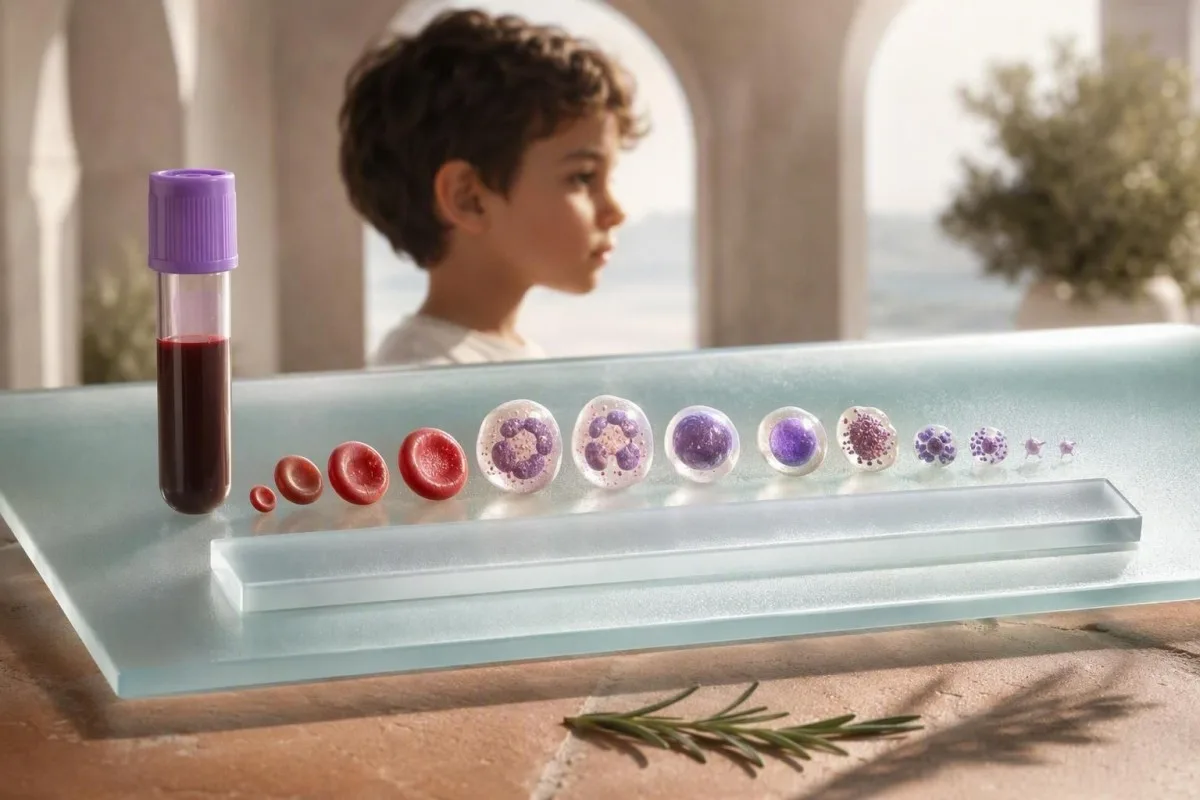
AI kin de laboratoariumresultaten fan in bern organisearje en ûnbekende termen útlizze, mar it kin gjin ferfanging wêze foar in bernedokter dy't de leeftyd, groei, ûndersyk en symptomen fan it bern kent.


- Direkte antwurd: AI kin bloedtestpatroanen foar bern ynterpretearje as in edukative oanfolling, mar in bernedokter moat diagnostyske en behannelingbesluten nimme.
- Leeftyd-spesifike berikken: In lymfocyttal dat ferwacht wurdt op 2-jierrige leeftyd kin markearre wurde as heech troch in folwoeksen referinsje-interval.
- Puberteit is wichtich: Alkaline phosphatase kin tanimme boppe 300 IU/L by bonkegroei sûnder leversykte.
- Dringende symptomen: Ademhalingsproblemen, betizing, oanfal, blauwe lippen, slimme útdroeging, of in tige siik bern hawwe driuwende klinyske soarch nedich, nettsjinsteande in AI-rapport.
- Samplekwaliteit: Hemolyse, fertrage ferwurking, en EDTA-plaatjesklumping kinne misliedende kalium-, LDH- of plaatjesresultaten meitsje.
- Trendwearde: It fergelykjen fan resultaten út deselde laboratoarium oer wiken of moannen is faak nuttiger dan reagearjen op ien grinsresultaat.
- Gjin selsbehanneling: Alders moatte net begjinne mei izer, fitamine D, skyldrês behanneling, of elektrolyt oanfollingen allinich op basis fan ynterpretaasje fan online laboratoariumresultaten.
- Privacy: In rapport fan in bern moat allinich opladen wurde mei tastimming fan âlder of juridyske fertsjintwurdiger en soarchfâldige ferwidering fan ûnnedige identifikaasjes.
Wat AI wol en net kin dwaan mei it bloedûndersyk fan in bern
AI kin bloedtest resultaten by bern allinich ynterpretearje as in struktureare ferklearring, net as in diagnoaze of ferfanging foar pediatryske resinsje. It kin in markearre wearde identifisearje, ienheden konvertearje, mienskiplike oarsaken beskriuwe, en fragen opdûke foar de klinikus; it kin gjin hydraasje, ûntwikkelingsstadium, ûndersyksbefindingen beoardielje, of hoe siik in bern derút sjocht. Fan 6 septimber 2026 ôf bliuwt dat ûnderskie de feiligensgrins dy't ik it faakst besprek mei âlden.
Ik bin Dr. Thomas Klein, en yn klinyske resinsje haw ik sjoen dat in normale poppe CBC ûnnedige alarm feroarsake doe't folwoeksen berikken waarden tapast. In resultaat bûten in printe berik is net automatysk abnormaal foar in bern, om't in protte rapporten standert breed as troch folwoeksenen ôflaat binne. In ferstannich AI sûnensrapport soe moatte sizze hokker referinsjeinterval it brûkte en famyljes weromstjoere nei de oanfreegjende klinikus.
Kantesti is in AI bloedtestanalysator ûntwurpen om laboratoariumgegevens te organisearjen en patroanen yn gewoane taal út te lizzen; foar pediatryske rapporten moat ús útfier wurde behannele as in petearstarter foar in pediatriske, net as in grien ljocht om selsstannich te hanneljen. In koartsich 18-moanne-âld mei in gerêststellend rapport kin noch altyd deselde dei beoardieling nedich hawwe as se lethargysk binne, hurd sykhelje, of min drinke.
Online laboratoariumresultaten ynterpretaasje is it meast nuttich as it in chaotyske PDF feroaret yn praktyske fragen: Fastte it bern? Wie der in resinte virale sykte? Steane hichte of gewicht persintaazjes te krusen? Alders kinne ek ús AI medyske rapport feiligens kontrôles resinsje foardat jo fertrouwe op elke automatisearre ferklearring.
Wêrom bern leeftyd-spesifike laboratoariumreferinsje-intervallen nedich binne
Bern fereaskje referinsjeintervallen dy't oerienkomme mei leeftyd, geslacht, puberale stadium, assay, en soms swangerskipsleeftyd. In nûmer kin signifikant bewege tusken berneleeftyd, skoalleleeftyd en adolesinsje, wylst it bern goed bliuwt.
Nijberne hemoglobine is meastentiids sawat 14 oant 22 g/dL, wylst in typysk berik fan 1-5 jier rûchwei is 11.0 oant 13.5 g/dL; laboratoaria stelle har eigen falidearre intervallen. De fysiologyske fal nei berte is te ferwachtsjen, mar itselde hemoglobine fan 9 g/dL hat in oare urgency beoardieling nedich by in bloeiende 2-moanne-âlde dan by in bleke, tachycardyske 8-jierrige.
Absolute lymfocyte tellings binne ek leeftyd-ôfhinklik. In tellings om 4,0 × 10⁹/L kin gewoan wêze by in pjut, mar dochs boppe in protte folwoeksen rigen, dêrom moat in differinsjaal op leeftyd lêzen wurde ynstee fan allinnich persintaazje; ús gids foar lymfocytetellingen op leeftyd ferklearret it ferskil.
Soldin en kollega's beskreaune hoe't ûntwikkelingsfysiologie pediatryske yntervallen materiële ferskillend makket fan folwoeksen wearden by in protte analyten (Soldin et al., 2005). Yn 'e praktyk wol ik earst it eigen ynterval fan it laboratoarium, dan de eksakte leeftiid fan it bern op it momint fan kolleksje - net in algemiene web-rige.
Hoe't groei en puberteit laboratoariumresultaten feroarje
Groei en puberteit kinne alkalyske fosfatase, hemoglobine, ferritine, lipiden, en sekshormonen genôch feroarje om sykte te imitearjen op in folwoeksen ferslach. De timing fan de groeispurt fan in bern ferklearret faak mear as ien markearre nûmer.
By rappe skelletegroei, kin alkalyske fosfatase (ALP) 300 IU/L oertreffen en normaal bliuwe foar de leeftiid, om't de aktiviteit fan osteoblasten heech is. In ferhege ALP mei normale bilirubine, GGT, kalsium, fosfaat, symptomen en groei-skiednis is in hiel oar patroan as cholestatyske leversykte; sjoch ús útlis fan ALP nei bonkegroei.
Puberteit foeget noch in laach ta. Hemoglobine stiet faak omheech by jonges as testosteron de produksje fan reade sellen fergruttet, wylst adolesinten dy't menstruaasje hawwe izertekoart kinne ûntwikkelje mei ferritine ûnder 15 ng/mL noch foardat de hemoglobine falt. De NHLBI pediatryske kardiovaskulêre rjochtline fan 2011 erkent ek dat lipidwearden ferskille mei maturatie en beoardiele wurde moatte mei pediatryske ôfsnien punten (Expert Panel, 2011).
Kantesti is in AI bloedtest-útslachplatfoarm dat dizze ûntwikkelingsbeperkingen sjen kin, mar it kin Tanner-poadium net betrouber ôfliede út in laboratoarium-PDF. In dokter kin ridlik freegje nei perioaden, groeie snelheid, dieet, atletyske training, medisinen, en famylje timing fan puberteit foardat hy in hormoan of izerpaniel ynterpreteart.
Wêrom resultaten fan pasgeborenen en te betiid berne poppen spesjalistyske beoardieling nedich binne
Laboratoariumresultaten fan nijberne en te betiid berne poppen moatte net allinich ynterpretearre wurde troch algemiene AI-útfier, om't normale fysiology feroaret mei oeren en dagen nei berte. Bilirubine, glukoaze, kalsium, hematokrit en skildklier screening fereaskje allegear tiidsgefoelige neonatale kontekst.
In totale bilirubine konsintraasje fan 12 mg/dL (205 µmol/L) kin wurde kontrolearre of kin urgente behanneling nedich hawwe, ôfhinklik fan postnatale leeftiid yn oeren, gestaasje, fieding, risiko op hemolyse, en de stiging. Dêrom brûke beslissingen oer gielsucht by nijbernen oer-specifike nomogrammen en klinyske beoardieling ynstee fan ien universele drompel.
Plasma glukoaze ûnder 47 mg/dL (2.6 mmol/L) wurdt faak brûkt as in operationele drompel yn risikofolle neonatale protokollen, mar it management hinget ôf fan symptomen, fieding, werhelle mjitting, en lokale neonatale rjochtlinen. In hiel-printresultaat kin ek ferskille fan in prompt ferwurke laboratoarium-plasmawearde.
Alders moatte in abnormaal berte screeningberjocht behannelje as in rappe kontaktpad, net as in online ûndersykprobleem. Us oersjoch fan berte screening flags leit út wêrom't guon resultaten deselde dei kontakt nedich hawwe, wylst oaren in plande werhelling nedich hawwe.
Hoe't jo de CBC fan in bern lêze kinne sûnder te oerreagearjen
De folsleine bloedtelling fan in bern is nuttich as lêzen as in patroan: hemoglobine, MCV, retikulocyten, wite bloedseldifferinsjaal, bloedplaatjes, symptomen, en trajekt hearre byinoar. In isolearre hege of lege flag jout selden in diagnoaze.
In hemoglobine ûnder 11.0 g/dL by in jong bern feroarsaket faak beoardieling foar izertekoart, dieet, risiko op leadfergiftiging, chronike ûntstekking, hemoglobinepaty, en bloedferlies; MCV en ferritine helpe de fraach te ferlytsjen. Ferritine kin falsk gerêststellend lykje by ynfeksje, om't it stigt as in akute-fase-reaktant.
In absolút neutrofile oantal ûnder 1.5 × 10⁹/L wurdt yn in protte gefallen neutropeny neamd, mar de urgency feroaret skerp mei leeftiid, ancestry, doer, koarts, en djipte fan reduksje. In sûn bern mei in ANC fan 1.2 × 10⁹/L nei in firus is net deselde klinyske situaasje as in bern mei koarts en ANC ûnder 0.5 × 10⁹/L; lês ús neutrofile berik hantlieding.
As ik in CBC kontrolearje nei gastroenteritis, sjoch ik oft hemoconcentraasje in myld hege hemoglobine- of bloedplaatjesgetal ferklearret foardat ik in mergprobleem oannim. In werhelling nei herstel is faak feiliger dan breed testen, útsein as kneuzingen, oanhâldende koarts, bonkenpyn, gewichtsverlies, of signifikante bleekheid it risiko feroaret.
Wêrom samplehantearring AI en dokters misliede kin
Min kolleksje of fertrage ferwurking kin in bloedresultaat fan in bern ferkeard meitsje foardat in minske of algoritme it sjocht. Hemolyse, in dwerchsamling, ferlingde tourniquet-tiid en de ferkearde buis kin resultaten genôch feroarje om falske alarms te triggerjen.
Hemolyse lit yntrasellulêr kalium en LDH frij yn it sample, dus in heech kaliumresultaat mei in hemolyseflagge kin in driuwende werhelling nedich wêze ynstee fan direkte behanneling. Mar in bern mei swakte, palpitaasjes, niersykte of in ECG-soarch hat noch altyd snelle klinyske beoardieling nedich; de sample-warskôging bewiist net dat it kalium harmless is.
EDTA-relatearre plaatklumping kin in keunstmjittich lege plaatelling produsearje, soms ûnder 100 × 10⁹/L, nettsjinsteande normale platen by it bern. In laboratoarium bloedfilm beoardieling of werhelling yn in sitraatbuis kin dizze mienskiplike pre-analytyske fal klaarisearje; ús artikel oer EDTA-trombocyteklompen lit sjen wêrom't in allinich sifer misledigje kin.
Kantesti’s AI-oandreaune ark foar analyse fan bloedtests kin ynterne ûnienigens en sichtbere laboratoariumopmerkings flagje, mar it kin de buis net ynspektearje of in útdaagjende kolleksje observearje. Alders moatte in foto meitsje fan it hiele rapport, ynklusyf opmerkings oer samplekwaliteit, kolleksjetiid en referinsjeberiken - net allinich de flagge side.
Hoe't koarts, útdroeging en firussen tydlike tests feroarje
Akute sykte kin tydlik glukoaze, natrium, kreatinine, wite-bloedseltellingen, CRP, ferritine en leverenzymen by bern feroarje. In resultaat tidens koarts moat faak fergelike wurde mei in werhelling nei herstel ynstee fan behannele wurde as de baseline fan it bern.
Braken en fermindere yntak kin hemoglobine en ureum konsintrearje, wylst slimme diarree bicarbonaat ferleegje en natrium of kalium fersteure kin. Natrium ûnder 130 mmol/L, benammen mei betizing, slimme hoofdpijn, oanfal of werhelle braken, hat driuwende medyske beoardieling nedich ynstee fan in online ferklearring.
CRP stiet op en falt rapper as ESR, mar gjin fan beide tests identifisearret op himsels in spesifike oarsaak. In CRP fan 40 mg/L kin foarkomme by virale as baktearjele sykte, weefselskea en ûntstekkingssykten; it uterlik fan it bern, doer fan koarts, ûndersyk en soms kultueren binne wichtiger dan in ienige marker.
Dr. Thomas Klein syn praktyske regel is ienfâldich: dokumint de sykte dei, medisinen, flüssigensyntak en temperatuer neist it resultaat. Dat lyts ferslach makket laboratoarium feroarings tusken besites folle makliker te ynterpretearjen foar in pediatryske klinikus.
Symptomen dy't elk geruststellend AI-rapport ferslaan
Dringende symptomen oerskriuwe in normaal sjen lizzend AI-rapport, om't laboratoariumpanielen in protte pediatryske needgefallen net útslute. In bern dat muoite hat mei sykheljen, dreech wekker te meitsjen, blau om 'e lippen, in oanfal hawwe, of tekens fan slimme útdroeging lit sjen, hat no needich needsaaklike beoardieling.
Sykje driuwende soarch foar in bern mei in net-wytbare útslach plus koarts, stive nekke, oanhâldende slimme hoofdpijn, feroare gedrach, of minne perfúsje lykas kâlde môtte hannen en sterk fermindere urine. In CBC of CRP kin iere sepsis, meningitis, appendisitis, diabetyske ketoacidose, of in allergyske needgefallen net feilich útslute.
Foar diabetesrisiko fereasket braken mei djippe of rappe sykheljen, buikpine, slaperigheid, of matige oant grutte ketonen driuwende beoardieling. Bloedglukoaze fan 200 mg/dL (11.1 mmol/L) mei klassike symptomen stipet diabetes evaluaasje, mar ketoacidose beoardieling fereasket glukoaze, ketonen, elektrolyten, acid-base status, en in klinikus.
In resultaat kin de sykheljen of kapillêre refil net beoardielje. Alders soargen oer boarst symptomen kinne ús brûke hantstick bloedtest symptoomgids foar kontekst, mar se moatte net wachtsje op analyse troch automatyske analyse as in bern slim siik liket.
Medikamenten, vitaminen en supplementen dy't bernemedisynlaboratoaren feroarje
Mienskiplike medisinen en oanfollingen kinne pediatryske laboratoariumtests feroarje of bemuoie, dus AI hat in folsleine medisynlist nedich om in misleidende ferklearring te foarkommen. Biotine, kortikosteroïden, antykonvulsiva, izer, fitamine D, en resinte IV-floeistoffen binne faak foarbylden.
Hege-dosis biotine kin guon immunoassays bemuoie en misleidende skyldklier- of hormoanresultaten produsearje; famyljes moatte de klinikus ynformearje oer ha- of nagelprodukten, of multivitamineprodukten. De dosis is fan belang: gewoane fiedingsopname is oars as oanfollingen dy't befetsje 5.000 oant 10.000 mikrogram deis.
Izer moat net begûn wurde allinich om't in bern wurch liket te wêzen of in lege-normale ferritin hat. Tefolle izer kin skealik wêze, en de diagnostyske wurkûnderskieding ferskilt foar izertekoart, thalassemia-eigenskip, chronike ûntstekking en leadbelesting; ús izerstúdzje gids lit sjen wêrom't transferrin-saturaasje en ferritin tegearre ynterpretearre wurde.
Fitamine D-behanneling is in oar gebiet dêr't kontekst fan belang is. In 25-hydroxyvitamine D-konsintraasje ûnder 20 ng/mL (50 nmol/L) wurdt faak beskôge as tekoart, mar pediatryske dosering hinget ôf fan leeftiid, lichemsgrutte, dieet, risiko op malabsorption, kalsium, en lokale begelieding—net fan in algemien AI-fiedingsplan.
Wêrom trends meastentiids feiliger binne dan ien pediatryske resultaat
Werkome resultaten fan itselde laboratoarium binne faak ynformatyfder as ien grinsgefallich pediatrysk resultaat. Trends kinne herstel, feroaring troch groei, medisinen-effekten, of in oanhâldend patroan ûntdekke dat spesjalistyske beoardieling fertsjinnet.
In ferritin-skift fan 8 oant 28 ng/mL nei behanneling ûnder begelieding fan de klinikus fertelt in dúdliker ferhaal dan in inkelde wearde fan 18 ng/mL, benammen as de CRP tagelyk sakke. Foar skyldkliertests is in TSH-feroaring allinich sinfol as de timing fan kolleksje, assay, sykte en neilibjen fan medisinen yn omtinken nommen wurde.
Kantesti is in AI lab test-ynterpretaasjetsjinst dat histoaryske rapporten neist elkoar pleatse kin en grutte feroarings oanwize kin, mar it systeem moat nea beweare dat in trend in diagnoaze bewiist. Analytyske fariaasje fan in laboratoarium en normale biologyske fluktuaasje kinne lytse feroarings ferklearje, benammen by in drempelwearde.
Bewarje de orizjinele PDF's en notearje oft it bern koarts hie, swiere sport, fêstjen, in groeispurt, of in medisynferoaring. Us gids foar longitudinale resultaten beskriuwt de details dy't werheljende testen klinysk brûkber meitsje.
Wat âlders opnimme moatte foardat se online laboratoariumynterpretaasje brûke
Alders moatte it folsleine rapport uploade, krekte leeftiid, geslacht by berte wêr't relevant, sammeldatum en -tiid, en de eigen referinsjebestekken fan it laboratoarium. Besnien skermôfbyldings sûnder ienheden of spesiminkommentaar binne in faak boarne fan ûnfeilige AI-medyske rapportanalyse.
In nuttige yntsjinning befettet de leeftiid fan it bern yn jierren en moannen, hichte- en gewichtstrend as it relevant is, resinte sykte, fêste status, hjoeddeistige medisinen, oanfollingen en de klinyske fraach dy't late ta it testen. Foegje gjin folslein adres fan in bern, skoalgegevens of ûnnedige identifikaasjes ta.
Kantesti AI stipet rapport-upload yn meardere talen en kin in útlis jaan yn sawat 60 sekonden, but speed is not clinical clearance. Our PDF-upload checklist is bysûnder nuttich foar desimale komma's, ûndúdlike foto's, dûbele panielen en ynkonsekwintheden fan mjittingen.
As it ferslach ‘kritysk’, ‘telefoanysk resultaat’, ‘dringend ûndersyk’ oanjout, of in fersyk fan it laboratoarium foar in direkte nije tekening befettet, nim dan earst kontakt op mei de opdrachtjouwende tsjinst. Online ynterpretaasje moat it eskalearringspaad fan it laboratoarium net fertrage.
Fragen om út in AI-rapport te nimmen nei de bernedokter
It feilichste gebrûk fan in AI-ferslach is om rjochte fragen te meitsjen foar de klinikus, net om in behannelplan te meitsjen. Freegje oft it berik pediatrysk is, oft it patroan past by resinte sykte of groei, en oft in werhelling fan de test nedich is.
Goede fragen binne: ‘Hokker wearde is it wichtichst?’ ‘Brûkt dit laboratoarium in leeftyd-oanpaste ynterval?’ ‘Moatte wy it werhelje as myn bern better is?’ en ‘Hokker symptoom soe jo meitsje dat jo ús earder sjen wolle?’ Dy fragen binne nuttiger as te freegjen oft elke flagge sykte betsjut.
Foar in lege hemoglobine, freegje oft retikulocyten, MCV, ferritine, transferrinverzadiging, dieet, en famylje-eftergrûn it ûndersyk feroarje. Foar in hege ALT, freegje nei resinte virale sykte, medisinen, gewichtstrajekt, spierblessueres, en oft werhelling ALT en AST nedich binne; ús ALT explanation jout âlden wurdskat sûnder beoardieling te ferfangen.
As in AI-antwurd en de pediatryske klinikus it net iens binne, moat de ynterpretaasje fan de klinikus foarop stean, om't sy it bern foar harren hawwe. In twadde pediatryske miening is sinfol as abnormaliteiten bliuwe, de útlis ûndúdlik bliuwt, of symptomen net passe by it foarstelde plan.
Privacy- en tastingsregels foar laboratoariumrapporten fan bern
It laboratoariumferslach fan in bern is gefoelige sûnensynformaasje en moat allinich dield wurde troch in âlder of wettige fâd dy't in privacybewuste tsjinst brûkt. Famyljes moatte begripe wa't tagong hat ta it ferslach, hoe lang it bewarre wurdt, en hoe't oanfragen foar wiskjen wurkje.
Ferwiderje skoalidentifikaasjes, húsadressen en ûnrelatearre famylje-ynformaasje foardat jo in ferslach uploade. Bewarje de datum fan kolleksje, de namme fan it laboratoarium, referinsjeintervallen en opmerkingen fan de klinikus, om't it ferwiderjen fan dy details de pediatryske ynterpretaasje minder feilich meitsje kin.
Kantesti AI brûkt GDPR-ynrjochte, privacy-rjochte gegevenshanneling, mar fâden moatte noch altyd foarsichtich beslute oft online analyse passend is foar de situaasje fan in bern. Dielde famyljetagong moat doelbewust en beheind wêze; ús gids foar family result sharing omfettet praktyske tastingsbeslissingen.
Adolesinten fertsjinje in stim yn hoe't harren sûnensynformaasje dield wurdt, benammen foar gefoelige testen. Lokale regels ferskille oangeande fertroulikens en tastimming, dus famyljes moatte by de behanneljende tsjinst freegje hoe't de resultaten kommunisearre wurde sille oan âlden en oan de jonge persoan.
Hoe't feilige AI-tafersjoch foar bern der útsjen moat
Feilige pediatryske AI-ynterpretaasje moat syn grinzen iepenbiere, orizjinele laboratoariumgegevens bewarje, driigjende reade flaggen identifisearje en brûkers rjochtsje op minsklike klinyske resinsje. It moat nea in bern diagnostisearje fan in ienmalich paniel, medisinen foarskriuwe, of famyljes geruststelle fuort fan needsoarch.
Akkuraatens hat ferskate lagen: it korrekt lêzen fan 'e PDF, it oerienkomme fan anaalyten en ienheden, it kiezen fan in passend ynterval, en it ynterpretearjen fan it patroan yn klinyske kontekst. In blykber krekte transkripsje kin noch altyd ta in ûnfeilige konklúzje liede as de puberteitsfaze fan in 14-jierrige, koarts of medikaasjehistoarje ûntbrekt.
By Kantesti beoardielet ús medyske team feiligensgrinzen en eskalaasjetaal; lêzers kinne ús oanpak sjen klinyske falidaasje en de klinisy op 'e Medyske Advysried. Kantesti is in AI-biomarker-ynterpretaasjeplatfoarm dat de folgjende klinyske petear dúdliker meitsje moat, nea ferfange.
Myn lêste konklúzje nei 15 jier praktyk is rjochtlinich: brûk AI om it ferslach te begripen, de trend te behâlden, en fragen foar te bereiden. Brûk in pediatryske klinikus om te besluten wat it resultaat betsjut foar dit spesifike bern, hjoed.
Faak stelde fragen
Kin AI bloedûndersiken foar bern ynterpretearje?
AI kin bloedûndersiken by bern ynterpretearje as in edukatyf helpmiddel, mar kin in bern net feilich diagnostisearje of behannelje sûnder klinyske beoardieling troch in bernedokter. Resultaten by bern fereaskje leeftydsspesifike referinsje-yntervallen, kontekst fan de puberteit, symptomen, befiningen by it ûndersyk en kennis oer de kwaliteit fan it meunster. Bygelyks kin in ALP-wearde boppe 300 IU/L ferwachte wurde by in groeispurt, wylst deselde útslach by in folwoeksene oars beoardiele wurde moat. Alders kinne in AI-útlis brûke om fragen foar de dokter dy’t it ûndersyk oanfrege hat ta te rieden.
Wêrom binne referinsjeberiken foar bloedûndersiken by folwoeksenen net feilich foar bern?
Laboratoariumreferinsjewearden foar folwoeksenen binne net feilich foar bern, om’t hemoglobine, lymfositen, alkalyske fosfatase, kreatinine, hormonen en in protte oare analyten feroarje mei de ûntwikkeling. In pjutteboartersbern kin normaal in absolút lymfositetal fan omtrint 4,0 × 10⁹/L hawwe, wat yn in rapport foar folwoeksenen as te heech oanjûn wurde kin. Bilirubine by pasbernen moat ek ynterpretearre wurde op basis fan it tal oeren nei de berte, net oan de hân fan ien universele wearde. Brûk, as dat mooglik is, it eigen pediatryske referinsje-ynterval fan it laboratoarium en de krekte leeftyd fan it bern.
Wannear moat ik driuwende medyske soarch sykje ynstee fan te wachtsjen op AI-labresultaten?
Sykje daliks driuwende medyske help as in bern muoite hat mei sykheljen, blauwe lippen hat, in oanfal krijt, yn ’e war is, dreech wekker te krijen is, swiere útdrûging hat, of der slim siik útsjocht. In natriumkonsintraasje ûnder 130 mmol/L mei neurologyske symptomen, of braken mei djippe sykheljen en ketonen, fereasket ek flugge medyske beoardieling. In normale CBC, CRP of AI-sûnensrapport kin in protte needgefallen net útslute. De symptomen en hoe’t it bern derút sjocht hawwe foarrang boppe de ynterpretaasje fan laboratoariumresultaten online.
Kin in drege bloedôfnimming falsk abnormale resultaten feroarsaakje by bern?
Ja, in drege samling kin falsk-abnormale resultaten by bern feroarsaakje. Hemolyse kin falsk kalium en LDH ferheegje, wylst EDTA-plateletklontering in falsk leech trombocytentelling jaan kin, soms ûnder 100 × 10⁹/L. It laboratoarium kin in kommentaar oer hemolyse of klontering tafoegje, en in werhelle stekproef of in beoardieling fan in bloedfilm kin it resultaat ferdúdlikje. Famyljes moatte nea oannimme dat in markearre wearde echt of falsk is sûnder klinysk advys.
Moatte âlden izer of fitamine D jaan nei in AI-laboratoariumrapport?
Alders moatte net allinnich op basis fan in AI-laboratoariumrapport izer of hege-dosis fitamine D begjinne. Ferritine ûnder 15 ng/mL kin izertekoart stypje, mar ynfeksje kin ferritine ferheegje en bloedearmoed hat ferskate oare oarsaken dy't oare soarch nedich hawwe. In 25-hydroxyvitamine D-wearde ûnder 20 ng/mL freget faak om behanneling ûnder lieding fan in klinikus, mei dosering basearre op leeftyd, lichemsgrutte, kalsiumstatus, dieet en medyske skiednis. Oermjittich izer en fitamine D kinne beide skea feroarsaakje.
Krij hjoed noch AI-oandreaune bloedtest-analyse
Doch mei oan mear as 2 miljoen brûkers wrâldwiid dy’t Kantesti fertrouwe foar direkte, krekte analyse fan laboratoariumtests. Upload jo bloedtest resultaten en ûntfange wiidweidige ynterpretaasje fan 15,000+-biomarkers yn sekonden.
📚 Ferwiisde ûndersykspublikaasjes
Klein, T., Mitchell, S., & Weber, H. (2026). Serumproteïnegids: Globulinen, Albumine & A/G-ferhâlding Bloedtest. Kantesti AI Medysk Undersyk.
Klein, T., Mitchell, S., & Weber, H. (2026). Gids foar C3- en C4-komplementbloedtest & ANA-titer. Kantesti AI Medysk Undersyk.
📖 Eksterne medyske referinsjes
⚕️ Medyske disclaimer
Dit artikel is allinnich foar ûnderwiisdoelen en foarmet gjin medysk advys. Rieplachtsje altyd in kwalifisearre soarchferliener foar besluten oer diagnoaze en behanneling.
E-E-A-T fertrouwensignalen
Ûnderfining
Dokter-oandreaune klinyske resinsje fan lab-ynterpretaasje-wurkprosessen.
Ekspertize
Fokus fan laboratoariummedisyne op hoe’t biomarkers har gedrage yn in klinyske kontekst.
Autoriteit
Skreaun troch dr. Thomas Klein mei resinsje troch dr. Sarah Mitchell en prof. dr. Hans Weber.
Betrouberens
Bewiis-basearre ynterpretaasje mei dúdlike ferfolchpaadkes om alarm te ferminderjen.