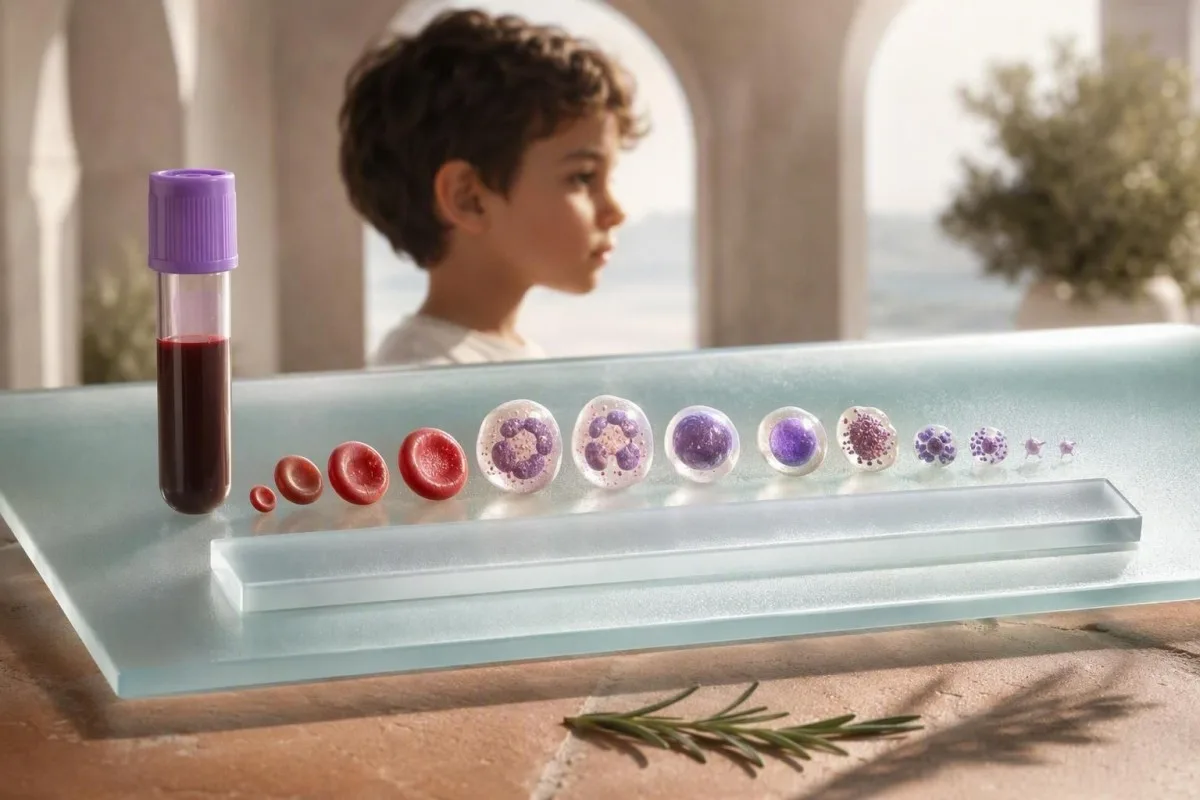
Ясалма интеллект (AI) балага узган лаборатория нәтиҗәләрен оештыра ала һәм таныш булмаган терминнарны аңлата ала, ләкин ул баланың яшен, үсеш үзенчәлекләрен, тикшерүен һәм симптомнарын белгән балалар клиницистын алыштыра алмый.


- Туры яуап: Ясалма интеллект балалар өчен кан анализын өйрәнү өчен өстәмә буларак интерпретацияли ала, ләкин диагностика һәм дәвалау карарларын балалар клиницисты ясарга тиеш.
- Яшькә туры килгән диапазоннар: Лимфоцит саны, 2 яшьтә көтелгән, өлкәннәр өчен күрсәткеч чикләре белән югары дип билгеләнергә мөмкин.
- Җенси җитлекүлек мөһим: Бавыр авырулары булмаганда, сөяк үсеше вакытында эшлеле фосфатаза 300 IU/Lдан югары күтәрелергә мөмкин.
- Ашыгыч симптомнар: Тынычсызлык, буталу, калтырану, иреннәрнең зәңгәрләнүе, көчле сусызлык яки бик авыру бала, ясалма интеллект докладына карамастан, тиз клиник ярдәм таләп итә.
- Үрнәк сыйфаты: Гемолиз, озак эшкәртү һәм EDTA тромбоцитларның бергәләшүе калий, LDH яки тромбоцитларның ялгыш нәтиҗәләрен бирә ала.
- Трендлы кыйммәт: Бер чиктәш нәтиҗәгә реакция итүгә караганда, атналар яки айлар дәвамында бер үк лабораториядән алынган нәтиҗәләрне чагыштыру еш кына файдалырак.
- Үз-үзеңне дәвалау юк: Ата-аналар тимер, D витамины, калкансыман биз, яки электролит өстәмәләрен онлайн лаборатория нәтиҗәләрен аңлатудан гына башлый алмыйлар.
- Хосусыйлык: Балага тараткан отчетны ата-ана яки законлы вәкил ризалыгы белән һәм кирәкмәгән идентификаторларны игътибар белән алып ташлап кына йөкләргә кирәк.
Ясалма интеллектның баланың кан анализы белән нәрсә эшли алуы һәм нәрсә эшли алмавы
ЯИ балалардагы кан анализы нәтиҗәләрен структуралаштырылган аңлатма буларак кына аңлата ала, диагноз яки педиатрик карау урынына түгел. Ул билгеләнгән кыйммәтне ачыклый, берәмлекләрне үзгәртә, гомуми сәбәпләрне тасвирлый һәм клиницист өчен сораулар күтәрә ала; ул гидратация, үсеш этабы, тикшерү нәтиҗәләре яки баланың ничек авыру булуын бәяли алмый. 6 сентябрь, 2026 елга, бу аерма минем ата-аналар белән еш кына сөйләшә торган куркынычсызлык чиге булып кала.
Мин доктор Томас Кляйн, һәм клиник карауда мин нормаль яшьтәге балада олылар диапазоны кулланылганда, урынсыз тревога тудырган нормаль баланың CBC күргәнем бар. Басылган диапазоныннан читтәге нәтиҗә бала өчен автоматик рәвештә нормадан тыш түгел, чөнки күп кенә отчетлар, гадәттә, киң яки олылардан алынган билгеләрдән тора. Акыллы ЯИ сәламәтлек отчеты ул кулланган сылтама интервалын күрсәтергә һәм гаиләләрне юллама биргән клиницистка юнәлтергә тиеш.
Кантести - ЯИ анализы лаборатория мәгълүматларын оештыру һәм гади тел белән аңлату өчен эшләнгән; педиатрик отчетлар өчен, безнең чыгарылышны педиатр өчен әңгәмә башлангычы итеп карарга кирәк, бер яклы карар кабул итү өчен түгел. Температурасы булган 18 айлык бала, күренеше тынычландыра торган отчет белән, әгәр ул летаргияле, авыр суласа яки начар эчсә, көндез тикшеренү таләп итә ала.
Онлайн лаборатория нәтиҗәләрен аңлату иң файдалы, ул хаотик PDFны гамәли сорауларга әйләндергәндә: бала ач торганмы? Күптән түгел вируслы авыру булганмы? Биеклек яки авырлык процентларны кисеп үтәме? Ата-аналар шулай ук безнең ЯИ медицина отчетының куркынычсызлык тикшерүләрен карап чыга ала, берәр автоматик аңлатуга таянганчы.
Ни өчен балаларга яшькә туры килгән лаборатория күрсәткечләре кирәк
Балаларга яшь, җенес, пубертат стадиясе, анализ, һәм кайвакыт туу алдындагы яшькә туры килгән сылтама интерваллары кирәк. Сан еш кына бала сау-сәламәт булганда, тумыштан, мәктәп яшенә һәм яшүсмерлеккә кадәр шактый үзгәрергә мөмкин.
Яңа туган баланың гемоглобины гадәттә 14 дән 22 г/дл кадәр, ә гадәти 1-5 яшьлек бала өчен диапазон якынча 11,0 - 13,5 г/дл; лабораторияләр үзләренең расланган интервалларын куялар. Туудан соң физиологик төшү көтелгән, ләкин 9 г/дл гемоглобин 2 айлык сәламәт бала белән чагыштырганда, ач, тахикардияле 8 яшьлек бала өчен төрле өйрәнүне таләп итә.
Абсолют лимфоцитлар саны да яшькә бәйле. Якынча сан 4,0 × 10⁹/л кечкенә балада гадәти булырга мөмкин, әмма күп кенә олылар өчен нормадан югарырак, шуңа күрә дифференциалны процентка гына карап түгел, ә яшь буенча укырга кирәк; безнең яшь буенча лимфоцитлар санына күрсәтмә аерманы аңлата.
Солдин һәм коллегалар балалар физиологиясе педиатрик интервалларны күп кенә анализлар буенча олылар кыйммәтләреннән materially аерып тора дип тасвирлыйлар (Soldin et al., 2005). Практикада миңа лабораториянең үз интервалы, аннары баланың җыю вакытындагы төгәл яше кирәк - гомуми веб-диапазон түгел.
Үсеш һәм җенси җитлекүлек лаборатория нәтиҗәләрен ничек үзгәртә
Үсү һәм җенси җитлегү ишәю ферменты, гемоглобин, ферритин, липидлар һәм җен гормоннарын олылар отчетында авыруны охшатырлык дәрәҗәдә үзгәртергә мөмкин. Баланың үсү чорының вакыты бер билгеләнгән саныннан күбрәк аңлата.
Тирән сөяк үсүе вакытында, ишәю ферменты (ALP) 300 Е/л дан артып китә ала һәм остеобласт активлыгы югары булганлыктан яшь өчен нормаль кала. Нормаль билирубин, GGT, кальций, фосфат, симптомнар һәм үсү тарихы булган югары ALP холестатик бавыр авыруыннан бик нык аерыла; безнең аңлатманы карагыз Сөяк үсүеннән соң ALP.
Җенси җитлегү тагын бер катлам өсти. Тестостеронның кызыл кан күзәнәкләре җитештерүен арттыру сәбәпле, егетләрдә гемоглобин еш кына арта, ә менструация күргән яшүсмерләр ферритиннан түбәнрәк тимер җитмәүчәнлек үстерергә мөмкин 15 нг/мл хәтта гемоглобин кимегәнче. 2011 NHLBI педиатрик йөрәк-кан тамырлары буенча кулланма шулай ук липид кыйммәтләренең җитлегү белән үзгәрүен таный һәм педиатрик чикләрне кулланып бәяләнергә тиеш (Expert Panel, 2011).
Кантести - AI кан анализы нәтиҗәләрен аңлату платформасы мондый үсеш кимчелекләрен күрсәтә ала, ләкин ул лаборатория PDF-ыннан Таннер стадиясен ышанычлы чыгара алмый. Табиб гормон яки тимер панелен интерпретацияләү алдыннан периодлар, үсеш тизлеге, диета, спорт тренировкасы, дарулар, һәм гаиләдәге пубертат вакыты турында сорарга мөмкин.
Ни өчен яңа туган һәм иртә туган балаларның нәтиҗәләрен белгеч тикшерүе кирәк
Яңа туган һәм вакытыннан алда туган балаларның лаборатория нәтиҗәләрен гомуми AI чыгышы белән генә интерпретацияләргә ярамый, чөнки нормаль физиология тугач, сәгатьләр һәм көннәр эчендә үзгәрә. Билирубин, глюкоза, кальций, гематокрит һәм калкансыман бизне скрининглауның барысы да вакытка бәйле нео наталь контекст таләп итә.
Тулы билирубин концентрациясе 12 мг/дл (205 мкмоль/л) күзалланырга мөмкин яки сәгатьләр, гестация, туклану, гемолиз куркынычы һәм күтәрелеш тизлеге буенча тиз арада дәвалау таләп итәргә мөмкин. Менә шуңа күрә яңа туган сары чир карарларында бер универсаль чиккә караганда, сәгатькә бәйле номограммалар һәм клиник бәяләү кулланыла.
Плазма глюкозасы астында 47 мг/дл (2.6 ммоль/л) куркыныч астында булган яңа туган балалар протоколларында оператив чик буларак еш кулланыла, ләкин башкару симптомнарга, туклануга, кабат үлчәүгә һәм җирле нео наталь күрсәтмәләргә бәйле. Ул ишарәсеннән алынган нәтиҗә дә тиз эшкәртелгән лаборатория плазма кыйммәтеннән аерылырга мөмкин.
Ата-аналар яңа туган балаларны скрининглауның гадәти булмаган хәбәрен онлайн тикшерү проблемасы дип түгел, ә тиз элемтә юлы дип санарга тиеш. Безнең яңа туган балаларны скрининглау флаглары турындагы карашыбыз кайбер нәтиҗәләрнең шул ук көнне элемтә таләп итүе, ә башкаларының планлаштырылган кабатлануы нигә кирәклеген аңлата.
Баланың CBC анализын арттырмыйча ничек укырга
Баланың тулы кан анализы үрнәк буларак караганда файдалы: гемоглобин, MCV, ретикулоцитлар, ак кан күзәнәкләренең дифференциалы, тромбоцитлар, симптомнар һәм траектория бергә туры килә. Аерым югары яки түбән флаг сирәк диагноз бирә.
Гемоглобин 11,0 г/дл кечкенә балада еш кына тимер җитмәү, диета, сәламәтлеккә зарарлы матдәләр йогынтысы, хроник ялкынсыну, гемоглобинопатия һәм кан югалтуны бәяләүне сорый; MCV һәм ферритин сорауны кыскартырга ярдәм итә. Ферритин инфекция вакытында ялган ышанычлы булырга мөмкин, чөнки ул кискен фаза реактивы буларак күтәрелә.
Нейтрофилларның абсолют саны астында 1,5 × 10⁹/л күп очракларда нейтропения дип атала, ләкин ашыгычлык яшь, нәсел, дәвамлылык, температура һәм кимү тирәнлеге белән нык үзгәрә. Вирустан соң 1,2 × 10⁹/л ANC булган сәламәт балада, температура һәм ANC астында булган балага караганда, ул бер үк клиник хәл түгел 0,5 × 10⁹/л; безнең нейтрофиллар диапазоны буенча кулланманы.
карагыз. Гастроэнтериттан соң тулы кан анализын караганда, мин гемоконцентрация минелканлы югары гемоглобин яки тромбоцитлар санын аңлатамы, үзәк нерв системасы проблемасын алдан уйламыйча тикшерәм. Кабатлану, ягъни кабат алынган кан анализы, йомшак кысылу, озакка сузылган турникет вакыты, һәм дөрес булмаган трубка анализларны ялгыш сигналларга китерерлек дәрәҗәдә үзгәртергә мөмкин.
Үрнәк эшкәртү ни өчен ясалма интеллектны да, клиницистларны да ялгыштыра ала
Яхшы җыелмаган яки соңлап эшкәртелгән үрнәк кеше яки алгоритм күренгәнче үк балага кан нәтиҗәсен дөрес булмаганын китереп чыгарырга мөмкин. Гемолиз, җыю авырлыгы, озакка сузылган турникет вакыты, һәм дөрес булмаган трубка анализларны ялгыш сигналларга китерерлек дәрәҗәдә үзгәртергә мөмкин.
Гемолиз чыгарган эчке калий һәм LDH үрнәккә эләгә, шуңа күрә гемолиз билгесе булган югары калий нәтиҗәсе тиз дәвалау урынына ашыгыч кабатлауны таләп итәргә мөмкин. Шулай да, хәлсезлек, йөрәк тибеше, бөер авыруы яки ЭКГ борчылуы булган балага тиз клиник бәяләү кирәк; үрнәк кисәтүе калийның зыянсыз булуын исбатламый.
EDTA белән бәйле тромбоцитларның бөртекләшүе ясалма түбән тромбоцит санын бирә ала, кайвакыт хәтта түбәнрәк 100 × 10⁹/л, балада нормаль тромбоцитлар булган очракта да. Лаборатория кан фильмы анализы яки цитратлы пробиркада кабатлау бу еш очрый торган преаналитик калдыкны ачыкларга мөмкин; безнең мәкалә EDTA тромбоцитларның төркемләнеп ябышуы аңлата, ни өчен бер сан гына ялгыштыра ала.
Kantesti’s AI нигезендәге кан анализы тикшерү коралы эчке карама-каршылыкларны һәм күренгән лаборатория комментарийларын билгели ала, ләкин ул пробирканы тикшерә яки катлаулы җыюны күзәтә алмый. Ата-аналар тулы хисапны, шул исәптән үрнәк сыйфаты турындагы комментарийларны, җыю вакытын һәм чагыштыру диапазоннарын - бары тик билгеләнгән битне генә түгел, фотога төшерергә тиеш.
Температура, сусызлык һәм вируслар ни өчен тестларны вакытлыча үзгәртә
Каты авыру балаларда глюкоза, натрий, креатинин, ак кан күзәнәкләре, CRP, ферритин һәм бавыр ферментларын вакытлыча үзгәртергә мөмкин. Температура вакытында алынган нәтиҗә еш кына тернәкләнүдән соң кабатлау белән чагыштырылырга тиеш, баланың базалы нигезе буларак карау урынына.
Косу һәм азыкны аз кабул итү гемоглобинны һәм мочевинаны концентрлашырга мөмкин, шул ук вакытта көчле диарея бикарбонатны киметергә һәм натрий яки калийны бозарга мөмкин. Натрий түбәнрәк 130 ммоль/лдан түбән, бигрәк тә буталчыклык, көчле баш авыртуы, комачаулык яки косу белән бергә, онлайн аңлатма урынына тиз медицина бәяләвен таләп итә.
CRP, ESRга караганда тизрәк арта һәм кими, ләкин ике тест та үзеннән-үзе аерым сәбәпне ачыкламый. CRP 40 мг/л вируслар яки бактерияләр авырулары, тукымалар җәрәхәтләнүе һәм ялкынсыну авырулары белән булырга мөмкин; баланың кыяфәте, температураның дәвамлылыгы, тикшерү һәм кайвакыт культуралар бер генә маркерга караганда мөһимрәк.
Доктор Томас Клейнның практик кагыйдәсе гади: авыру көнен, даруларны, сыеклыкны кабул итүне һәм температураны нәтиҗә янына языгыз. Бу кечкенә язу визитлар арасындагы лаборатория үзгәрешләрен педиатрия клиницисты өчен аңлавын бик җиңелрәк итә.
Теләсә кайсы тынычландыргыч ясалма интеллект доклады өстеннән өстен торучы симптомнар
Лаборатория панельләре күп педиатрик хәвеф-хәтәрләрне кире какмый, шуңа күрә ашыгыч симптомнар нормаль күренгән AI хисабын өстенә ала. Сулыш алуда кыенлык кичергән, уята торган, иреннәре тирәсендә зәңгәр, комачаулык кичергән яки каты сусызлану билгеләрен күрсәткән бала тиз арада спешный бәяләнергә тиеш.
Ялкынсыну булмаган тимре булган бала өчен ашыгыч медицина ярдәме сорагыз, температура, муенны катыру, даими көчле баш авыртуы, үзгәргән тәртип яки начар кан әйләнеше, мәсәлән, салкын бөртекле куллар һәм сидекнең нык кимүе. CBC яки CRP иртә сепсис, менингит, аппендицит, диабет кетоацидозы яки аллергия хәвефен ышанычлы кире какмый.
Диабет куркынычы өчен, косу белән бергә көчле яки тиз сулыш алу, корсак авыртуы, йокыга килү яки уртача-зур кетоннар ашыгыч бәяләвен таләп итә. Классик симптомнар белән кан глюкозасы 200 мг/дл (11,1 ммоль/л) диабетны бәяләүне хуплый, ләкин кетоацидоз бәяләве глюкоза, кетоннар, электролитлар, кислота-буфер статусы һәм клиницистны таләп итә.
Нәтиҗә сулыш алу яки капилляр тулылануны бәяли алмый. Йөрәк симптомнары турында борчылучы ата-аналар безнең ашыгыч кан анализы симптомнары буенча кулланманы контекст өчен куллана ала, ләкин бала бик начар хәлдә күренсә, автомат анализны көтмәскә тиеш.
Балалар лабораторияләрен үзгәртә торган дарулар, витаминнар һәм өстәмәләр
Балаларның лаборатор тикшерүләренә йогынты ясарга яки бозарга мөмкин булган гомуми дарулар һәм өстәмәләр, шуңа күрә AI ялгыш аңлатманы булдырмас өчен тулы дарулар исемлегенә мохтаҗ. Биотин, кортикостероидлар, антиконвульсантлар, тимер, D витамины һәм соңгы IV сыеклыклары еш очрый торган мисаллар.
Биотинның югары дозасы кайбер иммуноанализларга комачауларга һәм тиреоид яки гормон нәтиҗәләрен бозарга мөмкин; гаиләләр клиницистка чәч, тырнак яки мультивитамин продуктлары турында әйтергә тиеш. Доза мөһим: гадәти туклану йотылу өстәмәләр белән аерыла 5,000 тан 10,000 микрограммга кадәр көн саен.
Бала ябык яки ферритинның түбән нормасы булганлыктан гына тимер башланмаска тиеш. Артык тимер зыянлы булырга мөмкин, һәм тимер җитмәү, талассемия трайты, хроник ялкынсыну һәм очрашу өчен диагностик эш төрле; безнең тимер тикшеренүе кулланмасы ни өчен трансферрин сатурациясе һәм ферритин бергә интерпретацияләнәвен күрсәтә.
D витамины белән дәвалау – контекст мөһим булган тагын бер өлкә. 25-гидроксивитамин D концентрациясе түбәндә 20 нг/мл (50 нмоль/л) еш кына җитмәү дип санала, ләкин балалар дозасы яшь, тән зурлыгы, диета, мальабсорбция куркынычы, кальций һәм җирле җитәкчелеккә бәйле – гомуми AI туклану планына түгел.
Ни өчен трендлар гадәттә бер бала нәтиҗәсеннән куркынычсызрак
Бер үк лабораториядән алынган кабатланган нәтиҗәләр еш кына бер чик буендагы балалар кыйммәтеннән күбрәк мәгълүмат бирә. Трендларны тергезү, үсү белән бәйле үзгәрешләр, дару йогынтылары яки махсус карау таләп иткән тотрыклы үрнәк ачып була.
Ферритинның үзгәреше 8 дән 28 нг/мл га кадәр клиницистка юнәлешле дәвалаудан соң, 18 нг/мл бер генә нәтиҗәсеннән ачыграк хикәя сөйли, бигрәк тә CRP шул ук вакытта кимегән булса. Тиреоид тикшерүе өчен, TSH үзгәреше җыю вакыты, анализ, авыру һәм даруларны үтәү саналганда гына әһәмиятле.
Кантести - AI лаборатория тестларын аңлату хезмәтендә басылып чыга бу тарихи отчетларны янәшә куярга һәм зур үзгәрешләрне күрсәтергә мөмкин, әмма система беркайчан да тренд диагнозны исбатлый дип әйтергә тиеш түгел. Лабораториянең аналитик үзгәреше һәм нормаль биологик флуктуация кечкенә үзгәрешләрне, бигрәк тә чишелеш прагы янында, аңлатырга мөмкин.
Оригиналь PDF ларны саклагыз һәм баланың температурасы, көчле спорт, ачлык, үсү чоры яки дару үзгәреше булганын языгыз. Безнең вакыт буенча нәтиҗәләрне аңлату буенча кулланма кабат тикшерүне клиник куллануны мөмкин итүче детальләрне тасвирлый.
Ата-аналар онлайн лаборатория интерпретациясен кулланганчы нәрсә кертергә тиеш
Ата-аналар тулы отчетны, тулы яшьне, кирәк булган очракта туган вакытта билгеләнгән җенесне, җыю датасын һәм вакытын, һәм лабораториянең үз чикләрен йөкләргә тиеш. Берәмлекләр яки үрнәк комментарийлары булмаган кыркылган скриншотлар AI медицина отчетын анализлауның куркынычсызлык чыганакларының берсе.
Файдалы тәкъдим баланың яшен ел һәм айларда, биеклеге һәм авырлыгы тренды, якынча авыру, ачлык статусы, хәзерге дарулар, өстәмәләр һәм тикшерүгә китергән клиник сорауны үз эченә ала. Баланың тулы адресын, мәктәп мәгълүматларын яки кирәкмәгән идентификаторларны кертмәгез.
AI күп телләрдә отчетларны йөкләргә ярдәм итә һәм якынча аңлатма бирә ала 60 секундта, ләкин тизлек клиник чистарту түгел. Безнең PDF йөкләү чек-листы аеруча унарлы өтерләр, күмек фотолар, дубликат панельләр һәм берәмлекләрнең туры килмәве өчен файдалы.
Әгәр хисап ‘критик’, ‘телефон нәтиҗәсе’, ‘тиз карау’ дип әйтелгән яки тиз арада яңадан тапшыру өчен лаборатория соравы булса, башта заказ бирүче хезмәткә мөрәҗәгать итегез. Онлайн интерпретация лабораториянең үз эскалация юлын тоткарларга тиеш түгел.
Ясалма интеллект докладыннан балалар клиницистына алып барырга кирәк булган сораулар
AI отчетын куллануның иң куркынычсыз ысулы - клиника өчен төгәл сораулар тудыру, дәвалау планы тудыру түгел. Диапазон балаларныкымы, бу үрнәк соңгы авыру яки үсүгә туры киләме, һәм яңадан тест кирәкме, дип сорагыз.
Яхшы сорауларга түбәндәгеләр керә: ‘Нинди кыйммәт иң мөһим?’ ‘Бу лаборатория яшькә туры килгән интервалны кулланамы?’ ‘Балам сәламәт булганда аны кабатларга тиешме?’ һәм ‘Безгә сезне тизрәк күрергә теләгән симптом нинди?’ Бу сораулар һәр флаг авыруны аңлатамы дип сораудан күбрәк файдалы.
Түбән гемоглобин өчен, ретикулоцитлар, MCV, ферритин, трансферрин туендыру, диета һәм гаилә нәселе дифференциальне үзгәртәме, дип сорагыз. Югары ALT өчен, соңгы вируслы авыру, дарулар, авырлык траекториясе, мускул җәрәхәте һәм яңадан ALT һәм AST кирәкме, дип сорагыз; безнең ALT аңлатмасы ата-аналарга бәяне алыштырмыйча сүз байлыгы бирә.
Әгәр AI җавабы һәм балалар клиникасы килешмәсә, клиника интерпретациясе җитәкчелек итәргә тиеш, чөнки аларның алдында бала бар. Аномалияләр дәвам итсә, аңлатма аңлашылмаса, яки симптомнар тәкъдим ителгән планга туры килмәсә, икенче балаларча киңәш бирү акыллы.
Балаларның лаборатория отчетлары өчен хосусыйлык һәм ризалык кагыйдәләре
Баланың лаборатория хисабы - сизгер сәламәтлек мәгълүматы һәм аны бары тик әти-әни яки законлы вәкил серсүзне саклаучы хезмәт аша гына уртаклашырга тиеш. Гаиләләр хисапка кем керә алачагын, ул күпме саклана һәм бетерү сораулары ничек эшләвен аңларга тиеш.
Хисапны йөкләгәнче мәктәп идентификаторларын, өй адресларын һәм бәйләнмәгән гаилә мәгълүматын алыгыз. Коллекция датасын, лаборатория исемен, сылтама интервалларын һәм клиника комментарийларын саклагыз, чөнки бу мәгълүматны алу балаларча интерпретацияне азрак куркынычсыз итә ала.
Kantesti AI GDPR-га туры килгән, серсүзлеккә юнәлтелгән мәгълүмат белән эш итүне куллана, ләкин вәкилләр баланың хәленә онлайн анализ яраклашу-яраклашмавын абайлап сайларга тиеш. Уртак гаилә керүе максатчан һәм чикләнгән булырга тиеш; безнең җитәкчелек гаилә нәтиҗәләрен уртаклашу гамәли ризалык карарларын үз эченә ала.
Үсмерләрнең сәламәтлек мәгълүматын ничек уртаклашу турында сүз сөйләү хокукы бар, аеруча сизгер тестлар өчен. Конфиденциальлек һәм ризалык турында җирле кагыйдәләр төрле, шуңа күрә гаиләләр дәвалау хезмәтеннән нәтиҗәләр ата-аналарга һәм яшь кешегә ничек җиткереләчәген сорарга тиеш.
Куркынычсыз балалар ясалма интеллект күзәтүе ничек булырга тиеш
Куркынычсыз балаларча AI интерпретациясе аның чикләрен ачарга, башлангыч лаборатория мәгълүматын сакларга, мөһим кызыл флагларны билгеләргә һәм кулланучыларны кеше клиник каравына юнәлдерергә тиеш. Ул беркайчан да бер панельдән баланы диагнозлый, дару билгеләми, яки гаиләләрне авария хезмәтеннән сакларга тиеш түгел.
Төгәллекнең берничә катламы бар: PDF ны дөрес уку, анализ һәм берәмлекләрне туры китерү, тиешле интервалны сайлау һәм клиник контекстта үрнәкне интерпретацияләү. Күренүчән төгәл транскрипция 14 яшьлек баланың җенси җитлегү стадиясе, температурасы яки дару тарихы юкка чыккан очракта куркынычсыз фикергә китерә ала.
Kantesti да, безнең медицина командасы куркынычсызлык чикләрен һәм эскалация телен карый; укучылар безнең карашны клиник валидация һәм клиникаларны күрә ала Медицина консультатив советы. Kantesti — бу AI биомаркерларны аңлату платформасы бу соңрак клиник сөйләшүне аңлаешлырак итәргә тиеш, беркайчан да алмаштырмагыз.
Минем 15 еллык практикадан соңгы фикерем гади: AIны хисапны аңлау, тенденцияне саклау һәм сораулар әзерләү өчен кулланыгыз. Бу конкрет бала өчен, бүгенге көн өчен нәтиҗәне аңлату өчен балалар клиницистын кулланыгыз.
Еш бирелә торган сораулар
ЯИ балаларның кан анализлары нәтиҗәләрен аңлата аламы?
ЯИ балаларның кан анализларын белем бирү ярдәме буларак аңлата ала, ләкин педиатрия клиник бәяләве булмыйча, балага куркынычсыз диагноз куя да, дәвалый да алмый. Балалар анализлары өчен яшькә хас референс интерваллар, җенси җитлегү контексты, симптомнар, тикшерү нәтиҗәләре һәм үрнәкнең сыйфаты турында мәгълүмат кирәк. Мәсәлән, үсеш тизләшкән чорда ALP күрсәткеченең 300 IU/L-дан югары булуы көтелгән хәл булырга мөмкин, ә шул ук нәтиҗә өлкән кешедә башкача бәяләнергә тиеш булырга мөмкин. Ата-аналар ЯИ аңлатмасын анализны билгеләгән клиницистка бирәсе сорауларын әзерләү өчен кулланырга тиеш.
Ни өчен кан анализының өлкәннәр өчен нормаль күрсәткеч диапазоннары балалар өчен куркынычсыз?
Өлкәннәр өчен лаборатория нормалары балалар өчен куркынычсыз түгел, чөнки гемоглобин, лимфоцитлар, эшкәртүле фосфатаза, креатинин, гормоннар һәм башка күп кенә аналитлар үсеш барышында үзгәрә. Мәктәпкәчә яшьтәге балада абсолют лимфоцитлар саны гадәттә 4,0 × 10⁹/л тирәсендә булырга мөмкин, ә өлкәннәр өчен бирелгән хисапта бу күрсәткеч югары дип бәяләнергә мөмкин. Яңа туган сабыйларда билирубин дәрәҗәсен бердәм сан буенча түгел, ә сәгатьләр белән исәпләнгән яшькә карап аңлатырга кирәк. Мөмкин булган очракта лабораториянең үз педиатрия интервалын һәм баланың төгәл яшен кулланырга кирәк.
AI лаборатория нәтиҗәләре көткәнче, кайчан ашыгыч медицина ярдәме эзләргә кирәк?
Балада сулыш алуы авырлашса, иреннәре зәңгәрләнсә, тоткарлану (судорога) булса, буталчыклык күзәтелсә, уятуы бик авыр булса, каты сусызлану булса яки ул бик нык авыру булып күренсә, шунда ук ашыгыч медицина ярдәме эзләгез. Натрий концентрациясе 130 ммоль/лдан түбән булганда, нейрологик симптомнар белән бергә, яисә тирән сулыш алганда кусу һәм кетоннар булганда да тиз арада табиб тикшерүе кирәк. Нормаль CBC, CRP яки AI сәламәтлек отчеты күп кенә ашыгыч хәлләрне кире кагып булмый. Симптомнар һәм баланың тышкы күренеше онлайн лаборатор нәтиҗәләрен аңлатудан өстенрәк тора.
Авыр кан алуы балаларда ялган аномаль нәтиҗәләргә китерә аламы?
Әйе, катлаулы җыелма балаларда ялган гадәттән тыш нәтиҗәләргә китерергә мөмкин. Гемолиз калийны һәм LDHны ялган югары күтәрергә мөмкин, шул ук вакытта EDTA тромбоцитларының ябышуы ялган түбән тромбоцитлар санын, кайвакыт 100 × 10⁹/Л дан түбәнрәк китереп чыгарырга мөмкин. Лаборатория гемолиз яки ябышу турында искәрмә өстәргә мөмкин, ә яңа үрнәк яки кан пленкасын карау нәтиҗәне ачыкларга мөмкин. Гаиләләр клиник киңәшсез билгеләнгән кыйммәтнең чын яки ялган булуын беркайчан да фаразларга тиеш түгел.
Ата-аналар тимер яки D витамины бирәргә тиешме, AI лаборатория отчетыннан соң?
Ата-аналар тимер яки югары дозадагы D витаминын бары тик ИИ лабораториясе отчеты буенча кулланырга тиеш түгел. Ферритинның 15 нг/мл дан түбән булуы тимер җитмәүне күрсәтә ала, ләкин инфекция ферритинны күтәрергә мөмкин, һәм анемиянең башка сәбәпләре дә бар, аларны дәвалау аерым карауны таләп итә. 25-гидроксивитамин D дәрәҗәсенең 20 нг/мл дан түбән булуы еш кына табиб җитәкчелегендә дәвалауны таләп итә, доза яше, тән зурлыгы, кальций торышы, диета һәм медицина тарихына нигезләнә. Артык тимер һәм D витамины икесе дә зыян китерергә мөмкин.
Бүген үк AI белән эшләнгән кан анализы тикшерүе
Дөнья буенча 2 миллионнан артык кулланучы кушылыгыз: алар Kantestiны тиз һәм төгәл лаборатория анализы өчен ышана. Кан анализы нәтиҗәләрегезне йөкләгез һәм 15,000+ биомаркерларын секундлар эчендә тулы аңлатма белән алыгыз.
📚 Сылтама бирелгән тикшеренү басмалары
Klein, T., Mitchell, S., & Weber, H. (2026). Кан сывороткасы аксымнары буенча кулланма: Глобулиннар, альбумин һәм A/G нисбәте буенча кан анализы. Kantesti AI медицина тикшеренүе.
Klein, T., Mitchell, S., & Weber, H. (2026). C3 C4 комплемент кан анализы һәм ANA титры буенча кулланма. Kantesti AI медицина тикшеренүе.
📖 Тышкы медицина белешмәләре
Балалар һәм яшүсмерләрдә йөрәк-кан тамырлары сәламәтлеге һәм рискны киметү буенча интеграль күрсәтмәләр буенча экспертлар советы (2011). Балалар һәм яшүсмерләр өчен йөрәк-кан тамырлары сәламәтлеге һәм куркынычлыкны киметү буенча интеграль җитәкчелек буенча экспертлар төркеме: йомгаклау доклады. Балалар авырулары.
⚕️ Медицина кисәтүе
Бу мәкалә бары тик белем бирү максатларында гына һәм медицина киңәше булып тормый. Диагноз һәм дәвалау карарлары өчен һәрвакыт квалификацияле сәламәтлек саклау белгеченә мөрәҗәгать итегез.
E-E-A-T ышаныч сигналлары
Тәҗрибә
Табиб җитәкчелегендә лаборатория нәтиҗәләрен аңлату эш процессларын клиник тикшерү.
Белгечлек
Лаборатория медицинасы: биомаркерларның клиник контекстта үз-үзләрен тотышын аңлау.
Авторититет
Доктор Томас Кляйн тарафыннан язылган, доктор Сара Митчелл һәм профессор доктор Ханс Вебер тарафыннан тикшерелгән.
Ышанычлылык
Ачык күзәтү юллары белән куркуны киметү өчен дәлилләргә нигезләнгән аңлату.