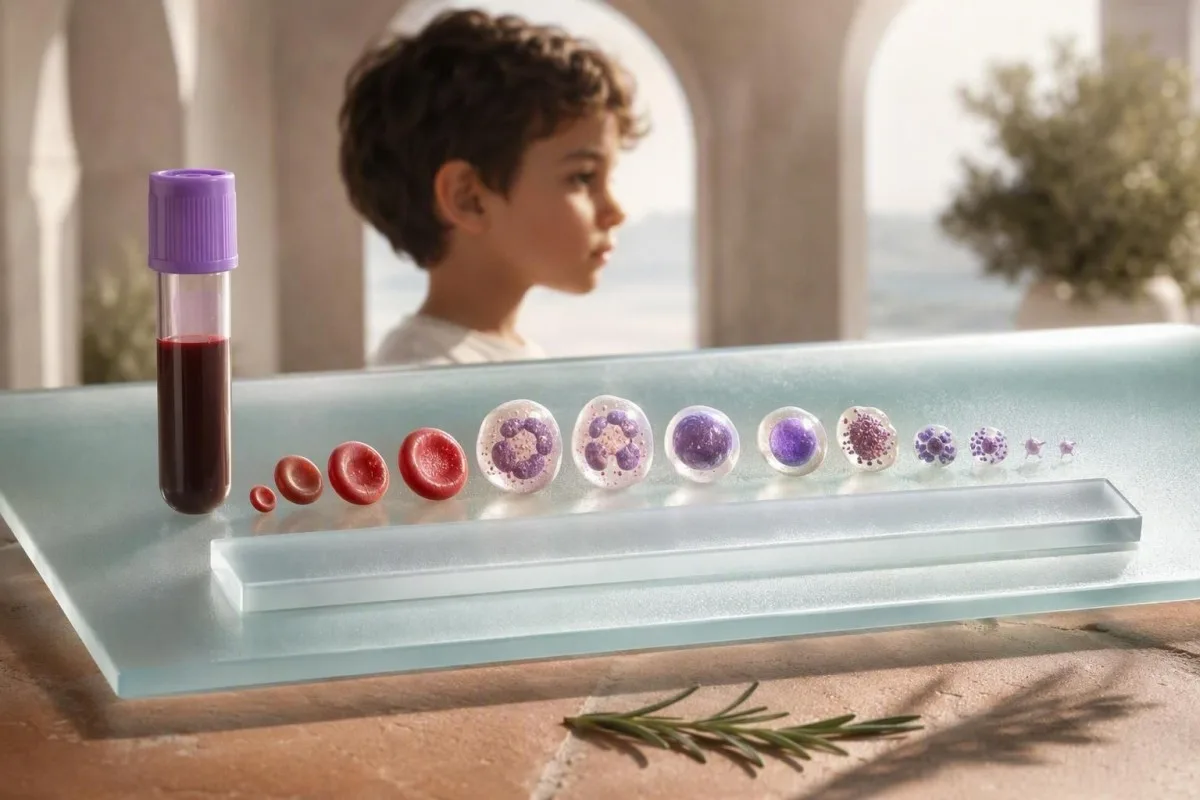
AI, bir çocuğun laboratuvar sonuçlarını düzenleyebilir ve alışılmadık terimleri açıklayabilir; ancak çocuğun yaşını, büyüme paternini, muayenesini ve semptomlarını bilen bir çocuk hekimi yerine geçemez.


- Doğrudan yanıt: AI, çocuklar için kan testi paternlerini eğitim amaçlı bir ek olarak yorumlayabilir; ancak tanı ve tedavi kararlarını bir pediatrik hekim vermelidir.
- Yaşa özel aralıklar: Yaş 2’de beklenen bir lenfosit sayısı, yetişkin referans aralığına göre yüksek olarak işaretlenebilir.
- Ergenlik önemlidir: Alkalen fosfataz, karaciğer hastalığı olmadan kemik büyümesi sırasında 300 IU/L’nin üzerine çıkabilir.
- Acil belirtiler: Nefes darlığı, kafa karışıklığı, nöbet, mavi dudaklar, şiddetli dehidratasyon veya çok kötü durumda olan bir çocuk, AI raporundan bağımsız olarak acil klinik bakım gerektirir.
- Örnek kalitesi: Hemoliz, gecikmiş işleme ve EDTA trombosit kümelenmesi, yanıltıcı potasyum, LDH veya trombosit sonuçları oluşturabilir.
- Trend değeri: Aynı laboratuvardan haftalar veya aylar boyunca gelen sonuçları karşılaştırmak, tek bir sınırda sonuca tepki vermekten çoğu zaman daha faydalıdır.
- Kendi kendine tedavi etmeme: Ebeveynler, çevrim içi laboratuvar sonucu yorumlamasına dayanarak tek başına demir, D vitamini, tiroid tedavisi veya elektrolit takviyelerine başlamamalıdır.
- Gizlilik: Bir çocuğa ait rapor, yalnızca ebeveynin veya yasal vasinin onayıyla ve gereksiz tanımlayıcıların dikkatle kaldırılmasıyla yüklenmelidir.
AI’nin bir çocuğun kan tahliliyle yapabildikleri ve yapamadıkları
AI, çocuklarda kan testi sonuçlarını yalnızca yapılandırılmış bir açıklama olarak yorumlayabilir; tanı koyma veya çocuk doktoru incelemesinin yerine geçme amacı taşımaz. Bir uyarı işaretli değeri belirleyebilir, birimleri dönüştürebilir, yaygın nedenleri açıklayabilir ve klinisyen için sorular ortaya çıkarabilir; ancak hidrasyonu, gelişim evresini, muayene bulgularını veya bir çocuğun ne kadar hasta göründüğünü değerlendiremez. 6 Eylül 2026 itibarıyla, bu ayrım ebeveynlerle en sık tartıştığım güvenlik sınırıdır.
Ben Dr. Thomas Klein; klinik incelememde, erişkin aralıkları uygulandığında normal bir çocuk CBC’sinin gereksiz alarm yaratmasına tanık oldum. Yazdırılmış bir aralığın dışındaki bir sonuç, bir çocuk için otomatik olarak anormal değildir, ; çünkü birçok rapor geniş veya erişkinden türetilmiş uyarılar varsayılan olarak kullanır. Mantıklı bir AI sağlık raporu, hangi referans aralığını kullandığını belirtmeli ve aileleri siparişi veren klinisyene geri yönlendirmelidir.
Kantesti bir AI kan testi analizörü laboratuvar verilerini düzenlemek ve kalıpları sade bir dille açıklamak için tasarlanmıştır; pediatrik raporlarda çıktımız, bağımsız hareket etmek için yeşil ışık değil, bir çocuk doktoru için konuşmayı başlatan bir başlangıç noktası olarak değerlendirilmelidir. Rahatlatıcı görünümlü bir rapora sahip ateşli 18 aylık bir çocuk, uyuşuksa, nefes alması zorsa veya yeterince sıvı içmiyorsa yine de aynı gün değerlendirme gerektirebilir.
Çevrim içi laboratuvar sonucu yorumlaması, kaotik bir PDF’yi pratik sorulara dönüştürdüğünde en faydalıdır: Çocuk aç mıydı? Yakın zamanda viral bir hastalık geçirdi mi? Boy veya kilo yüzdeleri değişiyor mu? Ebeveynler ayrıca bizim AI tıbbi rapor güvenlik kontrollerimizi herhangi bir otomatik açıklamaya güvenmeden önce gözden geçirebilir.
Çocukların neden yaşa özel laboratuvar referans aralıklarına ihtiyaç duyduğu
Çocukların referans aralıkları; yaş, cinsiyet, puberte evresi, analiz yöntemi (assay) ve bazen gebelik haftası ile eşleştirilmelidir. Çocuk iyi olsa bile, bir sayı bebeklik, okul çağı ve ergenlik arasında önemli ölçüde değişebilir.
Yenidoğanda hemoglobin genellikle yaklaşık olarak 14 ila 22 g/dL, iken, tipik 1 ila 5 yaş aralığı kabaca 11.0 ila 13.5 g/dL; aralığındadır; laboratuvarlar kendi doğrulanmış aralıklarını belirler. Doğum sonrası fizyolojik düşüş beklenir, ancak 9 g/dL aynı hemoglobin değeri, sağlıklı bir 2 aylık bebekte bambaşka bir aciliyet değerlendirmesi gerektirirken, soluk ve taşikardik bir 8 yaşındaki çocukta farklı bir aciliyet değerlendirmesi gerekir.
Mutlak lenfosit sayıları da yaşa bağlıdır. Yaklaşık bir sayı 4.0 × 10⁹/L önemsiz olabileceği gibi, birçok yetişkin aralığının üzerinde de olabilir, bu nedenle farklılıklar yalnızca yüzdeye göre değil, yaşa göre okunmalıdır; bizim yaşa göre lenfosit sayımı kılavuzumuz ayrımın açıklamasını yapar.
Soldin ve meslektaşları, gelişimsel fizyolojinin pediatrik aralıkları birçok analizde yetişkin değerlerinden önemli ölçüde farklı kıldığını açıklamışlardır (Soldin vd., 2005). Uygulamada, laboratuvarın kendi aralığını, ardından çocuğun toplama sırasındaki tam yaşını - genel bir web aralığını değil - istiyorum.
Büyüme ve ergenliğin laboratuvar sonuçlarını nasıl değiştirdiği
Büyüme ve ergenlik, alkalin fosfataz, hemoglobin, ferritin, lipidler ve cinsiyet hormonlarını, yetişkin raporunda hastalığı taklit edecek kadar değiştirebilir. Bir çocuğun büyüme atağının zamanlaması genellikle tek bir işaretlenmiş sayıdan daha fazlasını açıklar.
Hızlı iskelet büyümesi sırasında, alkalin fosfataz (ALP) 300 IU/L'yi aşabilir ve osteoblast aktivitesi yüksek olduğu için yaşa göre normal kalabilir. Normal bilirubin, GGT, kalsiyum, fosfat, semptomlar ve büyüme öyküsü ile birlikte yükselmiş bir ALP, kolestatik karaciğer hastalığından çok farklı bir paterndir; açıklamamıza bakınız. Kemik büyümesinden sonra ALP.
Ergenlik bir katman daha ekler. Testosteron kırmızı kan hücresi üretimini artırdıkça hemoglobin erkeklerde sıklıkla yükselir, adet gören ergenlerde ise ferritin seviyesi düşmeden demir eksikliği gelişebilir. 15 ng/mL Hatta hemoglobin düşmeden. 2011 NHLBI pediatrik kardiyovasküler kılavuzu da lipid değerlerinin olgunluğa göre değiştiğini ve pediatrik kesme noktaları kullanılarak değerlendirilmesi gerektiğini kabul etmektedir (Expert Panel, 2011).
Kantesti bir AI kan tahlili yorumlama platformu laboratuvar PDF'inden Tanner evresini güvenilir bir şekilde çıkaramaz, ancak bu gelişimsel kusurları gösterebilir. Bir klinisyen, hormon veya demir panelini yorumlamadan önce adet dönemleri, büyüme hızı, beslenme, atletik antrenman, ilaç kullanımı ve ailenin ergenlik zamanlaması hakkında makul sorular sorabilir.
Yenidoğan ve prematüre bebek sonuçlarının neden uzman değerlendirmesi gerektiği
Yenidoğan ve prematüre bebeklerin laboratuvar sonuçları yalnızca genel bir yapay zeka çıktısı ile yorumlanmamalıdır çünkü normal fizyoloji doğumdan sonraki saatlere ve günlere göre değişir. Bilirubin, glukoz, kalsiyum, hematokrit ve tiroid taraması zaman açısından hassas yenidoğan bağlamı gerektirir.
Toplam bilirubin konsantrasyonu 12 mg/dL (205 µmol/L) doğum sonrası yaşa, gestasyona, beslenmeye, hemoliz riskine ve yükselme hızına bağlı olarak izlenebilir veya acil tedavi gerektirebilir. Bu nedenle yenidoğan sarılık kararlarında tek bir evrensel eşik yerine saate özgü nomogramlar ve klinik değerlendirme kullanılır.
Plazma glukozunun 47 mg/dL (2.6 mmol/L) altında olması risk altındaki yenidoğan protokollerinde yaygın olarak operasyonel bir eşik olarak kullanılır, ancak yönetim semptomlara, beslenmeye, tekrar ölçüme ve yerel yenidoğan kılavuzuna bağlıdır. Topuktan alınan bir sonuç, hemen işlenen laboratuvar plazma değerinden farklı olabilir.
Ebeveynler, anormal bir yenidoğan tarama mesajını çevrimiçi bir araştırma sorunu olarak değil, hızlı bir iletişim yolu olarak ele almalıdır. Genel bakışımız yenidoğan tarama işaretleri açıklanmaktadır.
Bir çocuğun CBC’si nasıl okunur ve gereksiz tepki verilmez
Bir çocuğun tam kan sayımı, bir örüntü olarak okunduğunda faydalıdır: hemoglobin, MCV, retikülositler, beyaz küre ayrımı, trombositler, semptomlar ve gidişat birlikte değerlendirilmelidir. İzole edilmiş yüksek veya düşük bir işaret nadiren tanı koydurur.
, 11,0 g/dL genç bir çocukta sıklıkla demir eksikliği, beslenme, kurşun maruziyeti riski, kronik inflamasyon, hemoglobinopati ve kan kaybı değerlendirmesini tetikler; MCV ve ferritin soruyu daraltmaya yardımcı olur. Ferritin, akut faz reaktanı olarak yükseldiği için enfeksiyon sırasında yanlış bir şekilde güvence verici görünebilir.
Mutlak nötrofil sayısı 1,5 × 10⁹/L altında olduğunda, birçok durumda nötropeni olarak adlandırılır, ancak aciliyet yaşa, soy kökene, süreye, ateşe ve düşüş derinliğine göre keskin bir şekilde değişir. Bir virüs sonrası ANC'si 1.2 × 10⁹/L olan sağlıklı bir çocuk, ateşli ve ANC'si 0,5 × 10⁹/L’nin altındaysa; altında olan bir çocukla aynı klinik durumda değildir; nötrofil aralığı kılavuzumuzu okuyun.
Gastroenteritten sonra bir tam kan sayımını incelediğimde, bir kemik iliği problemi varsaymadan önce hemokonsantrasyonun hafif yüksek hemoglobin veya trombosit sayısını açıklayıp açıklamadığını kontrol ederim. İyileşmeden sonra tekrarlamak, morarma, sürekli ateş, kemik ağrısı, kilo kaybı veya belirgin solukluk riskini değiştirmediği sürece, yaygın testlerden daha güvenlidir.
Örnek işlemenin AI’yi ve klinisyenleri nasıl yanıltabildiği
Kötü toplama veya gecikmiş işleme, herhangi bir insan veya algoritma görmeden önce çocuğun kan sonucunu yanlış yapabilir. Hemoliz, zorlu toplama, uzatılmış turnike süresi ve yanlış tüp, sonuçları yanlış alarmları tetikleyecek kadar bozabilir.
Hemoliz, hücre içi potasyumu ve LDH'yi örneğe salarak, yüksek bir potasyum sonucu ve hemoliz bayrağı acil bir tedaviden ziyade acil tekrarlamayı gerektirebilir. Yine de zayıflık, çarpıntı, böbrek hastalığı veya EKG endişesi olan bir çocuğun hızlı bir klinik değerlendirmeye ihtiyacı vardır; örnek uyarısı, potasyumun zararsız olduğunu kanıtlamaz.
EDTA ile ilişkili trombosit kümelenmesi, bazen bunun altında yapay olarak düşük bir trombosit sayımı üretebilir 100 × 10⁹/L, çocuğun normal trombositlerine rağmen. Bir laboratuvar kan filmi incelemesi veya sitrat tüpünde tekrarlanması bu yaygın analitik öncesi tuzağı açıklayabilir; makalemiz EDTA trombosit kümelenmesi neden tek başına bir sayının yanıltıcı olabileceğini gösteriyor.
Kantesti’nin Yapay zekâ destekli kan testi analiz aracı dahili tutarsızlıkları ve görünür laboratuvar yorumlarını işaretleyebilir, ancak tüpü denetleyemez veya zorlu bir toplama gözlemleyemez. Ebeveynler, yalnızca işaretli sayfayı değil, aynı zamanda örnek kalitesi yorumlarını, toplama zamanını ve referans aralıklarını içeren tüm raporun fotoğrafını çekmelidir.
Ateş, dehidratasyon ve virüslerin testleri geçici olarak nasıl değiştirdiği
Akut hastalık, çocuklarda glikoz, sodyum, kreatinin, beyaz küre sayıları, CRP, ferritin ve karaciğer enzimlerini geçici olarak değiştirebilir. Ateş sırasındaki bir sonuç, çocuğun temel çizgisi olarak kabul edilmekten ziyade sıklıkla iyileşmeden sonra tekrarlanmasıyla karşılaştırılmalıdır.
Kusma ve azalmış alım, hemoglobin ve üreyi konsantre edebilirken, şiddetli ishal bikarbonatı düşürebilir ve sodyum veya potasyumu bozabilir. Sodyumun altında 130 mmol/L, özellikle kafa karışıklığı, şiddetli baş ağrısı, nöbet veya tekrarlanan kusma ile acil tıbbi değerlendirme gerektirir, çevrimiçi bir açıklamadan ziyade.
CRP, ESR'den daha hızlı yükselir ve düşer, ancak her iki test de tek başına belirli bir neden belirlemez. Bir CRP değeri 40 mg/L viral veya bakteriyel hastalıklar, doku hasarı ve inflamatuar hastalıklarla ortaya çıkabilir; çocuğun görünümü, ateşin süresi, muayene ve bazen kültürler tek bir belirteçten daha önemlidir.
Dr. Thomas Klein'ın pratik kuralı basittir: hastalık gününü, ilaçları, sıvı alımını ve vücut sıcaklığını sonucun yanında belgeleyin. Bu küçük kayıt, ziyaretler arasındaki laboratuvar değişikliklerini pediatrik bir klinisyenin yorumlamasını çok daha kolaylaştırır.
Herhangi bir rahatlatıcı AI raporunu geçersiz kılan semptomlar
Laboratuvar panelleri birçok pediatrik acil durumu dışlamadığı için acil semptomlar normal görünen bir yapay zeka raporunu geçersiz kılar. Nefes almakta zorlanan, uyanması zor olan, dudakları morarmış, nöbet geçiren veya şiddetli dehidrasyon belirtileri gösteren bir çocuğun hemen acil değerlendirmeye ihtiyacı vardır.
Ateş, ense sertliği, sürekli şiddetli baş ağrısı, davranış değişikliği veya soğuk lekeli eller ve belirgin şekilde azalmış idrar gibi zayıf perfüzyon ile birlikte solmayan bir döküntüsü olan bir çocuk için acil bakım arayın. Bir CBC veya CRP, erken sepsis, menenjit, apandisit, diyabetik ketoasidoz veya alerjik bir acil durumu güvenli bir şekilde dışlayamaz.
Diyabet riski için, derin veya hızlı nefes alma, karın ağrısı, uyuşukluk veya orta ila büyük ketonlarla birlikte kusma acil değerlendirme gerektirir. Klasik semptomlarla 200 mg/dL (11.1 mmol/L) Kan şekeri diyabet değerlendirmesini destekler, ancak ketoasidoz değerlendirmesi glikoz, ketonlar, elektrolitler, asit-baz durumu ve bir klinisyen gerektirir.
Bir sonuç, solunum işini veya kapiller dolumu değerlendiremez. Göğüs belirtileri konusunda endişeli ebeveynler bağlam için acil kan testi semptom kılavuzumuzu kullanabilirler, ancak bir çocuk ciddi şekilde hasta göründüğünde otomatik analiz beklememelidirler.
Pediatrik laboratuvarları değiştirebilen ilaçlar, vitaminler ve takviyeler
Yaygın ilaçlar ve takviyeler, çocuk laboratuvar testlerini değiştirebilir veya bunlara müdahale edebilir, bu nedenle Yanıltıcı bir açıklamadan kaçınmak için YZ'nin tam bir ilaç listesine ihtiyacı vardır. Biyotin, kortikosteroidler, antikonvülsanlar, demir, D vitamini ve yakın zamanda alınan IV sıvılar sık görülen örneklerdir.
Yüksek dozda biyotin, bazı immünolojik testlere müdahale edebilir ve yanıltıcı tiroid veya hormon sonuçları üretebilir; aileler, tırnak, saç veya multivitamin ürünleri hakkında klinisyeni bilgilendirmelidir. Dozaj önemlidir: sıradan diyet alımı, içeren takviyelerden farklıdır 5.000 ila 10.000 mikrogram günlük.
Bir çocuk yorgun görünüyor veya ferritin seviyesi düşük-normal diye demir tedavisine başlanmamalıdır. Çok fazla demir zararlı olabilir ve demir eksikliği, talasemi taşıyıcılığı, kronik iltihaplanma ve kurşun maruziyeti için tanısal incelemeler farklılık gösterir; demir testi kılavuzumuz transferrin satürasyonunun ve ferritinin neden birlikte yorumlandığını göstermektedir.
D vitamini tedavisi, bağlamın önemli olduğu başka bir alandır. 25-hidroksivitamin D konsantrasyonunun altında 20 ng/mL (50 nmol/L) genellikle yetersiz kabul edilir, ancak pediatrik dozaj yaşa, vücut büyüklüğüne, diyete, malabsorpsiyon riskine, kalsiyuma ve yerel rehberliğe bağlıdır - genel bir YZ beslenme planına değil.
Neden trendler, tek bir pediatrik sonuca göre genellikle daha güvenlidir?
Aynı laboratuvardan tekrarlanan sonuçlar, tek bir sınırdaki pediatrik değerden daha bilgilendirici olabilir. Eğilimler, iyileşmeyi, büyüme ile ilgili değişikliği, ilaç etkilerini veya uzmanın gözden geçirmesini gerektiren kalıcı bir deseni ortaya çıkarabilir.
Klinisyen rehberliğindeki tedaviden sonra 8 ila 28 ng/mL arasındaki bir ferritin değişimi, tek bir 18 ng/mL sonucundan daha net bir hikaye anlatır, özellikle de aynı zamanda CRP düştüyse. Tiroid testi için, bir TSH değişikliği yalnızca toplama zamanlaması, test yöntemi, hastalık ve ilaç uyumu dikkate alındığında anlamlıdır.
Kantesti bir AI laboratuvar testi yorumlama hizmetinde yayımlanır. Bu, geçmiş raporları yan yana koyabilir ve büyük değişiklikleri vurgulayabilir, ancak sistem asla bir eğilimin bir teşhisi kanıtladığını iddia etmemelidir. Bir laboratuvarın analitik varyasyonu ve normal biyolojik dalgalanması, özellikle bir karar eşiğine yakın küçük değişiklikleri açıklayabilir.
Orijinal PDF'leri saklayın ve çocuğun ateş, yoğun spor, oruç, büyüme atağı veya ilaç değişikliği olup olmadığını not edin. Bizim longitudinal sonuçlar kılavuzumuz tekrar testini klinik olarak kullanılabilir kılan ayrıntıları özetlemektedir.
Online laboratuvar yorumlamasını kullanmadan önce ebeveynlerin neleri dahil etmesi gerektiği
Ebeveynler tam raporu, tam yaşı, ilgili olduğu durumlarda doğumda atanan cinsiyeti, toplama tarihini ve saatini ve laboratuvarın kendi referans aralıklarını yüklemelidir. Birimler veya numune yorumları olmayan kırpılmış ekran görüntüleri, güvensiz YZ tıbbi rapor analizlerinin yaygın bir kaynağıdır.
Kullanışlı bir gönderim, çocuğun yaşını yıllar ve aylar olarak, ilgiliyse boy ve kilo eğilimini, yakın zamanda geçirdiği hastalığı, oruç durumunu, mevcut ilaçları, takviyeleri ve test yapılmasına neden olan klinik soruyu içerir. Çocuğun tam adresini, okul ayrıntılarını veya gereksiz tanımlayıcıları dahil etmeyin.
YZ, birden çok dilde rapor yüklemesini destekler ve yaklaşık olarak bir açıklama döndürebilir 60 saniyede, ancak hız, klinik temizlik anlamına gelmez. PDF yükleme kontrol listemiz özellikle ondalık virgüller, soluk fotoğraflar, yinelenen paneller ve birim tutarsızlıkları için kullanışlıdır.
Rapor ‘kritik’, ‘telefon sonucu’, ‘acil inceleme’ ifadelerini içeriyorsa veya hemen yeniden çizim talebi içeriyorsa, öncelikle isteyen servisle iletişime geçin. Çevrimiçi yorumlama, laboratuvarın kendi yükseltme yolunu geciktirmemelidir.
Bir AI raporundan pediatrik hekime götürülecek sorular
Bir yapay zeka raporunun en güvenli kullanımı, bir tedavi planı oluşturmak yerine hekime odaklanmış sorular üretmektir. Aralığın pediatrik olup olmadığını, desenin yakın zamanda geçirilen bir hastalığa veya büyümeye uyup uymadığını ve tekrar test gerekip gerekmediğini sorun.
İyi sorular şunları içerir: ‘Hangi değer en çok önem taşıyor?’ ‘Bu laboratuvar yaşa uyarlanmış bir aralık kullanıyor mu?’ ‘Çocuğum iyiyken tekrar etmeli miyiz?’ ve ‘Hangi belirti bizi daha erken görmenizi ister?’ Bu sorular, her bayrağın hastalık anlamına gelip gelmediğini sormaktan daha kullanışlıdır.
Düşük hemoglobin için retikülositler, MCV, ferritin, transferrin satürasyonu, diyet ve aile soyu farklılıkları değiştirir mi diye sorun. Yüksek ALT için yakın zamanda geçirilen viral hastalık, ilaçlar, kilo seyri, kas hasarı ve tekrar ALT ve AST gerekip gerekmediğini sorun; bizim ALT açıklamamız ebeveynlere değerlendirmeyi değiştirmeden kelime dağarcığı sağlar.
Bir yapay zeka cevabı ve pediatrik hekim anlaşamazsa, hekimin yorumu önde gitmelidir çünkü çocuk önlerindedir. Anormallikler devam ederse, açıklama netliğini koruyorsa veya belirtiler önerilen planla eşleşmiyorsa ikinci bir pediatrik görüş mantıklıdır.
Çocukların laboratuvar raporları için gizlilik ve onam kuralları
Bir çocuğun laboratuvar raporu hassas sağlık bilgileridir ve yalnızca bir ebeveyn veya yasal vasi tarafından gizliliğe duyarlı bir hizmet kullanılarak paylaşılmalıdır. Aileler raporun kimler tarafından erişilebileceğini, ne kadar süreyle saklandığını ve silme taleplerinin nasıl işlediğini anlamalıdır.
Bir raporu yüklemeden önce okul kimliklerini, ev adreslerini ve ilgisiz aile bilgilerini kaldırın. Koleksiyon tarihini, laboratuvar adını, referans aralıklarını ve hekim yorumlarını saklayın çünkü bu ayrıntıları kaldırmak pediatrik yorumlamayı daha az güvenli hale getirebilir.
Kantesti AI, GDPR uyumlu, gizlilik odaklı veri işleme kullanır, ancak vasiler yine de çevrimiçi analizin bir çocuğun durumu için uygun olup olmadığına dikkatlice karar vermelidir. Paylaşılan aile erişimi kasıtlı ve sınırlı olmalıdır; bizim aile sonucu paylaşımı rehberimiz pratik rıza kararlarını kapsar.
Gençler, özellikle hassas testler için sağlık bilgilerinin nasıl paylaşılacağı konusunda söz sahibi olmayı hak ediyor. Gizlilik ve rıza konusunda yerel kurallar farklılık gösterir, bu nedenle aileler sonuçların ebeveynlere ve gençlere nasıl iletileceğini tedavi eden servise sormalıdır.
Güvenli pediatrik AI denetimi nasıl görünmeli
Güvenli pediatrik yapay zeka yorumlaması, sınırlarını açıklamalı, orijinal laboratuvar verilerini saklamalı, acil kırmızı bayrakları tanımlamalı ve kullanıcıları insan klinik incelemesine yönlendirmelidir. Tek bir panelden asla bir çocuğu teşhis etmemeli, ilaç reçete etmemeli veya aileleri acil bakımdan uzaklaştırmamalıdır.
Doğruluk birkaç katmana sahiptir: PDF'yi doğru okumak, analitleri ve birimleri eşleştirmek, uygun bir aralık seçmek ve deseni klinik bağlamda yorumlamak. 14 yaşındaki bir çocuğun ergenlik dönemi, ateşi veya ilaç geçmişi eksikse, görünüşte doğru bir transkripsiyon bile güvensiz bir sonuca yol açabilir.
Kantesti olarak, tıbbi ekibimiz güvenlik sınırlarını ve yükseltme dilini inceler; okuyucular yaklaşımımızı klinik doğrulama ve klinik hekimlere Tıbbi Danışma Kurulu. Kantesti bir Yapay zekâ biyobelirteç yorumlama platformu bu, bir sonraki klinik konuşmayı daha net hale getirmeli, asla onun yerine geçmemeli.
15 yıllık pratiğimden sonraki temel görüşüm basittir: raporu anlamak, eğilimi korumak ve sorular hazırlamak için yapay zekayı kullanın. Sonucun bu özel çocuk için, bugün ne anlama geldiğine karar vermek için bir çocuk doktoru kullanın.
Sıkça Sorulan Sorular
Yapay zekâ çocukların kan tahlillerini yorumlayabilir mi?
Yapay zekâ, çocuklara ait kan testlerini eğitim amaçlı bir yardımcı olarak yorumlayabilir; ancak pediatrik klinik değerlendirme olmadan bir çocuğa güvenli biçimde tanı koyamaz veya tedavi uygulayamaz. Pediatrik sonuçlar için yaşa özgü referans aralıkları, ergenlik dönemi bağlamı, semptomlar, muayene bulguları ve numune kalitesi hakkında bilgi gerekir. Örneğin, büyüme atağı sırasında 300 IU/L’nin üzerindeki bir ALP değeri beklenebilirken, aynı sonuç bir yetişkinde farklı bir değerlendirme gerektirebilir. Ebeveynler, testi isteyen klinisyene yöneltecekleri soruları hazırlamak için yapay zekâ açıklamasından yararlanmalıdır.
Yetişkinlere yönelik kan testi referans aralıkları çocuklar için neden güvenli değildir?
Yetişkinlere ait laboratuvar referans aralıkları çocuklar için uygun değildir; çünkü hemoglobin, lenfositler, alkalin fosfataz, kreatinin, hormonlar ve diğer birçok analitin düzeyleri gelişimle birlikte değişir. Okul öncesi bir çocukta mutlak lenfosit sayısı normal olarak 4,0 × 10⁹/L civarında olabilir; yetişkin raporu ise bunu yüksek olarak işaretleyebilir. Yenidoğan bilirubini de tek bir evrensel değere göre değil, saat cinsinden yaşa göre yorumlanmalıdır. Mümkün olduğunda laboratuvarın kendi pediatrik referans aralığı ve çocuğun kesin yaşı kullanılmalıdır.
Yapay zekâ laboratuvar sonuçlarını beklemek yerine ne zaman acil tıbbi yardım almalıyım?
Bir çocukta nefes almada güçlük, morarmış dudaklar, nöbet, bilinç bulanıklığı, uyandırılmasının zor olması, ciddi dehidratasyon veya belirgin şekilde ağır hasta görünümü varsa derhal acil tıbbi yardım alın. Nörolojik semptomlarla birlikte sodyum konsantrasyonunun 130 mmol/L’nin altında olması ya da derin solunum ve ketonlarla birlikte kusma da acil tıbbi değerlendirme gerektirir. Normal bir CBC, CRP veya yapay zekâ sağlık raporu birçok acil durumu dışlayamaz. Çevrim içi laboratuvar sonucu yorumlamasına kıyasla semptomlar ve çocuğun görünümü önceliklidir.
Zor bir kan alımı çocuklarda yanlış anormal sonuçlara neden olabilir mi?
Evet, zor bir örnek alımı çocuklarda yanlış anormal sonuçlara neden olabilir. Hemoliz, potasyum ve LDH düzeylerini gerçekte olduğundan yüksek gösterebilir; EDTA’ya bağlı trombosit kümelenmesi ise trombosit sayısının, bazen 100 × 10⁹/L’nin altında olacak şekilde, gerçekte olduğundan düşük çıkmasına yol açabilir. Laboratuvar hemoliz veya kümelenme hakkında bir yorum ekleyebilir; tekrarlanan bir örnek ya da kan yaymasının incelenmesi sonucu netleştirebilir. Aileler, klinik görüş almadan işaretlenmiş bir değerin gerçek veya hatalı olduğunu varsaymamalıdır.
Ebeveynler, bir AI laboratuvar raporundan sonra demir mi yoksa D vitamini mi vermelidir?
Ebeveynler, yalnızca bir AI laboratuvar raporuna dayanarak demir veya yüksek doz D vitamini başlatmamalıdır. Ferritin 15 ng/mL’nin altında olması demir eksikliğini destekleyebilir; ancak enfeksiyon ferritini yükseltebilir ve aneminin, farklı bakım gerektiren başka birçok nedeni vardır. 25-hidroksivitamin D düzeyi 20 ng/mL’nin altında olduğunda çoğu zaman klinisyen tarafından yönlendirilen bir yönetim gerekir; dozlama yaşa, vücut büyüklüğüne, kalsiyum durumuna, diyete ve tıbbi geçmişe göre belirlenmelidir. Fazla demir ve fazla D vitamini ikisi de zarar verebilir.
Bugün Yapay Zekâ Destekli Kan Tahlili Analizini Alın
Anlık ve doğru laboratuvar testi analizi için Kantesti’ye güvenen dünya genelindeki 2 milyondan fazla kullanıcıya katılın. Kan testi sonuçlarınızı yükleyin ve saniyeler içinde 15,000+ biyobelirteçlerinin kapsamlı yorumunu alın.
📚 Kaynak Gösterilen Araştırma Yayınları
Klein, T., Mitchell, S., & Weber, H. (2026). Serum Proteinleri Rehberi: Globulinler, Albumin ve A/G Oranı Kan Testi. Kantesti Yapay Zeka Tıbbi Araştırma.
Klein, T., Mitchell, S., & Weber, H. (2026). C3 C4 Kompleman Kan Testi ve ANA Titrasyon Rehberi. Kantesti Yapay Zeka Tıbbi Araştırma.
📖 Harici Tıbbi Kaynaklar
⚕️ Tıbbi Uyarı
Bu makale yalnızca eğitim amaçlıdır ve tıbbi tavsiye niteliği taşımaz. Tanı ve tedavi kararları için her zaman yetkin bir sağlık hizmeti sağlayıcısına danışın.
E-E-A-T Güven Sinyalleri
Deneyim
Hekim liderliğinde laboratuvar yorumlama iş akışlarının klinik incelemesi.
Uzmanlık
Klinik bağlamda biyobelirteçlerin nasıl davrandığına odaklanan laboratuvar tıbbı.
Otorite
Dr. Thomas Klein tarafından yazılmış; Dr. Sarah Mitchell ve Prof. Dr. Hans Weber tarafından gözden geçirilmiştir.
Güvenilirlik
Alarmı azaltmaya yönelik net takip yollarıyla kanıta dayalı yorumlama.