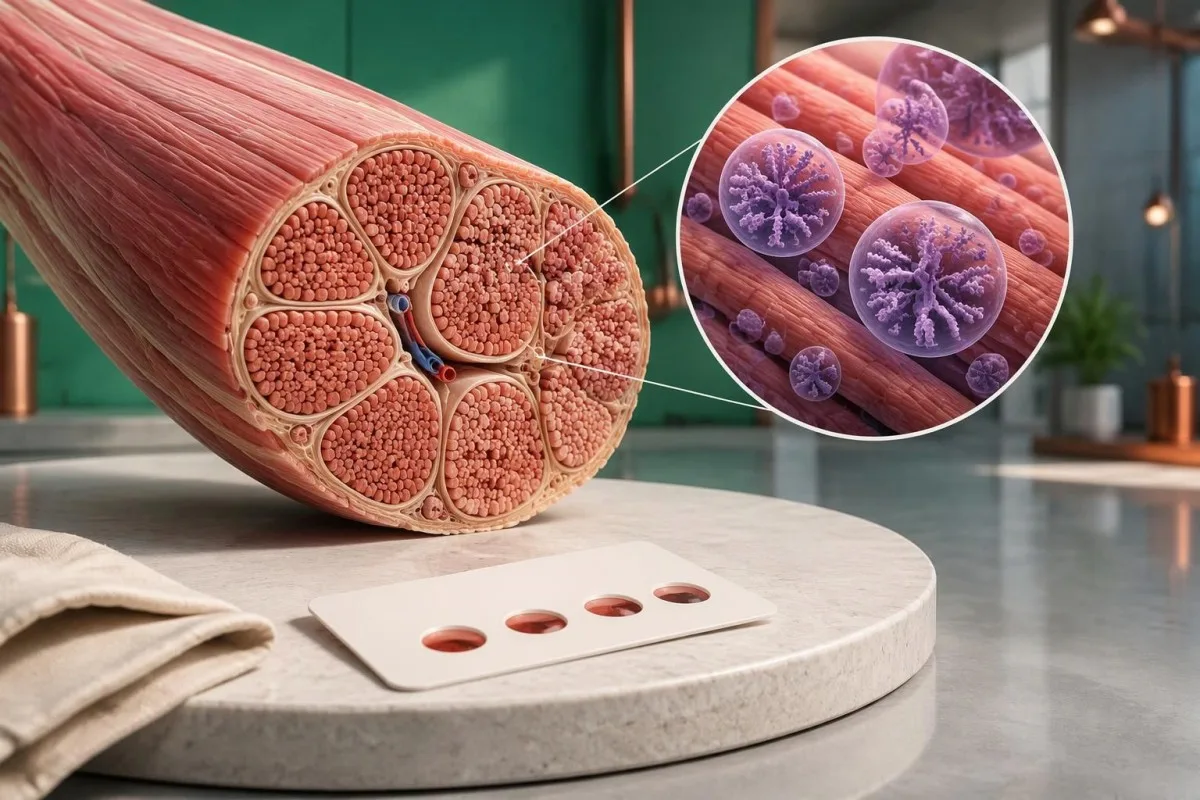
Keputusan enzim GAA yang rendah menimbulkan syak terhadap penyakit Pompe, tetapi saringan sahaja tidak dapat mengesahkannya. Ujian semula menggunakan spesimen yang sesuai dan analisis genetik GAA membantu membezakan kekurangan sebenar, status pembawa dan pseudokekurangan.

Perkara utama
- Aktiviti enzim GAA yang rendah ialah isyarat untuk tindakan susulan, bukan diagnosis; 1 titisan darah kering yang tidak normal memerlukan pengesahan yang diarahkan oleh pakar.
- Julat rujukan bergantung pada spesimen dan asai; nmol/h/mL tidak boleh dibandingkan secara langsung dengan nmol/h/mg protein.
- Aktiviti enzim baki selalunya di bawah 1% dalam penyakit Pompe infantil klasik, tetapi angka itu bukan ambang saringan universal.
- Pseudokekurangan boleh merendahkan aktiviti GAA makmal tanpa menyebabkan penyakit Pompe; mengulangi asai yang sama mungkin menghasilkan semula keputusan rendah.
- Ujian gen GAA mencari varian penyebab penyakit yang menjejaskan kedua-dua salinan gen; 2 varian mesti ditafsirkan untuk pengelasan dan fasa.
- Varian yang tidak pasti tidak mengesahkan penyakit Pompe; 1 atau 2 varian yang tidak diketahui kepentingannya memerlukan bukti tambahan.
- Risiko keluarga ialah 25% bagi seorang anak yang terjejas dalam setiap kehamilan apabila kedua-dua ibu bapa membawa varian GAA penyebab penyakit.
- Penilaian segera diperlukan bagi bayi dengan GAA rendah serta kesukaran menyusu, kelemahan ketara atau kemungkinan penglibatan jantung; jangan tunggu ujian semula rutin.
Apakah maksud sebenar keputusan enzim GAA yang rendah?
A Ujian penyakit Pompe yang menunjukkan aktiviti GAA rendah bermaksud makmal mengukur fungsi asid alfa-glukosidase yang berkurangan di bawah keadaan ujian mereka. Ini tidak membuktikan penyakit Pompe: 1 keputusan saringan rendah boleh mencerminkan kekurangan sebenar, pseudokekurangan, pertindihan berkaitan pembawa atau masalah spesimen.

Aktiviti GAA mengukur fungsi enzim, bukan sekadar jumlah protein enzim yang hadir. 3 butiran pertama yang perlu diperiksa ialah jenis spesimen, unit ukuran dan had keputusan makmal; keputusan yang dinyatakan sebagai rendah tanpa butiran ini tidak boleh ditafsirkan dengan pasti berbanding angka yang ditemui dalam talian.
Sebab ujian dilakukan mengubah makna saringan positif. Bayi baru lahir yang dikenal pasti melalui saringan populasi dan individu berusia 45 tahun dengan kelemahan pinggul progresif mempunyai kebarangkalian awal penyakit Pompe yang berbeza, walaupun nilai enzim yang dilaporkan sepadan; oleh itu, gejala dan pemeriksaan perlu dipertimbangkan bersama keputusan makmal.
Saringan positif tidak sama dengan penyakit positif. Jika 2 makmal menggunakan substrat atau penyediaan spesimen yang berbeza, keputusan berangka mereka mungkin tidak sepadan tanpa mana-mana makmal melakukan kesilapan; tanyakan sama ada janji temu seterusnya adalah untuk satu lagi pengukuran saringan atau ujian enzim pengesahan yang benar-benar mengesahkan.
Kantesti ialah seorang Penganalisis ujian darah AI yang dapat membantu menyusun laporan GAA bersama dapatan makmal rutin, tetapi tidak dapat mengesahkan diagnosis penyakit Pompe berdasarkan 1 nilai yang ditandai. Kami menerangkan misi AI perubatan yang lebih luas, pensijilan dan skop produk. Janji praktikalnya mudah: tafsiran yang pantas masih haruslah tafsiran yang teliti. menerangkan organisasi di sebalik perkhidmatan ini; kekurangan enzim keturunan yang disyaki masih memerlukan pakar metabolik atau neuromuskular.
Mengapakah kekurangan GAA menyebabkan masalah otot dan jantung?
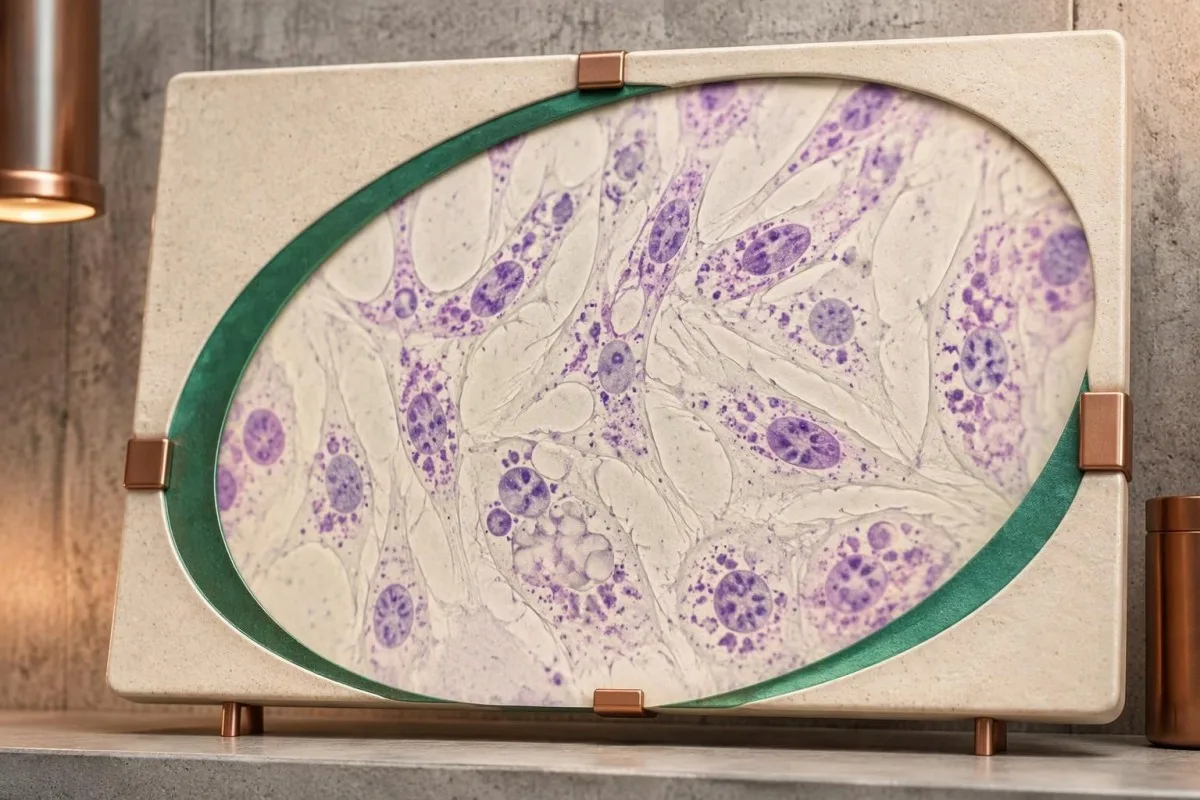
Penyakit Pompe berpunca daripada kekurangan asid alfa-glukosidase lisosom, enzim yang menguraikan glikogen di dalam kompartmen kitar semula sel. GAA bertindak pada pautan glukosa alfa-1,4 dan alfa-1,6; aktiviti yang tidak mencukupi menyebabkan glikogen terkumpul, khususnya dalam otot rangka dan jantung.

Penyakit Pompe infantil klasik sering mempunyai aktiviti GAA kurang daripada 1% daripada normal dalam ujian tisu diagnostik. Penyakit onset lewat boleh mengekalkan aktiviti yang lebih tinggi, kadangkala kira-kira 2–40% dalam ujian tertentu; julat deskriptif ini bertindih dengan batasan ujian dan tidak boleh menggantikan tafsiran diagnostik yang disahkan oleh makmal.
Garis panduan Genetics in Medicine Kishnani et al. 2006 menerangkan hubungan antara kekurangan GAA, penyimpanan glikogen dan penilaian multisistem. Perbezaan klinikal bukan sekadar sama ada aktiviti berada di bawah 1%: usia ketika gejala bermula, dapatan jantung dan fungsi otot pernafasan juga membantu menentukan bentuk dan tahap kesegeraan penyakit.
Keputusan glukosa rutin tidak mengukur penyingkiran glikogen lisosom. Sebagai contoh, seorang dewasa hipotesis boleh mempunyai glukosa puasa 92 mg/dL sambil mengalami gangguan penyimpanan glikogen otot keturunan; glukosa normal tidak menunjukkan bahawa glikogen di dalam lisosom otot diproses secara normal.
Gangguan lisosom lain melibatkan enzim dan gen yang berbeza, jadi ambangnya tidak boleh digunakan untuk ujian Pompe. Penerangan kami tentang pengesahan enzim Gaucher menggambarkan aliran kerja enzim-ke-genetik yang lebih luas, sambil menunjukkan sebab ujian enzim bagi 1 penyakit tidak boleh menggantikan ujian bagi penyakit lain.
Adakah terdapat julat normal bagi aktiviti enzim GAA?
There is no single universal normal range for GAA enzyme activity. Dried blood spots, leukocytes and cultured fibroblasts use different preparations and reporting units; a number expressed in nmol/h/mL cannot be directly compared with a result expressed in nmol/h/mg protein.

A screening cutoff separates samples needing follow-up from samples passing that screen. It does not necessarily separate affected people from unaffected people with complete accuracy; laboratories may use different fluorometric or tandem mass spectrometry methods, and 2 screening programs may therefore select different recall thresholds.
For a clearly hypothetical example, suppose a laboratory uses a DBS screening cutoff of 1.5 nmol/h/mL and reports 0.7 nmol/h/mL. The result is below that invented laboratory threshold, but dividing 0.7 by 1.5 gives 47% of the cutoff—not 47% of normal enzyme activity and not a severity score.
The lower limit of detection is different from the clinical cutoff. A report reading less than 0.1 in its stated units may mean the method cannot quantify lower activity reliably; it does not prove absolute absence of enzyme, and repeating measurements close to that analytical floor may produce proportionally large variation.
Screening performance also depends on prevalence. In a hypothetical group with 10 true-positive and 100 false-positive results, only about 9% of positive screens represent disease; those invented counts are not Pompe screening statistics, but explain why keputusan kualitatif berbanding kuantitatif require different interpretation.
| Tahap | Julat | Maksudnya |
|---|---|---|
| Passes hypothetical screen | ≥1.5 nmol/h/mL | Illustrative DBS cutoff only; not a universal normal range and not an absolute exclusion in a symptomatic person. |
| Below hypothetical cutoff | <1.5 nmol/h/mL | Illustrative follow-up threshold only; true deficiency, pseudodeficiency and specimen effects still need separation. |
Mengapakah ujian GAA perlu diulang menggunakan spesimen yang berbeza?
Repeat GAA testing checks whether low activity is reproducible and whether specimen quality or assay interference explains it. Confirmation usually moves beyond 1 screening card to a fresh, appropriately handled specimen, often with GAA measurement in leukocytes or another specialist-selected cell preparation.

Heat, humidity and inadequate drying can reduce enzyme activity in a dried blood spot. A low result after 2 days of poorly controlled transport may deserve a fresh collection, but transport history cannot be used to dismiss a result automatically; the laboratory should assess card quality and its stability requirements.
Acarbose is used in some GAA assay methods to suppress interfering maltase-glucoamylase activity. That interference can make measured activity appear higher and potentially obscure deficiency; checking how a laboratory isolates GAA activity can therefore matter more than obtaining a second number with the same unresolved methodological limitation.
Two low DBS results still do not automatically confirm Pompe disease. Pseudodeficiency can reproduce across repeated measurements, including some confirmatory methods; when enzyme and genetic findings disagree, a specialist laboratory may recommend cultured fibroblast testing or additional molecular investigation rather than simply ordering a third screening card.
Give the laboratory the dates of collection, recent transfusions or transplantation, and any enzyme replacement treatment already received. Our guide to gangguan kualiti sampel explains the general distinction between biological findings and specimen problems; GAA testing has its own handling rules, so do not import another test's redraw interval.
Apakah perbezaan pseudokekurangan GAA dengan penyakit Pompe?
GAA pseudodeficiency means an inherited variant lowers measured enzyme activity without causing the glycogen-storage disorder Pompe disease. Two commonly discussed variants are c.1726G>A, p.Gly576Ser, and c.2065G>A, p.Glu689Lys; their interpretation depends on the complete genotype and the assay used.
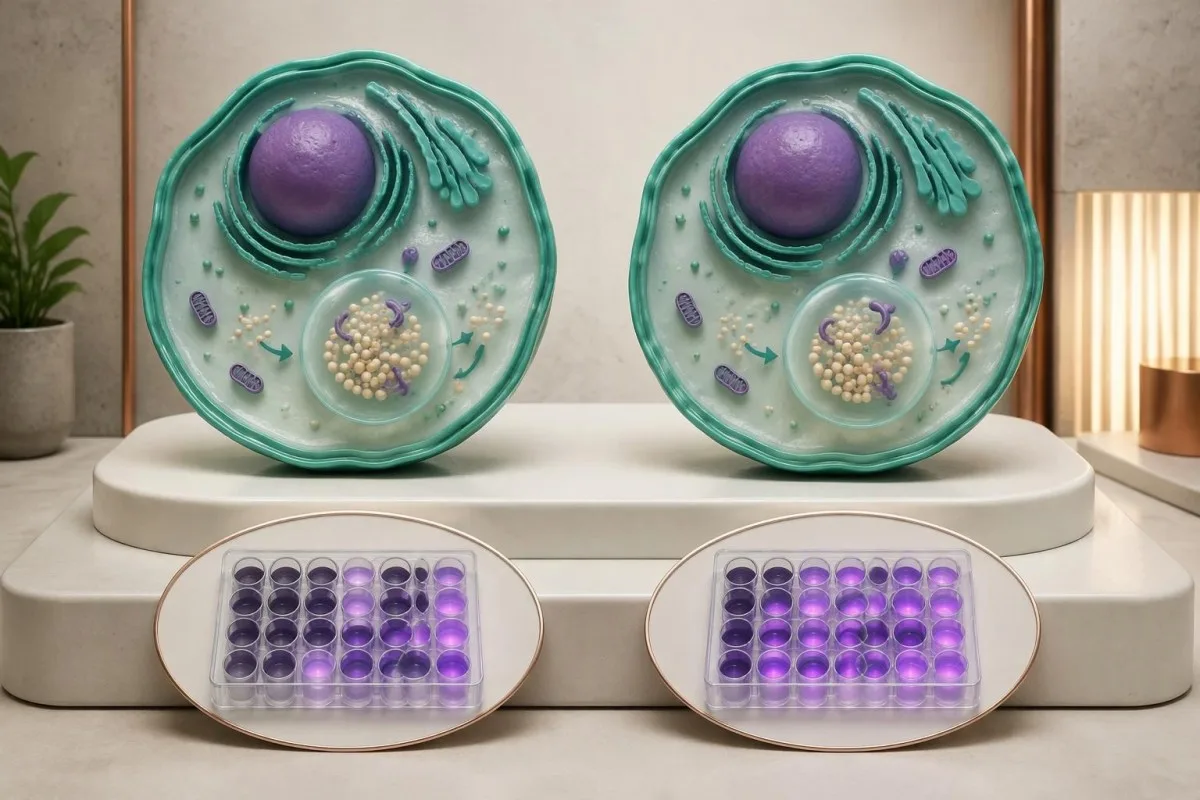
Pseudodeficiency is a biochemical testing issue, not an early stage of Pompe disease. A person with only pseudodeficiency variants does not need Pompe treatment because of 1 low activity result; the specialist must first verify that disease-causing variants or another explanation have not been missed.
The p.Gly576Ser and p.Glu689Lys variants are often found together on 1 gene copy and are particularly relevant in some East Asian ancestry populations. Ancestry changes how often laboratories encounter this pattern, but cannot establish or exclude pseudodeficiency in an individual; people from other backgrounds can carry these variants too.
Pseudodeficiency can remain low on repeat enzyme testing. The practical distinction is whether the complete biochemical and genetic evidence supports disease-causing GAA deficiency, not whether a second result falls below an arbitrary percentage; specialists may compare different assay substrates or cell preparations when the pattern remains ambiguous.
Pseudodeficiency variants can also coexist with a disease-causing variant, making a short report misleading if it lists everything under mutations. Our Fabry enzyme and genetics guide shows another situation where enzyme results need genetic context, although Fabry's X-linked inheritance differs from Pompe's 2-copy recessive mechanism.
Apakah yang perlu dicari dalam ujian gen GAA?
GAA gene testing investigates whether disease-causing variants affect both copies of the GAA gene. Pompe disease is autosomal recessive, and the GAA gene is located on chromosome 17; interpretation requires variant classification, adequate test coverage and, when needed, confirmation that variants affect opposite gene copies.
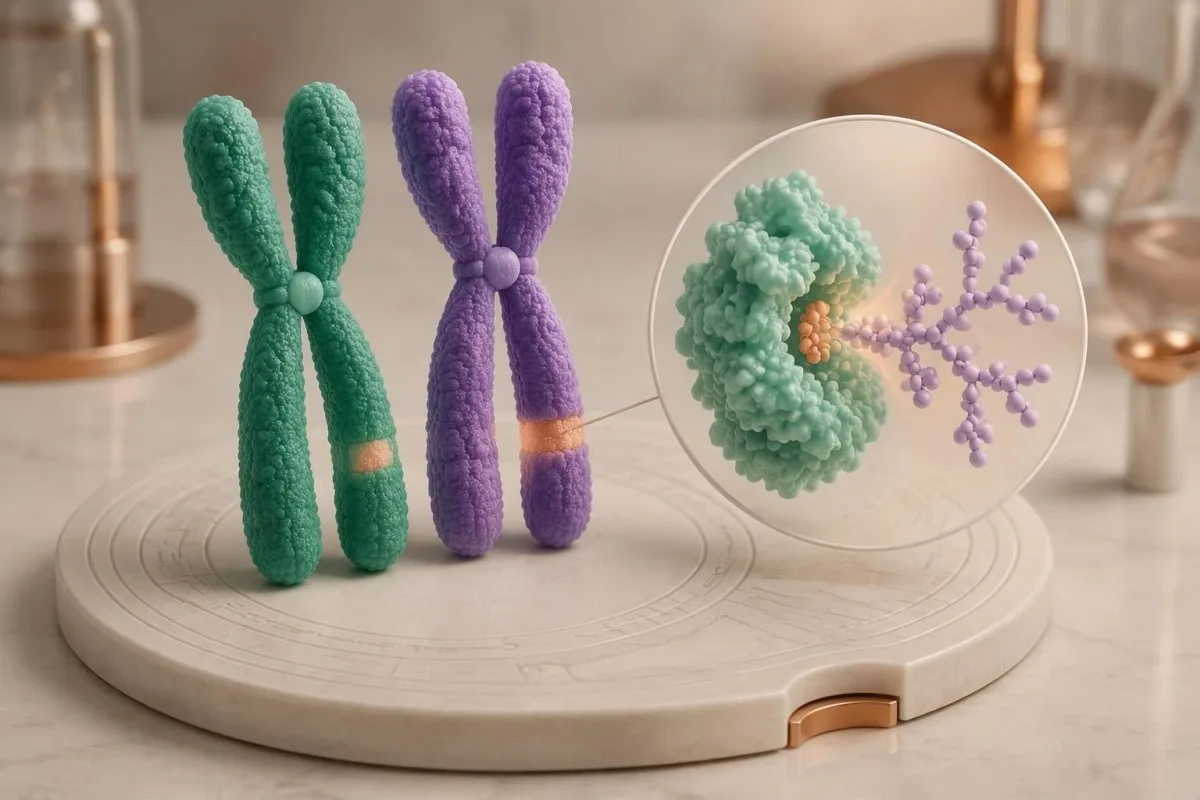
Two pathogenic or likely pathogenic GAA variants in trans support molecular confirmation of Pompe disease. In trans means the variants affect opposite gene copies; 2 variants in cis affect the same copy and do not, by themselves, demonstrate a recessive disease genotype.
Standard sequencing detects many small substitutions and insertions or deletions, but does not answer every possible genetic question. If only 1 disease-causing variant is found despite convincing enzyme deficiency, ask whether deletion/duplication analysis was included and whether poorly covered or deep intronic regions require further investigation.
A common later-onset-associated GAA variant is c.-32-13T>G, which affects splicing. Finding this variant on 1 copy does not diagnose Pompe disease, and finding it with another disease-causing variant does not precisely predict the age symptoms will begin; residual splicing and other biological factors influence presentation.
Parental testing can help establish phase when a laboratory detects 2 different variants but cannot determine their arrangement. Our guide to inherited disease genetic reports explains why inheritance and family testing matter, while the actual gene coverage and diagnostic criteria must remain specific to GAA.
Bagaimanakah keputusan patogenik, tidak pasti dan negatif harus ditafsirkan?
A pathogenic result, a variant of uncertain significance and a negative result have different diagnostic meanings. Genetic laboratories commonly use 5 categories: pathogenic, likely pathogenic, uncertain significance, likely benign and benign; a VUS is not equivalent to a disease-causing GAA variant.
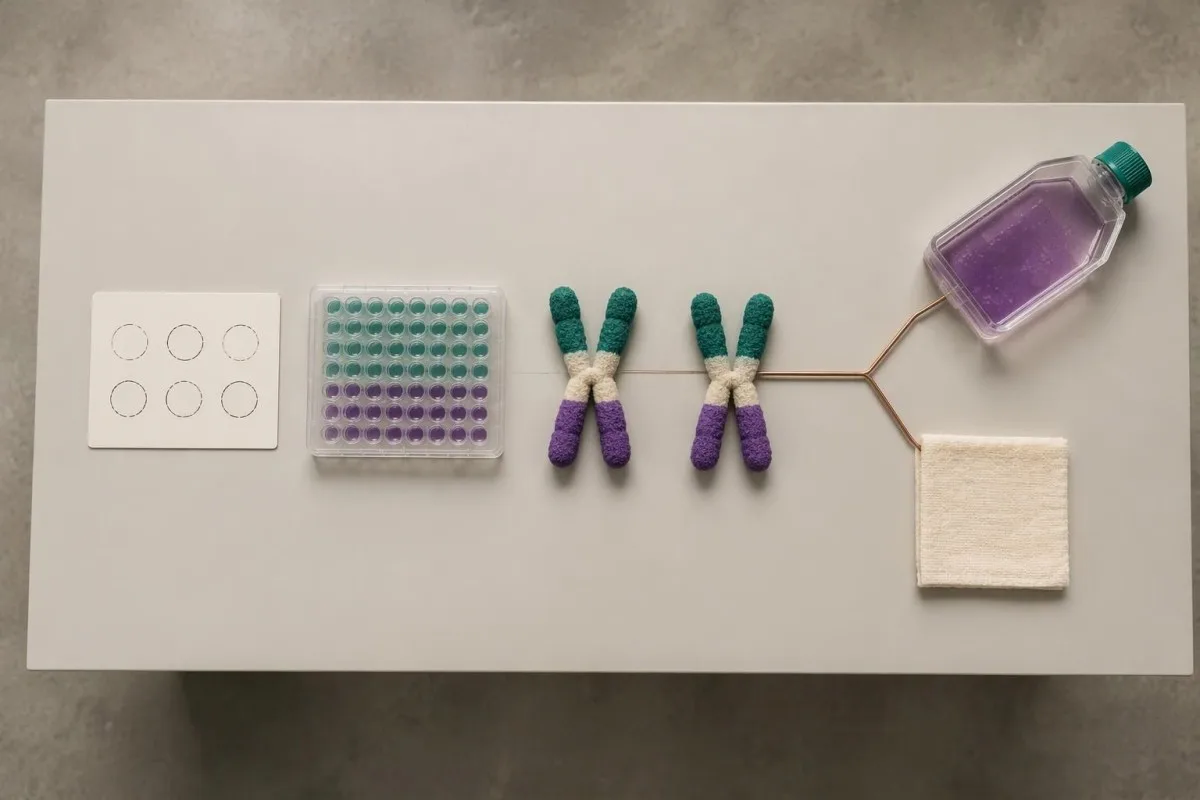
Richards et al.'s 2015 ACMG/AMP consensus established the widely used 5-category sequence-variant framework and states that a VUS should not guide clinical decision-making as though pathogenic. For Pompe evaluation, low enzyme activity can contribute evidence, but its value depends on whether pseudodeficiency and assay limitations have been addressed.
One pathogenic variant plus 1 VUS is an unresolved combination, not automatic confirmation or exclusion. Depending on the enzyme and clinical findings, specialists may investigate family segregation, RNA effects or variant-specific functional evidence; a diagnostic enzyme result may support disease even while the second molecular finding remains incompletely characterized.
A negative sequencing report means the test found no reportable variants within its scope. It does not prove that every GAA-related mechanism was examined; 1 negative limited test may warrant expanded testing when properly performed enzyme studies and the clinical pattern remain strongly suggestive.
Kantesti ialah seorang platform tafsiran ujian darah AI that can help separate a report's 5 classification terms from its numerical enzyme findings, without adjudicating an uncertain genotype. Our piawaian teknikal dan klinikal kami describe interpretation boundaries; our uncertain gene-result explanation provides a related example of why variants and diagnoses are not interchangeable.
Adakah satu varian GAA bermaksud status pembawa atau penyakit?
One confirmed disease-causing GAA variant usually indicates carrier status if a second disease-causing variant and diagnostic enzyme deficiency are absent. Carriers do not typically develop Pompe disease; when both parents are carriers, each pregnancy has a 25% affected, 50% carrier and 25% non-carrier probability.
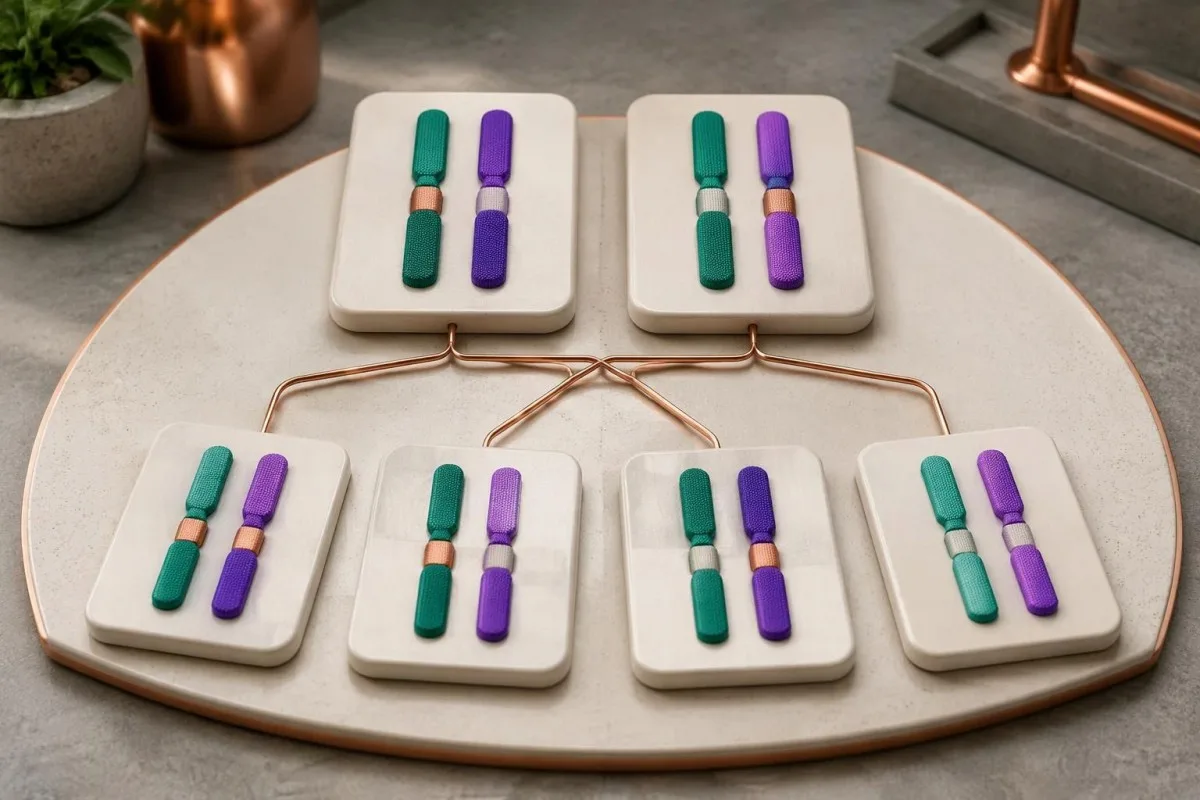
Carrier enzyme values can overlap with values in unaffected people. GAA activity is therefore not a reliable standalone carrier test, and a carrier's activity should not be assumed to equal exactly 50% of a laboratory's normal mean; targeted genetic testing is generally more informative when a familial variant is known.
The 25% affected-child probability applies independently to each pregnancy when both parents carry disease-causing variants capable of producing Pompe disease together. Having 1 unaffected child does not reduce the next pregnancy's Mendelian probability, and pseudodeficiency variants should not be substituted for pathogenic variants in that calculation.
Family testing is most useful after the affected person's variants are clarified. If a symptomatic adult has only 1 identified pathogenic variant, relatives should not be reassured that the entire family question is settled until the specialist considers whether the second variant was missed by the original assay.
For a hypothetical couple, one partner carrying a pathogenic GAA variant and the other carrying only a pseudodeficiency variant does not create the same 25% Pompe risk as 2 pathogenic-variant carriers. Our carrier screening limitations guide explains why a report's coverage and residual risk deserve discussion before reproductive decisions.
Keputusan makmal lain yang manakah menyokong penilaian Pompe?
Creatine kinase, AST, ALT and urinary glucose tetrasaccharide can support Pompe evaluation, but none confirms the diagnosis alone. Urinary glucose tetrasaccharide may be reported as Glc4 or within a Hex4 assay; these 2 report terms require method-specific interpretation rather than assumption that every laboratory measures exactly the same thing.
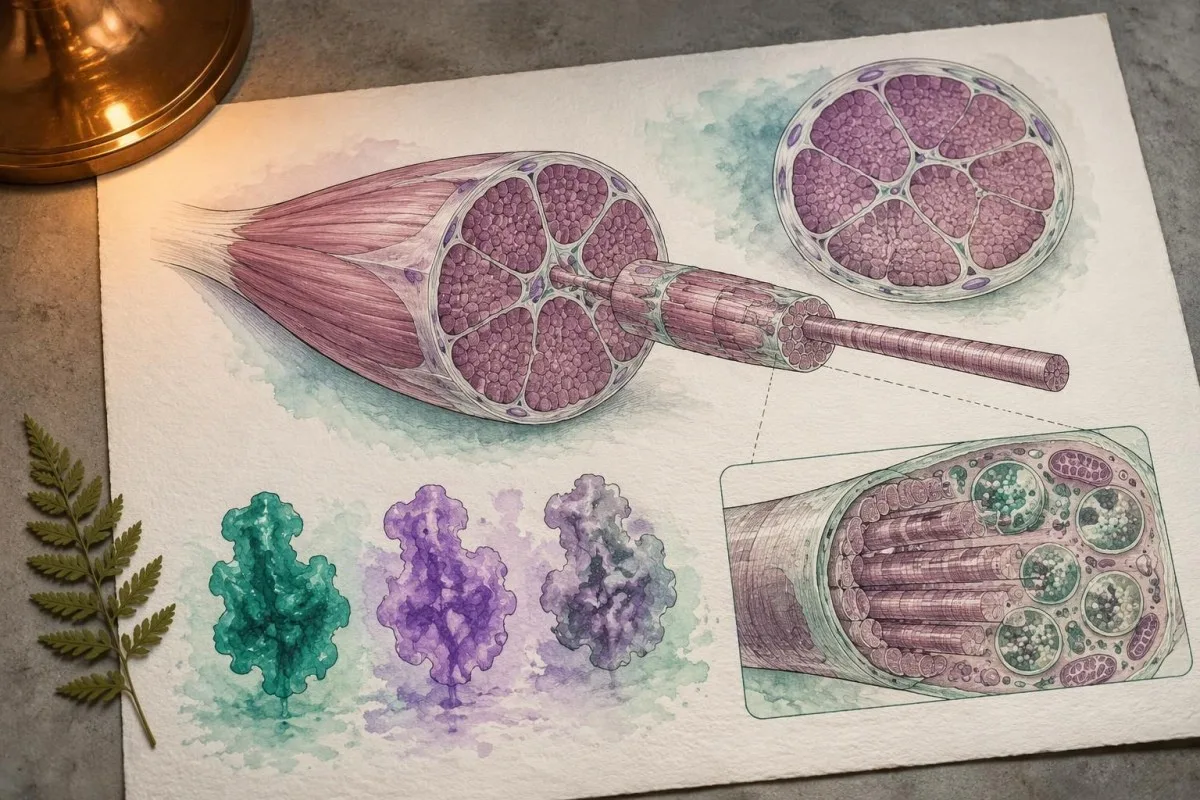
Normal CK does not exclude later-onset Pompe disease. In a hypothetical adult with progressive difficulty rising from a chair, CK of 140 U/L may fall within that laboratory's interval despite clinically meaningful weakness; the combination of symptoms and low confirmed GAA activity matters more than a reassuring CK flag.
AST and ALT can rise because of muscle involvement, not only liver disease. A hypothetical AST of 86 U/L with elevated CK and muscle weakness deserves a muscle-aware assessment; our aldolase and muscle marker guide explains why additional muscle enzymes may help characterize the pattern without identifying its cause.
Urinary Glc4 is a supportive glycogen-related biomarker, not a Pompe-specific diagnostic test. Reference limits vary with age and method, and elevation can occur in other circumstances; 1 elevated result should be interpreted alongside enzyme findings, genetics and the laboratory's creatinine-normalized units.
A falling CK or Glc4 after treatment does not automatically prove that strength or breathing has improved by the same percentage. Our discussion of AST interpretation beyond liver disease illustrates why 2 related markers can move together while still answering different questions about tissue injury and function.
Mengapakah pernafasan perlu dinilai apabila ujian Pompe tidak normal?
Pompe disease can weaken the diaphragm and other respiratory muscles, sometimes before obvious walking difficulty. Assessment may include seated and supine forced vital capacity, respiratory muscle pressures and sleep-related testing; a daytime oxygen saturation of 97% does not rule out overnight hypoventilation.
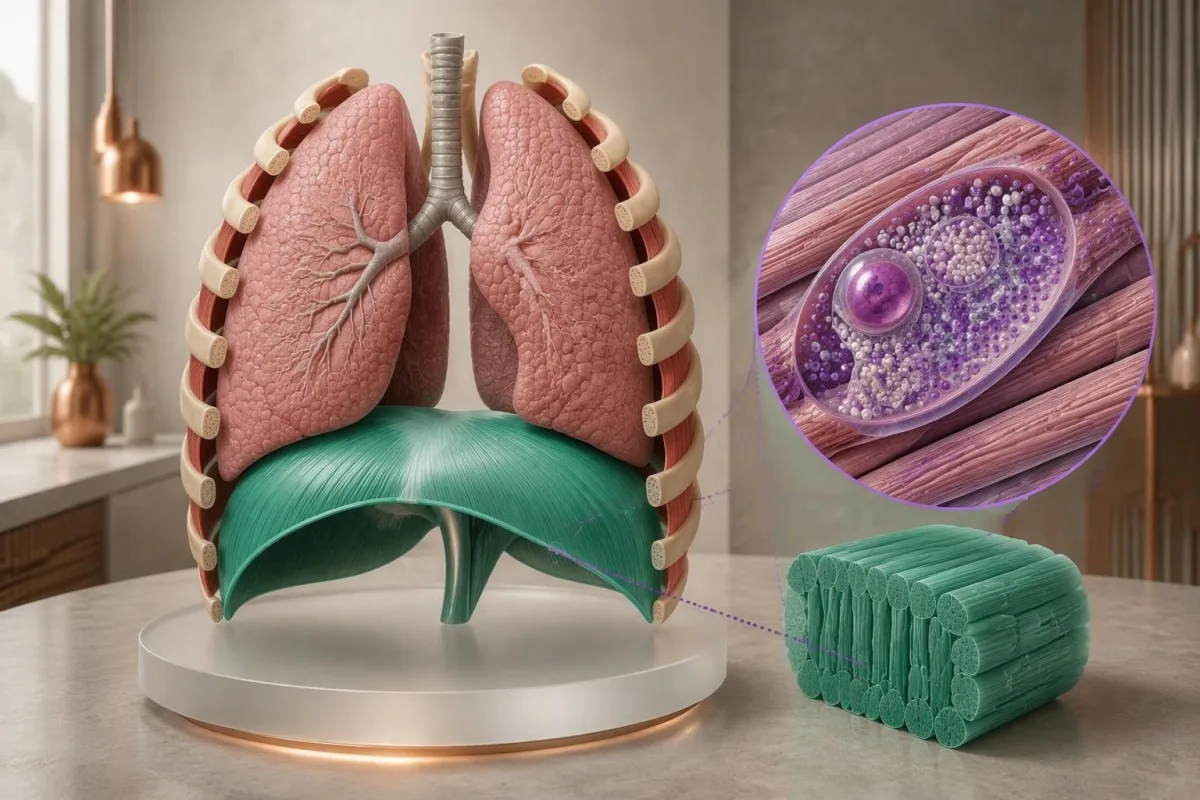
A position-related fall in vital capacity can suggest diaphragm weakness. For example, a hypothetical seated FVC of 3.0 L and supine FVC of 2.4 L represents a 20% decline; the specialist interprets that difference with technique, predicted values and symptoms, rather than treating it as a Pompe-specific cutoff.
Morning headaches, unrefreshing sleep and difficulty breathing when lying flat can justify evaluation for sleep-related hypoventilation. These symptoms do not identify Pompe disease on their own; our panduan ujian sesak nafas explains why laboratory results cannot replace respiratory examination and physiological testing.
Arterial carbon dioxide is normally about 35–45 mmHg in adults, with context-dependent variation. A value above 45 mmHg indicates hypercapnia, but its urgency depends on pH, symptoms and the clinical setting; our blood gas interpretation guide explains why oxygen and carbon dioxide answer different questions.
Severe breathlessness, confusion, blue coloration or rapidly worsening weakness warrants emergency care, not an online interpretation session. A confirmed molecular result affecting 2 GAA copies does not measure current respiratory safety; clinicians need direct functional assessment to decide whether ventilation support or urgent monitoring is necessary.
Apakah yang berlaku selepas saringan Pompe bayi baru lahir yang positif?
A positive newborn Pompe screen requires prompt specialist assessment, confirmatory enzyme testing and genetic evaluation. It does not mean every infant has Pompe disease; the immediate task is to distinguish pseudodeficiency or carrier findings from infantile disease and a later-onset-associated genotype affecting both GAA copies.

Burton et al.'s 2017 Pediatrics newborn-screening algorithms describe an initial evaluation integrating GAA confirmation, molecular testing and clinical assessment. If an infant has feeding difficulty, marked hypotonia or suspected cardiomyopathy, do not wait 2 weeks for a routine repeat appointment; the screening team should arrange urgent metabolic and cardiac evaluation.
Classic infantile Pompe disease commonly involves hypertrophic cardiomyopathy. A newborn's echocardiogram and electrocardiogram help assess risk that cannot be estimated from 1 enzyme number; absence of obvious heart symptoms at home does not replace the specialist examination after an abnormal screen.
CRIM status concerns whether cross-reactive GAA protein is present and helps specialists plan immune-risk management around enzyme replacement therapy. Less than 1% enzyme activity does not by itself establish CRIM-negative status, because an inactive protein may still be present; this is a protein-expression question, not just an activity threshold.
Later-onset-associated findings in a newborn require a monitoring plan, not an invented age-of-onset prediction. Even 2 classified disease-causing variants may not reveal when symptoms will emerge; our panduan keselamatan AI pediatrik explains why pediatric results require age-specific context and clinician-led decisions.
Bagaimanakah pakar menyelesaikan keputusan ujian dewasa yang bercanggah?
Conflicting adult Pompe results are resolved by checking specimen quality, confirmatory enzyme methods, variant classification and clinical fit. One low screen plus 1 genetic finding rarely tells the whole story; specialists investigate whether the apparent conflict comes from pseudodeficiency, an incomplete molecular test or another cause of weakness.

Consider a hypothetical 52-year-old with mild fatigue, low DBS GAA activity and only the 2 commonly discussed pseudodeficiency variants. If specialist testing supports pseudodeficiency and no disease-causing genotype, the low screen does not explain the fatigue; other causes should be assessed rather than attaching a Pompe label to an incidental biochemical finding.
A second hypothetical adult has progressive hip weakness, a 20% positional FVC decline, confirmed cellular GAA deficiency and 2 pathogenic variants in trans. Together, those findings support Pompe disease; a normal routine glucose or modest CK result would not outweigh the converging biochemical, genetic and functional evidence.
Convincing enzyme deficiency with only 1 identified pathogenic variant deserves further investigation. The appropriate next step may be deletion/duplication analysis, RNA studies or another specialist assay—not automatically calling the person a carrier; the investigation should also check whether non-Pompe neuromuscular conditions better explain the examination.
Variant-related disease monitoring is not the same as predicting a person's future from their DNA. Our inherited neuromuscular risk guide offers a related family-testing perspective, but 2 conditions can differ substantially in inheritance, penetrance and treatment triggers.
Apakah yang perlu anda bawa ke temu janji dengan pakar Pompe?
Bring the complete enzyme report, complete genetic report and a dated symptom history to a Pompe specialist appointment. Three report details are especially useful: specimen type, assay units and variant classification; screenshots showing only a red flag or the word mutation can omit information that changes the interpretation.

Ask whether confirmatory testing has already been completed and whether the laboratory measured GAA specifically in an appropriate cell preparation. If 2 variants were found, ask whether they are in trans; if only 1 was found, ask what variant types and regions the test could detect.
Do not try to raise GAA activity with supplements or diet before confirmation. No vitamin or food corrects inherited pathogenic variants affecting both GAA copies; nutrition may support general care after diagnosis, but cannot substitute for enzyme confirmation or specialist treatment planning.
Kantesti ialah seorang Alat analisis ujian darah berkuasa AI that can help organize report terminology and associated laboratory trends, not decide whether 2 uncertain variants establish Pompe disease. Our menyemak sumber laporan explains why the original document remains the reference when an automated explanation and a specialist interpretation differ.
Genetic documents can contain information relevant to relatives as well as the tested person. Before sharing 1 family member's report, check consent and remove unnecessary identifiers; Kantesti's maklumat privasi dan data describes our handling approach, while sharing results with relatives should follow a genetic counselor's guidance.
Penerbitan penyelidikan dan batasan tafsiran ujian Pompe
Pompe test interpretation rests on disease-specific enzyme, genetic and clinical evidence—not on general laboratory publications or an AI explanation. Kantesti includes 3 directly relevant external sources below and 2 separate educational publications; the iron and coagulation publications are not evidence for diagnosing Pompe disease.
The 2006 Kishnani guideline provides disease-specific diagnostic and management context, while the 2017 Burton newborn-screening paper addresses confirmation after population screening. Their recommendations should be applied with the specialist laboratory's validated methods; neither supplies 1 universally transferable DBS enzyme cutoff for every instrument and population.
Richards et al.'s 2015 ACMG/AMP publication explains the 5-category variant framework used to distinguish pathogenic findings from uncertainty. Classification can change when new evidence becomes available, so ask the genetics service whether an unresolved result has a reanalysis pathway rather than assuming every VUS will eventually become pathogenic.
Pendidikan kami penerbitan kajian zat besi addresses a different laboratory domain. The separate ujian pembekuan darah also covers unrelated markers; their 2 DOI records are provided for publication transparency, not as supporting citations for GAA deficiency or pseudodeficiency.
bahan Kantesti piawaian kandungan perubatan distinguish patient education from diagnosis and treatment instructions. The practical endpoint is a documented interpretation of 3 evidence streams—enzyme testing, genetic analysis and clinical assessment—with urgent care taking priority whenever infantile disease or respiratory compromise is suspected.
Soalan lazim
Adakah aktiviti enzim GAA yang rendah sentiasa bermakna penyakit Pompe?
Aktiviti enzim GAA yang rendah tidak semestinya bermakna penyakit Pompe. Satu keputusan saringan yang abnormal boleh mencerminkan kekurangan sebenar, pseudokekurangan, degradasi spesimen atau pertindihan dengan aktiviti berkaitan pembawa. Pengesahan memerlukan tafsiran pakar terhadap ujian enzim yang sesuai, penemuan genetik GAA dan konteks klinikal. Mengulangi ujian saringan yang sama sahaja mungkin menghasilkan semula pseudokekurangan dan bukannya menyelesaikan masalah itu.
Apakah paras enzim GAA yang normal?
There is no universal normal GAA enzyme level because specimen preparation, assay substrate and reporting units differ between laboratories. A value in nmol/h/mL cannot be directly compared with a value in nmol/h/mg protein. Classic infantile Pompe disease often has less than 1% of normal activity in diagnostic tissue assays, but this is not a universal newborn-screening cutoff. Use the reference information printed on the original report and the specialist laboratory's interpretation.
Bolehkah dua ujian GAA yang rendah masih menunjukkan pseudokekurangan?
Dua ujian GAA rendah masih boleh mencerminkan pseudokekurangan, terutamanya apabila kaedah asai yang sama atau serupa digunakan. Varian pseudokekurangan mengurangkan aktiviti yang diukur tanpa menyebabkan penyakit penyimpanan glikogen Pompe dengan sendirinya. Pakar membezakan corak ini menggunakan genotip GAA penuh, ciri-ciri asai dan, jika perlu, penyediaan sel lain atau penyiasatan fungsian. Oleh itu, dua bacaan rendah yang berulang tidak setara dengan dua pengesahan penyakit yang bebas.
Adakah dua varian gen GAA mengesahkan penyakit Pompe?
Dua varian GAA tidak secara automatik mengesahkan penyakit Pompe. Dua varian patogenik atau berkemungkinan patogenik dalam trans, yang menjejaskan salinan gen yang bertentangan, menyokong pengesahan molekul, manakala dua varian dalam cis hanya menjejaskan satu salinan. Varian yang tidak pasti kepentingannya dan varian pseudokekurangan tidak boleh dikira sebagai penemuan yang telah terbukti menyebabkan penyakit. Bukti enzim dan klinikal kekal sangat berguna apabila pengelasan atau fasa belum dipastikan.
Bolehkah CK normal menolak penyakit Pompe onset lewat?
Normal CK cannot rule out late-onset Pompe disease. A hypothetical CK of 140 U/L may fall within a laboratory's reference interval despite progressive proximal weakness or diaphragm involvement. CK measures muscle injury-related enzyme release, not lysosomal GAA function. Persistent compatible symptoms deserve specialist assessment even when routine muscle markers are reassuring.
Sejauh manakah keputusan ujian penyakit Pompe positif pada bayi baru lahir perlu dianggap mendesak?
Keputusan ujian penyakit Pompe yang positif pada bayi baru lahir memerlukan hubungan segera dengan pasukan saringan atau metabolik, dan bayi yang mengalami kesukaran menyusu, hipotonia yang ketara atau disyaki mengalami penglibatan jantung memerlukan penilaian segera. Satu kad saringan yang positif tidak mengesahkan diagnosis, tetapi penyakit klasik infantil yang disyaki tidak sepatutnya menunggu janji temu rutin beberapa minggu kemudian. Pakar mengatur ujian enzim pengesahan, penilaian genetik dan penilaian jantung, selalunya secara serentak. Kesukaran bernafas yang teruk atau tindak balas yang berkurangan memerlukan rawatan kecemasan.
Apakah risiko kepada anak-anak jika kedua-dua ibu bapa ialah pembawa Pompe?
Jika kedua-dua ibu bapa membawa varian GAA penyebab penyakit, setiap kehamilan mempunyai kebarangkalian 25% untuk mendapat anak yang terjejas, kebarangkalian 50% untuk mendapat anak pembawa dan kebarangkalian 25% untuk mendapat anak yang mewarisi kedua-dua varian keluarga. Kebarangkalian ini terpakai secara bebas bagi setiap kehamilan. Varian pseudokekurangan tidak boleh saling menggantikan dengan varian patogenik dalam pengiraan ini. Kaunseling genetik membantu mengesahkan dapatan ibu bapa dan menerangkan pilihan ujian.
Dapatkan penjelasan tentang keputusan ujian darah anda
Muat naik laporan makmal anda dan AI Kantesti menerangkan setiap biomarker dalam bahasa mudah dalam beberapa saat. Digunakan oleh lebih daripada 2 juta orang di seluruh dunia.
Rujukan
- Klein, T., Mitchell, S., & Weber, H. (2026). Panduan Kajian Zat Besi: TIBC, Ketepuan Zat Besi & Kapasiti Pengikatan. Penyelidikan Perubatan AI Kantesti. DOI
- Klein, T., Mitchell, S., & Weber, H. (2026). Julat Normal aPTT: Panduan Pembekuan Darah D-Dimer, Protein C. Penyelidikan Perubatan AI Kantesti. DOI
- Kishnani PS et al. (2006). Pompe disease diagnosis and management guideline. Genetik dalam Perubatan. DOI PubMed
- Burton BK et al. (2017). The Initial Evaluation of Patients After Positive Newborn Screening: Recommended Algorithms Leading to a Confirmed Diagnosis of Pompe Disease. Pediatrics. DOI
- Richards S et al. (2015). Piawaian dan garis panduan untuk tafsiran varian jujukan: saranan konsensus bersama American College of Medical Genetics and Genomics dan Association for Molecular Pathology. Genetik dalam Perubatan. DOI PubMed
- 2J+Ujian dianalisis
- 127+negara
- 100+Bahasa
Mengenai pasukan perubatan


Isyarat Kepercayaan E-E-A-T
Pengalaman
Semakan klinikal yang diketuai oleh doktor terhadap aliran kerja tafsiran makmal.
Kepakaran
Fokus perubatan makmal tentang bagaimana biomarker berkelakuan dalam konteks klinikal.
Kewibawaan
Disemak secara perubatan oleh Dr. Thomas Klein, dengan sumbangan daripada Dr. Sarah Mitchell dan Prof. Dr. Hans Weber.
Kebolehpercayaan
Tafsiran berasaskan bukti dengan laluan susulan yang jelas untuk mengurangkan kebimbangan.






Penafian perubatan
Artikel ini adalah untuk tujuan pendidikan sahaja dan tidak merupakan nasihat perubatan. Sentiasa rujuk pembekal penjagaan kesihatan yang berkelayakan untuk keputusan diagnosis dan rawatan.
Diterbitkan · Hubungi pasukan editorial
Diterbitkan oleh Kantesti Ltd, berdaftar di England & Wales, nombor syarikat. 17090423, London, United Kingdom.
