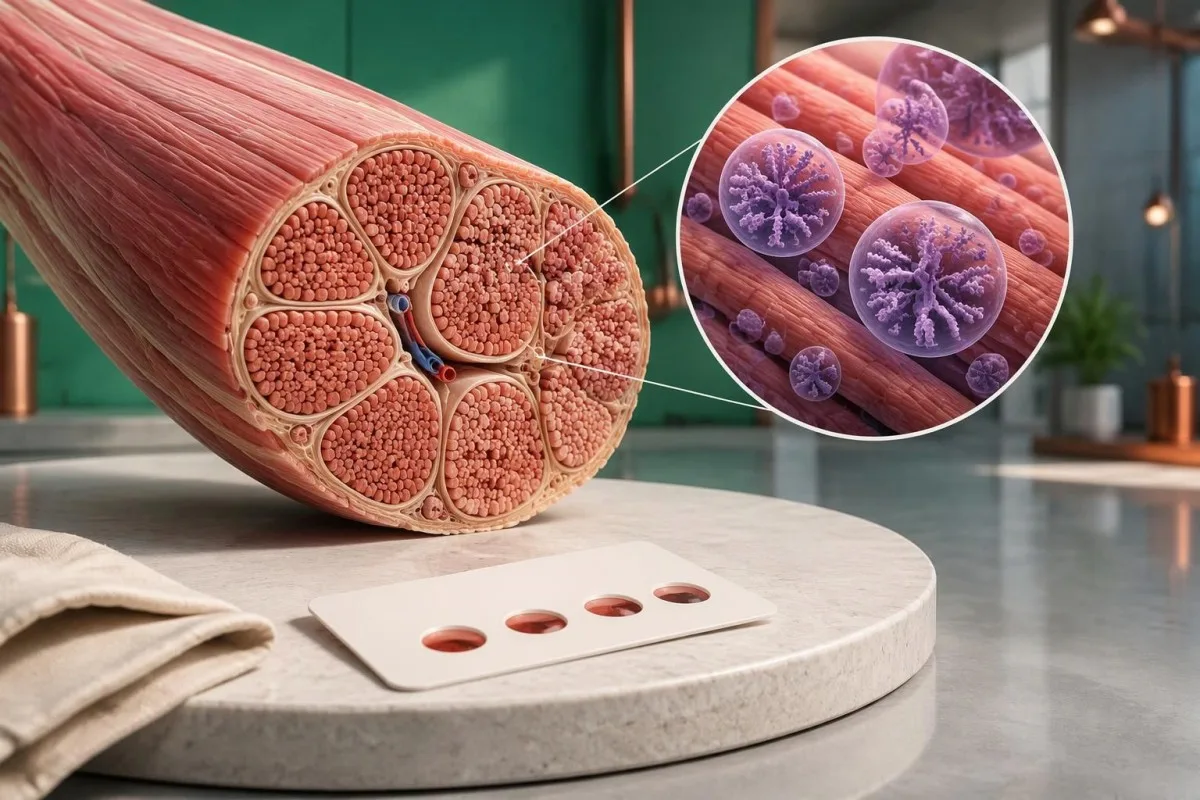
Nizak rezultat aktivnosti enzima GAA pobuđuje sumnju na Pompeovu bolest, ali samo probirno testiranje ne može je potvrditi. Ponovljeno testiranje u odgovarajućem uzorku i genetska analiza GAA pomažu razlikovati pravi nedostatak, status nositelja i pseudonedostatak.

Ključne napomene
- Niska aktivnost enzima GAA signal je za daljnju obradu, a ne dijagnoza; 1 abnormalan nalaz iz suhe kapi krvi zahtijeva potvrdu prema uputama specijalista.
- Referentni rasponi ovise o uzorku i testu; nmol/h/mL ne mogu se izravno uspoređivati s nmol/h/mg proteina.
- Preostala aktivnost enzima često je ispod 1% kod klasične infantilne Pompeove bolesti, ali ta vrijednost nije univerzalna granična vrijednost za probir.
- Pseudonedostatak može sniziti laboratorijsku aktivnost GAA, a da pritom ne uzrokuje Pompeovu bolest; ponavljanje istog testa može ponovno dati nizak rezultat.
- Testiranje gena GAA traži varijante koje uzrokuju bolest i zahvaćaju obje kopije gena; 2 varijante treba tumačiti u svrhu klasifikacije i utvrđivanja faze.
- Nesigurne varijante ne potvrđuju Pompeovu bolest; 1 ili 2 varijante nepoznatog značaja zahtijevaju dodatne dokaze.
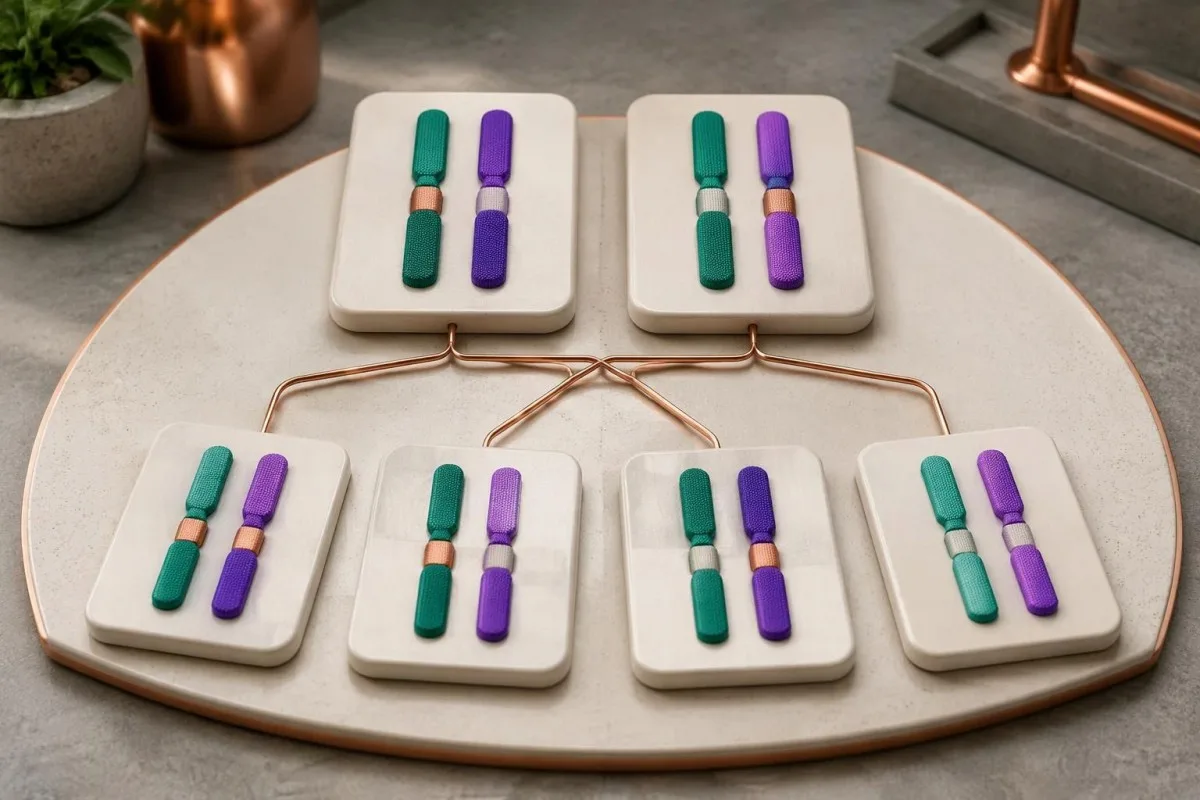
- Obiteljski rizik iznosi 25% za oboljelo dijete u svakoj trudnoći ako oba roditelja nose patogenu varijantu gena GAA.
- Potrebna je hitna procjena potrebno je za dojenče s niskom aktivnošću GAA i poteškoćama s hranjenjem, izraženom slabošću ili sumnjom na zahvaćenost srca; nemojte čekati redovnu ponovnu pretragu.
Što zapravo znači nizak rezultat aktivnosti enzima GAA?
A Testiranje na Pompeovu bolest koje pokazuje nisku aktivnost GAA znači da je laboratorij izmjerio smanjenu funkciju kisele alfa-glukozidaze u uvjetima vlastitog testa. To ne dokazuje Pompeovu bolest: 1 nizak rezultat probira može odražavati stvarni nedostatak, pseudonedostatak, preklapanje povezano s nositeljstvom ili problem s uzorkom.

Aktivnost GAA mjeri funkciju enzima, a ne samo količinu prisutnog enzimskog proteina. Prva 3 detalja koja treba provjeriti jesu vrsta uzorka, mjerne jedinice i granična vrijednost laboratorija; rezultat opisan kao nizak bez tih podataka ne može se pouzdano protumačiti u usporedbi s brojem pronađenim na internetu.
Razlog testiranja mijenja značenje pozitivnog probira. Novorođenče otkriveno populacijskim probirom i 45-godišnjak s progresivnom slabošću mišića kuka imaju različitu početnu vjerojatnost Pompeove bolesti, čak i ako su im prijavljene vrijednosti enzima jednake; stoga simptomi i nalaz pregleda trebaju stajati uz laboratorijski rezultat.
Pozitivan probir nije isto što i potvrđena bolest. Ako 2 laboratorija upotrebljavaju različite supstrate ili pripremu uzorka, njihovi se brojčani rezultati mogu razlikovati, a da pritom nijedan laboratorij nije pogriješio; pitajte je li sljedeći termin za još jedno mjerenje probira ili za zaista potvrdnu enzimsku analizu.
Kantesti je Analizator krvnih testova s umjetnom inteligencijom koja može pomoći organizirati nalaz GAA uz rutinske laboratorijske nalaze, ali ne može postaviti dijagnozu Pompeove bolesti na temelju 1 označene vrijednosti. Naša informacije o tvrtki objašnjava organizaciju usluge; sumnja na nasljedni nedostatak enzima i dalje zahtijeva pregled specijalista za metaboličke ili neuromuskularne bolesti.
Zašto nedostatak GAA uzrokuje probleme s mišićima i srcem?
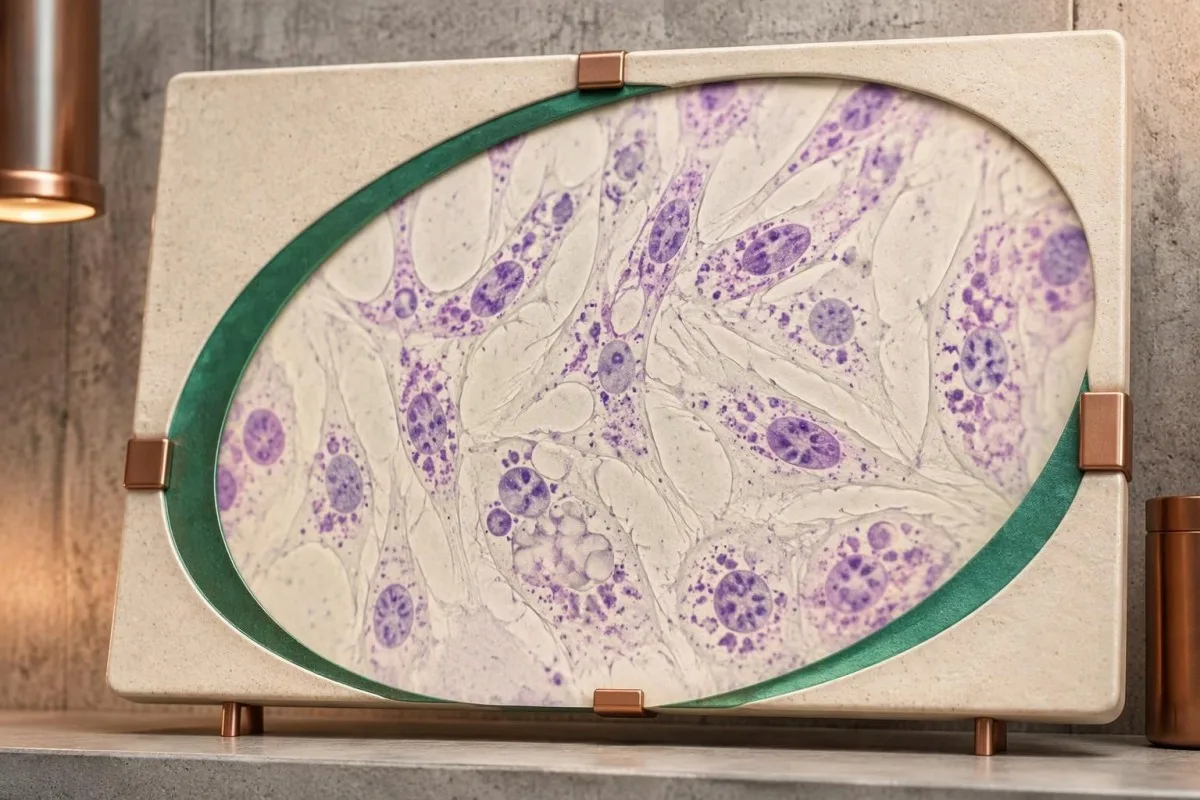
Pompeova bolest posljedica je nedostatka lizosomske kisele alfa-glukozidaze, enzima koji razgrađuje glikogen unutar staničnih odjeljaka za recikliranje. GAA djeluje na glukozne veze alfa-1,4 i alfa-1,6; nedostatna aktivnost omogućuje nakupljanje glikogena, osobito u skeletnim i srčanom mišiću.

Klasična infantilna Pompeova bolest često ima manje od 1% normalne aktivnosti GAA u dijagnostičkim analizama tkiva. Bolest s kasnijim početkom može zadržati veću aktivnost, ponekad približno 2–40% u određenim testovima; ti opisni rasponi preklapaju se s ograničenjima testa i ne smiju zamijeniti validirano dijagnostičko tumačenje laboratorija.
Smjernica Kishnanija i suradnika iz 2006. objavljena u časopisu Genetics in Medicine opisuje povezanost nedostatka GAA, pohrane glikogena i procjene više organskih sustava. Klinička razlika ne svodi se samo na to je li aktivnost ispod 1%: dob pri pojavi simptoma, nalazi srca i funkcija dišnih mišića također pomažu odrediti oblik i hitnost bolesti.
Rutinski nalaz glukoze ne mjeri razgradnju lizosomskog glikogena. Primjerice, hipotetska odrasla osoba može imati glukozu natašte 92 mg/dL, a istodobno nasljedni poremećaj pohrane glikogena u mišićima; normalna glukoza ne dokazuje da se glikogen unutar mišićnih lizosoma normalno razgrađuje.
Drugi lizosomski poremećaji uključuju različite enzime i gene, pa se njihovi pragovi ne mogu primijeniti na testiranje za Pompeovu bolest. Naše objašnjenje potvrde Gaucherove bolesti enzimskom analizom prikazuje širi postupak od analize enzima do genetike, a pritom pokazuje zašto enzimski test za jednu bolest ne može zamijeniti test za drugu.
Postoji li normalan raspon aktivnosti enzima GAA?
There is no single universal normal range for GAA enzyme activity. Dried blood spots, leukocytes and cultured fibroblasts use different preparations and reporting units; a number expressed in nmol/h/mL cannot be directly compared with a result expressed in nmol/h/mg protein.

A screening cutoff separates samples needing follow-up from samples passing that screen. It does not necessarily separate affected people from unaffected people with complete accuracy; laboratories may use different fluorometric or tandem mass spectrometry methods, and 2 screening programs may therefore select different recall thresholds.
For a clearly hypothetical example, suppose a laboratory uses a DBS screening cutoff of 1.5 nmol/h/mL and reports 0.7 nmol/h/mL. The result is below that invented laboratory threshold, but dividing 0.7 by 1.5 gives 47% of the cutoff—not 47% of normal enzyme activity and not a severity score.
The lower limit of detection is different from the clinical cutoff. A report reading less than 0.1 in its stated units may mean the method cannot quantify lower activity reliably; it does not prove absolute absence of enzyme, and repeating measurements close to that analytical floor may produce proportionally large variation.
Screening performance also depends on prevalence. In a hypothetical group with 10 true-positive and 100 false-positive results, only about 9% of positive screens represent disease; those invented counts are not Pompe screening statistics, but explain why kvalitativni naspram kvantitativnih rezultata require different interpretation.
| Razina | Raspon | Što to znači |
|---|---|---|
| Passes hypothetical screen | ≥1.5 nmol/h/mL | Illustrative DBS cutoff only; not a universal normal range and not an absolute exclusion in a symptomatic person. |
| Below hypothetical cutoff | <1.5 nmol/h/mL | Illustrative follow-up threshold only; true deficiency, pseudodeficiency and specimen effects still need separation. |
Zašto ponoviti testiranje GAA u drugom uzorku?
Repeat GAA testing checks whether low activity is reproducible and whether specimen quality or assay interference explains it. Confirmation usually moves beyond 1 screening card to a fresh, appropriately handled specimen, often with GAA measurement in leukocytes or another specialist-selected cell preparation.

Heat, humidity and inadequate drying can reduce enzyme activity in a dried blood spot. A low result after 2 days of poorly controlled transport may deserve a fresh collection, but transport history cannot be used to dismiss a result automatically; the laboratory should assess card quality and its stability requirements.
Acarbose is used in some GAA assay methods to suppress interfering maltase-glucoamylase activity. That interference can make measured activity appear higher and potentially obscure deficiency; checking how a laboratory isolates GAA activity can therefore matter more than obtaining a second number with the same unresolved methodological limitation.
Two low DBS results still do not automatically confirm Pompe disease. Pseudodeficiency can reproduce across repeated measurements, including some confirmatory methods; when enzyme and genetic findings disagree, a specialist laboratory may recommend cultured fibroblast testing or additional molecular investigation rather than simply ordering a third screening card.
Give the laboratory the dates of collection, recent transfusions or transplantation, and any enzyme replacement treatment already received. Our guide to interferenciju zbog kvalitete uzorka explains the general distinction between biological findings and specimen problems; GAA testing has its own handling rules, so do not import another test's redraw interval.
Po čemu se pseudonedostatak GAA razlikuje od Pompeove bolesti?
GAA pseudodeficiency means an inherited variant lowers measured enzyme activity without causing the glycogen-storage disorder Pompe disease. Two commonly discussed variants are c.1726G>A, p.Gly576Ser, and c.2065G>A, p.Glu689Lys; their interpretation depends on the complete genotype and the assay used.
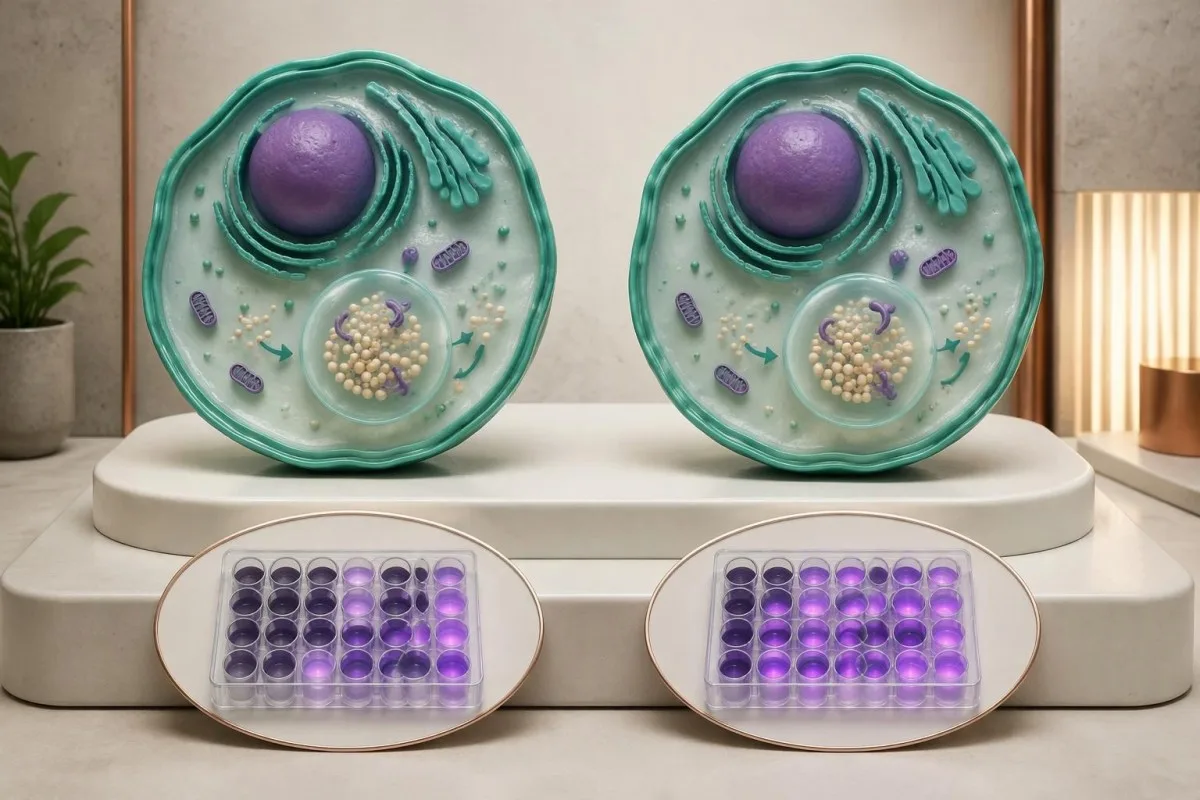
Pseudodeficiency is a biochemical testing issue, not an early stage of Pompe disease. A person with only pseudodeficiency variants does not need Pompe treatment because of 1 low activity result; the specialist must first verify that disease-causing variants or another explanation have not been missed.
The p.Gly576Ser and p.Glu689Lys variants are often found together on 1 gene copy and are particularly relevant in some East Asian ancestry populations. Ancestry changes how often laboratories encounter this pattern, but cannot establish or exclude pseudodeficiency in an individual; people from other backgrounds can carry these variants too.
Pseudodeficiency can remain low on repeat enzyme testing. The practical distinction is whether the complete biochemical and genetic evidence supports disease-causing GAA deficiency, not whether a second result falls below an arbitrary percentage; specialists may compare different assay substrates or cell preparations when the pattern remains ambiguous.
Pseudodeficiency variants can also coexist with a disease-causing variant, making a short report misleading if it lists everything under mutations. Our Fabry enzyme and genetics guide shows another situation where enzyme results need genetic context, although Fabry's X-linked inheritance differs from Pompe's 2-copy recessive mechanism.
Na što treba obratiti pozornost pri testiranju gena GAA?
GAA gene testing investigates whether disease-causing variants affect both copies of the GAA gene. Pompe disease is autosomal recessive, and the GAA gene is located on chromosome 17; interpretation requires variant classification, adequate test coverage and, when needed, confirmation that variants affect opposite gene copies.
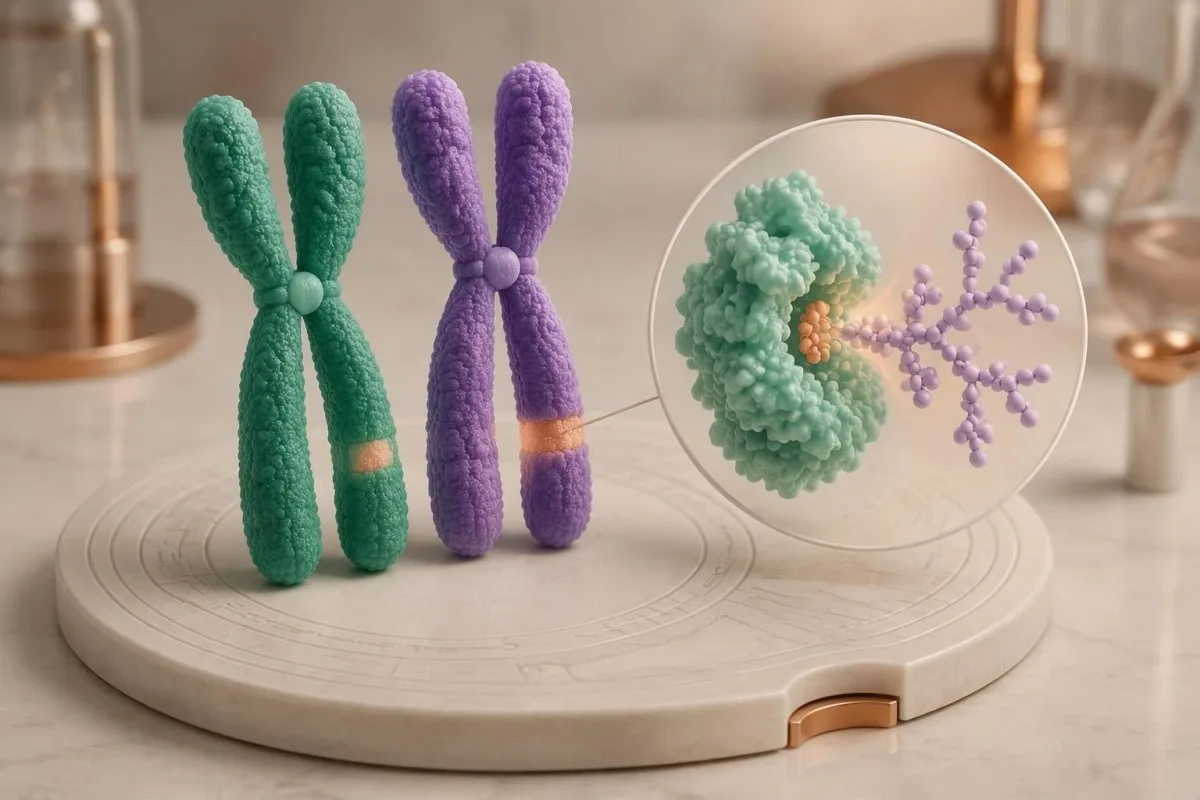
Two pathogenic or likely pathogenic GAA variants in trans support molecular confirmation of Pompe disease. In trans means the variants affect opposite gene copies; 2 variants in cis affect the same copy and do not, by themselves, demonstrate a recessive disease genotype.
Standard sequencing detects many small substitutions and insertions or deletions, but does not answer every possible genetic question. If only 1 disease-causing variant is found despite convincing enzyme deficiency, ask whether deletion/duplication analysis was included and whether poorly covered or deep intronic regions require further investigation.
A common later-onset-associated GAA variant is c.-32-13T>G, which affects splicing. Finding this variant on 1 copy does not diagnose Pompe disease, and finding it with another disease-causing variant does not precisely predict the age symptoms will begin; residual splicing and other biological factors influence presentation.
Parental testing can help establish phase when a laboratory detects 2 different variants but cannot determine their arrangement. Our guide to inherited disease genetic reports explains why inheritance and family testing matter, while the actual gene coverage and diagnostic criteria must remain specific to GAA.
Kako tumačiti patogene, neizvjesne i negativne rezultate?
A pathogenic result, a variant of uncertain significance and a negative result have different diagnostic meanings. Genetic laboratories commonly use 5 categories: pathogenic, likely pathogenic, uncertain significance, likely benign and benign; a VUS is not equivalent to a disease-causing GAA variant.
Richards et al.'s 2015 ACMG/AMP consensus established the widely used 5-category sequence-variant framework and states that a VUS should not guide clinical decision-making as though pathogenic. For Pompe evaluation, low enzyme activity can contribute evidence, but its value depends on whether pseudodeficiency and assay limitations have been addressed.
One pathogenic variant plus 1 VUS is an unresolved combination, not automatic confirmation or exclusion. Depending on the enzyme and clinical findings, specialists may investigate family segregation, RNA effects or variant-specific functional evidence; a diagnostic enzyme result may support disease even while the second molecular finding remains incompletely characterized.
A negative sequencing report means the test found no reportable variants within its scope. It does not prove that every GAA-related mechanism was examined; 1 negative limited test may warrant expanded testing when properly performed enzyme studies and the clinical pattern remain strongly suggestive.
Kantesti je Platforma za tumačenje krvnih nalaza pomoću AI-a that can help separate a report's 5 classification terms from its numerical enzyme findings, without adjudicating an uncertain genotype. Our tehnički i klinički standardi describe interpretation boundaries; our uncertain gene-result explanation provides a related example of why variants and diagnoses are not interchangeable.
Znači li jedna varijanta GAA status nositelja ili bolest?
One confirmed disease-causing GAA variant usually indicates carrier status if a second disease-causing variant and diagnostic enzyme deficiency are absent. Carriers do not typically develop Pompe disease; when both parents are carriers, each pregnancy has a 25% affected, 50% carrier and 25% non-carrier probability.
Carrier enzyme values can overlap with values in unaffected people. GAA activity is therefore not a reliable standalone carrier test, and a carrier's activity should not be assumed to equal exactly 50% of a laboratory's normal mean; targeted genetic testing is generally more informative when a familial variant is known.
The 25% affected-child probability applies independently to each pregnancy when both parents carry disease-causing variants capable of producing Pompe disease together. Having 1 unaffected child does not reduce the next pregnancy's Mendelian probability, and pseudodeficiency variants should not be substituted for pathogenic variants in that calculation.
Family testing is most useful after the affected person's variants are clarified. If a symptomatic adult has only 1 identified pathogenic variant, relatives should not be reassured that the entire family question is settled until the specialist considers whether the second variant was missed by the original assay.
For a hypothetical couple, one partner carrying a pathogenic GAA variant and the other carrying only a pseudodeficiency variant does not create the same 25% Pompe risk as 2 pathogenic-variant carriers. Our carrier screening limitations guide explains why a report's coverage and residual risk deserve discussion before reproductive decisions.
Koji drugi laboratorijski nalazi podupiru procjenu Pompeove bolesti?
Creatine kinase, AST, ALT and urinary glucose tetrasaccharide can support Pompe evaluation, but none confirms the diagnosis alone. Urinary glucose tetrasaccharide may be reported as Glc4 or within a Hex4 assay; these 2 report terms require method-specific interpretation rather than assumption that every laboratory measures exactly the same thing.
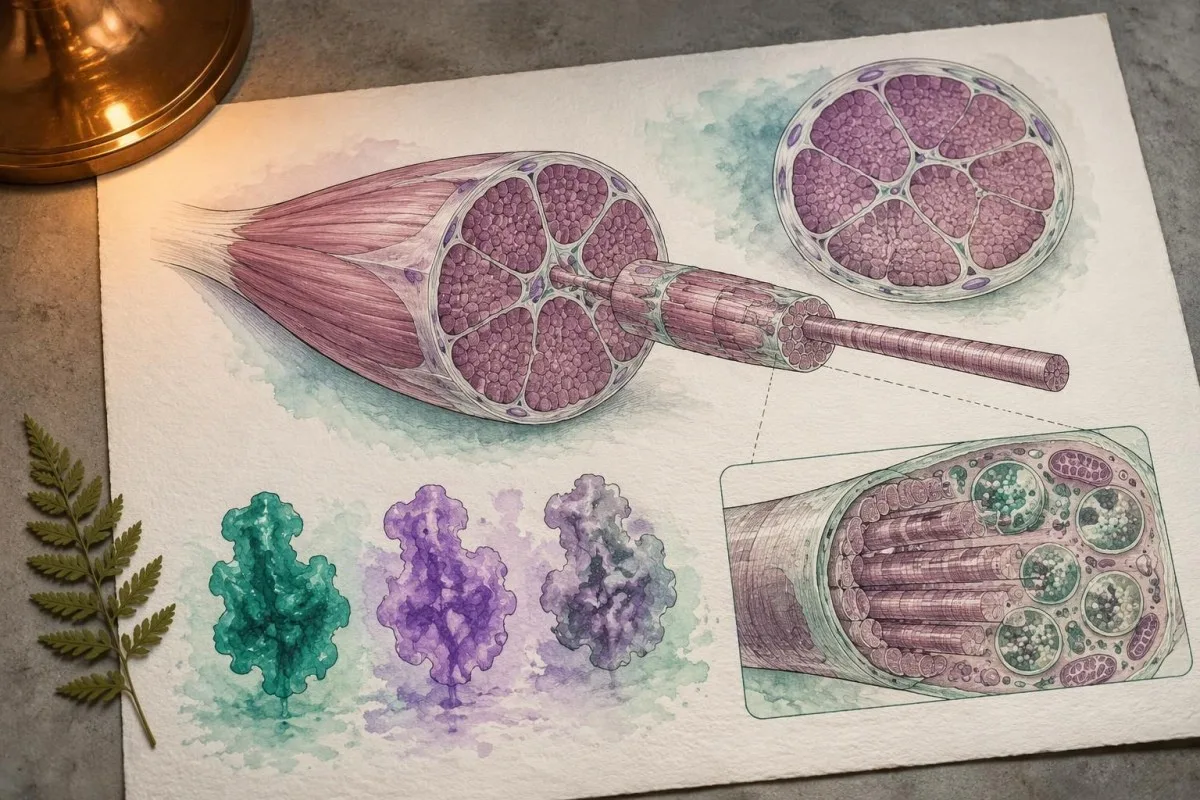
Normal CK does not exclude later-onset Pompe disease. In a hypothetical adult with progressive difficulty rising from a chair, CK of 140 U/L may fall within that laboratory's interval despite clinically meaningful weakness; the combination of symptoms and low confirmed GAA activity matters more than a reassuring CK flag.
AST and ALT can rise because of muscle involvement, not only liver disease. A hypothetical AST of 86 U/L with elevated CK and muscle weakness deserves a muscle-aware assessment; our aldolase and muscle marker guide explains why additional muscle enzymes may help characterize the pattern without identifying its cause.
Urinary Glc4 is a supportive glycogen-related biomarker, not a Pompe-specific diagnostic test. Reference limits vary with age and method, and elevation can occur in other circumstances; 1 elevated result should be interpreted alongside enzyme findings, genetics and the laboratory's creatinine-normalized units.
A falling CK or Glc4 after treatment does not automatically prove that strength or breathing has improved by the same percentage. Our discussion of AST interpretation beyond liver disease illustrates why 2 related markers can move together while still answering different questions about tissue injury and function.
Zašto procijeniti disanje kada je test na Pompeovu bolest abnormalan?
Pompe disease can weaken the diaphragm and other respiratory muscles, sometimes before obvious walking difficulty. Assessment may include seated and supine forced vital capacity, respiratory muscle pressures and sleep-related testing; a daytime oxygen saturation of 97% does not rule out overnight hypoventilation.
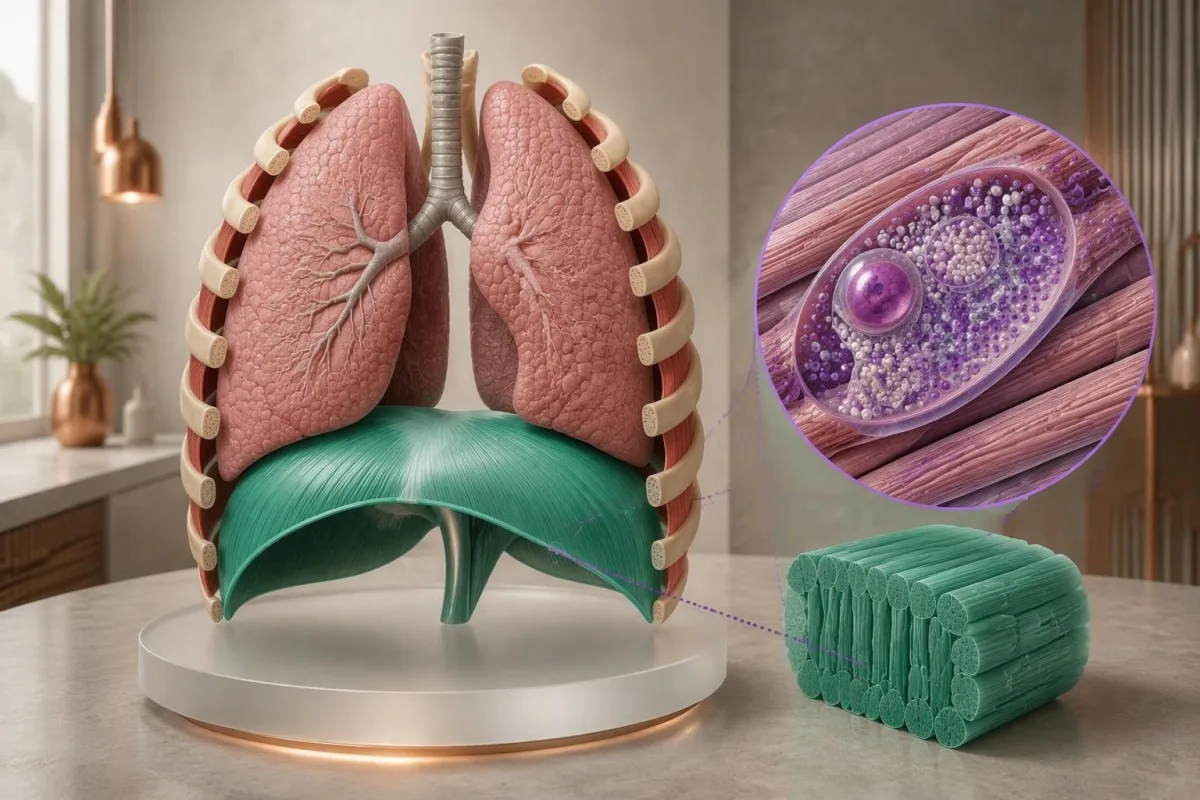
A position-related fall in vital capacity can suggest diaphragm weakness. For example, a hypothetical seated FVC of 3.0 L and supine FVC of 2.4 L represents a 20% decline; the specialist interprets that difference with technique, predicted values and symptoms, rather than treating it as a Pompe-specific cutoff.
Morning headaches, unrefreshing sleep and difficulty breathing when lying flat can justify evaluation for sleep-related hypoventilation. These symptoms do not identify Pompe disease on their own; our vodič za testiranje otežanog disanja explains why laboratory results cannot replace respiratory examination and physiological testing.
Arterial carbon dioxide is normally about 35–45 mmHg in adults, with context-dependent variation. A value above 45 mmHg indicates hypercapnia, but its urgency depends on pH, symptoms and the clinical setting; our blood gas interpretation guide explains why oxygen and carbon dioxide answer different questions.
Severe breathlessness, confusion, blue coloration or rapidly worsening weakness warrants emergency care, not an online interpretation session. A confirmed molecular result affecting 2 GAA copies does not measure current respiratory safety; clinicians need direct functional assessment to decide whether ventilation support or urgent monitoring is necessary.
Što se događa nakon pozitivnog novorođenačkog probira na Pompeovu bolest?
A positive newborn Pompe screen requires prompt specialist assessment, confirmatory enzyme testing and genetic evaluation. It does not mean every infant has Pompe disease; the immediate task is to distinguish pseudodeficiency or carrier findings from infantile disease and a later-onset-associated genotype affecting both GAA copies.

Burton et al.'s 2017 Pediatrics newborn-screening algorithms describe an initial evaluation integrating GAA confirmation, molecular testing and clinical assessment. If an infant has feeding difficulty, marked hypotonia or suspected cardiomyopathy, do not wait 2 weeks for a routine repeat appointment; the screening team should arrange urgent metabolic and cardiac evaluation.
Classic infantile Pompe disease commonly involves hypertrophic cardiomyopathy. A newborn's echocardiogram and electrocardiogram help assess risk that cannot be estimated from 1 enzyme number; absence of obvious heart symptoms at home does not replace the specialist examination after an abnormal screen.
CRIM status concerns whether cross-reactive GAA protein is present and helps specialists plan immune-risk management around enzyme replacement therapy. Less than 1% enzyme activity does not by itself establish CRIM-negative status, because an inactive protein may still be present; this is a protein-expression question, not just an activity threshold.
Later-onset-associated findings in a newborn require a monitoring plan, not an invented age-of-onset prediction. Even 2 classified disease-causing variants may not reveal when symptoms will emerge; our vodič za sigurnu primjenu umjetne inteligencije u pedijatriji explains why pediatric results require age-specific context and clinician-led decisions.
Kako specijalisti razrješavaju proturječne rezultate testiranja odraslih?
Conflicting adult Pompe results are resolved by checking specimen quality, confirmatory enzyme methods, variant classification and clinical fit. One low screen plus 1 genetic finding rarely tells the whole story; specialists investigate whether the apparent conflict comes from pseudodeficiency, an incomplete molecular test or another cause of weakness.

Consider a hypothetical 52-year-old with mild fatigue, low DBS GAA activity and only the 2 commonly discussed pseudodeficiency variants. If specialist testing supports pseudodeficiency and no disease-causing genotype, the low screen does not explain the fatigue; other causes should be assessed rather than attaching a Pompe label to an incidental biochemical finding.
A second hypothetical adult has progressive hip weakness, a 20% positional FVC decline, confirmed cellular GAA deficiency and 2 pathogenic variants in trans. Together, those findings support Pompe disease; a normal routine glucose or modest CK result would not outweigh the converging biochemical, genetic and functional evidence.
Convincing enzyme deficiency with only 1 identified pathogenic variant deserves further investigation. The appropriate next step may be deletion/duplication analysis, RNA studies or another specialist assay—not automatically calling the person a carrier; the investigation should also check whether non-Pompe neuromuscular conditions better explain the examination.
Variant-related disease monitoring is not the same as predicting a person's future from their DNA. Our inherited neuromuscular risk guide offers a related family-testing perspective, but 2 conditions can differ substantially in inheritance, penetrance and treatment triggers.
Što trebate ponijeti na pregled kod specijalista za Pompeovu bolest?
Bring the complete enzyme report, complete genetic report and a dated symptom history to a Pompe specialist appointment. Three report details are especially useful: specimen type, assay units and variant classification; screenshots showing only a red flag or the word mutation can omit information that changes the interpretation.

Ask whether confirmatory testing has already been completed and whether the laboratory measured GAA specifically in an appropriate cell preparation. If 2 variants were found, ask whether they are in trans; if only 1 was found, ask what variant types and regions the test could detect.
Do not try to raise GAA activity with supplements or diet before confirmation. No vitamin or food corrects inherited pathogenic variants affecting both GAA copies; nutrition may support general care after diagnosis, but cannot substitute for enzyme confirmation or specialist treatment planning.
Kantesti je Alat za analizu krvnih nalaza uz pomoć AI-a that can help organize report terminology and associated laboratory trends, not decide whether 2 uncertain variants establish Pompe disease. Our vodič za provjeru izvora nalaza explains why the original document remains the reference when an automated explanation and a specialist interpretation differ.
Genetic documents can contain information relevant to relatives as well as the tested person. Before sharing 1 family member's report, check consent and remove unnecessary identifiers; Kantesti's informacijama o privatnosti i podacima describes our handling approach, while sharing results with relatives should follow a genetic counselor's guidance.
Istraživačke publikacije i ograničenja tumačenja testova za Pompeovu bolest
Pompe test interpretation rests on disease-specific enzyme, genetic and clinical evidence—not on general laboratory publications or an AI explanation. Kantesti includes 3 directly relevant external sources below and 2 separate educational publications; the iron and coagulation publications are not evidence for diagnosing Pompe disease.
The 2006 Kishnani guideline provides disease-specific diagnostic and management context, while the 2017 Burton newborn-screening paper addresses confirmation after population screening. Their recommendations should be applied with the specialist laboratory's validated methods; neither supplies 1 universally transferable DBS enzyme cutoff for every instrument and population.
Richards et al.'s 2015 ACMG/AMP publication explains the 5-category variant framework used to distinguish pathogenic findings from uncertainty. Classification can change when new evidence becomes available, so ask the genetics service whether an unresolved result has a reanalysis pathway rather than assuming every VUS will eventually become pathogenic.
Naš edukativni publikacija o addresses a different laboratory domain. The separate publikacija o pretragama koagulacije also covers unrelated markers; their 2 DOI records are provided for publication transparency, not as supporting citations for GAA deficiency or pseudodeficiency.
Materijale Kantesti-a standardi medicinskog sadržaja distinguish patient education from diagnosis and treatment instructions. The practical endpoint is a documented interpretation of 3 evidence streams—enzyme testing, genetic analysis and clinical assessment—with urgent care taking priority whenever infantile disease or respiratory compromise is suspected.
Često postavljana pitanja
Znači li niska aktivnost enzima GAA uvijek Pompeovu bolest?
Niska aktivnost enzima GAA ne znači uvijek Pompeovu bolest. Jedan abnormalan rezultat probira može odražavati istinski nedostatak, pseudonedostatak, razgradnju uzorka ili preklapanje s aktivnošću povezanom s nositeljstvom. Potvrda zahtijeva specijalističko tumačenje odgovarajućeg enzimskog testa, genetskih nalaza za GAA i kliničkog konteksta. Ponavljanje samo istog probirnog testa može ponovno pokazati pseudonedostatak umjesto da razriješi dvojbu.
Koja je normalna razina enzima GAA?
There is no universal normal GAA enzyme level because specimen preparation, assay substrate and reporting units differ between laboratories. A value in nmol/h/mL cannot be directly compared with a value in nmol/h/mg protein. Classic infantile Pompe disease often has less than 1% of normal activity in diagnostic tissue assays, but this is not a universal newborn-screening cutoff. Use the reference information printed on the original report and the specialist laboratory's interpretation.
Mogu li dva niska nalaza GAA i dalje upućivati na pseudodeficijenciju?
0 Dva niska rezultata testa GAA i dalje mogu odražavati pseudodeficijenciju, osobito kada se primjenjuju iste ili slično zahvaćene metode testiranja. Varijante pseudodeficijencije smanjuju izmjerenu aktivnost, a da same ne uzrokuju Pompeovu bolest nakupljanja glikogena. Stručnjaci razlikuju ovaj obrazac na temelju cjelokupnog genotipa GAA, karakteristika testa te, prema potrebi, druge stanične pripreme ili funkcionalnog ispitivanja. Stoga dva ponovljena niska rezultata nisu istovjetna dvjema neovisnim potvrdama bolesti.
Potvrđuju li dvije varijante gena GAA Pompeovu bolest?
0 Two varijante gena GAA ne potvrđuju automatski Pompeovu bolest. Dvije patogene ili vjerojatno patogene varijante u trans položaju, koje zahvaćaju suprotne kopije gena, podupiru molekularnu potvrdu, dok dvije varijante u cis položaju zahvaćaju samo jednu kopiju. Varijante nejasnog značaja i varijante pseudodeficijencije ne mogu se smatrati potvrđenim nalazima koji uzrokuju bolest. Dokazi na temelju enzima i klinički dokazi ostaju osobito korisni kada klasifikacija ili faza nisu razriješene.
Može li normalna vrijednost CK-a isključiti Pompeovu bolest s kasnim početkom?
Normal CK cannot rule out late-onset Pompe disease. A hypothetical CK of 140 U/L may fall within a laboratory's reference interval despite progressive proximal weakness or diaphragm involvement. CK measures muscle injury-related enzyme release, not lysosomal GAA function. Persistent compatible symptoms deserve specialist assessment even when routine muscle markers are reassuring.
Koliko je hitan pozitivan test novorođenčeta na Pompeovu bolest?
Pozitivan probirni test novorođenčeta na Pompeovu bolest zahtijeva žurno kontaktiranje tima za probir ili metaboličke bolesti, a dojenče s poteškoćama pri hranjenju, izraženom hipotonijom ili sumnjom na zahvaćenost srca treba hitnu procjenu. Jedan pozitivan probirni uzorak ne potvrđuje dijagnozu, ali pri sumnji na klasični oblik bolesti s početkom u dojenačkoj dobi ne treba čekati redovni pregled za nekoliko tjedana. Specijalisti organiziraju potvrdno testiranje enzima, genetsku procjenu i kardiološku procjenu, često usporedno. Teško otežano disanje ili smanjena reakcija zahtijevaju hitnu medicinsku pomoć.
Koliki je rizik za djecu ako su oba roditelja nositelji Pompeove bolesti?
Ako oba roditelja nose varijante gena GAA koje uzrokuju bolest, pri svakoj trudnoći postoji 25% vjerojatnost da će dijete biti oboljelo, 50% vjerojatnost da će dijete biti nositelj i 25% vjerojatnost da dijete neće naslijediti nijednu obiteljsku varijantu. Te se vjerojatnosti primjenjuju neovisno na svaku trudnoću. Varijante pseudodeficijencije nisu zamjenjive s patogenim varijantama u ovom izračunu. Genetsko savjetovanje pomaže potvrditi nalaze kod roditelja i objasniti mogućnosti testiranja.
Saznajte kako čitati krvnu sliku
Prenesite svoj laboratorijski nalaz i AI alata Kantesti objasnit će svaki biomarker jednostavnim jezikom u nekoliko sekundi. Koristi ga više od 2 milijuna ljudi diljem svijeta.
Reference
- Klein, T., Mitchell, S., & Weber, H. (2026). Vodič za pretrage željeza: TIBC, saturacija željezom i kapacitet vezanja. Medicinsko istraživanje uz Kantesti AI. DOI
- Klein, T., Mitchell, S., & Weber, H. (2026). Normalni raspon aPTT-a: vodič za D-dimer, protein C i zgrušavanje krvi. Medicinsko istraživanje uz Kantesti AI. DOI
- Kishnani PS et al. (2006). Pompe disease diagnosis and management guideline. Genetics in Medicine. DOI PubMed
- Burton BK et al. (2017). The Initial Evaluation of Patients After Positive Newborn Screening: Recommended Algorithms Leading to a Confirmed Diagnosis of Pompe Disease. Pediatrics. DOI
- Richards S i sur. (2015). Standardi i smjernice za tumačenje varijanti sekvenci: zajednička konsenzusna preporuka American College of Medical Genetics and Genomics i Association for Molecular Pathology. Genetics in Medicine. DOI PubMed
- 2 milijuna+Analizirani testovi
- 127+Zemlje
- 100+Jezici
O medicinskom timu


E-E-A-T signal(i) povjerenja
Iskustvo
Liječnički vođena klinička revizija radnih tokova tumačenja laboratorijskih nalaza.
Stručnost
Fokus laboratorijske medicine na to kako se biomarkeri ponašaju u kliničkom kontekstu.
Autoritativnost
Medicinski recenzirao dr. Thomas Klein, uz doprinose dr. Sarah Mitchell i prof. dr. Hansa Webera.
Pouzdanost
Tumačenje utemeljeno na dokazima, s jasnim putovima praćenja kako bi se smanjila uzbuna.






Medicinsko odricanje od odgovornosti
Ovaj je članak samo u obrazovne svrhe i ne predstavlja medicinski savjet. Za odluke o dijagnozi i liječenju uvijek se posavjetujte s kvalificiranim pružateljem zdravstvenih usluga.
Objavljeno · Obratite se uredničkom timu
Izdaje Kantesti Ltd, registrirana u Engleskoj i Walesu, broj tvrtke. 17090423, London, Ujedinjeno Kraljevstvo.
