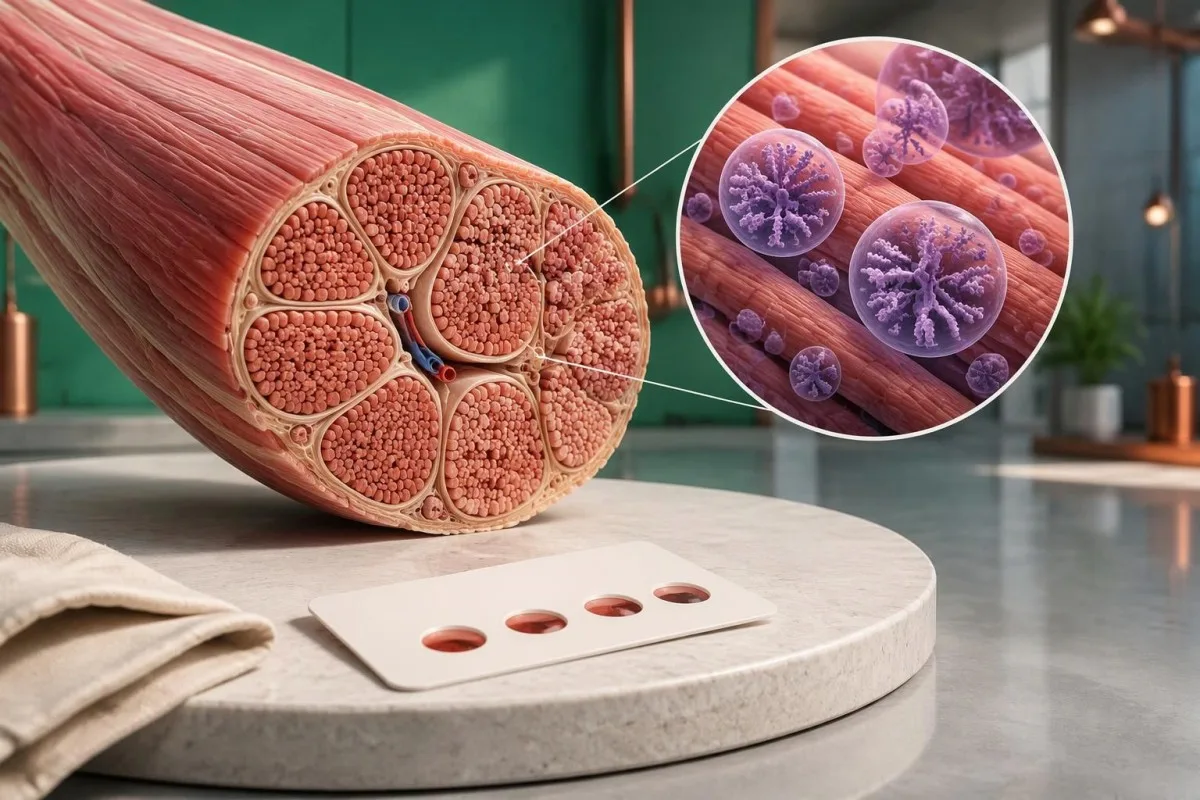
Низкий рівень ферменту GAA викликає підозру на хворобу Помпе, але одного скринінгу недостатньо для підтвердження діагнозу. Повторне тестування відповідного зразка та генетичний аналіз GAA допомагають відрізнити справжній дефіцит, носійство та псевдодефіцит.

Ключові висновки
- Низька активність ферменту GAA є сигналом для подальшого обстеження, а не діагнозом; 1 аномальний результат аналізу сухої плями крові потребує підтвердження за рекомендацією фахівця.
- Референтні діапазони залежать від зразка й аналізу; значення в нмоль/год/мл не можна безпосередньо порівнювати зі значеннями в нмоль/год/мг білка.
- Залишкова активність ферменту часто становить менш як 1% при класичній дитячій формі хвороби Помпе, але цей показник не є універсальним порогом скринінгу.
- Псевдодефіцит може знижувати лабораторно виміряну активність GAA, не спричиняючи хвороби Помпе; повторення того самого аналізу може знову дати низький результат.
- Тестування гена GAA виявляє варіанти, що спричиняють захворювання та впливають на обидві копії гена; 2 варіанти потрібно інтерпретувати для класифікації та визначення фази.
- Варіанти невизначеного значення не підтверджують хворобу Помпе; 1 або 2 варіанти невизначеного клінічного значення потребують додаткових доказів.
- Ризик для родини становить 25% для кожної вагітності, якщо обоє батьків є носіями патогенного варіанта GAA.
- Невідкладна оцінка потрібне немовляті з низькою активністю GAA та труднощами з годуванням, вираженою слабкістю або підозрою на ураження серця; не чекайте планового повторного тесту.
Що насправді означає низький рівень ферменту GAA?
A Тест на хворобу Помпе з низькою активністю GAA означає, що лабораторія виявила знижену функцію кислої альфа-глюкозидази за умов проведення свого аналізу. Це не підтверджує хворобу Помпе: 1 низький результат скринінгу може свідчити про справжній дефіцит, псевдодефіцит, перекриття з показниками носійства або проблему зі зразком.

Активність GAA вимірює функцію ферменту, а не просто кількість білка ферменту. Спершу перевірте 3 деталі: тип зразка, одиниці вимірювання та граничне значення лабораторії; результат, позначений як низький без цих деталей, неможливо надійно інтерпретувати, порівнюючи з числом, знайденим в інтернеті.
Причина проведення тесту змінює значення позитивного результату скринінгу. У новонародженого, виявленого під час популяційного скринінгу, і 45-річної людини з прогресуючою слабкістю в ділянці стегон різна початкова ймовірність хвороби Помпе, навіть якщо наведені значення активності ферменту збігаються; тому симптоми й результати огляду слід розглядати разом із лабораторним результатом.
Позитивний результат скринінгу — це не те саме, що підтвердження хвороби. Якщо 2 лабораторії використовують різні субстрати або способи підготовки зразків, їхні числові результати можуть відрізнятися, навіть якщо жодна лабораторія не припустилася помилки; уточніть, чи наступний візит призначено для ще одного скринінгового вимірювання, чи для справді підтверджувального аналізу ферменту.
Кантесті – це Аналізатор крові зі штучним інтелектом що може допомогти впорядкувати звіт щодо GAA поряд із результатами стандартних лабораторних досліджень, але не може встановити діагноз хвороби Помпе за 1 показником, позначеним як відхилений від норми. Наш інформація про компанію пояснює організацію роботи служби; підозра на спадковий дефіцит ферменту все одно потребує консультації фахівця з метаболічних або нервово-м’язових захворювань.
Чому дефіцит GAA спричиняє проблеми з м’язами та серцем?
Хвороба Помпе виникає через дефіцит лізосомної кислої альфа-глюкозидази, ферменту, що розщеплює глікоген у внутрішньоклітинних компартментах, де відбувається переробка речовин. GAA діє на глюкозні зв’язки альфа-1,4 та альфа-1,6; недостатня активність призводить до накопичення глікогену, особливо у скелетних м’язах і серці.

За класичної інфантильної форми хвороби Помпе активність GAA у діагностичних тканинних аналізах часто становить менш як 1% від норми. За пізньої форми захворювання активність може бути вищою, іноді приблизно 2–40% у конкретних аналізах; ці описові діапазони перекриваються з обмеженнями аналізів і не повинні замінювати валідовану діагностичну інтерпретацію лабораторії.
У рекомендаціях Kishnani та співавторів 2006 року, опублікованих у Genetics in Medicine, описано зв’язок між дефіцитом GAA, накопиченням глікогену та оцінюванням ураження різних систем організму. Клінічне розрізнення полягає не лише в тому, чи нижча активність за 1%: вік появи симптомів, дані щодо серця та функція дихальних м’язів також допомагають визначити форму й терміновість лікування захворювання.
Рутинний аналіз глюкози не вимірює розщеплення лізосомного глікогену. Наприклад, у гіпотетичної дорослої людини рівень глюкози натще може становити 92 mg/dL, хоча вона має спадкове порушення накопичення глікогену в м’язах; нормальний рівень глюкози не свідчить про нормальне перероблення глікогену всередині м’язових лізосом.
Інші лізосомні захворювання пов’язані з іншими ферментами й генами, тому їхні порогові значення не можна застосовувати для тестування на хворобу Помпе. Наше пояснення щодо підтвердження хвороби Гоше за допомогою аналізу ферменту ілюструє ширший алгоритм переходу від аналізу ферменту до генетичного тестування, водночас показуючи, чому аналіз ферменту для однієї хвороби не може замінити аналіз для іншої.
Чи існує норма активності ферменту GAA?
There is no single universal normal range for GAA enzyme activity. Dried blood spots, leukocytes and cultured fibroblasts use different preparations and reporting units; a number expressed in nmol/h/mL cannot be directly compared with a result expressed in nmol/h/mg protein.

A screening cutoff separates samples needing follow-up from samples passing that screen. It does not necessarily separate affected people from unaffected people with complete accuracy; laboratories may use different fluorometric or tandem mass spectrometry methods, and 2 screening programs may therefore select different recall thresholds.
For a clearly hypothetical example, suppose a laboratory uses a DBS screening cutoff of 1.5 nmol/h/mL and reports 0.7 nmol/h/mL. The result is below that invented laboratory threshold, but dividing 0.7 by 1.5 gives 47% of the cutoff—not 47% of normal enzyme activity and not a severity score.
The lower limit of detection is different from the clinical cutoff. A report reading less than 0.1 in its stated units may mean the method cannot quantify lower activity reliably; it does not prove absolute absence of enzyme, and repeating measurements close to that analytical floor may produce proportionally large variation.
Screening performance also depends on prevalence. In a hypothetical group with 10 true-positive and 100 false-positive results, only about 9% of positive screens represent disease; those invented counts are not Pompe screening statistics, but explain why якісні проти кількісних результатів require different interpretation.
| Рівень | Діапазон | Що це означає |
|---|---|---|
| Passes hypothetical screen | ≥1.5 nmol/h/mL | Illustrative DBS cutoff only; not a universal normal range and not an absolute exclusion in a symptomatic person. |
| Below hypothetical cutoff | <1.5 nmol/h/mL | Illustrative follow-up threshold only; true deficiency, pseudodeficiency and specimen effects still need separation. |
Навіщо повторно тестувати GAA в іншому зразку?
Repeat GAA testing checks whether low activity is reproducible and whether specimen quality or assay interference explains it. Confirmation usually moves beyond 1 screening card to a fresh, appropriately handled specimen, often with GAA measurement in leukocytes or another specialist-selected cell preparation.

Heat, humidity and inadequate drying can reduce enzyme activity in a dried blood spot. A low result after 2 days of poorly controlled transport may deserve a fresh collection, but transport history cannot be used to dismiss a result automatically; the laboratory should assess card quality and its stability requirements.
Acarbose is used in some GAA assay methods to suppress interfering maltase-glucoamylase activity. That interference can make measured activity appear higher and potentially obscure deficiency; checking how a laboratory isolates GAA activity can therefore matter more than obtaining a second number with the same unresolved methodological limitation.
Two low DBS results still do not automatically confirm Pompe disease. Pseudodeficiency can reproduce across repeated measurements, including some confirmatory methods; when enzyme and genetic findings disagree, a specialist laboratory may recommend cultured fibroblast testing or additional molecular investigation rather than simply ordering a third screening card.
Give the laboratory the dates of collection, recent transfusions or transplantation, and any enzyme replacement treatment already received. Our guide to вплив якості зразка на результати explains the general distinction between biological findings and specimen problems; GAA testing has its own handling rules, so do not import another test's redraw interval.
Чим псевдодефіцит GAA відрізняється від хвороби Помпе?
GAA pseudodeficiency means an inherited variant lowers measured enzyme activity without causing the glycogen-storage disorder Pompe disease. Two commonly discussed variants are c.1726G>A, p.Gly576Ser, and c.2065G>A, p.Glu689Lys; their interpretation depends on the complete genotype and the assay used.
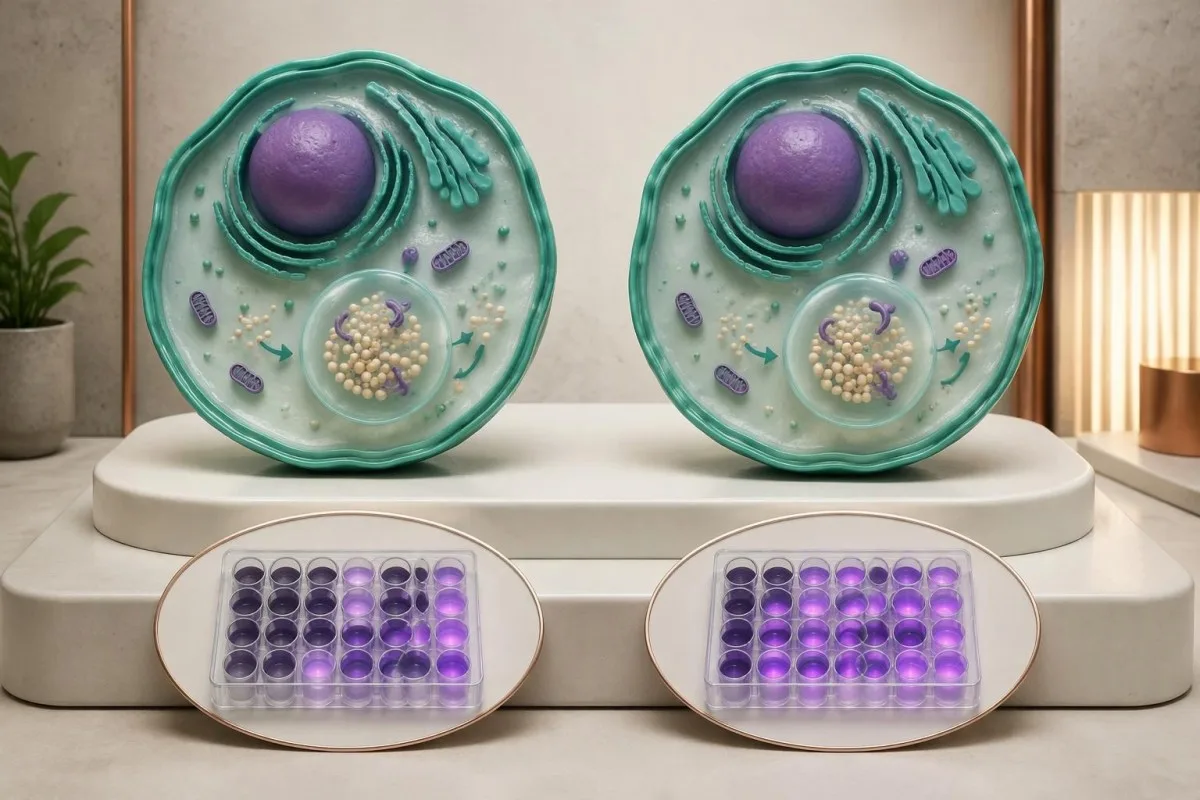
Pseudodeficiency is a biochemical testing issue, not an early stage of Pompe disease. A person with only pseudodeficiency variants does not need Pompe treatment because of 1 low activity result; the specialist must first verify that disease-causing variants or another explanation have not been missed.
The p.Gly576Ser and p.Glu689Lys variants are often found together on 1 gene copy and are particularly relevant in some East Asian ancestry populations. Ancestry changes how often laboratories encounter this pattern, but cannot establish or exclude pseudodeficiency in an individual; people from other backgrounds can carry these variants too.
Pseudodeficiency can remain low on repeat enzyme testing. The practical distinction is whether the complete biochemical and genetic evidence supports disease-causing GAA deficiency, not whether a second result falls below an arbitrary percentage; specialists may compare different assay substrates or cell preparations when the pattern remains ambiguous.
Pseudodeficiency variants can also coexist with a disease-causing variant, making a short report misleading if it lists everything under mutations. Our Fabry enzyme and genetics guide shows another situation where enzyme results need genetic context, although Fabry's X-linked inheritance differs from Pompe's 2-copy recessive mechanism.
На що слід звернути увагу під час тестування гена GAA?
GAA gene testing investigates whether disease-causing variants affect both copies of the GAA gene. Pompe disease is autosomal recessive, and the GAA gene is located on chromosome 17; interpretation requires variant classification, adequate test coverage and, when needed, confirmation that variants affect opposite gene copies.
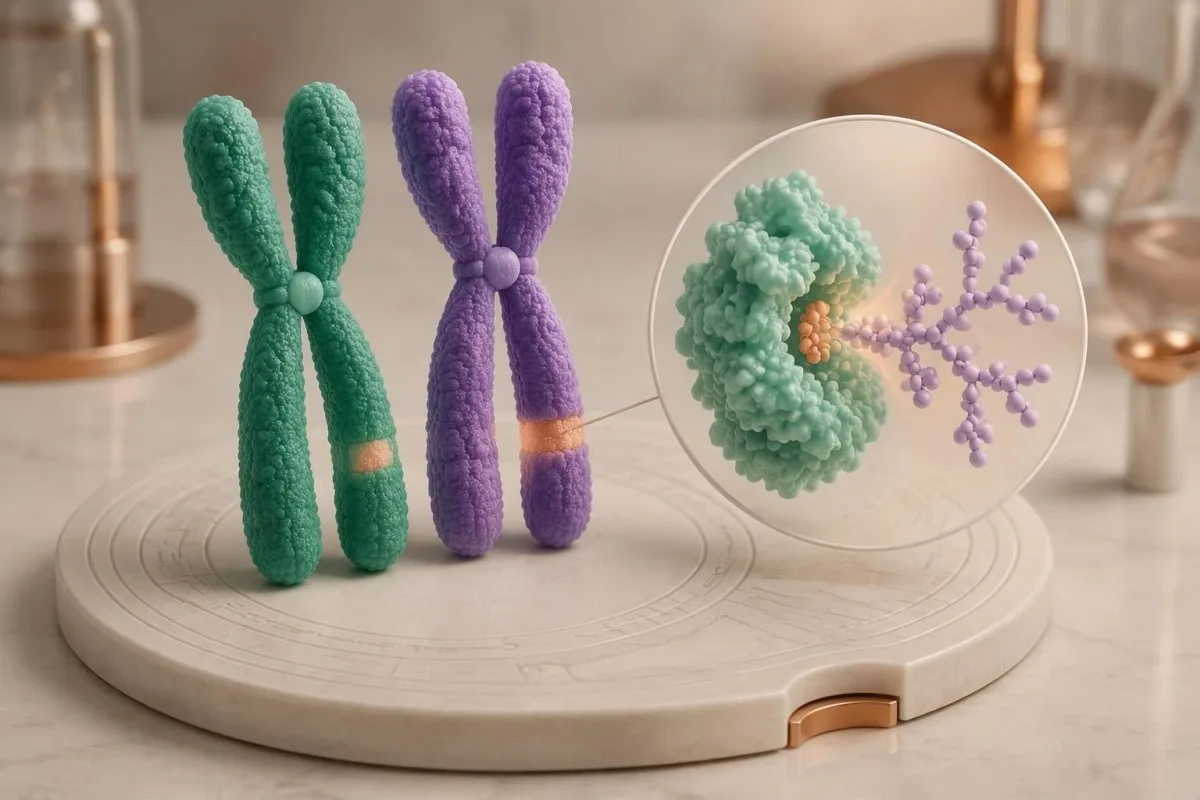
Two pathogenic or likely pathogenic GAA variants in trans support molecular confirmation of Pompe disease. In trans means the variants affect opposite gene copies; 2 variants in cis affect the same copy and do not, by themselves, demonstrate a recessive disease genotype.
Standard sequencing detects many small substitutions and insertions or deletions, but does not answer every possible genetic question. If only 1 disease-causing variant is found despite convincing enzyme deficiency, ask whether deletion/duplication analysis was included and whether poorly covered or deep intronic regions require further investigation.
A common later-onset-associated GAA variant is c.-32-13T>G, which affects splicing. Finding this variant on 1 copy does not diagnose Pompe disease, and finding it with another disease-causing variant does not precisely predict the age symptoms will begin; residual splicing and other biological factors influence presentation.
Parental testing can help establish phase when a laboratory detects 2 different variants but cannot determine their arrangement. Our guide to inherited disease genetic reports explains why inheritance and family testing matter, while the actual gene coverage and diagnostic criteria must remain specific to GAA.
Як інтерпретувати патогенні результати, результати невизначеного значення та негативні результати?
A pathogenic result, a variant of uncertain significance and a negative result have different diagnostic meanings. Genetic laboratories commonly use 5 categories: pathogenic, likely pathogenic, uncertain significance, likely benign and benign; a VUS is not equivalent to a disease-causing GAA variant.
Richards et al.'s 2015 ACMG/AMP consensus established the widely used 5-category sequence-variant framework and states that a VUS should not guide clinical decision-making as though pathogenic. For Pompe evaluation, low enzyme activity can contribute evidence, but its value depends on whether pseudodeficiency and assay limitations have been addressed.
One pathogenic variant plus 1 VUS is an unresolved combination, not automatic confirmation or exclusion. Depending on the enzyme and clinical findings, specialists may investigate family segregation, RNA effects or variant-specific functional evidence; a diagnostic enzyme result may support disease even while the second molecular finding remains incompletely characterized.
A negative sequencing report means the test found no reportable variants within its scope. It does not prove that every GAA-related mechanism was examined; 1 negative limited test may warrant expanded testing when properly performed enzyme studies and the clinical pattern remain strongly suggestive.
Кантесті – це Платформа для розшифровки аналізу крові AI that can help separate a report's 5 classification terms from its numerical enzyme findings, without adjudicating an uncertain genotype. Our технічні та клінічні стандарти describe interpretation boundaries; our uncertain gene-result explanation provides a related example of why variants and diagnoses are not interchangeable.
Чи означає один варіант GAA носійство або захворювання?
One confirmed disease-causing GAA variant usually indicates carrier status if a second disease-causing variant and diagnostic enzyme deficiency are absent. Carriers do not typically develop Pompe disease; when both parents are carriers, each pregnancy has a 25% affected, 50% carrier and 25% non-carrier probability.
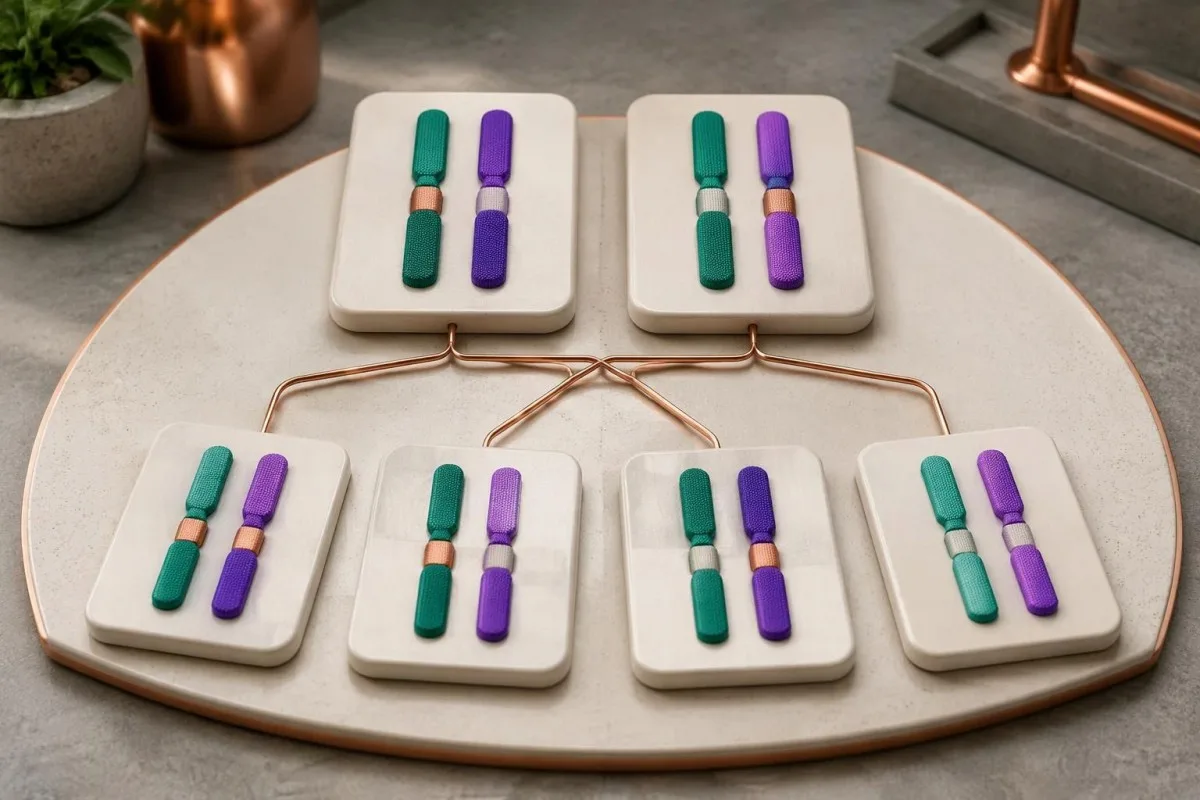
Carrier enzyme values can overlap with values in unaffected people. GAA activity is therefore not a reliable standalone carrier test, and a carrier's activity should not be assumed to equal exactly 50% of a laboratory's normal mean; targeted genetic testing is generally more informative when a familial variant is known.
The 25% affected-child probability applies independently to each pregnancy when both parents carry disease-causing variants capable of producing Pompe disease together. Having 1 unaffected child does not reduce the next pregnancy's Mendelian probability, and pseudodeficiency variants should not be substituted for pathogenic variants in that calculation.
Family testing is most useful after the affected person's variants are clarified. If a symptomatic adult has only 1 identified pathogenic variant, relatives should not be reassured that the entire family question is settled until the specialist considers whether the second variant was missed by the original assay.
For a hypothetical couple, one partner carrying a pathogenic GAA variant and the other carrying only a pseudodeficiency variant does not create the same 25% Pompe risk as 2 pathogenic-variant carriers. Our carrier screening limitations guide explains why a report's coverage and residual risk deserve discussion before reproductive decisions.
Які інші лабораторні результати підтверджують оцінювання на хворобу Помпе?
Creatine kinase, AST, ALT and urinary glucose tetrasaccharide can support Pompe evaluation, but none confirms the diagnosis alone. Urinary glucose tetrasaccharide may be reported as Glc4 or within a Hex4 assay; these 2 report terms require method-specific interpretation rather than assumption that every laboratory measures exactly the same thing.
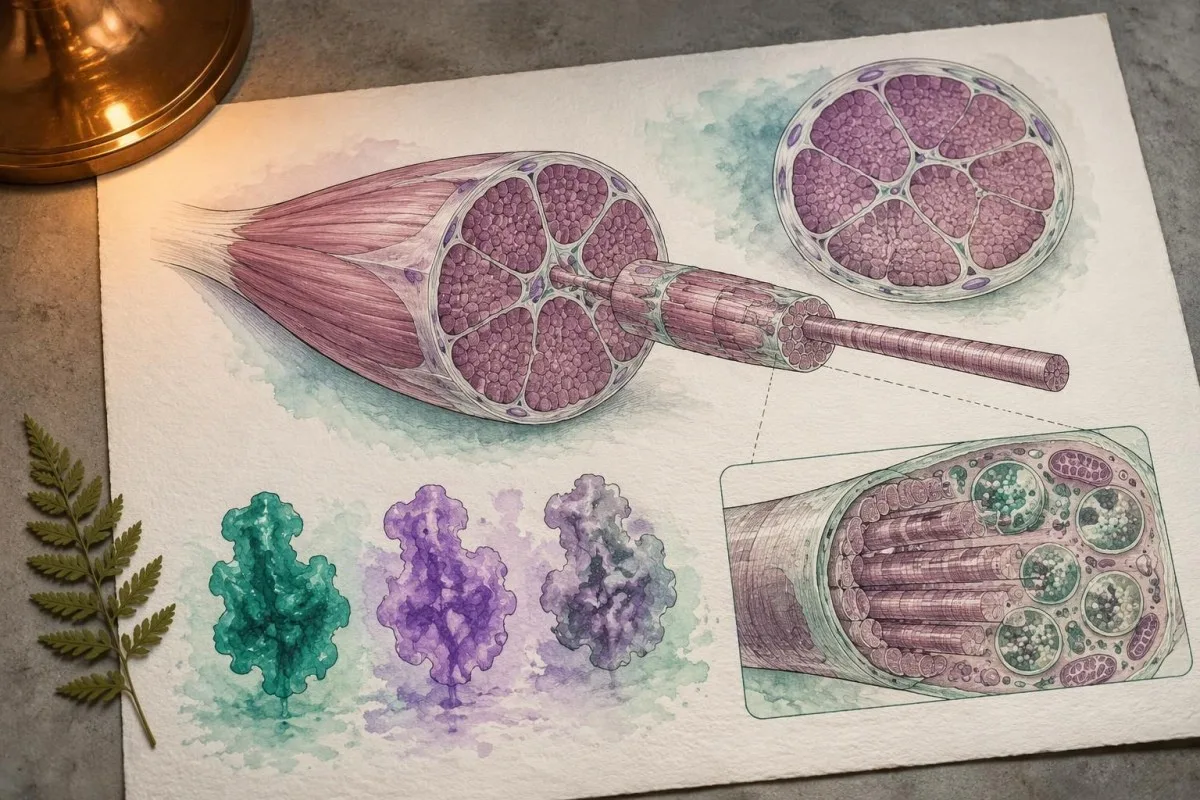
Normal CK does not exclude later-onset Pompe disease. In a hypothetical adult with progressive difficulty rising from a chair, CK of 140 U/L may fall within that laboratory's interval despite clinically meaningful weakness; the combination of symptoms and low confirmed GAA activity matters more than a reassuring CK flag.
AST and ALT can rise because of muscle involvement, not only liver disease. A hypothetical AST of 86 U/L with elevated CK and muscle weakness deserves a muscle-aware assessment; our aldolase and muscle marker guide explains why additional muscle enzymes may help characterize the pattern without identifying its cause.
Urinary Glc4 is a supportive glycogen-related biomarker, not a Pompe-specific diagnostic test. Reference limits vary with age and method, and elevation can occur in other circumstances; 1 elevated result should be interpreted alongside enzyme findings, genetics and the laboratory's creatinine-normalized units.
A falling CK or Glc4 after treatment does not automatically prove that strength or breathing has improved by the same percentage. Our discussion of AST interpretation beyond liver disease illustrates why 2 related markers can move together while still answering different questions about tissue injury and function.
Навіщо оцінювати дихання, якщо тест на хворобу Помпе показав відхилення?
Pompe disease can weaken the diaphragm and other respiratory muscles, sometimes before obvious walking difficulty. Assessment may include seated and supine forced vital capacity, respiratory muscle pressures and sleep-related testing; a daytime oxygen saturation of 97% does not rule out overnight hypoventilation.
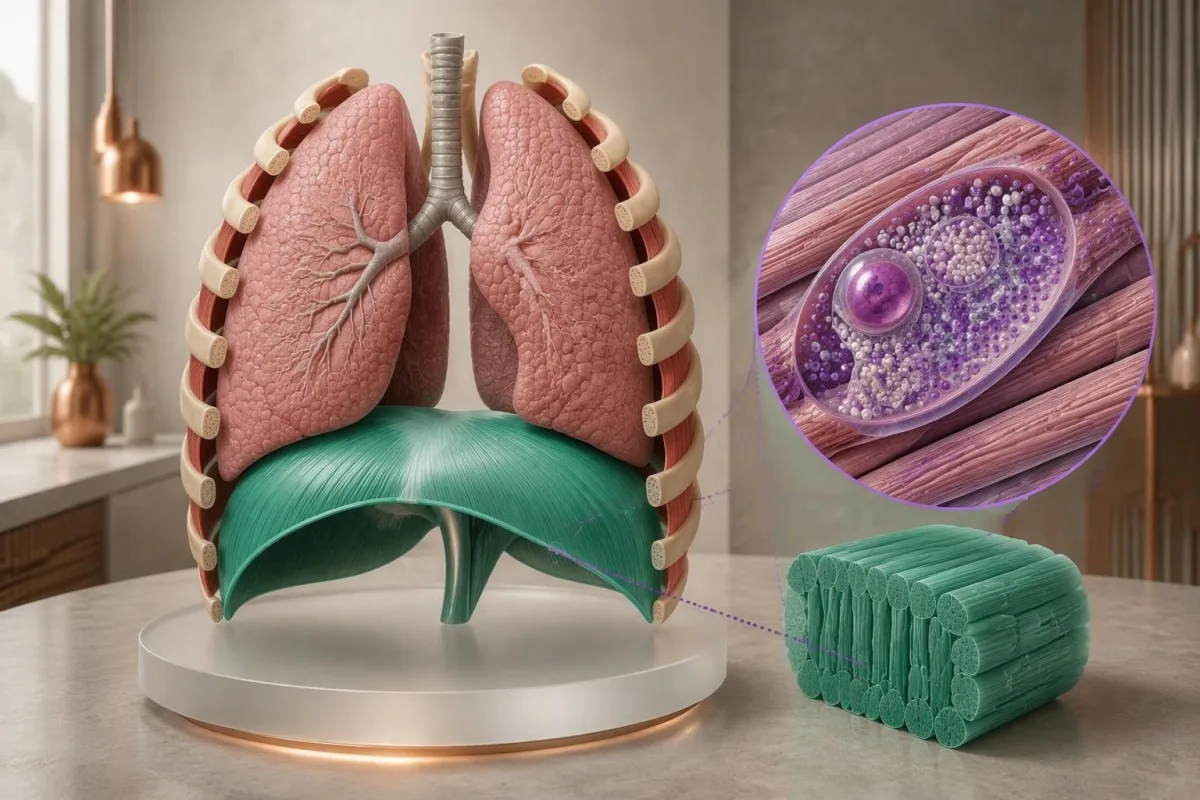
A position-related fall in vital capacity can suggest diaphragm weakness. For example, a hypothetical seated FVC of 3.0 L and supine FVC of 2.4 L represents a 20% decline; the specialist interprets that difference with technique, predicted values and symptoms, rather than treating it as a Pompe-specific cutoff.
Morning headaches, unrefreshing sleep and difficulty breathing when lying flat can justify evaluation for sleep-related hypoventilation. These symptoms do not identify Pompe disease on their own; our посібник з оцінки задишки explains why laboratory results cannot replace respiratory examination and physiological testing.
Arterial carbon dioxide is normally about 35–45 mmHg in adults, with context-dependent variation. A value above 45 mmHg indicates hypercapnia, but its urgency depends on pH, symptoms and the clinical setting; our blood gas interpretation guide explains why oxygen and carbon dioxide answer different questions.
Severe breathlessness, confusion, blue coloration or rapidly worsening weakness warrants emergency care, not an online interpretation session. A confirmed molecular result affecting 2 GAA copies does not measure current respiratory safety; clinicians need direct functional assessment to decide whether ventilation support or urgent monitoring is necessary.
Що відбувається після позитивного скринінгу новонародженого на хворобу Помпе?
A positive newborn Pompe screen requires prompt specialist assessment, confirmatory enzyme testing and genetic evaluation. It does not mean every infant has Pompe disease; the immediate task is to distinguish pseudodeficiency or carrier findings from infantile disease and a later-onset-associated genotype affecting both GAA copies.

Burton et al.'s 2017 Pediatrics newborn-screening algorithms describe an initial evaluation integrating GAA confirmation, molecular testing and clinical assessment. If an infant has feeding difficulty, marked hypotonia or suspected cardiomyopathy, do not wait 2 weeks for a routine repeat appointment; the screening team should arrange urgent metabolic and cardiac evaluation.
Classic infantile Pompe disease commonly involves hypertrophic cardiomyopathy. A newborn's echocardiogram and electrocardiogram help assess risk that cannot be estimated from 1 enzyme number; absence of obvious heart symptoms at home does not replace the specialist examination after an abnormal screen.
CRIM status concerns whether cross-reactive GAA protein is present and helps specialists plan immune-risk management around enzyme replacement therapy. Less than 1% enzyme activity does not by itself establish CRIM-negative status, because an inactive protein may still be present; this is a protein-expression question, not just an activity threshold.
Later-onset-associated findings in a newborn require a monitoring plan, not an invented age-of-onset prediction. Even 2 classified disease-causing variants may not reveal when symptoms will emerge; our керівництво з безпеки педіатричного ШІ explains why pediatric results require age-specific context and clinician-led decisions.
Як фахівці з’ясовують причину суперечливих результатів тестів у дорослих?
Conflicting adult Pompe results are resolved by checking specimen quality, confirmatory enzyme methods, variant classification and clinical fit. One low screen plus 1 genetic finding rarely tells the whole story; specialists investigate whether the apparent conflict comes from pseudodeficiency, an incomplete molecular test or another cause of weakness.

Consider a hypothetical 52-year-old with mild fatigue, low DBS GAA activity and only the 2 commonly discussed pseudodeficiency variants. If specialist testing supports pseudodeficiency and no disease-causing genotype, the low screen does not explain the fatigue; other causes should be assessed rather than attaching a Pompe label to an incidental biochemical finding.
A second hypothetical adult has progressive hip weakness, a 20% positional FVC decline, confirmed cellular GAA deficiency and 2 pathogenic variants in trans. Together, those findings support Pompe disease; a normal routine glucose or modest CK result would not outweigh the converging biochemical, genetic and functional evidence.
Convincing enzyme deficiency with only 1 identified pathogenic variant deserves further investigation. The appropriate next step may be deletion/duplication analysis, RNA studies or another specialist assay—not automatically calling the person a carrier; the investigation should also check whether non-Pompe neuromuscular conditions better explain the examination.
Variant-related disease monitoring is not the same as predicting a person's future from their DNA. Our inherited neuromuscular risk guide offers a related family-testing perspective, but 2 conditions can differ substantially in inheritance, penetrance and treatment triggers.
Що потрібно взяти із собою на прийом до фахівця з хвороби Помпе?
Bring the complete enzyme report, complete genetic report and a dated symptom history to a Pompe specialist appointment. Three report details are especially useful: specimen type, assay units and variant classification; screenshots showing only a red flag or the word mutation can omit information that changes the interpretation.

Ask whether confirmatory testing has already been completed and whether the laboratory measured GAA specifically in an appropriate cell preparation. If 2 variants were found, ask whether they are in trans; if only 1 was found, ask what variant types and regions the test could detect.
Do not try to raise GAA activity with supplements or diet before confirmation. No vitamin or food corrects inherited pathogenic variants affecting both GAA copies; nutrition may support general care after diagnosis, but cannot substitute for enzyme confirmation or specialist treatment planning.
Кантесті – це Інструмент для аналізу результатів аналізу крові на основі AI that can help organize report terminology and associated laboratory trends, not decide whether 2 uncertain variants establish Pompe disease. Our посібник із перевірки джерел звітів explains why the original document remains the reference when an automated explanation and a specialist interpretation differ.
Genetic documents can contain information relevant to relatives as well as the tested person. Before sharing 1 family member's report, check consent and remove unnecessary identifiers; Kantesti's інформацією про конфіденційність і дані describes our handling approach, while sharing results with relatives should follow a genetic counselor's guidance.
Наукові публікації та обмеження інтерпретації тестів на хворобу Помпе
Pompe test interpretation rests on disease-specific enzyme, genetic and clinical evidence—not on general laboratory publications or an AI explanation. Kantesti includes 3 directly relevant external sources below and 2 separate educational publications; the iron and coagulation publications are not evidence for diagnosing Pompe disease.
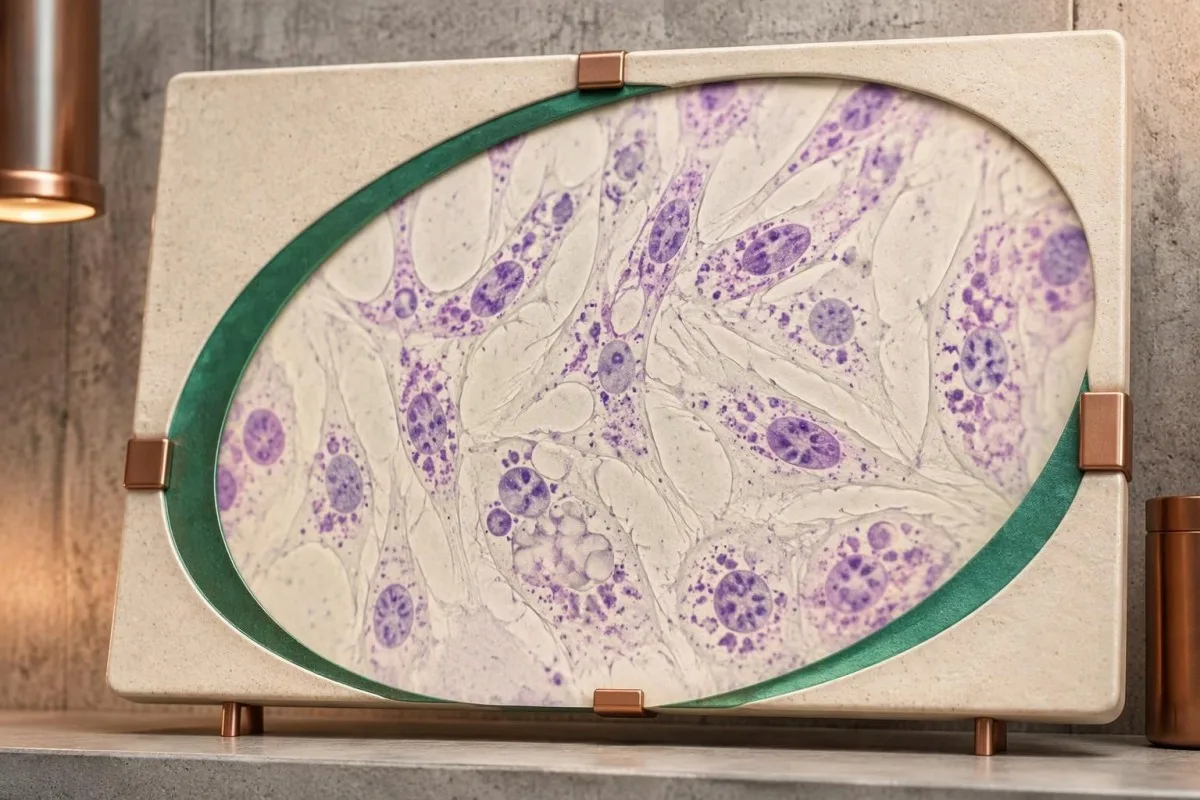
The 2006 Kishnani guideline provides disease-specific diagnostic and management context, while the 2017 Burton newborn-screening paper addresses confirmation after population screening. Their recommendations should be applied with the specialist laboratory's validated methods; neither supplies 1 universally transferable DBS enzyme cutoff for every instrument and population.
Richards et al.'s 2015 ACMG/AMP publication explains the 5-category variant framework used to distinguish pathogenic findings from uncertainty. Classification can change when new evidence becomes available, so ask the genetics service whether an unresolved result has a reanalysis pathway rather than assuming every VUS will eventually become pathogenic.
Наш освітній матеріал публікація про дослідження заліза addresses a different laboratory domain. The separate публікація про дослідження згортання крові also covers unrelated markers; their 2 DOI records are provided for publication transparency, not as supporting citations for GAA deficiency or pseudodeficiency.
матеріали Kantesti стандарти медичного контенту distinguish patient education from diagnosis and treatment instructions. The practical endpoint is a documented interpretation of 3 evidence streams—enzyme testing, genetic analysis and clinical assessment—with urgent care taking priority whenever infantile disease or respiratory compromise is suspected.
Поширені запитання
Чи завжди низька активність ферменту GAA означає хворобу Помпе?
Низька активність ферменту GAA не завжди означає хворобу Помпе. Один аномальний результат скринінгу може свідчити про справжній дефіцит, псевдодефіцит, деградацію зразка або перетин із активністю, характерною для носійства. Для підтвердження потрібна фахова інтерпретація відповідного ферментного аналізу, генетичних даних щодо GAA та клінічного контексту. Повторення лише того самого скринінгового аналізу може знову виявити псевдодефіцит, а не усунути невизначеність.
Який нормальний рівень ферменту GAA?
There is no universal normal GAA enzyme level because specimen preparation, assay substrate and reporting units differ between laboratories. A value in nmol/h/mL cannot be directly compared with a value in nmol/h/mg protein. Classic infantile Pompe disease often has less than 1% of normal activity in diagnostic tissue assays, but this is not a universal newborn-screening cutoff. Use the reference information printed on the original report and the specialist laboratory's interpretation.
Чи можуть два низькі результати тесту на ГКК бути ознакою псевдодефіциту?
Два низькі результати тестів на GAA все ще можуть свідчити про псевдодефіцит, особливо якщо використовуються однакові або подібні методи аналізу. Варіанти псевдодефіциту знижують виміряну активність, але самі по собі не спричиняють хворобу накопичення глікогену Помпе. Фахівці розрізняють ці випадки за повним генотипом GAA, характеристиками аналізу та, за потреби, за допомогою іншої клітинної підготовки або функціонального дослідження. Тому два повторно отримані низькі показники не є рівнозначними двом незалежним підтвердженням захворювання.
Чи підтверджують два варіанти гена GAA хворобу Помпе?
Два варіанти GAA не підтверджують хворобу Помпе автоматично. Два патогенні або ймовірно патогенні варіанти в транс, що впливають на протилежні копії гена, є підставою для молекулярного підтвердження, тоді як два варіанти в цис впливають лише на одну копію. Варіанти невизначеного клінічного значення та варіанти псевдодефіциту не можна вважати підтвердженими ознаками хвороби. Дані про активність ферменту та клінічні дані залишаються особливо корисними, коли класифікацію або фазу не встановлено.
Чи може нормальний рівень КК виключити хворобу Помпе з пізнім початком?
Normal CK cannot rule out late-onset Pompe disease. A hypothetical CK of 140 U/L may fall within a laboratory's reference interval despite progressive proximal weakness or diaphragm involvement. CK measures muscle injury-related enzyme release, not lysosomal GAA function. Persistent compatible symptoms deserve specialist assessment even when routine muscle markers are reassuring.
Наскільки терміново потрібно реагувати на позитивний результат скринінгу новонародженого на хворобу Помпе?
Позитивний результат скринінгу новонародженого на хворобу Помпе потребує негайного зв’язку з командою скринінгу або метаболічних захворювань, а немовля з труднощами годування, вираженою гіпотонією або підозрою на ураження серця потребує невідкладного обстеження. Один позитивний результат скринінгового тесту не підтверджує діагноз, але за підозри на класичну інфантильну форму захворювання не слід чекати на плановий прийом через кілька тижнів. Фахівці організовують підтверджувальне визначення активності ферменту, генетичне обстеження та оцінку стану серця, часто паралельно. Тяжке утруднення дихання або зниження реакції на подразники потребує невідкладної допомоги.
Який ризик для дітей, якщо обоє батьків є носіями хвороби Помпе?
Якщо обоє батьків є носіями патогенних варіантів GAA, імовірність народження дитини з захворюванням становить 25% для кожної вагітності, імовірність народження дитини-носія — 50%, а імовірність народження дитини, яка не успадкує жодного з сімейних варіантів, — 25%. Ці ймовірності застосовуються незалежно до кожної вагітності. Варіанти псевдодефіциту не є взаємозамінними з патогенними варіантами в цьому розрахунку. Генетичне консультування допомагає підтвердити результати обстеження батьків і пояснити варіанти тестування.
Дізнайтеся, як читати аналіз крові
Завантажте лабораторний звіт, і ШІ Kantesti за лічені секунди пояснить кожен біомаркер простою мовою. Ним користуються понад 2 мільйони людей у всьому світі.
Посилання
- Klein, T., Mitchell, S., & Weber, H. (2026). Посібник з дослідження обміну заліза: TIBC, насичення залізом і залізозв’язувальна здатність. Медичні дослідження ШІ Kantesti. DOI
- Klein, T., Mitchell, S., & Weber, H. (2026). Нормальний діапазон aPTT: посібник із D-димеру, протеїну C та згортання крові. Медичні дослідження ШІ Kantesti. DOI
- Kishnani PS et al. (2006). Pompe disease diagnosis and management guideline. Генетика в медицині. DOI PubMed
- Burton BK et al. (2017). The Initial Evaluation of Patients After Positive Newborn Screening: Recommended Algorithms Leading to a Confirmed Diagnosis of Pompe Disease. Pediatrics. DOI
- Richards S та ін. (2015). Стандарти та рекомендації щодо інтерпретації варіантів послідовності: спільна консенсусна рекомендація Американського коледжу медичної генетики та геноміки та Асоціації молекулярної патології. Генетика в медицині. DOI PubMed
- 2 млн+Проаналізовані тести
- 127+Країни
- 100+Мови
Про медичну команду


Сигнали довіри E-E-A-T
Досвід
Лікарський клінічний огляд робочих процесів інтерпретації лабораторних показників.
Експертиза
Лабораторна медицина з акцентом на те, як біомаркери поводяться в клінічному контексті.
Авторитетність
Медичну рецензію провів доктор Томас Кляйн за участю доктора Сари Мітчелл і професора, доктора Ганса Вебера.
Довірливість
Інтерпретація на основі доказів із чіткими шляхами подальших дій, щоб зменшити тривогу.






Застереження щодо медичної інформації
Ця стаття призначена лише для освітніх цілей і не становить медичної поради. Завжди консультуйтеся з кваліфікованим медичним працівником щодо рішень про діагностику та лікування.
Опубліковано · Зв’язатися з редакційною командою
Опубліковано компанією Kantesti Ltd, зареєстрованою в Англії та Уельсі під номером компанії. 17090423, Лондон, Велика Британія.
