Düşük bir GAA enzimi sonucu Pompe hastalığı şüphesini artırır, ancak tek başına tarama bunu doğrulayamaz. Uygun bir örnekte testi tekrarlamak ve GAA genetik analizi yapmak, gerçek eksikliği taşıyıcılık durumundan ve psödoeksiklikten ayırt etmeye yardımcı olur.

Temel çıkarımlar
- Düşük GAA enzim aktivitesi tanı değil, takip gerektiren bir bulgudur; anormal çıkan 1 kuru kan lekesi sonucu, uzman yönlendirmesiyle doğrulanmalıdır.
- Referans aralıkları örneğe ve teste bağlıdır; nmol/h/mL değerleri nmol/h/mg protein değerleriyle doğrudan karşılaştırılamaz.
- Rezidüel enzim aktivitesi klasik infantil Pompe hastalığında sıklıkla 1%'nin altındadır, ancak bu değer evrensel bir tarama eşiği değildir.
- Psödoeksiklik Pompe hastalığına yol açmadan laboratuvar GAA aktivitesini düşürebilir; aynı testin tekrarlanması düşük sonucu yeniden verebilir.
- GAA gen testi her iki gen kopyasını etkileyen hastalığa neden olan varyantları araştırır; sınıflandırma ve faz değerlendirmesi için 2 varyant yorumlanmalıdır.
- Belirsiz varyantlar Pompe hastalığını doğrulamaz; klinik önemi belirsiz 1 veya 2 varyant için ek kanıt gerekir.
- Aile riski her iki ebeveyn de hastalığa neden olan bir GAA varyantı taşıyorsa, her gebelikte etkilenmiş bir çocuk sahibi olma olasılığı 'tir.
- Acil değerlendirme GAA düzeyi düşük olan bir bebekte beslenme güçlüğü, belirgin güçsüzlük veya kalp tutulumu şüphesi varsa gereklidir; rutin tekrar testi beklemeyin.
Düşük bir GAA enzimi sonucu gerçekte ne anlama gelir?
A Pompe hastalığı testi GAA aktivitesinin düşük olduğunu gösteriyorsa, laboratuvarın kendi test koşullarında asit alfa-glukozidaz işlevinde azalma ölçtüğü anlamına gelir. Pompe hastalığını kanıtlamaz: düşük çıkan 1 tarama sonucu gerçek enzim eksikliğini, psödodefisiyansı, taşıyıcılıkla ilişkili örtüşmeyi veya numuneyle ilgili bir sorunu yansıtabilir.

GAA aktivitesi, enzim proteininin yalnızca ne kadar bulunduğunu değil, enzim işlevini ölçer. Kontrol edilmesi gereken ilk 3 ayrıntı numune türü, ölçüm birimleri ve laboratuvarın karar sınırıdır; bu ayrıntılar olmadan düşük olarak belirtilen bir sonuç, çevrimiçi bulunan bir sayıya göre güvenilir biçimde yorumlanamaz.
Testin yapılma nedeni, pozitif tarama sonucunun anlamını değiştirir. Toplum taramasıyla belirlenen bir yenidoğanın ve kalça güçsüzlüğü ilerleyen 45 yaşındaki bir kişinin Pompe hastalığına ilişkin başlangıç olasılıkları farklıdır; bildirilen enzim değerleri aynı olsa bile belirtiler ve muayene bulguları laboratuvar sonucuyla birlikte değerlendirilmelidir.
Tarama pozitifliği, hastalık pozitifliğiyle aynı şey değildir. 2 laboratuvar farklı substratlar veya numune hazırlama yöntemleri kullanıyorsa, iki laboratuvardan biri hata yapmış olmadan da sayısal sonuçları farklı olabilir; bir sonraki randevunun başka bir tarama ölçümü için mi yoksa gerçekten doğrulayıcı bir enzim testi için mi olduğunu sorun.
Kantesti bir AI kan testi analizörü GAA raporunu rutin laboratuvar bulgularıyla birlikte düzenlemeye yardımcı olabilir, ancak işaretlenmiş 1 değere dayanarak Pompe hastalığı tanısı koyamaz. Hizmetimizin şirket bilgimiz, daha geniş tıbbi yapay zekâ misyonunu, sertifikaları ve ürün kapsamını açıklar. Pratik vaat basittir: hızlı yorumlama, yine de dikkatli yorumlama olmalıdır. hizmetin arkasındaki organizasyonu açıklar; kalıtsal enzim eksikliği şüphesinde yine de metabolizma veya nöromüsküler hastalıklar uzmanına başvurulması gerekir.
GAA eksikliği neden kas ve kalp sorunlarına yol açar?
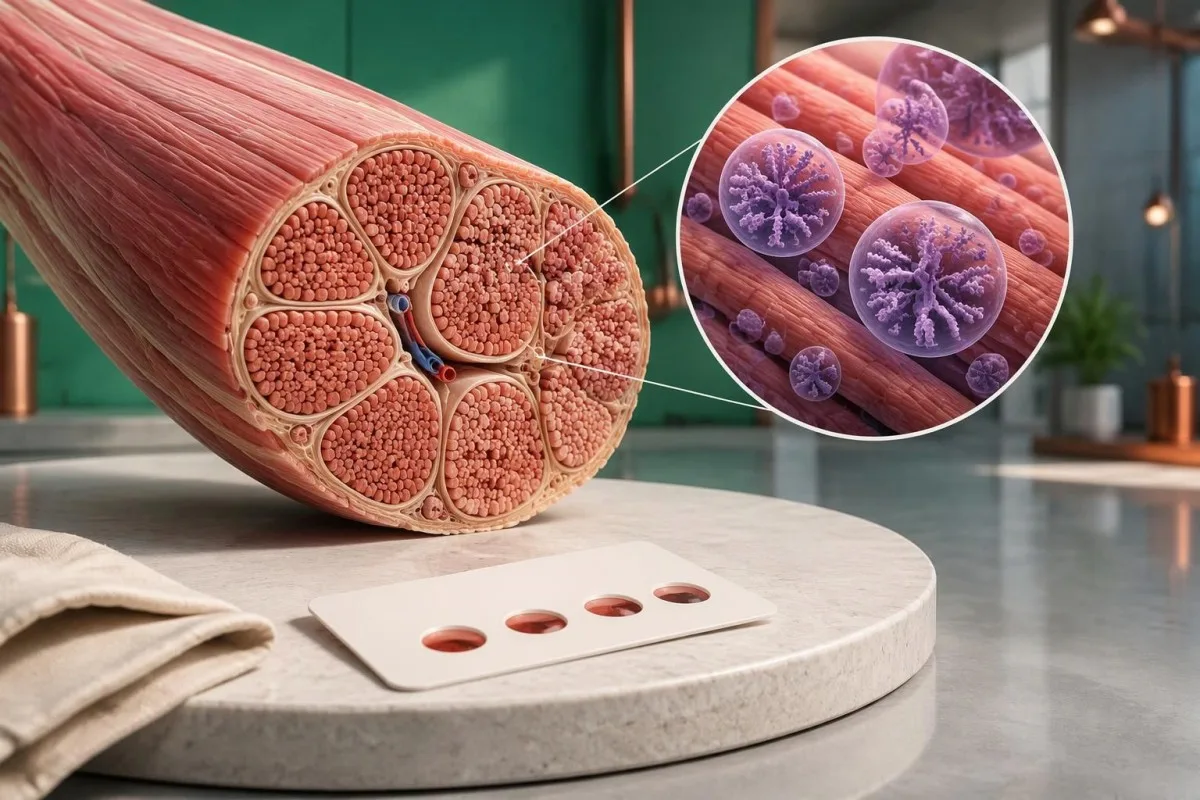
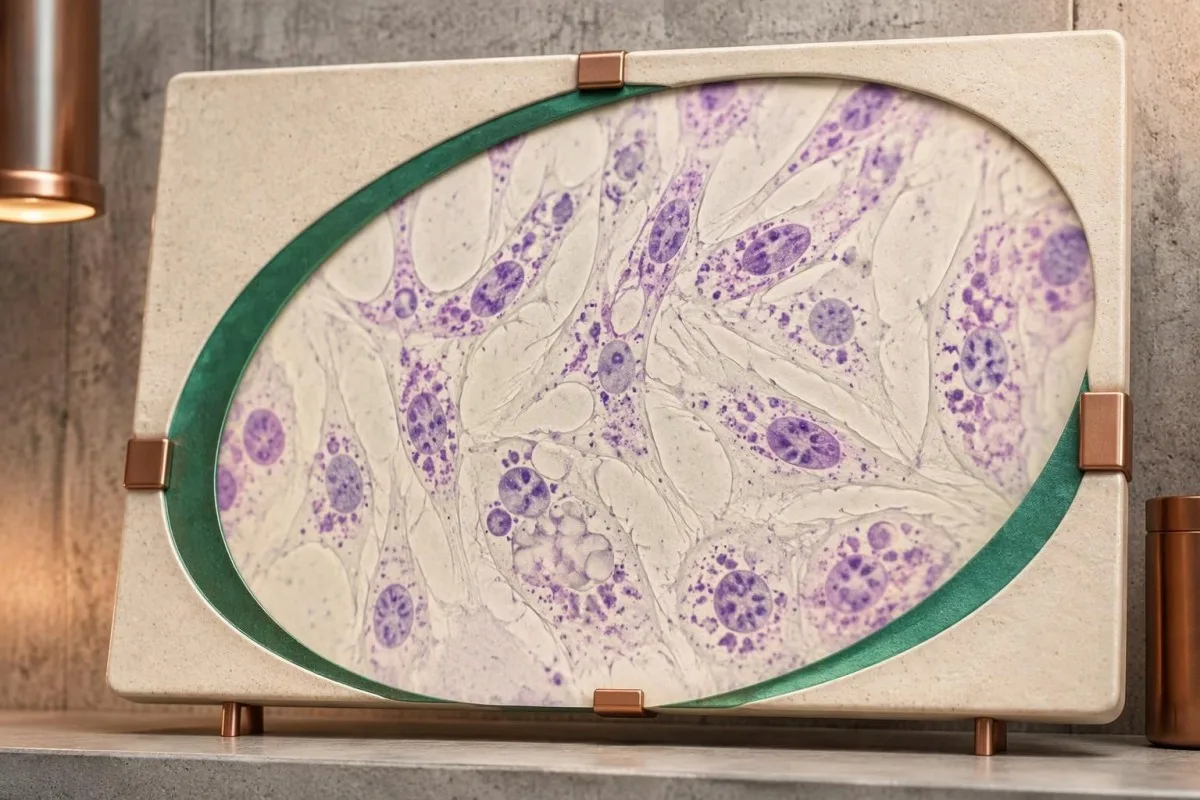
Pompe hastalığı, lizozomal asit alfa-glukozidaz eksikliğinden kaynaklanır, ; bu enzim, hücre içindeki geri dönüşüm bölmelerinde glikojeni parçalar. GAA, hem alfa-1,4 hem de alfa-1,6 glikoz bağlarına etki eder; aktivitenin yetersiz olması, özellikle iskelet kası ve kalp kasında glikojen birikmesine yol açar.

Klasik infantil Pompe hastalığında, tanı amaçlı doku testlerinde GAA aktivitesi genellikle normal düzeyin %1'inden azdır. Geç başlangıçlı hastalıkta daha fazla aktivite korunabilir; bazı testlerde bu oran yaklaşık %2–10 olabilir. Bu betimleyici aralıklar test sınırlamalarıyla örtüşür ve laboratuvarın doğrulanmış tanısal yorumunun yerini almamalıdır.
Kishnani ve arkadaşlarının 2006 tarihli Genetics in Medicine kılavuzu, GAA eksikliği, glikojen depolanması ve çoklu sistem değerlendirmesi arasındaki bağlantıyı açıklar. Klinik ayrım yalnızca aktivitenin %1'in altında olup olmadığına dayanmaz: hastalığın biçimini ve aciliyetini belirlemeye yardımcı olan diğer unsurlar arasında belirtilerin ortaya çıktığı yaş, kalp bulguları ve solunum kası işlevi de yer alır.
Rutin glikoz sonucu, lizozomal glikojen temizlenmesini ölçmez. Örneğin, varsayımsal bir yetişkinin açlık glikozu 92 mg/dL olabilir; buna karşın kalıtsal bir kas glikojen depolanma bozukluğu bulunabilir. Glikozun normal olması, kas lizozomlarındaki glikojenin normal biçimde işlendiğini göstermez.
Diğer lizozomal hastalıklar farklı enzimleri ve genleri içerir; bu nedenle söz konusu hastalıkların eşik değerleri Pompe testinde kullanılamaz. ... hakkındaki açıklamamız Gaucher enzimi doğrulaması enzimden genetiğe uzanan daha geniş iş akışını açıklar ve bir hastalığa ait enzim testinin neden başka bir hastalığın testinin yerine geçemeyeceğini gösterir.
GAA enzim aktivitesi için normal bir aralık var mıdır?
There is no single universal normal range for GAA enzyme activity. Dried blood spots, leukocytes and cultured fibroblasts use different preparations and reporting units; a number expressed in nmol/h/mL cannot be directly compared with a result expressed in nmol/h/mg protein.
A screening cutoff separates samples needing follow-up from samples passing that screen. It does not necessarily separate affected people from unaffected people with complete accuracy; laboratories may use different fluorometric or tandem mass spectrometry methods, and 2 screening programs may therefore select different recall thresholds.
For a clearly hypothetical example, suppose a laboratory uses a DBS screening cutoff of 1.5 nmol/h/mL and reports 0.7 nmol/h/mL. The result is below that invented laboratory threshold, but dividing 0.7 by 1.5 gives 47% of the cutoff—not 47% of normal enzyme activity and not a severity score.
The lower limit of detection is different from the clinical cutoff. A report reading less than 0.1 in its stated units may mean the method cannot quantify lower activity reliably; it does not prove absolute absence of enzyme, and repeating measurements close to that analytical floor may produce proportionally large variation.
Screening performance also depends on prevalence. In a hypothetical group with 10 true-positive and 100 false-positive results, only about 9% of positive screens represent disease; those invented counts are not Pompe screening statistics, but explain why kalitatif sonuçlar ve kantitatif sonuçlar require different interpretation.
| Düzey | Aralık | Anlamı |
|---|---|---|
| Passes hypothetical screen | ≥1.5 nmol/h/mL | Illustrative DBS cutoff only; not a universal normal range and not an absolute exclusion in a symptomatic person. |
| Below hypothetical cutoff | <1.5 nmol/h/mL | Illustrative follow-up threshold only; true deficiency, pseudodeficiency and specimen effects still need separation. |
GAA testi neden farklı bir örnekte tekrarlanır?
Repeat GAA testing checks whether low activity is reproducible and whether specimen quality or assay interference explains it. Confirmation usually moves beyond 1 screening card to a fresh, appropriately handled specimen, often with GAA measurement in leukocytes or another specialist-selected cell preparation.
Heat, humidity and inadequate drying can reduce enzyme activity in a dried blood spot. A low result after 2 days of poorly controlled transport may deserve a fresh collection, but transport history cannot be used to dismiss a result automatically; the laboratory should assess card quality and its stability requirements.
Acarbose is used in some GAA assay methods to suppress interfering maltase-glucoamylase activity. That interference can make measured activity appear higher and potentially obscure deficiency; checking how a laboratory isolates GAA activity can therefore matter more than obtaining a second number with the same unresolved methodological limitation.
Two low DBS results still do not automatically confirm Pompe disease. Pseudodeficiency can reproduce across repeated measurements, including some confirmatory methods; when enzyme and genetic findings disagree, a specialist laboratory may recommend cultured fibroblast testing or additional molecular investigation rather than simply ordering a third screening card.
Give the laboratory the dates of collection, recent transfusions or transplantation, and any enzyme replacement treatment already received. Our guide to numune kalitesi kaynaklı girişim explains the general distinction between biological findings and specimen problems; GAA testing has its own handling rules, so do not import another test's redraw interval.
GAA psödoeksikliği Pompe hastalığından nasıl farklıdır?
GAA pseudodeficiency means an inherited variant lowers measured enzyme activity without causing the glycogen-storage disorder Pompe disease. Two commonly discussed variants are c.1726G>A, p.Gly576Ser, and c.2065G>A, p.Glu689Lys; their interpretation depends on the complete genotype and the assay used.
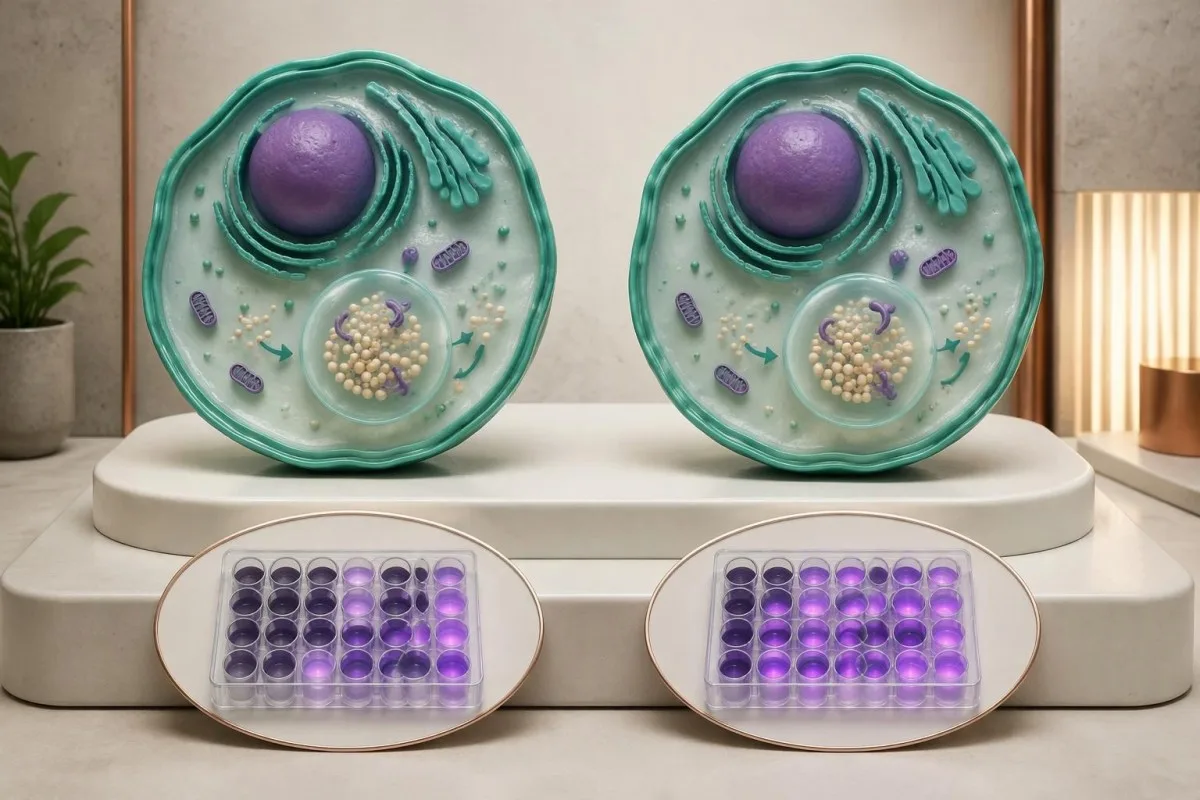
Pseudodeficiency is a biochemical testing issue, not an early stage of Pompe disease. A person with only pseudodeficiency variants does not need Pompe treatment because of 1 low activity result; the specialist must first verify that disease-causing variants or another explanation have not been missed.
The p.Gly576Ser and p.Glu689Lys variants are often found together on 1 gene copy and are particularly relevant in some East Asian ancestry populations. Ancestry changes how often laboratories encounter this pattern, but cannot establish or exclude pseudodeficiency in an individual; people from other backgrounds can carry these variants too.
Pseudodeficiency can remain low on repeat enzyme testing. The practical distinction is whether the complete biochemical and genetic evidence supports disease-causing GAA deficiency, not whether a second result falls below an arbitrary percentage; specialists may compare different assay substrates or cell preparations when the pattern remains ambiguous.
Pseudodeficiency variants can also coexist with a disease-causing variant, making a short report misleading if it lists everything under mutations. Our Fabry enzyme and genetics guide shows another situation where enzyme results need genetic context, although Fabry's X-linked inheritance differs from Pompe's 2-copy recessive mechanism.
GAA gen testinde nelere bakılmalıdır?
GAA gene testing investigates whether disease-causing variants affect both copies of the GAA gene. Pompe disease is autosomal recessive, and the GAA gene is located on chromosome 17; interpretation requires variant classification, adequate test coverage and, when needed, confirmation that variants affect opposite gene copies.
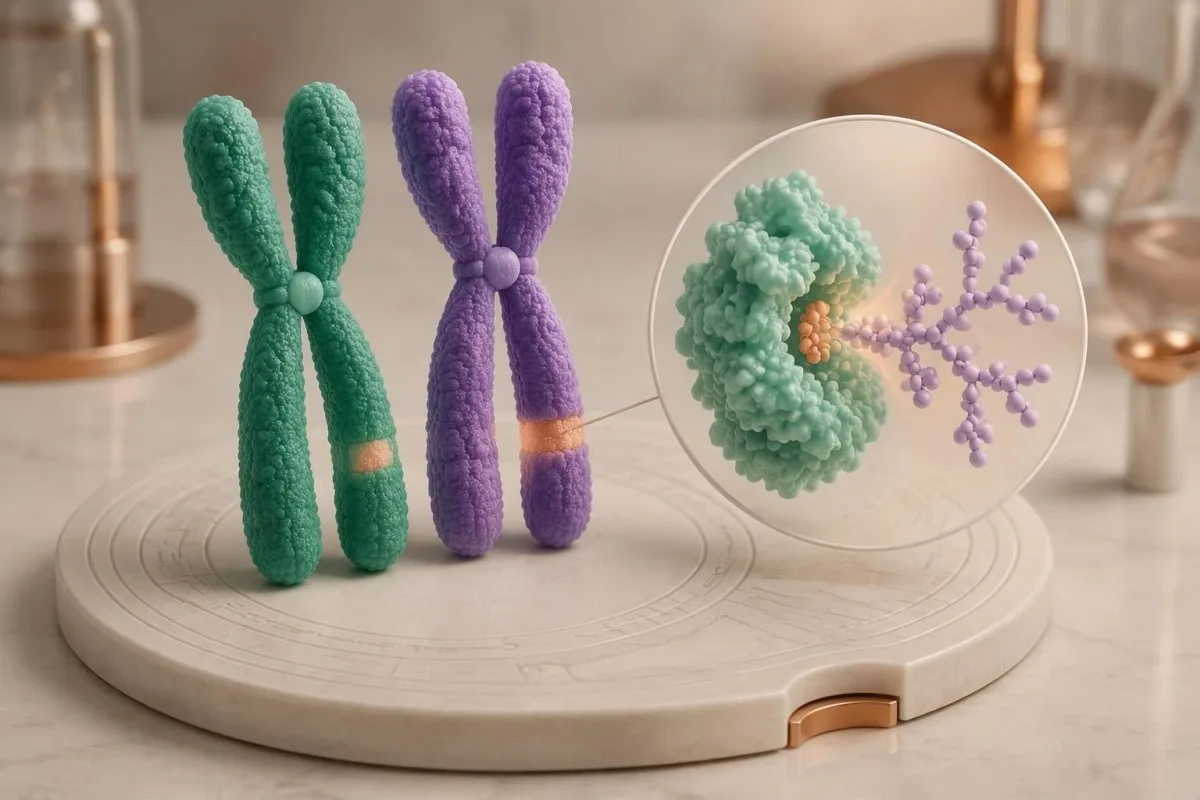
Two pathogenic or likely pathogenic GAA variants in trans support molecular confirmation of Pompe disease. In trans means the variants affect opposite gene copies; 2 variants in cis affect the same copy and do not, by themselves, demonstrate a recessive disease genotype.
Standard sequencing detects many small substitutions and insertions or deletions, but does not answer every possible genetic question. If only 1 disease-causing variant is found despite convincing enzyme deficiency, ask whether deletion/duplication analysis was included and whether poorly covered or deep intronic regions require further investigation.
A common later-onset-associated GAA variant is c.-32-13T>G, which affects splicing. Finding this variant on 1 copy does not diagnose Pompe disease, and finding it with another disease-causing variant does not precisely predict the age symptoms will begin; residual splicing and other biological factors influence presentation.
Parental testing can help establish phase when a laboratory detects 2 different variants but cannot determine their arrangement. Our guide to inherited disease genetic reports explains why inheritance and family testing matter, while the actual gene coverage and diagnostic criteria must remain specific to GAA.
Patojenik, belirsiz ve negatif sonuçlar nasıl yorumlanmalıdır?
A pathogenic result, a variant of uncertain significance and a negative result have different diagnostic meanings. Genetic laboratories commonly use 5 categories: pathogenic, likely pathogenic, uncertain significance, likely benign and benign; a VUS is not equivalent to a disease-causing GAA variant.
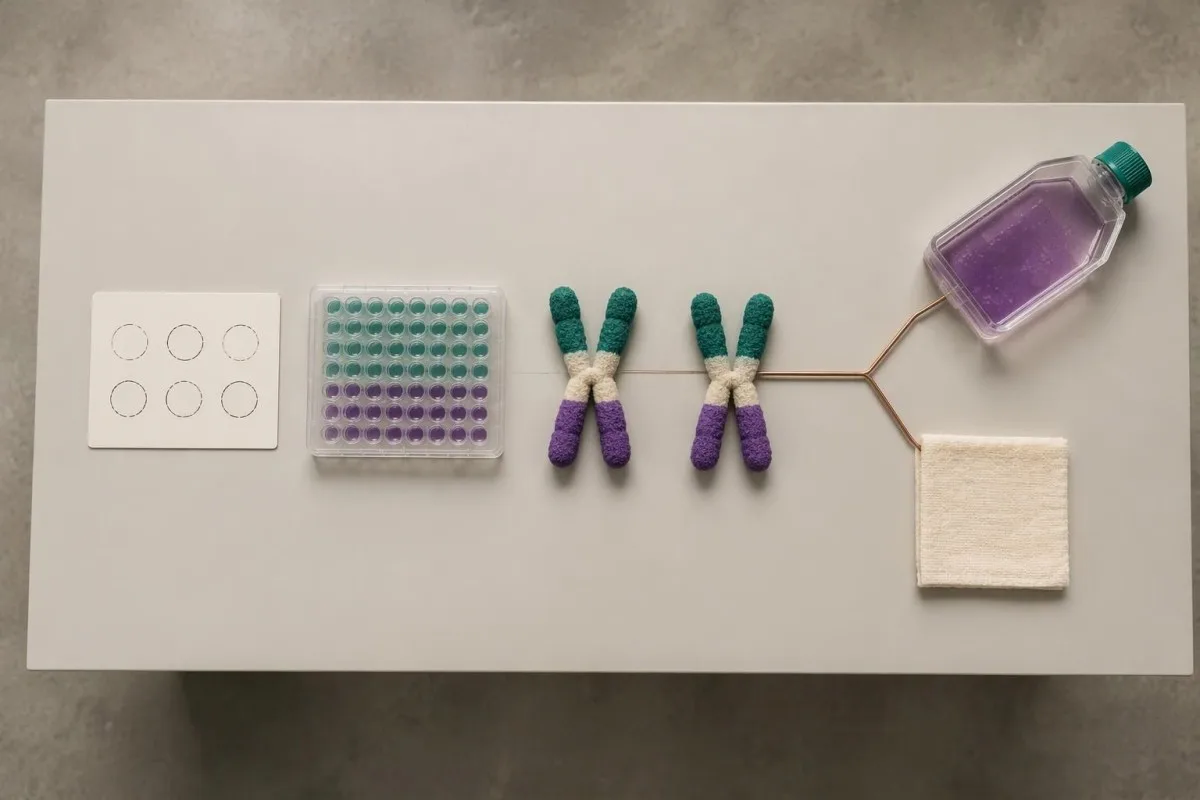
Richards et al.'s 2015 ACMG/AMP consensus established the widely used 5-category sequence-variant framework and states that a VUS should not guide clinical decision-making as though pathogenic. For Pompe evaluation, low enzyme activity can contribute evidence, but its value depends on whether pseudodeficiency and assay limitations have been addressed.
One pathogenic variant plus 1 VUS is an unresolved combination, not automatic confirmation or exclusion. Depending on the enzyme and clinical findings, specialists may investigate family segregation, RNA effects or variant-specific functional evidence; a diagnostic enzyme result may support disease even while the second molecular finding remains incompletely characterized.
A negative sequencing report means the test found no reportable variants within its scope. It does not prove that every GAA-related mechanism was examined; 1 negative limited test may warrant expanded testing when properly performed enzyme studies and the clinical pattern remain strongly suggestive.
Kantesti bir AI kan tahlili yorumlama platformu that can help separate a report's 5 classification terms from its numerical enzyme findings, without adjudicating an uncertain genotype. Our teknik ve klinik standartlar describe interpretation boundaries; our uncertain gene-result explanation provides a related example of why variants and diagnoses are not interchangeable.
Tek bir GAA varyantı taşıyıcılık durumu mu, hastalık mı anlamına gelir?
One confirmed disease-causing GAA variant usually indicates carrier status if a second disease-causing variant and diagnostic enzyme deficiency are absent. Carriers do not typically develop Pompe disease; when both parents are carriers, each pregnancy has a 25% affected, 50% carrier and 25% non-carrier probability.
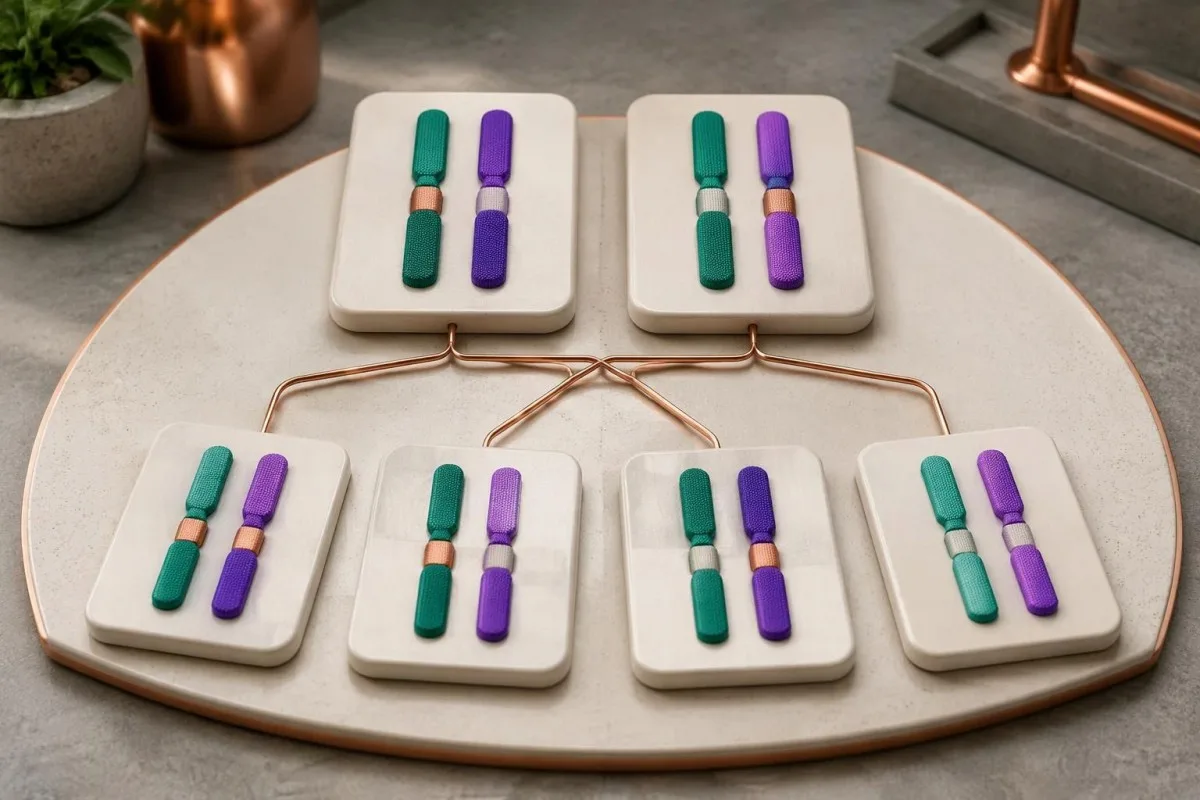
Carrier enzyme values can overlap with values in unaffected people. GAA activity is therefore not a reliable standalone carrier test, and a carrier's activity should not be assumed to equal exactly 50% of a laboratory's normal mean; targeted genetic testing is generally more informative when a familial variant is known.
The 25% affected-child probability applies independently to each pregnancy when both parents carry disease-causing variants capable of producing Pompe disease together. Having 1 unaffected child does not reduce the next pregnancy's Mendelian probability, and pseudodeficiency variants should not be substituted for pathogenic variants in that calculation.
Family testing is most useful after the affected person's variants are clarified. If a symptomatic adult has only 1 identified pathogenic variant, relatives should not be reassured that the entire family question is settled until the specialist considers whether the second variant was missed by the original assay.
For a hypothetical couple, one partner carrying a pathogenic GAA variant and the other carrying only a pseudodeficiency variant does not create the same 25% Pompe risk as 2 pathogenic-variant carriers. Our carrier screening limitations guide explains why a report's coverage and residual risk deserve discussion before reproductive decisions.
Pompe değerlendirmesini başka hangi laboratuvar sonuçları destekler?
Creatine kinase, AST, ALT and urinary glucose tetrasaccharide can support Pompe evaluation, but none confirms the diagnosis alone. Urinary glucose tetrasaccharide may be reported as Glc4 or within a Hex4 assay; these 2 report terms require method-specific interpretation rather than assumption that every laboratory measures exactly the same thing.
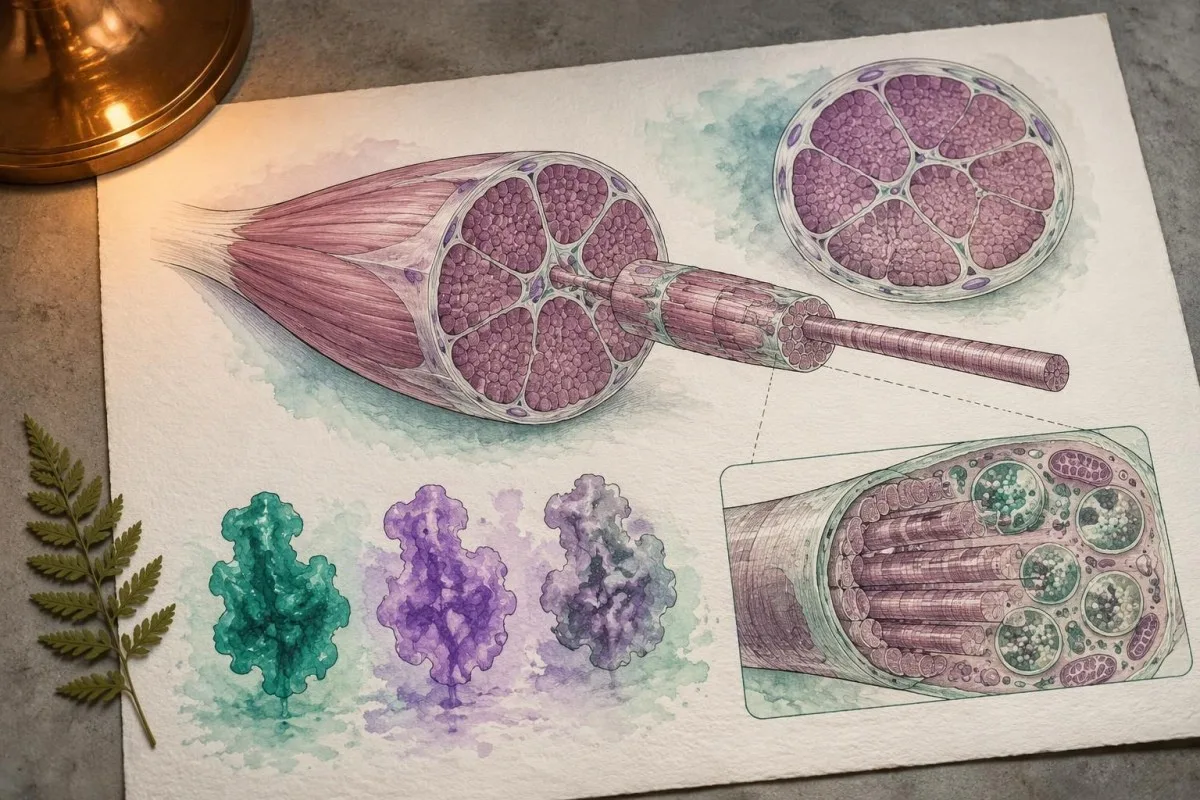
Normal CK does not exclude later-onset Pompe disease. In a hypothetical adult with progressive difficulty rising from a chair, CK of 140 U/L may fall within that laboratory's interval despite clinically meaningful weakness; the combination of symptoms and low confirmed GAA activity matters more than a reassuring CK flag.
AST and ALT can rise because of muscle involvement, not only liver disease. A hypothetical AST of 86 U/L with elevated CK and muscle weakness deserves a muscle-aware assessment; our aldolase and muscle marker guide explains why additional muscle enzymes may help characterize the pattern without identifying its cause.
Urinary Glc4 is a supportive glycogen-related biomarker, not a Pompe-specific diagnostic test. Reference limits vary with age and method, and elevation can occur in other circumstances; 1 elevated result should be interpreted alongside enzyme findings, genetics and the laboratory's creatinine-normalized units.
A falling CK or Glc4 after treatment does not automatically prove that strength or breathing has improved by the same percentage. Our discussion of AST interpretation beyond liver disease illustrates why 2 related markers can move together while still answering different questions about tissue injury and function.
Pompe testi anormal olduğunda solunum neden değerlendirilmelidir?
Pompe disease can weaken the diaphragm and other respiratory muscles, sometimes before obvious walking difficulty. Assessment may include seated and supine forced vital capacity, respiratory muscle pressures and sleep-related testing; a daytime oxygen saturation of 97% does not rule out overnight hypoventilation.
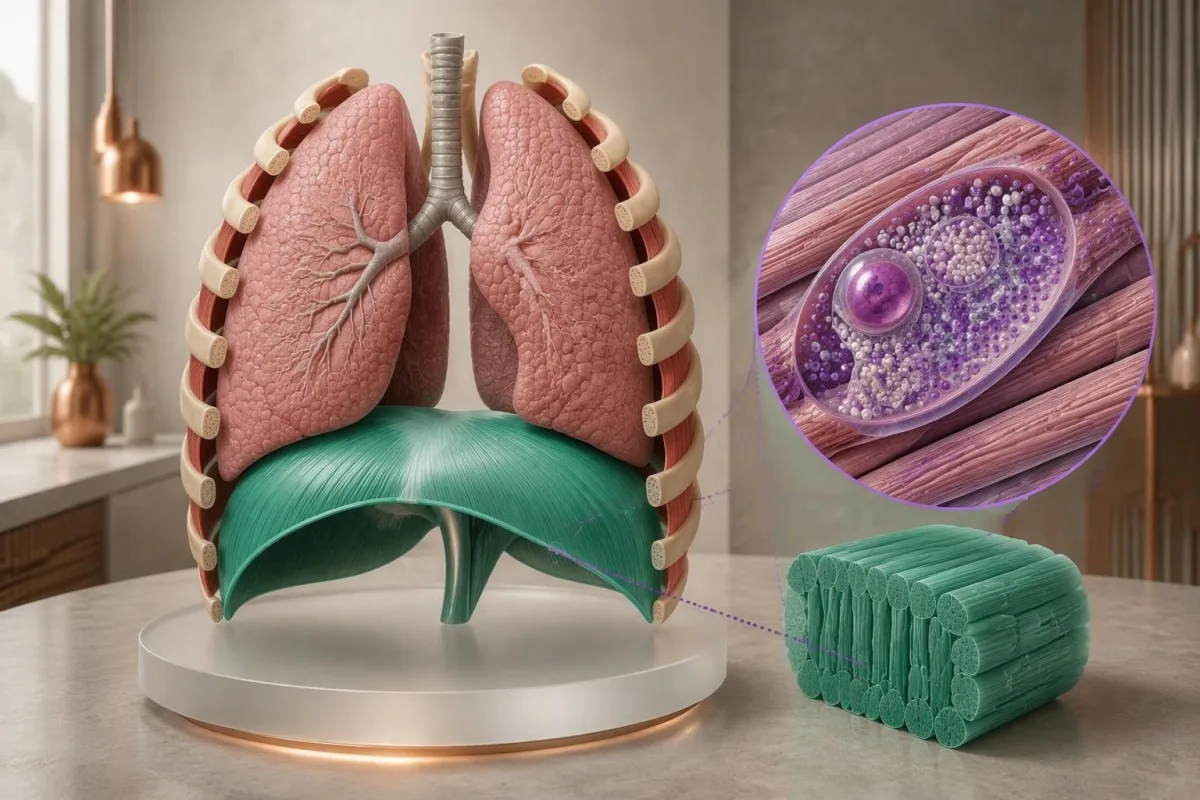
A position-related fall in vital capacity can suggest diaphragm weakness. For example, a hypothetical seated FVC of 3.0 L and supine FVC of 2.4 L represents a 20% decline; the specialist interprets that difference with technique, predicted values and symptoms, rather than treating it as a Pompe-specific cutoff.
Morning headaches, unrefreshing sleep and difficulty breathing when lying flat can justify evaluation for sleep-related hypoventilation. These symptoms do not identify Pompe disease on their own; our nefes darlığı test kılavuzu explains why laboratory results cannot replace respiratory examination and physiological testing.
Arterial carbon dioxide is normally about 35–45 mmHg in adults, with context-dependent variation. A value above 45 mmHg indicates hypercapnia, but its urgency depends on pH, symptoms and the clinical setting; our blood gas interpretation guide explains why oxygen and carbon dioxide answer different questions.
Severe breathlessness, confusion, blue coloration or rapidly worsening weakness warrants emergency care, not an online interpretation session. A confirmed molecular result affecting 2 GAA copies does not measure current respiratory safety; clinicians need direct functional assessment to decide whether ventilation support or urgent monitoring is necessary.
Yenidoğan Pompe taraması pozitif çıktıktan sonra ne olur?
A positive newborn Pompe screen requires prompt specialist assessment, confirmatory enzyme testing and genetic evaluation. It does not mean every infant has Pompe disease; the immediate task is to distinguish pseudodeficiency or carrier findings from infantile disease and a later-onset-associated genotype affecting both GAA copies.

Burton et al.'s 2017 Pediatrics newborn-screening algorithms describe an initial evaluation integrating GAA confirmation, molecular testing and clinical assessment. If an infant has feeding difficulty, marked hypotonia or suspected cardiomyopathy, do not wait 2 weeks for a routine repeat appointment; the screening team should arrange urgent metabolic and cardiac evaluation.
Classic infantile Pompe disease commonly involves hypertrophic cardiomyopathy. A newborn's echocardiogram and electrocardiogram help assess risk that cannot be estimated from 1 enzyme number; absence of obvious heart symptoms at home does not replace the specialist examination after an abnormal screen.
CRIM status concerns whether cross-reactive GAA protein is present and helps specialists plan immune-risk management around enzyme replacement therapy. Less than 1% enzyme activity does not by itself establish CRIM-negative status, because an inactive protein may still be present; this is a protein-expression question, not just an activity threshold.
Later-onset-associated findings in a newborn require a monitoring plan, not an invented age-of-onset prediction. Even 2 classified disease-causing variants may not reveal when symptoms will emerge; our pediatrik yapay zekâ güvenliği kılavuzumuz explains why pediatric results require age-specific context and clinician-led decisions.
Uzmanlar yetişkinlerdeki çelişkili test sonuçlarını nasıl çözümler?
Conflicting adult Pompe results are resolved by checking specimen quality, confirmatory enzyme methods, variant classification and clinical fit. One low screen plus 1 genetic finding rarely tells the whole story; specialists investigate whether the apparent conflict comes from pseudodeficiency, an incomplete molecular test or another cause of weakness.

Consider a hypothetical 52-year-old with mild fatigue, low DBS GAA activity and only the 2 commonly discussed pseudodeficiency variants. If specialist testing supports pseudodeficiency and no disease-causing genotype, the low screen does not explain the fatigue; other causes should be assessed rather than attaching a Pompe label to an incidental biochemical finding.
A second hypothetical adult has progressive hip weakness, a 20% positional FVC decline, confirmed cellular GAA deficiency and 2 pathogenic variants in trans. Together, those findings support Pompe disease; a normal routine glucose or modest CK result would not outweigh the converging biochemical, genetic and functional evidence.
Convincing enzyme deficiency with only 1 identified pathogenic variant deserves further investigation. The appropriate next step may be deletion/duplication analysis, RNA studies or another specialist assay—not automatically calling the person a carrier; the investigation should also check whether non-Pompe neuromuscular conditions better explain the examination.
Variant-related disease monitoring is not the same as predicting a person's future from their DNA. Our inherited neuromuscular risk guide offers a related family-testing perspective, but 2 conditions can differ substantially in inheritance, penetrance and treatment triggers.
Pompe uzmanı randevunuza neler getirmelisiniz?
Bring the complete enzyme report, complete genetic report and a dated symptom history to a Pompe specialist appointment. Three report details are especially useful: specimen type, assay units and variant classification; screenshots showing only a red flag or the word mutation can omit information that changes the interpretation.

Ask whether confirmatory testing has already been completed and whether the laboratory measured GAA specifically in an appropriate cell preparation. If 2 variants were found, ask whether they are in trans; if only 1 was found, ask what variant types and regions the test could detect.
Do not try to raise GAA activity with supplements or diet before confirmation. No vitamin or food corrects inherited pathogenic variants affecting both GAA copies; nutrition may support general care after diagnosis, but cannot substitute for enzyme confirmation or specialist treatment planning.
Kantesti bir Yapay zekâ destekli kan testi analiz aracı that can help organize report terminology and associated laboratory trends, not decide whether 2 uncertain variants establish Pompe disease. Our rapor kaynağını doğrulama rehberimiz explains why the original document remains the reference when an automated explanation and a specialist interpretation differ.
Genetic documents can contain information relevant to relatives as well as the tested person. Before sharing 1 family member's report, check consent and remove unnecessary identifiers; Kantesti's gizlilik ve veri bilgilerini describes our handling approach, while sharing results with relatives should follow a genetic counselor's guidance.
Araştırma yayınları ve Pompe testi yorumlamasının sınırları
Pompe test interpretation rests on disease-specific enzyme, genetic and clinical evidence—not on general laboratory publications or an AI explanation. Kantesti includes 3 directly relevant external sources below and 2 separate educational publications; the iron and coagulation publications are not evidence for diagnosing Pompe disease.
The 2006 Kishnani guideline provides disease-specific diagnostic and management context, while the 2017 Burton newborn-screening paper addresses confirmation after population screening. Their recommendations should be applied with the specialist laboratory's validated methods; neither supplies 1 universally transferable DBS enzyme cutoff for every instrument and population.
Richards et al.'s 2015 ACMG/AMP publication explains the 5-category variant framework used to distinguish pathogenic findings from uncertainty. Classification can change when new evidence becomes available, so ask the genetics service whether an unresolved result has a reanalysis pathway rather than assuming every VUS will eventually become pathogenic.
Eğitsel içeriğimiz demir çalışmaları yayını addresses a different laboratory domain. The separate pıhtılaşma testi yayınımız also covers unrelated markers; their 2 DOI records are provided for publication transparency, not as supporting citations for GAA deficiency or pseudodeficiency.
Kantesti'nin tıbbi içerik standartları distinguish patient education from diagnosis and treatment instructions. The practical endpoint is a documented interpretation of 3 evidence streams—enzyme testing, genetic analysis and clinical assessment—with urgent care taking priority whenever infantile disease or respiratory compromise is suspected.
Sıkça sorulan sorular
Düşük GAA enzim aktivitesi her zaman Pompe hastalığı anlamına mı gelir?
Düşük GAA enzim aktivitesi her zaman Pompe hastalığı anlamına gelmez. Tek bir anormal tarama sonucu gerçek eksikliği, psödoeksikliği, örneğin bozulmasını veya taşıyıcılıkla ilişkili aktivite aralığıyla örtüşmeyi yansıtabilir. Doğrulama için uygun bir enzim testinin, GAA genetik bulgularının ve klinik bağlamın uzman tarafından değerlendirilmesi gerekir. Aynı tarama testini tek başına tekrarlamak, sorunu çözmek yerine psödoeksikliği yeniden ortaya çıkarabilir.
Normal GAA enzim düzeyi nedir?
There is no universal normal GAA enzyme level because specimen preparation, assay substrate and reporting units differ between laboratories. A value in nmol/h/mL cannot be directly compared with a value in nmol/h/mg protein. Classic infantile Pompe disease often has less than 1% of normal activity in diagnostic tissue assays, but this is not a universal newborn-screening cutoff. Use the reference information printed on the original report and the specialist laboratory's interpretation.
İki düşük GAA testi yine de psödoeksiklik olabilir mi?
İki düşük GAA test sonucu, özellikle aynı veya benzer özellikteki test yöntemleri kullanıldığında, yine de psödoyetersizliği yansıtabilir. Psödoyetersizlik varyantları, Pompe glikojen depo hastalığına kendileri neden olmaksızın ölçülen aktiviteyi düşürür. Uzmanlar bu örüntüyü tam GAA genotipini, test özelliklerini ve gerektiğinde başka bir hücre preparatını veya fonksiyonel incelemeyi kullanarak ayırt eder. Bu nedenle tekrarlanan iki düşük sonuç, hastalığın birbirinden bağımsız iki doğrulamasıyla eşdeğer değildir.
İki GAA gen varyantı Pompe hastalığını doğrular mı?
İki GAA varyantı, Pompe hastalığını otomatik olarak doğrulamaz. Trans konumunda, yani genin karşılıklı kopyalarını etkileyen iki patojenik veya olası patojenik varyant, moleküler doğrulamayı desteklerken cis konumundaki iki varyant yalnızca tek bir kopyayı etkiler. Klinik önemi belirsiz varyantlar ve psödoyetmezlik varyantları, hastalığa neden olduğu kesinleşmiş bulgular olarak sayılamaz. Sınıflandırma veya faz çözümlenmediğinde enzim ve klinik bulgular özellikle yararlı olmaya devam eder.
Normal CK, geç başlangıçlı Pompe hastalığını dışlayabilir mi?
Normal CK cannot rule out late-onset Pompe disease. A hypothetical CK of 140 U/L may fall within a laboratory's reference interval despite progressive proximal weakness or diaphragm involvement. CK measures muscle injury-related enzyme release, not lysosomal GAA function. Persistent compatible symptoms deserve specialist assessment even when routine muscle markers are reassuring.
Pozitif yenidoğan Pompe hastalığı testi ne kadar acildir?
Yenidoğan Pompe hastalığı tarama testinin pozitif çıkması, tarama veya metabolizma ekibiyle derhal iletişime geçilmesini gerektirir; beslenme güçlüğü, belirgin hipotoni veya kalp tutulumu şüphesi olan bir bebeğin acilen değerlendirilmesi gerekir. Tek bir tarama kartının pozitif çıkması tanıyı doğrulamaz, ancak klasik infantil hastalık şüphesi varsa rutin randevunun birkaç hafta sonrasına bırakılması uygun değildir. Uzmanlar doğrulayıcı enzim testlerini, genetik değerlendirmeyi ve kardiyak değerlendirmeyi çoğu zaman eş zamanlı olarak düzenler. Ciddi solunum güçlüğü veya tepki verme düzeyinde azalma acil müdahale gerektirir.
Her iki ebeveyn de Pompe taşıyıcısıysa çocuklar için risk nedir?
Her iki ebeveyn de hastalığa neden olan GAA varyantlarını taşıyorsa, her gebelikte etkilenmiş bir çocuk sahibi olma olasılığı 25%, taşıyıcı bir çocuk sahibi olma olasılığı 50% ve ailesel varyantların hiçbirini kalıtmayacak bir çocuk sahibi olma olasılığı 25%'tir. Bu olasılıklar her gebelik için bağımsız olarak geçerlidir. Psödoyetersizlik varyantları bu hesaplamada patojenik varyantlarla birbirinin yerine kullanılamaz. Genetik danışmanlık, ebeveynlere ait bulguların doğrulanmasına ve test seçeneklerinin açıklanmasına yardımcı olur.
Kan tahlili sonuçları ne anlama gelir
Laboratuvar raporunuzu yükleyin; Kantesti'nin AI'ı her biyobelirteci saniyeler içinde sade bir dille açıklar. Dünya genelinde 2 milyondan fazla kişi tarafından kullanılıyor.
Referanslar
- Klein, T., Mitchell, S. & Weber, H. (2026). Demir Çalışmaları Rehberi: TIBC, Demir Doygunluğu ve Bağlama Kapasitesi. Kantesti AI Tıbbi Araştırma. DOI
- Klein, T., Mitchell, S. & Weber, H. (2026). aPTT Normal Aralığı: D-Dimer, Protein C ve Kan Pıhtılaşması Rehberi. Kantesti AI Tıbbi Araştırma. DOI
- Kishnani PS et al. (2006). Pompe disease diagnosis and management guideline. Tıpta Genetik. DOI PubMed
- Burton BK et al. (2017). The Initial Evaluation of Patients After Positive Newborn Screening: Recommended Algorithms Leading to a Confirmed Diagnosis of Pompe Disease. Pediatrics. DOI
- Richards S ve ark. (2015). Dizi varyantlarının yorumlanmasına yönelik standartlar ve kılavuzlar: Amerikan Tıbbi Genetik ve Genomik Koleji ile Moleküler Patoloji Derneğinin ortak uzlaşı önerisi. Tıpta Genetik. DOI PubMed
- 2 milyondan fazlaAnaliz edilen testler
- 127+Ülkeler
- 100+Diller
Sağlık ekibi hakkında


E-E-A-T Güven Sinyalleri
Deneyim
Hekim liderliğinde laboratuvar yorumlama iş akışlarının klinik incelemesi.
Uzmanlık
Klinik bağlamda biyobelirteçlerin nasıl davrandığına odaklanan laboratuvar tıbbı.
Otorite
Dr. Thomas Klein tarafından tıbbi açıdan incelenmiş; Dr. Sarah Mitchell ve Prof. Dr. Hans Weber'in katkılarıyla hazırlanmıştır.
Güvenilirlik
Alarmı azaltmaya yönelik net takip yollarıyla kanıta dayalı yorumlama.






Tıbbi sorumluluk reddi
Bu makale yalnızca eğitim amaçlıdır ve tıbbi tavsiye niteliği taşımaz. Tanı ve tedavi kararları için her zaman yetkin bir sağlık hizmeti sağlayıcısına danışın.
Yayınlanmış · Yayın ekibiyle iletişime geçin
Kantesti Ltd tarafından yayımlanmıştır; İngiltere ve Galler'de kayıtlı, şirket no. 17090423, Londra, Birleşik Krallık.
