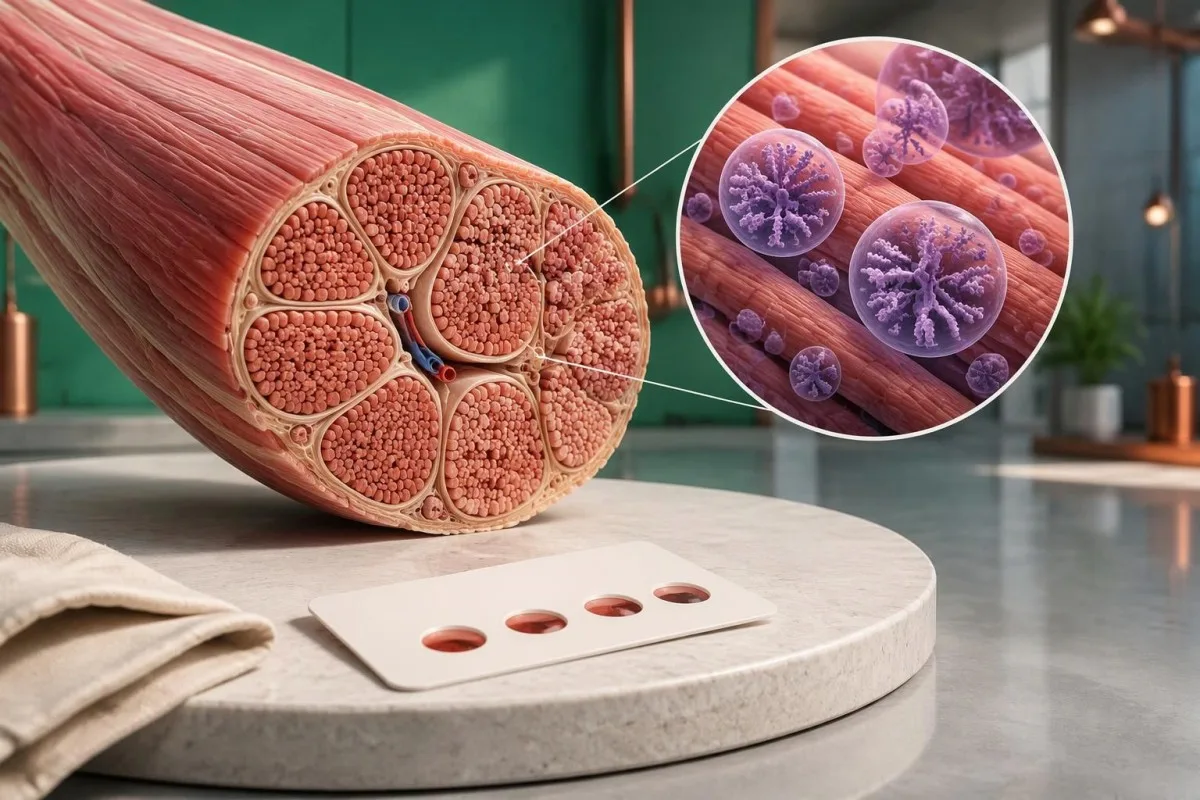
GAA ферментінің төмен нәтижесі Помпе ауруына күдік туғызады, бірақ скринингтің өзі диагнозды растай алмайды. Тиісті үлгіде қайта тестілеу және GAA генетикалық талдауы шынайы тапшылықты, тасымалдаушылық мәртебесін және псевдотапшылықты ажыратуға көмектеседі.

Негізгі тұжырымдар
- GAA ферменті белсенділігінің төмен болуы — диагноз емес, кейінгі тексеруге себеп болатын белгі; 1 қалыптан тыс кептірілген қан дағының нәтижесі маманның нұсқауымен расталуы керек.
- Анықтамалық диапазондар үлгі мен талдау әдісіне байланысты; nmol/h/mL мәнін nmol/h/mg protein мәнімен тікелей салыстыруға болмайды.
- Қалдық фермент белсенділігі классикалық нәрестелік Помпе ауруында көбіне 1%-тен төмен болады, бірақ бұл көрсеткіш скринингтің әмбебап шекті мәні емес.
- Псевдотапшылық Помпе ауруын тудырмай-ақ зертханалық GAA белсенділігін төмендетуі мүмкін; сол талдау әдісін қайталау төмен нәтижені қайта көрсетуі мүмкін.
- GAA генінің тесті геннің екі көшірмесіне де әсер ететін, ауру туғызатын нұсқаларды іздейді; жіктеу мен фазаны анықтау үшін 2 нұсқаны түсіндіру қажет.
- Маңызы белгісіз нұсқалар Помпе ауруын анықтамайды; маңызы белгісіз 1 немесе 2 нұсқа қосымша дәлелді қажет етеді.
- Отбасылық қауіп екі ата-ана да ауру туғызатын GAA нұсқасын тасымалдаған жағдайда, әр жүктілікте зақымданған баланың туу ықтималдығы 25% құрайды.
- Шұғыл бағалау GAA деңгейі төмен, оған қоса тамақтану қиындығы, айқын әлсіздік немесе жүрек зақымдануына күдік бар нәрестеге қажет; жоспарлы қайта тестілеуді күтпеңіз.
GAA ферментінің төмен нәтижесі нақты нені білдіреді?
A Помпе ауруына тест GAA белсенділігінің төмен екенін көрсетуі зертхана талдау жағдайларында қышқыл альфа-глюкозидаза қызметінің төмендегенін өлшегенін білдіреді. Бұл Помпе ауруын дәлелдемейді: скринингтің 1 төмен нәтижесі нақты тапшылықты, псевдотапшылықты, тасымалдаушылыққа байланысты нәтижелердің қабаттасуын немесе үлгіге қатысты мәселені көрсетуі мүмкін.

GAA белсенділігі фермент ақуызының жай ғана мөлшерін емес, оның қызметін өлшейді. Алдымен тексерілетін 3 жайт: үлгі түрі, өлшем бірліктері және зертхананың шешім шегі; осы мәліметтерсіз төмен деп сипатталған нәтижені интернеттен табылған санмен сенімді түрде салыстырып түсіндіру мүмкін емес.
Тестілеудің себебі оң скрининг нәтижесінің мағынасын өзгертеді. Популяциялық скрининг кезінде анықталған жаңа туған нәресте мен жамбас бұлшықеттерінің үдемелі әлсіздігі бар 45 жастағы адамның Помпе ауруына қатысты бастапқы ықтималдығы әртүрлі, тіпті олардың фермент көрсеткіштері бірдей болса да; сондықтан симптомдар мен тексеру нәтижелері зертханалық нәтижемен бірге қарастырылуы керек.
Скрининг нәтижесінің оң болуы ауру бар дегенді білдірмейді. Егер 2 зертхана әртүрлі субстраттар немесе үлгіні дайындаудың әртүрлі тәсілдерін қолданса, зертханалардың ешқайсысы қателеспесе де, сандық нәтижелері сәйкес келмеуі мүмкін; келесі қабылдау тағы бір скринингтік өлшеу үшін бе, әлде шынымен растаушы ферменттік талдау үшін бе екенін сұраңыз.
Кантести - бұл AI қан анализінің анализаторы GAA есебін әдеттегі зертханалық нәтижелермен қатар реттеуге көмектесе алады, бірақ белгіленген 1 көрсеткіш негізінде Помпе ауруының диагнозын анықтай алмайды. Біздің компания туралы ақпаратымыз қызметтің қалай ұйымдастырылғанын түсіндіреді; тұқым қуалайтын фермент тапшылығына күдік болса, бәрібір метаболизм немесе жүйке-бұлшықет аурулары жөніндегі маманның бағалауы қажет.
Неліктен GAA тапшылығы бұлшықеттер мен жүрекке қатысты мәселелер туғызады?
Помпе ауруы лизосомалық қышқыл альфа-глюкозидазаның тапшылығынан туындайды, — бұл жасушаның қайта өңдеу бөлімдеріндегі гликогенді ыдырататын фермент. GAA альфа-1,4 және альфа-1,6 глюкозалық байланыстарға әсер етеді; белсенділігі жеткіліксіз болса, әсіресе қаңқа және жүрек бұлшықеттерінде гликоген жиналады.

Помпе ауруының классикалық нәрестелік түрінде диагностикалық тіндік талдауларда GAA белсенділігі қалыпты деңгейдің 1%-ынан төмен болады. Кеш басталатын ауруда белсенділік жоғарырақ сақталуы мүмкін, кейбір талдауларда шамамен 2–40%; бұл сипаттамалық аралықтар талдау әдісінің шектеулерімен қабаттасады және зертхананың валидацияланған диагностикалық түсіндірмесін алмастырмауы керек.
Kishnani және әріптестерінің 2006 жылғы Genetics in Medicine нұсқаулығында GAA тапшылығы, гликогеннің жиналуы және бірнеше жүйені бағалау арасындағы байланыс сипатталған. Клиникалық айырмашылық белсенділіктің 1%-ынан төмен-төмен еместігімен ғана анықталмайды: аурудың басталған жасы, жүрек көрсеткіштері және тыныс алу бұлшықеттерінің қызметі де ауру түрі мен шұғылдық дәрежесін анықтауға көмектеседі.
Әдеттегі глюкоза нәтижесі лизосомалық гликогеннің ыдырауын өлшемейді. Мысалы, жорамалдағы ересек адамның ашқарындағы глюкозасы 92 mg/dL болуы мүмкін, сонымен бірге онда бұлшықетте гликоген жиналуымен сипатталатын тұқым қуалайтын ауру болуы ықтимал; глюкозаның қалыпты болуы бұлшықет лизосомаларындағы гликогеннің қалыпты өңделетінін дәлелдемейді.
Басқа лизосомалық ауруларға өзге ферменттер мен гендер қатысады, сондықтан олардың шекті мәндерін Помпе ауруына арналған тестілеуге қолдануға болмайды. Біздің түсіндірмеміз Гоше ауруын ферменттік растау ферменттік зерттеуден генетикалық тексеруге дейінгі кеңірек үдерісті көрсетіп, бір ауруға арналған ферменттік талдау неліктен екіншісінің орнына жүре алмайтынын түсіндіреді.
GAA ферменті белсенділігінің қалыпты аралығы бар ма?
There is no single universal normal range for GAA enzyme activity. Dried blood spots, leukocytes and cultured fibroblasts use different preparations and reporting units; a number expressed in nmol/h/mL cannot be directly compared with a result expressed in nmol/h/mg protein.

A screening cutoff separates samples needing follow-up from samples passing that screen. It does not necessarily separate affected people from unaffected people with complete accuracy; laboratories may use different fluorometric or tandem mass spectrometry methods, and 2 screening programs may therefore select different recall thresholds.
For a clearly hypothetical example, suppose a laboratory uses a DBS screening cutoff of 1.5 nmol/h/mL and reports 0.7 nmol/h/mL. The result is below that invented laboratory threshold, but dividing 0.7 by 1.5 gives 47% of the cutoff—not 47% of normal enzyme activity and not a severity score.
The lower limit of detection is different from the clinical cutoff. A report reading less than 0.1 in its stated units may mean the method cannot quantify lower activity reliably; it does not prove absolute absence of enzyme, and repeating measurements close to that analytical floor may produce proportionally large variation.
Screening performance also depends on prevalence. In a hypothetical group with 10 true-positive and 100 false-positive results, only about 9% of positive screens represent disease; those invented counts are not Pompe screening statistics, but explain why сапалық және сандық нәтижелер require different interpretation.
| Деңгей | Аралық | Мағынасы |
|---|---|---|
| Passes hypothetical screen | ≥1.5 nmol/h/mL | Illustrative DBS cutoff only; not a universal normal range and not an absolute exclusion in a symptomatic person. |
| Below hypothetical cutoff | <1.5 nmol/h/mL | Illustrative follow-up threshold only; true deficiency, pseudodeficiency and specimen effects still need separation. |
Неліктен GAA тестін басқа үлгіде қайталау керек?
Repeat GAA testing checks whether low activity is reproducible and whether specimen quality or assay interference explains it. Confirmation usually moves beyond 1 screening card to a fresh, appropriately handled specimen, often with GAA measurement in leukocytes or another specialist-selected cell preparation.

Heat, humidity and inadequate drying can reduce enzyme activity in a dried blood spot. A low result after 2 days of poorly controlled transport may deserve a fresh collection, but transport history cannot be used to dismiss a result automatically; the laboratory should assess card quality and its stability requirements.
Acarbose is used in some GAA assay methods to suppress interfering maltase-glucoamylase activity. That interference can make measured activity appear higher and potentially obscure deficiency; checking how a laboratory isolates GAA activity can therefore matter more than obtaining a second number with the same unresolved methodological limitation.
Two low DBS results still do not automatically confirm Pompe disease. Pseudodeficiency can reproduce across repeated measurements, including some confirmatory methods; when enzyme and genetic findings disagree, a specialist laboratory may recommend cultured fibroblast testing or additional molecular investigation rather than simply ordering a third screening card.
Give the laboratory the dates of collection, recent transfusions or transplantation, and any enzyme replacement treatment already received. Our guide to үлгі сапасына байланысты интерференция explains the general distinction between biological findings and specimen problems; GAA testing has its own handling rules, so do not import another test's redraw interval.
GAA псевдотапшылығы Помпе ауруынан несімен ерекшеленеді?
GAA pseudodeficiency means an inherited variant lowers measured enzyme activity without causing the glycogen-storage disorder Pompe disease. Two commonly discussed variants are c.1726G>A, p.Gly576Ser, and c.2065G>A, p.Glu689Lys; their interpretation depends on the complete genotype and the assay used.
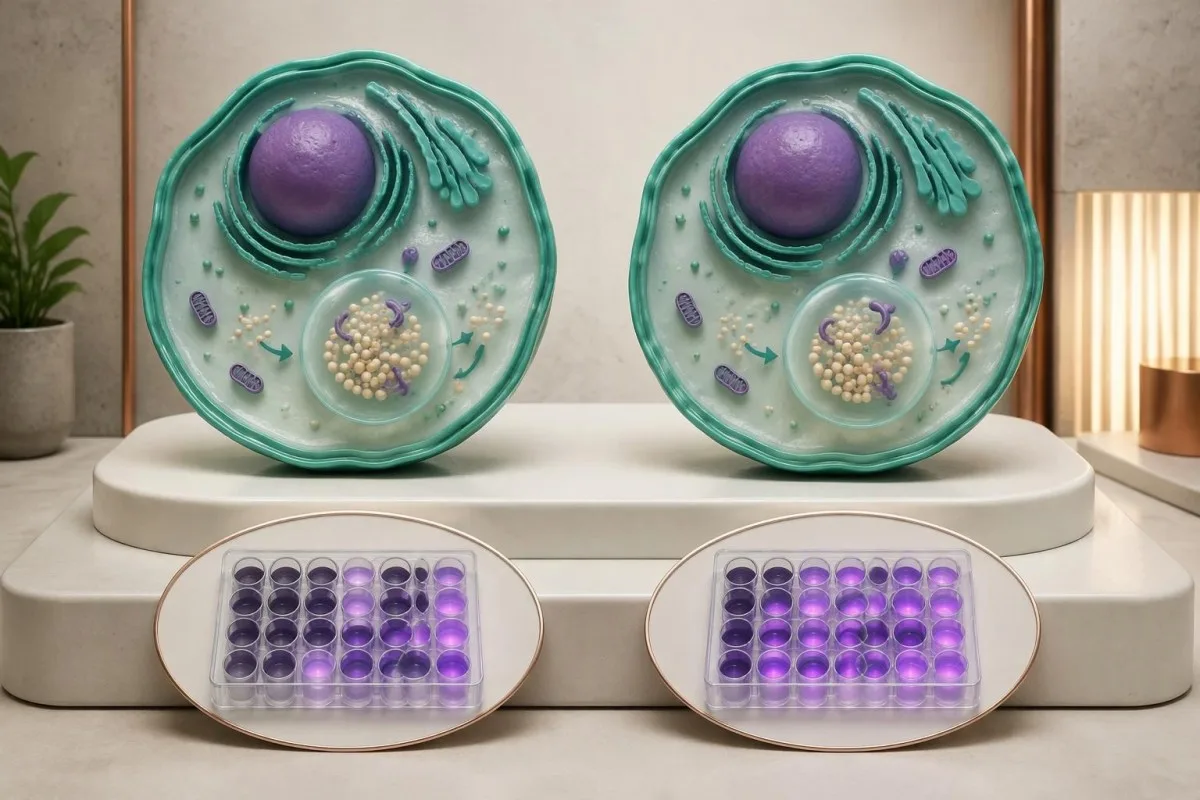
Pseudodeficiency is a biochemical testing issue, not an early stage of Pompe disease. A person with only pseudodeficiency variants does not need Pompe treatment because of 1 low activity result; the specialist must first verify that disease-causing variants or another explanation have not been missed.
The p.Gly576Ser and p.Glu689Lys variants are often found together on 1 gene copy and are particularly relevant in some East Asian ancestry populations. Ancestry changes how often laboratories encounter this pattern, but cannot establish or exclude pseudodeficiency in an individual; people from other backgrounds can carry these variants too.
Pseudodeficiency can remain low on repeat enzyme testing. The practical distinction is whether the complete biochemical and genetic evidence supports disease-causing GAA deficiency, not whether a second result falls below an arbitrary percentage; specialists may compare different assay substrates or cell preparations when the pattern remains ambiguous.
Pseudodeficiency variants can also coexist with a disease-causing variant, making a short report misleading if it lists everything under mutations. Our Fabry enzyme and genetics guide shows another situation where enzyme results need genetic context, although Fabry's X-linked inheritance differs from Pompe's 2-copy recessive mechanism.
GAA генінің тесті нені іздеуі керек?
GAA gene testing investigates whether disease-causing variants affect both copies of the GAA gene. Pompe disease is autosomal recessive, and the GAA gene is located on chromosome 17; interpretation requires variant classification, adequate test coverage and, when needed, confirmation that variants affect opposite gene copies.
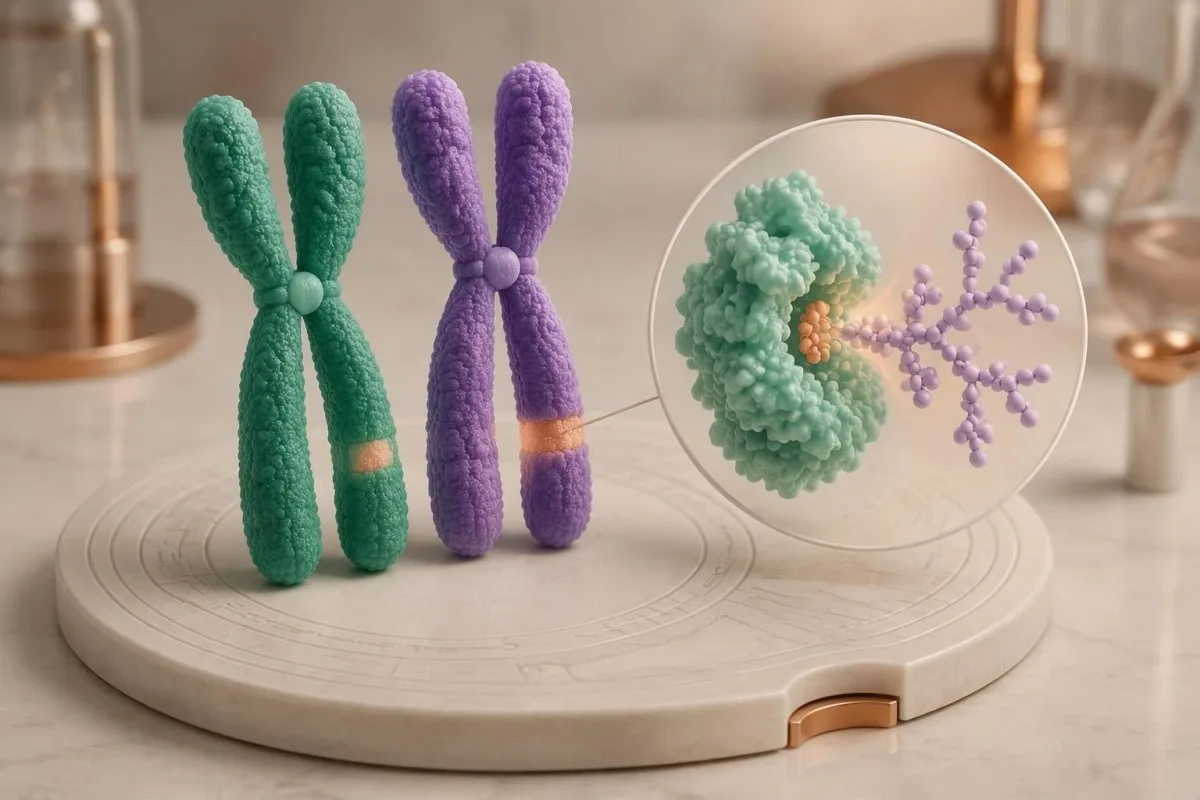
Two pathogenic or likely pathogenic GAA variants in trans support molecular confirmation of Pompe disease. In trans means the variants affect opposite gene copies; 2 variants in cis affect the same copy and do not, by themselves, demonstrate a recessive disease genotype.
Standard sequencing detects many small substitutions and insertions or deletions, but does not answer every possible genetic question. If only 1 disease-causing variant is found despite convincing enzyme deficiency, ask whether deletion/duplication analysis was included and whether poorly covered or deep intronic regions require further investigation.
A common later-onset-associated GAA variant is c.-32-13T>G, which affects splicing. Finding this variant on 1 copy does not diagnose Pompe disease, and finding it with another disease-causing variant does not precisely predict the age symptoms will begin; residual splicing and other biological factors influence presentation.
Parental testing can help establish phase when a laboratory detects 2 different variants but cannot determine their arrangement. Our guide to inherited disease genetic reports explains why inheritance and family testing matter, while the actual gene coverage and diagnostic criteria must remain specific to GAA.
Патогенді, белгісіз және теріс нәтижелерді қалай түсіндіру керек?
A pathogenic result, a variant of uncertain significance and a negative result have different diagnostic meanings. Genetic laboratories commonly use 5 categories: pathogenic, likely pathogenic, uncertain significance, likely benign and benign; a VUS is not equivalent to a disease-causing GAA variant.
Richards et al.'s 2015 ACMG/AMP consensus established the widely used 5-category sequence-variant framework and states that a VUS should not guide clinical decision-making as though pathogenic. For Pompe evaluation, low enzyme activity can contribute evidence, but its value depends on whether pseudodeficiency and assay limitations have been addressed.
One pathogenic variant plus 1 VUS is an unresolved combination, not automatic confirmation or exclusion. Depending on the enzyme and clinical findings, specialists may investigate family segregation, RNA effects or variant-specific functional evidence; a diagnostic enzyme result may support disease even while the second molecular finding remains incompletely characterized.
A negative sequencing report means the test found no reportable variants within its scope. It does not prove that every GAA-related mechanism was examined; 1 negative limited test may warrant expanded testing when properly performed enzyme studies and the clinical pattern remain strongly suggestive.
Кантести - бұл AI қан талдауы нәтижесін түсіндіру платформасы that can help separate a report's 5 classification terms from its numerical enzyme findings, without adjudicating an uncertain genotype. Our техникалық және клиникалық стандарттар describe interpretation boundaries; our uncertain gene-result explanation provides a related example of why variants and diagnoses are not interchangeable.
Бір GAA нұсқасы тасымалдаушылық мәртебесін бе, әлде ауруды білдіре ме?
One confirmed disease-causing GAA variant usually indicates carrier status if a second disease-causing variant and diagnostic enzyme deficiency are absent. Carriers do not typically develop Pompe disease; when both parents are carriers, each pregnancy has a 25% affected, 50% carrier and 25% non-carrier probability.

Carrier enzyme values can overlap with values in unaffected people. GAA activity is therefore not a reliable standalone carrier test, and a carrier's activity should not be assumed to equal exactly 50% of a laboratory's normal mean; targeted genetic testing is generally more informative when a familial variant is known.
The 25% affected-child probability applies independently to each pregnancy when both parents carry disease-causing variants capable of producing Pompe disease together. Having 1 unaffected child does not reduce the next pregnancy's Mendelian probability, and pseudodeficiency variants should not be substituted for pathogenic variants in that calculation.
Family testing is most useful after the affected person's variants are clarified. If a symptomatic adult has only 1 identified pathogenic variant, relatives should not be reassured that the entire family question is settled until the specialist considers whether the second variant was missed by the original assay.
For a hypothetical couple, one partner carrying a pathogenic GAA variant and the other carrying only a pseudodeficiency variant does not create the same 25% Pompe risk as 2 pathogenic-variant carriers. Our carrier screening limitations guide explains why a report's coverage and residual risk deserve discussion before reproductive decisions.
Қандай басқа зертханалық нәтижелер Помпе ауруына тексеруді қолдайды?
Creatine kinase, AST, ALT and urinary glucose tetrasaccharide can support Pompe evaluation, but none confirms the diagnosis alone. Urinary glucose tetrasaccharide may be reported as Glc4 or within a Hex4 assay; these 2 report terms require method-specific interpretation rather than assumption that every laboratory measures exactly the same thing.
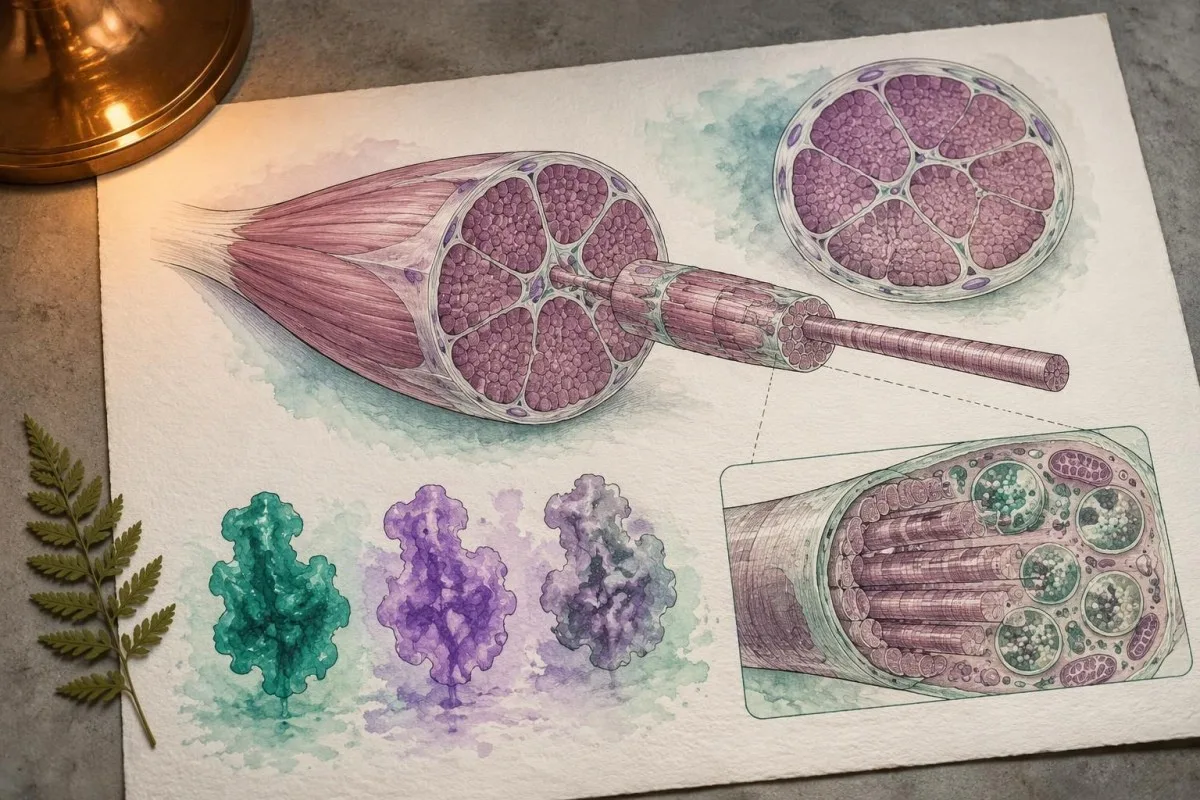
Normal CK does not exclude later-onset Pompe disease. In a hypothetical adult with progressive difficulty rising from a chair, CK of 140 U/L may fall within that laboratory's interval despite clinically meaningful weakness; the combination of symptoms and low confirmed GAA activity matters more than a reassuring CK flag.
AST and ALT can rise because of muscle involvement, not only liver disease. A hypothetical AST of 86 U/L with elevated CK and muscle weakness deserves a muscle-aware assessment; our aldolase and muscle marker guide explains why additional muscle enzymes may help characterize the pattern without identifying its cause.
Urinary Glc4 is a supportive glycogen-related biomarker, not a Pompe-specific diagnostic test. Reference limits vary with age and method, and elevation can occur in other circumstances; 1 elevated result should be interpreted alongside enzyme findings, genetics and the laboratory's creatinine-normalized units.
A falling CK or Glc4 after treatment does not automatically prove that strength or breathing has improved by the same percentage. Our discussion of AST interpretation beyond liver disease illustrates why 2 related markers can move together while still answering different questions about tissue injury and function.
Помпе ауруына тест нәтижесі қалыптан тыс болғанда, тыныс алуды неге бағалау керек?
Pompe disease can weaken the diaphragm and other respiratory muscles, sometimes before obvious walking difficulty. Assessment may include seated and supine forced vital capacity, respiratory muscle pressures and sleep-related testing; a daytime oxygen saturation of 97% does not rule out overnight hypoventilation.
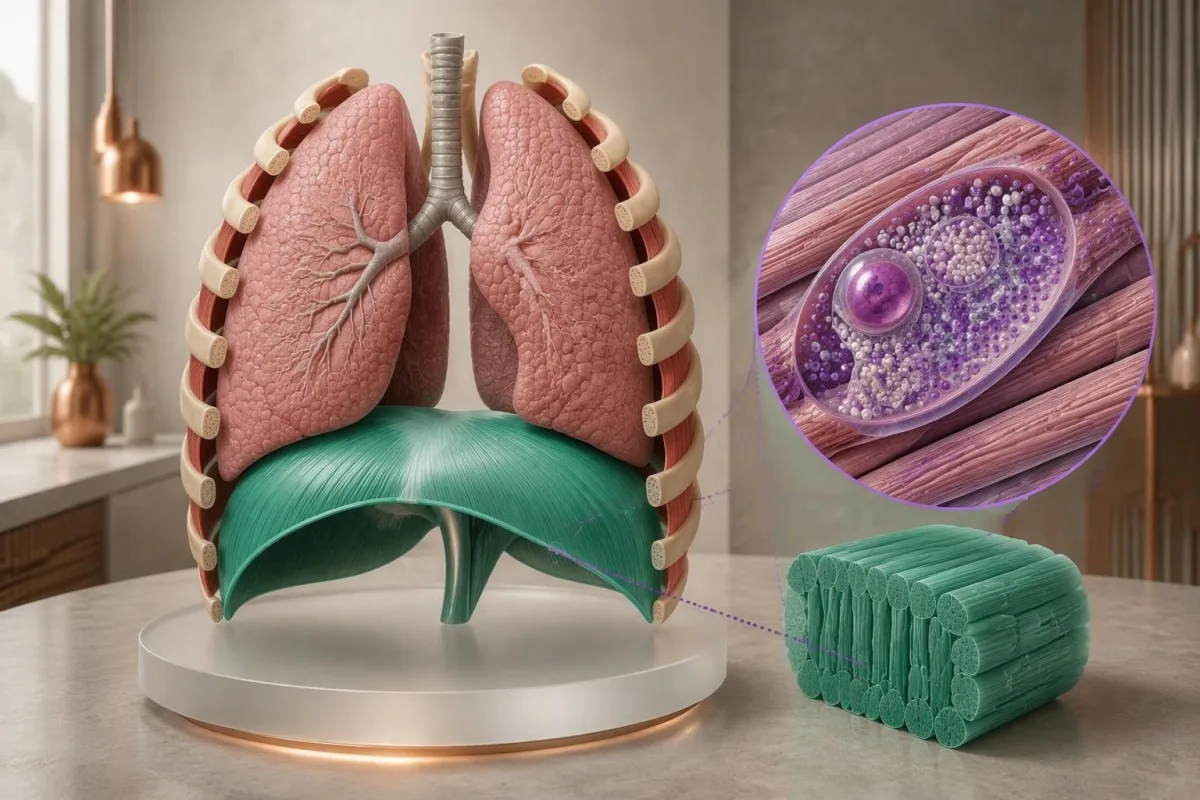
A position-related fall in vital capacity can suggest diaphragm weakness. For example, a hypothetical seated FVC of 3.0 L and supine FVC of 2.4 L represents a 20% decline; the specialist interprets that difference with technique, predicted values and symptoms, rather than treating it as a Pompe-specific cutoff.
Morning headaches, unrefreshing sleep and difficulty breathing when lying flat can justify evaluation for sleep-related hypoventilation. These symptoms do not identify Pompe disease on their own; our ентігуді тексеру бойынша нұсқаулығымыз explains why laboratory results cannot replace respiratory examination and physiological testing.
Arterial carbon dioxide is normally about 35–45 mmHg in adults, with context-dependent variation. A value above 45 mmHg indicates hypercapnia, but its urgency depends on pH, symptoms and the clinical setting; our blood gas interpretation guide explains why oxygen and carbon dioxide answer different questions.
Severe breathlessness, confusion, blue coloration or rapidly worsening weakness warrants emergency care, not an online interpretation session. A confirmed molecular result affecting 2 GAA copies does not measure current respiratory safety; clinicians need direct functional assessment to decide whether ventilation support or urgent monitoring is necessary.
Жаңа туған нәрестеде Помпе ауруына скрининг нәтижесі оң болса, одан кейін не болады?
A positive newborn Pompe screen requires prompt specialist assessment, confirmatory enzyme testing and genetic evaluation. It does not mean every infant has Pompe disease; the immediate task is to distinguish pseudodeficiency or carrier findings from infantile disease and a later-onset-associated genotype affecting both GAA copies.

Burton et al.'s 2017 Pediatrics newborn-screening algorithms describe an initial evaluation integrating GAA confirmation, molecular testing and clinical assessment. If an infant has feeding difficulty, marked hypotonia or suspected cardiomyopathy, do not wait 2 weeks for a routine repeat appointment; the screening team should arrange urgent metabolic and cardiac evaluation.
Classic infantile Pompe disease commonly involves hypertrophic cardiomyopathy. A newborn's echocardiogram and electrocardiogram help assess risk that cannot be estimated from 1 enzyme number; absence of obvious heart symptoms at home does not replace the specialist examination after an abnormal screen.
CRIM status concerns whether cross-reactive GAA protein is present and helps specialists plan immune-risk management around enzyme replacement therapy. Less than 1% enzyme activity does not by itself establish CRIM-negative status, because an inactive protein may still be present; this is a protein-expression question, not just an activity threshold.
Later-onset-associated findings in a newborn require a monitoring plan, not an invented age-of-onset prediction. Even 2 classified disease-causing variants may not reveal when symptoms will emerge; our балаларға арналған ЖИ қауіпсіздігі жөніндегі нұсқаулығымыз explains why pediatric results require age-specific context and clinician-led decisions.
Мамандар ересектердегі қарама-қайшы тест нәтижелерін қалай анықтайды?
Conflicting adult Pompe results are resolved by checking specimen quality, confirmatory enzyme methods, variant classification and clinical fit. One low screen plus 1 genetic finding rarely tells the whole story; specialists investigate whether the apparent conflict comes from pseudodeficiency, an incomplete molecular test or another cause of weakness.

Consider a hypothetical 52-year-old with mild fatigue, low DBS GAA activity and only the 2 commonly discussed pseudodeficiency variants. If specialist testing supports pseudodeficiency and no disease-causing genotype, the low screen does not explain the fatigue; other causes should be assessed rather than attaching a Pompe label to an incidental biochemical finding.
A second hypothetical adult has progressive hip weakness, a 20% positional FVC decline, confirmed cellular GAA deficiency and 2 pathogenic variants in trans. Together, those findings support Pompe disease; a normal routine glucose or modest CK result would not outweigh the converging biochemical, genetic and functional evidence.
Convincing enzyme deficiency with only 1 identified pathogenic variant deserves further investigation. The appropriate next step may be deletion/duplication analysis, RNA studies or another specialist assay—not automatically calling the person a carrier; the investigation should also check whether non-Pompe neuromuscular conditions better explain the examination.
Variant-related disease monitoring is not the same as predicting a person's future from their DNA. Our inherited neuromuscular risk guide offers a related family-testing perspective, but 2 conditions can differ substantially in inheritance, penetrance and treatment triggers.
Помпе ауруы бойынша маманның қабылдауына не алып келу керек?
Bring the complete enzyme report, complete genetic report and a dated symptom history to a Pompe specialist appointment. Three report details are especially useful: specimen type, assay units and variant classification; screenshots showing only a red flag or the word mutation can omit information that changes the interpretation.

Ask whether confirmatory testing has already been completed and whether the laboratory measured GAA specifically in an appropriate cell preparation. If 2 variants were found, ask whether they are in trans; if only 1 was found, ask what variant types and regions the test could detect.
Do not try to raise GAA activity with supplements or diet before confirmation. No vitamin or food corrects inherited pathogenic variants affecting both GAA copies; nutrition may support general care after diagnosis, but cannot substitute for enzyme confirmation or specialist treatment planning.
Кантести - бұл AI арқылы қуаттандырылған қан талдауын жүргізу құралы that can help organize report terminology and associated laboratory trends, not decide whether 2 uncertain variants establish Pompe disease. Our есеп дереккөзін тексеру жөніндегі нұсқаулықымыз explains why the original document remains the reference when an automated explanation and a specialist interpretation differ.
Genetic documents can contain information relevant to relatives as well as the tested person. Before sharing 1 family member's report, check consent and remove unnecessary identifiers; Kantesti's құпиялылық және деректер туралы ақпаратты describes our handling approach, while sharing results with relatives should follow a genetic counselor's guidance.
Помпе ауруына арналған тест нәтижелерін түсіндіруге қатысты зерттеу жарияланымдары мен шектеулері
Pompe test interpretation rests on disease-specific enzyme, genetic and clinical evidence—not on general laboratory publications or an AI explanation. Kantesti includes 3 directly relevant external sources below and 2 separate educational publications; the iron and coagulation publications are not evidence for diagnosing Pompe disease.
The 2006 Kishnani guideline provides disease-specific diagnostic and management context, while the 2017 Burton newborn-screening paper addresses confirmation after population screening. Their recommendations should be applied with the specialist laboratory's validated methods; neither supplies 1 universally transferable DBS enzyme cutoff for every instrument and population.
Richards et al.'s 2015 ACMG/AMP publication explains the 5-category variant framework used to distinguish pathogenic findings from uncertainty. Classification can change when new evidence becomes available, so ask the genetics service whether an unresolved result has a reanalysis pathway rather than assuming every VUS will eventually become pathogenic.
Біздің ағартушылық темір зерттеулері туралы жарияланымы addresses a different laboratory domain. The separate қанның ұюын зерттеу жөніндегі жарияланымымыз also covers unrelated markers; their 2 DOI records are provided for publication transparency, not as supporting citations for GAA deficiency or pseudodeficiency.
Kantesti-тің медициналық мазмұн стандарттары distinguish patient education from diagnosis and treatment instructions. The practical endpoint is a documented interpretation of 3 evidence streams—enzyme testing, genetic analysis and clinical assessment—with urgent care taking priority whenever infantile disease or respiratory compromise is suspected.
Жиі қойылатын сұрақтар
GAA ферментінің белсенділігінің төмен болуы әрдайым Помпе ауруын білдіре ме?
GAA ферментінің белсенділігінің төмен болуы әрдайым Помпе ауруын білдірмейді. Бір ауытқуы бар скрининг нәтижесі шынайы тапшылықты, псевдотапшылықты, үлгінің ыдырауын немесе тасымалдаушыға тән белсенділікпен қабаттасуды көрсетуі мүмкін. Растау үшін тиісті ферменттік талдауды, GAA генетикалық деректерін және клиникалық жағдайды маман түсіндіруі қажет. Бір ғана скринингтік талдауды қайталау мәселені шешудің орнына псевдотапшылықты қайта көрсетуі мүмкін.
Қалыпты GAA ферментінің деңгейі қандай?
There is no universal normal GAA enzyme level because specimen preparation, assay substrate and reporting units differ between laboratories. A value in nmol/h/mL cannot be directly compared with a value in nmol/h/mg protein. Classic infantile Pompe disease often has less than 1% of normal activity in diagnostic tissue assays, but this is not a universal newborn-screening cutoff. Use the reference information printed on the original report and the specialist laboratory's interpretation.
0 Екі төмен GAA тестінің нәтижесі бәрібір жалған тапшылықты көрсетуі мүмкін бе?
GAA деңгейінің төмен екенін көрсететін екі тест те псевдожетіспеушілікті білдіруі мүмкін, әсіресе бірдей немесе ұқсас әсер ететін талдау әдістері қолданылғанда. Псевдожетіспеушілік нұсқалары өлшенген белсенділікті төмендетеді, бірақ өздері Помпе гликогенозын туғызбайды. Мамандар бұл көріністі GAA генотипін толық бағалау, талдау сипаттамаларын ескеру және қажет болған жағдайда басқа жасуша препаратын немесе функционалдық зерттеуді пайдалану арқылы ажыратады. Сондықтан екі рет қайталанған төмен нәтиже аурудың екі тәуелсіз растауымен тең емес.
GAA геніндегі екі нұсқа Помпе ауруын растай ма?
GAA геніндегі екі нұсқа Помпе ауруын автоматты түрде растамайды. Транс күйіндегі, геннің қарама-қарсы көшірмелеріне әсер ететін екі патогенді немесе ықтимал патогенді нұсқа молекулалық растауға негіз болады, ал цис күйіндегі екі нұсқа тек бір көшірмеге әсер етеді. Белгісіз клиникалық маңызы бар нұсқалар мен псевдожетіспеушілік нұсқаларын ауру тудыратын расталған нәтижелер деп есептеуге болмайды. Жіктелуі немесе фазасы анықталмаған жағдайда ферменттік және клиникалық дәлелдер аса пайдалы болып қала береді.
Қалыпты КФК кеш басталатын Помпе ауруын жоққа шығара ала ма?
Normal CK cannot rule out late-onset Pompe disease. A hypothetical CK of 140 U/L may fall within a laboratory's reference interval despite progressive proximal weakness or diaphragm involvement. CK measures muscle injury-related enzyme release, not lysosomal GAA function. Persistent compatible symptoms deserve specialist assessment even when routine muscle markers are reassuring.
Помпе ауруына жаңа туған нәрестенің тесті оң нәтиже көрсетсе, бұл қаншалықты шұғыл?
Жаңа туған нәрестеде Помпе ауруына тест оң нәтиже көрсетсе, скрининг немесе метаболизм тобымен дереу байланысу қажет; ал тамақтануы қиындаған, айқын гипотониясы бар немесе жүрегі зақымданған болуы мүмкін нәрестені шұғыл тексеру керек. Скрининг картасының бір оң нәтижесі диагнозды растамайды, бірақ нәрестелік кезеңдегі классикалық ауруға күдік болса, бірнеше аптадан кейінгі жоспарлы қабылдауды күтуге болмайды. Мамандар растаушы ферменттік тестілеуді, генетикалық бағалауды және жүректі тексеруді, көбіне қатар жүргізуді ұйымдастырады. Тыныс алудың қатты қиындауы немесе жауап беру қабілетінің төмендеуі шұғыл медициналық көмекті қажет етеді.
Егер ата-ананың екеуі де Помпе ауруының тасымалдаушысы болса, балаларға төнетін қауіп қандай?
Егер ата-ананың екеуінде де ауру тудыратын GAA нұсқалары болса, әр жүктілікте ауруға шалдыққан баланың туу ықтималдығы — 25%, тасымалдаушы баланың туу ықтималдығы — 50% және отбасылық нұсқалардың ешқайсысын тұқым қуаламайтын баланың туу ықтималдығы — 25%. Бұл ықтималдықтар әр жүктілікке тәуелсіз қолданылады. Псевдожетіспеушілік нұсқаларын осы есепте патогенді нұсқалармен алмастыруға болмайды. Генетикалық кеңес ата-аналардағы нәтижелерді растауға және тестілеу нұсқаларын түсіндіруге көмектеседі.
Қан анализінің нәтижесін түсіндіріп алыңыз
Зертханалық есепті жүктеңіз, сонда Kantesti AI әр биомаркерді бірнеше секунд ішінде қарапайым тілмен түсіндіреді. Әлем бойынша 2 миллионнан астам адам қолданады.
Сілтемелер
- Klein, T., Mitchell, S., & Weber, H. (2026). Темір көрсеткіштеріне арналған нұсқаулық: TIBC, темірмен қанығу және байланыстыру қабілеті. Kantesti AI медициналық зерттеулері. DOI
- Klein, T., Mitchell, S., & Weber, H. (2026). aPTT қалыпты аралығы: D-димер, C протеині және қанның ұюы жөніндегі нұсқаулық. Kantesti AI медициналық зерттеулері. DOI
- Kishnani PS et al. (2006). Pompe disease diagnosis and management guideline. Медицинадағы генетика. DOI PubMed
- Burton BK et al. (2017). The Initial Evaluation of Patients After Positive Newborn Screening: Recommended Algorithms Leading to a Confirmed Diagnosis of Pompe Disease. Pediatrics. DOI
- Richards S және басқалар (2015). Тізбектік нұсқаларды түсіндіру стандарттары мен нұсқаулықтары: Америкалық медициналық генетика және геномика колледжі мен Молекулалық патология қауымдастығының бірлескен консенсустық ұсынымы. Медицинадағы генетика. DOI PubMed
- 2 млн+Талданған тесттер
- 127+Елдер
- 100+Тілдер
Медициналық топ туралы


E-E-A-T сенім сигналдары
Тәжірибе
Дәрігер басқаратын зертханалық талдауды түсіндіру жұмыс ағындарын клиникалық шолу.
Сараптама
Биомаркерлердің клиникалық контексте қалай әрекет ететініне зертханалық медицина фокусы.
Билік
Доктор Томас Кляйн медициналық тұрғыдан тексерген, доктор Сара Митчелл мен профессор доктор Ханс Вебердің үлесімен.
Сенімділік
Дабыл қаупін азайту үшін айқын бақылау жолдарымен дәлелге негізделген түсіндіру.






Медициналық ескерту
Бұл мақала тек білім беру мақсатында ғана және медициналық кеңес болып табылмайды. Диагноз және ем туралы шешімдер үшін әрдайым білікті медицина қызметкеріне жүгініңіз.
Жарияланды · Редакция тобына хабарласыңыз
Англия мен Уэльсте тіркелген Kantesti Ltd басып шығарған, компания №. 17090423, Лондон, Біріккен Корольдік.
