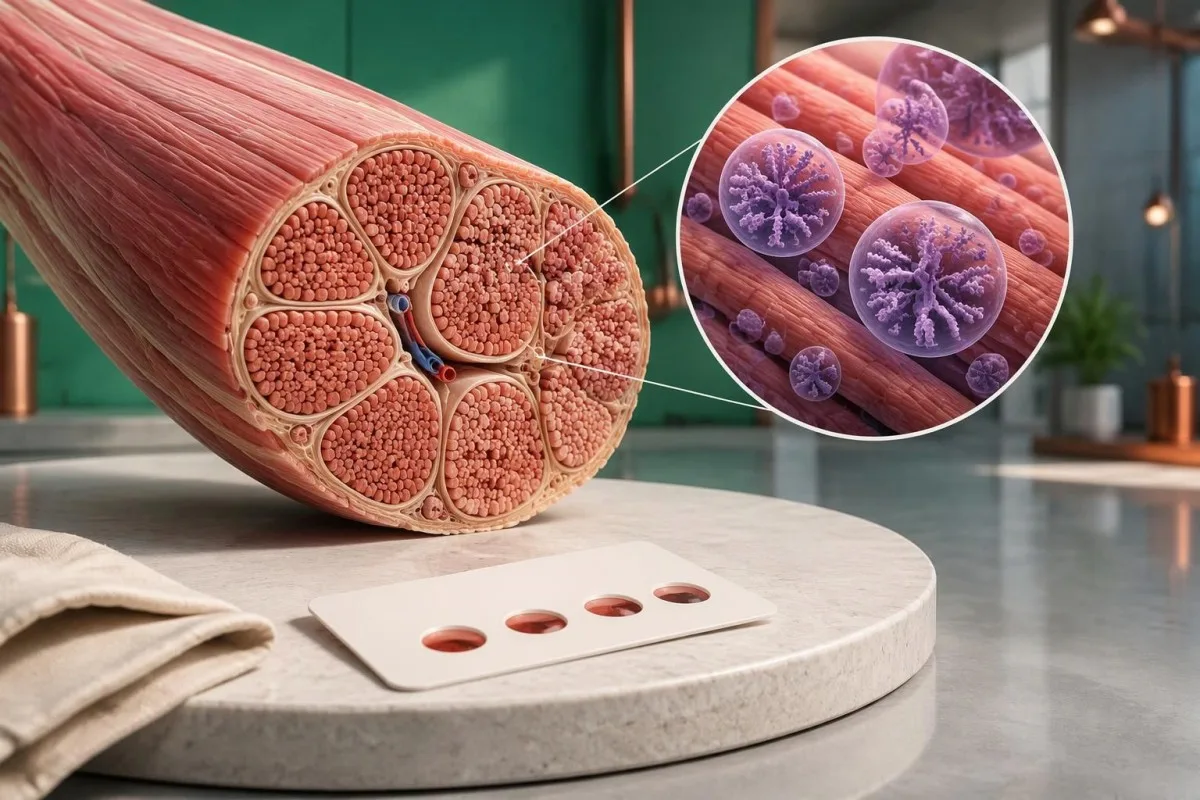
GAA انزائم کا کم نتیجہ پومپے بیماری کا شبہ بڑھاتا ہے، لیکن صرف اسکریننگ سے اس کی تصدیق نہیں ہو سکتی۔ مناسب نمونے میں دوبارہ ٹیسٹنگ اور GAA جینیاتی تجزیہ حقیقی کمی، کیریئر کی حیثیت اور سیوڈو ڈیفیشنسی میں فرق کرنے میں مدد دیتے ہیں۔.

اہم نکات
- GAA انزائم کی کم سرگرمی تشخیص نہیں بلکہ مزید جانچ کا اشارہ ہے؛ غیر معمولی خشک خون کے 1 نمونے کی ماہر کی ہدایت کے مطابق تصدیق ضروری ہے۔.
- حوالہ جاتی حدود نمونے اور اسّے پر منحصر ہوتے ہیں؛ nmol/h/mL کا براہ راست موازنہ nmol/h/mg پروٹین سے نہیں کیا جا سکتا۔.
- باقی ماندہ انزائم سرگرمی کلاسیکی شیر خوار پومپے بیماری میں اکثر 1% سے کم ہوتی ہے، لیکن یہ مقدار اسکریننگ کی کوئی عالمگیر حد نہیں ہے۔.
- سیوڈو ڈیفیشنسی پومپے بیماری پیدا کیے بغیر لیبارٹری میں GAA کی سرگرمی کم کر سکتی ہے؛ اسی اسّے کو دہرانے سے کم نتیجہ پھر سامنے آ سکتا ہے۔.
- GAA جین کی جانچ دونوں جینی نقول کو متاثر کرنے والی بیماری پیدا کرنے والی اقسام تلاش کرتی ہے؛ درجہ بندی اور فیز متعین کرنے کے لیے 2 اقسام کی تشریح ضروری ہے۔.
- غیر یقینی متغیرات پومپے بیماری کی تشخیص قائم نہیں کرتے؛ غیر یقینی اہمیت کی 1 یا 2 ویریئنٹس کے لیے اضافی شواہد درکار ہیں۔.
- خاندانی خطرہ ہر حمل میں متاثرہ بچے کے لیے 25% ہے، جب دونوں والدین بیماری پیدا کرنے والی GAA ویریئنٹ کے حامل ہوں۔.
- فوری جائزہ (Urgent assessment) کم GAA کے ساتھ دودھ پینے میں دشواری، نمایاں کمزوری یا دل کے متاثر ہونے کا شبہ رکھنے والے شیرخوار کے لیے ضروری ہے؛ معمول کے دوبارہ ٹیسٹ کا انتظار نہ کریں۔.
GAA انزائم کا کم نتیجہ دراصل کیا معنی رکھتا ہے؟
A پومپے بیماری کا ٹیسٹ جس میں GAA کی سرگرمی کم دکھائی دے، اس کا مطلب ہے کہ لیبارٹری نے اپنے جانچ کے طریقۂ کار کے تحت ایسڈ الفا-گلوکوسیڈیز کی کم فعالی ناپی ہے۔ یہ پومپے بیماری ثابت نہیں کرتا: اسکریننگ کا 1 کم نتیجہ حقیقی کمی، سیوڈوڈیفیشینسی، کیریئر سے متعلق اوورلیپ یا نمونے کے مسئلے کی وجہ سے ہو سکتا ہے۔.

GAA کی سرگرمی انزائم کی فعالی ناپتی ہے، صرف یہ نہیں کہ انزائم پروٹین کتنی مقدار میں موجود ہے۔. جانچنے کے لیے پہلی 3 تفصیلات نمونے کی قسم، پیمائش کی اکائیاں اور لیبارٹری کی فیصلہ کن حد ہیں؛ ان تفصیلات کے بغیر کم قرار دیے گئے نتیجے کی آن لائن ملنے والی کسی عددی قدر کے مقابلے میں قابلِ اعتماد تشریح نہیں کی جا سکتی۔.
ٹیسٹ کی وجہ مثبت اسکرین کے معنی بدل دیتی ہے۔ آبادی کی اسکریننگ کے ذریعے شناخت ہونے والے نومولود اور کولہے کی بڑھتی ہوئی کمزوری والے 45 سالہ فرد میں پومپے بیماری کا ابتدائی امکان مختلف ہوتا ہے، چاہے ان کے رپورٹ کردہ انزائم کے نتائج یکساں ہوں؛ اس لیے علامات اور معائنے کو لیبارٹری کے نتیجے کے ساتھ دیکھنا چاہیے۔.
اسکرین مثبت ہونا، بیماری مثبت ہونے کے برابر نہیں۔. اگر 2 لیبارٹریاں مختلف سبسٹریٹس یا نمونے کی تیاری کے طریقے استعمال کریں تو ان کے عددی نتائج مختلف ہو سکتے ہیں، بغیر اس کے کہ کسی لیبارٹری سے غلطی ہوئی ہو؛ پوچھیں کہ اگلی ملاقات ایک اور اسکریننگ پیمائش کے لیے ہے یا واقعی تصدیقی انزائم جانچ کے لیے۔.
کنٹیسٹی ایک ہے۔ اے آئی بلڈ ٹیسٹ تجزیہ کار جو GAA رپورٹ کو معمول کے لیبارٹری نتائج کے ساتھ منظم کرنے میں مدد دے سکتا ہے، لیکن کسی 1 نشان زدہ قدر کی بنیاد پر پومپے بیماری کی تشخیص قائم نہیں کر سکتا۔ ہمارا کمپنی کی معلومات خدمت کے پسِ پشت تنظیم کی وضاحت کرتا ہے؛ موروثی انزائم کی کمی کے شبہے میں پھر بھی میٹابولک یا نیورومسکیولر ماہر سے رجوع کرنا ضروری ہے۔.
GAA کی کمی سے پٹھوں اور دل کے مسائل کیوں پیدا ہوتے ہیں؟
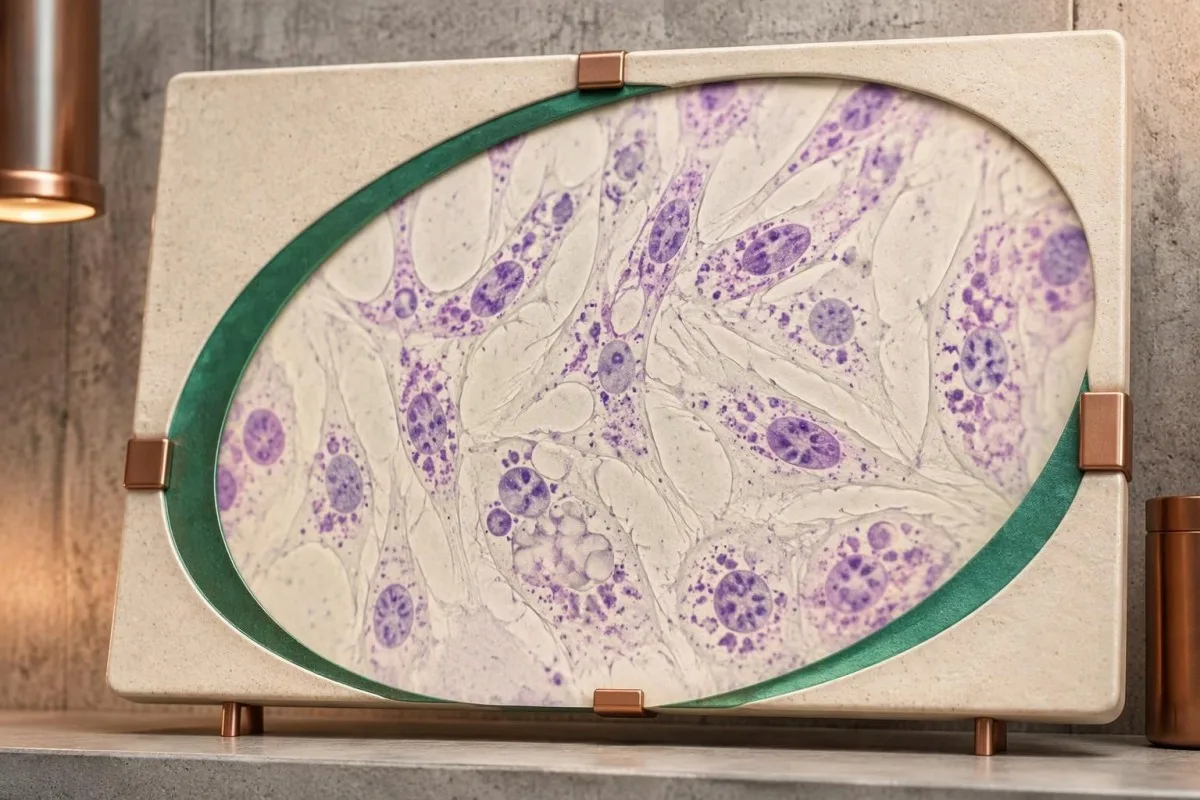
پومپے بیماری لائسوسومل ایسڈ الفا-گلوکوسیڈیز کی کمی سے پیدا ہوتی ہے, ، یہ ایک انزائم ہے جو خلیوں کے ری سائیکلنگ حصوں میں گلائیکوجن کو توڑتا ہے۔ GAA الفا-1,4 اور الفا-1,6 دونوں قسم کے گلوکوز روابط پر عمل کرتا ہے؛ ناکافی سرگرمی سے گلائیکوجن جمع ہونے لگتا ہے، خاص طور پر اسکلٹل اور قلبی عضلات میں۔.
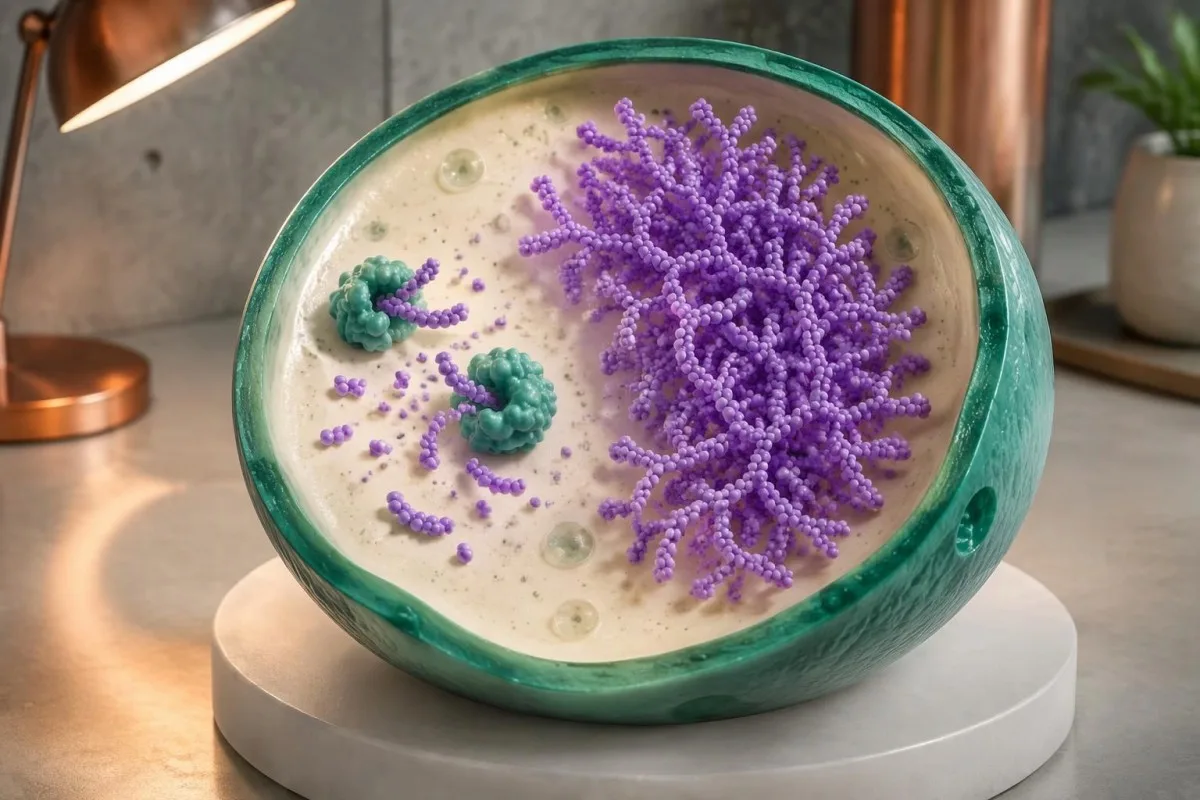
کلاسیکی شیرخوار پومپے بیماری میں تشخیصی بافتی جانچوں کے مطابق اکثر معمول کی GAA سرگرمی 1% سے کم ہوتی ہے۔. بعد میں شروع ہونے والی بیماری میں سرگرمی زیادہ برقرار رہ سکتی ہے، بعض مخصوص جانچوں میں کبھی تقریباً 2–40% تک؛ ان وضاحتی حدود میں جانچ کے طریقے کی محدودیتوں کے ساتھ اوورلیپ ہو سکتا ہے، اس لیے انہیں لیبارٹری کی توثیق شدہ تشخیصی تشریح کا متبادل نہیں سمجھنا چاہیے۔.
Kishnani et al. کی 2006 کی Genetics in Medicine رہنما ہدایات GAA کی کمی، گلائیکوجن کے ذخیرے اور متعدد اعضا کے جائزے کے باہمی تعلق کو بیان کرتی ہیں۔ طبی فرق صرف اس بات کا نہیں کہ سرگرمی 1% سے کم ہے یا نہیں: بیماری کی شکل اور فوری نوعیت کے تعین میں علامات کے آغاز کی عمر، دل کی کیفیت اور تنفسی عضلات کی فعالی بھی مدد دیتی ہیں۔.
معمول کے گلوکوز کا نتیجہ لائسوسومل گلائیکوجن کے اخراج کی پیمائش نہیں کرتا۔. مثال کے طور پر، ایک فرضی بالغ کا خالی پیٹ گلوکوز 92 mg/dL ہو سکتا ہے، جبکہ اسے موروثی عضلاتی گلائیکوجن ذخیرہ کرنے کا عارضہ ہو؛ گلوکوز کا معمول کے مطابق ہونا یہ ثابت نہیں کرتا کہ عضلات کے لائسوسومز کے اندر گلائیکوجن معمول کے مطابق پراسیس ہو رہا ہے۔.
دیگر لائسوسومل عوارض میں مختلف انزائم اور جین شامل ہوتے ہیں، اس لیے ان کی حدود پومپے کی جانچ کے لیے استعمال نہیں کی جا سکتیں۔ ہماری وضاحت گوشر انزائم کی تصدیق انزائم سے جینیات تک کے وسیع تر طریقۂ کار کی مثال پیش کرتی ہے، اور ساتھ ہی یہ دکھاتی ہے کہ ایک بیماری کی انزائم جانچ دوسری بیماری کی جانچ کا متبادل کیوں نہیں ہو سکتی۔.
کیا GAA انزائم کی سرگرمی کی کوئی معمول کی حد ہوتی ہے؟
There is no single universal normal range for GAA enzyme activity. Dried blood spots, leukocytes and cultured fibroblasts use different preparations and reporting units; a number expressed in nmol/h/mL cannot be directly compared with a result expressed in nmol/h/mg protein.
A screening cutoff separates samples needing follow-up from samples passing that screen. It does not necessarily separate affected people from unaffected people with complete accuracy; laboratories may use different fluorometric or tandem mass spectrometry methods, and 2 screening programs may therefore select different recall thresholds.
For a clearly hypothetical example, suppose a laboratory uses a DBS screening cutoff of 1.5 nmol/h/mL and reports 0.7 nmol/h/mL. The result is below that invented laboratory threshold, but dividing 0.7 by 1.5 gives 47% of the cutoff—not 47% of normal enzyme activity and not a severity score.
The lower limit of detection is different from the clinical cutoff. A report reading less than 0.1 in its stated units may mean the method cannot quantify lower activity reliably; it does not prove absolute absence of enzyme, and repeating measurements close to that analytical floor may produce proportionally large variation.
Screening performance also depends on prevalence. In a hypothetical group with 10 true-positive and 100 false-positive results, only about 9% of positive screens represent disease; those invented counts are not Pompe screening statistics, but explain why کیو لٹیٹیو بمقابلہ کوانٹیٹیو نتائج require different interpretation.
| سطح | حد | اس کا مطلب |
|---|---|---|
| Passes hypothetical screen | ≥1.5 nmol/h/mL | Illustrative DBS cutoff only; not a universal normal range and not an absolute exclusion in a symptomatic person. |
| Below hypothetical cutoff | <1.5 nmol/h/mL | Illustrative follow-up threshold only; true deficiency, pseudodeficiency and specimen effects still need separation. |
GAA کی جانچ کسی مختلف نمونے میں دوبارہ کیوں کی جاتی ہے؟
Repeat GAA testing checks whether low activity is reproducible and whether specimen quality or assay interference explains it. Confirmation usually moves beyond 1 screening card to a fresh, appropriately handled specimen, often with GAA measurement in leukocytes or another specialist-selected cell preparation.
Heat, humidity and inadequate drying can reduce enzyme activity in a dried blood spot. A low result after 2 days of poorly controlled transport may deserve a fresh collection, but transport history cannot be used to dismiss a result automatically; the laboratory should assess card quality and its stability requirements.
Acarbose is used in some GAA assay methods to suppress interfering maltase-glucoamylase activity. That interference can make measured activity appear higher and potentially obscure deficiency; checking how a laboratory isolates GAA activity can therefore matter more than obtaining a second number with the same unresolved methodological limitation.
Two low DBS results still do not automatically confirm Pompe disease. Pseudodeficiency can reproduce across repeated measurements, including some confirmatory methods; when enzyme and genetic findings disagree, a specialist laboratory may recommend cultured fibroblast testing or additional molecular investigation rather than simply ordering a third screening card.
Give the laboratory the dates of collection, recent transfusions or transplantation, and any enzyme replacement treatment already received. Our guide to نمونے کے معیار میں مداخلت explains the general distinction between biological findings and specimen problems; GAA testing has its own handling rules, so do not import another test's redraw interval.
GAA سیوڈو ڈیفیشنسی، پومپے بیماری سے کیسے مختلف ہے؟
GAA pseudodeficiency means an inherited variant lowers measured enzyme activity without causing the glycogen-storage disorder Pompe disease. Two commonly discussed variants are c.1726G>A, p.Gly576Ser, and c.2065G>A, p.Glu689Lys; their interpretation depends on the complete genotype and the assay used.
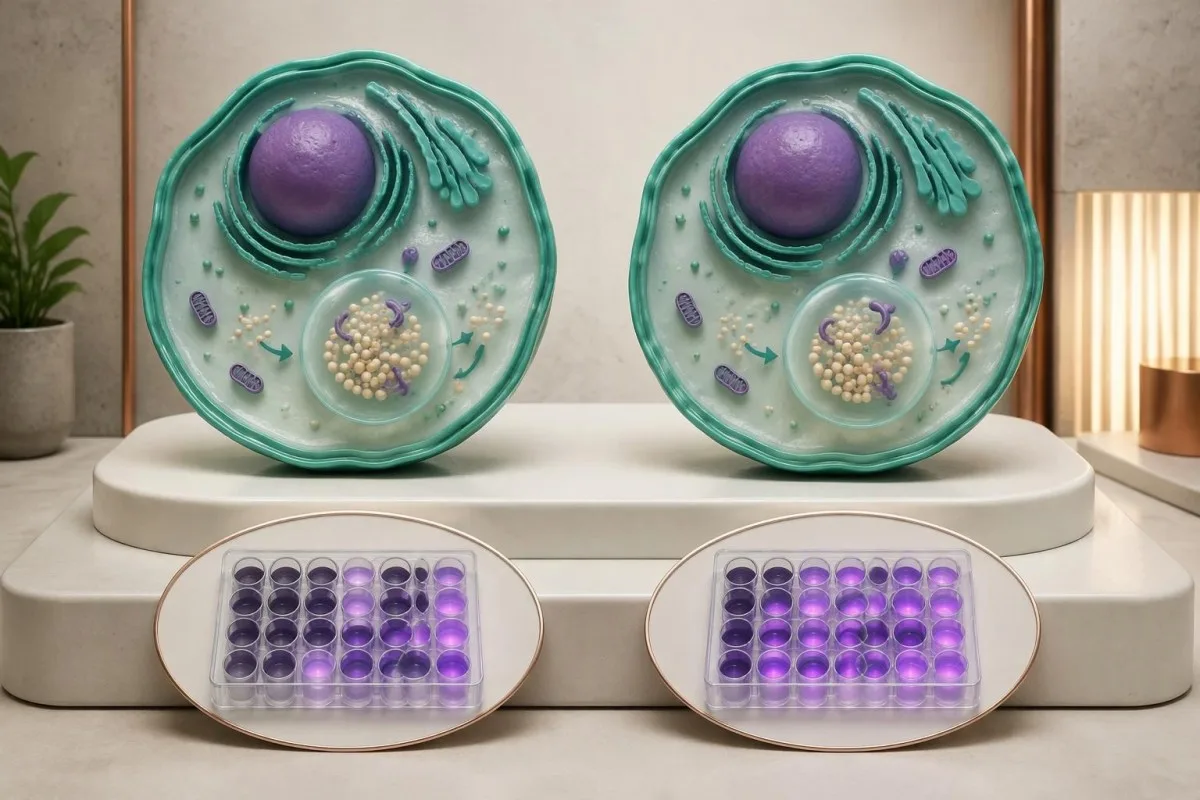
Pseudodeficiency is a biochemical testing issue, not an early stage of Pompe disease. A person with only pseudodeficiency variants does not need Pompe treatment because of 1 low activity result; the specialist must first verify that disease-causing variants or another explanation have not been missed.
The p.Gly576Ser and p.Glu689Lys variants are often found together on 1 gene copy and are particularly relevant in some East Asian ancestry populations. Ancestry changes how often laboratories encounter this pattern, but cannot establish or exclude pseudodeficiency in an individual; people from other backgrounds can carry these variants too.
Pseudodeficiency can remain low on repeat enzyme testing. The practical distinction is whether the complete biochemical and genetic evidence supports disease-causing GAA deficiency, not whether a second result falls below an arbitrary percentage; specialists may compare different assay substrates or cell preparations when the pattern remains ambiguous.
Pseudodeficiency variants can also coexist with a disease-causing variant, making a short report misleading if it lists everything under mutations. Our Fabry enzyme and genetics guide shows another situation where enzyme results need genetic context, although Fabry's X-linked inheritance differs from Pompe's 2-copy recessive mechanism.
GAA جین کی جانچ میں کن چیزوں کو دیکھنا چاہیے؟
GAA gene testing investigates whether disease-causing variants affect both copies of the GAA gene. Pompe disease is autosomal recessive, and the GAA gene is located on chromosome 17; interpretation requires variant classification, adequate test coverage and, when needed, confirmation that variants affect opposite gene copies.
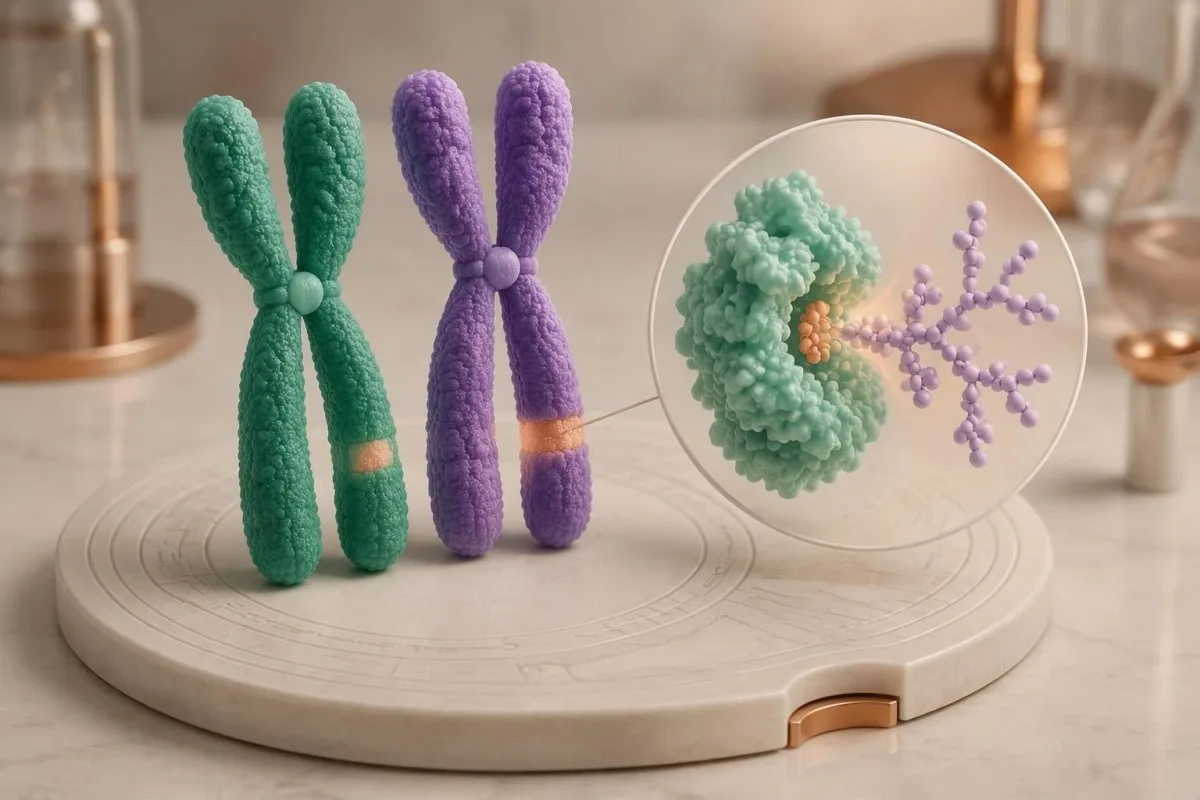
Two pathogenic or likely pathogenic GAA variants in trans support molecular confirmation of Pompe disease. In trans means the variants affect opposite gene copies; 2 variants in cis affect the same copy and do not, by themselves, demonstrate a recessive disease genotype.
Standard sequencing detects many small substitutions and insertions or deletions, but does not answer every possible genetic question. If only 1 disease-causing variant is found despite convincing enzyme deficiency, ask whether deletion/duplication analysis was included and whether poorly covered or deep intronic regions require further investigation.
A common later-onset-associated GAA variant is c.-32-13T>G, which affects splicing. Finding this variant on 1 copy does not diagnose Pompe disease, and finding it with another disease-causing variant does not precisely predict the age symptoms will begin; residual splicing and other biological factors influence presentation.
Parental testing can help establish phase when a laboratory detects 2 different variants but cannot determine their arrangement. Our guide to inherited disease genetic reports explains why inheritance and family testing matter, while the actual gene coverage and diagnostic criteria must remain specific to GAA.
مرض پیدا کرنے والے، غیر یقینی اور منفی نتائج کو کیسے سمجھنا چاہیے؟
A pathogenic result, a variant of uncertain significance and a negative result have different diagnostic meanings. Genetic laboratories commonly use 5 categories: pathogenic, likely pathogenic, uncertain significance, likely benign and benign; a VUS is not equivalent to a disease-causing GAA variant.
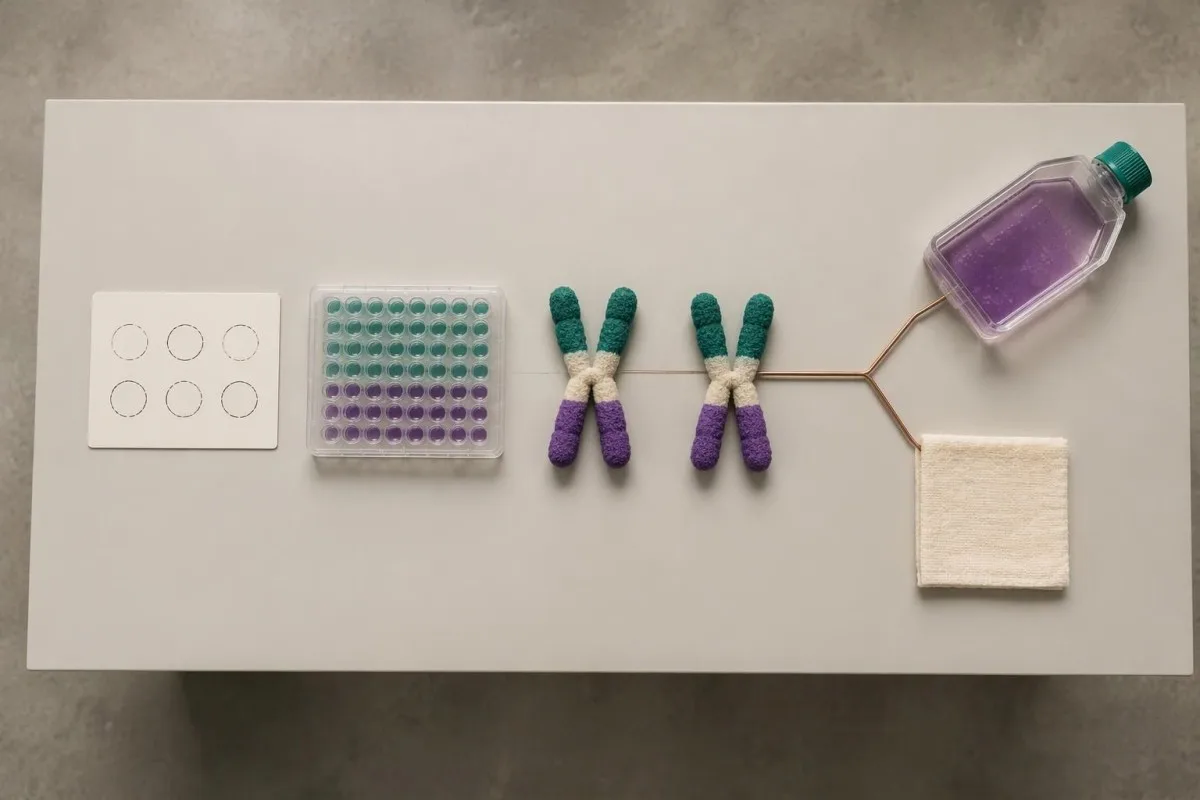
Richards et al.'s 2015 ACMG/AMP consensus established the widely used 5-category sequence-variant framework and states that a VUS should not guide clinical decision-making as though pathogenic. For Pompe evaluation, low enzyme activity can contribute evidence, but its value depends on whether pseudodeficiency and assay limitations have been addressed.
One pathogenic variant plus 1 VUS is an unresolved combination, not automatic confirmation or exclusion. Depending on the enzyme and clinical findings, specialists may investigate family segregation, RNA effects or variant-specific functional evidence; a diagnostic enzyme result may support disease even while the second molecular finding remains incompletely characterized.
A negative sequencing report means the test found no reportable variants within its scope. It does not prove that every GAA-related mechanism was examined; 1 negative limited test may warrant expanded testing when properly performed enzyme studies and the clinical pattern remain strongly suggestive.
کنٹیسٹی ایک ہے۔ AI خون کے ٹیسٹ کی رپورٹ کی تشریح that can help separate a report's 5 classification terms from its numerical enzyme findings, without adjudicating an uncertain genotype. Our تکنیکی اور طبی معیار describe interpretation boundaries; our uncertain gene-result explanation provides a related example of why variants and diagnoses are not interchangeable.
کیا GAA کی ایک قسم کا مطلب کیریئر ہونا ہے یا بیماری؟
One confirmed disease-causing GAA variant usually indicates carrier status if a second disease-causing variant and diagnostic enzyme deficiency are absent. Carriers do not typically develop Pompe disease; when both parents are carriers, each pregnancy has a 25% affected, 50% carrier and 25% non-carrier probability.
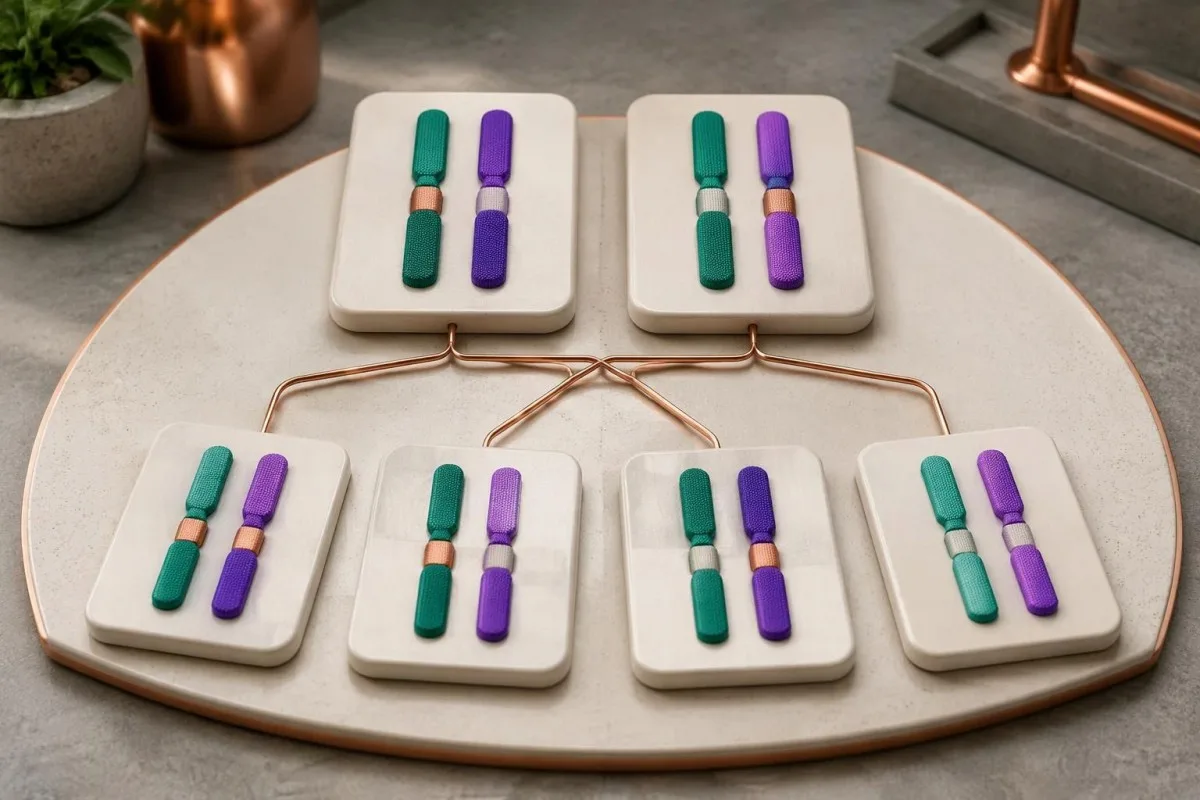
Carrier enzyme values can overlap with values in unaffected people. GAA activity is therefore not a reliable standalone carrier test, and a carrier's activity should not be assumed to equal exactly 50% of a laboratory's normal mean; targeted genetic testing is generally more informative when a familial variant is known.
The 25% affected-child probability applies independently to each pregnancy when both parents carry disease-causing variants capable of producing Pompe disease together. Having 1 unaffected child does not reduce the next pregnancy's Mendelian probability, and pseudodeficiency variants should not be substituted for pathogenic variants in that calculation.
Family testing is most useful after the affected person's variants are clarified. If a symptomatic adult has only 1 identified pathogenic variant, relatives should not be reassured that the entire family question is settled until the specialist considers whether the second variant was missed by the original assay.
For a hypothetical couple, one partner carrying a pathogenic GAA variant and the other carrying only a pseudodeficiency variant does not create the same 25% Pompe risk as 2 pathogenic-variant carriers. Our carrier screening limitations guide explains why a report's coverage and residual risk deserve discussion before reproductive decisions.
پومپے کی جانچ میں کون سے دیگر لیبارٹری نتائج معاون ہوتے ہیں؟
Creatine kinase, AST, ALT and urinary glucose tetrasaccharide can support Pompe evaluation, but none confirms the diagnosis alone. Urinary glucose tetrasaccharide may be reported as Glc4 or within a Hex4 assay; these 2 report terms require method-specific interpretation rather than assumption that every laboratory measures exactly the same thing.
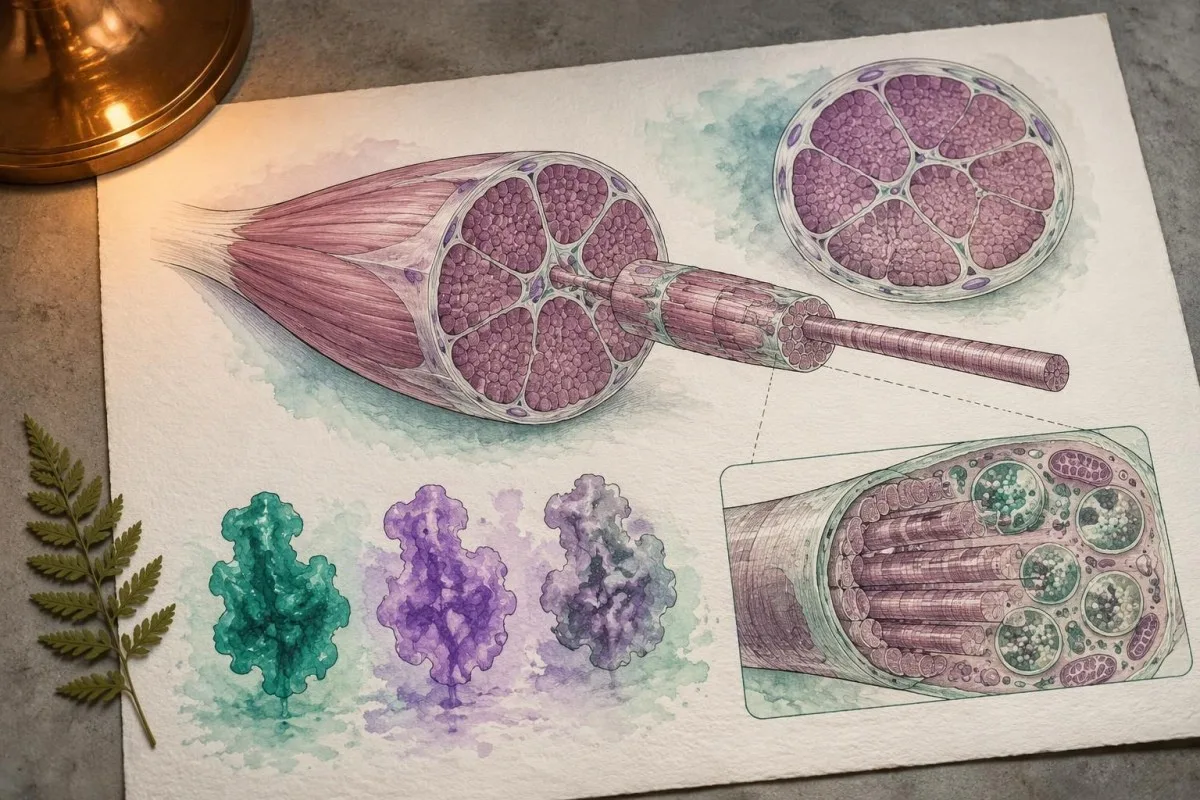
Normal CK does not exclude later-onset Pompe disease. In a hypothetical adult with progressive difficulty rising from a chair, CK of 140 U/L may fall within that laboratory's interval despite clinically meaningful weakness; the combination of symptoms and low confirmed GAA activity matters more than a reassuring CK flag.
AST and ALT can rise because of muscle involvement, not only liver disease. A hypothetical AST of 86 U/L with elevated CK and muscle weakness deserves a muscle-aware assessment; our aldolase and muscle marker guide explains why additional muscle enzymes may help characterize the pattern without identifying its cause.
Urinary Glc4 is a supportive glycogen-related biomarker, not a Pompe-specific diagnostic test. Reference limits vary with age and method, and elevation can occur in other circumstances; 1 elevated result should be interpreted alongside enzyme findings, genetics and the laboratory's creatinine-normalized units.
A falling CK or Glc4 after treatment does not automatically prove that strength or breathing has improved by the same percentage. Our discussion of AST interpretation beyond liver disease illustrates why 2 related markers can move together while still answering different questions about tissue injury and function.
پومپے کا ٹیسٹ غیر معمولی آنے پر سانس کا جائزہ کیوں لیا جاتا ہے؟
Pompe disease can weaken the diaphragm and other respiratory muscles, sometimes before obvious walking difficulty. Assessment may include seated and supine forced vital capacity, respiratory muscle pressures and sleep-related testing; a daytime oxygen saturation of 97% does not rule out overnight hypoventilation.
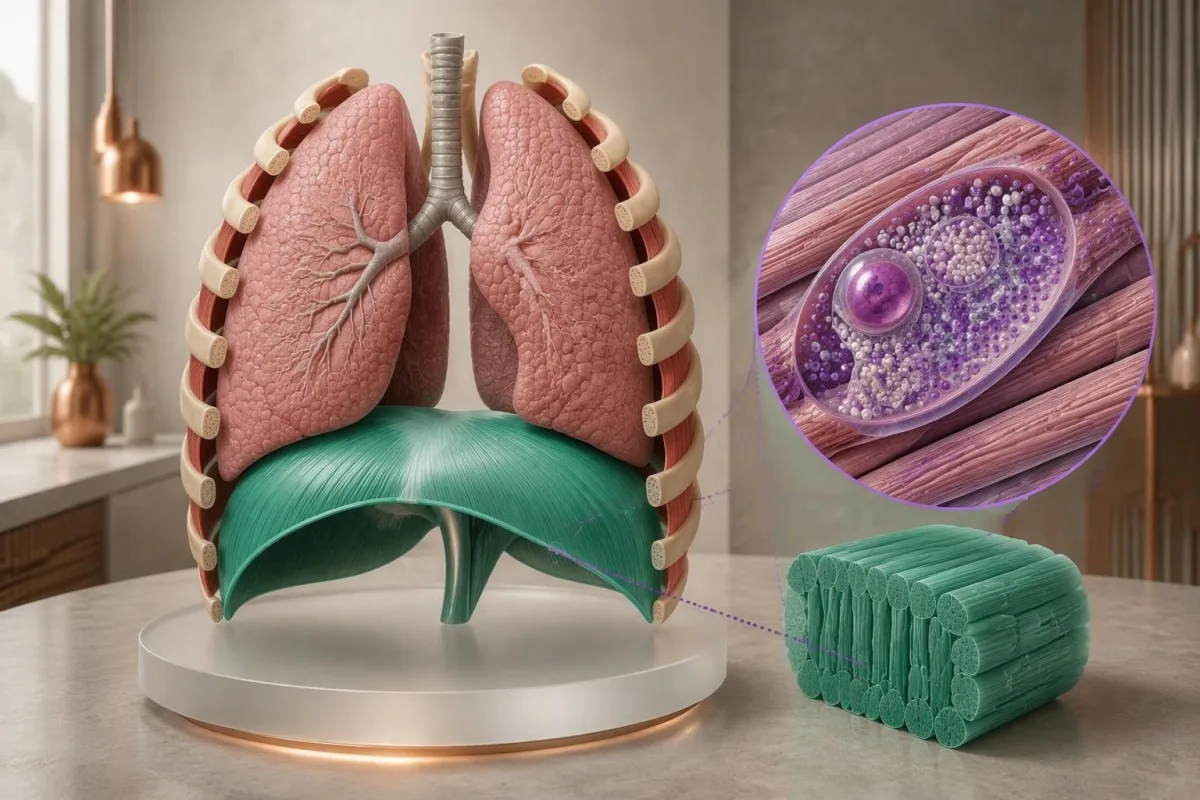
A position-related fall in vital capacity can suggest diaphragm weakness. For example, a hypothetical seated FVC of 3.0 L and supine FVC of 2.4 L represents a 20% decline; the specialist interprets that difference with technique, predicted values and symptoms, rather than treating it as a Pompe-specific cutoff.
Morning headaches, unrefreshing sleep and difficulty breathing when lying flat can justify evaluation for sleep-related hypoventilation. These symptoms do not identify Pompe disease on their own; our سانس کی قلت کی جانچ گائیڈ explains why laboratory results cannot replace respiratory examination and physiological testing.
Arterial carbon dioxide is normally about 35–45 mmHg in adults, with context-dependent variation. A value above 45 mmHg indicates hypercapnia, but its urgency depends on pH, symptoms and the clinical setting; our blood gas interpretation guide explains why oxygen and carbon dioxide answer different questions.
Severe breathlessness, confusion, blue coloration or rapidly worsening weakness warrants emergency care, not an online interpretation session. A confirmed molecular result affecting 2 GAA copies does not measure current respiratory safety; clinicians need direct functional assessment to decide whether ventilation support or urgent monitoring is necessary.
نوزائیدہ بچوں کی پومپے اسکریننگ مثبت آنے کے بعد کیا ہوتا ہے؟
A positive newborn Pompe screen requires prompt specialist assessment, confirmatory enzyme testing and genetic evaluation. It does not mean every infant has Pompe disease; the immediate task is to distinguish pseudodeficiency or carrier findings from infantile disease and a later-onset-associated genotype affecting both GAA copies.

Burton et al.'s 2017 Pediatrics newborn-screening algorithms describe an initial evaluation integrating GAA confirmation, molecular testing and clinical assessment. If an infant has feeding difficulty, marked hypotonia or suspected cardiomyopathy, do not wait 2 weeks for a routine repeat appointment; the screening team should arrange urgent metabolic and cardiac evaluation.
Classic infantile Pompe disease commonly involves hypertrophic cardiomyopathy. A newborn's echocardiogram and electrocardiogram help assess risk that cannot be estimated from 1 enzyme number; absence of obvious heart symptoms at home does not replace the specialist examination after an abnormal screen.
CRIM status concerns whether cross-reactive GAA protein is present and helps specialists plan immune-risk management around enzyme replacement therapy. Less than 1% enzyme activity does not by itself establish CRIM-negative status, because an inactive protein may still be present; this is a protein-expression question, not just an activity threshold.
Later-onset-associated findings in a newborn require a monitoring plan, not an invented age-of-onset prediction. Even 2 classified disease-causing variants may not reveal when symptoms will emerge; our بچوں کی نگہداشت میں AI کی حفاظت سے متعلق رہنمائی explains why pediatric results require age-specific context and clinician-led decisions.
ماہرین بالغ افراد کے متضاد ٹیسٹ نتائج کا حل کیسے نکالتے ہیں؟
Conflicting adult Pompe results are resolved by checking specimen quality, confirmatory enzyme methods, variant classification and clinical fit. One low screen plus 1 genetic finding rarely tells the whole story; specialists investigate whether the apparent conflict comes from pseudodeficiency, an incomplete molecular test or another cause of weakness.

Consider a hypothetical 52-year-old with mild fatigue, low DBS GAA activity and only the 2 commonly discussed pseudodeficiency variants. If specialist testing supports pseudodeficiency and no disease-causing genotype, the low screen does not explain the fatigue; other causes should be assessed rather than attaching a Pompe label to an incidental biochemical finding.
A second hypothetical adult has progressive hip weakness, a 20% positional FVC decline, confirmed cellular GAA deficiency and 2 pathogenic variants in trans. Together, those findings support Pompe disease; a normal routine glucose or modest CK result would not outweigh the converging biochemical, genetic and functional evidence.
Convincing enzyme deficiency with only 1 identified pathogenic variant deserves further investigation. The appropriate next step may be deletion/duplication analysis, RNA studies or another specialist assay—not automatically calling the person a carrier; the investigation should also check whether non-Pompe neuromuscular conditions better explain the examination.
Variant-related disease monitoring is not the same as predicting a person's future from their DNA. Our inherited neuromuscular risk guide offers a related family-testing perspective, but 2 conditions can differ substantially in inheritance, penetrance and treatment triggers.
پومپے کے ماہر سے ملاقات پر آپ کو کیا ساتھ لے جانا چاہیے؟
Bring the complete enzyme report, complete genetic report and a dated symptom history to a Pompe specialist appointment. Three report details are especially useful: specimen type, assay units and variant classification; screenshots showing only a red flag or the word mutation can omit information that changes the interpretation.

Ask whether confirmatory testing has already been completed and whether the laboratory measured GAA specifically in an appropriate cell preparation. If 2 variants were found, ask whether they are in trans; if only 1 was found, ask what variant types and regions the test could detect.
Do not try to raise GAA activity with supplements or diet before confirmation. No vitamin or food corrects inherited pathogenic variants affecting both GAA copies; nutrition may support general care after diagnosis, but cannot substitute for enzyme confirmation or specialist treatment planning.
کنٹیسٹی ایک ہے۔ اے آئی سے چلنے والا خون کے ٹیسٹ کا تجزیہ کا آلہ that can help organize report terminology and associated laboratory trends, not decide whether 2 uncertain variants establish Pompe disease. Our رپورٹ کے ماخذ کی تصدیق سے متعلق رہنما explains why the original document remains the reference when an automated explanation and a specialist interpretation differ.
Genetic documents can contain information relevant to relatives as well as the tested person. Before sharing 1 family member's report, check consent and remove unnecessary identifiers; Kantesti's رازداری اور ڈیٹا کی معلومات describes our handling approach, while sharing results with relatives should follow a genetic counselor's guidance.
تحقیقی اشاعتیں اور پومپے ٹیسٹ کی تشریح کی حدود
Pompe test interpretation rests on disease-specific enzyme, genetic and clinical evidence—not on general laboratory publications or an AI explanation. Kantesti includes 3 directly relevant external sources below and 2 separate educational publications; the iron and coagulation publications are not evidence for diagnosing Pompe disease.
The 2006 Kishnani guideline provides disease-specific diagnostic and management context, while the 2017 Burton newborn-screening paper addresses confirmation after population screening. Their recommendations should be applied with the specialist laboratory's validated methods; neither supplies 1 universally transferable DBS enzyme cutoff for every instrument and population.
Richards et al.'s 2015 ACMG/AMP publication explains the 5-category variant framework used to distinguish pathogenic findings from uncertainty. Classification can change when new evidence becomes available, so ask the genetics service whether an unresolved result has a reanalysis pathway rather than assuming every VUS will eventually become pathogenic.
ہمارا تعلیمی آئرن اسٹڈیز (iron studies) کی اشاعت addresses a different laboratory domain. The separate خون جمنے کے ٹیسٹ سے متعلق اشاعت also covers unrelated markers; their 2 DOI records are provided for publication transparency, not as supporting citations for GAA deficiency or pseudodeficiency.
Kantesti کے طبی مواد کے معیارات distinguish patient education from diagnosis and treatment instructions. The practical endpoint is a documented interpretation of 3 evidence streams—enzyme testing, genetic analysis and clinical assessment—with urgent care taking priority whenever infantile disease or respiratory compromise is suspected.
اکثر پوچھے جانے والے سوالات
کیا GAA انزائم کی سرگرمی کم ہونے کا ہمیشہ مطلب پومپے بیماری ہوتا ہے؟
0 کم GAA انزائم سرگرمی کا ہمیشہ مطلب پومپے بیماری نہیں ہوتا۔ اسکریننگ کا ایک غیر معمولی نتیجہ حقیقی کمی، کاذب کمی، نمونے کے خراب ہونے یا کیریئر سے متعلق سرگرمی کے ساتھ اوورلیپ کی عکاسی کر سکتا ہے۔ تصدیق کے لیے مناسب انزائم ٹیسٹ، GAA کے جینیاتی نتائج اور طبی سیاق و سباق کی ماہرین کی جانب سے تشریح ضروری ہے۔ صرف اسی اسکریننگ ٹیسٹ کو دہرانے سے مسئلہ حل ہونے کے بجائے کاذب کمی دوبارہ سامنے آ سکتی ہے۔.
GAA انزائم کی معمول کی سطح کیا ہے؟
There is no universal normal GAA enzyme level because specimen preparation, assay substrate and reporting units differ between laboratories. A value in nmol/h/mL cannot be directly compared with a value in nmol/h/mg protein. Classic infantile Pompe disease often has less than 1% of normal activity in diagnostic tissue assays, but this is not a universal newborn-screening cutoff. Use the reference information printed on the original report and the specialist laboratory's interpretation.
کیا GAA کے دو کم ٹیسٹ پھر بھی سیوڈو ڈیفیشنسی ہو سکتے ہیں؟
0 دو کم GAA ٹیسٹ اب بھی سیوڈو ڈیفیشنسی کی عکاسی کر سکتے ہیں، خاص طور پر جب ایک جیسے یا ملتے جلتے متاثرہ طریقۂ جانچ استعمال کیے جائیں۔ سیوڈو ڈیفیشنسی کی اقسام، خود پومپے گلائیکوجن ذخیرہ کرنے کی بیماری پیدا کیے بغیر، ناپی گئی سرگرمی کو کم کر دیتی ہیں۔ ماہرین مکمل GAA جینوٹائپ، طریقۂ جانچ کی خصوصیات اور، ضرورت پڑنے پر، خلیوں کی کسی دوسری تیاری یا فعلی تحقیق کے ذریعے اس انداز میں فرق کرتے ہیں۔ لہٰذا دو بار دہرائے گئے کم اعداد بیماری کی دو آزادانہ تصدیقات کے برابر نہیں ہیں۔.
کیا GAA جین کی دو اقسام پومپے بیماری کی تصدیق کرتی ہیں؟
0 دو GAA ویریئنٹس خودبخود پومپے بیماری کی تصدیق نہیں کرتے۔ مخالف جینی نقلوں پر اثر انداز ہونے والے دو مرض زا یا غالباً مرض زا ویریئنٹس سالماتی تصدیق کی تائید کرتے ہیں، جبکہ cis میں موجود دو ویریئنٹس صرف ایک نقل کو متاثر کرتے ہیں۔ غیر یقینی اہمیت کے ویریئنٹس اور سیوڈو ڈیفیشینسی ویریئنٹس کو بیماری پیدا کرنے والے ثابت شدہ نتائج شمار نہیں کیا جا سکتا۔ جب درجہ بندی یا مرحلہ غیر حل شدہ ہو تو انزائم اور طبی شواہد خاص طور پر مفید رہتے ہیں۔.
کیا معمول کی CK لیٹ آن سیٹ پومپے بیماری کو خارج کر سکتی ہے؟
Normal CK cannot rule out late-onset Pompe disease. A hypothetical CK of 140 U/L may fall within a laboratory's reference interval despite progressive proximal weakness or diaphragm involvement. CK measures muscle injury-related enzyme release, not lysosomal GAA function. Persistent compatible symptoms deserve specialist assessment even when routine muscle markers are reassuring.
نوزائیدہ میں پومپے بیماری کا ٹیسٹ مثبت آنے پر کتنی فوری کارروائی ضروری ہے؟
نوزائیدہ میں پومپے بیماری کا ٹیسٹ مثبت آنے پر اسکریننگ یا میٹابولک ٹیم سے فوری رابطہ ضروری ہے، اور ایسے شیر خوار بچے کا فوری معائنہ درکار ہے جسے خوراک لینے میں دشواری ہو، شدید ہائپوٹونیا ہو یا دل متاثر ہونے کا شبہ ہو۔ اسکریننگ کارڈ کا ایک مثبت نتیجہ تشخیص کی تصدیق نہیں کرتا، لیکن کلاسیکی شیر خوار بیماری کا شبہ ہو تو کئی ہفتے بعد کی معمول کی ملاقات کا انتظار نہیں کرنا چاہیے۔ ماہرین تصدیقی انزائم ٹیسٹ، جینیاتی جانچ اور قلبی معائنہ کرواتے ہیں، اکثر یہ سب متوازی طور پر ہوتے ہیں۔ سانس لینے میں شدید دشواری یا ردِعمل میں کمی کی صورت میں ہنگامی طبی امداد لیں۔.
اگر دونوں والدین پومپے کے کیریئر ہوں تو بچوں کو کیا خطرہ ہے؟
0 اگر دونوں والدین میں مرض پیدا کرنے والی GAA کی اقسام موجود ہوں، تو ہر حمل میں متاثرہ بچے کا امکان 25%، کیریئر بچے کا امکان 50%، اور ایسے بچے کا امکان 25% ہوتا ہے جسے خاندان کی کوئی بھی قسم وراثت میں نہ ملے۔ یہ امکانات ہر حمل پر آزادانہ طور پر لاگو ہوتے ہیں۔ اس حساب میں سیوڈو ڈیفیشنسی کی اقسام، بیماری پیدا کرنے والی اقسام کا متبادل نہیں ہیں۔ جینیاتی مشاورت والدین کے نتائج کی تصدیق اور ٹیسٹنگ کے اختیارات کی وضاحت میں مدد دیتی ہے۔.
اپنے خون کے ٹیسٹ کے نتائج کی وضاحت حاصل کریں
اپنی لیب رپورٹ اپ لوڈ کریں اور Kantesti کا AI چند سیکنڈ میں ہر بائیومارکر کو آسان زبان میں سمجھائے گا۔ دنیا بھر میں 2 ملین سے زیادہ افراد استعمال کرتے ہیں۔.
حوالہ جات
- Klein, T., Mitchell, S., & Weber, H. (2026). آئرن اسٹڈیز گائیڈ: TIBC، آئرن سیچوریشن اور بائنڈنگ کیپیسٹی۔. Kantesti AI طبی تحقیق۔. ڈی او آئی
- Klein, T., Mitchell, S., & Weber, H. (2026). aPTT کی معمول کی حد: D-Dimer، Protein C اور خون جمنے سے متعلق رہنما۔. Kantesti AI طبی تحقیق۔. ڈی او آئی
- Kishnani PS et al. (2006). Pompe disease diagnosis and management guideline. جینیٹکس اِن میڈیسن۔. ڈی او آئی پب میڈ
- Burton BK et al. (2017). The Initial Evaluation of Patients After Positive Newborn Screening: Recommended Algorithms Leading to a Confirmed Diagnosis of Pompe Disease. Pediatrics. ڈی او آئی
- Richards S et al. (2015). سیکوئنس ویریئنٹس کی تشریح کے معیارات اور رہنما اصول: امریکن کالج آف میڈیکل جینیٹکس اینڈ جینومکس اور ایسوسی ایشن فار مالیکیولر پیتھالوجی کی مشترکہ متفقہ سفارش۔. جینیٹکس اِن میڈیسن۔. ڈی او آئی پب میڈ
- 2M+تجزیہ کیے گئے ٹیسٹ
- 127+ممالک
- 100+زبانیں
طبی ٹیم کے بارے میں


E-E-A-T اعتماد کے اشارے
تجربہ
معالج کی قیادت میں لیب تشریح کے ورک فلو کا کلینیکل جائزہ۔.
مہارت
لیبارٹری میڈیسن کا فوکس یہ کہ بایومارکرز کلینیکل سیاق میں کیسے برتاؤ کرتے ہیں۔.
مستندیت
ڈاکٹر تھامس کلائن نے طبی جائزہ لیا، جبکہ ڈاکٹر سارہ مچل اور پروفیسر ڈاکٹر ہانس ویبر نے بھی تعاون کیا۔.
امانت داری
شواہد پر مبنی تشریح واضح فالو اپ راستوں کے ساتھ تاکہ گھبراہٹ کم ہو۔.






طبی دستبرداری
یہ مضمون صرف تعلیمی مقاصد کے لیے ہے اور طبی مشورہ نہیں ہے۔ تشخیص اور علاج کے فیصلوں کے لیے ہمیشہ کسی مستند صحت کے ماہر سے رجوع کریں۔.
شائع ہوا۔ · ادارتی ٹیم سے رابطہ کریں
Kantesti Ltd کی جانب سے شائع کردہ، انگلینڈ اور ویلز میں رجسٹرڈ، کمپنی نمبر. 17090423, ، لندن، برطانیہ۔.
