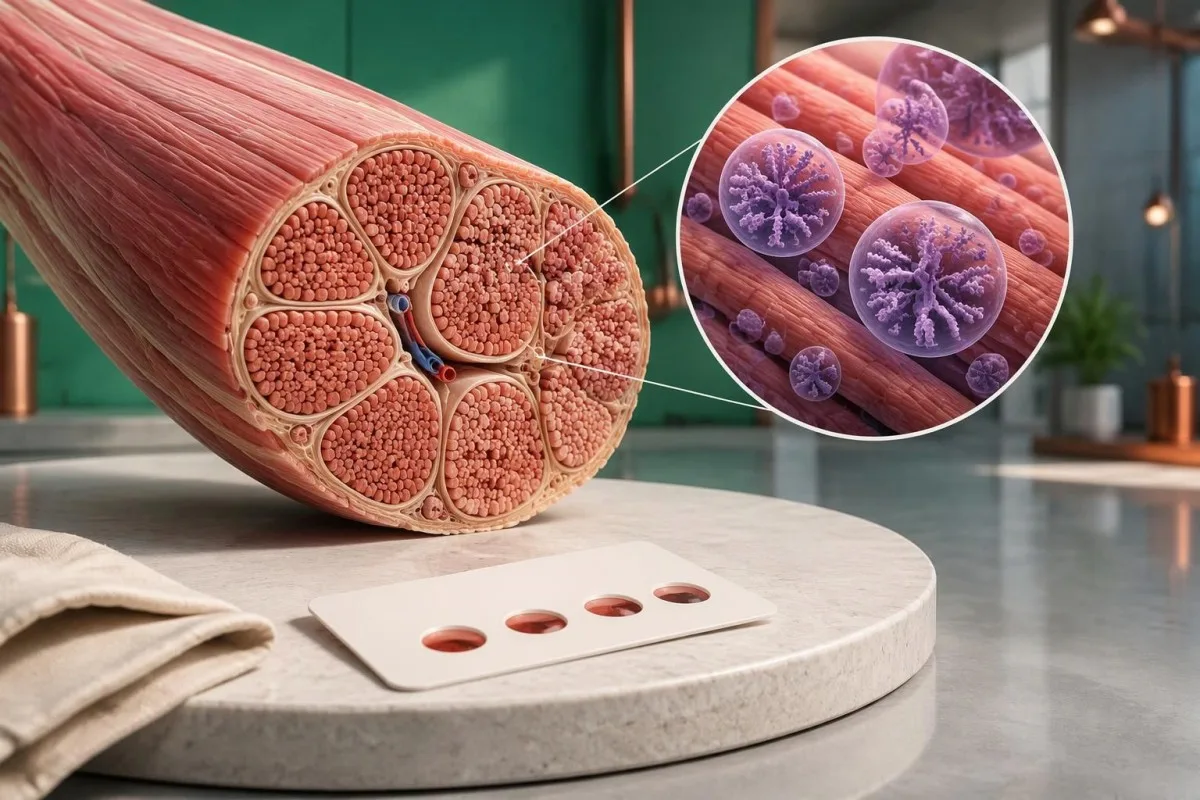
GAA ферментийн түвшин бага гарсан нь Помпегийн өвчнийг сэжиглэх үндэслэл болдог ч зөвхөн скринингээр оношийг батлах боломжгүй. Тохиромжтой сорьцод шинжилгээг давтан хийж, GAA генетикийн шинжилгээ хийх нь жинхэнэ дутагдал, тээгчийн төлөв болон псевдодутагдлыг ялгахад тусална.

Гол санаанууд
- GAA ферментийн идэвх бага нь онош биш, харин цаашдын шинжилгээ хийх дохио юм; хуурай цусны толбоны хэвийн бус 1 үр дүнг мэргэжилтний зааврын дагуу баталгаажуулах шаардлагатай.
- Лавлах хүрээ нь сорьц болон шинжилгээний аргын онцлогоос хамаарна; nmol/h/mL-ийг nmol/h/mg уурагтай шууд харьцуулах боломжгүй.
- Үлдэгдэл ферментийн идэвх нь Помпегийн өвчний сонгодог нярайн хэлбэрийн үед ихэвчлэн 1%-ээс бага байдаг ч энэ үзүүлэлт нь скринингийн бүх тохиолдолд мөрдөх босго биш юм.
- Псевдодутагдал нь Помпегийн өвчин үүсгэхгүйгээр лабораторийн GAA-ийн идэвхийг бууруулж болно; ижил шинжилгээг давтахад бага үр дүн дахин гарч болзошгүй.
- GAA генийн шинжилгээ нь генийн хоёр хуулбарт хоёуланд нь нөлөөлөх өвчин үүсгэгч хувилбаруудыг илрүүлэх зорилготой; ангилал болон фазын тайлбар хийхэд 2 хувилбарыг хамтад нь авч үзэх шаардлагатай.
- Тодорхойгүй хувилбарууд Помпегийн өвчнийг батлахгүй; тодорхойгүй ач холбогдолтой 1 эсвэл 2 хувилбарт нэмэлт нотолгоо шаардлагатай.
- Гэр бүлийн эрсдэл эцэг эх хоёулаа өвчин үүсгэгч GAA хувилбар тээгч бол жирэмслэлт бүрд өвчтэй хүүхэд төрөх магадлал 25% байна.
- Яаралтай үнэлгээ GAA бага үзүүлэлттэй нярай хооллоход хүндрэлтэй, илэрхий сулралтай эсвэл зүрх хамрагдсан байж болзошгүй үед шаардлагатай; товлосон давтан шинжилгээг бүү хүлээ.
GAA ферментийн түвшин бага гарсан нь яг юу гэсэн үг вэ?
A Помпегийн өвчний шинжилгээ GAA идэвх бага байгааг харуулж байгаа нь лаборатори шинжилгээнийхээ нөхцөлд хүчиллэг альфа-глюкозидазын үйл ажиллагаа буурсныг хэмжсэн гэсэн үг. Энэ нь Помпегийн өвчнийг батлахгүй: скринингийн 1 бага үзүүлэлт нь жинхэнэ ферментийн дутагдал, псевдодутагдал, тээгчтэй холбоотой давхцал эсвэл сорьцын асуудлыг илэрхийлж болно.

GAA идэвх нь ферментийн уургийн хэмжээ хэр их байгааг бус, түүний үйл ажиллагааг хэмждэг. Эхлээд сорьцын төрөл, хэмжих нэгж, лабораторийн шийдвэрийн хязгаар гэсэн 3 зүйлийг шалгана; эдгээр мэдээлэлгүйгээр бага гэж тэмдэглэсэн үр дүнг онлайнаас олсон тоотой харьцуулан найдвартай тайлбарлах боломжгүй.
Шинжилгээ хийлгэх болсон шалтгаан эерэг скринингийн утгыг өөрчилдөг. Хүн амын скринингээр илэрсэн нярай болон ташааны булчингийн даамжрах сулралтай 45 настай хүний Помпегийн өвчин байх урьдчилсан магадлал өөр бөгөөд мэдээлсэн ферментийн үзүүлэлт нь ижил байсан ч ялгаагүй; иймээс лабораторийн үр дүнтэй хамт шинж тэмдэг, үзлэгийн дүнг авч үзэх хэрэгтэй.
Скрининг эерэг гэдэг нь өвчин эерэг гэсэнтэй адил биш. Хэрэв 2 лаборатори өөр субстрат эсвэл сорьц бэлтгэх аргыг ашиглавал аль нэг нь алдаа гаргаагүй байхад тоон үр дүн нь зөрж болно; дараагийн үзлэгээр дахин скринингийн хэмжилт хийх үү, эсвэл үнэхээр баталгаажуулах ферментийн шинжилгээ хийх үү гэдгийг асуугаарай.
Кантести бол AI цусны шинжилгээний анализатор GAA-ийн тайланг ердийн лабораторийн үзүүлэлтүүдтэй хамт цэгцлэхэд тусалж болох ч тэмдэглэсэн 1 утгад үндэслэн Помпегийн өвчний оношийг баталж чадахгүй. Манай компанийн мэдээлэл үйлчилгээний зохион байгуулалтын талаар тайлбарладаг; удамшлын ферментийн дутагдал сэжиглэгдсэн тохиолдолд бодисын солилцооны эсвэл мэдрэл-булчингийн эмчийн үнэлгээ шаардлагатай хэвээр байна.
GAA-ийн дутагдал яагаад булчин болон зүрхний асуудал үүсгэдэг вэ?
Помпегийн өвчин нь лизосомын хүчиллэг альфа-глюкозидазын дутагдлаас үүсдэг, энэ фермент нь эсийн дахин боловсруулалтын тасалгаануудад гликогенийг задалдаг. GAA нь альфа-1,4 болон альфа-1,6 глюкозын холбоонд үйлчилдэг; идэвх хангалтгүй байвал гликоген, ялангуяа араг ясны болон зүрхний булчинд хуримтлагдана.
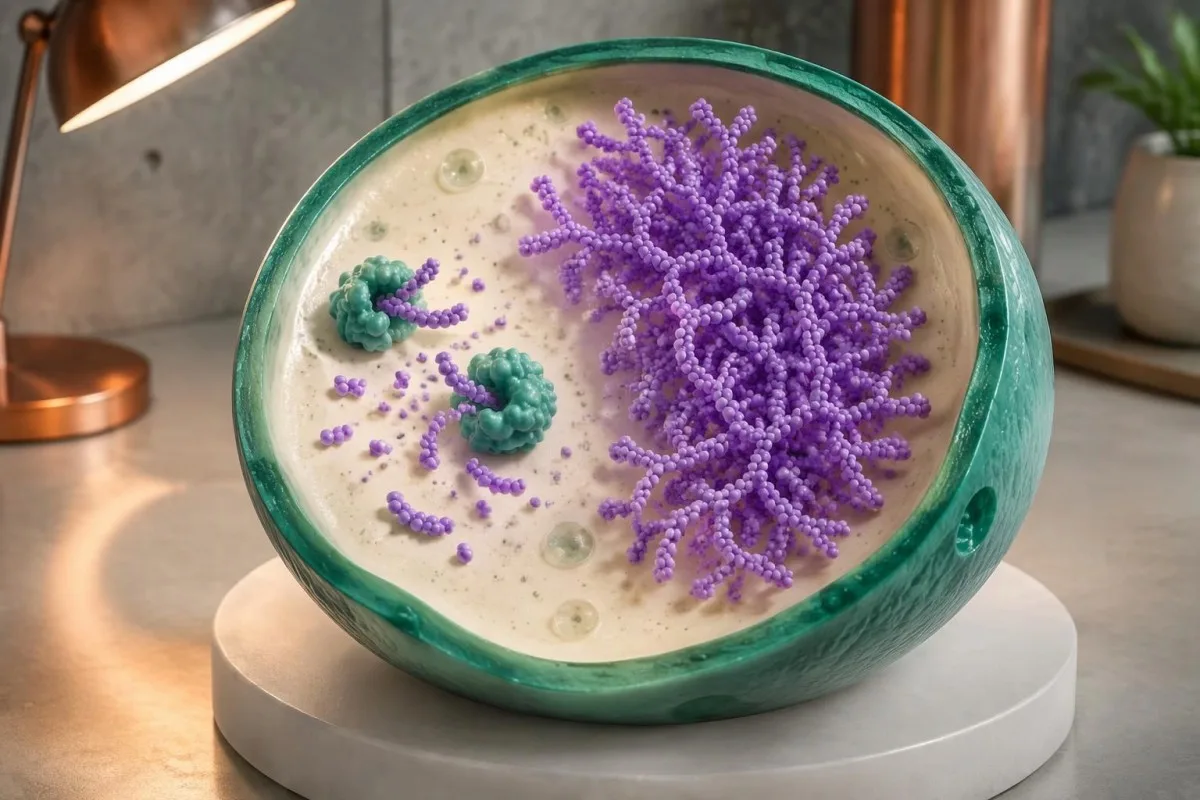
Помпегийн сонгодог нялхсын хэлбэрийн үед оношилгооны эдийн шинжилгээнд GAA-ийн хэвийн идэвхийн 1%-ээс бага байх нь түгээмэл. Хожуу эхлэлтэй хэлбэрийн үед идэвх илүү өндөр хэмжээнд хадгалагдаж болох бөгөөд зарим шинжилгээнд ойролцоогоор 2–40% хүрнэ; эдгээр нь дүрслэн тайлбарлах хүрээ бөгөөд шинжилгээний хязгаарлалттай давхцаж болох тул лабораторийн баталгаажуулсан оношилгооны тайлбарыг орлож болохгүй.
Kishnani нарын 2006 оны Genetics in Medicine сэтгүүлд нийтэлсэн удирдамжид GAA-ийн дутагдал, гликогенийн хуримтлал болон олон эрхтэн тогтолцооны үнэлгээний холбоог тайлбарласан. Эмнэлзүйн ялгаа нь идэвх 1%-ээс доогуур эсэхээр хязгаарлагдахгүй: илрэх нас, зүрхний шинж тэмдэг, амьсгалын булчингийн үйл ажиллагаа нь өвчний хэлбэр болон яаралтай байдлыг тогтооход мөн тусалдаг.
Ердийн глюкозын шинжилгээ лизосом дахь гликоген задарч цэвэрлэгдэх явцыг хэмждэггүй. Жишээлбэл, таамагласан нэг насанд хүрсэн хүний өлөн үеийн глюкоз 92 mg/dL байж болох ч удамшлын булчингийн гликоген хуримтлуулах эмгэгтэй байх боломжтой; глюкоз хэвийн байх нь булчингийн лизосом доторх гликоген хэвийн боловсруулагдаж байгааг харуулахгүй.
Лизосомын бусад эмгэг өөр фермент, гентэй холбоотой тул тэдгээрийн босго үзүүлэлтийг Помпегийн шинжилгээнд ашиглаж болохгүй. Манай тайлбар Гошегийн өвчний ферментийн баталгаажуулалт нь ферментийн шинжилгээнээс генетикийн шинжилгээ рүү шилжих өргөн хүрээний ажлын явцыг харуулахын зэрэгцээ нэг өвчний ферментийн шинжилгээ нөгөөгийнхийг орлож чадахгүйг тайлбарладаг.
GAA ферментийн идэвхийн хэвийн хэмжээ гэж байдаг уу?
There is no single universal normal range for GAA enzyme activity. Dried blood spots, leukocytes and cultured fibroblasts use different preparations and reporting units; a number expressed in nmol/h/mL cannot be directly compared with a result expressed in nmol/h/mg protein.
A screening cutoff separates samples needing follow-up from samples passing that screen. It does not necessarily separate affected people from unaffected people with complete accuracy; laboratories may use different fluorometric or tandem mass spectrometry methods, and 2 screening programs may therefore select different recall thresholds.
For a clearly hypothetical example, suppose a laboratory uses a DBS screening cutoff of 1.5 nmol/h/mL and reports 0.7 nmol/h/mL. The result is below that invented laboratory threshold, but dividing 0.7 by 1.5 gives 47% of the cutoff—not 47% of normal enzyme activity and not a severity score.
The lower limit of detection is different from the clinical cutoff. A report reading less than 0.1 in its stated units may mean the method cannot quantify lower activity reliably; it does not prove absolute absence of enzyme, and repeating measurements close to that analytical floor may produce proportionally large variation.
Screening performance also depends on prevalence. In a hypothetical group with 10 true-positive and 100 false-positive results, only about 9% of positive screens represent disease; those invented counts are not Pompe screening statistics, but explain why чанарын болон тоон үр дүн require different interpretation.
| Түвшин | Хязгаар | Утга |
|---|---|---|
| Passes hypothetical screen | ≥1.5 nmol/h/mL | Illustrative DBS cutoff only; not a universal normal range and not an absolute exclusion in a symptomatic person. |
| Below hypothetical cutoff | <1.5 nmol/h/mL | Illustrative follow-up threshold only; true deficiency, pseudodeficiency and specimen effects still need separation. |
GAA шинжилгээг өөр сорьцод яагаад давтах хэрэгтэй вэ?
Repeat GAA testing checks whether low activity is reproducible and whether specimen quality or assay interference explains it. Confirmation usually moves beyond 1 screening card to a fresh, appropriately handled specimen, often with GAA measurement in leukocytes or another specialist-selected cell preparation.

Heat, humidity and inadequate drying can reduce enzyme activity in a dried blood spot. A low result after 2 days of poorly controlled transport may deserve a fresh collection, but transport history cannot be used to dismiss a result automatically; the laboratory should assess card quality and its stability requirements.
Acarbose is used in some GAA assay methods to suppress interfering maltase-glucoamylase activity. That interference can make measured activity appear higher and potentially obscure deficiency; checking how a laboratory isolates GAA activity can therefore matter more than obtaining a second number with the same unresolved methodological limitation.
Two low DBS results still do not automatically confirm Pompe disease. Pseudodeficiency can reproduce across repeated measurements, including some confirmatory methods; when enzyme and genetic findings disagree, a specialist laboratory may recommend cultured fibroblast testing or additional molecular investigation rather than simply ordering a third screening card.
Give the laboratory the dates of collection, recent transfusions or transplantation, and any enzyme replacement treatment already received. Our guide to сорьцын чанарын нөлөөллийн талаарх explains the general distinction between biological findings and specimen problems; GAA testing has its own handling rules, so do not import another test's redraw interval.
GAA-ийн псевдодутагдал Помпегийн өвчнөөс юугаараа ялгаатай вэ?
GAA pseudodeficiency means an inherited variant lowers measured enzyme activity without causing the glycogen-storage disorder Pompe disease. Two commonly discussed variants are c.1726G>A, p.Gly576Ser, and c.2065G>A, p.Glu689Lys; their interpretation depends on the complete genotype and the assay used.
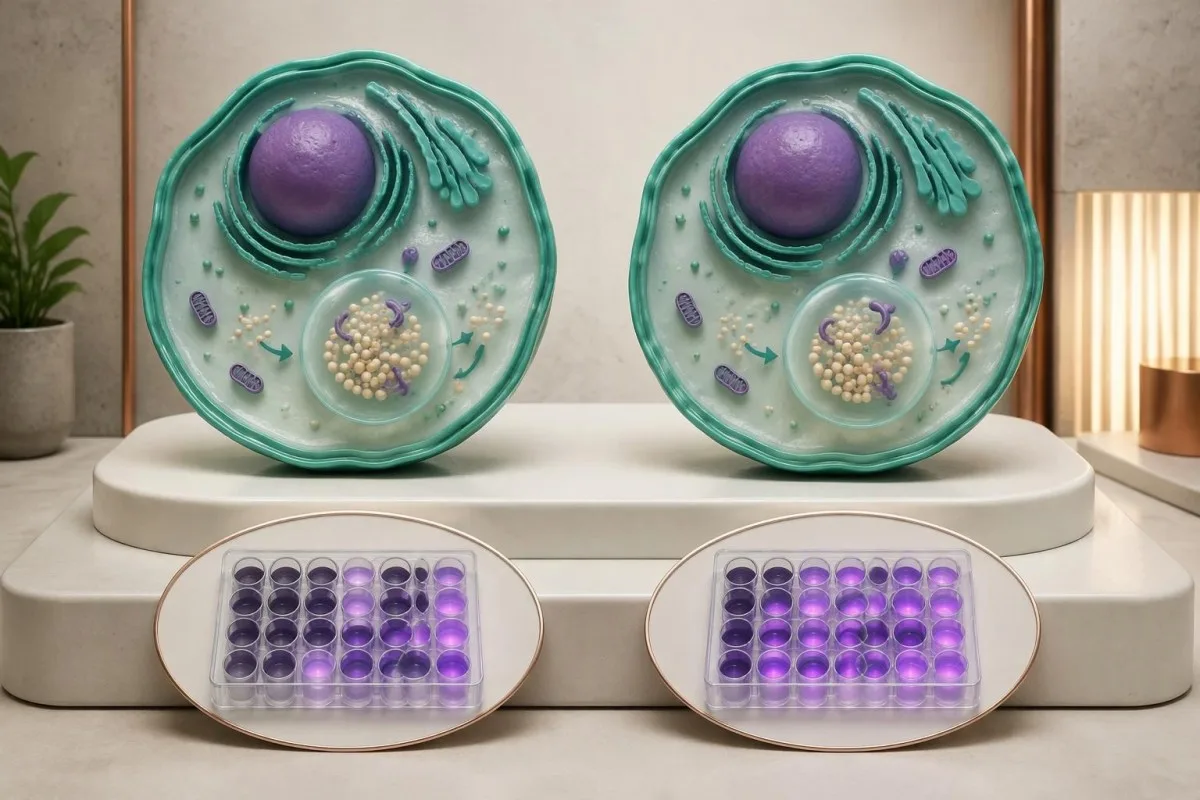
Pseudodeficiency is a biochemical testing issue, not an early stage of Pompe disease. A person with only pseudodeficiency variants does not need Pompe treatment because of 1 low activity result; the specialist must first verify that disease-causing variants or another explanation have not been missed.
The p.Gly576Ser and p.Glu689Lys variants are often found together on 1 gene copy and are particularly relevant in some East Asian ancestry populations. Ancestry changes how often laboratories encounter this pattern, but cannot establish or exclude pseudodeficiency in an individual; people from other backgrounds can carry these variants too.
Pseudodeficiency can remain low on repeat enzyme testing. The practical distinction is whether the complete biochemical and genetic evidence supports disease-causing GAA deficiency, not whether a second result falls below an arbitrary percentage; specialists may compare different assay substrates or cell preparations when the pattern remains ambiguous.
Pseudodeficiency variants can also coexist with a disease-causing variant, making a short report misleading if it lists everything under mutations. Our Fabry enzyme and genetics guide shows another situation where enzyme results need genetic context, although Fabry's X-linked inheritance differs from Pompe's 2-copy recessive mechanism.
GAA генийн шинжилгээгээр юуг илрүүлэх шаардлагатай вэ?
GAA gene testing investigates whether disease-causing variants affect both copies of the GAA gene. Pompe disease is autosomal recessive, and the GAA gene is located on chromosome 17; interpretation requires variant classification, adequate test coverage and, when needed, confirmation that variants affect opposite gene copies.
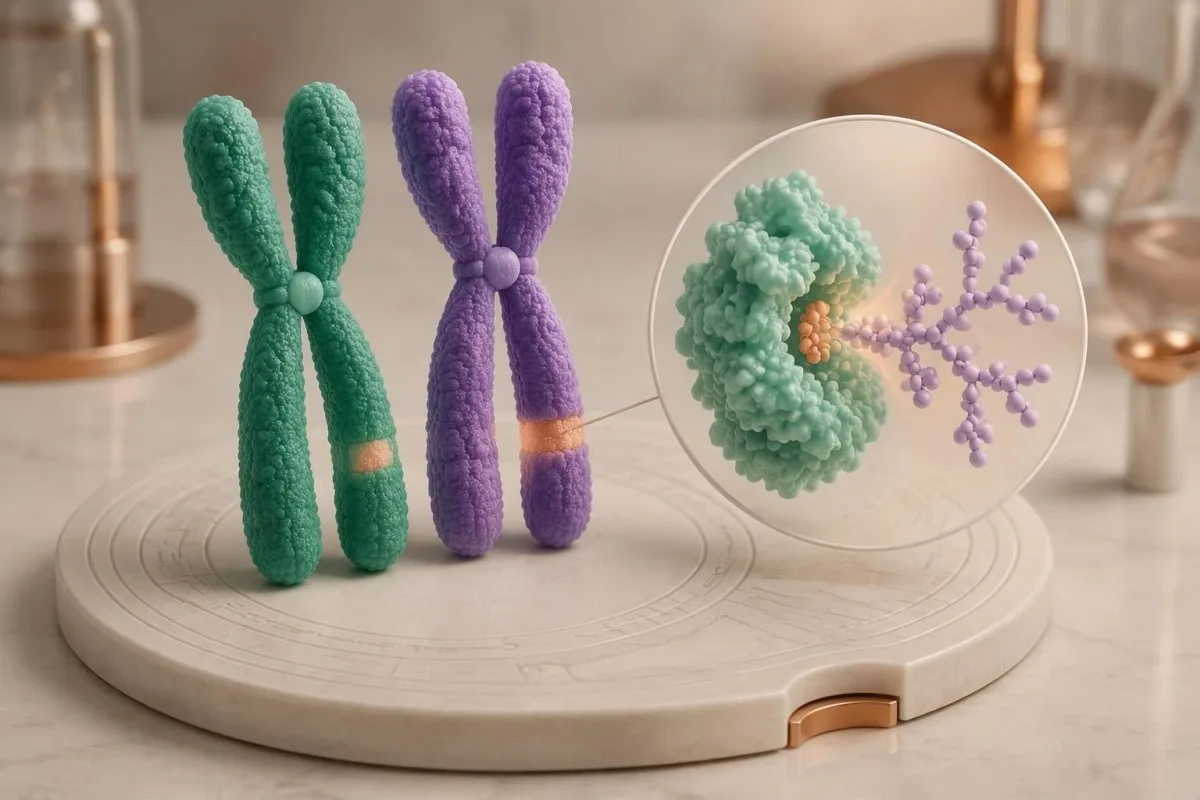
Two pathogenic or likely pathogenic GAA variants in trans support molecular confirmation of Pompe disease. In trans means the variants affect opposite gene copies; 2 variants in cis affect the same copy and do not, by themselves, demonstrate a recessive disease genotype.
Standard sequencing detects many small substitutions and insertions or deletions, but does not answer every possible genetic question. If only 1 disease-causing variant is found despite convincing enzyme deficiency, ask whether deletion/duplication analysis was included and whether poorly covered or deep intronic regions require further investigation.
A common later-onset-associated GAA variant is c.-32-13T>G, which affects splicing. Finding this variant on 1 copy does not diagnose Pompe disease, and finding it with another disease-causing variant does not precisely predict the age symptoms will begin; residual splicing and other biological factors influence presentation.
Parental testing can help establish phase when a laboratory detects 2 different variants but cannot determine their arrangement. Our guide to inherited disease genetic reports explains why inheritance and family testing matter, while the actual gene coverage and diagnostic criteria must remain specific to GAA.
Эмгэгтөрөгч, тодорхойгүй болон сөрөг үр дүнг хэрхэн тайлбарлах вэ?
A pathogenic result, a variant of uncertain significance and a negative result have different diagnostic meanings. Genetic laboratories commonly use 5 categories: pathogenic, likely pathogenic, uncertain significance, likely benign and benign; a VUS is not equivalent to a disease-causing GAA variant.
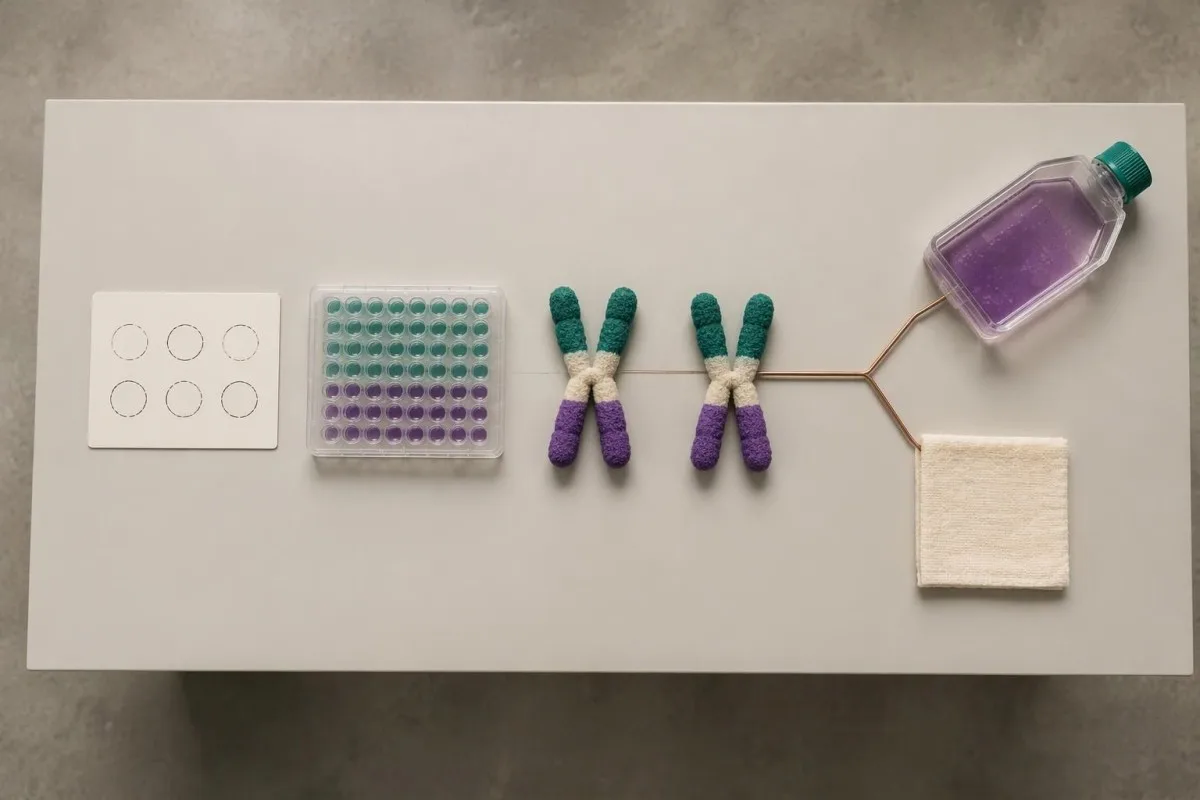
Richards et al.'s 2015 ACMG/AMP consensus established the widely used 5-category sequence-variant framework and states that a VUS should not guide clinical decision-making as though pathogenic. For Pompe evaluation, low enzyme activity can contribute evidence, but its value depends on whether pseudodeficiency and assay limitations have been addressed.
One pathogenic variant plus 1 VUS is an unresolved combination, not automatic confirmation or exclusion. Depending on the enzyme and clinical findings, specialists may investigate family segregation, RNA effects or variant-specific functional evidence; a diagnostic enzyme result may support disease even while the second molecular finding remains incompletely characterized.
A negative sequencing report means the test found no reportable variants within its scope. It does not prove that every GAA-related mechanism was examined; 1 negative limited test may warrant expanded testing when properly performed enzyme studies and the clinical pattern remain strongly suggestive.
Кантести бол AI цусны шинжилгээний тайлал платформ that can help separate a report's 5 classification terms from its numerical enzyme findings, without adjudicating an uncertain genotype. Our техникийн болон эмнэлзүйн стандарт describe interpretation boundaries; our uncertain gene-result explanation provides a related example of why variants and diagnoses are not interchangeable.
GAA-ийн нэг хувилбар илэрсэн бол тээгчийн төлөв үү, эсвэл өвчин үү?
One confirmed disease-causing GAA variant usually indicates carrier status if a second disease-causing variant and diagnostic enzyme deficiency are absent. Carriers do not typically develop Pompe disease; when both parents are carriers, each pregnancy has a 25% affected, 50% carrier and 25% non-carrier probability.

Carrier enzyme values can overlap with values in unaffected people. GAA activity is therefore not a reliable standalone carrier test, and a carrier's activity should not be assumed to equal exactly 50% of a laboratory's normal mean; targeted genetic testing is generally more informative when a familial variant is known.
The 25% affected-child probability applies independently to each pregnancy when both parents carry disease-causing variants capable of producing Pompe disease together. Having 1 unaffected child does not reduce the next pregnancy's Mendelian probability, and pseudodeficiency variants should not be substituted for pathogenic variants in that calculation.
Family testing is most useful after the affected person's variants are clarified. If a symptomatic adult has only 1 identified pathogenic variant, relatives should not be reassured that the entire family question is settled until the specialist considers whether the second variant was missed by the original assay.
For a hypothetical couple, one partner carrying a pathogenic GAA variant and the other carrying only a pseudodeficiency variant does not create the same 25% Pompe risk as 2 pathogenic-variant carriers. Our carrier screening limitations guide explains why a report's coverage and residual risk deserve discussion before reproductive decisions.
Помпегийн өвчний үнэлгээг дэмжих өөр ямар лабораторийн үр дүн байдаг вэ?
Creatine kinase, AST, ALT and urinary glucose tetrasaccharide can support Pompe evaluation, but none confirms the diagnosis alone. Urinary glucose tetrasaccharide may be reported as Glc4 or within a Hex4 assay; these 2 report terms require method-specific interpretation rather than assumption that every laboratory measures exactly the same thing.
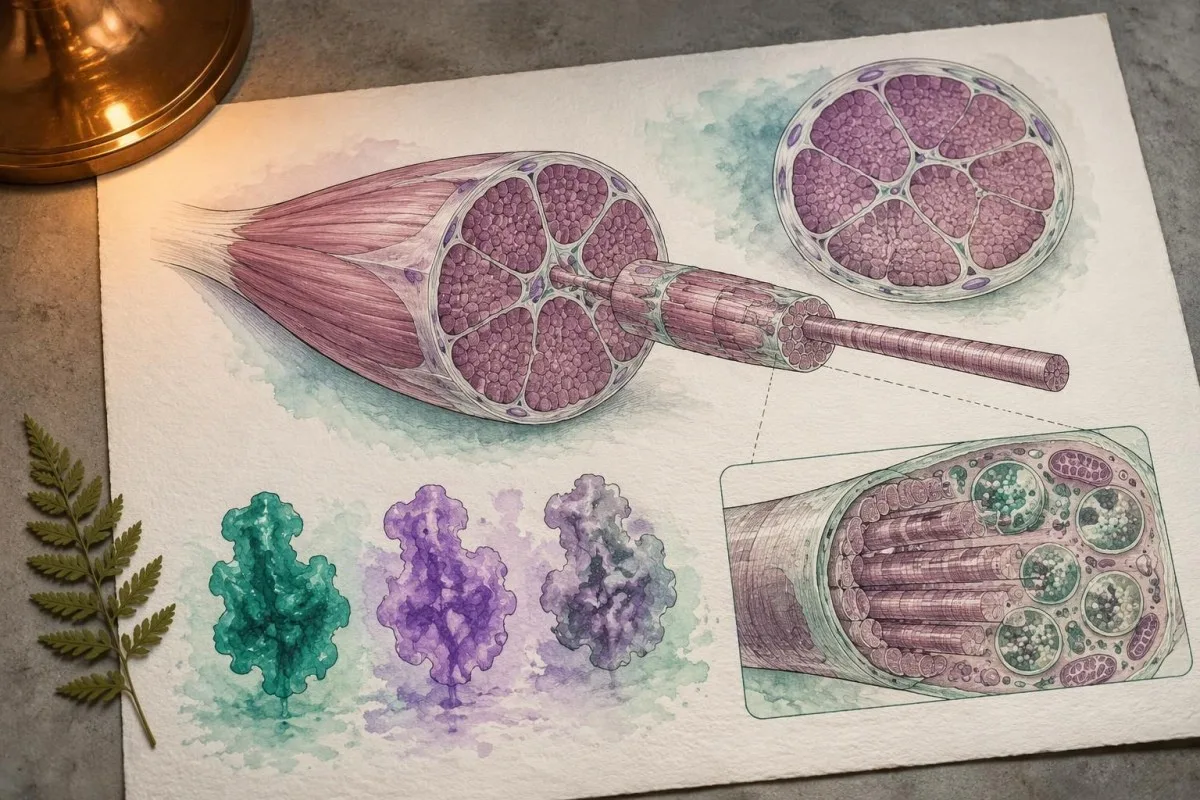
Normal CK does not exclude later-onset Pompe disease. In a hypothetical adult with progressive difficulty rising from a chair, CK of 140 U/L may fall within that laboratory's interval despite clinically meaningful weakness; the combination of symptoms and low confirmed GAA activity matters more than a reassuring CK flag.
AST and ALT can rise because of muscle involvement, not only liver disease. A hypothetical AST of 86 U/L with elevated CK and muscle weakness deserves a muscle-aware assessment; our aldolase and muscle marker guide explains why additional muscle enzymes may help characterize the pattern without identifying its cause.
Urinary Glc4 is a supportive glycogen-related biomarker, not a Pompe-specific diagnostic test. Reference limits vary with age and method, and elevation can occur in other circumstances; 1 elevated result should be interpreted alongside enzyme findings, genetics and the laboratory's creatinine-normalized units.
A falling CK or Glc4 after treatment does not automatically prove that strength or breathing has improved by the same percentage. Our discussion of AST interpretation beyond liver disease illustrates why 2 related markers can move together while still answering different questions about tissue injury and function.
Помпегийн шинжилгээ хэвийн бус байхад амьсгалыг яагаад үнэлэх хэрэгтэй вэ?
Pompe disease can weaken the diaphragm and other respiratory muscles, sometimes before obvious walking difficulty. Assessment may include seated and supine forced vital capacity, respiratory muscle pressures and sleep-related testing; a daytime oxygen saturation of 97% does not rule out overnight hypoventilation.
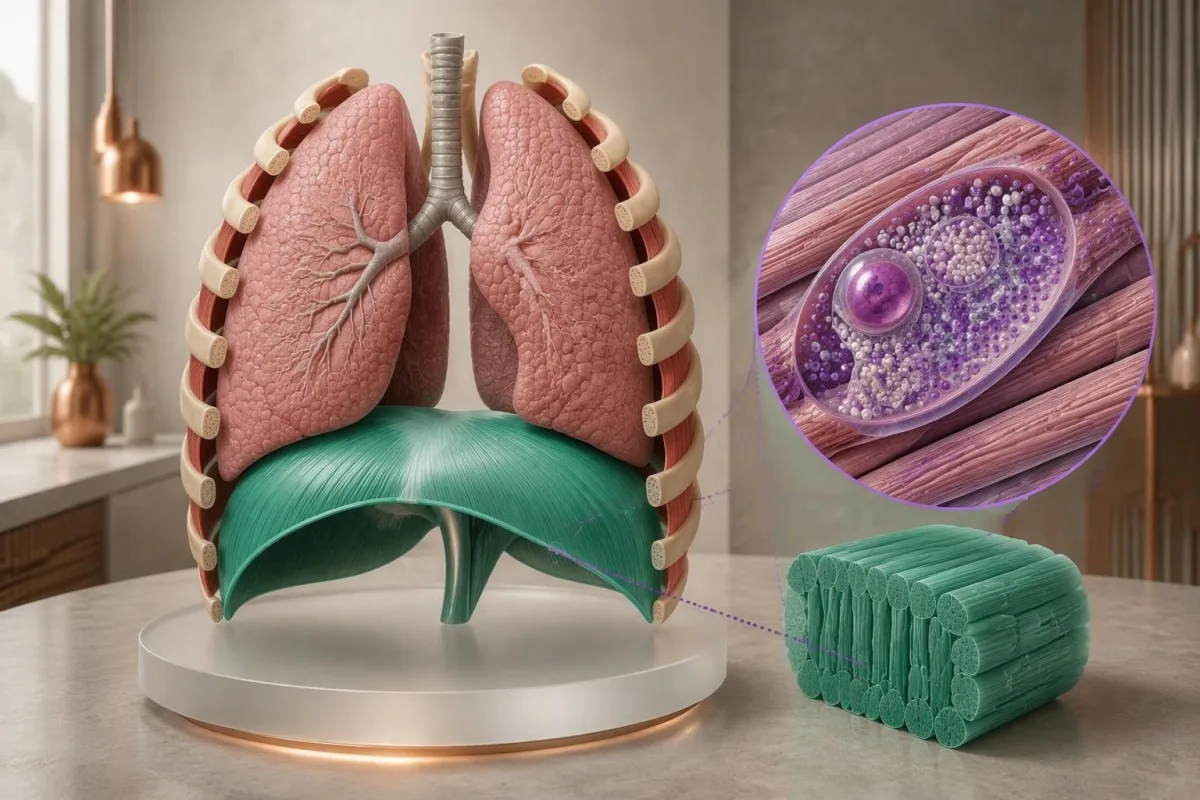
A position-related fall in vital capacity can suggest diaphragm weakness. For example, a hypothetical seated FVC of 3.0 L and supine FVC of 2.4 L represents a 20% decline; the specialist interprets that difference with technique, predicted values and symptoms, rather than treating it as a Pompe-specific cutoff.
Morning headaches, unrefreshing sleep and difficulty breathing when lying flat can justify evaluation for sleep-related hypoventilation. These symptoms do not identify Pompe disease on their own; our амьсгал давчдах байдлыг шалгах удирдамж explains why laboratory results cannot replace respiratory examination and physiological testing.
Arterial carbon dioxide is normally about 35–45 mmHg in adults, with context-dependent variation. A value above 45 mmHg indicates hypercapnia, but its urgency depends on pH, symptoms and the clinical setting; our blood gas interpretation guide explains why oxygen and carbon dioxide answer different questions.
Severe breathlessness, confusion, blue coloration or rapidly worsening weakness warrants emergency care, not an online interpretation session. A confirmed molecular result affecting 2 GAA copies does not measure current respiratory safety; clinicians need direct functional assessment to decide whether ventilation support or urgent monitoring is necessary.
Нярайн Помпегийн өвчний скрининг эерэг гарсны дараа юу болдог вэ?
A positive newborn Pompe screen requires prompt specialist assessment, confirmatory enzyme testing and genetic evaluation. It does not mean every infant has Pompe disease; the immediate task is to distinguish pseudodeficiency or carrier findings from infantile disease and a later-onset-associated genotype affecting both GAA copies.

Burton et al.'s 2017 Pediatrics newborn-screening algorithms describe an initial evaluation integrating GAA confirmation, molecular testing and clinical assessment. If an infant has feeding difficulty, marked hypotonia or suspected cardiomyopathy, do not wait 2 weeks for a routine repeat appointment; the screening team should arrange urgent metabolic and cardiac evaluation.
Classic infantile Pompe disease commonly involves hypertrophic cardiomyopathy. A newborn's echocardiogram and electrocardiogram help assess risk that cannot be estimated from 1 enzyme number; absence of obvious heart symptoms at home does not replace the specialist examination after an abnormal screen.
CRIM status concerns whether cross-reactive GAA protein is present and helps specialists plan immune-risk management around enzyme replacement therapy. Less than 1% enzyme activity does not by itself establish CRIM-negative status, because an inactive protein may still be present; this is a protein-expression question, not just an activity threshold.
Later-onset-associated findings in a newborn require a monitoring plan, not an invented age-of-onset prediction. Even 2 classified disease-causing variants may not reveal when symptoms will emerge; our хүүхдийн эмнэлзүйн аюулгүй байдлын хиймэл оюуны удирдамж explains why pediatric results require age-specific context and clinician-led decisions.
Мэргэжилтнүүд насанд хүрэгчдийн зөрүүтэй шинжилгээний үр дүнг хэрхэн тайлбарладаг вэ?
Conflicting adult Pompe results are resolved by checking specimen quality, confirmatory enzyme methods, variant classification and clinical fit. One low screen plus 1 genetic finding rarely tells the whole story; specialists investigate whether the apparent conflict comes from pseudodeficiency, an incomplete molecular test or another cause of weakness.

Consider a hypothetical 52-year-old with mild fatigue, low DBS GAA activity and only the 2 commonly discussed pseudodeficiency variants. If specialist testing supports pseudodeficiency and no disease-causing genotype, the low screen does not explain the fatigue; other causes should be assessed rather than attaching a Pompe label to an incidental biochemical finding.
A second hypothetical adult has progressive hip weakness, a 20% positional FVC decline, confirmed cellular GAA deficiency and 2 pathogenic variants in trans. Together, those findings support Pompe disease; a normal routine glucose or modest CK result would not outweigh the converging biochemical, genetic and functional evidence.
Convincing enzyme deficiency with only 1 identified pathogenic variant deserves further investigation. The appropriate next step may be deletion/duplication analysis, RNA studies or another specialist assay—not automatically calling the person a carrier; the investigation should also check whether non-Pompe neuromuscular conditions better explain the examination.
Variant-related disease monitoring is not the same as predicting a person's future from their DNA. Our inherited neuromuscular risk guide offers a related family-testing perspective, but 2 conditions can differ substantially in inheritance, penetrance and treatment triggers.
Помпегийн өвчний мэргэжилтэнтэй уулзахдаа юу авчрах хэрэгтэй вэ?
Bring the complete enzyme report, complete genetic report and a dated symptom history to a Pompe specialist appointment. Three report details are especially useful: specimen type, assay units and variant classification; screenshots showing only a red flag or the word mutation can omit information that changes the interpretation.

Ask whether confirmatory testing has already been completed and whether the laboratory measured GAA specifically in an appropriate cell preparation. If 2 variants were found, ask whether they are in trans; if only 1 was found, ask what variant types and regions the test could detect.
Do not try to raise GAA activity with supplements or diet before confirmation. No vitamin or food corrects inherited pathogenic variants affecting both GAA copies; nutrition may support general care after diagnosis, but cannot substitute for enzyme confirmation or specialist treatment planning.
Кантести бол AI-аар ажилладаг цусны шинжилгээний үр дүнгийн шинжилгээний хэрэгсэл that can help organize report terminology and associated laboratory trends, not decide whether 2 uncertain variants establish Pompe disease. Our шинжилгээний хариуны эх сурвалжийг шалгах гарын авлага explains why the original document remains the reference when an automated explanation and a specialist interpretation differ.
Genetic documents can contain information relevant to relatives as well as the tested person. Before sharing 1 family member's report, check consent and remove unnecessary identifiers; Kantesti's нууцлал болон өгөгдлийн мэдээллийг describes our handling approach, while sharing results with relatives should follow a genetic counselor's guidance.
Помпегийн шинжилгээний тайлбарын судалгааны нийтлэлүүд болон хязгаарлалтууд
Pompe test interpretation rests on disease-specific enzyme, genetic and clinical evidence—not on general laboratory publications or an AI explanation. Kantesti includes 3 directly relevant external sources below and 2 separate educational publications; the iron and coagulation publications are not evidence for diagnosing Pompe disease.
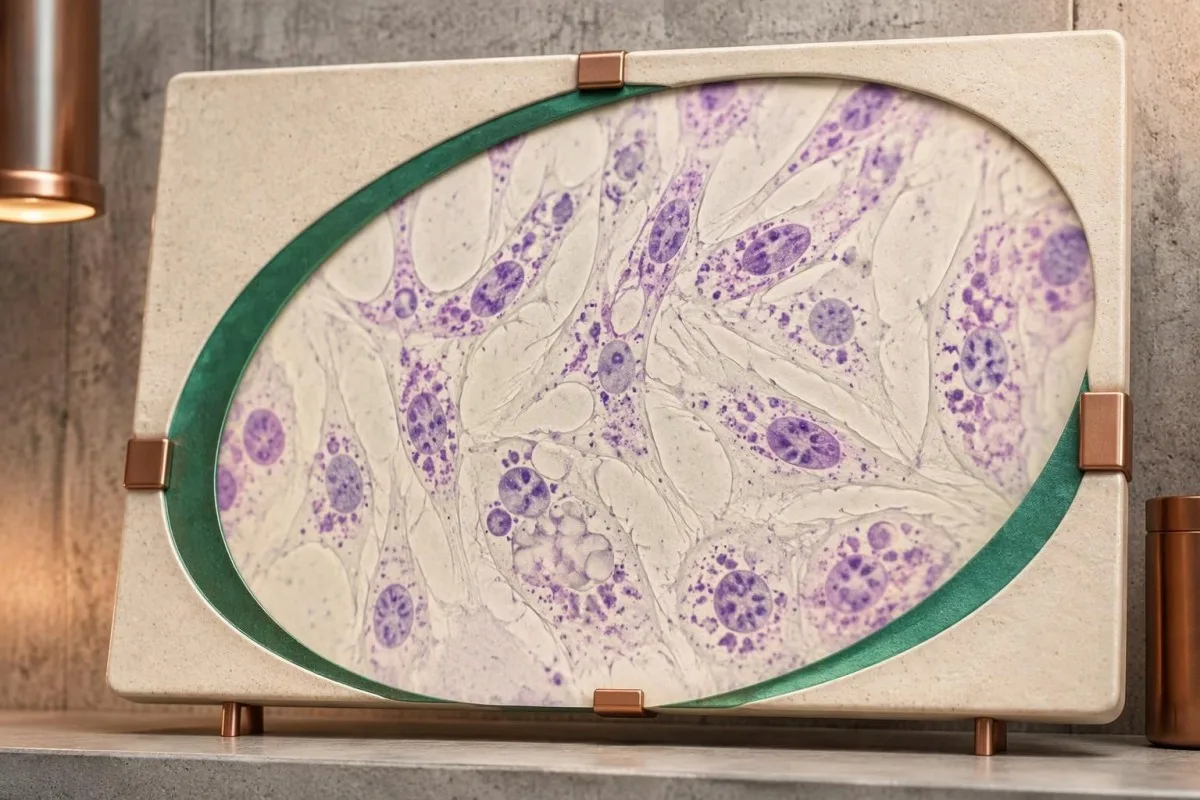
The 2006 Kishnani guideline provides disease-specific diagnostic and management context, while the 2017 Burton newborn-screening paper addresses confirmation after population screening. Their recommendations should be applied with the specialist laboratory's validated methods; neither supplies 1 universally transferable DBS enzyme cutoff for every instrument and population.
Richards et al.'s 2015 ACMG/AMP publication explains the 5-category variant framework used to distinguish pathogenic findings from uncertainty. Classification can change when new evidence becomes available, so ask the genetics service whether an unresolved result has a reanalysis pathway rather than assuming every VUS will eventually become pathogenic.
Манай сургалтын төмрийн судалгааны addresses a different laboratory domain. The separate цусны бүлэгнэлтийн шинжилгээний нийтлэл also covers unrelated markers; their 2 DOI records are provided for publication transparency, not as supporting citations for GAA deficiency or pseudodeficiency.
Kantesti-ийн эмнэлгийн агуулгын стандартууд distinguish patient education from diagnosis and treatment instructions. The practical endpoint is a documented interpretation of 3 evidence streams—enzyme testing, genetic analysis and clinical assessment—with urgent care taking priority whenever infantile disease or respiratory compromise is suspected.
Түгээмэл асуултууд
GAA ферментийн идэвх бага байх нь үргэлж Помпегийн өвчин гэсэн үг үү?
GAA ферментийн идэвх бага байх нь үргэлж Помпегийн өвчнийг илтгэдэггүй. Скринингийн нэг хэвийн бус хариу нь жинхэнэ дутагдал, псевдодутагдал, сорьцын доройтол эсвэл тээгчтэй холбоотой идэвхийн давхцлыг илэрхийлж болно. Баталгаажуулахын тулд тохирох ферментийн шинжилгээ, GAA генетикийн үр дүн болон эмнэлзүйн нөхцөл байдлыг мэргэжилтэн тайлбарлах шаардлагатай. Зөвхөн ижил скринингийн шинжилгээг давтах нь асуудлыг шийдэхийн оронд псевдодутагдлыг дахин илрүүлж болзошгүй.
GAA ферментийн хэвийн түвшин хэд вэ?
There is no universal normal GAA enzyme level because specimen preparation, assay substrate and reporting units differ between laboratories. A value in nmol/h/mL cannot be directly compared with a value in nmol/h/mg protein. Classic infantile Pompe disease often has less than 1% of normal activity in diagnostic tissue assays, but this is not a universal newborn-screening cutoff. Use the reference information printed on the original report and the specialist laboratory's interpretation.
GAA-ийн хоёр бага шинжилгээ псевдодутал байж болох уу?
0 Хоёр удаа бага GAA шинжилгээний хариу гарах нь псевдодутмагшилтай холбоотой байж болох бөгөөд ялангуяа ижил эсвэл төстэй нөлөөлөлд өртдөг шинжилгээний аргыг хэрэглэсэн үед энэ боломжтой. Псевдодутмагшлын хувилбарууд нь хэмжигдсэн идэвхийг бууруулдаг ч өөрсдөө Помпегийн гликоген хуримтлалын өвчин үүсгэдэггүй. Мэргэжилтнүүд энэ хэв шинжийг GAA-ийн бүрэн генотип, шинжилгээний онцлог, шаардлагатай бол өөр эсийн бэлдмэл эсвэл үйл ажиллагааны шинжилгээнд тулгуурлан ялган тогтоодог. Тиймээс дараалсан хоёр бага үзүүлэлт нь өвчнийг бие даан батлах хоёр нотолгоотой дүйцэхгүй.
GAA генийн хоёр хувилбар Помпегийн өвчнийг батлах уу?
GAA генийн хоёр хувилбар байгаа нь Помпегийн өвчнийг шууд батлахгүй. Эсрэг генийн хуулбаруудад байрлах, өөрөөр хэлбэл транс байрлалтай хоёр эмгэг төрүүлэгч эсвэл эмгэг төрүүлэх магадлалтай хувилбар молекулын түвшинд оношийг батлах үндэслэл болно. Харин цис байрлалтай хоёр хувилбар зөвхөн нэг хуулбарт нөлөөлнө. Тодорхойгүй ач холбогдолтой хувилбар болон псевдодутлын хувилбарыг өвчин үүсгэгч нь тогтоогдсон олдвор гэж тооцож болохгүй. Ангилал эсвэл фаз тодорхойгүй хэвээр байгаа үед ферментийн болон эмнэлзүйн нотолгоо онцгой ач холбогдолтой хэвээр байна.
Креатинкиназын хэвийн хэмжээ нь хожуу илрэлтэй Помпегийн өвчнийг үгүйсгэж чадах уу?
Normal CK cannot rule out late-onset Pompe disease. A hypothetical CK of 140 U/L may fall within a laboratory's reference interval despite progressive proximal weakness or diaphragm involvement. CK measures muscle injury-related enzyme release, not lysosomal GAA function. Persistent compatible symptoms deserve specialist assessment even when routine muscle markers are reassuring.
Нярайн Помпегийн өвчний шинжилгээ эерэг гарсан бол хэр яаралтай арга хэмжээ авах шаардлагатай вэ?
Нярайн Помпегийн өвчний шинжилгээ эерэг гарсан тохиолдолд скринингийн эсвэл бодисын солилцооны багтай нэн даруй холбогдох шаардлагатай. Хооллоход хүндрэлтэй, булчингийн тонус мэдэгдэхүйц буурсан эсвэл зүрхний эмгэг сэжиглэгдсэн нярайд яаралтай үнэлгээ хийх хэрэгтэй. Скринингийн нэг эерэг хариу оношийг батлахгүй ч нярайн сонгодог хэлбэрийн өвчин сэжиглэгдсэн бол хэдэн долоо хоногийн дараах ердийн үзлэгийг хүлээж болохгүй. Мэргэжилтнүүд баталгаажуулах ферментийн шинжилгээ, генетикийн үнэлгээ болон зүрхний үзлэгийг ихэвчлэн зэрэг зохион байгуулдаг. Амьсгалын хүнд хүндрэл эсвэл ухаан санааны хариу үйлдэл буурах тохиолдолд яаралтай тусламж авах шаардлагатай.
Эцэг эх хоёулаа Помпегийн тээгч бол хүүхдэд ямар эрсдэлтэй вэ?
Хэрэв эцэг эх хоёулаа өвчин үүсгэгч GAA хувилбарыг тээгч бол жирэмслэлт бүрд өвчилсөн хүүхэд төрөх магадлал 25%, тээгч хүүхэд төрөх магадлал 50%, гэр бүлийн аль ч хувилбарыг өвлөн аваагүй хүүхэд төрөх магадлал 25% байна. Эдгээр магадлал жирэмслэлт бүрд бие даан үйлчилнэ. Псевдодутлын хувилбаруудыг энэ тооцоонд эмгэг төрүүлэгч хувилбартай адилтгаж болохгүй. Генетикийн зөвлөгөө нь эцэг эхийн шинжилгээний үр дүнг баталгаажуулах, шинжилгээний боломжуудыг тайлбарлахад тусална.
Цусны шинжилгээний хариугаа тайлбарлуулаарай
Лабораторийн тайлангаа байршуулснаар Kantesti-ийн AI биомаркер бүрийг энгийн хэлээр хэдхэн секундэд тайлбарлана. Дэлхий даяар 2 сая гаруй хүн ашигладаг.
Лавлагаа
- Klein, T., Mitchell, S., & Weber, H. (2026). Төмрийн шинжилгээний гарын авлага: TIBC, төмрийн ханалт ба холбох чадвар. Kantesti AI-ийн анагаахын судалгаа. DOI
- Klein, T., Mitchell, S., & Weber, H. (2026). aPTT-ийн хэвийн хэмжээ: D-Dimer, Protein C болон цус бүлэгнэлтийн гарын авлага. Kantesti AI-ийн анагаахын судалгаа. DOI
- Kishnani PS et al. (2006). Pompe disease diagnosis and management guideline. Анагаах ухааны генетик. DOI PubMed
- Burton BK et al. (2017). The Initial Evaluation of Patients After Positive Newborn Screening: Recommended Algorithms Leading to a Confirmed Diagnosis of Pompe Disease. Pediatrics. DOI
- Richards S нар. (2015). Дарааллын хувилбаруудыг тайлбарлах стандарт ба удирдамж: Америкийн Анагаах Ухааны Генетик ба Геномикийн Коллеж болон Молекулын Эмгэг Судлалын Нийгэмлэгийн хамтарсан зөвшилцлийн зөвлөмж. Анагаах ухааны генетик. DOI PubMed
- 2 сая+Шинжилсэн сорилууд
- 127+Улс орнууд
- 100+Хэлнүүд
Эмнэлгийн багийн тухай


E-E-A-T итгэлийн дохио
Туршлага
Эмчийн удирдлагатай лабораторийн тайлалын ажлын урсгалын клиник хяналт.
Мэргэшсэн байдал
Биомаркерууд клиникийн нөхцөлд хэрхэн ажиллаж/өөрчлөгдөж байгаад чиглэсэн лабораторийн анагаах ухаан.
Эрх мэдэл
Доктор Томас Кляйн эмнэлзүйн хувьд хянасан бөгөөд доктор Сара Митчелл, профессор доктор Ханс Вебер нар хувь нэмэр оруулсан.
Найдвартай байдал
Сэрэмжлүүлгийг бууруулахын тулд тодорхой дараагийн алхамтай, нотолгоонд суурилсан тайлал.






Эмнэлгийн хариуцлагаас татгалзах мэдэгдэл
Энэ нийтлэл зөвхөн боловсролын зорилготой бөгөөд эмнэлгийн зөвлөгөө биш болно. Оношилгоо, эмчилгээний шийдвэр гаргахдаа мэргэшсэн эрүүл мэндийн үйлчилгээ үзүүлэгчтэй заавал зөвлөлдөнө.
Хэвлэгдсэн · Редакцын багтай холбогдох
Kantesti Ltd компани Англи, Уэльст бүртгэлтэй, компанийн дугаар. 17090423, Лондон, Нэгдсэн Хаант Улс.
