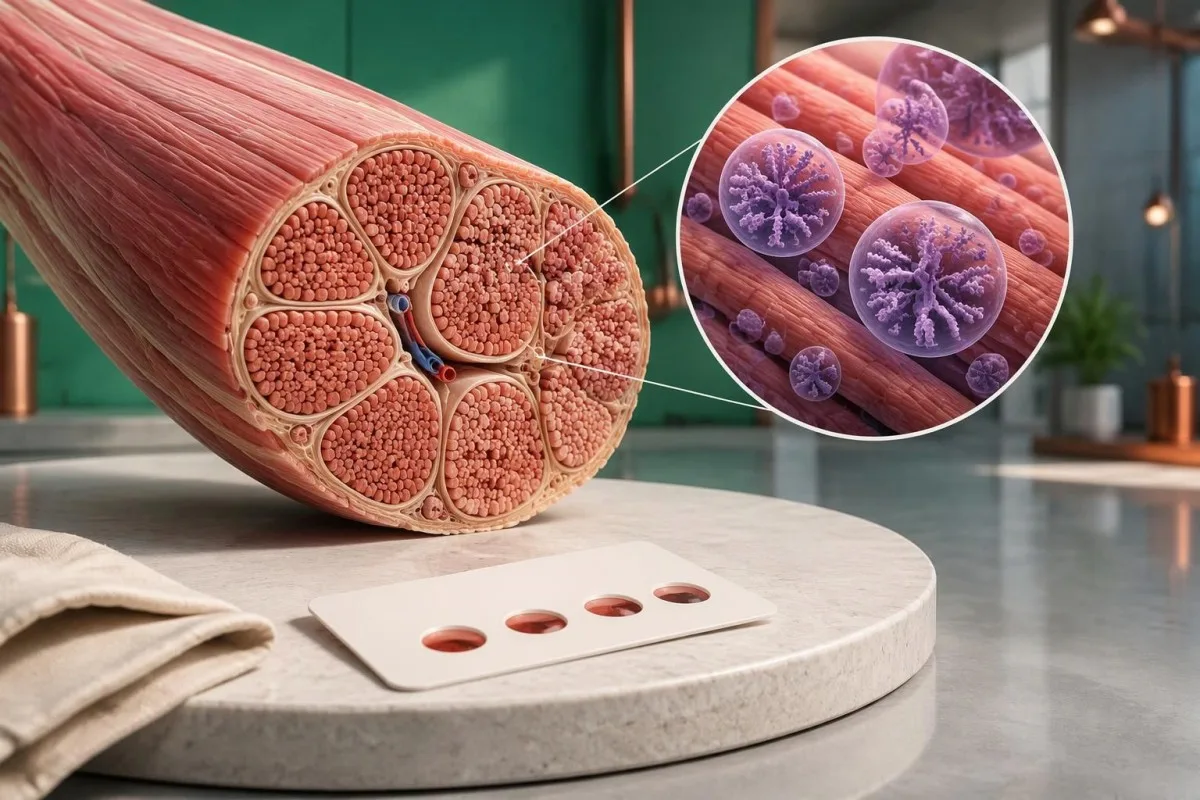
GAA entzimaren emaitza baxu batek Pompe gaixotasunaren susmoa pizten du, baina baheketa hutsak ezin du hura baieztatu. Lagin egoki batean proba errepikatzeak eta GAA azterketa genetikoak benetako gabezia, eramaile-egoera eta pseudogabezia bereizten laguntzen dute.

Ondorio nagusiak
- GAA entzimaren jarduera baxua jarraipen-seinale bat da, ez diagnostikoa; odol-tanta lehorreko 1 emaitza anormalak espezialista batek agindutako berrespena behar du.
- Erreferentzia-tarteak laginaren eta saiakuntzaren araberakoak dira; nmol/h/mL eta nmol/h/mg proteinak ezin dira zuzenean alderatu.
- Hondar-entzimaren jarduera askotan %1%tik beherakoa da Pompe gaixotasun klasiko infantilean, baina kopuru hori ez da baheketa-atalase unibertsala.
- Pseudogabeziak GAAren laborategiko jarduera murriztu dezake Pompe gaixotasuna eragin gabe; saiakuntza bera errepikatzeak emaitza baxua berriz eman dezake.
- GAA genearen azterketak bi gene-kopiei eragiten dieten gaixotasun-eragileak diren aldaerak bilatzen ditu; 2 aldaerak interpretatu behar dira sailkapenerako eta fasea zehazteko.
- Aldaera zalantzazkoak ez dute Pompe gaixotasuna ezartzen; esanahi kliniko ezezaguneko 1 edo 2 aldaerek ebidentzia gehiago behar dute.
- Familia-arriskua haurdunaldi bakoitzean haur kaltetu bat izateko arriskua 25% da, bi gurasoek gaixotasuna eragiten duen GAA aldaera bat daramatenean.
- Urgent assessment beharrezkoa da GAA baxua duen eta elikatzeko zailtasuna, ahultasun nabarmena edo bihotz-inplikazioaren susmoa duen haurrarentzat; ez itxaron ohiko berriz azterketa egin arte.
Zer esan nahi du benetan GAA entzimaren emaitza baxu batek?
A Pompe gaixotasunaren proba GAA jarduera baxua erakusteak esan nahi du laborategiak alfa-glukosidasa azidoaren funtzio murriztua neurtu duela bere saiakuntzaren baldintzetan. Horrek ez du Pompe gaixotasuna frogatzen: baheketa-emaitza baxu batek benetako urritasuna, pseudourritasuna, eramaile-egoerari lotutako gainjartzea edo lagin-arazoa adieraz dezake.

GAA jarduerak entzimaren funtzioa neurtzen du, ez soilik zenbat entzima-proteina dagoen. Egiaztatu beharreko lehen 3 xehetasunak lagin mota, neurri-unitateak eta laborategiaren erabaki-muga dira; xehetasun horiek gabe baxu gisa deskribatutako emaitza ezin da modu fidagarrian interpretatu sarean aurkitutako zenbaki baten arabera.
Proba egiteko arrazoiak baheketa positibo baten esanahia aldatzen du. Biztanleriaren baheketan identifikatutako jaioberri batek eta aldakako ahultasun progresiboa duen 45 urteko pertsona batek Pompe gaixotasuna izateko hasierako probabilitate desberdinak dituzte, nahiz eta jakinarazitako entzima-balioak berdinak izan; beraz, sintomak eta azterketa fisikoa laborategiko emaitzaren ondoan hartu behar dira kontuan.
Baheketan positibo izatea ez da gaixotasunean positibo izatearen gauza bera. 2 laborategik substratu edo lagin-prestaketa desberdinak erabiltzen badituzte, haien emaitza numerikoak bat ez etor daitezke, laborategietako batek ere akatsik egin gabe; galdetu hurrengo hitzordua beste baheketa-neurketa baterako den ala benetan baieztapenezko entzima-saiakuntza baterako.
Kantesti bat da. AI odol-analisi analizatzailea GAA txosten bat ohiko laborategiko emaitzen ondoan antolatzen lagun dezake, baina ezin du Pompe gaixotasunaren diagnostikoa ezarri markatutako balio bakar batetik abiatuta. Gure enpresaren informazioak zerbitzuaren antolaketa azaltzen du; entzima-urritasun hereditarioaren susmoak metabolismoan edo neuromuskulartasunean aditua den espezialistaren ebaluazioa behar du oraindik.
Zergatik eragiten ditu GAA gabeziak giharretako eta bihotzeko arazoak?
Pompe gaixotasuna alfa-glukosidasa azido lisosomikoaren urritasunaren ondorio da, zelulen birziklatze-konpartimentuen barruko glukogenoa desegiten duen entzima baten urritasunarena. GAAk alfa-1,4 eta alfa-1,6 glukosa-loturetan jarduten du; jarduera eskasak glukogenoa metatzea eragiten du, bereziki hezur-muskuluetan eta bihotz-muskuluan.

Pompe gaixotasun infantile klasikoan, GAA jarduera normala baino 1% baino txikiagoa izan ohi da ehun diagnostikoen saiakuntzetan. Hasiera berantiarreko gaixotasunean jarduera handiagoa gera daiteke, batzuetan gutxi gorabehera 2–40% saiakuntza jakin batzuetan; deskribapen-tarte horiek saiakuntzen mugekin gainjartzen dira, eta ez dute laborategiaren diagnostiko-interpretazio balioztatua ordezkatu behar.
Kishnani et al.-en 2006ko Genetics in Medicine gidalerroak GAAren urritasunaren, glukogeno-biltegiratzearen eta sistema anitzeko ebaluazioaren arteko lotura deskribatzen du. Bereizketa klinikoa ez da soilik jarduera 1% azpitik dagoen ala ez: sintomak agertzeko adinak, bihotzeko aurkikuntzek eta arnas muskuluen funtzioak ere gaixotasunaren forma eta larritasuna zehazten laguntzen dute.
Glukosaren ohiko emaitza batek ez du neurtzen lisosometako glukogenoaren garbiketa. Adibidez, heldu hipotetiko batek baraurik 92 mg/dL-ko glukosa izan dezake, glukogenoa muskuluetan metatzeko nahasmendu hereditarioa izan arren; glukosa normala izateak ez du frogatzen muskuluetako lisosomen barruko glukogenoa modu normalean prozesatzen denik.
Lisosometako beste nahasmendu batzuek entzima eta gene desberdinak dituzte; beraz, haien atalaseak ezin dira Pompe proben kasuan erabili. Gure azalpenak Gaucher gaixotasunaren entzima-baieztapena entzimetatik genetikarako lan-fluxu zabalagoa erakusten du, eta, aldi berean, gaixotasun baten entzima-saiakuntzak zergatik ezin duen beste batenaren ordez balio azalduz.
Ba al dago GAA entzimaren jarduerarako ohiko tarterik?
There is no single universal normal range for GAA enzyme activity. Dried blood spots, leukocytes and cultured fibroblasts use different preparations and reporting units; a number expressed in nmol/h/mL cannot be directly compared with a result expressed in nmol/h/mg protein.
A screening cutoff separates samples needing follow-up from samples passing that screen. It does not necessarily separate affected people from unaffected people with complete accuracy; laboratories may use different fluorometric or tandem mass spectrometry methods, and 2 screening programs may therefore select different recall thresholds.
For a clearly hypothetical example, suppose a laboratory uses a DBS screening cutoff of 1.5 nmol/h/mL and reports 0.7 nmol/h/mL. The result is below that invented laboratory threshold, but dividing 0.7 by 1.5 gives 47% of the cutoff—not 47% of normal enzyme activity and not a severity score.
The lower limit of detection is different from the clinical cutoff. A report reading less than 0.1 in its stated units may mean the method cannot quantify lower activity reliably; it does not prove absolute absence of enzyme, and repeating measurements close to that analytical floor may produce proportionally large variation.
Screening performance also depends on prevalence. In a hypothetical group with 10 true-positive and 100 false-positive results, only about 9% of positive screens represent disease; those invented counts are not Pompe screening statistics, but explain why emaitza kualitatiboak vs. kuantitatiboak require different interpretation.
| Maila | Tartea | Zer esan nahi duen |
|---|---|---|
| Passes hypothetical screen | ≥1.5 nmol/h/mL | Illustrative DBS cutoff only; not a universal normal range and not an absolute exclusion in a symptomatic person. |
| Below hypothetical cutoff | <1.5 nmol/h/mL | Illustrative follow-up threshold only; true deficiency, pseudodeficiency and specimen effects still need separation. |
Zergatik errepikatu GAA proba beste lagin batean?
Repeat GAA testing checks whether low activity is reproducible and whether specimen quality or assay interference explains it. Confirmation usually moves beyond 1 screening card to a fresh, appropriately handled specimen, often with GAA measurement in leukocytes or another specialist-selected cell preparation.

Heat, humidity and inadequate drying can reduce enzyme activity in a dried blood spot. A low result after 2 days of poorly controlled transport may deserve a fresh collection, but transport history cannot be used to dismiss a result automatically; the laboratory should assess card quality and its stability requirements.
Acarbose is used in some GAA assay methods to suppress interfering maltase-glucoamylase activity. That interference can make measured activity appear higher and potentially obscure deficiency; checking how a laboratory isolates GAA activity can therefore matter more than obtaining a second number with the same unresolved methodological limitation.
Two low DBS results still do not automatically confirm Pompe disease. Pseudodeficiency can reproduce across repeated measurements, including some confirmatory methods; when enzyme and genetic findings disagree, a specialist laboratory may recommend cultured fibroblast testing or additional molecular investigation rather than simply ordering a third screening card.
Give the laboratory the dates of collection, recent transfusions or transplantation, and any enzyme replacement treatment already received. Our guide to laginaren kalitatearen interferentziari explains the general distinction between biological findings and specimen problems; GAA testing has its own handling rules, so do not import another test's redraw interval.
Zertan bereizten da GAA pseudogabezia Pompe gaixotasunetik?
GAA pseudodeficiency means an inherited variant lowers measured enzyme activity without causing the glycogen-storage disorder Pompe disease. Two commonly discussed variants are c.1726G>A, p.Gly576Ser, and c.2065G>A, p.Glu689Lys; their interpretation depends on the complete genotype and the assay used.
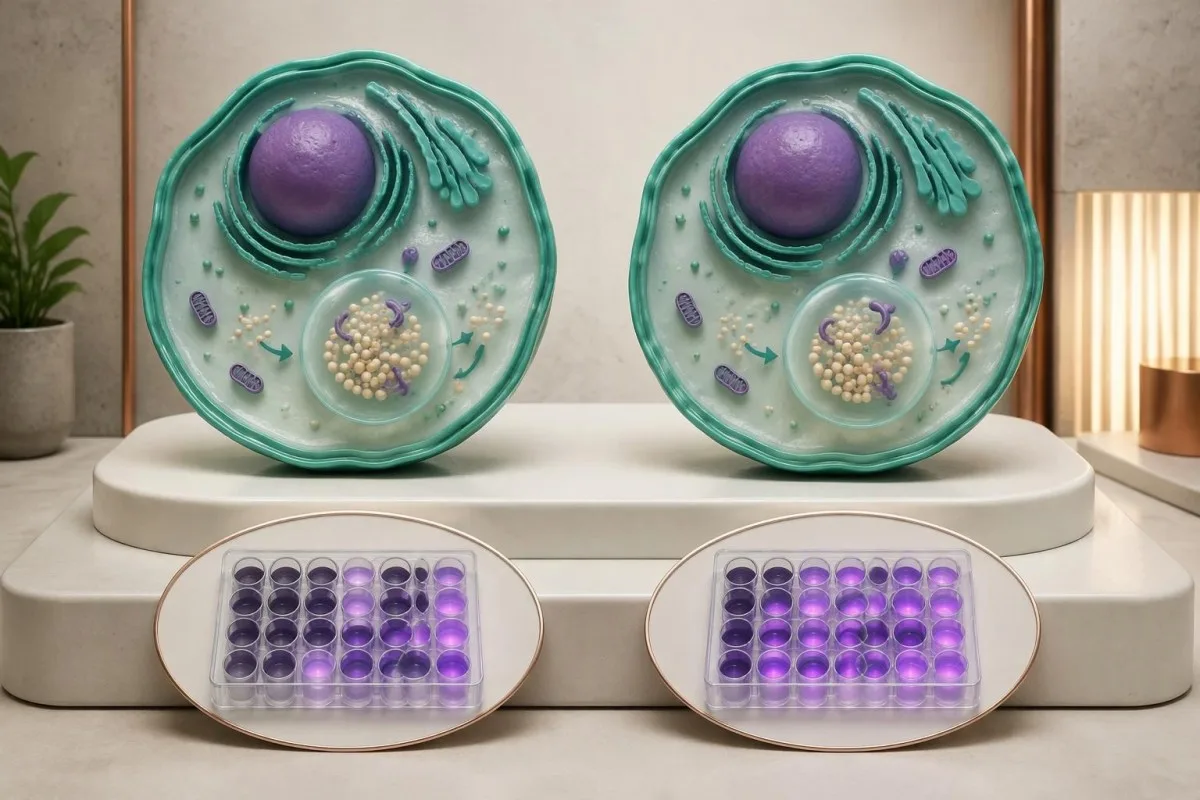
Pseudodeficiency is a biochemical testing issue, not an early stage of Pompe disease. A person with only pseudodeficiency variants does not need Pompe treatment because of 1 low activity result; the specialist must first verify that disease-causing variants or another explanation have not been missed.
The p.Gly576Ser and p.Glu689Lys variants are often found together on 1 gene copy and are particularly relevant in some East Asian ancestry populations. Ancestry changes how often laboratories encounter this pattern, but cannot establish or exclude pseudodeficiency in an individual; people from other backgrounds can carry these variants too.
Pseudodeficiency can remain low on repeat enzyme testing. The practical distinction is whether the complete biochemical and genetic evidence supports disease-causing GAA deficiency, not whether a second result falls below an arbitrary percentage; specialists may compare different assay substrates or cell preparations when the pattern remains ambiguous.
Pseudodeficiency variants can also coexist with a disease-causing variant, making a short report misleading if it lists everything under mutations. Our Fabry enzyme and genetics guide shows another situation where enzyme results need genetic context, although Fabry's X-linked inheritance differs from Pompe's 2-copy recessive mechanism.
Zer bilatu behar da GAA genearen azterketan?
GAA gene testing investigates whether disease-causing variants affect both copies of the GAA gene. Pompe disease is autosomal recessive, and the GAA gene is located on chromosome 17; interpretation requires variant classification, adequate test coverage and, when needed, confirmation that variants affect opposite gene copies.
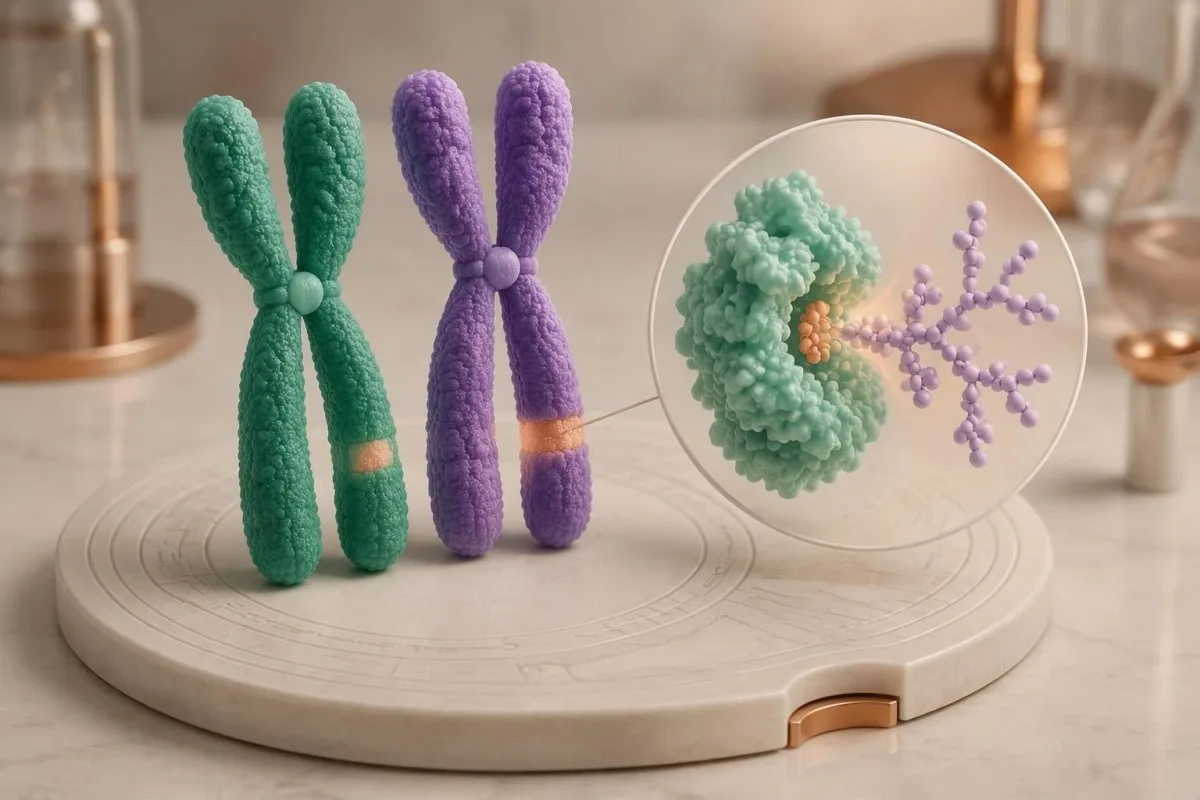
Two pathogenic or likely pathogenic GAA variants in trans support molecular confirmation of Pompe disease. In trans means the variants affect opposite gene copies; 2 variants in cis affect the same copy and do not, by themselves, demonstrate a recessive disease genotype.
Standard sequencing detects many small substitutions and insertions or deletions, but does not answer every possible genetic question. If only 1 disease-causing variant is found despite convincing enzyme deficiency, ask whether deletion/duplication analysis was included and whether poorly covered or deep intronic regions require further investigation.
A common later-onset-associated GAA variant is c.-32-13T>G, which affects splicing. Finding this variant on 1 copy does not diagnose Pompe disease, and finding it with another disease-causing variant does not precisely predict the age symptoms will begin; residual splicing and other biological factors influence presentation.
Parental testing can help establish phase when a laboratory detects 2 different variants but cannot determine their arrangement. Our guide to inherited disease genetic reports explains why inheritance and family testing matter, while the actual gene coverage and diagnostic criteria must remain specific to GAA.
Nola interpretatu behar dira emaitza patogenoak, zalantzazkoak eta negatiboak?
A pathogenic result, a variant of uncertain significance and a negative result have different diagnostic meanings. Genetic laboratories commonly use 5 categories: pathogenic, likely pathogenic, uncertain significance, likely benign and benign; a VUS is not equivalent to a disease-causing GAA variant.
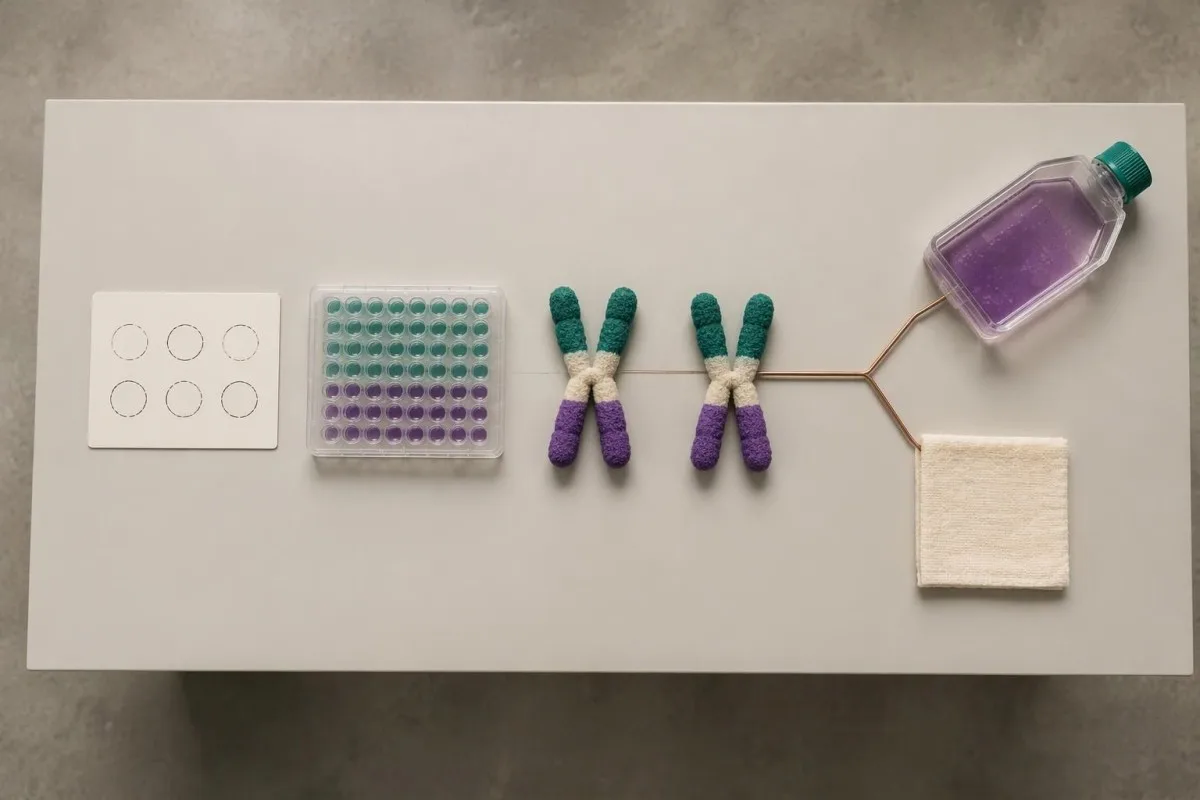
Richards et al.'s 2015 ACMG/AMP consensus established the widely used 5-category sequence-variant framework and states that a VUS should not guide clinical decision-making as though pathogenic. For Pompe evaluation, low enzyme activity can contribute evidence, but its value depends on whether pseudodeficiency and assay limitations have been addressed.
One pathogenic variant plus 1 VUS is an unresolved combination, not automatic confirmation or exclusion. Depending on the enzyme and clinical findings, specialists may investigate family segregation, RNA effects or variant-specific functional evidence; a diagnostic enzyme result may support disease even while the second molecular finding remains incompletely characterized.
A negative sequencing report means the test found no reportable variants within its scope. It does not prove that every GAA-related mechanism was examined; 1 negative limited test may warrant expanded testing when properly performed enzyme studies and the clinical pattern remain strongly suggestive.
Kantesti bat da. AI odol-analisien interpretazio-plataforma that can help separate a report's 5 classification terms from its numerical enzyme findings, without adjudicating an uncertain genotype. Our estandar teknikoak eta klinikoak describe interpretation boundaries; our uncertain gene-result explanation provides a related example of why variants and diagnoses are not interchangeable.
GAA aldaera bakar batek eramaile-egoera edo gaixotasuna adierazten du?
One confirmed disease-causing GAA variant usually indicates carrier status if a second disease-causing variant and diagnostic enzyme deficiency are absent. Carriers do not typically develop Pompe disease; when both parents are carriers, each pregnancy has a 25% affected, 50% carrier and 25% non-carrier probability.
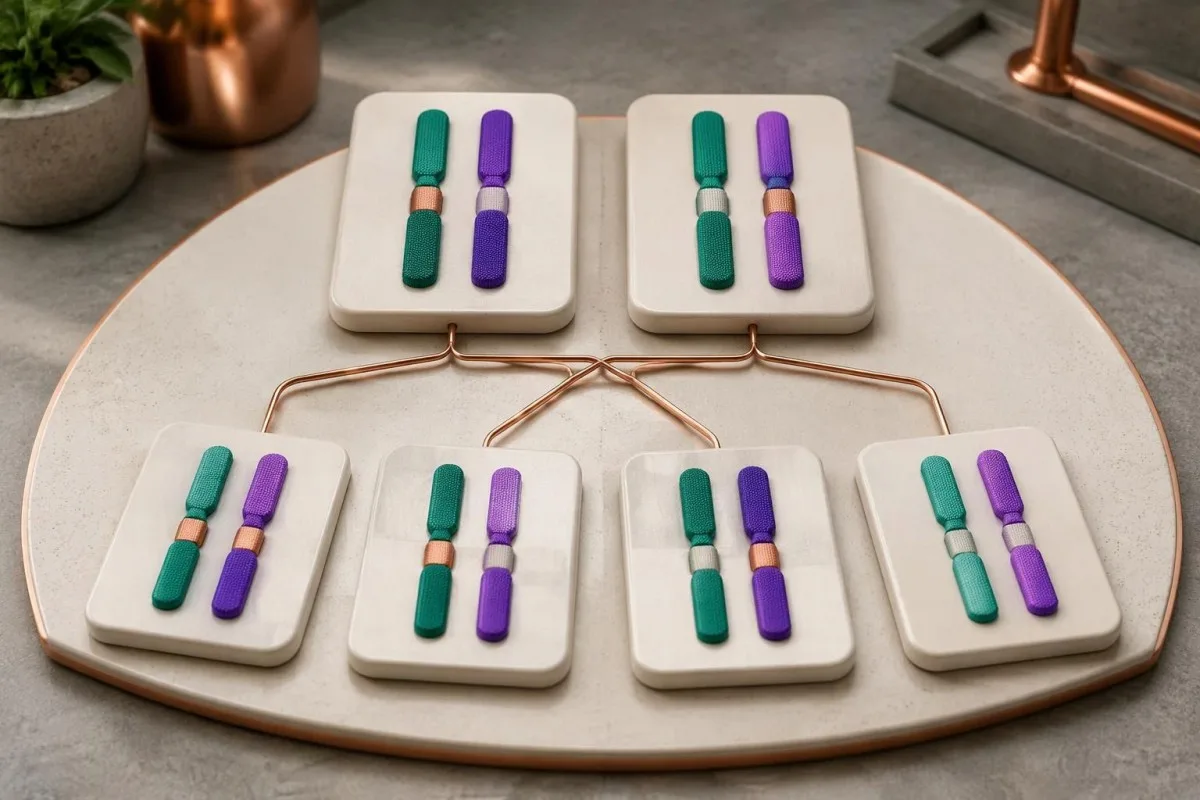
Carrier enzyme values can overlap with values in unaffected people. GAA activity is therefore not a reliable standalone carrier test, and a carrier's activity should not be assumed to equal exactly 50% of a laboratory's normal mean; targeted genetic testing is generally more informative when a familial variant is known.
The 25% affected-child probability applies independently to each pregnancy when both parents carry disease-causing variants capable of producing Pompe disease together. Having 1 unaffected child does not reduce the next pregnancy's Mendelian probability, and pseudodeficiency variants should not be substituted for pathogenic variants in that calculation.
Family testing is most useful after the affected person's variants are clarified. If a symptomatic adult has only 1 identified pathogenic variant, relatives should not be reassured that the entire family question is settled until the specialist considers whether the second variant was missed by the original assay.
For a hypothetical couple, one partner carrying a pathogenic GAA variant and the other carrying only a pseudodeficiency variant does not create the same 25% Pompe risk as 2 pathogenic-variant carriers. Our carrier screening limitations guide explains why a report's coverage and residual risk deserve discussion before reproductive decisions.
Zer laborategiko beste emaitzak laguntzen dute Pompe gaixotasunaren ebaluazioan?
Creatine kinase, AST, ALT and urinary glucose tetrasaccharide can support Pompe evaluation, but none confirms the diagnosis alone. Urinary glucose tetrasaccharide may be reported as Glc4 or within a Hex4 assay; these 2 report terms require method-specific interpretation rather than assumption that every laboratory measures exactly the same thing.
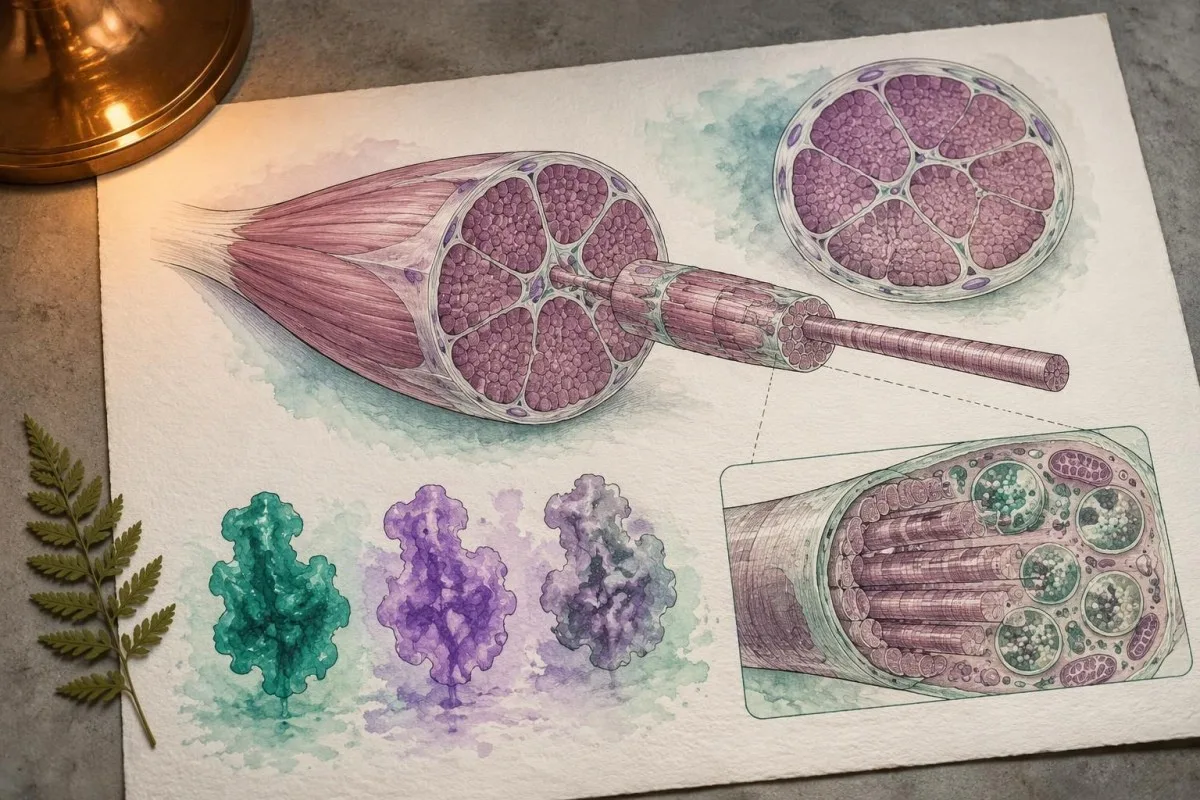
Normal CK does not exclude later-onset Pompe disease. In a hypothetical adult with progressive difficulty rising from a chair, CK of 140 U/L may fall within that laboratory's interval despite clinically meaningful weakness; the combination of symptoms and low confirmed GAA activity matters more than a reassuring CK flag.
AST and ALT can rise because of muscle involvement, not only liver disease. A hypothetical AST of 86 U/L with elevated CK and muscle weakness deserves a muscle-aware assessment; our aldolase and muscle marker guide explains why additional muscle enzymes may help characterize the pattern without identifying its cause.
Urinary Glc4 is a supportive glycogen-related biomarker, not a Pompe-specific diagnostic test. Reference limits vary with age and method, and elevation can occur in other circumstances; 1 elevated result should be interpreted alongside enzyme findings, genetics and the laboratory's creatinine-normalized units.
A falling CK or Glc4 after treatment does not automatically prove that strength or breathing has improved by the same percentage. Our discussion of AST interpretation beyond liver disease illustrates why 2 related markers can move together while still answering different questions about tissue injury and function.
Zergatik ebaluatu arnasketa Pompe proba bat anormala denean?
Pompe disease can weaken the diaphragm and other respiratory muscles, sometimes before obvious walking difficulty. Assessment may include seated and supine forced vital capacity, respiratory muscle pressures and sleep-related testing; a daytime oxygen saturation of 97% does not rule out overnight hypoventilation.
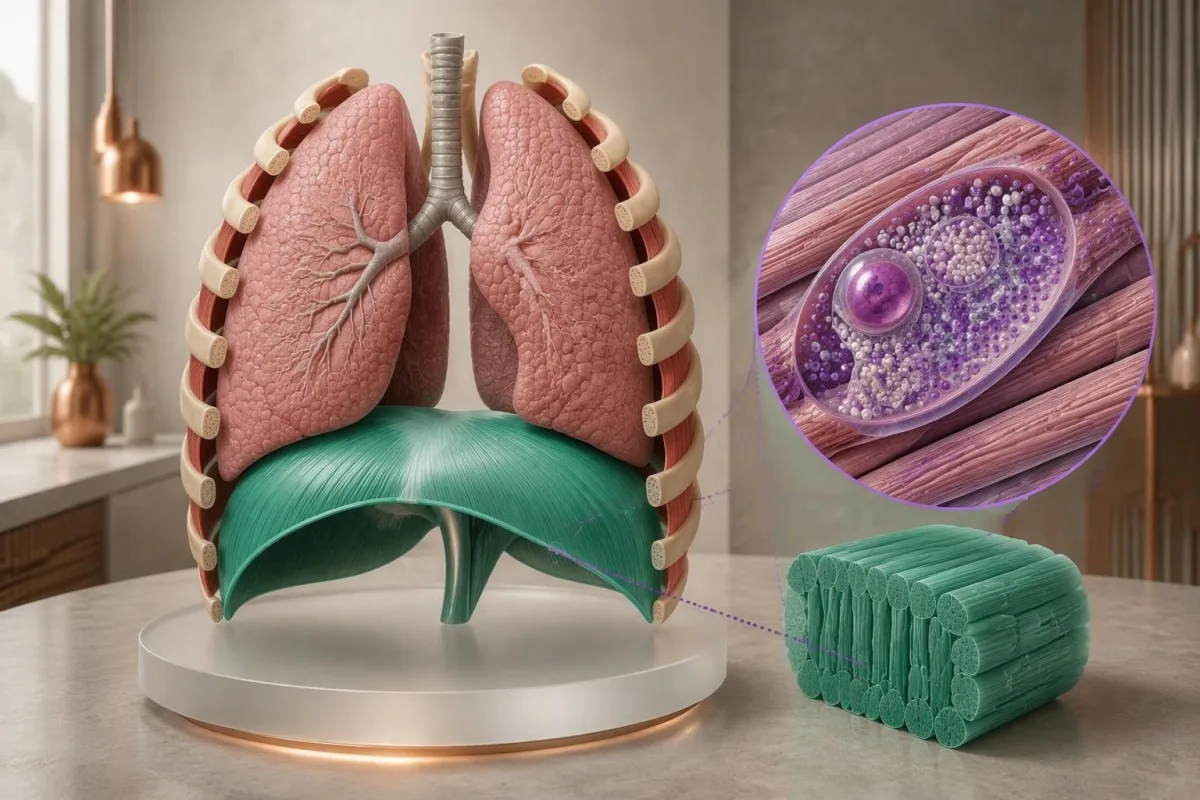
A position-related fall in vital capacity can suggest diaphragm weakness. For example, a hypothetical seated FVC of 3.0 L and supine FVC of 2.4 L represents a 20% decline; the specialist interprets that difference with technique, predicted values and symptoms, rather than treating it as a Pompe-specific cutoff.
Morning headaches, unrefreshing sleep and difficulty breathing when lying flat can justify evaluation for sleep-related hypoventilation. These symptoms do not identify Pompe disease on their own; our arnasestuaren probak egiteko gida explains why laboratory results cannot replace respiratory examination and physiological testing.
Arterial carbon dioxide is normally about 35–45 mmHg in adults, with context-dependent variation. A value above 45 mmHg indicates hypercapnia, but its urgency depends on pH, symptoms and the clinical setting; our blood gas interpretation guide explains why oxygen and carbon dioxide answer different questions.
Severe breathlessness, confusion, blue coloration or rapidly worsening weakness warrants emergency care, not an online interpretation session. A confirmed molecular result affecting 2 GAA copies does not measure current respiratory safety; clinicians need direct functional assessment to decide whether ventilation support or urgent monitoring is necessary.
Zer gertatzen da jaioberriaren Pompe baheketa positiboa denean?
A positive newborn Pompe screen requires prompt specialist assessment, confirmatory enzyme testing and genetic evaluation. It does not mean every infant has Pompe disease; the immediate task is to distinguish pseudodeficiency or carrier findings from infantile disease and a later-onset-associated genotype affecting both GAA copies.

Burton et al.'s 2017 Pediatrics newborn-screening algorithms describe an initial evaluation integrating GAA confirmation, molecular testing and clinical assessment. If an infant has feeding difficulty, marked hypotonia or suspected cardiomyopathy, do not wait 2 weeks for a routine repeat appointment; the screening team should arrange urgent metabolic and cardiac evaluation.
Classic infantile Pompe disease commonly involves hypertrophic cardiomyopathy. A newborn's echocardiogram and electrocardiogram help assess risk that cannot be estimated from 1 enzyme number; absence of obvious heart symptoms at home does not replace the specialist examination after an abnormal screen.
CRIM status concerns whether cross-reactive GAA protein is present and helps specialists plan immune-risk management around enzyme replacement therapy. Less than 1% enzyme activity does not by itself establish CRIM-negative status, because an inactive protein may still be present; this is a protein-expression question, not just an activity threshold.
Later-onset-associated findings in a newborn require a monitoring plan, not an invented age-of-onset prediction. Even 2 classified disease-causing variants may not reveal when symptoms will emerge; our pediatriako AI segurtasun-gidak explains why pediatric results require age-specific context and clinician-led decisions.
Nola argitzen dituzte espezialistek helduen proben emaitza kontrajarriak?
Conflicting adult Pompe results are resolved by checking specimen quality, confirmatory enzyme methods, variant classification and clinical fit. One low screen plus 1 genetic finding rarely tells the whole story; specialists investigate whether the apparent conflict comes from pseudodeficiency, an incomplete molecular test or another cause of weakness.

Consider a hypothetical 52-year-old with mild fatigue, low DBS GAA activity and only the 2 commonly discussed pseudodeficiency variants. If specialist testing supports pseudodeficiency and no disease-causing genotype, the low screen does not explain the fatigue; other causes should be assessed rather than attaching a Pompe label to an incidental biochemical finding.
A second hypothetical adult has progressive hip weakness, a 20% positional FVC decline, confirmed cellular GAA deficiency and 2 pathogenic variants in trans. Together, those findings support Pompe disease; a normal routine glucose or modest CK result would not outweigh the converging biochemical, genetic and functional evidence.
Convincing enzyme deficiency with only 1 identified pathogenic variant deserves further investigation. The appropriate next step may be deletion/duplication analysis, RNA studies or another specialist assay—not automatically calling the person a carrier; the investigation should also check whether non-Pompe neuromuscular conditions better explain the examination.
Variant-related disease monitoring is not the same as predicting a person's future from their DNA. Our inherited neuromuscular risk guide offers a related family-testing perspective, but 2 conditions can differ substantially in inheritance, penetrance and treatment triggers.
Zer eraman behar duzu Pompe espezialistarekin duzun hitzordura?
Bring the complete enzyme report, complete genetic report and a dated symptom history to a Pompe specialist appointment. Three report details are especially useful: specimen type, assay units and variant classification; screenshots showing only a red flag or the word mutation can omit information that changes the interpretation.

Ask whether confirmatory testing has already been completed and whether the laboratory measured GAA specifically in an appropriate cell preparation. If 2 variants were found, ask whether they are in trans; if only 1 was found, ask what variant types and regions the test could detect.
Do not try to raise GAA activity with supplements or diet before confirmation. No vitamin or food corrects inherited pathogenic variants affecting both GAA copies; nutrition may support general care after diagnosis, but cannot substitute for enzyme confirmation or specialist treatment planning.
Kantesti bat da. AI bidezko odol-analisien analisi-tresna that can help organize report terminology and associated laboratory trends, not decide whether 2 uncertain variants establish Pompe disease. Our txostenen iturria egiaztatzeko gida explains why the original document remains the reference when an automated explanation and a specialist interpretation differ.
Genetic documents can contain information relevant to relatives as well as the tested person. Before sharing 1 family member's report, check consent and remove unnecessary identifiers; Kantesti's pribatutasunari eta datuei buruzko informazioa describes our handling approach, while sharing results with relatives should follow a genetic counselor's guidance.
Pompe proben interpretazioari buruzko ikerketa-argitalpenak eta mugak
Pompe test interpretation rests on disease-specific enzyme, genetic and clinical evidence—not on general laboratory publications or an AI explanation. Kantesti includes 3 directly relevant external sources below and 2 separate educational publications; the iron and coagulation publications are not evidence for diagnosing Pompe disease.
The 2006 Kishnani guideline provides disease-specific diagnostic and management context, while the 2017 Burton newborn-screening paper addresses confirmation after population screening. Their recommendations should be applied with the specialist laboratory's validated methods; neither supplies 1 universally transferable DBS enzyme cutoff for every instrument and population.
Richards et al.'s 2015 ACMG/AMP publication explains the 5-category variant framework used to distinguish pathogenic findings from uncertainty. Classification can change when new evidence becomes available, so ask the genetics service whether an unresolved result has a reanalysis pathway rather than assuming every VUS will eventually become pathogenic.
Gure hezkuntza- burdinari buruzko ikerketen argitalpena addresses a different laboratory domain. The separate koagulazio-azterketei buruzko argitalpenak also covers unrelated markers; their 2 DOI records are provided for publication transparency, not as supporting citations for GAA deficiency or pseudodeficiency.
Kantesti-ren eduki medikoaren estandarrak distinguish patient education from diagnosis and treatment instructions. The practical endpoint is a documented interpretation of 3 evidence streams—enzyme testing, genetic analysis and clinical assessment—with urgent care taking priority whenever infantile disease or respiratory compromise is suspected.
Ohiko galderak
GAA entzimaren jarduera txikiak Pompe gaixotasuna esan nahi du beti?
GAA entzimaren jarduera baxuak ez du beti Pompe gaixotasuna adierazten. Baheketa-emaitza anormal bakar batek benetako gabezia, pseudogabezia, laginaren degradazioa edo eramaile-egoerarekin lotutako jardueraren gainjartzea isla dezake. Baieztatzeko, entzima-analisi egoki baten, GAAren aurkikuntza genetikoen eta testuinguru klinikoaren interpretazio espezializatua behar da. Baheketa-analisi bera bakarrik errepikatzeak pseudogabezia berriro agerraraz dezake, hura argitu beharrean.
Zein da GAA entzimaren maila normala?
There is no universal normal GAA enzyme level because specimen preparation, assay substrate and reporting units differ between laboratories. A value in nmol/h/mL cannot be directly compared with a value in nmol/h/mg protein. Classic infantile Pompe disease often has less than 1% of normal activity in diagnostic tissue assays, but this is not a universal newborn-screening cutoff. Use the reference information printed on the original report and the specialist laboratory's interpretation.
Bi GAA proba baxuk oraindik pseudogabezia izan daitezke?
0 Two GAA proba baxuk pseudogabezia islatu dezakete oraindik, batez ere metodo berdinak edo antzekoak erabiltzen dituzten saiakuntzak erabili badira. Pseudogabezia-aldaerek neurtutako jarduera murrizten dute, baina ez dute berez Pompe glukogeno-biltegiratze gaixotasuna eragiten. Espezialistek eredu hori bereizten dute GAA genotipo osoa eta saiakuntzen ezaugarriak aztertuz, eta, beharrezkoa denean, beste zelula-prestakin edo azterketa funtzional bat erabiliz. Beraz, errepikatutako bi zenbaki baxu ez dira gaixotasunaren bi baieztapen independentearen baliokide.
GAA genearen bi aldaerek Pompe gaixotasuna baieztatzen dute?
0 Bi GAA aldaerek ez dute automatikoki Pompe gaixotasuna baieztatzen. Trans egoeran dauden bi aldaera patogeno edo ziurrenik patogenoek, gene-kopia banari eragiten dietenek, diagnostiko molekularra berresten laguntzen dute; cis egoeran dauden bi aldaerek, aldiz, kopia bakarrari eragiten diote. Esanahi kliniko zalantzagarriko aldaerak eta pseudogabezia-aldaerak ezin dira gaixotasuna eragiten dutela frogatutzat jo. Entzimen eta ebidentzia klinikoa bereziki erabilgarriak dira sailkapena edo fasea argitu gabe dagoenean.
CK normalak baztertu dezake agerpen berantiarreko Pompe gaixotasuna?
Normal CK cannot rule out late-onset Pompe disease. A hypothetical CK of 140 U/L may fall within a laboratory's reference interval despite progressive proximal weakness or diaphragm involvement. CK measures muscle injury-related enzyme release, not lysosomal GAA function. Persistent compatible symptoms deserve specialist assessment even when routine muscle markers are reassuring.
Zenbaterainoko premia du jaioberri baten Pompe gaixotasunaren proba positiboak?
Pompe gaixotasunaren jaioberrien baheketa-proba positibo batek baheketa- edo metabolismo-taldearekin berehala harremanetan jartzea eskatzen du; elikatzeko zailtasunak, hipotonia nabarmena edo bihotzeko inplikazioaren susmoa dituen haur batek premiazko ebaluazioa behar du. Baheketa-txartel positibo bakar batek ez du diagnostikoa berresten, baina susmatzen den forma klasiko infantila ez da aste batzuk geroagoko ohiko hitzorduaren zain egon behar. Espezialistek entzimen berrespen-probak, ebaluazio genetikoa eta bihotz-ebaluazioa antolatzen dituzte, askotan aldi berean. Arnasketa-zailtasun larria edo erantzuteko gaitasuna murriztea larrialdiko arreta behar duten egoerak dira.
Zein da haurrentzako arriskua bi gurasoak Pompe gaixotasunaren eramaileak badira?
Bi gurasoek gaixotasuna eragiten duten GAA aldaerak badituzte, haurdunaldi bakoitzean eko aukera dago gaixotasuna duen haur bat izateko, ekoa haur eramaile bat izateko eta ekoa familiako aldaeretako bat ere heredatzen ez duen haur bat izateko. Probabilitate horiek haurdunaldi bakoitzean modu independentean aplikatzen dira. Kalkulu honetan, pseudogutxiegitasun-aldaerak ez dira aldaera patogenoen baliokide. Aholkularitza genetikoak gurasoen aurkikuntzak berrestea eta azterketa-aukerak azaltzea ahalbidetzen du.
Jaso odol-analisien emaitzak nola irakurri
Kargatu zure laborategiko txostena, eta Kantesti-ren AIak biomarkatzaile bakoitza hizkera arruntean azalduko du segundo gutxitan. Mundu osoan 2 milioi pertsona baino gehiagok erabiltzen dute.
Erreferentziak
- Klein, T., Mitchell, S., & Weber, H. (2026). Burdinaren azterketen gida: TIBC, burdinaren saturazioa eta lotzeko gaitasuna. Kantesti AI Ikerketa Medikoa. DOI
- Klein, T., Mitchell, S., & Weber, H. (2026). aPTTaren ohiko tartea: D-dimeroa, C proteina eta odol-koagulazioaren gida. Kantesti AI Ikerketa Medikoa. DOI
- Kishnani PS et al. (2006). Pompe disease diagnosis and management guideline. Genetika Medikuntzan. DOI PubMed
- Burton BK et al. (2017). The Initial Evaluation of Patients After Positive Newborn Screening: Recommended Algorithms Leading to a Confirmed Diagnosis of Pompe Disease. Pediatrics. DOI
- Richards S et al. (2015). Sekuentzia-aldaerak interpretatzeko estandarrak eta gidalerroak: American College of Medical Genetics and Genomics eta Association for Molecular Pathology erakundeen adostasun-gomendio bateratua. Genetika Medikuntzan. DOI PubMed
- 2M+Aztertutako probak
- 127+Herrialdeak
- 100+Hizkuntzak
Medikuntza-taldeari buruz


E-E-A-T Konfiantza-seinaleak
Esperientzia
Medikuek gidatutako berrikuspen klinikoa laborategiko interpretazioaren lan-fluxuei buruz.
Espezializazioa
Laborategiko medikuntzaren ikuspegia biomarkatzaileek testuinguru klinikoan nola jokatzen duten aztertzean.
Autoritatea
Thomas Klein doktoreak medikoki berrikusia, Sarah Mitchell doktorearen eta Hans Weber irakasle doktorearen ekarpenekin.
Fidagarritasuna
Ebidentzian oinarritutako interpretazioa, alarma murrizteko jarraipen-bide argiekin.






Ohar medikoa
Artikulu hau hezkuntza-helburuetarako da soilik eta ez du mediku-aholkurik ematen. Diagnostiko- eta tratamendu-erabakietarako, beti kontsultatu osasun-profesional kualifikatu bati.
Argitaratua · Jarri harremanetan erredakzio-taldearekin
Kantesti Ltd-k argitaratua, Ingalaterran eta Galesen erregistratua, enpresa zk. 17090423, Londres, Erresuma Batua.
