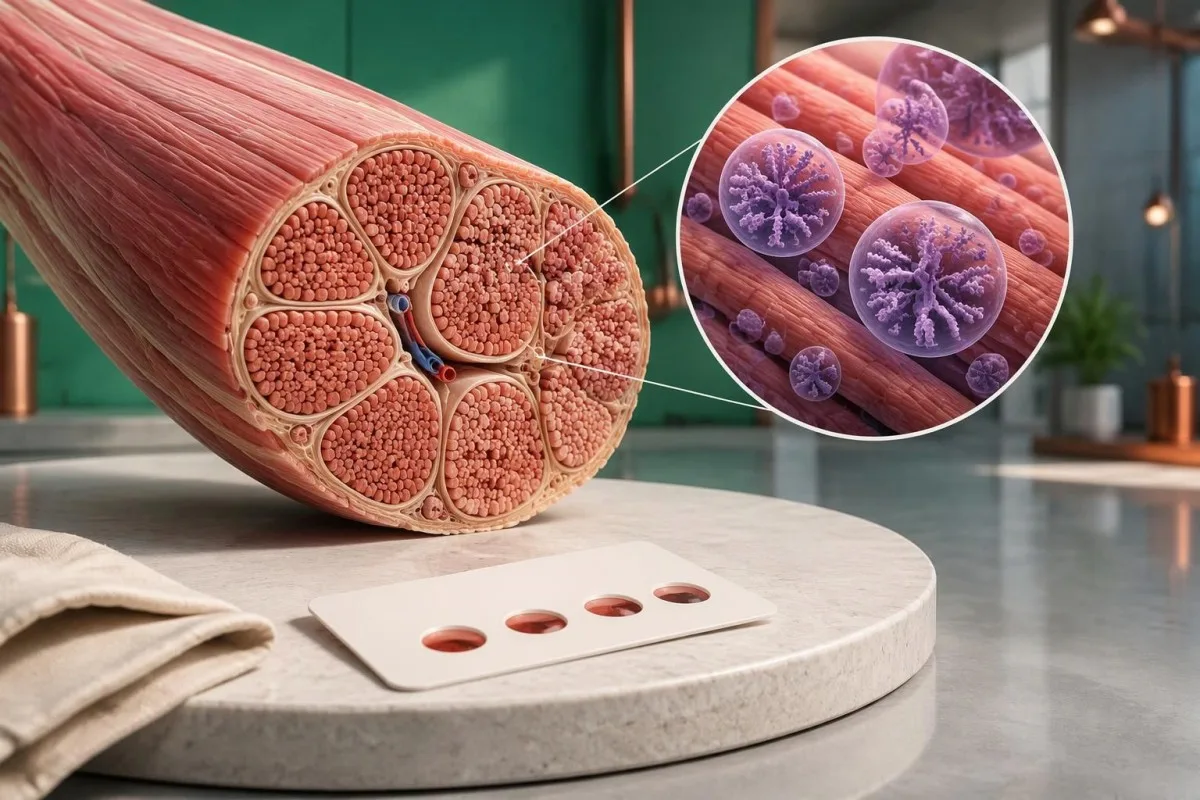
GAA fermentining past natijasi Pompe kasalligiga shubha uyg‘otadi, ammo skriningning o‘zi tashxisni tasdiqlay olmaydi. Tegishli namunada testni takrorlash va GAA genetik tahlili haqiqiy yetishmovchilik, tashuvchilik holati va psevdoyetishmovchilikni farqlashga yordam beradi.

Asosiy xulosalar
- GAA fermenti faolligining pastligi tashxis emas, balki keyingi tekshiruv zarurligini bildiruvchi belgi; g‘ayritabiiy quruq qon dog‘i natijasi mutaxassis ko‘rsatmasi bilan tasdiqlanishi kerak.
- Ma’lumotnoma diapazonlari namuna va tahlil usuliga bog‘liq; nmol/h/mL ni nmol/h/mg oqsil bilan to‘g‘ridan-to‘g‘ri taqqoslab bo‘lmaydi.
- Ferment faolligining qoldiq darajasi odatda klassik infantil Pompe kasalligida 1% dan past bo‘ladi, ammo bu ko‘rsatkich universal skrining chegarasi emas.
- Psevdoyetishmovchilik Pompe kasalligini keltirib chiqarmasdan laboratoriyada GAA faolligini pasaytirishi mumkin; ayni tahlilni takrorlashda past natija yana kuzatilishi mumkin.
- GAA genini tekshirish genning ikkala nusxasiga ta’sir qiluvchi, kasallikni keltirib chiqaruvchi variantlarni izlaydi; 2 ta variant tasnif va fazani aniqlash uchun talqin qilinishi kerak.
- Noaniq variantlar Pompe kasalligini tasdiqlamaydi; klinik ahamiyati noaniq bo‘lgan 1 yoki 2 ta variant uchun qo‘shimcha dalillar kerak.
- Oilaviy xavf har bir homiladorlikda, ikkala ota-ona ham kasallikni keltirib chiqaruvchi GAA variantini tashuvchi bo‘lsa, zararlangan bola tug‘ilish xavfi 25% ni tashkil qiladi.
- Shoshilinch baholash GAA darajasi past bo‘lgan chaqaloqda ovqatlanish qiyinlashuvi, yaqqol holsizlik yoki yurak zararlanishiga shubha kuzatilsa, bu zarur; rejali qayta tekshiruvni kutmang.
GAA fermentining past natijasi aslida nimani anglatadi?
A Pompe kasalligi testi GAA faolligining pastligini ko‘rsatishi laboratoriya o‘z tahlil sharoitida kislotali alfa-glukozidaza funksiyasi kamayganini o‘lchaganini anglatadi. Bu Pompe kasalligini isbotlamaydi: skriningda past chiqqan 1 ta natija haqiqiy yetishmovchilik, psevdoyetishmovchilik, tashuvchilik bilan bog‘liq natijalar ustma-ust tushishi yoki namuna muammosi sababli bo‘lishi mumkin.

GAA faolligi ferment funksiyasini o‘lchaydi, ferment oqsilining shunchaki miqdorini emas. Tekshirilishi kerak bo‘lgan dastlabki 3 ta ma’lumot — namuna turi, o‘lchov birliklari va laboratoriyaning qaror chegarasi; bu ma’lumotlarsiz «past» deb ta’riflangan natijani internetda topilgan raqam bilan ishonchli taqqoslab talqin qilib bo‘lmaydi.
Tekshiruv sababi musbat skrining natijasining ma’nosini o‘zgartiradi. Aholi skriningi orqali aniqlangan yangi tug‘ilgan chaqaloq va son atrofidagi kuchsizligi kuchayib borayotgan 45 yoshli kishida Pompe kasalligining boshlang‘ich ehtimoli har xil bo‘ladi, hatto qayd etilgan ferment qiymatlari bir xil bo‘lsa ham; shu bois simptomlar va ko‘rik natijalari laboratoriya natijasi bilan birga baholanishi kerak.
Skrining musbat bo‘lishi kasallik tasdiqlanganini anglatmaydi. Agar 2 ta laboratoriya turli substratlardan yoki namuna tayyorlash usullaridan foydalansa, ularning raqamli natijalari bir-biridan farq qilishi mumkin va bunda laboratoriyalarning hech biri xato qilgan bo‘lmasligi mumkin; navbatdagi qabul boshqa skrining o‘lchovi uchunmi yoki haqiqatan tasdiqlovchi ferment tahlili uchunmi, deb so‘rang.
Kantesti - bu AI qon testi analizatori bu GAA hisobotini odatiy laboratoriya natijalari bilan birga tartibga solishga yordam berishi mumkin, ammo belgilangan 1 ta qiymat asosida Pompe kasalligini tasdiqlay olmaydi. Bizning kompaniya ma’lumotlari xizmat ortidagi tashkiliy tuzilmani tushuntiradi; irsiy ferment yetishmovchiligiga shubha bo‘lsa, baribir metabolik kasalliklar yoki nerv-mushak kasalliklari bo‘yicha mutaxassis ko‘rigi zarur.
Nima uchun GAA yetishmovchiligi mushaklar va yurak bilan bog‘liq muammolarni keltirib chiqaradi?
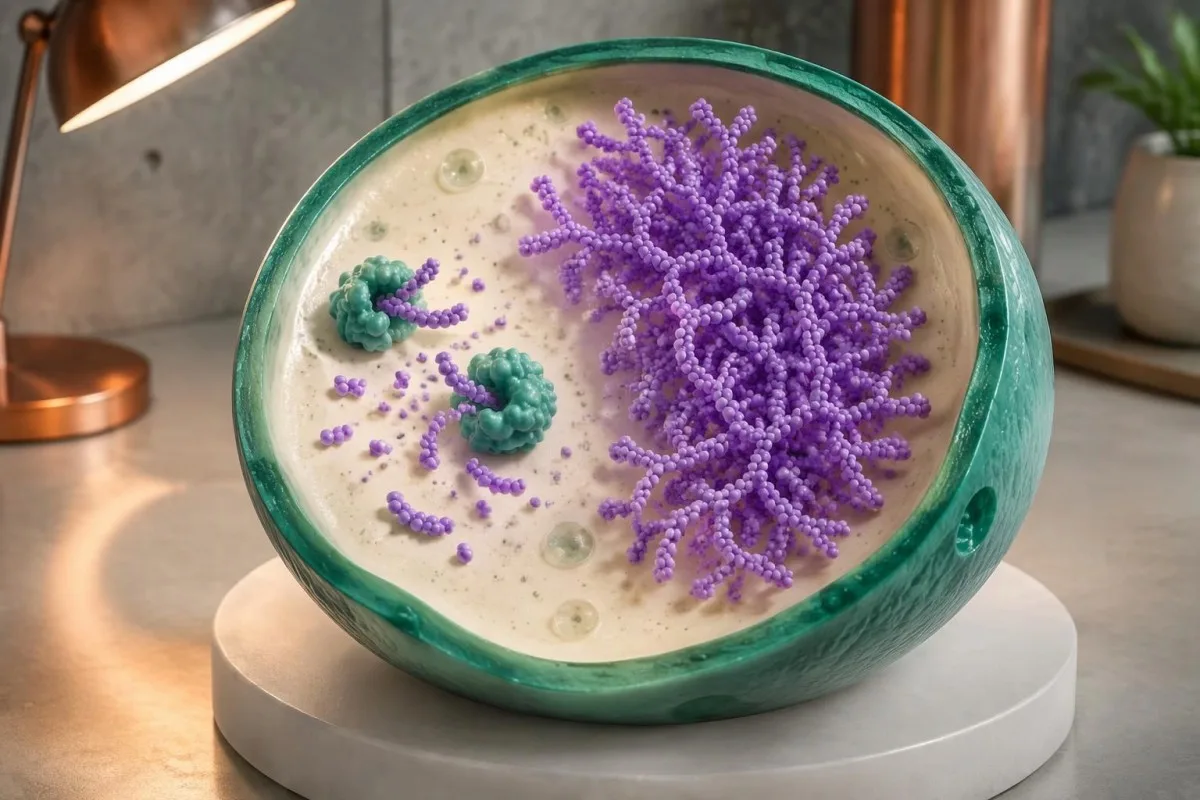
Pompe kasalligi lizosomal kislotali alfa-glukozidaza yetishmovchiligi natijasida yuzaga keladi, bu ferment hujayraning qayta ishlash bo‘limlari ichidagi glikogenni parchalaydi. GAA alfa-1,4 va alfa-1,6 glyukoza bog‘lariga ta’sir qiladi; faolligi yetarli bo‘lmaganda glikogen to‘planadi, ayniqsa skelet va yurak mushaklarida.
Klassik infantil Pompe kasalligida diagnostik to‘qima tahlillarida GAA faolligi ko‘pincha me’yoriy darajaning 1% dan kam bo‘ladi. Kechroq boshlanuvchi kasallikda ferment faolligi yuqoriroq saqlanishi, ayrim tahlillarda taxminan 2–40% bo‘lishi mumkin; bu tavsifiy oraliqlar tahlil cheklovlari bilan ustma-ust tushadi va laboratoriyaning tasdiqlangan diagnostik talqinini almashtirmasligi kerak.
Kishnani va hammualliflarining 2006-yilda Genetics in Medicine jurnalida chop etilgan qo'llanmasida GAA yetishmovchiligi, glikogen to‘planishi va ko‘p tizimli baholash o‘rtasidagi bog‘liqlik bayon qilingan. Klinik farqlash faollik 1% dan past yoki yo‘qligigagina bog‘liq emas: kasallik boshlanadigan yosh, yurak holati va nafas mushaklarining faoliyati ham kasallik shakli hamda shoshilinchligini aniqlashga yordam beradi.
Odatiy glyukoza tahlili lizosomal glikogenning parchalanishini o‘lchamaydi. Masalan, faraziy katta yoshli kishining och qoringa glyukozasi 92 mg/dL bo‘lishi, ayni paytda unda irsiy mushak glikogenini to‘plash kasalligi bo‘lishi mumkin; glyukozaning me’yorda ekanligi mushak lizosomalari ichidagi glikogen me’yorida qayta ishlanayotganini ko‘rsatmaydi.
Boshqa lizosomal kasalliklarda boshqa fermentlar va genlar ishtirok etadi, shuning uchun ular uchun belgilangan chegaralarni Pompe kasalligi tekshiruviga qo‘llab bo‘lmaydi. Bizning quyidagi izohimiz Gosha kasalligini ferment tahlili bilan tasdiqlash ferment tahlilidan genetik tekshiruvgacha bo‘lgan kengroq jarayonni ko‘rsatadi va bir kasallik uchun o‘tkazilgan ferment tahlili nima sababdan boshqa kasallik tahlilining o‘rnini bosa olmasligini tushuntiradi.
GAA fermenti faolligining me’yoriy diapazoni bormi?
There is no single universal normal range for GAA enzyme activity. Dried blood spots, leukocytes and cultured fibroblasts use different preparations and reporting units; a number expressed in nmol/h/mL cannot be directly compared with a result expressed in nmol/h/mg protein.
A screening cutoff separates samples needing follow-up from samples passing that screen. It does not necessarily separate affected people from unaffected people with complete accuracy; laboratories may use different fluorometric or tandem mass spectrometry methods, and 2 screening programs may therefore select different recall thresholds.
For a clearly hypothetical example, suppose a laboratory uses a DBS screening cutoff of 1.5 nmol/h/mL and reports 0.7 nmol/h/mL. The result is below that invented laboratory threshold, but dividing 0.7 by 1.5 gives 47% of the cutoff—not 47% of normal enzyme activity and not a severity score.
The lower limit of detection is different from the clinical cutoff. A report reading less than 0.1 in its stated units may mean the method cannot quantify lower activity reliably; it does not prove absolute absence of enzyme, and repeating measurements close to that analytical floor may produce proportionally large variation.
Screening performance also depends on prevalence. In a hypothetical group with 10 true-positive and 100 false-positive results, only about 9% of positive screens represent disease; those invented counts are not Pompe screening statistics, but explain why sifatli va miqdoriy natijalar require different interpretation.
| Daraja | Diapazon | Bu nimani anglatadi |
|---|---|---|
| Passes hypothetical screen | ≥1.5 nmol/h/mL | Illustrative DBS cutoff only; not a universal normal range and not an absolute exclusion in a symptomatic person. |
| Below hypothetical cutoff | <1.5 nmol/h/mL | Illustrative follow-up threshold only; true deficiency, pseudodeficiency and specimen effects still need separation. |
Nima uchun GAA testini boshqa namunada takrorlash kerak?
Repeat GAA testing checks whether low activity is reproducible and whether specimen quality or assay interference explains it. Confirmation usually moves beyond 1 screening card to a fresh, appropriately handled specimen, often with GAA measurement in leukocytes or another specialist-selected cell preparation.
Heat, humidity and inadequate drying can reduce enzyme activity in a dried blood spot. A low result after 2 days of poorly controlled transport may deserve a fresh collection, but transport history cannot be used to dismiss a result automatically; the laboratory should assess card quality and its stability requirements.
Acarbose is used in some GAA assay methods to suppress interfering maltase-glucoamylase activity. That interference can make measured activity appear higher and potentially obscure deficiency; checking how a laboratory isolates GAA activity can therefore matter more than obtaining a second number with the same unresolved methodological limitation.
Two low DBS results still do not automatically confirm Pompe disease. Pseudodeficiency can reproduce across repeated measurements, including some confirmatory methods; when enzyme and genetic findings disagree, a specialist laboratory may recommend cultured fibroblast testing or additional molecular investigation rather than simply ordering a third screening card.
Give the laboratory the dates of collection, recent transfusions or transplantation, and any enzyme replacement treatment already received. Our guide to namuna sifati bilan bog‘liq xalaqitlar explains the general distinction between biological findings and specimen problems; GAA testing has its own handling rules, so do not import another test's redraw interval.
GAA psevdoyetishmovchiligi Pompe kasalligidan qanday farq qiladi?
GAA pseudodeficiency means an inherited variant lowers measured enzyme activity without causing the glycogen-storage disorder Pompe disease. Two commonly discussed variants are c.1726G>A, p.Gly576Ser, and c.2065G>A, p.Glu689Lys; their interpretation depends on the complete genotype and the assay used.
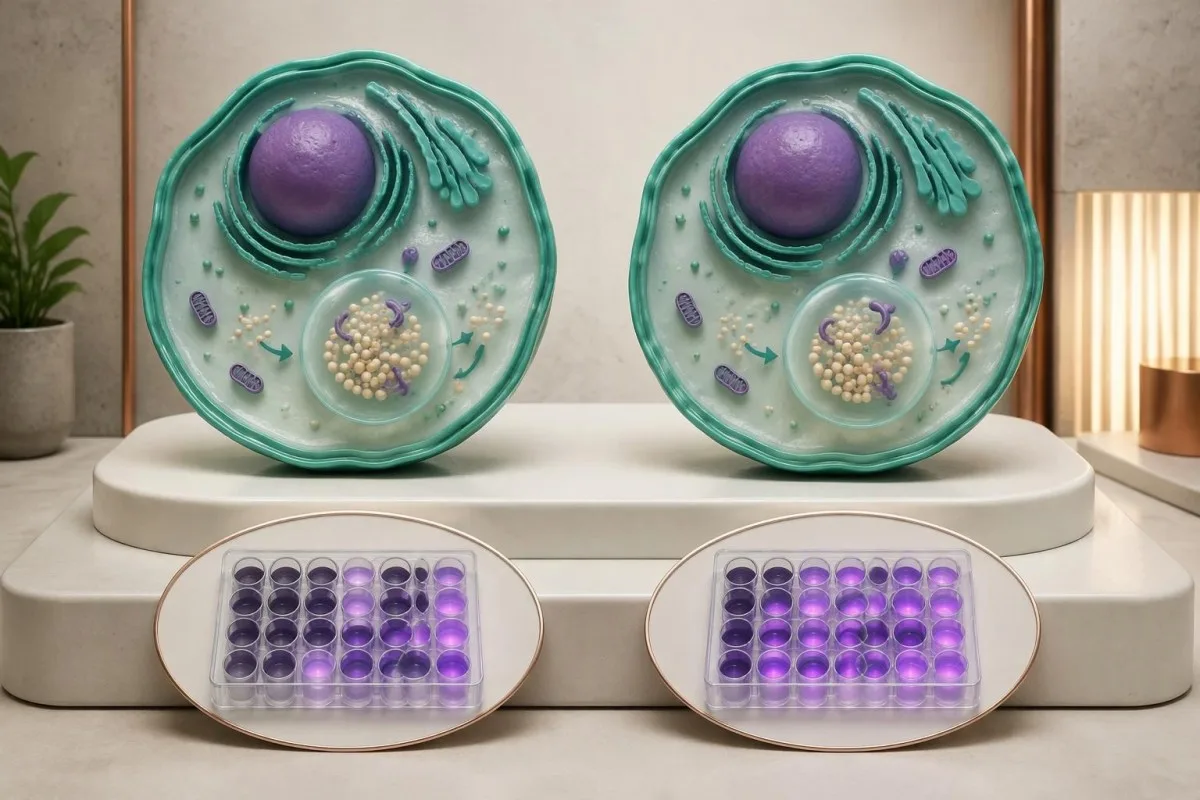
Pseudodeficiency is a biochemical testing issue, not an early stage of Pompe disease. A person with only pseudodeficiency variants does not need Pompe treatment because of 1 low activity result; the specialist must first verify that disease-causing variants or another explanation have not been missed.
The p.Gly576Ser and p.Glu689Lys variants are often found together on 1 gene copy and are particularly relevant in some East Asian ancestry populations. Ancestry changes how often laboratories encounter this pattern, but cannot establish or exclude pseudodeficiency in an individual; people from other backgrounds can carry these variants too.
Pseudodeficiency can remain low on repeat enzyme testing. The practical distinction is whether the complete biochemical and genetic evidence supports disease-causing GAA deficiency, not whether a second result falls below an arbitrary percentage; specialists may compare different assay substrates or cell preparations when the pattern remains ambiguous.
Pseudodeficiency variants can also coexist with a disease-causing variant, making a short report misleading if it lists everything under mutations. Our Fabry enzyme and genetics guide shows another situation where enzyme results need genetic context, although Fabry's X-linked inheritance differs from Pompe's 2-copy recessive mechanism.
GAA genini tekshirishda nimalar izlanishi kerak?
GAA gene testing investigates whether disease-causing variants affect both copies of the GAA gene. Pompe disease is autosomal recessive, and the GAA gene is located on chromosome 17; interpretation requires variant classification, adequate test coverage and, when needed, confirmation that variants affect opposite gene copies.
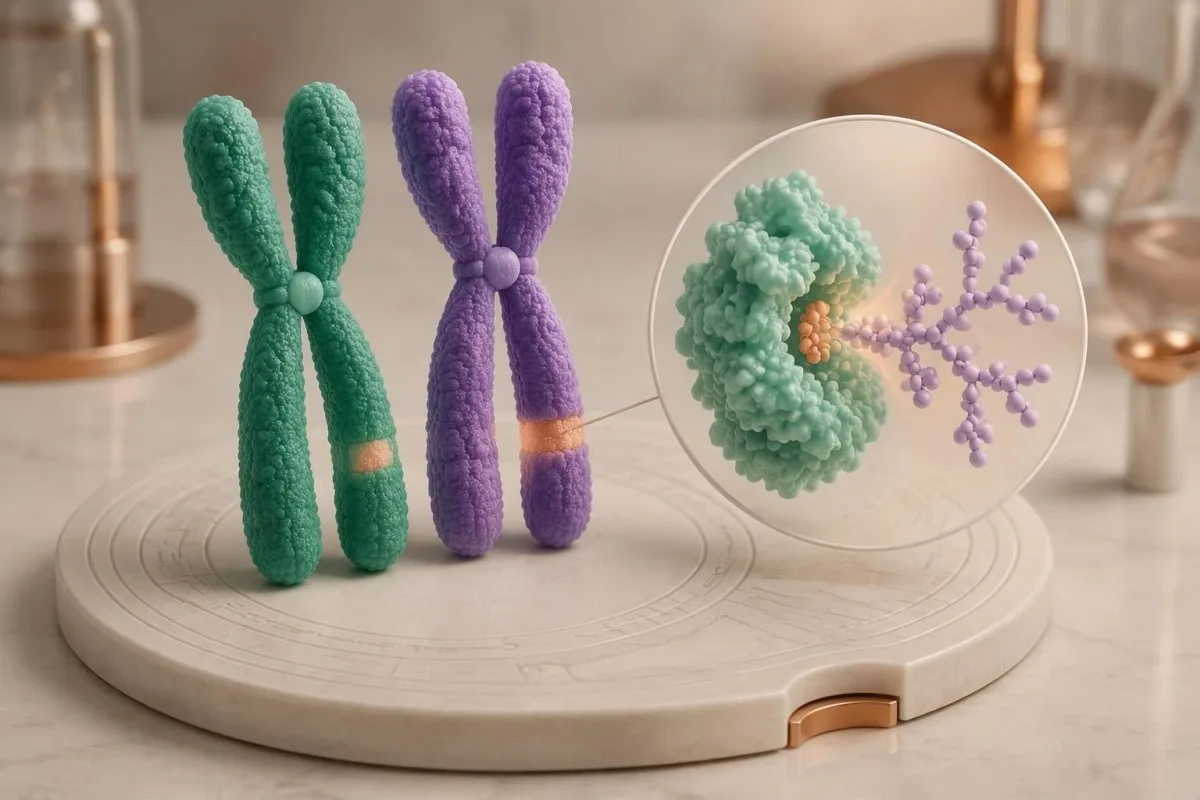
Two pathogenic or likely pathogenic GAA variants in trans support molecular confirmation of Pompe disease. In trans means the variants affect opposite gene copies; 2 variants in cis affect the same copy and do not, by themselves, demonstrate a recessive disease genotype.
Standard sequencing detects many small substitutions and insertions or deletions, but does not answer every possible genetic question. If only 1 disease-causing variant is found despite convincing enzyme deficiency, ask whether deletion/duplication analysis was included and whether poorly covered or deep intronic regions require further investigation.
A common later-onset-associated GAA variant is c.-32-13T>G, which affects splicing. Finding this variant on 1 copy does not diagnose Pompe disease, and finding it with another disease-causing variant does not precisely predict the age symptoms will begin; residual splicing and other biological factors influence presentation.
Parental testing can help establish phase when a laboratory detects 2 different variants but cannot determine their arrangement. Our guide to inherited disease genetic reports explains why inheritance and family testing matter, while the actual gene coverage and diagnostic criteria must remain specific to GAA.
Patogen, noaniq va manfiy natijalarni qanday talqin qilish kerak?
A pathogenic result, a variant of uncertain significance and a negative result have different diagnostic meanings. Genetic laboratories commonly use 5 categories: pathogenic, likely pathogenic, uncertain significance, likely benign and benign; a VUS is not equivalent to a disease-causing GAA variant.
Richards et al.'s 2015 ACMG/AMP consensus established the widely used 5-category sequence-variant framework and states that a VUS should not guide clinical decision-making as though pathogenic. For Pompe evaluation, low enzyme activity can contribute evidence, but its value depends on whether pseudodeficiency and assay limitations have been addressed.
One pathogenic variant plus 1 VUS is an unresolved combination, not automatic confirmation or exclusion. Depending on the enzyme and clinical findings, specialists may investigate family segregation, RNA effects or variant-specific functional evidence; a diagnostic enzyme result may support disease even while the second molecular finding remains incompletely characterized.
A negative sequencing report means the test found no reportable variants within its scope. It does not prove that every GAA-related mechanism was examined; 1 negative limited test may warrant expanded testing when properly performed enzyme studies and the clinical pattern remain strongly suggestive.
Kantesti - bu AI qon tahlili natijalari platformasi that can help separate a report's 5 classification terms from its numerical enzyme findings, without adjudicating an uncertain genotype. Our texnik va klinik standartlarimiz describe interpretation boundaries; our uncertain gene-result explanation provides a related example of why variants and diagnoses are not interchangeable.
Bitta GAA varianti tashuvchilik holatini anglatadimi yoki kasalliknimi?
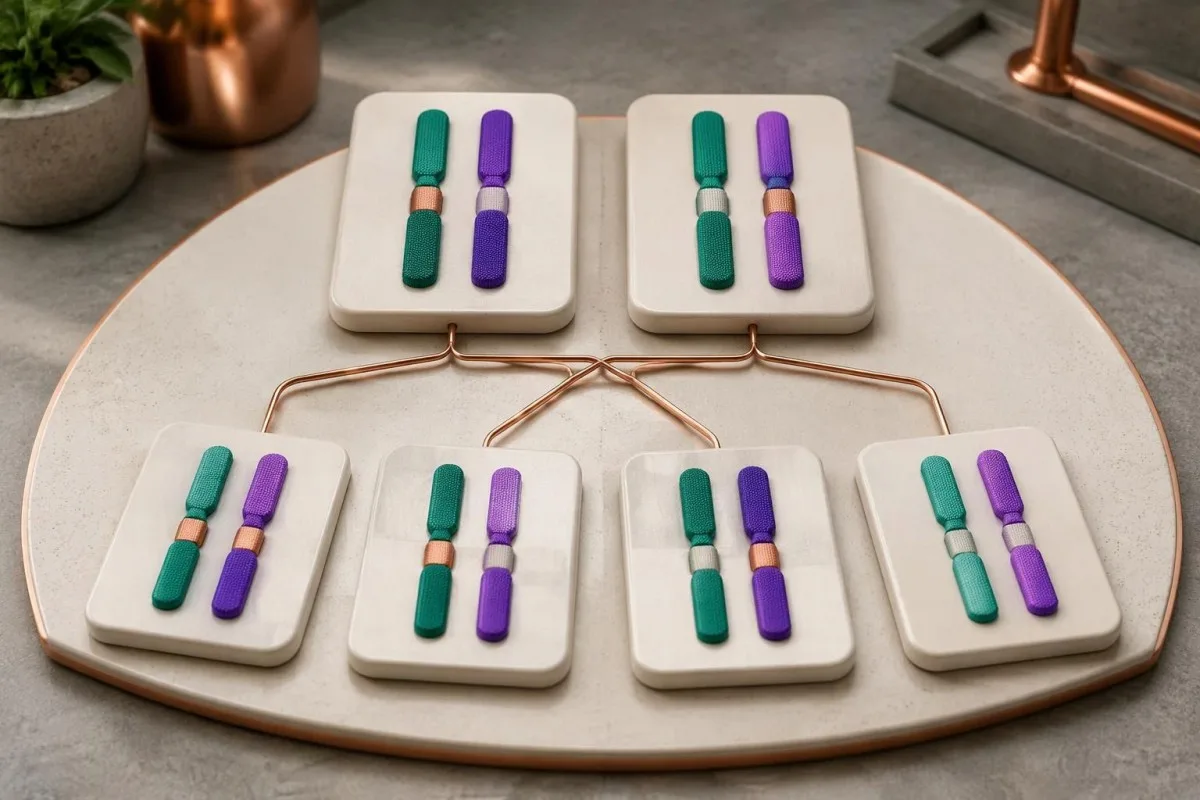
One confirmed disease-causing GAA variant usually indicates carrier status if a second disease-causing variant and diagnostic enzyme deficiency are absent. Carriers do not typically develop Pompe disease; when both parents are carriers, each pregnancy has a 25% affected, 50% carrier and 25% non-carrier probability.
Carrier enzyme values can overlap with values in unaffected people. GAA activity is therefore not a reliable standalone carrier test, and a carrier's activity should not be assumed to equal exactly 50% of a laboratory's normal mean; targeted genetic testing is generally more informative when a familial variant is known.
The 25% affected-child probability applies independently to each pregnancy when both parents carry disease-causing variants capable of producing Pompe disease together. Having 1 unaffected child does not reduce the next pregnancy's Mendelian probability, and pseudodeficiency variants should not be substituted for pathogenic variants in that calculation.
Family testing is most useful after the affected person's variants are clarified. If a symptomatic adult has only 1 identified pathogenic variant, relatives should not be reassured that the entire family question is settled until the specialist considers whether the second variant was missed by the original assay.
For a hypothetical couple, one partner carrying a pathogenic GAA variant and the other carrying only a pseudodeficiency variant does not create the same 25% Pompe risk as 2 pathogenic-variant carriers. Our carrier screening limitations guide explains why a report's coverage and residual risk deserve discussion before reproductive decisions.
Qaysi boshqa laboratoriya natijalari Pompe kasalligini baholashni qo‘llab-quvvatlaydi?
Creatine kinase, AST, ALT and urinary glucose tetrasaccharide can support Pompe evaluation, but none confirms the diagnosis alone. Urinary glucose tetrasaccharide may be reported as Glc4 or within a Hex4 assay; these 2 report terms require method-specific interpretation rather than assumption that every laboratory measures exactly the same thing.
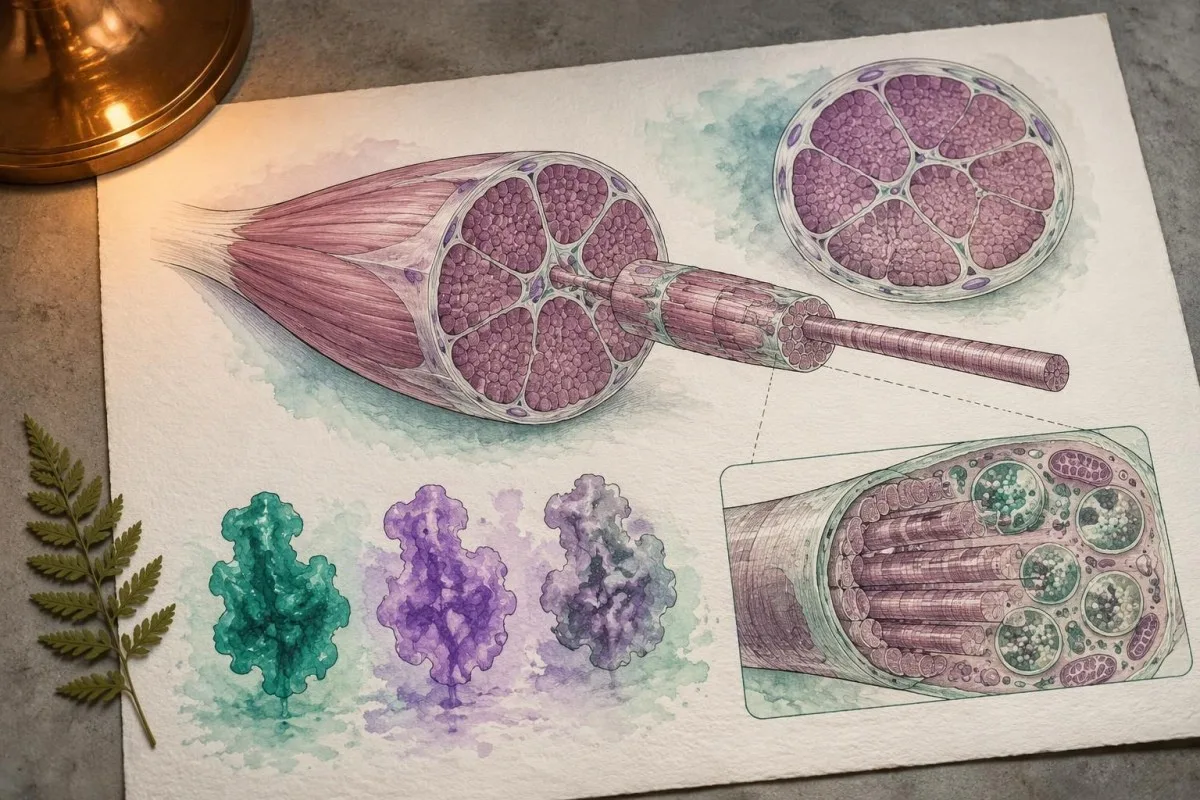
Normal CK does not exclude later-onset Pompe disease. In a hypothetical adult with progressive difficulty rising from a chair, CK of 140 U/L may fall within that laboratory's interval despite clinically meaningful weakness; the combination of symptoms and low confirmed GAA activity matters more than a reassuring CK flag.
AST and ALT can rise because of muscle involvement, not only liver disease. A hypothetical AST of 86 U/L with elevated CK and muscle weakness deserves a muscle-aware assessment; our aldolase and muscle marker guide explains why additional muscle enzymes may help characterize the pattern without identifying its cause.
Urinary Glc4 is a supportive glycogen-related biomarker, not a Pompe-specific diagnostic test. Reference limits vary with age and method, and elevation can occur in other circumstances; 1 elevated result should be interpreted alongside enzyme findings, genetics and the laboratory's creatinine-normalized units.
A falling CK or Glc4 after treatment does not automatically prove that strength or breathing has improved by the same percentage. Our discussion of AST interpretation beyond liver disease illustrates why 2 related markers can move together while still answering different questions about tissue injury and function.
Pompe testi g‘ayritabiiy chiqqanda nima uchun nafas olishni baholash kerak?
Pompe disease can weaken the diaphragm and other respiratory muscles, sometimes before obvious walking difficulty. Assessment may include seated and supine forced vital capacity, respiratory muscle pressures and sleep-related testing; a daytime oxygen saturation of 97% does not rule out overnight hypoventilation.
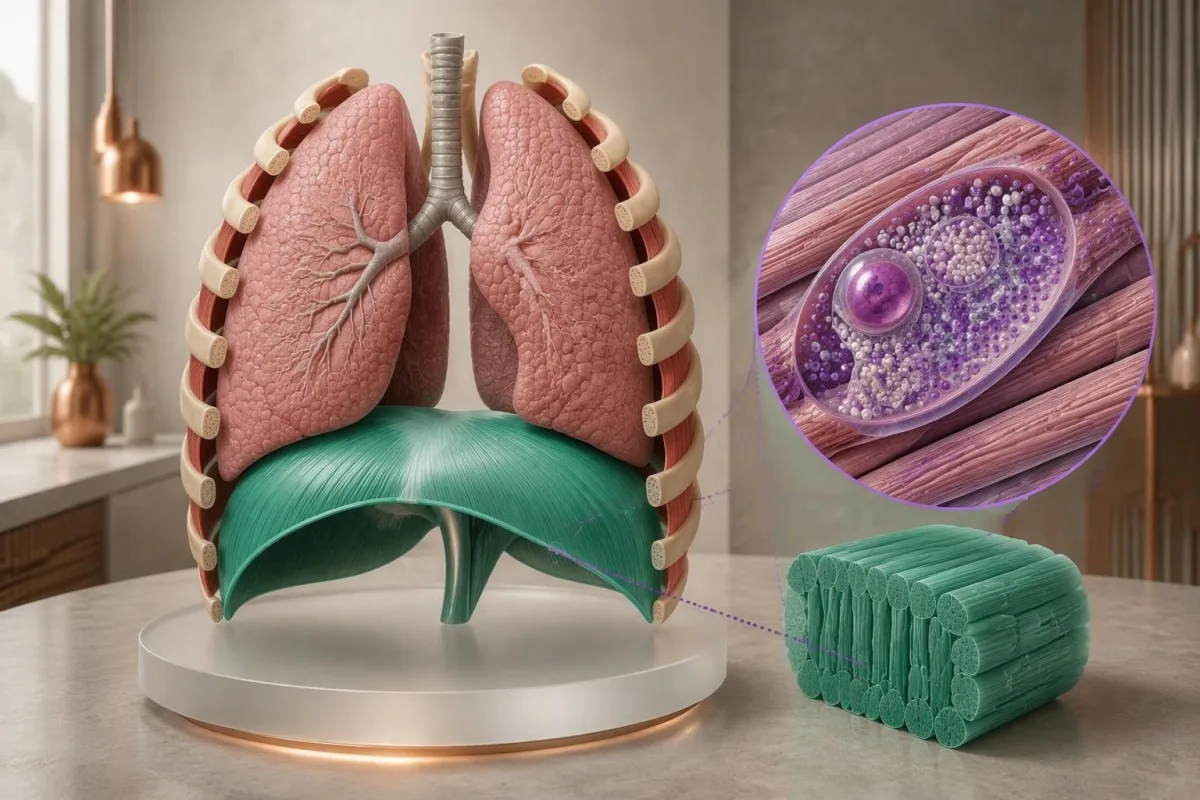
A position-related fall in vital capacity can suggest diaphragm weakness. For example, a hypothetical seated FVC of 3.0 L and supine FVC of 2.4 L represents a 20% decline; the specialist interprets that difference with technique, predicted values and symptoms, rather than treating it as a Pompe-specific cutoff.
Morning headaches, unrefreshing sleep and difficulty breathing when lying flat can justify evaluation for sleep-related hypoventilation. These symptoms do not identify Pompe disease on their own; our nafas qisilishini tekshirish bo'yicha qo'llanma explains why laboratory results cannot replace respiratory examination and physiological testing.
Arterial carbon dioxide is normally about 35–45 mmHg in adults, with context-dependent variation. A value above 45 mmHg indicates hypercapnia, but its urgency depends on pH, symptoms and the clinical setting; our blood gas interpretation guide explains why oxygen and carbon dioxide answer different questions.
Severe breathlessness, confusion, blue coloration or rapidly worsening weakness warrants emergency care, not an online interpretation session. A confirmed molecular result affecting 2 GAA copies does not measure current respiratory safety; clinicians need direct functional assessment to decide whether ventilation support or urgent monitoring is necessary.
Yangi tug‘ilgan chaqaloqlarda Pompe skriningi musbat chiqqach, nimalar bo‘ladi?
A positive newborn Pompe screen requires prompt specialist assessment, confirmatory enzyme testing and genetic evaluation. It does not mean every infant has Pompe disease; the immediate task is to distinguish pseudodeficiency or carrier findings from infantile disease and a later-onset-associated genotype affecting both GAA copies.

Burton et al.'s 2017 Pediatrics newborn-screening algorithms describe an initial evaluation integrating GAA confirmation, molecular testing and clinical assessment. If an infant has feeding difficulty, marked hypotonia or suspected cardiomyopathy, do not wait 2 weeks for a routine repeat appointment; the screening team should arrange urgent metabolic and cardiac evaluation.
Classic infantile Pompe disease commonly involves hypertrophic cardiomyopathy. A newborn's echocardiogram and electrocardiogram help assess risk that cannot be estimated from 1 enzyme number; absence of obvious heart symptoms at home does not replace the specialist examination after an abnormal screen.
CRIM status concerns whether cross-reactive GAA protein is present and helps specialists plan immune-risk management around enzyme replacement therapy. Less than 1% enzyme activity does not by itself establish CRIM-negative status, because an inactive protein may still be present; this is a protein-expression question, not just an activity threshold.
Later-onset-associated findings in a newborn require a monitoring plan, not an invented age-of-onset prediction. Even 2 classified disease-causing variants may not reveal when symptoms will emerge; our bolalar salomatligida sun’iy intellekt xavfsizligi bo‘yicha yo‘riqnomamiz explains why pediatric results require age-specific context and clinician-led decisions.
Mutaxassislar kattalardagi ziddiyatli test natijalarini qanday aniqlashtiradi?
Conflicting adult Pompe results are resolved by checking specimen quality, confirmatory enzyme methods, variant classification and clinical fit. One low screen plus 1 genetic finding rarely tells the whole story; specialists investigate whether the apparent conflict comes from pseudodeficiency, an incomplete molecular test or another cause of weakness.

Consider a hypothetical 52-year-old with mild fatigue, low DBS GAA activity and only the 2 commonly discussed pseudodeficiency variants. If specialist testing supports pseudodeficiency and no disease-causing genotype, the low screen does not explain the fatigue; other causes should be assessed rather than attaching a Pompe label to an incidental biochemical finding.
A second hypothetical adult has progressive hip weakness, a 20% positional FVC decline, confirmed cellular GAA deficiency and 2 pathogenic variants in trans. Together, those findings support Pompe disease; a normal routine glucose or modest CK result would not outweigh the converging biochemical, genetic and functional evidence.
Convincing enzyme deficiency with only 1 identified pathogenic variant deserves further investigation. The appropriate next step may be deletion/duplication analysis, RNA studies or another specialist assay—not automatically calling the person a carrier; the investigation should also check whether non-Pompe neuromuscular conditions better explain the examination.
Variant-related disease monitoring is not the same as predicting a person's future from their DNA. Our inherited neuromuscular risk guide offers a related family-testing perspective, but 2 conditions can differ substantially in inheritance, penetrance and treatment triggers.
Pompe bo‘yicha mutaxassis qabuliga nimalarni olib borish kerak?
Bring the complete enzyme report, complete genetic report and a dated symptom history to a Pompe specialist appointment. Three report details are especially useful: specimen type, assay units and variant classification; screenshots showing only a red flag or the word mutation can omit information that changes the interpretation.

Ask whether confirmatory testing has already been completed and whether the laboratory measured GAA specifically in an appropriate cell preparation. If 2 variants were found, ask whether they are in trans; if only 1 was found, ask what variant types and regions the test could detect.
Do not try to raise GAA activity with supplements or diet before confirmation. No vitamin or food corrects inherited pathogenic variants affecting both GAA copies; nutrition may support general care after diagnosis, but cannot substitute for enzyme confirmation or specialist treatment planning.
Kantesti - bu AI asosidagi qon tahlili analiz vositasi that can help organize report terminology and associated laboratory trends, not decide whether 2 uncertain variants establish Pompe disease. Our hisobot manbasini tekshirish bo‘yicha qo‘llanmamiz explains why the original document remains the reference when an automated explanation and a specialist interpretation differ.
Genetic documents can contain information relevant to relatives as well as the tested person. Before sharing 1 family member's report, check consent and remove unnecessary identifiers; Kantesti's maxfiylik va ma’lumotlar haqidagi ma’lumotlarni describes our handling approach, while sharing results with relatives should follow a genetic counselor's guidance.
Pompe testi talqinining tadqiqot nashrlari va cheklovlari
Pompe test interpretation rests on disease-specific enzyme, genetic and clinical evidence—not on general laboratory publications or an AI explanation. Kantesti includes 3 directly relevant external sources below and 2 separate educational publications; the iron and coagulation publications are not evidence for diagnosing Pompe disease.
The 2006 Kishnani guideline provides disease-specific diagnostic and management context, while the 2017 Burton newborn-screening paper addresses confirmation after population screening. Their recommendations should be applied with the specialist laboratory's validated methods; neither supplies 1 universally transferable DBS enzyme cutoff for every instrument and population.
Richards et al.'s 2015 ACMG/AMP publication explains the 5-category variant framework used to distinguish pathogenic findings from uncertainty. Classification can change when new evidence becomes available, so ask the genetics service whether an unresolved result has a reanalysis pathway rather than assuming every VUS will eventually become pathogenic.
Bizning ma’rifiy temir tadqiqotlari bo‘yicha nashr addresses a different laboratory domain. The separate koagulyatsiya tahlillari haqidagi nashrimiz esa also covers unrelated markers; their 2 DOI records are provided for publication transparency, not as supporting citations for GAA deficiency or pseudodeficiency.
Kantestining tibbiy kontent standartlari distinguish patient education from diagnosis and treatment instructions. The practical endpoint is a documented interpretation of 3 evidence streams—enzyme testing, genetic analysis and clinical assessment—with urgent care taking priority whenever infantile disease or respiratory compromise is suspected.
Tez-tez beriladigan savollar
GAA fermenti faolligining pastligi har doim Pompe kasalligini anglatadimi?
0 Past GAA fermenti faolligi har doim ham Pompe kasalligini anglatmaydi. Skriningning bitta g‘ayritabiiy natijasi haqiqiy yetishmovchilik, psevdoyetishmovchilik, namunaning buzilishi yoki tashuvchilik bilan bog‘liq faollik diapazoniga to‘g‘ri kelishi mumkin. Tashxisni tasdiqlash uchun tegishli ferment tahlili, GAA genetik tekshiruvi natijalari va klinik holatni mutaxassis talqin qilishi kerak. Faqat o‘sha skrining tahlilini takrorlash psevdoyetishmovchilikni bartaraf etmay, aksincha, yana aniqlashi mumkin.
GAA fermentining normal darajasi qanday?
There is no universal normal GAA enzyme level because specimen preparation, assay substrate and reporting units differ between laboratories. A value in nmol/h/mL cannot be directly compared with a value in nmol/h/mg protein. Classic infantile Pompe disease often has less than 1% of normal activity in diagnostic tissue assays, but this is not a universal newborn-screening cutoff. Use the reference information printed on the original report and the specialist laboratory's interpretation.
GAA darajasini aniqlash bo‘yicha ikkita past natija ham psevdodefitsit bo‘lishi mumkinmi?
GAA bo‘yicha ikkita past natija psevdotanqislikni ham ko‘rsatishi mumkin, ayniqsa bir xil yoki o‘xshash ta’sirlangan tahlil usullari qo‘llanganda. Psevdotanqislik variantlari o‘lchangan faollikni pasaytiradi, ammo o‘zlari Pompe glikogen to‘planish kasalligini keltirib chiqarmaydi. Mutaxassislar bu holatni to‘liq GAA genotipi, tahlil xususiyatlari va zarur bo‘lganda boshqa hujayra preparati yoki funksional tekshiruv yordamida farqlaydilar. Shu sababli, takroran olingan ikkita past natija kasallikni mustaqil ravishda ikki marta tasdiqlash bilan teng emas.
GAA genidagi ikkita variant Pompe kasalligini tasdiqlaydimi?
Ikkita GAA varianti Pompe kasalligini avtomatik ravishda tasdiqlamaydi. Trans holatida, genning qarama-qarshi nusxalariga ta’sir qiluvchi ikkita patogen yoki patogen bo‘lishi ehtimoli yuqori variant molekulyar tasdiqni qo‘llab-quvvatlaydi, cis holatidagi ikkita variant esa faqat bitta nusxaga ta’sir qiladi. Klinik ahamiyati noaniq variantlar va psevdodefitsit variantlarini kasallikni keltirib chiqarishi tasdiqlangan topilmalar sifatida hisobga olib bo‘lmaydi. Tasnif yoki faza aniqlanmagan hollarda ferment va klinik dalillar ayniqsa foydali bo‘lib qoladi.
Me’yoriy CK kech boshlanuvchi Pompe kasalligini istisno qilishi mumkinmi?
Normal CK cannot rule out late-onset Pompe disease. A hypothetical CK of 140 U/L may fall within a laboratory's reference interval despite progressive proximal weakness or diaphragm involvement. CK measures muscle injury-related enzyme release, not lysosomal GAA function. Persistent compatible symptoms deserve specialist assessment even when routine muscle markers are reassuring.
Yangi tug‘ilgan chaqaloqda Pompe kasalligi testi ijobiy chiqishi qanchalik shoshilinch hisoblanadi?
Pompe kasalligi bo‘yicha yangi tug‘ilgan chaqaloq testi musbat chiqsa, skrining yoki metabolik kasalliklar guruhi bilan zudlik bilan bog‘lanish kerak; emishda qiynalayotgan, yaqqol gipotoniya kuzatilgan yoki yurak zararlanganidan shubha qilingan chaqaloq shoshilinch tekshiruvdan o‘tkazilishi lozim. Bitta musbat skrining kartasi tashxisni tasdiqlamaydi, ammo klassik infantil kasallikdan shubha qilinganda bir necha haftadan keyingi navbatdagi qabulni kutmaslik kerak. Mutaxassislar tasdiqlovchi ferment tekshiruvini, genetik baholashni va yurak tekshiruvini, ko‘pincha parallel ravishda, tashkil etadi. Nafas olishning og‘ir qiyinlashuvi yoki hushyorlikning pasayishi shoshilinch tibbiy yordamni talab qiladi.
Agar ikkala ota-ona ham Pompe kasalligi tashuvchisi bo‘lsa, farzandlar uchun xavf qanday?
Agar ikkala ota-ona ham kasallikni keltirib chiqaruvchi GAA variantlarini tashuvchi bo‘lsa, har bir homiladorlikda kasallikka chalingan farzand tug‘ilish ehtimoli 25%, tashuvchi farzand tug‘ilish ehtimoli 50% va farzand oilaviy variantlarning hech birini meros qilib olmaslik ehtimoli 25% bo‘ladi. Bu ehtimollar har bir homiladorlik uchun mustaqil ravishda amal qiladi. Ushbu hisob-kitobda psevdotanqislik variantlarini patogen variantlar bilan almashtirib bo‘lmaydi. Genetik maslahat ota-onalardagi natijalarni tasdiqlash va testdan o‘tish imkoniyatlarini tushuntirishga yordam beradi.
Qon tahlili natijalarini qanday o‘qish kerak
Laboratoriya hisobotingizni yuklang va Kantesti sun’iy intellekti har bir biomarkerni soniyalar ichida sodda tilda tushuntiradi. Dunyo bo‘ylab 2 milliondan ortiq kishi foydalanadi.
Adabiyotlar
- Klein, T., Mitchell, S., & Weber, H. (2026). Temir tahlillari bo‘yicha qo‘llanma: TIBC, temir bilan to‘yinganlik va bog‘lash qobiliyati. Kantesti AI tibbiy tadqiqotlari. DOI
- Klein, T., Mitchell, S., & Weber, H. (2026). aPTTning me’yoriy oralig‘i: D-dimer, Protein C va qon ivishi bo‘yicha qo‘llanma. Kantesti AI tibbiy tadqiqotlari. DOI
- Kishnani PS et al. (2006). Pompe disease diagnosis and management guideline. Tibbiyotdagi genetika. DOI PubMed
- Burton BK et al. (2017). The Initial Evaluation of Patients After Positive Newborn Screening: Recommended Algorithms Leading to a Confirmed Diagnosis of Pompe Disease. Pediatrics. DOI
- Richards S va boshq. (2015). Ketma-ketlik variantlarini talqin qilish bo‘yicha standartlar va ko‘rsatmalar: Amerika Tibbiy Genetika va Genomika kolleji hamda Molekulyar patologiya assotsiatsiyasining qo‘shma konsensus tavsiyasi. Tibbiyotdagi genetika. DOI PubMed
- 2M+Tahlil qilingan testlar
- 127+Mamlakatlar
- 100+Tillar
Tibbiy guruh haqida


E-E-A-T ishonch signallari
Tajriba
Shifokor boshchiligidagi laboratoriya talqin qilish ish jarayonlarini klinik ko‘rib chiqish.
Tajriba
Laboratoriya tibbiyoti biomarkerlarning klinik kontekstda qanday o‘zini tutishini yoritadi.
Vakolatlilik
Doktor Thomas Klein tomonidan tibbiy jihatdan ko‘rib chiqilgan, doktor Sarah Mitchell va professor doktor Hans Weber hissalari bilan.
Ishonchlilik
Xavotirni kamaytirish uchun aniq keyingi qadamlar yo‘nalishlari bilan dalillarga asoslangan talqin.





Tibbiy ogohlantirish
Ushbu maqola faqat ta’lim maqsadlari uchun mo‘ljallangan va tibbiy maslahatni anglatmaydi. Tashxis va davolash bo‘yicha qarorlar uchun har doim malakali sog‘liqni saqlash mutaxassisiga murojaat qiling.
Nashr etilgan · Tahririyat jamoasi bilan bog‘laning
Angliya va Uelsda ro‘yxatdan o‘tgan Kantesti Ltd tomonidan nashr etilgan, kompaniya raqami. 17090423, London, Birlashgan Qirollik.
