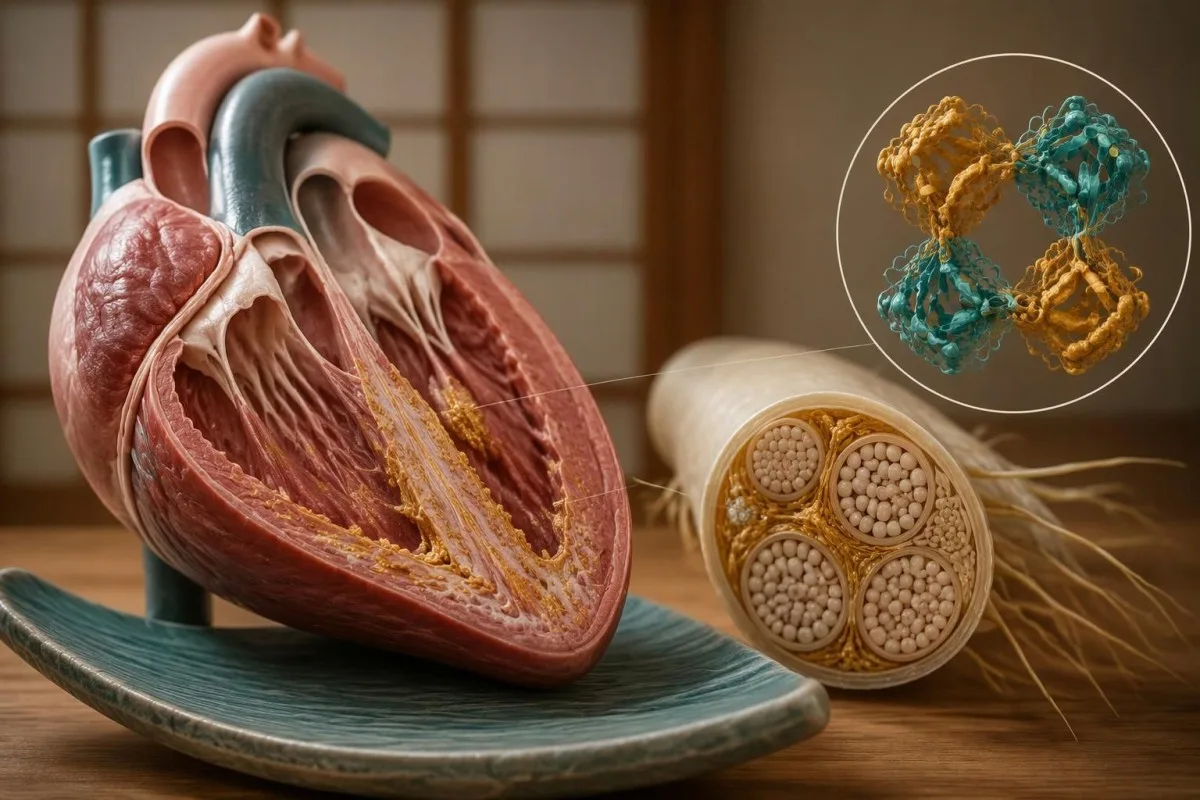
Патогенний варіант TTR встановлює спадкову схильність до спадкового ATTR-амілоїдозу, але не є доказом активного захворювання. Варіант із невизначеним значенням не встановлює такої схильності; симптоми потребують окремого оцінювання фахівцем, а ATTR дикого типу розвивається без успадкованого патогенного варіанта TTR.

Ключові висновки
- Патогенний варіант TTR означає спадкову схильність; 1 генетичної знахідки самої по собі недостатньо для підтвердження симптоматичного амілоїдозу.
- Ризик успадкування зазвичай становить 50% для кожної дитини людини з 1 копією патогенного варіанта TTR, незалежно від статі дитини.
- Знахідки з невизначеним значенням належать до 1 із 5 стандартних категорій класифікації варіантів; VUS не має сам по собі визначати прогностичне тестування чи лікування.
- Назви варіантів можуть відрізнятися на 22 позиції амінокислот: p.Val50Met і історична назва Val30Met позначають ту саму заміну.
- ATTR дикого типу охоплює транстиретин без виявленого патогенного варіанта TTR; спадкові та спорадичні відкладення неможливо надійно розрізнити лише за симптомами.
- Підтвердження ураження серця може ґрунтуватися на накопиченні кісткового радіофармпрепарату 2-го або 3-го ступеня, але лише в межах належного алгоритму візуалізації та після оцінювання моноклонального білка.
- Спостереження за носіями варіанта часто передбачає щорічне оцінювання з індивідуально визначеним графіком; приблизно 10 років до прогнозованого початку хвороби в родині — це допоміжний орієнтир для планування, а не біологічно визначений крайній термін.
- Екстрені симптоми такі прояви, як сильна задишка, непритомність або біль у грудях, потребують невідкладної допомоги, а не очікування наступного контрольного огляду через 6–12 місяців.
Що насправді означає варіант TTR?
A патогенний або ймовірно патогенний варіант TTR вказує на спадкову схильність до спадкового ATTR-амілоїдозу, але сам по собі не свідчить про активне відкладення амілоїду чи ураження органів. Варіант варіант невизначеного значення, або VUS, має недостатньо доказів для такого висновку; це окремі питання, що потребують окремих клінічних рішень.

TTR — це ген, який кодує транстиретин — транспортний білок, що виробляється переважно в печінці; його звичайна структура в крові складається з 4 білкових субодиниць. Деякі варіанти роблять цю структуру менш стабільною, унаслідок чого неправильно згорнутий білок може накопичуватися у вигляді амілоїду, особливо в нервах або серці.
Наприклад, уявімо 46-річну людину, у якої клінічне генетичне тестування виявило відомий патогенний варіант TTR, але неврологічне обстеження та оцінювання серця не виявили ознак хвороби. Належним описом може бути безсимптомний носій варіанта, а не людина із симптоматичним амілоїдозом; право на лікування та подальше спостереження залежать від додаткових результатів.
Kantesti — це аналізатор аналізів крові зі штучним інтелектом, який допомагає пояснювати супутні лабораторні результати, розмежовуючи генетичну схильність і підтвердження ураження органів. Інформація про нашій організації пояснює контекст надання наших послуг; ні звичайна лабораторна панель, ні пояснення ШІ не можуть замінити ці 2 спеціалізовані обстеження.
Чим патогенні знахідки TTR відрізняються від VUS?
Патогенні і імовірно патогенний результати мають докази на підтвердження їхньої ролі у спричиненні хвороби; варіант VUS не має достатніх доказів для класифікації як шкідливий або нешкідливий. Лабораторії використовують 5 стандартних категорій: патогенний, імовірно патогенний, невизначеного значення, імовірно доброякісний і доброякісний.

Система класифікації варіантів послідовності ACMG/AMP встановлює для ймовірно патогенних результатів поріг упевненості щодо патогенності понад 90%, але цей відсоток описує упевненість у класифікації, а не ймовірність розвитку симптомів у конкретної людини (Richards та ін., 2015). Наше пояснення щодо результатів тестування на спадковий рак illustrates the same distinction between a laboratory label and a person's current disease status.
A VUS should not, by itself, trigger disease-specific treatment or routine predictive testing of healthy relatives. Specialists may instead investigate whether the finding tracks with confirmed disease in a family—a segregation study involving 2 or more informative relatives when available—which is different from declaring those relatives genetically affected.
Classification can change when additional family, functional, or population evidence becomes available. Ask who will handle recontact, whether review in 12–24 months would be useful, and whether another laboratory has classified the exact same variant differently; our guide to common genetic variant misconceptions explains why the word mutation is not automatically a diagnosis.
Чому той самий варіант TTR може мати дві назви?
The same TTR variant can have modern and historical protein names because modern numbering includes a 22-amino-acid signal peptide. For example, p.Val50Met is the variant historically called Val30Met, та p.Val142Ile is the variant historically called Val122Ile.

A complete report ideally supplies the gene, transcript reference, DNA-level notation, protein-level notation, zygosity, and classification—not simply a variant nickname. Because a TTR precursor contains 149 amino acids and the mature protein contains 127, comparing reports without noticing the numbering convention can create an apparent disagreement where none exists.
p.Thr80Ala, historically Thr60Ala, can produce a mixed cardiac and neurological phenotype, whereas p.Val142Ile is often associated with predominantly cardiac disease. These are tendencies rather than guarantees: 2 relatives with the same variant may differ in age at onset, affected organs, and severity.
For a hypothetical family, a parent's report saying Val122Ile and an adult child's report saying p.Val142Ile should prompt exact-notation comparison before anyone concludes that there are 2 different familial variants. Similar nomenclature issues arise in enzyme and genetic testing; bring the original reports rather than relying on a handwritten abbreviation.
Чи означає ризик успадкування 50% ризик захворювання 50%?
A 50% inheritance risk is not a 50% risk of symptomatic disease. Hereditary ATTR usually follows autosomal dominant inheritance: a person with 1 disease-causing TTR copy has a 50% chance of passing that copy to each child, but disease expression depends on age-related penetrance and other factors.
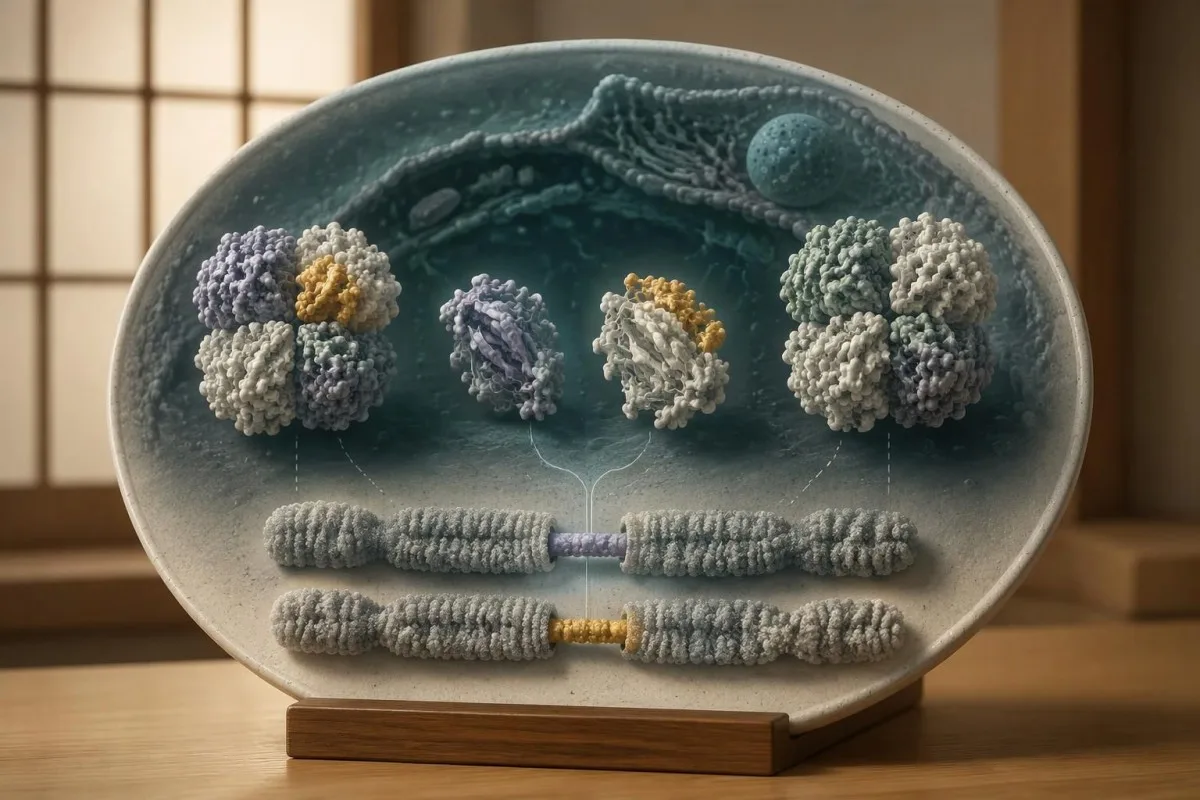
Each pregnancy is an independent event; with 2 children, the theoretical probabilities are 25% for neither inheriting the variant, 50% for exactly one, and 25% for both. Those calculations assume one heterozygous parent and describe inheritance only—they do not predict whether or when either child will become ill.
Penetrance means the proportion of variant carriers who develop disease by a stated age, and it varies across TTR variants and populations. The often-quoted 3–4% frequency of p.Val142Ile in some populations of African ancestry is a variant-frequency estimate, not a universal estimate of amyloidosis prevalence or an individual's lifetime disease risk.
An apparently unaffected parent aged 75 can still have transmitted a pathogenic variant, while a negative family history may reflect late onset, small families, or previously unrecognized disease. Our discussion of genetic susceptibility and kidney risk offers a useful comparison, although APOL1 risk architecture should not be substituted for TTR inheritance.
Чим спадковий ATTR відрізняється від ATTR дикого типу?
Hereditary ATTR involves a disease-causing TTR variant; wild-type ATTR involves amyloid formed from transthyretin without an identified disease-causing variant. Both can affect the heart, so neither age nor a cardiac scan alone reliably distinguishes these 2 forms.
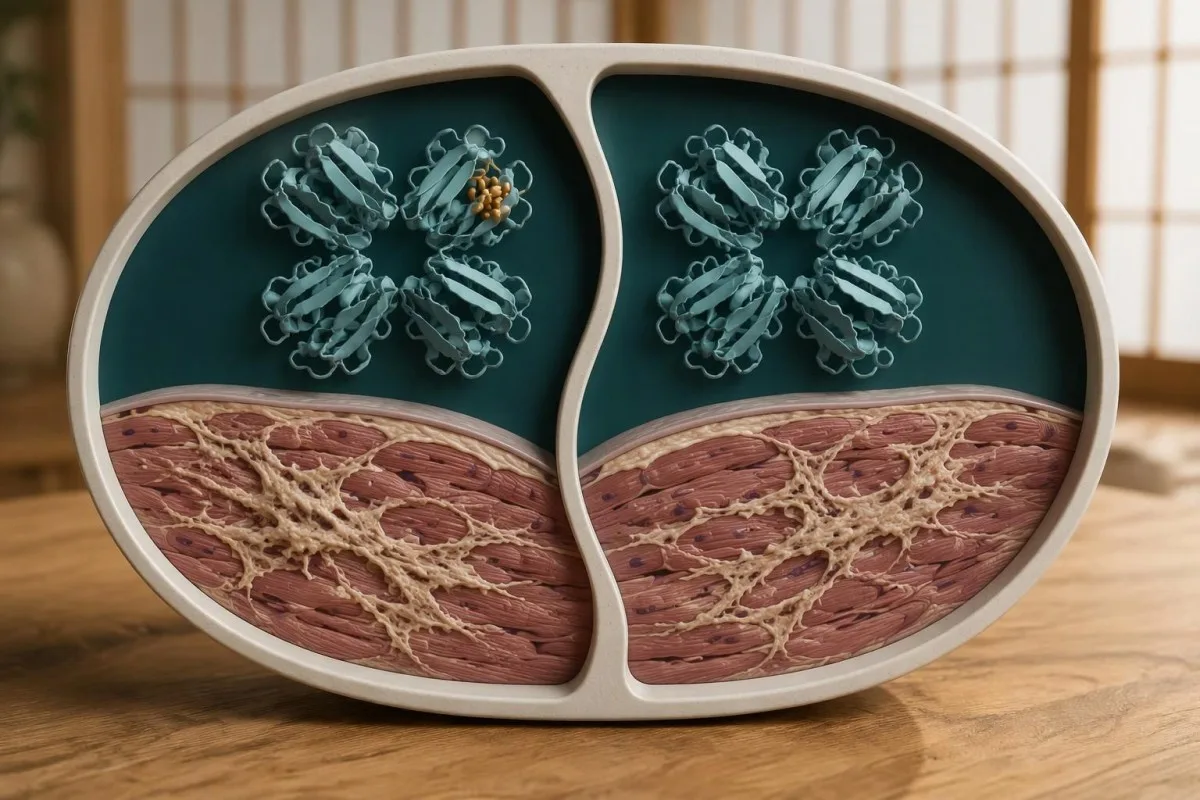
TTR sequencing is recommended after ATTR cardiomyopathy is established, including in older adults, because hereditary disease can first become apparent after age 70. The ESC position statement emphasizes genetic counseling and testing to distinguish variant ATTR from wild-type ATTR, rather than assuming that an older patient's disease cannot be inherited (Garcia-Pavia et al., 2021).
A negative result for a known family variant removes that particular inherited susceptibility, but it does not guarantee that the person will never develop wild-type ATTR or another heart condition. Conversely, a VUS does not automatically convert a confirmed ATTR diagnosis into hereditary ATTR; the laboratory classification and amyloid diagnosis still need reconciliation.
ATTR is also different from AL-амілоїдоз, caused by immunoglobulin light chains, and AA-амілоїдоз, associated with prolonged inflammatory activity. These are at least 3 distinct amyloid types with different investigations and treatment pathways; an elevated serum amyloid A result does not diagnose TTR-related disease.
Які симптоми спадкового амілоїдозу потребують оцінювання?
Hereditary amyloidosis symptoms may include progressive numbness or burning feet, weakness, altered bowel function, dizziness on standing, breathlessness, or ankle swelling. These findings are nonspecific, but involvement of 2 systems—such as neuropathy plus unexplained cardiac thickening—raises more concern than either finding alone.

Bilateral carpal tunnel syndrome, particularly when it precedes cardiac symptoms by several years, can be an ATTR clue but is far more commonly explained by other causes. Document whether 1 or both wrists are affected and when symptoms began; our guide to carpal tunnel finger patterns helps distinguish a local median-nerve pattern from broader neuropathy.
Ортостатична гіпотензія commonly means a sustained fall of at least 20 mmHg systolic or 10 mmHg diastolic within 3 minutes of standing. Amyloid-related autonomic dysfunction is one possible cause, but dehydration and medicines are common alternatives; it is not interchangeable with the heart-rate pattern discussed in POTS diagnostic testing.
Consider a hypothetical 58-year-old carrier who develops numb feet, unintentional weight loss, and new difficulty climbing stairs over 6 months: that combination warrants prompt specialist review rather than waiting for annual screening. Sudden weakness, severe breathlessness, chest pain, or collapse requires urgent care because immediately treatable problems must be assessed before attributing symptoms to ATTR.
Які обстеження підтверджують активний ATTR-амілоїдоз?
Active ATTR amyloidosis requires evidence of amyloid disease, not just a genetic result. In the appropriate cardiac setting, grade 2 or 3 uptake on a validated bone-tracer scan can establish ATTR cardiomyopathy without biopsy only when monoclonal protein testing is negative and imaging confirms uptake within heart muscle.

The monoclonal screen includes serum free light chains plus serum and urine immunofixation; serum protein electrophoresis alone is insufficient. Gillmore et al.'s 2016 Circulation study evaluated 1,217 patients and established the nonbiopsy cardiac approach under defined conditions; our guide to immunofixation bands and follow-up explains why detecting a monoclonal protein changes the next step.
A monoclonal protein does not prove AL amyloidosis, because an unrelated monoclonal gammopathy can coexist with ATTR, especially in older adults. However, it prevents clinicians from using the simplified scan-only ATTR pathway; interpreting the співвідношення вільних легких ланцюгів also requires kidney-function context and, where available, assay-specific renal reference intervals.
When tissue examination is needed, Congo red staining establishes amyloid, while reliable protein typing—often mass spectrometry—identifies its source. A negative abdominal fat sample does not exclude ATTR, and grade 1 cardiac uptake is not the same as the grade 2–3 diagnostic criterion; neuropathy-predominant disease may require a different combination of neurological and tissue investigations.
Що має охоплювати генетичне консультування щодо TTR?
TTR genetic counseling should explain the exact variant, classification, inheritance, limitations of risk prediction, and consequences for relatives before testing or major decisions. For most heterozygous families, the 50% transmission probability is straightforward; predicting age at onset and organ involvement is much less precise.

Counseling distinguishes diagnostic testing in someone with suspected disease from predictive testing in an unaffected relative. A person considering predictive testing should have time to discuss emotional readiness and the right not to know, similar to the consent principles described in predictive neurological genetic testing, although TTR penetrance differs substantially.
Reproductive discussions can include natural conception, prenatal diagnosis, and preimplantation genetic testing where available and legally permitted. Because a 50% transmission risk does not specify future severity, these conversations should be nondirective; confirm the familial pathogenic variant in a clinical laboratory before using it for reproductive testing or other consequential decisions.
Kantesti's explanations of конфіденційністю та вашими даними help readers consider what they share, but genetic information has implications beyond ordinary laboratory values. Before adding reports for 2 or more relatives to a shared account, obtain each person's permission and ask the genetics team about local insurance rules, record access, and secure family communication.
Яким родичам варто розглянути цільове тестування на TTR?
Adult relatives at risk of a confirmed familial pathogenic or likely pathogenic TTR variant should be offered genetic counseling and the option of targeted testing. Each child of a heterozygous carrier has a 50% inheritance probability; a sibling's risk depends on whether a parent carries the variant.

Start with the relative who has confirmed disease whenever possible, then use that person's exact variant to guide cascade testing. Testing all relatives with a broad panel before establishing the family finding may generate additional VUS results; this differs from the recessive inheritance questions in SMA carrier screening, where 2 gene copies have a different meaning.
Predictive testing for adult-onset TTR disease is generally deferred in children younger than 18 when the result would not change childhood care, preserving their future choice. A child with unexplained relevant symptoms needs clinical assessment rather than automatic dismissal; any exceptional testing decision should involve pediatric and genetics specialists, not a routine family screening package.
For example, a 34-year-old who tests negative for a clinically confirmed familial p.Val50Met variant generally does not need surveillance specifically for that family variant. A symptomatic relative still needs assessment for other causes, and a 1-variant consumer screening result cannot substitute for a validated familial test if the relevant variant was not actually examined.
Як спостерігають за безсимптомними носіями варіантів TTR?
Asymptomatic pathogenic TTR carriers need individualized surveillance, commonly involving annual clinical review, rather than an automatic amyloidosis diagnosis or preventive prescription. Many expert pathways begin structured assessment approximately 10 years before predicted disease onset, but variant-specific evidence and family history may justify earlier or different monitoring.

Baseline assessment may include neurological examination, autonomic history, ECG, echocardiography, kidney function, and cardiac biomarkers; additional tests depend on the variant and symptoms. The ESC position statement outlines regular carrier follow-up (Garcia-Pavia et al., 2021), but a 6–12-month interval should be individualized, especially when new findings appear or expected onset approaches.
A parent's onset at 62 is not a countdown showing that a child's disease will begin at 62, and a normal baseline does not eliminate later risk. Kantesti AI can help explain the difference between a single value and a meaningful laboratory timeline, but specialist decisions also require examination and imaging that routine blood interpretation cannot supply.
Imagine NT-proBNP increasing from 180 to 620 pg/mL while eGFR falls from 62 to 43 mL/min/1.73 m²: cardiac change deserves assessment, but reduced kidney clearance can contribute to the rise. Review intercurrent illness, rhythm, and medicines before interpreting progression; our посібник щодо співвідношення показників функції нирок explains why renal context belongs beside cardiac trends.
Що можуть виявити аналізи крові — і чого вони можуть не виявити?
Routine blood tests cannot confirm or exclude hereditary ATTR amyloidosis. NT-proBNP, troponin, kidney function, and urine protein can help assess organ involvement or alternatives, but a normal set of results—even across 2 visits—does not establish that a pathogenic TTR carrier will remain disease-free.

Тропонін must be interpreted against the assay's 99th-percentile upper reference limit, and NT-proBNP varies with age, kidney function, atrial fibrillation, and body size. A TTR or prealbumin concentration such as 25 mg/dL does not identify a TTR gene mutation or prove amyloid deposition; the test measures circulating protein concentration rather than its genetic sequence.
Neuropathy assessment should also look for treatable alternatives, including diabetes, vitamin B12 deficiency, thyroid disease, and medication effects. A hypothetical B12 result of 210 pg/mL may need additional assessment according to the laboratory and symptoms; our discussion of прикордонних результатів аналізу на вітамін B12 explains why a competing diagnosis should not be overlooked simply because a TTR variant exists.
Kantesti is an AI blood test interpretation platform that explains accompanying laboratory values without treating 1 protein result as an amyloidosis diagnosis. Our посібник з інтерпретації білків сироватки крові helps separate transport proteins and immunoglobulin findings; neither an ordinary protein panel nor a family-risk feature replaces clinical TTR testing and amyloid typing.
Чи означає позитивний результат генетичного тесту на TTR, що слід розпочинати лікування?
A positive TTR genetic result alone is not a standard indication for disease-modifying treatment. Specialists consider confirmed ATTR disease, the affected organs, functional status, and local approvals; the 2 main medication strategies are stabilizing transthyretin and reducing production of transthyretin.

TTR stabilizers aim to reduce dissociation of the 4-subunit protein, while TTR-lowering therapies reduce production, mainly in the liver. Neither approach edits the inherited DNA, so family transmission considerations remain after treatment; eligibility differs between cardiomyopathy, polyneuropathy, and mixed disease, as do approval and reimbursement rules across countries.
Monitoring depends on the chosen medicine rather than the genetic label alone: some regimens require attention to platelets, kidney function, or vitamin A handling. If vitamin A supplementation is advised during a TTR-lowering regimen, use the prescribed allowance rather than escalating the dose because a laboratory result looks low; 1 abnormal value does not establish a safe replacement dose.
Kantesti does not select amyloidosis medication or establish treatment eligibility from uploaded laboratory results; our технічну валідацію та нагляд describe a different task from specialist prescribing. For an asymptomatic carrier, discuss surveillance and research opportunities; there is no single proven preventive prescription that follows automatically from a 50% inheritance-risk calculation.
Що слід взяти із собою на прийом до фахівця?
Bring the original genetic report, symptom timeline, family history, and relevant cardiac or neurological investigations to an amyloidosis or clinical genetics appointment. These 4 information groups help specialists distinguish a confirmed disease-causing variant, an uncertain finding, unrelated symptoms, and early organ involvement.

Record symptom onset by month and year where possible, including numbness, bowel changes, wrist procedures, fainting, breathlessness, and reduced walking tolerance. Include at least 3 generations of family information if available, but distinguish a documented amyloidosis diagnosis from a relative's unexplained heart failure; uncertain family labels should remain visibly uncertain.
Ask 3 focused questions: Is this variant pathogenic, likely pathogenic, or uncertain; what evidence exists for active organ disease; and which relatives should be offered counseling? A written plan should also identify the clinician responsible for follow-up, what changes should trigger earlier contact, and whether a laboratory will notify anyone if the variant classification changes.
Kantesti is an AI-powered blood test analysis tool that can help explain laboratory reports before a consultation, not replace the consultation or infer another relative's genotype. Our guide to consent-based family health tracking covers shared records; our принципи відповідального використання ШІ explain why 1 uncertain genetic result should never become an automated family diagnosis.
Які дослідження обґрунтовують діагностику, а які оцінюють ШІ?
Clinical amyloidosis research and AI technical benchmarks answer different questions. The 2016 nonbiopsy diagnostic study and 2021 ESC position statement support specific ATTR assessment pathways; the 2 repository publications listed below describe separate AI projects and do not validate TTR variant classification or diagnose hereditary ATTR amyloidosis.

The clinical evidence cited here addresses 3 distinct tasks: sequence-variant classification, cardiac amyloid confirmation, and specialist management pathways. Congo red staining can reveal amyloid but cannot, by itself, identify a TTR genotype or reliably distinguish all amyloid proteins; the same caution applies to a compelling-looking AI explanation unsupported by the required clinical tests.
Kantesti's repository publications describe early hantavirus triage across 50,000 interpreted reports and a technical benchmark involving 100,000 synthetic test cases. The blood-test engine benchmark provides context for the latter; synthetic-case performance does not establish sensitivity for detecting ATTR in real patients, and a Figshare DOI does not itself demonstrate peer review or regulatory authorization.
For patients and relatives, the next decision should follow the report category: counseling and individualized surveillance for a confirmed pathogenic variant, specialist-led clarification for a VUS, and organ assessment for relevant symptoms. Keep those 3 pathways separate; a genetic finding, an imaging result, and an AI-generated explanation are not interchangeable forms of evidence.
Поширені запитання
Чи означає мутація гена TTR, що в мене спадковий амілоїдоз ATTR?
Патогенна або ймовірно патогенна мутація гена TTR підтверджує спадкову схильність, але сама по собі не підтверджує активний спадковий ATTR-амілоїдоз. Людина з 1 копією TTR, що спричиняє захворювання, може залишатися безсимптомною багато років або взагалі не мати діагностованого захворювання. Фахівці оцінюють симптоми, результати огляду, візуалізаційних досліджень, а іноді й результати дослідження тканин, щоб визначити, чи є ураження органів. Варіант невизначеного клінічного значення не підтверджує таку саму спадкову схильність.
Чи можна використовувати варіант TTR невизначеної клінічної значущості для тестування моєї родини?
Варіант TTR невизначеної клінічної значущості не слід використовувати сам по собі для рутинного прогностичного тестування здорових родичів або ухвалення рішень щодо лікування. Це одна з 5 стандартних категорій класифікації варіантів і означає, що доказів недостатньо, щоб класифікувати виявлену зміну як шкідливу чи нешкідливу. Генетична команда може організувати обстеження окремих членів родини, щоб з’ясувати, чи пов’язаний варіант із підтвердженим захворюванням. Таке дослідження допомагає класифікувати варіант; воно не означає, що родичів визначають як хворих носіїв.
Яка ймовірність того, що мої діти успадкують спадковий ATTR?
Кожна дитина людини з однією копією TTR, що спричиняє захворювання, зазвичай має 50% імовірності успадкувати цей варіант. Імовірність однакова для дітей будь-якої статі, і кожна вагітність є незалежною. Успадкування варіанта не визначає, коли почнуть проявлятися симптоми або наскільки тяжким буде захворювання. Генетичне консультування може пояснити прогнозне тестування та репродуктивні можливості, не ототожнюючи ймовірність передачі з прогнозом перебігу захворювання.
Чи є Val30Met і p.Val50Met тією самою мутацією TTR?
Val30Met і p.Val50Met позначають ту саму заміну в білку TTR, використовуючи різні системи нумерації. Сучасна нумерація враховує сигнальний пептид із 22 амінокислот, який не враховується в історичній нумерації зрілого білка. Та сама причина пояснює відмінності між Val122Ile і p.Val142Ile, а також між Thr60Ala і p.Thr80Ala. Під час аналізу звітів із різних лабораторій фахівець із генетики має зіставити повне позначення варіанта ДНК і білка.
Чи можуть нормальні аналізи крові виключити амілоїдоз ATTR?
Normal routine blood tests cannot rule out ATTR amyloidosis or eliminate future disease risk in a pathogenic TTR carrier. Troponin is interpreted using the assay's 99th-percentile limit, while NT-proBNP and kidney results provide context about organ stress rather than amyloid identity. A normal TTR or prealbumin concentration does not exclude a TTR variant or amyloid deposits. Evaluation may still require neurological assessment, cardiac imaging, and selected tissue investigations.
Чи успадковується ATTR-амілоїдоз дикого типу?
Амілоїдоз ATTR дикого типу не пов’язаний із успадкованим варіантом TTR, що спричиняє захворювання, на відміну від спадкового ATTR. Обидві форми можуть спричиняти подібні серцеві прояви, тому лише за віком і симптомами їх неможливо надійно розрізнити. Після встановлення діагнозу кардіоміопатії ATTR рекомендовано провести генетичне тестування TTR, зокрема й у людей старшого віку. Родичам не потрібно проводити цільове тестування на сімейний варіант, якщо варіант, що спричиняє захворювання, не було фактично виявлено.
Як часто безсимптомному носію TTR слід відвідувати лікаря-спеціаліста?
Безсимптомний носій патогенного варіанта TTR зазвичай щороку проходить обстеження у профільного спеціаліста, але подальше спостереження має бути індивідуальним, а не однаковим для всіх. Деякі протоколи передбачають початок структурованого спостереження приблизно за 10 років до прогнозованого віку появи симптомів у членів родини, а за наявності симптомів або підозрілих результатів обстеження — раніший огляд. План може включати неврологічне обстеження, ЕКГ, ехокардіографію та визначення окремих лабораторних маркерів. Нова задишка, прогресуюча слабкість або непритомність мають стати приводом для раннього обстеження, а не очікування запланованого візиту.
Дізнайтеся, як читати аналіз крові
Завантажте лабораторний звіт, і ШІ Kantesti за лічені секунди пояснить кожен біомаркер простою мовою. Ним користуються понад 2 мільйони людей у всьому світі.
Посилання
- Klein, T., Mitchell, S., & Weber, H. (2026). Багатомовна система підтримки клінічних рішень на основі ШІ для раннього сортування пацієнтів із хантавірусною інфекцією: проєктування, інженерна валідація та впровадження в реальних умовах із використанням 50 000 інтерпретованих звітів про аналізи крові. Медичні дослідження ШІ Kantesti. DOI
- Klein, T., Mitchell, S., & Weber, H. (2026). Попередньо зареєстрований, рубрикатор-орієнтований автоматизований технічний бенчмарк Kantesti Blood-Test Interpretation Engine на 100 000 синтетичних тестових випадків. Медичні дослідження ШІ Kantesti. DOI
- Richards S та ін. (2015). Стандарти та рекомендації щодо інтерпретації варіантів послідовності: спільна консенсусна рекомендація Американського коледжу медичної генетики та геноміки та Асоціації молекулярної патології. Генетика в медицині. DOI PubMed
- Garcia-Pavia P et al. (2021). Diagnosis and treatment of cardiac amyloidosis: a position statement of the ESC Working Group on Myocardial and Pericardial Diseases. European Heart Journal. DOI PubMed
- Gillmore JD et al. (2016). Nonbiopsy Diagnosis of Cardiac Transthyretin Amyloidosis. Circulation. DOI PubMed
- 2 млн+Проаналізовані тести
- 127+Країни
- 100+Мови
Про медичну команду


Сигнали довіри E-E-A-T
Досвід
Лікарський клінічний огляд робочих процесів інтерпретації лабораторних показників.
Експертиза
Лабораторна медицина з акцентом на те, як біомаркери поводяться в клінічному контексті.
Авторитетність
Медичну рецензію провів доктор Томас Кляйн за участю доктора Сари Мітчелл і професора, доктора Ганса Вебера.
Довірливість
Інтерпретація на основі доказів із чіткими шляхами подальших дій, щоб зменшити тривогу.






Застереження щодо медичної інформації
Ця стаття призначена лише для освітніх цілей і не становить медичної поради. Завжди консультуйтеся з кваліфікованим медичним працівником щодо рішень про діагностику та лікування.
Опубліковано · Зв’язатися з редакційною командою
Опубліковано компанією Kantesti Ltd, зареєстрованою в Англії та Уельсі під номером компанії. 17090423, Лондон, Велика Британія.
