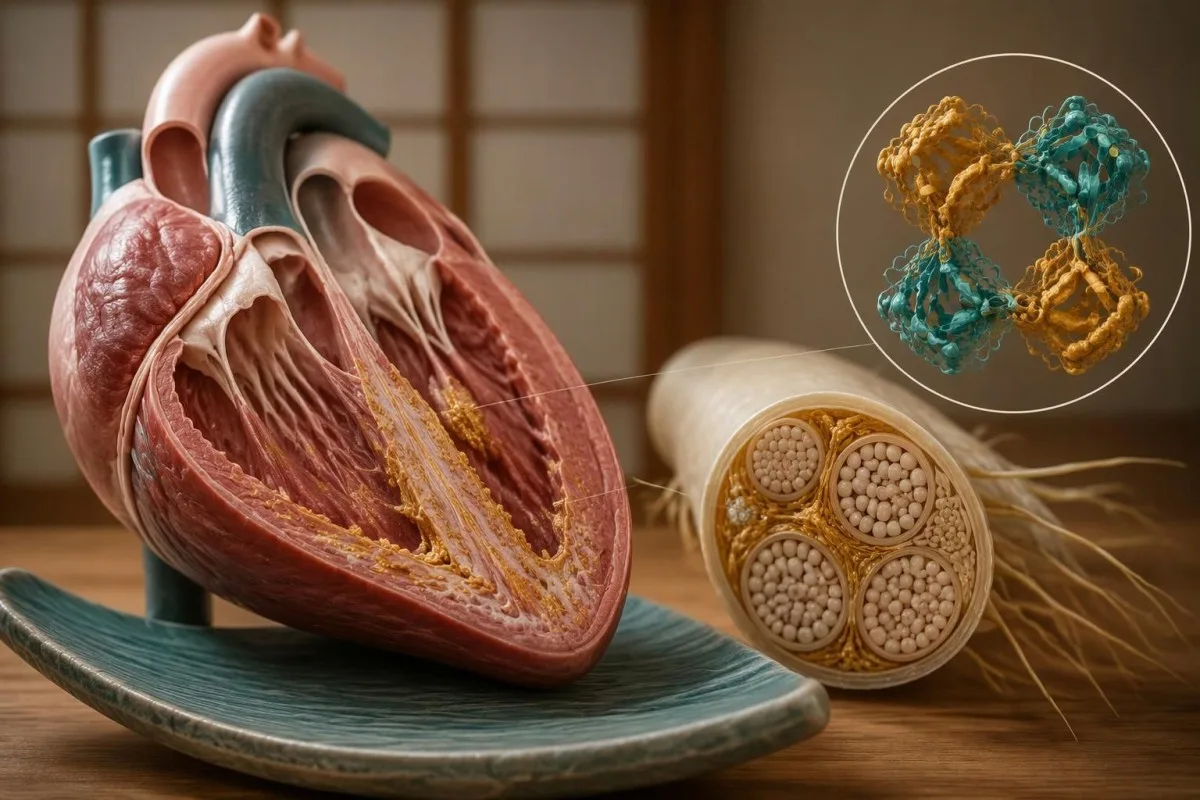
Haigust põhjustav TTR-variant näitab pärilikku eelsoodumust pärilikule ATTR-amüloidoosile, mitte aktiivse haiguse olemasolu. Ebakindla tähendusega variant sellist eelsoodumust ei näita; sümptomid vajavad eraldi spetsialisti hinnangut ning metsiktüüpi ATTR tekib ilma haigust põhjustava päriliku TTR-variandita.

Peamised järeldused
- Patogeenne TTR-variant tähendab pärilikku eelsoodumust; 1 geneetiline leid üksi ei kinnita sümptomaatilist amüloidoosi.
- Pärandumisrisk on tavaliselt 50% haiguse põhjustava TTR-i geenikoopia kandja iga lapse puhul, olenemata lapse soost.
- Ebakindla tähendusega leiud kuuluvad ühte viiest standardsest variandi klassifitseerimise kategooriast; VUS ei tohiks iseenesest määrata ennustavat testimist ega ravi.
- Variandi nimetused võivad erineda 22 aminohappe positsiooni võrra: p.Val50Met ja ajalooline nimetus Val30Met tähistavad sama asendust.
- Metsiktüüpi ATTR hõlmab transtüretiini ilma tuvastatud haigust põhjustava TTR-variandita; pärilikke ja metsiktüüpi ladestusi ei saa usaldusväärselt eristada üksnes sümptomite põhjal.
- Südame kinnitamine võib põhineda 2. või 3. astme luutraseerija kogunemisel, kuid ainult asjakohase kuvamisuuringute algoritmi raames ja pärast monoklonaalse valgu hindamist.
- Kandjate jälgimine hõlmab sageli iga-aastast hindamist, mille ajastus määratakse individuaalselt; ligikaudu 10 aastat enne perekonnas prognoositud haiguse algust on planeerimise abivahend, mitte bioloogiline tähtaeg.
- Hädaolukorra sümptomid näiteks tugev õhupuudus, kokkuvajumine või rindkerevalu vajavad viivitamatut arstiabi — ärge oodake järgmist 6–12-kuulist jälgimisvisiiti.
Mida TTR-variant tegelikult tähendab?
A patogeenne või tõenäoliselt patogeenne TTR-variant näitab pärilikku eelsoodumust päriliku ATTR-amüloidoosi tekkeks, kuid ei tõenda iseenesest aktiivset amüloidi ladestumist ega elundikahjustust. Ühel ebakindla tähtsusega variant, ehk VUS-il ei ole selle järelduse tegemiseks piisavalt tõendeid; need on eraldi küsimused, mis nõuavad eraldi kliinilisi otsuseid.

TTR on geen, mis kodeerib transtüretiini — transpordivalku, mida toodab peamiselt maks; selle tavaline ringlev struktuur koosneb 4 valgu subühikust. Mõned variandid muudavad selle struktuuri ebastabiilsemaks, võimaldades valesti voltunud valgul amüloidina kuhjuda, eeskätt närvides või südames.
Kujutlegem näiteks 46-aastast inimest, kelle kliiniline geenitest tuvastab teadaoleva haigust põhjustava TTR-variandi, kuid kelle neuroloogiline läbivaatus ja südameuuringud ei näita haigust. Sobiv kirjeldus võib olla sümptomiteta variandi kandja, mitte sümptomaatilise amüloidoosiga inimene; ravi saamise tingimused ja jälgimine sõltuvad lisaleidudest.
Kantesti on AI vereanalüüside tõlgendaja, mis aitab selgitada kaasnevaid laboritulemusi, hoides samal ajal geneetilise eelsoodumuse lahus elundikahjustuse kinnitamisest. Teave organisatsioonis selgitab meie teenuse konteksti; ei tavapärane laborianalüüs ega AI-põhine selgitus saa asendada neid 2 eriarstlikku hindamist.
Mille poolest erinevad patogeensed TTR-leiud VUS-ist?
Patogeensete ja tõenäoliselt patogeense leidude puhul toetavad tõendid haiguse põhjustavat rolli; ühel VUS ei ole piisavalt tõendeid, et liigitada see kahjulikuks või ohutuks. Laborid kasutavad 5 standardset kategooriat: patogeenne, tõenäoliselt patogeenne, ebaselge tähendusega, tõenäoliselt healoomuline ja healoomuline.

ACMG/AMP järjestusvariantide raamistik liigitab tõenäoliselt patogeensed leiud patogeensuse 90% kindluslävest kõrgemale, kuid see protsent kirjeldab klassifikatsiooni usaldusväärsust, mitte inimese tõenäosust sümptomite tekkeks (Richards jt, 2015). Meie selgitus päriliku vähi testitulemuste kohta illustrates the same distinction between a laboratory label and a person's current disease status.
A VUS should not, by itself, trigger disease-specific treatment or routine predictive testing of healthy relatives. Specialists may instead investigate whether the finding tracks with confirmed disease in a family—a segregation study involving 2 or more informative relatives when available—which is different from declaring those relatives genetically affected.
Classification can change when additional family, functional, or population evidence becomes available. Ask who will handle recontact, whether review in 12–24 months would be useful, and whether another laboratory has classified the exact same variant differently; our guide to common genetic variant misconceptions explains why the word mutation is not automatically a diagnosis.
Miks võib samal TTR-variandil olla kaks nime?
The same TTR variant can have modern and historical protein names because modern numbering includes a 22-amino-acid signal peptide. For example, p.Val50Met is the variant historically called Val30Metja p.Val142Ile is the variant historically called Val122Ile.

A complete report ideally supplies the gene, transcript reference, DNA-level notation, protein-level notation, zygosity, and classification—not simply a variant nickname. Because a TTR precursor contains 149 amino acids and the mature protein contains 127, comparing reports without noticing the numbering convention can create an apparent disagreement where none exists.
p.Thr80Ala, historically Thr60Ala, can produce a mixed cardiac and neurological phenotype, whereas p.Val142Ile is often associated with predominantly cardiac disease. These are tendencies rather than guarantees: 2 relatives with the same variant may differ in age at onset, affected organs, and severity.
For a hypothetical family, a parent's report saying Val122Ile and an adult child's report saying p.Val142Ile should prompt exact-notation comparison before anyone concludes that there are 2 different familial variants. Similar nomenclature issues arise in enzyme and genetic testing; bring the original reports rather than relying on a handwritten abbreviation.
Kas pärandumisrisk 50% tähendab 50% haigusriski?
A 50% inheritance risk is not a 50% risk of symptomatic disease. Hereditary ATTR usually follows autosomal dominant inheritance: a person with 1 disease-causing TTR copy has a 50% chance of passing that copy to each child, but disease expression depends on age-related penetrance and other factors.
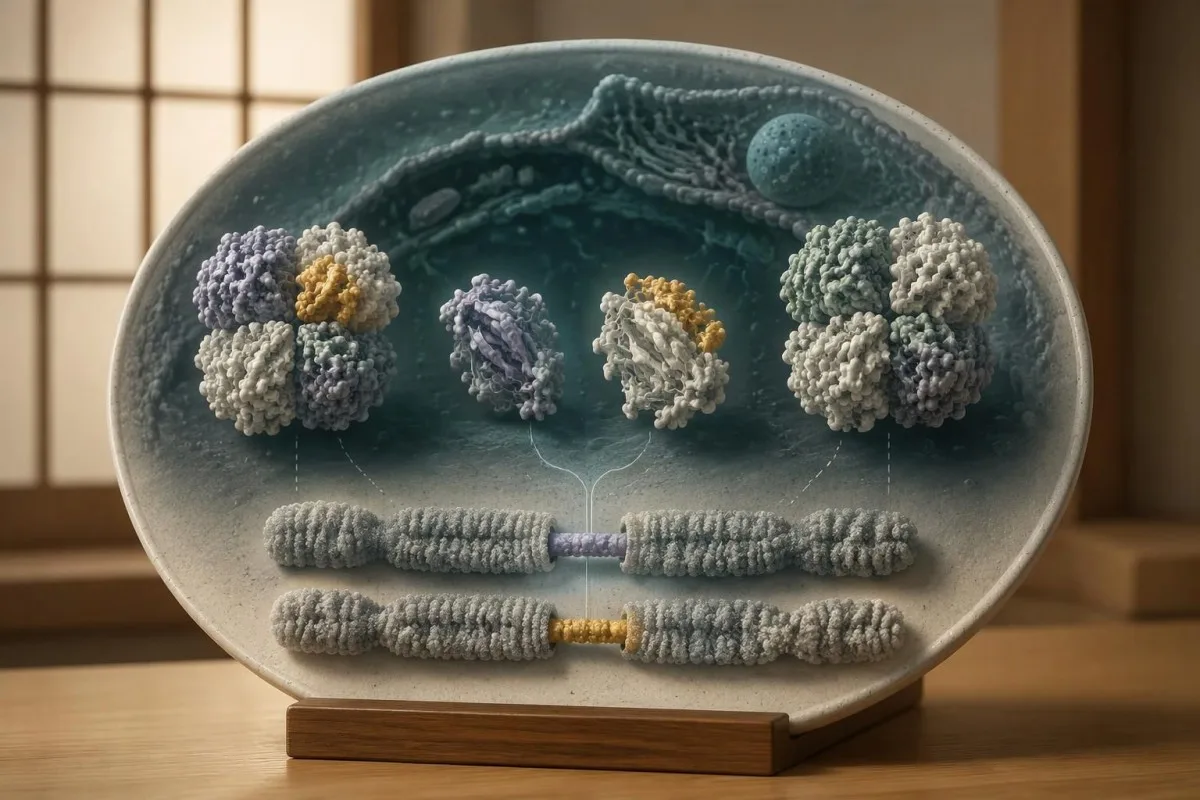
Each pregnancy is an independent event; with 2 children, the theoretical probabilities are 25% for neither inheriting the variant, 50% for exactly one, and 25% for both. Those calculations assume one heterozygous parent and describe inheritance only—they do not predict whether or when either child will become ill.
Penetrance means the proportion of variant carriers who develop disease by a stated age, and it varies across TTR variants and populations. The often-quoted 3–4% frequency of p.Val142Ile in some populations of African ancestry is a variant-frequency estimate, not a universal estimate of amyloidosis prevalence or an individual's lifetime disease risk.
An apparently unaffected parent aged 75 can still have transmitted a pathogenic variant, while a negative family history may reflect late onset, small families, or previously unrecognized disease. Our discussion of genetic susceptibility and kidney risk offers a useful comparison, although APOL1 risk architecture should not be substituted for TTR inheritance.
Mille poolest erineb pärilik ATTR metsiktüüpi ATTR-ist?
Hereditary ATTR involves a disease-causing TTR variant; wild-type ATTR involves amyloid formed from transthyretin without an identified disease-causing variant. Both can affect the heart, so neither age nor a cardiac scan alone reliably distinguishes these 2 forms.
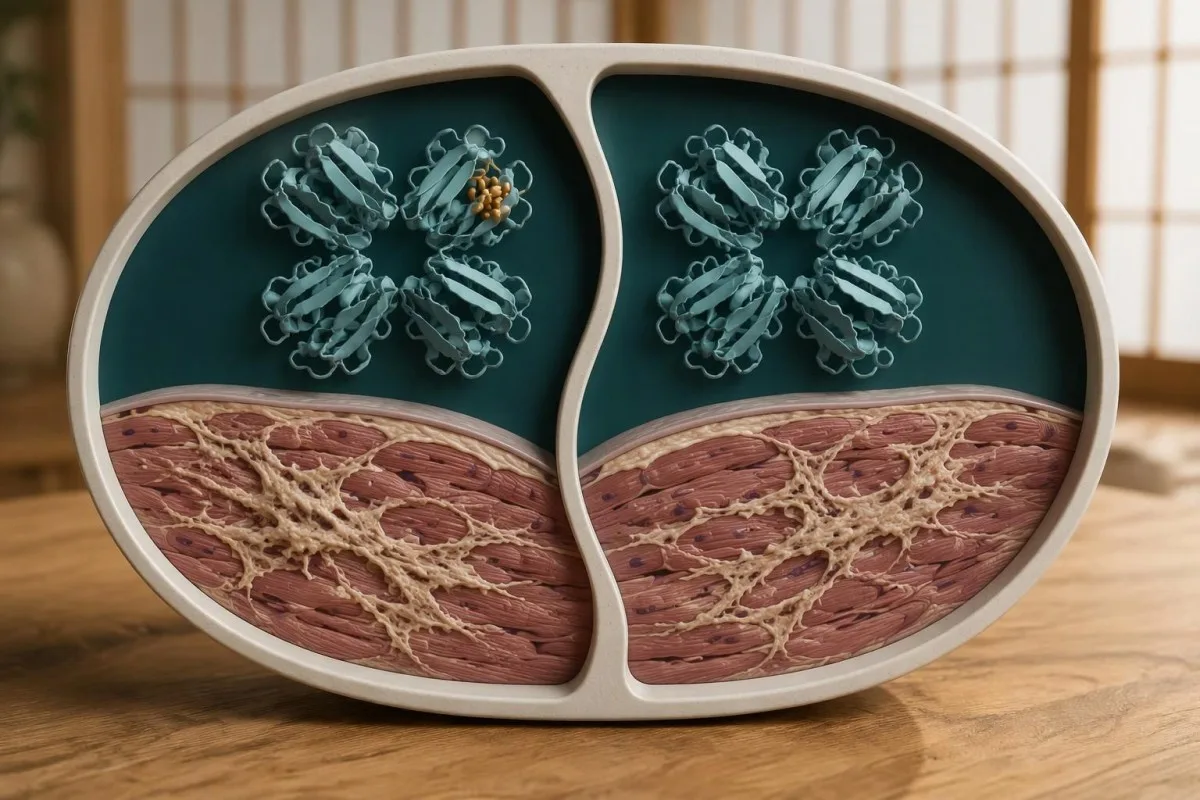
TTR sequencing is recommended after ATTR cardiomyopathy is established, including in older adults, because hereditary disease can first become apparent after age 70. The ESC position statement emphasizes genetic counseling and testing to distinguish variant ATTR from wild-type ATTR, rather than assuming that an older patient's disease cannot be inherited (Garcia-Pavia et al., 2021).
A negative result for a known family variant removes that particular inherited susceptibility, but it does not guarantee that the person will never develop wild-type ATTR or another heart condition. Conversely, a VUS does not automatically convert a confirmed ATTR diagnosis into hereditary ATTR; the laboratory classification and amyloid diagnosis still need reconciliation.
ATTR is also different from AL-amüloidoos, caused by immunoglobulin light chains, and AA-amüloidoos, associated with prolonged inflammatory activity. These are at least 3 distinct amyloid types with different investigations and treatment pathways; an elevated serum amyloid A result does not diagnose TTR-related disease.
Millised päriliku amüloidoosi sümptomid vajavad hindamist?
Hereditary amyloidosis symptoms may include progressive numbness or burning feet, weakness, altered bowel function, dizziness on standing, breathlessness, or ankle swelling. These findings are nonspecific, but involvement of 2 systems—such as neuropathy plus unexplained cardiac thickening—raises more concern than either finding alone.

Bilateral carpal tunnel syndrome, particularly when it precedes cardiac symptoms by several years, can be an ATTR clue but is far more commonly explained by other causes. Document whether 1 or both wrists are affected and when symptoms began; our guide to carpal tunnel finger patterns helps distinguish a local median-nerve pattern from broader neuropathy.
Ortostaatiline hüpotensioon commonly means a sustained fall of at least 20 mmHg systolic or 10 mmHg diastolic within 3 minutes of standing. Amyloid-related autonomic dysfunction is one possible cause, but dehydration and medicines are common alternatives; it is not interchangeable with the heart-rate pattern discussed in POTS diagnostic testing.
Consider a hypothetical 58-year-old carrier who develops numb feet, unintentional weight loss, and new difficulty climbing stairs over 6 months: that combination warrants prompt specialist review rather than waiting for annual screening. Sudden weakness, severe breathlessness, chest pain, or collapse requires urgent care because immediately treatable problems must be assessed before attributing symptoms to ATTR.
Milliste testidega saab kindlaks teha aktiivse ATTR-amüloidoosi?
Active ATTR amyloidosis requires evidence of amyloid disease, not just a genetic result. In the appropriate cardiac setting, grade 2 or 3 uptake on a validated bone-tracer scan can establish ATTR cardiomyopathy without biopsy only when monoclonal protein testing is negative and imaging confirms uptake within heart muscle.
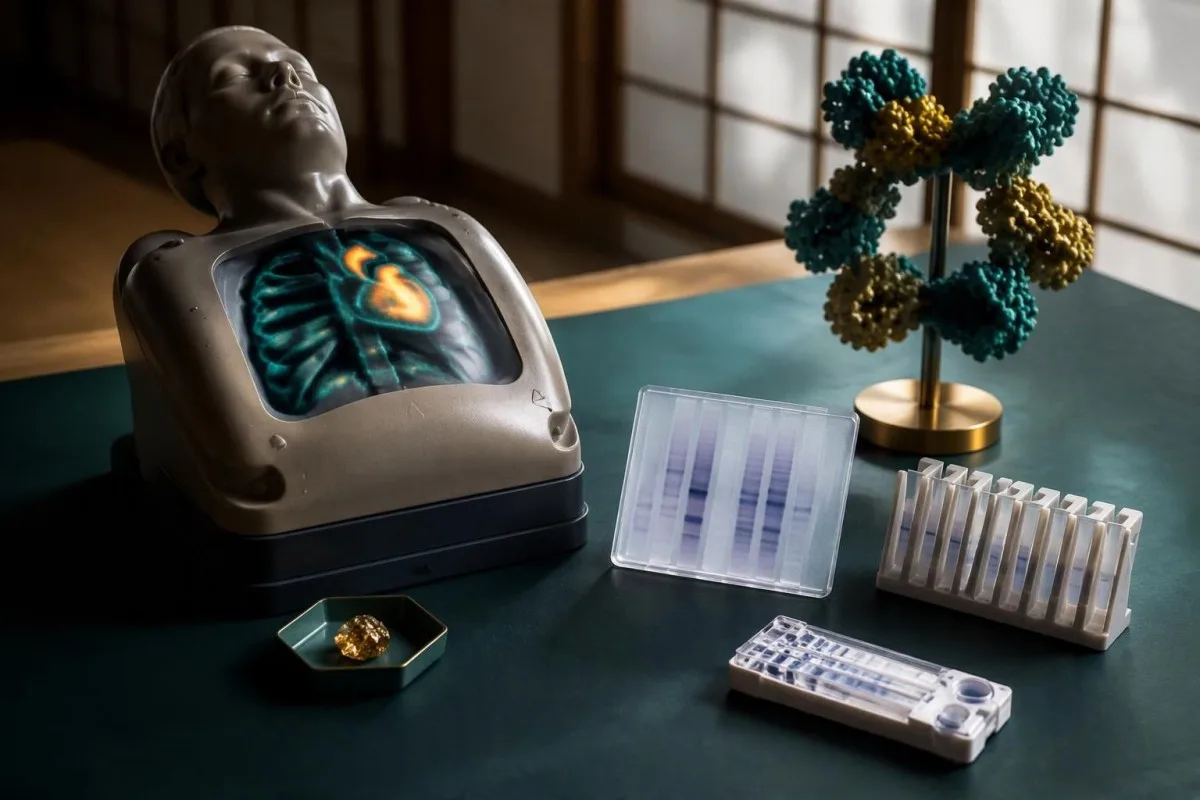
The monoclonal screen includes serum free light chains plus serum and urine immunofixation; serum protein electrophoresis alone is insufficient. Gillmore et al.'s 2016 Circulation study evaluated 1,217 patients and established the nonbiopsy cardiac approach under defined conditions; our guide to immunofixation bands and follow-up explains why detecting a monoclonal protein changes the next step.
A monoclonal protein does not prove AL amyloidosis, because an unrelated monoclonal gammopathy can coexist with ATTR, especially in older adults. However, it prevents clinicians from using the simplified scan-only ATTR pathway; interpreting the vabad kergete ahelate suhe also requires kidney-function context and, where available, assay-specific renal reference intervals.
When tissue examination is needed, Congo red staining establishes amyloid, while reliable protein typing—often mass spectrometry—identifies its source. A negative abdominal fat sample does not exclude ATTR, and grade 1 cardiac uptake is not the same as the grade 2–3 diagnostic criterion; neuropathy-predominant disease may require a different combination of neurological and tissue investigations.
Mida peaks TTR-i geneetiline nõustamine käsitlema?
TTR genetic counseling should explain the exact variant, classification, inheritance, limitations of risk prediction, and consequences for relatives before testing or major decisions. For most heterozygous families, the 50% transmission probability is straightforward; predicting age at onset and organ involvement is much less precise.

Counseling distinguishes diagnostic testing in someone with suspected disease from predictive testing in an unaffected relative. A person considering predictive testing should have time to discuss emotional readiness and the right not to know, similar to the consent principles described in predictive neurological genetic testing, although TTR penetrance differs substantially.
Reproductive discussions can include natural conception, prenatal diagnosis, and preimplantation genetic testing where available and legally permitted. Because a 50% transmission risk does not specify future severity, these conversations should be nondirective; confirm the familial pathogenic variant in a clinical laboratory before using it for reproductive testing or other consequential decisions.
Kantesti's explanations of privaatsus ja teie andmed help readers consider what they share, but genetic information has implications beyond ordinary laboratory values. Before adding reports for 2 or more relatives to a shared account, obtain each person's permission and ask the genetics team about local insurance rules, record access, and secure family communication.
Millised sugulased peaksid kaaluma sihitud TTR-testimist?
Adult relatives at risk of a confirmed familial pathogenic or likely pathogenic TTR variant should be offered genetic counseling and the option of targeted testing. Each child of a heterozygous carrier has a 50% inheritance probability; a sibling's risk depends on whether a parent carries the variant.

Start with the relative who has confirmed disease whenever possible, then use that person's exact variant to guide cascade testing. Testing all relatives with a broad panel before establishing the family finding may generate additional VUS results; this differs from the recessive inheritance questions in SMA carrier screening, where 2 gene copies have a different meaning.
Predictive testing for adult-onset TTR disease is generally deferred in children younger than 18 when the result would not change childhood care, preserving their future choice. A child with unexplained relevant symptoms needs clinical assessment rather than automatic dismissal; any exceptional testing decision should involve pediatric and genetics specialists, not a routine family screening package.
For example, a 34-year-old who tests negative for a clinically confirmed familial p.Val50Met variant generally does not need surveillance specifically for that family variant. A symptomatic relative still needs assessment for other causes, and a 1-variant consumer screening result cannot substitute for a validated familial test if the relevant variant was not actually examined.
Kuidas jälgitakse sümptomiteta TTR-variandi kandjaid?
Asymptomatic pathogenic TTR carriers need individualized surveillance, commonly involving annual clinical review, rather than an automatic amyloidosis diagnosis or preventive prescription. Many expert pathways begin structured assessment approximately 10 years before predicted disease onset, but variant-specific evidence and family history may justify earlier or different monitoring.
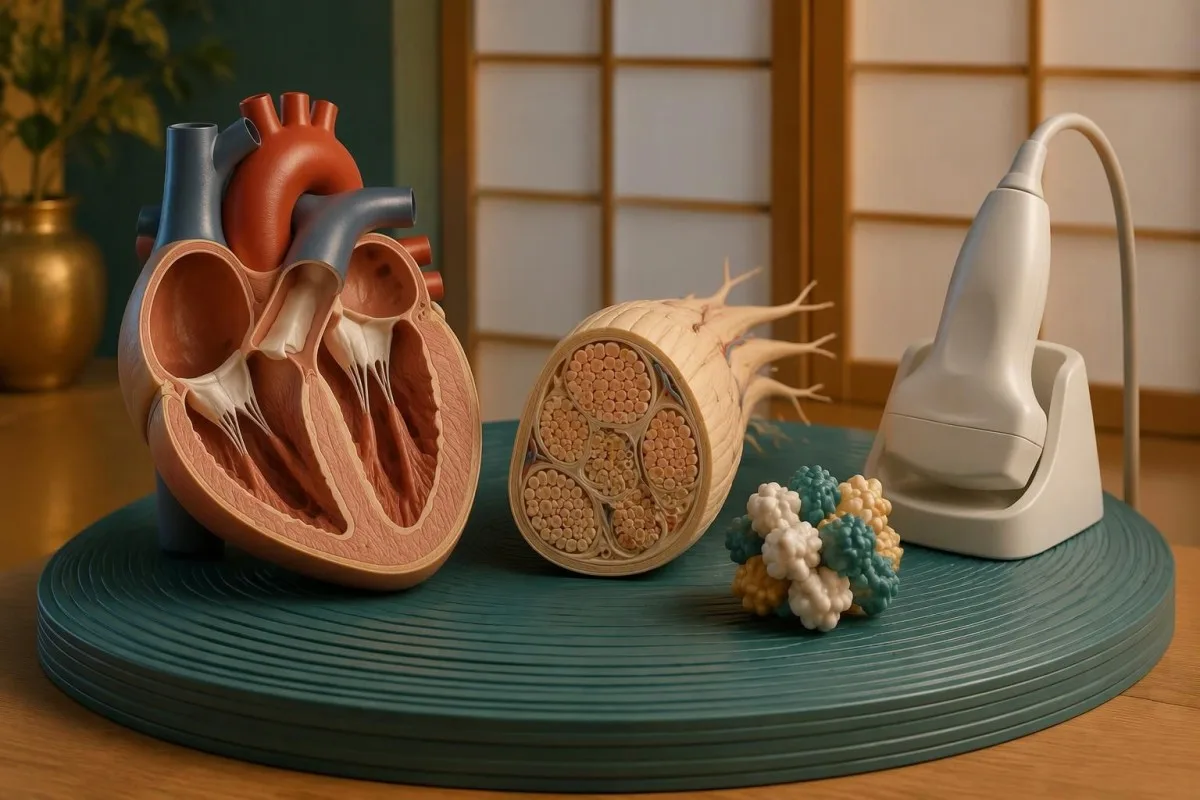
Baseline assessment may include neurological examination, autonomic history, ECG, echocardiography, kidney function, and cardiac biomarkers; additional tests depend on the variant and symptoms. The ESC position statement outlines regular carrier follow-up (Garcia-Pavia et al., 2021), but a 6–12-month interval should be individualized, especially when new findings appear or expected onset approaches.
A parent's onset at 62 is not a countdown showing that a child's disease will begin at 62, and a normal baseline does not eliminate later risk. Kantesti AI can help explain the difference between a single value and a meaningful laboratory timeline, but specialist decisions also require examination and imaging that routine blood interpretation cannot supply.
Imagine NT-proBNP increasing from 180 to 620 pg/mL while eGFR falls from 62 to 43 mL/min/1.73 m²: cardiac change deserves assessment, but reduced kidney clearance can contribute to the rise. Review intercurrent illness, rhythm, and medicines before interpreting progression; our neerufunktsiooni suhte juhend explains why renal context belongs beside cardiac trends.
Mida võivad vereanalüüsid näidata ja mis võib jääda avastamata?
Routine blood tests cannot confirm or exclude hereditary ATTR amyloidosis. NT-proBNP, troponin, kidney function, and urine protein can help assess organ involvement or alternatives, but a normal set of results—even across 2 visits—does not establish that a pathogenic TTR carrier will remain disease-free.
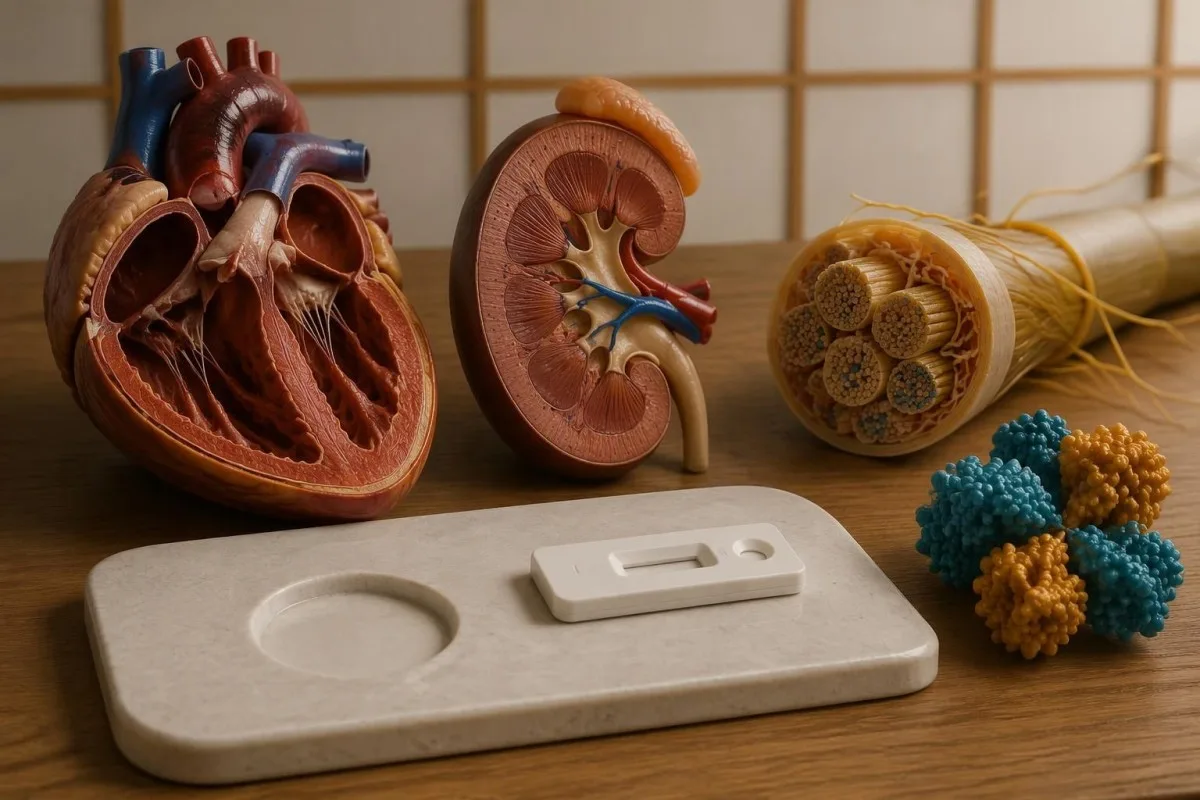
Troponiin must be interpreted against the assay's 99th-percentile upper reference limit, and NT-proBNP varies with age, kidney function, atrial fibrillation, and body size. A TTR or prealbumin concentration such as 25 mg/dL does not identify a TTR gene mutation or prove amyloid deposition; the test measures circulating protein concentration rather than its genetic sequence.
Neuropathy assessment should also look for treatable alternatives, including diabetes, vitamin B12 deficiency, thyroid disease, and medication effects. A hypothetical B12 result of 210 pg/mL may need additional assessment according to the laboratory and symptoms; our discussion of piiripealsed väärtused vitamiini B12 määramisel explains why a competing diagnosis should not be overlooked simply because a TTR variant exists.
Kantesti is an AI blood test interpretation platform that explains accompanying laboratory values without treating 1 protein result as an amyloidosis diagnosis. Our seerumi valkude tõlgendusjuhend helps separate transport proteins and immunoglobulin findings; neither an ordinary protein panel nor a family-risk feature replaces clinical TTR testing and amyloid typing.
Kas positiivne TTR-i geneetiline tulemus tähendab, et ravi tuleks alustada?
A positive TTR genetic result alone is not a standard indication for disease-modifying treatment. Specialists consider confirmed ATTR disease, the affected organs, functional status, and local approvals; the 2 main medication strategies are stabilizing transthyretin and reducing production of transthyretin.

TTR stabilizers aim to reduce dissociation of the 4-subunit protein, while TTR-lowering therapies reduce production, mainly in the liver. Neither approach edits the inherited DNA, so family transmission considerations remain after treatment; eligibility differs between cardiomyopathy, polyneuropathy, and mixed disease, as do approval and reimbursement rules across countries.
Monitoring depends on the chosen medicine rather than the genetic label alone: some regimens require attention to platelets, kidney function, or vitamin A handling. If vitamin A supplementation is advised during a TTR-lowering regimen, use the prescribed allowance rather than escalating the dose because a laboratory result looks low; 1 abnormal value does not establish a safe replacement dose.
Kantesti does not select amyloidosis medication or establish treatment eligibility from uploaded laboratory results; our tehniline valideerimine ja järelevalve describe a different task from specialist prescribing. For an asymptomatic carrier, discuss surveillance and research opportunities; there is no single proven preventive prescription that follows automatically from a 50% inheritance-risk calculation.
Mida tuleks eriarsti vastuvõtule kaasa võtta?
Bring the original genetic report, symptom timeline, family history, and relevant cardiac or neurological investigations to an amyloidosis or clinical genetics appointment. These 4 information groups help specialists distinguish a confirmed disease-causing variant, an uncertain finding, unrelated symptoms, and early organ involvement.

Record symptom onset by month and year where possible, including numbness, bowel changes, wrist procedures, fainting, breathlessness, and reduced walking tolerance. Include at least 3 generations of family information if available, but distinguish a documented amyloidosis diagnosis from a relative's unexplained heart failure; uncertain family labels should remain visibly uncertain.
Ask 3 focused questions: Is this variant pathogenic, likely pathogenic, or uncertain; what evidence exists for active organ disease; and which relatives should be offered counseling? A written plan should also identify the clinician responsible for follow-up, what changes should trigger earlier contact, and whether a laboratory will notify anyone if the variant classification changes.
Kantesti is an AI-powered blood test analysis tool that can help explain laboratory reports before a consultation, not replace the consultation or infer another relative's genotype. Our guide to consent-based family health tracking covers shared records; our vastutustundliku tehisintellekti põhimõtted explain why 1 uncertain genetic result should never become an automated family diagnosis.
Millised uuringud toetavad diagnoosimist ja millised hindavad tehisintellekti?
Clinical amyloidosis research and AI technical benchmarks answer different questions. The 2016 nonbiopsy diagnostic study and 2021 ESC position statement support specific ATTR assessment pathways; the 2 repository publications listed below describe separate AI projects and do not validate TTR variant classification or diagnose hereditary ATTR amyloidosis.
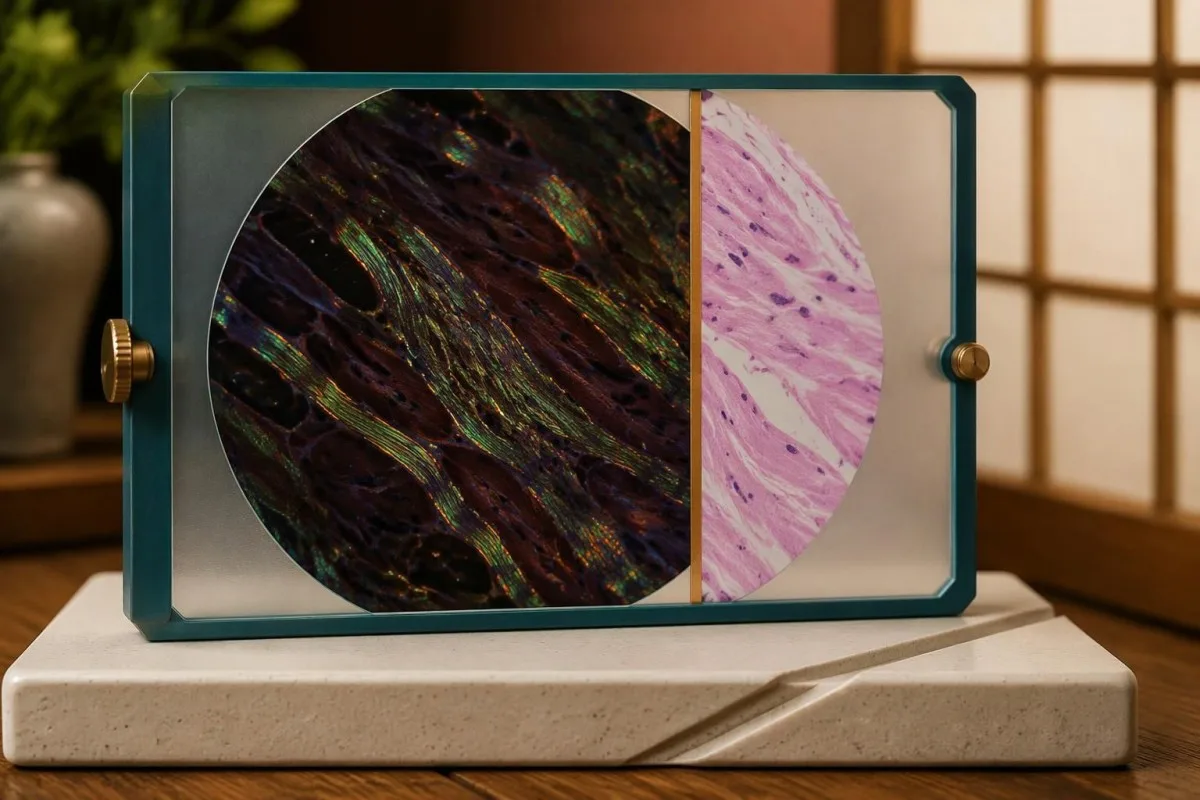
The clinical evidence cited here addresses 3 distinct tasks: sequence-variant classification, cardiac amyloid confirmation, and specialist management pathways. Congo red staining can reveal amyloid but cannot, by itself, identify a TTR genotype or reliably distinguish all amyloid proteins; the same caution applies to a compelling-looking AI explanation unsupported by the required clinical tests.
Kantesti's repository publications describe early hantavirus triage across 50,000 interpreted reports and a technical benchmark involving 100,000 synthetic test cases. The blood-test engine benchmark provides context for the latter; synthetic-case performance does not establish sensitivity for detecting ATTR in real patients, and a Figshare DOI does not itself demonstrate peer review or regulatory authorization.
For patients and relatives, the next decision should follow the report category: counseling and individualized surveillance for a confirmed pathogenic variant, specialist-led clarification for a VUS, and organ assessment for relevant symptoms. Keep those 3 pathways separate; a genetic finding, an imaging result, and an AI-generated explanation are not interchangeable forms of evidence.
Korduma kippuvad küsimused
Kas TTR-geeni mutatsioon tähendab, et mul on pärilik ATTR-amüloidoos?
Patogeenne või tõenäoliselt patogeenne TTR-geeni mutatsioon kinnitab pärilikku eelsoodumust, kuid ei tõesta iseenesest aktiivse päriliku ATTR-amüloidoosi esinemist. Ühe haigust põhjustava TTR-koopiaga inimene võib jääda paljudeks aastateks sümptomiteta või ei pruugi tal kunagi diagnoositud haigust välja kujuneda. Spetsialistid hindavad sümptomite, läbivaatuse leidude, piltdiagnostika ja mõnikord koeanalüüside tulemuste põhjal, kas esineb elundikahjustus. Teadmata kliinilise tähendusega variant ei kinnita samasugust pärilikku eelsoodumust.
Kas ebaselge tähendusega TTR-varianti saab kasutada minu pereliikmete testimiseks?
Ebakindla tähendusega TTR-varianti ei tohiks kasutada ainsa alusena tervete sugulaste tavapäraseks ennustavaks testimiseks ega raviotsuste tegemiseks. See on üks viiest standardsest variandi klassifitseerimise kategooriast ning tähendab, et tõendusmaterjali ei piisa leiu liigitamiseks kahjulikuks või kahjutuks. Geneetikameeskond võib korraldada valitud pereliikmete testimise, et uurida, kas variant esineb koos kinnitatud haigusega. See uuring aitab varianti klassifitseerida; see ei tähenda, et sugulased liigitataks haigust põdevateks kandjateks.
Kui suur on tõenäosus, et mu lapsed pärivad päriliku ATTR-amüloidoosi?
1 haigust põhjustava TTR-koopiaga inimese igal lapsel on tavaliselt 50% tõenäosus see variant pärida. Tõenäosus on sama igast soost laste puhul ning iga rasedus on sõltumatu. Variandi pärimine ei määra, millal sümptomid algavad või kui raske haigus kujuneb. Geneetiline nõustamine aitab selgitada ennustavat testimist ja reproduktiivseid võimalusi, käsitlemata variandi edasikandumise tõenäosust haiguse prognoosina.
Kas Val30Met ja p.Val50Met on sama TTR-mutatsioon?
Val30Met ja p.Val50Met kirjeldavad sama TTR-valgu asendust, kasutades erinevaid nummerdamissüsteeme. Tänapäevane nummerdus hõlmab 22 aminohappest koosnevat signaalpeptiidi, mis ajaloolises küpse valgu nummerduses välja jäetakse. Sama selgitab erinevust Val122Ile ja p.Val142Ile ning Thr60Ala ja p.Thr80Ala vahel. Eri laborite aruannete läbivaatamisel peaks geneetik võrdlema DNA ja valgu täielikku tähistust.
Kas tavaliste vereanalüüsidega saab ATTR-amüloidoosi välistada?
Normal routine blood tests cannot rule out ATTR amyloidosis or eliminate future disease risk in a pathogenic TTR carrier. Troponin is interpreted using the assay's 99th-percentile limit, while NT-proBNP and kidney results provide context about organ stress rather than amyloid identity. A normal TTR or prealbumin concentration does not exclude a TTR variant or amyloid deposits. Evaluation may still require neurological assessment, cardiac imaging, and selected tissue investigations.
Kas metsiktüüpi ATTR-amüloidoos on pärilik?
Metsikut tüüpi ATTR-amüloidoosi ei seostata päriliku TTR-i haigust põhjustava variandiga, erinevalt pärilikust ATTR-amüloidoosist. Need kaks vormi võivad põhjustada sarnaseid südameleide, mistõttu ei saa neid usaldusväärselt eristada üksnes vanuse ja sümptomite põhjal. Pärast ATTR-kardiomüopaatia diagnoosi kinnitamist soovitatakse teha TTR-i geneetiline testimine, sealhulgas vanematel täiskasvanutel. Sugulastel ei ole vaja teha perekondliku variandi sihttestimist, välja arvatud juhul, kui haigust põhjustav variant on tegelikult tuvastatud.
Kui sageli peaks sümptomiteta TTR-geeni kandja eriarsti vastuvõtul käima?
Asümptomaatilist patogeense TTR-variandi kandjat hindab spetsialist tavaliselt kord aastas, kuid järelkontroll peaks olema individuaalne, mitte kõigile ühesuguse intervalliga. Mõne jälgimiskava puhul alustatakse struktureeritud jälgimist ligikaudu 10 aastat enne perekonnas prognoositud haiguse algust, sümptomite või murettekitavate leidude korral aga vaadatakse patsient üle varem. Kava võib hõlmata neuroloogilist läbivaatust, EKG-d, ehhokardiograafiat ja valitud laboratoorseid markereid. Uue õhupuuduse, süveneva nõrkuse või minestamise korral tuleb pöörduda hindamisele varem, mitte oodata plaanilise vastuvõtuni.
Saage teada, kuidas lugeda vereanalüüsi tulemusi
Laadige oma laboriaruanne üles ja Kantesti AI selgitab iga biomarkerit sekunditega lihtsas keeles. Kasutusel enam kui 2 miljoni inimese seas kogu maailmas.
Viited
- Klein, T., Mitchell, S., & Weber, H. (2026). Mitmekeelne tehisintellektipõhine kliiniline otsustustugi hantaviiruse varaseks triaažiks: kavandamine, tehniline valideerimine ja rakendamine tegelikes oludes 50 000 tõlgendatud vereanalüüsi vastuse põhjal. Kantesti AI meditsiiniuuringud. DOI
- Klein, T., Mitchell, S., & Weber, H. (2026). Eelregistreeritud, rubriigipõhine automatiseeritud tehniline võrdlus Kantesti vereanalüüsi tõlgendamise mootori kohta 100 000 sünteetilise testjuhtumi peal. Kantesti AI meditsiiniuuringud. DOI
- Richards S jt (2015). Juhised ja standardid järjestusvariantide tõlgendamiseks: Ameerika Meditsiinigeneetika ja Genoomika Kolledži ning Molekulaarpatoloogia Assotsiatsiooni ühine konsensussoovitus. Meditsiiniline geneetika. DOI PubMed
- Garcia-Pavia P et al. (2021). Diagnosis and treatment of cardiac amyloidosis: a position statement of the ESC Working Group on Myocardial and Pericardial Diseases. European Heart Journal. DOI PubMed
- Gillmore JD et al. (2016). Nonbiopsy Diagnosis of Cardiac Transthyretin Amyloidosis. Circulation. DOI PubMed
- 2+ kuudAnalüüsitud testid
- 127+Riigid
- 100+Keeled
Meditsiinimeeskonnast


E-E-A-T usaldussignaalid
Kogemus
Arsti juhitud kliiniline ülevaade labori tõlgendamise töövoogudest.
Ekspertiis
Laborimeditsiin keskendub sellele, kuidas biomarkerid käituvad kliinilises kontekstis.
Autoriteetsus
Meditsiiniliselt retsenseerinud dr Thomas Klein, kaastöölised dr Sarah Mitchell ja prof dr Hans Weber.
Usaldusväärsus
Tõenduspõhine tõlgendus selgete edasiste sammudega, et vähendada ärevust.






Meditsiiniline lahtiütlus
Käesolev artikkel on mõeldud üksnes hariduslikel eesmärkidel ega kujuta endast meditsiinilist nõuannet. Diagnoosi ja ravivalikute otsuste tegemiseks konsulteeri alati kvalifitseeritud tervishoiutöötajaga.
Avaldatud · Võtke ühendust toimetusega
Avaldanud Kantesti Ltd, registreeritud Inglismaal ja Walesis, ettevõtte nr. 17090423, London, Ühendkuningriik.
