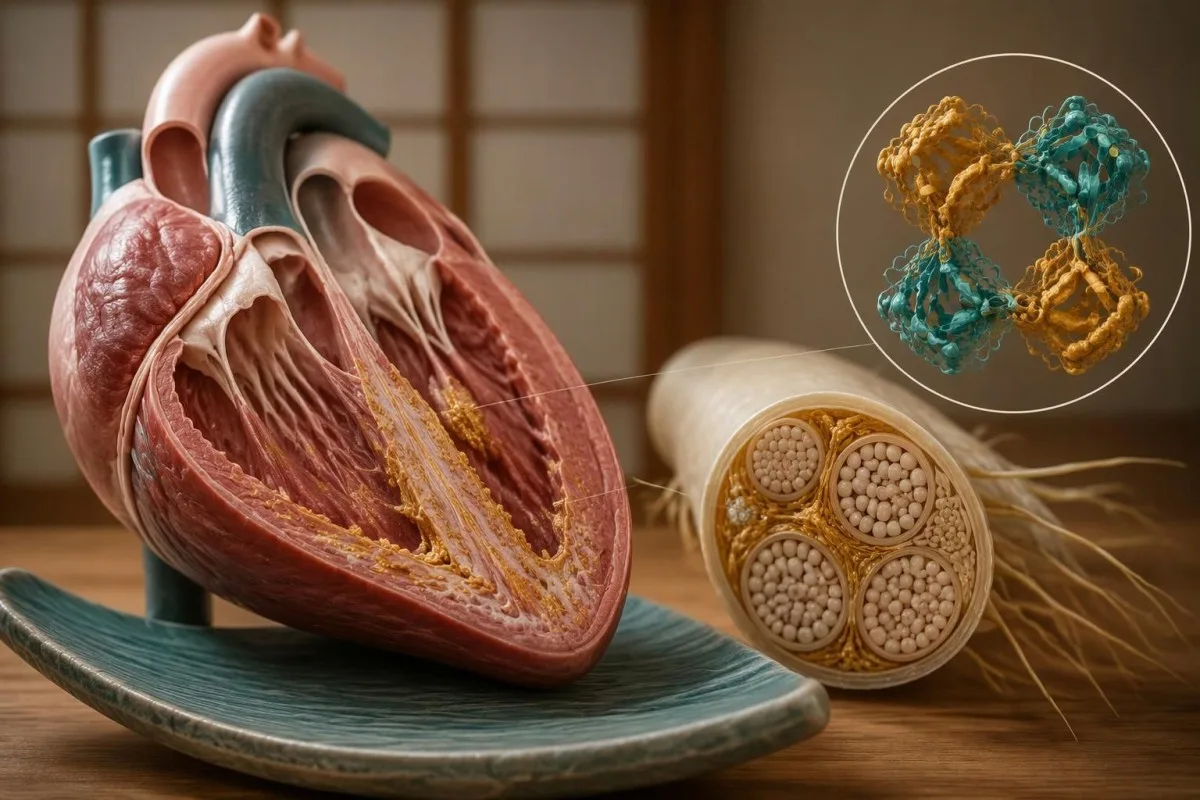
Varijanta TTR koja uzrokuje bolest utvrđuje naslednu predispoziciju za naslednu ATTR amiloidozu — ne dokazuje aktivnu bolest. Varijanta neizvesnog značaja ne utvrđuje takvu predispoziciju; simptomi zahtevaju zasebnu procenu specijaliste, a ATTR divljeg tipa razvija se bez nasledne varijante TTR koja uzrokuje bolest.

Кључне поруке
- Patogena varijanta TTR znači naslednu predispoziciju; 1 genetski nalaz sam po sebi ne potvrđuje simptomatsku amiloidozu.
- Rizik od nasleđivanja obično iznosi 50% za svako dete osobe koja ima 1 kopiju TTR koja uzrokuje bolest, bez obzira na pol deteta.
- Nalazi neizvesnog značaja pripadaju 1 od 5 standardnih kategorija klasifikacije varijanti; VUS sam po sebi ne treba da određuje prediktivno testiranje ili lečenje.
- Nazivi varijanti mogu se razlikovati za 22 položaja aminokiselina: p.Val50Met i istorijski naziv Val30Met opisuju istu zamenu.
- ATTR divljeg tipa обухвата транстиретин без идентификоване варијанте TTR која изазива болест; наследни и депозити дивљег типа не могу се поуздано разликовати само на основу симптома.
- Потврда срчане амилоидозе може се заснивати на преузимању коштаног трагача степена 2 или 3, али само у оквиру одговарајућег дијагностичког алгоритма снимања и након процене моноклонског протеина.
- Праћење носилаца често обухвата годишњу процену, а време се прилагођава појединцу; отприлике 10 година пре предвиђеног почетка болести у породици представља помоћ у планирању, а не биолошки рок.
- Хитни симптоми као што су тешко отежано дисање, колапс или бол у грудима захтевају хитну негу — немојте чекати следећу контролну посету за 6–12 месеци.
Šta varijanta TTR zapravo znači?
A патогена или вероватно патогена варијанта TTR указује на наследну склоност ка наследној ATTR амилоидози, али сама по себи не показује активно таложење амилоида нити оштећење органа. Један varijanta neizvesnog značaja, односно варијанта неизвесног значаја (VUS), нема довољно доказа за такав закључак; то су засебна питања која захтевају засебне клиничке одлуке.

TTR је ген који кодира транстиретин, транспортни протеин који се претежно производи у јетри; његова уобичајена структура у крвотоку садржи 4 протеинске подјединице. Неке варијанте чине ту структуру мање стабилном, што омогућава погрешно савијеном протеину да се накупља у облику амилоида, нарочито у нервима или срцу.
На пример, замислите особу од 46 година код које клинички генетски тест открива познату варијанту TTR која изазива болест, али неуролошки преглед и процена срца не показују болест. Одговарајући опис може бити асимптоматски носилац варијанте, а не особа са симптоматском амилоидозом; подобност за лечење и праћење зависе од додатних налаза.
Kantesti је анализатор крвних тестова заснован на вештачкој интелигенцији који помаже у тумачењу пратећих лабораторијских резултата, уз јасно раздвајање генетске склоности од потврде болести органа. Информације о наше организације објашњавају контекст наше услуге; ни рутински лабораторијски панел ни тумачење помоћу вештачке интелигенције не могу заменити ове 2 специјалистичке процене.
Po čemu se patogeni nalazi u genu TTR razlikuju od VUS-a?
Патогени и verovatno patogenu varijantu налази имају доказе који подржавају улогу у изазивању болести; варијанта VUS нема довољно доказа за сврставање у штетну или нешкодљиву. Лабораторије користе 5 стандардних категорија: патогена, вероватно патогена, неизвесног значаја, вероватно бенигна и бенигна.

ACMG/AMP оквир за варијанте секвенце сврстава вероватно патогене налазе изнад прага поузданости од 90% за патогеност, али тај проценат описује поузданост класификације, а не вероватноћу да ће појединац развити симптоме (Richards et al., 2015). Наше објашњење резултата наследног тестирања на рак illustrates the same distinction between a laboratory label and a person's current disease status.
A VUS should not, by itself, trigger disease-specific treatment or routine predictive testing of healthy relatives. Specialists may instead investigate whether the finding tracks with confirmed disease in a family—a segregation study involving 2 or more informative relatives when available—which is different from declaring those relatives genetically affected.
Classification can change when additional family, functional, or population evidence becomes available. Ask who will handle recontact, whether review in 12–24 months would be useful, and whether another laboratory has classified the exact same variant differently; our guide to common genetic variant misconceptions explains why the word mutation is not automatically a diagnosis.
Zašto ista varijanta TTR može imati dva naziva?
The same TTR variant can have modern and historical protein names because modern numbering includes a 22-amino-acid signal peptide. For example, p.Val50Met is the variant historically called Val30Met, и p.Val142Ile is the variant historically called Val122Ile.

A complete report ideally supplies the gene, transcript reference, DNA-level notation, protein-level notation, zygosity, and classification—not simply a variant nickname. Because a TTR precursor contains 149 amino acids and the mature protein contains 127, comparing reports without noticing the numbering convention can create an apparent disagreement where none exists.
p.Thr80Ala, historically Thr60Ala, can produce a mixed cardiac and neurological phenotype, whereas p.Val142Ile is often associated with predominantly cardiac disease. These are tendencies rather than guarantees: 2 relatives with the same variant may differ in age at onset, affected organs, and severity.
For a hypothetical family, a parent's report saying Val122Ile and an adult child's report saying p.Val142Ile should prompt exact-notation comparison before anyone concludes that there are 2 different familial variants. Similar nomenclature issues arise in enzyme and genetic testing; bring the original reports rather than relying on a handwritten abbreviation.
Da li rizik od nasleđivanja 50% znači rizik od bolesti 50%?
A 50% inheritance risk is not a 50% risk of symptomatic disease. Hereditary ATTR usually follows autosomal dominant inheritance: a person with 1 disease-causing TTR copy has a 50% chance of passing that copy to each child, but disease expression depends on age-related penetrance and other factors.
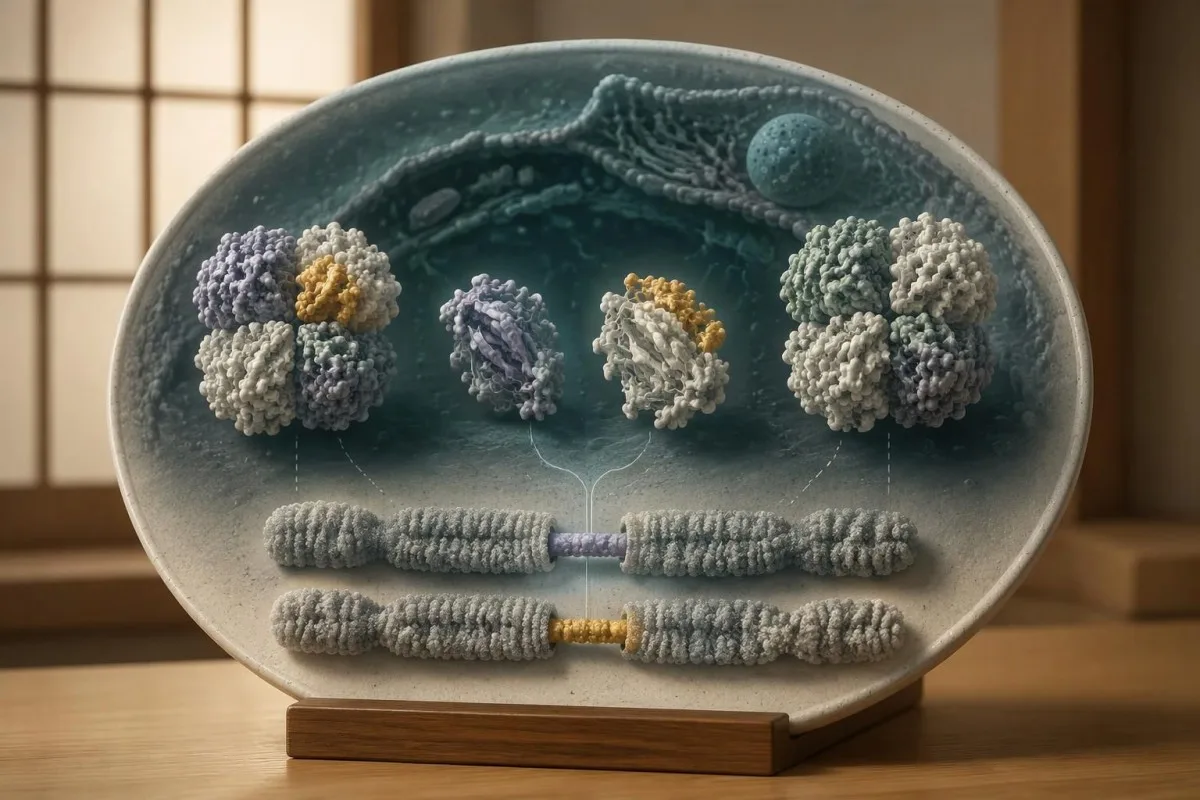
Each pregnancy is an independent event; with 2 children, the theoretical probabilities are 25% for neither inheriting the variant, 50% for exactly one, and 25% for both. Those calculations assume one heterozygous parent and describe inheritance only—they do not predict whether or when either child will become ill.
Penetrance means the proportion of variant carriers who develop disease by a stated age, and it varies across TTR variants and populations. The often-quoted 3–4% frequency of p.Val142Ile in some populations of African ancestry is a variant-frequency estimate, not a universal estimate of amyloidosis prevalence or an individual's lifetime disease risk.
An apparently unaffected parent aged 75 can still have transmitted a pathogenic variant, while a negative family history may reflect late onset, small families, or previously unrecognized disease. Our discussion of genetic susceptibility and kidney risk offers a useful comparison, although APOL1 risk architecture should not be substituted for TTR inheritance.
Po čemu se nasledna ATTR razlikuje od ATTR divljeg tipa?
Hereditary ATTR involves a disease-causing TTR variant; wild-type ATTR involves amyloid formed from transthyretin without an identified disease-causing variant. Both can affect the heart, so neither age nor a cardiac scan alone reliably distinguishes these 2 forms.
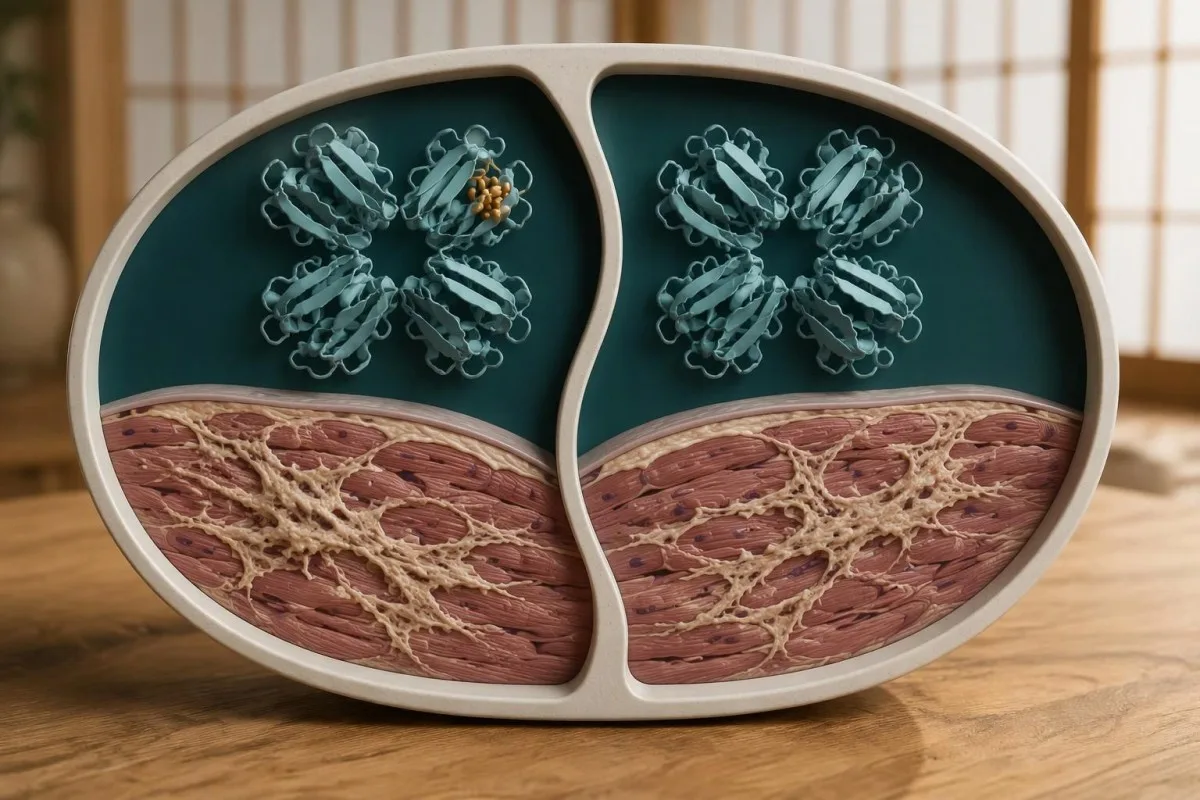
TTR sequencing is recommended after ATTR cardiomyopathy is established, including in older adults, because hereditary disease can first become apparent after age 70. The ESC position statement emphasizes genetic counseling and testing to distinguish variant ATTR from wild-type ATTR, rather than assuming that an older patient's disease cannot be inherited (Garcia-Pavia et al., 2021).
A negative result for a known family variant removes that particular inherited susceptibility, but it does not guarantee that the person will never develop wild-type ATTR or another heart condition. Conversely, a VUS does not automatically convert a confirmed ATTR diagnosis into hereditary ATTR; the laboratory classification and amyloid diagnosis still need reconciliation.
ATTR is also different from AL амилоидоза, caused by immunoglobulin light chains, and АА амилоидоза, associated with prolonged inflammatory activity. These are at least 3 distinct amyloid types with different investigations and treatment pathways; an elevated serum amyloid A result does not diagnose TTR-related disease.
Koji simptomi nasledne amiloidoze zahtevaju procenu?
Hereditary amyloidosis symptoms may include progressive numbness or burning feet, weakness, altered bowel function, dizziness on standing, breathlessness, or ankle swelling. These findings are nonspecific, but involvement of 2 systems—such as neuropathy plus unexplained cardiac thickening—raises more concern than either finding alone.

Bilateral carpal tunnel syndrome, particularly when it precedes cardiac symptoms by several years, can be an ATTR clue but is far more commonly explained by other causes. Document whether 1 or both wrists are affected and when symptoms began; our guide to carpal tunnel finger patterns helps distinguish a local median-nerve pattern from broader neuropathy.
Ортостатска хипотензија commonly means a sustained fall of at least 20 mmHg systolic or 10 mmHg diastolic within 3 minutes of standing. Amyloid-related autonomic dysfunction is one possible cause, but dehydration and medicines are common alternatives; it is not interchangeable with the heart-rate pattern discussed in POTS diagnostic testing.
Consider a hypothetical 58-year-old carrier who develops numb feet, unintentional weight loss, and new difficulty climbing stairs over 6 months: that combination warrants prompt specialist review rather than waiting for annual screening. Sudden weakness, severe breathlessness, chest pain, or collapse requires urgent care because immediately treatable problems must be assessed before attributing symptoms to ATTR.
Koji testovi potvrđuju aktivnu ATTR amiloidozu?
Active ATTR amyloidosis requires evidence of amyloid disease, not just a genetic result. In the appropriate cardiac setting, grade 2 or 3 uptake on a validated bone-tracer scan can establish ATTR cardiomyopathy without biopsy only when monoclonal protein testing is negative and imaging confirms uptake within heart muscle.

The monoclonal screen includes serum free light chains plus serum and urine immunofixation; serum protein electrophoresis alone is insufficient. Gillmore et al.'s 2016 Circulation study evaluated 1,217 patients and established the nonbiopsy cardiac approach under defined conditions; our guide to immunofixation bands and follow-up explains why detecting a monoclonal protein changes the next step.
A monoclonal protein does not prove AL amyloidosis, because an unrelated monoclonal gammopathy can coexist with ATTR, especially in older adults. However, it prevents clinicians from using the simplified scan-only ATTR pathway; interpreting the odnosa slobodnih lakih lanaca also requires kidney-function context and, where available, assay-specific renal reference intervals.
When tissue examination is needed, Congo red staining establishes amyloid, while reliable protein typing—often mass spectrometry—identifies its source. A negative abdominal fat sample does not exclude ATTR, and grade 1 cardiac uptake is not the same as the grade 2–3 diagnostic criterion; neuropathy-predominant disease may require a different combination of neurological and tissue investigations.
Šta genetsko savetovanje u vezi sa TTR treba da obuhvati?
TTR genetic counseling should explain the exact variant, classification, inheritance, limitations of risk prediction, and consequences for relatives before testing or major decisions. For most heterozygous families, the 50% transmission probability is straightforward; predicting age at onset and organ involvement is much less precise.

Counseling distinguishes diagnostic testing in someone with suspected disease from predictive testing in an unaffected relative. A person considering predictive testing should have time to discuss emotional readiness and the right not to know, similar to the consent principles described in predictive neurological genetic testing, although TTR penetrance differs substantially.
Reproductive discussions can include natural conception, prenatal diagnosis, and preimplantation genetic testing where available and legally permitted. Because a 50% transmission risk does not specify future severity, these conversations should be nondirective; confirm the familial pathogenic variant in a clinical laboratory before using it for reproductive testing or other consequential decisions.
Kantesti's explanations of privatnost i svoje podatke help readers consider what they share, but genetic information has implications beyond ordinary laboratory values. Before adding reports for 2 or more relatives to a shared account, obtain each person's permission and ask the genetics team about local insurance rules, record access, and secure family communication.
Koji srodnici treba da razmotre ciljano testiranje na TTR?
Adult relatives at risk of a confirmed familial pathogenic or likely pathogenic TTR variant should be offered genetic counseling and the option of targeted testing. Each child of a heterozygous carrier has a 50% inheritance probability; a sibling's risk depends on whether a parent carries the variant.

Start with the relative who has confirmed disease whenever possible, then use that person's exact variant to guide cascade testing. Testing all relatives with a broad panel before establishing the family finding may generate additional VUS results; this differs from the recessive inheritance questions in SMA carrier screening, where 2 gene copies have a different meaning.
Predictive testing for adult-onset TTR disease is generally deferred in children younger than 18 when the result would not change childhood care, preserving their future choice. A child with unexplained relevant symptoms needs clinical assessment rather than automatic dismissal; any exceptional testing decision should involve pediatric and genetics specialists, not a routine family screening package.
For example, a 34-year-old who tests negative for a clinically confirmed familial p.Val50Met variant generally does not need surveillance specifically for that family variant. A symptomatic relative still needs assessment for other causes, and a 1-variant consumer screening result cannot substitute for a validated familial test if the relevant variant was not actually examined.
Kako se prate asimptomatski nosioci varijante TTR?
Asymptomatic pathogenic TTR carriers need individualized surveillance, commonly involving annual clinical review, rather than an automatic amyloidosis diagnosis or preventive prescription. Many expert pathways begin structured assessment approximately 10 years before predicted disease onset, but variant-specific evidence and family history may justify earlier or different monitoring.

Baseline assessment may include neurological examination, autonomic history, ECG, echocardiography, kidney function, and cardiac biomarkers; additional tests depend on the variant and symptoms. The ESC position statement outlines regular carrier follow-up (Garcia-Pavia et al., 2021), but a 6–12-month interval should be individualized, especially when new findings appear or expected onset approaches.
A parent's onset at 62 is not a countdown showing that a child's disease will begin at 62, and a normal baseline does not eliminate later risk. Kantesti AI can help explain the difference between a single value and a meaningful laboratory timeline, but specialist decisions also require examination and imaging that routine blood interpretation cannot supply.
Imagine NT-proBNP increasing from 180 to 620 pg/mL while eGFR falls from 62 to 43 mL/min/1.73 m²: cardiac change deserves assessment, but reduced kidney clearance can contribute to the rise. Review intercurrent illness, rhythm, and medicines before interpreting progression; our vodič za odnos pokazatelja funkcije bubrega explains why renal context belongs beside cardiac trends.
Šta analize krvi mogu da otkriju — a šta mogu da propuste?
Routine blood tests cannot confirm or exclude hereditary ATTR amyloidosis. NT-proBNP, troponin, kidney function, and urine protein can help assess organ involvement or alternatives, but a normal set of results—even across 2 visits—does not establish that a pathogenic TTR carrier will remain disease-free.

Тропонин must be interpreted against the assay's 99th-percentile upper reference limit, and NT-proBNP varies with age, kidney function, atrial fibrillation, and body size. A TTR or prealbumin concentration such as 25 mg/dL does not identify a TTR gene mutation or prove amyloid deposition; the test measures circulating protein concentration rather than its genetic sequence.
Neuropathy assessment should also look for treatable alternatives, including diabetes, vitamin B12 deficiency, thyroid disease, and medication effects. A hypothetical B12 result of 210 pg/mL may need additional assessment according to the laboratory and symptoms; our discussion of graničnih rezultata vitamina B12 explains why a competing diagnosis should not be overlooked simply because a TTR variant exists.
Kantesti is an AI blood test interpretation platform that explains accompanying laboratory values without treating 1 protein result as an amyloidosis diagnosis. Our vodič za tumačenje serumskih proteina helps separate transport proteins and immunoglobulin findings; neither an ordinary protein panel nor a family-risk feature replaces clinical TTR testing and amyloid typing.
Da li pozitivan genetski nalaz za TTR znači da treba započeti lečenje?
A positive TTR genetic result alone is not a standard indication for disease-modifying treatment. Specialists consider confirmed ATTR disease, the affected organs, functional status, and local approvals; the 2 main medication strategies are stabilizing transthyretin and reducing production of transthyretin.

TTR stabilizers aim to reduce dissociation of the 4-subunit protein, while TTR-lowering therapies reduce production, mainly in the liver. Neither approach edits the inherited DNA, so family transmission considerations remain after treatment; eligibility differs between cardiomyopathy, polyneuropathy, and mixed disease, as do approval and reimbursement rules across countries.
Monitoring depends on the chosen medicine rather than the genetic label alone: some regimens require attention to platelets, kidney function, or vitamin A handling. If vitamin A supplementation is advised during a TTR-lowering regimen, use the prescribed allowance rather than escalating the dose because a laboratory result looks low; 1 abnormal value does not establish a safe replacement dose.
Kantesti does not select amyloidosis medication or establish treatment eligibility from uploaded laboratory results; our tehničku validaciju i nadzor describe a different task from specialist prescribing. For an asymptomatic carrier, discuss surveillance and research opportunities; there is no single proven preventive prescription that follows automatically from a 50% inheritance-risk calculation.
Шта треба да понесете на преглед код специјалисте?
Bring the original genetic report, symptom timeline, family history, and relevant cardiac or neurological investigations to an amyloidosis or clinical genetics appointment. These 4 information groups help specialists distinguish a confirmed disease-causing variant, an uncertain finding, unrelated symptoms, and early organ involvement.

Record symptom onset by month and year where possible, including numbness, bowel changes, wrist procedures, fainting, breathlessness, and reduced walking tolerance. Include at least 3 generations of family information if available, but distinguish a documented amyloidosis diagnosis from a relative's unexplained heart failure; uncertain family labels should remain visibly uncertain.
Ask 3 focused questions: Is this variant pathogenic, likely pathogenic, or uncertain; what evidence exists for active organ disease; and which relatives should be offered counseling? A written plan should also identify the clinician responsible for follow-up, what changes should trigger earlier contact, and whether a laboratory will notify anyone if the variant classification changes.
Kantesti is an AI-powered blood test analysis tool that can help explain laboratory reports before a consultation, not replace the consultation or infer another relative's genotype. Our guide to consent-based family health tracking covers shared records; our načela odgovorne upotrebe veštačke inteligencije explain why 1 uncertain genetic result should never become an automated family diagnosis.
Koja istraživanja pružaju podršku dijagnozi, a koja procenjuju AI?
Clinical amyloidosis research and AI technical benchmarks answer different questions. The 2016 nonbiopsy diagnostic study and 2021 ESC position statement support specific ATTR assessment pathways; the 2 repository publications listed below describe separate AI projects and do not validate TTR variant classification or diagnose hereditary ATTR amyloidosis.

The clinical evidence cited here addresses 3 distinct tasks: sequence-variant classification, cardiac amyloid confirmation, and specialist management pathways. Congo red staining can reveal amyloid but cannot, by itself, identify a TTR genotype or reliably distinguish all amyloid proteins; the same caution applies to a compelling-looking AI explanation unsupported by the required clinical tests.
Kantesti's repository publications describe early hantavirus triage across 50,000 interpreted reports and a technical benchmark involving 100,000 synthetic test cases. The blood-test engine benchmark provides context for the latter; synthetic-case performance does not establish sensitivity for detecting ATTR in real patients, and a Figshare DOI does not itself demonstrate peer review or regulatory authorization.
For patients and relatives, the next decision should follow the report category: counseling and individualized surveillance for a confirmed pathogenic variant, specialist-led clarification for a VUS, and organ assessment for relevant symptoms. Keep those 3 pathways separate; a genetic finding, an imaging result, and an AI-generated explanation are not interchangeable forms of evidence.
Često postavljana pitanja
Da li mutacija gena TTR znači da imam naslednu ATTR amiloidozu?
Patogena ili verovatno patogena mutacija gena TTR potvrđuje naslednu predispoziciju, ali sama po sebi ne potvrđuje aktivnu naslednu ATTR amiloidozu. Osoba sa jednom kopijom TTR gena koja uzrokuje bolest može godinama ostati bez simptoma ili nikada ne razviti prepoznatljivu bolest. Specijalisti procenjuju simptome, nalaze pregleda, snimanja i ponekad rezultate analize tkiva kako bi utvrdili da li je prisutna bolest organa. Varijanta neizvesnog značaja ne potvrđuje istu naslednu predispoziciju.
Može li se varijanta TTR neizvesnog značaja koristiti za testiranje moje porodice?
TTR varijanta neizvesnog značaja ne treba da se koristi sama za rutinsko prediktivno testiranje zdravih srodnika ili donošenje odluka o lečenju. To je 1 od 5 standardnih kategorija klasifikacije varijanti i znači da nema dovoljno dokaza da se nalaz klasifikuje kao štetan ili bezopasan. Tim za genetiku može da organizuje ciljano testiranje članova porodice kako bi se utvrdilo da li je varijanta povezana sa potvrđenom bolešću. To ispitivanje pomaže u klasifikaciji; nije isto što i označavanje srodnika kao obolelih nosilaca.
Kolika je verovatnoća da moja deca naslede nasledni ATTR?
Svako dete osobe koja ima 1 kopiju TTR gena koja uzrokuje bolest obično ima 50% šanse da nasledi tu varijantu. Verovatnoća je ista za decu bilo kog pola, a svaka trudnoća je nezavisna. Nasleđivanje varijante ne određuje kada će simptomi početi niti koliko će bolest biti teška. Genetsko savetovanje može da objasni prediktivno testiranje i reproduktivne mogućnosti, a da se verovatnoća prenošenja ne tretira kao prognoza bolesti.
Da li su Val30Met i p.Val50Met iste mutacije TTR-a?
Val30Met i p.Val50Met označavaju istu supstituciju u proteinu TTR prema različitim konvencijama numerisanja. Savremeno numerisanje uključuje signalni peptid od 22 aminokiseline, koji se ne uzima u obzir pri istorijskom numerisanju zrelog proteina. Isti princip objašnjava razlike između Val122Ile i p.Val142Ile, kao i između Thr60Ala i p.Thr80Ala. Stručnjak za genetiku treba da uporedi pune oznake na nivou DNK i proteina kada razmatra izveštaje različitih laboratorija.
Mogu li normalni rezultati krvnih testova isključiti ATTR amiloidozu?
Normal routine blood tests cannot rule out ATTR amyloidosis or eliminate future disease risk in a pathogenic TTR carrier. Troponin is interpreted using the assay's 99th-percentile limit, while NT-proBNP and kidney results provide context about organ stress rather than amyloid identity. A normal TTR or prealbumin concentration does not exclude a TTR variant or amyloid deposits. Evaluation may still require neurological assessment, cardiac imaging, and selected tissue investigations.
Da li se amiloidoza uzrokovana ATTR divljeg tipa nasleđuje?
Divlji tip ATTR amiloidoze ne pripisuje se naslednoj varijanti TTR koja uzrokuje bolest, za razliku od nasledne ATTR amiloidoze. Ova 2 oblika mogu izazvati slične nalaze na srcu, pa se samo na osnovu uzrasta i simptoma ne mogu pouzdano razlikovati. Preporučuje se genetsko testiranje TTR nakon potvrde ATTR kardiomiopatije, uključujući i kod starijih osoba. Ciljano testiranje rođaka na porodičnu varijantu nije potrebno osim ako nije utvrđeno da varijanta zaista uzrokuje bolest.
Koliko često asimptomatski nosilac TTR mutacije treba da posećuje specijalistu?
Asimptomatski nosilac patogene varijante TTR obično se jednom godišnje podvrgava specijalističkoj proceni, ali praćenje treba prilagoditi pojedincu, umesto da se isti raspored primenjuje na sve. Neki protokoli započinju strukturisani nadzor približno 10 godina pre predviđenog početka bolesti u porodici, uz raniji pregled u slučaju simptoma ili zabrinjavajućih nalaza. Neurološki pregled, EKG, ehokardiografija i odabrani laboratorijski markeri mogu biti deo plana. Novonastala otežana respiracija, progresivna slabost ili nesvestica treba da budu povod za raniju procenu, umesto čekanja zakazanog pregleda.
Сазнајте како да читате крвну слику
Отпремите свој лабораторијски извештај, а AI алата Kantesti ће за неколико секунди објаснити сваки биомаркер једноставним језиком. Користи га више од 2 милиона људи широм света.
Референце
- Klein, T., Mitchell, S., & Weber, H. (2026). Вишејезична клиничка подршка одлучивању уз помоћ вештачке интелигенције за рану тријажу хантавируса: дизајн, инжењерска валидација и примена у стварним условима на 50.000 интерпретираних извештаја о крвној слици. Kantesti AI Medical Research. ДОИ
- Klein, T., Mitchell, S., & Weber, H. (2026). Pre-registrisano, automatizovano tehničko merilo zasnovano na rubrici (rubric-based) interpretacije Kantesti motora za tumačenje nalaza iz krvi na 100.000 sintetičkih test slučajeva. Kantesti AI Medical Research. ДОИ
- Richards S et al. (2015). Standardi i smernice za tumačenje varijanti sekvence: zajednička konsenzusna preporuka Američkog koledža za medicinsku genetiku i genomiku i Udruženja za molekularnu patologiju. Genetika u medicini. ДОИ PubMed
- Garcia-Pavia P et al. (2021). Diagnosis and treatment of cardiac amyloidosis: a position statement of the ESC Working Group on Myocardial and Pericardial Diseases. Evropski časopis za srce. ДОИ PubMed
- Gillmore JD et al. (2016). Nonbiopsy Diagnosis of Cardiac Transthyretin Amyloidosis. Circulation. ДОИ PubMed
- 2 милиона+Analizirani testovi
- 127+Земље
- 100+Језици
O medicinskom timu


Е-Е-А-Т сигнали поверења
Искуство
Клиничка ревизија процеса тумачења лабораторијских налаза коју води лекар.
Експертиза
Фокус на лабораторијску медицину: како се биомаркери понашају у клиничком контексту.
Ауторитативност
Medicinski pregledao dr Thomas Klein, uz doprinos dr Sarah Mitchell i prof. dr Hansa Webera.
Поузданост
Тумачење засновано на доказима, са јасним путевима праћења како би се смањила узнемиреност.






Medicinsko odricanje od odgovornosti
Овај чланак је само у образовне сврхе и не представља медицински савет. За одлуке о дијагнози и лечењу увек се консултујте са квалификованим здравственим радником.
Objavljeno · Kontaktirajte urednički tim
Objavio Kantesti Ltd, registrovan u Engleskoj i Velsu, broj kompanije. 17090423, London, Ujedinjeno Kraljevstvo.
