
Uma variante de TTR causadora de doença estabelece suscetibilidade hereditária à amiloidose ATTR hereditária — não comprova doença ativa. Uma variante incerta não estabelece essa suscetibilidade; os sintomas exigem uma avaliação especializada separada, e a ATTR de tipo selvagem se desenvolve sem uma variante hereditária de TTR causadora de doença.

Principais conclusões
- Variante patogênica de TTR significa suscetibilidade hereditária; 1 achado genético, por si só, não estabelece amiloidose sintomática.
- Risco de herança é geralmente de 50% para cada filho de uma pessoa com 1 cópia de TTR causadora de doença, independentemente do sexo da criança.
- Achados incertos pertencem a 1 das 5 categorias padrão de classificação de variantes; uma VUS não deve, por si só, orientar testes preditivos ou tratamento.
- Nomes das variantes podem diferir em 22 posições de aminoácidos: p.Val50Met e o nome histórico Val30Met descrevem a mesma substituição.
- ATTR de tipo selvagem envolve a transtirretina sem uma variante TTR causadora de doença identificada; os depósitos hereditários e do tipo selvagem não podem ser distinguidos de forma confiável apenas pelos sintomas.
- Confirmação cardíaca pode usar captação óssea de grau 2 ou 3, mas somente dentro do protocolo de imagem apropriado e após a avaliação de proteínas monoclonais.
- Acompanhamento de portadores geralmente inclui avaliação anual, com a periodicidade individualizada; cerca de 10 anos antes do início previsto na família é uma referência para o planejamento, não um prazo biológico.
- Sintomas de emergência como falta de ar intensa, desmaio ou dor no peito requerem atendimento imediato — não se deve esperar pela próxima consulta de acompanhamento em 6–12 meses.
O que significa, de fato, uma variante de TTR?
A variante TTR patogênica ou provavelmente patogênica identifica suscetibilidade hereditária à amiloidose ATTR hereditária, mas, por si só, não demonstra deposição ativa de amiloide nem dano a órgãos. Uma variante de significado incerto, ou VUS, não tem evidências suficientes para essa conclusão; são questões distintas que exigem decisões clínicas distintas.

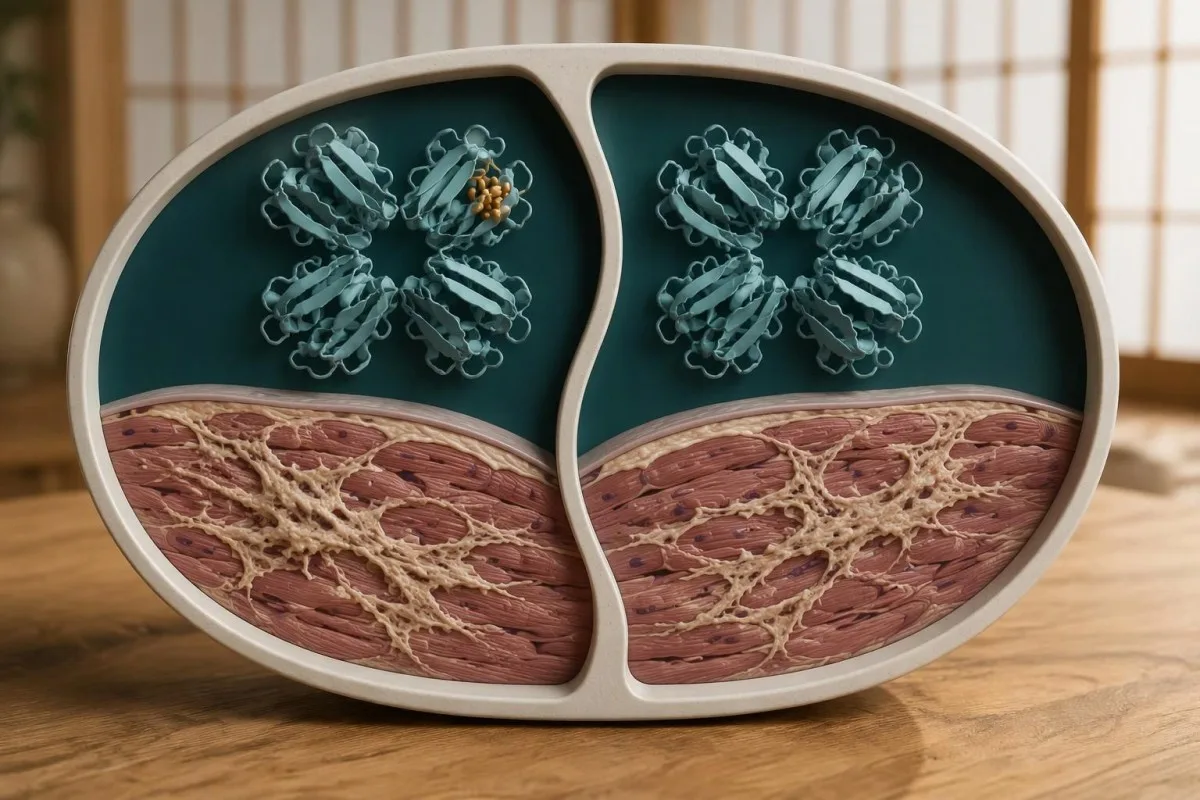
TTR é o gene que codifica a transtirretina, uma proteína transportadora produzida principalmente pelo fígado; sua estrutura circulante habitual contém 4 subunidades proteicas. Algumas variantes tornam essa estrutura menos estável, permitindo que a proteína mal dobrada se acumule como amiloide, particularmente nos nervos ou no coração.
Por exemplo, imagine uma pessoa de 46 anos cujo teste genético clínico identifica uma variante TTR conhecida por causar doença, mas cujo exame neurológico e avaliação cardíaca não mostram doença. A descrição apropriada pode ser portador assintomático da variante, e não uma pessoa com amiloidose sintomática; a elegibilidade para tratamento e o acompanhamento dependem de achados adicionais.
Kantesti é um analisador de exames de sangue por IA que ajuda a explicar os resultados laboratoriais que o acompanham, mantendo a suscetibilidade genética separada da confirmação de doença em órgãos. Informações sobre nossa organização explicam o contexto do nosso serviço; nem um painel laboratorial de rotina nem uma explicação por IA podem substituir essas 2 avaliações especializadas.
Em que as alterações patogênicas de TTR diferem de uma VUS?
Achados patogênicos e provavelmente patogênica têm evidências que sustentam um papel causador de doença; uma VUS não tem evidências suficientes para uma classificação como prejudicial ou inofensiva. Os laboratórios usam 5 categorias padrão: patogênica, provavelmente patogênica, significado incerto, provavelmente benigna e benigna.

A estrutura de classificação de variantes de sequência ACMG/AMP situa os achados provavelmente patogênicos acima de um limiar de confiança de 90% para patogenicidade, mas essa porcentagem descreve a confiança na classificação, não a probabilidade de uma pessoa desenvolver sintomas (Richards et al., 2015). Nossa explicação sobre resultados de testes genéticos para câncer hereditário illustrates the same distinction between a laboratory label and a person's current disease status.
A VUS should not, by itself, trigger disease-specific treatment or routine predictive testing of healthy relatives. Specialists may instead investigate whether the finding tracks with confirmed disease in a family—a segregation study involving 2 or more informative relatives when available—which is different from declaring those relatives genetically affected.
Classification can change when additional family, functional, or population evidence becomes available. Ask who will handle recontact, whether review in 12–24 months would be useful, and whether another laboratory has classified the exact same variant differently; our guide to common genetic variant misconceptions explains why the word mutation is not automatically a diagnosis.
Por que a mesma variante de TTR pode ter dois nomes?
The same TTR variant can have modern and historical protein names because modern numbering includes a 22-amino-acid signal peptide. For example, p.Val50Met is the variant historically called Val30Met, e p.Val142Ile is the variant historically called Val122Ile.

A complete report ideally supplies the gene, transcript reference, DNA-level notation, protein-level notation, zygosity, and classification—not simply a variant nickname. Because a TTR precursor contains 149 amino acids and the mature protein contains 127, comparing reports without noticing the numbering convention can create an apparent disagreement where none exists.
p.Thr80Ala, historically Thr60Ala, can produce a mixed cardiac and neurological phenotype, whereas p.Val142Ile is often associated with predominantly cardiac disease. These are tendencies rather than guarantees: 2 relatives with the same variant may differ in age at onset, affected organs, and severity.
For a hypothetical family, a parent's report saying Val122Ile and an adult child's report saying p.Val142Ile should prompt exact-notation comparison before anyone concludes that there are 2 different familial variants. Similar nomenclature issues arise in enzyme and genetic testing; bring the original reports rather than relying on a handwritten abbreviation.
Um risco de herança de 50% significa um risco de doença de 50%?
A 50% inheritance risk is not a 50% risk of symptomatic disease. Hereditary ATTR usually follows autosomal dominant inheritance: a person with 1 disease-causing TTR copy has a 50% chance of passing that copy to each child, but disease expression depends on age-related penetrance and other factors.

Each pregnancy is an independent event; with 2 children, the theoretical probabilities are 25% for neither inheriting the variant, 50% for exactly one, and 25% for both. Those calculations assume one heterozygous parent and describe inheritance only—they do not predict whether or when either child will become ill.
Penetrance means the proportion of variant carriers who develop disease by a stated age, and it varies across TTR variants and populations. The often-quoted 3–4% frequency of p.Val142Ile in some populations of African ancestry is a variant-frequency estimate, not a universal estimate of amyloidosis prevalence or an individual's lifetime disease risk.
An apparently unaffected parent aged 75 can still have transmitted a pathogenic variant, while a negative family history may reflect late onset, small families, or previously unrecognized disease. Our discussion of genetic susceptibility and kidney risk offers a useful comparison, although APOL1 risk architecture should not be substituted for TTR inheritance.
Em que a ATTR hereditária difere da ATTR de tipo selvagem?
Hereditary ATTR involves a disease-causing TTR variant; wild-type ATTR involves amyloid formed from transthyretin without an identified disease-causing variant. Both can affect the heart, so neither age nor a cardiac scan alone reliably distinguishes these 2 forms.
TTR sequencing is recommended after ATTR cardiomyopathy is established, including in older adults, because hereditary disease can first become apparent after age 70. The ESC position statement emphasizes genetic counseling and testing to distinguish variant ATTR from wild-type ATTR, rather than assuming that an older patient's disease cannot be inherited (Garcia-Pavia et al., 2021).
A negative result for a known family variant removes that particular inherited susceptibility, but it does not guarantee that the person will never develop wild-type ATTR or another heart condition. Conversely, a VUS does not automatically convert a confirmed ATTR diagnosis into hereditary ATTR; the laboratory classification and amyloid diagnosis still need reconciliation.
ATTR is also different from Amiloidose AL, caused by immunoglobulin light chains, and A amiloidose AA, associated with prolonged inflammatory activity. These are at least 3 distinct amyloid types with different investigations and treatment pathways; an elevated serum amyloid A result does not diagnose TTR-related disease.
Quais sintomas de amiloidose hereditária precisam de avaliação?
Hereditary amyloidosis symptoms may include progressive numbness or burning feet, weakness, altered bowel function, dizziness on standing, breathlessness, or ankle swelling. These findings are nonspecific, but involvement of 2 systems—such as neuropathy plus unexplained cardiac thickening—raises more concern than either finding alone.

Bilateral carpal tunnel syndrome, particularly when it precedes cardiac symptoms by several years, can be an ATTR clue but is far more commonly explained by other causes. Document whether 1 or both wrists are affected and when symptoms began; our guide to carpal tunnel finger patterns helps distinguish a local median-nerve pattern from broader neuropathy.
Hipotensão ortostática commonly means a sustained fall of at least 20 mmHg systolic or 10 mmHg diastolic within 3 minutes of standing. Amyloid-related autonomic dysfunction is one possible cause, but dehydration and medicines are common alternatives; it is not interchangeable with the heart-rate pattern discussed in POTS diagnostic testing.
Consider a hypothetical 58-year-old carrier who develops numb feet, unintentional weight loss, and new difficulty climbing stairs over 6 months: that combination warrants prompt specialist review rather than waiting for annual screening. Sudden weakness, severe breathlessness, chest pain, or collapse requires urgent care because immediately treatable problems must be assessed before attributing symptoms to ATTR.
Quais exames estabelecem amiloidose ATTR ativa?
Active ATTR amyloidosis requires evidence of amyloid disease, not just a genetic result. In the appropriate cardiac setting, grade 2 or 3 uptake on a validated bone-tracer scan can establish ATTR cardiomyopathy without biopsy only when monoclonal protein testing is negative and imaging confirms uptake within heart muscle.

The monoclonal screen includes serum free light chains plus serum and urine immunofixation; serum protein electrophoresis alone is insufficient. Gillmore et al.'s 2016 Circulation study evaluated 1,217 patients and established the nonbiopsy cardiac approach under defined conditions; our guide to immunofixation bands and follow-up explains why detecting a monoclonal protein changes the next step.
A monoclonal protein does not prove AL amyloidosis, because an unrelated monoclonal gammopathy can coexist with ATTR, especially in older adults. However, it prevents clinicians from using the simplified scan-only ATTR pathway; interpreting the razão de cadeia leve livre also requires kidney-function context and, where available, assay-specific renal reference intervals.
When tissue examination is needed, Congo red staining establishes amyloid, while reliable protein typing—often mass spectrometry—identifies its source. A negative abdominal fat sample does not exclude ATTR, and grade 1 cardiac uptake is not the same as the grade 2–3 diagnostic criterion; neuropathy-predominant disease may require a different combination of neurological and tissue investigations.
O que deve ser abordado no aconselhamento genético sobre TTR?
TTR genetic counseling should explain the exact variant, classification, inheritance, limitations of risk prediction, and consequences for relatives before testing or major decisions. For most heterozygous families, the 50% transmission probability is straightforward; predicting age at onset and organ involvement is much less precise.

Counseling distinguishes diagnostic testing in someone with suspected disease from predictive testing in an unaffected relative. A person considering predictive testing should have time to discuss emotional readiness and the right not to know, similar to the consent principles described in predictive neurological genetic testing, although TTR penetrance differs substantially.
Reproductive discussions can include natural conception, prenatal diagnosis, and preimplantation genetic testing where available and legally permitted. Because a 50% transmission risk does not specify future severity, these conversations should be nondirective; confirm the familial pathogenic variant in a clinical laboratory before using it for reproductive testing or other consequential decisions.
Kantesti's explanations of privacidade e seus dados help readers consider what they share, but genetic information has implications beyond ordinary laboratory values. Before adding reports for 2 or more relatives to a shared account, obtain each person's permission and ask the genetics team about local insurance rules, record access, and secure family communication.
Quais familiares devem considerar o teste direcionado de TTR?
Adult relatives at risk of a confirmed familial pathogenic or likely pathogenic TTR variant should be offered genetic counseling and the option of targeted testing. Each child of a heterozygous carrier has a 50% inheritance probability; a sibling's risk depends on whether a parent carries the variant.

Start with the relative who has confirmed disease whenever possible, then use that person's exact variant to guide cascade testing. Testing all relatives with a broad panel before establishing the family finding may generate additional VUS results; this differs from the recessive inheritance questions in SMA carrier screening, where 2 gene copies have a different meaning.
Predictive testing for adult-onset TTR disease is generally deferred in children younger than 18 when the result would not change childhood care, preserving their future choice. A child with unexplained relevant symptoms needs clinical assessment rather than automatic dismissal; any exceptional testing decision should involve pediatric and genetics specialists, not a routine family screening package.
For example, a 34-year-old who tests negative for a clinically confirmed familial p.Val50Met variant generally does not need surveillance specifically for that family variant. A symptomatic relative still needs assessment for other causes, and a 1-variant consumer screening result cannot substitute for a validated familial test if the relevant variant was not actually examined.
Como é feito o acompanhamento de portadores assintomáticos de TTR?
Asymptomatic pathogenic TTR carriers need individualized surveillance, commonly involving annual clinical review, rather than an automatic amyloidosis diagnosis or preventive prescription. Many expert pathways begin structured assessment approximately 10 years before predicted disease onset, but variant-specific evidence and family history may justify earlier or different monitoring.

Baseline assessment may include neurological examination, autonomic history, ECG, echocardiography, kidney function, and cardiac biomarkers; additional tests depend on the variant and symptoms. The ESC position statement outlines regular carrier follow-up (Garcia-Pavia et al., 2021), but a 6–12-month interval should be individualized, especially when new findings appear or expected onset approaches.
A parent's onset at 62 is not a countdown showing that a child's disease will begin at 62, and a normal baseline does not eliminate later risk. Kantesti AI can help explain the difference between a single value and a meaningful laboratory timeline, but specialist decisions also require examination and imaging that routine blood interpretation cannot supply.
Imagine NT-proBNP increasing from 180 to 620 pg/mL while eGFR falls from 62 to 43 mL/min/1.73 m²: cardiac change deserves assessment, but reduced kidney clearance can contribute to the rise. Review intercurrent illness, rhythm, and medicines before interpreting progression; our guia da razão da função renal explains why renal context belongs beside cardiac trends.
O que os exames de sangue podem revelar — e o que podem deixar passar?
Routine blood tests cannot confirm or exclude hereditary ATTR amyloidosis. NT-proBNP, troponin, kidney function, and urine protein can help assess organ involvement or alternatives, but a normal set of results—even across 2 visits—does not establish that a pathogenic TTR carrier will remain disease-free.

Troponina must be interpreted against the assay's 99th-percentile upper reference limit, and NT-proBNP varies with age, kidney function, atrial fibrillation, and body size. A TTR or prealbumin concentration such as 25 mg/dL does not identify a TTR gene mutation or prove amyloid deposition; the test measures circulating protein concentration rather than its genetic sequence.
Neuropathy assessment should also look for treatable alternatives, including diabetes, vitamin B12 deficiency, thyroid disease, and medication effects. A hypothetical B12 result of 210 pg/mL may need additional assessment according to the laboratory and symptoms; our discussion of resultados limítrofes de vitamina B12 explains why a competing diagnosis should not be overlooked simply because a TTR variant exists.
Kantesti is an AI blood test interpretation platform that explains accompanying laboratory values without treating 1 protein result as an amyloidosis diagnosis. Our guia de interpretação de proteínas séricas helps separate transport proteins and immunoglobulin findings; neither an ordinary protein panel nor a family-risk feature replaces clinical TTR testing and amyloid typing.
Um resultado genético positivo para TTR significa que o tratamento deve começar?
A positive TTR genetic result alone is not a standard indication for disease-modifying treatment. Specialists consider confirmed ATTR disease, the affected organs, functional status, and local approvals; the 2 main medication strategies are stabilizing transthyretin and reducing production of transthyretin.

TTR stabilizers aim to reduce dissociation of the 4-subunit protein, while TTR-lowering therapies reduce production, mainly in the liver. Neither approach edits the inherited DNA, so family transmission considerations remain after treatment; eligibility differs between cardiomyopathy, polyneuropathy, and mixed disease, as do approval and reimbursement rules across countries.
Monitoring depends on the chosen medicine rather than the genetic label alone: some regimens require attention to platelets, kidney function, or vitamin A handling. If vitamin A supplementation is advised during a TTR-lowering regimen, use the prescribed allowance rather than escalating the dose because a laboratory result looks low; 1 abnormal value does not establish a safe replacement dose.
Kantesti does not select amyloidosis medication or establish treatment eligibility from uploaded laboratory results; our de validação técnica e supervisão describe a different task from specialist prescribing. For an asymptomatic carrier, discuss surveillance and research opportunities; there is no single proven preventive prescription that follows automatically from a 50% inheritance-risk calculation.
O que você deve levar à consulta com o especialista?
Bring the original genetic report, symptom timeline, family history, and relevant cardiac or neurological investigations to an amyloidosis or clinical genetics appointment. These 4 information groups help specialists distinguish a confirmed disease-causing variant, an uncertain finding, unrelated symptoms, and early organ involvement.

Record symptom onset by month and year where possible, including numbness, bowel changes, wrist procedures, fainting, breathlessness, and reduced walking tolerance. Include at least 3 generations of family information if available, but distinguish a documented amyloidosis diagnosis from a relative's unexplained heart failure; uncertain family labels should remain visibly uncertain.
Ask 3 focused questions: Is this variant pathogenic, likely pathogenic, or uncertain; what evidence exists for active organ disease; and which relatives should be offered counseling? A written plan should also identify the clinician responsible for follow-up, what changes should trigger earlier contact, and whether a laboratory will notify anyone if the variant classification changes.
Kantesti is an AI-powered blood test analysis tool that can help explain laboratory reports before a consultation, not replace the consultation or infer another relative's genotype. Our guide to consent-based family health tracking covers shared records; our princípios de IA responsável explain why 1 uncertain genetic result should never become an automated family diagnosis.
Quais pesquisas embasam o diagnóstico e quais avaliam a IA?
Clinical amyloidosis research and AI technical benchmarks answer different questions. The 2016 nonbiopsy diagnostic study and 2021 ESC position statement support specific ATTR assessment pathways; the 2 repository publications listed below describe separate AI projects and do not validate TTR variant classification or diagnose hereditary ATTR amyloidosis.

The clinical evidence cited here addresses 3 distinct tasks: sequence-variant classification, cardiac amyloid confirmation, and specialist management pathways. Congo red staining can reveal amyloid but cannot, by itself, identify a TTR genotype or reliably distinguish all amyloid proteins; the same caution applies to a compelling-looking AI explanation unsupported by the required clinical tests.
Kantesti's repository publications describe early hantavirus triage across 50,000 interpreted reports and a technical benchmark involving 100,000 synthetic test cases. The blood-test engine benchmark provides context for the latter; synthetic-case performance does not establish sensitivity for detecting ATTR in real patients, and a Figshare DOI does not itself demonstrate peer review or regulatory authorization.
For patients and relatives, the next decision should follow the report category: counseling and individualized surveillance for a confirmed pathogenic variant, specialist-led clarification for a VUS, and organ assessment for relevant symptoms. Keep those 3 pathways separate; a genetic finding, an imaging result, and an AI-generated explanation are not interchangeable forms of evidence.
Perguntas frequentes
Uma mutação no gene TTR significa que tenho amiloidose ATTR hereditária?
Uma mutação patogênica ou provavelmente patogênica no gene TTR estabelece uma suscetibilidade hereditária, mas não estabelece, por si só, a presença de amiloidose ATTR hereditária ativa. Uma pessoa com 1 cópia do gene TTR causadora de doença pode permanecer assintomática por muitos anos ou nunca desenvolver uma doença reconhecida. Especialistas avaliam os sintomas, os achados do exame, os exames de imagem e, às vezes, os resultados de análises de tecido para determinar se há doença em algum órgão. Uma variante de significado incerto não estabelece a mesma suscetibilidade hereditária.
Uma variante de significado incerto do TTR pode ser usada para testar minha família?
Uma variante de TTR de significado incerto não deve ser usada isoladamente para testes preditivos de rotina em familiares saudáveis nem para decisões terapêuticas. É 1 das 5 categorias padrão de classificação de variantes e significa que as evidências são insuficientes para classificar o achado como prejudicial ou inofensivo. Uma equipe de genética pode organizar testes em familiares selecionados para estudar se a variante acompanha a doença confirmada. Essa investigação ajuda na classificação; não é o mesmo que rotular familiares como portadores afetados.
Qual é a chance de meus filhos herdarem a ATTR hereditária?
Cada filho de uma pessoa com 1 cópia de TTR causadora de doença geralmente tem uma chance de 50% de herdar essa variante. A probabilidade é a mesma para filhos de qualquer sexo, e cada gravidez é independente. Herdar a variante não determina quando os sintomas começarão nem qual será a gravidade da doença. O aconselhamento genético pode explicar o teste preditivo e as opções reprodutivas sem tratar uma probabilidade de transmissão como um prognóstico da doença.
Val30Met e p.Val50Met são a mesma mutação do TTR?
Val30Met e p.Val50Met descrevem a mesma substituição na proteína TTR usando convenções de numeração diferentes. A numeração moderna inclui um peptídeo sinal de 22 aminoácidos, que a numeração histórica da proteína madura exclui. A mesma questão explica Val122Ile versus p.Val142Ile e Thr60Ala versus p.Thr80Ala. Um profissional de genética deve comparar a notação completa do DNA e da proteína ao analisar relatórios de diferentes laboratórios.
Exames de sangue normais podem descartar a amiloidose ATTR?
Normal routine blood tests cannot rule out ATTR amyloidosis or eliminate future disease risk in a pathogenic TTR carrier. Troponin is interpreted using the assay's 99th-percentile limit, while NT-proBNP and kidney results provide context about organ stress rather than amyloid identity. A normal TTR or prealbumin concentration does not exclude a TTR variant or amyloid deposits. Evaluation may still require neurological assessment, cardiac imaging, and selected tissue investigations.
A amiloidose ATTR de tipo selvagem é hereditária?
0. A amiloidose ATTR de tipo selvagem não é atribuída a uma variante herdada do TTR causadora de doença, ao contrário da ATTR hereditária. As duas formas podem produzir achados cardíacos semelhantes, portanto, a idade e os sintomas, por si só, não permitem distingui-las com segurança. Recomenda-se o teste genético do TTR após o estabelecimento do diagnóstico de cardiomiopatia ATTR, inclusive em adultos mais velhos. Os familiares não precisam fazer testes direcionados para uma variante familiar, a menos que uma variante causadora de doença tenha sido efetivamente identificada.
Com que frequência um portador assintomático de TTR deve consultar um especialista?
Um portador assintomático de uma variante patogênica do TTR geralmente faz uma avaliação especializada anual, mas o acompanhamento deve ser individualizado, em vez de ser fixo para todos. Alguns protocolos iniciam a vigilância estruturada aproximadamente 10 anos antes do início previsto na família, com avaliação antecipada em caso de sintomas ou achados preocupantes. O exame neurológico, o ECG, a ecocardiografia e determinados marcadores laboratoriais podem fazer parte do plano. O surgimento de falta de ar, fraqueza progressiva ou desmaios deve levar a uma avaliação antecipada, em vez de aguardar a consulta programada.
Entenda os resultados do seu exame de sangue
Envie o laudo do seu exame, e a IA da Kantesti explica cada biomarcador em linguagem simples em segundos. Usada por mais de 2 milhões de pessoas em todo o mundo.
Referências
- Klein, T., Mitchell, S., & Weber, H. (2026). Apoio Multilíngue à Decisão Clínica Assistido por IA para Triagem Precoce de Hantavírus: Design, Validação de Engenharia e Implantação no Mundo Real em 50.000 Relatórios Interpretados de Exame de Sangue. Pesquisa médica com IA da Kantesti. DOI
- Klein, T., Mitchell, S., & Weber, H. (2026). Um Benchmark Técnico Automatizado Pré-Registrado, Baseado em Rubrica, da Kantesti Blood-Test Interpretation Engine em 100.000 Casos de Teste Sintéticos. Pesquisa médica com IA da Kantesti. DOI
- Richards S et al. (2015). Normas e diretrizes para a interpretação de variantes de sequência: recomendação de consenso conjunta do Colégio Americano de Genética Médica e Genômica e da Associação de Patologia Molecular. Genética na Medicina. DOI PubMed
- Garcia-Pavia P et al. (2021). Diagnosis and treatment of cardiac amyloidosis: a position statement of the ESC Working Group on Myocardial and Pericardial Diseases. European Heart Journal. DOI PubMed
- Gillmore JD et al. (2016). Nonbiopsy Diagnosis of Cardiac Transthyretin Amyloidosis. Circulation. DOI PubMed
- 2 milhões+Exames analisados
- 127+Países
- 100+Idiomas
Sobre a equipe médica


Sinais de confiança E-E-A-T
Experiência
Revisão clínica orientada por médicos dos fluxos de interpretação de exames laboratoriais.
Especialização
Foco em medicina laboratorial sobre como os biomarcadores se comportam no contexto clínico.
Autoridade
Revisado clinicamente pelo Dr. Thomas Klein, com contribuições da Dra. Sarah Mitchell e do Prof. Dr. Hans Weber.
Confiabilidade
Interpretação baseada em evidências, com caminhos de acompanhamento claros para reduzir alarmes.






Aviso médico
Este artigo é apenas para fins educacionais e não constitui aconselhamento médico. Consulte sempre um profissional de saúde qualificado para decisões de diagnóstico e tratamento.
Publicado · Entre em contato com a equipe editorial
Publicado por Kantesti Ltd, registrado na Inglaterra e no País de Gales, número da empresa. 17090423, Londres, Reino Unido.
