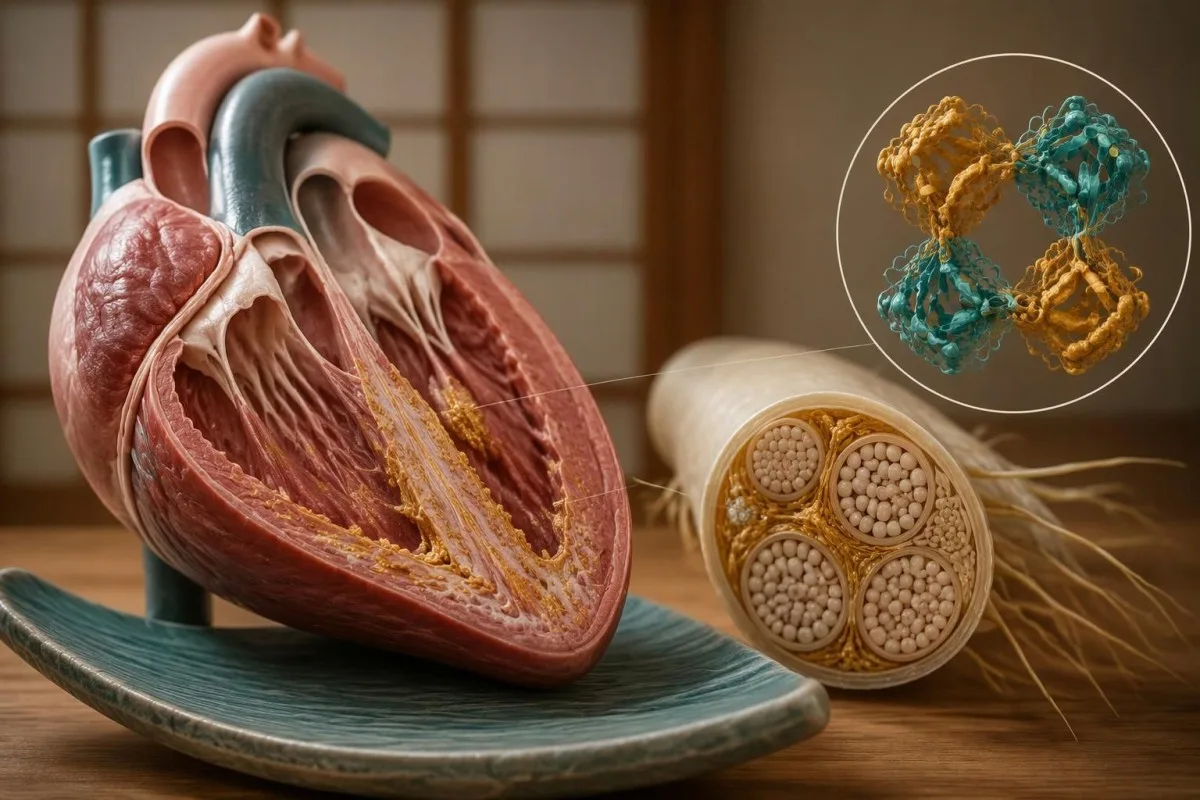
וריאנט של TTR הגורם למחלה מבסס נטייה תורשתית לעמילואידוזיס מסוג ATTR תורשתי — לא הוכחה למחלה פעילה. וריאנט שמשמעותו אינה ודאית אינו מבסס נטייה זו; תסמינים מחייבים הערכה נפרדת של מומחה, ו-ATTR מסוג wild-type מתפתח ללא וריאנט תורשתי של TTR הגורם למחלה.

נקודות עיקריות
- וריאנט פתוגני של TTR פירושו נטייה תורשתית; ממצא גנטי יחיד אינו מבסס עמילואידוזיס תסמיני.
- סיכון תורשתי הוא בדרך כלל 50% עבור כל ילד של אדם עם עותק אחד של TTR הגורם למחלה, ללא קשר למין הילד.
- ממצאים שמשמעותם אינה ודאית משתייכים לאחת מ-5 קטגוריות תקניות לסיווג וריאנטים; אין לקבוע בדיקה מנבאת או טיפול על סמך VUS בלבד.
- שמות וריאנטים עשויים להיות שונים ב-22 עמדות של חומצות אמינו: p.Val50Met והשם ההיסטורי Val30Met מתארים אותה החלפה.
- ATTR מסוג wild-type כרוך בטרנסתירטין ללא וריאנט TTR מזוהה הגורם למחלה; לא ניתן להבחין באופן מהימן בין משקעים תורשתיים למשקעים מסוג wild-type על סמך תסמינים בלבד.
- אישור לבבי עשוי להתבסס על קליטת סמן עצם בדרגה 2 או 3, אך רק במסגרת מסלול ההדמיה המתאים ולאחר הערכת חלבונים מונוקלונליים.
- מעקב אחר נשאים כולל לעיתים קרובות הערכה שנתית, כשהתזמון מותאם אישית; כ-10 שנים לפני הופעת המחלה החזויה במשפחה הן כלי עזר לתכנון, ולא מועד ביולוגי מחייב.
- תסמיני חירום כגון קוצר נשימה חמור, התמוטטות או כאבים בחזה, מצריכים טיפול מיידי — ולא המתנה לביקור המעקב הבא בעוד 6–12 חודשים.
מה המשמעות האמיתית של וריאנט TTR?
A וריאנט TTR פתוגני או שסביר שהוא פתוגני מצביע על נטייה תורשתית לעמילואידוזיס תורשתי מסוג ATTR, אך כשלעצמו אינו מעיד על שקיעת עמילואיד פעילה או על נזק לאיברים. א וריאנט בעל מובהקות בלתי ידועה, או VUS, אין די ראיות כדי להסיק זאת; אלה שאלות נפרדות הדורשות החלטות קליניות נפרדות.

TTR הוא הגן המקודד לטרנסתירטין, חלבון נשא המיוצר בעיקר בכבד; המבנה הרגיל שלו במחזור הדם מכיל 4 תת-יחידות חלבוניות. וריאנטים מסוימים הופכים את המבנה הזה ליציב פחות, ומאפשרים לחלבון שעבר קיפול שגוי להצטבר כעמילואיד, במיוחד בעצבים או בלב.
לדוגמה, דמיינו אדם בן 46 שבבדיקה גנטית קלינית מזוהה אצלו וריאנט TTR ידוע הגורם למחלה, אך בבדיקה הנוירולוגית ובהערכה הלבבית לא נמצאו עדויות למחלה. התיאור המתאים עשוי להיות נשא של וריאנט ללא תסמינים, ולא אדם עם עמילואידוזיס תסמינית; הזכאות לטיפול והמעקב תלויים בממצאים נוספים.
Kantesti הוא מנתח בדיקות דם מבוסס AI המסייע להסביר תוצאות מעבדה נלוות, תוך הבחנה בין נטייה גנטית לבין אישור של מחלה באיברים. מידע על הארגון שלנו מסביר את ההקשר של השירות שלנו; לא בדיקות מעבדה שגרתיות ולא הסבר מבוסס AI יכולים להחליף את שתי ההערכות האלה בידי מומחים.
במה נבדלים ממצאים פתוגניים ב-TTR מ-VUS?
פתוגניות ו ככל הנראה פתוגני לממצאים יש ראיות התומכות בתפקידם כגורמים למחלה; ל VUS אין די ראיות כדי לסווג אותו כמזיק או כבלתי מזיק. המעבדות משתמשות ב-5 קטגוריות סטנדרטיות: פתוגני, סביר שפתוגני, משמעות לא ודאית, סביר שפיר ושפיר.

מסגרת הסיווג של ACMG/AMP לווריאנטים ברצף מציבה ממצאים שסביר שהם פתוגניים מעל סף ביטחון של 90% לפתוגניות, אך אחוז זה מתאר את הביטחון בסיווג, ולא את הסיכוי של אדם לפתח תסמינים (Richards et al., 2015). ההסבר שלנו לגבי תוצאות בדיקות גנטיות לסרטן תורשתי illustrates the same distinction between a laboratory label and a person's current disease status.
A VUS should not, by itself, trigger disease-specific treatment or routine predictive testing of healthy relatives. Specialists may instead investigate whether the finding tracks with confirmed disease in a family—a segregation study involving 2 or more informative relatives when available—which is different from declaring those relatives genetically affected.
Classification can change when additional family, functional, or population evidence becomes available. Ask who will handle recontact, whether review in 12–24 months would be useful, and whether another laboratory has classified the exact same variant differently; our guide to common genetic variant misconceptions explains why the word mutation is not automatically a diagnosis.
מדוע לאותו וריאנט TTR עשויים להיות שני שמות?
The same TTR variant can have modern and historical protein names because modern numbering includes a 22-amino-acid signal peptide. For example, p.Val50Met is the variant historically called Val30Met, ו p.Val142Ile is the variant historically called Val122Ile.

A complete report ideally supplies the gene, transcript reference, DNA-level notation, protein-level notation, zygosity, and classification—not simply a variant nickname. Because a TTR precursor contains 149 amino acids and the mature protein contains 127, comparing reports without noticing the numbering convention can create an apparent disagreement where none exists.
p.Thr80Ala, historically Thr60Ala, can produce a mixed cardiac and neurological phenotype, whereas p.Val142Ile is often associated with predominantly cardiac disease. These are tendencies rather than guarantees: 2 relatives with the same variant may differ in age at onset, affected organs, and severity.
For a hypothetical family, a parent's report saying Val122Ile and an adult child's report saying p.Val142Ile should prompt exact-notation comparison before anyone concludes that there are 2 different familial variants. Similar nomenclature issues arise in enzyme and genetic testing; bring the original reports rather than relying on a handwritten abbreviation.
האם סיכון תורשתי של 50% פירושו סיכון למחלת 50%?
A 50% inheritance risk is not a 50% risk of symptomatic disease. Hereditary ATTR usually follows autosomal dominant inheritance: a person with 1 disease-causing TTR copy has a 50% chance of passing that copy to each child, but disease expression depends on age-related penetrance and other factors.
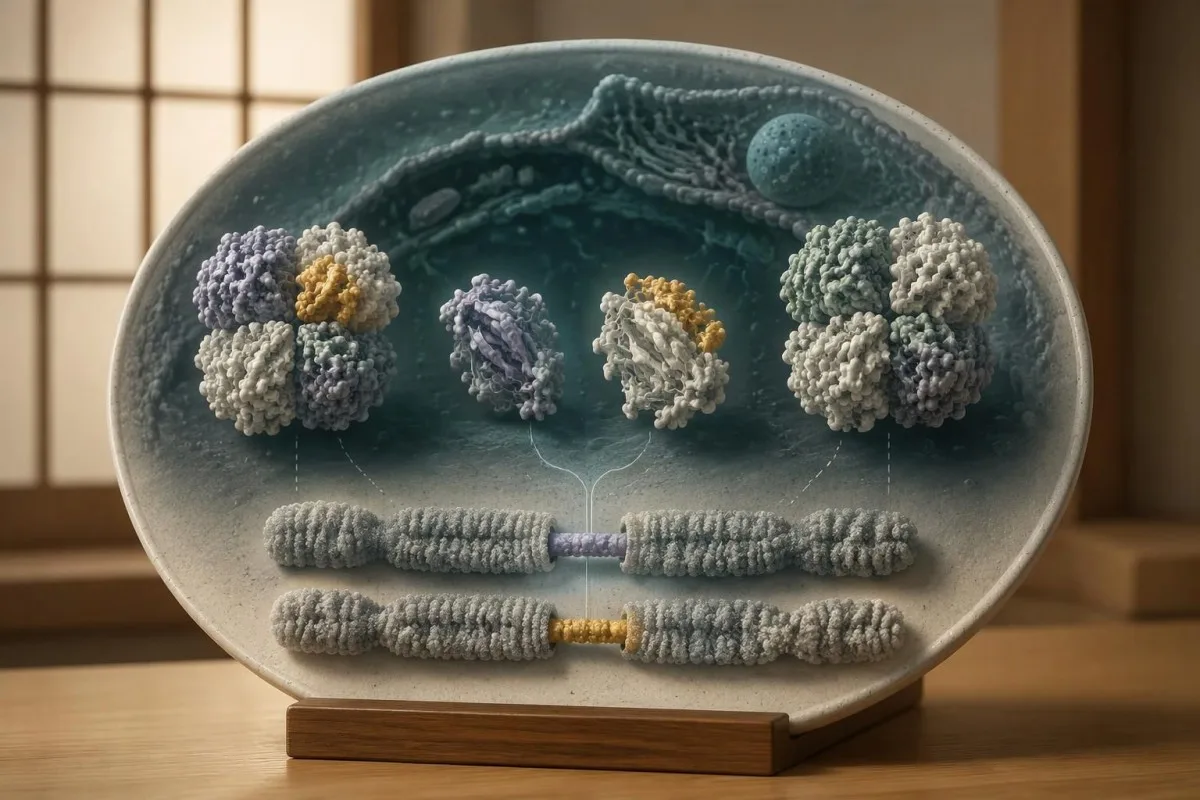
Each pregnancy is an independent event; with 2 children, the theoretical probabilities are 25% for neither inheriting the variant, 50% for exactly one, and 25% for both. Those calculations assume one heterozygous parent and describe inheritance only—they do not predict whether or when either child will become ill.
Penetrance means the proportion of variant carriers who develop disease by a stated age, and it varies across TTR variants and populations. The often-quoted 3–4% frequency of p.Val142Ile in some populations of African ancestry is a variant-frequency estimate, not a universal estimate of amyloidosis prevalence or an individual's lifetime disease risk.
An apparently unaffected parent aged 75 can still have transmitted a pathogenic variant, while a negative family history may reflect late onset, small families, or previously unrecognized disease. Our discussion of genetic susceptibility and kidney risk offers a useful comparison, although APOL1 risk architecture should not be substituted for TTR inheritance.
במה שונה ATTR תורשתי מ-ATTR מסוג wild-type?
Hereditary ATTR involves a disease-causing TTR variant; wild-type ATTR involves amyloid formed from transthyretin without an identified disease-causing variant. Both can affect the heart, so neither age nor a cardiac scan alone reliably distinguishes these 2 forms.
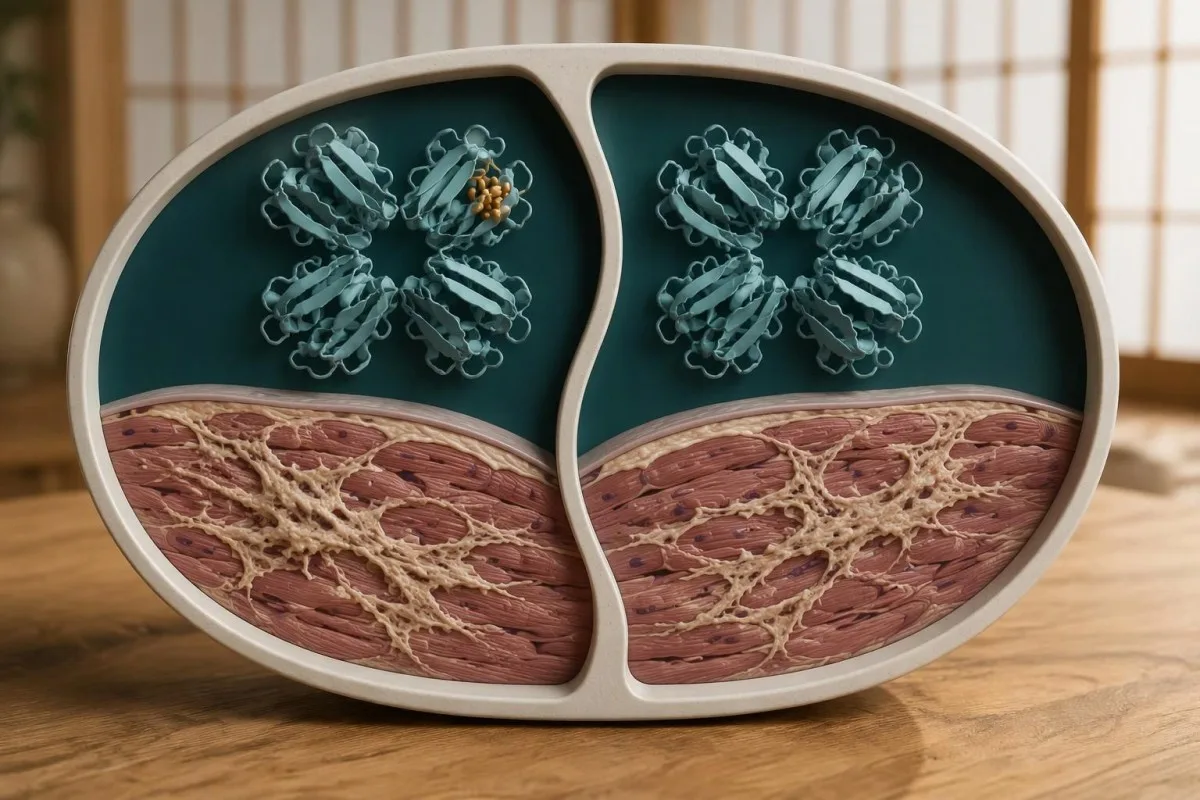
TTR sequencing is recommended after ATTR cardiomyopathy is established, including in older adults, because hereditary disease can first become apparent after age 70. The ESC position statement emphasizes genetic counseling and testing to distinguish variant ATTR from wild-type ATTR, rather than assuming that an older patient's disease cannot be inherited (Garcia-Pavia et al., 2021).
A negative result for a known family variant removes that particular inherited susceptibility, but it does not guarantee that the person will never develop wild-type ATTR or another heart condition. Conversely, a VUS does not automatically convert a confirmed ATTR diagnosis into hereditary ATTR; the laboratory classification and amyloid diagnosis still need reconciliation.
ATTR is also different from עמילואידוזיס מסוג AL, caused by immunoglobulin light chains, and עמילואידוזיס AA, associated with prolonged inflammatory activity. These are at least 3 distinct amyloid types with different investigations and treatment pathways; an elevated serum amyloid A result does not diagnose TTR-related disease.
אילו תסמינים של עמילואידוזיס תורשתי מצריכים הערכה?
Hereditary amyloidosis symptoms may include progressive numbness or burning feet, weakness, altered bowel function, dizziness on standing, breathlessness, or ankle swelling. These findings are nonspecific, but involvement of 2 systems—such as neuropathy plus unexplained cardiac thickening—raises more concern than either finding alone.

Bilateral carpal tunnel syndrome, particularly when it precedes cardiac symptoms by several years, can be an ATTR clue but is far more commonly explained by other causes. Document whether 1 or both wrists are affected and when symptoms began; our guide to carpal tunnel finger patterns helps distinguish a local median-nerve pattern from broader neuropathy.
תת־לחץ דם אורתוסטטי commonly means a sustained fall of at least 20 mmHg systolic or 10 mmHg diastolic within 3 minutes of standing. Amyloid-related autonomic dysfunction is one possible cause, but dehydration and medicines are common alternatives; it is not interchangeable with the heart-rate pattern discussed in POTS diagnostic testing.
Consider a hypothetical 58-year-old carrier who develops numb feet, unintentional weight loss, and new difficulty climbing stairs over 6 months: that combination warrants prompt specialist review rather than waiting for annual screening. Sudden weakness, severe breathlessness, chest pain, or collapse requires urgent care because immediately treatable problems must be assessed before attributing symptoms to ATTR.
אילו בדיקות מבססות אבחנה של עמילואידוזיס פעיל מסוג ATTR?
Active ATTR amyloidosis requires evidence of amyloid disease, not just a genetic result. In the appropriate cardiac setting, grade 2 or 3 uptake on a validated bone-tracer scan can establish ATTR cardiomyopathy without biopsy only when monoclonal protein testing is negative and imaging confirms uptake within heart muscle.
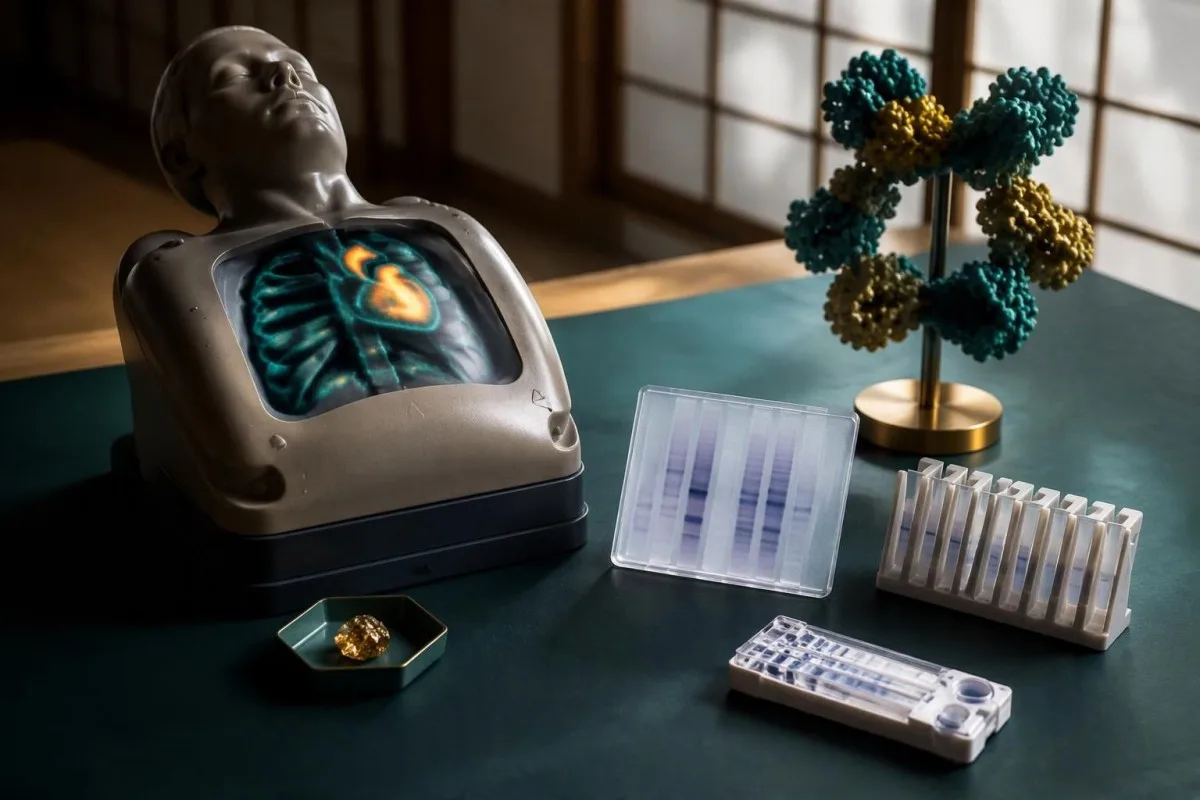
The monoclonal screen includes serum free light chains plus serum and urine immunofixation; serum protein electrophoresis alone is insufficient. Gillmore et al.'s 2016 Circulation study evaluated 1,217 patients and established the nonbiopsy cardiac approach under defined conditions; our guide to immunofixation bands and follow-up explains why detecting a monoclonal protein changes the next step.
A monoclonal protein does not prove AL amyloidosis, because an unrelated monoclonal gammopathy can coexist with ATTR, especially in older adults. However, it prevents clinicians from using the simplified scan-only ATTR pathway; interpreting the יחס שרשרת קלה חופשית also requires kidney-function context and, where available, assay-specific renal reference intervals.
When tissue examination is needed, Congo red staining establishes amyloid, while reliable protein typing—often mass spectrometry—identifies its source. A negative abdominal fat sample does not exclude ATTR, and grade 1 cardiac uptake is not the same as the grade 2–3 diagnostic criterion; neuropathy-predominant disease may require a different combination of neurological and tissue investigations.
אילו נושאים יש לכלול בייעוץ גנטי בנושא TTR?
TTR genetic counseling should explain the exact variant, classification, inheritance, limitations of risk prediction, and consequences for relatives before testing or major decisions. For most heterozygous families, the 50% transmission probability is straightforward; predicting age at onset and organ involvement is much less precise.

Counseling distinguishes diagnostic testing in someone with suspected disease from predictive testing in an unaffected relative. A person considering predictive testing should have time to discuss emotional readiness and the right not to know, similar to the consent principles described in predictive neurological genetic testing, although TTR penetrance differs substantially.
Reproductive discussions can include natural conception, prenatal diagnosis, and preimplantation genetic testing where available and legally permitted. Because a 50% transmission risk does not specify future severity, these conversations should be nondirective; confirm the familial pathogenic variant in a clinical laboratory before using it for reproductive testing or other consequential decisions.
Kantesti's explanations of בפרטיות ובנתונים שלכם help readers consider what they share, but genetic information has implications beyond ordinary laboratory values. Before adding reports for 2 or more relatives to a shared account, obtain each person's permission and ask the genetics team about local insurance rules, record access, and secure family communication.
אילו קרובי משפחה צריכים לשקול בדיקת TTR ממוקדת?
Adult relatives at risk of a confirmed familial pathogenic or likely pathogenic TTR variant should be offered genetic counseling and the option of targeted testing. Each child of a heterozygous carrier has a 50% inheritance probability; a sibling's risk depends on whether a parent carries the variant.

Start with the relative who has confirmed disease whenever possible, then use that person's exact variant to guide cascade testing. Testing all relatives with a broad panel before establishing the family finding may generate additional VUS results; this differs from the recessive inheritance questions in SMA carrier screening, where 2 gene copies have a different meaning.
Predictive testing for adult-onset TTR disease is generally deferred in children younger than 18 when the result would not change childhood care, preserving their future choice. A child with unexplained relevant symptoms needs clinical assessment rather than automatic dismissal; any exceptional testing decision should involve pediatric and genetics specialists, not a routine family screening package.
For example, a 34-year-old who tests negative for a clinically confirmed familial p.Val50Met variant generally does not need surveillance specifically for that family variant. A symptomatic relative still needs assessment for other causes, and a 1-variant consumer screening result cannot substitute for a validated familial test if the relevant variant was not actually examined.
כיצד מתבצע המעקב אחר נשאי TTR ללא תסמינים?
Asymptomatic pathogenic TTR carriers need individualized surveillance, commonly involving annual clinical review, rather than an automatic amyloidosis diagnosis or preventive prescription. Many expert pathways begin structured assessment approximately 10 years before predicted disease onset, but variant-specific evidence and family history may justify earlier or different monitoring.
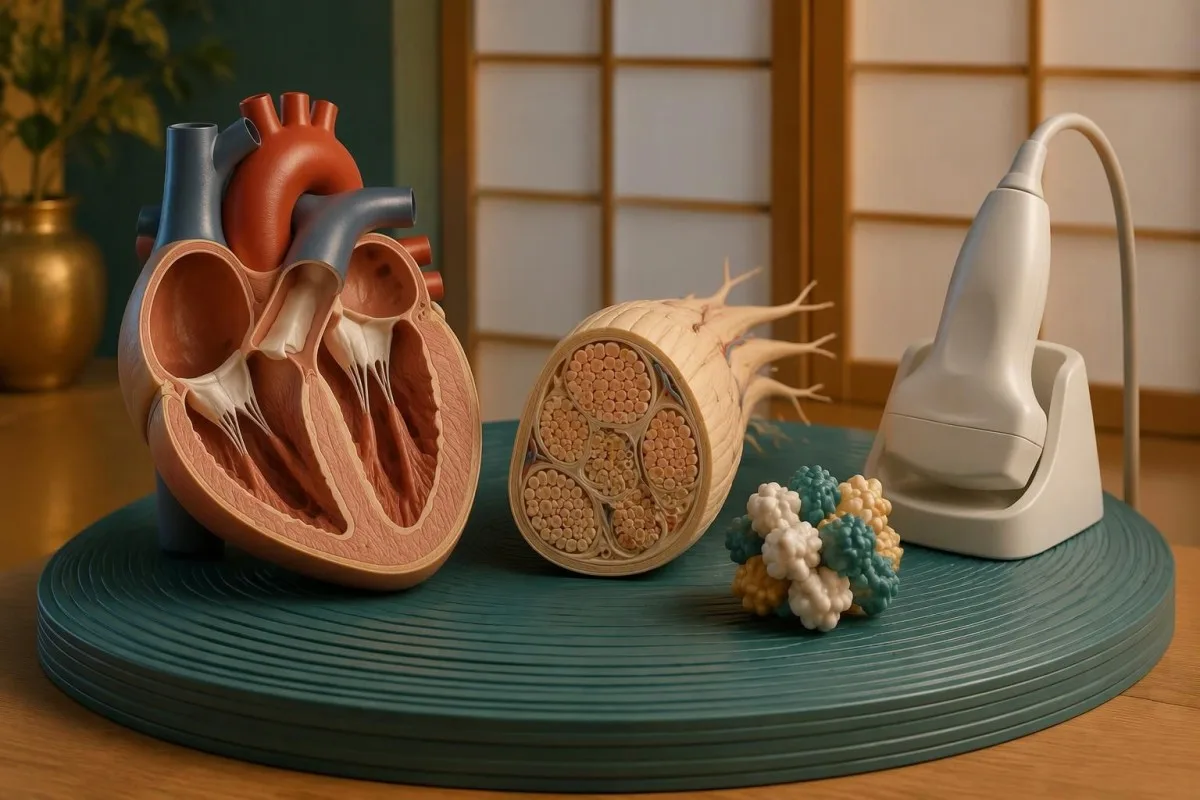
Baseline assessment may include neurological examination, autonomic history, ECG, echocardiography, kidney function, and cardiac biomarkers; additional tests depend on the variant and symptoms. The ESC position statement outlines regular carrier follow-up (Garcia-Pavia et al., 2021), but a 6–12-month interval should be individualized, especially when new findings appear or expected onset approaches.
A parent's onset at 62 is not a countdown showing that a child's disease will begin at 62, and a normal baseline does not eliminate later risk. Kantesti AI can help explain the difference between a single value and a meaningful laboratory timeline, but specialist decisions also require examination and imaging that routine blood interpretation cannot supply.
Imagine NT-proBNP increasing from 180 to 620 pg/mL while eGFR falls from 62 to 43 mL/min/1.73 m²: cardiac change deserves assessment, but reduced kidney clearance can contribute to the rise. Review intercurrent illness, rhythm, and medicines before interpreting progression; our מדריך היחס להערכת תפקוד הכליות explains why renal context belongs beside cardiac trends.
מה בדיקות דם יכולות לגלות — ומה הן עלולות להחמיץ?
Routine blood tests cannot confirm or exclude hereditary ATTR amyloidosis. NT-proBNP, troponin, kidney function, and urine protein can help assess organ involvement or alternatives, but a normal set of results—even across 2 visits—does not establish that a pathogenic TTR carrier will remain disease-free.
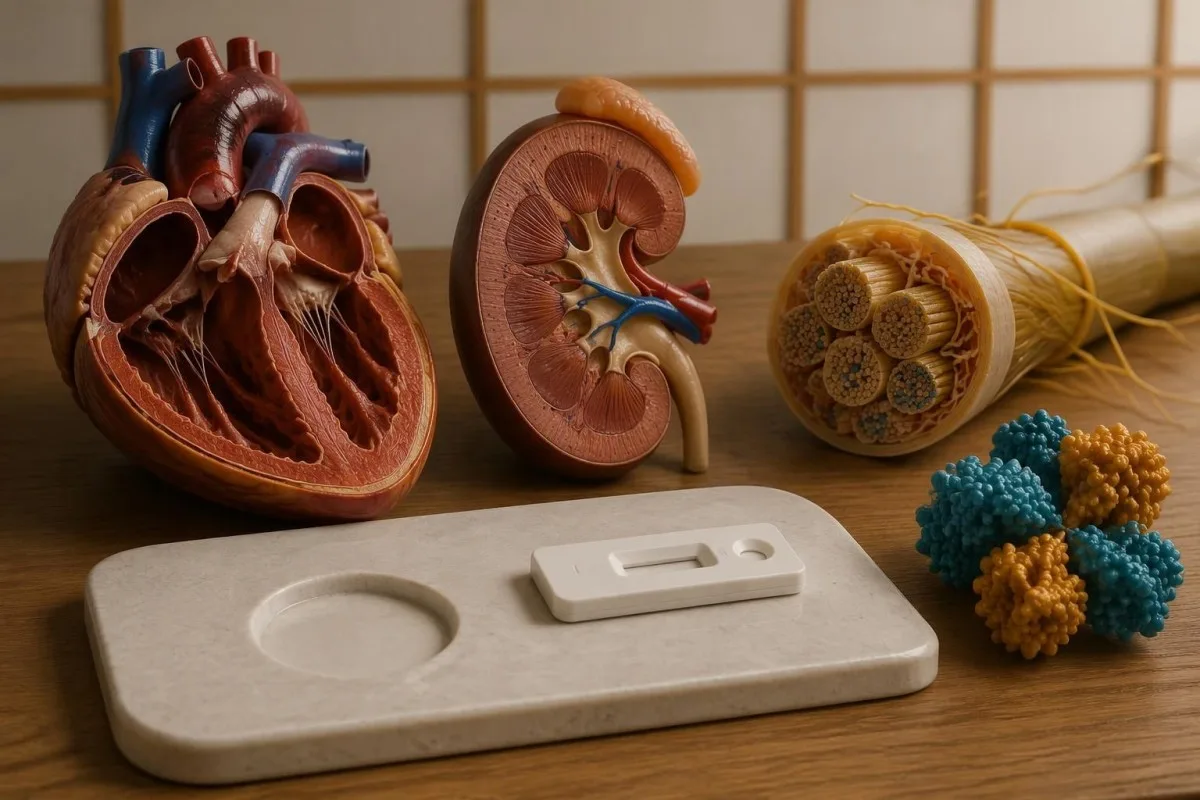
טרופונין must be interpreted against the assay's 99th-percentile upper reference limit, and NT-proBNP varies with age, kidney function, atrial fibrillation, and body size. A TTR or prealbumin concentration such as 25 mg/dL does not identify a TTR gene mutation or prove amyloid deposition; the test measures circulating protein concentration rather than its genetic sequence.
Neuropathy assessment should also look for treatable alternatives, including diabetes, vitamin B12 deficiency, thyroid disease, and medication effects. A hypothetical B12 result of 210 pg/mL may need additional assessment according to the laboratory and symptoms; our discussion of תוצאות גבוליות של ויטמין B12 explains why a competing diagnosis should not be overlooked simply because a TTR variant exists.
Kantesti is an AI blood test interpretation platform that explains accompanying laboratory values without treating 1 protein result as an amyloidosis diagnosis. Our מדריך לפרשנות חלבון סרום helps separate transport proteins and immunoglobulin findings; neither an ordinary protein panel nor a family-risk feature replaces clinical TTR testing and amyloid typing.
האם תוצאה גנטית חיובית ל-TTR פירושה שיש להתחיל טיפול?
A positive TTR genetic result alone is not a standard indication for disease-modifying treatment. Specialists consider confirmed ATTR disease, the affected organs, functional status, and local approvals; the 2 main medication strategies are stabilizing transthyretin and reducing production of transthyretin.

TTR stabilizers aim to reduce dissociation of the 4-subunit protein, while TTR-lowering therapies reduce production, mainly in the liver. Neither approach edits the inherited DNA, so family transmission considerations remain after treatment; eligibility differs between cardiomyopathy, polyneuropathy, and mixed disease, as do approval and reimbursement rules across countries.
Monitoring depends on the chosen medicine rather than the genetic label alone: some regimens require attention to platelets, kidney function, or vitamin A handling. If vitamin A supplementation is advised during a TTR-lowering regimen, use the prescribed allowance rather than escalating the dose because a laboratory result looks low; 1 abnormal value does not establish a safe replacement dose.
Kantesti does not select amyloidosis medication or establish treatment eligibility from uploaded laboratory results; our אימות טכני ופיקוח describe a different task from specialist prescribing. For an asymptomatic carrier, discuss surveillance and research opportunities; there is no single proven preventive prescription that follows automatically from a 50% inheritance-risk calculation.
מה כדאי להביא לפגישה עם המומחה?
Bring the original genetic report, symptom timeline, family history, and relevant cardiac or neurological investigations to an amyloidosis or clinical genetics appointment. These 4 information groups help specialists distinguish a confirmed disease-causing variant, an uncertain finding, unrelated symptoms, and early organ involvement.

Record symptom onset by month and year where possible, including numbness, bowel changes, wrist procedures, fainting, breathlessness, and reduced walking tolerance. Include at least 3 generations of family information if available, but distinguish a documented amyloidosis diagnosis from a relative's unexplained heart failure; uncertain family labels should remain visibly uncertain.
Ask 3 focused questions: Is this variant pathogenic, likely pathogenic, or uncertain; what evidence exists for active organ disease; and which relatives should be offered counseling? A written plan should also identify the clinician responsible for follow-up, what changes should trigger earlier contact, and whether a laboratory will notify anyone if the variant classification changes.
Kantesti is an AI-powered blood test analysis tool that can help explain laboratory reports before a consultation, not replace the consultation or infer another relative's genotype. Our guide to consent-based family health tracking covers shared records; our שלנו בנושא בינה מלאכותית אחראית explain why 1 uncertain genetic result should never become an automated family diagnosis.
איזה מחקר תומך באבחנה, ואיזה מעריך בינה מלאכותית?
Clinical amyloidosis research and AI technical benchmarks answer different questions. The 2016 nonbiopsy diagnostic study and 2021 ESC position statement support specific ATTR assessment pathways; the 2 repository publications listed below describe separate AI projects and do not validate TTR variant classification or diagnose hereditary ATTR amyloidosis.
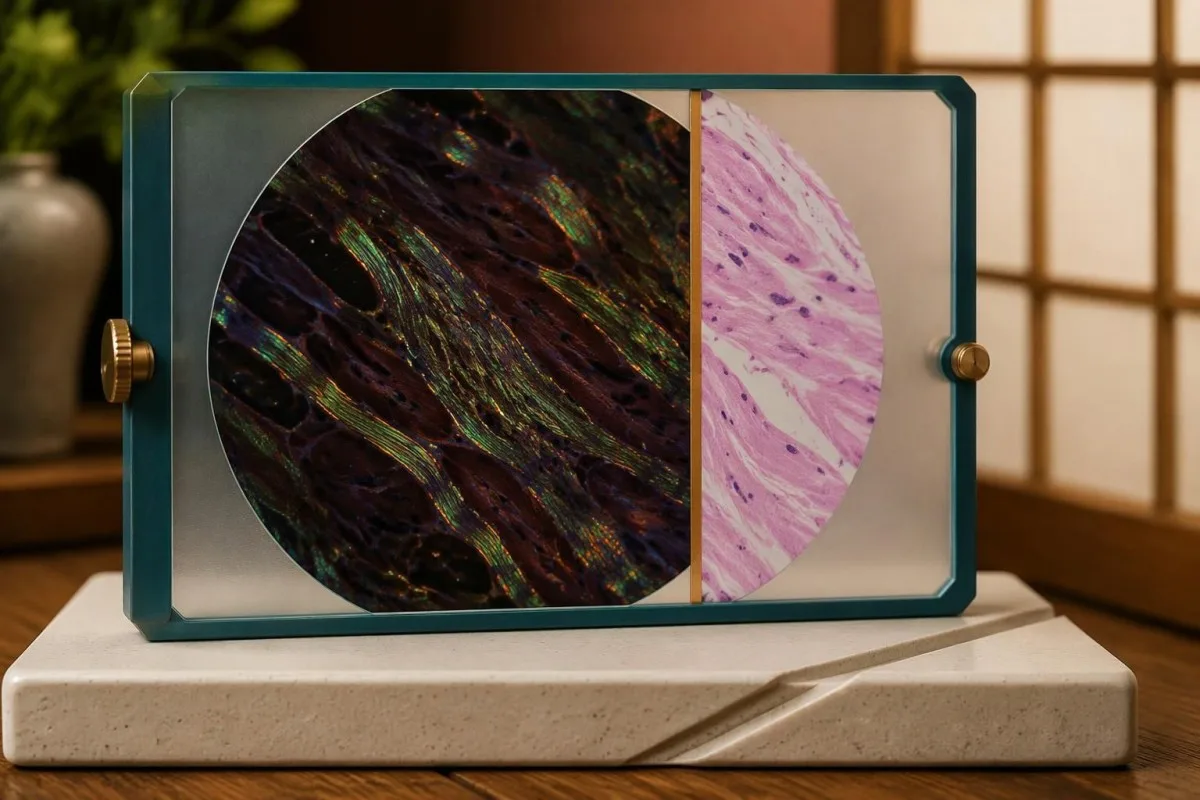
The clinical evidence cited here addresses 3 distinct tasks: sequence-variant classification, cardiac amyloid confirmation, and specialist management pathways. Congo red staining can reveal amyloid but cannot, by itself, identify a TTR genotype or reliably distinguish all amyloid proteins; the same caution applies to a compelling-looking AI explanation unsupported by the required clinical tests.
Kantesti's repository publications describe early hantavirus triage across 50,000 interpreted reports and a technical benchmark involving 100,000 synthetic test cases. The blood-test engine benchmark provides context for the latter; synthetic-case performance does not establish sensitivity for detecting ATTR in real patients, and a Figshare DOI does not itself demonstrate peer review or regulatory authorization.
For patients and relatives, the next decision should follow the report category: counseling and individualized surveillance for a confirmed pathogenic variant, specialist-led clarification for a VUS, and organ assessment for relevant symptoms. Keep those 3 pathways separate; a genetic finding, an imaging result, and an AI-generated explanation are not interchangeable forms of evidence.
שאלות נפוצות
האם מוטציה בגן TTR פירושה שיש לי עמילואידוזיס ATTR תורשתית?
מוטציה פתוגנית או מוטציה שסביר שהיא פתוגנית בגן TTR מבססת נטייה תורשתית, אך כשלעצמה אינה מבססת עמילואידוזיס פעילה מסוג ATTR תורשתית. אדם עם עותק אחד של TTR הגורם למחלה עשוי להישאר ללא תסמינים במשך שנים רבות או לא לפתח לעולם מחלה מזוהה. מומחים מעריכים תסמינים, ממצאי בדיקה, הדמיה ולעיתים תוצאות של בדיקות רקמה כדי לקבוע אם קיימת מחלת איברים. וריאנט בעל משמעות לא ודאית אינו מבסס את אותה נטייה תורשתית.
האם ניתן להשתמש בווריאנט TTR שמשמעותו אינה ודאית כדי לבדוק את בני משפחתי?
0. וריאנט של TTR שמשמעותו אינה ודאית לא אמור לשמש בפני עצמו לבדיקת ניבוי שגרתית של קרובי משפחה בריאים או לקבלת החלטות טיפוליות. זוהי אחת מ־5 קטגוריות הסיווג התקניות של וריאנטים, ומשמעותה שאין די ראיות כדי לקבוע אם הממצא מזיק או בלתי מזיק. צוות גנטיקה עשוי לתאם בדיקות נבחרות לבני משפחה כדי לבדוק אם הווריאנט מופיע יחד עם מחלה מאומתת. הבירור הזה מסייע בסיווג; אין פירושו תיוג קרובי משפחה כנשאים חולים.
מה הסיכוי שילדיי יירשו ATTR תורשתי?
לכל ילד של אדם עם עותק אחד של TTR הגורם למחלה יש בדרך כלל סיכוי של 50% לרשת את הווריאנט. ההסתברות זהה לילדים מכל מין, וכל היריון הוא אירוע בלתי תלוי. ירושת הווריאנט אינה קובעת מתי יתחילו התסמינים או מה תהיה חומרת המחלה. ייעוץ גנטי יכול להסביר בדיקות מנבאות ואפשרויות רבייה, בלי להתייחס להסתברות להעברת הווריאנט כאל תחזית של מהלך המחלה.
האם Val30Met ו-p.Val50Met הן אותה מוטציה ב-TTR?
Val30Met ו-p.Val50Met מתארים את אותה החלפה בחלבון TTR באמצעות שיטות מספור שונות. המספור המודרני כולל פפטיד אות בן 22 חומצות אמינו, שאינו נכלל במספור ההיסטורי של החלבון הבשל. אותה סוגיה מסבירה את Val122Ile לעומת p.Val142Ile ואת Thr60Ala לעומת p.Thr80Ala. איש מקצוע בתחום הגנטיקה צריך להשוות את הסימון המלא של ה-DNA ושל החלבון בעת עיון בדוחות ממעבדות שונות.
האם בדיקות דם רגילות יכולות לשלול עמילואידוזיס ATTR?
Normal routine blood tests cannot rule out ATTR amyloidosis or eliminate future disease risk in a pathogenic TTR carrier. Troponin is interpreted using the assay's 99th-percentile limit, while NT-proBNP and kidney results provide context about organ stress rather than amyloid identity. A normal TTR or prealbumin concentration does not exclude a TTR variant or amyloid deposits. Evaluation may still require neurological assessment, cardiac imaging, and selected tissue investigations.
האם עמילואידוזיס ATTR מסוג wild-type היא תורשתית?
עמילואידוזיס ATTR מסוג wild-type אינה מיוחסת לווריאנט תורשתי של TTR הגורם למחלה, בניגוד ל-ATTR תורשתית. שתי הצורות יכולות לגרום לממצאים לבביים דומים, ולכן לא ניתן להבחין ביניהן באופן מהימן על סמך גיל ותסמינים בלבד. מומלץ לבצע בדיקה גנטית ל-TTR לאחר שנקבעה אבחנה של קרדיומיופתיה מסוג ATTR, גם בקרב מבוגרים. קרובי משפחה אינם זקוקים לבדיקה ממוקדת לווריאנט משפחתי, אלא אם זוהה בפועל וריאנט הגורם למחלה.
באיזו תדירות נשא TTR ללא תסמינים צריך להיבדק אצל מומחה?
נשא של וריאנט פתוגני ב-TTR ללא תסמינים עובר בדרך כלל הערכה שנתית אצל מומחה, אך יש להתאים את המעקב באופן אישי ולא לקבוע לוח זמנים אחיד לכולם. במסלולי מעקב מסוימים מתחילים מעקב מובנה כ-10 שנים לפני גיל הופעת המחלה החזוי במשפחה, ומקדימים את הבדיקה במקרה של תסמינים או ממצאים מדאיגים. בדיקה נוירולוגית, אק"ג, אקו לב וסמנים מעבדתיים נבחרים עשויים להיכלל בתוכנית. קוצר נשימה חדש, חולשה מתקדמת או עילפון צריכים להוביל להערכה מוקדמת יותר, במקום להמתין לביקור המתוכנן.
קבלו הסבר על תוצאות בדיקות הדם שלכם
העלו את דוח המעבדה שלכם, וה-AI של Kantesti יסביר כל סמן ביולוגי בשפה פשוטה בתוך שניות. יותר מ-2 מיליון אנשים ברחבי העולם משתמשים בו.
הפניות
- Klein, T., Mitchell, S., & Weber, H. (2026). תמיכה רב־לשונית בקבלת החלטות קליניות בסיוע בינה מלאכותית למיון מוקדם של נגיף ההנטה: תכנון, תיקוף הנדסי והטמעה בעולם האמיתי על פני 50,000 דוחות של פענוח בדיקות דם. מחקר רפואי של Kantesti AI. DOI
- Klein, T., Mitchell, S., & Weber, H. (2026). אמת מידה טכנית אוטומטית רשומה מראש, מבוססת רובריקה, של מנוע פרשנות בדיקות הדם Kantesti על 100,000 מקרי מבחן סינתטיים. מחקר רפואי של Kantesti AI. DOI
- Richards S ואח׳ (2015). תקנים והנחיות לפרשנות של וריאנטים ברצף: המלצת קונצנזוס משותפת של הקולג׳ האמריקאי לגנטיקה רפואית ולגנום ושל האיגוד לפתולוגיה מולקולרית. גנטיקה ברפואה. DOI PubMed
- Garcia-Pavia P et al. (2021). Diagnosis and treatment of cardiac amyloidosis: a position statement of the ESC Working Group on Myocardial and Pericardial Diseases. כתב העת האירופי לקרדיולוגיה. DOI PubMed
- Gillmore JD et al. (2016). Nonbiopsy Diagnosis of Cardiac Transthyretin Amyloidosis. Circulation. DOI PubMed
- 2 מיליון+בדיקות שנותחו
- 127+מדינות
- 100+שפות
על הצוות הרפואי


אותות אמון E-E-A-T
הִתנַסוּת
סקירה קלינית בהובלת רופא של תהליכי עבודה לפענוח בדיקות מעבדה.
מוּמחִיוּת
רפואה מעבדתית מתמקדת באופן שבו סמנים ביולוגיים מתנהגים בהקשר קליני.
סמכותיות
נבדק רפואית על ידי ד״ר Thomas Klein, בתרומתם של ד״ר Sarah Mitchell ופרופ׳ ד״ר Hans Weber.
אֲמִינוּת
פרשנות מבוססת-ראיות עם מסלולי המשך ברורים כדי להפחית בהלה.






הצהרה רפואית
מאמר זה מיועד למטרות חינוכיות בלבד ואינו מהווה ייעוץ רפואי. תמיד יש להתייעץ עם גורם מוסמך בתחום הבריאות לצורך החלטות אבחון וטיפול.
פורסם · צרו קשר עם צוות העריכה
פורסם על ידי Kantesti Ltd, הרשומה באנגליה ובוויילס, מספר חברה. 17090423, לונדון, בריטניה.
