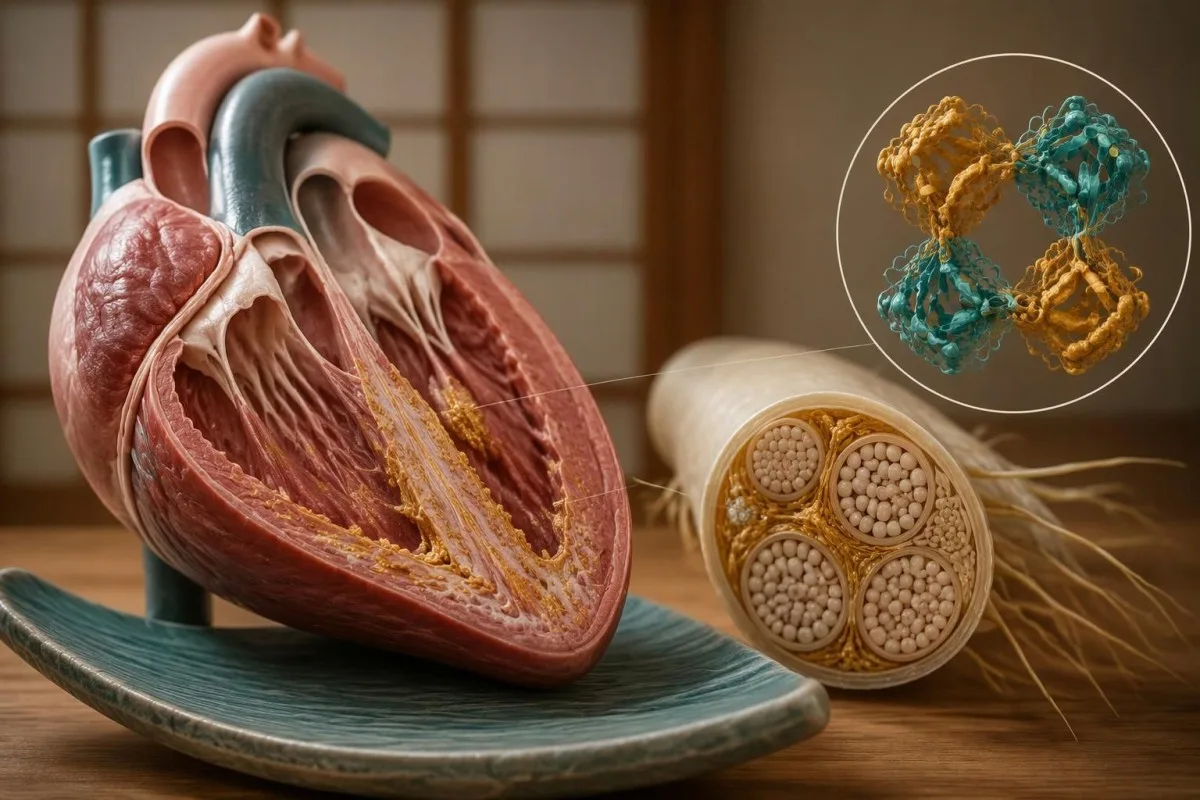
كيثبت التغيّر المسبّب للمرض فـ TTR قابلية وراثية للإصابة بداء النشواني ATTR الوراثي، وماشي دليل على وجود المرض فعلياً. التغيّر اللي مازال غير مؤكّد ما كيثبتش هاد القابلية؛ والأعراض كتحتاج تقييم منفصل عند مختص، وATTR من النوع البري كيتطور بلا تغيّر وراثي فـ TTR كيسبّب المرض.

أهم الخلاصات
- تغيّر ممرِض فـ TTR كيعني قابلية وراثية؛ نتيجة جينية وحدة بوحدها ما كتأكدش وجود داء النشواني المصحوب بأعراض.
- خطر الوراثة كيكون غالباً 50% لكل طفل عند شخص عندو نسخة وحدة مسبّبة للمرض من TTR، بصرف النظر على جنس الطفل.
- النتائج غير المؤكدة كتنتمي لواحدة من 5 فئات معيارية لتصنيف التغيّرات؛ وما خاصش VUS بوحدو يحدد الاختبارات التنبؤية ولا العلاج.
- سميات التغيّرات تقدر تختلف بـ 22 موضعاً فالأحماض الأمينية: p.Val50Met والاسم التاريخي Val30Met كيوصفو نفس الاستبدال.
- ATTR من النوع البري كيتعلّق بالترانستيريتين بلا ما تكون تحددات شي طفرة فـ TTR كتسبّب المرض؛ وما يمكنش نميّزو بشكل موثوق بين الترسبات الوراثية والترسبات من النوع البري بالاعتماد على الأعراض بوحدها.
- التأكيد القلبي يقدر يعتمد على التقاط متتبّع العظام بدرجة 2 ولا 3، ولكن غير فمسار التصوير المناسب ومن بعد تقييم البروتينات أحادية النسيلة.
- مراقبة حاملي الطفرة غالباً كتضمّ تقييم سنوي، مع تحديد التوقيت حسب كل حالة؛ وحوالي 10 سنين قبل السن المتوقع لبداية المرض فالعائلة كيعطي فكرة للتخطيط، وماشي موعد بيولوجي نهائي.
- أعراض الطوارئ بحال ضيق النفس الشديد، الإغماء، ولا ألم الصدر، كيتطلبو العناية الفورية، ماشي التسنا للموعد المقبل ديال المراقبة من بعد 6–12 شهر.
شنو كيعني فعلياً تغيّر فـ TTR؟
A طفرة فـ TTR ممرِضة أو مرجّح أنها ممرِضة كتعرف القابلية الوراثية للإصابة بداء النشواني ATTR الوراثي، ولكن بوحدها ما كتبرهنش على ترسّب النشواني النشيط ولا على تضرر الأعضاء. واحد متغير ذو أهمية غير مؤكدة, ، أو VUS، ما كايناش أدلة كافية باش نوصلو لهاد الاستنتاج؛ هادو جوج مسائل منفصلين وكيحتاج كل واحد فيهم لقرارات سريرية خاصة به.

TTR هو الجين اللي كيرمّز للترانستيريتين، وهو بروتين ناقل كينتج بالأساس فالكبد؛ والبنية المعتادة ديالو فالدورة الدموية كتحتوي على 4 وحدات بروتينية. بعض الطفرات كتخلي هاد البنية أقل استقراراً، وكتسمح للبروتين المطوي بشكل غير سليم يتراكم على شكل نشواني، خصوصاً فالأعصاب ولا القلب.
مثلاً، تخيّل شخص عندو 46 عام، فاختبار جيني سريري تكتشفات عندو طفرة معروفة فـ TTR كتسبّب المرض، ولكن الفحص العصبي والتقييم القلبي ديالو ما بيّنا حتى مرض. الوصف المناسب يقدر يكون حامل طفرة بلا أعراض, ، وماشي شخص عندو داء نشواني مصحوب بأعراض؛ الأهلية للعلاج والمتابعة كيعتمدو على نتائج إضافية.
Kantesti هو محلّل ديال تحاليل الدم بالذكاء الاصطناعي، كيساعد فشرح نتائج التحاليل المخبرية المرفقة، مع التمييز بين القابلية الوراثية وتأكيد مرض الأعضاء. معلومات على منظمتنا كتشرح السياق ديال الخدمة ديالنا؛ لا تحاليل مخبرية روتينية ولا شرح بالذكاء الاصطناعي يقدرو يعوّضو هاد التقييمين التخصصيين.
شنو الفرق بين نتائج TTR الممرِضة وVUS؟
الطفرات الممرِضة و مرجح الإمراض كاينة أدلة كتدعم الدور ديالها فتسبّب المرض؛ أما VUS فما كايناش أدلة كافية باش نصنّفوها لا ضارة لا سليمة. المختبرات كتعتمد 5 فئات معيارية: ممرِضة، مرجّح أنها ممرِضة، أهميتها غير مؤكدة، مرجّح أنها سليمة، وسليمة.

إطار ACMG/AMP لتصنيف المتغيرات التسلسلية كيصنّف النتائج المرجّح أنها ممرِضة فوق عتبة ثقة قدرها 90% فكونها ممرِضة، ولكن هاد النسبة كتوصف الثقة فالتصنيف, ، وماشي احتمال إصابة شخص بعينو بالأعراض (Richards et al., 2015). الشرح ديالنا لنتائج اختبارات السرطان الوراثي illustrates the same distinction between a laboratory label and a person's current disease status.
A VUS should not, by itself, trigger disease-specific treatment or routine predictive testing of healthy relatives. Specialists may instead investigate whether the finding tracks with confirmed disease in a family—a segregation study involving 2 or more informative relatives when available—which is different from declaring those relatives genetically affected.
Classification can change when additional family, functional, or population evidence becomes available. Ask who will handle recontact, whether review in 12–24 months would be useful, and whether another laboratory has classified the exact same variant differently; our guide to common genetic variant misconceptions explains why the word mutation is not automatically a diagnosis.
علاش يقدر يكون لنفس تغيّر TTR جوج ديال السميات؟
The same TTR variant can have modern and historical protein names because modern numbering includes a 22-amino-acid signal peptide. For example, p.Val50Met is the variant historically called Val30Met، و p.Val142Ile is the variant historically called Val122Ile.

A complete report ideally supplies the gene, transcript reference, DNA-level notation, protein-level notation, zygosity, and classification—not simply a variant nickname. Because a TTR precursor contains 149 amino acids and the mature protein contains 127, comparing reports without noticing the numbering convention can create an apparent disagreement where none exists.
p.Thr80Ala, historically Thr60Ala, can produce a mixed cardiac and neurological phenotype, whereas p.Val142Ile is often associated with predominantly cardiac disease. These are tendencies rather than guarantees: 2 relatives with the same variant may differ in age at onset, affected organs, and severity.
For a hypothetical family, a parent's report saying Val122Ile and an adult child's report saying p.Val142Ile should prompt exact-notation comparison before anyone concludes that there are 2 different familial variants. Similar nomenclature issues arise in enzyme and genetic testing; bring the original reports rather than relying on a handwritten abbreviation.
واش خطر الوراثة بنسبة 50% كيعني خطر الإصابة بالمرض بنسبة 50%؟
A 50% inheritance risk is not a 50% risk of symptomatic disease. Hereditary ATTR usually follows autosomal dominant inheritance: a person with 1 disease-causing TTR copy has a 50% chance of passing that copy to each child, but disease expression depends on age-related penetrance and other factors.
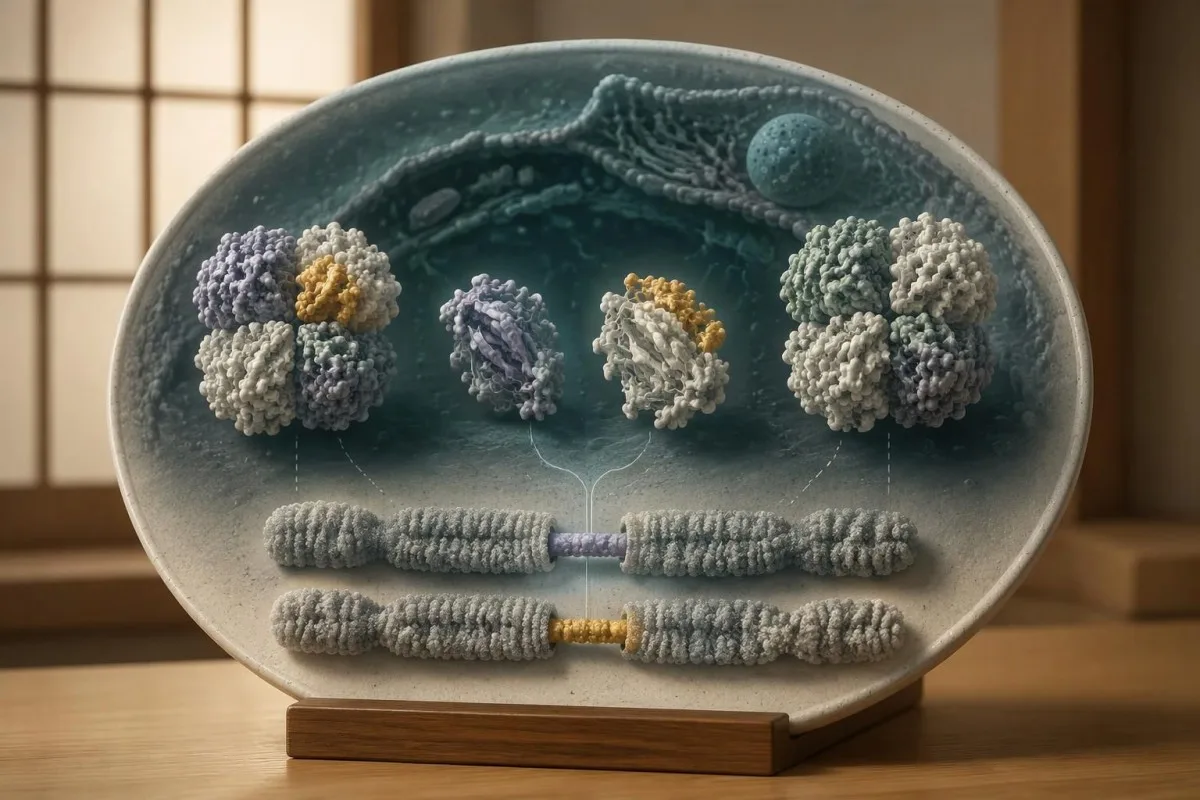
Each pregnancy is an independent event; with 2 children, the theoretical probabilities are 25% for neither inheriting the variant, 50% for exactly one, and 25% for both. Those calculations assume one heterozygous parent and describe inheritance only—they do not predict whether or when either child will become ill.
Penetrance means the proportion of variant carriers who develop disease by a stated age, and it varies across TTR variants and populations. The often-quoted 3–4% frequency of p.Val142Ile in some populations of African ancestry is a variant-frequency estimate, not a universal estimate of amyloidosis prevalence or an individual's lifetime disease risk.
An apparently unaffected parent aged 75 can still have transmitted a pathogenic variant, while a negative family history may reflect late onset, small families, or previously unrecognized disease. Our discussion of genetic susceptibility and kidney risk offers a useful comparison, although APOL1 risk architecture should not be substituted for TTR inheritance.
شنو الفرق بين ATTR الوراثي وATTR من النوع البري؟
Hereditary ATTR involves a disease-causing TTR variant; wild-type ATTR involves amyloid formed from transthyretin without an identified disease-causing variant. Both can affect the heart, so neither age nor a cardiac scan alone reliably distinguishes these 2 forms.
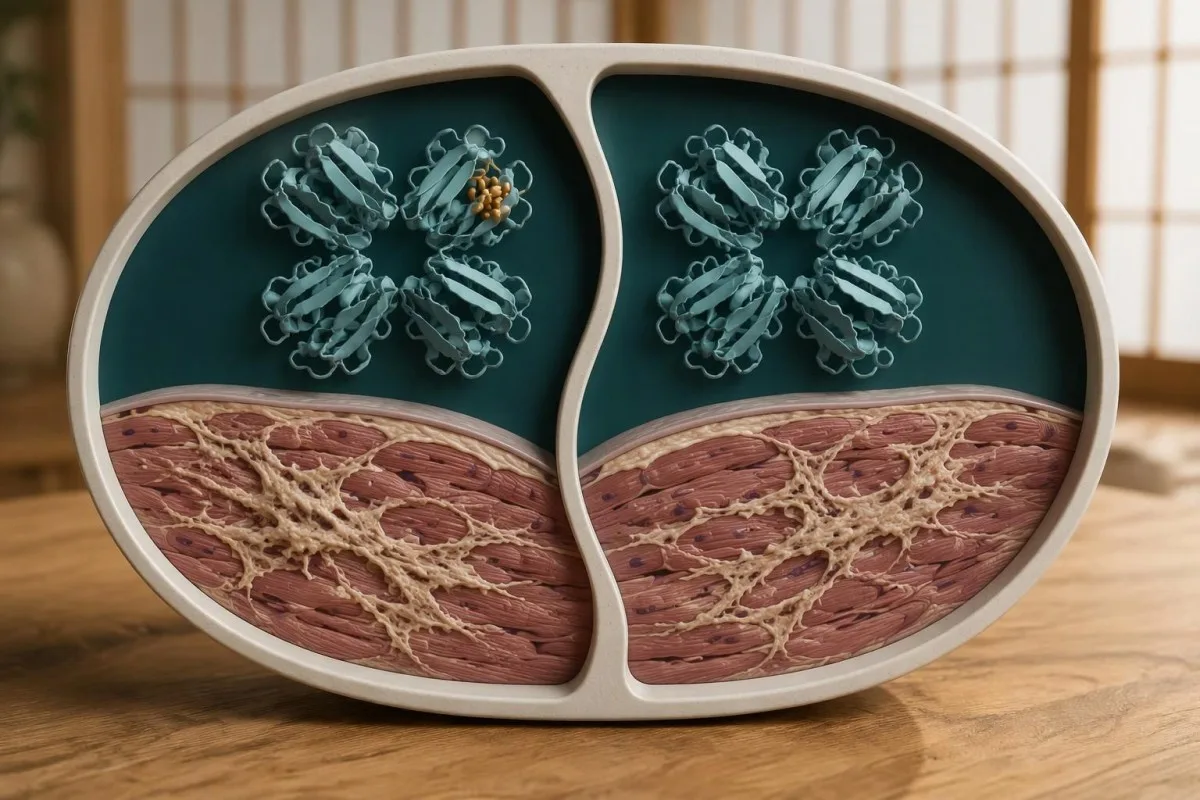
TTR sequencing is recommended after ATTR cardiomyopathy is established, including in older adults, because hereditary disease can first become apparent after age 70. The ESC position statement emphasizes genetic counseling and testing to distinguish variant ATTR from wild-type ATTR, rather than assuming that an older patient's disease cannot be inherited (Garcia-Pavia et al., 2021).
A negative result for a known family variant removes that particular inherited susceptibility, but it does not guarantee that the person will never develop wild-type ATTR or another heart condition. Conversely, a VUS does not automatically convert a confirmed ATTR diagnosis into hereditary ATTR; the laboratory classification and amyloid diagnosis still need reconciliation.
ATTR is also different from الداء النشواني AL, caused by immunoglobulin light chains, and داء النشوانيات AA, associated with prolonged inflammatory activity. These are at least 3 distinct amyloid types with different investigations and treatment pathways; an elevated serum amyloid A result does not diagnose TTR-related disease.
شنو هي أعراض داء النشواني الوراثي اللي خاصها تقييم؟
Hereditary amyloidosis symptoms may include progressive numbness or burning feet, weakness, altered bowel function, dizziness on standing, breathlessness, or ankle swelling. These findings are nonspecific, but involvement of 2 systems—such as neuropathy plus unexplained cardiac thickening—raises more concern than either finding alone.

Bilateral carpal tunnel syndrome, particularly when it precedes cardiac symptoms by several years, can be an ATTR clue but is far more commonly explained by other causes. Document whether 1 or both wrists are affected and when symptoms began; our guide to carpal tunnel finger patterns helps distinguish a local median-nerve pattern from broader neuropathy.
انخفاض ضغط الدم الانتصابي commonly means a sustained fall of at least 20 mmHg systolic or 10 mmHg diastolic within 3 minutes of standing. Amyloid-related autonomic dysfunction is one possible cause, but dehydration and medicines are common alternatives; it is not interchangeable with the heart-rate pattern discussed in POTS diagnostic testing.
Consider a hypothetical 58-year-old carrier who develops numb feet, unintentional weight loss, and new difficulty climbing stairs over 6 months: that combination warrants prompt specialist review rather than waiting for annual screening. Sudden weakness, severe breathlessness, chest pain, or collapse requires urgent care because immediately treatable problems must be assessed before attributing symptoms to ATTR.
شنو هي الفحوصات اللي كتأكد وجود داء النشواني ATTR فعلياً؟
Active ATTR amyloidosis requires evidence of amyloid disease, not just a genetic result. In the appropriate cardiac setting, grade 2 or 3 uptake on a validated bone-tracer scan can establish ATTR cardiomyopathy without biopsy only when monoclonal protein testing is negative and imaging confirms uptake within heart muscle.

The monoclonal screen includes serum free light chains plus serum and urine immunofixation; serum protein electrophoresis alone is insufficient. Gillmore et al.'s 2016 Circulation study evaluated 1,217 patients and established the nonbiopsy cardiac approach under defined conditions; our guide to immunofixation bands and follow-up explains why detecting a monoclonal protein changes the next step.
A monoclonal protein does not prove AL amyloidosis, because an unrelated monoclonal gammopathy can coexist with ATTR, especially in older adults. However, it prevents clinicians from using the simplified scan-only ATTR pathway; interpreting the نسبة السلاسل الخفيفة الحرة also requires kidney-function context and, where available, assay-specific renal reference intervals.
When tissue examination is needed, Congo red staining establishes amyloid, while reliable protein typing—often mass spectrometry—identifies its source. A negative abdominal fat sample does not exclude ATTR, and grade 1 cardiac uptake is not the same as the grade 2–3 diagnostic criterion; neuropathy-predominant disease may require a different combination of neurological and tissue investigations.
شنو خاص الاستشارة الوراثية ديال TTR تشمل؟
TTR genetic counseling should explain the exact variant, classification, inheritance, limitations of risk prediction, and consequences for relatives before testing or major decisions. For most heterozygous families, the 50% transmission probability is straightforward; predicting age at onset and organ involvement is much less precise.

Counseling distinguishes diagnostic testing in someone with suspected disease from predictive testing in an unaffected relative. A person considering predictive testing should have time to discuss emotional readiness and the right not to know, similar to the consent principles described in predictive neurological genetic testing, although TTR penetrance differs substantially.
Reproductive discussions can include natural conception, prenatal diagnosis, and preimplantation genetic testing where available and legally permitted. Because a 50% transmission risk does not specify future severity, these conversations should be nondirective; confirm the familial pathogenic variant in a clinical laboratory before using it for reproductive testing or other consequential decisions.
Kantesti's explanations of الخصوصية ديالك والبيانات ديالك help readers consider what they share, but genetic information has implications beyond ordinary laboratory values. Before adding reports for 2 or more relatives to a shared account, obtain each person's permission and ask the genetics team about local insurance rules, record access, and secure family communication.
شكون من الأقارب خاصهم يفكرو يديرو اختبار TTR موجّه؟
Adult relatives at risk of a confirmed familial pathogenic or likely pathogenic TTR variant should be offered genetic counseling and the option of targeted testing. Each child of a heterozygous carrier has a 50% inheritance probability; a sibling's risk depends on whether a parent carries the variant.

Start with the relative who has confirmed disease whenever possible, then use that person's exact variant to guide cascade testing. Testing all relatives with a broad panel before establishing the family finding may generate additional VUS results; this differs from the recessive inheritance questions in SMA carrier screening, where 2 gene copies have a different meaning.
Predictive testing for adult-onset TTR disease is generally deferred in children younger than 18 when the result would not change childhood care, preserving their future choice. A child with unexplained relevant symptoms needs clinical assessment rather than automatic dismissal; any exceptional testing decision should involve pediatric and genetics specialists, not a routine family screening package.
For example, a 34-year-old who tests negative for a clinically confirmed familial p.Val50Met variant generally does not need surveillance specifically for that family variant. A symptomatic relative still needs assessment for other causes, and a 1-variant consumer screening result cannot substitute for a validated familial test if the relevant variant was not actually examined.
كيفاش كتكون المتابعة ديال حاملي TTR اللي ما عندهمش أعراض؟
Asymptomatic pathogenic TTR carriers need individualized surveillance, commonly involving annual clinical review, rather than an automatic amyloidosis diagnosis or preventive prescription. Many expert pathways begin structured assessment approximately 10 years before predicted disease onset, but variant-specific evidence and family history may justify earlier or different monitoring.
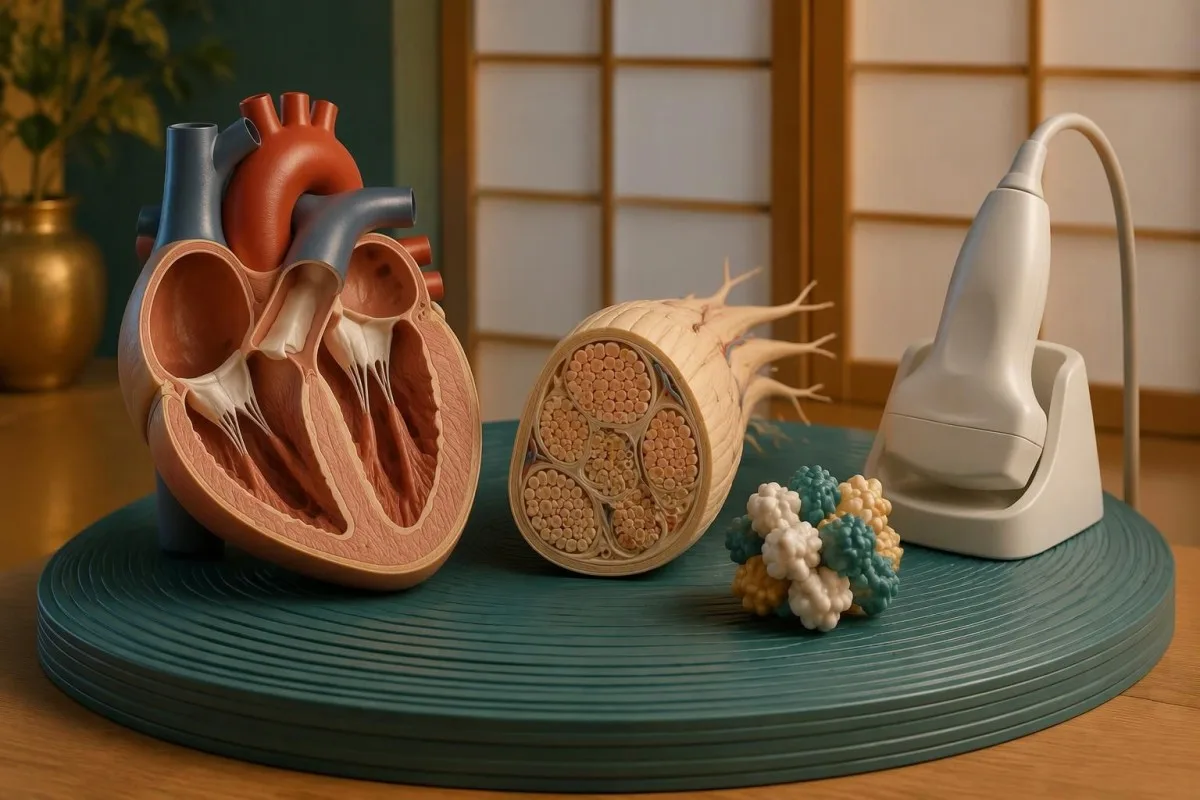
Baseline assessment may include neurological examination, autonomic history, ECG, echocardiography, kidney function, and cardiac biomarkers; additional tests depend on the variant and symptoms. The ESC position statement outlines regular carrier follow-up (Garcia-Pavia et al., 2021), but a 6–12-month interval should be individualized, especially when new findings appear or expected onset approaches.
A parent's onset at 62 is not a countdown showing that a child's disease will begin at 62, and a normal baseline does not eliminate later risk. Kantesti AI can help explain the difference between a single value and a meaningful laboratory timeline, but specialist decisions also require examination and imaging that routine blood interpretation cannot supply.
Imagine NT-proBNP increasing from 180 to 620 pg/mL while eGFR falls from 62 to 43 mL/min/1.73 m²: cardiac change deserves assessment, but reduced kidney clearance can contribute to the rise. Review intercurrent illness, rhythm, and medicines before interpreting progression; our دليل نسبة وظائف الكلى explains why renal context belongs beside cardiac trends.
شنو يقدرو يكشفو تحاليل الدم—وشنو يقدر يفوتها؟
Routine blood tests cannot confirm or exclude hereditary ATTR amyloidosis. NT-proBNP, troponin, kidney function, and urine protein can help assess organ involvement or alternatives, but a normal set of results—even across 2 visits—does not establish that a pathogenic TTR carrier will remain disease-free.
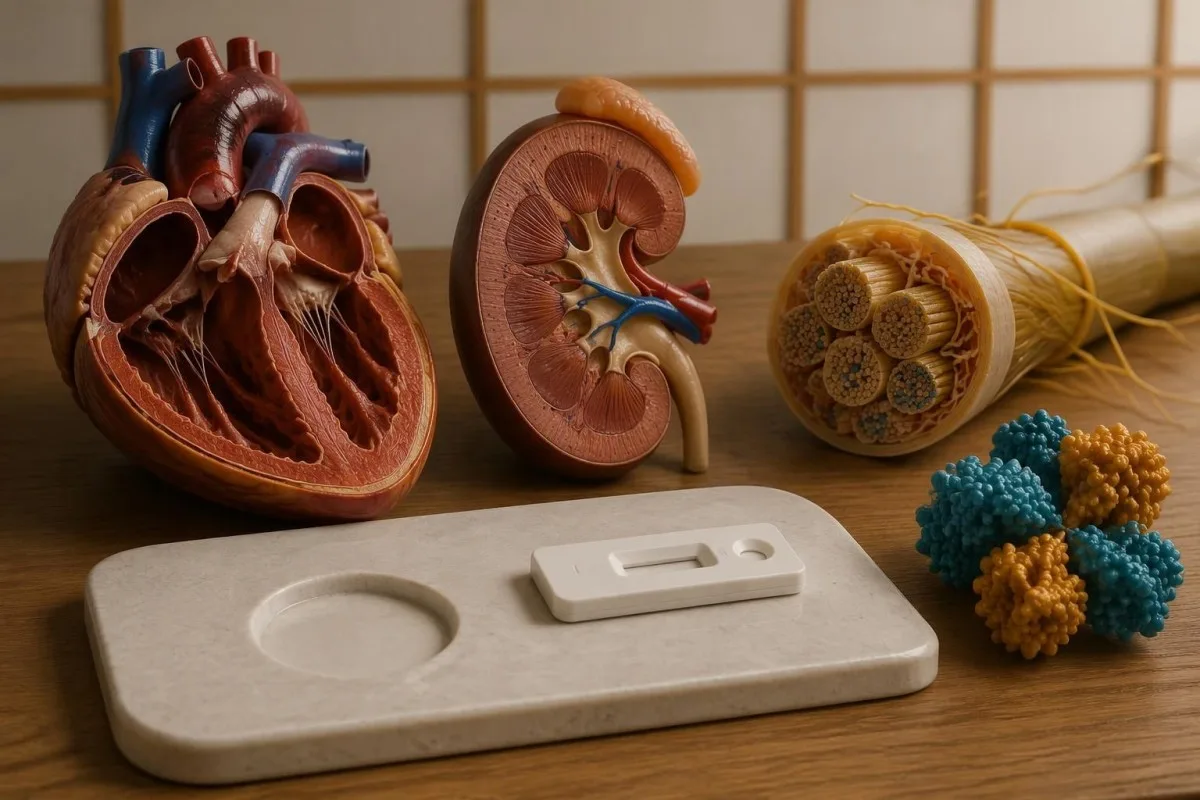
التروبونين must be interpreted against the assay's 99th-percentile upper reference limit, and NT-proBNP varies with age, kidney function, atrial fibrillation, and body size. A TTR or prealbumin concentration such as 25 mg/dL does not identify a TTR gene mutation or prove amyloid deposition; the test measures circulating protein concentration rather than its genetic sequence.
Neuropathy assessment should also look for treatable alternatives, including diabetes, vitamin B12 deficiency, thyroid disease, and medication effects. A hypothetical B12 result of 210 pg/mL may need additional assessment according to the laboratory and symptoms; our discussion of نتائج فيتامين B12 اللي على الحد explains why a competing diagnosis should not be overlooked simply because a TTR variant exists.
Kantesti is an AI blood test interpretation platform that explains accompanying laboratory values without treating 1 protein result as an amyloidosis diagnosis. Our دليل تفسير بروتينات المصل helps separate transport proteins and immunoglobulin findings; neither an ordinary protein panel nor a family-risk feature replaces clinical TTR testing and amyloid typing.
واش النتيجة الإيجابية ديال اختبار TTR الجيني كتعني خاص يبدا العلاج؟
A positive TTR genetic result alone is not a standard indication for disease-modifying treatment. Specialists consider confirmed ATTR disease, the affected organs, functional status, and local approvals; the 2 main medication strategies are stabilizing transthyretin and reducing production of transthyretin.

TTR stabilizers aim to reduce dissociation of the 4-subunit protein, while TTR-lowering therapies reduce production, mainly in the liver. Neither approach edits the inherited DNA, so family transmission considerations remain after treatment; eligibility differs between cardiomyopathy, polyneuropathy, and mixed disease, as do approval and reimbursement rules across countries.
Monitoring depends on the chosen medicine rather than the genetic label alone: some regimens require attention to platelets, kidney function, or vitamin A handling. If vitamin A supplementation is advised during a TTR-lowering regimen, use the prescribed allowance rather than escalating the dose because a laboratory result looks low; 1 abnormal value does not establish a safe replacement dose.
Kantesti does not select amyloidosis medication or establish treatment eligibility from uploaded laboratory results; our التحقق التقني والإشراف describe a different task from specialist prescribing. For an asymptomatic carrier, discuss surveillance and research opportunities; there is no single proven preventive prescription that follows automatically from a 50% inheritance-risk calculation.
شنو خاصك تجيب معاك لموعد الأخصائي؟
Bring the original genetic report, symptom timeline, family history, and relevant cardiac or neurological investigations to an amyloidosis or clinical genetics appointment. These 4 information groups help specialists distinguish a confirmed disease-causing variant, an uncertain finding, unrelated symptoms, and early organ involvement.

Record symptom onset by month and year where possible, including numbness, bowel changes, wrist procedures, fainting, breathlessness, and reduced walking tolerance. Include at least 3 generations of family information if available, but distinguish a documented amyloidosis diagnosis from a relative's unexplained heart failure; uncertain family labels should remain visibly uncertain.
Ask 3 focused questions: Is this variant pathogenic, likely pathogenic, or uncertain; what evidence exists for active organ disease; and which relatives should be offered counseling? A written plan should also identify the clinician responsible for follow-up, what changes should trigger earlier contact, and whether a laboratory will notify anyone if the variant classification changes.
Kantesti is an AI-powered blood test analysis tool that can help explain laboratory reports before a consultation, not replace the consultation or infer another relative's genotype. Our guide to consent-based family health tracking covers shared records; our مبادئ الذكاء الاصطناعي المسؤول explain why 1 uncertain genetic result should never become an automated family diagnosis.
شنو هي الأبحاث اللي كتدعم التشخيص، وشنو اللي كيقيم الذكاء الاصطناعي؟
Clinical amyloidosis research and AI technical benchmarks answer different questions. The 2016 nonbiopsy diagnostic study and 2021 ESC position statement support specific ATTR assessment pathways; the 2 repository publications listed below describe separate AI projects and do not validate TTR variant classification or diagnose hereditary ATTR amyloidosis.
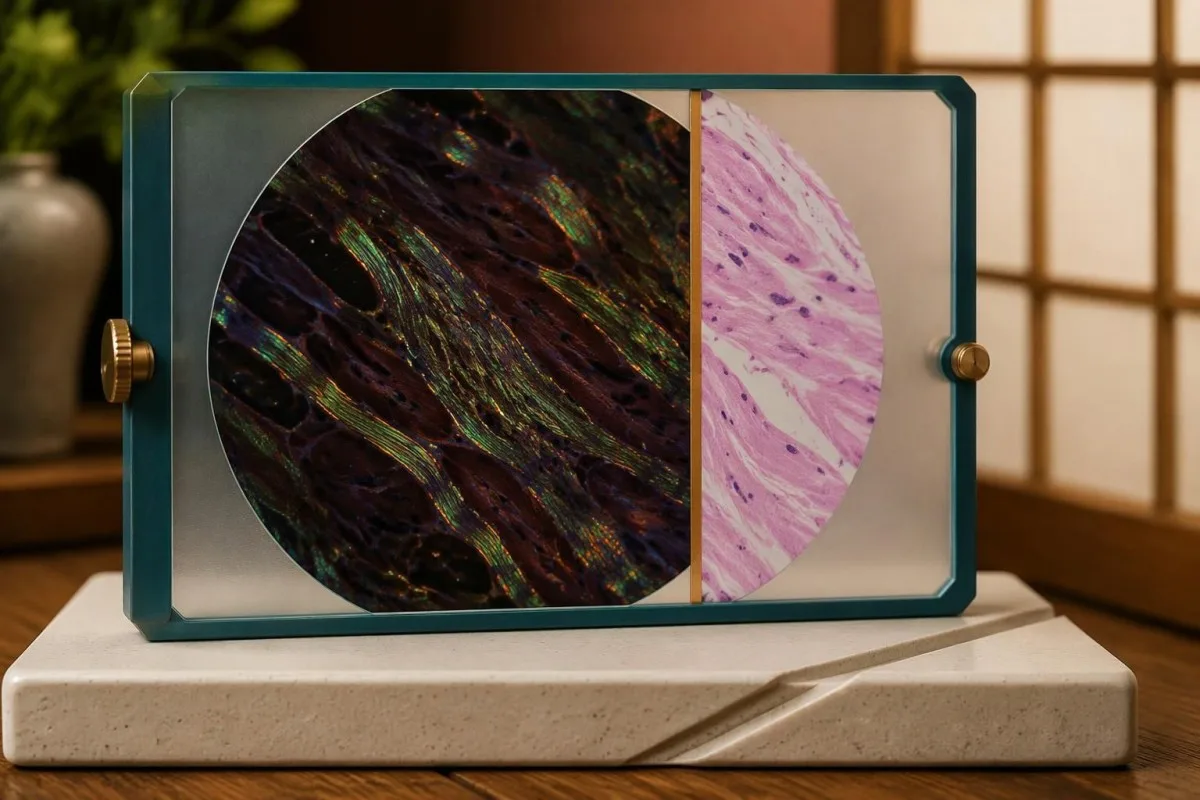
The clinical evidence cited here addresses 3 distinct tasks: sequence-variant classification, cardiac amyloid confirmation, and specialist management pathways. Congo red staining can reveal amyloid but cannot, by itself, identify a TTR genotype or reliably distinguish all amyloid proteins; the same caution applies to a compelling-looking AI explanation unsupported by the required clinical tests.
Kantesti's repository publications describe early hantavirus triage across 50,000 interpreted reports and a technical benchmark involving 100,000 synthetic test cases. The blood-test engine benchmark provides context for the latter; synthetic-case performance does not establish sensitivity for detecting ATTR in real patients, and a Figshare DOI does not itself demonstrate peer review or regulatory authorization.
For patients and relatives, the next decision should follow the report category: counseling and individualized surveillance for a confirmed pathogenic variant, specialist-led clarification for a VUS, and organ assessment for relevant symptoms. Keep those 3 pathways separate; a genetic finding, an imaging result, and an AI-generated explanation are not interchangeable forms of evidence.
أسئلة متكررة
واش طفرة فجين TTR كتعني أن عندي الداء النشواني ATTR الوراثي؟
0 طفرة مُمرِضة أو يُرجَّح أنها مُمرِضة فجين TTR كتثبت الاستعداد الوراثي، ولكن بوحدها ما كتأكدش وجود داء النشواني الوراثي النشط المرتبط بـATTR. الشخص اللي عندو نسخة وحدة من TTR مسببة للمرض يقدر يبقى بلا أعراض لسنين كثيرة، أو ما يبانش عليه المرض نهائياً. الأخصائيون كيقيمو الأعراض، ونتائج الفحص، والتصوير، وأحياناً نتائج تحليل الأنسجة، باش يحددو واش كاين مرض فالأعضاء. متغيّر ذو أهمية غير مؤكدة ما كيثبتش نفس الاستعداد الوراثي.
واش ممكن نستعملو متغيّر TTR مجهول الأهمية باش نديرو الفحص لعائلتي؟
0. ما خاصّش يتستعمل بوحدو متغيّر فـ TTR عندو دلالة غير مؤكدة، لا فالفحوصات التنبؤية الروتينية للأقارب الأصحاء ولا فالقرارات العلاجية. هو واحد من 5 الفئات المعتمدة لتصنيف المتغيّرات، وكيعني أن الأدلة ما كافياش باش يتصنّف هاد الاكتشاف على أنه ضار أو غير ضار. يقدر فريق الوراثة يرتّب فحوصات مختارة لبعض أفراد العائلة باش يدرس واش المتغيّر كيتوارث مع مرض مؤكّد. هاد البحث كيساعد فالتصنيف؛ وماشي بحال تصنيف الأقارب على أنهم حاملين للمتغيّر ومصابين بالمرض.
شحال من احتمال ولادي يورثو ATTR الوراثي؟
كل ولد عندو والد/ة حامل/ة لنسخة وحدة من TTR مسببة للمرض، فعادةً عندو احتمال بنسبة 50% باش يرث داك المتغيّر. الاحتمال هو هو عند الوليدات كيفما كان الجنس ديالهم، وكل حمل مستقل على الآخر. وراثة المتغيّر ما كتحددش إمتى غادي تبدا الأعراض ولا شحال غادي يكون المرض خطير. الاستشارة الجينية تقدر تشرح الفحوصات التنبؤية والاختيارات الإنجابية، بلا ما تعتبر احتمال انتقال المتغيّر بحال إلا كان تنبؤ بمآل المرض.
واش Val30Met وp.Val50Met هما نفس الطفرة فـTTR؟
0) Val30Met و p.Val50Met كيوصفو نفس التبديل فبروتين TTR، ولكن باستعمال طرق مختلفة فالترقيم. الترقيم الحديث كيشمل ببتيد الإشارة اللي فيه 22 حمض أميني، بينما الترقيم التاريخي ديال البروتين الناضج ما كيشملوش. نفس الاختلاف كيوضح الفرق بين Val122Ile و p.Val142Ile، وبين Thr60Ala و p.Thr80Ala. خاصّ اختصاصي فالوراثة يقارن التسمية الكاملة ديال الـDNA والبروتين ملي كيراجع تقارير من مختبرات مختلفة.
واش تحاليل الدم العادية تقدر تستبعد داء النشواني ATTR؟
Normal routine blood tests cannot rule out ATTR amyloidosis or eliminate future disease risk in a pathogenic TTR carrier. Troponin is interpreted using the assay's 99th-percentile limit, while NT-proBNP and kidney results provide context about organ stress rather than amyloid identity. A normal TTR or prealbumin concentration does not exclude a TTR variant or amyloid deposits. Evaluation may still require neurological assessment, cardiac imaging, and selected tissue investigations.
واش داء النشواني ATTR من النوع البري كيتورّث؟
0 النوع البري ديال أميلويدوز ATTR ما كيرجعش لمتغيّر وراثي فـ TTR كيسبّب المرض، بخلاف ATTR الوراثي. الجوج ديال الأشكال يقدرو يعطيو نتائج قلبية متشابهة، لذلك العمر والأعراض بوحدهم ما كيقدروش يميّزو بينهم بثقة. كيتوصى بالفحص الجيني ديال TTR من بعد ما يتأكد اعتلال عضلة القلب المرتبط بـ ATTR، حتى عند الكبار فالسن. الأقارب ما محتاجينش لفحوصات موجّهة على متغيّر عائلي إلا إلا كان فعلاً تحدّد متغيّر كيسبّب المرض.
شحال من مرة خاص حامل TTR اللي ما عندوش أعراض يشوف طبيب مختص؟
0. حامل TTR مُمرِض بلا أعراض كيدير غالباً تقييم سنوي عند أخصائي، ولكن خاص المتابعة تكون فردية وماشي موحّدة عند الجميع. بعض المسارات كيبداو مراقبة منتظمة تقريباً 10 سنين قبل السنّ المتوقع لظهور المرض فالعائلة، مع تقييم مبكّر إلا بانو أعراض أو نتائج مقلقة. الفحص العصبي، وتخطيط القلب الكهربائي، وتخطيط صدى القلب، وبعض المؤشرات المخبرية المختارة يقدرو يكونو جزء من الخطة. ضيق النفس الجديد، أو الضعف اللي كيتفاقم، أو الإغماء خاصهم يدفعو لتقييم مبكّر عوض انتظار الموعد المبرمج.
خذ شرح لنتائج تحليل الدم ديالك
حمّل تقرير التحاليل ديالك، وكيشرح AI ديال Kantesti كل مؤشر حيوي بلغة بسيطة فثواني. كايستعملوه أكثر من 2 مليون شخص فالعالم.
مراجع
- كلاين، ت.، ميتشل، س.، و ويبر، هـ. (2026). دعم القرار السريري بمساعدة الذكاء الاصطناعي متعدد اللغات للفرز الأولي لحالات فيروس هانتا: التصميم، والتحقق الهندسي، والتطبيق الواقعي عبر 50,000 تقرير مُفسَّر لتحليل الدم. الأبحاث الطبية ديال Kantesti AI. DOI
- كلاين، ت.، ميتشل، س.، و ويبر، هـ. (2026). معيار تقني آلي مُسجَّل مسبقاً ومبني على Rubric ديال محرك تفسير تحليل الدم Kantesti على 100,000 حالة اختبار اصطناعية. الأبحاث الطبية ديال Kantesti AI. DOI
- Richards S وآخرون. (2015). معايير وإرشادات تفسير متغيرات التسلسل: توصية توافقية مشتركة من الكلية الأمريكية لعلم الوراثة الطبية وعلم الجينوم ورابطة علم الأمراض الجزيئية. علم الوراثة في الطب. DOI ببميد
- Garcia-Pavia P et al. (2021). Diagnosis and treatment of cardiac amyloidosis: a position statement of the ESC Working Group on Myocardial and Pericardial Diseases. المجلة الأوروبية للقلب. DOI ببميد
- Gillmore JD et al. (2016). Nonbiopsy Diagnosis of Cardiac Transthyretin Amyloidosis. مجلة Circulation. DOI ببميد
- 2 مليون+الاختبارات المُحلَّلة
- 127+بلدان
- 100+اللغات
نبذة عن الفريق الطبي


إشارات الثقة E-E-A-T
خبرة
مراجعة سريرية يقودها الأطباء لسير عمل تفسير التحاليل.
خبرة
تركيز طب المختبر على كيفية سلوك الـ biomarkers في السياق السريري.
السلطة
راجعها طبياً الدكتور Thomas Klein، بمساهمات من الدكتورة Sarah Mitchell والأستاذ الدكتور Hans Weber.
الجدارة بالثقة
تفسير قائم على الأدلة مع مسارات متابعة واضحة لتقليل الإنذار.






إخلاء المسؤولية الطبية
هذه المقالة لأغراض تعليمية فقط ولا تشكل نصيحة طبية. استشر دائمًا مقدم رعاية صحية مؤهلًا لاتخاذ قرارات التشخيص والعلاج.
نُشر · تواصل مع فريق التحرير
منشور من طرف Kantesti Ltd، مسجل في إنجلترا وويلز، رقم الشركة. 17090423, ، لندن، المملكة المتحدة.
