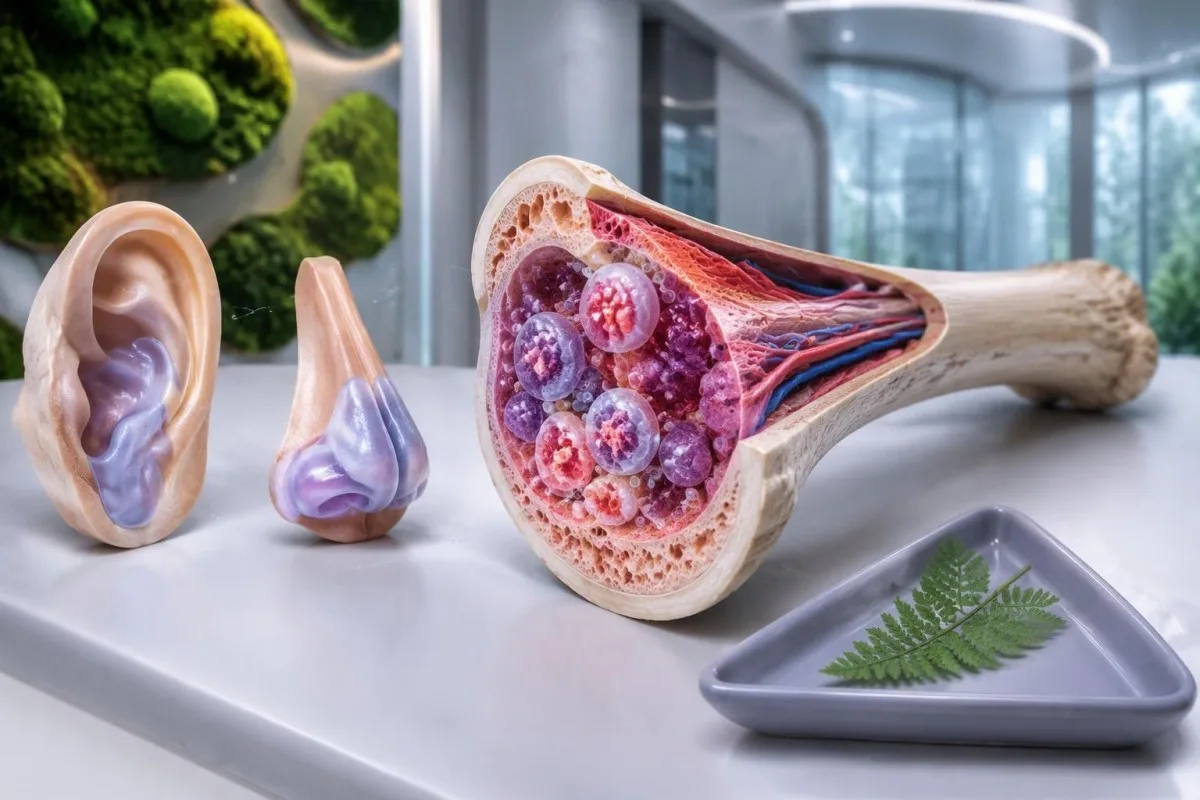
Синдром VEXAS — це набутий запальний стан, спричинений соматичними мутаціями UBA1 у кровотворних клітинах. Повторна гарячка, набряк хрящів вуха або носа та незрозуміла макроцитарна анемія мають стати підставою для консультації спеціаліста; для встановлення діагнозу потрібне відповідне генетичне тестування, а не стандартна панель на автоімунні захворювання.

Ключові висновки
- синдром VEXAS зазвичай починається після 50 років і поєднує системне запалення з порушеннями в кровотворних клітинах.
- Набряк хрящів може вражати вуха, ніс або дихальні шляхи; запалення хрящів вуха часто не зачіпає м’яку мочку.
- Макроцитоз означає MCV вище приблизно 100 fL у дорослих, але ця ознака сама по собі не дає змоги діагностувати VEXAS.
- Низькі тромбоцити нижче 150 × 10^9/L можуть посилити підозру, якщо супроводжуються повторним запаленням і незрозумілою анемією.
- СРБ зазвичай має верхню межу референтного діапазону 5 mg/L, хоча деякі лабораторії використовують 10 mg/L; жодне граничне значення CRP не підтверджує VEXAS.
- Тестування на мутацію UBA1 виявляє набуту патогенну варіацію, зазвичай у периферичній крові або кістковому мозку, а не за допомогою стандартної панелі спадкових ризиків.
- Панелі на аутоімунні захворювання як-от ANA, ревматоїдний фактор і ANCA, не можуть підтвердити чи виключити синдром VEXAS.
- Невідкладні симптоми належать нова задишка, біль у грудях, утруднене дихання або температура 38°C чи вище на тлі значної імуносупресії.
Що таке синдром VEXAS і чому важливі показники загального аналізу крові?
синдром VEXAS — це набутий автозапальний розлад, спричинений соматичною мутацією UBA1 у кровотворних клітинах. Поєднання рецидивного запалення, набряклості хрящів і нез’ясованих відхилень у показниках крові — особливо макроцитарної анемії в людини віком понад 50 років — має викликати підозру, тоді як діагноз залежить від виявлення відповідного патогенного варіанта UBA1 з урахуванням клінічного контексту.
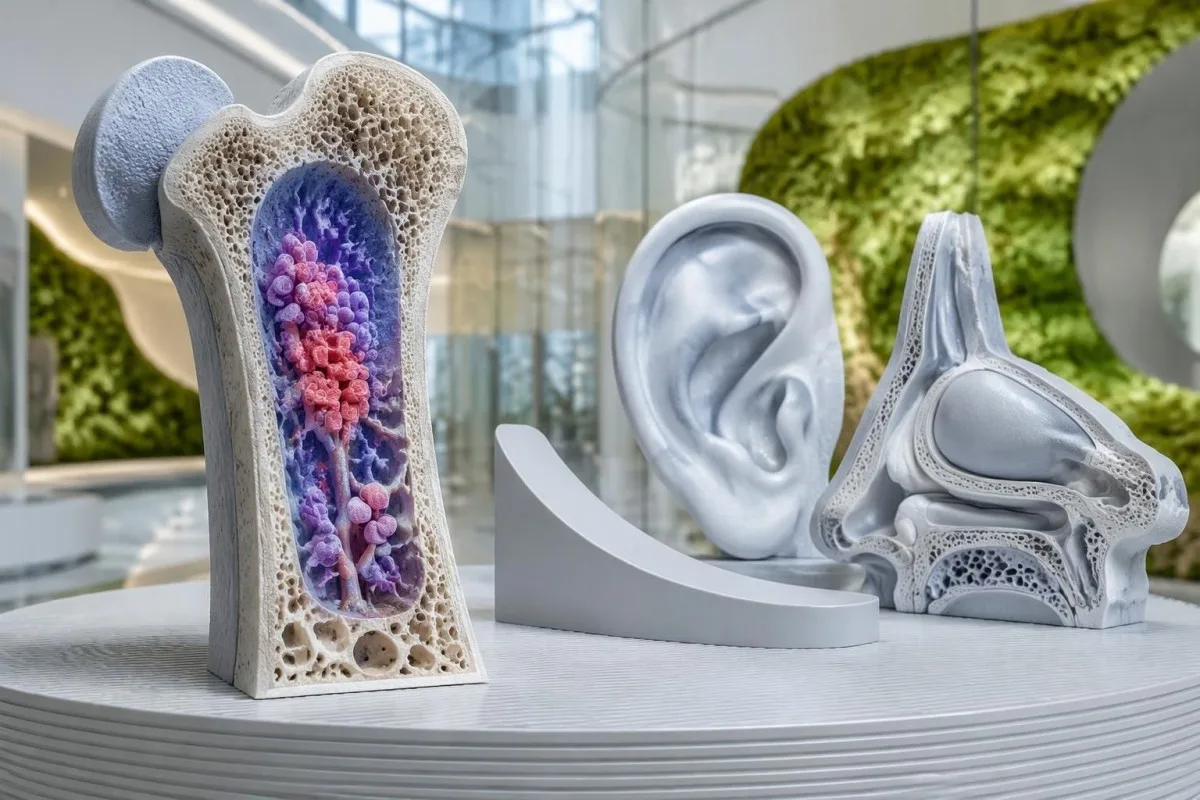
Назва описує 5 ознак: вакуолі, фермент E1, зчеплення з X-хромосомою, автозапальний характер і соматичне походження. Це підказки щодо біологічних механізмів, а не перелік ознак, які мають бути в кожної людини; видимі вакуолі кісткового мозку, симптоми з боку хрящів і виражена анемія не обов’язково з’являються одночасно на першому прийомі.
Beck et al. уперше описали VEXAS у New England Journal of Medicine у 2020 році, пов’язавши запалення з дебютом у дорослому віці з набутими варіантами UBA1. Це відкриття пояснює, чому людина могла раніше отримати понад 1 діагноз, наприклад рецидивний поліхондрит і захворювання кісткового мозку, перш ніж було розпізнано спільну причину.
Одне підвищене значення CRP не вказує конкретно на VEXAS, а MCV 103 fL часто має поширеніші пояснення. Підозра зростає, коли напади запалення повторюються разом із стійкими або прогресуючими цитопеніями, оскільки така картина свідчить про запальний процес, пов’язаний із порушенням утворення клітин крові, а не про ізольоване коливання лабораторного показника.
Кантесті – це Аналізатор крові зі штучним інтелектом яке може пояснити, як пов’язані між собою гемоглобін, MCV, тромбоцити та CRP, тоді як діагностику VEXAS залишити фахівцям. Наші організація та мета описано окремо; 1 завантажений CBC не може виявити мутацію UBA1 або замінити клінічне обстеження.
У кого розвивається VEXAS і чи передається мутація UBA1 у спадок?
Синдром VEXAS найчастіше вражає чоловіків старшого віку, зазвичай із появою симптомів після 50 років. Спричинена хворобою мутація UBA1 зазвичай набувається в популяції кровотворних клітин, а не успадковується від одного з батьків і не присутня в усіх клітинах від народження.
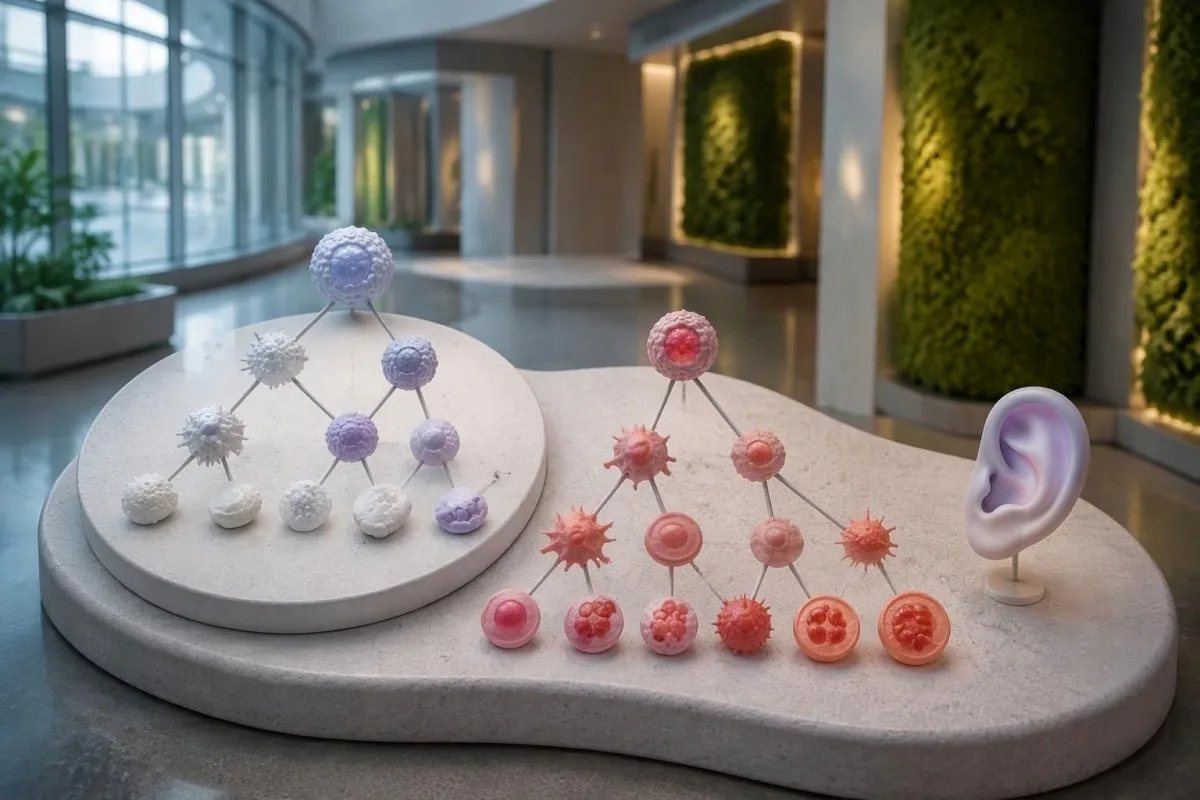
Ген UBA1 розташований на X-хромосомі, а більшість чоловіків із цим захворюванням мають 1 X-хромосому. VEXAS трапляється й у жінок, іноді у зв’язку з втратою X-хромосоми в уражених клітинах, але стать сама по собі не має бути підставою припиняти обстеження, якщо клінічна картина переконливо свідчить про це захворювання.
У дослідженні JAMA, до якого ввійшли 163,096 учасників з когорти системи охорони здоров’я США, Beck et al. виявили 11 людей із варіантами UBA1, пов’язаними із захворюванням. Розрахункова частота серед чоловіків віком понад 50 років становила приблизно 1 на 4,269; це були учасники конкретної когорти, переважно європейського походження, а не оцінка поширеності в усьому світі.
Сімейний анамнез зазвичай відсутній, оскільки відповідна мутація виникає протягом життя людини. Це відрізняється від спадкових синдромів рецидивної гарячки, про які йдеться в нашому пояснення щодо тестування MEFV; тестування 2 родичів на сімейний варіант не є стандартним першим кроком за типового соматичного VEXAS.
Слово «генетичний» не означає автоматично «спадковий», а ген, зчеплений із X-хромосомою, не обов’язково передається дітям. Якщо у звіті йдеться про конституційний варіант або нетипову картину до 50 років, фахівець із клінічної генетики може з’ясувати, чи доречні додаткове дослідження тканин або генетичне консультування родини.
Які симптоми синдрому VEXAS мають викликати підозру?
Симптоми синдрому VEXAS зазвичай включають рецидивну гарячку, запальні зміни шкіри, втому, ураження легень і запалення хрящів. Набряк хряща вуха або носа стає особливо показовим, коли виникає разом із нез’ясованою анемією чи іншими відхиленнями в показниках крові в дорослої людини віком понад 50 років.
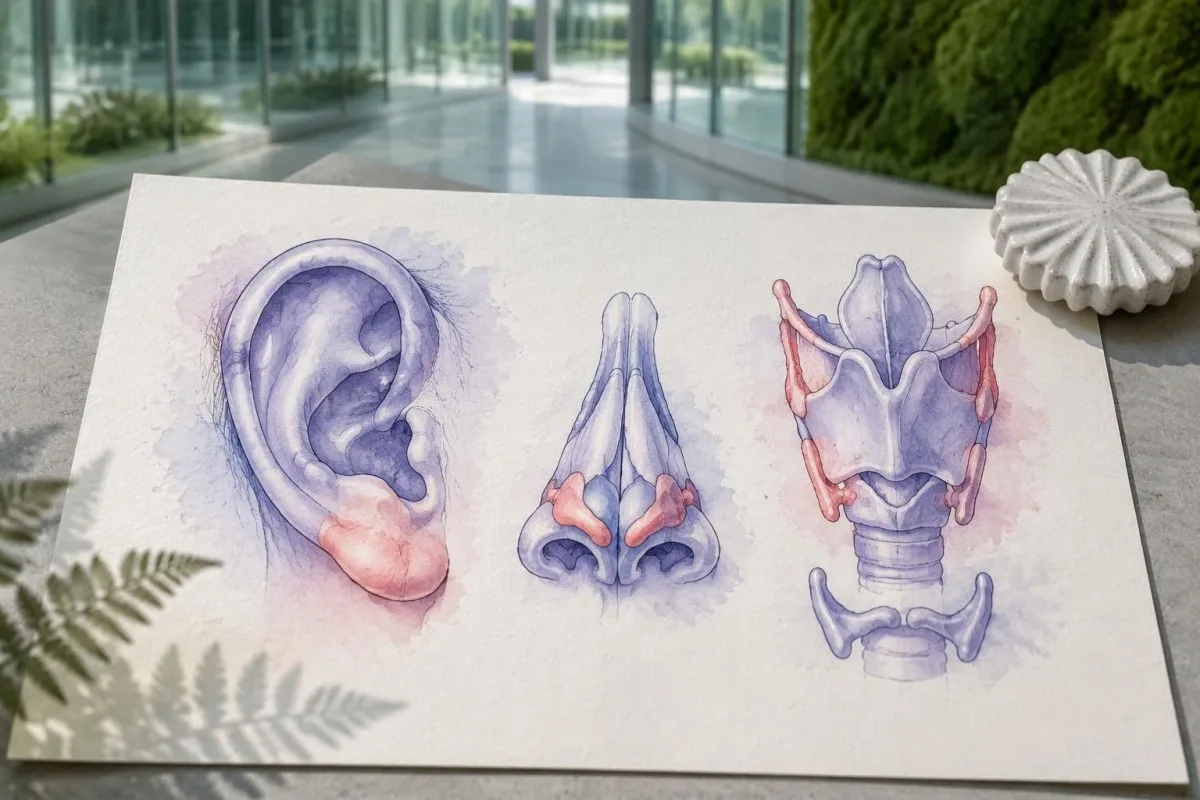
Хондрит вуха часто уражає тверду верхню частину вуха, не зачіпаючи м’яку мочку, у якій немає хряща. Ця анатомічна особливість допомагає точно описати епізод, але 1 почервоніле вухо все одно потребує оцінки, щоб виключити поширеніші причини, як-от місцева інфекція, травма або дерматит.
Шкірні прояви можуть включати болючі підвищені ділянки, бляшки або багряні зміни; лише за виглядом визначити причину неможливо. Дослідження тканини може допомогти відрізнити нейтрофільний дерматоз, васкуліт та інші процеси, а фотографії 2 окремих епізодів до початку лікування можуть допомогти фахівцеві розпізнати рецидивний характер проявів.
Inflammatory attacks can resemble established rheumatological conditions, including relapsing polychondritis or polymyalgia rheumatica. Our explanation of PMR laboratory limitations describes why inflammatory markers are not disease-specific; persistent macrocytosis above 100 fL or falling platelets should prompt a broader assessment rather than automatic acceptance of the first label.
New hoarseness, noisy breathing or difficulty breathing needs urgent assessment because airway cartilage can be involved. A useful symptom record includes 3 details for each episode: the affected site, its duration and whether fever or a medication change accompanied it; do not wait for another flare if breathing is affected.
Які зміни в аналізі крові можуть свідчити про синдром VEXAS?
Макроцитарна анемія, sometimes accompanied by low platelets or other cytopenias, is a major laboratory clue to VEXAS. Adult MCV is commonly about 80–100 фл, but neither an MCV above 100 fL nor an elevated CRP result can confirm the condition.
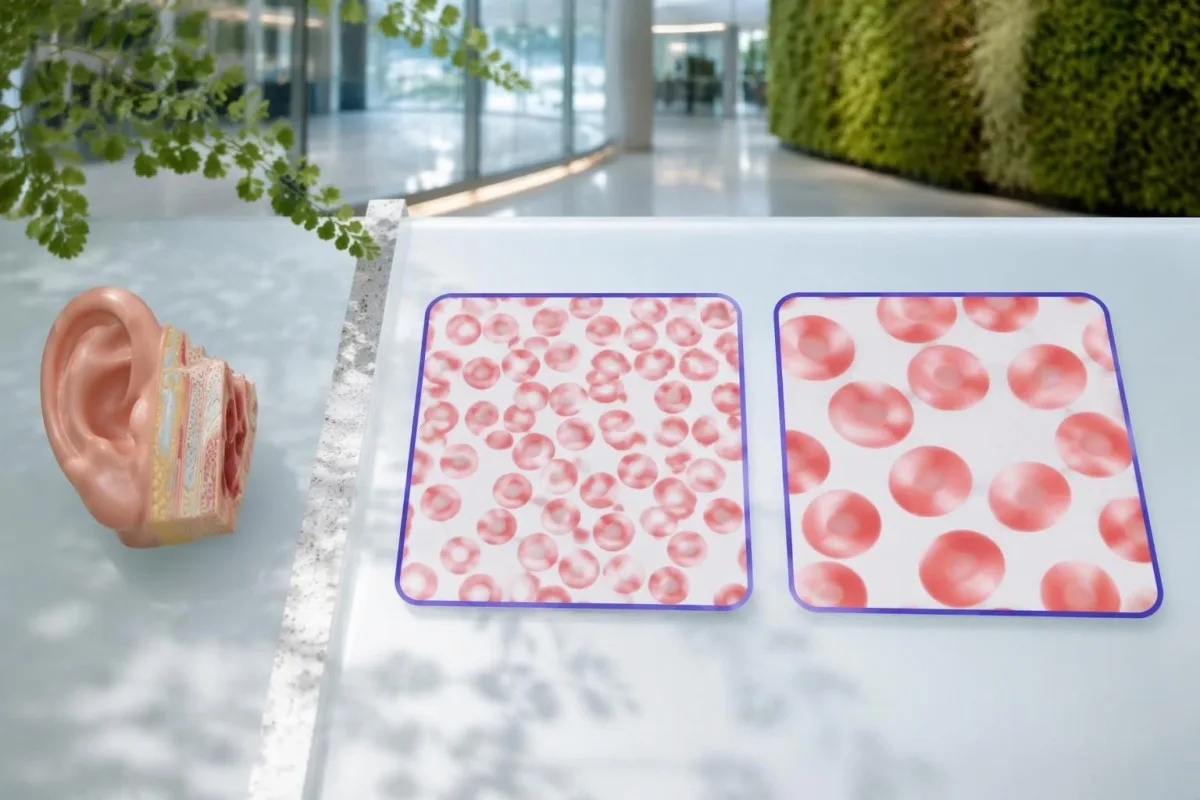
Hemoglobin measures anemia, while MCV measures average red-cell size; the 2 results answer different questions. An MCV of 108 fL with hemoglobin of 10.2 g/dL deserves a different assessment from an isolated MCV of 101 fL with stable hemoglobin, particularly when inflammatory symptoms are also present.
Many laboratories use a platelet reference interval of approximately 150–450 × 10^9/L. A falling platelet count can matter before it crosses the lower limit, and our borderline MCV explanation shows why persistent trends are often more useful than treating one near-boundary number as a diagnosis.
CRP is often markedly elevated during active VEXAS, but infection and many other inflammatory disorders can produce the same result. A hypothetical CRP of 80 mg/L is 16 times an upper limit of 5 mg/L; that comparison describes inflammatory intensity, not the probability of a UBA1 mutation.
RDW describes variation in red-cell size and can help explain a mixed CBC pattern, but it is not a VEXAS-specific biomarker. Our RDW і MCV-гіда explains how 2 overlapping processes, such as iron deficiency and macrocytosis, can produce a deceptively ordinary average MCV.
| Рівень | Діапазон | Що це означає |
|---|---|---|
| Typical adult MCV interval | 80–100 фл | Use the reporting laboratory's interval; an in-range result does not exclude early or masked macrocytosis. |
| Макроцитоз | >100 fL | Investigate nutritional, medication, liver, thyroid and marrow causes; this is not a VEXAS diagnostic threshold. |
| Тромбоцитопенія | <150 × 10^9/L | Low platelets can support concern when combined with persistent inflammation and unexplained anemia. |
| CRP above the laboratory limit | Often >5 mg/L; some laboratories use >10 mg/L | Indicates an inflammatory response without identifying its cause. |
Чому стандартні панелі на автоімунні захворювання не можуть підтвердити VEXAS?
Routine autoimmune panels cannot confirm VEXAS syndrome because they measure antibodies or related immune markers, not acquired UBA1 mutations. ANA, rheumatoid factor, ANCA and complement results may help assess alternative or overlapping conditions, but no combination substitutes for appropriate molecular testing.
ANA testing detects antibodies directed against nuclear components; it does not read the UBA1 gene. A positive ANA at 1:160 may deserve interpretation in its own clinical context, while a negative ANA does not make unexplained fever, chondritis and macrocytic anemia safe to dismiss.
Repeating several antibody panels can create incidental positives without resolving the central question. Our ANA result explanation describes why 1 positive result is not equivalent to a disease diagnosis; the same caution applies when an antibody is found during a suspected VEXAS evaluation.
Complement testing can be useful when clinicians suspect an immune-complex disorder, but normal C3 and C4 cannot exclude VEXAS. The complement and antibody guide explains these 2 proteins; their biological role differs from the acquired enzyme dysfunction caused by a disease-associated UBA1 variant.
Autoinflammatory and autoimmune are related but not interchangeable descriptions: VEXAS is driven principally by abnormal innate immune activity associated with mutated blood-forming cells. Clinicians may still order 2 types of investigation in parallel—antibody testing for alternatives and molecular testing for VEXAS—because another diagnosis can coexist rather than disappear.
Які інші причини потрібно перевірити, перш ніж пов’язувати симптоми з VEXAS?
Vitamin B12 or folate deficiency, medication effects, alcohol use, liver disease, hypothyroidism and marrow disorders can cause macrocytosis. An MCV above 100 fL should trigger evaluation of these possibilities, while recurrent chondritis or unexplained inflammatory attacks may justify investigating VEXAS at the same time.
Vitamin B12 and folate results need interpretation alongside symptoms, treatment history and the CBC. A borderline B12 result may require additional assessment rather than immediate attribution of an MCV of 107 fL to VEXAS; our B12 versus folate explanation also explains why folate treatment can obscure part of a B12 deficiency picture.
Copper deficiency can cause cytopenias and vacuolated marrow precursors, making it an especially relevant mimic. Reviewing high-dose zinc supplements is therefore useful, and our посібник з оцінки низького рівня міді explains why 2 supplement ingredients—zinc and copper—may matter even when a product is marketed for general immune support.
Myelodysplastic syndrome can cause macrocytic anemia and may coexist with VEXAS rather than simply compete with it as an explanation. Our MDS confirmation guide distinguishes CBC clues from marrow evidence; 1 abnormal count cannot establish either diagnosis or determine whether both are present.
Medication and infection reviews are essential because treatment can change the very numbers being investigated. For example, glucocorticoids may increase neutrophils while lowering CRP, and a recent transfusion can alter MCV; bring the dates of these events, not just 2 laboratory reports that appear to disagree.
Як соматичне тестування UBA1 допомагає встановити діагноз VEXAS?
VEXAS syndrome diagnosis is established by a disease-associated somatic UBA1 variant in a compatible clinical setting. Peripheral blood is commonly used for testing, while marrow or a more sensitive method may be appropriate after an inconclusive result; many recognized variants affect methionine at position 41.
The request should specify suspected VEXAS and testing for somatic UBA1 variants rather than a general hereditary disease panel. These are 2 different diagnostic tasks: an inherited-risk assay may not include the relevant gene regions, cell source or detection sensitivity needed to identify an acquired clone.
Beck et al. linked UBA1 variants to altered ubiquitin-activating enzyme function in their 2020 New England Journal of Medicine report. Position 41 is a major hotspot, but a hotspot-only test is not equivalent to comprehensive relevant UBA1 analysis, because disease-associated noncanonical variants have also been described.
A negative result needs the laboratory method attached to it before its meaning is clear. An assay validated to detect a 5% variant allele fraction may miss a smaller clone; ask which regions were covered, the reported detection limit and whether the sample was suitable for somatic testing.
Кантесті – це Платформа для розшифровки аналізу крові AI that can help explain accompanying CBC and inflammatory-marker results, but it cannot infer a UBA1 sequence from 1 routine report. Our пояснення технології ШІ describes report interpretation; molecular diagnosis still requires an accredited laboratory and specialist interpretation.
Як слід інтерпретувати звіт про мутацію UBA1?
A UBA1 report should state the variant, classification, sample type and testing limitations, often including variant allele fraction. A pathogenic or likely pathogenic disease-associated variant can support VEXAS, but a variant of uncertain significance is not diagnostic, and a 10% allele fraction is not a 10% severity score.
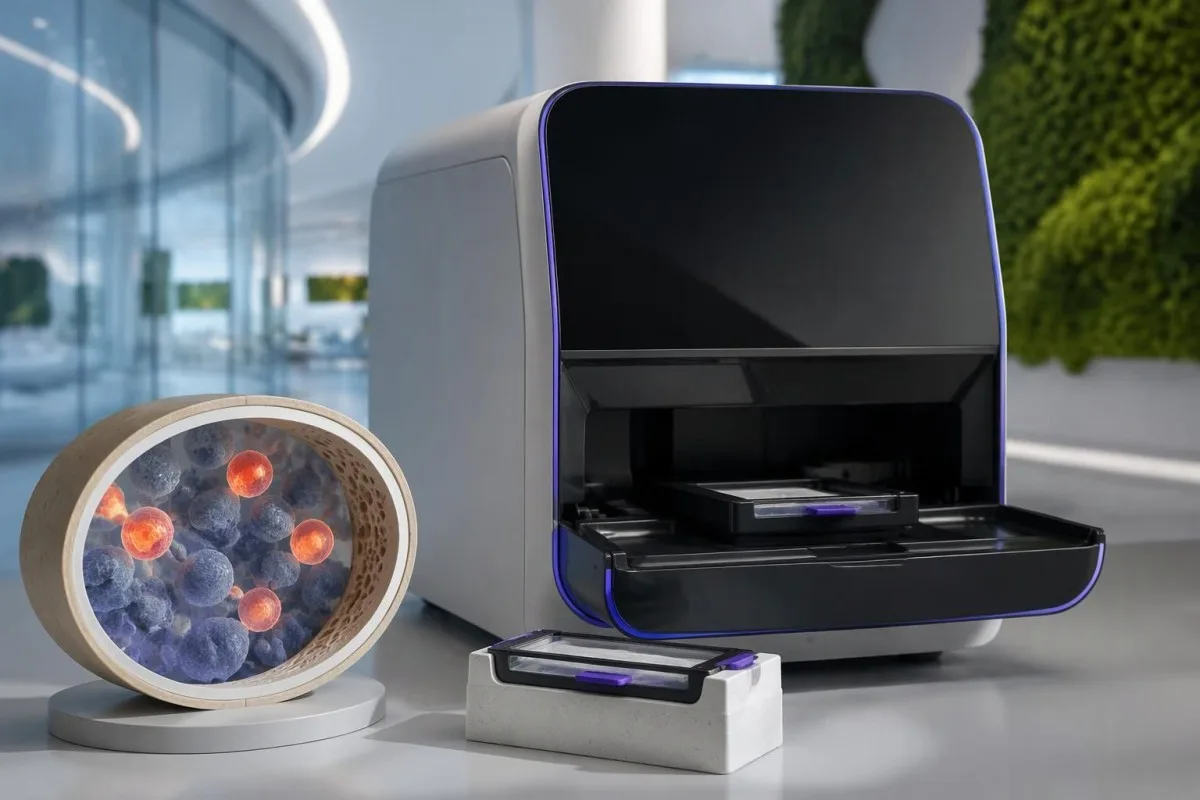
Variant allele fraction is the proportion of analyzed sequence reads carrying a particular change at that location. In a simple 1-X-chromosome model it may approximate the proportion of affected sampled cells, but cell mixtures, chromosome changes and laboratory methods complicate that estimate; it does not directly measure organ damage.
A hypothetical report showing a recognized disease-associated variant at 12% allele fraction may be meaningful even though most reads are unchanged. By contrast, a novel uncertain variant at 40% still requires expert assessment, because abundance cannot turn an unproven genetic finding into an established cause of symptoms.
Different clonal disorders require different molecular or cellular tests, even when anemia and thrombosis overlap. Our PNH clone testing guide explains a separate disorder assessed by flow cytometry; 1 negative PNH test does not evaluate UBA1, and a UBA1 result does not replace PNH testing when indicated.
Kantesti cannot determine whether an uncertain UBA1 finding is disease-causing simply by matching it to an elevated CRP of 70 mg/L. Ask the specialist whether additional sequencing, another specimen or formal variant review is needed, and keep the complete report rather than a screenshot containing only the word positive.
Чи достатньо вакуоль у кістковому мозку для діагностики VEXAS?
Bone marrow vacuoles are a clue, not proof of VEXAS syndrome. Vacuoles may appear in early myeloid and erythroid precursors, but they are neither completely specific nor universally present; an adult with an MCV above 100 fL still needs the broader clinical and molecular assessment.
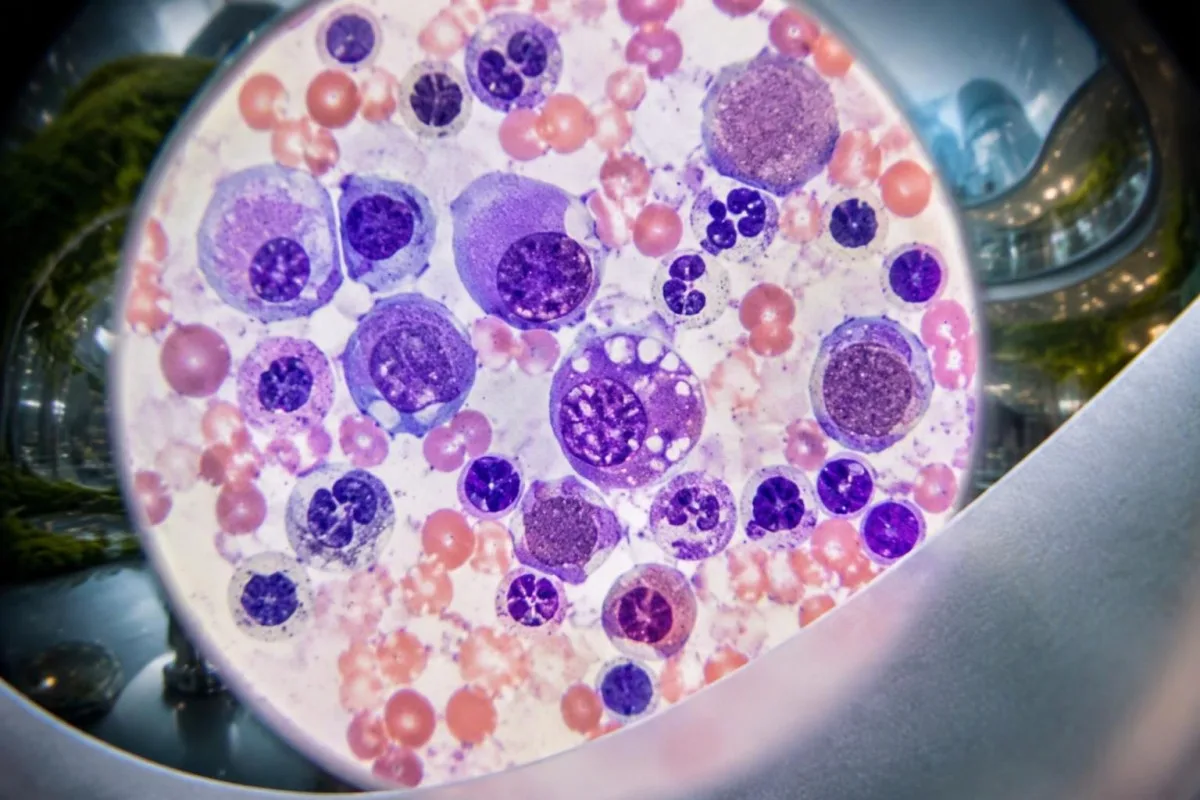
Vacuoles are small clear spaces visible within cells under microscopy, not holes that a patient can see on an ordinary CBC. Their absence on 1 marrow examination does not automatically exclude VEXAS, particularly when specimen quality, disease stage or the specific UBA1 variant affects the appearance.
Copper deficiency, alcohol-related effects and other conditions can produce vacuolated precursors. That overlap is why 2 complementary investigations may be needed: laboratory assessment for reversible mimics and somatic UBA1 testing, rather than treating a descriptive pathology finding as the final diagnosis.
Marrow examination also assesses cellularity, dysplasia and other abnormalities that may influence treatment decisions. Our explanation of teardrop cells and marrow clues describes a different microscopy finding; neither teardrop cells nor vacuoles can independently explain a platelet count of 95 × 10^9/L.
A marrow procedure is not automatically necessary for every isolated MCV of 102 fL, and a positive molecular result may already establish VEXAS in the right context. Hematology decides whether marrow assessment is needed to investigate persistent cytopenias, suspected MDS or another process that would change management.
Коли доречна консультація ревматолога або гематолога?
Specialist assessment is appropriate when recurrent unexplained inflammation accompanies macrocytic anemia, falling platelets or other persistent cytopenias. Suspicion is higher after age 50, especially with chondritis, inflammatory skin findings or lung involvement; rheumatology and hematology often need to evaluate the pattern together.
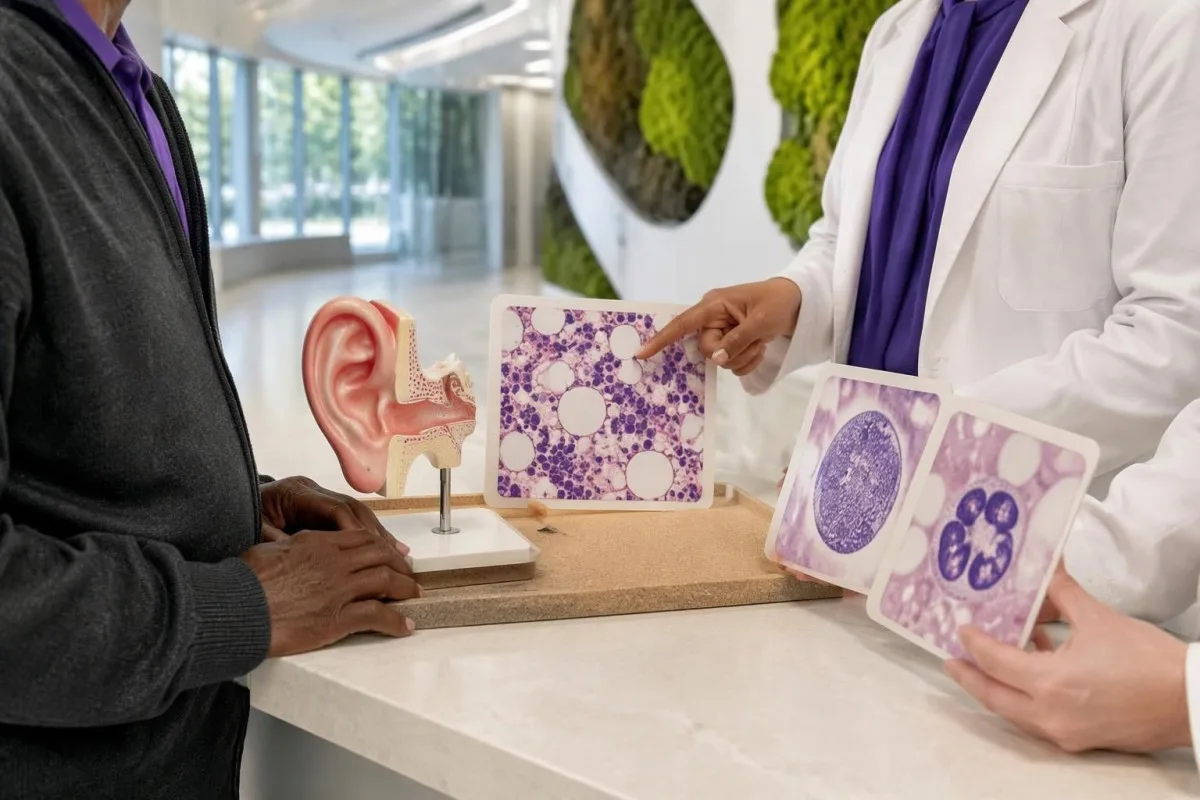
There is no universal CRP level, age boundary or number of attacks that automatically mandates UBA1 testing. A person aged 68 with recurrent ear chondritis and unexplained anemia has a different pretest probability from a person aged 28 with 1 viral fever and an otherwise stable CBC.
Steroid-responsive inflammation that repeatedly returns during dose reduction deserves reassessment, particularly when blood counts remain abnormal. Improvement over 2 days may show that symptoms are inflammatory, but it does not distinguish VEXAS from several other disorders and should not become the only justification for ongoing treatment.
Unexplained pain needs a broader workup when it accompanies constitutional symptoms or changing counts. Our посібник з тестування незрозумілого болю explains why inflammatory markers are only part of that workup; an MCV above 100 fL adds a marrow-related question that a pain score cannot answer.
A referral should highlight 3 elements: documented inflammatory episodes, the CBC trend and the results of common-cause investigations. If symptoms are progressing rapidly, new organs are involved or transfusions are being considered, ask the referring clinician whether the appointment needs to be expedited rather than waiting for another routine repeat test.
Розглянутий приклад: повторний набряк вуха та зміни в загальному аналізі крові
A hypothetical combination of recurrent chondritis, macrocytic anemia and low platelets warrants specialist evaluation, not an AI-generated diagnosis. Consider a 68-year-old man with hemoglobin 10.2 g/dL, MCV 108 fL, platelets 112 × 10^9/L and CRP 86 mg/L during a third episode of upper-ear swelling.

The first reasoning step is to separate symptom severity from diagnostic specificity: CRP of 86 mg/L confirms a substantial inflammatory response but does not identify its cause. The MCV of 108 fL and platelet count of 112 × 10^9/L add evidence that blood-cell production also needs investigation.
Suppose the person's B12, folate and thyroid assessments do not reveal an explanation, and medication, alcohol and liver reviews are unrevealing. A negative ANA would not close the case; the combination of 3 inflammatory episodes and persistent unexplained cytopenias would justify discussing somatic UBA1 testing with hematology and rheumatology.
Now suppose CRP falls to 12 mg/L after prescribed glucocorticoids, but hemoglobin falls to 9.8 g/dL. Those 2 trends are not contradictory: inflammatory activity may improve while marrow dysfunction or another anemia mechanism persists, so treatment response cannot be used as a substitute for investigating the falling hemoglobin.
Kantesti can help explain why those 2 trends deserve separate attention, but cannot establish VEXAS or choose immunosuppressive treatment. Our посібник з аналізу тенденцій прийому ліків explains why dose changes, transfusions and intercurrent illness should be recorded beside each result; the example here is entirely hypothetical.
Як спеціалісти лікують підтверджений синдром VEXAS?
VEXAS treatment aims to control inflammation, manage cytopenias and reduce treatment-related harm. Glucocorticoids often suppress symptoms but may be difficult to taper; other options include selected immunomodulators, marrow-directed treatment and allogeneic stem-cell transplantation, with no single regimen appropriate for every adult over 50.
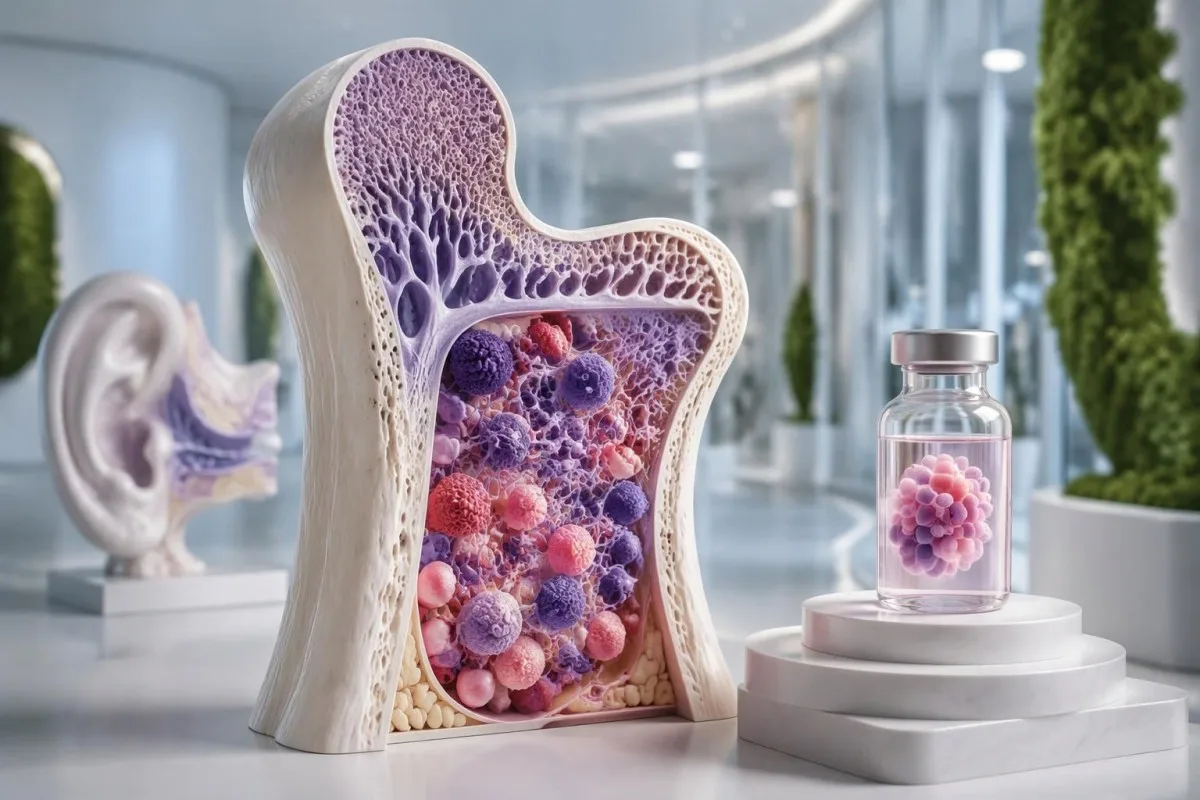
A falling CRP does not by itself establish treatment success if anemia, thrombosis or lung disease is worsening. Specialists follow at least 2 dimensions—clinical inflammatory activity and hematological status—and weigh these against cumulative glucocorticoid exposure, because prolonged treatment can cause infections, diabetes, osteoporosis and muscle weakness.
JAK inhibitors and IL-6-directed therapy are among approaches used by specialists, while azacitidine may be considered in selected patients, particularly with associated marrow disease. Evidence and access vary, and much published experience is observational; a response lasting 6 months in one cohort does not reliably predict an individual's longer-term benefit.
Allogeneic stem-cell transplantation can potentially eliminate the abnormal blood-forming clone and produce sustained remission in selected patients. It also carries substantial risks, including graft-versus-host disease and serious infection, so 2 people of the same age may receive different recommendations because fitness, organ involvement and donor availability differ.
Infection prevention deserves planning before immunosuppression, not only after fever develops. Depending on exposures and the proposed regimen, clinicians may consider screening or prevention measures described in our Strongyloides testing explanation; even 1 relevant past exposure can matter before corticosteroids, and prescribed steroids should never be stopped abruptly without guidance.
За яких симптомів потрібна невідкладна або екстрена медична допомога?
New breathing difficulty, chest pain, airway symptoms, neurological deficits or significant bleeding require urgent assessment in someone with suspected or confirmed VEXAS. Fever of 38°C or higher during substantial immunosuppression also needs prompt clinical advice, particularly when neutrophils are low.
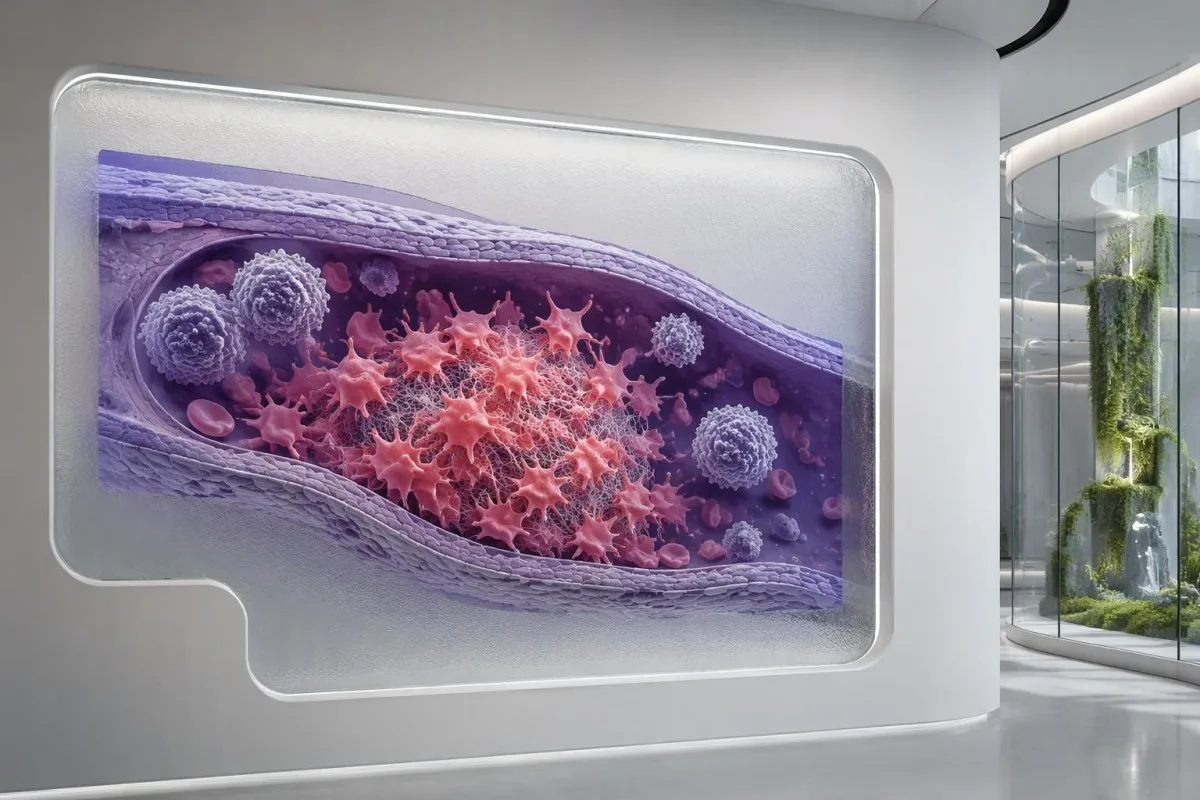
VEXAS is associated with venous thrombosis, so a painful swollen leg or sudden breathlessness should not be dismissed as another inflammatory flare. Normal routine clotting times do not exclude a clot; our обмеження коагулограми explain why 2 normal tests, PT and aPTT, cannot provide that reassurance.
An absolute neutrophil count below 0.5 × 10^9/L represents severe neutropenia and increases concern when fever occurs. Treatment can also blunt the temperature response, so feeling acutely unwell with shaking chills, confusion or rapidly worsening weakness can require urgent assessment even when a thermometer reads below 38°C.
Breathlessness can reflect lung inflammation, infection, pulmonary embolism or worsening anemia, and these require different treatments. Our breathlessness blood test guide explains why hemoglobin of 8 g/dL may contribute without proving the entire cause; new chest pain or sudden breathing difficulty should not wait for an uploaded report.
Persistent nose or gum bleeding, black stools or a severe new headache needs urgent advice, especially if platelets are very low. A count below 20 × 10^9/L generally warrants prompt clinical review, but the urgency depends on symptoms and context; significant bleeding is an emergency even above that number.
Подальше спостереження, обмеження ШІ та наукові публікації
Useful VEXAS follow-up combines symptoms, treatment history, CBC trends and inflammatory markers, with molecular and marrow findings interpreted by specialists. An AI explanation of 1 laboratory report can support preparation for care, but it cannot diagnose VEXAS, exclude infection or establish whether a UBA1 variant is pathogenic.

Bring original CBC reports, inflammatory markers and the complete UBA1 result, including specimen type and detection limit. Record 3 timeline features beside them: flare dates, medication changes and transfusions; this makes it easier to distinguish a true disease trend from a treatment effect or a change in testing conditions.
Кантесті – це Інструмент для аналізу результатів аналізу крові на основі AI that can explain laboratory patterns without converting an MCV above 100 fL into a rare-disease diagnosis. Genetic reports can reveal sensitive information, so review our інформацією про конфіденційність і дані before sharing records, and include only documents you are authorized to upload.
Kantesti's 2 DOI-linked publications below concern broader blood-test interpretation and RDW education, not clinical trials of VEXAS diagnosis or UBA1 sequencing. They should therefore be read separately from the disease-specific medical studies listed in the external references; neither publication establishes VEXAS-specific diagnostic sensitivity or treatment effectiveness.
Наш методологія та клінічні стандарти explain the distinction between report interpretation and medical diagnosis. Before the next appointment, write 2 questions: whether the laboratory method adequately assessed somatic UBA1 variants, and whether persistent cytopenias need marrow evaluation; these are more actionable than asking an AI to calculate an unsupported VEXAS probability.
Поширені запитання
Які перші симптоми синдрому VEXAS?
Синдром VEXAS часто починається з повторюваної гарячки нез’ясованого походження, запальних змін шкіри, втоми або набряку хрящів вуха чи носа, зазвичай після 50 років. Макроцитарна анемія або інші відхилення в показниках крові можуть з’явитися до, одночасно з або після цих симптомів. MCV у дорослого понад приблизно 100 fL — це підказка, а не діагноз. Повторювані запальні симптоми в поєднанні зі стійкими цитопеніями нез’ясованого походження є приводом обговорити консультацію ревматолога та гематолога.
Який тест підтверджує синдром VEXAS?
Синдром VEXAS діагностують шляхом виявлення пов’язаного із захворюванням соматичного варіанта UBA1 за відповідної клінічної картини. Для тестування зазвичай використовують периферичну кров, хоча в окремих випадках може знадобитися дослідження кісткового мозку або чутливіший аналіз. Багато визнаних варіантів впливають на метіонін у позиції 41, але обмежене тестування гарячих точок може не виявити інші пов’язані із захворюванням варіанти. Результат необхідно інтерпретувати з урахуванням класифікації варіанта, охоплення гена та межі виявлення.
Чи може нормальний результат аналізу на ANA або автоімунної панелі виключити VEXAS?
Нормальний результат ANA або рутинної панелі на аутоімунні захворювання не дає змоги виключити синдром VEXAS, оскільки ці тести не виявляють соматичних мутацій UBA1. Позитивний результат ANA у титрі 1:160 також не підтверджує синдром VEXAS і не обов’язково свідчить про інше аутоімунне захворювання. Тестування на антитіла може допомогти вивчити альтернативні діагнози, тоді як показники CBC, симптоми та молекулярне тестування дають відповіді на окремі запитання. Стійку макроцитарну анемію та рецидивне запалення хрящів не слід відкидати лише через негативні результати тестів на антитіла.
Чи успадковується синдром VEXAS і чи потрібно обстежити моїх дітей?
Типовий синдром VEXAS є набутим, а не спадковим, тому рутинне обстеження дітей зазвичай не показане. Відповідна мутація UBA1 зазвичай виникає в кровотворних клітинах у дорослому віці, часто із появою симптомів після 50 років. Хоча ген UBA1 розташований на X-хромосомі, це не означає, що соматичний варіант VEXAS автоматично передається у спадок. Незвичні або, можливо, конституційні результати слід обговорити з фахівцем із клінічної генетики.
Чи може у жінок розвинутися синдром VEXAS?
У жінок може розвинутися синдром VEXAS, хоча більшість виявлених випадків трапляються у чоловіків старшого віку. Ген UBA1 розташований на X-хромосомі, а втрата однієї X-хромосоми в уражених клітинах є одним із механізмів, про які повідомлялося у жінок. У дослідженні системи охорони здоров’я, опублікованому в JAMA у 2023 році, серед 11 учасників із пов’язаними із захворюванням варіантами UBA1 виявили 2 жінок. Сама лише стать не повинна бути підставою відмовляти в консультації спеціаліста, якщо рецидивне запалення та нез’ясовані відхилення показників крові є вагомими ознаками захворювання.
Чи виключає негативний результат тесту на UBA1 синдром VEXAS?
Негативний результат тесту на UBA1 знижує ймовірність VEXAS лише за умови, що зразок і метод аналізу були належними. Тест із межею виявлення частки варіантного алеля 5% може не виявити меншого клону, а тестування лише гарячих точок може не виявити варіанти поза охопленою ділянкою. За високої клінічної підозри може бути доцільним звернутися до фахівця для оцінки охоплення, чутливості та типу зразка. Належно виконаний негативний результат також має спонукати до ретельної переоцінки альтернативних діагнозів, а не до повторного тестування без чіткої причини.
Чи існує лікування синдрому VEXAS?
0 Алогенна трансплантація стовбурових клітин потенційно може забезпечити стійку ремісію шляхом заміни аномального кровотворного клону, але підходить лише окремим пацієнтам і пов’язана зі значними ризиками. Інші методи лікування спрямовані на контроль запалення, корекцію цитопеній і зменшення застосування глюкокортикоїдів, а не на надійне усунення клону. Для дорослих віком понад 50 років фізичний стан, ураження органів і супутні захворювання кісткового мозку можуть суттєво впливати на вибір лікування. Не доведено, що будь-яка харчова добавка, план харчування чи інтерпретація аналізу крові за допомогою ШІ здатні вилікувати VEXAS.
Дізнайтеся, як читати аналіз крові
Завантажте лабораторний звіт, і ШІ Kantesti за лічені секунди пояснить кожен біомаркер простою мовою. Ним користуються понад 2 мільйони людей у всьому світі.
Посилання
- Klein, T., Mitchell, S., & Weber, H. (2026). AI Blood Test Analyzer: проаналізовано 2,5 млн тестів | Global Health Report 2026. Медичні дослідження ШІ Kantesti. DOI
- Klein, T., Mitchell, S., & Weber, H. (2026). Аналіз крові на RDW: повний посібник із RDW-CV, MCV і MCHC. Медичні дослідження ШІ Kantesti. DOI
- Beck DB et al. (2020). Somatic Mutations in UBA1 and Severe Adult-Onset Autoinflammatory Disease. Медичний журнал Нової Англії. DOI
- Beck DB et al. (2023). Estimated Prevalence and Clinical Manifestations of VEXAS Syndrome in a Large US Health Care System. JAMA. DOI
- 2 млн+Проаналізовані тести
- 127+Країни
- 100+Мови
Про медичну команду


Сигнали довіри E-E-A-T
Досвід
Лікарський клінічний огляд робочих процесів інтерпретації лабораторних показників.
Експертиза
Лабораторна медицина з акцентом на те, як біомаркери поводяться в клінічному контексті.
Авторитетність
Медичну рецензію провів доктор Томас Кляйн за участю доктора Сари Мітчелл і професора, доктора Ганса Вебера.
Довірливість
Інтерпретація на основі доказів із чіткими шляхами подальших дій, щоб зменшити тривогу.





Застереження щодо медичної інформації
Ця стаття призначена лише для освітніх цілей і не становить медичної поради. Завжди консультуйтеся з кваліфікованим медичним працівником щодо рішень про діагностику та лікування.
Опубліковано · Зв’язатися з редакційною командою
Опубліковано компанією Kantesti Ltd, зареєстрованою в Англії та Уельсі під номером компанії. 17090423, Лондон, Велика Британія.
