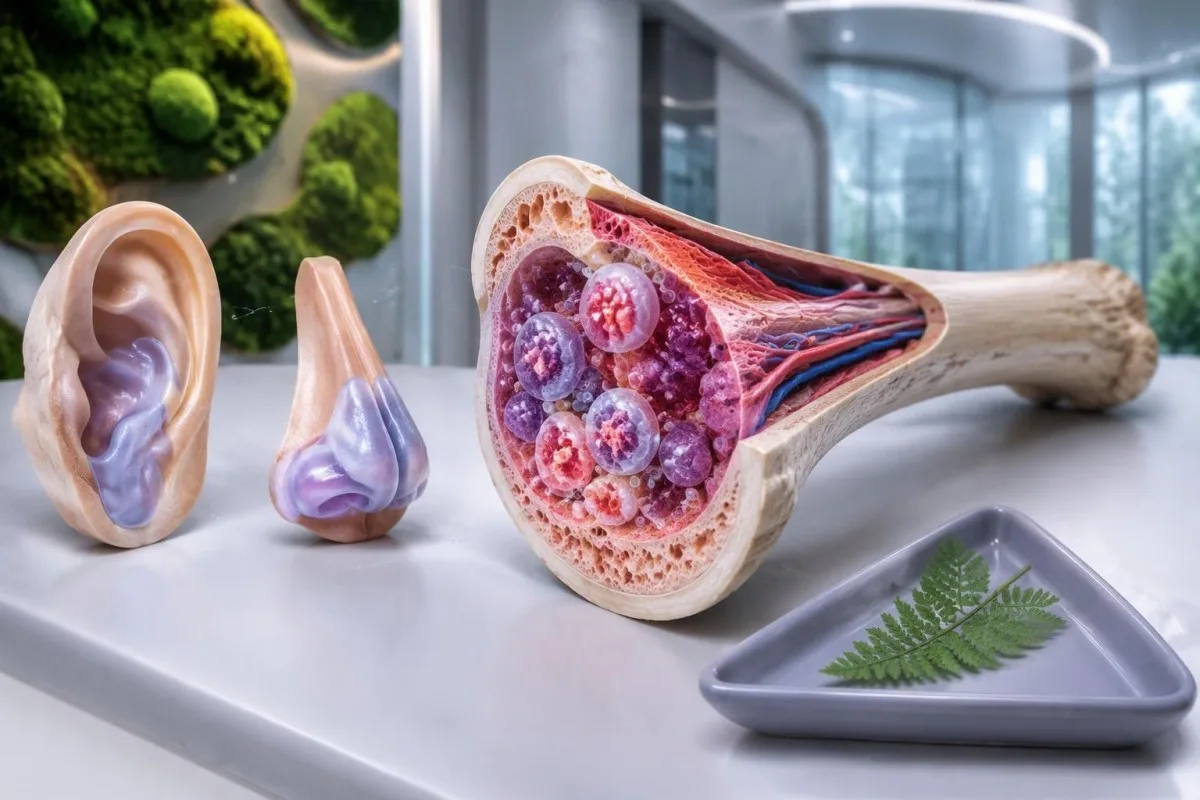
VEXAS सिंड्रोम ही रक्तनिर्मिती करणाऱ्या पेशींमधील दैहिक UBA1 उत्परिवर्तनांमुळे होणारी अधिग्रहित दाहक स्थिती आहे. वारंवार येणारा ताप, कान किंवा नाकाच्या कूर्चेला आलेली सूज आणि अस्पष्ट मॅक्रोसाइटिक रक्तक्षय यांमुळे तज्ज्ञांकडून मूल्यांकन करून घ्यावे; निदानासाठी योग्य आनुवंशिक चाचणी आवश्यक असते, नियमित स्वप्रतिरक्षी पॅनेल नव्हे.

मुख्य मुद्दे
- VEXAS सिंड्रोम सहसा वयाच्या 50 वर्षांनंतर सुरू होतो आणि प्रणालीगत दाहाचा रक्तनिर्मिती करणाऱ्या पेशींमधील विकृतींशी संयोग असतो.
- कूर्चेची सूज कान, नाक किंवा श्वसनमार्गावर परिणाम करू शकते; कानाच्या कूर्चेचा दाह अनेकदा मऊ कानपाळीला वगळतो.
- मॅक्रोसाइटोसिस (Macrocytosis) म्हणजे प्रौढांमध्ये MCV अंदाजे 100 fL पेक्षा जास्त असणे, परंतु या निष्कर्षावरूनच VEXAS चे निदान होत नाही.
- प्लेटलेट्स कमी 150 × 10^9/L पेक्षा कमी असलेली पातळी, वारंवार होणारा दाह आणि अस्पष्ट रक्तक्षय यांच्यासोबत असल्यास, चिंता अधिक दृढ करू शकते.
- सीआरपी याची वरची संदर्भमर्यादा सामान्यतः 5 mg/L असते, परंतु काही प्रयोगशाळांमध्ये 10 mg/L वापरली जाते; CRP ची कोणतीही मर्यादा VEXAS ची पुष्टी करत नाही.
- UBA1 उत्परिवर्तन चाचणी अधिग्रहित रोगकारक प्रकार शोधते; यासाठी नियमित आनुवंशिक जोखीम पॅनेलऐवजी सामान्यतः परिघीय रक्त किंवा अस्थिमज्जेचा नमुना वापरला जातो.
- स्वयंप्रतिकारक पॅनेल जसे ANA, संधिवात घटक आणि ANCA, VEXAS सिंड्रोमची पुष्टी करू शकत नाहीत किंवा तो नाकारू शकत नाहीत.
- तातडीची लक्षणे लक्षणीय प्रतिकारशक्ती-दमनादरम्यान नवीन दम लागणे, छातीत दुखणे, श्वसनमार्गात अडथळा येणे किंवा 38°C किंवा त्याहून अधिक ताप येणे यांचा समावेश होतो.
VEXAS सिंड्रोम म्हणजे काय आणि रक्तगणना महत्त्वाची का असते?
VEXAS सिंड्रोम हा एक संपादित स्व-दाहक विकार आहे, जो एका सोमॅटिक UBA1 उत्परिवर्तनामुळे रक्तनिर्मिती करणाऱ्या पेशींमध्ये होतो. वारंवार होणारा दाह, सुजलेली कूर्चा आणि रक्तगणनेतील अस्पष्ट असामान्य निष्कर्ष—विशेषतः 50 वर्षांवरील व्यक्तीतील मॅक्रोसाइटिक अॅनिमिया—यांच्या संयोगामुळे संशय येऊ शकतो; मात्र निदानासाठी वैद्यकीय संदर्भात योग्य रोगकारक UBA1 प्रकार ओळखणे आवश्यक असते.
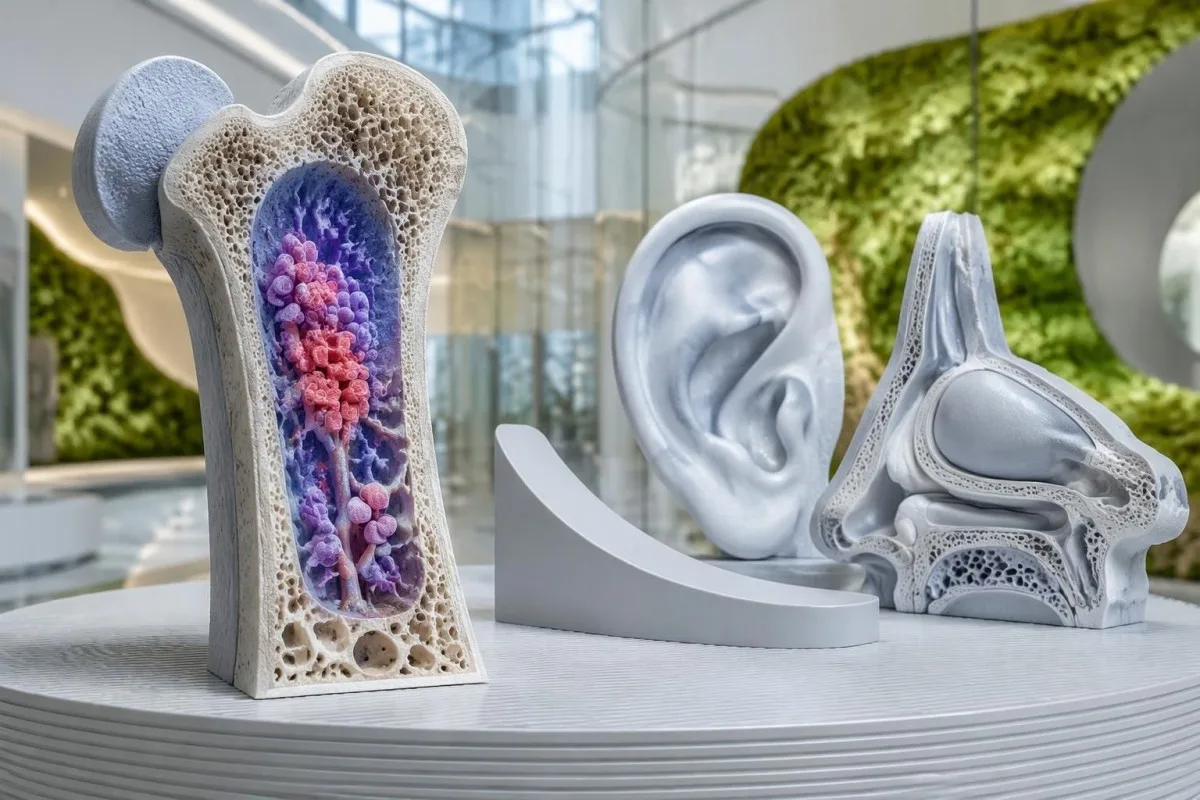
या नावात 5 वैशिष्ट्यांचे वर्णन आहे: व्हॅक्युओल्स, E1 एन्झाइम, X-संलग्न, स्व-दाहक आणि सोमॅटिक. ही जैविक प्रक्रियेची संकेतचिन्हे आहेत; प्रत्येक व्यक्तीने पूर्ण करावी अशी तपासणीसूची नव्हे. प्रत्यक्ष दिसणारे अस्थिमज्जेतील व्हॅक्युओल्स, कूर्चेची लक्षणे आणि ठळक अॅनिमिया पहिल्याच भेटीत एकत्र दिसतीलच असे नाही.
Beck et al. यांनी 2020 मध्ये New England Journal of Medicine मध्ये प्रथम VEXAS चे वर्णन केले आणि प्रौढ वयात सुरू होणाऱ्या दाहाचा संपादित UBA1 प्रकारांशी संबंध जोडला. या शोधामुळे, सामायिक कारण ओळखले जाण्यापूर्वी एखाद्या व्यक्तीला पुनरावर्ती पॉलिकॉन्ड्रायटिस आणि अस्थिमज्जेचा विकार यांसारखी 1 पेक्षा अधिक निदाने का मिळाली असावीत, हे स्पष्ट होते.
CRP चा एकच वाढलेला निकाल VEXAS कडे विशेषतः निर्देश करत नाही, आणि 103 fL च्या MCV साठी अधिक सामान्य स्पष्टीकरणे अनेकदा असतात. दाहाचे झटके पुन्हा पुन्हा येण्यासोबत रक्तपेशींची संख्या सतत कमी राहणे किंवा आणखी खालावणे आढळल्यास चिंता वाढते, कारण हा नमुना प्रयोगशाळेतील एकाकी चढ-उताराऐवजी रक्तपेशींच्या असामान्य निर्मितीशी जोडलेल्या दाहक प्रक्रियेची सूचना देतो.
कांटेस्टी हा एक एआय रक्त चाचणी विश्लेषक ज्यामुळे हिमोग्लोबिन, MCV, प्लेटलेट्स आणि CRP यांचा परस्पर संबंध स्पष्ट होऊ शकतो, तर VEXAS चे निदान तज्ज्ञांवर सोडले जाते. आमचे संघटन आणि उद्देश यांचे स्वतंत्रपणे वर्णन केले आहे; 1 अपलोड केलेली CBC UBA1 उत्परिवर्तन उघड करू शकत नाही किंवा वैद्यकीय तपासणीची जागा घेऊ शकत नाही.
VEXAS कुणाला होतो आणि UBA1 उत्परिवर्तन आनुवंशिक असते का?
VEXAS सिंड्रोम बहुतेकदा वृद्ध पुरुषांना होतो, आणि लक्षणे सहसा वयाच्या 50 वर्षांनंतर सुरू होतात. रोगास कारणीभूत UBA1 उत्परिवर्तन सामान्यतः रक्तनिर्मिती करणाऱ्या पेशींच्या समूहात संपादित स्वरूपात उद्भवते; ते पालकांकडून वारशाने मिळालेले किंवा जन्मापासून प्रत्येक पेशीत असलेले नसते.
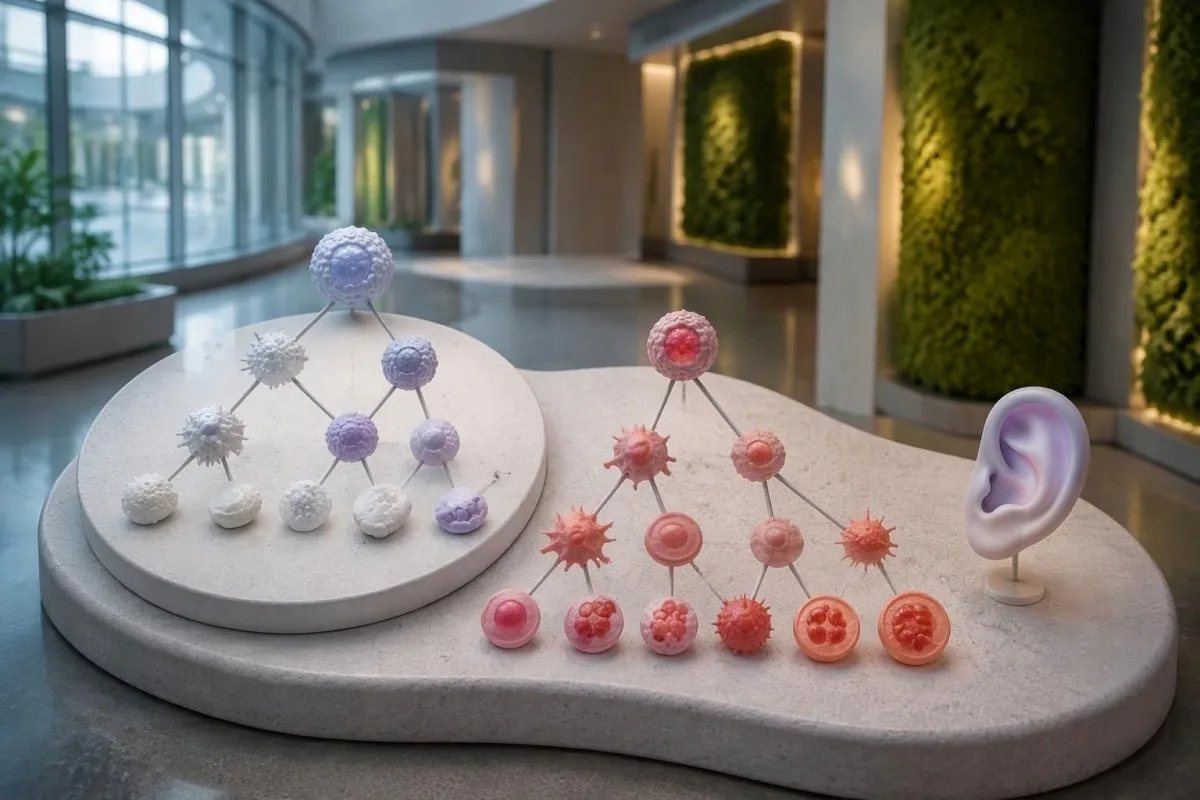
UBA1 हे X गुणसूत्रावर असते आणि बहुतेक प्रभावित पुरुषांमध्ये 1 X गुणसूत्र असते. VEXAS स्त्रियांमध्येही आढळतो; कधीकधी प्रभावित पेशींमधील एका X गुणसूत्राच्या हानीशी त्याचा संबंध असतो. मात्र, वैद्यकीय नमुना ठळकपणे सूचक असल्यास केवळ लिंगामुळे तपासणी थांबवू नये.
अमेरिकेतील आरोग्य-प्रणाली समूहातील 163,096 सहभागींच्या JAMA अभ्यासात, Beck et al. यांनी रोगाशी संबंधित UBA1 प्रकार असलेल्या 11 व्यक्ती ओळखल्या. 50 वर्षांवरील पुरुषांमधील अंदाजित वारंवारता सुमारे 4,269 पैकी 1 होती; हा विशिष्ट, प्रामुख्याने युरोपीय वंशाच्या लोकांचा समूह होता, जगभरातील प्रसाराचा अंदाज नव्हता.
संबंधित उत्परिवर्तन व्यक्तीच्या आयुष्यात उद्भवत असल्याने सहसा कौटुंबिक इतिहास आढळत नाही. हे आमच्या MEFV चाचणीचे स्पष्टीकरण; मध्ये समाविष्ट केलेल्या वारशाने मिळणाऱ्या पुनरावर्ती तापाच्या विकारांपेक्षा वेगळे आहे; कौटुंबिक प्रकारासाठी 2 नातेवाइकांची तपासणी करणे हे सामान्य सोमॅटिक VEXAS साठी नेहमीचे प्रारंभिक पाऊल नाही.
आनुवंशिक या शब्दाचा अर्थ आपोआप वारशाने मिळणारे असा होत नाही आणि X-संलग्न जनुकाचा अर्थ आपोआप मुलांपर्यंत प्रसार होतो असा होत नाही. अहवालात घटनात्मक प्रकाराचा किंवा वयाच्या 50 वर्षांपूर्वीच्या असामान्य स्वरूपाचा उल्लेख असल्यास, अतिरिक्त ऊतक-तपासणी किंवा कौटुंबिक समुपदेशन योग्य आहे का हे वैद्यकीय आनुवंशिकी तज्ज्ञ स्पष्ट करू शकतात.
VEXAS सिंड्रोमची कोणती लक्षणे संशय निर्माण करायला हवीत?
VEXAS सिंड्रोमची लक्षणे यांमध्ये सामान्यतः वारंवार येणारा ताप, त्वचेतील दाहक बदल, थकवा, फुफ्फुसांचा सहभाग आणि कूर्चेचा दाह यांचा समावेश होतो. अस्पष्ट अॅनिमिया किंवा रक्तगणनेतील इतर असामान्य निष्कर्षांसोबत 50 वर्षांवरील प्रौढ व्यक्तीत कानाची किंवा नाकाची कूर्चा सुजल्यास, ते विशेषतः महत्त्वाचे ठरते.
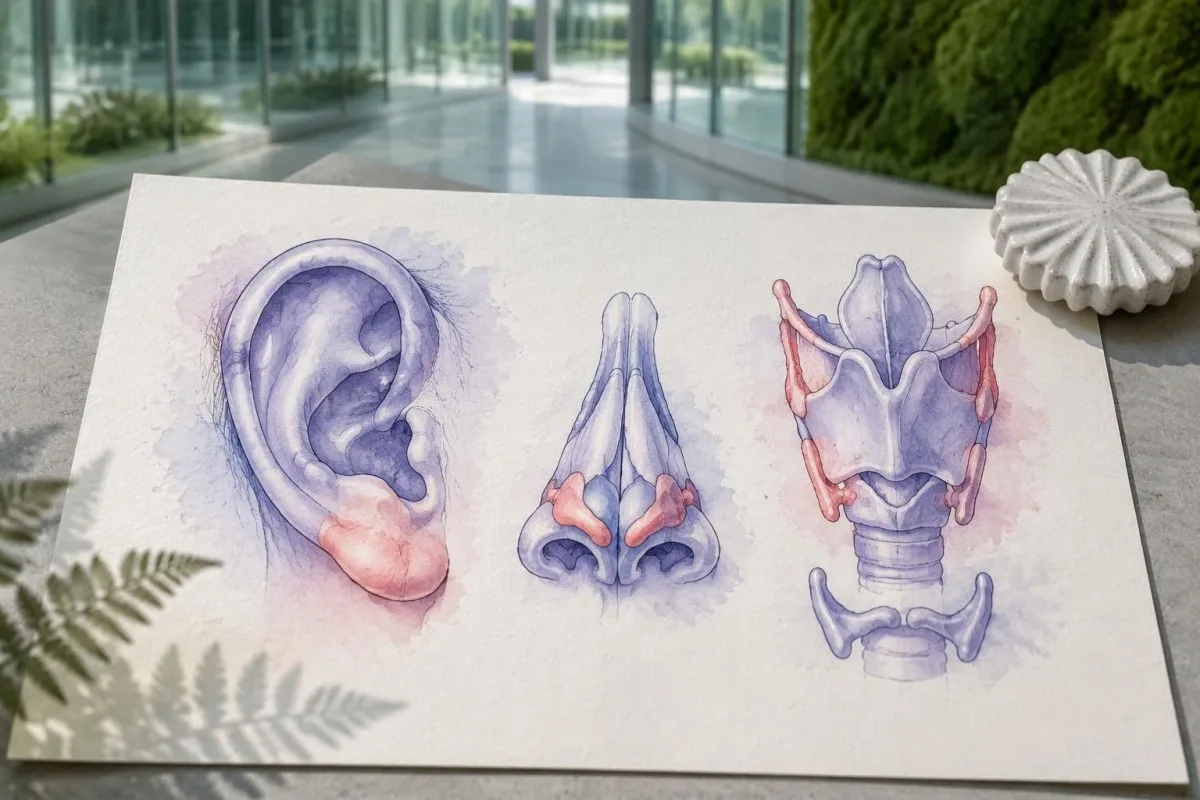
कानाच्या कूर्चेचा दाह अनेकदा कानाच्या कडक वरच्या भागावर होतो, तर मऊ कानपाळीवर परिणाम होत नाही; कानपाळीत कूर्चा नसते. ही शारीरिक रचनांतील भिन्नता एखाद्या प्रसंगाचे अचूक वर्णन करण्यास मदत करू शकते; तरीही 1 लाल झालेल्या कानाची स्थानिक संसर्ग, इजा किंवा त्वचादाह यांसारख्या अधिक सामान्य कारणांसाठी तपासणी आवश्यक आहे.
त्वचेवरील निष्कर्षांमध्ये दुखऱ्या उंचवट्यांसारख्या जागा, चट्टे किंवा जांभळट बदल यांचा समावेश असू शकतो; केवळ दिसण्यावरून कारण ओळखता येत नाही. ऊतक-परीक्षणामुळे न्यूट्रोफिलिक डर्माटोसिस, रक्तवाहिनीदाह आणि इतर प्रक्रिया यांमध्ये फरक करता येतो; उपचार न केलेल्या 2 वेगवेगळ्या प्रसंगांची छायाचित्रे तज्ज्ञांना पुनरावर्ती नमुना ओळखण्यास मदत करू शकतात.
Inflammatory attacks can resemble established rheumatological conditions, including relapsing polychondritis or polymyalgia rheumatica. Our explanation of PMR laboratory limitations describes why inflammatory markers are not disease-specific; persistent macrocytosis above 100 fL or falling platelets should prompt a broader assessment rather than automatic acceptance of the first label.
New hoarseness, noisy breathing or difficulty breathing needs urgent assessment because airway cartilage can be involved. A useful symptom record includes 3 details for each episode: the affected site, its duration and whether fever or a medication change accompanied it; do not wait for another flare if breathing is affected.
कोणता रक्तचाचणी नमुना VEXAS सिंड्रोमचा संकेत देऊ शकतो?
मॅक्रोसाइटिक अॅनिमिया, sometimes accompanied by low platelets or other cytopenias, is a major laboratory clue to VEXAS. Adult MCV is commonly about 80–100 fL, but neither an MCV above 100 fL nor an elevated CRP result can confirm the condition.
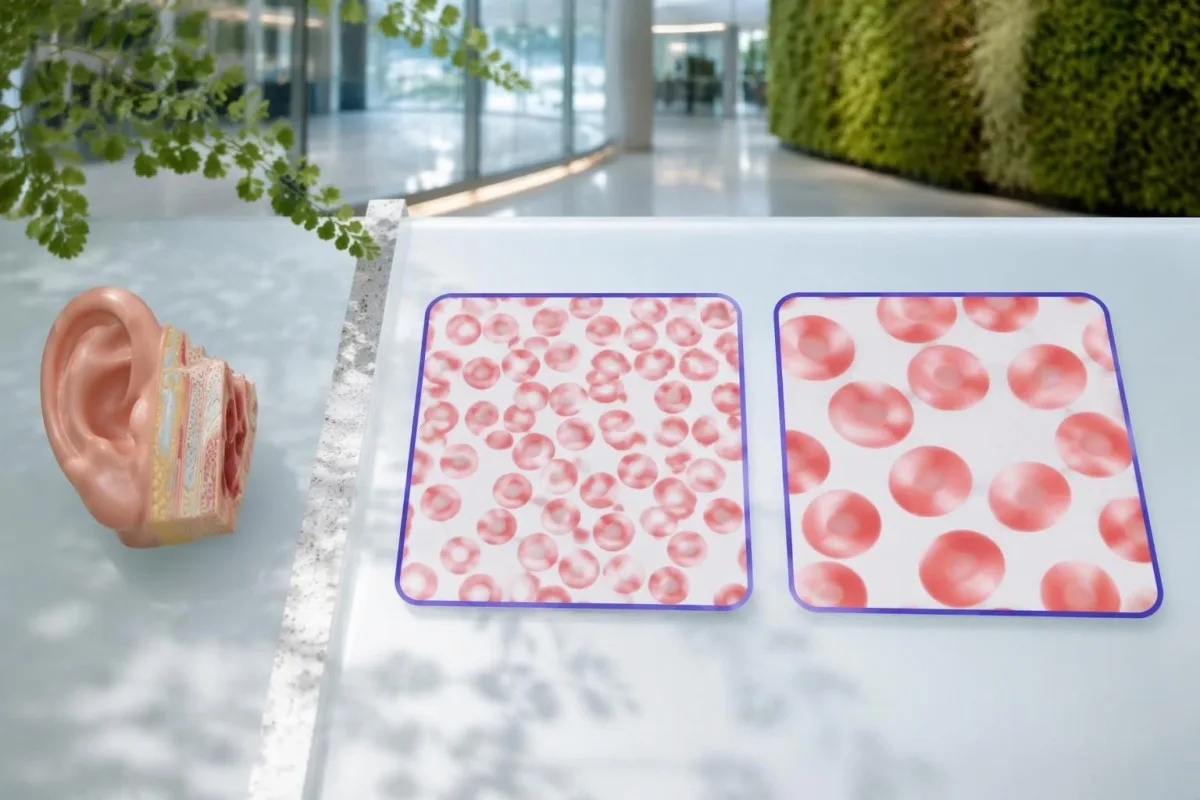
Hemoglobin measures anemia, while MCV measures average red-cell size; the 2 results answer different questions. An MCV of 108 fL with hemoglobin of 10.2 g/dL deserves a different assessment from an isolated MCV of 101 fL with stable hemoglobin, particularly when inflammatory symptoms are also present.
Many laboratories use a platelet reference interval of approximately 150–450 × 10^9/L. A falling platelet count can matter before it crosses the lower limit, and our borderline MCV explanation shows why persistent trends are often more useful than treating one near-boundary number as a diagnosis.
CRP is often markedly elevated during active VEXAS, but infection and many other inflammatory disorders can produce the same result. A hypothetical CRP of 80 mg/L is 16 times an upper limit of 5 mg/L; that comparison describes inflammatory intensity, not the probability of a UBA1 mutation.
RDW describes variation in red-cell size and can help explain a mixed CBC pattern, but it is not a VEXAS-specific biomarker. Our RDW आणि MCV मार्गदर्शक explains how 2 overlapping processes, such as iron deficiency and macrocytosis, can produce a deceptively ordinary average MCV.
| स्तर | श्रेणी | याचा अर्थ |
|---|---|---|
| Typical adult MCV interval | 80–100 fL | Use the reporting laboratory's interval; an in-range result does not exclude early or masked macrocytosis. |
| मॅक्रोसाइटोसिस (Macrocytosis) | >100 fL | Investigate nutritional, medication, liver, thyroid and marrow causes; this is not a VEXAS diagnostic threshold. |
| थ्रोम्बोसाइटोपेनिया | <150 × 10^9/L | Low platelets can support concern when combined with persistent inflammation and unexplained anemia. |
| CRP above the laboratory limit | Often >5 mg/L; some laboratories use >10 mg/L | Indicates an inflammatory response without identifying its cause. |
नियमित स्वप्रतिरक्षी पॅनेलद्वारे VEXAS ची पुष्टी का होऊ शकत नाही?
Routine autoimmune panels cannot confirm VEXAS syndrome because they measure antibodies or related immune markers, not acquired UBA1 mutations. ANA, rheumatoid factor, ANCA and complement results may help assess alternative or overlapping conditions, but no combination substitutes for appropriate molecular testing.
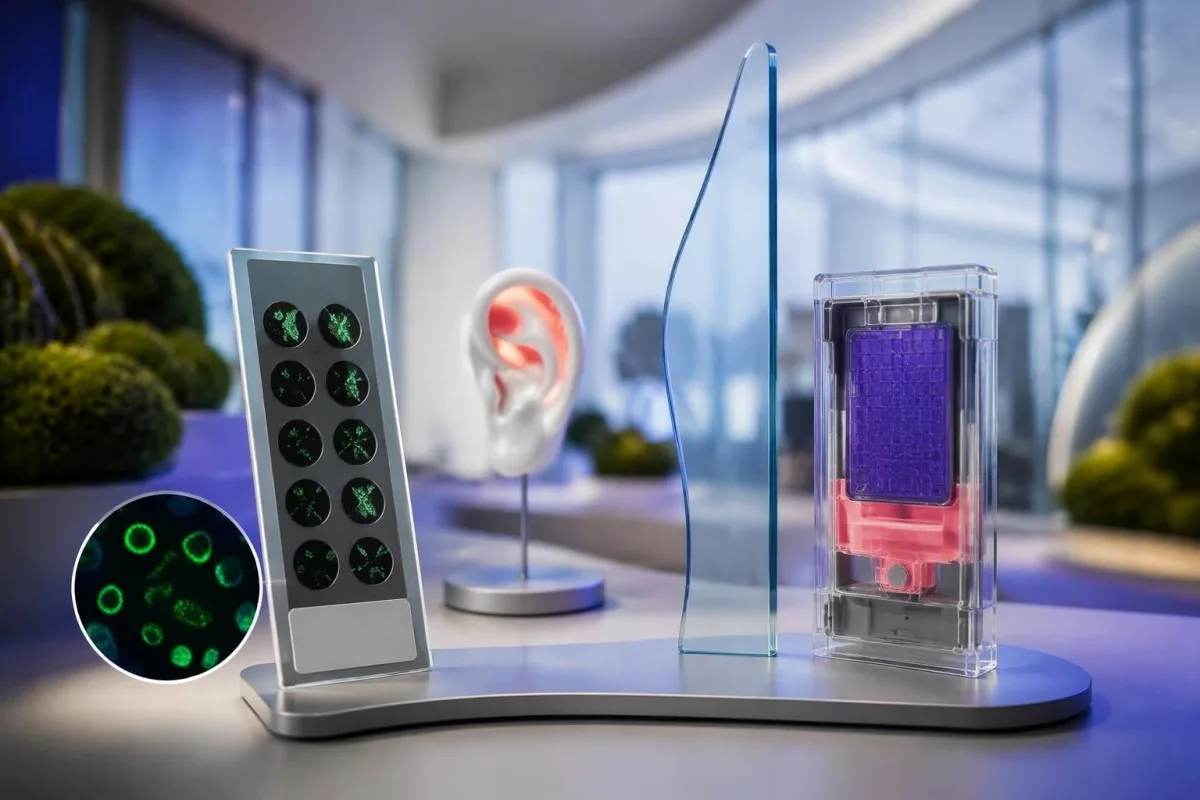
ANA testing detects antibodies directed against nuclear components; it does not read the UBA1 gene. A positive ANA at 1:160 may deserve interpretation in its own clinical context, while a negative ANA does not make unexplained fever, chondritis and macrocytic anemia safe to dismiss.
Repeating several antibody panels can create incidental positives without resolving the central question. Our ANA result explanation describes why 1 positive result is not equivalent to a disease diagnosis; the same caution applies when an antibody is found during a suspected VEXAS evaluation.
Complement testing can be useful when clinicians suspect an immune-complex disorder, but normal C3 and C4 cannot exclude VEXAS. The complement and antibody guide explains these 2 proteins; their biological role differs from the acquired enzyme dysfunction caused by a disease-associated UBA1 variant.
Autoinflammatory and autoimmune are related but not interchangeable descriptions: VEXAS is driven principally by abnormal innate immune activity associated with mutated blood-forming cells. Clinicians may still order 2 types of investigation in parallel—antibody testing for alternatives and molecular testing for VEXAS—because another diagnosis can coexist rather than disappear.
VEXAS ला कारणीभूत धरण्यापूर्वी इतर कोणती कारणे तपासली पाहिजेत?
Vitamin B12 or folate deficiency, medication effects, alcohol use, liver disease, hypothyroidism and marrow disorders can cause macrocytosis. An MCV above 100 fL should trigger evaluation of these possibilities, while recurrent chondritis or unexplained inflammatory attacks may justify investigating VEXAS at the same time.
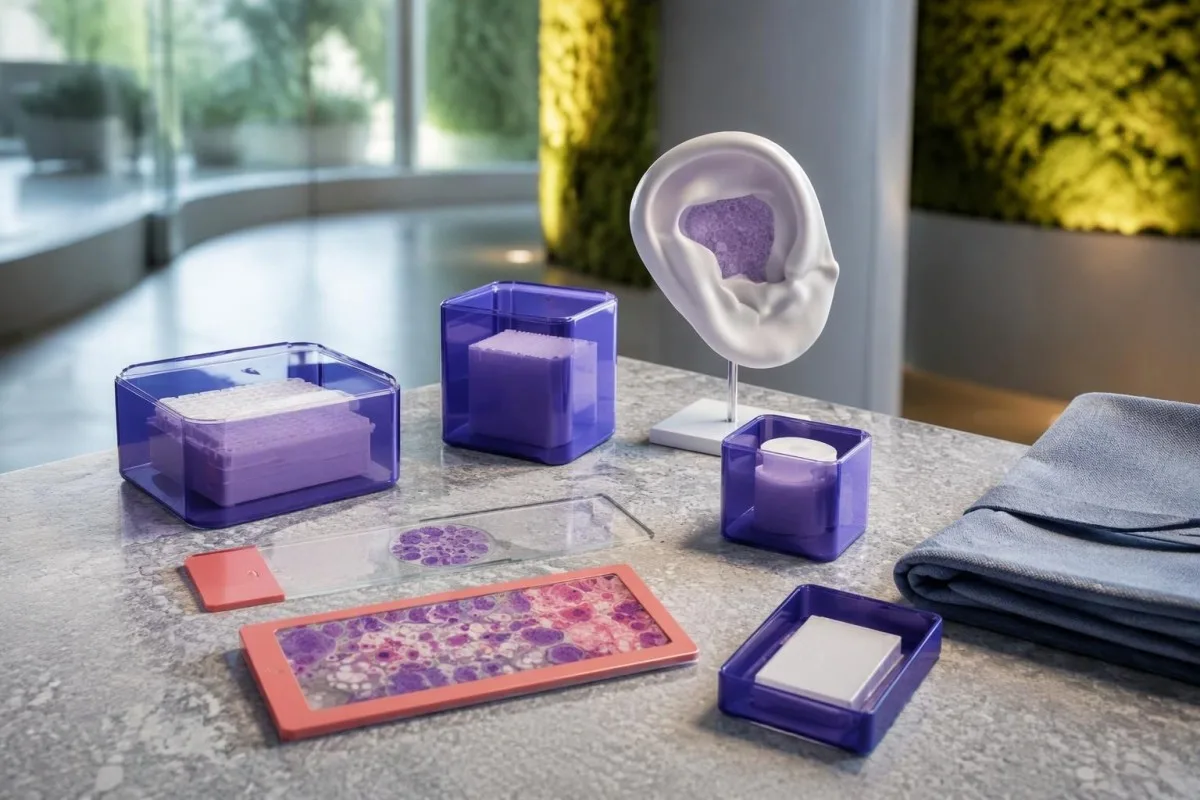
Vitamin B12 and folate results need interpretation alongside symptoms, treatment history and the CBC. A borderline B12 result may require additional assessment rather than immediate attribution of an MCV of 107 fL to VEXAS; our B12 versus folate explanation also explains why folate treatment can obscure part of a B12 deficiency picture.
Copper deficiency can cause cytopenias and vacuolated marrow precursors, making it an especially relevant mimic. Reviewing high-dose zinc supplements is therefore useful, and our कमी कॉपर मूल्यांकन मार्गदर्शक explains why 2 supplement ingredients—zinc and copper—may matter even when a product is marketed for general immune support.
Myelodysplastic syndrome can cause macrocytic anemia and may coexist with VEXAS rather than simply compete with it as an explanation. Our MDS confirmation guide distinguishes CBC clues from marrow evidence; 1 abnormal count cannot establish either diagnosis or determine whether both are present.
Medication and infection reviews are essential because treatment can change the very numbers being investigated. For example, glucocorticoids may increase neutrophils while lowering CRP, and a recent transfusion can alter MCV; bring the dates of these events, not just 2 laboratory reports that appear to disagree.
दैहिक UBA1 चाचणी VEXAS निदानास कशी सहाय्य करते?
VEXAS syndrome diagnosis is established by a disease-associated somatic UBA1 variant in a compatible clinical setting. Peripheral blood is commonly used for testing, while marrow or a more sensitive method may be appropriate after an inconclusive result; many recognized variants affect methionine at position 41.
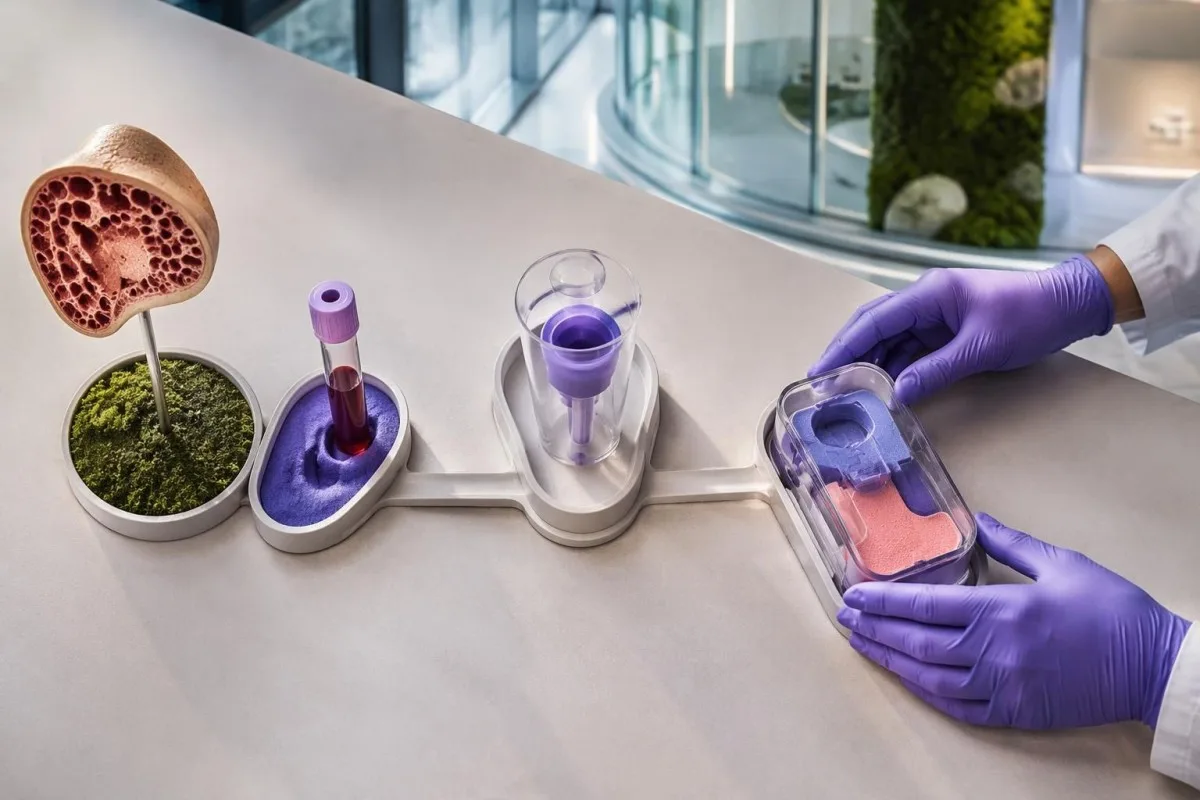
The request should specify suspected VEXAS and testing for somatic UBA1 variants rather than a general hereditary disease panel. These are 2 different diagnostic tasks: an inherited-risk assay may not include the relevant gene regions, cell source or detection sensitivity needed to identify an acquired clone.
Beck et al. linked UBA1 variants to altered ubiquitin-activating enzyme function in their 2020 New England Journal of Medicine report. Position 41 is a major hotspot, but a hotspot-only test is not equivalent to comprehensive relevant UBA1 analysis, because disease-associated noncanonical variants have also been described.
A negative result needs the laboratory method attached to it before its meaning is clear. An assay validated to detect a 5% variant allele fraction may miss a smaller clone; ask which regions were covered, the reported detection limit and whether the sample was suitable for somatic testing.
कांटेस्टी हा एक AI रक्त तपासणी अहवाल समजून घ्या प्लॅटफॉर्म that can help explain accompanying CBC and inflammatory-marker results, but it cannot infer a UBA1 sequence from 1 routine report. Our AI तंत्रज्ञान स्पष्टीकरण describes report interpretation; molecular diagnosis still requires an accredited laboratory and specialist interpretation.
UBA1 उत्परिवर्तनाचा अहवाल कसा वाचावा?
A UBA1 report should state the variant, classification, sample type and testing limitations, often including variant allele fraction. A pathogenic or likely pathogenic disease-associated variant can support VEXAS, but a variant of uncertain significance is not diagnostic, and a 10% allele fraction is not a 10% severity score.
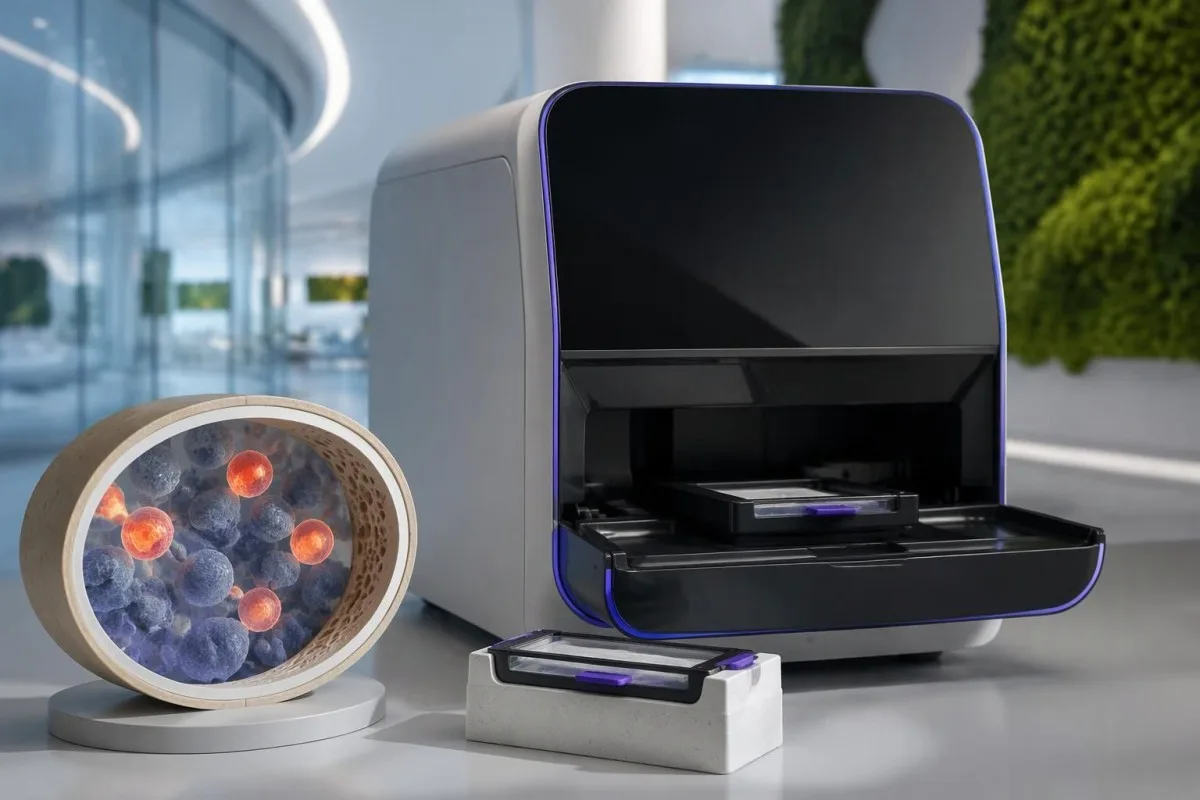
Variant allele fraction is the proportion of analyzed sequence reads carrying a particular change at that location. In a simple 1-X-chromosome model it may approximate the proportion of affected sampled cells, but cell mixtures, chromosome changes and laboratory methods complicate that estimate; it does not directly measure organ damage.
A hypothetical report showing a recognized disease-associated variant at 12% allele fraction may be meaningful even though most reads are unchanged. By contrast, a novel uncertain variant at 40% still requires expert assessment, because abundance cannot turn an unproven genetic finding into an established cause of symptoms.
Different clonal disorders require different molecular or cellular tests, even when anemia and thrombosis overlap. Our PNH clone testing guide explains a separate disorder assessed by flow cytometry; 1 negative PNH test does not evaluate UBA1, and a UBA1 result does not replace PNH testing when indicated.
Kantesti cannot determine whether an uncertain UBA1 finding is disease-causing simply by matching it to an elevated CRP of 70 mg/L. Ask the specialist whether additional sequencing, another specimen or formal variant review is needed, and keep the complete report rather than a screenshot containing only the word positive.
VEXAS चे निदान करण्यासाठी अस्थिमज्जेतील रिक्तिका पुरेशा आहेत का?
Bone marrow vacuoles are a clue, not proof of VEXAS syndrome. Vacuoles may appear in early myeloid and erythroid precursors, but they are neither completely specific nor universally present; an adult with an MCV above 100 fL still needs the broader clinical and molecular assessment.
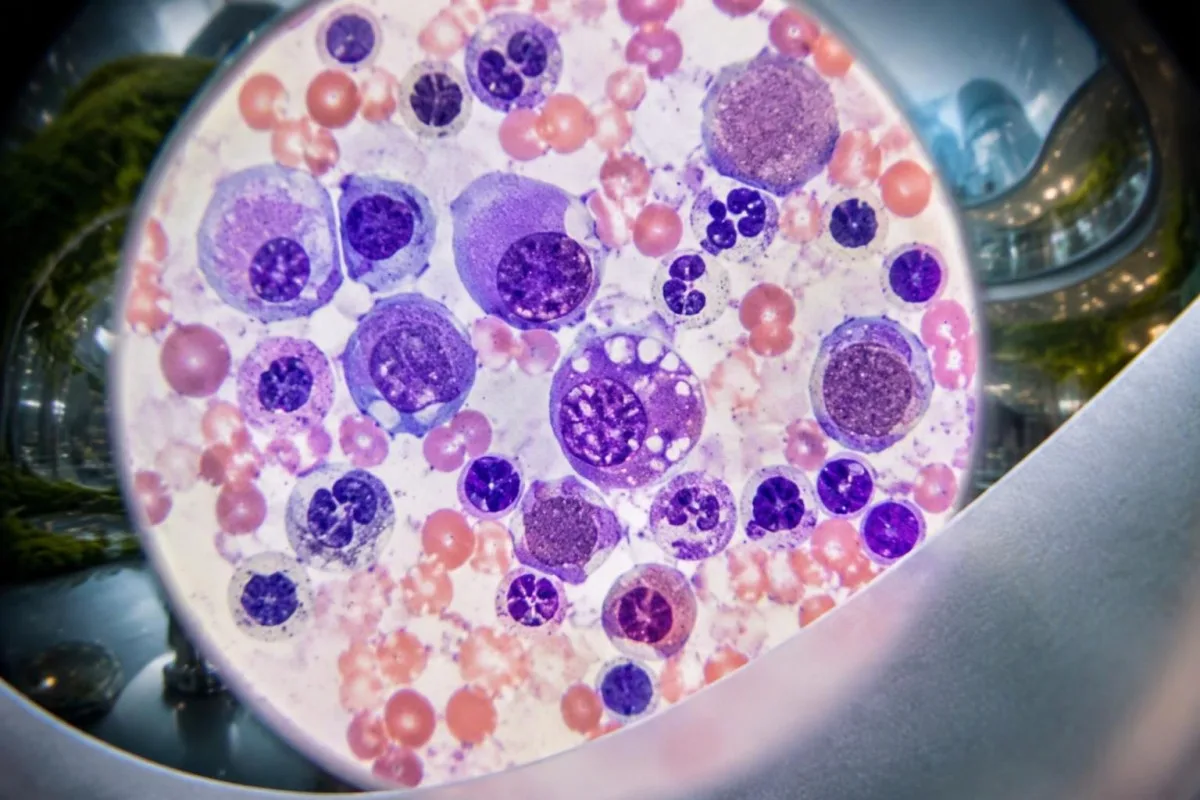
Vacuoles are small clear spaces visible within cells under microscopy, not holes that a patient can see on an ordinary CBC. Their absence on 1 marrow examination does not automatically exclude VEXAS, particularly when specimen quality, disease stage or the specific UBA1 variant affects the appearance.
Copper deficiency, alcohol-related effects and other conditions can produce vacuolated precursors. That overlap is why 2 complementary investigations may be needed: laboratory assessment for reversible mimics and somatic UBA1 testing, rather than treating a descriptive pathology finding as the final diagnosis.
Marrow examination also assesses cellularity, dysplasia and other abnormalities that may influence treatment decisions. Our explanation of teardrop cells and marrow clues describes a different microscopy finding; neither teardrop cells nor vacuoles can independently explain a platelet count of 95 × 10^9/L.
A marrow procedure is not automatically necessary for every isolated MCV of 102 fL, and a positive molecular result may already establish VEXAS in the right context. Hematology decides whether marrow assessment is needed to investigate persistent cytopenias, suspected MDS or another process that would change management.
संधिवातशास्त्र किंवा रक्तविज्ञान मूल्यांकन कधी योग्य ठरते?
Specialist assessment is appropriate when recurrent unexplained inflammation accompanies macrocytic anemia, falling platelets or other persistent cytopenias. Suspicion is higher after age 50, especially with chondritis, inflammatory skin findings or lung involvement; rheumatology and hematology often need to evaluate the pattern together.
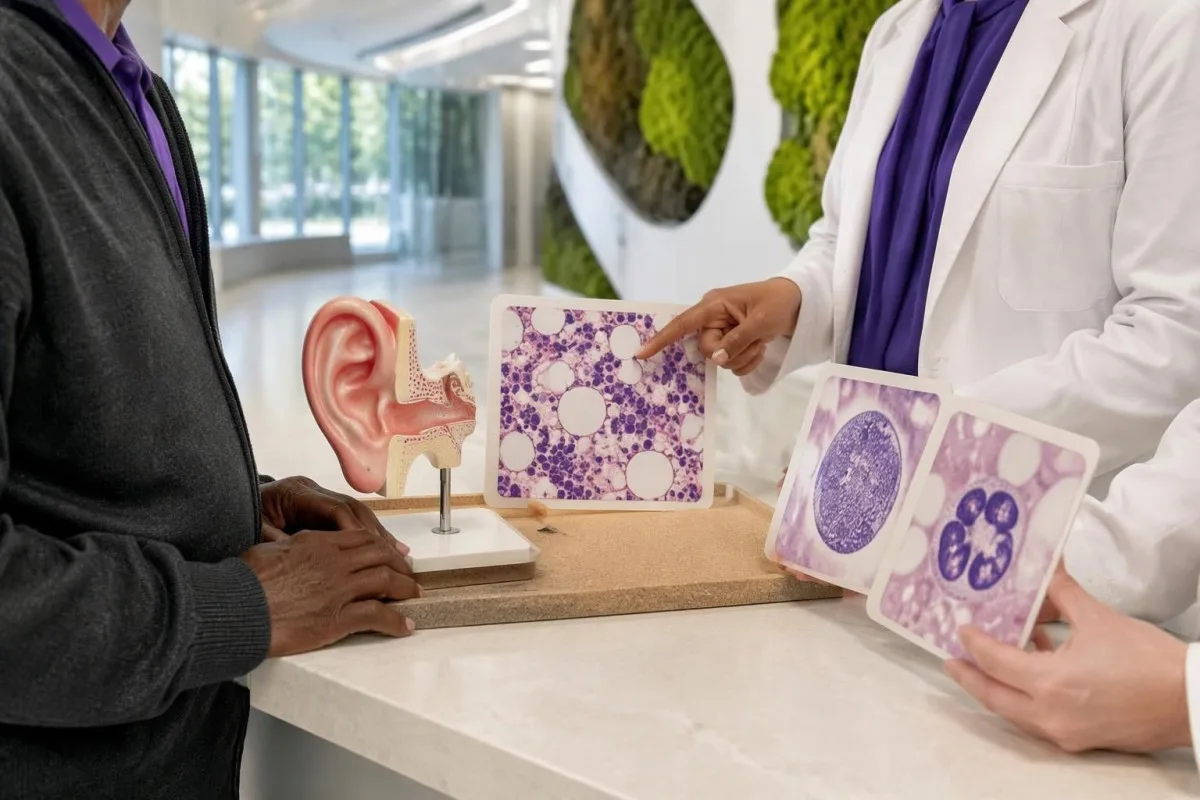
There is no universal CRP level, age boundary or number of attacks that automatically mandates UBA1 testing. A person aged 68 with recurrent ear chondritis and unexplained anemia has a different pretest probability from a person aged 28 with 1 viral fever and an otherwise stable CBC.
Steroid-responsive inflammation that repeatedly returns during dose reduction deserves reassessment, particularly when blood counts remain abnormal. Improvement over 2 days may show that symptoms are inflammatory, but it does not distinguish VEXAS from several other disorders and should not become the only justification for ongoing treatment.
Unexplained pain needs a broader workup when it accompanies constitutional symptoms or changing counts. Our अस्पष्ट वेदना तपासणी मार्गदर्शक explains why inflammatory markers are only part of that workup; an MCV above 100 fL adds a marrow-related question that a pain score cannot answer.
A referral should highlight 3 elements: documented inflammatory episodes, the CBC trend and the results of common-cause investigations. If symptoms are progressing rapidly, new organs are involved or transfusions are being considered, ask the referring clinician whether the appointment needs to be expedited rather than waiting for another routine repeat test.
उदाहरणासह स्पष्टीकरण: कानाला वारंवार येणारी सूज आणि बदलणारी CBC
A hypothetical combination of recurrent chondritis, macrocytic anemia and low platelets warrants specialist evaluation, not an AI-generated diagnosis. Consider a 68-year-old man with hemoglobin 10.2 g/dL, MCV 108 fL, platelets 112 × 10^9/L and CRP 86 mg/L during a third episode of upper-ear swelling.
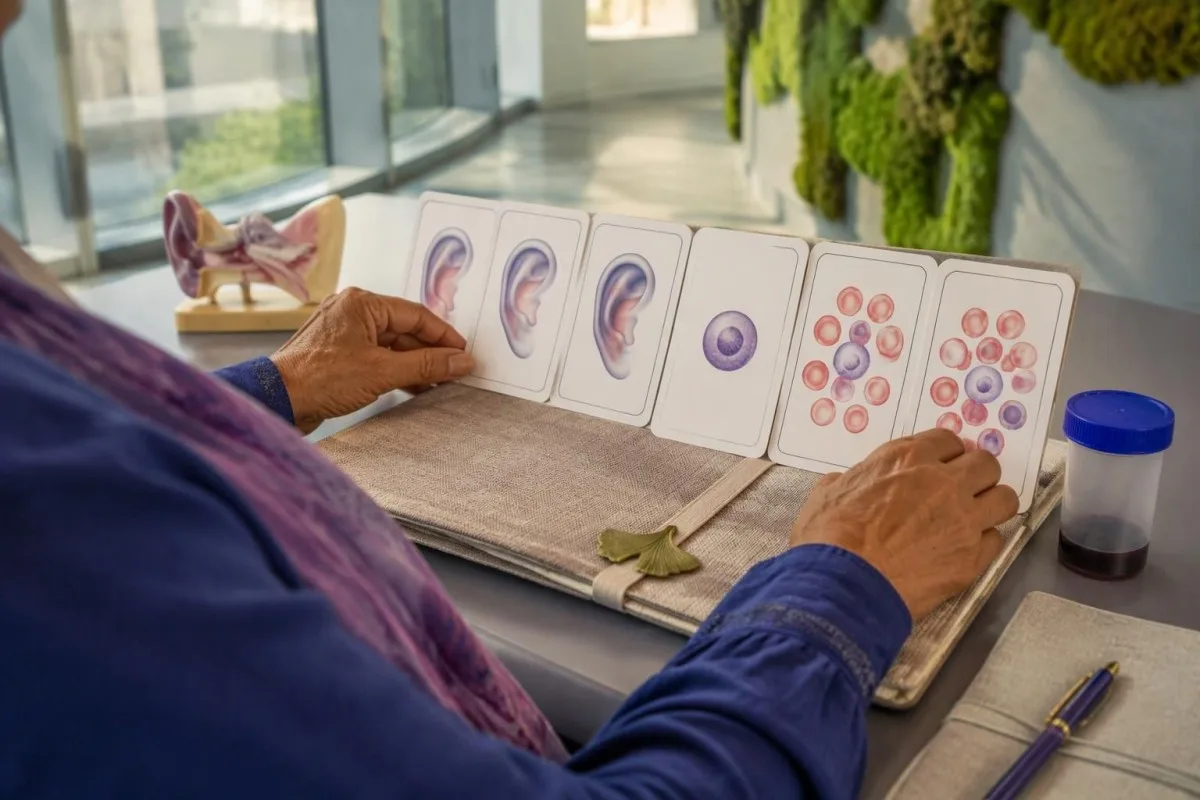
The first reasoning step is to separate symptom severity from diagnostic specificity: CRP of 86 mg/L confirms a substantial inflammatory response but does not identify its cause. The MCV of 108 fL and platelet count of 112 × 10^9/L add evidence that blood-cell production also needs investigation.
Suppose the person's B12, folate and thyroid assessments do not reveal an explanation, and medication, alcohol and liver reviews are unrevealing. A negative ANA would not close the case; the combination of 3 inflammatory episodes and persistent unexplained cytopenias would justify discussing somatic UBA1 testing with hematology and rheumatology.
Now suppose CRP falls to 12 mg/L after prescribed glucocorticoids, but hemoglobin falls to 9.8 g/dL. Those 2 trends are not contradictory: inflammatory activity may improve while marrow dysfunction or another anemia mechanism persists, so treatment response cannot be used as a substitute for investigating the falling hemoglobin.
Kantesti can help explain why those 2 trends deserve separate attention, but cannot establish VEXAS or choose immunosuppressive treatment. Our औषधोपचार ट्रेंड विश्लेषण मार्गदर्शक explains why dose changes, transfusions and intercurrent illness should be recorded beside each result; the example here is entirely hypothetical.
पुष्टी झालेल्या VEXAS सिंड्रोमवर तज्ज्ञ उपचार कसे करतात?
VEXAS treatment aims to control inflammation, manage cytopenias and reduce treatment-related harm. Glucocorticoids often suppress symptoms but may be difficult to taper; other options include selected immunomodulators, marrow-directed treatment and allogeneic stem-cell transplantation, with no single regimen appropriate for every adult over 50.
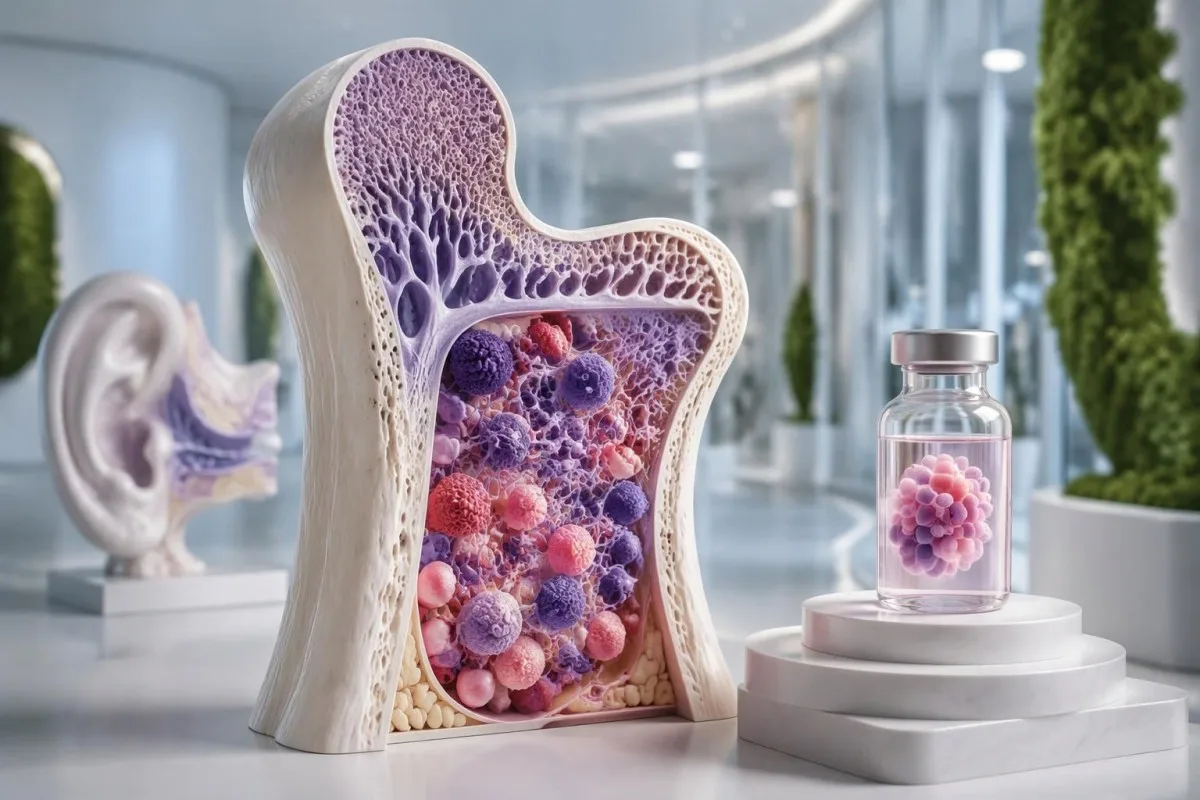
A falling CRP does not by itself establish treatment success if anemia, thrombosis or lung disease is worsening. Specialists follow at least 2 dimensions—clinical inflammatory activity and hematological status—and weigh these against cumulative glucocorticoid exposure, because prolonged treatment can cause infections, diabetes, osteoporosis and muscle weakness.
JAK inhibitors and IL-6-directed therapy are among approaches used by specialists, while azacitidine may be considered in selected patients, particularly with associated marrow disease. Evidence and access vary, and much published experience is observational; a response lasting 6 months in one cohort does not reliably predict an individual's longer-term benefit.
Allogeneic stem-cell transplantation can potentially eliminate the abnormal blood-forming clone and produce sustained remission in selected patients. It also carries substantial risks, including graft-versus-host disease and serious infection, so 2 people of the same age may receive different recommendations because fitness, organ involvement and donor availability differ.
Infection prevention deserves planning before immunosuppression, not only after fever develops. Depending on exposures and the proposed regimen, clinicians may consider screening or prevention measures described in our Strongyloides testing explanation; even 1 relevant past exposure can matter before corticosteroids, and prescribed steroids should never be stopped abruptly without guidance.
कोणत्या लक्षणांसाठी तातडीची किंवा आपत्कालीन वैद्यकीय मदत घ्यावी?
New breathing difficulty, chest pain, airway symptoms, neurological deficits or significant bleeding require urgent assessment in someone with suspected or confirmed VEXAS. Fever of 38°C or higher during substantial immunosuppression also needs prompt clinical advice, particularly when neutrophils are low.
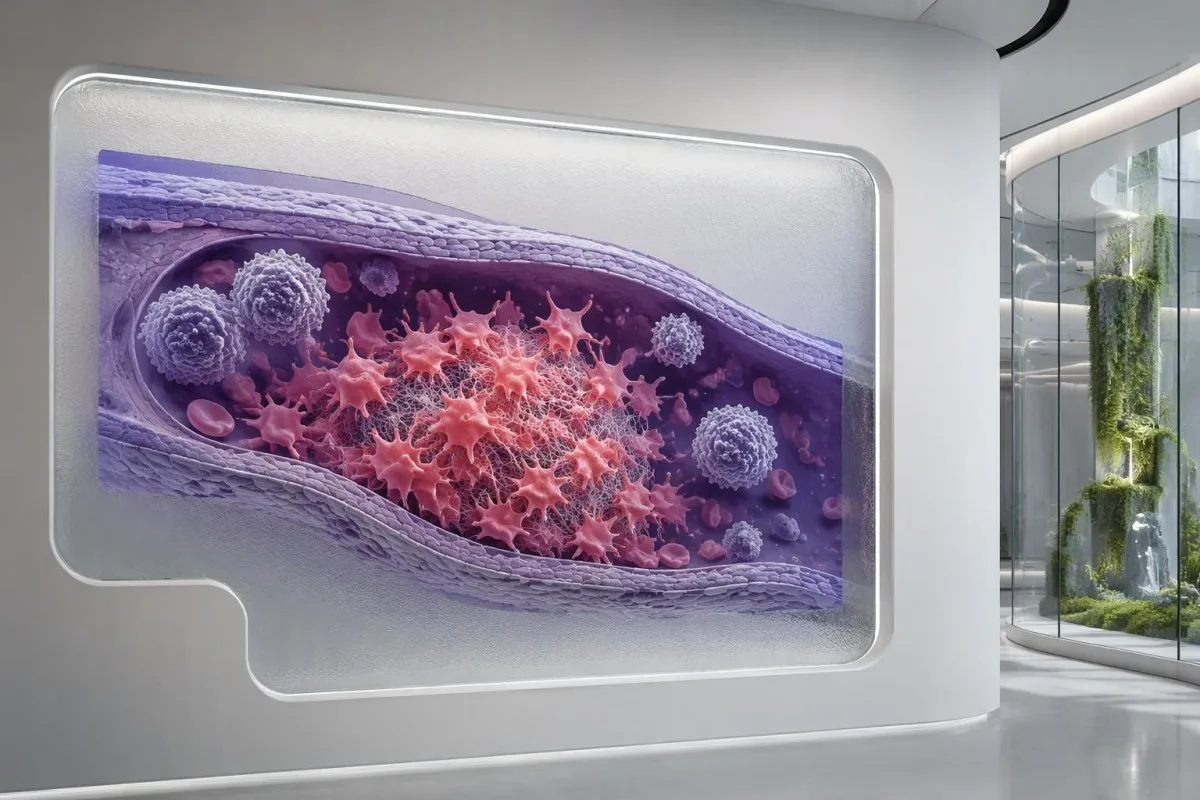
VEXAS is associated with venous thrombosis, so a painful swollen leg or sudden breathlessness should not be dismissed as another inflammatory flare. Normal routine clotting times do not exclude a clot; our रक्तगोठण पॅनेलच्या मर्यादा explain why 2 normal tests, PT and aPTT, cannot provide that reassurance.
An absolute neutrophil count below 0.5 × 10^9/L represents severe neutropenia and increases concern when fever occurs. Treatment can also blunt the temperature response, so feeling acutely unwell with shaking chills, confusion or rapidly worsening weakness can require urgent assessment even when a thermometer reads below 38°C.
Breathlessness can reflect lung inflammation, infection, pulmonary embolism or worsening anemia, and these require different treatments. Our breathlessness blood test guide explains why hemoglobin of 8 g/dL may contribute without proving the entire cause; new chest pain or sudden breathing difficulty should not wait for an uploaded report.
Persistent nose or gum bleeding, black stools or a severe new headache needs urgent advice, especially if platelets are very low. A count below 20 × 10^9/L generally warrants prompt clinical review, but the urgency depends on symptoms and context; significant bleeding is an emergency even above that number.
पाठपुरावा, AI च्या मर्यादा आणि संशोधन प्रकाशने
Useful VEXAS follow-up combines symptoms, treatment history, CBC trends and inflammatory markers, with molecular and marrow findings interpreted by specialists. An AI explanation of 1 laboratory report can support preparation for care, but it cannot diagnose VEXAS, exclude infection or establish whether a UBA1 variant is pathogenic.
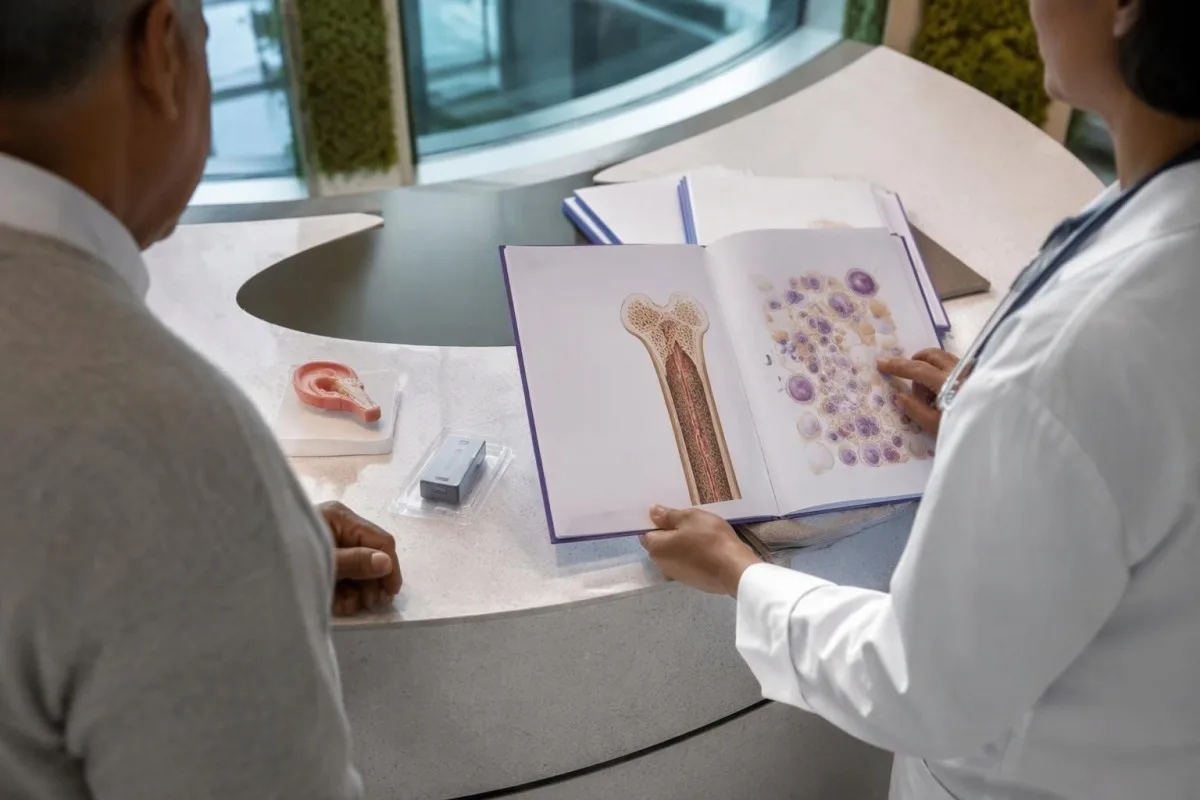
Bring original CBC reports, inflammatory markers and the complete UBA1 result, including specimen type and detection limit. Record 3 timeline features beside them: flare dates, medication changes and transfusions; this makes it easier to distinguish a true disease trend from a treatment effect or a change in testing conditions.
कांटेस्टी हा एक AI-चालित रक्त चाचणी विश्लेषण साधन that can explain laboratory patterns without converting an MCV above 100 fL into a rare-disease diagnosis. Genetic reports can reveal sensitive information, so review our गोपनीयता आणि डेटा माहिती before sharing records, and include only documents you are authorized to upload.
Kantesti's 2 DOI-linked publications below concern broader blood-test interpretation and RDW education, not clinical trials of VEXAS diagnosis or UBA1 sequencing. They should therefore be read separately from the disease-specific medical studies listed in the external references; neither publication establishes VEXAS-specific diagnostic sensitivity or treatment effectiveness.
आमचे कार्यपद्धती आणि वैद्यकीय मानके explain the distinction between report interpretation and medical diagnosis. Before the next appointment, write 2 questions: whether the laboratory method adequately assessed somatic UBA1 variants, and whether persistent cytopenias need marrow evaluation; these are more actionable than asking an AI to calculate an unsupported VEXAS probability.
वारंवार विचारले जाणारे प्रश्न
VEXAS सिंड्रोमची पहिली लक्षणे कोणती आहेत?
0 VEXAS सिंड्रोमची सुरुवात अनेकदा वारंवार येणारा अस्पष्ट ताप, त्वचेतील दाहजन्य बदल, थकवा किंवा कानाच्या अथवा नाकाच्या कूर्चेला सूज येणे अशा लक्षणांनी होते; सहसा वयाच्या ५० वर्षांनंतर. या लक्षणांपूर्वी, त्यांच्यासोबत किंवा त्यानंतर मॅक्रोसाइटिक ॲनिमिया किंवा रक्तपेशींच्या संख्येतील इतर असामान्य बदल दिसू शकतात. प्रौढ व्यक्तीचा MCV अंदाजे १०० fL पेक्षा जास्त असणे हा एक संकेत आहे, निदान नाही. वारंवार होणारी दाहजन्य लक्षणे आणि सतत अस्पष्ट राहणाऱ्या सायटोपेनिया असल्यास संधिवातशास्त्र आणि रक्तविज्ञानविषयक मूल्यमापनाबद्दल चर्चा करणे योग्य ठरते.
VEXAS सिंड्रोमची पुष्टी कोणती चाचणी करते?
सुसंगत नैदानिक परिस्थितीत रोगाशी संबंधित सोमॅटिक UBA1 व्हेरियंट ओळखून VEXAS सिंड्रोमचे निदान केले जाते. चाचणीसाठी सामान्यतः परिधीय रक्त वापरले जाते, परंतु निवडक प्रकरणांमध्ये अस्थिमज्जा किंवा अधिक संवेदनशील चाचणी आवश्यक असू शकते. अनेक ज्ञात व्हेरियंट्सचा परिणाम 41व्या स्थानावरील मेथिओनिनवर होतो, परंतु मर्यादित हॉटस्पॉट चाचणीमुळे रोगाशी संबंधित इतर व्हेरियंट्स आढळून येणार नाहीत. अहवालाचा अर्थ लावताना व्हेरियंटचे वर्गीकरण, जनुकाचे कव्हरेज आणि शोधमर्यादा विचारात घेणे आवश्यक आहे.
सामान्य ANA किंवा स्वयंप्रतिकारक्षमता पॅनेलमुळे VEXAS नाकारता येतो का?
सामान्य ANA किंवा नियमित ऑटोइम्यून पॅनेलमुळे VEXAS सिंड्रोम नाकारता येत नाही, कारण या चाचण्या कायिक UBA1 उत्परिवर्तने शोधत नाहीत. 1:160 या प्रमाणात ANA सकारात्मक असणे हेही VEXAS ची पुष्टी करत नाही किंवा दुसरा ऑटोइम्यून आजार असल्याचे निश्चितपणे सिद्ध करत नाही. पर्यायी शक्यतांचा तपास करण्यासाठी प्रतिपिंड चाचण्या उपयुक्त ठरू शकतात, तर CBC मधील नमुने, लक्षणे आणि आण्विक चाचण्या वेगवेगळ्या प्रश्नांची उत्तरे देतात. प्रतिपिंड चाचण्या नकारात्मक आहेत म्हणूनच सततची मॅक्रोसाइटिक रक्तक्षीणता आणि वारंवार होणारी उपास्थीची सूज दुर्लक्षित करू नये.
VEXAS सिंड्रोम आनुवंशिक आहे का, आणि माझ्या मुलांची तपासणी करावी का?
वैशिष्ट्यपूर्ण VEXAS सिंड्रोम आनुवंशिकतेने मिळण्याऐवजी अधिग्रहित होतो, त्यामुळे मुलांची नियमित तपासणी सामान्यतः आवश्यक नसते. संबंधित UBA1 उत्परिवर्तन प्रौढावस्थेत रक्तनिर्मिती करणाऱ्या पेशींमध्ये विकसित होते आणि अनेकदा वयाच्या ५० वर्षांनंतर लक्षणे दिसतात. UBA1 हे X गुणसूत्रावर असले, तरी त्यामुळे कायिक VEXAS प्रकार आपोआप संततीला संक्रमित होतो असे नाही. असामान्य किंवा संभाव्यतः घटनात्मक निष्कर्षांचे क्लिनिकल आनुवंशिकी तज्ज्ञांकडून पुनरावलोकन केले पाहिजे.
महिलांना VEXAS सिंड्रोम होऊ शकतो का?
महिलांमध्ये VEXAS सिंड्रोम विकसित होऊ शकतो, जरी ओळखल्या गेलेल्या बहुतेक प्रकरणांमध्ये वृद्ध पुरुष आढळतात. UBA1 हे X गुणसूत्रावर स्थित आहे आणि प्रभावित पेशींमध्ये 1 X गुणसूत्र नष्ट होणे ही महिलांमध्ये नोंदवलेली एक यंत्रणा आहे. 2023 मधील JAMA आरोग्य-व्यवस्थेच्या अभ्यासात रोगाशी संबंधित UBA1 प्रकार असलेल्या 11 सहभागींपैकी 2 महिला आढळल्या. वारंवार होणारी जळजळ आणि रक्तगणनेतील अस्पष्ट विकृती ठळकपणे संशयास्पद असताना, केवळ लिंगामुळे तज्ज्ञांकडून मूल्यमापन होण्यास अडथळा येऊ नये.
UBA1 चाचणी नकारात्मक आल्यास VEXAS सिंड्रोम नाकारला जातो का?
नकारात्मक UBA1 चाचणीमुळे VEXAS ची शक्यता तेव्हाच कमी होते, जेव्हा नमुना आणि चाचणी योग्य असतात. 5% व्हेरिएंट अॅलील फ्रॅक्शन शोधण्याची मर्यादा असलेल्या चाचणीला लहान क्लोन आढळणार नाही, आणि केवळ हॉटस्पॉट्सची चाचणी केल्यास तपासलेल्या क्षेत्राबाहेरील व्हेरिएंट्स सुटू शकतात. तीव्र नैदानिक संशय असल्यास चाचणीचे कव्हरेज, संवेदनशीलता आणि नमुन्याचा प्रकार यांचे तज्ज्ञांकडून पुनरावलोकन करणे योग्य ठरू शकते. योग्यरीत्या केलेला नकारात्मक निकाल स्पष्ट कारणाशिवाय चाचणी पुन्हा करण्याऐवजी पर्यायी निदानांचे काळजीपूर्वक पुनर्मूल्यांकन करण्यासही प्रवृत्त करायला हवा.
VEXAS सिंड्रोमवर उपचार आहे का?
0 अॅलोजेनिक स्टेम-सेल प्रत्यारोपणामुळे असामान्य रक्तनिर्मिती करणारा क्लोन बदलून दीर्घकाळ टिकणारी माफी मिळू शकते; परंतु ते केवळ निवडक रुग्णांसाठी योग्य असते आणि त्यात लक्षणीय जोखीम असतात. इतर उपचार क्लोनचे विश्वसनीयरीत्या निर्मूलन करण्याऐवजी दाह नियंत्रित करणे, रक्तपेशींची संख्या कमी होण्याचे व्यवस्थापन करणे आणि ग्लुकोकॉर्टिकोइड्सचा वापर कमी करणे यांवर लक्ष केंद्रित करतात. ५० वर्षांवरील प्रौढांसाठी, शारीरिक तंदुरुस्ती, अवयवांचा सहभाग आणि संबंधित अस्थिमज्जा रोग यांचा उपचारनिवडींवर मोठा प्रभाव पडू शकतो. कोणतेही पूरक आहार, आहारयोजना किंवा AI द्वारे रक्तचाचण्यांचे विश्लेषण VEXAS बरा करते, असे सिद्ध झालेले नाही.
तुमचे रक्त तपासणी अहवाल कसे वाचावेत
तुमचा प्रयोगशाळा अहवाल अपलोड करा आणि Kantesti चे AI काही सेकंदांत प्रत्येक जैवचिन्ह सोप्या भाषेत समजावून सांगेल. जगभरातील 2 दशलक्षांहून अधिक लोक वापरतात.
संदर्भ
- Klein, T., Mitchell, S., & Weber, H. (2026). AI रक्त चाचणी विश्लेषक: 2.5M चाचण्यांचे विश्लेषण | ग्लोबल हेल्थ रिपोर्ट 2026. Kantesti AI वैद्यकीय संशोधन. डीओआय
- Klein, T., Mitchell, S., & Weber, H. (2026). RDW रक्त चाचणी: RDW-CV, MCV आणि MCHC यांसाठी संपूर्ण मार्गदर्शक. Kantesti AI वैद्यकीय संशोधन. डीओआय
- Beck DB et al. (2020). Somatic Mutations in UBA1 and Severe Adult-Onset Autoinflammatory Disease. न्यू इंग्लंड जर्नल ऑफ मेडिसिन. डीओआय
- Beck DB et al. (2023). Estimated Prevalence and Clinical Manifestations of VEXAS Syndrome in a Large US Health Care System. JAMA. डीओआय
- २० लाख+विश्लेषित केलेल्या चाचण्या
- 127+देश
- 100+भाषा
वैद्यकीय पथकाविषयी


E-E-A-T विश्वास संकेत
अनुभव
प्रयोगशाळेतील अहवाल समजून घेण्याच्या कार्यप्रवाहांचे डॉक्टरांच्या नेतृत्वाखालील क्लिनिकल पुनरावलोकन.
कौशल्य
बायोमार्कर्स क्लिनिकल संदर्भात कसे वागतात यावर प्रयोगशाळा वैद्यकाचा भर.
अधिकृतता
डॉ. Thomas Klein यांनी वैद्यकीय पुनरावलोकन केले; डॉ. Sarah Mitchell आणि प्रा. डॉ. Hans Weber यांचे योगदान.
विश्वासार्हता
पुराव्यावर आधारित अर्थ लावणे, घाबरवणाऱ्या सूचना कमी करण्यासाठी स्पष्ट पुढील मार्गांसह.





वैद्यकीय अस्वीकरण
हा लेख केवळ शैक्षणिक उद्देशांसाठी आहे आणि वैद्यकीय सल्ला ठरत नाही. निदान आणि उपचार निर्णयांसाठी नेहमी पात्र आरोग्यसेवा प्रदात्याशी सल्लामसलत करा.
प्रकाशित · संपादकीय पथकाशी संपर्क साधा
Kantesti Ltd द्वारे प्रकाशित, इंग्लंड आणि वेल्समध्ये नोंदणीकृत, कंपनी क्रमांक. 17090423, लंडन, युनायटेड किंगडम.
