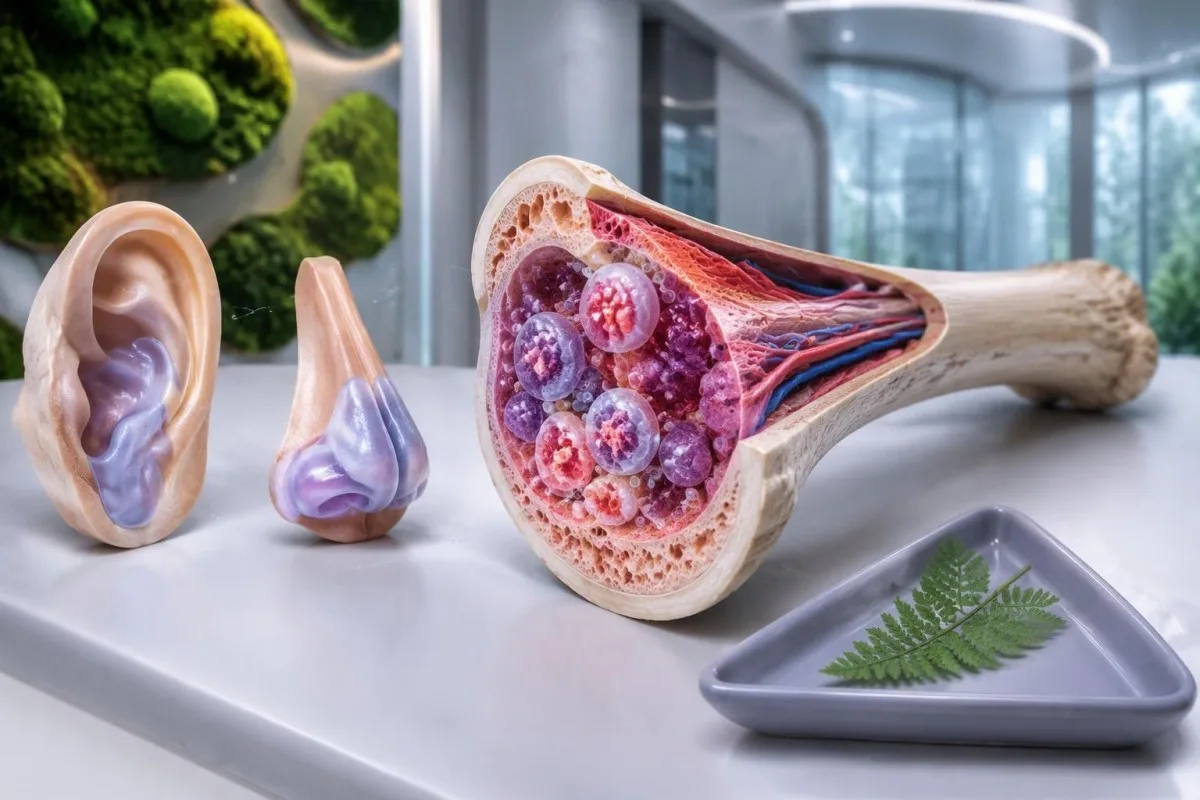
’S e suidheachadh sèidteach a th’ ann an sionndrom VEXAS a gheibhear rè beatha agus a dh’adhbharaicheas mùthaidhean somatach UBA1 ann an ceallan a chruthaicheas fuil. Bu chòir fiabhras ath-chuairteach, maoth-chnàimh na cluaise no na sròine a tha ata, agus anemia mhacrocytach gun adhbhar follaiseach leantainn gu measadh speisealta; tha feum air deuchainn ghinteil iomchaidh airson a’ bhreithneachaidh, chan e panail àbhaisteach airson ghalaran fèin-dìon.

Prìomh phuingean
- Sionndrom VEXAS mar as trice tòisichidh e às dèidh aois 50 agus bidh sèid siostamach an cois mì-riaghailteachdan ann an ceallan a chruthaicheas fuil.
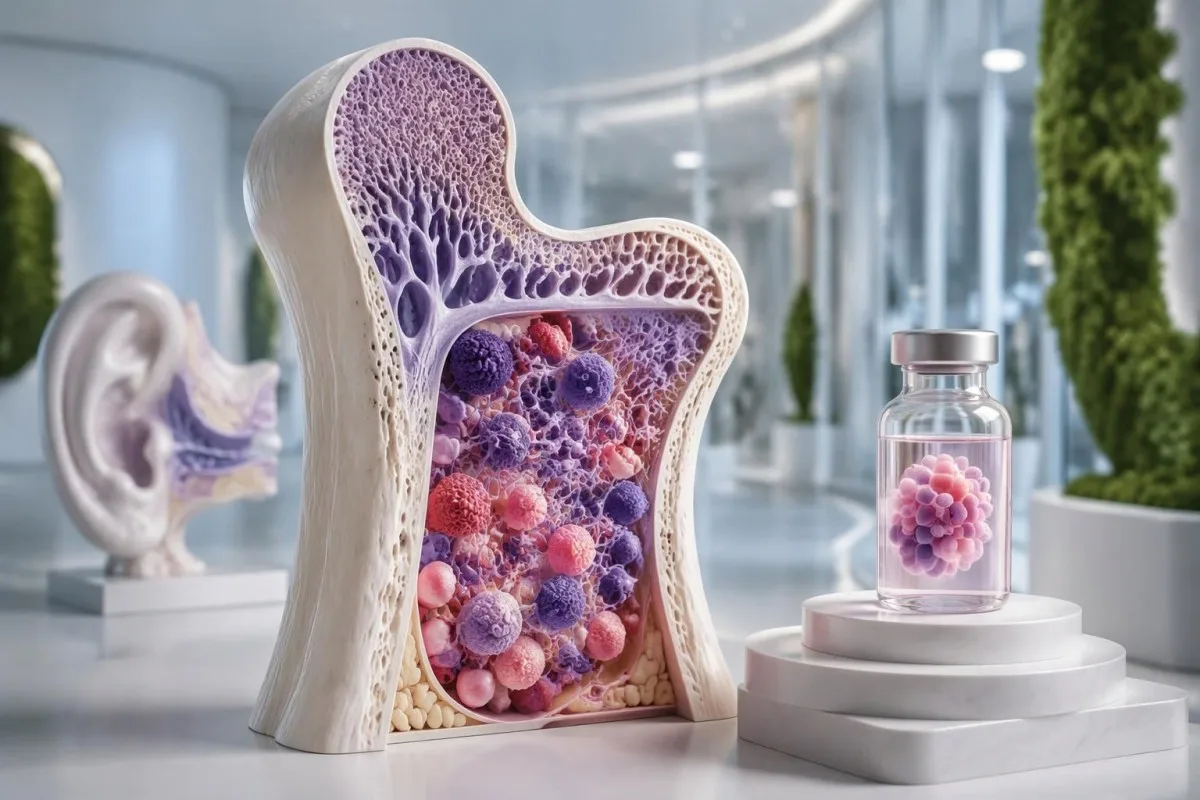
- At na maoth-chnàimhe faodaidh e buaidh a thoirt air na cluasan, an t-sròn no an t-slighe-adhair; bidh sèid ann am maoth-chnàimh na cluaise gu tric a’ seachnadh na lòibe boga.
- Macrocytosis a’ ciallachadh MCV os cionn mu 100 fL ann an inbhich, ach chan eil an toradh seo leis fhèin a’ dearbhadh VEXAS.
- Plàtaichean ìosal fo 150 × 10^9/L faodaidh iad dragh a neartachadh nuair a tha sèid ath-chuairteach agus anemia gun adhbhar follaiseach nan cois.
- CRP mar as trice tha crìoch àrd iomraidh de 5 mg/L aige, ged a bhios cuid de dh’obair-lannan a’ cleachdadh 10 mg/L; chan eil gearradh-tairis CRP sam bith a’ dearbhadh VEXAS.
- Deuchainn airson mùthaidhean UBA1 a’ lorg caochladh phataigeach a gheibhear rè beatha, mar as trice a’ cleachdadh fuil iomaill no smior cnàimh seach panail àbhaisteach airson cunnart oighreachail.
- Pannalan fèin-dìonach leithid ANA, factar rheumatoid agus ANCA chan urrainn dhaibh syndrome VEXAS a dhearbhadh no a chur às.
- Comharraidhean èiginneach gabhail a-steach giorrad analach ùr, pian sa bhroilleach, duilgheadas leis an t-slighe-adhair no fiabhras 38°C no nas àirde fhad ’s a tha an dìonachd air a lagachadh gu mòr.
Dè th’ ann an sionndrom VEXAS, agus carson a tha cunntasan fala cudromach?
Sionndrom VEXAS ’S e mì-rian fèin-atlasach a chaidh fhaighinn a th’ ann, air adhbharachadh le mùthadh UBA1 ann an ceallan a chruthaicheas fuil. Bu chòir dhan mheasgachadh de dh’athlas ath-chuairteach, maoth-chnàimh ata agus àireamhan fala neo-àbhaisteach gun mhìneachadh — gu h-àraidh anemia mhacrocìteach ann an neach nas sine na 50 — amharas a thogail, agus tha am breithneachadh an urra ri bhith a’ comharrachadh caochladh UBA1 freagarrach a tha pathogenic ann an co-theacsa clionaigeach.
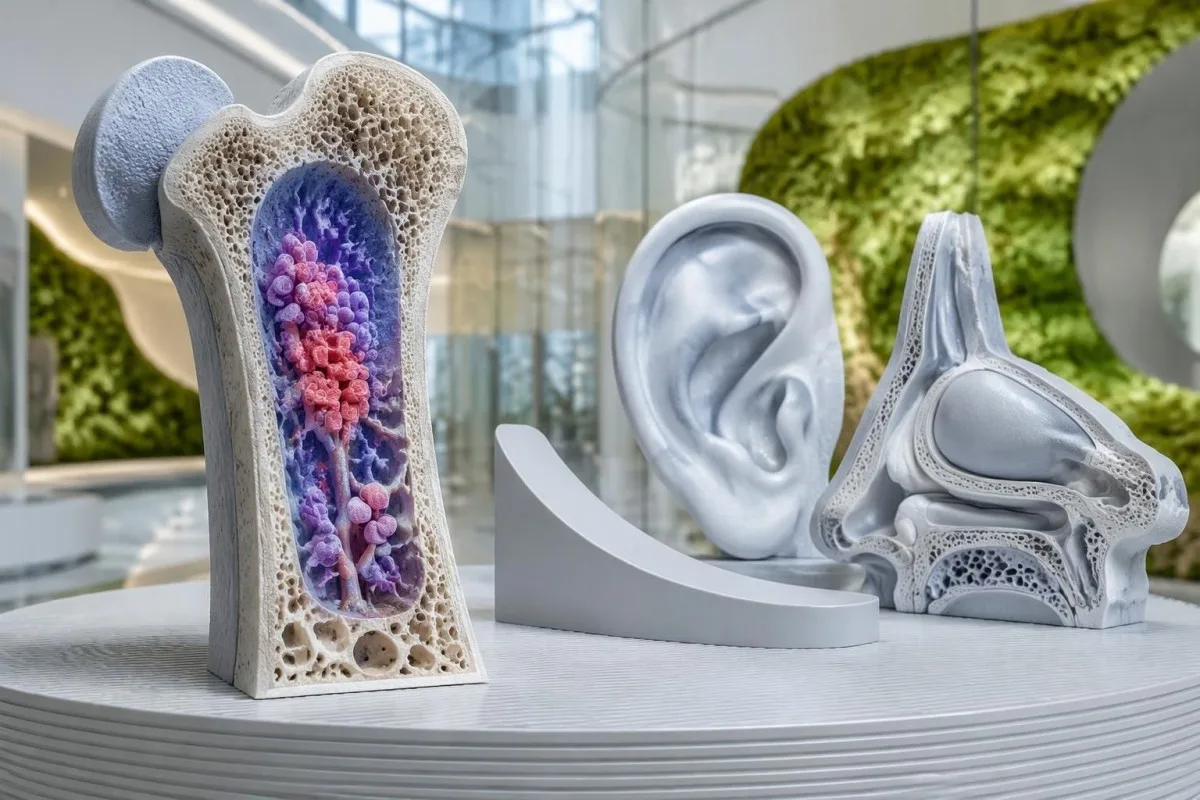
Tha an t-ainm a’ mìneachadh 5 feartan: falamhagan, einnsein E1, ceangailte ri X, fèin-atlasach agus somatach. Tha iad sin nan sanasan mu bhith-eòlas a’ ghalair, chan e liosta shlatan-tomhais ris am feum a h-uile duine cumail; chan eil falamhagan follaiseach san smior, comharraidhean sa mhaoth-chnàimh agus anemia mhòr gu riatanach a’ nochdadh còmhla aig a’ chiad choinneimh.
Thug Beck et al. cunntas air VEXAS an toiseach anns an New England Journal of Medicine ann an 2020, a’ ceangal athlas a thòisicheas ann an inbhich ri caochlaidhean UBA1 a chaidh fhaighinn. Tha an lorg sin a’ mìneachadh carson a dh’fhaodadh neach barrachd air 1 breithneachadh fhaighinn roimhe, leithid polychondritis ath-chraolach agus mì-rian smior cnàimh, mus deach an t-adhbhar coitcheann aithneachadh.
Chan eil aon toradh CRP àrdaichte a’ comharrachadh VEXAS gu sònraichte, agus gu tric tha mìneachaidhean nas cumanta ann airson MCV de 103 fL. Bidh an t-amharas a’ fàs nas làidire nuair a thilleas ionnsaighean athlasach còmhla ri cytopenias leantainneach no a tha a’ fàs nas miosa, oir tha am pàtran sin a’ moladh pròiseas athlasach co-cheangailte ri cinneasachadh cheallan fala neo-àbhaisteach seach caochladh iomallach ann an toradh obair-lann.
Tha Kantesti na Anailisiche deuchainn fala AI a dh’fhaodas mìneachadh mar a tha haemoglobin, MCV, truinnsearan agus CRP a’ freagairt ri chèile, agus am breithneachadh VEXAS fhàgail aig eòlaichean. Ar buidheann agus adhbhar air am mìneachadh fa leth; chan urrainn do 1 CBC a chaidh a luchdadh suas mùthadh UBA1 fhoillseachadh no sgrùdadh clionaigeach a chur na àite.
Cò a gheibh VEXAS, agus an sealbhaichear mùthadh UBA1?
Mar as trice bidh syndrome VEXAS a’ toirt buaidh air fir nas sine, agus mar as trice bidh na comharraidhean a’ tòiseachadh às dèidh aois 50. Sa chumantas, gheibhear am mùthadh UBA1 a dh’adhbharaicheas an galar taobh a-staigh sluagh de cheallan a chruthaicheas fuil, seach a bhith air a shealbhachadh bho phàrant no a bhith an làthair anns gach cealla bho àm breith.
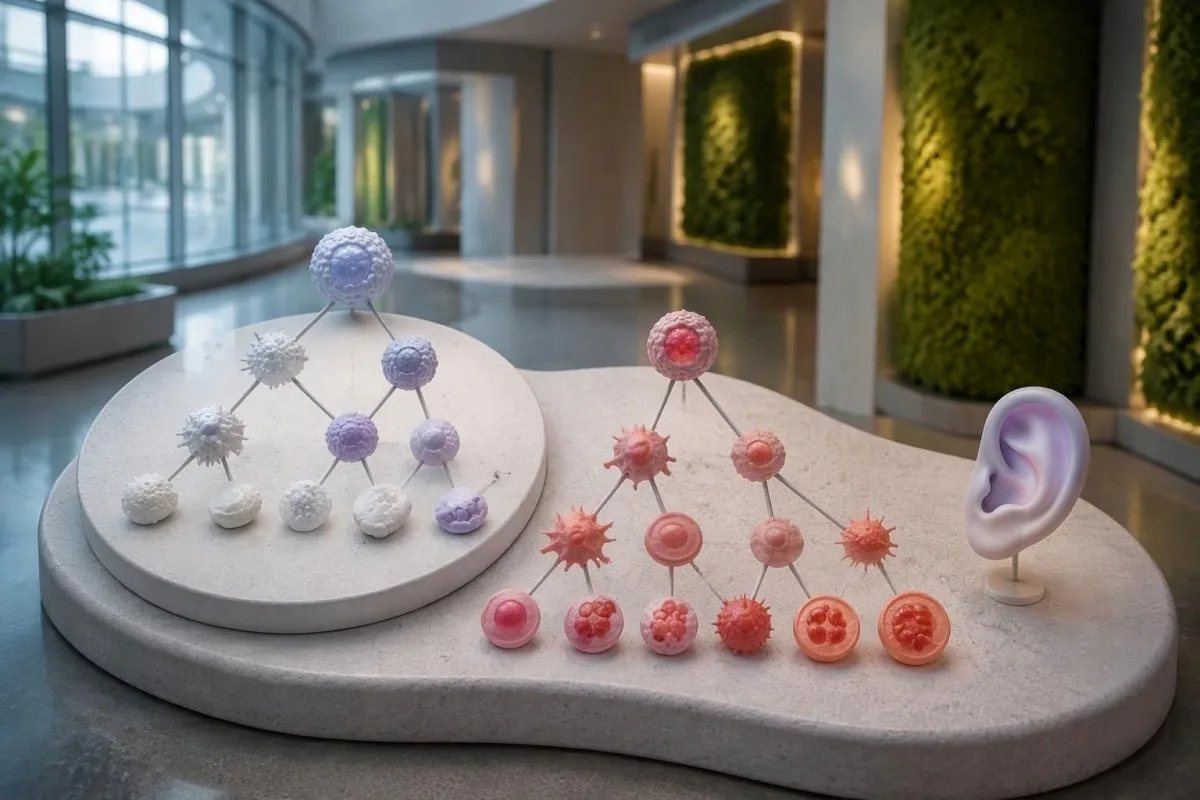
Tha UBA1 suidhichte air a’ chromosome X, agus tha 1 chromosome X aig a’ mhòr-chuid de na fir air a bheil buaidh. Tha VEXAS a’ tachairt ann am boireannaich cuideachd, uaireannan co-cheangailte ri call chromosome X ann an ceallan air a bheil buaidh, ach cha bu chòir do ghnè leis fhèin stad a chur air measadh ma tha am pàtran clionaigeach a’ moladh a’ ghalair gu làidir.
Ann an sgrùdadh JAMA air 163,096 com-pàirtiche ann an co-bhuidheann siostam slàinte sna SA, chomharraich Beck et al. 11 neach aig an robh caochlaidhean UBA1 co-cheangailte ris a’ ghalar. Bhathar a’ meas gun robh tricead a’ ghalair am measg fhireannach nas sine na 50 mu 1 ann an 4,269; b’ e co-bhuidheann sònraichte a bha seo, gu ìre mhòr le sinnsearachd Eòrpach, chan e tuairmse air tricead air feadh an t-saoghail.
Mar as trice chan eil eachdraidh teaghlaich ann oir nochdaidh am mùthadh iomchaidh rè beatha an duine. Tha seo eadar-dhealaichte bho mhì-rianan fiabhras ath-chuairteach a shealbhaichear agus a tha air an còmhdach anns an mìneachadh air deuchainnean MEFV; chan e deuchainn air 2 chàirdean airson caochladh teaghlaich an t-àite tòiseachaidh àbhaisteach ann an VEXAS somatach àbhaisteach.
Chan eil am facal ginteil a’ ciallachadh gu fèin-obrachail gu bheil e oighreachail, agus chan eil gine ceangailte ri X a’ ciallachadh gu fèin-obrachail gun tèid a thar-chur gu clann. Ma thogas aithisg a’ cheist mu chaochladh bun-reachdail no taisbeanadh neo-àbhaisteach ro aois 50, faodaidh eòlaiche ann an gintinneachd clionaigeach soilleireachadh a thoirt air a bheil deuchainnean air maothran a bharrachd no comhairleachadh teaghlaich iomchaidh.
Dè na comharraidhean de shionndrom VEXAS a bu chòir amharas a thogail?
Comharraidhean syndrome VEXAS mar as trice tha iad a’ gabhail a-steach fiabhras ath-chuairteach, atharrachaidhean athlasach sa chraiceann, sgìths, buaidh air na sgamhain agus athlas sa mhaoth-chnàimh. Tha at ann am maoth-chnàimh na cluaise no na sròine gu sònraichte fiosrachail nuair a thachras e còmhla ri anemia gun mhìneachadh no àireamhan fala neo-àbhaisteach eile ann an inbheach nas sine na 50.
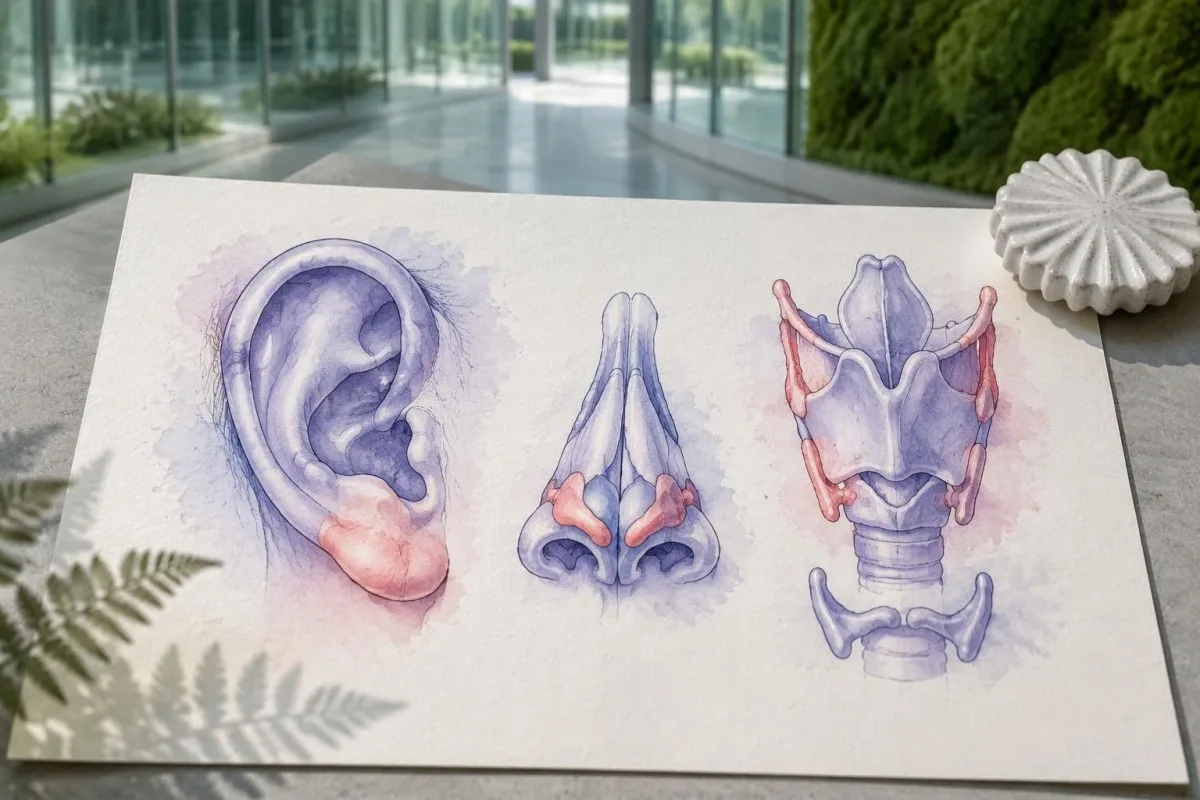
Gu tric bidh chondritis na cluaise a’ toirt buaidh air pàirt àrd chruaidh na cluaise agus a’ fàgail a’ chluais bhog, anns nach eil maoth-chnàimh, gun bhuaidh. Faodaidh an diofar anatamaigeach sin cuideachadh le cunntas ceart a thoirt air tachartas, ach feumar measadh a dhèanamh fhathast air 1 chluais dhearg airson adhbharan nas cumanta leithid galar ionadail, dochann no dermatitis.
Faodaidh toraidhean craicinn a bhith a’ gabhail a-steach raointean àrdaichte a tha goirt, clàran no atharrachaidhean purpaidh; chan urrainn don choltas leis fhèin an t-adhbhar aithneachadh. Faodaidh sgrùdadh air maothran cuideachadh le eadar-dhealachadh a dhèanamh eadar dermatosis neutrophilic, vasculitis agus pròiseasan eile, agus faodaidh dealbhan de 2 thachartas fa leth gun làimhseachadh cuideachadh le eòlaiche pàtran ath-chuairteach aithneachadh.
Inflammatory attacks can resemble established rheumatological conditions, including relapsing polychondritis or polymyalgia rheumatica. Our explanation of PMR laboratory limitations describes why inflammatory markers are not disease-specific; persistent macrocytosis above 100 fL or falling platelets should prompt a broader assessment rather than automatic acceptance of the first label.
New hoarseness, noisy breathing or difficulty breathing needs urgent assessment because airway cartilage can be involved. A useful symptom record includes 3 details for each episode: the affected site, its duration and whether fever or a medication change accompanied it; do not wait for another flare if breathing is affected.
Dè am pàtran ann an deuchainn fala a dh’fhaodadh sionndrom VEXAS a chomharrachadh?
Anemia macrocytic, sometimes accompanied by low platelets or other cytopenias, is a major laboratory clue to VEXAS. Adult MCV is commonly about 80–100 fL, but neither an MCV above 100 fL nor an elevated CRP result can confirm the condition.
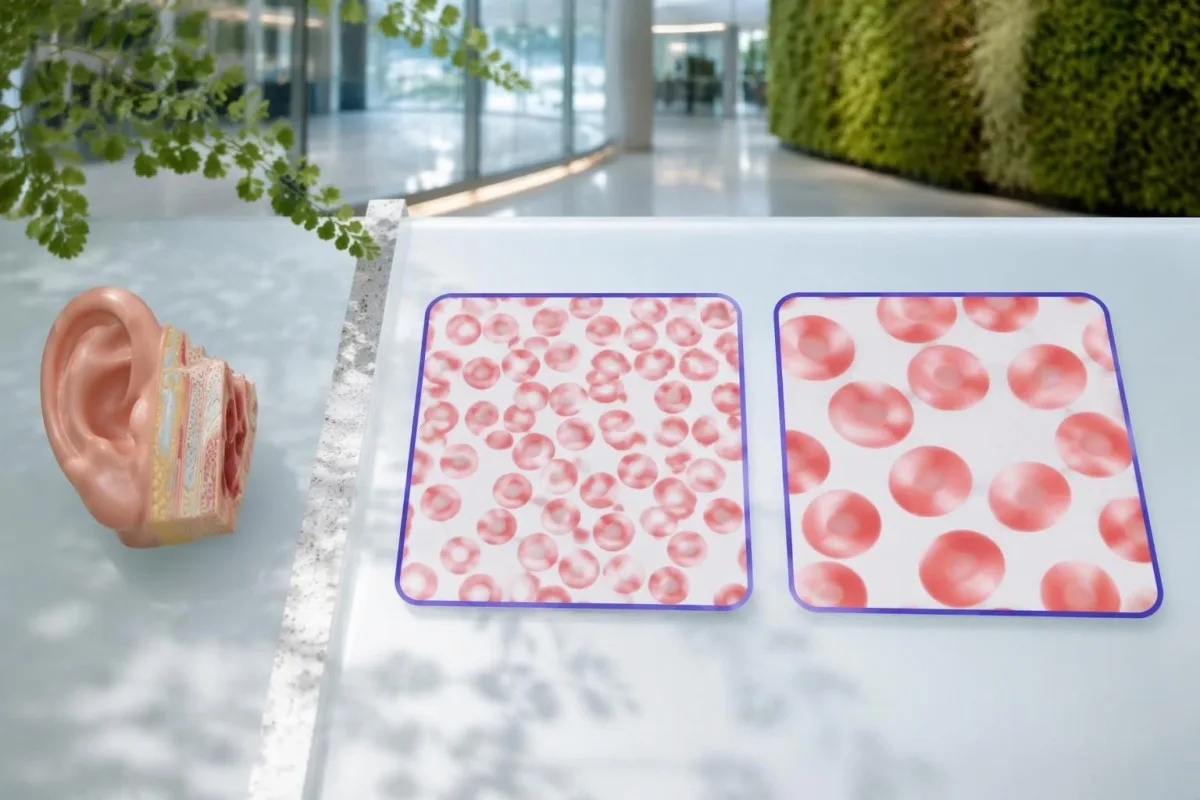
Hemoglobin measures anemia, while MCV measures average red-cell size; the 2 results answer different questions. An MCV of 108 fL with hemoglobin of 10.2 g/dL deserves a different assessment from an isolated MCV of 101 fL with stable hemoglobin, particularly when inflammatory symptoms are also present.
Many laboratories use a platelet reference interval of approximately 150–450 × 10^9/L. A falling platelet count can matter before it crosses the lower limit, and our borderline MCV explanation shows why persistent trends are often more useful than treating one near-boundary number as a diagnosis.
CRP is often markedly elevated during active VEXAS, but infection and many other inflammatory disorders can produce the same result. A hypothetical CRP of 80 mg/L is 16 times an upper limit of 5 mg/L; that comparison describes inflammatory intensity, not the probability of a UBA1 mutation.
RDW describes variation in red-cell size and can help explain a mixed CBC pattern, but it is not a VEXAS-specific biomarker. Our stiùireadh RDW agus MCV explains how 2 overlapping processes, such as iron deficiency and macrocytosis, can produce a deceptively ordinary average MCV.
| Ìre | Raon | Na tha e a’ ciallachadh |
|---|---|---|
| Typical adult MCV interval | 80–100 fL | Use the reporting laboratory's interval; an in-range result does not exclude early or masked macrocytosis. |
| Macrocytosis | >100 fL | Investigate nutritional, medication, liver, thyroid and marrow causes; this is not a VEXAS diagnostic threshold. |
| Trombocytopenia | <150 × 10^9/L | Low platelets can support concern when combined with persistent inflammation and unexplained anemia. |
| CRP above the laboratory limit | Often >5 mg/L; some laboratories use >10 mg/L | Indicates an inflammatory response without identifying its cause. |
Carson nach urrainn do phanailean àbhaisteach airson ghalaran fèin-dìon VEXAS a dhearbhadh?
Routine autoimmune panels cannot confirm VEXAS syndrome because they measure antibodies or related immune markers, not acquired UBA1 mutations. ANA, rheumatoid factor, ANCA and complement results may help assess alternative or overlapping conditions, but no combination substitutes for appropriate molecular testing.
ANA testing detects antibodies directed against nuclear components; it does not read the UBA1 gene. A positive ANA at 1:160 may deserve interpretation in its own clinical context, while a negative ANA does not make unexplained fever, chondritis and macrocytic anemia safe to dismiss.
Repeating several antibody panels can create incidental positives without resolving the central question. Our ANA result explanation describes why 1 positive result is not equivalent to a disease diagnosis; the same caution applies when an antibody is found during a suspected VEXAS evaluation.
Complement testing can be useful when clinicians suspect an immune-complex disorder, but normal C3 and C4 cannot exclude VEXAS. The complement and antibody guide explains these 2 proteins; their biological role differs from the acquired enzyme dysfunction caused by a disease-associated UBA1 variant.
Autoinflammatory and autoimmune are related but not interchangeable descriptions: VEXAS is driven principally by abnormal innate immune activity associated with mutated blood-forming cells. Clinicians may still order 2 types of investigation in parallel—antibody testing for alternatives and molecular testing for VEXAS—because another diagnosis can coexist rather than disappear.
Dè na h-adhbharan eile a dh’fheumar sgrùdadh mus cuirear a’ choire air VEXAS?
Vitamin B12 or folate deficiency, medication effects, alcohol use, liver disease, hypothyroidism and marrow disorders can cause macrocytosis. An MCV above 100 fL should trigger evaluation of these possibilities, while recurrent chondritis or unexplained inflammatory attacks may justify investigating VEXAS at the same time.
Vitamin B12 and folate results need interpretation alongside symptoms, treatment history and the CBC. A borderline B12 result may require additional assessment rather than immediate attribution of an MCV of 107 fL to VEXAS; our B12 versus folate explanation also explains why folate treatment can obscure part of a B12 deficiency picture.
Copper deficiency can cause cytopenias and vacuolated marrow precursors, making it an especially relevant mimic. Reviewing high-dose zinc supplements is therefore useful, and our treoir measaidh copair ìosal againn explains why 2 supplement ingredients—zinc and copper—may matter even when a product is marketed for general immune support.
Myelodysplastic syndrome can cause macrocytic anemia and may coexist with VEXAS rather than simply compete with it as an explanation. Our MDS confirmation guide distinguishes CBC clues from marrow evidence; 1 abnormal count cannot establish either diagnosis or determine whether both are present.
Medication and infection reviews are essential because treatment can change the very numbers being investigated. For example, glucocorticoids may increase neutrophils while lowering CRP, and a recent transfusion can alter MCV; bring the dates of these events, not just 2 laboratory reports that appear to disagree.
Ciamar a tha deuchainn airson mùthaidhean somatach UBA1 a’ cuideachadh le breithneachadh VEXAS?
VEXAS syndrome diagnosis is established by a disease-associated somatic UBA1 variant in a compatible clinical setting. Peripheral blood is commonly used for testing, while marrow or a more sensitive method may be appropriate after an inconclusive result; many recognized variants affect methionine at position 41.
The request should specify suspected VEXAS and testing for somatic UBA1 variants rather than a general hereditary disease panel. These are 2 different diagnostic tasks: an inherited-risk assay may not include the relevant gene regions, cell source or detection sensitivity needed to identify an acquired clone.
Beck et al. linked UBA1 variants to altered ubiquitin-activating enzyme function in their 2020 New England Journal of Medicine report. Position 41 is a major hotspot, but a hotspot-only test is not equivalent to comprehensive relevant UBA1 analysis, because disease-associated noncanonical variants have also been described.
A negative result needs the laboratory method attached to it before its meaning is clear. An assay validated to detect a 5% variant allele fraction may miss a smaller clone; ask which regions were covered, the reported detection limit and whether the sample was suitable for somatic testing.
Tha Kantesti na àrd-ùrlar mìneachaidh deuchainn fala AI that can help explain accompanying CBC and inflammatory-marker results, but it cannot infer a UBA1 sequence from 1 routine report. Our mìneachadh teicneòlas AI describes report interpretation; molecular diagnosis still requires an accredited laboratory and specialist interpretation.
Ciamar a bu chòir dhut aithisg mùthadh UBA1 a leughadh?
A UBA1 report should state the variant, classification, sample type and testing limitations, often including variant allele fraction. A pathogenic or likely pathogenic disease-associated variant can support VEXAS, but a variant of uncertain significance is not diagnostic, and a 10% allele fraction is not a 10% severity score.
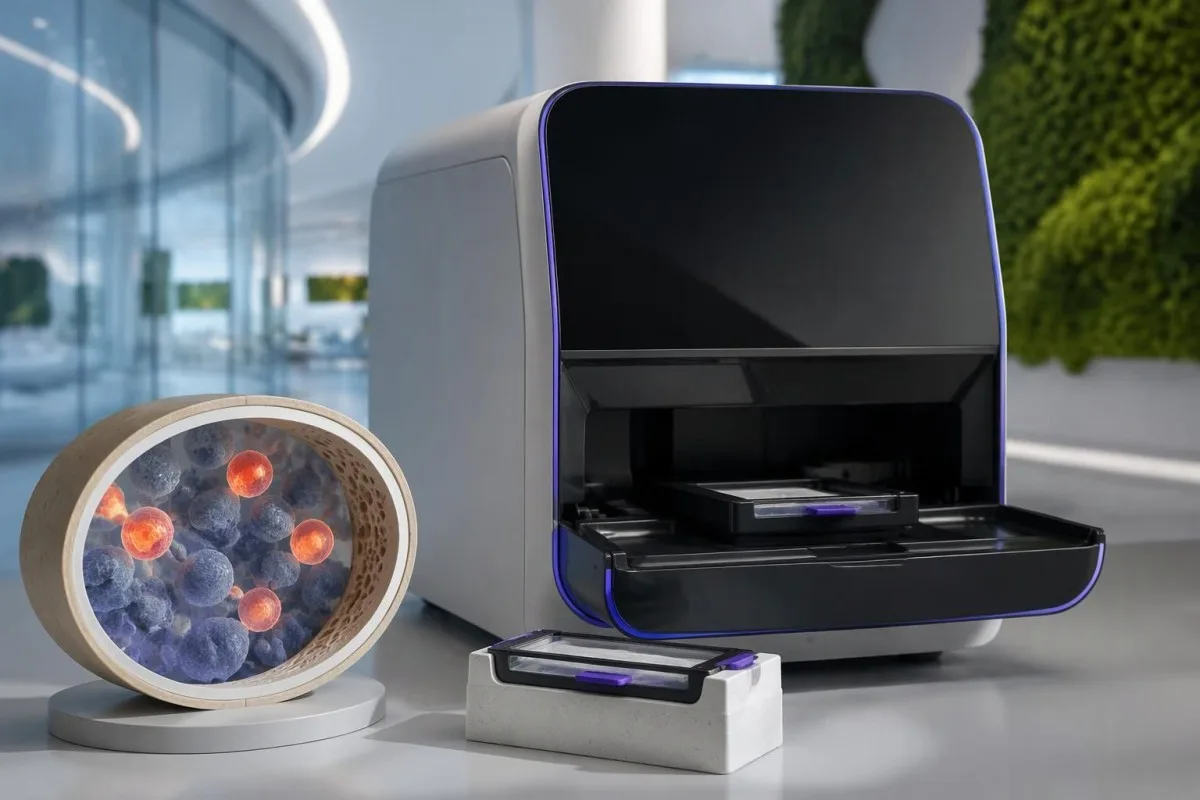
Variant allele fraction is the proportion of analyzed sequence reads carrying a particular change at that location. In a simple 1-X-chromosome model it may approximate the proportion of affected sampled cells, but cell mixtures, chromosome changes and laboratory methods complicate that estimate; it does not directly measure organ damage.
A hypothetical report showing a recognized disease-associated variant at 12% allele fraction may be meaningful even though most reads are unchanged. By contrast, a novel uncertain variant at 40% still requires expert assessment, because abundance cannot turn an unproven genetic finding into an established cause of symptoms.
Different clonal disorders require different molecular or cellular tests, even when anemia and thrombosis overlap. Our PNH clone testing guide explains a separate disorder assessed by flow cytometry; 1 negative PNH test does not evaluate UBA1, and a UBA1 result does not replace PNH testing when indicated.
Kantesti cannot determine whether an uncertain UBA1 finding is disease-causing simply by matching it to an elevated CRP of 70 mg/L. Ask the specialist whether additional sequencing, another specimen or formal variant review is needed, and keep the complete report rather than a screenshot containing only the word positive.
A bheil falamhachd ann an smior cnàimh gu leòr airson VEXAS a dhearbhadh?
Bone marrow vacuoles are a clue, not proof of VEXAS syndrome. Vacuoles may appear in early myeloid and erythroid precursors, but they are neither completely specific nor universally present; an adult with an MCV above 100 fL still needs the broader clinical and molecular assessment.
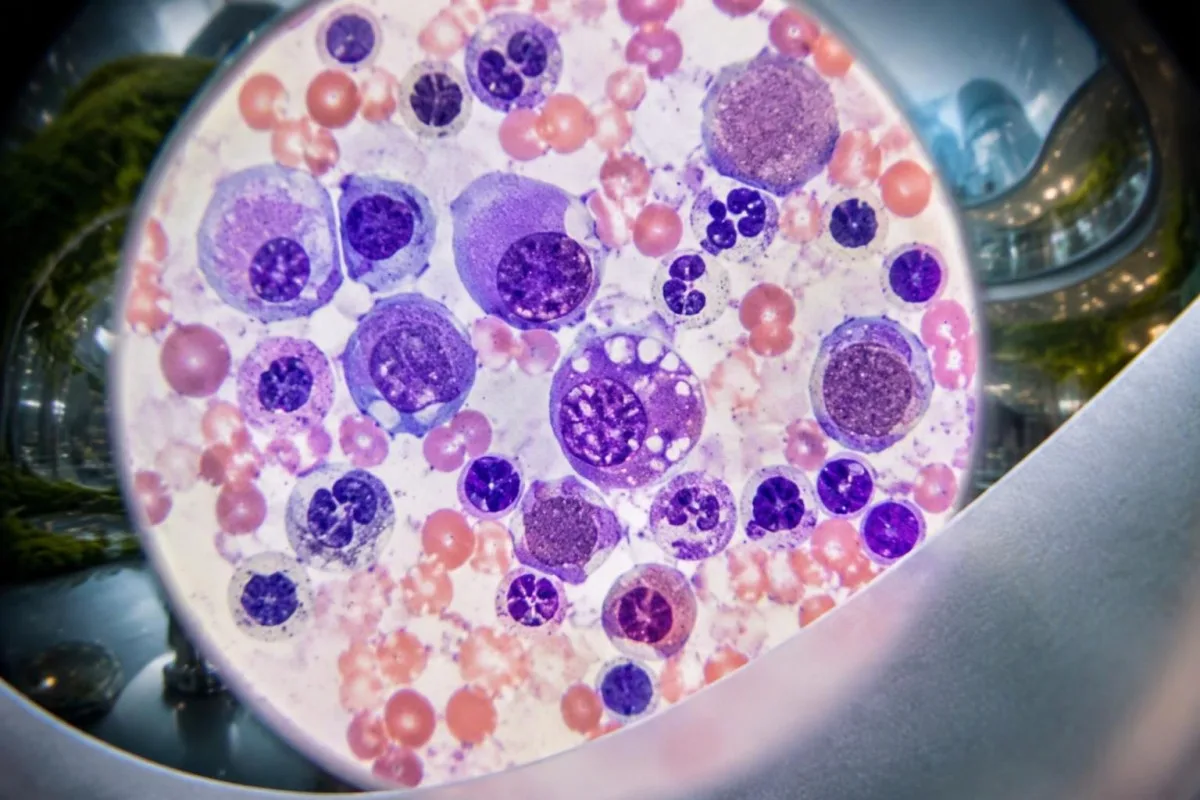
Vacuoles are small clear spaces visible within cells under microscopy, not holes that a patient can see on an ordinary CBC. Their absence on 1 marrow examination does not automatically exclude VEXAS, particularly when specimen quality, disease stage or the specific UBA1 variant affects the appearance.
Copper deficiency, alcohol-related effects and other conditions can produce vacuolated precursors. That overlap is why 2 complementary investigations may be needed: laboratory assessment for reversible mimics and somatic UBA1 testing, rather than treating a descriptive pathology finding as the final diagnosis.
Marrow examination also assesses cellularity, dysplasia and other abnormalities that may influence treatment decisions. Our explanation of teardrop cells and marrow clues describes a different microscopy finding; neither teardrop cells nor vacuoles can independently explain a platelet count of 95 × 10^9/L.
A marrow procedure is not automatically necessary for every isolated MCV of 102 fL, and a positive molecular result may already establish VEXAS in the right context. Hematology decides whether marrow assessment is needed to investigate persistent cytopenias, suspected MDS or another process that would change management.
Cuin a tha e iomchaidh measadh le eòlaiche reumatòlais no haematòlais?
Specialist assessment is appropriate when recurrent unexplained inflammation accompanies macrocytic anemia, falling platelets or other persistent cytopenias. Suspicion is higher after age 50, especially with chondritis, inflammatory skin findings or lung involvement; rheumatology and hematology often need to evaluate the pattern together.
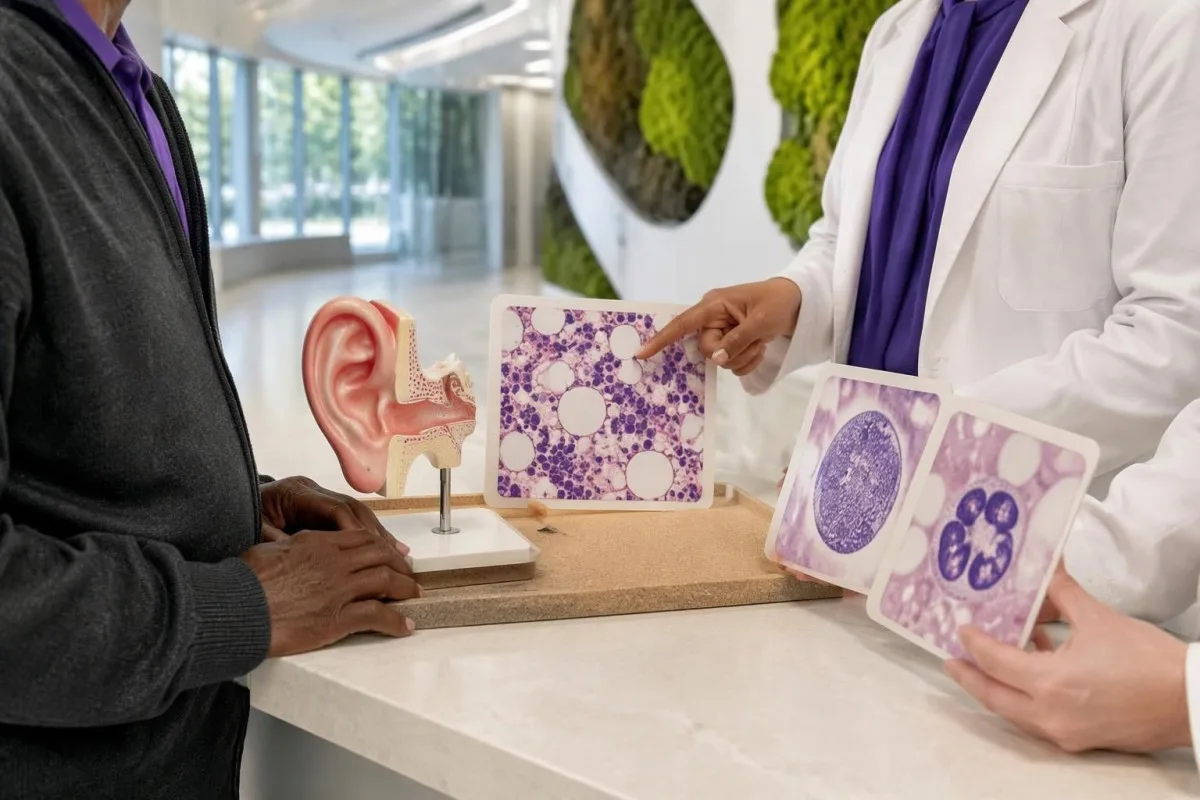
There is no universal CRP level, age boundary or number of attacks that automatically mandates UBA1 testing. A person aged 68 with recurrent ear chondritis and unexplained anemia has a different pretest probability from a person aged 28 with 1 viral fever and an otherwise stable CBC.
Steroid-responsive inflammation that repeatedly returns during dose reduction deserves reassessment, particularly when blood counts remain abnormal. Improvement over 2 days may show that symptoms are inflammatory, but it does not distinguish VEXAS from several other disorders and should not become the only justification for ongoing treatment.
Unexplained pain needs a broader workup when it accompanies constitutional symptoms or changing counts. Our stiùireadh deuchainn pian gun mhìneachadh explains why inflammatory markers are only part of that workup; an MCV above 100 fL adds a marrow-related question that a pain score cannot answer.
A referral should highlight 3 elements: documented inflammatory episodes, the CBC trend and the results of common-cause investigations. If symptoms are progressing rapidly, new organs are involved or transfusions are being considered, ask the referring clinician whether the appointment needs to be expedited rather than waiting for another routine repeat test.
Eisimpleir obraichte: at cluaise ath-chuairteach agus CBC ag atharrachadh
A hypothetical combination of recurrent chondritis, macrocytic anemia and low platelets warrants specialist evaluation, not an AI-generated diagnosis. Consider a 68-year-old man with hemoglobin 10.2 g/dL, MCV 108 fL, platelets 112 × 10^9/L and CRP 86 mg/L during a third episode of upper-ear swelling.
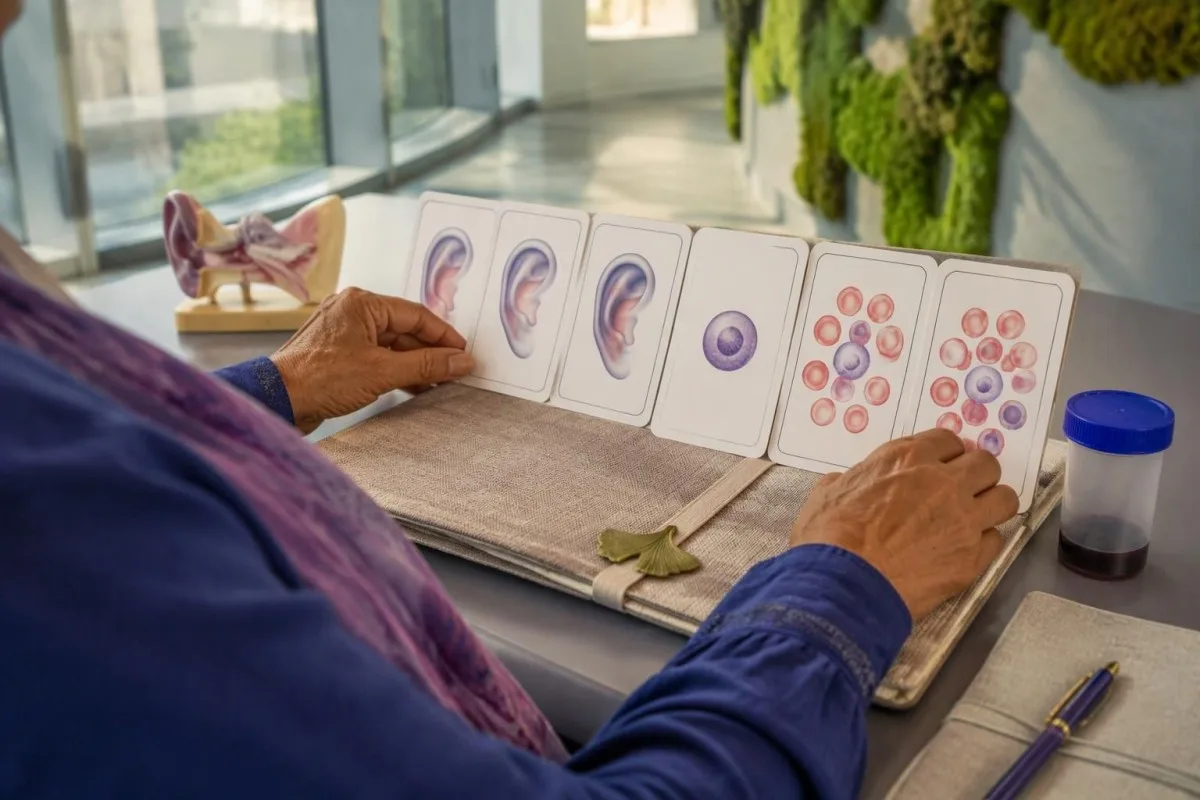
The first reasoning step is to separate symptom severity from diagnostic specificity: CRP of 86 mg/L confirms a substantial inflammatory response but does not identify its cause. The MCV of 108 fL and platelet count of 112 × 10^9/L add evidence that blood-cell production also needs investigation.
Suppose the person's B12, folate and thyroid assessments do not reveal an explanation, and medication, alcohol and liver reviews are unrevealing. A negative ANA would not close the case; the combination of 3 inflammatory episodes and persistent unexplained cytopenias would justify discussing somatic UBA1 testing with hematology and rheumatology.
Now suppose CRP falls to 12 mg/L after prescribed glucocorticoids, but hemoglobin falls to 9.8 g/dL. Those 2 trends are not contradictory: inflammatory activity may improve while marrow dysfunction or another anemia mechanism persists, so treatment response cannot be used as a substitute for investigating the falling hemoglobin.
Kantesti can help explain why those 2 trends deserve separate attention, but cannot establish VEXAS or choose immunosuppressive treatment. Our stiùireadh mion-sgrùdaidh gluasad dhrogaichean explains why dose changes, transfusions and intercurrent illness should be recorded beside each result; the example here is entirely hypothetical.
Ciamar a làimhsicheas eòlaichean sionndrom VEXAS dearbhte?
VEXAS treatment aims to control inflammation, manage cytopenias and reduce treatment-related harm. Glucocorticoids often suppress symptoms but may be difficult to taper; other options include selected immunomodulators, marrow-directed treatment and allogeneic stem-cell transplantation, with no single regimen appropriate for every adult over 50.
A falling CRP does not by itself establish treatment success if anemia, thrombosis or lung disease is worsening. Specialists follow at least 2 dimensions—clinical inflammatory activity and hematological status—and weigh these against cumulative glucocorticoid exposure, because prolonged treatment can cause infections, diabetes, osteoporosis and muscle weakness.
JAK inhibitors and IL-6-directed therapy are among approaches used by specialists, while azacitidine may be considered in selected patients, particularly with associated marrow disease. Evidence and access vary, and much published experience is observational; a response lasting 6 months in one cohort does not reliably predict an individual's longer-term benefit.
Allogeneic stem-cell transplantation can potentially eliminate the abnormal blood-forming clone and produce sustained remission in selected patients. It also carries substantial risks, including graft-versus-host disease and serious infection, so 2 people of the same age may receive different recommendations because fitness, organ involvement and donor availability differ.
Infection prevention deserves planning before immunosuppression, not only after fever develops. Depending on exposures and the proposed regimen, clinicians may consider screening or prevention measures described in our Strongyloides testing explanation; even 1 relevant past exposure can matter before corticosteroids, and prescribed steroids should never be stopped abruptly without guidance.
Dè na comharraidhean a dh’fheumas cùram èiginneach no èiginn?
New breathing difficulty, chest pain, airway symptoms, neurological deficits or significant bleeding require urgent assessment in someone with suspected or confirmed VEXAS. Fever of 38°C or higher during substantial immunosuppression also needs prompt clinical advice, particularly when neutrophils are low.
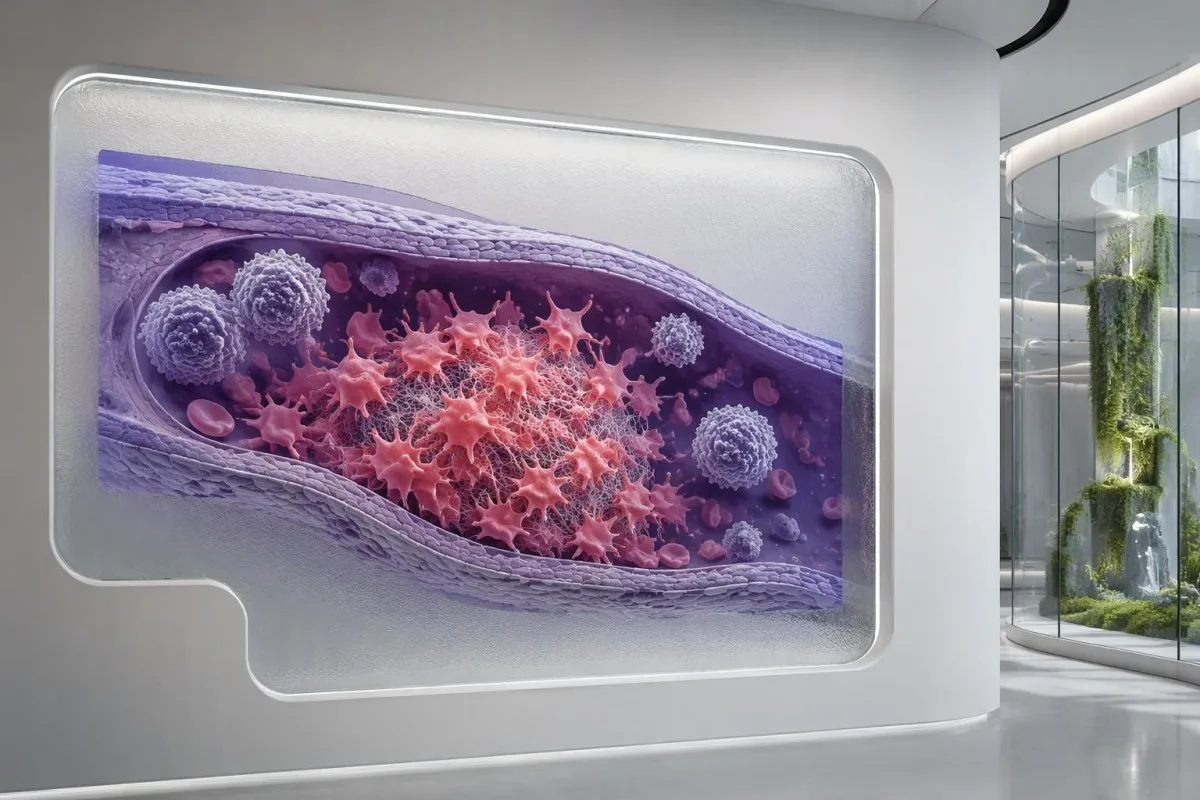
VEXAS is associated with venous thrombosis, so a painful swollen leg or sudden breathlessness should not be dismissed as another inflammatory flare. Normal routine clotting times do not exclude a clot; our cuingeachaidhean air pannal coagulation explain why 2 normal tests, PT and aPTT, cannot provide that reassurance.
An absolute neutrophil count below 0.5 × 10^9/L represents severe neutropenia and increases concern when fever occurs. Treatment can also blunt the temperature response, so feeling acutely unwell with shaking chills, confusion or rapidly worsening weakness can require urgent assessment even when a thermometer reads below 38°C.
Breathlessness can reflect lung inflammation, infection, pulmonary embolism or worsening anemia, and these require different treatments. Our breathlessness blood test guide explains why hemoglobin of 8 g/dL may contribute without proving the entire cause; new chest pain or sudden breathing difficulty should not wait for an uploaded report.
Persistent nose or gum bleeding, black stools or a severe new headache needs urgent advice, especially if platelets are very low. A count below 20 × 10^9/L generally warrants prompt clinical review, but the urgency depends on symptoms and context; significant bleeding is an emergency even above that number.
Leantainn, crìochan AI agus foillseachaidhean rannsachaidh
Useful VEXAS follow-up combines symptoms, treatment history, CBC trends and inflammatory markers, with molecular and marrow findings interpreted by specialists. An AI explanation of 1 laboratory report can support preparation for care, but it cannot diagnose VEXAS, exclude infection or establish whether a UBA1 variant is pathogenic.

Bring original CBC reports, inflammatory markers and the complete UBA1 result, including specimen type and detection limit. Record 3 timeline features beside them: flare dates, medication changes and transfusions; this makes it easier to distinguish a true disease trend from a treatment effect or a change in testing conditions.
Tha Kantesti na Inneal mion-sgrùdaidh deuchainn fala le cumhachd AI that can explain laboratory patterns without converting an MCV above 100 fL into a rare-disease diagnosis. Genetic reports can reveal sensitive information, so review our fiosrachadh mu phrìobhaideachd is dàta before sharing records, and include only documents you are authorized to upload.
Kantesti's 2 DOI-linked publications below concern broader blood-test interpretation and RDW education, not clinical trials of VEXAS diagnosis or UBA1 sequencing. They should therefore be read separately from the disease-specific medical studies listed in the external references; neither publication establishes VEXAS-specific diagnostic sensitivity or treatment effectiveness.
Ar modh-obrach agus inbhean clionaigeach explain the distinction between report interpretation and medical diagnosis. Before the next appointment, write 2 questions: whether the laboratory method adequately assessed somatic UBA1 variants, and whether persistent cytopenias need marrow evaluation; these are more actionable than asking an AI to calculate an unsupported VEXAS probability.
Ceistean cumanta
Dè na ciad chomharran a tha air sionndrom VEXAS?
Bidh syndrome VEXAS gu tric a’ tòiseachadh le fiabhras ath-chuairteach gun adhbhar aithnichte, atharrachaidhean sèidteach sa chraiceann, sgìths no maoth-chnàimh cluaise no sròine at, mar as trice às dèidh aois 50. Dh’fhaodadh anemia macrocytic no cunntasan fala neo-àbhaisteach eile nochdadh ro na comharraidhean sin, còmhla riutha no às an dèidh. Tha MCV inbheach os cionn timcheall air 100 fL na chomharradh, chan e breithneachadh. Tha e iomchaidh beachdachadh air measadh le reumatòlaiche agus haematòlaiche nuair a tha comharraidhean sèidteach ath-chuairteach an cois cytopenias leantainneach gun adhbhar aithnichte.
Dè an deuchainn a dhearbhas sionndrom VEXAS?
Thèid syndrome VEXAS a dhearbhadh le bhith a’ comharrachadh caochladh somatach UBA1 co-cheangailte ri galar ann an suidheachadh clionaigeach iomchaidh. Bithear a’ dèanamh deuchainn air fuil iomaill mar as trice, ged a dh’fhaodadh gum bi feum air smior cnàimh no assay nas mothachaile ann an cùisean sònraichte. Tha mòran de na caochlaidhean aithnichte a’ toirt buaidh air methionine aig suidheachadh 41, ach faodaidh deuchainn chuingealaichte air làraichean teth caochlaidhean eile co-cheangailte ri galar a chall. Feumar an aithisg a mhìneachadh a rèir seòrsachadh a’ chaochladh, còmhdach a’ ghine agus crìoch an lorg.
An urrainn do dheuchainn àbhaisteach ANA no panail fèin-dìonach VEXAS a chur às àicheadh?
Chan urrainn do ANA àbhaisteach no do phannal fèin-dìon àbhaisteach an t-syndrome VEXAS a chur às an amharc, oir chan eil na deuchainnean sin a’ lorg mhùthaidhean somatach UBA1. Chan eil ANA deimhinneach aig 1:160 a’ dearbhadh VEXAS nas motha, agus chan eil e gu riatanach a’ dearbhadh gu bheil galar fèin-dìon eadar-dhealaichte ann. Dh’fhaodadh deuchainnean antibody cuideachadh le bhith a’ sgrùdadh roghainnean eile, agus tha pàtrain CBC, comharraidhean agus deuchainnean moileciuil a’ freagairt cheistean fa leth. Cha bu chòir anemia macrocytic leantainneach agus sèid ath-chuairteach sa chnag-riochd a chur gu taobh dìreach air sgàth ’s gu bheil deuchainnean antibody àicheil.
A bheil syndrome VEXAS oighreachail, agus am bu chòir deuchainn a dhèanamh air mo chlann?
Mar as trice gheibhear an t-syndrome VEXAS, seach a bhith ga shealbhachadh, agus mar sin chan eilear a’ moladh deuchainnean àbhaisteach air clann san fharsaingeachd. Mar as trice bidh am mùthadh iomchaidh ann an UBA1 a’ leasachadh taobh a-staigh nan ceallan a bhios a’ cruthachadh fala rè beatha inbheach, agus bidh comharraidhean a’ nochdadh gu tric às dèidh aois 50. Ged a tha UBA1 air a’ chromosome X, chan eil sin a’ ciallachadh gu bheil caochladh somatach VEXAS so-ghluasadach gu fèin-obrachail. Bu chòir do speisealaiche ann an gintinneachd clionaigeach ath-sgrùdadh a dhèanamh air toraidhean annasach no feadhainn a dh’fhaodadh a bhith bun-reachdail.
An urrainn do bhoireannaich an t-syndrome VEXAS a leasachadh?
Faodaidh boireannaich an t-sionndrom VEXAS a leasachadh, ged a tha a’ mhòr-chuid de na cùisean aithnichte a’ tachairt ann am fir nas sine. Tha UBA1 suidhichte air a’ chromosome X, agus ’s e call 1 chromosome X ann an ceallan air a bheil buaidh aon de na dòighean a chaidh aithris ann am boireannaich. Chomharraich sgrùdadh air siostam slàinte JAMA ann an 2023 2 bhoireannach am measg 11 com-pàirtichean aig an robh caochlaidhean UBA1 co-cheangailte ris a’ ghalar. Cha bu chòir gnè leis fhèin bacadh a chur air measadh speisealta nuair a tha sèid ath-chuairteach agus neo-riaghailteachdan gun mhìneachadh ann an àireamhan nan ceallan fala a’ dèanamh a’ chùis gu làidir.
A bheil deuchainn UBA1 àicheil a’ cur às do shionndrom VEXAS?
Chan eil deuchainn UBA1 le toradh àicheil a’ lùghdachadh na coltachd gum bi VEXAS ann ach ma bha an sampall agus an deuchainn iomchaidh. Dh’fhaodadh deuchainn le crìoch lorgaidh airson bloigh alleil nan caochlaidhean 5% clone nas lugha a chall, agus dh’fhaodadh deuchainn air àiteachan teth a-mhàin caochlaidhean taobh a-muigh na roinne a chaidh a chòmhdach a chall. Faodaidh amharas clionaigeach làidir a bhith na adhbhar airson speisealaiche ath-sgrùdadh a dhèanamh air a’ chòmhdach, a’ chugallachd agus an seòrsa sampall. Bu chòir toradh àicheil a fhuaireadh tro dheuchainn a chaidh a dhèanamh gu ceart cuideachd brosnachadh a thoirt do ath-mheasadh cùramach air breithneachaidhean eile, seach deuchainnean ath-aithris gun adhbhar soilleir.
A bheil leigheas ann airson an t-syndrome VEXAS?
Faodaidh tar-chur cheallan-gas ailleòlach faochadh fad-ùine a thoirt gu buil le bhith a’ cur clone neo-àbhaisteach a tha a’ cruthachadh fala na àite, ach chan eil e freagarrach ach do dh’euslaintich a chaidh a thaghadh agus tha cunnartan mòra na lùib. Tha leigheasan eile ag amas air smachd a chumail air an t-sèid, dèiligeadh ri cytopenias agus lùghdachadh a dhèanamh air cleachdadh glucocorticoids seach dèanamh cinnteach gun tèid an clone a chur às. Do dh’inbhich thairis air 50, faodaidh fallaineachd, buaidh air buill-bodhaig agus galar smior cnàimh co-cheangailte buaidh mhòr a thoirt air na roghainnean làimhseachaidh. Cha deach sealltainn gu bheil leasachaidhean, plana daithead no mìneachadh le AI air deuchainnean fala a’ leigheas VEXAS.
Faigh mìneachadh air na toraidhean deuchainn fala agad
Luchdaich suas aithisg an obair-lann agad agus mìnichidh AI Kantesti gach bith-chomharradh ann an cànan soilleir taobh a-staigh diogan. Air a chleachdadh le còrr is 2 mhillean neach air feadh an t-saoghail.
Tùsan
- Klein, T., Mitchell, S., & Weber, H. (2026). Neach-anailis Deuchainn Fala AI: 2.5M Deuchainnean air an Mion-sgrùdadh | Aithisg Slàinte Cruinne 2026. Rannsachadh Meidigeach AI Kantesti. DOI
- Klein, T., Mitchell, S., & Weber, H. (2026). Deuchainn fala RDW: stiùireadh iomlan air RDW-CV, MCV agus MCHC. Rannsachadh Meidigeach AI Kantesti. DOI
- Beck DB et al. (2020). Somatic Mutations in UBA1 and Severe Adult-Onset Autoinflammatory Disease. New England Journal of Medicine. DOI
- Beck DB et al. (2023). Estimated Prevalence and Clinical Manifestations of VEXAS Syndrome in a Large US Health Care System. JAMA. DOI
- 2M+Deuchainnean air an sgrùdadh
- 127+Dùthchannan
- 100+Cànanan
Mu dheidhinn an sgioba mheidigeach


Comharran earbsa E-E-A-T
Eòlas
Lèirmheas clionaigeach air a stiùireadh le lighiche air sruthan-obrach mìneachaidh obair-lann.
Eòlas
Fòcas air leigheas obair-lann air mar a bhios bith-chomharraidhean (biomarkers) a’ giùlan ann an co-theacsa clionaigeach.
Ùghdarrasachd
Ath-sgrùdadh meidigeach leis an Dr Thomas Klein, le tabhartasan bhon Dr Sarah Mitchell agus an t-Oll. Dr Hans Weber.
Earbsachd
Mìneachadh stèidhichte air fianais le slighean leanmhainn soilleir gus dragh a lughdachadh.





Àicheadh meidigeach
Tha an artaigil seo dìreach airson adhbharan foghlaim agus chan eil e a’ dèanamh comhairle mheidigeach. Cuir fios an-còmhnaidh gu solaraiche cùram slàinte teisteanasach airson co-dhùnaidhean breithneachaidh is leigheis.
Foillsichte · Cuir fios chun sgioba dheasachaidh
Foillsichte le Kantesti Ltd, clàraichte ann an Sasainn agus sa Chuimrigh, àireamh companaidh. 17090423, Lunnainn, an Rìoghachd Aonaichte.
